Category: Civilization, History, and Anthropology

  • ARCHAIC NUMBERS > CUNEIFORM > ROMAN NUMERALS Conversion of archaic numbers to cu

    ARCHAIC NUMBERS > CUNEIFORM > ROMAN NUMERALS

    Conversion of archaic numbers to cuneiform

    The round stylus was gradually replaced by a reed stylus that had been used to press wedge shaped cuneiform signs in clay.

    To represent numbers that previously had been pressed with a round stylus, these cuneiform number signs were pressed in a circular pattern and they retained the additive sign-value notation that originated with tokens on a string.

    Cuneiform numerals and archaic numerals were ambiguous because they represented various numeric systems that differed depending on what was being counted.

    About 2100 BC in Sumer, these proto-sexagesimal sign-value systems gradually converged on a common sexagesimal number system that was a place-value system consisting of only two impressed marks, the vertical wedge and the chevron, which could also represent fractions.[14]

    This sexagesimal number system was fully developed at the beginning of the Old Babylonia period (about 1950 BC) and became standard in Babylonia.

    Sexagesimal numerals were a mixed radix system that retained the alternating base 10 and base 6 in a sequence of cuneiform vertical wedges and chevrons. Sexagesimal numerals became widely used in commerce, but were also used in astronomical and other calculations.

    This system was exported from Babylonia and used throughout Mesopotamia, and by every Mediterranean nation that used standard Babylonian units of measure and counting, including the Greeks, Romans and Syrians. In Arabic numerals, we still use sexagesimal to count time (minutes per hour), and angles (degrees).

    -Roman numerals-

    Roman numerals evolved from this primitive system of cutting notches.[15] It was once believed that they came from alphabetic symbols or from pictographs, but these theories have been disproved.[16][17]


    Source date (UTC): 2018-05-05 11:57:00 UTC
  • THE ORIGINS OF NUMBERS (And the two part key) To create a record that represente

    THE ORIGINS OF NUMBERS

    (And the two part key)

    To create a record that represented “two sheep”, they selected two round clay tokens each having a + sign baked into it. Each token represented one sheep. Representing a hundred sheep with a hundred tokens would be impractical, so they invented different clay tokens to represent different numbers of each specific commodity, and by 4000 BC strung the tokens like beads on a string.[7] There was a token for one sheep, a different token for ten sheep, a different token for ten goats, etc. Thirty-two sheep would be represented by three ten-sheep tokens followed on the string by two one-sheep tokens.

    To ensure that nobody could alter the number and type of tokens, they invented a clay envelope shaped like a hollow ball into which the tokens on a string were placed, sealed, and baked. If anybody disputed the number, they could break open the clay envelope and do a recount. To avoid unnecessary damage to the record, they pressed archaic number signs and witness seals on the outside of the envelope before it was baked, each sign similar in shape to the tokens they represented. Since there was seldom any need to break open the envelope, the signs on the outside became the first written language for writing numbers in clay. An alternative method was to seal the knot in each string of tokens with a solid oblong bulla of clay having impressed symbols, while the string of tokens dangled outside of the bulla.[8]

    Beginning about 3500 BC the tokens and envelopes were replaced by numerals impressed with a round stylus at different angles in flat clay tablets which were then baked.[9] A sharp stylus was used to carve pictographs representing various tokens. Each sign represented both the commodity being counted and the quantity or volume of that commodity.


    Source date (UTC): 2018-05-05 11:37:00 UTC

  • The empirical revolution, and its counter-revolution “the enlightenment”: the in

    The empirical revolution, and its counter-revolution “the enlightenment”: the international attempt to restate local custom in local categories, relations, operations and values, other than deflationary empirical prose – because otherwise the extant order would not withstand such scrutiny.

    But that counter-revolution came from the most backwardly governed country in europe by a man of profoundly low (libertine) character who presumed an idyllic fictional (feminine actually) nature of mankind. A wish not a truth.

    Man is neither moral nor immoral, but amoral. It is just nearly always more rewarding to act morally – at least over any period of time.

    One cannot be philosophically literate without knowledge of economics (incentives) precisely for this reason: man’s amoralism.


    Source date (UTC): 2018-05-05 08:48:00 UTC

  • a band becomes a militia, a militia an army, an army a nation

    a band becomes a militia, a militia an army, an army a nation.


    Source date (UTC): 2018-05-05 01:36:41 UTC

    Original post: https://twitter.com/i/web/status/992578800402817024

  • photos_and_videos/TimelinePhotos_43196237263/31914214_10156333355707264_22167594

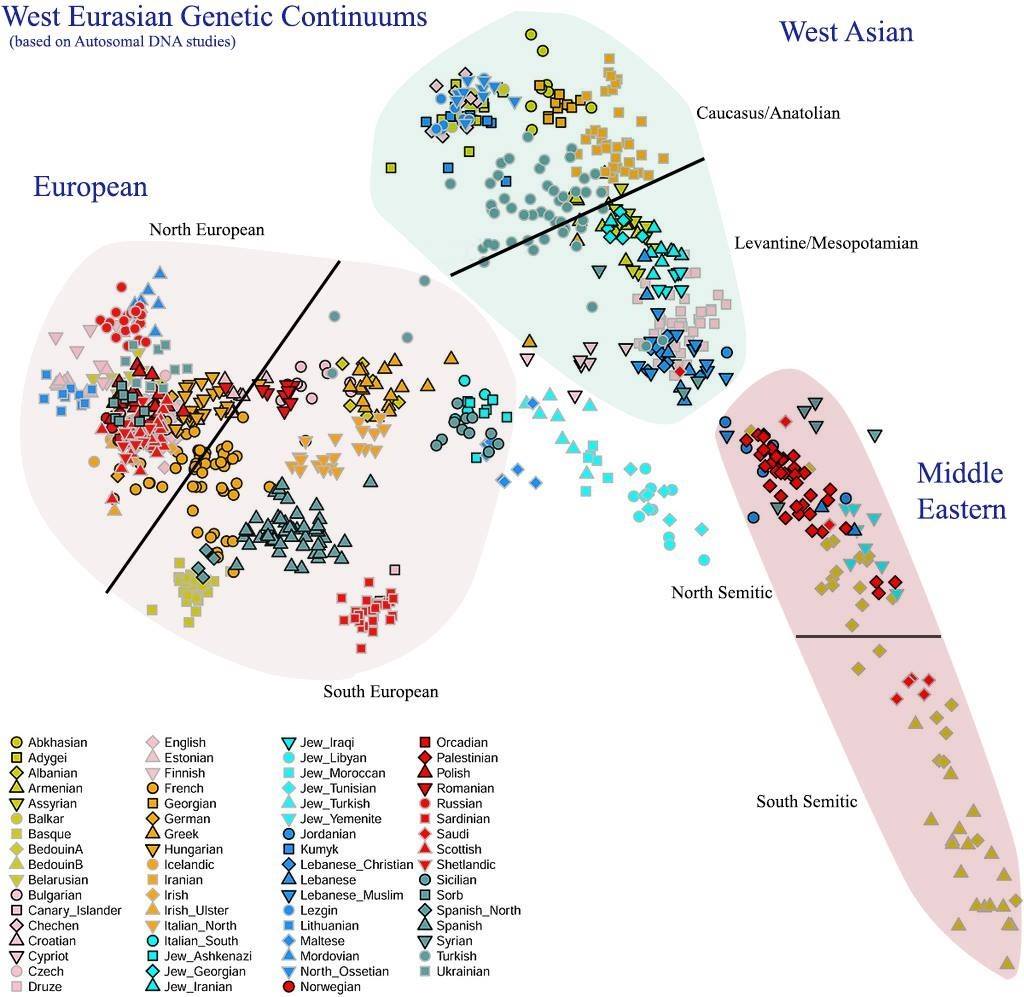
    photos_and_videos/TimelinePhotos_43196237263/31914214_10156333355707264_2216759469029720064_o_10156333355697264.jpg Waqas AhmadWhy the undo-European languages have no script of their own?

    Except Hindustani languagesMay 04, 2018 7:35pmIvar DiederikNorthern and central Europa had runes. And in the south there were the precursors of Greek and Roman scripts.

    But in the rainy north, using paper to write on was not really practical until the invention of glass windows (which allow one to regulate humidity in buildings). So it took a while before people switched from telling stories by the hearth, to writing them down.

    Also, it took a sufficient development of architecture to free sufficient numbers of men to become fulltime writers (like the Christian monks were). This could commence sooner in the Fertile Crescent, i.e. around the Semitic people, and in fertile valleys like those of the first Vedic civlizations.May 05, 2018 4:10amColin HigginsDidn’t Classical Persian use an ancient script? (Farsi now uses Arabic characters). That is an Indo-European languageMay 05, 2018 10:59amWaqas AhmadColin Higgins thanksMay 05, 2018 11:00amColin HigginsWaqas Ahmad it isn’t as old as the Indo-Aryan languages though, so yes, those were some of the first to use a formal writing systemMay 05, 2018 11:03amWaqas AhmadColin Higgins I thought only Hindi and related languages have preserved their script .all indo-european languages have adopt semitic scriptMay 05, 2018 11:04amWaqas AhmadColin HigginsMay 05, 2018 11:05amCurt Doolittle@[656410309:2048:Ivar Diederik] runes post-date greek and roman, and appear only after about 100ad. As far as I know there were only two inventions of writing: sumer in 3100, and ‘mesoamerica’ in around 300ad. all other writing systems evolved from the sumerian and the general idea was spread rapidly by trade.

    Numbers (tallying) predate writing by a long shot – they’ve been used for at least 40k years.

    proto-writing (symbols) exist back into the neolithic. The origin of viking script, which was (I think) originally for woodcarving) ceremonial purposes, is in response to awareness of writing elsewhere, even though the script does look like a form of proto-writing. Wood carving needs and clay scribing needs, and pen-needs, are very different production costs, and this explains the differences in the scripts.May 05, 2018 11:37amGintas KamaitisWhat is the source of this graph? No data should be taken at face value without the ability to verify its source.May 05, 2018 11:51amGöran DahlAll Hindustani languages use scripts derived from Semitic ones.May 06, 2018 7:09amGabriel YbarraFree Radicals long overdue for some antioxidants.May 06, 2018 2:51pm


    Source date (UTC): 2018-05-04 18:57:00 UTC

  • It All Begins with The Militia

    by Igor Rogov (brilliant) The “English” success is more easily attributable to one or two social inventions of Saxons – the free man on his own land, also known as churl and an armed militia or fyrd, which were quite distinct from greek or early roman examples because they persisted as something very essential and spiritual entities which resulted in Magna Carta which was then revitalised in American constitution.

  • It All Begins with The Militia

    by Igor Rogov (brilliant) The “English” success is more easily attributable to one or two social inventions of Saxons – the free man on his own land, also known as churl and an armed militia or fyrd, which were quite distinct from greek or early roman examples because they persisted as something very essential and spiritual entities which resulted in Magna Carta which was then revitalised in American constitution.

  • The Study Of History Creates Depth Of Understanding

    The lack of depth of even the most ambitious lay thinkers never ceases to amaze me. I expect compartmentalizational ignorance from members of the academy, but the laity has no such excuse to specialize. I hear IQ this and that from people the time, and as far as I can tell, endless curiosity, extreme suspicion of your intuitions, the continuous accumulation of knowledge, and the continuous reformation of your frames in response to that knowledge is what creates ‘depth’. And as far as I know, Durant was right: that depth is most likely from the study of one or more dimensions of history- for it is demonstrated history – not justified – that tells us the truth of man.

  • The Study Of History Creates Depth Of Understanding

    The lack of depth of even the most ambitious lay thinkers never ceases to amaze me. I expect compartmentalizational ignorance from members of the academy, but the laity has no such excuse to specialize. I hear IQ this and that from people the time, and as far as I can tell, endless curiosity, extreme suspicion of your intuitions, the continuous accumulation of knowledge, and the continuous reformation of your frames in response to that knowledge is what creates ‘depth’. And as far as I know, Durant was right: that depth is most likely from the study of one or more dimensions of history- for it is demonstrated history – not justified – that tells us the truth of man.

  • They Were the Most Naive Generation, Not the Best.

    Try having that conversation with people who suffered through the unnecessary pains of world war two: Actually, it was a catastrophe. the Germans were right. They were trying to save the world from communism. And all you naive, ignorant, self righteous morons did nothing with your sacrifice except make the world safe for communism and postmodernism and the destruction of the family, our traditions, our constitution, and our civilization. You weren’t the greatest generation, but the dumbest, and the boomers you left behind you were the most fucking evil sons and daughters of pandora that ever walked the earth.