Theme: Grammar

  • RT @LukeWeinhagen: @ConceptualJames Social parasites separate labels from catego

    RT @LukeWeinhagen: @ConceptualJames Social parasites separate labels from categories to extracting the value of inclusion with the category…


    Source date (UTC): 2023-08-26 22:23:48 UTC

    Original post: https://twitter.com/i/web/status/1695562717279801823

  • Rougly a less to more sequence: >, ->, =>. Specifically: => produces/results in.

    Rougly a less to more sequence: >, ->, =>.
    Specifically:
    => produces/results in.
    -> leads to, follows from.
    > order.
    … indent
    ( … ) undone
    Sometimes a < b < c <-> x > y > z for clarification.
    And i screw it up once in a while too… 😉


    Source date (UTC): 2023-08-25 04:54:20 UTC

    Original post: https://twitter.com/i/web/status/1694936223809253589

    Reply addressees: @EricMorganCoach

    Replying to: https://twitter.com/i/web/status/1694912172311163222

  • German Translation? (@bierlingm can you rate this on a scale of 1-10?) It transl

    German Translation?
    (@bierlingm can you rate this on a scale of 1-10?) It translates back to english properly. This is far about my vacation-german. 😉

    Das Common Law ist einfach nur die wissenschaftliche Methode. Das Common Law ist ein sehr einfacher Algorithmus, bei dem…


    Source date (UTC): 2023-08-23 01:43:21 UTC

    Original post: https://twitter.com/i/web/status/1694163382314618884

    Reply addressees: @BlakeAn77455669

    Replying to: https://twitter.com/i/web/status/1694074724538544462


    IN REPLY TO:

    Unknown author

    The Common Law Is Just The Scientific Method.
    The common law is a very simple algorithm where competitors, juries, and judges discover violations of self determination, sovereignty, reciprocity, truth and duty, (under the rubric of Tort). These courts work in a hierarchy of appeals to greater expertise by settling disputes across regions. Then differences are consolidated by competition in those courts of appeals. This search for ‘commonality’ in a diverse resolution of disputes is what defines the common law.
    So, the Common Law’s value is that it’s purely empirical, falsificationary, and non-theoretical: scientific. This means it grows organically and revises organically as new knowledge and understanding (and new innovations in ‘crime’) evolve.
    There is no limit to this process of discovery. So no, technology does not matter. The first ‘tort’ that is discovered, begins the process of producing commonality (Legitimate Law) by purely organic means.
    If we look at the failure of the law it’s due to positive law and never to common law.

    Original post: https://x.com/i/web/status/1694074724538544462

  • German Translation? (@bierlingm can you rate this on a scale of 1-10?) It transl

    German Translation?
    (@bierlingm can you rate this on a scale of 1-10?) It translates back to english properly. This is far about my vacation-german. 😉

    Das Common Law ist einfach nur die wissenschaftliche Methode. Das Common Law ist ein sehr einfacher Algorithmus, bei dem Wettbewerber, Geschworene und Richter Verstöße gegen Selbstbestimmung, Souveränität, Gegenseitigkeit, Wahrheit und Pflicht (unter dem Oberbegriff des Delikts) entdecken. Diese Gerichte arbeiten in einer Hierarchie von Berufungen, um Streitigkeiten in verschiedenen Regionen beizulegen. Dann werden Unterschiede durch Wettbewerb in diesen Berufungsgerichten konsolidiert. Diese Suche nach ‘Gemeinsamkeit’ in einer vielfältigen Beilegung von Streitigkeiten ist es, was das Common Law definiert. Der Wert des Common Law liegt also darin, dass es rein empirisch, falsifizierbar und nicht theoretisch ist: wissenschaftlich. Das bedeutet, dass es organisch wächst und organisch revidiert wird, wenn neues Wissen und Verständnis (und neue Innovationen in der ‘Kriminalität’) sich entwickeln. Es gibt keine Grenze für diesen Entdeckungsprozess. Also nein, Technologie spielt keine Rolle. Der erste ‘Delikt’, der entdeckt wird, beginnt den Prozess der Herstellung von Gemeinsamkeit (legitimes Gesetz) auf rein organischem Weg. Wenn wir das Scheitern des Gesetzes betrachten, liegt es am positiven Gesetz und nie am Common Law.


    Source date (UTC): 2023-08-23 01:43:20 UTC

    Original post: https://twitter.com/i/web/status/1694163382142746625

  • Example: Disambiguation By Enumeration, Operationalization and Serialization: |M

    Example: Disambiguation By Enumeration, Operationalization and Serialization:

    |Motiviation for Imitation|: Jealousy > Envy > Imitation > Admiration > Inspiration > Aspiration

    Jealousy:
    Definition: Jealousy involves the fear of losing something valuable to another person, such as a relationship or affection.
    Focus: The focus of jealousy is often on the relationship between three parties: the one who is jealous, the person they are jealous of, and the object of affection or attention.
    Emotion: Often associated with feelings of insecurity, fear, or possessiveness.
    Example: Feeling jealous when a significant other spends time with someone else.

    Envy:
    Definition: Envy is the desire for something that someone else possesses, such as a trait, status, ability, or possession.
    Focus: The focus of envy is typically on the object or quality desired, not necessarily on the relationship with the person who has it.
    Emotion: Often associated with feelings of inadequacy, longing, or resentment.
    Example: Feeling envious of a colleague’s success or a friend’s new car.

    Comparison:
    Commonality: Both envy and jealousy involve a comparison between oneself and others and can lead to negative emotions.
    Difference: Envy is about wanting something someone else has, while jealousy is about the fear of losing something to someone else.

    Conclusion:
    Envy and jealousy, though related, are distinct emotions. Envy focuses on desiring something someone else has, while jealousy centers on the fear of losing something to someone else.

    Positive Equivalents Without Negative Connotations:
    Positive equivalents without negative connotations might include admiration for qualities or achievements and contentment and security in relationships. These positive counterparts emphasize appreciation, respect, and trust rather than longing, resentment, or fear.

    A term that might come closer to a positive equivalent of envy, encompassing both admiration and a desire to emulate, could be “admiration”, or “inspiration” or “aspiration.”

    Admiration: This can be seen as a positive counterpart to envy. Admiration involves respect and approval for someone’s qualities or achievements without the negative longing or resentment associated with envy.Example: Admiring a friend’s talent without wishing to take it away from them.

    Inspiration:
    Definition: Feeling motivated and energized by someone else’s qualities, achievements, or successes, leading to a desire to pursue similar goals or develop similar skills.
    Example: Being inspired by an artist’s creativity and seeking to develop one’s artistic talents.

    Aspiration:
    Definition: Having strong desires or ambitions to achieve something, often influenced by the admiration of others who have achieved similar goals.
    Example: Aspiring to become a writer after reading the works of a favorite author.

    Both inspiration and aspiration can capture the positive aspects of admiration and the desire to emulate without the negative connotations of longing or resentment that are often associated with envy. They reflect a proactive and constructive response to recognizing qualities or achievements in others that one wishes to cultivate in oneself.

    Neutral Equivalents:

    Imitation (Of behavior):
    Definition: The act of copying or mimicking someone else’s actions, behaviors, style, or work.
    Characteristics: Replicative, often involves direct copying without necessarily adding originality or personal interpretation.
    Example: Imitating a behavior by reproducing it as it appears.

    Comparison:
    Imitation vs. Envy: Imitation involves copying someone else’s work or behavior, while envy involves desiring something someone else has. Imitation is an action, whereas envy is a feeling or desire.
    Imitation vs. Jealousy: Imitation is about replication, while jealousy is about the fear of losing something to someone else. Imitation doesn’t necessarily involve relationships or emotions like jealousy does.
    Commonality with Envy: Both imitation and envy can involve a focus on someone else’s qualities or possessions, but imitation is about copying, while envy is about desiring.
    Difference from Jealousy: Jealousy is more complex and involves relationships and emotions that are not directly related to imitation.
    Inspiration vs. Imitation: Inspiration often leads to original creations that are influenced by another’s work but not directly copied. Imitation, on the other hand, involves direct copying or replication.
    Aspiration vs. Imitation: Aspiration is about setting and pursuing personal goals, often influenced by others but not necessarily involving copying. Imitation is more about replicating specific behaviors or works.
    Commonality: All concepts involve a relationship to others’ qualities, achievements, or works, but they differ in how that relationship is expressed and what it leads to.

    Conclusion:
    While inspiration and aspiration involve positive motivations and desires influenced by others, leading to personal growth, goals, or original creations, imitation is more about direct copying or mimicking. Inspiration and aspiration often involve adding personal interpretation, creativity, or ambition, while imitation may not necessarily include those elements. The choice between these concepts depends on the context and what aspect of the relationship to others’ qualities or works is being emphasized.

    Source date (UTC): 2023-08-22 15:02:50 UTC

    Original post: https://twitter.com/i/web/status/1694002193534443521

  • So we evolve down this scale in precision of wisdom literatures (grammars) to di

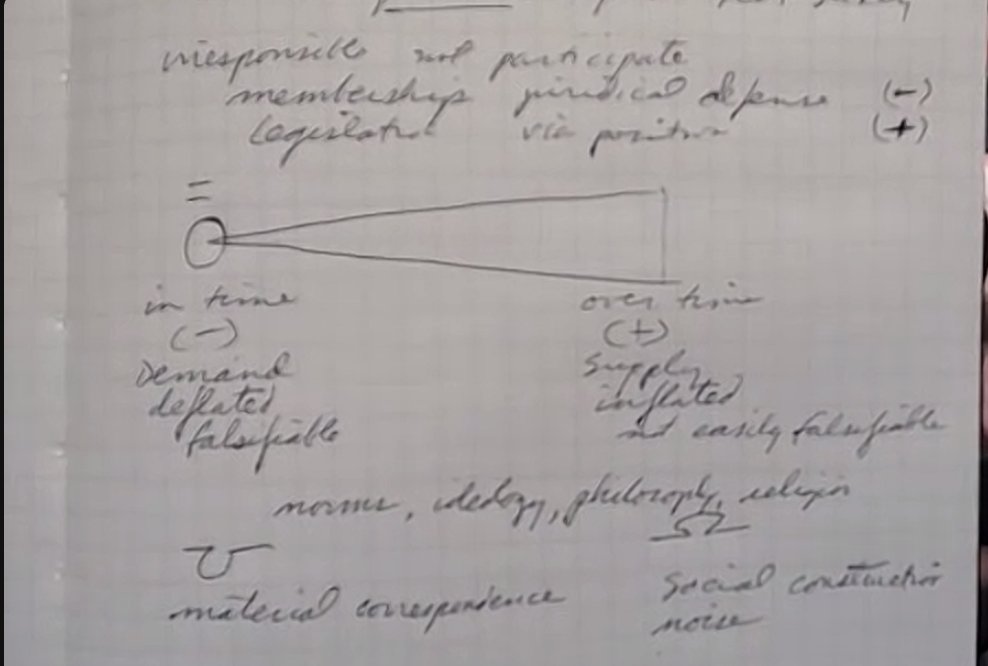
    So we evolve down this scale in precision of wisdom literatures (grammars) to discover first principles, and then back propagate reforms to eliminate error, producing non-false ideology, philosophy, religion, etc.
    From the Experiential > to the Conflationary > to the Inflationary… https://t.co/95V70ur1od


    Source date (UTC): 2023-08-20 16:11:44 UTC

    Original post: https://twitter.com/i/web/status/1693294755470319623

  • Americans call Africans black, because they are extant outside of Africa. It’s c

    Americans call Africans black, because they are extant outside of Africa. It’s called disambiguation. It’s the same reasons blacks (and everyone else) call europeans white.
    We could get over it by simply calling each other the names of our races (species) by using African, South…


    Source date (UTC): 2023-08-18 14:14:55 UTC

    Original post: https://twitter.com/i/web/status/1692540582139249067

    Replying to: https://twitter.com/i/web/status/1692525836836970997

  • This is why I”m asking NLI not the public. It’s ok to use pollysyllables, becaus

    This is why I”m asking NLI not the public. It’s ok to use pollysyllables, because it’s basically a statement in the mathematical logic of Natural Order (which itself might requires complicated explanation). What I’m worried about is does the chain of reasoning convey the…


    Source date (UTC): 2023-08-15 17:57:58 UTC

    Original post: https://twitter.com/i/web/status/1691509552984813578

    Replying to: https://twitter.com/i/web/status/1691504274478690304

  • Ask them to make any seemingly controversial philosophical statement without the

    Ask them to make any seemingly controversial philosophical statement without the use of the verb to be, and with the requirement of complete sentences, and ‘satisfaction of continuous recursive disambiguation’.
    Then ask them if words mean something, or if people mean to…


    Source date (UTC): 2023-08-10 18:53:27 UTC

    Original post: https://twitter.com/i/web/status/1689711573185560576

    Reply addressees: @DjangoMcLaren

    Replying to: https://twitter.com/i/web/status/1689709626575536128

  • Ask them to make any seemingly controversial philosophical statement without the

    Ask them to make any seemingly controversial philosophical statement without the use of the verb to be, and with the requirement of complete sentences, and ‘satisfaction of continuous recursive disambiguation’.
    Then ask them if words mean something, or if people mean to communicate something with words, which serve as loose measurements open to ambiguity.
    😉


    Source date (UTC): 2023-08-10 18:53:26 UTC

    Original post: https://twitter.com/i/web/status/1689711573068091394