We all have a will to power, but we also have physical, mental, and emotional resources to obtain it with; and that will is countered by fear and insecurity. Language is as natural as walking. But it causes us to overestimate our similarities. Empathy causes us to overestimate our similarities. Submission causes us to overestimate our similarities. Need causes us to overestimate our similarities. And a host of our cognitive biases evolved to convince us we are normal, or average, or like everyone else. But despite all those cognitive biases, we are demonstrably not all that similar in MARGINAL difference in the performance of emotional, cognitive, and physical tasks. We can often judge someone’s ability by their vocabulary and their reasoning – language is how we measure (diagnose) the mind. But the fact that we can speak to people across the human spectrum tells us nothing about our marginal (effective) differences. In fact, those cognitive biases for similarity(indifference) may be nothing other than an adaptation to the use of language, by providing us with greater imitation(of actions), sympathy(for wants), and empathy(for feelings), so that we more readily comprehend one another’s use of language so that in turn we may more readily reap the rewards of opportunities for the high returns on cooperation. The more Empathic, Sympathetic, Needful, and Vulnerable we are, the more incentive we have to find similarities (female) and the Dispassionate, Analytic, Independent, and Dominant we are the more incentive we have to identify and preserve our dissimilarities. Now think about that a little bit.
Theme: Grammar
-
Language Causes Overestimation of Similarities
We all have a will to power, but we also have physical, mental, and emotional resources to obtain it with; and that will is countered by fear and insecurity. Language is as natural as walking. But it causes us to overestimate our similarities. Empathy causes us to overestimate our similarities. Submission causes us to overestimate our similarities. Need causes us to overestimate our similarities. And a host of our cognitive biases evolved to convince us we are normal, or average, or like everyone else. But despite all those cognitive biases, we are demonstrably not all that similar in MARGINAL difference in the performance of emotional, cognitive, and physical tasks. We can often judge someone’s ability by their vocabulary and their reasoning – language is how we measure (diagnose) the mind. But the fact that we can speak to people across the human spectrum tells us nothing about our marginal (effective) differences. In fact, those cognitive biases for similarity(indifference) may be nothing other than an adaptation to the use of language, by providing us with greater imitation(of actions), sympathy(for wants), and empathy(for feelings), so that we more readily comprehend one another’s use of language so that in turn we may more readily reap the rewards of opportunities for the high returns on cooperation. The more Empathic, Sympathetic, Needful, and Vulnerable we are, the more incentive we have to find similarities (female) and the Dispassionate, Analytic, Independent, and Dominant we are the more incentive we have to identify and preserve our dissimilarities. Now think about that a little bit.
-
The Aphorism and Riddle: Self Equilibrating Knowledge
An aphorism is the penultimate device for the parsimonious conveyance of knowledge. The Chinese lack the concepts and vocabulary to produce aphorisms(science) so they produce ‘riddles'(wisdom). But only the far west and the far east have produced the technique of testable statements that produce competition rather than monopoly. The despotic people have developed monopoly, analogy, monotheism and obedience rather than competition and knowledge. I gotta tell you that despite knowing this for decades the time it has taken me to come anywhere close Nietzsche is horrifying. His talent is awe inspiring. But once you understand that this is how ‘it is best done’, at least you know what to strive for.
-
The Aphorism and Riddle: Self Equilibrating Knowledge
An aphorism is the penultimate device for the parsimonious conveyance of knowledge. The Chinese lack the concepts and vocabulary to produce aphorisms(science) so they produce ‘riddles'(wisdom). But only the far west and the far east have produced the technique of testable statements that produce competition rather than monopoly. The despotic people have developed monopoly, analogy, monotheism and obedience rather than competition and knowledge. I gotta tell you that despite knowing this for decades the time it has taken me to come anywhere close Nietzsche is horrifying. His talent is awe inspiring. But once you understand that this is how ‘it is best done’, at least you know what to strive for.
-
TRUTH IS RELATIVE? NO “IT JUST MEANS YER IGNERINT” There are no paradoxes only g
TRUTH IS RELATIVE? NO “IT JUST MEANS YER IGNERINT”
There are no paradoxes only grammatical errors.
If people err they do not speak the truth they speak only honestly or truthfully. That they conflate honesty with truthfully is merely another version of conflating preference “i like chocolate ice cream” with consensus “chocolate tastes good (to most of us)”, with truth (chocolate may taste good to many people).
Truth originated with the term testimony. We merely combine the word True with the copula “is” (meaning “i dont know how it exists”) and conflate the various positions on the truth spectrum out of convenience and ignorance. We eliminate these problems through speaking if full sentences in operational language (testable transactions)>
This is why all knowledge in science is forever contingent, and all scientists that have been taught sufficient understanding of their craft, rarely make truth claims, and almost always make contingent truth claims, with prevarications like “as far as we know” or “according to x it appears”, and “it’s hard to imagine otherwise”.
Right now my favorite example is the red shift that is hypothetically measuring that the universe is expanding faster than light, when it is just as likely it is a property of space itself that is causing the shift (distortion). We just don’t know. And we can’t observe directly. So we have to triangulate and deduce by some other series of observations. Even then we must eliminate all alternatives before we can make a truth claim – that’s what ‘truth’ means.
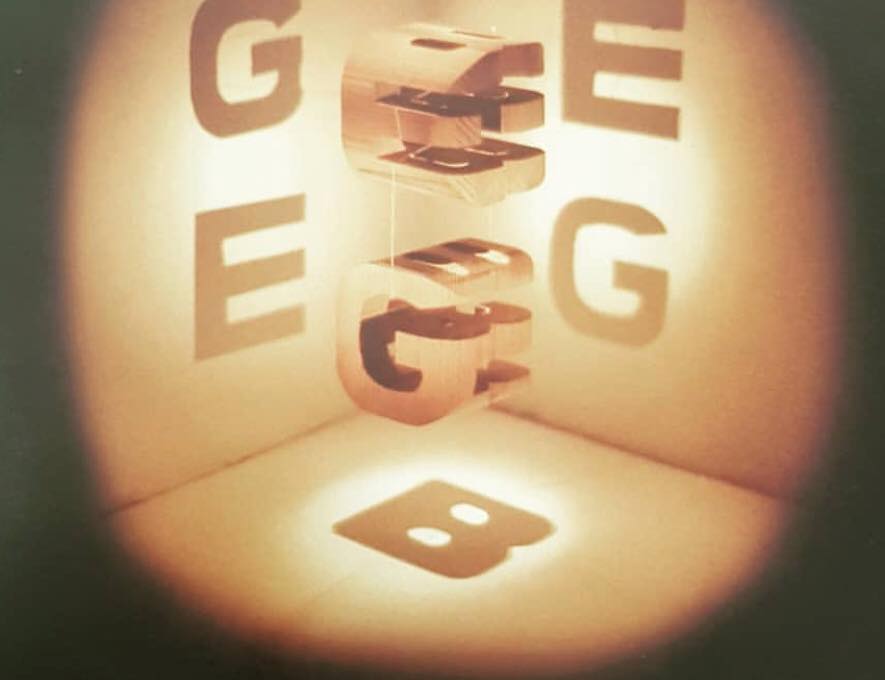
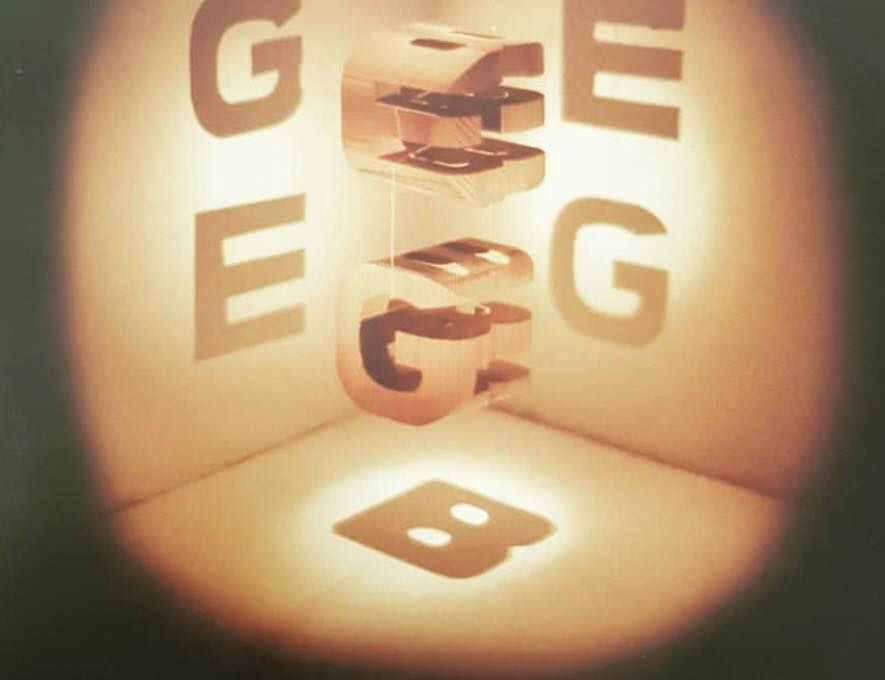
In the case of the shapes above, what are the observers testifying to? Their observation? Their shape of the shadow? The shape of the object casting the shadow? People conflate observation, effect, and cause.
|| Observation <- Effect <- Causes
One cannot testify to the shape of the object only to the observation of the shape of the shadow being cast (fact). One can hypothesize a shape of the object (hypothesis). One can speak honestly about that shape (honesty). One can perform due diligence that one does not err (theory) but in science all claims are contingent. One cannot testify to the unobservable, until he has eliminated all possible alternatives (due diligence). Since perfect knowledge is almost never possible outside of the reductio, once on has performed tests eliminating all alternatives (due diligence) one can testify he speaks truthfully of his theory. But in general we make only truth claims of an observation of change in state.
That people do such a thing regularly is simply a matter of ignorance, and the bad habits accumulated in ordinary language grammer – which any time in court will rapidly correct.
The fact that people say “aint” instead of ‘isn’t’, and ‘different than’ rather than ‘different from’, is no different from saying “It’s a shape X” rather than “The shadow I can observe is the shape X”.
It’s just ignorance, error, poor education, colloquial speech, or being verbally lazy.
SPECTRUM:
[T]AUTOLOGICAL TRUTH: That testimony you give when you promising the equality of two statements using different terms: A circular definition, a statement of equality or a statement of identity.
[A]NALYTIC TRUTH: The testimony you give promising the internal consistency of one or more statements used in the construction of a proof in an axiomatic(declarative) system. (a Logical Truth).
[I]DEAL TRUTH: That testimony (description) you would give, if your knowledge (information) was complete, your language was sufficient, stated without error, cleansed of bias, and absent deceit, within the scope of precision limited to the context of the question you wish to answer; and the promise that another possessed of the same knowledge (information), performing the same due diligence, having the same experiences, would provide the same testimony. (Ideal Truth = Perfect Parsimony.)
[T]RUTHFULNESS: that testimony (description) you give if your knowledge (information) is incomplete, your language is insufficient, you have performed due diligence in the elimination of error, imaginary content, wishful thinking, bias, and deceit; within the scope of precision limited to the question you wish to answer; and which you warranty to be so; and the promise that another possessed of the knowledge, performing the same due diligence, having the same experiences, would provide the same testimony.
[H]ONESTY: that testimony (description) you give with full knowledge that knowledge is incomplete, your language is insufficient, but you have not performed due diligence in the elimination of error and bias, but which you warranty is free of deceit; within the scope of precision limited to the question you wish to answer; and the promise that another possess of the same knowledge (information), performing the same due diligence, having the same experiences, would provide the same testimony.
Source date (UTC): 2018-07-13 00:03:30 UTC
-
photos_and_videos/your_posts/37003564_10156491807667264_8971145353638182912_n_10
photos_and_videos/your_posts/37003564_10156491807667264_8971145353638182912_n_10156491807662264.jpg TRUTH IS RELATIVE? NO “IT JUST MEANS YER IGNERINT”
There are no paradoxes only grammatical errors.
If people err they do not speak the truth they speak only honestly or truthfully. That they conflate honesty with truthfully is merely another version of conflating preference “i like chocolate ice cream” with consensus “chocolate tastes good (to most of us)”, with truth (chocolate may taste good to many people).
Truth originated with the term testimony. We merely combine the word True with the copula “is” (meaning “i dont know how it exists”) and conflate the various positions on the truth spectrum out of convenience and ignorance. We eliminate these problems through speaking if full sentences in operational language (testable transactions)>
This is why all knowledge in science is forever contingent, and all scientists that have been taught sufficient understanding of their craft, rarely make truth claims, and almost always make contingent truth claims, with prevarications like “as far as we know” or “according to x it appears”, and “it’s hard to imagine otherwise”.
Right now my favorite example is the red shift that is hypothetically measuring that the universe is expanding faster than light, when it is just as likely it is a property of space itself that is causing the shift (distortion). We just don’t know. And we can’t observe directly. So we have to triangulate and deduce by some other series of observations. Even then we must eliminate all alternatives before we can make a truth claim – that’s what ‘truth’ means.
In the case of the shapes above, what are the observers testifying to? Their observation? Their shape of the shadow? The shape of the object casting the shadow? People conflate observation, effect, and cause.
|| Observation <- Effect <- Causes
One cannot testify to the shape of the object only to the observation of the shape of the shadow being cast (fact). One can hypothesize a shape of the object (hypothesis). One can speak honestly about that shape (honesty). One can perform due diligence that one does not err (theory) but in science all claims are contingent. One cannot testify to the unobservable, until he has eliminated all possible alternatives (due diligence). Since perfect knowledge is almost never possible outside of the reductio, once on has performed tests eliminating all alternatives (due diligence) one can testify he speaks truthfully of his theory. But in general we make only truth claims of an observation of change in state.
That people do such a thing regularly is simply a matter of ignorance, and the bad habits accumulated in ordinary language grammer – which any time in court will rapidly correct.
The fact that people say “aint” instead of ‘isn’t’, and ‘different than’ rather than ‘different from’, is no different from saying “It’s a shape X” rather than “The shadow I can observe is the shape X”.
It’s just ignorance, error, poor education, colloquial speech, or being verbally lazy.
SPECTRUM:
[T]AUTOLOGICAL TRUTH: That testimony you give when you promising the equality of two statements using different terms: A circular definition, a statement of equality or a statement of identity.
[A]NALYTIC TRUTH: The testimony you give promising the internal consistency of one or more statements used in the construction of a proof in an axiomatic(declarative) system. (a Logical Truth).
[I]DEAL TRUTH: That testimony (description) you would give, if your knowledge (information) was complete, your language was sufficient, stated without error, cleansed of bias, and absent deceit, within the scope of precision limited to the context of the question you wish to answer; and the promise that another possessed of the same knowledge (information), performing the same due diligence, having the same experiences, would provide the same testimony. (Ideal Truth = Perfect Parsimony.)
[T]RUTHFULNESS: that testimony (description) you give if your knowledge (information) is incomplete, your language is insufficient, you have performed due diligence in the elimination of error, imaginary content, wishful thinking, bias, and deceit; within the scope of precision limited to the question you wish to answer; and which you warranty to be so; and the promise that another possessed of the knowledge, performing the same due diligence, having the same experiences, would provide the same testimony.
[H]ONESTY: that testimony (description) you give with full knowledge that knowledge is incomplete, your language is insufficient, but you have not performed due diligence in the elimination of error and bias, but which you warranty is free of deceit; within the scope of precision limited to the question you wish to answer; and the promise that another possess of the same knowledge (information), performing the same due diligence, having the same experiences, would provide the same testimony.TRUTH IS RELATIVE? NO “IT JUST MEANS YER IGNERINT”
There are no paradoxes only grammatical errors.
If people err they do not speak the truth they speak only honestly or truthfully. That they conflate honesty with truthfully is merely another version of conflating preference “i like chocolate ice cream” with consensus “chocolate tastes good (to most of us)”, with truth (chocolate may taste good to many people).
Truth originated with the term testimony. We merely combine the word True with the copula “is” (meaning “i dont know how it exists”) and conflate the various positions on the truth spectrum out of convenience and ignorance. We eliminate these problems through speaking if full sentences in operational language (testable transactions)>
This is why all knowledge in science is forever contingent, and all scientists that have been taught sufficient understanding of their craft, rarely make truth claims, and almost always make contingent truth claims, with prevarications like “as far as we know” or “according to x it appears”, and “it’s hard to imagine otherwise”.
Right now my favorite example is the red shift that is hypothetically measuring that the universe is expanding faster than light, when it is just as likely it is a property of space itself that is causing the shift (distortion). We just don’t know. And we can’t observe directly. So we have to triangulate and deduce by some other series of observations. Even then we must eliminate all alternatives before we can make a truth claim – that’s what ‘truth’ means.
In the case of the shapes above, what are the observers testifying to? Their observation? Their shape of the shadow? The shape of the object casting the shadow? People conflate observation, effect, and cause.
|| Observation <- Effect <- Causes
One cannot testify to the shape of the object only to the observation of the shape of the shadow being cast (fact). One can hypothesize a shape of the object (hypothesis). One can speak honestly about that shape (honesty). One can perform due diligence that one does not err (theory) but in science all claims are contingent. One cannot testify to the unobservable, until he has eliminated all possible alternatives (due diligence). Since perfect knowledge is almost never possible outside of the reductio, once on has performed tests eliminating all alternatives (due diligence) one can testify he speaks truthfully of his theory. But in general we make only truth claims of an observation of change in state.
That people do such a thing regularly is simply a matter of ignorance, and the bad habits accumulated in ordinary language grammer – which any time in court will rapidly correct.
The fact that people say “aint” instead of ‘isn’t’, and ‘different than’ rather than ‘different from’, is no different from saying “It’s a shape X” rather than “The shadow I can observe is the shape X”.
It’s just ignorance, error, poor education, colloquial speech, or being verbally lazy.
SPECTRUM:
[T]AUTOLOGICAL TRUTH: That testimony you give when you promising the equality of two statements using different terms: A circular definition, a statement of equality or a statement of identity.
[A]NALYTIC TRUTH: The testimony you give promising the internal consistency of one or more statements used in the construction of a proof in an axiomatic(declarative) system. (a Logical Truth).
[I]DEAL TRUTH: That testimony (description) you would give, if your knowledge (information) was complete, your language was sufficient, stated without error, cleansed of bias, and absent deceit, within the scope of precision limited to the context of the question you wish to answer; and the promise that another possessed of the same knowledge (information), performing the same due diligence, having the same experiences, would provide the same testimony. (Ideal Truth = Perfect Parsimony.)
[T]RUTHFULNESS: that testimony (description) you give if your knowledge (information) is incomplete, your language is insufficient, you have performed due diligence in the elimination of error, imaginary content, wishful thinking, bias, and deceit; within the scope of precision limited to the question you wish to answer; and which you warranty to be so; and the promise that another possessed of the knowledge, performing the same due diligence, having the same experiences, would provide the same testimony.
[H]ONESTY: that testimony (description) you give with full knowledge that knowledge is incomplete, your language is insufficient, but you have not performed due diligence in the elimination of error and bias, but which you warranty is free of deceit; within the scope of precision limited to the question you wish to answer; and the promise that another possess of the same knowledge (information), performing the same due diligence, having the same experiences, would provide the same testimony.
Source date (UTC): 2018-07-12 20:03:00 UTC
-
photos_and_videos/TimelinePhotos_43196237263/37003564_10156491807667264_89711453
photos_and_videos/TimelinePhotos_43196237263/37003564_10156491807667264_8971145353638182912_n_10156491807662264.jpg TRUTH IS RELATIVE? NO “IT JUST MEANS YER IGNERINT”
There are no paradoxes only grammatical errors.
If people err they do not speak the truth they speak only honestly or truthfully. That they conflate honesty with truthfully is merely another version of conflating preference “i like chocolate ice cream” with consensus “chocolate tastes good (to most of us)”, with truth (chocolate may taste good to many people).
Truth originated with the term testimony. We merely combine the word True with the copula “is” (meaning “i dont know how it exists”) and conflate the various positions on the truth spectrum out of convenience and ignorance. We eliminate these problems through speaking if full sentences in operational language (testable transactions)>
This is why all knowledge in science is forever contingent, and all scientists that have been taught sufficient understanding of their craft, rarely make truth claims, and almost always make contingent truth claims, with prevarications like “as far as we know” or “according to x it appears”, and “it’s hard to imagine otherwise”.
Right now my favorite example is the red shift that is hypothetically measuring that the universe is expanding faster than light, when it is just as likely it is a property of space itself that is causing the shift (distortion). We just don’t know. And we can’t observe directly. So we have to triangulate and deduce by some other series of observations. Even then we must eliminate all alternatives before we can make a truth claim – that’s what ‘truth’ means.
In the case of the shapes above, what are the observers testifying to? Their observation? Their shape of the shadow? The shape of the object casting the shadow? People conflate observation, effect, and cause.
|| Observation <- Effect <- Causes
One cannot testify to the shape of the object only to the observation of the shape of the shadow being cast (fact). One can hypothesize a shape of the object (hypothesis). One can speak honestly about that shape (honesty). One can perform due diligence that one does not err (theory) but in science all claims are contingent. One cannot testify to the unobservable, until he has eliminated all possible alternatives (due diligence). Since perfect knowledge is almost never possible outside of the reductio, once on has performed tests eliminating all alternatives (due diligence) one can testify he speaks truthfully of his theory. But in general we make only truth claims of an observation of change in state.
That people do such a thing regularly is simply a matter of ignorance, and the bad habits accumulated in ordinary language grammer – which any time in court will rapidly correct.
The fact that people say “aint” instead of ‘isn’t’, and ‘different than’ rather than ‘different from’, is no different from saying “It’s a shape X” rather than “The shadow I can observe is the shape X”.
It’s just ignorance, error, poor education, colloquial speech, or being verbally lazy.
SPECTRUM:
[T]AUTOLOGICAL TRUTH: That testimony you give when you promising the equality of two statements using different terms: A circular definition, a statement of equality or a statement of identity.
[A]NALYTIC TRUTH: The testimony you give promising the internal consistency of one or more statements used in the construction of a proof in an axiomatic(declarative) system. (a Logical Truth).
[I]DEAL TRUTH: That testimony (description) you would give, if your knowledge (information) was complete, your language was sufficient, stated without error, cleansed of bias, and absent deceit, within the scope of precision limited to the context of the question you wish to answer; and the promise that another possessed of the same knowledge (information), performing the same due diligence, having the same experiences, would provide the same testimony. (Ideal Truth = Perfect Parsimony.)
[T]RUTHFULNESS: that testimony (description) you give if your knowledge (information) is incomplete, your language is insufficient, you have performed due diligence in the elimination of error, imaginary content, wishful thinking, bias, and deceit; within the scope of precision limited to the question you wish to answer; and which you warranty to be so; and the promise that another possessed of the knowledge, performing the same due diligence, having the same experiences, would provide the same testimony.
[H]ONESTY: that testimony (description) you give with full knowledge that knowledge is incomplete, your language is insufficient, but you have not performed due diligence in the elimination of error and bias, but which you warranty is free of deceit; within the scope of precision limited to the question you wish to answer; and the promise that another possess of the same knowledge (information), performing the same due diligence, having the same experiences, would provide the same testimony.TRUTH IS RELATIVE? NO “IT JUST MEANS YER IGNERINT”
There are no paradoxes only grammatical errors.
If people err they do not speak the truth they speak only honestly or truthfully. That they conflate honesty with truthfully is merely another version of conflating preference “i like chocolate ice cream” with consensus “chocolate tastes good (to most of us)”, with truth (chocolate may taste good to many people).
Truth originated with the term testimony. We merely combine the word True with the copula “is” (meaning “i dont know how it exists”) and conflate the various positions on the truth spectrum out of convenience and ignorance. We eliminate these problems through speaking if full sentences in operational language (testable transactions)>
This is why all knowledge in science is forever contingent, and all scientists that have been taught sufficient understanding of their craft, rarely make truth claims, and almost always make contingent truth claims, with prevarications like “as far as we know” or “according to x it appears”, and “it’s hard to imagine otherwise”.
Right now my favorite example is the red shift that is hypothetically measuring that the universe is expanding faster than light, when it is just as likely it is a property of space itself that is causing the shift (distortion). We just don’t know. And we can’t observe directly. So we have to triangulate and deduce by some other series of observations. Even then we must eliminate all alternatives before we can make a truth claim – that’s what ‘truth’ means.
In the case of the shapes above, what are the observers testifying to? Their observation? Their shape of the shadow? The shape of the object casting the shadow? People conflate observation, effect, and cause.
|| Observation <- Effect <- Causes
One cannot testify to the shape of the object only to the observation of the shape of the shadow being cast (fact). One can hypothesize a shape of the object (hypothesis). One can speak honestly about that shape (honesty). One can perform due diligence that one does not err (theory) but in science all claims are contingent. One cannot testify to the unobservable, until he has eliminated all possible alternatives (due diligence). Since perfect knowledge is almost never possible outside of the reductio, once on has performed tests eliminating all alternatives (due diligence) one can testify he speaks truthfully of his theory. But in general we make only truth claims of an observation of change in state.
That people do such a thing regularly is simply a matter of ignorance, and the bad habits accumulated in ordinary language grammer – which any time in court will rapidly correct.
The fact that people say “aint” instead of ‘isn’t’, and ‘different than’ rather than ‘different from’, is no different from saying “It’s a shape X” rather than “The shadow I can observe is the shape X”.
It’s just ignorance, error, poor education, colloquial speech, or being verbally lazy.
SPECTRUM:
[T]AUTOLOGICAL TRUTH: That testimony you give when you promising the equality of two statements using different terms: A circular definition, a statement of equality or a statement of identity.
[A]NALYTIC TRUTH: The testimony you give promising the internal consistency of one or more statements used in the construction of a proof in an axiomatic(declarative) system. (a Logical Truth).
[I]DEAL TRUTH: That testimony (description) you would give, if your knowledge (information) was complete, your language was sufficient, stated without error, cleansed of bias, and absent deceit, within the scope of precision limited to the context of the question you wish to answer; and the promise that another possessed of the same knowledge (information), performing the same due diligence, having the same experiences, would provide the same testimony. (Ideal Truth = Perfect Parsimony.)
[T]RUTHFULNESS: that testimony (description) you give if your knowledge (information) is incomplete, your language is insufficient, you have performed due diligence in the elimination of error, imaginary content, wishful thinking, bias, and deceit; within the scope of precision limited to the question you wish to answer; and which you warranty to be so; and the promise that another possessed of the knowledge, performing the same due diligence, having the same experiences, would provide the same testimony.
[H]ONESTY: that testimony (description) you give with full knowledge that knowledge is incomplete, your language is insufficient, but you have not performed due diligence in the elimination of error and bias, but which you warranty is free of deceit; within the scope of precision limited to the question you wish to answer; and the promise that another possess of the same knowledge (information), performing the same due diligence, having the same experiences, would provide the same testimony.
Source date (UTC): 2018-07-12 20:03:00 UTC
-
I’m happy if you want to discuss which dependency is first: what it is we can sa
I’m happy if you want to discuss which dependency is first: what it is we can say we speak of and what it is we claim exists using our speech. 😉 In case you don’t grok that, it inverts your presupposition. 😉
Source date (UTC): 2018-07-12 16:52:31 UTC
Original post: https://twitter.com/i/web/status/1017451652088061953
Reply addressees: @Hispanogoyim @egoissocial @IberianSoldier
Replying to: https://twitter.com/i/web/status/1017394341617324032
IN REPLY TO:
Original post on X
Original tweet unavailable — we could not load the text of the post this reply is addressing on X. That usually means the tweet was deleted, the account is protected, or X does not expose it to the account used for archiving. The Original post link below may still open if you view it in X while signed in.
Original post: https://twitter.com/i/web/status/1017394341617324032
-
That underlying structure (forces) produces a hierarchy of grammars (operations)
That underlying structure (forces) produces a hierarchy of grammars (operations) of increasing complexity yeilding a universe that blossoms then moves from a hot (excited) state to a cold (unexcited state) and as far as we know, the hot state is very short compared to the cold.
Source date (UTC): 2018-07-11 19:25:40 UTC
Original post: https://twitter.com/i/web/status/1017127804935331840
Reply addressees: @Hispanogoyim @egoissocial @IberianSoldier
Replying to: https://twitter.com/i/web/status/1017123210884763648
IN REPLY TO:
Original post on X
Original tweet unavailable — we could not load the text of the post this reply is addressing on X. That usually means the tweet was deleted, the account is protected, or X does not expose it to the account used for archiving. The Original post link below may still open if you view it in X while signed in.
Original post: https://twitter.com/i/web/status/1017123210884763648
-
The Grammars is going to turn on a light bulb in your head that will change you
The Grammars is going to turn on a light bulb in your head that will change you forever.
Source date (UTC): 2018-07-11 16:52:25 UTC
Original post: https://twitter.com/i/web/status/1017089237269827585