Theme: Grammar

  • P and Math

    —“In Natural Law, what would represent the radix? Moreover, as in mathematics where the radix point separates integers from fractionals, would you say in Natural Law the radix point exists between ordinary language and opining?”—Billy Law-Bregan

    [S]mart. Good thinking. Good question. In mathematics the radix is the base set of names of positions (nouns), before restoring to positional naming (multipliers of the base: phrases). The grammar of mathematics adds the possible operations (verbs), all of which are variations on addition or its reverse, subtraction (transformations), and the only possible tests of positional comparison, less, equal, or greater (equilibria), an the only possible test of agreement (truth, false, undecidable) In law, the equivalent of radix (base nouns) consist of the vocabulary of actionable references given human facility for sensation, perception, intuition (nouns, names, referents), the vocabulary of operations (verbs, thought word and deed), and the possible changes in state (transformations), and the and the only possible tests comparison (possibility) and only possible test of agreement (empiricism-observation-action, logic-consistency-intuition-word, and experience-sense-perception-autoassociation ). So yes the human grammatical facility, and the structure of grammar, the structure of transactions with that grammar(journal), and the epistemology of the story(ledger) is the same across every one of the grammars from deflationary (math) to functional (programming) to operational (natural law) to ordinary language to the inflationary grammars of narratives, fictions, fictionalisms, and deceits. MATH: Actor (presumed), associated reference (object named by positional name), name of referent – number (positional name), transformation, change in state, consequence, external consequence, repeat, sum, total. LAW: Actor, Action (name of human action), associated reference (object), transformation, change in state, consequence, external consequence, repeat, sum, total. STORY: name of referent – actor, action, transformation, consequence, external consequence, repeat, sum, total All grammars are the same and accounting, finance, and economics are the least error prone methods of describing human action. In this sense, law asks us for a full accounting of human actions so that we can test whether the statements are testifiable (fully accounted) or not, and if not, then how they are not fully accounted, and by deduction, why they aren’t. (ignorance, error, bias, wishful thinking, loading-farming, suggestion-obscurantism-overloading, the fictionalisms of sophistry, pseudoscience, or the occult, or outright deceit. Ergo P-law fits in the sequence: arithmetic, accounting, programming, natural law, economics, group strategy.
  • P and Math

    —“In Natural Law, what would represent the radix? Moreover, as in mathematics where the radix point separates integers from fractionals, would you say in Natural Law the radix point exists between ordinary language and opining?”—Billy Law-Bregan

    [S]mart. Good thinking. Good question. In mathematics the radix is the base set of names of positions (nouns), before restoring to positional naming (multipliers of the base: phrases). The grammar of mathematics adds the possible operations (verbs), all of which are variations on addition or its reverse, subtraction (transformations), and the only possible tests of positional comparison, less, equal, or greater (equilibria), an the only possible test of agreement (truth, false, undecidable) In law, the equivalent of radix (base nouns) consist of the vocabulary of actionable references given human facility for sensation, perception, intuition (nouns, names, referents), the vocabulary of operations (verbs, thought word and deed), and the possible changes in state (transformations), and the and the only possible tests comparison (possibility) and only possible test of agreement (empiricism-observation-action, logic-consistency-intuition-word, and experience-sense-perception-autoassociation ). So yes the human grammatical facility, and the structure of grammar, the structure of transactions with that grammar(journal), and the epistemology of the story(ledger) is the same across every one of the grammars from deflationary (math) to functional (programming) to operational (natural law) to ordinary language to the inflationary grammars of narratives, fictions, fictionalisms, and deceits. MATH: Actor (presumed), associated reference (object named by positional name), name of referent – number (positional name), transformation, change in state, consequence, external consequence, repeat, sum, total. LAW: Actor, Action (name of human action), associated reference (object), transformation, change in state, consequence, external consequence, repeat, sum, total. STORY: name of referent – actor, action, transformation, consequence, external consequence, repeat, sum, total All grammars are the same and accounting, finance, and economics are the least error prone methods of describing human action. In this sense, law asks us for a full accounting of human actions so that we can test whether the statements are testifiable (fully accounted) or not, and if not, then how they are not fully accounted, and by deduction, why they aren’t. (ignorance, error, bias, wishful thinking, loading-farming, suggestion-obscurantism-overloading, the fictionalisms of sophistry, pseudoscience, or the occult, or outright deceit. Ergo P-law fits in the sequence: arithmetic, accounting, programming, natural law, economics, group strategy.

  • Math Versus Natural Law — the Same?

    [M]ath is a logic of positional naming, and Natural law a logic of Property Naming. The grammar of both Math and Law consists of operations on names. So in math we use operations to maintain balance (equilibrium) on both sides of an equal’s sign, and in natural law we use operations to maintain balance between individuals. See? Here: Human Logical Facility (constant relations) > …. Human Language Facility (sequence of sounds) > …. …. Human Grammar Facility (rules of continuous recursive disambiguation) > …. …. …. Grammars (deflationary <- ordinary -> inflationary) > …. …. …. …. Math (positional names) > …. …. …. …. …. Programming (procedural names) > …. …. …. …. …. …. Natural Law (human actions) > …. …. …. …. …. …. …. Ordinary Language (utility) > …. …. …. …. …. …. …. …. Opining (Loading, Framing) …. …. …. …. …. …. …. …. …. Fictions (adding what’s not there) …. …. …. …. …. …. …. …. …. …. Fictionalisms (sophistry pseudoscience, supernaturalism) …. …. …. …. …. …. …. …. …. …. …. Deceit (lying) …. …. …. …. …. …. …. …. …. …. …. …. Denial …. …. …. …. …. …. …. …. …. …. …. …. …. Silence (Notice: Note how I left out verbal logic, rationalism, and philosophy because they’re included in sophistry.)

  • Math Versus Natural Law — the Same?

    [M]ath is a logic of positional naming, and Natural law a logic of Property Naming. The grammar of both Math and Law consists of operations on names. So in math we use operations to maintain balance (equilibrium) on both sides of an equal’s sign, and in natural law we use operations to maintain balance between individuals. See? Here: Human Logical Facility (constant relations) > …. Human Language Facility (sequence of sounds) > …. …. Human Grammar Facility (rules of continuous recursive disambiguation) > …. …. …. Grammars (deflationary <- ordinary -> inflationary) > …. …. …. …. Math (positional names) > …. …. …. …. …. Programming (procedural names) > …. …. …. …. …. …. Natural Law (human actions) > …. …. …. …. …. …. …. Ordinary Language (utility) > …. …. …. …. …. …. …. …. Opining (Loading, Framing) …. …. …. …. …. …. …. …. …. Fictions (adding what’s not there) …. …. …. …. …. …. …. …. …. …. Fictionalisms (sophistry pseudoscience, supernaturalism) …. …. …. …. …. …. …. …. …. …. …. Deceit (lying) …. …. …. …. …. …. …. …. …. …. …. …. Denial …. …. …. …. …. …. …. …. …. …. …. …. …. Silence (Notice: Note how I left out verbal logic, rationalism, and philosophy because they’re included in sophistry.)

  • Christians want to be woo’ed…

    Christians want to be woo’ed… https://propertarianism.com/2020/04/23/christians-want-to-be-wooed/


    Source date (UTC): 2020-04-23 19:59:39 UTC

    Original post: https://twitter.com/i/web/status/1253413246163316736

  • Christians want to be woo’ed…

    —“Christians want to be woo’ed…the congregation is referred to as female for a good reason. If you don’t woo them by speaking to them in the grammars they are accustomed to–supernaturalism, childlike storytelling (parables), and the language of blind faith–they get put off, and like uppity women, they will walk away in a huff. The problem is, they aren’t some great prize to be won, they’re like all other Western females, hopelessly misguided, morally compromised ding bats with delusions of grandeur.”—Shannon Constantine

  • Christians want to be woo’ed…

    —“Christians want to be woo’ed…the congregation is referred to as female for a good reason. If you don’t woo them by speaking to them in the grammars they are accustomed to–supernaturalism, childlike storytelling (parables), and the language of blind faith–they get put off, and like uppity women, they will walk away in a huff. The problem is, they aren’t some great prize to be won, they’re like all other Western females, hopelessly misguided, morally compromised ding bats with delusions of grandeur.”—Shannon Constantine

  • Define “OK”. 😉

    Define “OK”. 😉


    Source date (UTC): 2020-04-21 21:35:45 UTC

    Original post: https://twitter.com/i/web/status/1252712653430173699

    Reply addressees: @lllLucart

    Replying to: https://twitter.com/i/web/status/1252704387585146880

  • Also, in english “You” can refer to both individual and collective. 🙂 What I sa

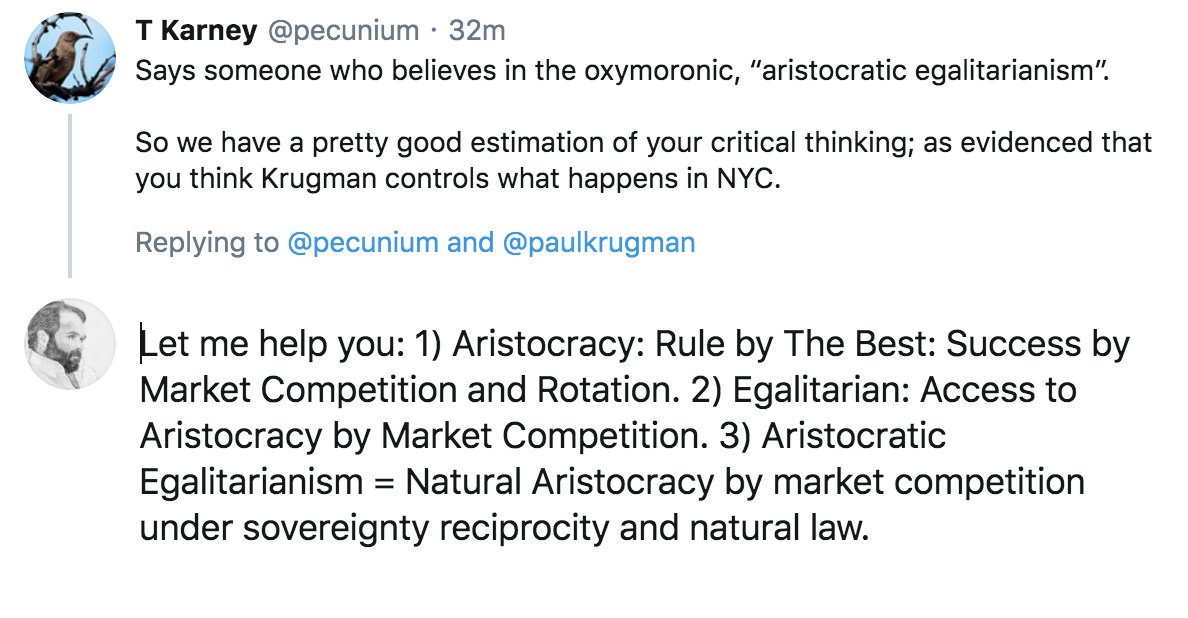
    Also, in english “You” can refer to both individual and collective. 🙂 What I said was true. If you ever think I err, you’re incorrect. https://t.co/H2THTThZbZ


    Source date (UTC): 2020-04-21 13:19:21 UTC

    Original post: https://twitter.com/i/web/status/1252587729831038977

    Reply addressees: @paulkrugman

    Replying to: https://twitter.com/i/web/status/1252571219423121408

  • FROM PM POSSIBILITY ONE: Confusing two hierarchies. Right and Wrong are higher c

    FROM PM

    POSSIBILITY ONE:

    Confusing two hierarchies.

    Right and Wrong are higher categories.

    Right: righteous, moral, ethical, amoral.

    Wrong: evil, Immoral, unethical, amoral

    POSSIBILITY TWO

    One hierarchy creating ambiguity

    Right: righteous, moral, ethical, reciprocal, right, amoral.

    Wrong: evil, Immoral, unethical, criminal, wrong, amoral

    BOTH

    Both converge on the amoral

    Both treat right and wrong as minor infractions.

    SUGGESTION

    I would suggest keeping categories of right and wrong and the subcategories within them.

    -hugs


    Source date (UTC): 2020-04-19 17:04:00 UTC