Hamlet: a small settlement, generally one smaller than a village, usually a collection of homes in a rural or agrarian region. Village: a group of houses and associated buildings, larger than a hamlet and smaller than a town, situated in a rural area, and possessing minor local commerce. Town: an urban area that has a name, defined boundaries, and local government, and that is generally larger than a village and smaller than a city, with an economy primarily of agricultural, crafts, or light industry. City: A large human settlement in a permanent and densely settled place with administratively defined boundaries whose members work primarily on non-agricultural tasks, and possessing a financial center for the organization of capital. Quarter: a part of a town or city having a specific character or use. *Ghetto(Aliens): a part of a city in which members of a minority group live, typically as a result of social, legal, or economic pressure. *Enclave(Aliens): a portion of territory within or surrounded by a larger territory whose inhabitants are culturally or ethnically distinct. *Colony(Alien): (a) a group of people of one nationality or ethnic group living in a foreign city or country. (b a country or area under the full or partial political control of another country, typically a distant one, and occupied by settlers from that country.) Estate (Proto Plantation): an extensive area of land in the country, usually with a large house, owned by one person, family, or organization. *Plantation (Proto Fief): a usually large farm or estate, especially in a tropical or semitropical country, on which cash crops, including cotton, tobacco, coffee, sugar cane, is cultivated, usually by resident laborers. Manor: (especially in England and Wales) a unit of land, originally a feudal lordship, consisting of a lord’s demesne and lands rented to tenants. (Today: a large country house with lands; the principal house of a landed estate.) Fief(proto-state): an estate of land, especially one held on condition of feudal service. Demesne (land): land attached to a manor and retained for the owner’s own use. Protectorate (military): a state that is controlled and protected by another. State(politics): a territory with an organized political community under one government. Country (territory): A state, with a government, occupying a particular territory. Nation(Ethnicity): a large body of people united by common descent, history, culture, or language, inhabiting a particular country or territory. Nation-State(Ethnicity): a sovereign state whose citizens or subjects are relatively homogeneous in factors such as language or common descent. Federation(politics): a group of states with a central government but independence in internal affairs. Confederation: a more or less permanent union of countries with some or most political power vested in a central authority. League: a collection of people, countries, or groups that combine for a particular purpose, typically mutual protection or cooperation. Empire(politics): an extensive group of states or countries under a single supreme authority, formerly especially an emperor or empress. Civilization: the largest organization of humans with common race, ethnicity, history, culture, religion and often language.
Theme: Civilization
-
The Antagonists in The Iliad and The Bible: What All Revolutionaries Claim to Be
The Antagonists in The Iliad and The Bible: What All Revolutionaries Claim to Be https://propertarianism.com/2020/05/25/the-antagonists-in-the-iliad-and-the-bible-what-all-revolutionaries-claim-to-be/
Source date (UTC): 2020-05-25 18:26:15 UTC
Original post: https://twitter.com/i/web/status/1264986152357986305
-
The Antagonists in The Iliad and The Bible: What All Revolutionaries Claim to Be
Jan 25, 2020, 3:52 PM by Don Miguel All I am pointing out is that there is a big difference in the relations between the protagonists and antogonists of the Illiad and that Bible. The antagonists in the Odyssey, are seen in a rather Satanic light and people utterly without excuse. For many reasons: 1) They are in another’s kingdom and yet do not respect the interests of the King. 2) They have been given many chances to repent to the regents or deputies of the true ruler and yet fail to do so. 3) They treat the kingdom as if it belonged to them who are only guests. Therefore and a day and hour of which only the gods know, there shall be justice severe and eternal when the true rulers return. It’s like LOTR, Robin Hood, the Mahabharata, and the New Testament. The good guys who are the representatives/descendants of the proper rulers are marginalized and vilified by the current usurpers. The current world order of peace and prosperity was created in accordance with natural law, and the signs of this agency are found in the order that we enjoy. But the people who currently rule are not the servants of Natural Law but usurpers. This is what Christians are claimed to be in the Bible as well as what just revolutionaries claim to be.
-
The Antagonists in The Iliad and The Bible: What All Revolutionaries Claim to Be
Jan 25, 2020, 3:52 PM by Don Miguel All I am pointing out is that there is a big difference in the relations between the protagonists and antogonists of the Illiad and that Bible. The antagonists in the Odyssey, are seen in a rather Satanic light and people utterly without excuse. For many reasons: 1) They are in another’s kingdom and yet do not respect the interests of the King. 2) They have been given many chances to repent to the regents or deputies of the true ruler and yet fail to do so. 3) They treat the kingdom as if it belonged to them who are only guests. Therefore and a day and hour of which only the gods know, there shall be justice severe and eternal when the true rulers return. It’s like LOTR, Robin Hood, the Mahabharata, and the New Testament. The good guys who are the representatives/descendants of the proper rulers are marginalized and vilified by the current usurpers. The current world order of peace and prosperity was created in accordance with natural law, and the signs of this agency are found in the order that we enjoy. But the people who currently rule are not the servants of Natural Law but usurpers. This is what Christians are claimed to be in the Bible as well as what just revolutionaries claim to be.
-
Q: “The End of History”
Q: “The End of History” https://propertarianism.com/2020/05/25/q-the-end-of-history/
Source date (UTC): 2020-05-25 18:21:01 UTC
Original post: https://twitter.com/i/web/status/1264984833371103232
-
Q: “The End of History”
Jan 26, 2020, 8:53 AM Q: “THE END OF HISTORY”
—“What is meant, or what do you mean when you say ‘The end of history’?”—Nicholas Arthur Catton
The End of History: SPECIFIC The end of history is a political and philosophical concept put forth by Francis Fukuyama that proposes that a particular political, economic, or social system may develop that would constitute the end-point of humanity’s sociocultural evolution and the final form of human government (and that social democracy was that order). en.wikipedia.org/wiki/End_of_history GENERAL That any given scientific question can be as complete as is chemistry (where chemistry is the most complete of the sciences). RELATING TO P My suspicion is that people will improve on P for a century at which point it will approach chemistry in completeness.
-
Q: “The End of History”
Jan 26, 2020, 8:53 AM Q: “THE END OF HISTORY”
—“What is meant, or what do you mean when you say ‘The end of history’?”—Nicholas Arthur Catton
The End of History: SPECIFIC The end of history is a political and philosophical concept put forth by Francis Fukuyama that proposes that a particular political, economic, or social system may develop that would constitute the end-point of humanity’s sociocultural evolution and the final form of human government (and that social democracy was that order). en.wikipedia.org/wiki/End_of_history GENERAL That any given scientific question can be as complete as is chemistry (where chemistry is the most complete of the sciences). RELATING TO P My suspicion is that people will improve on P for a century at which point it will approach chemistry in completeness.
-
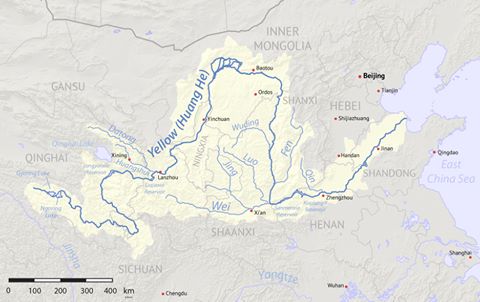
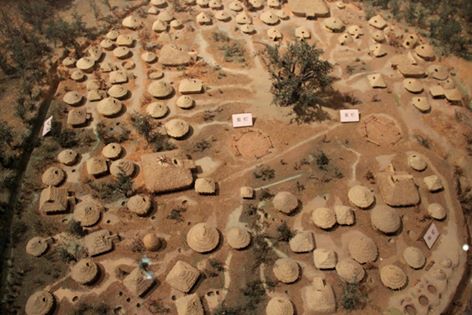
The Expansion of The Yellow River Civilization Into Today’s China
The Expansion of The Yellow River Civilization Into Today’s China https://propertarianism.com/2020/05/25/the-expansion-of-the-yellow-river-civilization-into-todays-china/
Source date (UTC): 2020-05-25 18:18:05 UTC
Original post: https://twitter.com/i/web/status/1264984095622397954
-
The Expansion of The Yellow River Civilization Into Today’s China
THE EXPANSION OF THE EXPANSION OF THE YELLOW RIVER CIVILIZATION INTO TODAY’S CHINA INTO TODAY’S CHINA
-
It”s Not Christianity Its how Its Argued
Jan 26, 2020, 12:30 PM
—“Has anyone ever noticed that it isn’t Christianity that is the problem? But the Marxist infection of X. It’s the cancer that high trust cultures are prone to. … Yeah, wrong subtopic. It’s hard to say, because Abrahamic religions seem to want to be, at least start out as high trust but quickly degenerated by something power hungry, and/or angry at a slight.”—Anne Summers —“Yes. the problem is xianity is conveyed by the same method so how can we get rid of the marxist axis without it affecting xianity unless we convert xianity to secular scientific terms?”—CurtD —“It’s hard to say whether Christianity is salvageable. God did not try to salvage either paganism or Judaism. There is no telling what the next covenant will be. It’s like trying to read the early parts of the “Voluspa” and trying to decide which gods will survive. Or reading the OT and trying to figure out what God has in store. The Owl of Minerva spreads its wings only at dusk.”—Don Miguel
Neolithic European Farmers ……………> Pre-Germanic Nordic ……………> Megalithic Atlantic ……………> Central? Aryanism (Sky Father, Sun God) ………..> East ……………> Indo Iranian > Zoroastrianism >… ……………> Indo Indian > Hinduism > Buddhism ………..> West ……………> North: ?? > Germanic Thor > Germanic Odinism ……………> Central: Germanic Celtic ……………> South: Greco-Latin-Roman Judaism > ……………> Christianity > Protestantism > American Xianity ……………> Islam > Islamic Fundamentalism. ………….. > Marxism > cultural Marxism > Postmodernism > anti-western feminism > Political Correctness > Denialism