Source: Original Site Post

  • Europeans Are Soooo Much More Eccentric in Thought and Emotion and Variability and Width and Scale and Responsiveness.

    Mar 6, 2020, 5:46 PM

    —“I have to say … spending so much time in Latin America … when I come across pure European-blood people … it is an absolute shock. They are SOOOO much more eccentric in thought and emotion and variability and width and scale and responsiveness. It’s like an accordian. You are used to seeing it pressed in to its narrow form and then all the sudden you see it in its expanded form and it’s like wow! I didn’t know all these other dimensions existed. I have seen this so many times now … and it’s a perfect control experiment because these are people who have spent their entire lives in a Latin environment.”—Michael Churchill

    Yep. It’s obvious. Unfortunately it’s a dunning kruger perception problem as well. It’s not possible for those who can’t sense perceive it to perceive it. In other words, you can’t observe it unless you’re part of it. So, how do we measure it so that we can prove it?
  • Europeans Are Soooo Much More Eccentric in Thought and Emotion and Variability and Width and Scale and Responsiveness.

    Mar 6, 2020, 5:46 PM

    —“I have to say … spending so much time in Latin America … when I come across pure European-blood people … it is an absolute shock. They are SOOOO much more eccentric in thought and emotion and variability and width and scale and responsiveness. It’s like an accordian. You are used to seeing it pressed in to its narrow form and then all the sudden you see it in its expanded form and it’s like wow! I didn’t know all these other dimensions existed. I have seen this so many times now … and it’s a perfect control experiment because these are people who have spent their entire lives in a Latin environment.”—Michael Churchill

    Yep. It’s obvious. Unfortunately it’s a dunning kruger perception problem as well. It’s not possible for those who can’t sense perceive it to perceive it. In other words, you can’t observe it unless you’re part of it. So, how do we measure it so that we can prove it?
  • “curt, Do You Believe that Russia Is a Very Misunderstood Country?”

    Mar 6, 2020, 6:11 PM Yes, Russia is poorly understood, her government misunderstood, and the Russian people (who I love very much – often more than my own) poorly understood. But this misunderstanding is a manifestation of their government and The Russian Grand Narrative under which Russia’s national mythos, while true, is a product of the second world war, and the presumption of their innocence in that war, in their advocacy of communism, in their bolshevik revolution, in the napoleonic war, and in their wars with the slavic and baltic countries. Every european country that has warred with russia had good reason. Just as russia’s conquest of the mongol empire had a good reason. Unfortunately we keep ‘ruining’ our relationship. Had europeans done ‘the right thing’ in 1992, which was a marshal plan for russia, and rapid immediate integration into nato, we would not have the discord we have today. Putin asked. We stupidly said no. And history is what it is. So, as usual, in international affairs, anglos have the best of intentions, and make the worst of decisions. The world returns to normal, and the europeans will produce a german-russian or franco-german alliance. France has always been the enemy of europe, and the russians and germans have necessary overlapping interests. So this should play out interestingly.

  • “curt, Do You Believe that Russia Is a Very Misunderstood Country?”

    Mar 6, 2020, 6:11 PM Yes, Russia is poorly understood, her government misunderstood, and the Russian people (who I love very much – often more than my own) poorly understood. But this misunderstanding is a manifestation of their government and The Russian Grand Narrative under which Russia’s national mythos, while true, is a product of the second world war, and the presumption of their innocence in that war, in their advocacy of communism, in their bolshevik revolution, in the napoleonic war, and in their wars with the slavic and baltic countries. Every european country that has warred with russia had good reason. Just as russia’s conquest of the mongol empire had a good reason. Unfortunately we keep ‘ruining’ our relationship. Had europeans done ‘the right thing’ in 1992, which was a marshal plan for russia, and rapid immediate integration into nato, we would not have the discord we have today. Putin asked. We stupidly said no. And history is what it is. So, as usual, in international affairs, anglos have the best of intentions, and make the worst of decisions. The world returns to normal, and the europeans will produce a german-russian or franco-german alliance. France has always been the enemy of europe, and the russians and germans have necessary overlapping interests. So this should play out interestingly.

  • All Epistemic Processes Are the Same

    Mar 6, 2020, 6:28 PM This might be hard. Yes, all epistemic processes are the same:

    sense-perception > auto-association > hypothesis(intuition) > theory(reason) > survival in market(demonstration) -> repeat.

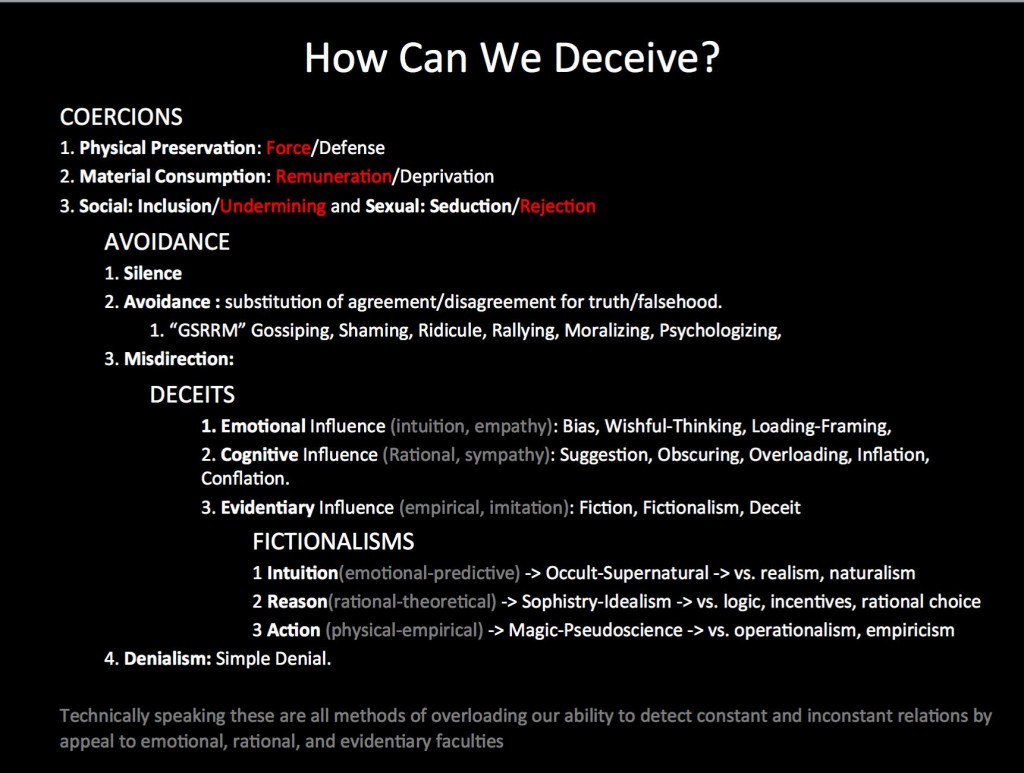
    So it’s rather obvious that information move from sense perception(observation), to intuition(prediction), to reason (permutation), to action (demonstration), to observation in a continuous cognitive loop (continuous recursive). DECEIT 1. Emotional Influence (intuition, empathy): Bias, Wishful-Thinking, Loading-Framing,

    1. Cognitive Influence (Rational, sympathy): Suggestion, Obscuring, Overloading, Inflation, Conflation.
    2. Evidentiary Influence (empirical, imitation): Fiction, Fictionalism, Deceit

    3. Denial, and substitution of agreement/disagreement for truth/falsehood.

    FICTIONALISMS 3.1 Intuition(emotional-predictive) -> Occult-Supernatural -> vs realism, naturalism 3.2 Reason(rational-theoretical) -> Sophistry-Idealism -> vs Logic, incentives, rational choice 3.3 Action (physical-empirical) -> Magic-Pseudoscience -> vs Operationalism, Empiricism Technically speaking these are all methods of overloading our ability to detect constant and inconstant relations by appeal to emotional, rational, and evidentiary Edit

  • All Epistemic Processes Are the Same

    Mar 6, 2020, 6:28 PM This might be hard. Yes, all epistemic processes are the same:

    sense-perception > auto-association > hypothesis(intuition) > theory(reason) > survival in market(demonstration) -> repeat.

    So it’s rather obvious that information move from sense perception(observation), to intuition(prediction), to reason (permutation), to action (demonstration), to observation in a continuous cognitive loop (continuous recursive). DECEIT 1. Emotional Influence (intuition, empathy): Bias, Wishful-Thinking, Loading-Framing,

    1. Cognitive Influence (Rational, sympathy): Suggestion, Obscuring, Overloading, Inflation, Conflation.
    2. Evidentiary Influence (empirical, imitation): Fiction, Fictionalism, Deceit

    3. Denial, and substitution of agreement/disagreement for truth/falsehood.

    FICTIONALISMS 3.1 Intuition(emotional-predictive) -> Occult-Supernatural -> vs realism, naturalism 3.2 Reason(rational-theoretical) -> Sophistry-Idealism -> vs Logic, incentives, rational choice 3.3 Action (physical-empirical) -> Magic-Pseudoscience -> vs Operationalism, Empiricism Technically speaking these are all methods of overloading our ability to detect constant and inconstant relations by appeal to emotional, rational, and evidentiary Edit

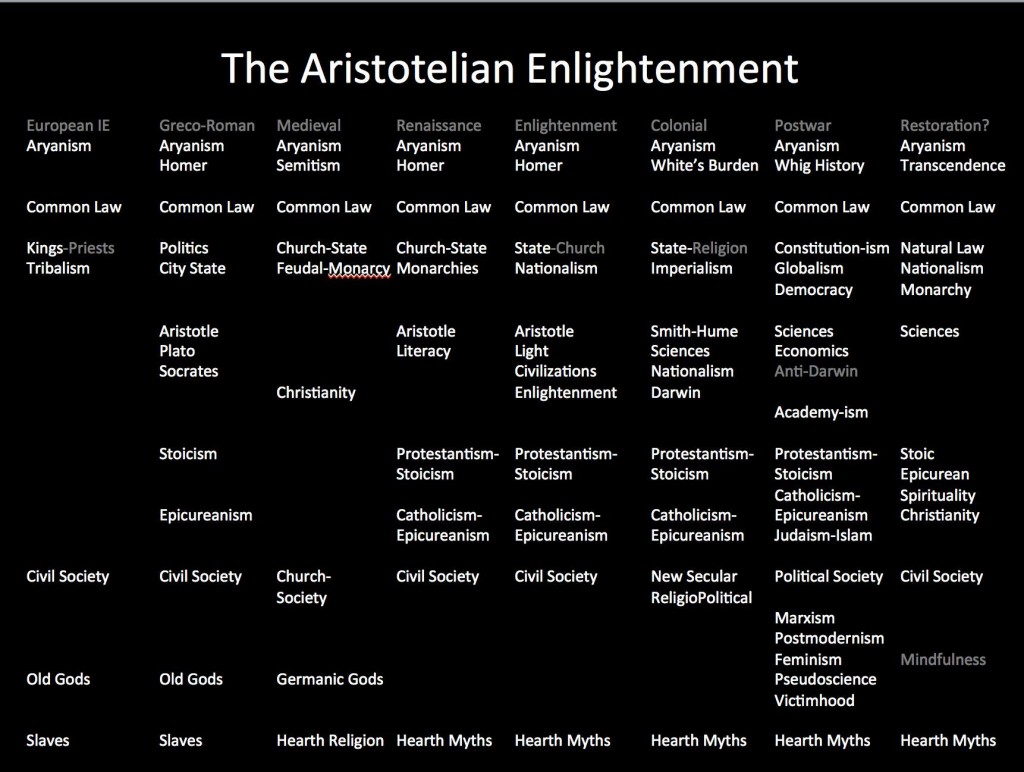
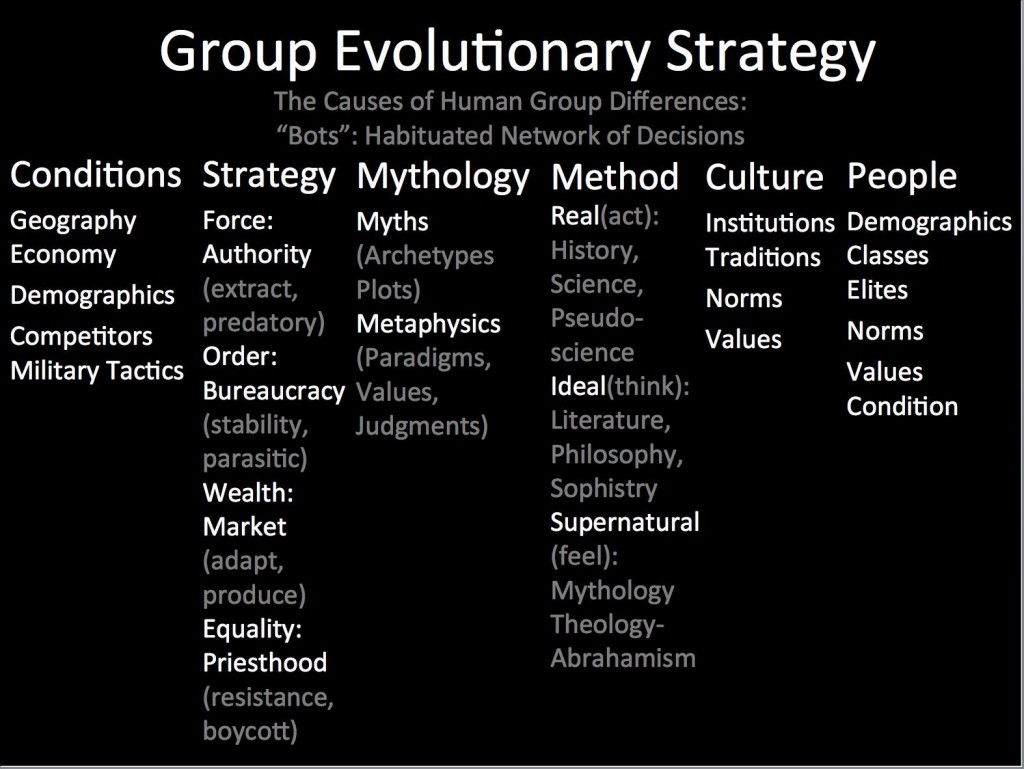
  • Presentation on Systems of Thought

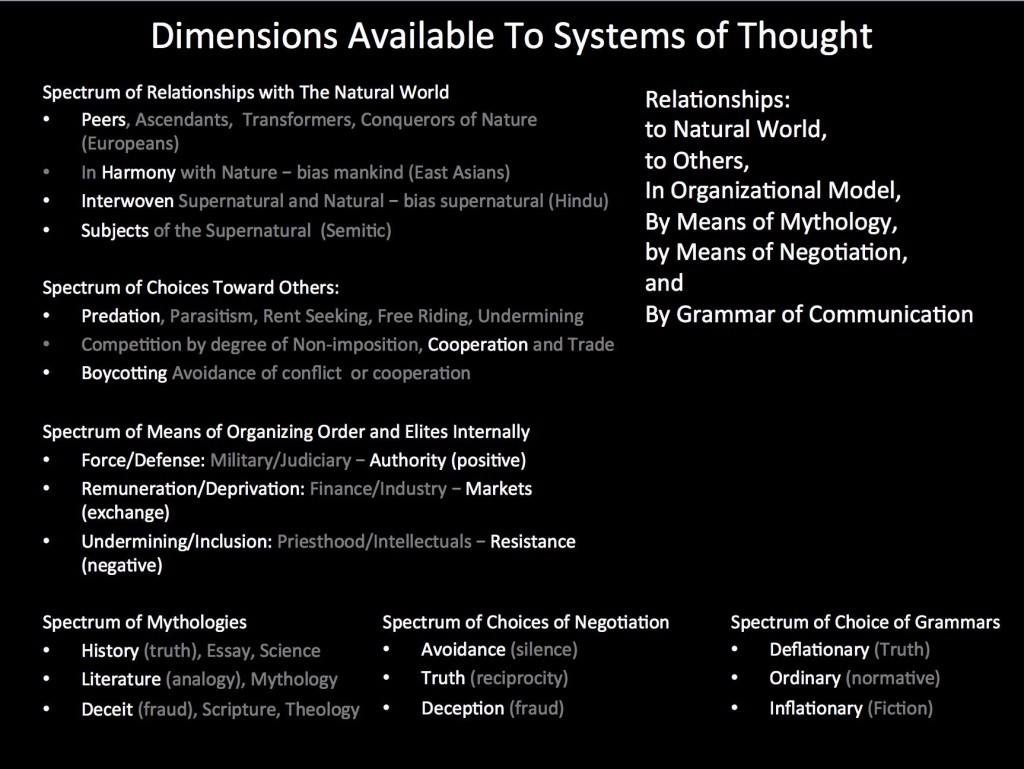
    Western Tradition we call Aristotelianism from prehistory to future, by class and by age. Will tweak it a bit as usual over time. Need to add a left most column for European IE tradition. (I wonder how many people will understand this.)

  • Testimony

    Ryan Drummond: I often tell Alice: “I don’t feel like I really live a human life any more. I just walk around processing information and responding to stimuli accordingly. It’s strange. But it gets things done in accordance with natural law.” I think once you start unpacking things in that sort of way – you feel more machine than man. But there is a deep, deep comfort in it. And an immense sense of control and understanding. Eric Danelaw:  yeah. let’s commiserate. 😉 It’s kind of creepy. But you have SO MUCH AGENCY. Ryan Drummond:  I think I will always find it a bit creepy, yet comforting. But not quite comforting enough…because Agency is omniscience and omnipresence, and I certainly have neither of those. Perhaps that’s why I find it creepy… We have much more work to do as a species…

  • Testimony

    Ryan Drummond: I often tell Alice: “I don’t feel like I really live a human life any more. I just walk around processing information and responding to stimuli accordingly. It’s strange. But it gets things done in accordance with natural law.” I think once you start unpacking things in that sort of way – you feel more machine than man. But there is a deep, deep comfort in it. And an immense sense of control and understanding. Eric Danelaw:  yeah. let’s commiserate. 😉 It’s kind of creepy. But you have SO MUCH AGENCY. Ryan Drummond:  I think I will always find it a bit creepy, yet comforting. But not quite comforting enough…because Agency is omniscience and omnipresence, and I certainly have neither of those. Perhaps that’s why I find it creepy… We have much more work to do as a species…

  • Ouch. Another Discovery: Facelessness

    Mar 7, 2020, 5:20 PM

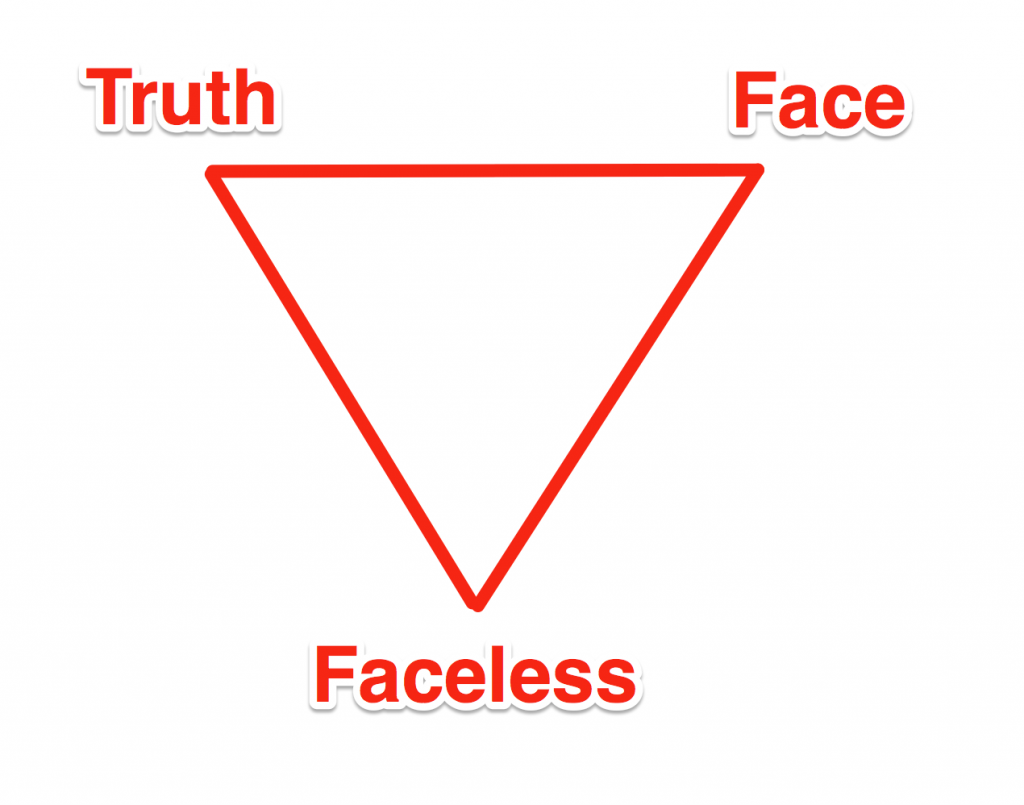
    1. … Truth Before Face (Shame Bearing: European) 2. … … Face Before Truth (Shame Avoidance: Chinese) 3. … … … Facelessness (Shameless: Lying/Cheating as Virtue)

    😉