Source: Facebook

  • PILPUL(SOPHISTRY) VS TESTIMONY (SCIENCE): THE LEGAL DEBATE OF THE 20th CENTURY (

    PILPUL(SOPHISTRY) VS TESTIMONY (SCIENCE): THE LEGAL DEBATE OF THE 20th CENTURY (SOON TO BE ASHES)

    LAW MUST BE …

    1 – Existent, not ad-hoc (not made up at the moment)

    2 – Prospective (non-retroactive)

    3 – Applicable to all, identically to all. (CD)

    4 – Clearly Stated and Comprehensible (in and of itself and in the broader context – internally consistent)

    5 – The aspects of the law must be consistent with each other -(externally consistent)

    6 – Possible to be obeyed

    7 – Possible to enforce (CD)

    8 – Constant and Long Lasting.

    9 – Promulgated (widely known)

    10 – Applied and administered as stated. (rules must be consistent with the acts)(Externally Demonstrated)

    Hart, Kelsen, Fuller, Dworkin

    HART: AUTHORITARIAN LEGAL POSITIVISM (Pilpul)

    His father was a Jewish tailor of German and Polish origin; his mother, of Polish origin, daughter of successful retailers in the clothing trade, handled customer relations and the finances of their firm. Hart was, by his own account, a ‘suppressed homosexual’ Hart married Jenifer Fischer Williams, a civil servant, later a senior civil servant, in the Home Office and, still later, Oxford historian at St Anne’s College (specializing in the history of the police).[8] Jenifer Hart was, for some years in the mid-1930s and fading out totally by decade’s end, a ‘sleeper’ member of the Communist Party of Great Britain.. Jenifer Hart was believed by her contemporaries to have had an affair of long duration with Isaiah Berlin, a close friend of Hart’s. Hart strongly influenced the application of methods in his version of Anglo-American positive law to jurisprudence and the philosophy of law in the English-speaking world. Influenced by John Austin, Ludwig Wittgenstein and Hans Kelsen, Hart brought the tools of analytic, and especially linguistic, philosophy to bear on the central problems of legal theory.Hart’s method combined the careful analysis of twentieth-century analytic philosophy with the jurisprudential tradition of Jeremy Bentham, the great English legal, political, and moral philosopher. Hart’s conception of law had parallels to the Pure Theory of Law formulated by Austrian legal philosopher Hans Kelsen, though Hart rejected several distinctive features of Kelsen’s theory.

    KELSEN (Pilpul)

    Hans Kelsen was an Austrian jurist, legal philosopher and political philosopher. He was the author of the 1920 Austrian Constitution, which to a very large degree is still valid today. Due to the rise of totalitarianism in Austria (and a 1929 constitutional change), Kelsen left for Germany in 1930 but was forced to leave this university post after Hitler’s seizure of power in 1933 because of his Jewish ancestry. While in Vienna, Kelsen met Sigmund Freud and his circle, and wrote on the subject of social psychology and sociology. Kelsen’s contributions to legal theory of the Nuremberg trials was supported and contested by various authors including Dinstein at the Hebrew University in Jerusalem. Kelsen’s neo-Kantian defense of continental legal positivism was supported by H. L. A. Hart in its contrasting form of Anglo-American legal positivism, which was debated in its Anglo-American form by scholars such as Ronald Dworkin and Jeremy Waldron.

    DWORKIN (Pilpul)

    Ronald Dworkin was born in 1931 in Providence, Rhode Island, United States, the son of Madeline (Talamo) and David Dworkin. His family was Jewish. Ronald Dworkin as a leading defender of the “compatibility of judicial review with the very principles of democracy.” Baume identified John Hart Ely alongside Dworkin as the foremost defenders of this principle in recent years, while the opposition to this principle of “compatibility” was identified as Bruce Ackerman and Jeremy Waldron. Dworkin has been a long-time advocate of the principle of the moral reading of the Constitution whose lines of support he sees as strongly associated with enhanced versions of judicial review in the federal government. This theory combines two key ideas. Broadly speaking, the first is that human beings are responsible for the life choices they make. The second is that natural endowments of intelligence and talent are morally arbitrary and ought not to affect the distribution of resources in society. Like the rest of Dworkin’s work, his theory of equality is underpinned by the core principle that every person is entitled to equal concern and respect in the design of the structure of society. Dworkin’s theory of equality is said to be one variety of so-called luck egalitarianism, but he rejects this statement. Dworkin, as positivism’s most significant critic, rejects the positivist theory on every conceivable level. Dworkin denies that there can be any general theory of the existence and content of law; he denies that local theories of particular legal systems can identify law without recourse to its moral merits, and he rejects the whole institutional focus of positivism. A theory of law is for Dworkin a theory of how cases ought to be decided and it begins, not with an account of the political organization of a legal system, but with an abstract ideal regulating the conditions under which governments may use coercive force over their subjects. Dworkin’s metaphor of judge Hercules bears some resemblance to Rawls’ veil of ignorance and Habermas’ ideal speech situation, in that they all suggest idealized methods of arriving at somehow valid normative propositions. The key difference with respect to the former is that Rawls’ veil of ignorance translates almost seamlessly from the purely ideal to the practical. In relation to politics in a democratic society, for example, it is a way of saying that those in power should treat the political opposition consistently with how they would like to be treated when in opposition, because their present position offers no guarantee as to what their position will be in the political landscape of the future (i.e. they will inevitably form the opposition at some point). Dworkin’s Judge Hercules, on the other hand, is a purely idealized construct, that is if such a figure existed, he would arrive at a right answer in every moral dilemma. For a critique along these lines see Lorenzo Zucca’s Constitutional Dilemmas.

    Dworkin’s right answer thesis turns on the success of his attack on the skeptical argument that right answers in legal-moral dilemmas cannot be determined. Dworkin’s anti-skeptical argument is essentially that the properties of the skeptic’s claim are analogous to those of substantive moral claims, that is, in asserting that the truth or falsity of “legal-moral” dilemmas cannot be determined, the skeptic makes not a metaphysical claim about the way things are, but a moral claim to the effect that it is, in the face of epistemic uncertainty, unjust to determine legal-moral issues to the detriment of any given individua

    FULLER (Operational):

    Notice the rules this post begins with a list of Fuller’s eight testable rules (i”ve added two to make it ten).

    Lon Luvois Fuller was an American legal philosopher, who criticized legal positivism and defended a secular and procedural form of natural law theory. In his widely discussed 1964 book, The Morality of Law, Fuller argues that all systems of law contain an “internal morality” that imposes on individuals a presumptive obligation of obedience. “Fuller was one of the four most important American legal theorists of the last hundred years”.

    Fuller denied the core claim of legal positivism that there is no necessary connection between law and morality. According to Fuller, certain moral standards, which he calls “principles of legality,” are built into the very concept of law, so that nothing counts as genuine law that fails to meet these standards. In virtue of these principles of legality, there is an inner morality to the law that imposes a minimal morality of fairness. Some laws, he admits, may be so wicked or unjust that they should not be obeyed. But even in these cases, he argues, there are positive features of the law that impose a defensible moral duty to obey them.

    Now the key part:

    In a review of The Morality of Law, Hart criticizes Fuller’s work, saying that these principles are merely ones of means-ends efficiency; it is inappropriate, he says, to call them a morality. Employing Fuller’s eight principles of legality, one could just as well have an inner morality of poisoning as an inner morality of law, which Hart claims is absurd. Other critics have challenged Fuller’s claim that there is a prima facie obligation to obey all laws. Some laws, it is claimed, are so unjust and oppressive that there is not even a presumptive moral duty to obey them. In this phase of the argument, the positions of the combatants are transposed. Fuller proposes principles that would easily fit into a positivistic account of law and Hart points out that Fuller’s principles could easily accommodate an immoral morality.

    In other words, Hart acknowledges internal amorality and denies self-determination and individual sovereignty.


    Source date (UTC): 2020-09-14 19:45:00 UTC
  • TRANSLATING A CRITICISM OF PAUL KRUGMAN —“can you translate that into dumbf_ck

    TRANSLATING A CRITICISM OF PAUL KRUGMAN

    —“can you translate that into dumbf_ckistanian?”— a Tweeter

    Paul tells sophisticated lies that make people believe they can escape a harsh reality. Contrary to traditional European modes of thinking such as testimonial speech.

    European man institutionalized court testimony as the normative mode of speech. It’s the most expensive normative construction in human history. The technique (pilpul) that Paul practices is the opposite. Most fascinating subject in history: The art of institutionalizing lying.

    In Paul Krugman’s case, he is usually weaving together three or four categories of lies.

    … 1-The myth of oppression;

    … 2-The false promise of freedom from physical, natural, and evolutionary laws, and;

    … 3-His pseudoscientific econ that evades full accounting of all changes in capital.

    Paul’s particular systemic Fraud is using those three techniques to bait a democratic people into the hazard of abandoning rule of law, markets, the resulting eugenics, and adopting protective (socialist), Semitic (academic/priest-caste), discretionary (authoritarian) rule.

    We know how that worked out everywhere else. The Christian and Muslim expansion resulted in over a thousand years of dark age, destroyed every great civilization of the ancient world and reduced them to a uniform totalitarianism, ignorance, poverty, and dysgenia from which they appear unable to escape.

    The programs of pseudoscience (boaz, freud, gould,) marxism, socialism, and sophistry (the frankfurt school), and social construction (deceit) via postmodernism, hostile-feminism, and human biodiversity denialism all seek to reverse the restoration of Aristotelianism, the restoration of european ism, and the continuation of the european political tradition of rule of law.

    I mean, the Marxists and socialists are only responsible for 100M dead. The feminists are only responsible for the reproductive depopulation of Europeans. The postmodernists are only responsible for destroying truthful speech. The denialists are only responsible for destroying psychology, sociology, politics, and economics.


    Source date (UTC): 2020-09-14 15:29:00 UTC

  • (No I can’t tell who’s busting my …., undermining, making a joke, asking a stu

    (No I can’t tell who’s busting my …., undermining, making a joke, asking a stupid question, or an honest one. Seriously. I mean, what more evidence do you need that I appreciate the average guy but I’m hardly sharing the same mental space as the average guy. It’s a fking miracle we can talk at all. So yeah. Apologies in advance. )


    Source date (UTC): 2020-09-14 14:03:00 UTC

  • “I often tell people that America is every bit as class-driven as the UK, if not

    —“I often tell people that America is every bit as class-driven as the UK, if not more so, despite our facade of informality.”—

    @paulkrugman

    Paul: It hasn’t stopped you from continuing your tradition of undermining the martial aristocratic classes at every turn, so that they can’t continue the demand for testimony as the normative mode of speech so that you can practice your baiting in to hazard by false promise.

    Paul: It’ll soon be common knowledge: your technique of profiting from baiting-into-hazard, using false-promise of circumvention of physical, natural, and evolutionary laws, by sophistry and Social Construction, and the lie that Aristocracy oppressed rather than domesticated man.

    Curt Doolittle

    @curtdoolittle


    Source date (UTC): 2020-09-14 13:51:00 UTC

  • Live in Submission (Semitism) Slaves Live in Harmony (Confucianism, Buddhism): L

    Live in Submission (Semitism) Slaves

    Live in Harmony (Confucianism, Buddhism): Lower

    Live in Concert – Recognition, Use of- Greco-Roman Middle.

    Live in Conquest and Adaptation (Aryanism) Upper

    The Primacy of submission (Abrahamism: for god)

    The Primacy of all Inner Harmony (Buddhism: for life)

    The Primacy of Political Harmony: (Hinduism:responsibity for role)

    The Primacy of Social Harmony (Confucianism: responsibility)

    The Primacy of Man (Greco-Romanism: for commons)

    The Primacy of Man (Aryanism: for evolution)


    Source date (UTC): 2020-09-14 13:33:00 UTC

  • BOTTLENECKS, SPEED, AND MULTIPLE FOUNDERS: REMINDER THAT WE DON”T HAVE INFINITE

    BOTTLENECKS, SPEED, AND MULTIPLE FOUNDERS: REMINDER THAT WE DON”T HAVE INFINITE TIME TO COMPLETE THE ARYAN REVOLUTION OF MAN.

    by Sean Kane

    Although recreational running can feel like a chore, our species is built for insane endurance. Plenty of land animals are faster in short distances, but nothing can move at a slow, easy run for longer than humans.

    This allowed prehistoric humans to excel at hunting. We’d jog after large prey under the midday sun until they died from exhaustion.

    Once our weapons got better and we learned to carry water in containers, our already impressive endurance only improved, readying humans to spread across the globe.

    Our ability to regulate body temperature further helped our crazy endurance abilities. Humans can really take the heat.

    Many animals sweat, but few use it for evaporative cooling, like humans (and horses) do. We’re also able to breath through our mouths when we run, taking in more oxygen as well as further dissipating heat.

    Other animals dump heat by panting, which is impossible to do in a gallop. This meant hunters could chase animals at their slowest galloping speed until they overheated

    Another huge evolutionary advantage came from our ability to stand upright — though creaky knees and back pain are certainly a tradeoff.

    Standing on two legs kept more of our hairless skin out of the harsh savanna sun and, even more importantly, freed up our hands to wield tools and to throw weapons.

    Though other primates have the ability to understand the trajectories of thrown objects (allowing them to dodge), no animals can aim and throw with the power and precision of a human.

    We’ve also got better hearing than our other primate brethren, and we can hear a wider range of sounds, especially between 1.0-6.0 kHz — where most human speech occurs.

    Around 70,000 years ago, humanity’s global population dropped down to only a few thousand individuals, and it had major effects on our species.

    It’s called the Toba catastrophe. A massive supervolcano in Indonesia erupted, blackening the sky with ash, plunging earth into an ice age, and killing off all but the hardiest humans.

    The enormous supervolcano eruption occurred around the same time as humanity’s biggest bottleneck. Research from the late 1990s and early 2000s suggested that this eruption, on Sumatra in Indonesia, blocked the sun across much of Asia, causing a harsh volcanic winter and a 1,000-year-long cooling period on earth.

    But archaeological evidence shows that human hunter-gatherer settlements in India weren’t too affected by the eruption and quickly recovered. Temperature data embedded in the geology of Lake Malawi, in East Africa, also suggests that the region didn’t cool off that drastically.

    But worldwide the population declined rapidly.

    Almost getting wiped out put a lot more pressure on our ancestors and caused a genetic bottleneck, which greatly decreases the genetic variation in a population.

    Small populations are much more susceptible to disease and environmental disasters, and unfavorable genetic traits can rapidly accumulate. Bottlenecks also slow evolutionary change, since fewer members of a species are around to pick up potentially favorable genetic mutations.

    However, any rare beneficial mutations that do occur get amplified: Genes get passed around quickly in a tiny community.

    Genetic bottlenecks can cause what is known as the founder effect, where small, isolated populations drastically diverge from the original population.

    As humans spread across the planet, our population experienced multiple bottlenecks and, as a result, a serial-founder effect kicked in to create the diversity we currently see in the human race today.

    Scientists have mapped these events to geographic choke points around the world, based on decreasing genetic diversity as we migrated.

    One bottleneck occurred when a small group of humans left Africa.

    Another happened when this group split up in the Middle East, with some of us heading to Europe and others to Asia.

    Others occurred when we left Southeast Asia for Austronesia, crossed the Beringia land bridge into Alaska, and spread into South America through what is now Panama.

    This is why African populations tend to have far more genetic diversity in their DNA than populations native to the Americas.

    It’s also why, when you compare humans to other species, human DNA is not very diverse when you consider our globe-spanning range.


    Source date (UTC): 2020-09-14 12:59:00 UTC

  • photos_and_videos/TimelinePhotos_kg5QueHwVw/119438420_379064930158333_1069178365

    photos_and_videos/TimelinePhotos_kg5QueHwVw/119438420_379064930158333_1069178365

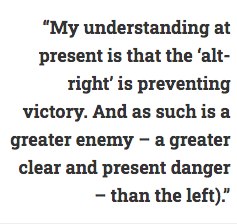
    photos_and_videos/TimelinePhotos_kg5QueHwVw/119438420_379064930158333_1069178365765112217_n_379064926825000.jpg It is one thing for the enemy to advance a strategy.

    It is another to prevent opposition to their victory. ;)It is one thing for the enemy to advance a strategy.

    It is another to prevent opposition to their victory. 😉


    Source date (UTC): 2020-09-14 12:38:00 UTC

  • COMPARATIVE CIVILIZATIONS AND HOW WE ENDED UP HERE: MINDFULNESS AS ALGORITHMIC C

    COMPARATIVE CIVILIZATIONS AND HOW WE ENDED UP HERE: MINDFULNESS AS ALGORITHMIC COMPUTATION

    (context: human groups and computation)

    You don’t learn about religion – particularly your own – by studying it. You learn by studying all religions past and present, and the consequences of their practice.

    Likewise, you don’t learn about economic, law, or state without comparative study. And most of all you don’t learn about civilizational differences without studying civilizational strategies.

    Let’s do a few comparisons:

    The division of labor produces a commensurability of prejudices (“pre-judgments”), a commensurability of norms, a commensurability of paradigms, that result in a concentration of efforts producing common beneficial ends.

    So, just as the change from particular knowledge (many different incompatible processes) to scientific knowledge (general rules of general application) created a convergence in understanding and convergence in all formal knowledge to a universal paradigm, the same is true for informal knowledge – not just science. And this convergence to general rules accounts for a substantial difference in the increase in demonstrated intelligence (crystalized intelligence) across all peoples (if not fluid or biological intelligence). So via negativa, we remove frictions of not only ignorance but incommensurability concentrate our thinking (efficiency) on producing greater returns as a result.

    We emphasize the most obvious benefit of the division of labor: the increase in productivity from the division of labor. But not the more influential increase in productivity, and a decrease in incommensurability.

    If we understand the (virtuous) self-reinforcing cycle between the division of labor and optimal norms: it produces commensurability interest, norm, and paradigm. It produces the same returns in normative thought in informal knowledge as it science does in formal knowledge.

    And then we see how economic reality, together with the law that prohibits resistance to it, also explain the evolution of religion in primitive societies with primitive production: in those societies, their adaptation is slow and innovation all but suppressed, but the production of norm and paradigm are heavily reinforced, in return for the continuous expansion of those who could not compete otherwise. And with trade and law, the evolution of tort (property), and the continuous suppression of irreciprocity(parasitism), increases at the expense of the reproduction of the uncompetitive.

    So we are faced with a problem of misapplication of childhood indoctrination to group strategy, and adult adaptation of the economy within that strategy. And we can also understand as a consequence why religiosity creates ignorance, dysgenia, poverty, and resists innovation, adaptation and change.

    As such we can judge not only group strategies, but religions that reinforce them, by tests of dysgenia, poverty, ignorance, superstition(Recitationism), and maladaptation, versus eugenic, wealth, knowledge, empiricism (Testimonialism), and adaptation.

    From this, we can understand the benefit of truthful religions and false religions: Universe (perhaps anthropomorphized as a god or gods), Nature (the world we are part of), Ancestors (whose investments made us possible), Archetypal Heroes(whose investments made successful adaptation possible), Kin (those who mutually invest in our shared genetic interests, and State (the corporealization of our people as an organization acting in our interests.)

    And so it is not that religion (indoctrination -long term) is less necessary than law, or law less so than science, or science, less than military prowess, less so than strategy. It is that this hierarchy provides a developmental hierarchy from the child to the adult, to the intellectual, to the strategic and political. And likewise, this hierarchy provides graceful failure in the absence of sufficient knowledge to make a judgment.

    However, this hierarchy can only fulfill its function under certain conditions: and that is when the religious have no economic and political power, the economic have no political and strategic power, and the political and strategic have no economic power.

    But under universal democracy we have granted equal power to unequal knowledge, and unequal cognitive development, thus replicating the dysgenics of religious civilizations within our legal and martial civilization. When throughout our history we had separate ‘houses’ for the monarchy (the military), the senate (the economic elites), and the commoners (the house in pre-Semitic, or the church in Semitic eras)

    So by the victorian period, we had restored the losses of the fall of the roman empire and largely recovered from the semiticism (Judaic Christianity) that prevented its restoration, and we’d produced rule of law by natural law, a monarchy for its function, a senate(upper house) for the macro-nobility having demonstrated interests in the preservation of the polity, the lower house, having demonstrated interests in the economy and productivity, and the church representing the demonstrated interests of families, women, children, the poor and the incompetent. And in doing so created houses for all classes rather than just the upper middle and upper classes.

    And upon the dissolution of the church by the combination of darwin, industrialization, literacy, and the evolution of Semitic religion from superstition to pseudoscientific) yes – anti-civilizational marxism, socialism, boazianism, Freudianism etc), we failed to rename the house of commons (lower house) as the house of common market participants, and create a new house as the house of labor, family, children, and the poor. Or even two houses: one for Labor, and one for women children, and the poor.

    So we are stuck as a consequence with the American system of two parties, the european system of multiple parties, and insufficient number of houses, and the tendencies of parties to replace houses, producing ideological rather than empirical judgments.

    Had we maintained our market for the production of commons, had we made this innovation instead of universal democracy, we would have preserved the market for competition between (a) the stages of development including the emotional, cognitive, knowledge, and responsibility, (b) demonstrated responsibility for self, productivity, family, business, industry, knowledge (science), polity. (c) our ability to use houses of government as yet another expansion of the jury (as we had for 5000 years), where in each class issued verdict on policy.

    The Jews and Muslims never solved the problem of politics, and christianity failed to repeat the egyptian and byzantine ambitions – religion is antithetical to it.

    The Hindus are relatively opaque but solved the problem of religion, state and law through an odd combination of mythology and philosophy – and the only reason they survived is a vast territory, a vast population, a vast underclass, and a peninsula that provided no strategic value.

    The Chinese solved the problem of ethno-state as culture and professional bureaucracy, but not politics or law.

    The Russians incrementally defeated the steppe warriors (Mongols), and decolonized Russia, then almost all of north Eurasia, producing a fully re-militarized society. Had the Jewish Bolsheviks not been successful in destroying Russian civilization (as they destroyed german, and now American) from within, Russia might have emerged as the Sparta of great powers, as Britain the Athens of great powers, and America the Rome.

    The French killed the middle class, then the aristocracy, then set out to destroy the heart of europe: the holy roman empire -then secularized the church, and achieved by secular means the church’s ambition of a conquest of europe by authoritarian socialist rule. This is the correct undrestanding of french ambitions: a feminist rule of Europe in opposition of a prussian masculinist rule of europe. In opposition to a russian mongolian or chinese rule of eurasia.

    The germans solved the problem of professional bureaucracy, but only afterward democracy, and abandoned european law in favor of Continental rule. The secret to german success however, is german culture which like hindu culture appears not a matter of state but of perpetuation of ancient tradition of “we must be best because we are surrounded”.

    The British solved law first by never abandoning it, then politics by multiple houses, then a professional bureaucracy that evolved out of the military. And it it is british civilization, least bound by historical geographic constraints in europe that restored the european tradition of germanic, roman, and greek civilizations. The British were more ‘free to evolve’ by experimentation than other nations of Europe – yet another virtue of island culture.

    The Americans solved law most thoroughly, unfortunately, took the advice of the french (the french are always wrong on everything), in an attempt to take the best of european civilization: european traditional law of individual sovereignty, British empirical rule of law, contract, and process; the political order of the holy roman empire (which was still intact at the time) as an alliance of states this time under a political rather than monarchical bureaucracy, and but utterly failed to create a professional bureaucracy and instead developed clientelism.

    Had we also completed Babbage’s innovation, and developed operationalism and computationalism before the postwar period, we might have defeated the pseudoscientific movement, and in particular, the evolution of pseudoscientific law we call positive law. We certainly would have avoided the total waste of a century in philosophy, and perhaps closed philosophy as we had closed theology – limiting it to the adaptation of current paradigms to new discoveries of truth (sciences) which is the only function it can provide.

    So in retrospect the industrial revolution came early; gave the false promise of escape from physical(scarcity), natural (amorality, reciprocity), and evolutionary (regression to the mean,dysgenia), governments adapted too slowly; the law failed to understand itself, and failed to increase its precision as a formal logic, and human cooperation as formal computation by trial and error, and the church collapsed, leaving the academy, which was taken over by a new pseudoscientific religion that continued to violate those physical, natural and evolutionary laws, under the false promise of freedom from scarcity, the inescapable amorality of human nature, the inescapable spectrum of adaptability in humans.

    There is no reason today that a complete understanding of man, history, economics, law, politics, and groups strategy is not taught every child – except that it would forever end the dysgenic and semitic religions and the false promise of this second religion: the pseudosciences that would bring about another dark age.

    Today’s lesson in Synthesis. 😉


    Source date (UTC): 2020-09-14 11:54:00 UTC

  • (Messing with locals) Neighbor. Woman. Elderly. Her: “Hey. I thought I just saw

    (Messing with locals)

    Neighbor. Woman. Elderly.

    Her: “Hey. I thought I just saw you at the library?”

    Me: “Every time you see a man that’s tall dark and handsome you think it’s me.”

    Her: (stops dead in her tracks)

    Me: (walks away laughing)


    Source date (UTC): 2020-09-12 19:43:00 UTC

  • THE BROWSER ECONOMY IS WELFARE FOR THE NERD CLASS How many billions (trillions)

    THE BROWSER ECONOMY IS WELFARE FOR THE NERD CLASS

    How many billions (trillions) of dollars will we waste on painful, tedious, useless, software development before javascript (livescript) fully transforms into Clojure (the ultimate programming language), and the JVM in the browser evolves into a closure virtual machine? Or why don’t we just legislate it and save those billions (trillions)?

    As far as I can tell the economy created by js and the browser are even more of a welfare system for the nerd class than copyright is for the creative class, and the military is to the middle and lower-middle class.

    There is no reason 1) Typing 2) Component Dependencies, 3) dom transactions, or a virtual dom store, 4) Compiling, can’t be conditionally, and 5) there isn’t any reason that there isn’t an equivalent standard UI for apps like there is for operating system shells (Desktop ui’s).

    What did Google do? They created Dart. What happened? They created Flutter for compiling cross-platform apps, and eliminated the need for a Dart virtual machine in the browser.

    Now if you’re Reality by Chanting, and you want Runcible to strike terror into the hearts of the big five, then you finally have a choice of rocking the world.

    The question is, whether it is possible to find programmers to convert a (huge) application like Runcible into Flutter(Dart), or whether we’re stuck with electron, react, and node.


    Source date (UTC): 2020-09-12 11:59:00 UTC