Source: Facebook

  • QUICK TRANSLATION BEWEEN PHILOSOPHY AND PROPERTARIANISM (NATURAL LAW) Metaphysic

    QUICK TRANSLATION BEWEEN PHILOSOPHY AND PROPERTARIANISM (NATURAL LAW)

    Metaphysics: Realism, naturalism, operationalism, empiricism, survival, compatibilism, cooperation, propertarianism, acquisitionism, action.

    Ontology: realism/naturalism, soft determinism, three faculties: physical, intuitionistic, and mind as motion(no name for it in philosophical terms: experience consists of continuous recursive hierarchical temporal memory – memory of memory continuously constructed by continuous prediction from sequences of sense perception.) the problem is getting people from the observer to perception consisting of change (action) not state.

    Grammars: As far as I can tell The Grammars (which you don’t know yet) produce the most parsimonious paradigm. Philosophy considers ideals, rarely if ever costs, means of production(models), possibilities(consequences and externalities).

    Operationalism: testimony in operational terms (one continuous consistent commensurable system of falsifiable measurement)

    Science: testimony in empirical terms (observation of demonstrated evidence) expressed in a commensurable terms (operational).

    Epistemology: Competition between justification(hypothesis), operation(theory) and empiricism(evidence) at increasing scales (self-reason via positiva-justification, via-negativa and via-positiva-tests, via-negativa market survival)

    Truthfulness: Due diligence against ignorance, error, bias, deceit, in performative, promissory testimony in complete sentences that are consistent, correspondent, operational, limited, complete, and coherent.

    Axiology: value: acquisitionism: acquisition of property in toto defined by demonstrated interest (IOW self reported values never reflect demonstrated preference, and demonstrated preference can always be expressed as acquisition of property in toto -a gain yielding a fully commensurable system of measurement),

    Ethics: Reciprocity – via negativa, all ethnical and moral questions are decidable by tests of fully accounted reciprocity.

    Sociology: Compatibilism, Tripartism, Trifunctionalism.

    Cooperationism(Economics): Returns on Time in a division of labor.

    In other words: I’m describing economics. Which, as others have stated before me, appears to function as the union of the disciplines.

    PHILOSOPHY SUPERCEDED BY SCIENCE

    Philosophy: Do we think philosophy produces Truth, Meaning, or Choice? As far as I can tell Law, Economics, Science, Mathematics, and the human logical facility (differences in constant relations) produce testimony.

    So what is the remaining function of philosophy? Reorganization of preferences and means of achieving them given the truth we have identified with “science in toto”: (law, economics, science, math, logical facility).

    In other words, discovery of truth (science) selection of preference (philosophy), sedation or abandonment (theology).

    Which makes sense to me since Math(measurement) Science(matter) and Economics(people) produce evidence, law produces testimony and decidability independent of preference, and philosophy produces preference, and as far as I can tell theology allows people to escape the work of philosophy, law, and science – leading to graceful failure as our knowledge and ability decreases from science to norm or law, to philosophy, to theology.

    Philosophy served as the stage between unorganized thinking and science, and that anything that still in philosophy that had any value in decidability has been replaced by science and scientific epistemology.

    Metaphysics: Replaced by Paradigms and grammars

    Paradigms consisting of market for parsimony. Parsimony consisting of Action. Action consisting of Actionable, Testifiable, Warrantable, Free of Incentive to Deceive. Consisting of: Realism, Naturalism, Operationalism, Rational Choice, Reciprocity, full accounting.

    Humans have developed a series of paradigms that deflate inflate, or fictionalize the most parsimonious but complete paradigm (above). In P we call these the ‘grammars’. (You can search our site for the grammars).

    Humans possess the ability to determine constant and inconstant relations (differences). And to control the use of their detection of differences. We call this ability reason when used informally. We call comparisons of sets as means of testing constant relations ‘logic’. We have produced many logics. Mathematics is the most basic – consisting of one constant relation: position. In the discipline of logic we test rules of inference. However, logic isn’t closed and so all logic al assertions are contingent.As such all non-trivial logic is falsificationary. ALL of the grammars are logics of increasing tests of constant relations within different limits.

    Epistemology: Replaced by Theory.

    Free association(falsify by reason) > hypothesis(falsify by action) > theory (falsify by market) > law (falsify by limits- or ‘exhaustion’ if you prefer)

    Truth: Replaced by Testimony (categorically, internally, operationally, externally, rational, reciprocal

    Ethics: replaced by Reciprocity ((productive, fully informed, warrantied, voluntary transfer free of …)

    Politics: Rule of law, professional judiciary, monarchy as judge of last resort, houses for classes for markets of commons, mixed economy, soft demonstrated (market) eugenics, direction of savings to the production of commons.

    Strategy: most rapid adaptability (rate of evolution)

    Aesthetics: Transcendence (Evolution)

    Those are are all decidable propositions (Truths). That does not mean that one cannot express or a group cannot express different preferences.

    It’s hard to accept but philosophy in the pursuit of truth has ended. All philosophy can tell us is choice (preference) because preferences are not true. Philosophy as a method of moral fictionalism survives in Europe. Philosophy as propaganda sophistry and deceit exists everywhere.

    But truth and decidability have been usurped entirely by science: testimony.

    This is why philosophy departments are now included with religion in libraries and in academic budgets.


    Source date (UTC): 2020-02-20 09:23:00 UTC
  • Robert Sephr is writing a fictional account of history from the pagan european’s

    Robert Sephr is writing a fictional account of history from the pagan european’s point of view. This is not a bad thing. But it is still a historical fiction. What you want to get from people like him is that it is possible to reinterpret history from our point of view. And that the *sentiment* he gets across to the audience is about right. And that’s a good thing. You can’t approach his reading of the history itself any more accurately than the pseudo history he’s countering. It’s emotionally rewarding historical fiction. And he weaves together absolute nonsense – obvious falsehoods, myths, and fantasies – with the evidence. If he stuck to the hard material and was a little more accurate then I’d regard it differently.


    Source date (UTC): 2020-02-20 09:12:00 UTC

  • QUICK TRANSLATION BEWEEN PHILOSOPHY AND PROPERTARIANISM (NATURAL LAW) Metaphysic

    QUICK TRANSLATION BEWEEN PHILOSOPHY AND PROPERTARIANISM (NATURAL LAW)

    Metaphysics: Realism, naturalism, operationalism, empiricism, survival, compatibilism, cooperation, propertarianism, acquisitionism, action.

    Operationalism: testimony in operational terms (one continuous consistent commensurable system of falsifiable measurement)

    Science: testimony in empirical terms (observation of demonstrated evidence) expressed in a commensurable terms (operational).

    Ontology: realism/naturalism, soft determinism, three faculties: physical, intuitionistic, and mind as motion(no name for it in philosophical terms: experience consists of continuous recursive hierarchical temporal memory – memory of memory continuously constructed by continuous prediction from sequences of sense perception.) the problem is getting people from the observer to perception consisting of change (action) not state.

    Epistemology: Competition between justification(hypothesis), operation(theory) and empiricism(evidence) at increasing scales (self-reason via positiva-justification, via-negativa and via-positiva-tests, via-negativa market survival)

    Truthfulness: Due diligence against ignorance, error, bias, deceit, in performative, promissory testimony in complete sentences that are consistent, correspondent, operational, limited, complete, and coherent.

    Axiology: value: acquisitionism: acquisition of property in toto defined by demonstrated interest (IOW self reported values never reflect demonstrated preference, and demonstrated preference can always be expressed as acquisition of property in toto -a gain yielding a fully commensurable system of measurement),

    Ethics: Reciprocity – via negativa, all ethnical and moral questions are decidable by tests of fully accounted reciprocity.

    In other words: I’m describing economics. Which, as others have stated before me, appears to function as the union of the disciplines.

    Philosophy: Do we think philosophy produces Truth, Meaning, or Choice? As far as I can tell Law, Economics, Science, Mathematics, and the human logical facility (differences in constant relations) produce testimony. As far as I can tell The Grammars (which you don’t know yet) produce the most parsimonious paradigm. Philosophy considers ideals, rarely if ever costs, means of production(models), possibilities(consequences and externalities). So what is the remaining function of philosophy? Reorganization of preferences and means of achieving them given the truth we have identified with “science in toto”: (law, economics, science, math, logical facility).

    In other words, discovery of truth (science) selection of preference (philosophy), sedation or abandonment (theology).

    Which makes sense to me since Math(measurement) Science(matter) and Economics(people) produce evidence, law produces testimony and decidability independent of preference, and philosophy produces preference, and as far as I can tell theology allows people to escape the work of philosophy, law, and science – leading to graceful failure as our knowledge and ability decreases from science to norm or law, to philosophy, to theology.


    Source date (UTC): 2020-02-20 08:51:00 UTC

  • ON FARMERS IN THE DIVISION OF LABOR (The flip side of “I, Pencil”.) (probably an

    ON FARMERS IN THE DIVISION OF LABOR

    (The flip side of “I, Pencil”.) (probably an important lesson)

    Military(organization of territory) <> Judiciary (organization of cooperation-contract) <> Finance (organization of money(stored time)) <> Entrepreneurship (Organization of opportunity, capital, people) <> Professionals (organization of production(calculation)) <> Managers (Organization of people) <> Producers (Organization of resources) <> Distributors (organization of distribution) <> Trade (organization of transactions) <> Consumers (organization of consumption) <> Parents (organization of reproduction) <> teachers, priests, public intellectuals politicians ( sedation, facilitation, and amelioration of stress arising from scarcity, individual and familial irrelevance, and alienation in the division of labor upon which they depend.)

    Given the problem of “I,Pencil” (distribution of knowledge), an individual farmer has to input a lot of diverse knowledge and effort for low return on investment, in no small part because petroleum products, industrialization, fertilizer, feed were fully commoditized.

    A farmer organizes primary resources (animals, food stuffs) and as such must be a skilled craftsman (organizers of specialized resources) at the very limit of craftsman’s capital (tools – no other craftsman requires so many tools).

    But the returns on the organization of resources are small – there are few multipliers. As you move up the production hierarchy you are responsible for organizing more and more and more people – where there are multipliers.

    This is why Marx is wrong. In order to organize people by rational incentives, one must produce marginal competitive differences by which to influence their choices.

    As such the entire difficulty in organizing production is organizing the human beings in a vast network to engage in it with nothing other than the bribe of doing the work (payment).


    Source date (UTC): 2020-02-20 08:41:00 UTC

  • photos_and_videos/TimelinePhotos_kg5QueHwVw/87045742_212213076843520_31793515466

    photos_and_videos/TimelinePhotos_kg5QueHwVw/87045742_212213076843520_31793515466

    photos_and_videos/TimelinePhotos_kg5QueHwVw/87045742_212213076843520_3179351546613727232_n_212213073510187.jpg ON FARMERS IN THE DIVISION OF LABOR

    (The flip side of “I, Pencil”.) (probably an important lesson)

    Military(organization of territory) <> Judiciary (organization of cooperation-contract) <> Finance (organization of money(stored time)) <> Entrepreneurship (Organization of opportunity, capital, people) <> Professionals (organization of production(calculation)) <> Managers (Organization of people) <> Producers (Organization of resources) <> Distributors (organization of distribution) <> Trade (organization of transactions) <> Consumers (organization of consumption) <> Parents (organization of reproduction) <> teachers, priests, public intellectuals politicians ( sedation, facilitation, and amelioration of stress arising from scarcity, individual and familial irrelevance, and alienation in the division of labor upon which they depend.)

    Given the problem of “I,Pencil” (distribution of knowledge), an individual farmer has to input a lot of diverse knowledge and effort for low return on investment, in no small part because petroleum products, industrialization, fertilizer, feed were fully commoditized, and distribution.

    A farmer organizes primary resources (animals, food stuffs) and as such must be a skilled craftsman (organizers of specialized resources) at the very limit of craftsman’s capital (tools – no other craftsman requires so many tools).

    But the returns on the organization of resources are small – there are few multipliers. As you move up the production hierarchy you are responsible for organizing more and more and more people – where there are multipliers.

    This is why Marx is wrong. In order to organize people by rational incentives, one must produce marginal competitive differences by which to influence their choices.

    As such the entire difficulty in organizing production is organizing the human beings in a vast network to engage in it with nothing other than the bribe of doing the work (payment).

    —-

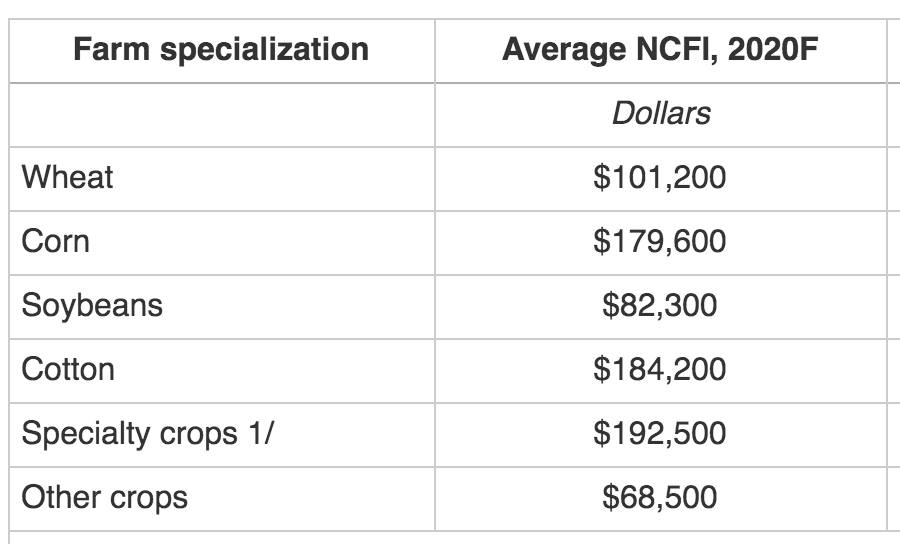
    (See attached net income for farms)ON FARMERS IN THE DIVISION OF LABOR

    (The flip side of “I, Pencil”.) (probably an important lesson)

    Military(organization of territory) <> Judiciary (organization of cooperation-contract) <> Finance (organization of money(stored time)) <> Entrepreneurship (Organization of opportunity, capital, people) <> Professionals (organization of production(calculation)) <> Managers (Organization of people) <> Producers (Organization of resources) <> Distributors (organization of distribution) <> Trade (organization of transactions) <> Consumers (organization of consumption) <> Parents (organization of reproduction) <> teachers, priests, public intellectuals politicians ( sedation, facilitation, and amelioration of stress arising from scarcity, individual and familial irrelevance, and alienation in the division of labor upon which they depend.)

    Given the problem of “I,Pencil” (distribution of knowledge), an individual farmer has to input a lot of diverse knowledge and effort for low return on investment, in no small part because petroleum products, industrialization, fertilizer, feed were fully commoditized, and distribution.

    A farmer organizes primary resources (animals, food stuffs) and as such must be a skilled craftsman (organizers of specialized resources) at the very limit of craftsman’s capital (tools – no other craftsman requires so many tools).

    But the returns on the organization of resources are small – there are few multipliers. As you move up the production hierarchy you are responsible for organizing more and more and more people – where there are multipliers.

    This is why Marx is wrong. In order to organize people by rational incentives, one must produce marginal competitive differences by which to influence their choices.

    As such the entire difficulty in organizing production is organizing the human beings in a vast network to engage in it with nothing other than the bribe of doing the work (payment).

    —-

    (See attached net income for farms)


    Source date (UTC): 2020-02-20 08:41:00 UTC

  • Feb 19, 2020, 8:30 PM

    https://www.youtube.com/watch?v=bT_VV2L-HTghttps://www.youtube.com/watch?v=bT_VV2L-HTgUpdated Feb 19, 2020, 8:30 PM


    Source date (UTC): 2020-02-19 20:30:00 UTC

  • Feb 19, 2020, 8:24 PM

    https://www.youtube.com/watch?v=uXC1gYVXN3M&feature=shareUpdated Feb 19, 2020, 8:24 PM


    Source date (UTC): 2020-02-19 20:24:00 UTC

  • QUICK TRANSLATION BEWEEN PHILOSOPHY AND PROPERTARIANISM (NATURAL LAW) Metaphysic

    QUICK TRANSLATION BEWEEN PHILOSOPHY AND PROPERTARIANISM (NATURAL LAW)

    Metaphysics: Realism, naturalism, operationalism, empiricism, survival, compatibilism, cooperation, propertarianism, acquisitionism, action.

    Operationalism: testimony in operational terms (one continuous consistent commensurable system of falsifiable measurement)

    Science: testimony in empirical terms (observation of demonstrated evidence) expressed in a commensurable terms (operational).

    Ontology: realism/naturalism, soft determinism, three faculties: physical, intuitionistic, and mind as motion(no name for it in philosophical terms: experience consists of continuous recursive hierarchical temporal memory – memory of memory continuously constructed by continuous prediction from sequences of sense perception.) the problem is getting people from the observer to perception consisting of change (action) not state.

    Epistemology: Competition between justification(hypothesis), operation(theory) and empiricism(evidence) at increasing scales (self-reason via positiva-justification, via-negativa and via-positiva-tests, via-negativa market survival)

    Truthfulness: Due diligence against ignorance, error, bias, deceit, in performative, promissory testimony in complete sentences that are consistent, correspondent, operational, limited, complete, and coherent.

    Axiology: value: acquisitionism: acquisition of property in toto defined by demonstrated interest (IOW self reported values never reflect demonstrated preference, and demonstrated preference can always be expressed as acquisition of property in toto -a gain yielding a fully commensurable system of measurement),

    Ethics: Reciprocity – via negativa, all ethnical and moral questions are decidable by tests of fully accounted reciprocity.

    In other words: I’m describing economics. Which, as others have stated before me, appears to function as the union of the disciplines.

    Philosophy: Do we think philosophy produces Truth, Meaning, or Choice? As far as I can tell Law, Economics, Science, Mathematics, and the human logical facility (differences in constant relations) produce testimony. As far as I can tell The Grammars (which you don’t know yet) produce the most parsimonious paradigm. Philosophy considers ideals, rarely if ever costs, means of production(models), possibilities(consequences and externalities). So what is the remaining function of philosophy? Reorganization of preferences and means of achieving them given the truth we have identified with “science in toto”: (law, economics, science, math, logical facility).

    In other words, discovery of truth (science) selection of preference (philosophy), sedation or abandonment (theology).

    Which makes sense to me since Math(measurement) Science(matter) and Economics(people) produce evidence, law produces testimony and decidability independent of preference, and philosophy produces preference, and as far as I can tell theology allows people to escape the work of philosophy, law, and science – leading to graceful failure as our knowledge and ability decreases from science to norm or law, to philosophy, to theology.


    Source date (UTC): 2020-02-19 20:13:00 UTC

  • MORE FROM JOY ON MY “THERE IS NOTHING WRONG WITH AFRICANS” POSITIONS Joy is an a

    MORE FROM JOY ON MY “THERE IS NOTHING WRONG WITH AFRICANS” POSITIONS

    Joy is an african american libertarian, who seems to be frustrated by my argument that there is nothing wrong with africa that six generations of one child policy wouldn’t fix. This isn’t a controversial statement – it’s true for any underdeveloped or developing people. This is our second or third go around. And I think her intellectual bias must be american. Because I tell this to africans all day every day as a way of saying “There is nothing wrong with you or your people except class sizes.” Yet when an american woman hears it she keeps trying to find some irrational racism that isn’t there. I’ve said the same thing for over ten years: the difference in races is neoteny and class size when combined with human ethnocentrism produces political conflict when living in proximity, that generates demand for different commons, different norms, redistribution and authoritarianism at the cost of the high trust civli society.

    —Hi Curt, I know my opinion doesn’t mean anything to you…. You said you didn’t think there was anything wrong with black people but you do. You think white people evolved some ability to “create” truth that the rest of “farm animals” do not have. What does this mean? And please provide proof of it.

    This is Joy, from Quora.”—

    Ah, well, you’re confused. I said there is a difference in the size of the classes of different ethnic and racial groups. The size of the bottom burdens the top, who cannot lift the people using ‘Pareto Distributions of Assets’ (meaning market economies). I said white people have almost eliminated their bottom classes. And we have had a long time without bottom classes to eliminate bad behavior in our people in the rest of the classes.

    As for truth, I say because of our history, only white people could develop scientific truth, and high trust societies because of it.

    But I said that any people on earth that will limit the reproduction of the bottom will eventually be able to have the same high trust society as european people.

    There is no difference between humans and the other animals we have domesticated. We are just animals like our farm animals.

    —“I know what you said, but historically speaking even though white people have been responsible for most scientific discoveries, you cannot claim the ability to create truth is exclusive to them. Northern and Subsaharan Africans developed technologies smaller and slower than that of white people but still scientific regardless- as did Arabs and Asians although I suspect you consider them white. And as for the “high-trust” societies claim, do you mean democracy? Cos it’s a terrible idea that sounded great when it started but only went downhill. Many races have had civilizations and gods governing their philosophies- the Western world might be the most successful but that doesn’t mean the ability to detect those ideals was exclusive to them. However, I think we are operating on completely different levels of knowledge. You have worked on these philosophies for a good chunk of your life and I’m just getting started. As much as I approach everything in good faith, I don’t take kindly to my race being referred to as “farm animals” (you used this exclusively differentiating from white people) and undesirable but I can’t help but keep going down this rabbit hole.”—-

    I didn’t make that claim. I made the claim that (a) europeans invented scientific truth (promissory, performative, realism, naturalism, operationalism) because we were a purely military social order (militia), and that is military epistemology. And we invented sovereignty (every man is sovereign and none is above him ever). With truth and sovereignty you can only have our laws of sovereignty, tort, reciprocity and jury. Our sciences evolved from the application of our the logic of our laws to our understanding of the universe. So the only means of organizing our people was markets (competition).

    So we evolved genetically culturally institutionally and scientifically much, much, much faster than all other people combined – both in the prehistoric, in the ancient, and in the modern world. And when we are invaded we are as overwhelmed and fail like all other peoples fail. Because the bottom becomes too big for the top.

    I didn’t refer to your race (or any race) as farm animals.

    I said “We are just animals like our farm animals.” and we are self domesticated like we domesticated our farm animals. You might imply I stated others were farm animals when I stated all of us are indifferent from farm animals – domesticated.

    I you want to take that approach of misstating my words, I’ll say that every race, including whites, has ‘farm animals’ because we are all farm animals – but that some races have far more farm animals than they can raise out of ignorance, superstition, criminality, corruption, and poverty. That’s comical version of saying the same thing: we self domesticated.

    Which is what I say to all people in africa: there is nothing wrong with africa that six generations of one-child policy will not solve. This is africa’s only problem. It is not to say africans are inferior. it is to say that there are too many at the bottom for whom education in any technology is impossible.

    This is just statistics. it’s not possible for the bottom to join the advanced world that requires independent learning. and that’s what IQ does. above 105 you start to be able to learn how to repair machines by reading instructions on your own. This is the minimum ability for modern economic survival in a global economy. The problem for africa and for many countries outside of africa is that there are many, many, people that are below that number. This is why china modernized faster than say india, the middle east, and africa.

    Conversely, it is simply false to say that whites are not the most evolved genetic race, because we are the newest genetic race. We are just ten thousand years old. The primary difference in our race is a minor difference in agency (self control) because of substantial increase in neoteny (slowing the rate of maturity), that we evolved at the cost of emotional instability. Whites are less emotionally stable and more agreeable and introverted. Africans are less agreeable but more extroverted. These differences are small but there are differences. In general, inability to develop neoteny is the problem for the african races: the territory is extremely hostile because of the presence of disease – so rapid maturity was necessary for survival. This rapid maturity has consequences in behavioral development versus more neotenous races, which is well documented in the literature, and visible in all african populations. So between the geography, the distance from major trade routes, the vast size of the lower classes, and faster rates of maturity (and deeper maturity), and the lack of far eastern or western manorialism (eugenic farming) africa’s population distribution is less favorable to advanced development. That says nothing about individual africans and everything about the size of the classes in african countries.

    The only difference between the smartest africans (usually Ghana and Nigeria) and europeans jews and asians, is minor differences in our verbal and spatial abilities, and the rate at which we can continue learning into older age. However, it is not our best people that determine our fate. It is the number at the bottom that prevents the best people from improving the condition of the rest.

    Now don’t say you can’t understand that and therefore confirm everyone’s bias. ok?

    My job is to tell the truth that no one else will so that we solve the problem rather than develop cyclones of lies that just make us all angry.


    Source date (UTC): 2020-02-19 16:59:00 UTC

  • “As economic concerns disappear in first world countries, K-select mating patter

    —“As economic concerns disappear in first world countries, K-select mating patterns are increasingly centered on aesthetics — for which height is a solid measure for men. Thus we already see speciation: K-select high-IQ whites with tall attractive children, and then a larger mass of the opposite. Andrew Yang talked about exactly this phenomonon in his campaign.”—Michael Churchill


    Source date (UTC): 2020-02-19 16:11:00 UTC