Understanding the world, decreases one’s frustration with the world. In my case I went from thinking people were largely evil to feeling sorry for most human beings who merely do the best that they can, and finally to a constant feeling of the miracle of human existence. And so I try to help people, rather than be so angry with them.
i don’t think of or use terms like self improvement since I see life as one unending opportunity to gain understanding and enact change in the world.
But conversely, that just as discovering that the world is not the center of the universe, and discovering our evolution is an interesting accident, the more you know, the less opportunity for wishful thinking, the perception of safety, and the hope for an end to human conflict withstand reason.
The evidence is that simple people who live within their means are happier than smarter people who are forever unsatisfied with the state of man. As a member of the 1% with all the wealth and assets that entails – trying to defend that position from competitors, my own government, and ex-wives and their lawyers – I was far less happy than I am as a writer who has minimized his dependencies, and if possible would live nearly monastically.
The only thing that universally makes people happy is functional family and friends, a domicile that is paid for, and sufficient income to be free of unwanted stresses, so that we can pursue wanted stresses: stress within our means.
So, what I have learned is (a) accumulate family, friends, experiences and savings – particularly where they are free from legal attachment overseas; (b) avoid all debt; (c) own nothing that is not (i) beautiful, (ii) functional, (iii) inheritable. (d) dressing well, staying fit, and using good grooming increase your income by 20% – almost as much as an education. And if you cannot entertain yourselves with books, the internet, friends, then read better books and articles, save more money, take better care of yourself, and get better friends.
The worst mistakes you can make are a bad spouse, too much house, expensive cars, and debt – all of which are just substitutes for taking care of yourself, experiences you must earn through friends and family, and accumulating friends, associates, and family.
“Self help” means ‘doing something alone’. When the primary problem for americans (if not moderns in general) is that they are either de-facto alone, or de facto trying to do things alone. And compromise with people who are more talented than you are in one discipline or other is the only means of working in groups, and groups serve as multipliers not additives.
If you’re doing it alone, you’re doing it wrong.
If you’re buying stuff then you’re doing it wrong.
If your friends and family are holding you back, find new friends and build a better family.
Understanding the world, decreases one’s frustration with the world. In my case I went from thinking people were largely evil to feeling sorry for most human beings who merely do the best that they can, and finally to a constant feeling of the miracle of human existence. And so I try to help people, rather than be so angry with them.
i don’t think of or use terms like self improvement since I see life as one unending opportunity to gain understanding and enact change in the world.
But conversely, that just as discovering that the world is not the center of the universe, and discovering our evolution is an interesting accident, the more you know, the less opportunity for wishful thinking, the perception of safety, and the hope for an end to human conflict withstand reason.
The evidence is that simple people who live within their means are happier than smarter people who are forever unsatisfied with the state of man. As a member of the 1% with all the wealth and assets that entails – trying to defend that position from competitors, my own government, and ex-wives and their lawyers – I was far less happy than I am as a writer who has minimized his dependencies, and if possible would live nearly monastically.
The only thing that universally makes people happy is functional family and friends, a domicile that is paid for, and sufficient income to be free of unwanted stresses, so that we can pursue wanted stresses: stress within our means.
So, what I have learned is (a) accumulate family, friends, experiences and savings – particularly where they are free from legal attachment overseas; (b) avoid all debt; (c) own nothing that is not (i) beautiful, (ii) functional, (iii) inheritable. (d) dressing well, staying fit, and using good grooming increase your income by 20% – almost as much as an education. And if you cannot entertain yourselves with books, the internet, friends, then read better books and articles, save more money, take better care of yourself, and get better friends.
The worst mistakes you can make are a bad spouse, too much house, expensive cars, and debt – all of which are just substitutes for taking care of yourself, experiences you must earn through friends and family, and accumulating friends, associates, and family.
“Self help” means ‘doing something alone’. When the primary problem for americans (if not moderns in general) is that they are either de-facto alone, or de facto trying to do things alone. And compromise with people who are more talented than you are in one discipline or other is the only means of working in groups, and groups serve as multipliers not additives.
If you’re doing it alone, you’re doing it wrong.
If you’re buying stuff then you’re doing it wrong.
If your friends and family are holding you back, find new friends and build a better family.
—“You always go in hard and soften up. It is fascinating to watch.”— Andy Curzon
Andy has been a partner in my investigations for years now. And while I wasn’t going to call this out, I think its important for newbies to understand why I am such a relentless critic of some of our most cherished ideas.
He means that the way I investigate the truth and value of an idea is by attempting to exhaustively falsify it.
And the veracity of my attacks on any given subject are continued evidence of my commitment to falsification. Meaning, that I do not treat anything as a truth candidate unless *I have no other alternative*.
There is a grain of truth in almost anything. But finding that potential needle in any given haystack generally requires burning the haystack to the ground so that only the metal remains.
Truth is unforgiving.
But once I have discovered that grain of truth – for example, the secret of western adaptive velocity, or the secret of christianity – or in the failure of the 20th century philosophers to discover operational epistemology – then I no longer need to attack the subject and can then be forgiving of our many mortal failures.
This is important since it takes a great deal of intellectual honesty to perform this kind of work – few of us are emotionally able to – and it takes a great deal of character and intellectual honest to follow such investigations. Investigations that dismantle your cherished values.
So if you are going to come along on this journey, it might help to understand, that there is an extremely important method to my antagonisms. But that once an investigation is done, we move on.
photos_and_videos/TimelinePhotos_43196237263/23551292_10155879094122264_2804366918258495521_o_10155879094122264.jpg MOST INFLUENTIAL LIVING PHILOSOPHER?
Interesting question. Good answers. Let’s look at how we can ask this question. 😉
Technical Innovation <-> Practical Utility <——> Popular Influence
Successful Technical
Hard to argue that the Russel-Frege-Kripke chain didn’t provide answers but it’s also hard to argue that they weren’t wasting their time. Because Babbage-Cantor-Goedel-Turing produced superior methods and answers.
Failed Technical
The failure of Brouwer(Physics), Bridgman(mathematics), Mises (economics), Hayek(Law), and Popper(Philosophy) to understand that the ‘ideal’ disciplines had failed to include operations as a test of possibility, operational grammar to prevent pretense of knowledge,
Influential and Contributory:
Searle(cognition), Jonathan Haidt(morality), Daniel Kahneman(cognition), Nassim Taleb (probability and cognitive biases). Unfortunately we can’t list Popper(via negativa), Hayek(Social Science = Law), Keynes(Monetary Marxism), Turing, and Rawls who are demonstrably more influential but not living.
Popular Influence But Otherwise Meaningless: Dennet et all.
I would make the following observations:
1) The continental (German) program has been a failed attempt, since the time of Kant (through Heidegger), to produce a secular, rational, version of Christianity. The French program (Rousseau through Derrida) has been a demonstrably successful program but a devastatingly destructive one. The Abrahamic program’s second revision (Marx, Freud, Boaz, Cantor, Mises, Rothbard, Strauss) has been catastrophic. And between the French Literary, Continental Rational, and Abrahamic Pseudoscientific movements, the attempt to restore the Aristotelian(scientific)/ Stoic(Mindfulness) / Roman(Law) / Heroic(Truth, Excellence, Beauty) program responsible for human progress in the ancient and modern world has been nearly defeated.
2) The analytic program was exhausted with Kripke, and in retrospect the analytic attempt to produce both formal logic of language, and a science of language will be considered a failure. For example, there is nothing in analytic philosophy that is not better provided by Turing.
3) The principle function of academic philosophy today appears consist of the self correction of existing errors prior to exhaustion of the philosophical program (termination of the discipline) in the same way that the analytic program exhausted itself. (If you list philosophers and their innovations this is what appears to be occurring. The discipline is exhausting itself as a dead end).
4) The principal influences on intellectual history are being provided by the sciences. In particular they are eliminating the last refuge of philosophy: the mind. And science is doing so via-negativa: through the incremental definition and measurement of cognitive biases (errors).
5) Science, if understood as an organized attempt to produce deflationary truthful (descriptive) speech, and the use of scientific categories (necessary and universal), will continue to displace the discipline of philosophy, and the use of philosophical categories, terminology and concepts. And (assuming I am correct), what remains of the discipline of philosophy will be reducible to the continuous refinements of the scientific method’s production of constant descriptive categories, terminology, and operational grammar. And the cross disciplinary adaptation of local categories into universal categories.
6) Science is less vulnerable to error , bias, suggestion and deceit, in no small part because the common problems of philosophy: suggestion, loading, framing, obscurantism, overloading, and the Fictionalisms (pseudoscience, pseudo-rationalism, and pseudo-mythology(theology)) are prohibited by the demand for Operational language, declared limits, and full accounting of consequences. It certainly appears that since the beginning of the 20th century we have been far busier eliminating errors of philosophy than philosophers have been busy discovering innovations.
7) Greek philosophy arose out of the common law of torts. Roman philosophy explicitly functioned on the common law of Torts. The Abrahamic Dark Age (conflating idealism, law, and religion) followed, but we were rescued by the reconstruction of north sea trade and the English common law of Torts (Bacon). And as far as I can determine,
8) As we have seen with continental and political philosophy, just as we saw with theology, and especially Abrahamic theology, the principle purpose of unscientific speech has been deception, propaganda, the propagation of ignorance, and the conduct of rule, and the expansion of warfare. With theologians and philosophers responsible for more deaths than generals and plagues. Between Zoroaster, Muhammed, and Marx, we have more deaths than all but the great diseases including malaria and the black plague. Philosophers and theologians have done more harm than good, largely functioning as a middle class opposition to the current form of rule.
9) Philosophical language then is a dead language, and perhaps an immoral one – and rationalism a dead technology. And they will be incrementally combined institutionally and normatively into theology, with Literary Philosophy(Plato and his heirs), merely representing it’s position on the spectrum of Aristotelian/Stoic/Roman/English Law (science), Confucian Reason, French Literary Idealism, Platonic Rational Idealism, Continental and Augustinian Fictionalism, and Abrahamic and Zoroastrian Fictionalism.
10) The use of non philosophical categories to construct *moral literature* in the French and Italian model will persist forever. Although largely as a means of resistance against the sciences, and the status social, economic, and political status quo.
In this context we have to ask what we mean by Influential, or Great Philosophers, because:
(a) Unless we are talking scientists who function as public intellectuals, philosophers, or Social Critics (practitioners of critique), or Moral Fictionalists (wishful thinkers), it really doesn’t appear that philosophy is a living or useful language or discipline.
(b) it’s hard to argue there are any currently living and working rationalists of any substance. They are largely Moral Fictionalists.
Let’s look at the list:
Dennett, Harris, Hitchens, Dawkins. The atheists. It’s worth noting that Dawkins was correct and Gould was wrong – about almost everything. (Surprisingly). Harris and Hitches practice critique but nothing else.
Zizek practices Critique and has nothing to offer – and is honest about it. I mean, what solutions does Zizek provide? None. And he says so.
Chomsky practices Critique, has nothing to offer – and is dishonest about it. He is an interesting example of how people with high intelligence and verbal acumen can construct elaborate deceptions. Between Chomsky and Paul Krugman, a half dozen people could spend their entire careers demonstrating their use of cherry picking, loading, framing, overloading with incommensurables, straw men, and heaping of undue praise. His insight into ‘universal grammar’ but categories of increasing complexity is largely correct and we can see that in brain structure today. However, he speaks about world affairs by constantly making the error (intentionally), that rational choice is scalable – just as did Marx. And he has no concept of economics whatsoever, and no political statement can be made any longer independently of economics – especially once we understand that the term economics has nothing to do with money and everything to do with the voluntary organization of individuals through the use of incentives provided by money.
Hofstadter is a good example as any, but again, he is a public intellectual and a literary aesthete. Did he really provide any insight that was not visible in the literature of the time?
So in closing, I would say, that:
1) There are no influential rationalists, because the program is complete and it’s been a dead end. The reasons for this would require I write a tome.
2) That there are many scientists that serve as public intellectuals, and this will continue.
3) There remain and always will be a market for moral literature.
4) That scientific philosophy, if completed, as ‘the discipline of due diligence against ignorance, error, bias, wishful thinking, suggestion, overloading, and deceit, will replace the discipline of philosophy.
But that won’t stop people over invested in a dead frame of reference from attempting to practice it. Why? It’s cheap and science is expensive.Daniel GurpideObviously, the most brilliant, if not influential, living philosopher is the signer of this excellent essay.😉
“The failure of Brouwer(Physics), Bridgman(mathematics)…” should be “…Brouwer(mathematics), Bridgman(Physics)…”right?Nov 15, 2017 6:54amCurt Doolittle;)Nov 15, 2017 8:47amMOST INFLUENTIAL LIVING PHILOSOPHER?
Interesting question. Good answers. Let’s look at how we can ask this question. 😉
Technical Innovation <-> Practical Utility <——> Popular Influence
Successful Technical
Hard to argue that the Russel-Frege-Kripke chain didn’t provide answers but it’s also hard to argue that they weren’t wasting their time. Because Babbage-Cantor-Goedel-Turing produced superior methods and answers.
Failed Technical
The failure of Brouwer(Physics), Bridgman(mathematics), Mises (economics), Hayek(Law), and Popper(Philosophy) to understand that the ‘ideal’ disciplines had failed to include operations as a test of possibility, operational grammar to prevent pretense of knowledge,
Influential and Contributory:
Searle(cognition), Jonathan Haidt(morality), Daniel Kahneman(cognition), Nassim Taleb (probability and cognitive biases). Unfortunately we can’t list Popper(via negativa), Hayek(Social Science = Law), Keynes(Monetary Marxism), Turing, and Rawls who are demonstrably more influential but not living.
Popular Influence But Otherwise Meaningless: Dennet et all.
I would make the following observations:
1) The continental (German) program has been a failed attempt, since the time of Kant (through Heidegger), to produce a secular, rational, version of Christianity. The French program (Rousseau through Derrida) has been a demonstrably successful program but a devastatingly destructive one. The Abrahamic program’s second revision (Marx, Freud, Boaz, Cantor, Mises, Rothbard, Strauss) has been catastrophic. And between the French Literary, Continental Rational, and Abrahamic Pseudoscientific movements, the attempt to restore the Aristotelian(scientific)/ Stoic(Mindfulness) / Roman(Law) / Heroic(Truth, Excellence, Beauty) program responsible for human progress in the ancient and modern world has been nearly defeated.
2) The analytic program was exhausted with Kripke, and in retrospect the analytic attempt to produce both formal logic of language, and a science of language will be considered a failure. For example, there is nothing in analytic philosophy that is not better provided by Turing.
3) The principle function of academic philosophy today appears consist of the self correction of existing errors prior to exhaustion of the philosophical program (termination of the discipline) in the same way that the analytic program exhausted itself. (If you list philosophers and their innovations this is what appears to be occurring. The discipline is exhausting itself as a dead end).
4) The principal influences on intellectual history are being provided by the sciences. In particular they are eliminating the last refuge of philosophy: the mind. And science is doing so via-negativa: through the incremental definition and measurement of cognitive biases (errors).
5) Science, if understood as an organized attempt to produce deflationary truthful (descriptive) speech, and the use of scientific categories (necessary and universal), will continue to displace the discipline of philosophy, and the use of philosophical categories, terminology and concepts. And (assuming I am correct), what remains of the discipline of philosophy will be reducible to the continuous refinements of the scientific method’s production of constant descriptive categories, terminology, and operational grammar. And the cross disciplinary adaptation of local categories into universal categories.
6) Science is less vulnerable to error , bias, suggestion and deceit, in no small part because the common problems of philosophy: suggestion, loading, framing, obscurantism, overloading, and the Fictionalisms (pseudoscience, pseudo-rationalism, and pseudo-mythology(theology)) are prohibited by the demand for Operational language, declared limits, and full accounting of consequences. It certainly appears that since the beginning of the 20th century we have been far busier eliminating errors of philosophy than philosophers have been busy discovering innovations.
7) Greek philosophy arose out of the common law of torts. Roman philosophy explicitly functioned on the common law of Torts. The Abrahamic Dark Age (conflating idealism, law, and religion) followed, but we were rescued by the reconstruction of north sea trade and the English common law of Torts (Bacon). And as far as I can determine,
8) As we have seen with continental and political philosophy, just as we saw with theology, and especially Abrahamic theology, the principle purpose of unscientific speech has been deception, propaganda, the propagation of ignorance, and the conduct of rule, and the expansion of warfare. With theologians and philosophers responsible for more deaths than generals and plagues. Between Zoroaster, Muhammed, and Marx, we have more deaths than all but the great diseases including malaria and the black plague. Philosophers and theologians have done more harm than good, largely functioning as a middle class opposition to the current form of rule.
9) Philosophical language then is a dead language, and perhaps an immoral one – and rationalism a dead technology. And they will be incrementally combined institutionally and normatively into theology, with Literary Philosophy(Plato and his heirs), merely representing it’s position on the spectrum of Aristotelian/Stoic/Roman/English Law (science), Confucian Reason, French Literary Idealism, Platonic Rational Idealism, Continental and Augustinian Fictionalism, and Abrahamic and Zoroastrian Fictionalism.
10) The use of non philosophical categories to construct *moral literature* in the French and Italian model will persist forever. Although largely as a means of resistance against the sciences, and the status social, economic, and political status quo.
In this context we have to ask what we mean by Influential, or Great Philosophers, because:
(a) Unless we are talking scientists who function as public intellectuals, philosophers, or Social Critics (practitioners of critique), or Moral Fictionalists (wishful thinkers), it really doesn’t appear that philosophy is a living or useful language or discipline.
(b) it’s hard to argue there are any currently living and working rationalists of any substance. They are largely Moral Fictionalists.
Let’s look at the list:
Dennett, Harris, Hitchens, Dawkins. The atheists. It’s worth noting that Dawkins was correct and Gould was wrong – about almost everything. (Surprisingly). Harris and Hitches practice critique but nothing else.
Zizek practices Critique and has nothing to offer – and is honest about it. I mean, what solutions does Zizek provide? None. And he says so.
Chomsky practices Critique, has nothing to offer – and is dishonest about it. He is an interesting example of how people with high intelligence and verbal acumen can construct elaborate deceptions. Between Chomsky and Paul Krugman, a half dozen people could spend their entire careers demonstrating their use of cherry picking, loading, framing, overloading with incommensurables, straw men, and heaping of undue praise. His insight into ‘universal grammar’ but categories of increasing complexity is largely correct and we can see that in brain structure today. However, he speaks about world affairs by constantly making the error (intentionally), that rational choice is scalable – just as did Marx. And he has no concept of economics whatsoever, and no political statement can be made any longer independently of economics – especially once we understand that the term economics has nothing to do with money and everything to do with the voluntary organization of individuals through the use of incentives provided by money.
Hofstadter is a good example as any, but again, he is a public intellectual and a literary aesthete. Did he really provide any insight that was not visible in the literature of the time?
So in closing, I would say, that:
1) There are no influential rationalists, because the program is complete and it’s been a dead end. The reasons for this would require I write a tome.
2) That there are many scientists that serve as public intellectuals, and this will continue.
3) There remain and always will be a market for moral literature.
4) That scientific philosophy, if completed, as ‘the discipline of due diligence against ignorance, error, bias, wishful thinking, suggestion, overloading, and deceit, will replace the discipline of philosophy.
But that won’t stop people over invested in a dead frame of reference from attempting to practice it. Why? It’s cheap and science is expensive.
Interesting question. Good answers. Let’s look at how we can ask this question. 😉
Technical Innovation <-> Practical Utility <——> Popular Influence
Successful Technical
Hard to argue that the Russel-Frege-Kripke chain didn’t provide answers but it’s also hard to argue that they weren’t wasting their time. Because Babbage-Cantor-Goedel-Turing produced superior methods and answers.
Failed Technical
The failure of Brouwer(Physics), Bridgman(mathematics), Mises (economics), Hayek(Law), and Popper(Philosophy) to understand that the ‘ideal’ disciplines had failed to include operations as a test of possibility, operational grammar to prevent pretense of knowledge,
Influential and Contributory:
Searle(cognition), Jonathan Haidt(morality), Daniel Kahneman(cognition), Nassim Taleb (probability and cognitive biases). Unfortunately we can’t list Popper(via negativa), Hayek(Social Science = Law), Keynes(Monetary Marxism), Turing, and Rawls who are demonstrably more influential but not living.
Popular Influence But Otherwise Meaningless: Dennet et all.
I would make the following observations:
1) The continental (German) program has been a failed attempt, since the time of Kant (through Heidegger), to produce a secular, rational, version of Christianity. The French program (Rousseau through Derrida) has been a demonstrably successful program but a devastatingly destructive one. The Abrahamic program’s second revision (Marx, Freud, Boaz, Cantor, Mises, Rothbard, Strauss) has been catastrophic. And between the French Literary, Continental Rational, and Abrahamic Pseudoscientific movements, the attempt to restore the Aristotelian(scientific)/ Stoic(Mindfulness) / Roman(Law) / Heroic(Truth, Excellence, Beauty) program responsible for human progress in the ancient and modern world has been nearly defeated.
2) The analytic program was exhausted with Kripke, and in retrospect the analytic attempt to produce both formal logic of language, and a science of language will be considered a failure. For example, there is nothing in analytic philosophy that is not better provided by Turing.
3) The principle function of academic philosophy today appears consist of the self correction of existing errors prior to exhaustion of the philosophical program (termination of the discipline) in the same way that the analytic program exhausted itself. (If you list philosophers and their innovations this is what appears to be occurring. The discipline is exhausting itself as a dead end).
4) The principal influences on intellectual history are being provided by the sciences. In particular they are eliminating the last refuge of philosophy: the mind. And science is doing so via-negativa: through the incremental definition and measurement of cognitive biases (errors).
5) Science, if understood as an organized attempt to produce deflationary truthful (descriptive) speech, and the use of scientific categories (necessary and universal), will continue to displace the discipline of philosophy, and the use of philosophical categories, terminology and concepts. And (assuming I am correct), what remains of the discipline of philosophy will be reducible to the continuous refinements of the scientific method’s production of constant descriptive categories, terminology, and operational grammar. And the cross disciplinary adaptation of local categories into universal categories.
6) Science is less vulnerable to error , bias, suggestion and deceit, in no small part because the common problems of philosophy: suggestion, loading, framing, obscurantism, overloading, and the Fictionalisms (pseudoscience, pseudo-rationalism, and pseudo-mythology(theology)) are prohibited by the demand for Operational language, declared limits, and full accounting of consequences. It certainly appears that since the beginning of the 20th century we have been far busier eliminating errors of philosophy than philosophers have been busy discovering innovations.
7) Greek philosophy arose out of the common law of torts. Roman philosophy explicitly functioned on the common law of Torts. The Abrahamic Dark Age (conflating idealism, law, and religion) followed, but we were rescued by the reconstruction of north sea trade and the English common law of Torts (Bacon). And as far as I can determine,
8) As we have seen with continental and political philosophy, just as we saw with theology, and especially Abrahamic theology, the principle purpose of unscientific speech has been deception, propaganda, the propagation of ignorance, and the conduct of rule, and the expansion of warfare. With theologians and philosophers responsible for more deaths than generals and plagues. Between Zoroaster, Muhammed, and Marx, we have more deaths than all but the great diseases including malaria and the black plague. Philosophers and theologians have done more harm than good, largely functioning as a middle class opposition to the current form of rule.
9) Philosophical language then is a dead language, and perhaps an immoral one – and rationalism a dead technology. And they will be incrementally combined institutionally and normatively into theology, with Literary Philosophy(Plato and his heirs), merely representing it’s position on the spectrum of Aristotelian/Stoic/Roman/English Law (science), Confucian Reason, French Literary Idealism, Platonic Rational Idealism, Continental and Augustinian Fictionalism, and Abrahamic and Zoroastrian Fictionalism.
10) The use of non philosophical categories to construct *moral literature* in the French and Italian model will persist forever. Although largely as a means of resistance against the sciences, and the status social, economic, and political status quo.
In this context we have to ask what we mean by Influential, or Great Philosophers, because:
(a) Unless we are talking scientists who function as public intellectuals, philosophers, or Social Critics (practitioners of critique), or Moral Fictionalists (wishful thinkers), it really doesn’t appear that philosophy is a living or useful language or discipline.
(b) it’s hard to argue there are any currently living and working rationalists of any substance. They are largely Moral Fictionalists.
Let’s look at the list:
Dennett, Harris, Hitchens, Dawkins. The atheists. It’s worth noting that Dawkins was correct and Gould was wrong – about almost everything. (Surprisingly). Harris and Hitches practice critique but nothing else.
Zizek practices Critique and has nothing to offer – and is honest about it. I mean, what solutions does Zizek provide? None. And he says so.
Chomsky practices Critique, has nothing to offer – and is dishonest about it. He is an interesting example of how people with high intelligence and verbal acumen can construct elaborate deceptions. Between Chomsky and Paul Krugman, a half dozen people could spend their entire careers demonstrating their use of cherry picking, loading, framing, overloading with incommensurables, straw men, and heaping of undue praise. His insight into ‘universal grammar’ but categories of increasing complexity is largely correct and we can see that in brain structure today. However, he speaks about world affairs by constantly making the error (intentionally), that rational choice is scalable – just as did Marx. And he has no concept of economics whatsoever, and no political statement can be made any longer independently of economics – especially once we understand that the term economics has nothing to do with money and everything to do with the voluntary organization of individuals through the use of incentives provided by money.
Hofstadter is a good example as any, but again, he is a public intellectual and a literary aesthete. Did he really provide any insight that was not visible in the literature of the time?
So in closing, I would say, that:
1) There are no influential rationalists, because the program is complete and it’s been a dead end. The reasons for this would require I write a tome.
2) That there are many scientists that serve as public intellectuals, and this will continue.
3) There remain and always will be a market for moral literature.
4) That scientific philosophy, if completed, as ‘the discipline of due diligence against ignorance, error, bias, wishful thinking, suggestion, overloading, and deceit, will replace the discipline of philosophy.
But that won’t stop people over invested in a dead frame of reference from attempting to practice it. Why? It’s cheap and science is expensive.
Interesting question. Good answers. Let’s look at how we can ask this question. 😉
Technical Innovation <-> Practical Utility <——> Popular Influence
Successful Technical
Hard to argue that the Russel-Frege-Kripke chain didn’t provide answers but it’s also hard to argue that they weren’t wasting their time. Because Babbage-Cantor-Goedel-Turing produced superior methods and answers.
Failed Technical
The failure of Brouwer(Physics), Bridgman(mathematics), Mises (economics), Hayek(Law), and Popper(Philosophy) to understand that the ‘ideal’ disciplines had failed to include operations as a test of possibility, operational grammar to prevent pretense of knowledge,
Influential and Contributory:
Searle(cognition), Jonathan Haidt(morality), Daniel Kahneman(cognition), Nassim Taleb (probability and cognitive biases). Unfortunately we can’t list Popper(via negativa), Hayek(Social Science = Law), Keynes(Monetary Marxism), Turing, and Rawls who are demonstrably more influential but not living.
Popular Influence But Otherwise Meaningless: Dennet et all.
I would make the following observations:
1) The continental (German) program has been a failed attempt, since the time of Kant (through Heidegger), to produce a secular, rational, version of Christianity. The French program (Rousseau through Derrida) has been a demonstrably successful program but a devastatingly destructive one. The Abrahamic program’s second revision (Marx, Freud, Boaz, Cantor, Mises, Rothbard, Strauss) has been catastrophic. And between the French Literary, Continental Rational, and Abrahamic Pseudoscientific movements, the attempt to restore the Aristotelian(scientific)/ Stoic(Mindfulness) / Roman(Law) / Heroic(Truth, Excellence, Beauty) program responsible for human progress in the ancient and modern world has been nearly defeated.
2) The analytic program was exhausted with Kripke, and in retrospect the analytic attempt to produce both formal logic of language, and a science of language will be considered a failure. For example, there is nothing in analytic philosophy that is not better provided by Turing.
3) The principle function of academic philosophy today appears consist of the self correction of existing errors prior to exhaustion of the philosophical program (termination of the discipline) in the same way that the analytic program exhausted itself. (If you list philosophers and their innovations this is what appears to be occurring. The discipline is exhausting itself as a dead end).
4) The principal influences on intellectual history are being provided by the sciences. In particular they are eliminating the last refuge of philosophy: the mind. And science is doing so via-negativa: through the incremental definition and measurement of cognitive biases (errors).
5) Science, if understood as an organized attempt to produce deflationary truthful (descriptive) speech, and the use of scientific categories (necessary and universal), will continue to displace the discipline of philosophy, and the use of philosophical categories, terminology and concepts. And (assuming I am correct), what remains of the discipline of philosophy will be reducible to the continuous refinements of the scientific method’s production of constant descriptive categories, terminology, and operational grammar. And the cross disciplinary adaptation of local categories into universal categories.
6) Science is less vulnerable to error , bias, suggestion and deceit, in no small part because the common problems of philosophy: suggestion, loading, framing, obscurantism, overloading, and the Fictionalisms (pseudoscience, pseudo-rationalism, and pseudo-mythology(theology)) are prohibited by the demand for Operational language, declared limits, and full accounting of consequences. It certainly appears that since the beginning of the 20th century we have been far busier eliminating errors of philosophy than philosophers have been busy discovering innovations.
7) Greek philosophy arose out of the common law of torts. Roman philosophy explicitly functioned on the common law of Torts. The Abrahamic Dark Age (conflating idealism, law, and religion) followed, but we were rescued by the reconstruction of north sea trade and the English common law of Torts (Bacon). And as far as I can determine,
8) As we have seen with continental and political philosophy, just as we saw with theology, and especially Abrahamic theology, the principle purpose of unscientific speech has been deception, propaganda, the propagation of ignorance, and the conduct of rule, and the expansion of warfare. With theologians and philosophers responsible for more deaths than generals and plagues. Between Zoroaster, Muhammed, and Marx, we have more deaths than all but the great diseases including malaria and the black plague. Philosophers and theologians have done more harm than good, largely functioning as a middle class opposition to the current form of rule.
9) Philosophical language then is a dead language, and perhaps an immoral one – and rationalism a dead technology. And they will be incrementally combined institutionally and normatively into theology, with Literary Philosophy(Plato and his heirs), merely representing it’s position on the spectrum of Aristotelian/Stoic/Roman/English Law (science), Confucian Reason, French Literary Idealism, Platonic Rational Idealism, Continental and Augustinian Fictionalism, and Abrahamic and Zoroastrian Fictionalism.
10) The use of non philosophical categories to construct *moral literature* in the French and Italian model will persist forever. Although largely as a means of resistance against the sciences, and the status social, economic, and political status quo.
In this context we have to ask what we mean by Influential, or Great Philosophers, because:
(a) Unless we are talking scientists who function as public intellectuals, philosophers, or Social Critics (practitioners of critique), or Moral Fictionalists (wishful thinkers), it really doesn’t appear that philosophy is a living or useful language or discipline.
(b) it’s hard to argue there are any currently living and working rationalists of any substance. They are largely Moral Fictionalists.
Let’s look at the list:
Dennett, Harris, Hitchens, Dawkins. The atheists. It’s worth noting that Dawkins was correct and Gould was wrong – about almost everything. (Surprisingly). Harris and Hitches practice critique but nothing else.
Zizek practices Critique and has nothing to offer – and is honest about it. I mean, what solutions does Zizek provide? None. And he says so.
Chomsky practices Critique, has nothing to offer – and is dishonest about it. He is an interesting example of how people with high intelligence and verbal acumen can construct elaborate deceptions. Between Chomsky and Paul Krugman, a half dozen people could spend their entire careers demonstrating their use of cherry picking, loading, framing, overloading with incommensurables, straw men, and heaping of undue praise. His insight into ‘universal grammar’ but categories of increasing complexity is largely correct and we can see that in brain structure today. However, he speaks about world affairs by constantly making the error (intentionally), that rational choice is scalable – just as did Marx. And he has no concept of economics whatsoever, and no political statement can be made any longer independently of economics – especially once we understand that the term economics has nothing to do with money and everything to do with the voluntary organization of individuals through the use of incentives provided by money.
Hofstadter is a good example as any, but again, he is a public intellectual and a literary aesthete. Did he really provide any insight that was not visible in the literature of the time?
So in closing, I would say, that:
1) There are no influential rationalists, because the program is complete and it’s been a dead end. The reasons for this would require I write a tome.
2) That there are many scientists that serve as public intellectuals, and this will continue.
3) There remain and always will be a market for moral literature.
4) That scientific philosophy, if completed, as ‘the discipline of due diligence against ignorance, error, bias, wishful thinking, suggestion, overloading, and deceit, will replace the discipline of philosophy.
But that won’t stop people over invested in a dead frame of reference from attempting to practice it. Why? It’s cheap and science is expensive.
If you advocate reciprocity under rule of law you MUST end up with moral capitalism. If you advocate capitalism in and of itself you will end up with immoral capitalism.
The greatest trick the devil every played was convincing us he didn’t exist?
The greatest trick in antiquity was convincing us that gods exist. There are no gods(goods) among us, but devils(evils) are everywhere.
The greatest trick in modernity is convincing us that the argument is to ends (capitalism vs socialism) rather than means (discretionary rule vs rule of law).
By selling ends rather than means they circumvent the problem of means: there are no gods, there are an infinite number of possible devils, and rule of law prohibits devils and leaves room for the goods to flower.
Capitalism results from the suppression of all parasitism under the rule of natural law of reciprocity.
Moral Capitalism is the result of rule of law. Immoral (Ghetto) capitalism is the result of arbitrary rule, by alternatives to reciprocity.
All alternatives to natural law of reciprocity, including the NAP, are nothing but attempts to propose an alternative to reciprocity, and therefore create immoral capitalism – (ghetto capitalism).
Hayek was right.
The natural law of reciprocity, the common law of torts, and the militia are the source of moral trade. The moment we talk about anything other than rule of law, and even mention capitalism, we are in fact engaging in an attempt at ghetto ethics and we pay the price of ghetto ethics: the destruction of rule of law.
And Rothbard’s ghetto ethics yields ghetto capitalism, and it is the entire world that rails against ghetto capitalism. Yet on balance, it is ghetto capitalism that we practice today. Ever since Disraeli converted the british empire from a moral one under rule of law to a financial one under capitalism – and then america picked up the remains.
If you advocate reciprocity under rule of law you MUST end up with moral capitalism. If you advocate capitalism in and of itself you will end up with immoral capitalism.
The greatest trick the devil every played was convincing us he didn’t exist?
The greatest trick in antiquity was convincing us that gods exist. There are no gods(goods) among us, but devils(evils) are everywhere.
The greatest trick in modernity is convincing us that the argument is to ends (capitalism vs socialism) rather than means (discretionary rule vs rule of law).
By selling ends rather than means they circumvent the problem of means: there are no gods, there are an infinite number of possible devils, and rule of law prohibits devils and leaves room for the goods to flower.
Capitalism results from the suppression of all parasitism under the rule of natural law of reciprocity.
Moral Capitalism is the result of rule of law. Immoral (Ghetto) capitalism is the result of arbitrary rule, by alternatives to reciprocity.
All alternatives to natural law of reciprocity, including the NAP, are nothing but attempts to propose an alternative to reciprocity, and therefore create immoral capitalism – (ghetto capitalism).
Hayek was right.
The natural law of reciprocity, the common law of torts, and the militia are the source of moral trade. The moment we talk about anything other than rule of law, and even mention capitalism, we are in fact engaging in an attempt at ghetto ethics and we pay the price of ghetto ethics: the destruction of rule of law.
And Rothbard’s ghetto ethics yields ghetto capitalism, and it is the entire world that rails against ghetto capitalism. Yet on balance, it is ghetto capitalism that we practice today. Ever since Disraeli converted the british empire from a moral one under rule of law to a financial one under capitalism – and then america picked up the remains.
Curt Doolittle
The Propertarian Institute
Kiev Ukraine.
If you advocate reciprocity under rule of law you MUST end up with moral capitalism. If you advocate capitalism in and of itself you will end up with immoral capitalism.
The greatest trick the devil every played was convincing us he didn’t exist?
The greatest trick in antiquity was convincing us that gods exist. There are no gods(goods) among us, but devils(evils) are everywhere.
The greatest trick in modernity is convincing us that the argument is to ends (capitalism vs socialism) rather than means (discretionary rule vs rule of law).
By selling ends rather than means they circumvent the problem of means: there are no gods, there are an infinite number of possible devils, and rule of law prohibits devils and leaves room for the goods to flower.
Capitalism results from the suppression of all parasitism under the rule of natural law of reciprocity.
Moral Capitalism is the result of rule of law. Immoral (Ghetto) capitalism is the result of arbitrary rule, by alternatives to reciprocity.
All alternatives to natural law of reciprocity, including the NAP, are nothing but attempts to propose an alternative to reciprocity, and therefore create immoral capitalism – (ghetto capitalism).
Hayek was right.
The natural law of reciprocity, the common law of torts, and the militia are the source of moral trade. The moment we talk about anything other than rule of law, and even mention capitalism, we are in fact engaging in an attempt at ghetto ethics and we pay the price of ghetto ethics: the destruction of rule of law.
And Rothbard’s ghetto ethics yields ghetto capitalism, and it is the entire world that rails against ghetto capitalism. Yet on balance, it is ghetto capitalism that we practice today. Ever since Disraeli converted the british empire from a moral one under rule of law to a financial one under capitalism – and then america picked up the remains.
Curt Doolittle
The Propertarian Institute
Kiev Ukraine.
Interesting question. Good answers. Let’s look at how we can ask this question. 😉
Technical Innovation <-> Practical Utility <------> Popular Influence
Successful Technical Hard to argue that the Russel-Frege-Kripke chain didn’t provide answers but it’s also hard to argue that they weren’t wasting their time. Because Babbage-Cantor-Goedel-Turing produced superior methods and answers.
Failed Technical The failure of Brouwer(Physics), Bridgman(mathematics), Mises (economics), Hayek(Law), and Popper(Philosophy) to understand that the ‘ideal’ disciplines had failed to include operations as a test of possibility, operational grammar to prevent pretense of knowledge,
Influential and Contributory: Searle(cognition), Jonathan Haidt(morality), Daniel Kahneman(cognition), Nassim Taleb (probability and cognitive biases). Unfortunately we can’t list Popper(via negativa), Hayek(Social Science = Law), Keynes(Monetary Marxism), Turing, and Rawls who are demonstrably more influential but not living.
Popular Influence But Otherwise Meaningless: Dennet et all.
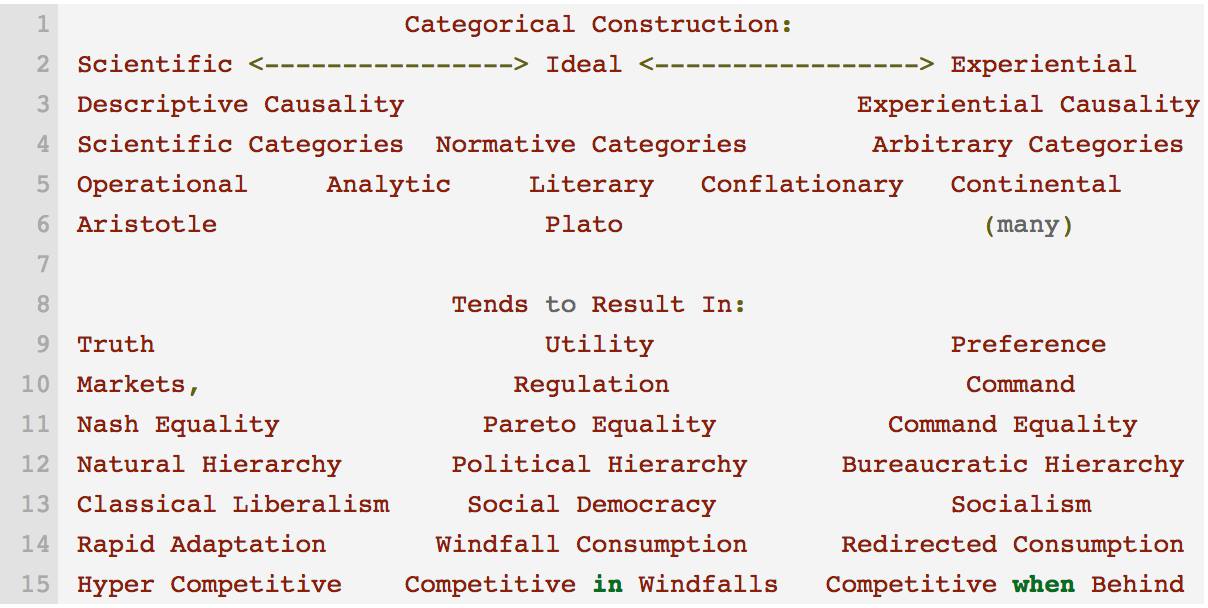
Hyper Competitive Competitive in Windfalls Competitive when Behind
I would make the following observations:
1) The continental (German) program has been a failed attempt, since the time of Kant (through Heidegger), to produce a secular, rational, version of Christianity. The French program (Rousseau through Derrida) has been a demonstrably successful program but a devastatingly destructive one. The Abrahamic program’s second revision (Marx, Freud, Boaz, Cantor, Mises, Rothbard, Strauss) has been catastrophic. And between the French Literary, Continental Rational, and Abrahamic Pseudoscientific movements, the attempt to restore the Aristotelian(scientific)/ Stoic(Mindfulness) / Roman(Law) / Heroic(Truth, Excellence, Beauty) program responsible for human progress in the ancient and modern world has been nearly defeated.
2) The analytic program was exhausted with Kripke, and in retrospect the analytic attempt to produce both formal logic of language, and a science of language will be considered a failure. For example, there is nothing in analytic philosophy that is not better provided by Turing.
3) The principle function of academic philosophy today appears consist of the self correction of existing errors prior to exhaustion of the philosophical program (termination of the discipline) in the same way that the analytic program exhausted itself. (If you list philosophers and their innovations this is what appears to be occurring. The discipline is exhausting itself as a dead end).
4) The principal influences on intellectual history are being provided by the sciences. In particular they are eliminating the last refuge of philosophy: the mind. And science is doing so via-negativa: through the incremental definition and measurement of cognitive biases (errors).
5) Science, if understood as an organized attempt to produce deflationary truthful (descriptive) speech, and the use of scientific categories (necessary and universal), will continue to displace the discipline of philosophy, and the use of philosophical categories, terminology and concepts. And (assuming I am correct), what remains of the discipline of philosophy will be reducible to the continuous refinements of the scientific method’s production of constant descriptive categories, terminology, and operational grammar. And the cross disciplinary adaptation of local categories into universal categories.
6) Science is less vulnerable to error , bias, suggestion and deceit, in no small part because the common problems of philosophy: suggestion, loading, framing, obscurantism, overloading, and the Fictionalisms (pseudoscience, pseudo-rationalism, and pseudo-mythology(theology)) are prohibited by the demand for Operational language, declared limits, and full accounting of consequences. It certainly appears that since the beginning of the 20th century we have been far busier eliminating errors of philosophy than philosophers have been busy discovering innovations.
7) Greek philosophy arose out of the common law of torts. Roman philosophy explicitly functioned on the common law of Torts. The Abrahamic Dark Age (conflating idealism, law, and religion) followed, but we were rescued by the reconstruction of north sea trade and the English common law of Torts (Bacon). And as far as I can determine,
8) As we have seen with continental and political philosophy, just as we saw with theology, and especially Abrahamic theology, the principle purpose of unscientific speech has been deception, propaganda, the propagation of ignorance, and the conduct of rule, and the expansion of warfare. With theologians and philosophers responsible for more deaths than generals and plagues. Between Zoroaster, Muhammed, and Marx, we have more deaths than all but the great diseases including malaria and the black plague. Philosophers and theologians have done more harm than good, largely functioning as a middle class opposition to the current form of rule.
9) Philosophical language then is a dead language, and perhaps an immoral one – and rationalism a dead technology. And they will be incrementally combined institutionally and normatively into theology, with Literary Philosophy(Plato and his heirs), merely representing it’s position on the spectrum of Aristotelian/Stoic/Roman/English Law (science), Confucian Reason, French Literary Idealism, Platonic Rational Idealism, Continental and Augustinian Fictionalism, and Abrahamic and Zoroastrian Fictionalism.
10) The use of non philosophical categories to construct *moral literature* in the French and Italian model will persist forever. Although largely as a means of resistance against the sciences, and the status social, economic, and political status quo.
In this context we have to ask what we mean by Influential, or Great Philosophers, because: (a) Unless we are talking scientists who function as public intellectuals, philosophers, or Social Critics (practitioners of critique), or Moral Fictionalists (wishful thinkers), it really doesn’t appear that philosophy is a living or useful language or discipline. (b) it’s hard to argue there are any currently living and working rationalists of any substance. They are largely Moral Fictionalists.
Let’s look at the list:
Dennett, Harris, Hitchens, Dawkins. The atheists. It’s worth noting that Dawkins was correct and Gould was wrong – about almost everything. (Surprisingly). Harris and Hitches practice critique but nothing else.
Zizek practices Critique and has nothing to offer – and is honest about it. I mean, what solutions does Zizek provide? None. And he says so.
Chomsky practices Critique, has nothing to offer – and is dishonest about it. He is an interesting example of how people with high intelligence and verbal acumen can construct elaborate deceptions. Between Chomsky and Paul Krugman, a half dozen people could spend their entire careers demonstrating their use of cherry picking, loading, framing, overloading with incommensurables, straw men, and heaping of undue praise. His insight into ‘universal grammar’ but categories of increasing complexity is largely correct and we can see that in brain structure today. However, he speaks about world affairs by constantly making the error (intentionally), that rational choice is scalable – just as did Marx. And he has no concept of economics whatsoever, and no political statement can be made any longer independently of economics – especially once we understand that the term economics has nothing to do with money and everything to do with the voluntary organization of individuals through the use of incentives provided by money.
Hofstadter is a good example as any, but again, he is a public intellectual and a literary aesthete. Did he really provide any insight that was not visible in the literature of the time?
So in closing, I would say, that: 1) There are no influential rationalists, because the program is complete and it’s been a dead end. The reasons for this would require I write a tome. 2) That there are many scientists that serve as public intellectuals, and this will continue. 3) There remain and always will be a market for moral literature. 4) That scientific philosophy, if completed, as ‘the discipline of due diligence against ignorance, error, bias, wishful thinking, suggestion, overloading, and deceit, will replace the discipline of philosophy.
But that won’t stop people over invested in a dead frame of reference from attempting to practice it. Why? It’s cheap and science is expensive.