by The Other Žižek @fashyzizek
(1/5) Was having a chat with a friend about the status of the modern political theories in their relation to Christianity and—though I still think liberalism, communism & fascism are best understood as Christian heresies—my friend did point out something important.
(2/5) Liberalism is truer to Christianity in that it proceeds from a similar ‘starting point’. Both communism & fascism, owing to certain philosophical developments on the continent (chiefly the insights of Hegel), proceed from a different starting point.
(3/5) The typology could be set down as follows:
Christianity—the Individual & his moral powers
Liberalism—the Individual & his cognitive powers
Communism—Society as historical & material totality
Fascism—Society as historical & spiritual totality
(4/5) Obviously, the individual’s moral & cognitive powers are deeply implicated in one another bc of the history of European philosophy; Christian theology & liberal philosophy are therefore deeply intertwined. This bears itself out if you know a bit of either.
(5/5) More interestingly, communism & fascism, in seeing society through a totalising historical lens, are much closer to each other than to their theological progenitor (Christianity) or first competitor (liberalism).
(6/5) Not sure if any philosopher or historian has teased this out before but if anyone has recommendations, I’m eager to hear them.
[Y]ou are on the right track, and many others have made the same observation before, it’s just that their thought projects are suppressed post war because they were almost universally (and justifiably) anti-semitic, anti-muslim, anti-everyone and pro european superiority.
Now, I think you’re approach is common for those who read literature and philosophy rather than law, economics, and science. And that is that you aren’t pursuing the underlying military, strategic, demographic, economic causes that drive change, which drives demand for ideas, which thinkers supply, to meet market demand. It’s not like they invent these ideas and drive the world, it’s that the market for ideas generates demand for intellectual work products.
Secondly, and something you might find very interesting, is that I study what you might call the forensics of communication, persuasion, argument, and law. And I compare them to a baseline of truthful speech (which is something else I work on). So it’s pretty easy to ‘trace’ the development of the technology of persuasion (and lying for that matter)
—“I still think liberalism, communism & fascism are best understood as Christian heresies”—
Sort of close but consider going back before christianity to understand what heresies judaism and christianity were caused by.
Judaism, Christianity, and Islam make use of the same means of persuasion, and argument. They produce rebellions against the Aristocratic (Land Holding) civilizations, under the claim of oppression or victimization (instead of domestication, evolution, and modernization) using false promise, baiting people into hazard (decline, harm), using Supernaturalism for the false promise, sophism (pilpul) to argument, and undermining (critique) via propaganda and
Communism, Socialism, Postmodernism, Neoconservatism and Libertarianism were repetitions of the semitic destruction of all the great civilizations of the ancient world, by judaism to undermine, christianity to weaken (demilitarize) and islam to destroy thru raiding – this time using pseudoscience and sophism, and economic and political false promise, rather than supernaturalism and after death false promise.
—“Both communism & fascism, owing to certain philosophical developments on the continent (chiefly the insights of Hegel), proceed from a different starting point.”—
So you are, like most, making an empathic interpretation without starting with the source of decidability in that empathy.
National Socialism (French) Fascism (Italian), and German National Socialism were reactions against the evolution of universal marxism and destruction of economies and polities in a new ‘cult’ religion by nationalism, the use of economies, and polities, as a resistance movement. That’s all they were. Nothing more.
The germans were not happy with the fall of the church, and still are not, and just as the French ‘enlightenment’ was a resistance movement against the aristocracy and British empiricism, the German ‘enlightenment’ was a desperate attempt – still ongoing – to produce a secular version of christianity as an alternative to the empirical enlightenment. Jewish thought (boasianism, freudianism, marxism, Frankfurt cultural marxism, feminism, postmodernism, denialism, outright lying) are likewise reactions not only to empiricism, but especially to Darwin (and Nietzsche), as well as western rule of law, which is naturally, because of market meritocracy, eugenic. It’s this eugenics that these rebellions against sovereignty, truth, duty, reciprocity, and rule of law – seek to end.
Kant, Hegel thru Hiedegger can be best understood an attempt to create a secular theology – and failing dramatically, in competition with anglo reason law and empiricism. The French having killed off their aristocracy adopted a feminine group strategy of aggressive national socialism and moralizing. The jews attempted to create a system of undermining for each class, as always, as is their group strategy. The Russians used literature which was perhaps the most successful attempt to create a secular theology.
There is only one starting point from which all social and political strategy evolves, and that is eugenic or dysgenic. It’s whether to pursue a european aristocratic, productive, and eugenic order, a far eastern centralized bureaucratic eugenic order, or a hindu decentralized harmonious genetically hierarchical order or a semitic underclass parasitic and dysgenic order.
—“ The typology could be set down as follows:
Christianity—the Individual & his moral powers
Liberalism—the Individual & his cognitive powers
Communism—Society as historical & material totality
Fascism—Society as historical & spiritual totality”—
How would you restate those as the necessary strategies of groups given their geographic, strategic, military, demographic, class, and economic structures?
TECHNIQUE:
Theology(christianity) > Reason(Continental liberalism) > Science (Anglo Rule of Law) > Secular Theology (communism: pseudoscience, rebellion, fascism, restoration).
INSIGHT
It’s hard to explain spirituality to people in scientific terms because it deprives them of some of the utility of it. But it’s a mammalian response that is triggered by submission to the pack response, and the pace of mind that comes from doing so. In effect, it’s the feeling of running with the pack. Which is the only time we are ‘whole’ instead of individual super predators living in a continuous competition on many levels.
So it’s better to ask, what each of these innovations was trying to achieve by providing the populi with mindfulness (spiritual comfort) in knowing that they’re running with the pack so to speak, and in safety, and not left behind. And yes we can measure this response.
—“More interestingly, communism & fascism, in seeing society through a totalising historical lens, are much closer to each other than to their theological progenitor (Christianity) or first competitor (liberalism).”—
Well, that’s because judaism, Christianity and Islam were rebellions against aristocracy, meritocracy, literacy, mathematics, and reason – particularly ‘truth’. And liberalism was a rebellion against church and state using meritocracy literacy, mathematics, reason, and empiricism. And communism and it’s counter-revolution (fascism) was a rebellion against the industrial revolution and the rapid decline in the value of labor (which is continuing).
CLOSING
So, think of it that just as we have arithmetic, geometry, calculus, and physics, chemistry, biology, that we can communicate in theology, philosophy, science and describe peoples INCENTIVES as spiritual, moral, and rational. But at all times we are producing language that provides utility in the real world – just calculating it in more intuitionistic, more rational, or more empirical terms.
Anyway. Yes you are onto one of the general themes of history but you are operating in the continental model of secular theology not the anglo model of scientific incentives.
In my view the theological method has pretty much failed the west. The continental method has pretty much failed the west. And only the anglo method has succeeded, and that we are beset by superstition (islam), propaganda, pragmatism, and power (since method), and simple population pressure, and our problem is our christian tolerance.
by The Other Žižek @fashyzizek
(1/5) Was having a chat with a friend about the status of the modern political theories in their relation to Christianity and—though I still think liberalism, communism & fascism are best understood as Christian heresies—my friend did point out something important.
(2/5) Liberalism is truer to Christianity in that it proceeds from a similar ‘starting point’. Both communism & fascism, owing to certain philosophical developments on the continent (chiefly the insights of Hegel), proceed from a different starting point.
(3/5) The typology could be set down as follows:
Christianity—the Individual & his moral powers
Liberalism—the Individual & his cognitive powers
Communism—Society as historical & material totality
Fascism—Society as historical & spiritual totality
(4/5) Obviously, the individual’s moral & cognitive powers are deeply implicated in one another bc of the history of European philosophy; Christian theology & liberal philosophy are therefore deeply intertwined. This bears itself out if you know a bit of either.
(5/5) More interestingly, communism & fascism, in seeing society through a totalising historical lens, are much closer to each other than to their theological progenitor (Christianity) or first competitor (liberalism).
(6/5) Not sure if any philosopher or historian has teased this out before but if anyone has recommendations, I’m eager to hear them.
[Y]ou are on the right track, and many others have made the same observation before, it’s just that their thought projects are suppressed post war because they were almost universally (and justifiably) anti-semitic, anti-muslim, anti-everyone and pro european superiority.
Now, I think you’re approach is common for those who read literature and philosophy rather than law, economics, and science. And that is that you aren’t pursuing the underlying military, strategic, demographic, economic causes that drive change, which drives demand for ideas, which thinkers supply, to meet market demand. It’s not like they invent these ideas and drive the world, it’s that the market for ideas generates demand for intellectual work products.
Secondly, and something you might find very interesting, is that I study what you might call the forensics of communication, persuasion, argument, and law. And I compare them to a baseline of truthful speech (which is something else I work on). So it’s pretty easy to ‘trace’ the development of the technology of persuasion (and lying for that matter)
—“I still think liberalism, communism & fascism are best understood as Christian heresies”—
Sort of close but consider going back before christianity to understand what heresies judaism and christianity were caused by.
Judaism, Christianity, and Islam make use of the same means of persuasion, and argument. They produce rebellions against the Aristocratic (Land Holding) civilizations, under the claim of oppression or victimization (instead of domestication, evolution, and modernization) using false promise, baiting people into hazard (decline, harm), using Supernaturalism for the false promise, sophism (pilpul) to argument, and undermining (critique) via propaganda and
Communism, Socialism, Postmodernism, Neoconservatism and Libertarianism were repetitions of the semitic destruction of all the great civilizations of the ancient world, by judaism to undermine, christianity to weaken (demilitarize) and islam to destroy thru raiding – this time using pseudoscience and sophism, and economic and political false promise, rather than supernaturalism and after death false promise.
—“Both communism & fascism, owing to certain philosophical developments on the continent (chiefly the insights of Hegel), proceed from a different starting point.”—
So you are, like most, making an empathic interpretation without starting with the source of decidability in that empathy.
National Socialism (French) Fascism (Italian), and German National Socialism were reactions against the evolution of universal marxism and destruction of economies and polities in a new ‘cult’ religion by nationalism, the use of economies, and polities, as a resistance movement. That’s all they were. Nothing more.
The germans were not happy with the fall of the church, and still are not, and just as the French ‘enlightenment’ was a resistance movement against the aristocracy and British empiricism, the German ‘enlightenment’ was a desperate attempt – still ongoing – to produce a secular version of christianity as an alternative to the empirical enlightenment. Jewish thought (boasianism, freudianism, marxism, Frankfurt cultural marxism, feminism, postmodernism, denialism, outright lying) are likewise reactions not only to empiricism, but especially to Darwin (and Nietzsche), as well as western rule of law, which is naturally, because of market meritocracy, eugenic. It’s this eugenics that these rebellions against sovereignty, truth, duty, reciprocity, and rule of law – seek to end.
Kant, Hegel thru Hiedegger can be best understood an attempt to create a secular theology – and failing dramatically, in competition with anglo reason law and empiricism. The French having killed off their aristocracy adopted a feminine group strategy of aggressive national socialism and moralizing. The jews attempted to create a system of undermining for each class, as always, as is their group strategy. The Russians used literature which was perhaps the most successful attempt to create a secular theology.
There is only one starting point from which all social and political strategy evolves, and that is eugenic or dysgenic. It’s whether to pursue a european aristocratic, productive, and eugenic order, a far eastern centralized bureaucratic eugenic order, or a hindu decentralized harmonious genetically hierarchical order or a semitic underclass parasitic and dysgenic order.
—“ The typology could be set down as follows:
Christianity—the Individual & his moral powers
Liberalism—the Individual & his cognitive powers
Communism—Society as historical & material totality
Fascism—Society as historical & spiritual totality”—
How would you restate those as the necessary strategies of groups given their geographic, strategic, military, demographic, class, and economic structures?
TECHNIQUE:
Theology(christianity) > Reason(Continental liberalism) > Science (Anglo Rule of Law) > Secular Theology (communism: pseudoscience, rebellion, fascism, restoration).
INSIGHT
It’s hard to explain spirituality to people in scientific terms because it deprives them of some of the utility of it. But it’s a mammalian response that is triggered by submission to the pack response, and the pace of mind that comes from doing so. In effect, it’s the feeling of running with the pack. Which is the only time we are ‘whole’ instead of individual super predators living in a continuous competition on many levels.
So it’s better to ask, what each of these innovations was trying to achieve by providing the populi with mindfulness (spiritual comfort) in knowing that they’re running with the pack so to speak, and in safety, and not left behind. And yes we can measure this response.
—“More interestingly, communism & fascism, in seeing society through a totalising historical lens, are much closer to each other than to their theological progenitor (Christianity) or first competitor (liberalism).”—
Well, that’s because judaism, Christianity and Islam were rebellions against aristocracy, meritocracy, literacy, mathematics, and reason – particularly ‘truth’. And liberalism was a rebellion against church and state using meritocracy literacy, mathematics, reason, and empiricism. And communism and it’s counter-revolution (fascism) was a rebellion against the industrial revolution and the rapid decline in the value of labor (which is continuing).
CLOSING
So, think of it that just as we have arithmetic, geometry, calculus, and physics, chemistry, biology, that we can communicate in theology, philosophy, science and describe peoples INCENTIVES as spiritual, moral, and rational. But at all times we are producing language that provides utility in the real world – just calculating it in more intuitionistic, more rational, or more empirical terms.
Anyway. Yes you are onto one of the general themes of history but you are operating in the continental model of secular theology not the anglo model of scientific incentives.
In my view the theological method has pretty much failed the west. The continental method has pretty much failed the west. And only the anglo method has succeeded, and that we are beset by superstition (islam), propaganda, pragmatism, and power (since method), and simple population pressure, and our problem is our christian tolerance.
But a deeper question is, Why? What is it about the progressive mind that makes it so vulnerable to this type of extreme out-group empathy?
The proposed reasons are many. Today we offer up a selection that may help us better grasp what we’re dealing with when faced with a fervent Multiculturalist who seems immune to all fact and logic.
Before we talk about progressives in particular, let’s look at us WEIRDs in general (Western, Educated, Industrialized, Rich, Democratic). (Or WEIRDOs, if one adds ‘Outbred.’)
A hundred years ago, prominent leftists like J.A. Hobson could speak of the ‘backward races’ or the ‘non-adult races’ without anyone batting an eye. Today not even the rightest of the right-wing could utter such a phrase without being pilloried. As this Overton window shift testifies, today’s Anglo-Germanics have become far more open to outsiders than pretty much anyone in human history.
Our hunter-gatherer past: To be in the out-group meant instant death
Let’s go back as far as we can. It cannot be stressed enough that out-group enmity is the historical norm in all populations. We come from small hunter-gatherer groups; our oldest and deepest instincts are ‘trust closest family; be ready to kill all others.’ (Rushton, Diamond) As E.O. Wilson says, ‘the selection pressures of hunter-gatherer existence have persisted for over 99% of human genetic evolution.’ This is our common genetic heritage.
So how did we get from ‘kill all outsiders’ to ‘welcome all outsiders’ and, why not, even ‘let them kill us‘? The long path to our pathologically high-trust present is still a mystery. Some possibilities:
a) ColdWinters Theory
Did our ancestors’ environments determine our propensity to cooperate with others? (ImageSources)
Different theories on the question have been put forward by HBD thinkers. Most well-known is Richard Lynn’s ‘Cold Winters theory’, which was taken up by Edward Miller as ‘Parental Investment’:In cold climates males were selected for provisioning, rather than for mating success. … Negroids (blacks) evolved in warm climates, while Caucasians (whites) and Mongoloids (Asians) evolved in colder climates. Mating is assisted by a strong sex drive, aggression, dominance, sociability, extraversion,impulsiveness, sensation seeking, and high testosterone. Provisioning is assisted by anxiety, altruism, empathy, behavioral restraint, gratification delay, and a long life span.
b)Hunting-Gathering to Agriculture
From hunting to farming: The Great Pacification?
Many researchers believe the very first large farming settlements (of which there is evidence going back to at least 7500 B.C.) were probably violent places, and that the first social controls mandating out-group cooperation were born here. Cochran and Harpending:
Farming led to elites, and there was no avoiding their power. … The old-style, independent-minded personalities that had worked well among hunter-gatherers were obsolete. … Since the elites were in a very real sense raising peasants, just as peasants raised cows, there must have been a tendency for them to cull individuals who were more aggressive than average, which over time would have changed the frequency of those alleles that induced such aggressiveness. (1)
Peter Frost:Male combativeness is especially strong in highland pastoral societies beyond the reach of State control. … If highland pastoral societies represent one end of this behavioral continuum, the other end seems to be the low-lying farming societies of east and southeast Asia, where State formation, rice farming, and sedentary life favored collectivism over individualism anda general pacification of social relations.
David H. Fisher in Albion’s Seed talks about settlers from the violent, arid border regions of Scotland and England in our southern back country:
The people of this region were intensely resistant to change and suspicious of “foreigners.” One student of the Appalachian dialect found that “the word foreigner itself is used here [in Appalachia] in its Elizabethan sense of someone who is the same nationality as the speaker, but not from the speaker’s immediate area.” All the world seemed foreign to the backsettlers except their neighbors and kin. … (2)
Nisbett and Cohen, in Culture of Honor, also argue that in the southern U.S. the ‘honor culture’ and suspicion of outsiders still persists today, as seen in the customs, behaviors, and crime rates of the U.S. South’s Euro population. (3)
Herding camels in India,llamas & alpacas in Peru,yaks in the Himalayas2) Cultural pressures
We have seen that our natural environment has perhaps shaped our attitude towards out-groups in various ways. But what about cultural pressures?
a) Family formationOutbreeding
Cousin marriage was once the norm in most places; today it has died out in much of the world:
Image source
Steve Sailer, in his 2003 ‘The Cousin Marriage Conundrum,’ was the first journalist to succintly point out the problems of societal trust where cousin-marriage is prominent:
By fostering intense family loyalties and strong nepotistic urges, inbreeding makes the development of civil society more difficult. … Extended families that are incredibly tightly bound are really the enemy of civil society because the alliances of family override any consideration of fairness to people in the larger society.
From HBD Chick, ‘Tribes and types of cousin marriage’
No one has done more to try to pick apart the biological ‘why’ of high- and low-trust peoples than HBD Chick. Her online research on the history of cousin-marriage is unmatched. (Consult her blog for a wealth of data on consanguinity around the world; see also JayMan’s detailed sum-up.) As she has shown, while Muslims favored inbreeding, the early Church pushed outbreeding.
According to her theory, the most familistic, out-group-wary peoples on the planet today are those with the longest histories of inbreeding, and the high-commonweal folks are those who stamped out cousin marriage first–notably NW Europeans. (See also JayMan.)
Manorialism
Many have noted that Latins and especially Slavs appear less outgroup-welcoming than Anglo-Germanics. Drawing on Mitterauer, Todd, Clark, and others, HBD Chick has argued that the Germanic ‘core’ of Northern Europe (inside the Hajnal line) underwent a series of unusual selection pressures (see her outstanding piece here, alsoJayMan and Peter Frost). Among them were manorialism:
Early manorialism and modern corruption inside the Hajnal Line (HBD Chick)
In the bipartite manor system, peasants or serfs … lived on and managed their own farms (let out to them by the manor owner) and also worked on the manor or paid rent to the manor. Extended families very much did not fit into the manor system as it operated in Western Europe. So manorialism — at least western manorialism — “pushed” for the nuclear family.
This system seems to have fostered individualism, commonweal-orientation, civicness, less violence–and, who knows, the seeds of our extreme out-group empathy?
b) Printing press
Cultural pressures can come from new technologies as well. For Steven Pinker, the ‘better angels of our nature’ have pushed us to be more out-group friendly, first and foremost due to mass literacy:
The growth of writing and literacy strikes me as the best candidate for an exogenous change that helped set off the Humanitarian Revolution. … Reading is a technology for perspective-taking. When someone else’s thoughts are in your head, you are observing the world from that person’s vantage point. … you have stepped inside that person’s mind and are temporarily sharing his or her attitudes and reactions.
Did novel-reading turn us empathetic?
… Around the same time that Uncle Tom’s Cabin mobilized abolitionist sentiment in the United States, Charles Dickens’s Oliver Twist (1838) and Nicholas Nickleby (1839) opened people’s eyes to the mistreatment of children in British workhouses and orphanages, and Richard Henry Dana’s Two Years Before the Mast: A Personal Narrative of Life at Sea (1840) and Herman Melville’s White Jacket helped end the flogging of sailors. (5)
Personality blogger Staffan is skeptical:I believe that the people [John] Locke and others addressed were already equipped with a wide capacity for empathy. When they heard of other people around the world and the arguments on how they should be treated, they responded accordingly…
Staffan’s major beef with Pinker:
…Width of empathy is only large in Northwest Europeans and their descendants. People sometimes referred to as WEIRD (Western, Educated, Industrialized, Rich, Democratic). … The rest of the world is not very impressed by Enlightenment ideals and it never was.
Another cultural pressure is that of dense urban vs. loose rural living. As noted above, Cochran and Harpending surmised that the first large settlements of 10,000 years ago likely tamed our fiercest out-group murderousness.
The ‘city mouse / country mouse spat’ is in any case as old as recorded history. From Aesop’s fable , after Country Mouse feasts in town with his City Cousin and is attacked by cats and dogs:
The Country Mouse said, “No, no; I shall be off as fast as I can. I would rather have a crust with peace and quietness, than all your fine things in the midst of such alarms and frights as these.”
For millennia the peasant has been mocked as a hidebound simpleton, the city-dweller as an effete dandy. (Not without reason.) But the Romes and Baghdads were the exception– for most of the last 10,000 years, we’ve been 95% rural-dwellers. Only today, post-Industrial Revolution, has that ratio nearly reversed itself.
Voting patterns show that city folk tend to vote left and country folk right (click to enlarge):
Image source
So do cities turn people liberal, or are liberals drawn to live in cities? According to Pew, it’s the latter:
Image source
But this can be a chicken-and-egg question: Are conservatives drawn to the countryside and liberals to the city because that’s where they perceive others like themselves to be? Does growing up in a city–which more of us do now then at any time in history– push people to more out-group tolerance? Since we were 95% rural folk for most of history, but are today less than 20%…
Image source
…could this new way of living be pushing us to a ‘bigger circle of empathy’?
d) Wealth
GDP per capita, Eurozone (pre-crisis)
Can greater wealth itself become a cultural pressure? Ronald Inglehart of the World Values Survey thinks so. He claims that in general, as a people grows wealthier, it becomes more out-group tolerant:
[Economic] development is linked with a syndrome of predictable changes away from absolute social norms, toward increasingly rational, tolerant, trusting, and postmodern values. But culture is path dependent. The fact that a society was historically Protestant or Orthodox or Islamic or Confucian gives rise to cultural zones with highly distinctive value systems that persist when we control for the effects of economic development. (6)
Image source: WVS (click to enlarge)
Inglehart was the first to place the world’s countries on a scatter plot according to two value axes: “traditional <–> secular” and “survival <–> self-expression”:
TRADITIONAL / SECULAR
… Societies at the traditional pole emphasize religion, absolute standards, and traditional family values; favor large families; reject divorce; and take a pro-life stance on abortion, euthanasia, and suicide. They emphasize social conformity rather than individualistic achievement, favor consensus rather than open political conflict, support deference to authority, and have high levels of national pride and a nationalistic outlook. (Societies with secular-rational values have the opposite preferences on all these topics.)
Image source: WVS (click to enlarge)SURVIVAL / SELF-EXPRESSIONSocieties that emphasize survival values show relatively low levels of subjective well-being, report relatively poor health, are low on interpersonal trust, are relatively intolerant toward outgroups, are low on support for gender equality, emphasize materialist values, have relatively high levels of faith in science and technology, are relatively low on environmental activism, and are relatively favorable to authoritarian government. (Societies that emphasize self-expression values tend to have the opposite preferences on all these topics.) (6)
Image source: WVS (click to enlarge)
Extensive evidence indicates that these values tap an intergenerational shift from emphasis on economic and physical security toward increasing emphasis on self-expression, subjective well-being, and quality of life … it seems to emerge among birth cohorts that have grown up under conditions in which survival is taken for granted.
These generations ‘free from all want’ are quite new, and are mostly found in the West. Could this help explain our current crop of hothouse flowers, so blithely trusting of outsiders?
3) Group Pressures
In addition to our natural environment and cultural pressures, many feel that certain groups have had an outsized effect on our level of empathy to outsiders.
a) Women
Suffragettes, target of mockery
In the West, the industrial revolution led to countless changes, including that of the rise of women as a ‘lobby.’ Some warned of trouble ahead. Author Madeleine V. Dahlgren, in 1871:
The special advantage as a safe advisor to man that woman holds at present arises entirely from the neutral ground she occupies in the political world. Were she herself to enter the arena her ardent impulses would lead her to the most dangerous experiments. The fact is, women reason less and feel more deeply than men.
… Involved in one common ruin from our present proud preeminence, [after women’s suffrage] we shall become a laughing-stock and a by-word to the nations of the world.
Addressing the Mont Pelerin Society 30 years ago, Wellesley’s Brigitte Berger aptly predicted the feminization to come:
The general acceptance of the feminist definition of private and public life in the Western democracies as the new orthodoxy, in conjunction with the prescriptive thrust of feminism, result in the feminization of politics, the feminization of the economy and the feminization of the culture. Taken together we may thus speak of the ascent of a new sentimental imperialism.(The ‘old sentimental imperialism’ is well laid out in Chapter 3 of Hobson’s 1905 Imperialism, A Study. Our work on the subject can be found here.)
the feminist vision that seeks to radically transform world culture. we can humanize the machinery of politics instead of women having to become more like men, men will have to become more like women.
The Zeroeth Amendment (from Steve Sailer)
Men are supposed to be the hard-headed ones, women the soft-headed. Has this ‘feminization of politics’ led to what Steve Sailer calls ‘Invade the World, Invite the World’ (democratize the poor dears by force and if that doesn’t work, invite them all here) and ‘the Zeroeth Amendment’ (everyone on Planet Earth has the right to immigrate to the U.S.)?
It is impossible to say with surety that women’s entry into politics has led to more out-group friendly policies, but the evidence is intriguing.
We have seen that the early Church’s anti-inbreeding push changed family formation and thus values in Europe. Could the later influence of the Protestant and Catholic churches have affected our out-group feelings as well? Or is that the cart before the horse– are the out-group tolerant more likely to become Protestant in the first place? Inglehart:
… As the figure demonstrates, virtually all historically Protestant societies rank higher on interpersonal trust than virtually all historically Catholic societies. This holds true even when we control for levels of economic development: interpersonal trust is significantly correlated with the society’s level of GNP/capita, but even rich Catholic societies rank lower than equally prosperous historically Protestant societies. (6)
Image source
Paul Gottfried also posited a Protestant connection in Multiculturalism and the Politics of Guilt:
Even relatively tolerant Anglo-American peoples until recently did not behave with deference toward those recently arrived and culturally alien. … The desperate efforts now being made by Western countries, particularly by Protestant ones, to raise themselves morally by receiving populations entirely “distinct” from themselves is not a continuation of older attitudes toward immigration.
… Without the guilt ethic preached by contemporary Christianity, it would be hard to imagine the sweeping affirmations now taking place about the moral superiority of alien cultures. (10)
c) Communists
What about the influence that communist government–or lack of one–can have? Inglehart:
A heritage of communist rule also seems to have an impact on this variable, with virtually all ex-communist societies ranking relatively low. Accordingly, historically Protestant societies that experienced communist rule, such as East Germany and Latvia, show relatively low levels of interpersonal trust. (6)
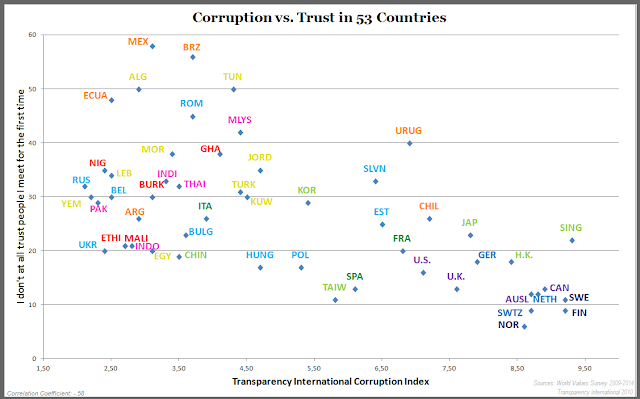
He is referring to the graph just above, but here is a more recent WVS meausure of societal trust vs. corruption around the world–note Eastern European countries in light blue:
But this too becomes chicken-and-egg—How many countries adopted communism because it was congenial to their character, versus having it thrust upon them by outsiders?
Whatever the cause, during the recent Merkel-imposed immivasion, the old Eastern Bloc countries have shown themselves strangely immune to the siren song of Multicultism.
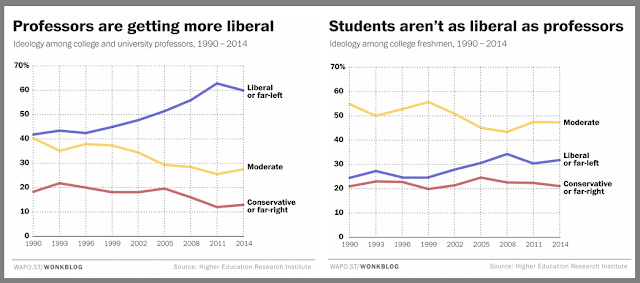
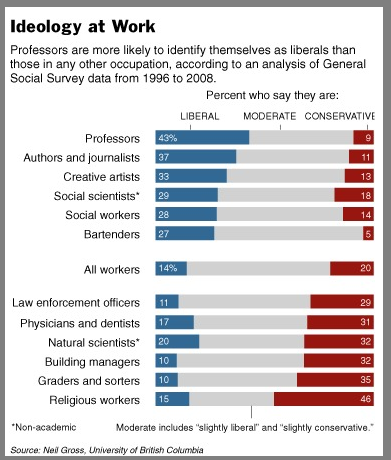
Many complain that academia has taken a big role in pushing for ever more out-group tolerance:During the past quarter-century, academia has seen a nearly 20-percent jump in the number of professors who identify as liberal. That increase has created a lopsided ideological spread in higher education, with liberal professors now outpacing their conservative counterparts by a ratio of roughly 5 to 1.
Thirty years ago in his Closing of the American Mind, Allan Bloom was sounding the alarm on college indoctrination:
So indiscriminateness is a moral imperative because its opposite is discrimination. This folly means that men are not permitted to seek for the natural human good … Instinct and intellect must be suppressed by education.
He warned about being too pliant with out-groups:
That dominant majority gave the country a dominant culture with its traditions, its literature, its tastes, its special claim to know and supervise the language, and its Protestant religions. Much of the intellectual machinery of twentieth-century American political thought and social science was constructed for the purposes of making an assault on that majority … in favor of a nation of minorities and groups each following its own beliefs and inclinations.
… None of this concerns those who promote the new curriculum. The point is to propagandize acceptance of different ways … Practically all that young Americans have today is an insubstantial awareness that there are many cultures, accompanied by a saccharine moral drawn from that awareness:We should all get along. Why fight? (7)
Bloom himself probably couldn’t have imagined how far this snowball would roll:
Though today the notion has become dangerously unfashionable, one cannot deny the outsized influence the Jewish diaspora has had on multiculturalism in the West. Evolutionary psychologist Kevin MacDonald:
Studies in Prejudice and, especially, The Authoritarian Personality attempt to show that gentile group affiliations, and particularly membership in Christian religious sects, gentile nationalism, and close family relationships, are an indication of psychiatric disorder. At a deep level the work of the Frankfurt School is addressed to altering Western societies in an attempt to make them resistant to anti-Semitism by pathologizing gentile group affiliations.
A consistent theme of The Authoritarian Personality is the idea that gentile participation in cohesive groups with high levels of social conformity is pathological, whereas similar behavior of Jews … is ignored.
Double standard?
A common component of anti-Semitism among academics during the Weimar period was a perception that Jews attempted to undermine patriotic commitment and social cohesion of society. (8)
This list of environmental as well as cultural pressures has, we hope, helped to give some clues as to how the Overton window could have shifted so far left on questions involving out-groups (segregation, immigration, interracial marriage / adoption, etc). Put simply, all ethnic NW Euros today–right and left–have a historically unprecedented level of out-group empathy.
So now we come to the real object of our study: the dyed-in-the-wool leftist. As we have seen, he has been gripped devilishly hard by the The Anti-racist / Multiculturalist fervor.
Progressive passion play
But why? What is it about his worldview that makes him so vulnerable to this kind of dogmatism?
Why Progressives Are the Most Zealous
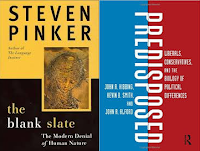
Stephen Pinker in his 2002 classic The Blank Slate laid out the differences between (among others) male and female brains.
In their 2013 Predisposed: Liberals, Conservatives, and the Biology of Political Differences, Hibbing, Alford, and Smith have done the same for liberals and conservatives.
It may help us to sympathize a bit more with the fervent blank-slatist, as there’s a good chance he was, in fact, ‘born this way.’ What is the evidence?
1) Character traits
Hibbing et al. found evidence that self-identified liberals and conservatives differ on a great deal more than just economic policy.
a) Preferences
Via a variety of studies and online polls, they posit that there are real lefty and righty differences in (9):
food preference (greens vs. meat)
humor preference (resolution of incongruity or not)
favorite fiction (ambiguity vs. clear resolution)
favorite art (abstract vs. representational)
Jackson Pollack, Nicolas Poussin
personal space orderliness (less vs. more)
car preference (Volvo vs. Porsche for rich, Japanese vs. American for poor)
Rich lefty, rich righty
choice of investment stocks (high-tech vs. heavy industry)
b) Values
Via values studies, Hibbing et al. find even more variation in the personality of righties and lefties.
We here at TWCS are peering into the liberal mind. But as Hibbing et al. point out, since the age of the great totalitarianisms, most researchers have been trying to pin down the supposed right-wing ‘authoritarian personality.’ Theodor Adorno (cited above) wrote the best-known work on this elusive ‘authoritarian’ who walks among us.
Researchers have tried to tease out this creature via scales: Adorno’s colleague Frenkel-Brunswick and her ‘F-scale’ (for ‘fascism’), Glenn Wilson and his ‘C-scale‘ (‘conservatism’), Robert Altemeyer and his ‘RWA‘ (‘right-wing authoritarian’ index). Hibbings et al. bemoan the fact that the left-wing authoritarian personality has been so little studied, with Hans Eysenck the only one venturing down this path. (9)
Other values scales may be more familiar to us:
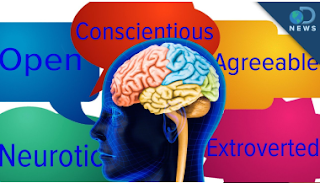
The ‘Big 5’ from Goldberg and Costa & McCrae (Openness / Conscientiousness / Extraversion / Agreeableness / Neuroticism),
‘HEXACO’ from Ashton & Lee (Honesty-Humility / Emotionality / Extraversion / Agreeableness / Conscientiousness / Openness), and
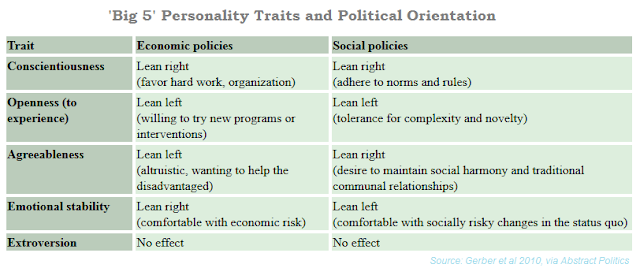
For the Big 5, left-wing voting is associated with high Openness, right-wing voting with high Conscientiousness.
Image source
(You can see where you fall on the Big 5 traits here.)
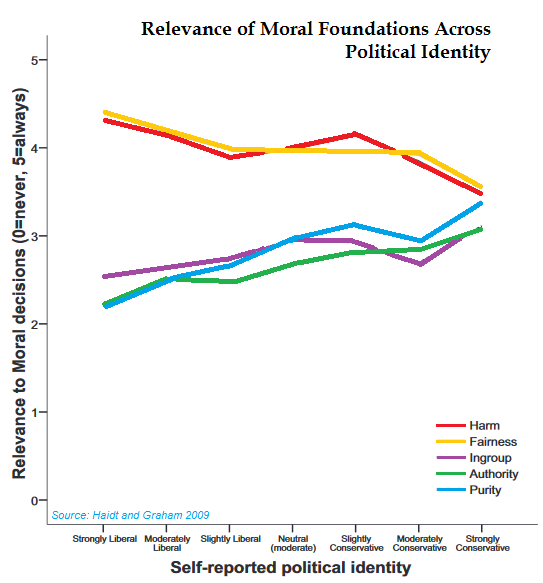
For Haidt’s ‘Moral Foundations’ theory, concern about Harm and Fairness are associated with voting left; concern about Purity, Loyalty, and Authority with voting right:
Image source
(You can see where you fall on Haidt’s ‘moral foundations’ here.)
(A study on HEXACO and politics can be found here; see also JayMan’s workon HEXACO.)In a nutshell, then, personality studies seem to line up well with voting–one may almost speak of a leftist and rightist personality ‘type.’
2) Lab studies
Cultural preferences and personality traits aren’t the only ways in which lefty and righty minds seem to differ. Once in the lab, things become even starker.
Via a variety of lab tests, Hibbing et al. show lefty and righty differences in:
Ability to taste PTC (compound giving bitter taste to veggies such as arugula)
Arugula again
Ability to smell androstenone / finding its smell pleasant (linked to testosterone) (more accepting of social hierarchies–righty)
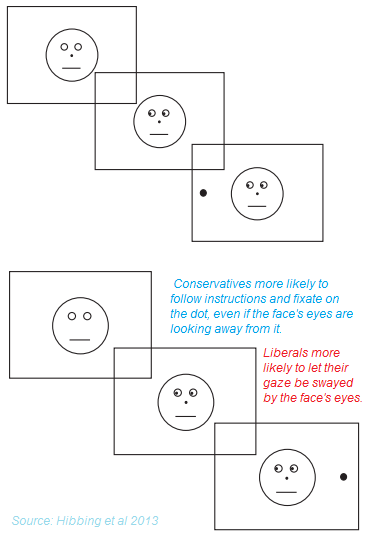
Our findings suggest that liberals are more influenced by social cues—even when told to explicitly ignore those cues. Conservatives seem to be more willing or able to ignore cues and follow the rules that govern the situation. … We found that conservatives were more likely to believe it is “better” for people not to be influenced by where others are looking, while liberals were just the opposite. (9)
Placing objects in categories (e.g. zoo vs farm animals–righties are ‘hard’ and lefties ‘soft’ categorizers)
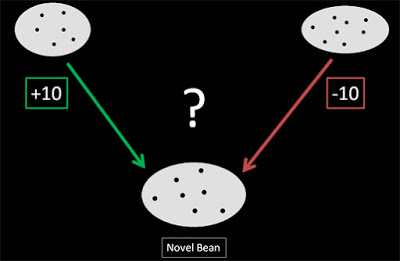
Picking ‘good’ and ‘bad’ beans in the game BeanFest
Not to go too into detail (see study), but a lab game called ‘BeanFest’ showed big variance in lefty and righty thought. Beans with different spots pop up, some add points, some subtract points. You have to suss out which are which, and remember for when they flash on the screen again.
(You can play BeanFest here.)
It did not take long for the researchers to note that people varied widely in the way they played BeanFest. Some threw caution to the wind and accepted beans with abandon. This meant they gained and lost a lot of points but also collected substantial amounts of information about the value of the various beans. Others were much more wary, accepting just a few beans at first and then only accepting subsequent beans that matched the few types known to be good.
(One guess as to which political orientation was which.) After the game, the players were given a test to see what they’d retained:
Liberals were just a bit better at remembering which beans were bad than they were at remembering which beans were good; however, there was no such approximate balance for conservatives—they knew a bad bean when they saw one. Actually, they knew a bad bean even when they didn’t see one. Conservatives were way better than liberals at correctly identifying bad beans, but they were also more likely to miscategorize good beans as bad. (9)
So this is our leftist: Curious, incautious, resists negativity, embraces the new and the ambiguous, even to his detriment? One begins to see a certain logic in his attraction to Multiculturalism.
Be that as it may, couldn’t these differences just as well come from nurture as nature? Isn’t all of this highly malleable?
3) Biological differences
As it turns out, looking into the body itself, one can see political differences in our very biology.
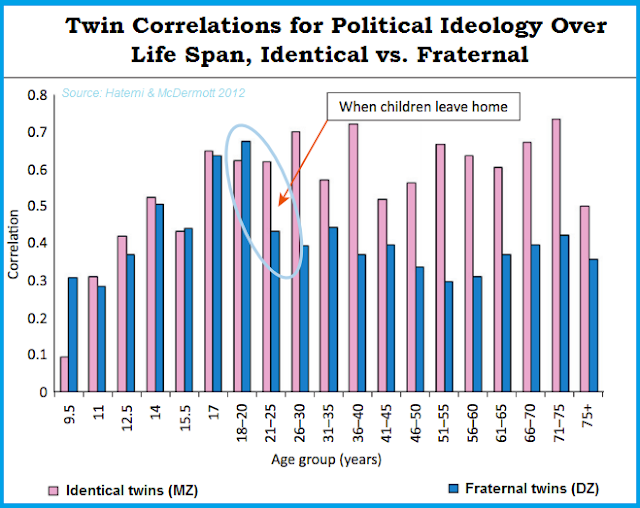
Will they vote the same?Twin studies going back to 1986 have shown likely genetic links to political beliefs. More recent studies, such as Hatemi and McDermott (2012), have tried to break down the nature and nurture of ideology.
In the following graph pink is identical twins, blue is fraternal. We see how closely the two types of twins’ political views sync up throughout life:
Image source
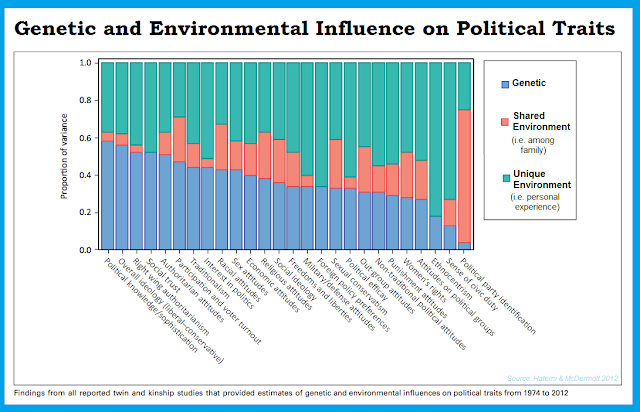
In this graph, based on 38 years of twin studies, the authors claim that ‘overall ideology’ (liberal-conservative) is almost 60% genetic (click to enlarge):
Image source(See also JayMan’s discussionof Hatemi et al.’s 2010 paper.)
In Predisposed, based on various lab studies, Hibbing et al. find lefty and right differences in (9):
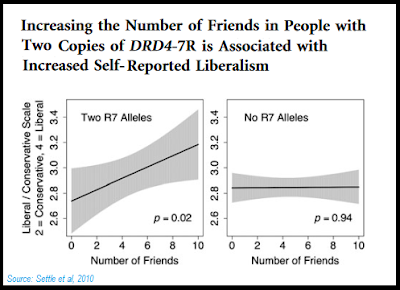
The DRD4 allele + a high number of friends affects one’s political orientation
Image source
It is looking more and more like our affection for the outsider (or lack thereof) may have deep genetic roots.
* * *
After dissecting the leftist mind, Hibbing et al. try to explain these creatures to the conservative:
All this makes liberals far more trusting than they have any right to be, but it is important to realize that this is not because they are foolish or lazy but rather because they are structured in such a way that prevents them from appreciating the obvious dangers swirling about. …. Their first instinct is to assume individuals in faraway lands are trustworthy.
Did not look before she leapt
They love experiences that might take them off the beaten track. They seem not to look before they leap. … They don’t seem to consider, let alone mind, the fact that this openness raises the possibility that they could be taken in by evildoers. (9)
The authors also point to a likely genetic origin:
Our best guess is that in the rough and tumble of the Pleistocene, individuals who tried new things, opened themselves up to members of other tribes, and had little to no negativity bias were rare—it simply seems a losing long-term strategy in the face of all the dangers swirling about.
… Selection pressures in such environments would likely favor individuals with higher degrees of negativity bias, who approached novel situations with caution, who were loyal to their group, and who were suspicious of the tribe over the hill.
Our ultra-safe, coddled modern life has thus allowed that once-rare beast, the liberal, to be fruitful and multiply? Perhaps. (SeeJayMan on this.) They warn:
Liberalism may thus be viewed as an evolutionary luxury afforded by negative stimuli becoming less prevalent and less deadly. If the environment shifted back to the threat-filled atmosphere of the Pleistocene, positive selection for conservative orientations would reappear and, with sufficient time, become as prevalent as it was then. (9)
The question ‘Why are leftists so prone to Multicult fundamentalism?’, then, may have many answers. But we at TWCS feel the genetic aspect absolutely cannot be ignored. We would do well to keep this in mind at our moment of highest frustration:
Are we in fact trying to argue someone out of a belief which is simply a product of his own hard-wiring?
Religions wax and wane in strength. Ideologies, like fashions, come and go. Whatever its origin may be, let us hope that this particularly pernicious anti-racist faith loosens its grip on us before the body count grows any higher.
Thank you for reading.
Previously:When Progressives Get ReligionREFERENCES
(1) Harpending, Henry and Cochran, Gregory, The 10,000 Year Explosion, NY: Basic Books, 2009.
(2) Fischer, David Hackett, Albion’s Seed, Oxford University Press, 1989.
(3) Nisbett, Richard and Cohen, Dov, Culture of Honor, Westview Press, 1996.
(4) Clark, Gregory, A Farewell to Alms, Princeton U. Press, 2009.
(5) Pinker, Steven, The Better Angels of our Nature, NY: Viking, 2011.
(6) Inglehart, Ronald, “Culture and Democracy,” in Harrison, Lawrence and Huntington, Samuel (editors), Culture Matters, NY: Basic Books, 2000
(7) Bloom, Allan, The Closing of the American Mind, NY: Simon & Schuster, 1987.
(8) MacDonald, Kevin, The Culture of Critique, First Books Library, 2002.
(9) Hibbing, John R.; Smith, Kevin B.; Alford, John R., Predisposed: Liberals, Conservatives, and the Biology of Political Differences, Routledge, 2013.
(10) Gottfried, Paul E., Multiculturalism and the Politics of Guilt: Towards a Secular Theocracy, U. of Missouri Press, 2002.
Now that we have a much better picture in our head of what a better system could look like, tell us about the constitution you’re writing – how does it build on the original constitution, what does it add or clarify, make more thorough – tell us about it.
Let’s do a little course correction here.
I’m overemphasizing government so far.
The law creates the market for via negativa suppressions of parasitism and in doing so forces us into productive voluntary cooperation.
Government is just a system of organization and rules that divide the labor of commons production within that market for the suppression of parasitism and production of cooperation.
The people have been fooled by the attempt to justify democracy that it’s the government that produces goods. It’s not. And the evidence of governments around the world is that the method of government is immaterial, but the independence, and dependence of the courts to rule according to reciprocity determines whether any kind of government prevails. This is another example of the conceptual change in the 20th and 21st century from justification and via positiva to the importance of falsification and via negativa. So the government really doesn’t matter one tenth as much as the law.
The optimum government is a benevolent monarchy – that’s without question. The problem is whether the military, the sheriffs, and the militia will uphold the law and the findings of the court according to law that makes prosperity and non-corruption possible. Participatory government in other than via negativa form as was the original british parliamentary model, the germanic model, and the western indo european model, is simply disastrous. It’s only use in history has been to seize power as the aristocracy makes possible rule by the middle class. But rather than thinking in terms of monopoly power, we should think in terms of adding middle class commons production to aristocratic rule production. And then adding church insurance and governance of the family once that group is sufficiently organized under the law. The problem we face in the west is that our church is incompatible with our rule even though it is compatible with our ethics.
The reason I have to write a constitution is to reform the law to defend our people against future repeats of current crimes against them both in government and out. So I am not writing a new constitution, but a set of amendments to the constitution that replace existing articles and amendments on a one by one basis. The constitution is an attempt at natural law in the western indo european, aristotelian, germanic, and the british, and american tradition. I’m just hardening it, and suggesting how we might restore its original intent as a collection of european states seeking mutual military insurance, monetary exchange, and dispute resolution,while pursuing our individual and divergent interests.
The policy recommendations could be implemented in our current constitution. But they would not be durable. And they would only solve some of the problems. The fundamental problem is the law does not serve as a market for the suppression of parasitism – trespass in all its forms – but as an instrument of arbitrary rule.
Our government is not such a bad thing – it’s the vulnerability of our government to judicial activism instead of following the constitutional process. The industrialization of lying by innumeracy, sophism, pseudoscience, and denial using mass media, education system, and our vulnerability, particularly in finance and education, and the systematic destruction of family, incentives, knowledge, reason, tradition of truth, commons, and empiricism, that’s the problem. In other words it’s not the government so much as the second conquest of our civilization by lying and the destruction of our middle and working classes by design.
So I don’t want to convince anyone that government is that important. Government just produces a via-positiva market for commons. I want people to understand it’s the market for via-negativa suppression of parasitism that’s our problem and what makes good government possible. And That we need to modernize that system of via-negativa suppression of reciprocity, falsehood, and deceit that is our central weakness. It’s the law that produces a via negativa market against parasitism and predation that is the underlying problem, and our government has been slowly usurped for the purpose of empire building and ideological conquest at the expense of our people. By weakening its ability to spread falsehood and ir-reciprocity and restoring the market for prosecution of offenders that we call the courts.
And I think that this is the great failure of the 20th century thinkers, and the success of the jewish and cosmopolitan, french illiberal, and anglo liberal new england movements that succeeded in creating a new era of ignorance and deceit. And our conservatives failed because they lacked a means of articulating their ideas. Well, we don’t lack it any longer, and science has demonstrated particularly in response to the left, that conservative vision of man is correct: we are animals like any other and we domesticated ourselves partly, and animals partly and the job is undone, because many of us are still insufficiently domesticated.
So just as we discovered the scientific method is falsificationary only, that the logics are falsificationary only, that the law is falsificationary only, and that we can only know what is false and irreciprocal. And we must rely on markets to determine the good. Anything that is not false or irreciprocal is good. We can never know the non-trivial true. We can only know we speak truthfully and reciprocally by eliminating every opportunity for falsehood and ir-reciprocity. If we wish some condition that requires cooperation even if there are irreciprocal and disproportionate elements, but reciprocal and proportional aggregate outcomes, wecan produce contracts to do that. So any system of government is possible as long as it’s truthful, accountable, and variation is subject to the market for suppression of falsehood and ir-reciprocity that we call the court and the law.
Changes to the constitution preserve the government as a going concern and do less disruption international strategy and economy. If our debt position was worse (it’s not) then there would be value in replacing the government instead of altering the constitution.
So the changes to the constitution that I”m writing includes preambles that declare properties of man and mankind, the law of reciprocity, and the construction of the law, and how to construct the law in algorithmic terms in operational language and some other criteria I won’t go into here, but formalizes what is currently called ‘principles’ in law school and theories of jurisprudence. This is an increase in precision in the law that eliminates sophisms and pseudoscience and deceit from the law. These two sections Man, and The Law, are the principal innovations that I’m bringing to the constitution, and all constitutional sections, articles and amendments, all legislation, regulation, and executive order, and findings of the court, must be stated in and justified by, adherence to these forms and criteria. Legislation and regulation must pass assent by the constitutional court, but only after it has passed assent by the houses of government.
This does not mean threat the government nor the court cannot err. It just means that we do not have to wait for the market to establish the reciprocity or falsehood of legislation, regulation, and order, before a finding of law is rendered. It means that the court can veto an act of legislation, regulation, or order before it enters the market, but that the court cannot be involved in the negotiation itself. And that the court might still find that the THEORY (all such issues are theoretical until tested in the market), proposed in the legislation, regulation, or order does not in fact produce the ends, or produces irreciprocal and false ends once implemented.
All signatories to such acts are also liable for the outcomes, and bound to revisit them if they are found wanting by the court. In other words, any acts you pass haunt or herald you for life. You are never free of responsibility for your political Acts. This gets technical so I don’t want to bury the audience in administrivia.
The Demographic issue is solved by the organization of the polities and the devolution of the government to a larger number of new states.
I escalate this to repatriation of all who came here illegally.
I escalate this to revocation of all citizenship and rights back to the Hart-Celler Immigration Act of 1965.
I escalate this to forcible repatriation of everyone back to hart stellar act, or taxation of 30%
I escalate this to forcible repatriation of all non-whites and non-slave immigrants. And taxation of additional 50%.
I also include but have not published restitution for the crimes of the hart cellar act that grant restitution to people here before that act. This is probably the most interesting topic but I want to save it for later in the revolutionary cycle. This would effectively restore ethnocentric rule despite polyethnic polity, and turn the USA back into a european colony.
So the point here is to present a mutually beneficial solution that degrades to more favorable to the right as resistance is met.
Now that we have a much better picture in our head of what a better system could look like, tell us about the constitution you’re writing – how does it build on the original constitution, what does it add or clarify, make more thorough – tell us about it.
Let’s do a little course correction here.
I’m overemphasizing government so far.
The law creates the market for via negativa suppressions of parasitism and in doing so forces us into productive voluntary cooperation.
Government is just a system of organization and rules that divide the labor of commons production within that market for the suppression of parasitism and production of cooperation.
The people have been fooled by the attempt to justify democracy that it’s the government that produces goods. It’s not. And the evidence of governments around the world is that the method of government is immaterial, but the independence, and dependence of the courts to rule according to reciprocity determines whether any kind of government prevails. This is another example of the conceptual change in the 20th and 21st century from justification and via positiva to the importance of falsification and via negativa. So the government really doesn’t matter one tenth as much as the law.
The optimum government is a benevolent monarchy – that’s without question. The problem is whether the military, the sheriffs, and the militia will uphold the law and the findings of the court according to law that makes prosperity and non-corruption possible. Participatory government in other than via negativa form as was the original british parliamentary model, the germanic model, and the western indo european model, is simply disastrous. It’s only use in history has been to seize power as the aristocracy makes possible rule by the middle class. But rather than thinking in terms of monopoly power, we should think in terms of adding middle class commons production to aristocratic rule production. And then adding church insurance and governance of the family once that group is sufficiently organized under the law. The problem we face in the west is that our church is incompatible with our rule even though it is compatible with our ethics.
The reason I have to write a constitution is to reform the law to defend our people against future repeats of current crimes against them both in government and out. So I am not writing a new constitution, but a set of amendments to the constitution that replace existing articles and amendments on a one by one basis. The constitution is an attempt at natural law in the western indo european, aristotelian, germanic, and the british, and american tradition. I’m just hardening it, and suggesting how we might restore its original intent as a collection of european states seeking mutual military insurance, monetary exchange, and dispute resolution,while pursuing our individual and divergent interests.
The policy recommendations could be implemented in our current constitution. But they would not be durable. And they would only solve some of the problems. The fundamental problem is the law does not serve as a market for the suppression of parasitism – trespass in all its forms – but as an instrument of arbitrary rule.
Our government is not such a bad thing – it’s the vulnerability of our government to judicial activism instead of following the constitutional process. The industrialization of lying by innumeracy, sophism, pseudoscience, and denial using mass media, education system, and our vulnerability, particularly in finance and education, and the systematic destruction of family, incentives, knowledge, reason, tradition of truth, commons, and empiricism, that’s the problem. In other words it’s not the government so much as the second conquest of our civilization by lying and the destruction of our middle and working classes by design.
So I don’t want to convince anyone that government is that important. Government just produces a via-positiva market for commons. I want people to understand it’s the market for via-negativa suppression of parasitism that’s our problem and what makes good government possible. And That we need to modernize that system of via-negativa suppression of reciprocity, falsehood, and deceit that is our central weakness. It’s the law that produces a via negativa market against parasitism and predation that is the underlying problem, and our government has been slowly usurped for the purpose of empire building and ideological conquest at the expense of our people. By weakening its ability to spread falsehood and ir-reciprocity and restoring the market for prosecution of offenders that we call the courts.
And I think that this is the great failure of the 20th century thinkers, and the success of the jewish and cosmopolitan, french illiberal, and anglo liberal new england movements that succeeded in creating a new era of ignorance and deceit. And our conservatives failed because they lacked a means of articulating their ideas. Well, we don’t lack it any longer, and science has demonstrated particularly in response to the left, that conservative vision of man is correct: we are animals like any other and we domesticated ourselves partly, and animals partly and the job is undone, because many of us are still insufficiently domesticated.
So just as we discovered the scientific method is falsificationary only, that the logics are falsificationary only, that the law is falsificationary only, and that we can only know what is false and irreciprocal. And we must rely on markets to determine the good. Anything that is not false or irreciprocal is good. We can never know the non-trivial true. We can only know we speak truthfully and reciprocally by eliminating every opportunity for falsehood and ir-reciprocity. If we wish some condition that requires cooperation even if there are irreciprocal and disproportionate elements, but reciprocal and proportional aggregate outcomes, wecan produce contracts to do that. So any system of government is possible as long as it’s truthful, accountable, and variation is subject to the market for suppression of falsehood and ir-reciprocity that we call the court and the law.
Changes to the constitution preserve the government as a going concern and do less disruption international strategy and economy. If our debt position was worse (it’s not) then there would be value in replacing the government instead of altering the constitution.
So the changes to the constitution that I”m writing includes preambles that declare properties of man and mankind, the law of reciprocity, and the construction of the law, and how to construct the law in algorithmic terms in operational language and some other criteria I won’t go into here, but formalizes what is currently called ‘principles’ in law school and theories of jurisprudence. This is an increase in precision in the law that eliminates sophisms and pseudoscience and deceit from the law. These two sections Man, and The Law, are the principal innovations that I’m bringing to the constitution, and all constitutional sections, articles and amendments, all legislation, regulation, and executive order, and findings of the court, must be stated in and justified by, adherence to these forms and criteria. Legislation and regulation must pass assent by the constitutional court, but only after it has passed assent by the houses of government.
This does not mean threat the government nor the court cannot err. It just means that we do not have to wait for the market to establish the reciprocity or falsehood of legislation, regulation, and order, before a finding of law is rendered. It means that the court can veto an act of legislation, regulation, or order before it enters the market, but that the court cannot be involved in the negotiation itself. And that the court might still find that the THEORY (all such issues are theoretical until tested in the market), proposed in the legislation, regulation, or order does not in fact produce the ends, or produces irreciprocal and false ends once implemented.
All signatories to such acts are also liable for the outcomes, and bound to revisit them if they are found wanting by the court. In other words, any acts you pass haunt or herald you for life. You are never free of responsibility for your political Acts. This gets technical so I don’t want to bury the audience in administrivia.
The Demographic issue is solved by the organization of the polities and the devolution of the government to a larger number of new states.
I escalate this to repatriation of all who came here illegally.
I escalate this to revocation of all citizenship and rights back to the Hart-Celler Immigration Act of 1965.
I escalate this to forcible repatriation of everyone back to hart stellar act, or taxation of 30%
I escalate this to forcible repatriation of all non-whites and non-slave immigrants. And taxation of additional 50%.
I also include but have not published restitution for the crimes of the hart cellar act that grant restitution to people here before that act. This is probably the most interesting topic but I want to save it for later in the revolutionary cycle. This would effectively restore ethnocentric rule despite polyethnic polity, and turn the USA back into a european colony.
So the point here is to present a mutually beneficial solution that degrades to more favorable to the right as resistance is met.
So is it accurate to say that full-franchise democracy is a disaster, we need to limit who gets to vote, and at the same time people can have representation, but those representatives need to be negotiating with each other within the bounds of reciprocity, not violating reciprocity? Anything you would change or add to that statement?
The only thing I would add is that it’s not clear at all that our experiment in expanding the franchise has been valuable at all. It’s pretty clear from the historical record that monarchies did a better job of governance at far lower costs, and thats partly by denying people access to political power used to circumvent the market, and instead, forcing them to obtain status in the commercial and aesthetic market.
The fact that the middle class had to struggle to modify government as economics returns changed from land to industry and from aristocracy to burgher was simple a rational failure of the people of the time to understand the macro level of the transformation. All that was necessary was adding another house to the government. And this is the general trend we should have followed. More ‘houses’ rather than parties.
Access to political power in the via-negativa provides defense against a state with policies coherent or not. Access to political power via positiva eliminates the suppression of the use of government for non-market functions, and creates a war of all against all. The mistake in history is that inclusive government should consist of via positiva rather than via-negativa (veto) or juridical (Assent or Veto) rather than the construction of policy. The problem is via positiva franchise must and dose create opportunity for corruption and deceit which is what we have seen throughout the democratic era.
The ability for nations to compete by the use of the state to produce commons of internationally competitive value.
Direct production of commons by the people by economic vote does put tremendous pressure on institutions that provide public services, just as privatization of public services provides incentive. What we have seen however is that privatization of public services – namely prisons and transportation, do not work as anticipated, since the state is as bad a customer of services as it is a vendor of services. However, we can change the market such that the people economically vote for institutions that are not institutions within the domain of insurer of last resort, but preferential or those that provide customer services.
Intellectual work prior to the majority democratic era is not pseudoscientific of sophist, while intellectual work after the majority democratic era is far superior, because the market for deceits in politics doesn’t exist.
Worse we have lost the ability to use the market for suppression of parasitism against out politicians, judges, and enforcement personnel. While at the same time making a policeman’s job almost impossible.
The more obvious solutions depend on the caliber of the population and The classes.
It’s not even clear we need a single market economy. There is no reason we don’t have a socialistic economy for the working and laboring classes, a market economy for the middle and upper classes, a venture economy funded by the state for the research classes, and a gratitude economy funded by say a monarchy for the artistic classes. We hae element of these already but they are all half truths. The problem is one of conducting trades, and doing so by a full accounting of costs and returns. If people knew the returns on investment in military technology for example, they would have no problem funding it. They don’t tho. Most states retain the wealth of their innovations. We give it away to entrepreneurs. There is no reason we do that. We can just retain some small interest in the profits of entrepreneurial ventures, as returns on our research and development gambles – it’s all gambling.
So the general rule of political orders is that the franchise increases in either:
– via positiva choice of commons by equalitarian vote, where majoritarian rules of some percentage pass (monopoly model)
– via-positiva egalitarian vote of economic contribution, where any funded proposal will pass (market model)
– via-negativa veto or assent of any given proposal by the state. And via positiva dissolution of the state (meaning the board of directors, or in the case of the state the cabinet).
I have also suggested that we could return to antiquity and create a juridical via negativa government, and a commons producing via positiva government, and a via positiva social insurance government and let the market the commons and the insurance compete for people’s resources. This would come closest to restoring the judiciary and the market, the state and the military, and the church and the masses. Anything at all to restore the markets and eliminate the monopolies.
But all of these permutations are contingent upon the suppression of falsehood and ir-reciprocity in public speech. And of course the only limiting factor we have is christians – which is our only material problem as an ethnicity. The christians will not tolerate constraint on public speech to the public (even though they are so constrained today) even in exchange for a monopoly on religion, and return to political control of family, education and welfare. Which was my hope. But the christians apparently want to fail along with the catholic church by not separating the spiritual from the material in public speech.
For the united states I’ve proposed one in which in limited form restores the british empire, which is the optimum choice for western civilization, devolves the federal government to functions of insurer of last resort – eliminating it from social policy, re-organizes the states by converting all cities over 300k people to city states, leaving the choice of state formation to the counties, since counties already have governments,,and the voluntary choice of the districts on a district by district level, to join existing counties or form new ones. This process guts both the federal via-positiva bureaucracy, and the state via-positiva bureaucracy. The result of which is converting the USA to old europe, and probably successfully ending the attempt of europe to convert into a strong central government like the USA. My hope is that between the monarchies of europe and the size of the us-british military, and the british, american, canadian, australian, and new zealand collective bargaining on military and trade matters, that we would reverse the great crime of the 20th century which was the fall of the british empire for failing to grasp that the ascent of germany into continental dominance was a defense against the east, and south. This would give english speaking europe greater power than even the chinese, maintain american interest in bearing the cost of blue water navies, and leave western europe exposed as a weak peninsula, forcing either the horrid french or the virtuous germans to reinvest in security. I do not see much value in via positiva politics under this model, (nor did the british monarchy). But there is value in via-negativa politics, requiring approval. A monarchy can easily pull talent from around the world to work for it.
This would perform military and trade at the highest level, insurance betlow that, preserve local custom (‘liberty’), and give precedent to local custom over regional and national except where in conflict with truth and reciprocity. In other words, as long as it’s true and reciprocal anyone can do it, and that just means all local policy is constructed as a contract of exchanges rather than issued commands.
Assuming that taxes are paid to local, state (National), and federal(imperial) levels, then we have restored the marketplace of political systems in which we compete for people we want to live with and work with.
This would restore our ancestral strategy of the church as a weak judiciary over a large set of small homogenous nation states, but this time with a military capable of power projection across the empire and insurer of last resort services to vast numbers of people. Meanwhile individual states producing those commons most suitable to their populations and their cultures and their traditions producing identities we all crave, in small enough populations that none of us is too far distant from power (power distance and status are related). There is no model superior to the swiss so to speak.
Every other alternative is some variation of this strategy with less ambitious objectives.
So is it accurate to say that full-franchise democracy is a disaster, we need to limit who gets to vote, and at the same time people can have representation, but those representatives need to be negotiating with each other within the bounds of reciprocity, not violating reciprocity? Anything you would change or add to that statement?
The only thing I would add is that it’s not clear at all that our experiment in expanding the franchise has been valuable at all. It’s pretty clear from the historical record that monarchies did a better job of governance at far lower costs, and thats partly by denying people access to political power used to circumvent the market, and instead, forcing them to obtain status in the commercial and aesthetic market.
The fact that the middle class had to struggle to modify government as economics returns changed from land to industry and from aristocracy to burgher was simple a rational failure of the people of the time to understand the macro level of the transformation. All that was necessary was adding another house to the government. And this is the general trend we should have followed. More ‘houses’ rather than parties.
Access to political power in the via-negativa provides defense against a state with policies coherent or not. Access to political power via positiva eliminates the suppression of the use of government for non-market functions, and creates a war of all against all. The mistake in history is that inclusive government should consist of via positiva rather than via-negativa (veto) or juridical (Assent or Veto) rather than the construction of policy. The problem is via positiva franchise must and dose create opportunity for corruption and deceit which is what we have seen throughout the democratic era.
The ability for nations to compete by the use of the state to produce commons of internationally competitive value.
Direct production of commons by the people by economic vote does put tremendous pressure on institutions that provide public services, just as privatization of public services provides incentive. What we have seen however is that privatization of public services – namely prisons and transportation, do not work as anticipated, since the state is as bad a customer of services as it is a vendor of services. However, we can change the market such that the people economically vote for institutions that are not institutions within the domain of insurer of last resort, but preferential or those that provide customer services.
Intellectual work prior to the majority democratic era is not pseudoscientific of sophist, while intellectual work after the majority democratic era is far superior, because the market for deceits in politics doesn’t exist.
Worse we have lost the ability to use the market for suppression of parasitism against out politicians, judges, and enforcement personnel. While at the same time making a policeman’s job almost impossible.
The more obvious solutions depend on the caliber of the population and The classes.
It’s not even clear we need a single market economy. There is no reason we don’t have a socialistic economy for the working and laboring classes, a market economy for the middle and upper classes, a venture economy funded by the state for the research classes, and a gratitude economy funded by say a monarchy for the artistic classes. We hae element of these already but they are all half truths. The problem is one of conducting trades, and doing so by a full accounting of costs and returns. If people knew the returns on investment in military technology for example, they would have no problem funding it. They don’t tho. Most states retain the wealth of their innovations. We give it away to entrepreneurs. There is no reason we do that. We can just retain some small interest in the profits of entrepreneurial ventures, as returns on our research and development gambles – it’s all gambling.
So the general rule of political orders is that the franchise increases in either:
– via positiva choice of commons by equalitarian vote, where majoritarian rules of some percentage pass (monopoly model)
– via-positiva egalitarian vote of economic contribution, where any funded proposal will pass (market model)
– via-negativa veto or assent of any given proposal by the state. And via positiva dissolution of the state (meaning the board of directors, or in the case of the state the cabinet).
I have also suggested that we could return to antiquity and create a juridical via negativa government, and a commons producing via positiva government, and a via positiva social insurance government and let the market the commons and the insurance compete for people’s resources. This would come closest to restoring the judiciary and the market, the state and the military, and the church and the masses. Anything at all to restore the markets and eliminate the monopolies.
But all of these permutations are contingent upon the suppression of falsehood and ir-reciprocity in public speech. And of course the only limiting factor we have is christians – which is our only material problem as an ethnicity. The christians will not tolerate constraint on public speech to the public (even though they are so constrained today) even in exchange for a monopoly on religion, and return to political control of family, education and welfare. Which was my hope. But the christians apparently want to fail along with the catholic church by not separating the spiritual from the material in public speech.
For the united states I’ve proposed one in which in limited form restores the british empire, which is the optimum choice for western civilization, devolves the federal government to functions of insurer of last resort – eliminating it from social policy, re-organizes the states by converting all cities over 300k people to city states, leaving the choice of state formation to the counties, since counties already have governments,,and the voluntary choice of the districts on a district by district level, to join existing counties or form new ones. This process guts both the federal via-positiva bureaucracy, and the state via-positiva bureaucracy. The result of which is converting the USA to old europe, and probably successfully ending the attempt of europe to convert into a strong central government like the USA. My hope is that between the monarchies of europe and the size of the us-british military, and the british, american, canadian, australian, and new zealand collective bargaining on military and trade matters, that we would reverse the great crime of the 20th century which was the fall of the british empire for failing to grasp that the ascent of germany into continental dominance was a defense against the east, and south. This would give english speaking europe greater power than even the chinese, maintain american interest in bearing the cost of blue water navies, and leave western europe exposed as a weak peninsula, forcing either the horrid french or the virtuous germans to reinvest in security. I do not see much value in via positiva politics under this model, (nor did the british monarchy). But there is value in via-negativa politics, requiring approval. A monarchy can easily pull talent from around the world to work for it.
This would perform military and trade at the highest level, insurance betlow that, preserve local custom (‘liberty’), and give precedent to local custom over regional and national except where in conflict with truth and reciprocity. In other words, as long as it’s true and reciprocal anyone can do it, and that just means all local policy is constructed as a contract of exchanges rather than issued commands.
Assuming that taxes are paid to local, state (National), and federal(imperial) levels, then we have restored the marketplace of political systems in which we compete for people we want to live with and work with.
This would restore our ancestral strategy of the church as a weak judiciary over a large set of small homogenous nation states, but this time with a military capable of power projection across the empire and insurer of last resort services to vast numbers of people. Meanwhile individual states producing those commons most suitable to their populations and their cultures and their traditions producing identities we all crave, in small enough populations that none of us is too far distant from power (power distance and status are related). There is no model superior to the swiss so to speak.
Every other alternative is some variation of this strategy with less ambitious objectives.
That we are wealthy enough to create our own government suitable to our preferences, and we want to.
Heterogeneity is a bad thing, that the west has been under an organized attack by the global left and domestic christian and and jews desperate to restore a monopoly and priesthood where we have had rule of law and markets.
The empire is simply to big, too diverse, and whites – or at least middle and working class whites – unwilling to give up our way of life and descend like others to another dark age.
Worse, Christians are natural leftists. Who side with the right only because the state wants to replace their moral religion of asceticism with one of pseudoscience, sophism, immorality and hyperconsumption. So it’s more to say that the rational center is carrying the burden of two anti-rational wings: The christian conservative, and the feminist, neoliberal, globalist, progressive.
FIRST, PROBLEMS WITH JURISPRUDENCE
To understand improvements to the law we have to understand the current problems and debate within the theory of jurisprudence that our state and courts operate under, and our academy seeks to undermine.
Variation in the theory of jurisprudence from natural law (conservative) meaning ‘rule of law’, that constrains us all, to fully arbitrary pretense of law, that is just discretionary command. There are names for each of the four main theories of jurisprudence. But they are just the degree of divergence from a formal logic to ‘whatever i say so’.
Liberals don’t believe in the rule of law, they believe in rule by command. Not logic but discretion. That’s the difference between via positiva law of the left: force change, and the via negative law of the right: prohibit bads, and all else is good.
PROBLEMS WITH THE LAW
There is no distinction between law, findings of the court, legislation, regulation and command, and the inequality of their decidability.
There is no requirement that legislation pass test of construction by the court before ascent. (this used to be the function of the house of lords)
There is no means by which the undecidable conflict is returned to the state, and where the state is compelled to repair the legislation, or it will nullify. In other words, no means by which bad or insufficient legislation can be forced back into the legislature or state.
There are no via positiva purposes stated, nor limits stated, so that the law cannot be extended to purposes outside of its intentions. The 14th is the canon example.
IMPROVEMENTS TO JURISPRUDENCE
Given three human faculties intellectual-rational, intuitionistic-emotional, and sensory-physical.
Disambiguation by the methodology of deflation, operationalization, serialization (because operational is complete, and logic and loading are not : logic(rational), loading(emotional), and operating (physical)) This is important since all three must be tested for completeness to exist.
This method is then applied to testimony (speech) producing what we might call a checklist of tests of the possibility of testimony – which tells us whether a statement CAN be truthful.
The result of applying this method is unification of math, science, logic, philosophy, and law under a single, value-neutral, paradigm, logic and language – making all human statements commensurable.
When applied to law, produces a formal logic of legal decidability or what we call jurisprudence – and this jurisprudence is the formal logic of what we have, since the time of Aristotle, called natural law: the necessary law of human cooperation.
This formal, operational logic, is a little closer to writing software (programming) than writing law today. Although I think most people know that writing contracts is very similar to writing software. We can now write all law very similarly to writing software.
What does that mean? It means it’s testable and will calculate, balance, and compile, or it will not. Why does this matter? It matters because:
it allows us to complete the anglo legal program from aristotle to Jefferson, and write an articulate, internally consistent constitution of natural law that repairs the vulnerabilities created by the limited knowledge of the founders, the compromise necessary to approve the constitution, and the abuses of the constitution in the civil war period, and the war against rule of law by the pre-and-postwar left. it eliminates findings of law, legislation, regulation, and commands that violate natural law.
it eliminates legislation from the bench and solves the problems above.
It separates Law (jurisprudence via negativa ), from Commons production (Contract). As such conflicts between different groups across political borders are rationally resolvable, but each polity can produce the commons it wants as long as stated as contract for the people by the people.
The dirty secret of rule of law, of reciprocity, sovereignty, liberty, freedom, and all of western civilization is that it’s softly eugenic. And it is this eugenics that is as responsible for our success in the ancient and modern world as much as our traditions, law, and institutions.
And this entire debate is over visions of a desirable polity. The right has always been aristocratically egalitarian – meritocratic. And the goal has been to create an aristocracy of everyone, and a hierarchy of the classes working together for mutually beneficial ends. This is very different from every other civilization. But in practice it means a middle class civilization, and so far we are the only people to do it. And everyone else is hostile to it. For good reason – it’s eugenic.
Improvements in Law itself, rather than jurisprudence
As for the basis of specific questions under jurisprudence, meaning the law itself, we call these rights and obligations. This means that we take the rights and obligations we know of and reconstruct them (or invalidate them), by strict construction. Those are too numerous to go through here without someone saying but doolittle, you forgot this… I didn’t forget anything. I just can only go into so much detail at one time.
Improvements in Policy under the law
Family as the central unit of policy not the individual. Meaning that The Law, Policy (legislation), Norms, Traditions, and Education serve the interests of producing competent intergenerational families resistant to reduction to the mean. (this is again, eugenic). It’s this resistance to reduction to the mean that’s the problem. What the left sees as senseless suppressions of individuality the right sees as costs against which a competent self sufficient intergenerational family producing commons rather than consumption. That’s the thing. Westerners produce commons. They have a higher return than consumption, and they decrease demand for income and spending. So we have this golden goose and we’re letting the left kill it because the right doesn’t know how to articulate it. So I gave the right the language to articulate their moral intuitions in rational, scientific, economic, and legal, terms. The human mind cannot calculate or reason with what it lacks language to calculate with. I provided that means of calculation.
The restoration of voluntary association and disassociation
The restoration of defense of life, property, and common property by every citizen.
The most important innovation is the extension of warranty of due diligence in commercial speech to that of political speech in public addressing the public. This innovation offsets the principle innovation in parasitism in the 20th and forward has been sophistry, innumeracy, and pseudoscience creating a new age of mysticism just as hayek and poincare predicted.
Age of Mysticism
The 20th will be remembered, as will the current age, as a repeat of the jewish, christian and islamic attempt at the destruction of the ancient world, this time by false promise defeating darwin. The playbook is rather obviously the same, it’s the same playbook females use to undermine each other and dominant males. And we are terribly vulnerable to it because we are not, like Keegan and Van Creveld, conscious of the different means by which war is conducted by genders, elites (classes), and civilizations. And that we cannot defeat this wave any more than the romans, egyptians, north africans, persians, caucasians, byzantines and indus valley people did without adopting the other side’s strategy. And this is the fundamental problem. Our civilization is the product of our strategy.
Law vs Religion
Reason has been under intentional attack by Theologians and the faithful, Marxists, Postmodernist, Feminists, and Neo-liberals. While these groups claim that the right believes in falsehoods this applies only to the faithful, and then only to the devout. This doesn’t invalidate that mythological expression can be commensurable with natural law in behavior, and outcome even if not in testimony. yet the anti-reason left asks us to state comforting falsehoods that are contrary to natural law in both word and behavior.
Religion requires indoctrination, false promise of impossible reward to a family tribe, and army that doesn’t exist. Religion conquers by undermining the established order, by justifying some set of behaviors that produce beneficial results for the group at the cost of modifying behavior. on the other hand, Law creates a market for the suppression of contrary actions, and doesn’t require indoctrination. This difference is via positiva vs via-negativa. This is why societies use law. It adapts constantly to constant change. Religion resists change. This is why monotheistic religions created the dark ages that we are still trying to escape: people want constancy so that they can limit demand to adapt,yet it is demand to adapt that creates prosperity, and constancy that creates poverty.
That we are wealthy enough to create our own government suitable to our preferences, and we want to.
Heterogeneity is a bad thing, that the west has been under an organized attack by the global left and domestic christian and and jews desperate to restore a monopoly and priesthood where we have had rule of law and markets.
The empire is simply to big, too diverse, and whites – or at least middle and working class whites – unwilling to give up our way of life and descend like others to another dark age.
Worse, Christians are natural leftists. Who side with the right only because the state wants to replace their moral religion of asceticism with one of pseudoscience, sophism, immorality and hyperconsumption. So it’s more to say that the rational center is carrying the burden of two anti-rational wings: The christian conservative, and the feminist, neoliberal, globalist, progressive.
FIRST, PROBLEMS WITH JURISPRUDENCE
To understand improvements to the law we have to understand the current problems and debate within the theory of jurisprudence that our state and courts operate under, and our academy seeks to undermine.
Variation in the theory of jurisprudence from natural law (conservative) meaning ‘rule of law’, that constrains us all, to fully arbitrary pretense of law, that is just discretionary command. There are names for each of the four main theories of jurisprudence. But they are just the degree of divergence from a formal logic to ‘whatever i say so’.
Liberals don’t believe in the rule of law, they believe in rule by command. Not logic but discretion. That’s the difference between via positiva law of the left: force change, and the via negative law of the right: prohibit bads, and all else is good.
PROBLEMS WITH THE LAW
There is no distinction between law, findings of the court, legislation, regulation and command, and the inequality of their decidability.
There is no requirement that legislation pass test of construction by the court before ascent. (this used to be the function of the house of lords)
There is no means by which the undecidable conflict is returned to the state, and where the state is compelled to repair the legislation, or it will nullify. In other words, no means by which bad or insufficient legislation can be forced back into the legislature or state.
There are no via positiva purposes stated, nor limits stated, so that the law cannot be extended to purposes outside of its intentions. The 14th is the canon example.
IMPROVEMENTS TO JURISPRUDENCE
Given three human faculties intellectual-rational, intuitionistic-emotional, and sensory-physical.
Disambiguation by the methodology of deflation, operationalization, serialization (because operational is complete, and logic and loading are not : logic(rational), loading(emotional), and operating (physical)) This is important since all three must be tested for completeness to exist.
This method is then applied to testimony (speech) producing what we might call a checklist of tests of the possibility of testimony – which tells us whether a statement CAN be truthful.
The result of applying this method is unification of math, science, logic, philosophy, and law under a single, value-neutral, paradigm, logic and language – making all human statements commensurable.
When applied to law, produces a formal logic of legal decidability or what we call jurisprudence – and this jurisprudence is the formal logic of what we have, since the time of Aristotle, called natural law: the necessary law of human cooperation.
This formal, operational logic, is a little closer to writing software (programming) than writing law today. Although I think most people know that writing contracts is very similar to writing software. We can now write all law very similarly to writing software.
What does that mean? It means it’s testable and will calculate, balance, and compile, or it will not. Why does this matter? It matters because:
it allows us to complete the anglo legal program from aristotle to Jefferson, and write an articulate, internally consistent constitution of natural law that repairs the vulnerabilities created by the limited knowledge of the founders, the compromise necessary to approve the constitution, and the abuses of the constitution in the civil war period, and the war against rule of law by the pre-and-postwar left. it eliminates findings of law, legislation, regulation, and commands that violate natural law.
it eliminates legislation from the bench and solves the problems above.
It separates Law (jurisprudence via negativa ), from Commons production (Contract). As such conflicts between different groups across political borders are rationally resolvable, but each polity can produce the commons it wants as long as stated as contract for the people by the people.
The dirty secret of rule of law, of reciprocity, sovereignty, liberty, freedom, and all of western civilization is that it’s softly eugenic. And it is this eugenics that is as responsible for our success in the ancient and modern world as much as our traditions, law, and institutions.
And this entire debate is over visions of a desirable polity. The right has always been aristocratically egalitarian – meritocratic. And the goal has been to create an aristocracy of everyone, and a hierarchy of the classes working together for mutually beneficial ends. This is very different from every other civilization. But in practice it means a middle class civilization, and so far we are the only people to do it. And everyone else is hostile to it. For good reason – it’s eugenic.
Improvements in Law itself, rather than jurisprudence
As for the basis of specific questions under jurisprudence, meaning the law itself, we call these rights and obligations. This means that we take the rights and obligations we know of and reconstruct them (or invalidate them), by strict construction. Those are too numerous to go through here without someone saying but doolittle, you forgot this… I didn’t forget anything. I just can only go into so much detail at one time.
Improvements in Policy under the law
Family as the central unit of policy not the individual. Meaning that The Law, Policy (legislation), Norms, Traditions, and Education serve the interests of producing competent intergenerational families resistant to reduction to the mean. (this is again, eugenic). It’s this resistance to reduction to the mean that’s the problem. What the left sees as senseless suppressions of individuality the right sees as costs against which a competent self sufficient intergenerational family producing commons rather than consumption. That’s the thing. Westerners produce commons. They have a higher return than consumption, and they decrease demand for income and spending. So we have this golden goose and we’re letting the left kill it because the right doesn’t know how to articulate it. So I gave the right the language to articulate their moral intuitions in rational, scientific, economic, and legal, terms. The human mind cannot calculate or reason with what it lacks language to calculate with. I provided that means of calculation.
The restoration of voluntary association and disassociation
The restoration of defense of life, property, and common property by every citizen.
The most important innovation is the extension of warranty of due diligence in commercial speech to that of political speech in public addressing the public. This innovation offsets the principle innovation in parasitism in the 20th and forward has been sophistry, innumeracy, and pseudoscience creating a new age of mysticism just as hayek and poincare predicted.
Age of Mysticism
The 20th will be remembered, as will the current age, as a repeat of the jewish, christian and islamic attempt at the destruction of the ancient world, this time by false promise defeating darwin. The playbook is rather obviously the same, it’s the same playbook females use to undermine each other and dominant males. And we are terribly vulnerable to it because we are not, like Keegan and Van Creveld, conscious of the different means by which war is conducted by genders, elites (classes), and civilizations. And that we cannot defeat this wave any more than the romans, egyptians, north africans, persians, caucasians, byzantines and indus valley people did without adopting the other side’s strategy. And this is the fundamental problem. Our civilization is the product of our strategy.
Law vs Religion
Reason has been under intentional attack by Theologians and the faithful, Marxists, Postmodernist, Feminists, and Neo-liberals. While these groups claim that the right believes in falsehoods this applies only to the faithful, and then only to the devout. This doesn’t invalidate that mythological expression can be commensurable with natural law in behavior, and outcome even if not in testimony. yet the anti-reason left asks us to state comforting falsehoods that are contrary to natural law in both word and behavior.
Religion requires indoctrination, false promise of impossible reward to a family tribe, and army that doesn’t exist. Religion conquers by undermining the established order, by justifying some set of behaviors that produce beneficial results for the group at the cost of modifying behavior. on the other hand, Law creates a market for the suppression of contrary actions, and doesn’t require indoctrination. This difference is via positiva vs via-negativa. This is why societies use law. It adapts constantly to constant change. Religion resists change. This is why monotheistic religions created the dark ages that we are still trying to escape: people want constancy so that they can limit demand to adapt,yet it is demand to adapt that creates prosperity, and constancy that creates poverty.
The Silver Rule (Presumption of Inequality)
In the Negative (Silver Rule, or via-negativa): The requirement to avoid the imposition of costs on that which others have born costs to obtain an interest in, without imposing costs upon that which others have likewise born costs to obtain an interest in.
And;
The Golden Rule (Presumption of Equality)
In the Positive(Golden Rule, or via-positiva): the requirement that we limit our actions to productive, fully informed, warrantied, voluntary transfers, free of the imposition of costs by externality, upon that which others have obtained by the same means.
As determined by;
Either any change, or the total change, in the inventory that all parties both internal and external to the action have born costs to obtain an interest in, without imposition of costs upon others directly or indirectly by externality.
Why Does Reciprocity Serve as Natural Law?
Because it is apparently impossible to contradict reciprocity in cooperation (ethics), and as such it provides perfect decidability in all contexts of cooperation at all scales in all times, and under all conditions. That’s what the words moral and ethical mean: “reciprocity”.
Where a Demonstrated Interest consists of:
(I) Existential Interests, and (II) Obtained Interests:
Where;
Existential Interests Include:
1. Self: Life, Body, Genes, Memories, Mind, Attention Time, and Action
2. Opportunity for Action, Stimulation, Experience.
3. Status and Class (reputation, honor): Self-Image, Status, Reputation Social, Sexual, Economic, Political, and Military Market Value
4. Kith and Kin and Interpersonal (Relationship) Interests: Mates (access to sex/reproduction), and Marriage Children (genetic reproduction)
Consanguineous Relations (family, kin, clan, tribal and national relations)
5. Sustainable Patterns of Association, Cooperation, Insurance, Reproduction, Production, Distribution and Trade: Friends, Acquaintances, Neighbors, Cooperative Relations, Commercial Relations, Political Relations, and Military Relations.
And Obtained Interests:
Where;
Obtained Interest refers to Interests that are obtained by bearing a cost of opportunity, time, effort, resources, to obtain that interest without imposing upon the previously born costs of others.
And Where
Obtained Interests Include:
6. Several (Personal) Interests
Personal property: “Things an individual has a Monopoly Of Control over the use of.” Physical Body and Several Property: Those things we claim a monopoly of control over.
7. Shareholder (Fractional) Interests
Shares in property: Recorded And Quantified Shareholder Property (claims for partial ownership)
8. Title Interests (Weights and Measures)
Trademarks and Brands (prohibitions on fraudulent transfers within a geography).
9. Artificial Interests (Privileges)
Letters of Marque, Patents, Copyrights, Grants of License.
10. Common Interests, or “Commons” (Community Property)
Institutional Property: “Those objects into which we have invested our forgone opportunities, our efforts, or our material assets, in order to aggregate capital from multiple individuals for mutual gain.”
(ii) Informal (Normative) Institutions: Our norms: habits, manners, ethics and morals. Informal institutional property is nearly impossible to quantify and price. The costs are subjective and consist of forgone opportunities.
(iii) Formal (Physical) Commons: the territory, it’s waterways, parks, buildings, improvements and infrastructure.
(v) Monuments (art and artifacts).
Monuments claim territory, demonstrate wealth, and provide one of the longest most invariable normative and economic returns that any culture can construct as a demonstration of conspicuous production (wealth), and as such, conspicuous excellence. (hence why competing monuments represent an invasion. Temples, Churches, Museums, Sculptures being the most obvious examples of cultural claim or conquest. )
(vi) Common Opportunity Interests
When people come together in proximity, and suppress impositions of costs upon the interests of others through the incremental evolution of the law of reciprocity, they decrease the time and effort required to produce voluntary association, cooperation and exchange. As such polities decrease opportunity costs, and generate opportunities. These opportunities are un-homsesteaded (opportunities) until invested in by individuals either by expenditure of time effort and resources, or by forgoing opportunities for consumption. As such the proximity of people and the institution of reciprocity under law produce a commons of opportunities that we seize (homestead) by competition. As such no one may claim interest in an opportunity without conducting and exchange by which to seize it.
And where people lie:
To advance an interest
To obtain an interest
To preserve an interest
And where the Spectrum of Lying consists of:
Intent to deceive.
Failure of due diligence against lying
Carrier of and distributor of lies
Carrier of tradition and culture of lies.
A genetic predisposition to lie.
Where
White Lie: Preservation or construction of an emotional (status, relationship) debt or credit.
Grey Lie: Protecting interests from liability due to an accidental harm to others’ interests.
Black Lie: Gaining an interest by intentional destruction or transfer of another’s interests.
Evil Lie: Causing harm to others interest for the purpose of causing harm rather than gaining interest for the self.
Sophisms (Overloading), (Appealing to cognitive biases);
Straw Manning via Negativa, and Heaping of Undue Praise via Positiva;
Fictionalisms of Idealism, Innumeracy, Pseudoscience, Supernaturalism;
Fictions (Deceit)
Denialism
Truthful Speech
Instead of:
Where Truthful speech consists of:
1. categorically consistent (identity)
2. internally consistent (logic)
3. externally correspondent (empirical)
4. operationally consistent (existentially possible)
5. rationally consistent (rational choice)
6. reciprocally consistent (reciprocal rational choice)
7. consistent within limits, and
8. consistent in scope: fully accounting (complete)
9. consistent across all those eight dimensions (coherent)
And where:
9. the scope of possible consequences are limited to those for which restitution(restoration) is possible; (worst case scenario)
10. and where such scope is warrantied by sufficient resources to perform such restitution. (worst case scenario)
And where Truthfulness Refers to its definition in the Series:
1. Tautological Truth: That testimony you give when promising the equality of two statements using different terms: A circular definition, a statement of equality or a statement of identity.
2. Analytic Truth: The testimony you give promising the internal consistency of one or more statements used in the construction of a proof in an axiomatic(declarative) system. (a Logical Truth).
3. Ideal Truth: That testimony (description) you would give, if your knowledge (information) was complete, your language was sufficient, stated without error, cleansed of bias, and absent deceit, within the scope of precision limited to the context of the question you wish to answer; and the promise that another possessed of the same knowledge (information), performing the same due diligence, having the same experiences, would provide the same testimony. (Ideal Truth = Perfect Parsimony.)
4. Truthfulness*: that testimony (description) you give if your knowledge (information) is incomplete, your language is insufficient, you have performed due diligence in the elimination of error, imaginary content, wishful thinking, bias, fictionalism, and deceit; within the scope of precision limited to the question you wish to answer; and which you warranty to be so; and the promise that another possessed of the knowledge, performing the same due diligence, having the same experiences, would provide the same testimony.
4. Honesty: that testimony (description) you give with full knowledge that knowledge is incomplete, your language is insufficient, but you have not performed due diligence in the elimination of error and bias, but which you warranty is free of deceit; within the scope of precision limited to the question you wish to answer; and the promise that another possess of the same knowledge (information), performing the same due diligence, having the same experiences, would provide the same testimony.
And where Truthfulness Satisfies the Demand for Infallibility in Decidability in the Series:
1. Intelligible: Decidable enough to imagine a conceptual relationship
2. Reasonable: Decidable enough for me to feel confident that my decision will satisfy my needs, and is not a waste of time, energy, resources.
3. Actionable: Decidable enough for me to take actions given time, effort, knowledge, resources.
4. Ethical and Moral: Decidable enough for me to not impose risk or costs upon the interests of others, or cause others to retaliate against me, if they have knowledge of and transparency into my actions.
5. Normative: Decidable enough to resolve a conflict without subjective opinion among my fellow people with similar values.
6. Judicial: Decidable enough to resolve a conflict without subjective opinion across different peoples with different knowledge, comprehension and values.
7. Scientific: Decidable regardless of all opinions or perspectives (âTrueâ)
8. Logical: Decidable out of physical or logical necessity
9. Tautological: Decidedly identical in properties (referents) if not references (terms). So to borrow the one of many terms from Economics, we can see in this series (list) a market demand for increasingly infallible decidability.
Where Decidability refers to
In the REVERSE: a question (statement) is DECIDABLE if an algorithm (set of operations) exists within the limits of the system (rules, axioms, theories) that can produce a decision (choice). In other words, if the sufficient information for the decision is present (ie: is decidable) within the âsystemâ(ie: grammar).
In the OBVERSE: Instead, we should determine if there is a means of choosing without the need for additional information supplied from outside the system (ie: not discretionary).
Or in simple terms, if DISCRETION is necessary the question is undecidable, and if discretion is unnecessary, a proposition is decidable. This separates reason (or calculation in the wider sense) from computation (algorithm).




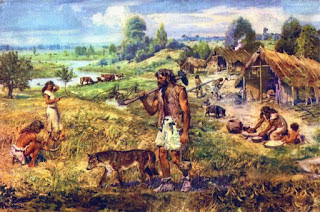



 Herding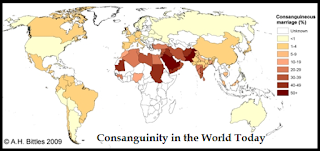
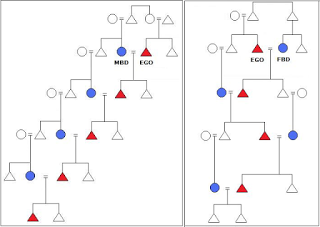

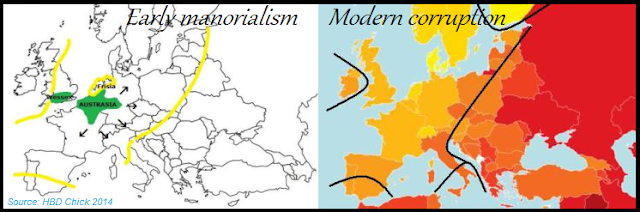
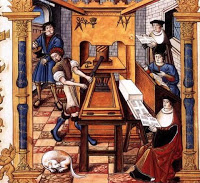

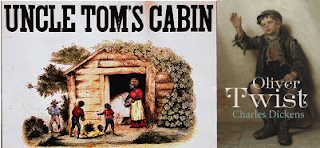
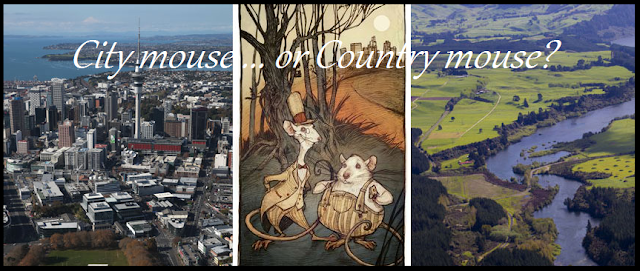

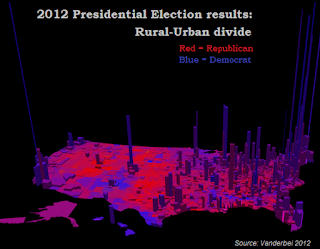
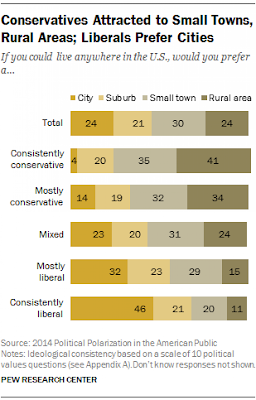
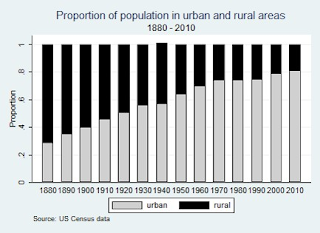
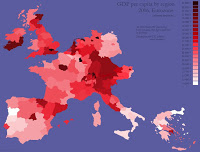
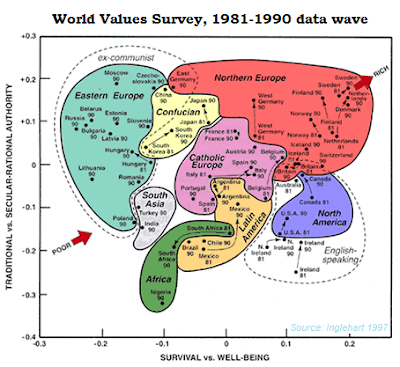
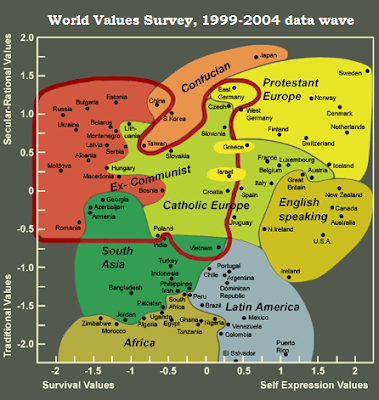
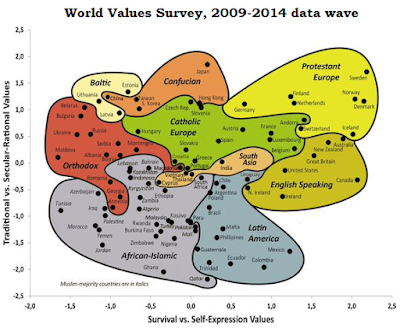
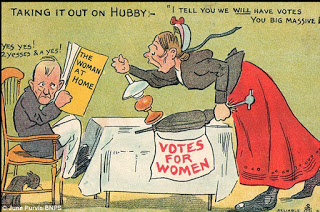
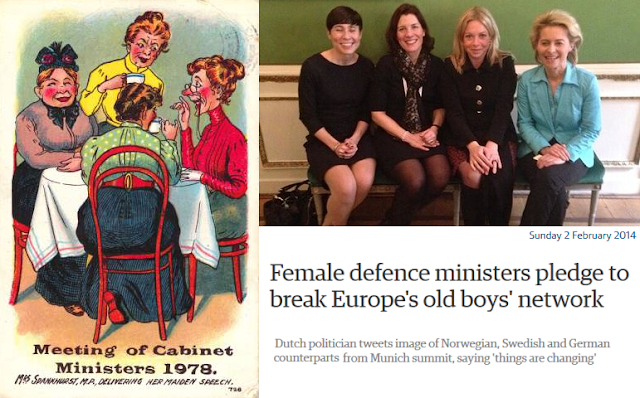

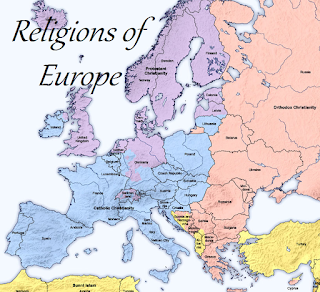
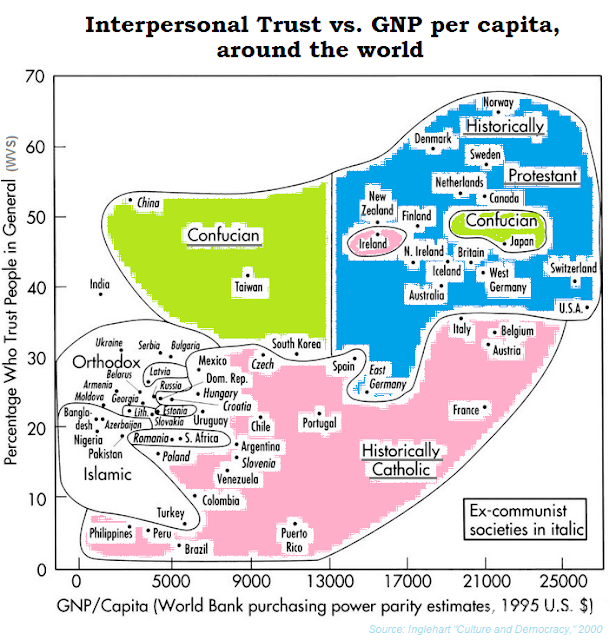
 What about the influence that communist government–or lack of one–can have?