THE MUSLIM MONOPOLY ON EASTERN TRADE Muslim traders—mainly descendants of Arab sailors from Yemen and Oman—dominated maritime routes throughout the Indian Ocean, tapping source regions in the Far East and shipping for trading emporiums in India, mainly Kozhikode, westward to Ormus in the Persian Gulf and Jeddah in the Red Sea. From there, overland routes led to the Mediterranean coasts. Venetian merchants distributed the goods through Europe until the rise of the Ottoman Empire, that eventually led to the fall of Constantinople in 1453, barring Europeans from important combined-land-sea routes.
THE MUSLIM (OTTOMAN) BLOCKADE Forced to reduce their activities in the Black Sea, and at war with Venice, the Genoese had turned to North African trade of wheat, olive oil (valued also as an energy source), and a search for silver and gold. Europeans had a constant deficit in silver and gold, as coin only went one way: out, spent on eastern trade that was now cut off. Several European mines were exhausted the lack of bullion leading to the development of a complex banking system to manage the risks in trade (the very first state bank, Banco di San Giorgio, was founded in 1407 at Genoa). Sailing also into the ports of Bruges (Flanders) and England, Genoese communities were then established in Portugal, who profited from their enterprise and financial expertise.
THE NORTH The Norman Conquest of England in the late 11th century allowed for peaceful trade on the North Sea. The Hanseatic League, a confederation of merchant guilds and their towns in northern Germany along the North Sea and Baltic Sea, was instrumental in commercial development of the region/ In the 12th century the region of Flanders, Hainault and Braband produced the finest quality textiles in northern Europe, which encouraged merchants from Genoa and Venice to sail there directly.[
THE ATLANTIC AND PACIFIC The Age of Discovery, or the Age of Exploration (approximately from the beginning of the 15th century until the middle of the 17th century), is an informal and loosely defined term for the period in European history in which extensive overseas exploration emerged as a powerful factor in European culture, most notably the discovery of the Americas, and during which time was the beginning of what is known today as globalization. It also marks the rise of the widespread adoption of colonialism and mercantilism as national policies in Europe. Many lands previously unknown to Europeans were discovered by them during this period, though most were already inhabited.
(MORE … ) Although Plato had been Aristotle’s teacher, most of Plato’s writings were not translated into Latin until over 200 years after the Recovery of Aristotle.[2] In the Middle Ages, the only book of Plato in general circulation was the first part of the dialogue Timaeus (to 53c), as a translation, with commentary, by Calcidius (or Chalcidius).[2] The Timaeus describes Plato’s cosmology, as his account of the origin of the universe. In the 12th century Henry Aristippus of Catania made translations of the Meno and the Phaedo, but those books were in limited circulation.[2] Some other translations of Plato’s books disappeared during the Middle Ages. Finally, about 200 years after the rediscovery of Aristotle, in the wider Renaissance Marsilio Ficino (1433–99) translated and commented on Plato’s complete works.[2] RISE OF (RESTORATION OF) TRADE Between the 12th and 15th centuries the European economy was transformed by the interconnecting of river and sea trade routes, causing Europe to become one of the world’s most prosperous trading networks. THE MEDITERRANEAN Before the 12th century, the main obstacle to trade east of the Strait of Gibraltar was lack of commercial incentives rather than inadequate ship design. Economic growth of Spain followed the reconquest of Al-Andalus and the siege of Lisbon (1147 AD). The decline of Fatimid Caliphate naval strength that started before the First Crusade helped the maritime Italian states, mainly Venice, Genoa and Pisa, dominate trade in the eastern Mediterranean, with Italian merchants becoming wealthy and politically influential. Further changing the mercantile situation in the Eastern Mediterranean was the waning of Byzantine naval power following the death of Emperor Manuel I Komnenos in 1180, whose dynasty had made several notable treaties and concessions with Italian traders, permitting the use of Byzantine Christian ports. From the 8th century until the 15th century, the Republic of Venice and neighbouring maritime republics held the monopoly of European trade with the Middle East. The silk and spice trade, involving spices, incense, herbs, drugs and opium, made these Mediterranean city-states phenomenally rich. Spices were among the most expensive and demanded products of the Middle Ages, as they were used in medieval medicine,[41] religious rituals, cosmetics, perfumery, as well as food additives and preservatives.They were all imported from Asia and Africa.
Although Plato had been Aristotle’s teacher, most of Plato’s writings were not translated into Latin until over 200 years after the Recovery of Aristotle.[2] In the Middle Ages, the only book of Plato in general circulation was the first part of the dialogue Timaeus (to 53c), as a translation, with commentary, by Calcidius (or Chalcidius).[2] The Timaeus describes Plato’s cosmology, as his account of the origin of the universe. In the 12th century Henry Aristippus of Catania made translations of the Meno and the Phaedo, but those books were in limited circulation.[2] Some other translations of Plato’s books disappeared during the Middle Ages. Finally, about 200 years after the rediscovery of Aristotle, in the wider Renaissance Marsilio Ficino (1433–99) translated and commented on Plato’s complete works.[2]
RISE OF (RESTORATION OF) TRADE Between the 12th and 15th centuries the European economy was transformed by the interconnecting of river and sea trade routes, causing Europe to become one of the world’s most prosperous trading networks.
THE MEDITERRANEAN Before the 12th century, the main obstacle to trade east of the Strait of Gibraltar was lack of commercial incentives rather than inadequate ship design.
Economic growth of Spain followed the reconquest of Al-Andalus and the siege of Lisbon (1147 AD).
The decline of Fatimid Caliphate naval strength that started before the First Crusade helped the maritime Italian states, mainly Venice, Genoa and Pisa, dominate trade in the eastern Mediterranean, with Italian merchants becoming wealthy and politically influential. Further changing the mercantile situation in the Eastern Mediterranean was the waning of Byzantine naval power following the death of Emperor Manuel I Komnenos in 1180, whose dynasty had made several notable treaties and concessions with Italian traders, permitting the use of Byzantine Christian ports.
From the 8th century until the 15th century, the Republic of Venice and neighbouring maritime republics held the monopoly of European trade with the Middle East. The silk and spice trade, involving spices, incense, herbs, drugs and opium, made these Mediterranean city-states phenomenally rich. Spices were among the most expensive and demanded products of the Middle Ages, as they were used in medieval medicine,[41] religious rituals, cosmetics, perfumery, as well as food additives and preservatives.They were all imported from Asia and Africa.
( MORE: … ) THE RESTORATION OF ARISTOTLE The “Recovery of Aristotle” (or Rediscovery) refers to the copying or re-translating of most of Aristotle’s books (of ancient Greece), from Greek or Arabic text into Latin, during the Middle Ages, of the Latin West. The Recovery of Aristotle spanned about 100 years, from the middle 12th century into the 13th century, and copied or translated over 42 books (see: Corpus Aristotelicum), The recovery of Aristotle’s texts is considered a major period in medieval philosophy, leading to Aristotelianism. Because some of Aristotle’s newly translated views discounted the notions of a personal God, immortal soul, or creation, various leaders of the Catholic Church were inclined to censor those views for decades, such as lists of forbidden books in the Condemnations of 1210–1277 at the University of Paris. In the 4th century, the Roman grammarian Marius Victorinus translated two of Aristotle’s books, about logic, into Latin: the Categories and On Interpretation (De Interpretatione).[2] A little over a century later, most of Aristotle’s logical works, except perhaps for the Posterior Analytics, had been translated by Boethius, c. 510–512[2] (see: Corpus Aristotelicum). However, only Boethius’s translations of the Categories and On Interpretation had entered into general circulation before the 12th century. All in all, only a few major works of Aristotle were never translated into Arabic.[4] Of these, the fate of Politics in particular remains uncertain.[5] The rest of Aristotle’s books were eventually translated into Latin, but over 600 years later, from about the middle of the 12th century. First, the rest of the logical works were finished,[1] by using the translations of Boethius as the basis.[6] Then came the Physics, followed by the Metaphysics (12th century), and Averroes’ Commentary on Aristotle’s Metaphysics (13th century),[3] so that all works were translated by the mid-13th century.[2] A text like On the Soul, for instance, was unavailable in Latin in Christian Europe before the middle of the twelfth century.[7] The first Latin translation is due to James of Venice (12th century), and has always been considered as the translatio vetus (ancient translation).[8] The second Latin translation (translatio nova, new translation) was made from the Arabic translation of the text around 1230, and it was accompanied by Averroes’s commentary; the translator is generally thought to be Michael Scot. James’s translatio vetus was then revised by William of Moerbeke in 1266–7, and became known as the “recensio nova” (new recension), which was the most widely read version.[9] On the Soul ended up becoming a component of the core curriculum of philosophical study in most medieval universities, giving birth to a very rich tradition of commentaries, especially c. 1260–1360.[10] (MORE … )
THE RESTORATION OF ARISTOTLE The “Recovery of Aristotle” (or Rediscovery) refers to the copying or re-translating of most of Aristotle’s books (of ancient Greece), from Greek or Arabic text into Latin, during the Middle Ages, of the Latin West. The Recovery of Aristotle spanned about 100 years, from the middle 12th century into the 13th century, and copied or translated over 42 books (see: Corpus Aristotelicum), The recovery of Aristotle’s texts is considered a major period in medieval philosophy, leading to Aristotelianism. Because some of Aristotle’s newly translated views discounted the notions of a personal God, immortal soul, or creation, various leaders of the Catholic Church were inclined to censor those views for decades, such as lists of forbidden books in the Condemnations of 1210–1277 at the University of Paris.
In the 4th century, the Roman grammarian Marius Victorinus translated two of Aristotle’s books, about logic, into Latin: the Categories and On Interpretation (De Interpretatione).[2] A little over a century later, most of Aristotle’s logical works, except perhaps for the Posterior Analytics, had been translated by Boethius, c. 510–512[2] (see: Corpus Aristotelicum). However, only Boethius’s translations of the Categories and On Interpretation had entered into general circulation before the 12th century. All in all, only a few major works of Aristotle were never translated into Arabic.[4] Of these, the fate of Politics in particular remains uncertain.[5]
The rest of Aristotle’s books were eventually translated into Latin, but over 600 years later, from about the middle of the 12th century. First, the rest of the logical works were finished,[1] by using the translations of Boethius as the basis.[6] Then came the Physics, followed by the Metaphysics (12th century), and Averroes’ Commentary on Aristotle’s Metaphysics (13th century),[3] so that all works were translated by the mid-13th century.[2] A text like On the Soul, for instance, was unavailable in Latin in Christian Europe before the middle of the twelfth century.[7] The first Latin translation is due to James of Venice (12th century), and has always been considered as the translatio vetus (ancient translation).[8] The second Latin translation (translatio nova, new translation) was made from the Arabic translation of the text around 1230, and it was accompanied by Averroes’s commentary; the translator is generally thought to be Michael Scot. James’s translatio vetus was then revised by William of Moerbeke in 1266–7, and became known as the “recensio nova” (new recension), which was the most widely read version.[9] On the Soul ended up becoming a component of the core curriculum of philosophical study in most medieval universities, giving birth to a very rich tradition of commentaries, especially c. 1260–1360.[10]
THE CURRENT COUNTER-REVOLUTION AGAINST EUROPEAN CIVILIZATION IS A REVOLT AGAINST THE PHYSICAL, NATURAL, AND EVOLUTIONARY LAWS. 1) The enlightenment in every country and culture was a counter-revolution against anglo empiricism – other peoples simply couldn’t function as did the English, any more than others could function as did the Greek and Roman. 2) We are currently going through the Jewish counter-enlightenment against science. The difference is that while the Jewish and Chinese and Russian, and Indian revolutions all occurred at the same time, the Jewish revolution is within and we are paying the cost of it due to their excellence at verbal exposition. 3) We frame history as the enlightenment and the industrial revolution, but that’s false. We had the Aristotelian restoration in 1200, the printing press and literacy 1450, Constantinople was defeated in 1402, but not occupied until 1453 so the 1453 date describes the last vestige not a dramatic turn. Instead, there is a rapid restoration of Europe from the pure of Islam from Spain, the restoration of Aristotle, restoration of trade, restoration of literacy, to the age of sail, the agrarian revolution, the financial and commercial (merchantile) revolution, the expansion of empirical rule of law, the scientific revolution, culminating in the industrial revolution, the technological revolution, the biological revolution. What I find terrifying is that if Athens and Sparta had not gone to war with one another as Germany and England went to war with one another, that we very likely would have had the industrial revolution by the 3d century AD. And never had a Semitic dark age. (MORE…)
THE CURRENT COUNTER-REVOLUTION AGAINST EUROPEAN CIVILIZATION IS A REVOLT AGAINST THE PHYSICAL, NATURAL, AND EVOLUTIONARY LAWS.
1) The enlightenment in every country and culture was a counter-revolution against anglo empiricism – other peoples simply couldn’t function as did the English, any more than others could function as did the Greek and Roman.
2) We are currently going through the Jewish counter-enlightenment against science. The difference is that while the Jewish and Chinese and Russian, and Indian revolutions all occurred at the same time, the Jewish revolution is within and we are paying the cost of it due to their excellence at verbal exposition.
3) We frame history as the enlightenment and the industrial revolution, but that’s false. We had the Aristotelian restoration in 1200, the printing press and literacy 1450, Constantinople was defeated in 1402, but not occupied until 1453 so the 1453 date describes the last vestige not a dramatic turn.
Instead, there is a rapid restoration of Europe from the pure of Islam from Spain, the restoration of Aristotle, restoration of trade, restoration of literacy, to the age of sail, the agrarian revolution, the financial and commercial (merchantile) revolution, the expansion of empirical rule of law, the scientific revolution, culminating in the industrial revolution, the technological revolution, the biological revolution.
What I find terrifying is that if Athens and Sparta had not gone to war with one another as Germany and England went to war with one another, that we very likely would have had the industrial revolution by the 3d century AD. And never had a Semitic dark age.
@alternative_right Were the Bothai, the Indo Europeans (Yamnaya), The Persians, The Greeks, The Romans, The Muslims, The Huns, The Mongols, The Russians, the Communists, the present Chinese humble people?
Humble is what conquerors encourage in their peasantry.
Religion(conformity-bottom), State(bureaucracy-top), or Law (markets-middle). Religion in flood rivers (stagnant), State in river valleys (range). Law on horse/cart, forest/plain, and seas (distance-speed).
@TruthQuest11 While some civilizations failed the transformation to paternalism, all others failed the transformation to the law (markets). Whatever institution you develop first anchors you like any other evolutionary development.
Religion(conformity-bottom), State(bureaucracy-top), or Law (markets-middle). Religion in flood rivers (stagnant), State in river valleys (range). Law on horse/cart, forest/plain, and seas (distance-speed).
While some civilizations failed the transformation to paternalism, all others failed the transformation to the law (markets). Whatever institution you develop first anchors you like any other evolutionary development.
@TruthQuest11 At one end we reduce frictions of calculation of the UNKNOWN by limiting our calculations to those that are frictionless (markets). On the other we concentrate our calculation on the simple and KNOWN (war). And we seek stable equilibria between those two ends. (Its all we can do)
While some civilizations failed the transformation to paternalism, all others failed the transformation to the law (markets). Whatever institution you develop first anchors you like any other evolutionary development.
White (European) Civilization’s Strategy is 3500-5000 years old. But did not develop writing, as is true for all peoples, until the age of mediterranean trade. Like most civilizations european civlization emerged from the bronze age collapse (the first major dark age) ~1200BC (3200 years ago) by moving southward and conquering or rebuilding the pre-collapse territories, and with access to sea trade, and the knowledge transported by sea trade.
Victor Davis Hanson is partly correct when he states that the uniquness of western civilization consists in three properties:
Ratio Empirical Thought
Individualism
Democratic Institutions
Which is true. But it’s insufficient. Because it doesn’t tell you why, or what else is equally or more important.
So let’s walk thru what made european civlizaiton unique.
Founding Conditions
Eastern European hunter-gatherers mixed with a population from a pocket of Caucasus hunter-gatherers who weathered much of the last Ice Age in apparent isolation.
Yamnaya were Europoid, tall, and massively built. Their cephalic index varies depending on the region, with brachycephaly (Broad Skull) being prevalent in its southern and southeastern areas, and dolichocephaly (long skull) being prevalent in its northerneastern area
Pontic Caspian Steppe
Diet of Milk, Yoguhurt, Cheese, and Meat (40% more calories than agrarian life)
Mobile Homes – “Yurts on Wheels”
Horse, Bronze, Wheel – Expensive,
Long Distance, Maneuver Warfare – Capture women and livestock.
Entrepreneurial warfare – Voluntary, raiding (piracy, viking, raiding), still in ireland until very late.
Specializing in Metalworking.
Social adjustment to high mobility. The invention of the political infrastructure to manage larger herds from mobile homes based in the steppes.
Conquest of Europe
Three pockets of Western European hunter-gatherers weathered much of the last Ice Age in apparent isolation in the Iberian peninsula, Italy and Greece, then moved northward and re-populated Europe as the ice retreated. Anatolian Neolithic farmers colonized Europe once again, across the Mediterranean, up the into Iberia and France and into the isles creating the Monolith cultures, then across into central, and northern Europe, and Poland creating the Bell Beaker Cultures.
Eurasian Plain – To Wooded and River’ed Europe, Mostly northern, centered in Ukraine, Poland, Germany
Family and Clan Farms, Cattle, Sheep, Pigs, etc.
The Order of Institutions
There are three methods of influencing, coercing, or exercising power over humans:
Physical and Martial: Force – Defense
Resource Economic: Remuneration – Deprivation
Words Social: Ostracization – Inclusion
From these three Institutions we evolve:
The State and Law of Command (Hard, Fast, Expensive)
The Judiciary and Law of Property (Medium, Medium, Medium)
Religion and Law of Conformity and Exclusion (Soft, Slow, Cheap)
The order in which peoples develop these institutions determines their future, with whatever is first strongest, second less so, and third may or may not evolve at all.
The Middle east developed religion and the state but not law – a monopoly of religion
The Jews developed religion and law but failed at the state
The Chinese developed the state – a monopoly of the state- never developing religion or law.
The Hindus developed a Mythology and Norms – A monopoly of Religion – if you want to call Hinduism a religion.
The Europeans developed law, then state, and religion lagged until xianity.
Because of our experiences with the imposition of Xianity, the persistence of Christian fundamentalism, the 1400 year war against Islam, and continuous difficulty with the Jews, we presume religion is more important than the evidence suggests. China developed the state, Sun Tzu for war, Conflucious for society and the Tao for the self. Europe developed law and market government, Aristotelian Empiricism, Ethics, and Politics, Plato’s Republic for rule, and Stoicism and Epicureanism for the self while religion was largely ritual and sacrifice officiated by the aristocracy as a demonstration of loyalty. Whether Hinduism is a religion or bridge between mythology and philosophy is a difficult question, and while it appears to us in the present that the Indian people eventually succumbed to excess mysticism, just as Buddhism, itself trying to reform Hinduism, later succumbed as well, the Arthashastra (AR-thuh-shah-strah) of Kautilya written in 300bc is a work of law equally empirical compared to any other at the time. More empirical than semitic, more pragmatic than Confucian, less theoretic than european. That we indoctrinate people into fundamentalism in the middle east and west is a habit a tradition, but by the evidence, not a good one. There is more to learn from India and China. There is nothing to learn from the middle east except decline.
Each civilization faced the great transformation into larger scale organizations with different demographics and different dominant exercise of power. In the middle east, with it’s densely populated rivers and irrigation, priests arose first, and the heterogeneous multitude of tribes and large numbers of competitors were later conquered and territory consolidated by kings who sought power for themselves by the priesthood. In India the vast difference between the conquering IE-iranic peoples, the absence of competitors, large territory, the vast number of small farms, and the relatively homogenous dravidian and negrito underclasses favored wisdom literature, and the caste system. In China the relative isolation of the territory, the early and widespread use of rice farming, and irrigation, a military aristocracy dominated near-kin but were controlled by ritualization in exchange for status. In Europe the IE-Europeans killed off most of the farmers, kept and bred with their women, preserving homogeneity until they moved south into the Mediterranean. They retained their militarism even under agrarianism.
So the means of production and its density, the homogeneity or heterogeneity of the population producing it, the first institution to develop, and the means of scaling that institution produced very different civilizations.
But interestingly, the only tradition that produces a market for elites rather than a monpoly of elites is the western tradition of law
Western TriFunctionalism – Creating a Market for Elites
The Hindus created a religion of cast monopoly to protect themselves from dysgenia – although that is not the word they use for it. And in doing so they achieved upward redistribution of reproduction as the jews did in Europe – but at a much larger scale. They could not, however, limit the underclasses. The Chinese created state and bureaucratic monopoly, used it as a competition the way the Semites used scripture, and limited the underclasses by capital punishment, credit constraint, and the natural difficulty of rice farming in close quarters. The Europeans maintained the martial aristocracy, sent their lesser sons to the church nobility, and eventually evolved a commercial elite or bourgeoise, and they suppressed the bottom and pushed down the middle through manorialism – at least above the Hajnal Line (HIGH-nahl), but the upper class was never more than a few hundred thousand people, most of whom were related to the Carolingians in one way or another. The Semites, unfortunately, developed religion first, never developed the state and professional bureaucracy, and structured their entire civilization using religion to resist the aristocracies and their attempts to suppress underclass reproduction, employ reason and science, or even law.
The uniquenss of the western model was that by deveoping the institution of universal militia, and common law of tort first, was that they created markets in everything as well as markets for elites in aristocracy, law, and religion. We still see this today in theology, philosophy, law, and the sciences – which reflects the natural class structure. The chinese were close to europeans with Sun Tzu and the military, Confucius for the Bureaucracy, and Lao Tzu for the common people. The semites again practiced monopoly authoritarian supernaturalism, and conflated wisdm and law, truth and revelation, primacy of man and primacy of submission to a god.
This competition between elites prevented the stagnation that occurs when any given set of elites obtains a monopoly. Why? Because when you do that you have to lie. Really. When you train children, women, and the common folk through religion, conduct trade by the same empiricism in contracts, take measurements and produce construction by math and science, rule and adjudicate law by those same criteria, and practice innovative and adaptive warfare where men may take initiative, you prevent the formation of monopolies.
The Incentives to Produce Commons
European is an expensive strategy
What can I NOT Do to impose costs onothers
What can I do to contribut to commons?
Commons create good for everyone but are unconsumable.
The Glorious Accident
Everyone else failed
Strategy
Fully Militarized Society – An Army
For an army to succeed everyone must do his duty – first before self.
Cowardice: Self before duty to the commons is the only death penalty.
Aristocracy – Ruled by a Class of “Elected” Professional Warriors
Conquer and Domesticate plants, animals, people, and territory and profit from it.
Domesticate man from wild to slave to serf to freeman to citizen to sovereign – man can ascend by merit.
We are Few, So We Must Be Best (Germany still practices this)
“Aristocratic Egalitarianism” – We are Short of Numbers, So Seek Out The Best to Join.
Celebrate Life, Land, Existence, Prosperity, Wealth, Consumption, Sharing the Feast
Early Christianity provided women and underclasses means of ‘tolerating’ Domestication
Later Christianity provided the emerging middle class with civil heroics rather than martial – Chivalry was never practiced in the age of it.
The reason to achieve status from slave to serf to freeman to citizen to sovereign is to achieve self determination: sovereignty.
As such: By Joel Landoe
“The apparent privileges allegedly enjoyed by only one ethnicity (per social cartels, media etc) – Europeans – are due to an inequality of institutions, traditions, norms, paradigms, knowledge, values, resources, and goals [technology] that when applied in combination can be used by any person regardless of age, race, gender, or status for maximum self-actualization and development of good society.”
Scientifically: By Curt Doolittle
Only Europeans, and specifically male, conservative, and libertarian Europeans, paid the high cost, and counterintuitive cost, of discovering, adapting to, and applying the physical(material), biological (evolutionary), social (cooperative), laws of the universe, in thought, word, and deed, across the spectrum: personally, socially, economically, politically, militarily, and strategically (expansion, colonization, conquest).
As such whiteness is a technology. It is a costly technology. It is paid for like all technologies. And the results are acquired at high cost no others are willing to pay.
Evidentiary, warranted, warrantable Truth, reciprocity in display word and deed, competition in the service of others for survival by market adversity, meritocratic outcome in markets for association, cooperation, reproduction, production, common, polities, and most of all eugenic constraint on reproduction by test of meritocratic outcome – all of which are performed regardless of cost – are costs only Europeans evolved to bear.
And even such it’s only possible in the lesser classes by training in Christian exhaustive payment of psychological costs as virtuous contribution to the commons, and worthy of status even without intellectual, economic, political, and military success.
As such only European lower classes were slowly reduced in number, and reduced in cost, providing the counterintuitive excellence of western civilization: our Christian underclass, laboring classes, working classes, and lower-middle classes do the world’s least harm, while middle and upper classes do the world’s most good.
The counter-intuitive explanation for the three great ages of European success vs all other competing civilizations is that Europeans deviate the least from the laws of the universe and pay high costs for doing so but achieve the extraordinary returns for those investments.
So Europeans are not privileged. We merely pay the extraordinary costs that others do not.
Ergo others who come and don’t are thieves.
The Minority Problem Manifest
Whiteness (Europeanism) is a technology, yes, just as damns are technology. However, adoption & maintenance costs vary across human subspecies, & since the gains are incurred largely as a function of time, there is very little incentive for certain subspecies to adopt Europeanism – particularly subspecies known for hyperbolic discounting.
Europeanism as technology does have the advantage of framing failure as a product of choice—‘the technology is there why don’t you use it?’
However, I think europeanism is more appropriately framed as an extended phenotype, just as damns are the product of beaver’s genetic information. It shifts the moral conversation from specifying & allocating blame for the failure to one of unapologetic commitment to ourselves & our mission:
“We have no other choice than to be excellent. You are either coming along, contributing & carrying your own weight, or we will forcibly separate to remove the civilizational, institutional, economic, demographic drag.”
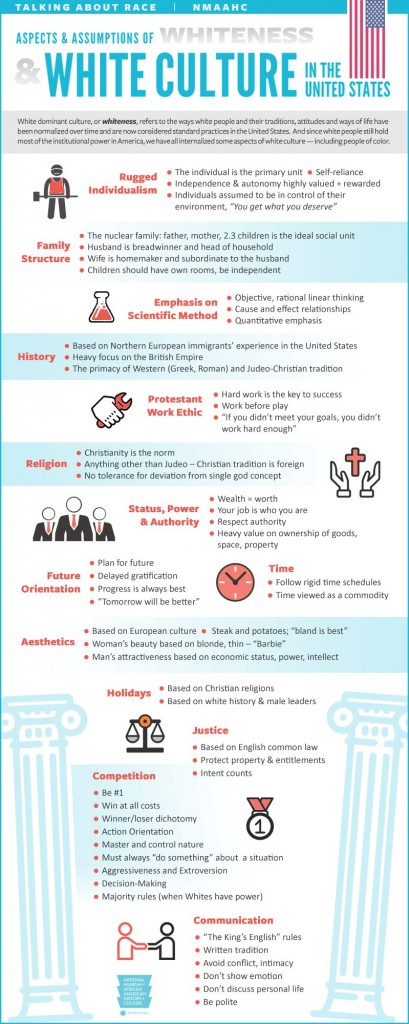
Communication (Military Liability > Contract > Reporting > Testimony)
”The King’s English” rules
Written tradition
Avoid conflict, intimacy
Don’t show emotion
Don’t discuss personal life
Be polite
Protestant Work Ethic (Army > Duty > Commons Before Self.)
Had work is the key to success
Work before play
“If you didn’t meet your goals, you didn’t work hatd enough”
Family Structure
Tbe nuclear family, father, mother, 2.3 children is the ideal social unit
Husband is breadwinner and head of househoid
Wife is homemaker and subordinate to the husband
Children should have own rooms, be independent
Status Power Authority (Empirical Meritocracy > Empirical Respect > Empirical Authority)
Wealth – worth – –
Your iob is who you are
Respect authority
Heavy value on ownetship of goods, space
Time (Duty First > commons before self > military and commercial efficiency,)
Follow rigid time schedules
Time viewed as a commodity
Future Orientation (Duty First > Do no harm by moral hazard > Responsibiity for future)
Plan for future
Delayed gratification
Progress is always best
Tomorrow will be better
History (And Mythology)
Based on Northern European Immtgtants’ experience an the United States
Heavy Focus on the British Empire
Me primacy of Western (Greek. Roman) and JudeoChflstian tradition
Aesthetics
Based on European culture
Steak and potatoes; ‘bland ts best”
Woman’s beauty based on blonde, thin – ”Barbe“
Man’s attractiveness based on economic status. power, Intellect
Religion
Christianity is the Norm
Anything other than Judeo – Christian tradition is foreign
No tolerance for deviation ftom single god concept
Holidays
Based on Christan traditions
Based on white history and male leaders
The Secret of Western Civilization
CALCULATION: MANEUVER, VELOCITY, ADAPTATION, SOVEREIGNTY, RECIPROCITY, TRUTH, DUTY, AND MARKETS
The West – Adaptive Velocity
The secret to western civilization, being a small, relatively poor population on the edge of the bronze age, is that by the choice of voluntary militia, military tactics of maneuver requiring contractualism, and heroic sovereignty (ownership of gains), we necessitated natural law, and markets in everything. And as a consequence the west was not first, but in every era we were fastest. In other words, truth, promise(contract), natural law, and jury allow us to adapt faster than every other known method of human cooperation.
European Strategy is:
Competitive Excellence (Success) by,
… the Continuous Production of Agency;
… through continuous invention, continuous adaptation, and continuous domestication, regardless of costs to the status, competence, dominance hierarchy – whether the self, family, or leadership;
… by the combination of:
Heroism, and;
Truth Regardless of Consequences to the Status, Competence, and Dominance Hierarchy – whether the self, family or leadership and;
Duty Regardless of Consequences to the self and family;
Sovereignty and Reciprocity including reciprocal insurance of sovereignty and reciprocity regardless of costs to the self and family;
… leaving the only possible rules of cooperation as:
The Rule of Law, The Law of Tort (property), the Independent Judiciary, and;
Markets (meritocracy) in every aspect of life: association, cooperation, reproduction, production, commons, elites, grammars, group strategy, polities, group and war;
… resulting in:
Seeking and Finding of Pareto Optimums, in all markets;
The suppression of reproduction at the bottom and the upward redistribution of reproduction, defeating regression to the mean;
And the rapid transformation of men into the gods they imagined in the Neolithic, bronze, iron, and steel ages.
WHITE
“White” refers to: (a) descendants of the Indo European conquest of Europe, (b) who speak the indo-european language family, (c) who practice the indo european metaphysical and legal traditions, and (d) during the dark ages, converted from indo european derived religion to its antithesis: the Semitic derived Christian religion. The outlier property is the metaphysical and legal tradition that is what causes european civilizational uniqueness and is the reason for european excellence in the bronze, ancient, and modern worlds – with a thousand years of a superstitious dark age in between. It’s this uniqueness that demarcates ‘whites’ from other peoples more so than any other, and unfortunately, it is the least understood (until now, which is the focus of my work).
WHITENESS “Whiteness” as used pejoratively is a group strategy. It is a group strategy of northern Europeans (protestants). That group strategy is extremely costly. While we may be aware of the high cost of truth before face, the high cost of market meritocracy, and the high cost of high trust norms, it’s unspoken cost is that it is aggressively eugenic. This aggressive eugenics is as much or more important than any other cultural trait. Only the Chinese and the Europeans were able to institutionalize eugenic reproduction via manorialism, which accounts for the elevated intelligence of East Asians and Western Europeans: the underclasses were dramatically reduced through natural cold weather farming, reproductive suppression, and criminal prosecution. The world other than Korea japan and china who are equally the products of eugenic evolution (human self domestication) despies western civlization becuase it is expensive, it is counter-intuitive, and it is antithetical to them – but most importantly – because they cannot compete because they cannot repeat the eugenic processes themselves. Islam is perhaps the ultimate anti-civilization in history and is not a primitive group strategy. It produces decivilization and dysgenia by justifying the avoidance of all adaptive costs. The same is true for the current war by the left against western civlization – they seek to eliminate the payment of eugenic costs.
THE SPECTRUM 1 – Most narrowly: Northern Europeans above the Hajnal Line (North Sea Civ), who were not under catholicism long enough to lose their ancestral legal and traditional habits – especially those who escaped the long term corruption of the church. The north sea group began separating from the rest of the world rapidly and the great divergence of the greeks was repeated in the north sea beginning in 1000 ad (not 1400). 2 – Commonly: Christian European whether Germanic Scandinavian, Baltic, Slavic, or Finnic. (Continental Civ). This includes the three groups of Christianized european people: orthodox(greek), catholic(Latin), and protestant (Germanic) 3 – Less Commonly: Many be extended to include the descendants of early Neolithic farmers of the Balkans, Greece, Southern Italy, Sicily, and Sardinia because they are Christian and in the european territorial and cultural sphere of influence. (European Peninsular Civ) 4 – Uncommonly: May be extended to include the Iranic people of the caucuses: Georgians, Armenians. (European Extant Civ thru the Urals ) 5 – Rarely: May be extended to include the south-central West Eurasians – the Iranic peoples – but generally not. 6 – More rarely: May be extended to the Turkic peoples – but almost certainly not – because they don’t speak an IE language. 7 – Not including outbred peoples of the Indian subcontinent (who are a mixture of negrito hunter-gatherer, middle eastern hunter-gatherer (Dravidian), and Indo european steppe herders. 8 – Not including the Afro Asiatic Languages – Middle eastern Peoples. 9 – Never including African or East Asian Peoples, or Siberian Peoples (Amerindians). 10 – Never including admixture peoples (along the out-of-Africa route from Yemen, to India, to SE Asia, to Australia.