Religion serves as civic education, and ‘education’ as economic education. If we end the falsehoods in christianity, and restore our church to truthfulness, then we can restore education to the church – and remove the state’s influence from it.
Theme: Truth
-
OK. LET ME HELP YOU. Science: Operational Falsification. Rationalism: Verbal Jus
OK. LET ME HELP YOU.
Science: Operational Falsification.
Rationalism: Verbal Justification.
Religion: Supernatural Authoritarianism.
Source date (UTC): 2018-07-13 00:45:00 UTC
-
TRUTH IS RELATIVE? NO “IT JUST MEANS YER IGNERINT” There are no paradoxes only g
TRUTH IS RELATIVE? NO “IT JUST MEANS YER IGNERINT”
There are no paradoxes only grammatical errors.
If people err they do not speak the truth they speak only honestly or truthfully. That they conflate honesty with truthfully is merely another version of conflating preference “i like chocolate ice cream” with consensus “chocolate tastes good (to most of us)”, with truth (chocolate may taste good to many people).
Truth originated with the term testimony. We merely combine the word True with the copula “is” (meaning “i dont know how it exists”) and conflate the various positions on the truth spectrum out of convenience and ignorance. We eliminate these problems through speaking if full sentences in operational language (testable transactions)>
This is why all knowledge in science is forever contingent, and all scientists that have been taught sufficient understanding of their craft, rarely make truth claims, and almost always make contingent truth claims, with prevarications like “as far as we know” or “according to x it appears”, and “it’s hard to imagine otherwise”.
Right now my favorite example is the red shift that is hypothetically measuring that the universe is expanding faster than light, when it is just as likely it is a property of space itself that is causing the shift (distortion). We just don’t know. And we can’t observe directly. So we have to triangulate and deduce by some other series of observations. Even then we must eliminate all alternatives before we can make a truth claim – that’s what ‘truth’ means.
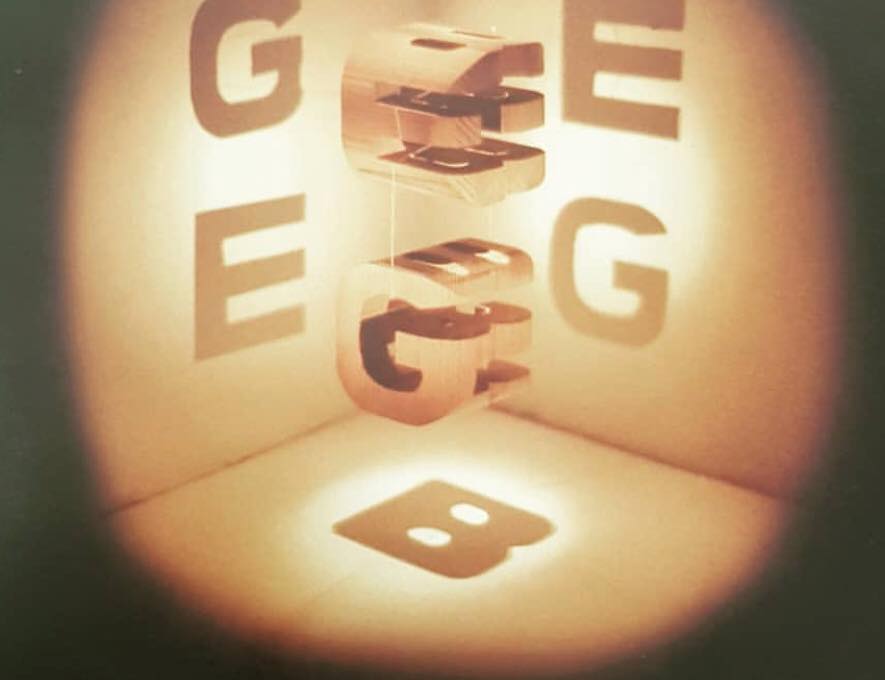
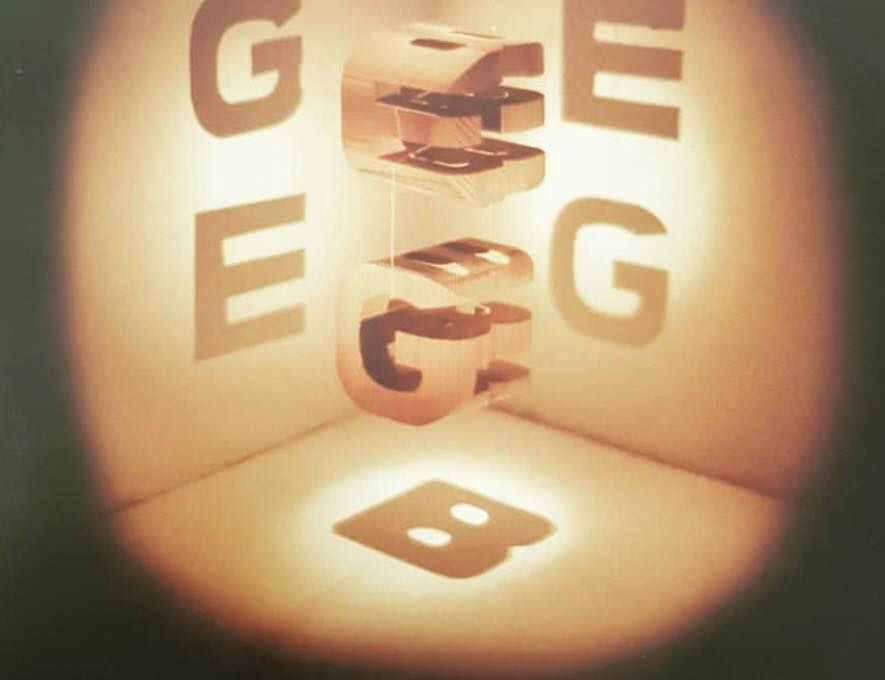
In the case of the shapes above, what are the observers testifying to? Their observation? Their shape of the shadow? The shape of the object casting the shadow? People conflate observation, effect, and cause.
|| Observation <- Effect <- Causes
One cannot testify to the shape of the object only to the observation of the shape of the shadow being cast (fact). One can hypothesize a shape of the object (hypothesis). One can speak honestly about that shape (honesty). One can perform due diligence that one does not err (theory) but in science all claims are contingent. One cannot testify to the unobservable, until he has eliminated all possible alternatives (due diligence). Since perfect knowledge is almost never possible outside of the reductio, once on has performed tests eliminating all alternatives (due diligence) one can testify he speaks truthfully of his theory. But in general we make only truth claims of an observation of change in state.
That people do such a thing regularly is simply a matter of ignorance, and the bad habits accumulated in ordinary language grammer – which any time in court will rapidly correct.
The fact that people say “aint” instead of ‘isn’t’, and ‘different than’ rather than ‘different from’, is no different from saying “It’s a shape X” rather than “The shadow I can observe is the shape X”.
It’s just ignorance, error, poor education, colloquial speech, or being verbally lazy.
SPECTRUM:
[T]AUTOLOGICAL TRUTH: That testimony you give when you promising the equality of two statements using different terms: A circular definition, a statement of equality or a statement of identity.
[A]NALYTIC TRUTH: The testimony you give promising the internal consistency of one or more statements used in the construction of a proof in an axiomatic(declarative) system. (a Logical Truth).
[I]DEAL TRUTH: That testimony (description) you would give, if your knowledge (information) was complete, your language was sufficient, stated without error, cleansed of bias, and absent deceit, within the scope of precision limited to the context of the question you wish to answer; and the promise that another possessed of the same knowledge (information), performing the same due diligence, having the same experiences, would provide the same testimony. (Ideal Truth = Perfect Parsimony.)
[T]RUTHFULNESS: that testimony (description) you give if your knowledge (information) is incomplete, your language is insufficient, you have performed due diligence in the elimination of error, imaginary content, wishful thinking, bias, and deceit; within the scope of precision limited to the question you wish to answer; and which you warranty to be so; and the promise that another possessed of the knowledge, performing the same due diligence, having the same experiences, would provide the same testimony.
[H]ONESTY: that testimony (description) you give with full knowledge that knowledge is incomplete, your language is insufficient, but you have not performed due diligence in the elimination of error and bias, but which you warranty is free of deceit; within the scope of precision limited to the question you wish to answer; and the promise that another possess of the same knowledge (information), performing the same due diligence, having the same experiences, would provide the same testimony.
Source date (UTC): 2018-07-13 00:03:30 UTC
-
Curt Doolittle updated his status. GOOD PROPAGANDA MUST BE TRUE via Cole William
Curt Doolittle updated his status.
GOOD PROPAGANDA MUST BE TRUE
via Cole Williams
—“… Good propaganda does not need to lie, indeed it may not lie. It has no reason to fear the truth. It is a mistake to believe that the people cannot take the truth. They can. It is only a matter of presenting the truth to people in a way that they will be able to understand. A propaganda that lies proves that it has a bad cause. It cannot be successful in the long run. A good propaganda will always come along that serves a good cause. But propaganda is still necessary if a good cause is to succeed. A good idea does not win simply because it is good. It must be presented properly if it is to win. The combination makes for the best propaganda. Such propaganda is successful without being obnoxious. It depends on its nature, not its methods. It works without being noticed. Its goals are inherent in its nature. Since it is almost invisible, it is effective and powerful. A good cause will lose to a bad one if it depends only on its rightness, while the other side uses the methods of influencing the masses. We are, for example, firmly convinced that we fought the war for a good cause, but that was not enough. The world should also have known and seen that our cause was good. However, we lacked the effective means of mass propaganda to make that clear to the world. Marxism certainly did not fight for great ideals. Despite that, in November 1918 it overcame Kaiser, Reich, and the army because it was superior in the art of mass propaganda…” – Dr. Joseph Goebbels.
Source date (UTC): 2018-07-12 20:04:24 UTC
-
photos_and_videos/your_posts/37003564_10156491807667264_8971145353638182912_n_10
photos_and_videos/your_posts/37003564_10156491807667264_8971145353638182912_n_10156491807662264.jpg TRUTH IS RELATIVE? NO “IT JUST MEANS YER IGNERINT”
There are no paradoxes only grammatical errors.
If people err they do not speak the truth they speak only honestly or truthfully. That they conflate honesty with truthfully is merely another version of conflating preference “i like chocolate ice cream” with consensus “chocolate tastes good (to most of us)”, with truth (chocolate may taste good to many people).
Truth originated with the term testimony. We merely combine the word True with the copula “is” (meaning “i dont know how it exists”) and conflate the various positions on the truth spectrum out of convenience and ignorance. We eliminate these problems through speaking if full sentences in operational language (testable transactions)>
This is why all knowledge in science is forever contingent, and all scientists that have been taught sufficient understanding of their craft, rarely make truth claims, and almost always make contingent truth claims, with prevarications like “as far as we know” or “according to x it appears”, and “it’s hard to imagine otherwise”.
Right now my favorite example is the red shift that is hypothetically measuring that the universe is expanding faster than light, when it is just as likely it is a property of space itself that is causing the shift (distortion). We just don’t know. And we can’t observe directly. So we have to triangulate and deduce by some other series of observations. Even then we must eliminate all alternatives before we can make a truth claim – that’s what ‘truth’ means.
In the case of the shapes above, what are the observers testifying to? Their observation? Their shape of the shadow? The shape of the object casting the shadow? People conflate observation, effect, and cause.
|| Observation <- Effect <- Causes
One cannot testify to the shape of the object only to the observation of the shape of the shadow being cast (fact). One can hypothesize a shape of the object (hypothesis). One can speak honestly about that shape (honesty). One can perform due diligence that one does not err (theory) but in science all claims are contingent. One cannot testify to the unobservable, until he has eliminated all possible alternatives (due diligence). Since perfect knowledge is almost never possible outside of the reductio, once on has performed tests eliminating all alternatives (due diligence) one can testify he speaks truthfully of his theory. But in general we make only truth claims of an observation of change in state.
That people do such a thing regularly is simply a matter of ignorance, and the bad habits accumulated in ordinary language grammer – which any time in court will rapidly correct.
The fact that people say “aint” instead of ‘isn’t’, and ‘different than’ rather than ‘different from’, is no different from saying “It’s a shape X” rather than “The shadow I can observe is the shape X”.
It’s just ignorance, error, poor education, colloquial speech, or being verbally lazy.
SPECTRUM:
[T]AUTOLOGICAL TRUTH: That testimony you give when you promising the equality of two statements using different terms: A circular definition, a statement of equality or a statement of identity.
[A]NALYTIC TRUTH: The testimony you give promising the internal consistency of one or more statements used in the construction of a proof in an axiomatic(declarative) system. (a Logical Truth).
[I]DEAL TRUTH: That testimony (description) you would give, if your knowledge (information) was complete, your language was sufficient, stated without error, cleansed of bias, and absent deceit, within the scope of precision limited to the context of the question you wish to answer; and the promise that another possessed of the same knowledge (information), performing the same due diligence, having the same experiences, would provide the same testimony. (Ideal Truth = Perfect Parsimony.)
[T]RUTHFULNESS: that testimony (description) you give if your knowledge (information) is incomplete, your language is insufficient, you have performed due diligence in the elimination of error, imaginary content, wishful thinking, bias, and deceit; within the scope of precision limited to the question you wish to answer; and which you warranty to be so; and the promise that another possessed of the knowledge, performing the same due diligence, having the same experiences, would provide the same testimony.
[H]ONESTY: that testimony (description) you give with full knowledge that knowledge is incomplete, your language is insufficient, but you have not performed due diligence in the elimination of error and bias, but which you warranty is free of deceit; within the scope of precision limited to the question you wish to answer; and the promise that another possess of the same knowledge (information), performing the same due diligence, having the same experiences, would provide the same testimony.TRUTH IS RELATIVE? NO “IT JUST MEANS YER IGNERINT”
There are no paradoxes only grammatical errors.
If people err they do not speak the truth they speak only honestly or truthfully. That they conflate honesty with truthfully is merely another version of conflating preference “i like chocolate ice cream” with consensus “chocolate tastes good (to most of us)”, with truth (chocolate may taste good to many people).
Truth originated with the term testimony. We merely combine the word True with the copula “is” (meaning “i dont know how it exists”) and conflate the various positions on the truth spectrum out of convenience and ignorance. We eliminate these problems through speaking if full sentences in operational language (testable transactions)>
This is why all knowledge in science is forever contingent, and all scientists that have been taught sufficient understanding of their craft, rarely make truth claims, and almost always make contingent truth claims, with prevarications like “as far as we know” or “according to x it appears”, and “it’s hard to imagine otherwise”.
Right now my favorite example is the red shift that is hypothetically measuring that the universe is expanding faster than light, when it is just as likely it is a property of space itself that is causing the shift (distortion). We just don’t know. And we can’t observe directly. So we have to triangulate and deduce by some other series of observations. Even then we must eliminate all alternatives before we can make a truth claim – that’s what ‘truth’ means.
In the case of the shapes above, what are the observers testifying to? Their observation? Their shape of the shadow? The shape of the object casting the shadow? People conflate observation, effect, and cause.
|| Observation <- Effect <- Causes
One cannot testify to the shape of the object only to the observation of the shape of the shadow being cast (fact). One can hypothesize a shape of the object (hypothesis). One can speak honestly about that shape (honesty). One can perform due diligence that one does not err (theory) but in science all claims are contingent. One cannot testify to the unobservable, until he has eliminated all possible alternatives (due diligence). Since perfect knowledge is almost never possible outside of the reductio, once on has performed tests eliminating all alternatives (due diligence) one can testify he speaks truthfully of his theory. But in general we make only truth claims of an observation of change in state.
That people do such a thing regularly is simply a matter of ignorance, and the bad habits accumulated in ordinary language grammer – which any time in court will rapidly correct.
The fact that people say “aint” instead of ‘isn’t’, and ‘different than’ rather than ‘different from’, is no different from saying “It’s a shape X” rather than “The shadow I can observe is the shape X”.
It’s just ignorance, error, poor education, colloquial speech, or being verbally lazy.
SPECTRUM:
[T]AUTOLOGICAL TRUTH: That testimony you give when you promising the equality of two statements using different terms: A circular definition, a statement of equality or a statement of identity.
[A]NALYTIC TRUTH: The testimony you give promising the internal consistency of one or more statements used in the construction of a proof in an axiomatic(declarative) system. (a Logical Truth).
[I]DEAL TRUTH: That testimony (description) you would give, if your knowledge (information) was complete, your language was sufficient, stated without error, cleansed of bias, and absent deceit, within the scope of precision limited to the context of the question you wish to answer; and the promise that another possessed of the same knowledge (information), performing the same due diligence, having the same experiences, would provide the same testimony. (Ideal Truth = Perfect Parsimony.)
[T]RUTHFULNESS: that testimony (description) you give if your knowledge (information) is incomplete, your language is insufficient, you have performed due diligence in the elimination of error, imaginary content, wishful thinking, bias, and deceit; within the scope of precision limited to the question you wish to answer; and which you warranty to be so; and the promise that another possessed of the knowledge, performing the same due diligence, having the same experiences, would provide the same testimony.
[H]ONESTY: that testimony (description) you give with full knowledge that knowledge is incomplete, your language is insufficient, but you have not performed due diligence in the elimination of error and bias, but which you warranty is free of deceit; within the scope of precision limited to the question you wish to answer; and the promise that another possess of the same knowledge (information), performing the same due diligence, having the same experiences, would provide the same testimony.
Source date (UTC): 2018-07-12 20:03:00 UTC
-
photos_and_videos/TimelinePhotos_43196237263/37003564_10156491807667264_89711453
photos_and_videos/TimelinePhotos_43196237263/37003564_10156491807667264_8971145353638182912_n_10156491807662264.jpg TRUTH IS RELATIVE? NO “IT JUST MEANS YER IGNERINT”
There are no paradoxes only grammatical errors.
If people err they do not speak the truth they speak only honestly or truthfully. That they conflate honesty with truthfully is merely another version of conflating preference “i like chocolate ice cream” with consensus “chocolate tastes good (to most of us)”, with truth (chocolate may taste good to many people).
Truth originated with the term testimony. We merely combine the word True with the copula “is” (meaning “i dont know how it exists”) and conflate the various positions on the truth spectrum out of convenience and ignorance. We eliminate these problems through speaking if full sentences in operational language (testable transactions)>
This is why all knowledge in science is forever contingent, and all scientists that have been taught sufficient understanding of their craft, rarely make truth claims, and almost always make contingent truth claims, with prevarications like “as far as we know” or “according to x it appears”, and “it’s hard to imagine otherwise”.
Right now my favorite example is the red shift that is hypothetically measuring that the universe is expanding faster than light, when it is just as likely it is a property of space itself that is causing the shift (distortion). We just don’t know. And we can’t observe directly. So we have to triangulate and deduce by some other series of observations. Even then we must eliminate all alternatives before we can make a truth claim – that’s what ‘truth’ means.
In the case of the shapes above, what are the observers testifying to? Their observation? Their shape of the shadow? The shape of the object casting the shadow? People conflate observation, effect, and cause.
|| Observation <- Effect <- Causes
One cannot testify to the shape of the object only to the observation of the shape of the shadow being cast (fact). One can hypothesize a shape of the object (hypothesis). One can speak honestly about that shape (honesty). One can perform due diligence that one does not err (theory) but in science all claims are contingent. One cannot testify to the unobservable, until he has eliminated all possible alternatives (due diligence). Since perfect knowledge is almost never possible outside of the reductio, once on has performed tests eliminating all alternatives (due diligence) one can testify he speaks truthfully of his theory. But in general we make only truth claims of an observation of change in state.
That people do such a thing regularly is simply a matter of ignorance, and the bad habits accumulated in ordinary language grammer – which any time in court will rapidly correct.
The fact that people say “aint” instead of ‘isn’t’, and ‘different than’ rather than ‘different from’, is no different from saying “It’s a shape X” rather than “The shadow I can observe is the shape X”.
It’s just ignorance, error, poor education, colloquial speech, or being verbally lazy.
SPECTRUM:
[T]AUTOLOGICAL TRUTH: That testimony you give when you promising the equality of two statements using different terms: A circular definition, a statement of equality or a statement of identity.
[A]NALYTIC TRUTH: The testimony you give promising the internal consistency of one or more statements used in the construction of a proof in an axiomatic(declarative) system. (a Logical Truth).
[I]DEAL TRUTH: That testimony (description) you would give, if your knowledge (information) was complete, your language was sufficient, stated without error, cleansed of bias, and absent deceit, within the scope of precision limited to the context of the question you wish to answer; and the promise that another possessed of the same knowledge (information), performing the same due diligence, having the same experiences, would provide the same testimony. (Ideal Truth = Perfect Parsimony.)
[T]RUTHFULNESS: that testimony (description) you give if your knowledge (information) is incomplete, your language is insufficient, you have performed due diligence in the elimination of error, imaginary content, wishful thinking, bias, and deceit; within the scope of precision limited to the question you wish to answer; and which you warranty to be so; and the promise that another possessed of the knowledge, performing the same due diligence, having the same experiences, would provide the same testimony.
[H]ONESTY: that testimony (description) you give with full knowledge that knowledge is incomplete, your language is insufficient, but you have not performed due diligence in the elimination of error and bias, but which you warranty is free of deceit; within the scope of precision limited to the question you wish to answer; and the promise that another possess of the same knowledge (information), performing the same due diligence, having the same experiences, would provide the same testimony.TRUTH IS RELATIVE? NO “IT JUST MEANS YER IGNERINT”
There are no paradoxes only grammatical errors.
If people err they do not speak the truth they speak only honestly or truthfully. That they conflate honesty with truthfully is merely another version of conflating preference “i like chocolate ice cream” with consensus “chocolate tastes good (to most of us)”, with truth (chocolate may taste good to many people).
Truth originated with the term testimony. We merely combine the word True with the copula “is” (meaning “i dont know how it exists”) and conflate the various positions on the truth spectrum out of convenience and ignorance. We eliminate these problems through speaking if full sentences in operational language (testable transactions)>
This is why all knowledge in science is forever contingent, and all scientists that have been taught sufficient understanding of their craft, rarely make truth claims, and almost always make contingent truth claims, with prevarications like “as far as we know” or “according to x it appears”, and “it’s hard to imagine otherwise”.
Right now my favorite example is the red shift that is hypothetically measuring that the universe is expanding faster than light, when it is just as likely it is a property of space itself that is causing the shift (distortion). We just don’t know. And we can’t observe directly. So we have to triangulate and deduce by some other series of observations. Even then we must eliminate all alternatives before we can make a truth claim – that’s what ‘truth’ means.
In the case of the shapes above, what are the observers testifying to? Their observation? Their shape of the shadow? The shape of the object casting the shadow? People conflate observation, effect, and cause.
|| Observation <- Effect <- Causes
One cannot testify to the shape of the object only to the observation of the shape of the shadow being cast (fact). One can hypothesize a shape of the object (hypothesis). One can speak honestly about that shape (honesty). One can perform due diligence that one does not err (theory) but in science all claims are contingent. One cannot testify to the unobservable, until he has eliminated all possible alternatives (due diligence). Since perfect knowledge is almost never possible outside of the reductio, once on has performed tests eliminating all alternatives (due diligence) one can testify he speaks truthfully of his theory. But in general we make only truth claims of an observation of change in state.
That people do such a thing regularly is simply a matter of ignorance, and the bad habits accumulated in ordinary language grammer – which any time in court will rapidly correct.
The fact that people say “aint” instead of ‘isn’t’, and ‘different than’ rather than ‘different from’, is no different from saying “It’s a shape X” rather than “The shadow I can observe is the shape X”.
It’s just ignorance, error, poor education, colloquial speech, or being verbally lazy.
SPECTRUM:
[T]AUTOLOGICAL TRUTH: That testimony you give when you promising the equality of two statements using different terms: A circular definition, a statement of equality or a statement of identity.
[A]NALYTIC TRUTH: The testimony you give promising the internal consistency of one or more statements used in the construction of a proof in an axiomatic(declarative) system. (a Logical Truth).
[I]DEAL TRUTH: That testimony (description) you would give, if your knowledge (information) was complete, your language was sufficient, stated without error, cleansed of bias, and absent deceit, within the scope of precision limited to the context of the question you wish to answer; and the promise that another possessed of the same knowledge (information), performing the same due diligence, having the same experiences, would provide the same testimony. (Ideal Truth = Perfect Parsimony.)
[T]RUTHFULNESS: that testimony (description) you give if your knowledge (information) is incomplete, your language is insufficient, you have performed due diligence in the elimination of error, imaginary content, wishful thinking, bias, and deceit; within the scope of precision limited to the question you wish to answer; and which you warranty to be so; and the promise that another possessed of the knowledge, performing the same due diligence, having the same experiences, would provide the same testimony.
[H]ONESTY: that testimony (description) you give with full knowledge that knowledge is incomplete, your language is insufficient, but you have not performed due diligence in the elimination of error and bias, but which you warranty is free of deceit; within the scope of precision limited to the question you wish to answer; and the promise that another possess of the same knowledge (information), performing the same due diligence, having the same experiences, would provide the same testimony.
Source date (UTC): 2018-07-12 20:03:00 UTC
-
Curt Doolittle updated his status. WHAT IS THE PURPOSE OF PHILOSOPHY? 1) To deve
Curt Doolittle updated his status.
WHAT IS THE PURPOSE OF PHILOSOPHY?
1) To develop mental fitness and distance from our impulses (to develop agency)
2) To accumulate an inventory of human errors and bias so that we do not make them in our own lives, and are not affected by others who employ them.
3) To survey the sets of myths and paradigms (stories we tell ourselves) such that we can choose goals in our lives.
4) (the bad part) to find a verbal means of achieving some degree of the mindfulness that is trainable through religion(mythology), ritual (prayer or repetitious action), and self authoring (stoicism – a ritual), and meditation (a ritual in and of itself). Mindfuless serves as a sedative for animal impulse, without the soporific affect of chemicals
that interfere with processing in general..
As far as I know that is the end of philosophy. The rest is just left to religion(nonsense/lies) or science (decidability/truth).
Nearly all of the corpus of philosophy is reducible to fantasy moral literature (french), or fantasy psychological Literature (german), fantasy pseudoscientific literature (ashkenazi), or the attempt to develop scientific versions of those fields (english, American.)
The problem with science, law proper, and truth proper is that in matters of the personal and social we are not ambivalent neutral surveyors of the material – but seek only personal and group advantage in whatever we can filter from it to advance our interests.
Yet science and truth are uncomfortable and dehumanizing.
So to no small degree, philosophy is PRACTICED as the pseudoscience and pseudo-rationalism of finding excuses that comfort us given our genetic, social, economic, cultural, and temporal conditions without relying on the demands easily falsified and supernatural faith.
In other words, like religion, it’s therapeutic self medication – sedation.
Source date (UTC): 2018-07-12 19:02:31 UTC
-
Curt Doolittle updated his status. MY SIMPLE METHODOLOGY: LOCKER ROOM VS PORCH I
Curt Doolittle updated his status.
MY SIMPLE METHODOLOGY: LOCKER ROOM VS PORCH
I have a very simple methodology: the truth. the truth provides decidability. And I don’t leave room for pragmatism. By allowing one pragmatic falsehood you allow all pragmatic falsehoods. By disallowing all falsehoods, no matter how practical, you leave only the truth.
—“I get that you teach by a startling statement and follow-up Devil’s advocate questions. But sometime we lose the forest for trying to define a tree.”—Anne Summers
It’s just the socratic method. Propose an assertion that will either reinforce or oppose a norm. Then we all debate until we understand.
I love teaching online. It’s just more like teaching in a Locker Room or Bar than the vaulted porch of athenian wisdom….. lol
Source date (UTC): 2018-07-12 18:43:37 UTC
-
“Propaganda can lead or mislead. Propaganda distributing the truth is moral, pro
—“Propaganda can lead or mislead. Propaganda distributing the truth is moral, propaganda distributing falsehood is immoral. Propaganda is a tool not an end.”— John Mattison
Source date (UTC): 2018-07-12 17:48:15 UTC
Original post: https://twitter.com/i/web/status/1017465677089787904
-
Curt Doolittle updated his status. —“Propaganda can lead or mislead. Propagand
Curt Doolittle updated his status.
—“Propaganda can lead or mislead. Propaganda distributing the truth is moral, propaganda distributing falsehood is immoral. Propaganda is a tool not an end.”— John Mattison
Source date (UTC): 2018-07-12 17:48:02 UTC