Theme: Science

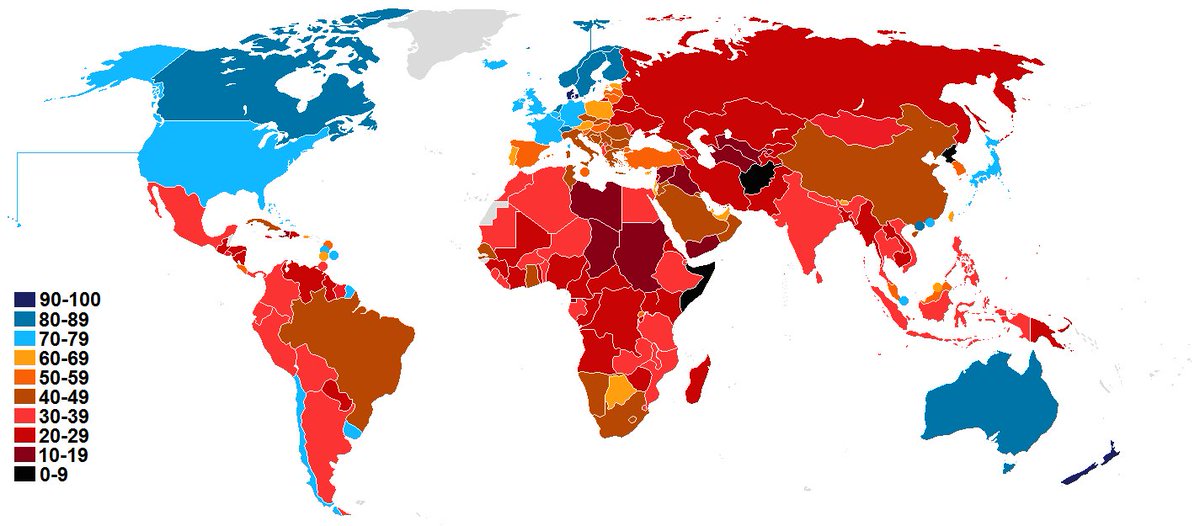
  • Graph, as promised. There are literally HUNDREDS if not thousands of research pa

    Graph, as promised. There are literally HUNDREDS if not thousands of research pa

    Graph, as promised. There are literally HUNDREDS if not thousands of research papers on the subject. Cheers. https://t.co/UGR9JP1jDN


    Source date (UTC): 2018-03-14 18:31:20 UTC

    Original post: https://twitter.com/i/web/status/973989973534871552

    Reply addressees: @sonshi_com

    Replying to: https://twitter.com/i/web/status/973987545280376833


    IN REPLY TO:

    Original post on X

    Original tweet unavailable — we could not load the text of the post this reply is addressing on X. That usually means the tweet was deleted, the account is protected, or X does not expose it to the account used for archiving. The Original post link below may still open if you view it in X while signed in.

    Original post: https://twitter.com/i/web/status/973987545280376833

  • I trash all civilizations equally because my job is to trash pseudoscience and a

    I trash all civilizations equally because my job is to trash pseudoscience and abrahamic pseudo rationalism. I trash my own most vehemently. So please monitory your postmodern infantilism while adults are in the room.


    Source date (UTC): 2018-03-14 18:30:53 UTC

    Original post: https://twitter.com/i/web/status/973989860984999937

    Reply addressees: @sonshi_com

    Replying to: https://twitter.com/i/web/status/973987545280376833


    IN REPLY TO:

    Original post on X

    Original tweet unavailable — we could not load the text of the post this reply is addressing on X. That usually means the tweet was deleted, the account is protected, or X does not expose it to the account used for archiving. The Original post link below may still open if you view it in X while signed in.

    Original post: https://twitter.com/i/web/status/973987545280376833

  • with lie groups as the next primitive category (referent), and repeat the entire

    with lie groups as the next primitive category (referent), and repeat the entire process all over again. Which is how we categorize subatomic(wave), particle(object), chemistry, biology, sentience. or physics engineering, programming, language. The same hierarchical process.


    Source date (UTC): 2018-03-14 17:44:13 UTC

    Original post: https://twitter.com/i/web/status/973978119488057346

    Reply addressees: @ProfessorLarp @GolfNorman

    Replying to: https://twitter.com/i/web/status/973977570155917312


    IN REPLY TO:

    Unknown author

    @ProfessorLarp @GolfNorman and create time. We can add another dimension and create competition (forces). We can add n-dimensions and create causalities (algebraic geometry). We can add obseve the consequences of the externalities produced by algebraic patterns (lie groups), and then repeat the cycle…

    Original post: https://x.com/i/web/status/973977570155917312


    IN REPLY TO:

    @curtdoolittle

    @ProfessorLarp @GolfNorman and create time. We can add another dimension and create competition (forces). We can add n-dimensions and create causalities (algebraic geometry). We can add obseve the consequences of the externalities produced by algebraic patterns (lie groups), and then repeat the cycle…

    Original post: https://x.com/i/web/status/973977570155917312

  • and create time. We can add another dimension and create competition (forces). W

    and create time. We can add another dimension and create competition (forces). We can add n-dimensions and create causalities (algebraic geometry). We can add obseve the consequences of the externalities produced by algebraic patterns (lie groups), and then repeat the cycle…


    Source date (UTC): 2018-03-14 17:42:03 UTC

    Original post: https://twitter.com/i/web/status/973977570155917312

    Reply addressees: @ProfessorLarp @GolfNorman

    Replying to: https://twitter.com/i/web/status/973976933041090565


    IN REPLY TO:

    Unknown author

    @ProfessorLarp @GolfNorman There exist only positional names (zero dimensions). We can add a dimension and imagine a line (measurement). We can add direction and add -measurement. We can ad another dimension and create areas. We can add another dimension and create spaces. We can add another dimension …

    Original post: https://x.com/i/web/status/973976933041090565


    IN REPLY TO:

    @curtdoolittle

    @ProfessorLarp @GolfNorman There exist only positional names (zero dimensions). We can add a dimension and imagine a line (measurement). We can add direction and add -measurement. We can ad another dimension and create areas. We can add another dimension and create spaces. We can add another dimension …

    Original post: https://x.com/i/web/status/973976933041090565

  • finally to physics representing forces of n-dimensions, and lastly to semantic r

    … finally to physics representing forces of n-dimensions, and lastly to semantic relations, expressing only relative weights of relations. Which is where math breaks down and we must turn to operations (semantics, economics, computing.) where categories are inconstant.


    Source date (UTC): 2018-03-14 17:37:58 UTC

    Original post: https://twitter.com/i/web/status/973976544027832320

    Reply addressees: @ProfessorLarp @GolfNorman

    Replying to: https://twitter.com/i/web/status/973975937179103234


    IN REPLY TO:

    Unknown author

    @ProfessorLarp @GolfNorman … divisible(positional name/number) = entities, divisible to divisible ratio (fraction) = measurements, and divisible to indivisible ratio (function) = general rules requiring context to provide limits, and directional spatial (and all that results from directions), and …

    Original post: https://x.com/i/web/status/973975937179103234


    IN REPLY TO:

    @curtdoolittle

    @ProfessorLarp @GolfNorman … divisible(positional name/number) = entities, divisible to divisible ratio (fraction) = measurements, and divisible to indivisible ratio (function) = general rules requiring context to provide limits, and directional spatial (and all that results from directions), and …

    Original post: https://x.com/i/web/status/973975937179103234

  • But that does not mean that while the categories relations and values that they

    But that does not mean that while the categories relations and values that they discuss in mathematics cannot be restated in scientific “true” operational prose. It’s just that when you do so the triviality of mathematics and the pseudoscientific content of the prose is obvious.


    Source date (UTC): 2018-03-14 17:09:33 UTC

    Original post: https://twitter.com/i/web/status/973969391560863745

    Reply addressees: @ProfessorLarp @GolfNorman

    Replying to: https://twitter.com/i/web/status/973969091013771264


    IN REPLY TO:

    Unknown author

    @ProfessorLarp @GolfNorman And so just as metalsmiths talked about spirits, astrologers talked about gods and demigods, theologians talked about god and heaven, mathematicians still make use of archaic ‘fictionalist’ (platonic) prose as did astrologers and theologians.

    Original post: https://x.com/i/web/status/973969091013771264


    IN REPLY TO:

    @curtdoolittle

    @ProfessorLarp @GolfNorman And so just as metalsmiths talked about spirits, astrologers talked about gods and demigods, theologians talked about god and heaven, mathematicians still make use of archaic ‘fictionalist’ (platonic) prose as did astrologers and theologians.

    Original post: https://x.com/i/web/status/973969091013771264

  • Yes. Although when we talk about mathematics, precisely because mathematics is s

    Yes. Although when we talk about mathematics, precisely because mathematics is so trivially simple, the use of “pseudoscientific prose” does not necessarily impact one’s ability to use it. So it’s a lot like ancient metallurgy, astrology or aristotelian physics.


    Source date (UTC): 2018-03-14 17:06:44 UTC

    Original post: https://twitter.com/i/web/status/973968685433049088

    Reply addressees: @ProfessorLarp @GolfNorman

    Replying to: https://twitter.com/i/web/status/973965002657947649


    IN REPLY TO:

    @ProfessorLarp

    @GolfNorman @curtdoolittle I have been wanting to ask more about mathematical platonism, is this an example of such? If so could make an example of him so I can learn?

    Original post: https://twitter.com/i/web/status/973965002657947649

  • “I have been wanting to ask more about mathematical platonism, is this an exampl

    —“I have been wanting to ask more about mathematical platonism, is this an example of such? If so could make an example of him so I can learn?”— Yes. Although when we talk about mathematics, precisely because mathematics is so trivially simple, the use of “pseudoscientific prose” does not necessarily impact one’s ability to use it. So it’s a lot like ancient metallurgy, astrology or aristotelian physics. And so just as metalsmiths talked about spirits, astrologers talked about gods and demigods, theologians talked about god and heaven, mathematicians still make use of archaic ‘fictionalist’ (platonic) prose as did astrologers and theologians. But that does not mean that while the categories relations and values that they discuss in mathematics cannot be restated in scientific “true” operational prose. It’s just that when you do so the triviality of mathematics and the pseudoscientific content of the prose is obvious. Lets start with defining a number. A number consists of a positional name. The name of a position in an order. Positional Naming using positional numbers assisted us in creating positional names beyond our ability to remember names, and beyond our ability to conceive or compare. All mathematical operations consist of addition or subtraction of positions. But because the only property positional names possess is position, then the positional names (numbers) all constitute ratios to (scales of) the reference. But since anything we refer to that is “countable’ (and some references are not directly countable – water and air, must be divided in to volumetric units for example before we can count them), can be measured using the ratios provided by positional names … … we gain scale and reference independence, or rather ‘the ability to construct general rules of arbitrary precision” using nothing but these positional names. Positional names are not like words, open to conflation or misinterpretation.They have only one property: position… … And because they have only one property of position, they have one unavoidable deductive property: ratio to the referent. … Now, some operations yield another positional name (a ratio), some yield a partial name (a fraction), and some yield an indivisible ratio …. … the position of which cannot be named by positional naming. This means that while some operations (changes by addition or subtraction) have no positional name, and as such can only be represented by a function. Ergo, there exists no square root of two, only the function. So mathematicians have spent a very long time inventing very creative means by which to conflate number (positional name produced by the operation of positional naming) with the categories of results of the operations of addition and subtraction: … … divisible(positional name/number) = entities, divisible to divisible ratio (fraction) = measurements, and divisible to indivisible ratio (function) = general rules requiring context to provide limits, and directional spatial (and all that results from directions), and … … finally to physics representing forces of n-dimensions, and lastly to semantic relations, expressing only relative weights of relations. Which is where math breaks down and we must turn to operations (semantics, economics, computing.) where categories are inconstant. There exist only positional names (zero dimensions). We can add a dimension and imagine a line (measurement). We can add direction and add -measurement. We can ad another dimension and create areas. We can add another dimension and create spaces. We can add another dimension … and create time. We can add another dimension and create competition (forces). We can add n-dimensions and create causalities (algebraic geometry). We can add obseve the consequences of the externalities produced by algebraic patterns (lie groups), and then repeat the cycle… with lie groups as the next primitive category (referent), and repeat the entire process all over again. Which is how we categorize subatomic(wave), particle(object), chemistry, biology, sentience. or physics engineering, programming, language. The same hierarchical process. So mathematics is very simple. It’s consists of the use of positional names to create general rules of arbitrary precision using some number of dimensions of causality. In other words, it’s the discipline of measurement. It is highly successful in constant relations and less … … so with inconstant relations. And mathematicians are very little different from medieval monks inventing nonsense language to justify a very simple moral code by which to extract rents from the population in return for training them to extend kinship trust to non-kin. Math is, like law, one of those disciplines that is terribly simple and it’s access limited to a priesthood willing to make use of the priestly vocabulary as a signal of conformity. Unfortunately mathematical pseudoscience in economics has been possible because of platonism. So in closing, think of mathematical terminology like a language of theology referencing a heaven that doesn’t exist. That does not however stop the monks from growing food, fermenting beer, performing clerical services, and generally pretending that they have sacred knowledge. Why? Because measuring stuff is actually pretty simple. All you need to do is know the dimensions and create a means of measurement. Everything else is just a byproduct of the simplicity of a positional names as an infungible category by which all is somehow commensurable.
  • “I have been wanting to ask more about mathematical platonism, is this an exampl

    —“I have been wanting to ask more about mathematical platonism, is this an example of such? If so could make an example of him so I can learn?”— Yes. Although when we talk about mathematics, precisely because mathematics is so trivially simple, the use of “pseudoscientific prose” does not necessarily impact one’s ability to use it. So it’s a lot like ancient metallurgy, astrology or aristotelian physics. And so just as metalsmiths talked about spirits, astrologers talked about gods and demigods, theologians talked about god and heaven, mathematicians still make use of archaic ‘fictionalist’ (platonic) prose as did astrologers and theologians. But that does not mean that while the categories relations and values that they discuss in mathematics cannot be restated in scientific “true” operational prose. It’s just that when you do so the triviality of mathematics and the pseudoscientific content of the prose is obvious. Lets start with defining a number. A number consists of a positional name. The name of a position in an order. Positional Naming using positional numbers assisted us in creating positional names beyond our ability to remember names, and beyond our ability to conceive or compare. All mathematical operations consist of addition or subtraction of positions. But because the only property positional names possess is position, then the positional names (numbers) all constitute ratios to (scales of) the reference. But since anything we refer to that is “countable’ (and some references are not directly countable – water and air, must be divided in to volumetric units for example before we can count them), can be measured using the ratios provided by positional names … … we gain scale and reference independence, or rather ‘the ability to construct general rules of arbitrary precision” using nothing but these positional names. Positional names are not like words, open to conflation or misinterpretation.They have only one property: position… … And because they have only one property of position, they have one unavoidable deductive property: ratio to the referent. … Now, some operations yield another positional name (a ratio), some yield a partial name (a fraction), and some yield an indivisible ratio …. … the position of which cannot be named by positional naming. This means that while some operations (changes by addition or subtraction) have no positional name, and as such can only be represented by a function. Ergo, there exists no square root of two, only the function. So mathematicians have spent a very long time inventing very creative means by which to conflate number (positional name produced by the operation of positional naming) with the categories of results of the operations of addition and subtraction: … … divisible(positional name/number) = entities, divisible to divisible ratio (fraction) = measurements, and divisible to indivisible ratio (function) = general rules requiring context to provide limits, and directional spatial (and all that results from directions), and … … finally to physics representing forces of n-dimensions, and lastly to semantic relations, expressing only relative weights of relations. Which is where math breaks down and we must turn to operations (semantics, economics, computing.) where categories are inconstant. There exist only positional names (zero dimensions). We can add a dimension and imagine a line (measurement). We can add direction and add -measurement. We can ad another dimension and create areas. We can add another dimension and create spaces. We can add another dimension … and create time. We can add another dimension and create competition (forces). We can add n-dimensions and create causalities (algebraic geometry). We can add obseve the consequences of the externalities produced by algebraic patterns (lie groups), and then repeat the cycle… with lie groups as the next primitive category (referent), and repeat the entire process all over again. Which is how we categorize subatomic(wave), particle(object), chemistry, biology, sentience. or physics engineering, programming, language. The same hierarchical process. So mathematics is very simple. It’s consists of the use of positional names to create general rules of arbitrary precision using some number of dimensions of causality. In other words, it’s the discipline of measurement. It is highly successful in constant relations and less … … so with inconstant relations. And mathematicians are very little different from medieval monks inventing nonsense language to justify a very simple moral code by which to extract rents from the population in return for training them to extend kinship trust to non-kin. Math is, like law, one of those disciplines that is terribly simple and it’s access limited to a priesthood willing to make use of the priestly vocabulary as a signal of conformity. Unfortunately mathematical pseudoscience in economics has been possible because of platonism. So in closing, think of mathematical terminology like a language of theology referencing a heaven that doesn’t exist. That does not however stop the monks from growing food, fermenting beer, performing clerical services, and generally pretending that they have sacred knowledge. Why? Because measuring stuff is actually pretty simple. All you need to do is know the dimensions and create a means of measurement. Everything else is just a byproduct of the simplicity of a positional names as an infungible category by which all is somehow commensurable.
  • “I have been wanting to ask more about mathematical platonism, is this an exampl

    —“I have been wanting to ask more about mathematical platonism, is this an example of such? If so could make an example of him so I can learn?”—

    Yes. Although when we talk about mathematics, precisely because mathematics is so trivially simple, the use of “pseudoscientific prose” does not necessarily impact one’s ability to use it. So it’s a lot like ancient metallurgy, astrology or aristotelian physics.

    And so just as metalsmiths talked about spirits, astrologers talked about gods and demigods, theologians talked about god and heaven, mathematicians still make use of archaic ‘fictionalist’ (platonic) prose as did astrologers and theologians.

    But that does not mean that while the categories relations and values that they discuss in mathematics cannot be restated in scientific “true” operational prose. It’s just that when you do so the triviality of mathematics and the pseudoscientific content of the prose is obvious.

    Lets start with defining a number. A number consists of a positional name. The name of a position in an order. Positional Naming using positional numbers assisted us in creating positional names beyond our ability to remember names, and beyond our ability to conceive or compare.

    All mathematical operations consist of addition or subtraction of positions. But because the only property positional names possess is position, then the positional names (numbers) all constitute ratios to (scales of) the reference.

    But since anything we refer to that is “countable’ (and some references are not directly countable – water and air, must be divided in to volumetric units for example before we can count them), can be measured using the ratios provided by positional names …

    … we gain scale and reference independence, or rather ‘the ability to construct general rules of arbitrary precision” using nothing but these positional names. Positional names are not like words, open to conflation or misinterpretation.They have only one property: position…

    … And because they have only one property of position, they have one unavoidable deductive property: ratio to the referent. … Now, some operations yield another positional name (a ratio), some yield a partial name (a fraction), and some yield an indivisible ratio ….

    … the position of which cannot be named by positional naming. This means that while some operations (changes by addition or subtraction) have no positional name, and as such can only be represented by a function. Ergo, there exists no square root of two, only the function.

    So mathematicians have spent a very long time inventing very creative means by which to conflate number (positional name produced by the operation of positional naming) with the categories of results of the operations of addition and subtraction: …

    … divisible(positional name/number) = entities, divisible to divisible ratio (fraction) = measurements, and divisible to indivisible ratio (function) = general rules requiring context to provide limits, and directional spatial (and all that results from directions), and …

    … finally to physics representing forces of n-dimensions, and lastly to semantic relations, expressing only relative weights of relations. Which is where math breaks down and we must turn to operations (semantics, economics, computing.) where categories are inconstant.

    There exist only positional names (zero dimensions). We can add a dimension and imagine a line (measurement). We can add direction and add -measurement. We can ad another dimension and create areas. We can add another dimension and create spaces. We can add another dimension …

    and create time. We can add another dimension and create competition (forces). We can add n-dimensions and create causalities (algebraic geometry). We can add obseve the consequences of the externalities produced by algebraic patterns (lie groups), and then repeat the cycle…

    with lie groups as the next primitive category (referent), and repeat the entire process all over again. Which is how we categorize subatomic(wave), particle(object), chemistry, biology, sentience. or physics engineering, programming, language. The same hierarchical process.

    So mathematics is very simple. It’s consists of the use of positional names to create general rules of arbitrary precision using some number of dimensions of causality. In other words, it’s the discipline of measurement. It is highly successful in constant relations and less …

    … so with inconstant relations. And mathematicians are very little different from medieval monks inventing nonsense language to justify a very simple moral code by which to extract rents from the population in return for training them to extend kinship trust to non-kin.

    Math is, like law, one of those disciplines that is terribly simple and it’s access limited to a priesthood willing to make use of the priestly vocabulary as a signal of conformity. Unfortunately mathematical pseudoscience in economics has been possible because of platonism.

    So in closing, think of mathematical terminology like a language of theology referencing a heaven that doesn’t exist. That does not however stop the monks from growing food, fermenting beer, performing clerical services, and generally pretending that they have sacred knowledge.

    Why? Because measuring stuff is actually pretty simple. All you need to do is know the dimensions and create a means of measurement. Everything else is just a byproduct of the simplicity of a positional names as an infungible category by which all is somehow commensurable.


    Source date (UTC): 2018-03-14 13:54:00 UTC