Theme: Science

  • photos_and_videos/TimelinePhotos_43196237263/41923629_10156642279727264_18751133

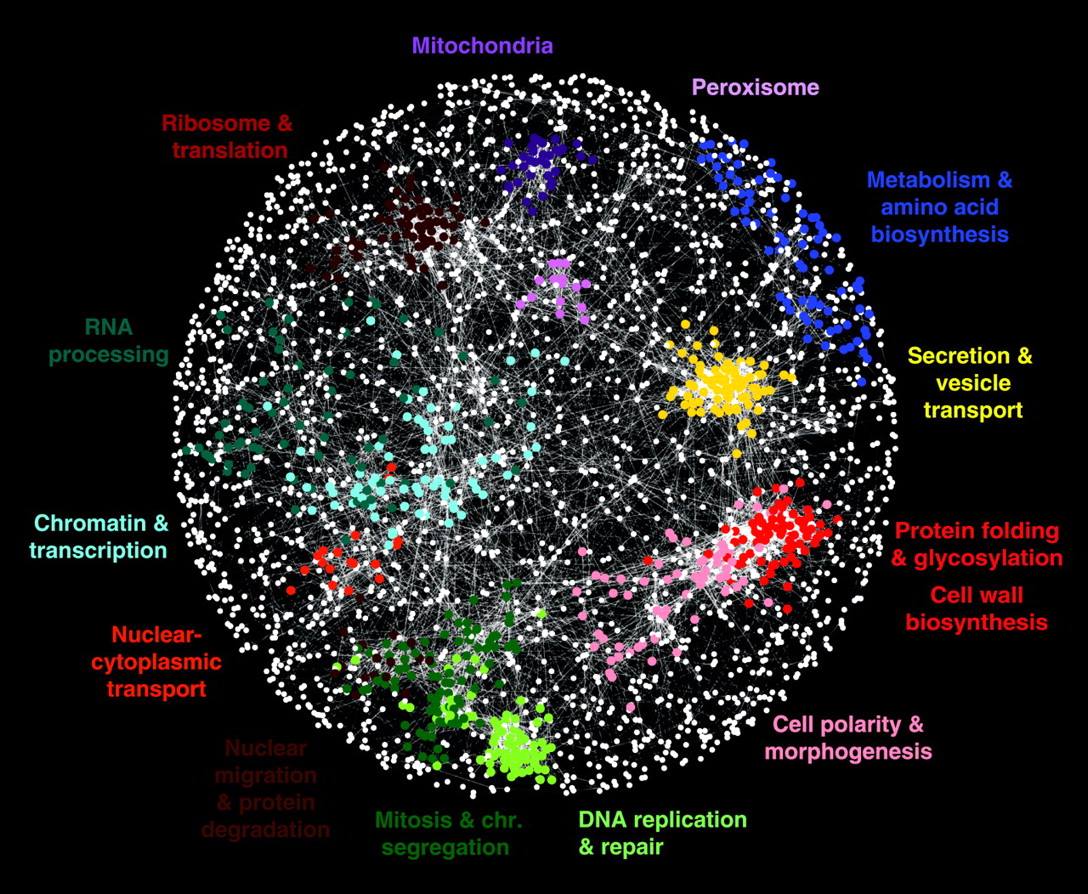
    photos_and_videos/TimelinePhotos_43196237263/41923629_10156642279727264_1875113349121835008_o_10156642279717264.jpg William L. BengeHuman cell.Sep 16, 2018 2:10pmWilliam L. BengeHas me wondering how a chip can call dna to migrate toward the flesh surrounding the chip for restoration.Sep 16, 2018 2:14pmWilliam L. BengeTech ad.Sep 16, 2018 2:14pmWilliam L. BengeClaimSep 16, 2018 2:15pm


    Source date (UTC): 2018-09-16 13:58:00 UTC

  • THERE IS NO POSTMODERN CONSERVATISM -ONLY ADOPTION OF LEFTIST TECHNIQUE OF Ridic

    THERE IS NO POSTMODERN CONSERVATISM -ONLY ADOPTION OF LEFTIST TECHNIQUE OF Ridicule, shaming, rallying, straw manning, superstition, moralism, psychologism, pseudoscience, and the denial of truth and reason.

    CONFUSING EMPIRICAL METHOD WITH INTUITIONISTIC JUSTIFICATION

    Claims of Postmodern conservatism are an error that confuses the universal fictionalism of the left, with the universal empiricism of the right. In other words, no conservatives are postmodernists, they have merely adopted the TECHNIQUES of the Marxists-Feminists-Postmodernists in Rhetoric (industrialization of lying) and abandoned their tradition of Truth and Honor, because they have abandoned HOPE of the integration of the left into the ANGLO empirical enlightenment’s ambition of an aristocracy of everyone, versus the cult of Semitic-Catholic authoritarian equality, and returned to their traditional Hierarchy of Priesthood, Aristocracy, Burgher, Craftsman, and Peasant, because the Academy, State, Media (priesthood fictional and equalitarian) is allied against the Aristocracy, Burgher, Craftsman (empirical and meritocratic – the parasitic top and bottom against the productive middle.

    And as such the natural markets for parasitism (pastoralists and women) against productivity (Farmers and men) continues its long march from 10000 bc to the present.

    THERE IS NOTHING NEW HERE.

    Islamism-Marxism-Feminism-Postmodernism weaponized against meritocracy in the modern world, is just version two of Judaism-Christianity-Islam weaponized against the aristocratic civilizations of the ancient world.

    THE DARK AGES REPEATED

    Whether the current generation of revolt (Islamism, Marxism, Feminism, Postmodernism) that makes use of supernaturalism, pseudoscience, and pseudo-rationalism, is to bring us to yet another dark age as did the revolt by Judaism-Christianity-Islam is yet to be seen. But if the current generations in the west are any indication our Empirical Enlightenment will be crushed just as it was in the past, through fraud and immigration, leaving, once again, only the Chinese, Koreans, and Japanese to survive the worldwide decline, using the walls, warfare, and that form of nepotism we call ethnocentrism.

    Curt Doolittle, The Propertarian Institute, Kiev, Ukraine.


    Source date (UTC): 2018-09-16 13:34:00 UTC

  • The Suppression of Eugenics: Self Directed Human Evolution

    by Daniel Gurpide [E]ugenics – meaning the applied science for the self-direction of human evolution – is nowadays the object of Freudian, hypocritical repression. Although one may say that eugenic concerns are an implicit constant in most post-Neolithic cultures, the essential question of eugenics flares up with the advent of the Darwinian revolution, and of Mendelian genetics—which has long been considered one and the same with eugenics. This arose in anticipation of a very real dysgenic risk in modern times that ‘traditional’ selective factors would break down. Galton, who coined the term, defined eugenics as ‘the study of all agencies under human control which can improve or impair the racial quality of future generations.’ The philanthropic motives that encouraged him to develop the new science are beyond question: Man is gifted with pity and other kindly feelings; he has also the power of preventing many kinds of suffering. I conceive it to fall well within his province to replace Natural Selection by other processes that are more merciful and not less effective. The way of hunger, death, stupidity, delusion, chance, and bare survival—natural selection—is thus replaced by the way of life, will, aspiration, and achievement—conscious evolution—not merely on a temporary and local basis, as in ancient Sparta, but permanently and universally. Breeding may itself be considered an early aristocratic technique. Yet, it was impossible to return to earlier Western social forms based on a hereditary aristocracy that had achieved their position by means of the military accomplishments of their ancestors. Hence, in the early twentieth century, a current of thought headed in the direction of developing a natural aristocracy based on intelligence, moral probity, and meritocratic social mobility. This was the heyday of eugenics as a belief system common among European elites—both liberal and conservative. Ultimately, the eugenics movement was shattered; it was a victim of the outcome of the Second World War, although eugenics was not expunged from polite society until the 1960s as an outcome of an energetic campaign by Holocaust-haunted egalitarian intellectuals bent on striking a blow against their rivals (nevertheless, in Sweden the eugenics programme continued until 1975). However, before it was ‘cursed,’ eugenics had long been perceived—essentially until the 1930s—as a ‘progressivist’ theme, since it was linked to concerns about the evolution of society in general (and correlated with the latter ‘taking charge of itself ’), to the extent that even Soviet intellectuals and scientists promoted its study. In Germany, the philosopher Peter Sloterdijk—politically on the left—recently argued that, given the understanding existing in genetic science, the eugenic dream of ‘selection’ is now within reach. Sloterdijk’s use of the word ‘selection’ horrified, of course, his colleagues, for whom the word evokes the ramp at Auschwitz. What most worried critics, however, was Sloterdijk’s argument that this capability should be exploited to breed a new generation of human beings. Coming after Sloterdijk’s open letter in Die Zeit attacking Jürgen Habermas as the representative of an outdated humanism, suggestions were made that he was ‘flirting with fascism,’ which reveals the uncertainty and fear still evoked by the issue of ‘conscious evolution.’ The Sloterdijk controversy demonstrates the almost exclusively ideological nature of contemporary discussions of eugenics. This has been accentuated by the increasing erosion, because of technoscientific progress, of the subjective costs of eugenic practices. Such costs have plummeted ever since the exposure of newborns, and the strict parental or communal control of mating gave way to the chemical or surgical sterilisation of severely retarded individuals, as well as to birth control. These have been succeeded by prematrimonial anamnesis—replaced, in turn, by prenatal diagnosis and genetic screening. In turn, these will be supplanted by IVF with embryo and gamete selection; and, finally, by direct therapeutic manipulation of germlines. In fact, in respect of contemporary and upcoming procedures, the natural empathy for the individuals concerned operates in an entirely favourable sense—to the point of rendering unconditional rejection of eugenics an increasingly embarrassing and untenable position. The key issue regarding eugenics are which countries will develop it to its fullest extent. Francis Galton had already predicted in 1909 that ‘the nation which first subjects itself to a rational eugenical discipline is bound to inherit the earth.’

  • The Suppression of Eugenics: Self Directed Human Evolution

    by Daniel Gurpide [E]ugenics – meaning the applied science for the self-direction of human evolution – is nowadays the object of Freudian, hypocritical repression. Although one may say that eugenic concerns are an implicit constant in most post-Neolithic cultures, the essential question of eugenics flares up with the advent of the Darwinian revolution, and of Mendelian genetics—which has long been considered one and the same with eugenics. This arose in anticipation of a very real dysgenic risk in modern times that ‘traditional’ selective factors would break down. Galton, who coined the term, defined eugenics as ‘the study of all agencies under human control which can improve or impair the racial quality of future generations.’ The philanthropic motives that encouraged him to develop the new science are beyond question: Man is gifted with pity and other kindly feelings; he has also the power of preventing many kinds of suffering. I conceive it to fall well within his province to replace Natural Selection by other processes that are more merciful and not less effective. The way of hunger, death, stupidity, delusion, chance, and bare survival—natural selection—is thus replaced by the way of life, will, aspiration, and achievement—conscious evolution—not merely on a temporary and local basis, as in ancient Sparta, but permanently and universally. Breeding may itself be considered an early aristocratic technique. Yet, it was impossible to return to earlier Western social forms based on a hereditary aristocracy that had achieved their position by means of the military accomplishments of their ancestors. Hence, in the early twentieth century, a current of thought headed in the direction of developing a natural aristocracy based on intelligence, moral probity, and meritocratic social mobility. This was the heyday of eugenics as a belief system common among European elites—both liberal and conservative. Ultimately, the eugenics movement was shattered; it was a victim of the outcome of the Second World War, although eugenics was not expunged from polite society until the 1960s as an outcome of an energetic campaign by Holocaust-haunted egalitarian intellectuals bent on striking a blow against their rivals (nevertheless, in Sweden the eugenics programme continued until 1975). However, before it was ‘cursed,’ eugenics had long been perceived—essentially until the 1930s—as a ‘progressivist’ theme, since it was linked to concerns about the evolution of society in general (and correlated with the latter ‘taking charge of itself ’), to the extent that even Soviet intellectuals and scientists promoted its study. In Germany, the philosopher Peter Sloterdijk—politically on the left—recently argued that, given the understanding existing in genetic science, the eugenic dream of ‘selection’ is now within reach. Sloterdijk’s use of the word ‘selection’ horrified, of course, his colleagues, for whom the word evokes the ramp at Auschwitz. What most worried critics, however, was Sloterdijk’s argument that this capability should be exploited to breed a new generation of human beings. Coming after Sloterdijk’s open letter in Die Zeit attacking Jürgen Habermas as the representative of an outdated humanism, suggestions were made that he was ‘flirting with fascism,’ which reveals the uncertainty and fear still evoked by the issue of ‘conscious evolution.’ The Sloterdijk controversy demonstrates the almost exclusively ideological nature of contemporary discussions of eugenics. This has been accentuated by the increasing erosion, because of technoscientific progress, of the subjective costs of eugenic practices. Such costs have plummeted ever since the exposure of newborns, and the strict parental or communal control of mating gave way to the chemical or surgical sterilisation of severely retarded individuals, as well as to birth control. These have been succeeded by prematrimonial anamnesis—replaced, in turn, by prenatal diagnosis and genetic screening. In turn, these will be supplanted by IVF with embryo and gamete selection; and, finally, by direct therapeutic manipulation of germlines. In fact, in respect of contemporary and upcoming procedures, the natural empathy for the individuals concerned operates in an entirely favourable sense—to the point of rendering unconditional rejection of eugenics an increasingly embarrassing and untenable position. The key issue regarding eugenics are which countries will develop it to its fullest extent. Francis Galton had already predicted in 1909 that ‘the nation which first subjects itself to a rational eugenical discipline is bound to inherit the earth.’

  • WTC: Please Don’t Be Stupid in my Presence

    September 13th, 2018 7:13 PM WTC
    Please don’t dork on my wall. Not to be too nerdy, but WTC failed at weakest point: holding the floors to the center and perimeter. so it only had to heat the weakest point on one floor sufficiently to lose half its strength and the weight of the stack did the rest. Pancaking is a very common method of architectural failure and is the principle reason for collapse after exterior wall failure, and foundation failure. In other words, buildings tilt and fall, or collapse and pancake depending upon whether it is built as a honeycomb (apartments) or a stack (office building). There are MANY regulations in place during the construction of buildings precisely because pancaking is so dangerous during the process. Particularly with buildings that jack the floors into place. There have been calls in the past for prohibiting the practice. I don’t know how common it is today. But it appears that most floors are poured in place today. WTC was designed with less masonry, more exterior and core columns, with no midpoint columns, but long spans of floor braces covered with concrete. This meant that floor pressure bearing on the joint between column and floor was not distributed across as many columns by short runs but concentrated in core and edge by long runs. These points only had to soften enough to lose 50% of their carrying capacity. When that happened, the floor sank, exterior columns bowed, and the pressure of the floors above just used gravity and momentum to overload each set of floors below it. Thus pancaking. The MIT report is correct – I cannot find any fault with it. I can however attest to the … dunning kruger effect of everyone who disagrees with it. ======UPDATE=== The building was designed to be light. The columns were box-columns of decreasing thickness with height.
    The diagram attached helps understand that the building was constructed out of TUBES, like building something out of straws. This is why there are huge pieces of the exterior still standing, because unlike most buildings, the exterior was structural. The pictures of the wreckages show the columns as sheet steel. The attached photo shows the I-beam that connected the box columns and a box column it’s attached to. Heck, just looking at the floor plan shows the tubular structure of the building. ====== UPDATE ==== You don’t understand. I don’t make mistakes. It’s my job. From the Journal of Materials and Metallurgy
    Thomas W. Eagar, the Thomas Lord Professor of Materials Engineering and Engineering Systems
    MIT, 77 Massachusetts Avenue, Room 4-136, Cambridge, Massachusetts 02139-4301; Eagar was the author of the “steel didn’t melt” findings. The NIST Report is online, and makes the same argument. Heat, buckle, break, pressure, collapse. Eyewitnesses reported that one or more floors ‘in the nineties’ had collapsed. Eyewitnesses reported the buckling of the exterior (Structural) walls. We were all witness to the pancaking. Damage > Burn > Break > Buckle > Squish > Pancake. Buildings tilt from foundations and cause buckling, buckle from exterior damage and pull the structure over, pancake from weight above, and on occasion all three. But as in all things: —“the tendency of all solids when heated is increase in plasticity”– —“The tendency of a rock is to fall straight down”.— —“The tendency of the dim to overestimate their competency is infinite”— Please don’t be stupid in my presence. Policing the informational commons is a moral obligation of all men, and stomping on intellectual bunnies is tedious and not an honorable use of time.

  • WTC: Please Don’t Be Stupid in my Presence

    September 13th, 2018 7:13 PM WTC
    Please don’t dork on my wall. Not to be too nerdy, but WTC failed at weakest point: holding the floors to the center and perimeter. so it only had to heat the weakest point on one floor sufficiently to lose half its strength and the weight of the stack did the rest. Pancaking is a very common method of architectural failure and is the principle reason for collapse after exterior wall failure, and foundation failure. In other words, buildings tilt and fall, or collapse and pancake depending upon whether it is built as a honeycomb (apartments) or a stack (office building). There are MANY regulations in place during the construction of buildings precisely because pancaking is so dangerous during the process. Particularly with buildings that jack the floors into place. There have been calls in the past for prohibiting the practice. I don’t know how common it is today. But it appears that most floors are poured in place today. WTC was designed with less masonry, more exterior and core columns, with no midpoint columns, but long spans of floor braces covered with concrete. This meant that floor pressure bearing on the joint between column and floor was not distributed across as many columns by short runs but concentrated in core and edge by long runs. These points only had to soften enough to lose 50% of their carrying capacity. When that happened, the floor sank, exterior columns bowed, and the pressure of the floors above just used gravity and momentum to overload each set of floors below it. Thus pancaking. The MIT report is correct – I cannot find any fault with it. I can however attest to the … dunning kruger effect of everyone who disagrees with it. ======UPDATE=== The building was designed to be light. The columns were box-columns of decreasing thickness with height.
    The diagram attached helps understand that the building was constructed out of TUBES, like building something out of straws. This is why there are huge pieces of the exterior still standing, because unlike most buildings, the exterior was structural. The pictures of the wreckages show the columns as sheet steel. The attached photo shows the I-beam that connected the box columns and a box column it’s attached to. Heck, just looking at the floor plan shows the tubular structure of the building. ====== UPDATE ==== You don’t understand. I don’t make mistakes. It’s my job. From the Journal of Materials and Metallurgy
    Thomas W. Eagar, the Thomas Lord Professor of Materials Engineering and Engineering Systems
    MIT, 77 Massachusetts Avenue, Room 4-136, Cambridge, Massachusetts 02139-4301; Eagar was the author of the “steel didn’t melt” findings. The NIST Report is online, and makes the same argument. Heat, buckle, break, pressure, collapse. Eyewitnesses reported that one or more floors ‘in the nineties’ had collapsed. Eyewitnesses reported the buckling of the exterior (Structural) walls. We were all witness to the pancaking. Damage > Burn > Break > Buckle > Squish > Pancake. Buildings tilt from foundations and cause buckling, buckle from exterior damage and pull the structure over, pancake from weight above, and on occasion all three. But as in all things: —“the tendency of all solids when heated is increase in plasticity”– —“The tendency of a rock is to fall straight down”.— —“The tendency of the dim to overestimate their competency is infinite”— Please don’t be stupid in my presence. Policing the informational commons is a moral obligation of all men, and stomping on intellectual bunnies is tedious and not an honorable use of time.

  • THE SUPPRESSION OF EUGENICS: SELF DIRECTED HUMAN EVOLUTION by Daniel Gurpide Eug

    THE SUPPRESSION OF EUGENICS: SELF DIRECTED HUMAN EVOLUTION

    by Daniel Gurpide

    Eugenics – meaning the applied science for the self-direction of human evolution – is nowadays the object of Freudian, hypocritical repression.

    Although one may say that eugenic concerns are an implicit constant in most post-Neolithic cultures, the essential question of eugenics flares up with the advent of the Darwinian revolution, and of Mendelian genetics—which has long been considered one and the same with eugenics. This arose in anticipation of a very real dysgenic risk in modern times that ‘traditional’ selective factors would break down.

    Galton, who coined the term, defined eugenics as ‘the study of all agencies under human control which can improve or impair the racial quality of future generations.’ The philanthropic motives that encouraged him to develop the new science are beyond question: `Man is gifted with pity and other kindly feelings; he has also the power of preventing many kinds of suffering. I conceive it to fall well within his province to replace Natural Selection by other processes that are more merciful and not less effective.` The way of hunger, death, stupidity, delusion, chance, and bare survival—natural selection—is thus replaced by the way of life, will, aspiration, and achievement—conscious evolution—not merely on a temporary and local basis, as in ancient Sparta, but permanently and universally.

    Breeding may itself be considered an early aristocratic technique. Yet, it was impossible to return to earlier Western social forms based on a hereditary aristocracy that had achieved their position by means of the military accomplishments of their ancestors. Hence, in the early twentieth century, a current of thought headed in the direction of developing a natural aristocracy based on intelligence, moral probity, and meritocratic social mobility. This was the heyday of eugenics as a belief system common among European elites—both liberal and conservative.

    Ultimately, the eugenics movement was shattered; it was a victim of the outcome of the Second World War, although eugenics was not expunged from polite society until the 1960s as an outcome of an energetic campaign by Holocaust-haunted egalitarian intellectuals bent on striking a blow against their rivals (nevertheless, in Sweden the eugenics programme continued until 1975).

    However, before it was ‘cursed,’ eugenics had long been perceived—essentially until the 1930s—as a ‘progressivist’ theme, since it was linked to concerns about the evolution of society in general (and correlated with the latter ‘taking charge of itself ’), to the extent that even Soviet intellectuals and scientists promoted its study.

    In Germany, the philosopher Peter Sloterdijk—politically on the left—recently argued that, given the understanding existing in genetic science, the eugenic dream of ‘selection’ is now within reach. Sloterdijk’s use of the word ‘selection’ horrified, of course, his colleagues, for whom the word evokes the ramp at Auschwitz. What most worried critics, however, was Sloterdijk’s argument that this capability should be exploited to breed a new generation of human beings. Coming after Sloterdijk’s open letter in Die Zeit attacking Jürgen Habermas as the representative of an outdated humanism, suggestions were made that he was ‘flirting with fascism,’ which reveals the uncertainty and fear still evoked by the issue of ‘conscious evolution.’ The Sloterdijk controversy demonstrates the almost exclusively ideological nature of contemporary discussions of eugenics. This has been accentuated by the increasing erosion, because of technoscientific progress, of the subjective costs of eugenic practices. Such costs have plummeted ever since the exposure of newborns, and the strict parental or communal control of mating gave way to the chemical or surgical sterilisation of severely retarded individuals, as well as to birth control. These have been succeeded by prematrimonial anamnesis—replaced, in turn, by prenatal diagnosis and genetic screening. In turn, these will be supplanted by IVF with embryo and gamete selection; and, finally, by direct therapeutic manipulation of germlines. In fact, in respect of contemporary and upcoming procedures, the natural empathy for the individuals concerned operates in an entirely favourable sense—to the point of rendering unconditional rejection of eugenics an increasingly embarrassing and untenable position.

    The key issue regarding eugenics are which countries will develop it to its fullest extent. Francis Galton had already predicted in 1909 that ‘the nation which first subjects itself to a rational eugenical discipline is bound to inherit the earth.’


    Source date (UTC): 2018-09-12 09:11:00 UTC
  • Science vs Superstition. —“The non-Occidental world worshiped the moon while t

    Science vs Superstition.

    —“The non-Occidental world worshiped the moon while the Occidents walked on it.”— George Hobbs

    (via james santagata )


    Source date (UTC): 2018-09-12 06:45:28 UTC

    Original post: https://twitter.com/i/web/status/1039766928062070784

  • Science vs Superstition. —“The non-Occidental world worshiped the moon while t

    Science vs Superstition.

    —“The non-Occidental world worshiped the moon while the Occidents walked on it.”— George Hobbs

    (via james santagata )


    Source date (UTC): 2018-09-12 02:45:00 UTC

  • The Suppression of Eugenics: Self Directed Human Evolution

    September 12th, 2018 9:11 AM THE SUPPRESSION OF EUGENICS: SELF DIRECTED HUMAN EVOLUTION by Daniel Gurpide [E]ugenics – meaning the applied science for the self-direction of human evolution – is nowadays the object of Freudian, hypocritical repression. Although one may say that eugenic concerns are an implicit constant in most post-Neolithic cultures, the essential question of eugenics flares up with the advent of the Darwinian revolution, and of Mendelian genetics—which has long been considered one and the same with eugenics. This arose in anticipation of a very real dysgenic risk in modern times that ‘traditional’ selective factors would break down. Galton, who coined the term, defined eugenics as ‘the study of all agencies under human control which can improve or impair the racial quality of future generations.’ The philanthropic motives that encouraged him to develop the new science are beyond question: Man is gifted with pity and other kindly feelings; he has also the power of preventing many kinds of suffering. I conceive it to fall well within his province to replace Natural Selection by other processes that are more merciful and not less effective. The way of hunger, death, stupidity, delusion, chance, and bare survival—natural selection—is thus replaced by the way of life, will, aspiration, and achievement—conscious evolution—not merely on a temporary and local basis, as in ancient Sparta, but permanently and universally. Breeding may itself be considered an early aristocratic technique. Yet, it was impossible to return to earlier Western social forms based on a hereditary aristocracy that had achieved their position by means of the military accomplishments of their ancestors. Hence, in the early twentieth century, a current of thought headed in the direction of developing a natural aristocracy based on intelligence, moral probity, and meritocratic social mobility. This was the heyday of eugenics as a belief system common among European elites—both liberal and conservative. Ultimately, the eugenics movement was shattered; it was a victim of the outcome of the Second World War, although eugenics was not expunged from polite society until the 1960s as an outcome of an energetic campaign by Holocaust-haunted egalitarian intellectuals bent on striking a blow against their rivals (nevertheless, in Sweden the eugenics programme continued until 1975). However, before it was ‘cursed,’ eugenics had long been perceived—essentially until the 1930s—as a ‘progressivist’ theme, since it was linked to concerns about the evolution of society in general (and correlated with the latter ‘taking charge of itself ’), to the extent that even Soviet intellectuals and scientists promoted its study. In Germany, the philosopher Peter Sloterdijk—politically on the left—recently argued that, given the understanding existing in genetic science, the eugenic dream of ‘selection’ is now within reach. Sloterdijk’s use of the word ‘selection’ horrified, of course, his colleagues, for whom the word evokes the ramp at Auschwitz. What most worried critics, however, was Sloterdijk’s argument that this capability should be exploited to breed a new generation of human beings. Coming after Sloterdijk’s open letter in Die Zeit attacking Jürgen Habermas as the representative of an outdated humanism, suggestions were made that he was ‘flirting with fascism,’ which reveals the uncertainty and fear still evoked by the issue of ‘conscious evolution.’ The Sloterdijk controversy demonstrates the almost exclusively ideological nature of contemporary discussions of eugenics. This has been accentuated by the increasing erosion, because of technoscientific progress, of the subjective costs of eugenic practices. Such costs have plummeted ever since the exposure of newborns, and the strict parental or communal control of mating gave way to the chemical or surgical sterilisation of severely retarded individuals, as well as to birth control. These have been succeeded by prematrimonial anamnesis—replaced, in turn, by prenatal diagnosis and genetic screening. In turn, these will be supplanted by IVF with embryo and gamete selection; and, finally, by direct therapeutic manipulation of germlines. In fact, in respect of contemporary and upcoming procedures, the natural empathy for the individuals concerned operates in an entirely favourable sense—to the point of rendering unconditional rejection of eugenics an increasingly embarrassing and untenable position. The key issue regarding eugenics are which countries will develop it to its fullest extent. Francis Galton had already predicted in 1909 that ‘the nation which first subjects itself to a rational eugenical discipline is bound to inherit the earth.’