Theme: Property

  • Another Common Property

    Mar 31, 2020, 3:47 PM

    —“Axioms”, like “First principles”, are a common property. You can not define them without the concept “we”. It is a contradiction to build an ideology that denies commons on a foundation of commons. This foundation is what libertarianism scavenges from ideologies that invest in and defend those properties.”—by Luke Weinhagen

  • Defining Propertarianism – for Newbies

    Apr 1, 2020, 3:40 PM “PROPERTARIANISM” IS JUST A BRAND NAME Propertarianism is just a brand name for strictly constructed traditional anglo American constitutional law, that is an evolution of our law, that prevents the crimes invented during the twentieth century, that were used to undermine western civilization. “Propertarian” was an ‘insult’ that was levied against libertarians who reduced all questions of social science to measurement by property. Fortunately, all questions of social science, ethics, and law, really are reducible to measurement by demonstrated interest that we call property. But, property, at least under our definition, is complete where under libertarianism it was insufficient. I chose the name “propertarianism” because it maintained this system of measurement, and “strictly constructed natural law of reciprocity” was too difficult a brand name. At this point, I would change it to Sovereignty, or “European Traditional Natural Law.” or something else. But the ‘term’ has stuck as a brand name so it’s hard to change it. Propertarianism consists of: 1 – The explanation for western success in ancient and modern worlds (adaptive velocity because of our individual sovereignty and resulting traditional law of property/tort.) We call this Western Group Evolutionary Strategy. 2 – The completion of the scientific method and all that it entails – which is a lot and why P is such a big program: it touches everything and it converts almost all psychological, social, and political speech to economic expressions – which is counter-intuitive because it’s scientific where our current psychological social, moral, and political speech is only normative or in the case of psychology sociology and politics, both pseudoscientific and sophomoric. We call this Vitruvianism(Metaphysics), Acquisitionism (Incentives, Behavior), Propertarianism (Ethics) and Testimonialism (Truth) 3 – The explanation of the different systems of argument used in the different civilizations, and in particular the Abrahamic means of deceit used in the ancient world (Judaism, Christianity, Islam) and in the modern world (marxism, feminism, postmodernism, denialism/political correctness). We call this The Grammars. 4 – A constitution, body of law, and attendant policies that restore the American, English, anglo Saxon, germanic, western Indo-European, constitution (contract among sovereigns) and hardens it from future undermining, by creating a legal means for the prosecution of crimes of undermining, including religious (Jewish Islamic), pseudoscientific, and sophomoric (Marx, Freud, Boas, Adorno, Derrida, Friedan, and marxism, postmodernism, feminism, and denialism/political correctness), as well as the financing of undermining by prohibiting rent-seeking, privatization of commons, and socialization of losses). We call this A New or Updated Constitution. 5 – a set of policies under that constitution that form the most substantial political, social, economic, and financial reform since the roman era – restoring the civil society. We Call These The Reforms: The Policies Under the Constitution 6 – a set of restitutions and punishments that serve to return wealth to the American people, punish those who have engaged in undermining our people, and prevent repeats of undermining our people – or other peoples – in the future. We Call These the RestitutionsExplanation of How Propertarianism Does All That We create both the positive market for goods, services, and information in competition with and the negative market for suppression, restitution, punishment, and prevention, of falsehood and ir-reciprocity by the natural common law of tort that evolves scientifically through demonstrated resolution of disputes in real-world conflicts. So we create a market where people have the ultimate sovereignty (monopoly of control), liberty (choose your own destiny), and freedom (free of coercion) in a competition between market cooperation (the markets) and markets for conflict resolution (courts), as long as you do so by truthful and reciprocal means. We had these rights through most of our history but they have been stolen from us over the past century – on purpose, to destroy our civilization. But how can we (restore) our use of the law for the purpose of suppressing crimes against our people? This is how:

    1) Do you know what a formal logic is? It’s grammar of the logic of inference using sets and binary truth or falsehood.

    2) Do you know what programming is? It’s a grammar of operational logic using binary truth or falsehood.

    3) Do you know what law is? It’s a formal operational rational grammar of conflict resolution, using ternary falsehood, truth candidacy, and undecidability.

    4) Do you know what tort law is? It’s a formal rational operational grammar of conflict resolution over demonstrated interests that we enumerate as property, using ternary logic of falsehood, truth candidacy, undecidability.

    Propertarianism is aformal (strict), operational(sequential action), grammar (vocabulary, grammar, syntax, logic), of tort (demonstrated interests), and as a consequence a value neutral universal language (vocabulary, grammar, syntax, logic) across all disciplines (physical science, language-metaphysics, psychology, sociology, politics, ethics, law, group strategy), that allows us to falsify (test) every possible dimension of human action, intuition, cognition, and speech, for both testimonial possibility (truth) and reciprocity(ethics, morality, trespass, tort), and as a consequence allows us to create uninterpretable (strictly constructed) constitutions, and their enumerated rights and responsibilities, the most influential of which is the conversion of free speech to free truthful and reciprocal speech, in public, to the public, on matters public (commerce, economics, commons, politics, group strategy) by extending the involuntary warranty of due diligence and involuntary liability for the truthfulness and reciprocity of commercial speech to that of political speech.

    As such it allows us to outlaw hostile religions, and pseudo-religions especially the pseudoscientific and sophomoric restatements of supernatural Judaism, Christianity, and Islam, in pseudoscientific and sophomoric and ir-reciprocal marxism, socialism, feminism, and postmodernism. Propertarianism is equivalent in scope to the revolutions of Aristotelian reason (realism, naturalism, reason), the empirical revolution(realism, naturalism, empiricism), in that it completes the scientific method by extending it from the physical to the psychological and social sciences, including that of law, politics, and group strategy. In other words, “propertarianism consists of the completion of the scientific method; its application to the totality of human knowledge; producing a universally commensurable language of all thought; its embodiment in the common law of tort; resulting in a logical and scientific constitution; permitting the criminalization of ir-reciprocal and un-testifiable speech and as a consequence the eradication of superstition, pseudoscience, sophism, fraud, and deceit from the commercial, financial, economic, political, and informational commons.” How Does P-Law Differ from Philosophy? You Could Call P-Law Operational Philosophy in The Sequence of Syllogistic Reason > Rationalism > Set Logic > Operational Logic (algorithmic) > Equilibrial Logic (economic Logic) 0) Uses Series (supply Demand) vs Ideals. 1) Uses Operational vs Set Logic 2) Users Ternary Logic Not Binary (undecidable, Truthful, False) 3) Uses Satisfaction of Demand for Infallibility Not Ideal Truth 4) Tests for Deceits Not Just Errors 5) Tests for Irreciprocity Not Just ‘good’ 6) Tests for Costs Not Just Internal Consistency 7) Tests for Closure by Reality Instead of Just Non-Contradiction 8) Tests for Limits and Full Accounting. 9) Tests for Warranty of Due Diligence, Liability, Restitutability. Edit Reasons for Disproportionate Western Success When We Explain the Reason for Western Success We Discover:

    “heroism and Excellence; Truth and Duty; Oath and Warranty; Sovereignty and Reciprocity; Law and Jury; and Voluntary Markets in Every Aspect of Life: Association, Cooperation, Production, Reproduction, Commons, Polities and War; the Direction of Surpluses to The Production of Commons and The Returns Therefrom; at The Cost of Suppression of The Reproduction of The Unproductive Underclasses; and The Direction of Dominance Expression to The Production of Commons by A Distributed Dictatorship of Individually Sovereign People and The Reciprocal Warranty of Denial of Power to Any and All.”

    Largely, It’s Just that We Tell the Truth (we Testify) – and No One Else Does (they Narrate). Propertarianism Is (a) the Completion of The Aristotelian Program (b) the Completion of The Scientific Method (c ) the Logic and Science of The Social Sciences, and (d) the Natural Law of Reciprocity Under Which All Display Word and Deed Is Expressible and Commensurable; (e) and The Means of Institutionalizing in A “market for The Suppression of Fraud” the Suppression of The Greatest Crime Against Humanity: The Big Lies that Are Responsible for The Last Dark Age and The New One that The Enemy Has Sought to Bring About. (apr 2, 2020, 8:05 Pm)
  • Defining Propertarianism – for Newbies

    Apr 1, 2020, 3:40 PM “PROPERTARIANISM” IS JUST A BRAND NAME Propertarianism is just a brand name for strictly constructed traditional anglo American constitutional law, that is an evolution of our law, that prevents the crimes invented during the twentieth century, that were used to undermine western civilization. “Propertarian” was an ‘insult’ that was levied against libertarians who reduced all questions of social science to measurement by property. Fortunately, all questions of social science, ethics, and law, really are reducible to measurement by demonstrated interest that we call property. But, property, at least under our definition, is complete where under libertarianism it was insufficient. I chose the name “propertarianism” because it maintained this system of measurement, and “strictly constructed natural law of reciprocity” was too difficult a brand name. At this point, I would change it to Sovereignty, or “European Traditional Natural Law.” or something else. But the ‘term’ has stuck as a brand name so it’s hard to change it. Propertarianism consists of: 1 – The explanation for western success in ancient and modern worlds (adaptive velocity because of our individual sovereignty and resulting traditional law of property/tort.) We call this Western Group Evolutionary Strategy. 2 – The completion of the scientific method and all that it entails – which is a lot and why P is such a big program: it touches everything and it converts almost all psychological, social, and political speech to economic expressions – which is counter-intuitive because it’s scientific where our current psychological social, moral, and political speech is only normative or in the case of psychology sociology and politics, both pseudoscientific and sophomoric. We call this Vitruvianism(Metaphysics), Acquisitionism (Incentives, Behavior), Propertarianism (Ethics) and Testimonialism (Truth) 3 – The explanation of the different systems of argument used in the different civilizations, and in particular the Abrahamic means of deceit used in the ancient world (Judaism, Christianity, Islam) and in the modern world (marxism, feminism, postmodernism, denialism/political correctness). We call this The Grammars. 4 – A constitution, body of law, and attendant policies that restore the American, English, anglo Saxon, germanic, western Indo-European, constitution (contract among sovereigns) and hardens it from future undermining, by creating a legal means for the prosecution of crimes of undermining, including religious (Jewish Islamic), pseudoscientific, and sophomoric (Marx, Freud, Boas, Adorno, Derrida, Friedan, and marxism, postmodernism, feminism, and denialism/political correctness), as well as the financing of undermining by prohibiting rent-seeking, privatization of commons, and socialization of losses). We call this A New or Updated Constitution. 5 – a set of policies under that constitution that form the most substantial political, social, economic, and financial reform since the roman era – restoring the civil society. We Call These The Reforms: The Policies Under the Constitution 6 – a set of restitutions and punishments that serve to return wealth to the American people, punish those who have engaged in undermining our people, and prevent repeats of undermining our people – or other peoples – in the future. We Call These the RestitutionsExplanation of How Propertarianism Does All That We create both the positive market for goods, services, and information in competition with and the negative market for suppression, restitution, punishment, and prevention, of falsehood and ir-reciprocity by the natural common law of tort that evolves scientifically through demonstrated resolution of disputes in real-world conflicts. So we create a market where people have the ultimate sovereignty (monopoly of control), liberty (choose your own destiny), and freedom (free of coercion) in a competition between market cooperation (the markets) and markets for conflict resolution (courts), as long as you do so by truthful and reciprocal means. We had these rights through most of our history but they have been stolen from us over the past century – on purpose, to destroy our civilization. But how can we (restore) our use of the law for the purpose of suppressing crimes against our people? This is how:

    1) Do you know what a formal logic is? It’s grammar of the logic of inference using sets and binary truth or falsehood.

    2) Do you know what programming is? It’s a grammar of operational logic using binary truth or falsehood.

    3) Do you know what law is? It’s a formal operational rational grammar of conflict resolution, using ternary falsehood, truth candidacy, and undecidability.

    4) Do you know what tort law is? It’s a formal rational operational grammar of conflict resolution over demonstrated interests that we enumerate as property, using ternary logic of falsehood, truth candidacy, undecidability.

    Propertarianism is aformal (strict), operational(sequential action), grammar (vocabulary, grammar, syntax, logic), of tort (demonstrated interests), and as a consequence a value neutral universal language (vocabulary, grammar, syntax, logic) across all disciplines (physical science, language-metaphysics, psychology, sociology, politics, ethics, law, group strategy), that allows us to falsify (test) every possible dimension of human action, intuition, cognition, and speech, for both testimonial possibility (truth) and reciprocity(ethics, morality, trespass, tort), and as a consequence allows us to create uninterpretable (strictly constructed) constitutions, and their enumerated rights and responsibilities, the most influential of which is the conversion of free speech to free truthful and reciprocal speech, in public, to the public, on matters public (commerce, economics, commons, politics, group strategy) by extending the involuntary warranty of due diligence and involuntary liability for the truthfulness and reciprocity of commercial speech to that of political speech.

    As such it allows us to outlaw hostile religions, and pseudo-religions especially the pseudoscientific and sophomoric restatements of supernatural Judaism, Christianity, and Islam, in pseudoscientific and sophomoric and ir-reciprocal marxism, socialism, feminism, and postmodernism. Propertarianism is equivalent in scope to the revolutions of Aristotelian reason (realism, naturalism, reason), the empirical revolution(realism, naturalism, empiricism), in that it completes the scientific method by extending it from the physical to the psychological and social sciences, including that of law, politics, and group strategy. In other words, “propertarianism consists of the completion of the scientific method; its application to the totality of human knowledge; producing a universally commensurable language of all thought; its embodiment in the common law of tort; resulting in a logical and scientific constitution; permitting the criminalization of ir-reciprocal and un-testifiable speech and as a consequence the eradication of superstition, pseudoscience, sophism, fraud, and deceit from the commercial, financial, economic, political, and informational commons.” How Does P-Law Differ from Philosophy? You Could Call P-Law Operational Philosophy in The Sequence of Syllogistic Reason > Rationalism > Set Logic > Operational Logic (algorithmic) > Equilibrial Logic (economic Logic) 0) Uses Series (supply Demand) vs Ideals. 1) Uses Operational vs Set Logic 2) Users Ternary Logic Not Binary (undecidable, Truthful, False) 3) Uses Satisfaction of Demand for Infallibility Not Ideal Truth 4) Tests for Deceits Not Just Errors 5) Tests for Irreciprocity Not Just ‘good’ 6) Tests for Costs Not Just Internal Consistency 7) Tests for Closure by Reality Instead of Just Non-Contradiction 8) Tests for Limits and Full Accounting. 9) Tests for Warranty of Due Diligence, Liability, Restitutability. Edit Reasons for Disproportionate Western Success When We Explain the Reason for Western Success We Discover:

    “heroism and Excellence; Truth and Duty; Oath and Warranty; Sovereignty and Reciprocity; Law and Jury; and Voluntary Markets in Every Aspect of Life: Association, Cooperation, Production, Reproduction, Commons, Polities and War; the Direction of Surpluses to The Production of Commons and The Returns Therefrom; at The Cost of Suppression of The Reproduction of The Unproductive Underclasses; and The Direction of Dominance Expression to The Production of Commons by A Distributed Dictatorship of Individually Sovereign People and The Reciprocal Warranty of Denial of Power to Any and All.”

    Largely, It’s Just that We Tell the Truth (we Testify) – and No One Else Does (they Narrate). Propertarianism Is (a) the Completion of The Aristotelian Program (b) the Completion of The Scientific Method (c ) the Logic and Science of The Social Sciences, and (d) the Natural Law of Reciprocity Under Which All Display Word and Deed Is Expressible and Commensurable; (e) and The Means of Institutionalizing in A “market for The Suppression of Fraud” the Suppression of The Greatest Crime Against Humanity: The Big Lies that Are Responsible for The Last Dark Age and The New One that The Enemy Has Sought to Bring About. (apr 2, 2020, 8:05 Pm)
  • For Christian Propertarians

    Apr 5, 2020, 10:10 AM (from elsewhere) (pls move to christian propertarians group) (no anti-christian signaling pls) Great Questions. Thank you. It is difficult to transition between Theological, Philosophical, and Legal-Scientific thought. This is because the ‘tests’ (theological obedience, philosophical choice, and legal-scientific decidability in matters of conflict) in each system of thought vary from wisdom to choice to necessity. To think in terms of law and science means eliminating what is false and irreciprocal so only the true and reciprocal (good) remain. So while the theological attempts to sculpt with clay, the legal-scientific attempts to carve away stone. This difference between the positive and negative is a difficult transition for the faithful, just as the reverse is a difficult transition for the legal-scientific. The difference between spiritual (emotional, imaginary, and intuited) and material (intellectual, actionable, and observable) is well understood in the philosophical literature as the difference between experience and action. experience and observation overlap but the Positive information from Experience, and the Negative information from Action are not the same. There is more ‘felt’ with experience than is observed. Both Faith and Science depend upon this difference. Faith to say ‘there is more to life than the material”, and law-Science ‘there is means of settling conflict by the observable and material’. Lastly, there is a difference between P-law (the natural law of sovereignty and reciprocity within the limits of proportionality) and my opinion. I have opinion. The law consists of what amount to ‘proofs’ of decidability under tests of sovereignty reciprocity and proportionality. So don’t confuse the law with my opinion. —“Why doesn’t Propertarianism promote Christianity?”– That’s not true. Law doesn’t promote it prohibits. Science doesn’t promote it explains. We explain why jesus’ teachings were true and an innovation. We state it in scientific terms. Christianity is compatible with natural law, extends natural law, and contributes to high trust commercial society with middle class majority ethics. As such Propertarianism makes other religions illegal because they are not compatible with natural law and jesus’ extension of natural law. So we don’t necessarily promote christianity we prohibit competitors. We do not consider practicing heathen (love of nature and ancestors), pagan (love of heroes and archetypes), and christian (love of god) together as incompatible. We understand this as the evolution of religion from familial, to tribal to cultural to political – which is the evidence of the evolution of religion. There are three sets of laws that God has shown us with evidence of his hand. The laws of nature, the natural law of reciprocity, and the evolutionary law of transcendence. Fundamentalist (literalist) Christianity is not compatible with Laws of Nature (science), and because of this, incompatible with the evolutionary law of Transcendence. The laws of nature are evidence of god’s hand. So wherever religion is incompatible with God’s hand then the men who wrote that religion erred. I seek to solve the problem of the incompatibility of religion with the evidence of God’s hand. This leads one to the conclusion that the deists are right and jesus was right and the jews and muslims and church doctrinists were wrong – but wrong only because they were doing the best they could with the primitive knowledge of god’s hand they had at the time. The basics underlying christian faith (god, soul, jesus teachings, ten commandments as property rights, and devotion) are all compatible with the evidence of god’s hand, in one way or another. And that the doctrine does succeed in causing the faithful to behave in accordance with god’s hand. –“How does Propertarianism account for the dignity of the human person by virtue of their potential for relationship with God versus their potential for advancing civilization?”— We say it in scientific terms: if you demonstrate by your actions that you follow the evidence of god’s hand, and do not act counter to the evidence of gods hand then you are due dignity and respect – just as those who do not, do no deserve dignity and respect. However, your experience is not observable, only your actions. How you believe and feel is not observable and decidable by other than your actions. If you do not treat others as jesus would demand, then you are not christian regardless of what you feel and believe. There are many christians who use christianity as a means of doing nothing at all because others are not conforming to their demands. This is the ultimate selfishness, ultimate deceit, ultimately unchristian denial of jesus’s teaching, and ultimate heresy. These people are not christian. They are evil in christian garb. There are hundreds of christian sects and all that they share is some point on the spectrum between priority for the tyrannical god of the old testament semites that jesus tried to reform, and the loving god evident in jesus’ behavior and teaching. Your faith is in your mind. Your behavior exists and is observable. So in this sense, Propertarianism (God’s natural law of sovereignty and reciprocity within the limits of proportionality) judges your actions because no law can judge your mind. —“1. I don’t think Christianity is argued in the same way as any other faiths (moral baiting), like I tried to say, it is the unique and unrepeatable Christian response to suffering and relationship that really converts and ‘saves souls’.”— As an example, the presumption that man’s soul needs saving is the creation of a false debt. You will live a better life, cause those around you to live a better life, by following the teachings of jesus, and thereby insulating yourself and others from the animal impulses within us all. If you do so you will save your soul from emotional suffering in this world and the next. To save yourself from physical suffering requires more than saving yourself from emotional suffering. That is where science, technology, and medicine provide what faith does not. —“2. Christianity civilized the West and not the other way around. I don’t understand the idea that early Christianity was another religion of warfare from within. Christianity was spread by its own blood, not the blood of others.”— Why did christianity(a jewish heresy) spread among europeans, rabbinical judaism among jews, and islam (a christian heresy) among arabs and non-europeans? Because of what these people were beforehand. It is simply not true that other than a tiny minority accepted christianity willingly. This is church mythos. In all cases it was imposed upon them by leaders who found political value in it, a useful tool for political control of people, and a literate administrative class in the priesthood to do so. even during the high middle ages the documentary record looks a lot like “political correctness” is practiced today: the common people gave lip service, the urban people went along, and the upper classes virtue signaled, with a minority of purists truly devoted to the faith just like today. Those who write write history. Fortunately we have a lot of documentation from outside of the church and the writings of these people are decidedly ‘medieval’, right up until the enlightenment. —“3. The Church was always meant to lead the state, not compete with it. Like I said, the latter was embedded in the former (even when it deviated from its philosophy in practice).”— The church was forcibly imposed on europe by the greeks after they defeated rome and reconquered it, closed the schools, killed or outcast the philosophers, and destroyed the arts, temples, literature, and knowledge of the greco-roman civilization. The purpose of the church was to prevent the restoration of roman (european) aristocracy. Some monks in the north, particularly ireland, worked to save what little knowledge remained in europe. Some middle easterners saved the work of some of the greeks and romans. Then destroyed the rest with the muslim conquest. The problem was that the church was far more corrupt than the state it sought to replace. So after the institution of the church we had the monastic movement to defend the people from the church, then the protestant reformation to defend people from the church. The renaissance reformation and scientific revolution to escape the corruption of the church. Jesus was a gift from god. He was the only christian. American Evangelical Protestantism the closest religion to the one Jesus imagined, and the church as a political institution the farthest thing from the one he would have imagined. So the church failed in the early medieval period. It failed in the igh medieval period. It was punished in the restoration of european civilzation. And in the 19th Century it failed again in response to discoveries of science. And it has been destroyed by the marxist-postmodernist-feminist revolution against both christianity and aristocracy. And it wasn’t until the middle of the 20th that protestant evangelicals finally cast off the corruption of the church, and returned christianity to a religion of the people, by the people, in imitation of jesus christ. I have seen evangelical preachers take christianity even closer to its roots by teaching christianity as an intuitive more emotional close relation to our ancient religion of stoicism, and our scientific understanding of cognitive behavioral therapy. My view of christianity is an attempt to use jesus teachings to create an institution of governance and oppression, where jesus was trying to lift poor ignorant people out of tribalism, so that they were not a permanent underclass taken advantage of by usurers and tyrants, by loving each other as the greatest resistance movement against tyranny whether familial, tribal, national, or imperial in human history. So I am personally hostile to ‘Church-ianity” but I consider myself a christian who seeks to follow the teachings of jesus christ: “Love thy neighbor”. I am not sure anything else is required. There are five principles buried in christian teaching. Every one of them is reducible to “love thy neighbor and thy conscience shall be free.” That’s it.

  • For Christian Propertarians

    Apr 5, 2020, 10:10 AM (from elsewhere) (pls move to christian propertarians group) (no anti-christian signaling pls) Great Questions. Thank you. It is difficult to transition between Theological, Philosophical, and Legal-Scientific thought. This is because the ‘tests’ (theological obedience, philosophical choice, and legal-scientific decidability in matters of conflict) in each system of thought vary from wisdom to choice to necessity. To think in terms of law and science means eliminating what is false and irreciprocal so only the true and reciprocal (good) remain. So while the theological attempts to sculpt with clay, the legal-scientific attempts to carve away stone. This difference between the positive and negative is a difficult transition for the faithful, just as the reverse is a difficult transition for the legal-scientific. The difference between spiritual (emotional, imaginary, and intuited) and material (intellectual, actionable, and observable) is well understood in the philosophical literature as the difference between experience and action. experience and observation overlap but the Positive information from Experience, and the Negative information from Action are not the same. There is more ‘felt’ with experience than is observed. Both Faith and Science depend upon this difference. Faith to say ‘there is more to life than the material”, and law-Science ‘there is means of settling conflict by the observable and material’. Lastly, there is a difference between P-law (the natural law of sovereignty and reciprocity within the limits of proportionality) and my opinion. I have opinion. The law consists of what amount to ‘proofs’ of decidability under tests of sovereignty reciprocity and proportionality. So don’t confuse the law with my opinion. —“Why doesn’t Propertarianism promote Christianity?”– That’s not true. Law doesn’t promote it prohibits. Science doesn’t promote it explains. We explain why jesus’ teachings were true and an innovation. We state it in scientific terms. Christianity is compatible with natural law, extends natural law, and contributes to high trust commercial society with middle class majority ethics. As such Propertarianism makes other religions illegal because they are not compatible with natural law and jesus’ extension of natural law. So we don’t necessarily promote christianity we prohibit competitors. We do not consider practicing heathen (love of nature and ancestors), pagan (love of heroes and archetypes), and christian (love of god) together as incompatible. We understand this as the evolution of religion from familial, to tribal to cultural to political – which is the evidence of the evolution of religion. There are three sets of laws that God has shown us with evidence of his hand. The laws of nature, the natural law of reciprocity, and the evolutionary law of transcendence. Fundamentalist (literalist) Christianity is not compatible with Laws of Nature (science), and because of this, incompatible with the evolutionary law of Transcendence. The laws of nature are evidence of god’s hand. So wherever religion is incompatible with God’s hand then the men who wrote that religion erred. I seek to solve the problem of the incompatibility of religion with the evidence of God’s hand. This leads one to the conclusion that the deists are right and jesus was right and the jews and muslims and church doctrinists were wrong – but wrong only because they were doing the best they could with the primitive knowledge of god’s hand they had at the time. The basics underlying christian faith (god, soul, jesus teachings, ten commandments as property rights, and devotion) are all compatible with the evidence of god’s hand, in one way or another. And that the doctrine does succeed in causing the faithful to behave in accordance with god’s hand. –“How does Propertarianism account for the dignity of the human person by virtue of their potential for relationship with God versus their potential for advancing civilization?”— We say it in scientific terms: if you demonstrate by your actions that you follow the evidence of god’s hand, and do not act counter to the evidence of gods hand then you are due dignity and respect – just as those who do not, do no deserve dignity and respect. However, your experience is not observable, only your actions. How you believe and feel is not observable and decidable by other than your actions. If you do not treat others as jesus would demand, then you are not christian regardless of what you feel and believe. There are many christians who use christianity as a means of doing nothing at all because others are not conforming to their demands. This is the ultimate selfishness, ultimate deceit, ultimately unchristian denial of jesus’s teaching, and ultimate heresy. These people are not christian. They are evil in christian garb. There are hundreds of christian sects and all that they share is some point on the spectrum between priority for the tyrannical god of the old testament semites that jesus tried to reform, and the loving god evident in jesus’ behavior and teaching. Your faith is in your mind. Your behavior exists and is observable. So in this sense, Propertarianism (God’s natural law of sovereignty and reciprocity within the limits of proportionality) judges your actions because no law can judge your mind. —“1. I don’t think Christianity is argued in the same way as any other faiths (moral baiting), like I tried to say, it is the unique and unrepeatable Christian response to suffering and relationship that really converts and ‘saves souls’.”— As an example, the presumption that man’s soul needs saving is the creation of a false debt. You will live a better life, cause those around you to live a better life, by following the teachings of jesus, and thereby insulating yourself and others from the animal impulses within us all. If you do so you will save your soul from emotional suffering in this world and the next. To save yourself from physical suffering requires more than saving yourself from emotional suffering. That is where science, technology, and medicine provide what faith does not. —“2. Christianity civilized the West and not the other way around. I don’t understand the idea that early Christianity was another religion of warfare from within. Christianity was spread by its own blood, not the blood of others.”— Why did christianity(a jewish heresy) spread among europeans, rabbinical judaism among jews, and islam (a christian heresy) among arabs and non-europeans? Because of what these people were beforehand. It is simply not true that other than a tiny minority accepted christianity willingly. This is church mythos. In all cases it was imposed upon them by leaders who found political value in it, a useful tool for political control of people, and a literate administrative class in the priesthood to do so. even during the high middle ages the documentary record looks a lot like “political correctness” is practiced today: the common people gave lip service, the urban people went along, and the upper classes virtue signaled, with a minority of purists truly devoted to the faith just like today. Those who write write history. Fortunately we have a lot of documentation from outside of the church and the writings of these people are decidedly ‘medieval’, right up until the enlightenment. —“3. The Church was always meant to lead the state, not compete with it. Like I said, the latter was embedded in the former (even when it deviated from its philosophy in practice).”— The church was forcibly imposed on europe by the greeks after they defeated rome and reconquered it, closed the schools, killed or outcast the philosophers, and destroyed the arts, temples, literature, and knowledge of the greco-roman civilization. The purpose of the church was to prevent the restoration of roman (european) aristocracy. Some monks in the north, particularly ireland, worked to save what little knowledge remained in europe. Some middle easterners saved the work of some of the greeks and romans. Then destroyed the rest with the muslim conquest. The problem was that the church was far more corrupt than the state it sought to replace. So after the institution of the church we had the monastic movement to defend the people from the church, then the protestant reformation to defend people from the church. The renaissance reformation and scientific revolution to escape the corruption of the church. Jesus was a gift from god. He was the only christian. American Evangelical Protestantism the closest religion to the one Jesus imagined, and the church as a political institution the farthest thing from the one he would have imagined. So the church failed in the early medieval period. It failed in the igh medieval period. It was punished in the restoration of european civilzation. And in the 19th Century it failed again in response to discoveries of science. And it has been destroyed by the marxist-postmodernist-feminist revolution against both christianity and aristocracy. And it wasn’t until the middle of the 20th that protestant evangelicals finally cast off the corruption of the church, and returned christianity to a religion of the people, by the people, in imitation of jesus christ. I have seen evangelical preachers take christianity even closer to its roots by teaching christianity as an intuitive more emotional close relation to our ancient religion of stoicism, and our scientific understanding of cognitive behavioral therapy. My view of christianity is an attempt to use jesus teachings to create an institution of governance and oppression, where jesus was trying to lift poor ignorant people out of tribalism, so that they were not a permanent underclass taken advantage of by usurers and tyrants, by loving each other as the greatest resistance movement against tyranny whether familial, tribal, national, or imperial in human history. So I am personally hostile to ‘Church-ianity” but I consider myself a christian who seeks to follow the teachings of jesus christ: “Love thy neighbor”. I am not sure anything else is required. There are five principles buried in christian teaching. Every one of them is reducible to “love thy neighbor and thy conscience shall be free.” That’s it.

  • Hierarchy of Group Strategy

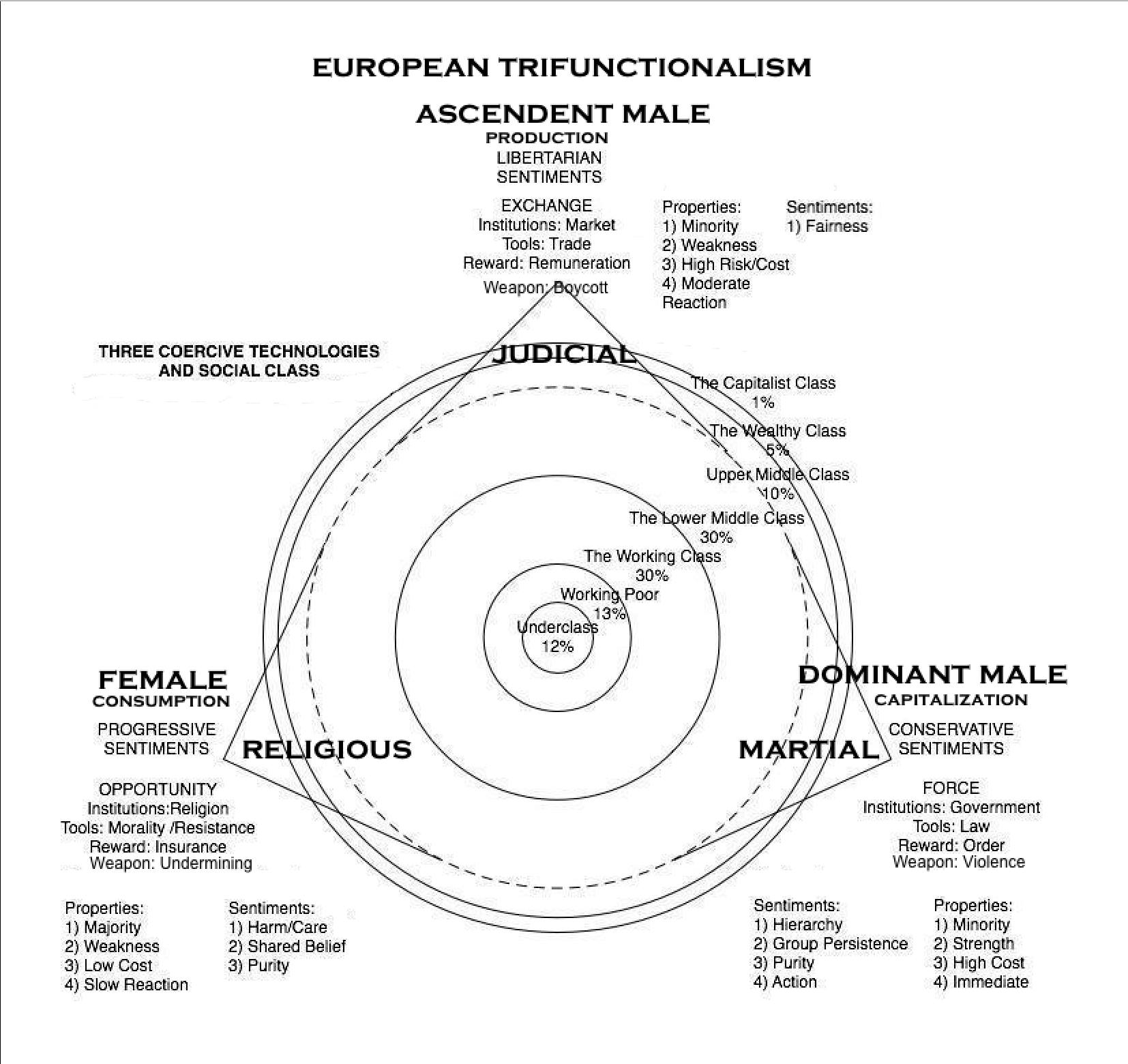
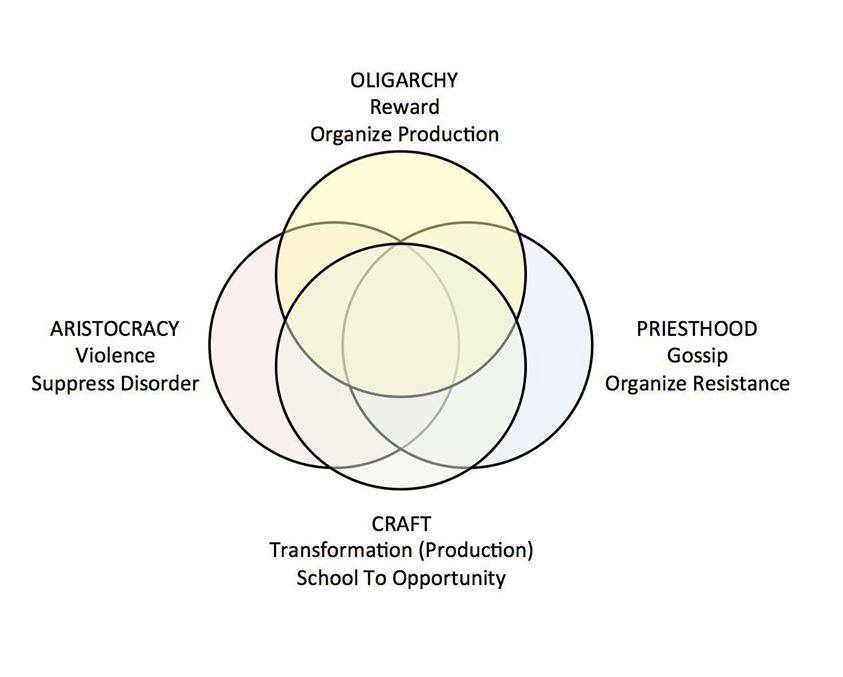
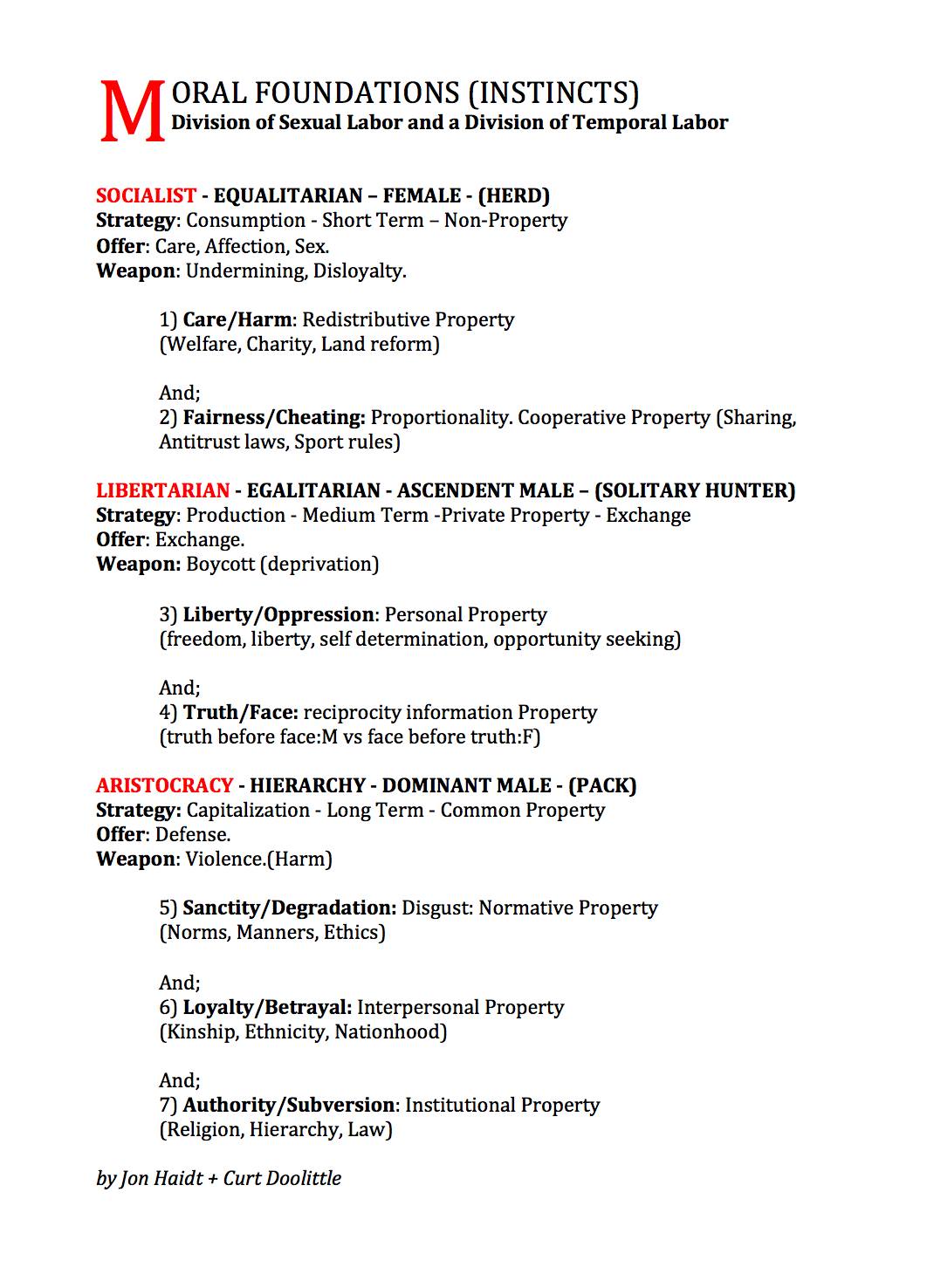
    Apr 14, 2020, 9:13 AM MORAL FOUNDATIONS (INSTINCTS) SOCIALIST – EQUALITARIAN – FEMALE (HERD) (Consumption – Short Term – Anti-Property) Offer: Care, Affection, Sex. Weapon: Undermining, Disloyalty. 1) Care/Harm: Redistributive Property (Welfare, Charity, Land reform) And; 2) Fairness/Cheating: Proportionality. Cooperative Property (Sharing, Antitrust laws, Sport rules) LIBERTARIAN – EGALITARIAN – ASCENDENT MALE (SOLITARY HUNTER) (Production – Medium Term – Property – Exchange) Offer: Exchange. Weapon: Boycott (deprivation) 3) Liberty/Oppression: Personal Property (freedom, liberty, self determination, opportunity seeking) And; 4) Truth/Face: reciprocity information Property (truth before face:M vs face before truth:F) ARISTOCRACY – HIERARCHY – DOMINANT MALE (PACK) (Capitalization – Long Term – Common Property) 5) Sanctity/Degradation: Disgust: Normative Property (Norms, Manners, Ethics) And; 6) Loyalty/Betrayal: Interpersonal Property (Kinship, Ethnicity, Nationhood) And; 7) Authority/Subversion: Institutional Property (Religion, Hierarchy, Law)

    MORAL FOUNDATIONS

    STEP ONE REPRODUCTIVE STRATEGY

    STEP TWO –  CLASS STRATEGY

    STEP THREE – POLITICAL STRATEGY

    STEP 5 – FOUR STRATEGY

    STEP FIVE – TERRITORY AND STRATEGY

    —“I see these attributes as linked to their geography and tied living situations.”—Daniel Parker

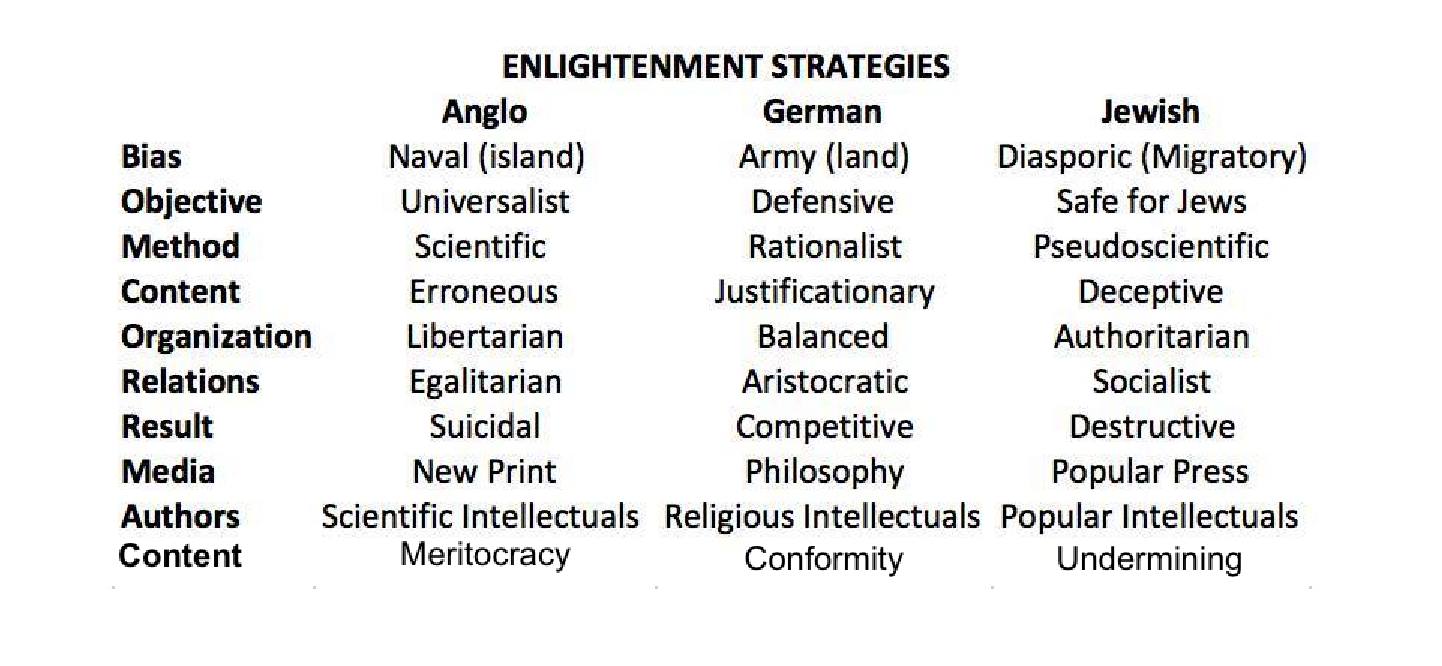
    Correct. See the first row. I usually add this: Athens > London – Naval Sparta > Prussia – Land Rome > America – Empire -and- France > Byzantium – fracture point Levant > Ashkenazi – underminer Arabia > Islam – invader The battle between the feminine magical thinking and the masculine empirical thinking.

  • The Future of Marriage Will Return to Historical Norm – and That’s Not Monogamy

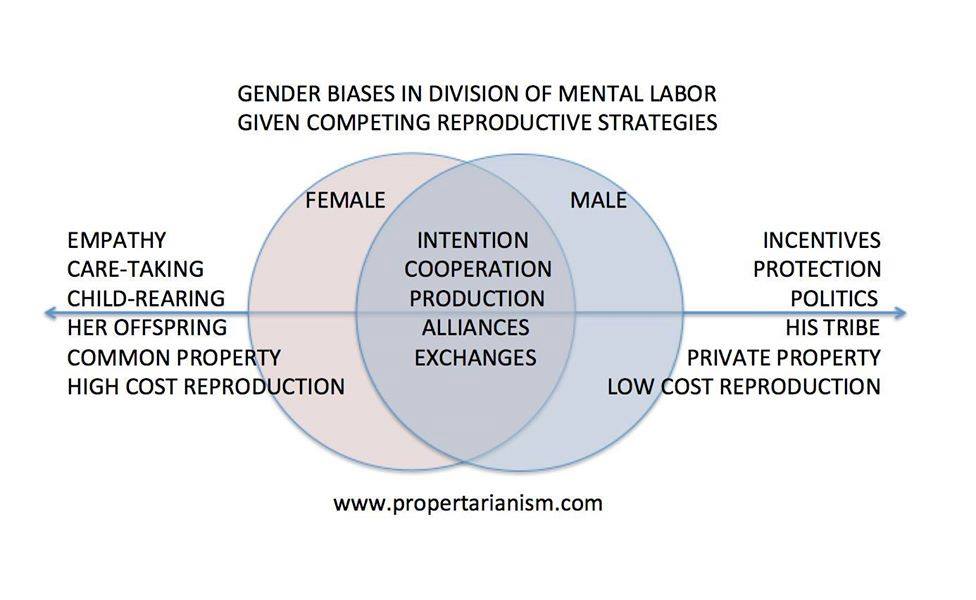
    Apr 15, 2020, 4:45 PM During most of agrarian age history, when man and woman married they could divide labor of creating common property (household) so that man could have a tribe and woman a nest, and both freedom from parental control over the allocation of resources. Getting married meant freedom and sovereignty. A lot. This was true until the postwar boom. In the present age, unless a woman wants to raise replacement levels of children, children are now an amusement, and men are an unnecessary and more easily sacrificed cost. Without the need for children’s support in old age there is no incentive to have them sufficient to preserve the incentive to invest in marriage and replacement level children. Social Security was suicidal. The pill added a noose. No fault divorce created the hanging tree. We already know, of course, that women wield the ultimate veto power in the mating game. It is women who give thumbs-up or thumbs-down to any advances or proposals from men. Briffault clarifies by asserting that intimate relationships between men and women result from a calculated cost/benefit analysis by women. Will she or won’t she acquire a net gain from any relationship with the man? This does not necessarily mean monetary gain, although it might. Other types of gain might be social status, sexual compatibility, anticipated future happiness, emotional security, and the male’s capacity for fatherhood. Men are costly for a woman in attention, emotion, time, effort and reproductive opportunity – and her children take priority over him. Their value at present is largely income and status and that is decreasingly immaterial. Women are costly for men in his specialization, lower adaptivity to new groups, his cellular damage, his shorter life span, his shorter working life, and his shorter savings horizon, and his reproductive opportunity. But a woman’s care is extremely valuable to a man. He trades all these things for the care of a woman. Unless both parties stay socialized and fit, sex dissipates quickly. It isn’t clear that agrarian marriage can continue as a majority habit and it’s more likely we will continue to return to human norms of serial monogamy, treating relationships like careers, except for the upper classes that as always gain so much value from shared assets status shared oppporutnity that the economics still make sense. === (Some content in this post is from John Brennan)

  • The Future of Marriage Will Return to Historical Norm – and That’s Not Monogamy

    Apr 15, 2020, 4:45 PM During most of agrarian age history, when man and woman married they could divide labor of creating common property (household) so that man could have a tribe and woman a nest, and both freedom from parental control over the allocation of resources. Getting married meant freedom and sovereignty. A lot. This was true until the postwar boom. In the present age, unless a woman wants to raise replacement levels of children, children are now an amusement, and men are an unnecessary and more easily sacrificed cost. Without the need for children’s support in old age there is no incentive to have them sufficient to preserve the incentive to invest in marriage and replacement level children. Social Security was suicidal. The pill added a noose. No fault divorce created the hanging tree. We already know, of course, that women wield the ultimate veto power in the mating game. It is women who give thumbs-up or thumbs-down to any advances or proposals from men. Briffault clarifies by asserting that intimate relationships between men and women result from a calculated cost/benefit analysis by women. Will she or won’t she acquire a net gain from any relationship with the man? This does not necessarily mean monetary gain, although it might. Other types of gain might be social status, sexual compatibility, anticipated future happiness, emotional security, and the male’s capacity for fatherhood. Men are costly for a woman in attention, emotion, time, effort and reproductive opportunity – and her children take priority over him. Their value at present is largely income and status and that is decreasingly immaterial. Women are costly for men in his specialization, lower adaptivity to new groups, his cellular damage, his shorter life span, his shorter working life, and his shorter savings horizon, and his reproductive opportunity. But a woman’s care is extremely valuable to a man. He trades all these things for the care of a woman. Unless both parties stay socialized and fit, sex dissipates quickly. It isn’t clear that agrarian marriage can continue as a majority habit and it’s more likely we will continue to return to human norms of serial monogamy, treating relationships like careers, except for the upper classes that as always gain so much value from shared assets status shared oppporutnity that the economics still make sense. === (Some content in this post is from John Brennan)

  • Money Proper

    Apr 24, 2020, 12:21 PM The term “Note(s)” (debt instrument), like “Money” (medium of exchange), and “Currency” (“in circulation”) has been abused. Technically, money proper must consist of commodity money. All else is a commodity money substitute: – Scrip ( currency substitute that replaces legal tender. a form of credit and documentation of debt)> – Token-prepaid-money-substitute (bitcoin: divisible tokens) > – Cheque-non-transferrable-claim-on-account > – Note-transferrable-claim-on-account > – Banknote-claim-on-deposits > – Share-in-the-corporation-assets > – Fiat-Share-in-the-economy : Fiat Money (What we all use today) The rest are various financial instruments that are less liquid.

  • Money Proper

    Apr 24, 2020, 12:21 PM The term “Note(s)” (debt instrument), like “Money” (medium of exchange), and “Currency” (“in circulation”) has been abused. Technically, money proper must consist of commodity money. All else is a commodity money substitute: – Scrip ( currency substitute that replaces legal tender. a form of credit and documentation of debt)> – Token-prepaid-money-substitute (bitcoin: divisible tokens) > – Cheque-non-transferrable-claim-on-account > – Note-transferrable-claim-on-account > – Banknote-claim-on-deposits > – Share-in-the-corporation-assets > – Fiat-Share-in-the-economy : Fiat Money (What we all use today) The rest are various financial instruments that are less liquid.