Theme: Measurement

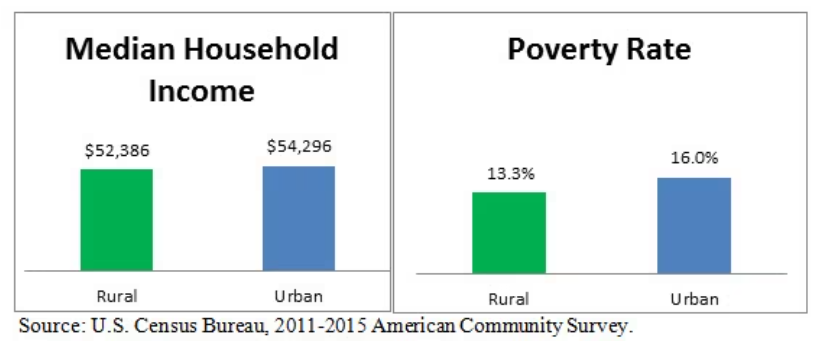
  • Understates the Issue: Why? If you don’t account for differences in purchasing p

    Understates the Issue: Why? If you don’t account for differences in purchasing p

    Understates the Issue: Why? If you don’t account for differences in purchasing power and especially home and rental prices then income comparisons between urban and rural regions is pointless. “Property costs eventually absorb all income advantages of density”. The value of… https://t.co/uXLMsBjevb


    Source date (UTC): 2024-01-07 03:40:24 UTC

    Original post: https://twitter.com/i/web/status/1743839978939908208

  • (Updating World IQ Data) The End Of Not Only Equality But Optimism Not that anyo

    (Updating World IQ Data) The End Of Not Only Equality But Optimism Not that anyo

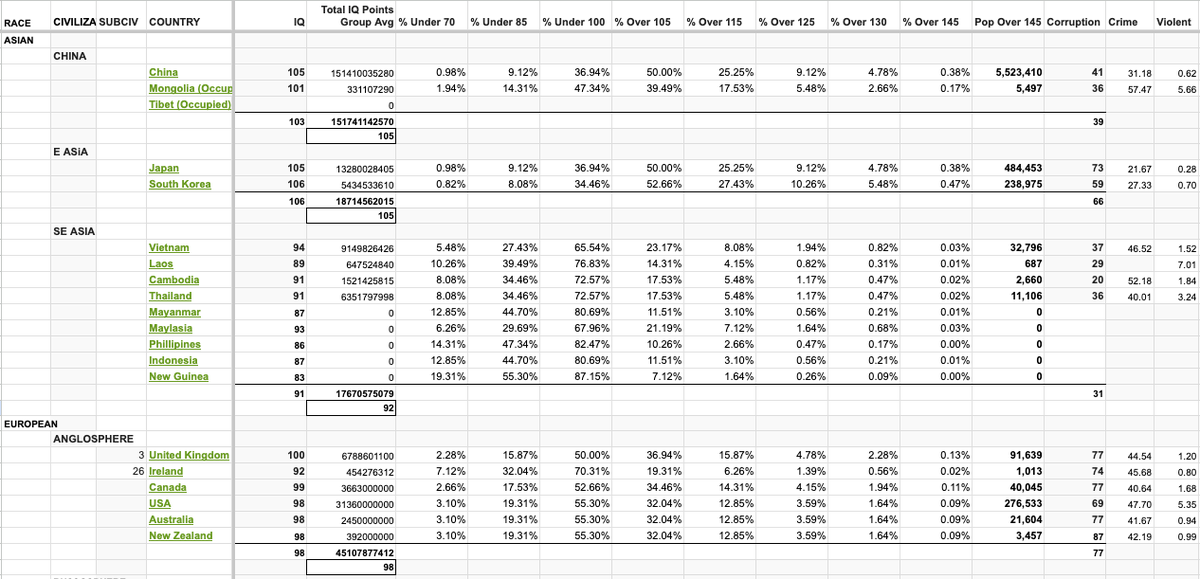
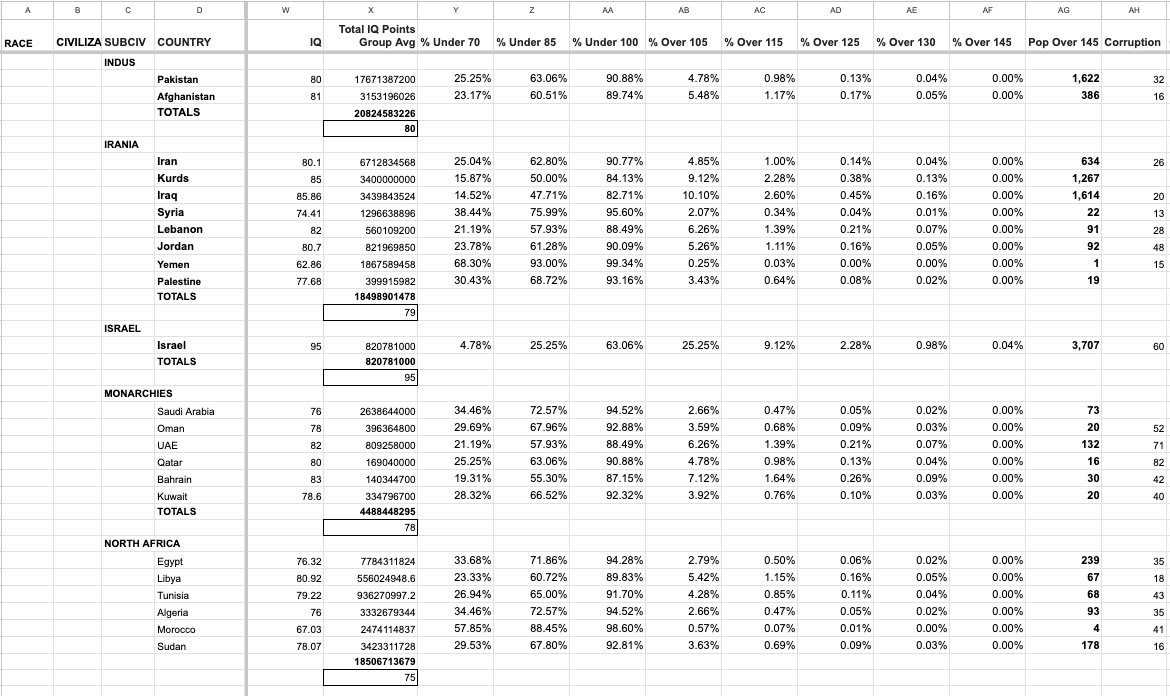
    (Updating World IQ Data)
    The End Of Not Only Equality But Optimism
    Not that anyone cares other than we demographic nerds, but there is better data (a bit better) on some areas of the world over the past few years.

    As some of you know I keep a large spreadsheet of all sorts of… https://t.co/qQ0shAg0gU


    Source date (UTC): 2024-01-05 14:02:27 UTC

    Original post: https://twitter.com/i/web/status/1743271747984466352

  • I’m an epistemologist, scientist, and operationalist. Defining “supernatural,” “

    I’m an epistemologist, scientist, and operationalist.

    Defining “supernatural,” “supernormal,” and “natural” as a sequence involves understanding these terms in relation to the extent to which they conform to, exceed, or deviate from established laws of nature.

    Here’s a breakdown:

    1. Natural
    Definition: The term “natural” refers to phenomena that occur within the laws of nature and the observable universe. These are processes or events that can be explained by scientific understanding, including physics, chemistry, biology, and other natural sciences.
    Characteristics: Natural phenomena are consistent with the laws of nature as we understand them. They can be observed, measured, and often predicted using scientific methods.
    Examples: The growth of plants, the orbit of planets, weather patterns, and animal behavior.

    2. Supernormal
    Definition: “Supernormal” refers to phenomena or abilities that are beyond (or above) the typical range of human experience or scientific explanation but are not necessarily outside the realm of what could be natural. These might include extraordinary human abilities or occurrences that are rare but not inherently impossible or contradictory to natural laws.
    Characteristics: Supernormal phenomena stretch the boundaries of our current understanding of the natural world but do not explicitly violate natural laws. They might be subject to scientific investigation and potential explanation.
    Examples: Exceptional human memory, extreme physical endurance, unexplained recoveries from illness, or phenomena that are on the edge of scientific understanding but not entirely outside it.

    3. Supernatural
    Definition: The “supernatural” encompasses phenomena or entities that are believed to exist outside of and not constrained by the laws of nature. These are occurrences or beings that cannot be explained by natural laws or scientific understanding.
    Characteristics: Supernatural phenomena are beyond the scope of natural laws and scientific explanation. They often involve elements of mysticism, spirituality, or divine intervention.
    Examples: Miracles, deities, ghosts, and other phenomena or entities that are typically associated with religious, spiritual, or mystical contexts.

    Sequence Summary
    Natural → Supernormal → Supernatural: This sequence moves from phenomena that are fully explainable by science and natural laws (natural), through those that are extraordinary but potentially within the realm of an expanded scientific understanding (supernormal), to those that are considered completely outside the scope of natural laws and scientific explanation (supernatural).

    Reply addressees: @dbabbitt


    Source date (UTC): 2024-01-04 23:27:47 UTC

    Original post: https://twitter.com/i/web/status/1743051628662472704

    Replying to: https://twitter.com/i/web/status/1743033065570488749

  • That is an opinion that is a presumption. I look at the data and it says otherwi

    That is an opinion that is a presumption. I look at the data and it says otherwise.


    Source date (UTC): 2024-01-02 14:08:03 UTC

    Original post: https://twitter.com/i/web/status/1742185991069114872

    Reply addressees: @BOB37702515

    Replying to: https://twitter.com/i/web/status/1742129724996895211

  • The data says it is overwhelmingly a women issue

    The data says it is overwhelmingly a women issue.


    Source date (UTC): 2024-01-02 09:37:59 UTC

    Original post: https://twitter.com/i/web/status/1742118029192741255

    Reply addressees: @kwendelhirsch @rommari

    Replying to: https://twitter.com/i/web/status/1742116397268844815

  • When we consider the data documenting the rapid decline of Christianity in the w

    When we consider the data documenting the rapid decline of Christianity in the west, there are four different numbers:
    1) What you were born or initiated into.
    2) What sect you identify and report as.
    3) How frequently you attend or participate.
    4) How much you donate and contribute.

    And:
    5) Self Identification of membership of the sects is declilning.
    6) Participation is a tiny fraction of self identification.
    7) Donations are crashing.

    Industrialized countries always abandon faith in each greneration unless the faith provides MORE services than the promised intermediation bretween the individual and the divine.

    So does religion have any meainingful value?
    What has replaced religon as providing superior value?
    Is an organization separate from the state, separate from the ecnomy, responsibile for the ‘care and insurance of both physical and psychological’ desirable or enough value to cause people to participate?

    What services would a ‘church’ need to provide in order to provide enough value to the polity so that they polity would bear the cost of its moral teachings?


    Source date (UTC): 2024-01-02 03:17:09 UTC

    Original post: https://twitter.com/i/web/status/1742022189732200448

  • THE IMMORALITY OF THE CIVIL WAR –“There are no solutions only trade-offs”– Thi

    THE IMMORALITY OF THE CIVIL WAR –“There are no solutions only trade-offs”– Thi

    THE IMMORALITY OF THE CIVIL WAR

    –“There are no solutions only trade-offs”–

    This is the first principle social, political and economic measurement: accounting for the difference between choices and full accounting of both the seen and unseen in those choices.

    Regarding:… https://t.co/LqiviNFoxt


    Source date (UTC): 2023-12-28 17:43:57 UTC

    Original post: https://twitter.com/i/web/status/1740428384130216428

    Reply addressees: @Thecoffeetalkin @8184cc @chrisdier @NikkiHaley

    Replying to: https://twitter.com/i/web/status/1740418422104866897

  • THE IMMORALITY OF THE CIVIL WAR –“There are no solutions only trade-offs”– Thi

    THE IMMORALITY OF THE CIVIL WAR

    –“There are no solutions only trade-offs”–

    This is the first principle social, political and economic measurement: accounting for the difference between choices and full accounting of both the seen and unseen in those choices.

    Regarding: —“So enslaved people just just suffer for an (at the time) unknown number of years waiting for a natural process?”–

    Was the trade off of six hundred thousand dead, the terror of that horrific war, the near destruction of southern (scotts irish) civilization, and the century of consequences, including the current race-marxist division fomenteed by the neoMarxists not worth the less than thirty years of continued enslavement by a three million slaves?
    Worse, was it worth not borrowing the money to pay off the landholders for their slaves (which was considered)?
    Was it worse than paying off the landholders for their slaves and repatriating those slaves back to africa? (which was the optimum solution).

    THE ECONOMIES OF THE NORTH VS SOUTH
    –“The American economy was caught in transition on the eve of the Civil War. What had been an almost purely agricultural economy in 1800 was in the first stages of an industrial revolution which would result in the United States becoming one of the world’s leading industrial powers by 1900. But the beginnings of the industrial revolution in the prewar years was almost exclusively limited to the regions north of the Mason-Dixon line, leaving much of the South far behind.

    In 1860, the South was still predominantly agricultural, highly dependent upon the sale of staples to a world market. By 1815, cotton was the most valuable export in the United States; by 1840, it was worth more than all other exports combined. But while the southern states produced two-thirds of the world’s supply of cotton, the South had little manufacturing capability, about 29 percent of the railroad tracks, and only 13 percent of the nation’s banks. The South did experiment with using slave labor in manufacturing, but for the most part it was well satisfied with its agricultural economy.

    The North, by contrast, was well on its way toward a commercial and manufacturing economy, which would have a direct impact on its war making ability. By 1860, 90 percent of the nation’s manufacturing output came from northern states. The North produced 17 times more cotton and woolen textiles than the South, 30 times more leather goods, 20 times more pig iron, and 32 times more firearms. The North produced 3,200 firearms to every 100 produced in the South. Only about 40 percent of the Northern population was still engaged in agriculture by 1860, as compared to 84 percent of the South.

    Even in the agricultural sector, Northern farmers were out-producing their southern counterparts in several important areas, as Southern agriculture remained labor intensive while northern agriculture became increasingly mechanized. By 1860, the free states had nearly twice the value of farm machinery per acre and per farm worker as did the slave states, leading to increased productivity. As a result, in 1860, the Northern states produced half of the nation’s corn, four-fifths of its wheat, and seven-eighths of its oats.

    The industrialization of the northern states had an impact upon urbanization and immigration. By 1860, 26 percent of the Northern population lived in urban areas, led by the remarkable growth of cities such as Chicago, Cincinnati, Cleveland, and Detroit, with their farm-machinery, food-processing, machine-tool, and railroad equipment factories. Only about a tenth of the southern population lived in urban areas.

    Free states attracted the vast majority of the waves of European immigration through the mid-19th century. Fully seven-eighths of foreign immigrants settled in free states. As a consequence, the population of the states that stayed in the Union was approximately 23 million as compared to a population of 9 million in the states of the Confederacy. This translated directly into the Union having 3.5 million males of military age – 18 to 45 – as compared to 1 million for the South. About 75 percent of Southern males fought the war, as compared to about half of Northern men.

    The Southern lag in industrial development did not result from any inherent economic disadvantages. There was great wealth in the South, but it was primarily tied up in the slave economy. In 1860, the economic value of slaves in the United States exceeded the invested value of all of the nation’s railroads, factories, and banks combined.”–

    YOU”RE NOT MORAL IN IGNORANCE
    So your moral virtue signaling is neither moral, nor virtuous, but profoundly ignorant and foolish

    THE COST OF THE CIVIL WAR
    The overall cost of the U.S. Civil War from 1861 to 1865 is complex and involves considering both direct and indirect costs, including economic, human, and societal impacts. The financial costs in terms of contemporary currency and today’s values can differ significantly.

    Here’s an overview:

    Direct Costs
    Government Expenditures: This includes military expenses like salaries, weapons, equipment, and supplies. The Union government spent about $3.2 billion, and the Confederacy spent approximately $1 billion in 1860s dollars.
    Economic Losses: The war caused significant destruction, particularly in the South, including infrastructure, agricultural, and property damage.

    Human Costs
    Casualties: The human cost was immense, with an estimated 620,000 soldiers dying from combat, accidents, starvation, and disease. This doesn’t include civilian casualties, which were also significant.
    Veteran Care: Long-term costs for caring for the wounded and for veterans’ benefits.

    Indirect Costs
    Economic Disruption: The war disrupted trade, agriculture, and industry, especially in the Southern states, leading to economic losses beyond immediate war expenses.
    Lost Labor and Productivity: The death of hundreds of thousands of men and the impact on civilian populations reduced economic productivity.

    Adjusting for Inflation
    Adjusting for inflation, the cost of the Civil War would be much higher in today’s dollars. Some estimates put the total cost well into the hundreds of billions or even trillions of current U.S. dollars, considering both direct expenditures and wider economic impacts.
    Societal and Economic Repercussions
    The war also had lasting societal and economic repercussions, particularly in the South, which faced years of rebuilding and economic hardship.

    Conclusion
    The overall cost of the U.S. Civil War is difficult to quantify precisely due to the vast range of direct and indirect factors involved. Financially, it was incredibly costly for both the Union and the Confederacy, and the human and societal costs were profound and long-lasting. The war not only shaped the future of the United States but also left an enduring legacy on its economic and social landscape.

    In the end, it was an economic problem. The south would need to have their slaves paid for and repatriated and time to use those funds to industrialize and the north would not borrow the money via the central government to do so.

    Which was the better choice?

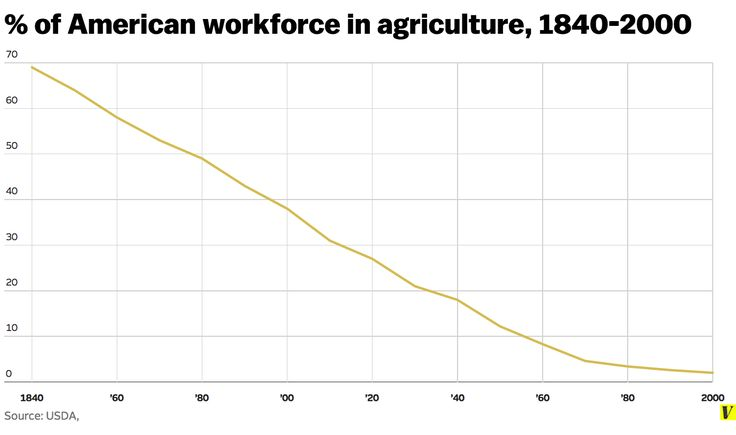
    Especially when agricultural employment was crashing hard and fast. (See attached)

    Cheers

    Source date (UTC): 2023-12-28 17:43:56 UTC

    Original post: https://twitter.com/i/web/status/1740428383488454656

  • As if that’s a measure of anything, even if it was true? In fact, that’s possibl

    As if that’s a measure of anything, even if it was true?

    In fact, that’s possibly the dumbest insult I’ve heard lately…. wow.


    Source date (UTC): 2023-12-28 01:16:55 UTC

    Original post: https://twitter.com/i/web/status/1740179992984817931

    Reply addressees: @AnimalLawyers4u

    Replying to: https://twitter.com/i/web/status/1740161626882625638

  • no. language is unlimited in representation, and operational closure is dependen

    no. language is unlimited in representation, and operational closure is dependent on continuous recursive disambiguation sufficient to produce decidability using man’s testfiable dimensions consistent and correspondent with reality. Arithmetic (godel’s logic) requires…


    Source date (UTC): 2023-12-27 19:59:28 UTC

    Original post: https://twitter.com/i/web/status/1740100100607644130

    Replying to: https://twitter.com/i/web/status/1740042624113979784