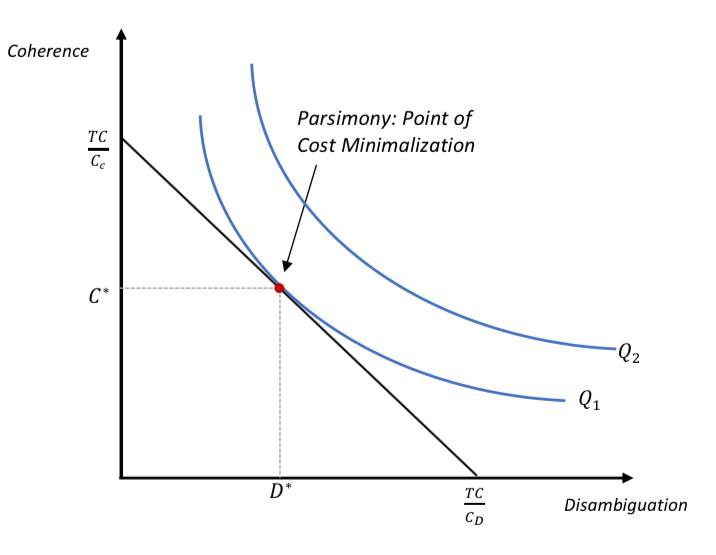
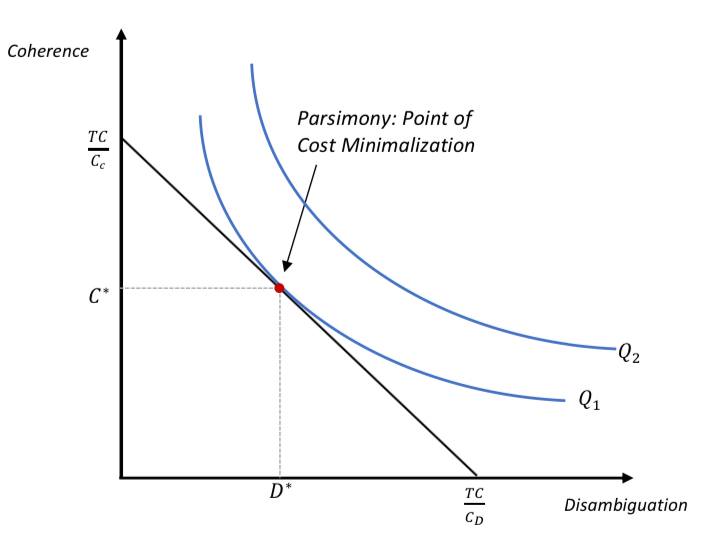
This subject is over your head I think. 😉 Closure is UNNECESSARY IN FALSIFICATION. The grammar of positional names (math) is trivial compared to the grammar of human operations (thought, display, word, and deed). You don’t ascertain truth, you ascertain falsehood.
I work in algorithmic(operational) natural law, testimony and decidability. It is terribly easy to test truthful and reciprocal speech in court. (And choosing mathematics demonstrates you don’t grasp the subject. And, no you may not claim RH = True, yet.) https://propertarianism.com/2019/02/23/on-truth-complete-core/
Hmmm… Define “True”. b/c True = Sufficient to satisfy the demand for infallibility given the decision in question. It doesn’t matter what S believes, only what S warranties. Self reporting and reporting have little if any correspondence with demonstrated behavior.
If you think your mere opinion is knowledge, you’re totally wrong. Knowledge is justified true believe, as Plato put it. Nowadays, philosophers say that:
S knows that P
if and only if
i) P is true,
ii) S believes that P and
iii) S has a justification for believing in P. https://t.co/uott3iIfuI
But that’s the tip of it. Natural Law Jurisprudence. Testimonial Truth. (Strict) Algorithmic Construction. Formal logic of social science. And absolutely ruthless punishment of those who have undermined our civilization. Completing the aristotelian project, and scientific method.
@IvanHLaw That would be hard to understand unless you follow me. 😉 Think of it as updating our law to strict construction, such that baiting people into hazard with false promises in public, to the public, of matters public, is prosecutable as fraud, and holes in the constitution plugged.
@IvanHLaw That would be hard to understand unless you follow me. 😉 Think of it as updating our law to strict construction, such that baiting people into hazard with false promises in public, to the public, of matters public, is prosecutable as fraud, and holes in the constitution plugged.
This is perhaps the most difficult part of the course, and may be the most important, because it requires that you train yourself to think very clearly – and painfully realize that you may not understand or know what you think you do. (Which is its purpose). However, after the freshman level courses your ability to think, communicate, persuade, and argue will be dramatically improved and your grasp of the world rapidly improved as well.
Definitions
Learn to write and speak about concepts in enumerated series. Three points make a line so to speak, and all concepts can be demarcated and deconflated by referring to series (an ordered list) rather than an ‘idea’ type which allows for suggestion and conflation. (Notice how often I repeat these ‘series’ – over and over again until everyone memorizes them out of habit rather than intent.)
One Law of Cooperation.
The first step you’ll need to memorize is the very simple One Law of Cooperation: That to create and preserve the incentive to cooperate we must eliminate the incentive not to cooperate, and eliminate the incentive to retaliate, by limiting our actions to those that produce productive, fully informed, warrantied, voluntary transfers of property in toto, limited to productive externalities (consequences both intended and unintended).
Acquisitionism and Property In Toto
The next step is to learn Property in Toto – or ‘Demonstrated Property’. So that you know the categories of things people seek to acquire, inventory and defend. If you have experience with basic accounting, you can think of Property in Toto as the human equivalent of a Balance Sheet.
Eliminating the Verb “To Be” – Speaking in Existential Actions
The next step in learning how to write clearly is to learn E-Prime. E-prime will force you to write in operational language. Writing in operational language is very hard at first – unless you learned programming first. Because, like Propertarianism, programming is an operational and existential (computable) language.
Writing in Operational Grammar (sentence structure)
Next, learn how to write sentences in operational grammar. Writing and speaking operationally teaches you what you know and don’t know. We humans use a lot of cheats to lie to ourselves and others about what we understand and don’t understand. It’s very hard to write operationally in full sentences if you don’t know what you’re talking about. Conversely, it helps you learn what it is that you don’t know. And it usually turns out we are vastly overconfident in what we think we know.
Structuring Arguments as Functions
Just as the US Law is very close to writing software, Propertarianism is close to writing software. In fact, it’s much, much closer to writing software than the US Law, because like programming, all statements are testable, and don’t require you to resort to ‘intuition’.
Via Negativa – Evolution by Incremental Suppression
The next step is to learn the use of Common, Judge Discovered, Natural Law as a means of incremental suppression of parasitism, and Testimonial Truth as the method of conducting due diligence, and surviving involuntary warranty against the Methods of Parasitism.
STRICT CONSTRUCTION
Strictly Constructed Law And Contract
It’s not that different from programming, which any reasonably intelligent lawyer that can program a bit will readily observe.
The Structure of a Program or Contract
————————————————————
1 – Purpose (Whereas these conditions exist)
2 – Returns (and whereas we wish to produce these ends)
3 – Constants and Variables (definitions constructed)
4 – Objects (constructions from base types / “first principles”)
5 – Libraries and Includes ( we refer to these libraries, objects, definitions)
6 – Functions (clauses that can be performed)
7 – Event Listeners ( criteria that invokes clauses)
8 – Operations (assignments of value, comparisons of value)
9 – Termination (termination conditions – no infinite loops)
The only thing preventing law from strict construction was the definition of the first principle from which all constants, variables, objects, operations, and functions are derived:
1 – Productive
2 – Fully informed (and truthful)
3 – Warrantied
4 – Voluntary Exchange
5 – Constrained to externality of the same criteria.
THE GRAMMAR
Operationalism like any legal language, or programming language, is grammatically burdensome. It requires you to take your sentence structure to the next level of abstraction and exit the passive voice entirely, as well as all use of the verb to-be. So, as a language, it requires more planning. Just like English requires more planning than other languages do already.
For most people it will be easier if you jot your ideas down however they occur to you, then translate them in to operational language. Doing so will show you HOW LITTLE YOU KNOW about what it is that you THINK you know. Furthermore it prevents OTHERS from claiming that they know something before audiences less skilled and informed as you are. If you translate your work into operational language it will not take very long before you start to write that way habitually.
EXPLANATION
Language is actually a pretty weak construct compared to visualization. We must serially construct context and description out of shared meaning, and then constantly correct for perceived misinterpretation, incomprehension, and our own error.
Use of the passive voice is intuitive because it places the subject (which is precise) at the beginning of the sentence rather than the verb (actions) which are more general and less contextual. And when we speak in operational language it is the VERBS that take precedence, and the nouns serve only as context for the verbs.
So it is counter – intuitive to be very specific about the verbs which are general. Usually we build context out of nouns, and related and color them with verbs and pronouns. But in Operationalism we are (counter intuitively and verbally burdensomely), describing a sequence of actions with greater import than the nouns.
OPERATIONAL GRAMMARactor, incentive, action, noun, change in state, result,actor, incentive, action, noun, change in state, resultactor, incentive, action, noun, change in state, result“The people, ever desirous of {A}, take actions {B}, upon these contexts {C}, to produce {D} change in state, thereby attempting to possess {E}, including externalities {F}, which we can judge as objectively G (moral, amoral, immoral or true, undecidable, false).”
In Sovereignty (Natural Law), we have the full set of knowledge to work with and therefore a complete LANGUAGE to work with: psychology(Acquisitionism), epistemology, ethics (property in toto), politics, aesthetics, and GRAMMAR.
FROM ARGUMENT TO LAW
If you add just a few requirements to that grammar, you get formal law constructed from natural law.
{terms and definitions }-We … (who)-Whereas we have observed … (definition of state )-Whereas we desire … (definition of desired state)-We propose …. (series of actions to change state)and we argue …. (how the desired state, the propositions, do not violate the one law of reciprocity.)-Even though this argument is dependent upon … (prior laws)and would be reversed if (prior laws were falsified, or conditions had changed),-And we warranty this argument by ( skin in the game ).-Signed…. -Juried…. …. -Adjudicated.…. …. …. -Recorded.
This is an incremental improvement to the natural, common, judge discovered law of Anglo-Saxons that Jefferson and Adams attempted to formalize in the US constitution – but failed.
Our principal function is to incrementally improve that natural law to include the lessons we have learned from over two hundred years of the American experience, in yet another improvement over the hundreds of years of the English experience, and thousands of years of the various Germanic, Latin, Greek, and Aryan European traditions.
BREAKING THE WORST HABIT: THE COPULA
WHAT DOES THE WORD ‘IS’ MEAN? (THE “COPULA”)
” I promise the subject exists as the experience of… “
The cat is black = “I promise if you look at the cat you will perceive it as the color black, as will anyone else that observes it.”
WHY DO I CARE? WHY DO YOU CARE?
If you cannot make your argument without the word ‘is’ then you are almost surely engaging in fallacy. Almost every criticism I receive is constructed out of conveniently self-deceptive confirmation bias using justificationary phrasings.
IS (EXISTS) REFERS TO:
1) Exists (identity)
3) Exists in this location or time (Space and Time)
2) Exists with this or these properties (Properties)
4) Exists with the properties of this class. (Categories)
We use the verb to-be for the same reason we give names to complex processes, and the same reason mathematicians call functions ‘numbers’: because it’s a verbal convenience that reduces our effort in organizing spoken words. ie:shortcuts.
MISUSE
We tend to misuse the verb ‘is’ in order:
1) use the ‘verbal simplification’ of ‘is’ to obscure our lack of understanding of the subject matter – which if stated operationally would demonstrate our incompetence with the subject.
2) to equate that which is not equal in order to justify a fallacy.
3) conflate experience, action, and existence – which are three points of view. We do not conflate first, second and third person narration, so why would we conflate experience, action, and existence? We do so for a number of reasons not the least of which is to attribute to experiences the argumentative weight of actions or existence. In other words, to lie that an experience is a cost.
(Although to women and beta males, untrained in mental discipline this solipsism seems to be a common defect they adhere to in order to preserve their illusions – almost always status related.)
4) All of the above: to obscure our ignorance, to equate as equal that which is not, and to conflate experience action and existence in order to attribute cost to the experience of emotions.
THE DISCIPLINE OF GRAMMAR IS BEHIND THE TIMES
The very reference to ‘joining’ or ‘the copula’ is archaic. All human language consists of the construction of sets of analogies to experience by the transfer of properties by analogies.
The verb to be functions as a promise of perceivable properties
Sure, grammar is helpful for teachers of the young that wish to explain word order, and usage, but word order and usage are different from meaning. We would be far better off in teaching grammar, logic, and rhetoric by reducing our study of language to it’s constituent parts of communication: analogies to experience through the use of category(set) and property.
It may be helpful teach the young grammatical usage by repetition(as a craft), but when we come to logic and rhetoric (adult conversation), and in particular argument (the pursuit of truth) then we can also teach grammar as the branch of logic that it is: sets and properties. Meaning that colloquial, craftsmanly, and logical language evolve with our abilities just as ethics evolve from imitative, to virtuous, to rules, to outcomes. Just as mathematics evolves from arithmetic, to accounting, algebra, to geometry and trigonometry, to calculus, to statistics. Just as science evolves from that which is observable(human scale), that which exists up to the limits of human scale(Newtonian), to that which exists beyond human scale (relativity), to that which exists at super and sub scales (the missing theory of everything).
So try to make your argument without the word ‘is’. Look at the paragraphs above and observe how infrequently I use it, and that those few times I do, I use it as reference to existential properties.
But then, it is not those of us who wish to advance false ideas that wish to study this technique, but those of us who wish to police the commons against the multitude of pollutions created by the wishful thinking and outright deceit of well meaning fools, and ill meaning craftsmen.
ENDING CONFLATION WITH DEFLATION
Conflation and De-conflation (or Deflation) in Argument1 – CONFLATION TO COMMUNICATE VS DECONFLATION TO INNOVATE
I’m not necessarily objecting to the conflation of experience, action, observation, and existence, because otherwise we could not produce literature and art, the purpose of which is loading and framing in order to attribute value through shared experience, to ideas. But I want to point out the consequences of conflationary( monopoly ) and deflationary (competing) models by which civilizations produce and use knowledge.
2 – DECONFLATION AND COMPETITION VS CONFLATION AND AUTHORITARIANISM
In the western tradition, we maintained separate disciplines for Law, Religion, and ….well… “Theory”, or what we call ‘science”. Or Religion: what we should do, Theory, how we do it, and Law, what we must not do. In the west , our civic disciplines are divided into the common law; contractual politics that are limited by that common law;
Our celebrations and festivals and art function as our ‘church’ experience (bonding), and our mythology as our literature (aspirations).
Our science and technology and commerce function as their own discipline inspired by religion and limited by law.
Our success at discovering truth proper (scientific truth) is due to our evolution of empirical contractual law, independent of the state, independent of religion,
We divided the related properties of existence, and thereby deflated them just as all human thought consists of a process of deflation (increasing information), free association (pattern recognition), and hypothesis (ideation).
3 – COMPARISONS
Other civilizations that did NOT start with sovereign contractualism did not do this, and they retained conflation, in order to retain authoritarianism. (fertile crescent, east Asia). Monotheism, uniting law, religion, and even a pretense of existence into a literature, created the most conflationary totalitarianism yet developed. Law, politics, religion, and science deflated those same concepts and left them not only open to further investigation and evolution, but prevented the deception that arose from the conflation of manipulation of the physical world(cafts and science), dispute resolution(law), cooperative action(trade), common aspiration(religion), and education.
The result in every civilization and in every era is that conflation led to stagnation. and deflation led to innovation. (We can go through every civilization. Fukuyama does it for us actually.)
4 – WE ALL SEEK TO ESCAPE THE COST OF DUE DILIGENCE
All of us seek opportunities and aspirational information provides us with opportunities. We all want something for nothing, and we feel intellectual opportunities are the most valuable ‘freebie’ we can obtain. Moreover, we can read books and decide ourselves, rather than enter into production of goods and services, production of commons, production of arts, or production of offspring – all of which require cooperation with those who differ in knowledge, opinion and desire from us. Which is why many of us seek to use philosophy, like religion, like science, as an authoritarian method of decidability rather than a voluntary exchange of promises, contracts, goods, services, commons, and liabilities.
All of us seek to avoid limits upon us, and so we seek to separate the limits of cost, and the limits of morality, the limits of cooperation, and the limits of law, and by doing so the limits of reality. Philosophy notoriously throughout history differs from Law and science, by ignoring costs (effort, resources, time, and money), which is why it’s failed to retain independence from religion in the modern academy.
5 – THE ENLIGHTENMENTS AND THEIR OPPOSITIONS
The Anglo enlightenment, beginning with Bacon’s creation of empiricism by applying the methods of the common law, to the methods of scientific investigation, was terribly disruptive to the non-contractual peoples, even though it was natural to the Anglo-Saxons (north sea peoples) who had been operating a contractual government since at least the 700’s if not earlier. The English revolution was painful but was eventually settled by contract – as is traditional in Anglo-Saxon civilization, and remains today in the USA.
The French enlightenment was written as a literature of moral persuasion, in order to protect itself from empiricism and contractualism. And its revolution destroyed French civilization, created state currency financed total war, and force the uniting of German princedoms in response. That this effort was merely an attack on the land holders in both private (noble) and church hands is obvious to us. That this ended French contribution to western civilization is less so. That it has been the sponsor for Marxism and Islamism are less obvious. France fell from the stage and without interference from other nations would be German colony today.
The German enlightenment used not empiricism, and not moral literature, but rationalist literature (Kant) in order to protect its social order from empiricism and contractualism that threatened the hierarchy that constitutes German ‘duty’. Kant replaced Germanic Christianity not with science but with rationalist literature. He spawned the continental philosophical movement retaining conflation which has tried every bit of verbal trickery to retain conflation while proposing alternate methods of INTERPRETING and VALUING what we experience, but not better methods of ACTING upon the universe we exist within. in other words, the Germans remain desperate to restore religion. Unfortunately, the Germans were cut short in their maturity by the entrapment between the Bolshevik/soviets who wanted to obtain eastern Europe, and conquer Europe, to defeat deflationary empirical contractualism – and the Anglos who wanted to maintain the balance of power. And the Germans who had spread what remains of Hanseatic civilization across central and eastern Europe with members of her own nation, and wished to defend them.
The Jewish enlightenment expanded on the French and German by creating the great authoritarian pseudosciences: Boazian anthropology (ant-Darwinian), Freudian psychology (anti-Nietzsche restorationism), and Marxist socialist (anti contractualism), and even Cantorian mathematical Platonism (anti-materialism), Frankfurt-school criticism (anti aristocratic ethics), and combined it not just with press, but with new mass media, and new consumers with disposable income from the consumer capitalist industrial revolution. Out of the Jewish enlightenment, we get the horrors of the Bolsheviks, the soviets, the Maoists, and world communism. 100M dead. And at present, we are about to lose Europe for the second time in two thousand years to another wave of ignorance.
Without bolshevism and communism we would very likely never had the world wars, and would still retain the best system of government ever evolved by man: Juridical monarchy, a market for commons by houses representing classes, a market for goods and services, and a market for reproduction, all under the rule of law.
6 – THE COST OF CONFLATION AND DECEPTION
What has been the cost of each of these failed enlightenments? What has been the cost of the Jewish alone? What of napoleon? The British was a trivial tribal dispute between the (failed) corporate-republicans and the (successful) national-monarchists.
What if the British enlightenment hadn’t been cut short by the conflicts (counter enlightenments) of the French, German, Jewish and Russians? What if the Greeks had finished their invention of the industrial revolution? What if Justinian hadn’t closed the stoic and Greek schools, and forcibly indoctrinated Europeans into mysticism instead of literacy and reason? What if the RESTORATION OF DECONFLATION imposed on the west by the first great deception of authoritarian monotheism had not been necessary?
Most of the great lies in history are created by conflation, and all our great achievements in dragging mankind out of ignorance and poverty have been achieved through information provided by deflation and competition.
SO while as a human I can empathize with the desire to assist in COMMUNICATION through conflation – thereby allowing us to impose values upon ideas, during education, and allowing us to experience life through the words of other minds. That is very different from the act of conflation in philosophy which appears in large part, whether literary philosophy, moral philosophy, or religious philosophy, to be nothing more than the use of subterfuge (the use of suggestion under the influence of suspension of disbelief), to cause either submission or agitation by artful deceit.
So just as we must have communication and education (conflation) we must have analysis and prosecution(deflation). Without both tools, (literature for education, law for deflation) we cannot protect ourselves from the greatest crimes in history.
Because outside of the great plagues, philosophers and prophets are responsible for more death and destruction, ignorance and poverty, susceptibility to starvation and disease than any general ever dreamed of being.
So contrary to giving philosophers a license to special pleading, my position is that the evidence is in, and that unless words are backed by warranty that they do no harm, the are no different from any other product of man. And that while no producer of goods, services, and ideas, wishes to be accountable and to warranty his materials, actions, and words, that we must constrain those people such that no intellectual products, like no services, and like no material goods can enter the market for knowledge any more so than goods and services can enter the market for consumption.
My assessment of history is that the jurists and scientist do all the work, and the prophets and the philosophers take all the credit, and us it like today’s marketers and advertisers for personal gain despite the drastic consequences of their deceptions.
So I tend to damn philosophy or literature that is objectively criminal, regardless of the intentions of the producers and distributors of it.
7 – WHY CAN WE NOT WARRANTY OUR SPEECH?
I have no idea why, in an era of mass manufacture and distribution of information that we do not require the same increase in due diligence against harm, that we have incrementally added to the production of goods and services.
If we can police polite speech (political correctness) against shame by the true, then why can we not police philosophical speech against damage by the false and immoral?
We cannot ever know what is good or true until we test them. We can, however, know that is bad and false.
If it is bad and false we can either regulate(prior constraint) in the continental model, or enforce involuntary warranty(post facto restitution) in the American model. My opinion is that regulation creates corruption and restitution creates quality.
So as to your preference for conflationary philosophy, I would say that as long as you would warranty that your conflation does not harm, then it seem you have nothing to worry about. But if your use of conflation does harm, then you do.
And if we had the same defense against deception that we have against every other kind of fraud, that there would be very few philosophers – and the few we had, would be of much higher caliber rather than simply those who write the rationalist equivalent of science fiction and fantasy, under the pretense of possibility, thus inspiring people to the social equivalent of yelling fire in the theatre.
8 – CLOSING
There is only one moral law of nature: do no harm. Everything that does not harm, is by definition good. One thing may be better good than another. But that is a matter of preference and taste, not of truth,
No free rides. No special pleading. Ideas produce more harm than material goods by orders of magnitudes.
THE LOGIC OF STRICT CONSTRUCTION
1) Everyone acts to acquire. Life is an expensive means of defeating entropy. Acting improves acquisition – at additional cost. Memory improves acquisition – at additional cost. reason improves acquisition – at additional cost. cooperation improves acquisition – at additional cost.
2) We act in furtherance of our reproductive strategy.
3) Male and Female reproductive strategies are in conflict. The female seeks to breed impulsively where it benefits her lineage, and then force the cost of her offspring on the tribe, and to further her offspring regardless of merit. The male seeks to breed impulsively wherever it does not harm his lineage, and to create a tribe capable of resisting conquest by other males – and as such males act meritocratic-ally. Men are political and divided into kin and non-kin – the universe is male. For women, men are marginally indifferent herdsmen of women. Women live in a world of women, and both men and the universe are alien.
4) Humans compete for status because status provides discounts on opportunities to acquire – especially mates and allies in cooperation. We can identify at least three horizontal axis of class division: biological (reproductive desirability), social (status desirability), economic (wealth desirability) – as well as their undesirable opposites.
5) There exist only three means of coercing other humans to cooperate with on one means or end vs. cooperate with others on different means or ends. These three means of coercion can be used to construct three vertical axis of class specialization: coercion by force(conservatism/masculine), coercion by gossip(progressivism/feminine), coercion by remuneration (libertarianism / neutral masculine). Human elites are formed by those who specialize in one or more of these means of coercion. (gossip: public intellectuals and priests. force: military and political. exchange: voluntary organizations, including the voluntary organization of production.
6) Language is purely justificationary negotiation in furtherance of our acquisition by these three means. ergo: All ‘belief’ is justification to the self and others in furtherance of acquisition. It is meaningless. Statements of justification only provide us with information necessary to deduce what it is that we wish to acquire.
7) Cooperation is a disproportionately more productive means of acquisition than individual production.
8) We seek discounts in our acquisitions. Some of these discounts are productive and moral and encourage cooperation, and some of them are unproductive and immoral, discourage cooperation, and invite retaliation.
9) The only moral acquisition is one in which one either homesteads something new, or obtains it by productive, fully informed, warrantied, voluntary exchange, where external transfers are limited to the same criteria.
10) Aristotle’s ‘golden mean’ is an inarticulate primitive expression of the supply-demand curve. All human acquisition takes place within the pressures of supply and demand. As such all explanations of human action must be produced using supply and demand curves: the golden mean.
11) All human considerations and consequent actions take place in high causal density, choices determined by means of opportunity costs, and any analysis requires we show the choices that an individual or group is considering. (Full Accounting).
12) We cooperate and coerce in large numbers, as classes with common reproductive interests to using narratives at every scale. Science and moral law are the only means of resolving conflicts between these narratives. Propertarian analysis provides means of amoral analysis, argument and decidability between these loaded, framed, and obscured arguments.
13) Groups evolve evolutionary strategies and supporting narratives. While none of these strategies by any given group is fully moral, it is still true that we can compare strategies as more and less objectively moral. We can measure the differences in objective morality by the degree of suppression of free riding in that given society.
14) In all political matters ultimate decidability is provided by a bias to suicidal, proletarian and dysgenic, or competitive, aristocratic and eugenic reproduction. The myth of equality (the Christian mythos) was let loose by the middle class takeover of the aristocratic governments, and the eventual enfranchisement of women whose reproductive strategy under industrial production is dysgenic – reversing 7,000 years of indo European genetic pacification (eugenic evolution). This is a very unpleasant and impolitic topic. But it is where we find decidability.
INCENTIVES AS ACQUSITION
1) Take any circumstance in which someone is attempting to persuade someone else.
2) Identify the reproductive strategy of the speaker (largely by gender, class, and coercive technique.)
3) Identify the property-en-toto that the speaker is attempting to acquire.
4) Determine if his or her method is advocating a moral transfer(productive) or an immoral transfer (parasitism).
5) Determine which discounts (thefts) he or she is attempting to engage in, or which premiums (payments) he or she is offering in exchange.
6) State the user’s request in amoral terms free of loading, framing, or overloading. In other words, make a purely logical argument free of sentimental loading.
7) Fully expand all sentences in operational grammar.
You will not be able to construct a positive argument unless you are honest and truthful, and understand what it is that you seek to exchange.
You will easily identify:
8) When you have a complete description of all actors, actions, property in toto, and transfers you will have constructed a proof. But you must understand what a proof means: it means it is possible. There may be other proofs that produce the same or different descriptions (algorithms). But you will rapidly defeat all arguments that attempt to advocate for an involuntary transfer or cost imposition.
AN EXAMPLE: EXPANDING A SENTENCE
(undone) (use liars paradox as an example)
AN EXAMPLE: DEFINING A TERM
QUESTION: “WHAT IS EVIL?”ANALYSIS:1) Analyze the Question: The question itself is misleading – the phrasing is a parlor trick. It takes advantage of the victim’s susceptibility to historical and moral Framing: the victim naturally desires to answer the question as stated even though the use of the generic verb ‘is’ frames the answer. Many Victorian parlor tricks posed false moral dilemmas as a means of providing entertainment. This question is constructed in that same manner. The question should instead be phrased as either “Define Evil” or more thoroughly “Given that we use the term evil in a variety of contexts what does the term mean in those contexts – i.e.: subjective analysis. Given the set of meanings in those contexts, are any or all of those meanings impossible or self-contradictory? i.e.: objective analysis. And of what remains, can such a thing as evil exist?”
2) Explore Evolutionary History: What can we learn from the evolution of the term?
Answer:
There is a term we call “Evil”.
The term has an etymology – a history – a time at which it was invented.
The meaning of the term was originally political – to denote ‘a competing way of life against our interests’.
The term was then expanded by analogy to address individual actions.
The term was then anthropomorphically expanded by analogy to cover random (natural) events.
The term was then applied as a criticism of monotheistic divinity in order to illustrate a self contradiction.
The term is now – post Darwin and under democratic secular socialism– becoming loaded and archaic.
Like most things, understanding something’s history tells us far more than understanding its current state.
3) Collect All Possible Examples: What are all the examples we can think of, or find that refer to the term in context? Both in-group (culture) and out-group?
Answer: Murder. Sibling murder. Killing an ant. Undermining institutions. Creating a moral hazard. Selling an immoral product. Plotting terrorism. What about the DC sniper versus the top military sniper? The list is long, and I’m not going to be creative here, other that to suggest that any inventory of examples we create has to be fairly large, and cover the individual, institutional, local political, cultural-political, and geo-political spectrums if this exercise will have any value.
4) Determine Population Dimension: Does the term apply to individuals or groups or both?
Answer: Both. From our examples, it applies to both individuals and groups of both actors and victims.
5) Determine Time Dimension: What about different economic eras? Are ‘evil and immoral’ considered to be different under hunter-gathering, agrarian, manorial, industrial, urban technological eras?
Answer: yes. Markedly so. Hunter gatherer, agrarian, industrial, and urban ethics are markedly different.
6) Separate Actions from Actors from Consequences: What is the difference between an evil person and an evil action, or an evil semi-autonomous process (a virus, or a viral meme)?
Answer: A person is evil with intention and repetition. An action produces evil results regardless of intention, and is evil only by analogy. A process produces evil results but is only evil by analogy.
7) Separate Subjective from Objective: Emotions – how do emotions play into determining ill mannered, unethical, immoral and evil actions, individuals and groups??
Answer:
a) Emotions are descriptions of changes in state of perception of an individual’s assets. Moreover, they are reactions to descriptions of changes in state of capital. (Yes, really.) Nothing more. Given the differences in knowledge and experience (and intelligence) emotions are subjective descriptions of the perception of each individual’s inventory.
b) Empathy is an ability to imitate the experience of the change in state of other individuals. It is pre-verbal communication of changes in property (capital).
8) Narrow the definition until it is exclusive: What can we learn by determining what is not considered ‘Evil’, or which is covered by other terms?
What ‘bad actions’ are not classified as evil?
Answer? Accidents. And errors that are not repeated.
9) Determine Limits Of The Cases: What is the difference between ill mannered, unethical, immoral, and evil actions? Are displays of bad manners evil? Is someone unethical classifiable as evil? Is someone immoral classifiable as evil? Aren’t unethical and immoral lower bars than evil? Why?
Answer: because we are all unethical and immoral at times, but evil we tend to think of ‘evil’ as repetitive systemic and intentional.
But let’s look at this carefully: lets say we have a diamond ring dealer that preys upon the dreams of the poor by selling them low-down-payment engagement rings at very high interest rates. (This example is from real life.) Then when they default on the payments he repossesses the ring, pulls the diamond for resale and melts it down. What about the mortgage broker who sold all those mortgages before the crash to people who couldn’t afford them? What about the Marxist who, despite the evidence of near genocidal consequences, still advocates Marxism? What about the Christian scientist who prays rather than takes a child to the hospital? What about the mother who advocates avoiding shots for her children? What is the difference between stealing water, and poisoning a well?
10) Further Refine into a spectrum: What is unique to ‘Evil’ that is not unique to ill-mannered, unethical, and immoral actions?
Answer: Knowledge (intent), Destruction, and Frequency (repetition).
Ignorance is pervasive, so a single instance that one learns from is not evil, but accidental. Repetitive actions can no longer be made in ignorance.
11) Identify Remaining Causal Dimensions: Are any of the properties we have discovered possible to express in consolidated form as a continuum?
Yes, the following continuum can be composed from the discussion:
a) ACTORS: Individual->Group->Extra-Group->”Nature”
b) VICTIMS: Individual->group->Humanity->Life->Universe
c) KNOWLEDGE: Accidental/Made_In_Ignorance->Intentional/Made_With_Knowledge->Systemic/Habitual/Made_Without_Intent
d) CAPITAL: Accumulation->Transfers->Destruction
e) FREQUENCY: One-Time->Repetitive->Pervasive
12) Graph Dimensions: Is it possible to graph these continuum in order to show their dependence upon one another (taking into consideration that more than three dimensions is difficult for humans to comprehend.)
Answer: Yes. We can create six or eight before they become repetitive.
[Graph any two axis, and then attempt to add third, then repeat permutations until all are covered.]
EVALUATION
What do these graphs tell us about objective evil? And about evil by analogy?
a) To the actor(s), knowledge is the only relevant criteria for determining whether he is objectively evil or not.
b) To the victim, capital is only relevant if a transfer or destruction of capital is created. Meaning that there is a standard that must be met in order to qualify as ‘evil’.
c) To the victim, the actor’s knowledge is only relevant if frequency is repetitive and the actor is a group or individual.
Therefore, the necessary and sufficient definition of the term ‘Evil’ consists of repetitive transfer or destruction of capital.
(NOTE: This definition applies to the divinity argument as well, since by definition, the divine is all powerful and eternal and therefore repetitive.)
PROPOSITION:
P.1) ‘Evil’ is an archaic term that refers to the repetitive and therefore willful or systemic destruction of capital – individual or social, by individuals, groups, or ‘nature’. Conversely, ‘Good’ is an archaic term that refers to the repetitive and therefore willful or systemic accumulation of capital – individual or social, by individuals groups or ‘nature’.
P.2) ‘Immoral’ is a term that refers to anonymous involuntary transfers of capital because of informational asymmetry. Conversely, ‘Moral’ is a term that refers to refraining from conducting anonymous involuntary transfers of capital due to informational asymmetry.
P.3) ‘Unethical’ is a term that refers to non-anonymous involuntary transfers of capital because of informational asymmetry. Conversely, ‘Ethical’ is a term that refers to refraining from non-anonymous involuntary transfers of capital because of informational asymmetry.
P.4) ‘Ill-mannered’ is a term that refers to the non-anonymous failure to contribute to normative capital – privatization (theft) of social capital stored in norms. Conversely, ‘well-mannered’ is a term that refers to the non-anonymous contribution to normative capital by habitual demonstration of adherence to norms.
WHERE:
a) ‘Capital’ consists of life, body, several property, communal (shareholder) property, informal institutions (morals, ethics, manners, myths), formal institutions (laws, government).
b) ‘Transfers’ consists of the movement capital from one set of one or more people to another set of one or more people.
c) The normative composition of capital, property, and institutions varies from social group to social group.
d) The primary purpose of ‘manners’ is ‘Signaling’. (i.e.: class status and demonstrated fitness to the group for the purpose of mate selection and association, and pedagogy through imitation.)
NOTE: I am unsure whether ‘capital’ in these contexts also includes opportunities. I think that ‘opportunities’ may be forced expressly outside of all ethical systems that allow for competition (research and development). Any ethical system that did not allow for competition would not survive contact with those that do. In this sense, it is possible to have ‘bad’ ethical systems and ‘good’ ethical systems depending upon one’s time preference.
ASSERTION:
1) I believe it will not be possible to define Good and Evil, Moral, and Immoral, Ethical, and Unethical, or well-mannered, and Ill-mannered, by any other form of demarcation that would not be answered by this set of propositions.
CONCLUSION:
‘Evil’ is an archaic term that is heavily loaded with mystical connotations– primarily because it has been politically loaded by the consumer class’ public intellectuals in their desire to undermine the social and political status of the church so that they could obtaining status through control of the public dialog. (Which in itself is an economic and political process.)
Evil exists as an objective political and economic classification of human actions and effects. Groups can be classified as evil, and individuals can be classified as evil, if they take actions that produce outcomes that systemically or repeatedly transfer or destroy capital. Abstract entities (nature, god) an be classified as evil by analogy because they destroy capital. Ideas can be classified as evil, and abstract processes can be classified by analogy as evil if they produce outcomes that systematically or repeatedly transfer or destroy capital.
i.e. Marxism is evil. It may be the ultimate evil that man has yet discovered, since it destroys the institutions that make cooperation in a division of labor possible. Its arguable either way whether, as Nietzsche stated, that the most evil person in history is Zoroaster. And from both an eastern and western perspective, if not Zoroaster, then at least Abraham is a candidate for the most evil person in history. But the monotheistic religions pale compared to the deadliness of Marxism.
PROSECUTION VS JUSTIFICATION
The end of victorian presumption in argument
(how to prosecute, assuming avoidance of reciprocity, assuming theft, survival from falsification, survival from externalities….)
This is perhaps the most difficult part of the course, and may be the most important, because it requires that you train yourself to think very clearly – and painfully realize that you may not understand or know what you think you do. (Which is its purpose). However, after the freshman level courses your ability to think, communicate, persuade, and argue will be dramatically improved and your grasp of the world rapidly improved as well.
Definitions
Learn to write and speak about concepts in enumerated series. Three points make a line so to speak, and all concepts can be demarcated and deconflated by referring to series (an ordered list) rather than an ‘idea’ type which allows for suggestion and conflation. (Notice how often I repeat these ‘series’ – over and over again until everyone memorizes them out of habit rather than intent.)
One Law of Cooperation.
The first step you’ll need to memorize is the very simple One Law of Cooperation: That to create and preserve the incentive to cooperate we must eliminate the incentive not to cooperate, and eliminate the incentive to retaliate, by limiting our actions to those that produce productive, fully informed, warrantied, voluntary transfers of property in toto, limited to productive externalities (consequences both intended and unintended).
Acquisitionism and Property In Toto
The next step is to learn Property in Toto – or ‘Demonstrated Property’. So that you know the categories of things people seek to acquire, inventory and defend. If you have experience with basic accounting, you can think of Property in Toto as the human equivalent of a Balance Sheet.
Eliminating the Verb “To Be” – Speaking in Existential Actions
The next step in learning how to write clearly is to learn E-Prime. E-prime will force you to write in operational language. Writing in operational language is very hard at first – unless you learned programming first. Because, like Propertarianism, programming is an operational and existential (computable) language.
Writing in Operational Grammar (sentence structure)
Next, learn how to write sentences in operational grammar. Writing and speaking operationally teaches you what you know and don’t know. We humans use a lot of cheats to lie to ourselves and others about what we understand and don’t understand. It’s very hard to write operationally in full sentences if you don’t know what you’re talking about. Conversely, it helps you learn what it is that you don’t know. And it usually turns out we are vastly overconfident in what we think we know.
Structuring Arguments as Functions
Just as the US Law is very close to writing software, Propertarianism is close to writing software. In fact, it’s much, much closer to writing software than the US Law, because like programming, all statements are testable, and don’t require you to resort to ‘intuition’.
Via Negativa – Evolution by Incremental Suppression
The next step is to learn the use of Common, Judge Discovered, Natural Law as a means of incremental suppression of parasitism, and Testimonial Truth as the method of conducting due diligence, and surviving involuntary warranty against the Methods of Parasitism.
STRICT CONSTRUCTION
Strictly Constructed Law And Contract
It’s not that different from programming, which any reasonably intelligent lawyer that can program a bit will readily observe.
The Structure of a Program or Contract
————————————————————
1 – Purpose (Whereas these conditions exist)
2 – Returns (and whereas we wish to produce these ends)
3 – Constants and Variables (definitions constructed)
4 – Objects (constructions from base types / “first principles”)
5 – Libraries and Includes ( we refer to these libraries, objects, definitions)
6 – Functions (clauses that can be performed)
7 – Event Listeners ( criteria that invokes clauses)
8 – Operations (assignments of value, comparisons of value)
9 – Termination (termination conditions – no infinite loops)
The only thing preventing law from strict construction was the definition of the first principle from which all constants, variables, objects, operations, and functions are derived:
1 – Productive
2 – Fully informed (and truthful)
3 – Warrantied
4 – Voluntary Exchange
5 – Constrained to externality of the same criteria.
THE GRAMMAR
Operationalism like any legal language, or programming language, is grammatically burdensome. It requires you to take your sentence structure to the next level of abstraction and exit the passive voice entirely, as well as all use of the verb to-be. So, as a language, it requires more planning. Just like English requires more planning than other languages do already.
For most people it will be easier if you jot your ideas down however they occur to you, then translate them in to operational language. Doing so will show you HOW LITTLE YOU KNOW about what it is that you THINK you know. Furthermore it prevents OTHERS from claiming that they know something before audiences less skilled and informed as you are. If you translate your work into operational language it will not take very long before you start to write that way habitually.
EXPLANATION
Language is actually a pretty weak construct compared to visualization. We must serially construct context and description out of shared meaning, and then constantly correct for perceived misinterpretation, incomprehension, and our own error.
Use of the passive voice is intuitive because it places the subject (which is precise) at the beginning of the sentence rather than the verb (actions) which are more general and less contextual. And when we speak in operational language it is the VERBS that take precedence, and the nouns serve only as context for the verbs.
So it is counter – intuitive to be very specific about the verbs which are general. Usually we build context out of nouns, and related and color them with verbs and pronouns. But in Operationalism we are (counter intuitively and verbally burdensomely), describing a sequence of actions with greater import than the nouns.
OPERATIONAL GRAMMARactor, incentive, action, noun, change in state, result,actor, incentive, action, noun, change in state, resultactor, incentive, action, noun, change in state, result“The people, ever desirous of {A}, take actions {B}, upon these contexts {C}, to produce {D} change in state, thereby attempting to possess {E}, including externalities {F}, which we can judge as objectively G (moral, amoral, immoral or true, undecidable, false).”
In Sovereignty (Natural Law), we have the full set of knowledge to work with and therefore a complete LANGUAGE to work with: psychology(Acquisitionism), epistemology, ethics (property in toto), politics, aesthetics, and GRAMMAR.
FROM ARGUMENT TO LAW
If you add just a few requirements to that grammar, you get formal law constructed from natural law.
{terms and definitions }-We … (who)-Whereas we have observed … (definition of state )-Whereas we desire … (definition of desired state)-We propose …. (series of actions to change state)and we argue …. (how the desired state, the propositions, do not violate the one law of reciprocity.)-Even though this argument is dependent upon … (prior laws)and would be reversed if (prior laws were falsified, or conditions had changed),-And we warranty this argument by ( skin in the game ).-Signed…. -Juried…. …. -Adjudicated.…. …. …. -Recorded.
This is an incremental improvement to the natural, common, judge discovered law of Anglo-Saxons that Jefferson and Adams attempted to formalize in the US constitution – but failed.
Our principal function is to incrementally improve that natural law to include the lessons we have learned from over two hundred years of the American experience, in yet another improvement over the hundreds of years of the English experience, and thousands of years of the various Germanic, Latin, Greek, and Aryan European traditions.
BREAKING THE WORST HABIT: THE COPULA
WHAT DOES THE WORD ‘IS’ MEAN? (THE “COPULA”)
” I promise the subject exists as the experience of… “
The cat is black = “I promise if you look at the cat you will perceive it as the color black, as will anyone else that observes it.”
WHY DO I CARE? WHY DO YOU CARE?
If you cannot make your argument without the word ‘is’ then you are almost surely engaging in fallacy. Almost every criticism I receive is constructed out of conveniently self-deceptive confirmation bias using justificationary phrasings.
IS (EXISTS) REFERS TO:
1) Exists (identity)
3) Exists in this location or time (Space and Time)
2) Exists with this or these properties (Properties)
4) Exists with the properties of this class. (Categories)
We use the verb to-be for the same reason we give names to complex processes, and the same reason mathematicians call functions ‘numbers’: because it’s a verbal convenience that reduces our effort in organizing spoken words. ie:shortcuts.
MISUSE
We tend to misuse the verb ‘is’ in order:
1) use the ‘verbal simplification’ of ‘is’ to obscure our lack of understanding of the subject matter – which if stated operationally would demonstrate our incompetence with the subject.
2) to equate that which is not equal in order to justify a fallacy.
3) conflate experience, action, and existence – which are three points of view. We do not conflate first, second and third person narration, so why would we conflate experience, action, and existence? We do so for a number of reasons not the least of which is to attribute to experiences the argumentative weight of actions or existence. In other words, to lie that an experience is a cost.
(Although to women and beta males, untrained in mental discipline this solipsism seems to be a common defect they adhere to in order to preserve their illusions – almost always status related.)
4) All of the above: to obscure our ignorance, to equate as equal that which is not, and to conflate experience action and existence in order to attribute cost to the experience of emotions.
THE DISCIPLINE OF GRAMMAR IS BEHIND THE TIMES
The very reference to ‘joining’ or ‘the copula’ is archaic. All human language consists of the construction of sets of analogies to experience by the transfer of properties by analogies.
The verb to be functions as a promise of perceivable properties
Sure, grammar is helpful for teachers of the young that wish to explain word order, and usage, but word order and usage are different from meaning. We would be far better off in teaching grammar, logic, and rhetoric by reducing our study of language to it’s constituent parts of communication: analogies to experience through the use of category(set) and property.
It may be helpful teach the young grammatical usage by repetition(as a craft), but when we come to logic and rhetoric (adult conversation), and in particular argument (the pursuit of truth) then we can also teach grammar as the branch of logic that it is: sets and properties. Meaning that colloquial, craftsmanly, and logical language evolve with our abilities just as ethics evolve from imitative, to virtuous, to rules, to outcomes. Just as mathematics evolves from arithmetic, to accounting, algebra, to geometry and trigonometry, to calculus, to statistics. Just as science evolves from that which is observable(human scale), that which exists up to the limits of human scale(Newtonian), to that which exists beyond human scale (relativity), to that which exists at super and sub scales (the missing theory of everything).
So try to make your argument without the word ‘is’. Look at the paragraphs above and observe how infrequently I use it, and that those few times I do, I use it as reference to existential properties.
But then, it is not those of us who wish to advance false ideas that wish to study this technique, but those of us who wish to police the commons against the multitude of pollutions created by the wishful thinking and outright deceit of well meaning fools, and ill meaning craftsmen.
ENDING CONFLATION WITH DEFLATION
Conflation and De-conflation (or Deflation) in Argument1 – CONFLATION TO COMMUNICATE VS DECONFLATION TO INNOVATE
I’m not necessarily objecting to the conflation of experience, action, observation, and existence, because otherwise we could not produce literature and art, the purpose of which is loading and framing in order to attribute value through shared experience, to ideas. But I want to point out the consequences of conflationary( monopoly ) and deflationary (competing) models by which civilizations produce and use knowledge.
2 – DECONFLATION AND COMPETITION VS CONFLATION AND AUTHORITARIANISM
In the western tradition, we maintained separate disciplines for Law, Religion, and ….well… “Theory”, or what we call ‘science”. Or Religion: what we should do, Theory, how we do it, and Law, what we must not do. In the west , our civic disciplines are divided into the common law; contractual politics that are limited by that common law;
Our celebrations and festivals and art function as our ‘church’ experience (bonding), and our mythology as our literature (aspirations).
Our science and technology and commerce function as their own discipline inspired by religion and limited by law.
Our success at discovering truth proper (scientific truth) is due to our evolution of empirical contractual law, independent of the state, independent of religion,
We divided the related properties of existence, and thereby deflated them just as all human thought consists of a process of deflation (increasing information), free association (pattern recognition), and hypothesis (ideation).
3 – COMPARISONS
Other civilizations that did NOT start with sovereign contractualism did not do this, and they retained conflation, in order to retain authoritarianism. (fertile crescent, east Asia). Monotheism, uniting law, religion, and even a pretense of existence into a literature, created the most conflationary totalitarianism yet developed. Law, politics, religion, and science deflated those same concepts and left them not only open to further investigation and evolution, but prevented the deception that arose from the conflation of manipulation of the physical world(cafts and science), dispute resolution(law), cooperative action(trade), common aspiration(religion), and education.
The result in every civilization and in every era is that conflation led to stagnation. and deflation led to innovation. (We can go through every civilization. Fukuyama does it for us actually.)
4 – WE ALL SEEK TO ESCAPE THE COST OF DUE DILIGENCE
All of us seek opportunities and aspirational information provides us with opportunities. We all want something for nothing, and we feel intellectual opportunities are the most valuable ‘freebie’ we can obtain. Moreover, we can read books and decide ourselves, rather than enter into production of goods and services, production of commons, production of arts, or production of offspring – all of which require cooperation with those who differ in knowledge, opinion and desire from us. Which is why many of us seek to use philosophy, like religion, like science, as an authoritarian method of decidability rather than a voluntary exchange of promises, contracts, goods, services, commons, and liabilities.
All of us seek to avoid limits upon us, and so we seek to separate the limits of cost, and the limits of morality, the limits of cooperation, and the limits of law, and by doing so the limits of reality. Philosophy notoriously throughout history differs from Law and science, by ignoring costs (effort, resources, time, and money), which is why it’s failed to retain independence from religion in the modern academy.
5 – THE ENLIGHTENMENTS AND THEIR OPPOSITIONS
The Anglo enlightenment, beginning with Bacon’s creation of empiricism by applying the methods of the common law, to the methods of scientific investigation, was terribly disruptive to the non-contractual peoples, even though it was natural to the Anglo-Saxons (north sea peoples) who had been operating a contractual government since at least the 700’s if not earlier. The English revolution was painful but was eventually settled by contract – as is traditional in Anglo-Saxon civilization, and remains today in the USA.
The French enlightenment was written as a literature of moral persuasion, in order to protect itself from empiricism and contractualism. And its revolution destroyed French civilization, created state currency financed total war, and force the uniting of German princedoms in response. That this effort was merely an attack on the land holders in both private (noble) and church hands is obvious to us. That this ended French contribution to western civilization is less so. That it has been the sponsor for Marxism and Islamism are less obvious. France fell from the stage and without interference from other nations would be German colony today.
The German enlightenment used not empiricism, and not moral literature, but rationalist literature (Kant) in order to protect its social order from empiricism and contractualism that threatened the hierarchy that constitutes German ‘duty’. Kant replaced Germanic Christianity not with science but with rationalist literature. He spawned the continental philosophical movement retaining conflation which has tried every bit of verbal trickery to retain conflation while proposing alternate methods of INTERPRETING and VALUING what we experience, but not better methods of ACTING upon the universe we exist within. in other words, the Germans remain desperate to restore religion. Unfortunately, the Germans were cut short in their maturity by the entrapment between the Bolshevik/soviets who wanted to obtain eastern Europe, and conquer Europe, to defeat deflationary empirical contractualism – and the Anglos who wanted to maintain the balance of power. And the Germans who had spread what remains of Hanseatic civilization across central and eastern Europe with members of her own nation, and wished to defend them.
The Jewish enlightenment expanded on the French and German by creating the great authoritarian pseudosciences: Boazian anthropology (ant-Darwinian), Freudian psychology (anti-Nietzsche restorationism), and Marxist socialist (anti contractualism), and even Cantorian mathematical Platonism (anti-materialism), Frankfurt-school criticism (anti aristocratic ethics), and combined it not just with press, but with new mass media, and new consumers with disposable income from the consumer capitalist industrial revolution. Out of the Jewish enlightenment, we get the horrors of the Bolsheviks, the soviets, the Maoists, and world communism. 100M dead. And at present, we are about to lose Europe for the second time in two thousand years to another wave of ignorance.
Without bolshevism and communism we would very likely never had the world wars, and would still retain the best system of government ever evolved by man: Juridical monarchy, a market for commons by houses representing classes, a market for goods and services, and a market for reproduction, all under the rule of law.
6 – THE COST OF CONFLATION AND DECEPTION
What has been the cost of each of these failed enlightenments? What has been the cost of the Jewish alone? What of napoleon? The British was a trivial tribal dispute between the (failed) corporate-republicans and the (successful) national-monarchists.
What if the British enlightenment hadn’t been cut short by the conflicts (counter enlightenments) of the French, German, Jewish and Russians? What if the Greeks had finished their invention of the industrial revolution? What if Justinian hadn’t closed the stoic and Greek schools, and forcibly indoctrinated Europeans into mysticism instead of literacy and reason? What if the RESTORATION OF DECONFLATION imposed on the west by the first great deception of authoritarian monotheism had not been necessary?
Most of the great lies in history are created by conflation, and all our great achievements in dragging mankind out of ignorance and poverty have been achieved through information provided by deflation and competition.
SO while as a human I can empathize with the desire to assist in COMMUNICATION through conflation – thereby allowing us to impose values upon ideas, during education, and allowing us to experience life through the words of other minds. That is very different from the act of conflation in philosophy which appears in large part, whether literary philosophy, moral philosophy, or religious philosophy, to be nothing more than the use of subterfuge (the use of suggestion under the influence of suspension of disbelief), to cause either submission or agitation by artful deceit.
So just as we must have communication and education (conflation) we must have analysis and prosecution(deflation). Without both tools, (literature for education, law for deflation) we cannot protect ourselves from the greatest crimes in history.
Because outside of the great plagues, philosophers and prophets are responsible for more death and destruction, ignorance and poverty, susceptibility to starvation and disease than any general ever dreamed of being.
So contrary to giving philosophers a license to special pleading, my position is that the evidence is in, and that unless words are backed by warranty that they do no harm, the are no different from any other product of man. And that while no producer of goods, services, and ideas, wishes to be accountable and to warranty his materials, actions, and words, that we must constrain those people such that no intellectual products, like no services, and like no material goods can enter the market for knowledge any more so than goods and services can enter the market for consumption.
My assessment of history is that the jurists and scientist do all the work, and the prophets and the philosophers take all the credit, and us it like today’s marketers and advertisers for personal gain despite the drastic consequences of their deceptions.
So I tend to damn philosophy or literature that is objectively criminal, regardless of the intentions of the producers and distributors of it.
7 – WHY CAN WE NOT WARRANTY OUR SPEECH?
I have no idea why, in an era of mass manufacture and distribution of information that we do not require the same increase in due diligence against harm, that we have incrementally added to the production of goods and services.
If we can police polite speech (political correctness) against shame by the true, then why can we not police philosophical speech against damage by the false and immoral?
We cannot ever know what is good or true until we test them. We can, however, know that is bad and false.
If it is bad and false we can either regulate(prior constraint) in the continental model, or enforce involuntary warranty(post facto restitution) in the American model. My opinion is that regulation creates corruption and restitution creates quality.
So as to your preference for conflationary philosophy, I would say that as long as you would warranty that your conflation does not harm, then it seem you have nothing to worry about. But if your use of conflation does harm, then you do.
And if we had the same defense against deception that we have against every other kind of fraud, that there would be very few philosophers – and the few we had, would be of much higher caliber rather than simply those who write the rationalist equivalent of science fiction and fantasy, under the pretense of possibility, thus inspiring people to the social equivalent of yelling fire in the theatre.
8 – CLOSING
There is only one moral law of nature: do no harm. Everything that does not harm, is by definition good. One thing may be better good than another. But that is a matter of preference and taste, not of truth,
No free rides. No special pleading. Ideas produce more harm than material goods by orders of magnitudes.
THE LOGIC OF STRICT CONSTRUCTION
1) Everyone acts to acquire. Life is an expensive means of defeating entropy. Acting improves acquisition – at additional cost. Memory improves acquisition – at additional cost. reason improves acquisition – at additional cost. cooperation improves acquisition – at additional cost.
2) We act in furtherance of our reproductive strategy.
3) Male and Female reproductive strategies are in conflict. The female seeks to breed impulsively where it benefits her lineage, and then force the cost of her offspring on the tribe, and to further her offspring regardless of merit. The male seeks to breed impulsively wherever it does not harm his lineage, and to create a tribe capable of resisting conquest by other males – and as such males act meritocratic-ally. Men are political and divided into kin and non-kin – the universe is male. For women, men are marginally indifferent herdsmen of women. Women live in a world of women, and both men and the universe are alien.
4) Humans compete for status because status provides discounts on opportunities to acquire – especially mates and allies in cooperation. We can identify at least three horizontal axis of class division: biological (reproductive desirability), social (status desirability), economic (wealth desirability) – as well as their undesirable opposites.
5) There exist only three means of coercing other humans to cooperate with on one means or end vs. cooperate with others on different means or ends. These three means of coercion can be used to construct three vertical axis of class specialization: coercion by force(conservatism/masculine), coercion by gossip(progressivism/feminine), coercion by remuneration (libertarianism / neutral masculine). Human elites are formed by those who specialize in one or more of these means of coercion. (gossip: public intellectuals and priests. force: military and political. exchange: voluntary organizations, including the voluntary organization of production.
6) Language is purely justificationary negotiation in furtherance of our acquisition by these three means. ergo: All ‘belief’ is justification to the self and others in furtherance of acquisition. It is meaningless. Statements of justification only provide us with information necessary to deduce what it is that we wish to acquire.
7) Cooperation is a disproportionately more productive means of acquisition than individual production.
8) We seek discounts in our acquisitions. Some of these discounts are productive and moral and encourage cooperation, and some of them are unproductive and immoral, discourage cooperation, and invite retaliation.
9) The only moral acquisition is one in which one either homesteads something new, or obtains it by productive, fully informed, warrantied, voluntary exchange, where external transfers are limited to the same criteria.
10) Aristotle’s ‘golden mean’ is an inarticulate primitive expression of the supply-demand curve. All human acquisition takes place within the pressures of supply and demand. As such all explanations of human action must be produced using supply and demand curves: the golden mean.
11) All human considerations and consequent actions take place in high causal density, choices determined by means of opportunity costs, and any analysis requires we show the choices that an individual or group is considering. (Full Accounting).
12) We cooperate and coerce in large numbers, as classes with common reproductive interests to using narratives at every scale. Science and moral law are the only means of resolving conflicts between these narratives. Propertarian analysis provides means of amoral analysis, argument and decidability between these loaded, framed, and obscured arguments.
13) Groups evolve evolutionary strategies and supporting narratives. While none of these strategies by any given group is fully moral, it is still true that we can compare strategies as more and less objectively moral. We can measure the differences in objective morality by the degree of suppression of free riding in that given society.
14) In all political matters ultimate decidability is provided by a bias to suicidal, proletarian and dysgenic, or competitive, aristocratic and eugenic reproduction. The myth of equality (the Christian mythos) was let loose by the middle class takeover of the aristocratic governments, and the eventual enfranchisement of women whose reproductive strategy under industrial production is dysgenic – reversing 7,000 years of indo European genetic pacification (eugenic evolution). This is a very unpleasant and impolitic topic. But it is where we find decidability.
INCENTIVES AS ACQUSITION
1) Take any circumstance in which someone is attempting to persuade someone else.
2) Identify the reproductive strategy of the speaker (largely by gender, class, and coercive technique.)
3) Identify the property-en-toto that the speaker is attempting to acquire.
4) Determine if his or her method is advocating a moral transfer(productive) or an immoral transfer (parasitism).
5) Determine which discounts (thefts) he or she is attempting to engage in, or which premiums (payments) he or she is offering in exchange.
6) State the user’s request in amoral terms free of loading, framing, or overloading. In other words, make a purely logical argument free of sentimental loading.
7) Fully expand all sentences in operational grammar.
You will not be able to construct a positive argument unless you are honest and truthful, and understand what it is that you seek to exchange.
You will easily identify:
8) When you have a complete description of all actors, actions, property in toto, and transfers you will have constructed a proof. But you must understand what a proof means: it means it is possible. There may be other proofs that produce the same or different descriptions (algorithms). But you will rapidly defeat all arguments that attempt to advocate for an involuntary transfer or cost imposition.
AN EXAMPLE: EXPANDING A SENTENCE
(undone) (use liars paradox as an example)
AN EXAMPLE: DEFINING A TERM
QUESTION: “WHAT IS EVIL?”ANALYSIS:1) Analyze the Question: The question itself is misleading – the phrasing is a parlor trick. It takes advantage of the victim’s susceptibility to historical and moral Framing: the victim naturally desires to answer the question as stated even though the use of the generic verb ‘is’ frames the answer. Many Victorian parlor tricks posed false moral dilemmas as a means of providing entertainment. This question is constructed in that same manner. The question should instead be phrased as either “Define Evil” or more thoroughly “Given that we use the term evil in a variety of contexts what does the term mean in those contexts – i.e.: subjective analysis. Given the set of meanings in those contexts, are any or all of those meanings impossible or self-contradictory? i.e.: objective analysis. And of what remains, can such a thing as evil exist?”
2) Explore Evolutionary History: What can we learn from the evolution of the term?
Answer:
There is a term we call “Evil”.
The term has an etymology – a history – a time at which it was invented.
The meaning of the term was originally political – to denote ‘a competing way of life against our interests’.
The term was then expanded by analogy to address individual actions.
The term was then anthropomorphically expanded by analogy to cover random (natural) events.
The term was then applied as a criticism of monotheistic divinity in order to illustrate a self contradiction.
The term is now – post Darwin and under democratic secular socialism– becoming loaded and archaic.
Like most things, understanding something’s history tells us far more than understanding its current state.
3) Collect All Possible Examples: What are all the examples we can think of, or find that refer to the term in context? Both in-group (culture) and out-group?
Answer: Murder. Sibling murder. Killing an ant. Undermining institutions. Creating a moral hazard. Selling an immoral product. Plotting terrorism. What about the DC sniper versus the top military sniper? The list is long, and I’m not going to be creative here, other that to suggest that any inventory of examples we create has to be fairly large, and cover the individual, institutional, local political, cultural-political, and geo-political spectrums if this exercise will have any value.
4) Determine Population Dimension: Does the term apply to individuals or groups or both?
Answer: Both. From our examples, it applies to both individuals and groups of both actors and victims.
5) Determine Time Dimension: What about different economic eras? Are ‘evil and immoral’ considered to be different under hunter-gathering, agrarian, manorial, industrial, urban technological eras?
Answer: yes. Markedly so. Hunter gatherer, agrarian, industrial, and urban ethics are markedly different.
6) Separate Actions from Actors from Consequences: What is the difference between an evil person and an evil action, or an evil semi-autonomous process (a virus, or a viral meme)?
Answer: A person is evil with intention and repetition. An action produces evil results regardless of intention, and is evil only by analogy. A process produces evil results but is only evil by analogy.
7) Separate Subjective from Objective: Emotions – how do emotions play into determining ill mannered, unethical, immoral and evil actions, individuals and groups??
Answer:
a) Emotions are descriptions of changes in state of perception of an individual’s assets. Moreover, they are reactions to descriptions of changes in state of capital. (Yes, really.) Nothing more. Given the differences in knowledge and experience (and intelligence) emotions are subjective descriptions of the perception of each individual’s inventory.
b) Empathy is an ability to imitate the experience of the change in state of other individuals. It is pre-verbal communication of changes in property (capital).
8) Narrow the definition until it is exclusive: What can we learn by determining what is not considered ‘Evil’, or which is covered by other terms?
What ‘bad actions’ are not classified as evil?
Answer? Accidents. And errors that are not repeated.
9) Determine Limits Of The Cases: What is the difference between ill mannered, unethical, immoral, and evil actions? Are displays of bad manners evil? Is someone unethical classifiable as evil? Is someone immoral classifiable as evil? Aren’t unethical and immoral lower bars than evil? Why?
Answer: because we are all unethical and immoral at times, but evil we tend to think of ‘evil’ as repetitive systemic and intentional.
But let’s look at this carefully: lets say we have a diamond ring dealer that preys upon the dreams of the poor by selling them low-down-payment engagement rings at very high interest rates. (This example is from real life.) Then when they default on the payments he repossesses the ring, pulls the diamond for resale and melts it down. What about the mortgage broker who sold all those mortgages before the crash to people who couldn’t afford them? What about the Marxist who, despite the evidence of near genocidal consequences, still advocates Marxism? What about the Christian scientist who prays rather than takes a child to the hospital? What about the mother who advocates avoiding shots for her children? What is the difference between stealing water, and poisoning a well?
10) Further Refine into a spectrum: What is unique to ‘Evil’ that is not unique to ill-mannered, unethical, and immoral actions?
Answer: Knowledge (intent), Destruction, and Frequency (repetition).
Ignorance is pervasive, so a single instance that one learns from is not evil, but accidental. Repetitive actions can no longer be made in ignorance.
11) Identify Remaining Causal Dimensions: Are any of the properties we have discovered possible to express in consolidated form as a continuum?
Yes, the following continuum can be composed from the discussion:
a) ACTORS: Individual->Group->Extra-Group->”Nature”
b) VICTIMS: Individual->group->Humanity->Life->Universe
c) KNOWLEDGE: Accidental/Made_In_Ignorance->Intentional/Made_With_Knowledge->Systemic/Habitual/Made_Without_Intent
d) CAPITAL: Accumulation->Transfers->Destruction
e) FREQUENCY: One-Time->Repetitive->Pervasive
12) Graph Dimensions: Is it possible to graph these continuum in order to show their dependence upon one another (taking into consideration that more than three dimensions is difficult for humans to comprehend.)
Answer: Yes. We can create six or eight before they become repetitive.
[Graph any two axis, and then attempt to add third, then repeat permutations until all are covered.]
EVALUATION
What do these graphs tell us about objective evil? And about evil by analogy?
a) To the actor(s), knowledge is the only relevant criteria for determining whether he is objectively evil or not.
b) To the victim, capital is only relevant if a transfer or destruction of capital is created. Meaning that there is a standard that must be met in order to qualify as ‘evil’.
c) To the victim, the actor’s knowledge is only relevant if frequency is repetitive and the actor is a group or individual.
Therefore, the necessary and sufficient definition of the term ‘Evil’ consists of repetitive transfer or destruction of capital.
(NOTE: This definition applies to the divinity argument as well, since by definition, the divine is all powerful and eternal and therefore repetitive.)
PROPOSITION:
P.1) ‘Evil’ is an archaic term that refers to the repetitive and therefore willful or systemic destruction of capital – individual or social, by individuals, groups, or ‘nature’. Conversely, ‘Good’ is an archaic term that refers to the repetitive and therefore willful or systemic accumulation of capital – individual or social, by individuals groups or ‘nature’.
P.2) ‘Immoral’ is a term that refers to anonymous involuntary transfers of capital because of informational asymmetry. Conversely, ‘Moral’ is a term that refers to refraining from conducting anonymous involuntary transfers of capital due to informational asymmetry.
P.3) ‘Unethical’ is a term that refers to non-anonymous involuntary transfers of capital because of informational asymmetry. Conversely, ‘Ethical’ is a term that refers to refraining from non-anonymous involuntary transfers of capital because of informational asymmetry.
P.4) ‘Ill-mannered’ is a term that refers to the non-anonymous failure to contribute to normative capital – privatization (theft) of social capital stored in norms. Conversely, ‘well-mannered’ is a term that refers to the non-anonymous contribution to normative capital by habitual demonstration of adherence to norms.
WHERE:
a) ‘Capital’ consists of life, body, several property, communal (shareholder) property, informal institutions (morals, ethics, manners, myths), formal institutions (laws, government).
b) ‘Transfers’ consists of the movement capital from one set of one or more people to another set of one or more people.
c) The normative composition of capital, property, and institutions varies from social group to social group.
d) The primary purpose of ‘manners’ is ‘Signaling’. (i.e.: class status and demonstrated fitness to the group for the purpose of mate selection and association, and pedagogy through imitation.)
NOTE: I am unsure whether ‘capital’ in these contexts also includes opportunities. I think that ‘opportunities’ may be forced expressly outside of all ethical systems that allow for competition (research and development). Any ethical system that did not allow for competition would not survive contact with those that do. In this sense, it is possible to have ‘bad’ ethical systems and ‘good’ ethical systems depending upon one’s time preference.
ASSERTION:
1) I believe it will not be possible to define Good and Evil, Moral, and Immoral, Ethical, and Unethical, or well-mannered, and Ill-mannered, by any other form of demarcation that would not be answered by this set of propositions.
CONCLUSION:
‘Evil’ is an archaic term that is heavily loaded with mystical connotations– primarily because it has been politically loaded by the consumer class’ public intellectuals in their desire to undermine the social and political status of the church so that they could obtaining status through control of the public dialog. (Which in itself is an economic and political process.)
Evil exists as an objective political and economic classification of human actions and effects. Groups can be classified as evil, and individuals can be classified as evil, if they take actions that produce outcomes that systemically or repeatedly transfer or destroy capital. Abstract entities (nature, god) an be classified as evil by analogy because they destroy capital. Ideas can be classified as evil, and abstract processes can be classified by analogy as evil if they produce outcomes that systematically or repeatedly transfer or destroy capital.
i.e. Marxism is evil. It may be the ultimate evil that man has yet discovered, since it destroys the institutions that make cooperation in a division of labor possible. Its arguable either way whether, as Nietzsche stated, that the most evil person in history is Zoroaster. And from both an eastern and western perspective, if not Zoroaster, then at least Abraham is a candidate for the most evil person in history. But the monotheistic religions pale compared to the deadliness of Marxism.
PROSECUTION VS JUSTIFICATION
The end of victorian presumption in argument
(how to prosecute, assuming avoidance of reciprocity, assuming theft, survival from falsification, survival from externalities….)
THE TESTIMONY WE CALL “TRUTH”
The Decidability of Testimony
—“We evolved to negotiate pragmatically not testify truthfully. The reason we need Truth is because it’s counter-intuitive – it provides decidability independent of opinion or value – and so it’s often undesirable.” —
Deflating the word “True”.
|Testimony| > Dishonesty(bias, deceit) > Error (ignorance, error) >
   Meaningful (intuitionistic) > Honesty(rational) >
      Truthfulness(scientific) > Ideal Truth (imaginary) >
         Analytic Truth (logical) > Tautological Truth (linguistic).
The etymology of the word “True” is:
truth (n.)
Old English triewð (West Saxon), treowð (Mercian) “faith, faithfulness, fidelity, loyalty; veracity, quality of being true; pledge, covenant,” from Germanic abstract noun *treuwitho, from Proto-Germanic treuwaz “having or characterized by good faith,” from PIE *drew-o-, a suffixed form of the root *deru- “be firm, solid, steadfast.”, “oak” “Strong as an oak”.
true (adj.)
Old English triewe (West Saxon), treowe (Mercian) “faithful, trustworthy, honest, steady in adhering to promises, friends, etc.,” from Proto-Germanic *treuwaz “having or characterized by good faith” (source also of Old Frisian triuwi, Dutch getrouw, Old High German gatriuwu, German treu, Old Norse tryggr, Danish tryg, Gothic triggws “faithful, trusty”), from PIE *drew-o-, a suffixed form of the root *deru- “be firm, solid, steadfast.”
Sense of “consistent with fact” first recorded c. 1200; that of “real, genuine, not counterfeit” is from late 14c.; that of “conformable to a certain standard” (as true north) is from c. 1550. Of artifacts, “accurately fitted or shaped” it is recorded from late 15c. True-love (n.) is Old English treowlufu. True-born (adj.) first attested 1590s. True-false (adj.) as a type of test question is recorded from 1923. To come true (of dreams, etc.) is from 1819.
true (v.)
Sense of correspondence. “make true in position, form, or adjustment,” 1841, from true (adj.) in the sense “agreeing with a certain standard.” Related: Trued; truing.
(source: from the online etymology dictionary)
An Action (Verb): We Lack a Primary Verb for “Speaking the Truth”
While we have admittedly fuzzy definitions for true and truth, one of the frailties of English and most other IE languages is that they do not have a primary verb for “speak the truth,” as a contrast to lie and lying (v.). As we will observe repeatedly over the course of this book, the lack of a primary verb for Speaking the Truth is but one of many apparent confusions that are cause us so many problems of grammar and vocabulary.
In order to solve the problem of the ‘missing term’ we will use the terms “truthful”, “truthfulness”. For example: ‘He lies’, vs. ‘He speaks truthfully’. I’m not adventurous enough with terminology to suggest we use truths and truth as in ‘He truths’, and ‘That’s a truth’, even if it’s not uncommon for us to use “True” and less frequently “Truth” as statements of agreement.
A Term of Promise: All Statements are Promissory, With Varying Degrees of Contingency
If I say ‘it’s raining’, I am saying “I promise it is raining”. I might say “I think/believe it is raining” which expresses contingency. I might also say “isn’t it raining?” Or “maybe it is raining” to suggest a possibility rather than state a contingency or a promise. Yet we seek to avoid that accountability.
The Term Testimony Instead of Promise: ‘Testimonial Truth’
In philosophical discourse the terms ‘promissory’ or ‘performative’ truth are used for similar purposes. But because we are working in the context of law not norm and because we want to distinguish our work from prior authors, we will use the term “Testimony” and “Testimonial Truth”.
Only the Conscious (Humans) can Testify or Promise
Only those capable of speech (testimony), possessing sentience (feeling) consciousness (reason) and agency (cognitive independence from intuitionistic interference) are cable of making such promises. And not all individuals are possessed of sufficient agency (knowledge, skill, ability) to make such promises – and unfortunately we are not ourselves aware of our own limits. For this reason honestly is insufficient for truth claims. Instead we must perform due diligence against our limitations in order to make truth claims. And to guard against deception we must demand warranty (Or as Taleb argues, ‘skin in the game’.) Not simply because people are deceptive, but because they often lack the agency to speak truthfully having performed due diligence against their frailties.
The Degree of Promise in Testimony
So when we make a truth claim or state a truth proposition, we are constructing an intersection of three axes;
the demand for decidability given the context of the question we decide
the decidability of the testimony necessary to fulfill that demand
the degree of warranty of due diligence that such testimony is sufficient for decidability, and demand for infallibility
Our testimony is sufficiently decidable and warrantied for the degree of decidability or not.
A Term of Agreement
In English grammar we refer to yes and no as a subtype of word we call ‘Agreement’, as in |Word| Noun > Verb > Relation > Agreement. We also use ‘true’ and ‘false’ as methods of ‘agreement’, but agreement on the correspondence of testimony (speech) with reality (existence). So when we say ‘That is true’, we mean ‘I agree with your testimony’. Or less supportively ‘I consent to your testimony’. Or “I promise you will agree with my testimony”, or ‘I cannot disagree with your testimony’. In this sense yes and no, true and false, good and bad are statements of agreement.
|Agreement| Agree, True, Good < Undecidable > Disagree, False, Bad
A Point of View
We habitually conflate (a) the words uttered by the speaker, with (b) the audience’s judgment of the correspondence of those words with reality, (c) the incentives of the speaker that bias his speech with (d) the sufficiency of decidability for the speaker, (e) the sufficiency of decidability of the audience who may or may not possess the skill, and (f) sufficiency of decidability for the judge who may or must possess such a skill to do so. And in doing so we conflate point of view (speaker, audience, judge), even though those points of view possess different information and different incentives, and different objectives.
The audience and the judge must ask, what demand for sufficient decidability is required to answer this question? What degree of due diligence is necessary to claim an answer is honest, truthful, or true – and is it warrantable? And is that degree of honesty, truthfulness or truth sufficient to provide the decidability demanded by the question? In other words, is the testimony decidable true, and is the question decidable given that degree of truth? If not then what is the scale of possible consequence (harm), and what is the possibility of restitution (correction of the error)?
|Point of View| Speaker (Producer)(Hypothesis) < >
Audience (Market)(Theory) > Judge (Court)(Finding of Law)
So a speaker (voice), author (text), or craftsman (symbols or illustrations), produces a product (hypothesis), that is tested by an audience (market), and negotiated (recursively), and either agreed with (purchased), or disagreed with (boycotted – exited), or submitted to a court (fraud).
The Act of Testimony: Copying, Describing, and Reconstructing
Speaking Truthfully requires accurately copying (reporting on) existential reality and then representing that copy in thoughts, words, displays, and actions or other symbols, where the audience’s use of those thoughts, words, and symbols reconstructs the same perception of reality as the speaker.
Challenges of Our Language
Idealism: The Conflation of Speech (exchange) vs. Text (interpretation) Agreement vs Ideal (normative)( … )The Correspondence Definition of Truth
The most common and reductive definition of truth is ‘correspondence’ – meaning that one’s description corresponds to whatever one refers to by it. Which is deceptively simple until we decompose it.
The name Socrates normatively corresponds to a (long dead) skeptical philosopher.
The meaning of correspondence: ie: numbers.
The word “red” normatively invokes the sufficiently infallible expectation to observe a color in another.
(the definition of correspondent truth)
The properties, or constant relations, of two words, phrases, sentences, and stories are identical.
The properties of the speech, consisting of analogies to experience, produce in the audience the experience of recalling the same perceptions, objects, relations, and conclusions (s) that the speaker recalls and reports upon.
These definitions differ from “correspondence with reality” to correspondence with another’s perceptions of reality either directly (sensation), or by instrument, or by imitation of action, or by imitation of imagination and reason.
consistent, correspondent, and coherent (with what?)
Textualism: Deflationary Definition of Correspondence( … )
For example:
1) “Snow is white” is true if and only if it corresponds to the fact that snow is white.
Is then Deflated to:
2) “Snow is white” is true if and only if snow is white.
Is then Operationalized to:
3) I promise (or recommend, or suggest the possibility) that my statement “Snow is white” is true, and therefore correspondent with reality, if and only if any randomly selected observer will testify that, as a general rule of arbitrary precision, the color of common snow appears white, and will appear white to other observers, unless otherwise tainted by some other coloring.
Is simplified to Testimony:
4) “I promise that you will observe as I have observed that snow appears white.”
|Commitment| Promise < Recommend the Likelihood
< Suggest the Possibility
And “Snow is White” serves as a convenient Ordinary Language (colloquial) reduction that reduces the computational cost, time, and effort of conveying the same information.
As we will see, these reductions are the origins of most sophistry in argument, and philosophy.
The Problem of Imperfect Knowledge and Vocabulary
Our knowledge of other than the trivial is always incomplete. Language consists of general terms (names of categories that describe distributions of properties), and as such Man cannot know the Ideal Truth even if he speaks it. But he can speak truthfully, and we can test whether his testimony reconstructs an experience we find equally correspondent to the subject. So we can separate the knowable(testimony) from the unknowable (truth)
The Problem of The Copula
Truth originated with the term testimony. We merely combine the word True with the copula “is” (meaning “I don’t know how it exists”) and conflate the various positions on the truth spectrum out of convenience and ignorance.
When we use the verb “to-be”, we use it to obscure one of the following (including my intentional use of the verb to be to refer to “currently acting” (doing) as illustration).
1 – to overcome limits of less able minds to bear the cost in short term memory of maintaining state while searching for testifiable phrases.
2 – to save time and effort of grammatical construction among those who share sufficient context that they will not misconstrue our intent.
3 – to avoid accountability for our testimony (promise).
4 – to inflate a promise (conduct a pretense of knowledge) by habitual repetition of a convention we do not understand.
5 – to obscure our ignorance of the relations we testify to (promise).
6 – to suggest relations that are present but insufficient for fulfillment of our promise.
7 – to suggest relations that are not present because of ignorance, error, bias, wishful thinking, fictionalism, for the purpose of coercion.
8 – to suggest relations that are not present for the purpose of deception or fraud.
In other words, we use it because of Convenience, Ignorance, Error, Coercion, and Deceit..
The Problem of Blame Avoidance in Prose
( … )
The Problem of Costly Construction.
( … )
The Testimonial Definition of Correspondence.
“Agreement”: with text …. Sufficient fulfillment of demand for infallibility…
“Testimony: A Recipe for the Reconstruction of Experience, provided with warranty of due diligence against error, bias, wishful thinking, suggestion, overloading, fictionalism, and deceit.”
“Truth: A perfectly parsimonious recipe for the construction of experience given perfect information such that error, bias, wishful thinking, suggestion, overloading, pseudoscience and deceit are impossible.”
For the simple reason that language consists of general terms (distributions so to speak), Man cannot know the truth even if he speaks it, but he can speak truthfully, and we can test whether his testimony reconstructs an experience we find equally correspondent to the subject.
(Diagram here) demand, promise, agreement, recursively
The Certainty of Falsehood and the Contingency of Truthfulness
Truth: Decidability of the correspondence ( consistency, coherence, completeness, rationality and reciprocity) of the testimony.
True: Testimony is decidedly correspondent (consistent, coherent, compete, rational and reciprocal) with the referent.
False: Testimony that is decidedly over truth over undecidable over unknown.
Falsehood: Decidability of the non-correspondence ( inconsistency, incoherence, and-or incompleteness, rationality and reciprocity) of the testimony.
We Can Only Know Statements Are Not False
( … )
Truth Claims: Justification (Support, Ideal) vs. Truthful Claims: Criticism (Survival, Real)
1) Obverse: We justify moral arguments given the requirement to preserve the disproportionate rewards of Cooperation, without which survival is nearly impossible. Law and Morality are Contractual, informationally complete, and open only to increases in precision – we know the first principles of cooperation.
2) Reverse: We criticize intuitions, hypothesis, theories and laws to remove imagination, error, bias, wishful thinking, and deception from our imaginations in order to identify truth candidates. Reality is Non Contractual, informationally incomplete, and forever open to revision. We do not yet know the fist principles of the universe.
The reason it took us so long to identify the meaning of truth (Testimony) was that we evolved from moral and cooperative creatures, and we evolved science from moral, cooperative, and legal (dispute resolution), and therefore justificationary reasoning.
Defense Against Infallibility
The Degree of Warranty in Testimony (Due Diligence, and Insurance)Restitution as the limit of warranty in Testimony
(The range of consequences is not arbitrary – determined by choice, but by liability for consequences as determined by the market (harm).)
The Law Alone Provides Decidability Across Full Accounting (real), Testimony, Warranty, and Restitution.
Differences in scope between Science, Economics, Law, Literature
DEMAND FOR MEANING
The problem of meaning (scope of associations) vs truth (limit of mal-associations)
DEMAND FOR TRUTH
The Demand for Infallibility of One’s Testimony
( … ) Explain the upcoming section listing the dimensions of testimony needed, and the due diligence and warranty given the population and outcomes.
PRODUCING SUFFICIENTLY DECIDABLE AND INFALLIBLE TESTIMONY
We possess at least these faculties: Our physical perceptions (perceptions), our intuitionistic and emotional faculties (intuitions), and our intellectual faculties (reason), action (movement) and speech (communication).
Using these faculties, we have produced instrumental means (instrumentation) by which to improve upon ourperception, intuition and reason.1) Logical (Intellectual)(Comparisons(words))(Results)
1.1 The Differential (Identity and therefore Category)
1.1- Categorical: We may testify to tautology and in that case must speak THE truth. We have no alternative.
1.2 The Logical (internally consistent across categories)
1.2 – Logical: We may testify to internal consistency within a given grammar. As such we speak truthfully if and only if argument (formula, proof) is (exists as) internally consistent (consisting of constant relations between states).
When we LOGICAL we mean that one’s argument, justification, or reasoning, follows in the sense that the constant relations of properties, categories, relations, and values, that you’re depending upon are constant for the purposes you suggest, assert, or claim. And generally we separate the logical (necessary) from the rational (choice)
1.3 The Logical Fallacy of Closure.
( …. )
2) Empirical (Perceivable)(Physical)(Actions)(Consequences)
2.1 The Empirical (Externally Correspondent) – what we call empirical
2.1 – Empirical: We may testify to external correspondence if and only if we find external correspondence, sufficiency and parsimony.
When we say ‘EMPIRICAL’ we mean that ones description, argument, justification, or reasoning, has been tested against reality by the use of physical and logical instrumentation to eliminate common errors of perception, bias, reason, logic, and fraud.
2.2 The Operationally Possible (Existentially Possible) – what we call operationally possible.
2.2 – Operational: we may testify to the existential possibility of sequence of operations only if we can describe changes in state of constant relations due to a sequence of operations.
When we say ‘SCIENTIFIC’ we mean that ones statements have been tested logically, empirically, rationally, stated operationally, scope complete, and limited, and that the work is warrantied, if by nothing else than reputation and career. (very little work is scientific)
3) Rational (imaginable) (Intuition, Incentives)(choices)(Returns)
3.1 The Rational (Rational Choice) – what we call subjectively testable.
When we say ‘RATIONAL’ we mean, it’s a rational or not rational choice by which to obtain desirable outcomes.
Rational: We may testify to the rationality of choice if and only if we sympathetically test the incentives under sufficiency and parsimony.
Decidability in Choice
1 – Time is limited and a scarcity
2 – Man is a costly form of life in an unpredictable universe.
3 – Man must acquire resources to live within this unpredictable universe.
…Emotions are a change in state…
cognitive biases are to encourage acquisition despite evidence.
4 – Man Acquires the Physical, Intuitionistic-Emotional, Intellectual, Reproductive, and Social as either gains (increases) or discounts (savings).
Man demonstrates that he acquires and defends:
1 – Survival: Life, Time, Rest, Memories, Actions, Social Status, Reputation
2 – Relations: Mates (access to sex/reproduction), Children (genetics), Familial Relations (security), Non-Familial Relations (utility),Consanguineous property (tribal and family ties)
3 – Associations: Organizational Ties (work), Knowledge ties (skills, crafts), Insurance (community)
4 – Signals (Reputation, Status, Self Image)
5 – Several Interests: Those things external to our bodies that we claim a monopoly of control over, having obtained them without imposing costs upon others.
6 – Shareholder Interests: Recorded And Quantified Shareholder Property (physical shares in a tradable asset),
7 – Commons Interests: Commons: Unrecorded and Un-quantified Shareholder Property (shares in commons), Artificial Property: (property created by fiat agreement) Intellectual Property.
8 – Informal (Normative) Interests: Our norms: manners, ethics, morals, myths, and rituals that consist of our social portfolio and which make our social order possible.
9 – Formal Institutional Interests: Formal (Procedural) Institutions: Our institutions: Religion (including the secular religion),Government, Laws.
10 – Man must inventoryhis acquisitions (Possessions, Interests) against the kaleidic unpredictability of the future and the vicissitudes of nature.
11 – Man must defend those interests that he has acquired and inventoried
12 – Man engages in parasitism by:
1 – harm, violence, murder
2 – theft,
3 – extortion, blackmail, racketeering.
4 – fraud, fraud by obscurantism, fraud by moralizing, fraud by omission,
5 – free riding, privatization of commons, socialization of losses,
6 – conspiracy, rent seeking, corruption
7 – conversion, immigration,
8 – conquest, war and genocide.
Summary of Categories: Violence, Theft, Extortion, Fraud, Externality, Conspiracy
13 – Man must act cooperatively to disproportionately improve acquisition of resources. (Cooperation is in a division of labor is disproportionately more rewarding than any other activity man can engage in.)
14 – Man must cooperate only where it is beneficial and preferable to non-cooperation. As such all cooperative actions or sets of actions, must result in:
1 – Productive (increases property)
2 – Fully Informed (without deceit – a form of discounting)
3 – Warrantied (promise of non parasitism warranty of restitution)
4 – Voluntary Exchange
5 – Free of negative externality (imposes no costs on the property of third parties).
14 – Man must act to preserve and extend cooperation to preserve the disproportionate rewards of acquisition through cooperation. (Cooperation is itself a disproportionately valuable scarcity) Man acts to preserve and extend cooperation by the suppression of parasitism that creates the disincentive to cooperate, and therefore decreases the disproportionate rewards of acquisition through cooperation. (Man evolved necessary and expensive moral intuitions to preserve cooperation – including expensive forms of punishment of offenders.)
16 – Man organizes to increase cooperation, and to increase cooperation on the suppression of parasitism.
Man is a Rational (amoral) not moral or immoral actor
Incentives to acquire are marginally indifferent
(Network of decidability , Hierarchy of decidability, Constant rotation to pursuit of opportunity in time.)
Empathize with feelings, sympathize with reason
Malincentives in Choice3.2 The Reciprocal and Ethical (Reciprocally Rational Choice) – what we call ‘ethical.
(incentives are a substitute for emotions)
(emotions are a description of changes in state)
(describe subjective testability of incentives)
3.3 The Reciprocal and MoralDecidability in Cooperation ( … )
Harm : Theft (imposition of costs) is decidable. Moral intuitions are not.
(…)
Decidability in the CriminalDecidability in the EthicalDecidability in The Moral: we may testify to the morality (Crime, ethics, morality) of any action or its consequences by tests of the productive, fully informed, voluntary, (and warrantied) transfer of that which individuals have acted to obtain an interest.
Decidability in the AmoralBut Not the Emotional (Values)
Note that while we can experience emotions, we cannot testify to them, not just because they are unobservable (testable), but because the evidence is quite clear that our reported experiences and preferences have little to do with our demonstrated behaviors and preferences.
Cultural Differences in the Attribution of Emotions to Costs
( … ) Negative consequences, of doing so.
4) The Contractual (Limited, Complete, Parsimonious, and Coherent)
The contractual provide warranty that one or more transactions for meaning result in a batch of transactions that is complete (coherent, and complete)
1 – The Complete (Limits, Scope) – what we call ‘fully accounted’
(no or few unlimited general rules of arbitrary precision)
The Problem of Full Accounting vs. Cherry Picking and Selection Bias. (that we address all dimensions) (this is what separates the real from the idea)
2 – The Coherent (consistent across the logical, empirical, rational, and complete) this is where parsimony: coherent with actions, reality, matters and why operational language provides a test of coherence.
3 – The Parsimonious. (parsimony)
( discuss parsimony in the dimensions, … address determinism in the universe and cheapest transformation…. And compare with human incentives )
DEFINITION: PARSIMONY
“Lowest cost across all dimensions testable by man”
EXPANSION
– Given human faculties: sense, disambiguation (constant relations), perception(integration-prediction), auto-association-prediction, attention-prediction (will), recursion-prediction, and release of actions;
– And dimensions of tests of constant relations: free associative, categorical, logical, empirical, operational, rational choice, reciprocal rational choice, completeness;
Parsimony must refer to:
“Lowest Cost”, expanded to:
the lowest cost (least information), description of a chain of causation
<
p style=”padding-left: 30px;”>- bounded rational self-interest:
– in the seizure of opportunity,
– from the field of identified opportunities,
– given the opportunity cost of the opportunity,
– determined by competition for the greatest return in the shortest time for the least effort, with the greatest certainty at the lowest risk,
– to the point of disequilibrium and subsequent re-equilibration,
– eliminating the opportunity from the field of opportunities.
<
p style=”padding-left: 30px;”>- and
– reciprocity (repeating the above) is the only productive rather than parasitic (costly) means of interaction.
(- although parasitism and predation are profitable means of interaction, they are consumptive not productive.)
The difference between:
– Testimony (due diligence by self),
– Coherence(consistency by audience),
– Parsimony(competition by market),
… is grammatical (point-of-view), and an application of and conformity to,
– the law of epistemology (free association-idea-> hypothesis-surviving > theory-surviving > application-surviving)
I can fuss with this a bit to make it as tight as reciprocity and testimony, or any of the other definitions, but ‘skeptical subjective testing against Occam’s Razor serves as the colloquial reduction.
When we say TESTIMONIAL we mean that if your statement is logical, scientific, rational, reciprocal (meaning ethical and moral)l, limited and complete, and that you’ve given a warranty that you’ve done these due diligences, and have put ‘skin in the game’ if you are wrong.
Hierarchy of Ten Testifiable Dimensions of Reality
So, given our four faculties, we have evolved two tests of each, giving us ten dimensions of reality that we can test. Those Ten Testifiable Dimensions of Reality are:
10 – Parsimony
We will use this set of dimensions of actionable and testifiable reality throughout the rest of this book.
SUMMARY
So when we make a truth claim or state a truth proposition, we are constructing an intersection of four axis;
the demand for decidability given the context of the question we decide
the decidability of the testimony necessary to fulfill that demand
the degree of due diligence that such testimony demands
the degree of warranty that restitution under fallibility demands
Our testimony is sufficiently decidable, subject to due diligence, and warrantied for the degree of decidability or not. But of due diligence (proof or excuse) or warranty (skin in the game) it is warranty that provides greater insurance.
MALINCENTIVES IN TESTIMONY
FALSEHOODS
Ignorance
Error
Bias, Wishful thinking
FRAUDS
Loading, Framing, Suggestion,
Obscurantism, Overloading,
Fictionalism, Deceit
CRIMES
Murder, Harm, Violence
Theft
Fraud, Fraud by Omission
RESTITUTION
Restitution Upon Failure
Warranty cannot be given for more restitution than is possible
Law Encompasses All Dimensions of Reality
Law requires all dimensions of reality. Truth is determined by law (testimony), all else is a subset of legal testimony, given the subset of reality we are testifying to.
( … list disciplines and how they address subsets of reality … )
|Disciplines| Law < Cognitive Sciences
    < Economic and Social Sciences
        < Physical Sciences and Engineering
            < Mathematics
               < Logics
DUE DILIGENCE IN TESTIMONY
Warranty: One’s Due Diligence Against Demand for Infallibility.
If you claim you speak truthfully, you can claim you have done sufficient due diligence to warrant your words against retaliation and demand for restitution or retribution. That is all you can claim.
But we can never claim a thing is true if there is more information that can ever be presented that could falsify the claim. When we say something ‘is’ true, we CAN only say that we have done due diligence against it’s falsehood to the best or our knowledge and ability.
if you say something ‘is’ true, you must also state how it exists, since ‘is’ refers to existence.
We use the verb ‘to be’, especially in the form of ‘is’ to avoid describing how something exists – for rather complicated reasons – including saving of effort, the high cost of changing between experience, intention, action, and observation – a grammatical cost that is quite high for us humans.
What we evolved the verb “to be” to mean, is “I promise that you will come to the came conclusion by making the same observation”
So to say ‘the cat is black’ is to say ‘if you observe this cat then it will appear black in color.’ This is the only thing you CAN mean, because it is the only existentially possible thing you could mean. We just habituate language out of experience and effort reduction, rather than follow rules of truthfulness of language, which is expensive to learn and speak.
So that is what statements mean: they mean that you have made observations of something or other, translated that experience into analogies to experience, then spoken that to another who upon listening recreates the experience through language. He then fails to understand, or requires additional information until he does understand, and the additional information so that he does not err. So just as we accumulate sounds into words, we accumulate experiences generated by words into reconstructions of the speaker’s experience.
You can convey truthfulness (tested), honesty(untested), error, bias, wishful thinking, deception and fantasy. But only you can create a statement, so only you are responsible for the truthfulness of your statement. Your statement is not true. You speak truthfully(having tested), honestly(having not), in error, bias, wishful thinking, fantasy, or deception. That is all that is possible.
Someone else finds your statement true when they reconstruct the same experience. So whey I say x=y I am saying that I promise you will also find that x=y if you choose to test this. This is all you CAN mean.
Now you can say that you speak impulsively, honestly, or truthfully, or something in between. So that you cannot promise that the audience will also come to the same conclusion that you do. That is the difference between information (impulse), hypothesis(honesty), theory(truthfulness). So you can then only promise that what you’re offering is information, honesty, or truthfulness. But one must tell others which we are offering: information, honesty, or truthfulness.
So correspondence exists when you have done due diligence on your observation, and when you consequent speech allows your audience to reconstructs your experience, and when they possess sufficient knowledge to do so. In other words the other person may lack the knowledge to reconstruct the experience of correspondence.
This does not mean you cannot know a truth candidate. You can. Since you can reconstruct it. But you cannot test it without others with more knowledge. This is why science is a social construct. it is very hard to know the ‘ultimate’ most ‘parsimonious’ truthful statement because it is increasingly hard to possess sufficient information to know if it could produce greater correspondence.
So in practicality, if you establish limits on your truthful statement such as “this works for tis circumstance’ then it is fairly easy. But if you say this works for N circumstances this gets increasingly difficult because there is more and more information that you can’t necessarily account for.
TRUTH ISN’T COMPLICATED
Truth is Not a Complicated Subject (Really)
If we research the different definitions of (theories of) truth we will find that they fall into (a) consistent, (b) correspondent, (c) constructible (operational), (d) coherent, and (e) contractual (consensual, normative), and (f) the whether the speaker offers a promise, testimony, and warranty or not. Unfortunately (g) Full Accounting, consisting of limits, completeness and parsimony are rarely discussed as a formal requirement even if all such definitions. This has turned out to be a significant problem in all disciplines because it allows fuzzy definitions and cherry picking, and willful ignorance of consequences.
And so the mistaken proposition that there are different theories of truth is simply a failure to articulate each theory of truth as simply those subsets of dimensions of reality that we are testing when we seek to produce a truth claim.
In other words: any Truth proposition creates demand for Testimony, Due Diligence and Warranty in those dimensions that the proposition depends upon. There exist only so many dimensions to test, and there are no (and likely will never be) other dimensions – a subject we will address later under The Grammars.
For example:
In mathematics we require only 1 and 2 – although ostensibly, they should be open to 4, either by direct construction or by deduction from a construction (i.e. a proof of construction or deduction from construction).
Logic is a term we will explore in depth later, but in the sense we are discussing the dependence of two or more propositions on the same constant relations, we require 1,2, at least, and as many others that are required by the propositions.
In the physical sciences, correspondence requires 1,2,3,4, and 7.
Economics should require 1 through 8, even though macro economics is questionably pseudoscientific because it rarely if ever includes 5,6,7. In fact, macro economics is the most notorious for cherry picking of all fields, since the major schools simply arbitrarily choose measures, rather than accounting for the full scope of measures (changes in all forms of capital).
In Juridical Dispute, we make use of 1 – 8 out of necessity, since we are discussing human actions in reality.
In social science and psychology, we find none of the dimensions made use of, for the simple reason that social scientists do not demand due diligence or warranty of those they survey, and they cannot therefore warranty what they speak. Why? Only demonstrations of preference tell us anything, and reported statements tell us nothing but what we wish to hear. This is why surveys are decreasingly in accuracy, and it’s questionable if they measure anything other than the intentions of the surveyors.
Note that with the decline of truthful speech in the postmodern era we have simply produced an increasing delta between reported and demonstrated preferences.
This pattern, in which we add or remove dimensions of reality given the subject matter of our speech (context) will appear as a constant theme throughout this book. Most of our speech across all our various disciplines consists of including or excluding dimensions of one kind or another so that we produce both content sufficient for communication of meaning, and limiting the scope of that meaning such that we avoid falsehood. And also, we will discover that falsehood is created by either communicating with insufficient and extraneous dimensions.
A statement(testimony) is True if its sufficiently consistent, correspondent, coherent, and complete to provide decidability given the context of the question being decided.
A statement (testimony) is true if and only if it provides sufficient decidability given the demand for decidability in the context of the decision.
TYING IT ALL TOGETHER
The spectrum of definitions of truth determines the scope of one’s promise of: identity, consistency, correspondence, existential possibility, rationality, reciprocity, limits, completeness, and parsimony versus the Scope of warranty, demand for Infallibility, scale of Consequence (harm), and possibility of Restitution (correction):
The demand for each category of Truth is determined by:
Dimensions requiring Warranty of due Diligence
Demand for Infallibility
Scale of Consequence and
Possibility of Restitution
So if we take the sentence “that’s True”, and fully expand it we end up with:
“I promise (or I agree) that (or those) statement(s) consist(s) of constant relations that are (exist as):
1 – non-conflationary (identities),
2 – internally consistent (logical),
And;
3 – externally correspondent (empirical),
4 – operationally possible (possible),
And;
5 – consisting of rational choices (rational),
6 – that are reciprocal (ethical and moral),
And;
7 – that all of the above are coherent (consistent across all of the above), and;
8 – that the claims are limited in scope (to a max and minimum), and;
9 – fully accounted (complete) as a defense against cherry picking, and;
10 – parsimonious (not open to over-extension).
And;
11 – Each dimension has received sufficient due diligence
12 – To satisfy the demand for infallibility;
13 – In the effected population;
14 – Given the scope and scale of the possible consequences; and;
15 – The possibility of restoration and restitution.”
Which is so rich in content that it’s no wonder we process truth claims by intuition, and then struggle with the definition rather than attempt to decompose and articulate why we claim statements are either true or not. And worse, why we see so much conflation of the logical, rationalist, scientific, and operational uses of it.
Or stated differently: Truth is sufficiently complex a question that it causes overloading, and forces us to rely on intuition. But we are in the process of articulating the means of preventing overloading, and preserving the use of reason.
THE SPECTRUM OF TRUTH CLAIMS
Next we will define the Truth spectrum so that we begin to see what categories of truth we may claim without ignorance, error or deceit.
1) Tautological Truth (Linguistic): Domains: Referrers (names): Identity, Mathematics, Logical Equality, Textual Interpretation.
Actor: That testimony you give when promising the equality of the properties, relations, and conditionally, the values of two referrers by using two different terms: a circular definition; a statement of equality; or a statement of identity.
Observer:
An observer of the same phenomenon, and observer (audience) of your description (testimony) would agree that your description provides sufficient infallibility given the demand for infallibility in the given context.
Judge: Identity ( Demonstrable, Knowable):
A promise of (testimony to) the indifference (lack of difference) between one term, concept, statement, construction, or argument, and another; provided with warranty of due diligence against ignorance, error, bias, wishful thinking, suggestion, obscurantism, fictionalism, deceit, and fraud.
Conclusion
Tautological truth consists of testimony of internal consistency of constant relations between terms and that is all. It says nothing of external correspondence, operational possibility, rationality, reciprocity, coherence, or limits, completeness, and parsimony.
2) Analytic Truth (Logical): Domains: Axiomatic: Mathematics, Logical Argument, Textual Interpretation.
Actor: The testimony you give promising the internal consistency of one or more statements used in the construction of a proof in an axiomatic (declarative) system (grammar). (A Logical Truth).
Observer:
An observer of the same phenomenon, and observer (audience) of your description (testimony) would agree that your promise of internal consistency (constant relations) provides sufficient infallibility given the demand for infallibility in the given context.
Judge: Consistency ( Demonstrable, Knowable):
A promise of (testimony to) the preservation of constant relations (internal consistency) across a set of given operations provided with warranty of due diligence against ignorance, error, bias, wishful thinking, suggestion, obscurantism, fictionalism, deceit, and fraud.
Conclusion
Analytic truth consists of testimony of internal consistency of constant relations between statements, and that is all. It says nothing of external correspondence, operational possibility, rationality, reciprocity, coherence, or limits, completeness, and parsimony.
Axiomatic (Systems) grammars, can be declared (arbitrary) and internally consistent, while theoretic must be observed (existential) and externally correspondent, while operational must be actionable (possible). And therefore existentially possible
3) Ideal Truth, The Truth, True (Unknowable, Ideal):
Domains: Logic: Identity, Mathematics, Rational Argument, Textual Interpretation, Models.
Actor: That testimony (description) you would give, if your knowledge (information) was complete, your language was sufficient, stated without error, cleansed of bias, and absent deceit, within the scope of precision limited to the context of the question you wish to answer; and the promise that another possessed of the same knowledge (information), performing the same due diligence, having the same experiences, would provide the same testimony. (Ideal Truth = Perfect Parsimony.)
Observer:
An observer of the same phenomenon, (or knowledgeable of the subject matter), and observer (audience) of your description (testimony) would agree that your promise of internal consistency (constant relations), external correspondence, operational possibility, rationality of choice, reciprocity, coherence, limits, scope, and parsimony provides sufficient infallibility given the demand for infallibility in the given context – and anticipating the possibility of future knowledge will falsify it. In other words, the observer estimates the unknown, the demand for infallibility, and the possibility of ignorance, error, bias, and the incentive for fraud, fictionalism, and deceit, versus the actor’s ( speaker’s) warranty (skin in the game).
Judge: The Truth( Ideal, Unknowable):
A promise of a perfectly parsimonious recipe for the reconstruction of experience given perfect information such that error, bias, wishful thinking, suggestion, overloading, pseudoscience and deceit are impossible.
Conclusion
As such non trivial ideal truths do not knowingly exist. And we should not engage in the pretense that other than trivial ideal truths exist as other than convenient fictions for the purpose of conveying meaning (teaching, communication), which must then be corrected from truth claims to truthful claims in order to provide warranty against misrepresentation, in the same way a parable using animals does in fact convey meaning, but also requires at the end, we state and extract and directly state the general rule of wisdom, morality, or ethics that the parable conveys by illustrative example.
The function use of Ideal Truth is to create an internally consistent model we can use to characterize (just as we do with fictional characters), and provide a cartoonish (simplified ) method of comparing that which is too complex for us to manage without such simplification.
As such the test of ideal truth is (a) whether the meaning conveyed is sufficiently infallible for the purpose claimed, and (b) whether it is sufficiently infallible that the the externalities (falsehoods) that the audience might, as a consequence, freely associate, induct, or deduct from it. In other words, that it is free of suggestion or obscurantism.
4) Truthful, Truthfulness (Testimonial, Knowable, “Scientific”):
Domains: Speech: Promissory Testimony, Commercial Testimony, Scientific Argument, Scientific Hypothesis, Theory and Law.Actor: that testimony (description) you give if your knowledge (information) is incomplete, your language is insufficient, you have performed due diligence in the elimination of error, imaginary content, wishful thinking, bias, and deceit; within the scope of precision limited to the question you wish to answer; and which you warranty to be so; and the promise that another possessed of the knowledge, performing the same due diligence, having the same experiences, would provide the same testimony.
Observer
An observer of the same phenomenon, and audience of your testimony would agree that you have demonstrated internal consistency, external correspondence, operational possibility, rationality of choice, reciprocity, coherence, and limits, scope, and parsimony, to provide a warranty of one’s due diligence in the elimination of ignorance, error, bias, wishful thinking, suggestion, obscurantism, fictionalism, deceit, and fraud.
Judge: Truthful Testimony ( Demonstrable, Knowable):
A promise of Recipe for the Reconstruction of Experience, provided with warranty of due diligence against ignorance, error, bias, wishful thinking, suggestion, obscurantism, fictionalism, deceit, and fraud.
Conclusion
Truthfulness is the only testimony it is possible to warranty as descriptive of existential reality. Ideal, Analytic, and Tautological Truth are merely testimony to internal consistency (constancy of relations) of expressions (language).
So to restate the differences between the True(Ideal, Imaginary) vs. Truthful (Due Diligence, Performative, Real), what is the difference between “Correspondence” and “Reconstruction”? The first is platonic (imaginary), the second operational (real).
5) Honesty (Knowable):
Domains: Speech: Interpersonal Testimony, Court Testimony; Reasonable Argument.
Actor: that testimony (description) you give with full knowledge that knowledge is incomplete, your language is insufficient, but you have not performed due diligence in the elimination of error and bias, but which you warranty is free of deceit; within the scope of precision limited to the question you wish to answer; and the promise that another possess of the same knowledge (information), performing the same due diligence, having the same experiences, would provide the same testimony.
Observer:
An observer of the same phenomenon, and audience of your testimony would agree that your description
Judge: Honest Testimony (Knowable):
A Recipe for the Reconstruction of Experience, provided with warranty of due diligence only against and deceit. It is for the jurists, and the jury to decide if you speak honestly. In practice both judges and juries seek to identify malincentives one the one hand and conformity to norm, tradition, and law on the other, by subjective testing of testimony to detect malincentives that might have been seized or at least influenced behavior.
Conclusion
Honesty consists of testimony that you do not engage in suggestion, obscurantism, fictionalism, deceit, and fraud. It is a warranty against your pursuit of malincentives no matter how mild.
Categories of Honesty
Demonstrated Preference: – Evidence of intuition, preference, opinion, and position as demonstrated by your actions, independent of your statements.
Honest Testimony () – ( … )
Position: (criticism) – a theoretical statement that survives one’s available criticisms about external questions.
Opinion: (Justificationism) – a justified uncritical statement given the limits of one’s knowledge about external questions.
Preference (rational expression) : a justification of one’s biases (wants).
Intuition: (sentimental expression) – an uncritical, un-criticized, response to information that expresses a measure of existing biases (priors).
6) Meaning(Comprehensible – Allegorical)Domain:Actor:Observer:Judge:Conclusion:7) Pragmatic Truth (Actionable – Rationality)Domain: Personal and interpersonal Decision, Action, Agreement.
Actor: The testimony you give promising the correspondence and coherence of one or more statements is sufficiently infallible for the meaning, decision, action, and consequences in the given context.
Observer:
An observer of the same phenomenon, and observer (audience) of your description (testimony) would agree that your statements provides sufficient correspondence and coherence given the demand for infallibility in the given context.
Judge: Consistency ( Demonstrable, Knowable):
A promise of (testimony to) the utility of one or more statements due to sufficient correspondence, coherence, and infallibility provided with limited warranty of due diligence against error, bias, wishful thinking, suggestion, overloading, pseudoscience, and deceit.”
Conclusion
Pragmatic Truth requires nothing other than Actionable or Decidable for the individual or group to obtain it’s want, and sufficiently infallible to provide warranty against irreciprocity (harm) that one might be forced to provide restitution against – regardless of identity, consistency, correspondence, coherence, limits, scope, and parsimony.
In other words, true enough to remain blameless. Pragmatic truth is that definition of Truth most people operate by. Only those who must decide insurance of others and restitution in case of irreciprocity (harm), or who seek to compete by argument, or seek to expand our knowledge of the world concern ourselves with the rest.
8) Consensus Truth (“Agreement”, Consensual – Reciprocity)(agreement on paradigm)Domain: Personal and interpersonal Negotiation – Particularly in the context of fictionalism: politics, ideology, philosophy, and religion.
Actor: The testimony you give promising the coherence of one or more statements with consensus. Particularly some fictional paradigm.
Observer:
An observer of the same phenomenon, and observer (audience) of your description (testimony) would agree that your statements are coherent with consensus.
Judge: Consistency ( Demonstrable, Knowable):
A promise of (testimony to) the adherence of a statement to consensus. Consensus need not require identity, consistency, correspondence, possibility, rationality, reciprocity, limits, completeness or parsimony – only coherence.
Conclusion
In other words, coherent enough with group consensus to remain blameless. Consensus truth is required for all fictionalisms – particularly religion and ideology.
As such consensus truth is not truth whatsoever, but a promise of agreement, conformity, or approval.
Religion and Idealism in the ancient world, and Marxism, Feminism, and Postmodernism in the modern world, specifically rely upon Consensus (agreement) for decidability. They cannot survive the tests of consistency, correspondence, rationality of choice, reciprocity in particular, and limits, and completeness. But as ideologies they do not have this purpose. They seek only to gain consensus on means of obtaining power through the vulnerabilities of majority monopoly democracy. In the absence of democracy they seek to cause synchronicity of decision making such that by indirect action in speech (or deception), trade (or theft or fraud), and violence (or shirking or pacifism), they achieve their desired ends.
9) Ordinary Language Speech (Negotiation)Domain: Ordinary Speech
Actor: that speech you would utter when in common unwarrantied and unfiltered conversation.
Observer: The observer of that speech expecting exchange of information without externality of service or good, or impact upon service or good.
Judge: That the speech contains neither promise, nor demand, nor fraud.
Conclusion
Ordinary language consists entirely of Negotiating for something whether information, option, action, or material. We may or may not be conscious of what we are negotiating for, in large part because it’s often entertainment, attention, status, trust, belonging(approval), alliance – all of which are evolutionary incentives to acquire options on insurance against future risks to the same, no matter how small.
Much of the time, when not seeking options, we are seeking information. When not seeking information then cooperation. When we are not seeking cooperation we are seeking gift or exchange. If not then for alliances of some degree or another in the pursuit of some end or other.
As such, negotiations vary from deception to negotiation to status production, to option creation to entertainment. And we rely upon the entire spectrum of truth as the discourse at hand demands.
Proof
Proof of contingent relations = proof of possibility. Proof of inconsistent relations = proof of falsehood. One cannot prove a truth. One can only test it for constant relations at all scales: categorical (idenity-self), logical (internal-others), correspondence (the universe), volition(rational choice), operations(existential possibility), and reciprocity (reciprocal volition), and to do so in operational (measurable) terms, stating limits and inclusivity of scope. This is what is required for due diligence against not only falsehood, but ignorance, error, bias, wishful thinking, suggestion and deceit.
The Fallacy of Proof
One of the great falsehoods of philosophy: proof.
You cannot prove anything, so the question itself is a deception.
The questions are un-falsifiable, which is a center position between justifiable and warrantable.
Justifiable(excuse) > falsifiable (possible) > demonstrable(empirical) > warrantable (insured)
Proofs exist in and only in mathematics, for the simple reason that positional relations (positional names that we call numbers) are by definition and necessity constant relations and cannot be otherwise.
There are very few other constant relations. (time is one, and even that is a question of relative position and velocity). We can create certain set arguments. We can identify certain reductio (trivial) necessities just as we can identify certain prime numbers.
But the question is fraudulent (a trick) of grammar.
Since one cannot prove anything, one can merely justify (non-promissory), provide terms of falsification(promissory), demonstrate(temporal), or insure (Intertemporal)
As soon as you admit the criteria of:
– deception and fraud
– incentive
– cost
– warranty
…. into philosophical argument, we change from philosophy to law, just as when we introduce empiricism into theology, we move into philosophy.
REPLACEMENT OF JUSTIFICATION WITH PROSECUTION (FALSIFICATION)
PROSECUTORIAL OPERATIONS (WARRANTIES OF DUE DILIGENCE)ATION – INTERROGATABLE)
|Knowlege| Free association > idea(survives) >
   hypothesis(survives) > theory(survives) >
      law(survives) > Identity(tautology)(survives) >
         differences(consistent and inconsistent relations)(evolves) >
            [Loop].
PROSECUTORIAL OPERATIONS (WARRANTIES OF DUE DILIGENCE)
Falsification(Survival) by Measurement (cardinal, ordinal, decidable))
Decidability under Prosecution:
Via Positiva Vs Via Negativa And The Competition Between Both
( … )
constructible vs deducible
THE CURE FOR SUGGESTION AND DECEIT.
Rationalism was invented to attempt to reconstruct christianity without mysticism. I understand the great deceits. It’s but one of them.
Rationalism’s Obscurantism and Scriptural Mysticism are similar techniques. The Contemporary version uses propaganda and repetition. But the technique is reducible to suggestion by loading framing and overloading in all three. Suggestion works. The science says that we can’t even defend ourselves from it even if we work hard at it.
This is why we invented analytic philosophy and operational definitions in science. And why I have completed that project with testimonialism and propertarianism.
To make suggestion impossible.
At least to make it impossible in matters of finance, politics and law where it can be so readily used for ill.
Suggestion is necessary or teaching each other by analogy would be impossible.
Suggestion is necessary or supposition of intent would be impossible.
Supposition of intent is necessary or cooperation is impossible.
Cooperation is necessary or a division of labor and exchange is impossible.
But in all human cooperation and all transfer there is a difference between suggestion of meaning, and the test of truth.
We have been, as normal humans, attempting to define a single test of truth for millennia. But we have failed.
Because epistemology requires the transfer of meaning by suggestion, and the test of truth by criticism.
As such the single most important solution to communication is to limit the divergence between the means of communicating meaning, and the means of criticizing meaning.
This is what I believe we, I, have accomplished: to speak in a manner that the least difference between meaning and truth exists.
This is testimonialism.
The scientific method is a process of creativity followed by criticism. invention followed by testing. Imagination followed by survival from scrutiny.
The easiest way to limit suggestion is to refer to existential operations using a continuous point of view.
Operationalism.
With the tests of operationalism, we slowly train ourselves to speak the truth, just as we have slowly trained ourselves to speak in the language of science instead of the language of mystical analogy.
And the benefits of this truthfulness will be as great as the benefits of science.
====
Satisfying Demand
We use the term TRUE for “agreement on correspondence”,
As far as I know, all statements remain contingent, if only for the imprecision of definitions alone.
I’ll deflate it further into TESTIMONY, DEMAND, and WARRANTY.
TESTIMONY: demand for agreement(x), degree of necessity(y) and degree of warranty(z).
DEMAND: I can hold an agreement on correspondence with myself, with someone else, with others, with everyone, with anyone.
WARRANTY: I can warranty my testimony corresponds to the possible, probable, contingent, decidable, necessary, analytic, and tautological.
And can be possible, personally actionable, collectively actionable, collectively decidable, and collectively irrefutable, and collectively tautological.
We use ‘Truth’ for all those purposes: “true enough for the circumstance.”
The question is whether one uses then truth that is sufficient for, and therefore survives the demand for, the circumstances.
====
SUMMARY
Demand for Decidability
Decidability
Testimony
Due Diligence
Warranty
Restitution
Truth claims are matters of law.
COMMUNICATION
Transfer of properties by analogy culminating in the transfer of experience (meaning) by the process of “suggestion”.
The process of creating shared experiences using symbols – primarily language.
TRUTH
(reconstruction of same experience)
(where the experience corresponds to reality)
FALSEHOOD
Imagination
Error
Bias
Wishful Thinking
Obscurantism
Suggestion
Deceit
SUGGESTION
Loading
Framing
Shaming
Rallying
Chanting
Overloading
OVERLOADING
Mysticism/Supernaturalism
Narrative/Literature
Rationalism/Verbalism
Pseudoscience/Innumeracy
UNLOADING
Truthfulness
TRUTHFULNESS
Due diligence that we have not engaged in deception, or error, bias, wishful thinking, obscurantism, suggestion, and deceit.
DUE DILIGENCE
We perform due diligence by testing every dimension of knowledge we know how to. (just as we have different mathematics for each of the increasing dimensions):
Identity and Category
Internal Consistency (logic)
External Correspondence (empirical consistency)
Existential Possibility (operational definitions)
Parsimony, Limits, Full Accounting (limits)
Morality (Productive, Fully informed, warrantied, voluntary transfer, limited to externality of the same.)
KNOWLEDGE
There is only one sequence to knowledge, and all others are false:
Perception(observation) -> Free Association(awareness) -> Hypothesis(guess) -> Theory(Due Diligence) -> Law(Survival) -> Tautology(identity/name) -OR- False
Knowledge is not a qualifier as some pretend, nor does it or can it convey truth content. It is anything in any state of the process of knowledge evolution that we can observe, are aware of, imagine possible, seems consistent, cannot seem to falsify, that is not yet false.
Knowledge: anything that works for the purposes we intend and we cannot yet deem false.
SCIENCE
Science = due diligence. While we cannot know if we speak the most parsimonious truth, or whether we speak the truth, what we can do
THE ECONOMICS OF TRANSFERRING EXPERIENCES
(we use scientific language because it imposes the lowest cost of truth testing upon the audience. we avoid scientific language because we wish to impose costs upon the audience. We embrace unscientific language when we want to deceive.)
THE CREATIVITY OF MEANING AND THE CRITICISM OF TRUTH
(two part process: 1-transfer meaning, 2-test for truth – Reverse, Obverse)
RESTITUTION
(limiting harm)
WARRANTY
(skin in the game)
=================== Where does this go?
Yields:
|Yields|: (Potentials/Forces > Operations > Symmetries) > (Algorithm > Model > Simulation) > (Axiom > Proof) > Law(Model) > (Theory > Paradigm) > (Sentence > Story).
========================
THE TESTIMONY WE CALL “TRUTH”
The Decidability of Testimony
—“We evolved to negotiate pragmatically not testify truthfully. The reason we need Truth is because it’s counter-intuitive – it provides decidability independent of opinion or value – and so it’s often undesirable.” —
Deflating the word “True”.
|Testimony| > Dishonesty(bias, deceit) > Error (ignorance, error) >
   Meaningful (intuitionistic) > Honesty(rational) >
      Truthfulness(scientific) > Ideal Truth (imaginary) >
         Analytic Truth (logical) > Tautological Truth (linguistic).
The etymology of the word “True” is:
truth (n.)
Old English triewð (West Saxon), treowð (Mercian) “faith, faithfulness, fidelity, loyalty; veracity, quality of being true; pledge, covenant,” from Germanic abstract noun *treuwitho, from Proto-Germanic treuwaz “having or characterized by good faith,” from PIE *drew-o-, a suffixed form of the root *deru- “be firm, solid, steadfast.”, “oak” “Strong as an oak”.
true (adj.)
Old English triewe (West Saxon), treowe (Mercian) “faithful, trustworthy, honest, steady in adhering to promises, friends, etc.,” from Proto-Germanic *treuwaz “having or characterized by good faith” (source also of Old Frisian triuwi, Dutch getrouw, Old High German gatriuwu, German treu, Old Norse tryggr, Danish tryg, Gothic triggws “faithful, trusty”), from PIE *drew-o-, a suffixed form of the root *deru- “be firm, solid, steadfast.”
Sense of “consistent with fact” first recorded c. 1200; that of “real, genuine, not counterfeit” is from late 14c.; that of “conformable to a certain standard” (as true north) is from c. 1550. Of artifacts, “accurately fitted or shaped” it is recorded from late 15c. True-love (n.) is Old English treowlufu. True-born (adj.) first attested 1590s. True-false (adj.) as a type of test question is recorded from 1923. To come true (of dreams, etc.) is from 1819.
true (v.)
Sense of correspondence. “make true in position, form, or adjustment,” 1841, from true (adj.) in the sense “agreeing with a certain standard.” Related: Trued; truing.
(source: from the online etymology dictionary)
An Action (Verb): We Lack a Primary Verb for “Speaking the Truth”
While we have admittedly fuzzy definitions for true and truth, one of the frailties of English and most other IE languages is that they do not have a primary verb for “speak the truth,” as a contrast to lie and lying (v.). As we will observe repeatedly over the course of this book, the lack of a primary verb for Speaking the Truth is but one of many apparent confusions that are cause us so many problems of grammar and vocabulary.
In order to solve the problem of the ‘missing term’ we will use the terms “truthful”, “truthfulness”. For example: ‘He lies’, vs. ‘He speaks truthfully’. I’m not adventurous enough with terminology to suggest we use truths and truth as in ‘He truths’, and ‘That’s a truth’, even if it’s not uncommon for us to use “True” and less frequently “Truth” as statements of agreement.
A Term of Promise: All Statements are Promissory, With Varying Degrees of Contingency
If I say ‘it’s raining’, I am saying “I promise it is raining”. I might say “I think/believe it is raining” which expresses contingency. I might also say “isn’t it raining?” Or “maybe it is raining” to suggest a possibility rather than state a contingency or a promise. Yet we seek to avoid that accountability.
The Term Testimony Instead of Promise: ‘Testimonial Truth’
In philosophical discourse the terms ‘promissory’ or ‘performative’ truth are used for similar purposes. But because we are working in the context of law not norm and because we want to distinguish our work from prior authors, we will use the term “Testimony” and “Testimonial Truth”.
Only the Conscious (Humans) can Testify or Promise
Only those capable of speech (testimony), possessing sentience (feeling) consciousness (reason) and agency (cognitive independence from intuitionistic interference) are cable of making such promises. And not all individuals are possessed of sufficient agency (knowledge, skill, ability) to make such promises – and unfortunately we are not ourselves aware of our own limits. For this reason honestly is insufficient for truth claims. Instead we must perform due diligence against our limitations in order to make truth claims. And to guard against deception we must demand warranty (Or as Taleb argues, ‘skin in the game’.) Not simply because people are deceptive, but because they often lack the agency to speak truthfully having performed due diligence against their frailties.
The Degree of Promise in Testimony
So when we make a truth claim or state a truth proposition, we are constructing an intersection of three axes;
the demand for decidability given the context of the question we decide
the decidability of the testimony necessary to fulfill that demand
the degree of warranty of due diligence that such testimony is sufficient for decidability, and demand for infallibility
Our testimony is sufficiently decidable and warrantied for the degree of decidability or not.
A Term of Agreement
In English grammar we refer to yes and no as a subtype of word we call ‘Agreement’, as in |Word| Noun > Verb > Relation > Agreement. We also use ‘true’ and ‘false’ as methods of ‘agreement’, but agreement on the correspondence of testimony (speech) with reality (existence). So when we say ‘That is true’, we mean ‘I agree with your testimony’. Or less supportively ‘I consent to your testimony’. Or “I promise you will agree with my testimony”, or ‘I cannot disagree with your testimony’. In this sense yes and no, true and false, good and bad are statements of agreement.
|Agreement| Agree, True, Good < Undecidable > Disagree, False, Bad
A Point of View
We habitually conflate (a) the words uttered by the speaker, with (b) the audience’s judgment of the correspondence of those words with reality, (c) the incentives of the speaker that bias his speech with (d) the sufficiency of decidability for the speaker, (e) the sufficiency of decidability of the audience who may or may not possess the skill, and (f) sufficiency of decidability for the judge who may or must possess such a skill to do so. And in doing so we conflate point of view (speaker, audience, judge), even though those points of view possess different information and different incentives, and different objectives.
The audience and the judge must ask, what demand for sufficient decidability is required to answer this question? What degree of due diligence is necessary to claim an answer is honest, truthful, or true – and is it warrantable? And is that degree of honesty, truthfulness or truth sufficient to provide the decidability demanded by the question? In other words, is the testimony decidable true, and is the question decidable given that degree of truth? If not then what is the scale of possible consequence (harm), and what is the possibility of restitution (correction of the error)?
|Point of View| Speaker (Producer)(Hypothesis) < >
Audience (Market)(Theory) > Judge (Court)(Finding of Law)
So a speaker (voice), author (text), or craftsman (symbols or illustrations), produces a product (hypothesis), that is tested by an audience (market), and negotiated (recursively), and either agreed with (purchased), or disagreed with (boycotted – exited), or submitted to a court (fraud).
The Act of Testimony: Copying, Describing, and Reconstructing
Speaking Truthfully requires accurately copying (reporting on) existential reality and then representing that copy in thoughts, words, displays, and actions or other symbols, where the audience’s use of those thoughts, words, and symbols reconstructs the same perception of reality as the speaker.
Challenges of Our Language
Idealism: The Conflation of Speech (exchange) vs. Text (interpretation) Agreement vs Ideal (normative)( … )The Correspondence Definition of Truth
The most common and reductive definition of truth is ‘correspondence’ – meaning that one’s description corresponds to whatever one refers to by it. Which is deceptively simple until we decompose it.
The name Socrates normatively corresponds to a (long dead) skeptical philosopher.
The meaning of correspondence: ie: numbers.
The word “red” normatively invokes the sufficiently infallible expectation to observe a color in another.
(the definition of correspondent truth)
The properties, or constant relations, of two words, phrases, sentences, and stories are identical.
The properties of the speech, consisting of analogies to experience, produce in the audience the experience of recalling the same perceptions, objects, relations, and conclusions (s) that the speaker recalls and reports upon.
These definitions differ from “correspondence with reality” to correspondence with another’s perceptions of reality either directly (sensation), or by instrument, or by imitation of action, or by imitation of imagination and reason.
consistent, correspondent, and coherent (with what?)
Textualism: Deflationary Definition of Correspondence( … )
For example:
1) “Snow is white” is true if and only if it corresponds to the fact that snow is white.
Is then Deflated to:
2) “Snow is white” is true if and only if snow is white.
Is then Operationalized to:
3) I promise (or recommend, or suggest the possibility) that my statement “Snow is white” is true, and therefore correspondent with reality, if and only if any randomly selected observer will testify that, as a general rule of arbitrary precision, the color of common snow appears white, and will appear white to other observers, unless otherwise tainted by some other coloring.
Is simplified to Testimony:
4) “I promise that you will observe as I have observed that snow appears white.”
|Commitment| Promise < Recommend the Likelihood
< Suggest the Possibility
And “Snow is White” serves as a convenient Ordinary Language (colloquial) reduction that reduces the computational cost, time, and effort of conveying the same information.
As we will see, these reductions are the origins of most sophistry in argument, and philosophy.
The Problem of Imperfect Knowledge and Vocabulary
Our knowledge of other than the trivial is always incomplete. Language consists of general terms (names of categories that describe distributions of properties), and as such Man cannot know the Ideal Truth even if he speaks it. But he can speak truthfully, and we can test whether his testimony reconstructs an experience we find equally correspondent to the subject. So we can separate the knowable(testimony) from the unknowable (truth)
The Problem of The Copula
Truth originated with the term testimony. We merely combine the word True with the copula “is” (meaning “I don’t know how it exists”) and conflate the various positions on the truth spectrum out of convenience and ignorance.
When we use the verb “to-be”, we use it to obscure one of the following (including my intentional use of the verb to be to refer to “currently acting” (doing) as illustration).
1 – to overcome limits of less able minds to bear the cost in short term memory of maintaining state while searching for testifiable phrases.
2 – to save time and effort of grammatical construction among those who share sufficient context that they will not misconstrue our intent.
3 – to avoid accountability for our testimony (promise).
4 – to inflate a promise (conduct a pretense of knowledge) by habitual repetition of a convention we do not understand.
5 – to obscure our ignorance of the relations we testify to (promise).
6 – to suggest relations that are present but insufficient for fulfillment of our promise.
7 – to suggest relations that are not present because of ignorance, error, bias, wishful thinking, fictionalism, for the purpose of coercion.
8 – to suggest relations that are not present for the purpose of deception or fraud.
In other words, we use it because of Convenience, Ignorance, Error, Coercion, and Deceit..
The Problem of Blame Avoidance in Prose
( … )
The Problem of Costly Construction.
( … )
The Testimonial Definition of Correspondence.
“Agreement”: with text …. Sufficient fulfillment of demand for infallibility…
“Testimony: A Recipe for the Reconstruction of Experience, provided with warranty of due diligence against error, bias, wishful thinking, suggestion, overloading, fictionalism, and deceit.”
“Truth: A perfectly parsimonious recipe for the construction of experience given perfect information such that error, bias, wishful thinking, suggestion, overloading, pseudoscience and deceit are impossible.”
For the simple reason that language consists of general terms (distributions so to speak), Man cannot know the truth even if he speaks it, but he can speak truthfully, and we can test whether his testimony reconstructs an experience we find equally correspondent to the subject.
(Diagram here) demand, promise, agreement, recursively
The Certainty of Falsehood and the Contingency of Truthfulness
Truth: Decidability of the correspondence ( consistency, coherence, completeness, rationality and reciprocity) of the testimony.
True: Testimony is decidedly correspondent (consistent, coherent, compete, rational and reciprocal) with the referent.
False: Testimony that is decidedly over truth over undecidable over unknown.
Falsehood: Decidability of the non-correspondence ( inconsistency, incoherence, and-or incompleteness, rationality and reciprocity) of the testimony.
We Can Only Know Statements Are Not False
( … )
Truth Claims: Justification (Support, Ideal) vs. Truthful Claims: Criticism (Survival, Real)
1) Obverse: We justify moral arguments given the requirement to preserve the disproportionate rewards of Cooperation, without which survival is nearly impossible. Law and Morality are Contractual, informationally complete, and open only to increases in precision – we know the first principles of cooperation.
2) Reverse: We criticize intuitions, hypothesis, theories and laws to remove imagination, error, bias, wishful thinking, and deception from our imaginations in order to identify truth candidates. Reality is Non Contractual, informationally incomplete, and forever open to revision. We do not yet know the fist principles of the universe.
The reason it took us so long to identify the meaning of truth (Testimony) was that we evolved from moral and cooperative creatures, and we evolved science from moral, cooperative, and legal (dispute resolution), and therefore justificationary reasoning.
Defense Against Infallibility
The Degree of Warranty in Testimony (Due Diligence, and Insurance)Restitution as the limit of warranty in Testimony
(The range of consequences is not arbitrary – determined by choice, but by liability for consequences as determined by the market (harm).)
The Law Alone Provides Decidability Across Full Accounting (real), Testimony, Warranty, and Restitution.
Differences in scope between Science, Economics, Law, Literature
DEMAND FOR MEANING
The problem of meaning (scope of associations) vs truth (limit of mal-associations)
DEMAND FOR TRUTH
The Demand for Infallibility of One’s Testimony
( … ) Explain the upcoming section listing the dimensions of testimony needed, and the due diligence and warranty given the population and outcomes.
PRODUCING SUFFICIENTLY DECIDABLE AND INFALLIBLE TESTIMONY
We possess at least these faculties: Our physical perceptions (perceptions), our intuitionistic and emotional faculties (intuitions), and our intellectual faculties (reason), action (movement) and speech (communication).
Using these faculties, we have produced instrumental means (instrumentation) by which to improve upon ourperception, intuition and reason.1) Logical (Intellectual)(Comparisons(words))(Results)
1.1 The Differential (Identity and therefore Category)
1.1- Categorical: We may testify to tautology and in that case must speak THE truth. We have no alternative.
1.2 The Logical (internally consistent across categories)
1.2 – Logical: We may testify to internal consistency within a given grammar. As such we speak truthfully if and only if argument (formula, proof) is (exists as) internally consistent (consisting of constant relations between states).
When we LOGICAL we mean that one’s argument, justification, or reasoning, follows in the sense that the constant relations of properties, categories, relations, and values, that you’re depending upon are constant for the purposes you suggest, assert, or claim. And generally we separate the logical (necessary) from the rational (choice)
1.3 The Logical Fallacy of Closure.
( …. )
2) Empirical (Perceivable)(Physical)(Actions)(Consequences)
2.1 The Empirical (Externally Correspondent) – what we call empirical
2.1 – Empirical: We may testify to external correspondence if and only if we find external correspondence, sufficiency and parsimony.
When we say ‘EMPIRICAL’ we mean that ones description, argument, justification, or reasoning, has been tested against reality by the use of physical and logical instrumentation to eliminate common errors of perception, bias, reason, logic, and fraud.
2.2 The Operationally Possible (Existentially Possible) – what we call operationally possible.
2.2 – Operational: we may testify to the existential possibility of sequence of operations only if we can describe changes in state of constant relations due to a sequence of operations.
When we say ‘SCIENTIFIC’ we mean that ones statements have been tested logically, empirically, rationally, stated operationally, scope complete, and limited, and that the work is warrantied, if by nothing else than reputation and career. (very little work is scientific)
3) Rational (imaginable) (Intuition, Incentives)(choices)(Returns)
3.1 The Rational (Rational Choice) – what we call subjectively testable.
When we say ‘RATIONAL’ we mean, it’s a rational or not rational choice by which to obtain desirable outcomes.
Rational: We may testify to the rationality of choice if and only if we sympathetically test the incentives under sufficiency and parsimony.
Decidability in Choice
1 – Time is limited and a scarcity
2 – Man is a costly form of life in an unpredictable universe.
3 – Man must acquire resources to live within this unpredictable universe.
…Emotions are a change in state…
cognitive biases are to encourage acquisition despite evidence.
4 – Man Acquires the Physical, Intuitionistic-Emotional, Intellectual, Reproductive, and Social as either gains (increases) or discounts (savings).
Man demonstrates that he acquires and defends:
1 – Survival: Life, Time, Rest, Memories, Actions, Social Status, Reputation
2 – Relations: Mates (access to sex/reproduction), Children (genetics), Familial Relations (security), Non-Familial Relations (utility),Consanguineous property (tribal and family ties)
3 – Associations: Organizational Ties (work), Knowledge ties (skills, crafts), Insurance (community)
4 – Signals (Reputation, Status, Self Image)
5 – Several Interests: Those things external to our bodies that we claim a monopoly of control over, having obtained them without imposing costs upon others.
6 – Shareholder Interests: Recorded And Quantified Shareholder Property (physical shares in a tradable asset),
7 – Commons Interests: Commons: Unrecorded and Un-quantified Shareholder Property (shares in commons), Artificial Property: (property created by fiat agreement) Intellectual Property.
8 – Informal (Normative) Interests: Our norms: manners, ethics, morals, myths, and rituals that consist of our social portfolio and which make our social order possible.
9 – Formal Institutional Interests: Formal (Procedural) Institutions: Our institutions: Religion (including the secular religion),Government, Laws.
10 – Man must inventoryhis acquisitions (Possessions, Interests) against the kaleidic unpredictability of the future and the vicissitudes of nature.
11 – Man must defend those interests that he has acquired and inventoried
12 – Man engages in parasitism by:
1 – harm, violence, murder
2 – theft,
3 – extortion, blackmail, racketeering.
4 – fraud, fraud by obscurantism, fraud by moralizing, fraud by omission,
5 – free riding, privatization of commons, socialization of losses,
6 – conspiracy, rent seeking, corruption
7 – conversion, immigration,
8 – conquest, war and genocide.
Summary of Categories: Violence, Theft, Extortion, Fraud, Externality, Conspiracy
13 – Man must act cooperatively to disproportionately improve acquisition of resources. (Cooperation is in a division of labor is disproportionately more rewarding than any other activity man can engage in.)
14 – Man must cooperate only where it is beneficial and preferable to non-cooperation. As such all cooperative actions or sets of actions, must result in:
1 – Productive (increases property)
2 – Fully Informed (without deceit – a form of discounting)
3 – Warrantied (promise of non parasitism warranty of restitution)
4 – Voluntary Exchange
5 – Free of negative externality (imposes no costs on the property of third parties).
14 – Man must act to preserve and extend cooperation to preserve the disproportionate rewards of acquisition through cooperation. (Cooperation is itself a disproportionately valuable scarcity) Man acts to preserve and extend cooperation by the suppression of parasitism that creates the disincentive to cooperate, and therefore decreases the disproportionate rewards of acquisition through cooperation. (Man evolved necessary and expensive moral intuitions to preserve cooperation – including expensive forms of punishment of offenders.)
16 – Man organizes to increase cooperation, and to increase cooperation on the suppression of parasitism.
Man is a Rational (amoral) not moral or immoral actor
Incentives to acquire are marginally indifferent
(Network of decidability , Hierarchy of decidability, Constant rotation to pursuit of opportunity in time.)
Empathize with feelings, sympathize with reason
Malincentives in Choice3.2 The Reciprocal and Ethical (Reciprocally Rational Choice) – what we call ‘ethical.
(incentives are a substitute for emotions)
(emotions are a description of changes in state)
(describe subjective testability of incentives)
3.3 The Reciprocal and MoralDecidability in Cooperation ( … )
Harm : Theft (imposition of costs) is decidable. Moral intuitions are not.
(…)
Decidability in the CriminalDecidability in the EthicalDecidability in The Moral: we may testify to the morality (Crime, ethics, morality) of any action or its consequences by tests of the productive, fully informed, voluntary, (and warrantied) transfer of that which individuals have acted to obtain an interest.
Decidability in the AmoralBut Not the Emotional (Values)
Note that while we can experience emotions, we cannot testify to them, not just because they are unobservable (testable), but because the evidence is quite clear that our reported experiences and preferences have little to do with our demonstrated behaviors and preferences.
Cultural Differences in the Attribution of Emotions to Costs
( … ) Negative consequences, of doing so.
4) The Contractual (Limited, Complete, Parsimonious, and Coherent)
The contractual provide warranty that one or more transactions for meaning result in a batch of transactions that is complete (coherent, and complete)
1 – The Complete (Limits, Scope) – what we call ‘fully accounted’
(no or few unlimited general rules of arbitrary precision)
The Problem of Full Accounting vs. Cherry Picking and Selection Bias. (that we address all dimensions) (this is what separates the real from the idea)
2 – The Coherent (consistent across the logical, empirical, rational, and complete) this is where parsimony: coherent with actions, reality, matters and why operational language provides a test of coherence.
3 – The Parsimonious. (parsimony)
( discuss parsimony in the dimensions, … address determinism in the universe and cheapest transformation…. And compare with human incentives )
DEFINITION: PARSIMONY
“Lowest cost across all dimensions testable by man”
EXPANSION
– Given human faculties: sense, disambiguation (constant relations), perception(integration-prediction), auto-association-prediction, attention-prediction (will), recursion-prediction, and release of actions;
– And dimensions of tests of constant relations: free associative, categorical, logical, empirical, operational, rational choice, reciprocal rational choice, completeness;
Parsimony must refer to:
“Lowest Cost”, expanded to:
the lowest cost (least information), description of a chain of causation
<
p style=”padding-left: 30px;”>- bounded rational self-interest:
– in the seizure of opportunity,
– from the field of identified opportunities,
– given the opportunity cost of the opportunity,
– determined by competition for the greatest return in the shortest time for the least effort, with the greatest certainty at the lowest risk,
– to the point of disequilibrium and subsequent re-equilibration,
– eliminating the opportunity from the field of opportunities.
<
p style=”padding-left: 30px;”>- and
– reciprocity (repeating the above) is the only productive rather than parasitic (costly) means of interaction.
(- although parasitism and predation are profitable means of interaction, they are consumptive not productive.)
The difference between:
– Testimony (due diligence by self),
– Coherence(consistency by audience),
– Parsimony(competition by market),
… is grammatical (point-of-view), and an application of and conformity to,
– the law of epistemology (free association-idea-> hypothesis-surviving > theory-surviving > application-surviving)
I can fuss with this a bit to make it as tight as reciprocity and testimony, or any of the other definitions, but ‘skeptical subjective testing against Occam’s Razor serves as the colloquial reduction.
When we say TESTIMONIAL we mean that if your statement is logical, scientific, rational, reciprocal (meaning ethical and moral)l, limited and complete, and that you’ve given a warranty that you’ve done these due diligences, and have put ‘skin in the game’ if you are wrong.
Hierarchy of Ten Testifiable Dimensions of Reality
So, given our four faculties, we have evolved two tests of each, giving us ten dimensions of reality that we can test. Those Ten Testifiable Dimensions of Reality are:
10 – Parsimony
We will use this set of dimensions of actionable and testifiable reality throughout the rest of this book.
SUMMARY
So when we make a truth claim or state a truth proposition, we are constructing an intersection of four axis;
the demand for decidability given the context of the question we decide
the decidability of the testimony necessary to fulfill that demand
the degree of due diligence that such testimony demands
the degree of warranty that restitution under fallibility demands
Our testimony is sufficiently decidable, subject to due diligence, and warrantied for the degree of decidability or not. But of due diligence (proof or excuse) or warranty (skin in the game) it is warranty that provides greater insurance.
MALINCENTIVES IN TESTIMONY
FALSEHOODS
Ignorance
Error
Bias, Wishful thinking
FRAUDS
Loading, Framing, Suggestion,
Obscurantism, Overloading,
Fictionalism, Deceit
CRIMES
Murder, Harm, Violence
Theft
Fraud, Fraud by Omission
RESTITUTION
Restitution Upon Failure
Warranty cannot be given for more restitution than is possible
Law Encompasses All Dimensions of Reality
Law requires all dimensions of reality. Truth is determined by law (testimony), all else is a subset of legal testimony, given the subset of reality we are testifying to.
( … list disciplines and how they address subsets of reality … )
|Disciplines| Law < Cognitive Sciences
    < Economic and Social Sciences
        < Physical Sciences and Engineering
            < Mathematics
               < Logics
DUE DILIGENCE IN TESTIMONY
Warranty: One’s Due Diligence Against Demand for Infallibility.
If you claim you speak truthfully, you can claim you have done sufficient due diligence to warrant your words against retaliation and demand for restitution or retribution. That is all you can claim.
But we can never claim a thing is true if there is more information that can ever be presented that could falsify the claim. When we say something ‘is’ true, we CAN only say that we have done due diligence against it’s falsehood to the best or our knowledge and ability.
if you say something ‘is’ true, you must also state how it exists, since ‘is’ refers to existence.
We use the verb ‘to be’, especially in the form of ‘is’ to avoid describing how something exists – for rather complicated reasons – including saving of effort, the high cost of changing between experience, intention, action, and observation – a grammatical cost that is quite high for us humans.
What we evolved the verb “to be” to mean, is “I promise that you will come to the came conclusion by making the same observation”
So to say ‘the cat is black’ is to say ‘if you observe this cat then it will appear black in color.’ This is the only thing you CAN mean, because it is the only existentially possible thing you could mean. We just habituate language out of experience and effort reduction, rather than follow rules of truthfulness of language, which is expensive to learn and speak.
So that is what statements mean: they mean that you have made observations of something or other, translated that experience into analogies to experience, then spoken that to another who upon listening recreates the experience through language. He then fails to understand, or requires additional information until he does understand, and the additional information so that he does not err. So just as we accumulate sounds into words, we accumulate experiences generated by words into reconstructions of the speaker’s experience.
You can convey truthfulness (tested), honesty(untested), error, bias, wishful thinking, deception and fantasy. But only you can create a statement, so only you are responsible for the truthfulness of your statement. Your statement is not true. You speak truthfully(having tested), honestly(having not), in error, bias, wishful thinking, fantasy, or deception. That is all that is possible.
Someone else finds your statement true when they reconstruct the same experience. So whey I say x=y I am saying that I promise you will also find that x=y if you choose to test this. This is all you CAN mean.
Now you can say that you speak impulsively, honestly, or truthfully, or something in between. So that you cannot promise that the audience will also come to the same conclusion that you do. That is the difference between information (impulse), hypothesis(honesty), theory(truthfulness). So you can then only promise that what you’re offering is information, honesty, or truthfulness. But one must tell others which we are offering: information, honesty, or truthfulness.
So correspondence exists when you have done due diligence on your observation, and when you consequent speech allows your audience to reconstructs your experience, and when they possess sufficient knowledge to do so. In other words the other person may lack the knowledge to reconstruct the experience of correspondence.
This does not mean you cannot know a truth candidate. You can. Since you can reconstruct it. But you cannot test it without others with more knowledge. This is why science is a social construct. it is very hard to know the ‘ultimate’ most ‘parsimonious’ truthful statement because it is increasingly hard to possess sufficient information to know if it could produce greater correspondence.
So in practicality, if you establish limits on your truthful statement such as “this works for tis circumstance’ then it is fairly easy. But if you say this works for N circumstances this gets increasingly difficult because there is more and more information that you can’t necessarily account for.
TRUTH ISN’T COMPLICATED
Truth is Not a Complicated Subject (Really)
If we research the different definitions of (theories of) truth we will find that they fall into (a) consistent, (b) correspondent, (c) constructible (operational), (d) coherent, and (e) contractual (consensual, normative), and (f) the whether the speaker offers a promise, testimony, and warranty or not. Unfortunately (g) Full Accounting, consisting of limits, completeness and parsimony are rarely discussed as a formal requirement even if all such definitions. This has turned out to be a significant problem in all disciplines because it allows fuzzy definitions and cherry picking, and willful ignorance of consequences.
And so the mistaken proposition that there are different theories of truth is simply a failure to articulate each theory of truth as simply those subsets of dimensions of reality that we are testing when we seek to produce a truth claim.
In other words: any Truth proposition creates demand for Testimony, Due Diligence and Warranty in those dimensions that the proposition depends upon. There exist only so many dimensions to test, and there are no (and likely will never be) other dimensions – a subject we will address later under The Grammars.
For example:
In mathematics we require only 1 and 2 – although ostensibly, they should be open to 4, either by direct construction or by deduction from a construction (i.e. a proof of construction or deduction from construction).
Logic is a term we will explore in depth later, but in the sense we are discussing the dependence of two or more propositions on the same constant relations, we require 1,2, at least, and as many others that are required by the propositions.
In the physical sciences, correspondence requires 1,2,3,4, and 7.
Economics should require 1 through 8, even though macro economics is questionably pseudoscientific because it rarely if ever includes 5,6,7. In fact, macro economics is the most notorious for cherry picking of all fields, since the major schools simply arbitrarily choose measures, rather than accounting for the full scope of measures (changes in all forms of capital).
In Juridical Dispute, we make use of 1 – 8 out of necessity, since we are discussing human actions in reality.
In social science and psychology, we find none of the dimensions made use of, for the simple reason that social scientists do not demand due diligence or warranty of those they survey, and they cannot therefore warranty what they speak. Why? Only demonstrations of preference tell us anything, and reported statements tell us nothing but what we wish to hear. This is why surveys are decreasingly in accuracy, and it’s questionable if they measure anything other than the intentions of the surveyors.
Note that with the decline of truthful speech in the postmodern era we have simply produced an increasing delta between reported and demonstrated preferences.
This pattern, in which we add or remove dimensions of reality given the subject matter of our speech (context) will appear as a constant theme throughout this book. Most of our speech across all our various disciplines consists of including or excluding dimensions of one kind or another so that we produce both content sufficient for communication of meaning, and limiting the scope of that meaning such that we avoid falsehood. And also, we will discover that falsehood is created by either communicating with insufficient and extraneous dimensions.
A statement(testimony) is True if its sufficiently consistent, correspondent, coherent, and complete to provide decidability given the context of the question being decided.
A statement (testimony) is true if and only if it provides sufficient decidability given the demand for decidability in the context of the decision.
TYING IT ALL TOGETHER
The spectrum of definitions of truth determines the scope of one’s promise of: identity, consistency, correspondence, existential possibility, rationality, reciprocity, limits, completeness, and parsimony versus the Scope of warranty, demand for Infallibility, scale of Consequence (harm), and possibility of Restitution (correction):
The demand for each category of Truth is determined by:
Dimensions requiring Warranty of due Diligence
Demand for Infallibility
Scale of Consequence and
Possibility of Restitution
So if we take the sentence “that’s True”, and fully expand it we end up with:
“I promise (or I agree) that (or those) statement(s) consist(s) of constant relations that are (exist as):
1 – non-conflationary (identities),
2 – internally consistent (logical),
And;
3 – externally correspondent (empirical),
4 – operationally possible (possible),
And;
5 – consisting of rational choices (rational),
6 – that are reciprocal (ethical and moral),
And;
7 – that all of the above are coherent (consistent across all of the above), and;
8 – that the claims are limited in scope (to a max and minimum), and;
9 – fully accounted (complete) as a defense against cherry picking, and;
10 – parsimonious (not open to over-extension).
And;
11 – Each dimension has received sufficient due diligence
12 – To satisfy the demand for infallibility;
13 – In the effected population;
14 – Given the scope and scale of the possible consequences; and;
15 – The possibility of restoration and restitution.”
Which is so rich in content that it’s no wonder we process truth claims by intuition, and then struggle with the definition rather than attempt to decompose and articulate why we claim statements are either true or not. And worse, why we see so much conflation of the logical, rationalist, scientific, and operational uses of it.
Or stated differently: Truth is sufficiently complex a question that it causes overloading, and forces us to rely on intuition. But we are in the process of articulating the means of preventing overloading, and preserving the use of reason.
THE SPECTRUM OF TRUTH CLAIMS
Next we will define the Truth spectrum so that we begin to see what categories of truth we may claim without ignorance, error or deceit.
1) Tautological Truth (Linguistic): Domains: Referrers (names): Identity, Mathematics, Logical Equality, Textual Interpretation.
Actor: That testimony you give when promising the equality of the properties, relations, and conditionally, the values of two referrers by using two different terms: a circular definition; a statement of equality; or a statement of identity.
Observer:
An observer of the same phenomenon, and observer (audience) of your description (testimony) would agree that your description provides sufficient infallibility given the demand for infallibility in the given context.
Judge: Identity ( Demonstrable, Knowable):
A promise of (testimony to) the indifference (lack of difference) between one term, concept, statement, construction, or argument, and another; provided with warranty of due diligence against ignorance, error, bias, wishful thinking, suggestion, obscurantism, fictionalism, deceit, and fraud.
Conclusion
Tautological truth consists of testimony of internal consistency of constant relations between terms and that is all. It says nothing of external correspondence, operational possibility, rationality, reciprocity, coherence, or limits, completeness, and parsimony.
2) Analytic Truth (Logical): Domains: Axiomatic: Mathematics, Logical Argument, Textual Interpretation.
Actor: The testimony you give promising the internal consistency of one or more statements used in the construction of a proof in an axiomatic (declarative) system (grammar). (A Logical Truth).
Observer:
An observer of the same phenomenon, and observer (audience) of your description (testimony) would agree that your promise of internal consistency (constant relations) provides sufficient infallibility given the demand for infallibility in the given context.
Judge: Consistency ( Demonstrable, Knowable):
A promise of (testimony to) the preservation of constant relations (internal consistency) across a set of given operations provided with warranty of due diligence against ignorance, error, bias, wishful thinking, suggestion, obscurantism, fictionalism, deceit, and fraud.
Conclusion
Analytic truth consists of testimony of internal consistency of constant relations between statements, and that is all. It says nothing of external correspondence, operational possibility, rationality, reciprocity, coherence, or limits, completeness, and parsimony.
Axiomatic (Systems) grammars, can be declared (arbitrary) and internally consistent, while theoretic must be observed (existential) and externally correspondent, while operational must be actionable (possible). And therefore existentially possible
3) Ideal Truth, The Truth, True (Unknowable, Ideal):
Domains: Logic: Identity, Mathematics, Rational Argument, Textual Interpretation, Models.
Actor: That testimony (description) you would give, if your knowledge (information) was complete, your language was sufficient, stated without error, cleansed of bias, and absent deceit, within the scope of precision limited to the context of the question you wish to answer; and the promise that another possessed of the same knowledge (information), performing the same due diligence, having the same experiences, would provide the same testimony. (Ideal Truth = Perfect Parsimony.)
Observer:
An observer of the same phenomenon, (or knowledgeable of the subject matter), and observer (audience) of your description (testimony) would agree that your promise of internal consistency (constant relations), external correspondence, operational possibility, rationality of choice, reciprocity, coherence, limits, scope, and parsimony provides sufficient infallibility given the demand for infallibility in the given context – and anticipating the possibility of future knowledge will falsify it. In other words, the observer estimates the unknown, the demand for infallibility, and the possibility of ignorance, error, bias, and the incentive for fraud, fictionalism, and deceit, versus the actor’s ( speaker’s) warranty (skin in the game).
Judge: The Truth( Ideal, Unknowable):
A promise of a perfectly parsimonious recipe for the reconstruction of experience given perfect information such that error, bias, wishful thinking, suggestion, overloading, pseudoscience and deceit are impossible.
Conclusion
As such non trivial ideal truths do not knowingly exist. And we should not engage in the pretense that other than trivial ideal truths exist as other than convenient fictions for the purpose of conveying meaning (teaching, communication), which must then be corrected from truth claims to truthful claims in order to provide warranty against misrepresentation, in the same way a parable using animals does in fact convey meaning, but also requires at the end, we state and extract and directly state the general rule of wisdom, morality, or ethics that the parable conveys by illustrative example.
The function use of Ideal Truth is to create an internally consistent model we can use to characterize (just as we do with fictional characters), and provide a cartoonish (simplified ) method of comparing that which is too complex for us to manage without such simplification.
As such the test of ideal truth is (a) whether the meaning conveyed is sufficiently infallible for the purpose claimed, and (b) whether it is sufficiently infallible that the the externalities (falsehoods) that the audience might, as a consequence, freely associate, induct, or deduct from it. In other words, that it is free of suggestion or obscurantism.
4) Truthful, Truthfulness (Testimonial, Knowable, “Scientific”):
Domains: Speech: Promissory Testimony, Commercial Testimony, Scientific Argument, Scientific Hypothesis, Theory and Law.Actor: that testimony (description) you give if your knowledge (information) is incomplete, your language is insufficient, you have performed due diligence in the elimination of error, imaginary content, wishful thinking, bias, and deceit; within the scope of precision limited to the question you wish to answer; and which you warranty to be so; and the promise that another possessed of the knowledge, performing the same due diligence, having the same experiences, would provide the same testimony.
Observer
An observer of the same phenomenon, and audience of your testimony would agree that you have demonstrated internal consistency, external correspondence, operational possibility, rationality of choice, reciprocity, coherence, and limits, scope, and parsimony, to provide a warranty of one’s due diligence in the elimination of ignorance, error, bias, wishful thinking, suggestion, obscurantism, fictionalism, deceit, and fraud.
Judge: Truthful Testimony ( Demonstrable, Knowable):
A promise of Recipe for the Reconstruction of Experience, provided with warranty of due diligence against ignorance, error, bias, wishful thinking, suggestion, obscurantism, fictionalism, deceit, and fraud.
Conclusion
Truthfulness is the only testimony it is possible to warranty as descriptive of existential reality. Ideal, Analytic, and Tautological Truth are merely testimony to internal consistency (constancy of relations) of expressions (language).
So to restate the differences between the True(Ideal, Imaginary) vs. Truthful (Due Diligence, Performative, Real), what is the difference between “Correspondence” and “Reconstruction”? The first is platonic (imaginary), the second operational (real).
5) Honesty (Knowable):
Domains: Speech: Interpersonal Testimony, Court Testimony; Reasonable Argument.
Actor: that testimony (description) you give with full knowledge that knowledge is incomplete, your language is insufficient, but you have not performed due diligence in the elimination of error and bias, but which you warranty is free of deceit; within the scope of precision limited to the question you wish to answer; and the promise that another possess of the same knowledge (information), performing the same due diligence, having the same experiences, would provide the same testimony.
Observer:
An observer of the same phenomenon, and audience of your testimony would agree that your description
Judge: Honest Testimony (Knowable):
A Recipe for the Reconstruction of Experience, provided with warranty of due diligence only against and deceit. It is for the jurists, and the jury to decide if you speak honestly. In practice both judges and juries seek to identify malincentives one the one hand and conformity to norm, tradition, and law on the other, by subjective testing of testimony to detect malincentives that might have been seized or at least influenced behavior.
Conclusion
Honesty consists of testimony that you do not engage in suggestion, obscurantism, fictionalism, deceit, and fraud. It is a warranty against your pursuit of malincentives no matter how mild.
Categories of Honesty
Demonstrated Preference: – Evidence of intuition, preference, opinion, and position as demonstrated by your actions, independent of your statements.
Honest Testimony () – ( … )
Position: (criticism) – a theoretical statement that survives one’s available criticisms about external questions.
Opinion: (Justificationism) – a justified uncritical statement given the limits of one’s knowledge about external questions.
Preference (rational expression) : a justification of one’s biases (wants).
Intuition: (sentimental expression) – an uncritical, un-criticized, response to information that expresses a measure of existing biases (priors).
6) Meaning(Comprehensible – Allegorical)Domain:Actor:Observer:Judge:Conclusion:7) Pragmatic Truth (Actionable – Rationality)Domain: Personal and interpersonal Decision, Action, Agreement.
Actor: The testimony you give promising the correspondence and coherence of one or more statements is sufficiently infallible for the meaning, decision, action, and consequences in the given context.
Observer:
An observer of the same phenomenon, and observer (audience) of your description (testimony) would agree that your statements provides sufficient correspondence and coherence given the demand for infallibility in the given context.
Judge: Consistency ( Demonstrable, Knowable):
A promise of (testimony to) the utility of one or more statements due to sufficient correspondence, coherence, and infallibility provided with limited warranty of due diligence against error, bias, wishful thinking, suggestion, overloading, pseudoscience, and deceit.”
Conclusion
Pragmatic Truth requires nothing other than Actionable or Decidable for the individual or group to obtain it’s want, and sufficiently infallible to provide warranty against irreciprocity (harm) that one might be forced to provide restitution against – regardless of identity, consistency, correspondence, coherence, limits, scope, and parsimony.
In other words, true enough to remain blameless. Pragmatic truth is that definition of Truth most people operate by. Only those who must decide insurance of others and restitution in case of irreciprocity (harm), or who seek to compete by argument, or seek to expand our knowledge of the world concern ourselves with the rest.
8) Consensus Truth (“Agreement”, Consensual – Reciprocity)(agreement on paradigm)Domain: Personal and interpersonal Negotiation – Particularly in the context of fictionalism: politics, ideology, philosophy, and religion.
Actor: The testimony you give promising the coherence of one or more statements with consensus. Particularly some fictional paradigm.
Observer:
An observer of the same phenomenon, and observer (audience) of your description (testimony) would agree that your statements are coherent with consensus.
Judge: Consistency ( Demonstrable, Knowable):
A promise of (testimony to) the adherence of a statement to consensus. Consensus need not require identity, consistency, correspondence, possibility, rationality, reciprocity, limits, completeness or parsimony – only coherence.
Conclusion
In other words, coherent enough with group consensus to remain blameless. Consensus truth is required for all fictionalisms – particularly religion and ideology.
As such consensus truth is not truth whatsoever, but a promise of agreement, conformity, or approval.
Religion and Idealism in the ancient world, and Marxism, Feminism, and Postmodernism in the modern world, specifically rely upon Consensus (agreement) for decidability. They cannot survive the tests of consistency, correspondence, rationality of choice, reciprocity in particular, and limits, and completeness. But as ideologies they do not have this purpose. They seek only to gain consensus on means of obtaining power through the vulnerabilities of majority monopoly democracy. In the absence of democracy they seek to cause synchronicity of decision making such that by indirect action in speech (or deception), trade (or theft or fraud), and violence (or shirking or pacifism), they achieve their desired ends.
9) Ordinary Language Speech (Negotiation)Domain: Ordinary Speech
Actor: that speech you would utter when in common unwarrantied and unfiltered conversation.
Observer: The observer of that speech expecting exchange of information without externality of service or good, or impact upon service or good.
Judge: That the speech contains neither promise, nor demand, nor fraud.
Conclusion
Ordinary language consists entirely of Negotiating for something whether information, option, action, or material. We may or may not be conscious of what we are negotiating for, in large part because it’s often entertainment, attention, status, trust, belonging(approval), alliance – all of which are evolutionary incentives to acquire options on insurance against future risks to the same, no matter how small.
Much of the time, when not seeking options, we are seeking information. When not seeking information then cooperation. When we are not seeking cooperation we are seeking gift or exchange. If not then for alliances of some degree or another in the pursuit of some end or other.
As such, negotiations vary from deception to negotiation to status production, to option creation to entertainment. And we rely upon the entire spectrum of truth as the discourse at hand demands.
Proof
Proof of contingent relations = proof of possibility. Proof of inconsistent relations = proof of falsehood. One cannot prove a truth. One can only test it for constant relations at all scales: categorical (idenity-self), logical (internal-others), correspondence (the universe), volition(rational choice), operations(existential possibility), and reciprocity (reciprocal volition), and to do so in operational (measurable) terms, stating limits and inclusivity of scope. This is what is required for due diligence against not only falsehood, but ignorance, error, bias, wishful thinking, suggestion and deceit.
The Fallacy of Proof
One of the great falsehoods of philosophy: proof.
You cannot prove anything, so the question itself is a deception.
The questions are un-falsifiable, which is a center position between justifiable and warrantable.
Justifiable(excuse) > falsifiable (possible) > demonstrable(empirical) > warrantable (insured)
Proofs exist in and only in mathematics, for the simple reason that positional relations (positional names that we call numbers) are by definition and necessity constant relations and cannot be otherwise.
There are very few other constant relations. (time is one, and even that is a question of relative position and velocity). We can create certain set arguments. We can identify certain reductio (trivial) necessities just as we can identify certain prime numbers.
But the question is fraudulent (a trick) of grammar.
Since one cannot prove anything, one can merely justify (non-promissory), provide terms of falsification(promissory), demonstrate(temporal), or insure (Intertemporal)
As soon as you admit the criteria of:
– deception and fraud
– incentive
– cost
– warranty
…. into philosophical argument, we change from philosophy to law, just as when we introduce empiricism into theology, we move into philosophy.
REPLACEMENT OF JUSTIFICATION WITH PROSECUTION (FALSIFICATION)
PROSECUTORIAL OPERATIONS (WARRANTIES OF DUE DILIGENCE)ATION – INTERROGATABLE)
|Knowlege| Free association > idea(survives) >
   hypothesis(survives) > theory(survives) >
      law(survives) > Identity(tautology)(survives) >
         differences(consistent and inconsistent relations)(evolves) >
            [Loop].
PROSECUTORIAL OPERATIONS (WARRANTIES OF DUE DILIGENCE)
Falsification(Survival) by Measurement (cardinal, ordinal, decidable))
Decidability under Prosecution:
Via Positiva Vs Via Negativa And The Competition Between Both
( … )
constructible vs deducible
THE CURE FOR SUGGESTION AND DECEIT.
Rationalism was invented to attempt to reconstruct christianity without mysticism. I understand the great deceits. It’s but one of them.
Rationalism’s Obscurantism and Scriptural Mysticism are similar techniques. The Contemporary version uses propaganda and repetition. But the technique is reducible to suggestion by loading framing and overloading in all three. Suggestion works. The science says that we can’t even defend ourselves from it even if we work hard at it.
This is why we invented analytic philosophy and operational definitions in science. And why I have completed that project with testimonialism and propertarianism.
To make suggestion impossible.
At least to make it impossible in matters of finance, politics and law where it can be so readily used for ill.
Suggestion is necessary or teaching each other by analogy would be impossible.
Suggestion is necessary or supposition of intent would be impossible.
Supposition of intent is necessary or cooperation is impossible.
Cooperation is necessary or a division of labor and exchange is impossible.
But in all human cooperation and all transfer there is a difference between suggestion of meaning, and the test of truth.
We have been, as normal humans, attempting to define a single test of truth for millennia. But we have failed.
Because epistemology requires the transfer of meaning by suggestion, and the test of truth by criticism.
As such the single most important solution to communication is to limit the divergence between the means of communicating meaning, and the means of criticizing meaning.
This is what I believe we, I, have accomplished: to speak in a manner that the least difference between meaning and truth exists.
This is testimonialism.
The scientific method is a process of creativity followed by criticism. invention followed by testing. Imagination followed by survival from scrutiny.
The easiest way to limit suggestion is to refer to existential operations using a continuous point of view.
Operationalism.
With the tests of operationalism, we slowly train ourselves to speak the truth, just as we have slowly trained ourselves to speak in the language of science instead of the language of mystical analogy.
And the benefits of this truthfulness will be as great as the benefits of science.
====
Satisfying Demand
We use the term TRUE for “agreement on correspondence”,
As far as I know, all statements remain contingent, if only for the imprecision of definitions alone.
I’ll deflate it further into TESTIMONY, DEMAND, and WARRANTY.
TESTIMONY: demand for agreement(x), degree of necessity(y) and degree of warranty(z).
DEMAND: I can hold an agreement on correspondence with myself, with someone else, with others, with everyone, with anyone.
WARRANTY: I can warranty my testimony corresponds to the possible, probable, contingent, decidable, necessary, analytic, and tautological.
And can be possible, personally actionable, collectively actionable, collectively decidable, and collectively irrefutable, and collectively tautological.
We use ‘Truth’ for all those purposes: “true enough for the circumstance.”
The question is whether one uses then truth that is sufficient for, and therefore survives the demand for, the circumstances.
====
SUMMARY
Demand for Decidability
Decidability
Testimony
Due Diligence
Warranty
Restitution
Truth claims are matters of law.
COMMUNICATION
Transfer of properties by analogy culminating in the transfer of experience (meaning) by the process of “suggestion”.
The process of creating shared experiences using symbols – primarily language.
TRUTH
(reconstruction of same experience)
(where the experience corresponds to reality)
FALSEHOOD
Imagination
Error
Bias
Wishful Thinking
Obscurantism
Suggestion
Deceit
SUGGESTION
Loading
Framing
Shaming
Rallying
Chanting
Overloading
OVERLOADING
Mysticism/Supernaturalism
Narrative/Literature
Rationalism/Verbalism
Pseudoscience/Innumeracy
UNLOADING
Truthfulness
TRUTHFULNESS
Due diligence that we have not engaged in deception, or error, bias, wishful thinking, obscurantism, suggestion, and deceit.
DUE DILIGENCE
We perform due diligence by testing every dimension of knowledge we know how to. (just as we have different mathematics for each of the increasing dimensions):
Identity and Category
Internal Consistency (logic)
External Correspondence (empirical consistency)
Existential Possibility (operational definitions)
Parsimony, Limits, Full Accounting (limits)
Morality (Productive, Fully informed, warrantied, voluntary transfer, limited to externality of the same.)
KNOWLEDGE
There is only one sequence to knowledge, and all others are false:
Perception(observation) -> Free Association(awareness) -> Hypothesis(guess) -> Theory(Due Diligence) -> Law(Survival) -> Tautology(identity/name) -OR- False
Knowledge is not a qualifier as some pretend, nor does it or can it convey truth content. It is anything in any state of the process of knowledge evolution that we can observe, are aware of, imagine possible, seems consistent, cannot seem to falsify, that is not yet false.
Knowledge: anything that works for the purposes we intend and we cannot yet deem false.
SCIENCE
Science = due diligence. While we cannot know if we speak the most parsimonious truth, or whether we speak the truth, what we can do
THE ECONOMICS OF TRANSFERRING EXPERIENCES
(we use scientific language because it imposes the lowest cost of truth testing upon the audience. we avoid scientific language because we wish to impose costs upon the audience. We embrace unscientific language when we want to deceive.)
THE CREATIVITY OF MEANING AND THE CRITICISM OF TRUTH
(two part process: 1-transfer meaning, 2-test for truth – Reverse, Obverse)
RESTITUTION
(limiting harm)
WARRANTY
(skin in the game)
=================== Where does this go?
Yields:
|Yields|: (Potentials/Forces > Operations > Symmetries) > (Algorithm > Model > Simulation) > (Axiom > Proof) > Law(Model) > (Theory > Paradigm) > (Sentence > Story).
========================
Now that we have completed our journey through creating Dimensions of Decidability using Deflation, Operationalization, Serialization, and Competition, we can:
Discover and enumerate the Dimensions extant in our Language.
Discover how those dimensions can be combined into Grammars of Decidability.
Discover how those grammars can be organized into a spectrum that covers every niche of human communication from physical, perceptual, emotional, intellectual, and imaginary – as well as deception.
Discover that our set of grammars illustrate a hierarchy of patterns in the physical universe – and that our understanding of that pattern and our grammars are very nearly complete.
Discover that our Language consists of :
Continuous Recursive Disambiguation in Real Time (Serial Speech)
Using Some Set of Analogies to Experience (Words)
Resulting in Transactions (Sentences)
That produce Contracts for Meaning (Stories)
Within some Set of Dimensions (Physical, Experiential, Imaginary)
And that opportunity for Deception (Frauds, Fictions, Fictionalisms) is ever-present.
But by limiting our speech (prose) to Operational Grammar ( using constant relations between reality, perceptions, cognition, actions, and consequences), or what we traditionally call “Testimony”, all statements are both objectively and subjectively testable, thereby providing extremely limited opportunity for error, bias, and deceit.
And by performing Due Diligence, for consistency, correspondence, existential possibility, rationality of choice, reciprocity, completeness and coherence;
We force a Competition for Coherence by which we expose our ignorance and can Warranty our speech is as free of error, bias, and deceit as is possible given our current language knowledge.
Geometry of Decidability
(…)
(the via negativa pzzle pcs)
Dimensions Present in our Vocabulary
Next, we can examine our vocabulary and organize the terms into a series of categories.
|WORD| > Name(Noun) > Action(Verb) > Relations > Agreements > Noise Words > Code Words.
And within each category of word we find multiple dimensions.
|Name(Noun)| : Proper(Person > Thing > Place > Idea > Perception(sense) > Emotion(value)) > Common (categorical) > Compound > Pronoun > Clarifier (Determiner/Measure) > Property(adjective) >
|State| State > Event > Action > Experience > Thought
|Person| First > Second > Third > Abstract
|Gender| Female < Young Female < Neutral > Young Male > Male.
|Possession|- Possession (‘s – “apostrophe s” in English) (“Can Own”) > (“Can be owned”) > (Cannot be owned”)
|Temporality| Always Been > Has been > is Currently > Will Be > Will Always Be.
|Gain or Loss| Gain < Neutral > Loss
|Decidability| Incommensurable > Undecidable > Preferable > Good > True.
|Relations| Relation (Preposition/Postposition) > Link (Conjunction > Copula ) >
|Agreements| Agreement(yes-no) >
|Noise Words| Noise Words(Expletives etc.) >
|Code Words| code-words(acronyms etc.)What Can We Learn From Those Dimensions?
A great deal:
Limited Scales Measurement: We tend to consider only a scale of five, in any dimension which mirrors the accuracy of survey responses: a 1-5 scale is about as accurate as one can get, with 1-3 1-5, 1-7 appearing frequently and with a 1-10 scale ratings always reducible to a 1-5 scale with finer graduation to the high end and lower granulation to the low end. This 3,5,7 scale shows up in nearly all aspects of cognition, such as the number of objects we can independently visualize or numbers one can recall. Usually in the seven plus or minus two range.
Limited Dimensions To Describe References: There are about as many dimensions in both nouns and verbs: seven. While there are about fourteen dimensions between nouns and verbs, the only complex relationships are:
State
Perception (Experience)
Relations
But these three sets provide a large set of sensory dimensions for describing our references.
State, Perception, and Relation function as Weights and Measures: ( … )
Dimensions of Negotiation: Other than Perception and Relations, the number of dimensions is surprisingly small. And nearly all can be categorized as necessities of
Negotiation and
Possession, and
Weights and Measures.
Dimensions of Possession: Our language contains an extraordinary dedication of dimensions to possession. Given the dimensions above, please note the following:
Person, Gender, and Possession are dimensions in our Nouns.
Ownership, Permissibility, and Gain or Loss are dimensions in our Verbs.
The degree of Warranty of our meaning is implied not stated.
As we will see later, this emphasis on possession, ownership, and property is necessary for both cooperation and ‘calculation’, and function as the basis of ethics and morality, and our valuation of changes in state of possessions (or interests) the origin of our emotional responses. We are, whether we like it or not, acquisition machines, using language to negotiate cooperation because of the far higher returns on a division of labor than are possibly by individual action.
A Change In Paradigm (Ontology)
Justification an self and knowledge
versus
Contract and others and trade and consent.
Note: For those who have experience with Taxonomies of vocabulary, this categorization is significantly different from Roget’s – and somewhat dehumanizing.
Words: Measurements and Collections of Measurements (Weights and Measures)The Contractual Constitution of Meaning (Words, Phrases, Sentences)The Experiential: The Dimensions of Perception (Experience)
Now, how can we DESCRIBE the universe? With dimensions consisting of constant relations.
Now, we are going to make frequent use of these terms ‘dimension’ and ‘dimensions’. And the most simple constant relation we know of is mathematics: the study of positional relations:
0-Point (Referent)(Identity, anchor referent)(quantity)
1-Line (Distance)(Relations)
2-Area (Ideal)(Sets)
3-Object (Ideal Object) (Space)
4-Time (Velocity) (Change)
5 – N – Pure Relations (Concepts/Categories)
6 – N vs. N’ Relations, (Forces) (Equilibria)
7 – N vs. N’ Intermediate Relations, (Symmetries)
8 – N vs N’ relations between symmetries (Paradigms)
9 – (N vs N’)’ recursive hierarchies of symmetries ad infinitum. (Reality)
And we have mathematical techniques for such dimensions.
0 – Correspondence (referents, identity)
1 – Positional names, Arithmetic, Accounting. (counting)
2 – Mathematics and algebra (Ratios)
3 – Geometry (Space)
4 – Calculus, Finance, Economics. (Change)
5 – Algebraic Geometry (Math of sets of constant relations)
6 – Physics (equilibration)
7 – Lie Groups, (Symmetries, Externalities, Future of Economics)
(8 – Grammars)
(9 – Paradigms) (stories) (Semantics)
(10 – Fictions)
(11 – Ideals )
(12 – Dreams)
And that we have discovered mathematical techniques for the preservation of constant relations in increasing layers of complexity ….
The Dimensions of RelationsDimensions of Meaning: Geometry of Thought, Speech, and Argument
(try to explain)
(how the mathematical dimensions and the verbal dimension and paradigms and stories…. It’s all dimensions)
From any given point, there are an infinite number of vectors.
All thoughts can be represented geometrically.
But like Mandelbrot’s Fractals, they are not calculable by man, only computable by machines.
However, the underlying symmetries (shapes) will be consistent across contexts, for the simple reason that grammars are consistent across contexts (paradigms).
THE DIMENSIONAL GRAMMARS
The Periodic Table Of Speech
|GRAMMARS| Deflationary Grammars < Ordinary Grammars > Inflationary Grammars.Grammars: Overcoming the Problem of Human Scale (necessary because of computational limitations)
Use of external resources to render commensurable that which is beyond our abilities.
Deflationary Grammars (decidable)
Logic of Differences (identity)
The Logic of Continuous Relations, Logic of Sets (categories)
The Logic of Counting: Counting, Arithmetic, Accounting.
The Logic of Positional Relations (measurement): Mathematics (all of it), Equilibrium mathematics (constant relations)
The Logic of Algorithms – Computers, simulations (automation)
The Logic of Transformations: Physics, chemistry, biology, sentience, reason (transformations)
The Logic of Reciprocity, Law, Contract (cooperation) and Economics
The Logic of Science: Science, Reporting, Testimony (testimony)
Ordinary Grammars (practical)
So we can at least include these Ordinary Language grammars.
Formal or Written
Ordinary Conversational (in the commons)
Idiomatic Varies by Region, class, discipline, and occupation.
Inflationary Grammars (meaningful)
Narration
Story (grammar of stories)
Fiction (grammar of fiction)
Deception Grammars (Under, over, and false loading)
Pseudoscience ( conflation of magic and technology)
Psuedo-rationalism (Pilpul and Critique), (Justificationism en Closure)
Pseudo-mythology (conflation of history and myth as well as wisdom and law, as well as real and supernatural)
Occult (experiential Fiction)
The Periodic Table of Grammars
(Poster Size)
Figure 1 The Periodic Table of GrammarsNote: The table is too large for inclusion in this book, in any readable form, but is available online at https://propertarianinstitute.com/grammars where you can download a PDF version, or order a poster online.
Reorganizing Our Categories of Language
Semantics Are Limited by and Subordinate To Grammars
Now Let’s Look at the Rest of Communication
Now, Just as mathematics consists in the study of constant relations, at increasing numbers of dimensions, we can perform the same analysis for all other forms of communication. And we will see how all our grammars are organized by the very same means – the organization of constant relations. And then how some deflate relations, so me preserve relations, some inflate relations, some conflate relations. And as such we will see how we use these various grammars to communicate the entire spectrum of reality from the existential to the imaginary.
Language – all same enough that they reflect a common set of abilities and limits of the human brain. SVO, SOV, VSO, but in all cases we describe states of subjects or changes in states of subjects, and we combine this little stories into ever increasingly complex sentences, paragraphs and stories, and we weave these stories into paradigms and then into networks of paradigms, and those networks of paradigms and stories provide us with context, and that content lessens the computational cost of composing stories, paragraphs, sentences, phrases, and sub-stories consisting of descriptions of state or changes in state – and attach to those stories some value or other. And therefore assist us in making decisions from the most casual and unconscious to the most deliberative and calculative.
Context and Precision: Ordinary language varies from formal, meaning low context and high precision, to common to idiomatic, meaning high context low precision. The lower the precision the higher the context the more suggestion is created by the speaker and the more substitution is required of the audience.
Dialects. Within languages we create Dialects – regional, class, and occupational. These vary in paradigms, vocabulary, values, morphology and phonology, but most often preserve the same syntax: rules of sentence construction.
Across these dialects, and across all languages and dialects, we have produced various technological variations in grammar (paradigm?), meaning rules of word and sentence construction, which in turn limit the vocabulary, the paradigm, the logic within the paradigm, and the grammar and syntax of statements, sentences, paragraphs, arguments, stories and ever increasing stories within the paradigm.
And Speech itself consists of a hierarchical repetition of increasing complexity:
|Speech| Word > Phrase > Clause > Sentence(Subject + Predicate=Story) > Paragraph(story) > Grammar of Science > Grammar of Narrative > Grammar of Stories(Story) > Grammar of Story > Story, “all the way up”.Organizing Language
So we can organize (or rather we have no choice but to organize) something like a hierarchy such as:
1 – Universal Grammar: recursively limited differences, similarities in all available dimensions.
7 – Idioms and expletives etc.
Anglo Analytic deflationary and scientific as a reformation of law versus continental conflationary and philosophical as a reformation of religion.
Deflationary Literature Markets versus Conflationary Literature Monopolies
( … )
Meaning (Grammars of Meaning?)
THE ART OF SUGGESTION
The Two Faces of Suggestion
( … )
The transfer of knowledge is dependent upon at least ten “supply demand” curves. Such that the contract (exchange) of knowledge is a function of the costs involved in an exchange. In other words, some communication is low cost and some is worthwhile, and some is very costly, and some is prohibitively costly, and some is simply impossible no matter what is done. So transfer of knowledge is one of the most complex human endeavors in no small part because of high causal density with diverse means of increasing costs.
|LEARNING| Learns through inference (145+) < Learns through Suggestion(135+) < Learns through Illustration (125+) < Learns through Explanation (115+) < Learns through Teaching (105+) < Learns through Training (95+) < Learns through Immersion (85+) < Learning challenged (85-)
ie: Cost—>+
This (large) set of causal relations, illustrates the difficulty in the range of communication problems Suggesting > Communicating(illustrate) > Explaining > Teaching > Training(Repetition). And illustrates why it’s simply false to say that if one cannot understand it, one cannot explain it. Instead, it is, that all other causal axis being equal, one should be able to explain a phenomenon to a peer. But as the difference in peerage increases the problem of communication even if all participants are intellectually honest
The Grammars
We use different words for pretentious purposes – largely we don’t know better. So let’s clear up the difference between a religion, an ideology, a philosophy, a logic and a science.
The NARRATIVES
(STORY/CHANGE IN STATE/TRANSACTION)
|NARRATIVE(Story)| Name > Change in State > Description > History (Recipe) > Idealism(Substitution) > Fiction(suggestion) > Myth > Supernatural > Occult > Free Association.WarfareWar is a scientific not emotional process. It is only the men at the bottom who need inspiration. And it is the foot-soldier at the bottom whose tenacity most determines a battle. So the relationship between the top and the bottom is necessary, and this is why non-martial polities cannot compete with martial polities – we fight together even if we conceptualize differently.
Wisdom Literature
(… )
Religion
A Religion provides mindfulness – which is increasingly necessary outside of the simplicity of tribal life of hunter gatherers. Mindfulness increases trust and our ability to cooperate peacefully in larger and larger numbers. A religion provides not only decidability on social interactions, but mindfulness so that we can cope with stresses of all kinds in an increasingly uncertain world. A religion relies on an internally coherent set of rules, myths, rituals, and festivals, but its neither logical nor empirical.
Mythology
( … )
Doctrines (Laws)
( … )
Oath
( … )
Costs (Rituals)
( … )
Feast
( … )
Festivals
( … )
– A RELIGION consists of any set of ideas of justification which require belief in, testimony to, or action according to, one or more falsehoods as a cost of inclusion and use.
1) A religion consists of a set of myths and rules the purpose of which is to resist outsiders, and to set limits on behavior or to be treated as an outsider and deprived of opportunity and insurance of the in-group. Hence most religions evolve with the weak, who have no means of competition except resistance and exclusion.
Theology
Belief
A Belief, or a Set of Beliefs provides an individual or group with a strategy for achieving personal objectives, a set of methods of decidability, and a moral defense (rationalization ) for our behavior if we are criticized.
Mythology
(…) Myth – (INTERTEMPORAL) Wisdom Literature (in my opinion the proper forum for teaching wisdom) – Inflationary vocabulary, grammar, and reality.
Ideology
An Ideology provides an emotional incentive to act in favor of political change under democracy. An ideology provides political decidability for interest groups. An ideology relies upon correspondence with a prejudice, shared by a group with self-perceived common interests. It need not be either rational nor empirical, since the purpose of ideology, like religion, is to make logical and empirical criticism impossible – or at least too costly to prosecute.
– AN IDEOLOGY consist of any set of ideas that agitate, motivate, or inspire achievement of political ends under majoritarian (monopoly) democracy. An ideology need not be internally consistent externally correspondent, or existentially possible. It need only motivate individuals to act in furtherance of policy.
2) An ideology consists of a set of ideas the purpose of which is to excite subclasses to act under democracy to obtain political power. Ideologies are used to obtain followers. Likewise followers, follow ideologies. Hence most ideologies if not all ideologies are lower and working class ideologies, and most followers from the lower and working classes.
Philosophy
3) A philosophical system provides criteria for making judgments in the pursuit of preferences. Philosophies are used to obtain peers. Likewise peers seek philosophies with which to pursue preferences together with their peers. hence all philosophies are class philosophies, and most philosophies are middle class philosophies.
A Philosophy provides a coherent JUSTIFICATIONARY system of decidability within a domain of interest. Philosophy relies upon tests of internal consistency we call logical grammars. A Philosophy need be internally consistent, non contradictory, coherent, even if only marginally correspondent to reality. A philosophy answers the questions of preference and good.
In practice it is very hard to claim that philosophy has practiced the pursuit of truth. (more harm appears to have been done by novelists, philosophers an prophets than good, and more good by historians and scientists than harm. We can easily claim that philosophy has practiced the pursuit of choice and decidability. But if we claim philosophy has sought to produce truth we would have a harder time demarcating between science and philosophy. And my understanding of the point of demarcation between science and philosophy is the difference between choice and decidability – or rather the preferable and the good versus the true.
And as you will discover, my understanding is that the velocity of human existential transcendence – meaning the development of human agency both physical, emotional, and intellectual, and both individual and cooperative – is dependent upon the difference between the decidable truth and the practiced falsehoods.
As such I separate the grammars, from the operations, from the testimonies, from the fictions. Meaning that I separate logical grammars of testimony, from operational recipes such as the sciences, from wisdom literature such as histories, from the literature of persuasion and conflict we call philosophies, fictions, and religions.
In this sense while I have combined philosophy, law, science, logic, and grammar into a single commensurable language, you will find that I frequently criticize those who have done all the damage to this world, with little contribution to the good of it. And in that sense I will come across as an anti-philosopher of sorts who has appropriated some of the content of philosophy while excoriating vast categories of it, as dishonest, manipulative, and harmful to man.
– A PHILOSOPHY consists of any set of internally consistent ideas of decidability which justify pursuit of personal preferences or group goods.
And so:
If we define philosophy (positive and literary) as the search for methods of decidability within a domain of preference, and
If we define truth (negative and descriptive) as the search for methods of decidability across all domains regardless of preference.
Then:
We find that positive or literary philosophy(fiction or philosophy) informs, suggestsopportunities, and justifies preferences for the purpose of forming cooperation and alliances between individuals and groups.
We find that negative or juridical philosophy(truth or law) decides, states limits, and discounts preferences, for the purpose of resolving conflicts between individuals and groups.
The Natural Law of Reciprocity, is a negative, descriptive, juridical science, not a fictional literature.
Literature
A Fiction (Story)
Now, you wouldn’t assume that there exists a formal grammar to the structure of narratives but there is. And it consists of just ‘changes in state, all the way up.’ Just as reality consists of changes in state of dimensions.
And if we look at Fiction (Stories) we see many permutations of changes in state: nothing more than sequences of changes in state. (re: Vonnegut). And only three endings: Happy, Unhappy, and Tragedy.
|ENDINGS| Happy > Unhappy > Tragedy
And only six paths to combine to achieve those endings:
1) “Rags to Riches” (rise – a rise in happiness),
2) “Tragedy”, or “riches to rags” (fall – a fall in happiness),
3) “Man in a hole” (fall–rise),
4) “Icarus” (rise–fall),
5) “Cinderella” (rise–fall–rise)
6) “Oedipus” (fall–rise–fall)
|PLOTS | Fall-Rise-Fall < Fall-Rise < Fall < |STATE| > Rise > Rise-Fall > Rise-Fall-Rise.
And a number of ( … )
So our language consists of not much more than the names (references) and changes in state of some set of marginally indifferent constant relations, using some combination of physical, emotional, and intellectual senses.
And we can create increasingly complex words that themselves constitute micro-paradigms. And in doing so weave together extraordinarily complex sets of categories, relations, changes in state – where one of those changes in state is our ‘value’ – generally expressed as an emotional response.
A History
SPEECH
A Story
A Chapter
A Sentence
A Phrase
A Word
A Sound
A Narrative (Story, Recipe)
A Description (Story) Present
A Testimony (story) past.
A Narration
( … )
A Description
( … )
Testimony
A Testimony provides a warranty of due diligence against ignorance, error, bias, wishful thinking, suggestion, obscurantism, Fictionalism, and deceit. A testimony answers questions of liability against falsehood.
Only sentient beings can make truth claims because only sentient beings can give testimony.
All truth claims can and must exist as testimony.
A truth claim can be false (disagreeable)
Testimonial or Complete Science – operationalism.
Ordinary Language
( … )
Traditions
A Traditional OrderofHabits (or group evolutionary strategy) provides a group with an evolutionary strategy necessary for survival and in the world and competition against others with different strategies. They consist at least, in a portfolio of metaphysical value judgments and carriers (users) of these habits rarely if ever understand or are even aware of, alternatives to these prejudices.
Norms
A Normative Order of Habits provides a group with means of preserving the traditional order within the current demographic, social, economic, political, and military context. This set of habits need not be understood, coherent, rationally articulated but merely practiced. They consist, at least, in manners, ethics, morals, and laws.
– MARKET, TRADITION, NORM, HABIT consist of … (Demonstrated results…)
Laws: Commands, Legislations
5) A legal system provides a means of resolving differences so that a group can cooperate in the production of generations, goods and services. Legal systems are used to rule others. But require strength to enforce. Hence most legal systems are the product of the upper classes that rule by force, and make use of scientific, philosophical, ideological, and religious systems to speak to classes while ruling them with law and violence.
Natural Law
( … )
(Record of conflicts settled…)
– NATURAL LAW of RECIPROCITY (Tort), was produced scientifically (empirically) by trial and error, through the resolution of disputes across personal preferences, group goods, norms, traditions, and intuitions, cumulating always and everywhere that decidability is provided by property, and property consists in the demonstrated investment of human action or inaction anything whether genetic, material, behavioral, or informational.
A Discipline or Field of Study (Network of Paradigms)
4) A scientific system provides for making truthful (true) statements for the description of operations (transformations instate). Scientific systems are used to decide, create, invent, and to provide power over nature and man. Hence, science . Hence science is a largely professional or upper middle class philosophy.
A specialization in the division of labor in the market for the production of knowledge. (usually a difference in operations and scale)
A Demonstration (reality)
A Recipe (protocol…)
An Action
An Input, Output
Science
A Paradigm in Science or ‘-ism’ in Philosophy, provides a system of decidability in an area of exploration, investigation, and research. Either a network of theories or justifications that are used to make decisions in pursuit of research. Wherever possible I choose the scientific term because it is less likely to have been inflated and conflated. And I have chosen the term paradigm for that reason.
An Hypothesis
A Theory(Story, Opportunity, Search Algorithm) – A Test (Warranty) against Impossibility
A theory of possibility by falsification
A Law
Science, Physical Science, or Empiricism (deflation) of imagination, but absent operations.
(Search for Laws(avgs) and Operations(causes))
A Science provides a CRITICAL means of decidability across all domains regardless of convention, interest or preference (Philosophy, Norm, Religion, or Ideology). A Science relies in the very least, upon tests of:
Categorical consistency, i.e. all differences
Internal (logical) consistency, i.e. all logics (Deflationary Grammars)
External (empirical) consistency, and (Correlative)
Existential (operational) consistency,
Under Propertarianism (Testimonialism) it must also include tests of
Rational consistency (rational choice), and
Reciprocal consistency (reciprocity of rational choice).
And we require limits.
Scope consistency (full accounting),
Parsimony (Deflation), and
Commensurable Consistency(Coherence).
– A SCIENCE consists of any set of ideas that provide decidability independent of personal preference or group goods, by the systematic elimination of ignorance, error, bias, wishful thinking, suggestion, obscurantism, Fictionalism, and deceit, by the use of measurement and record of actions – demonstrations versus words.
Algorithms, Accounting, Mathematics, and Logic
Algorithms (Processes)
A Simulation (program)
An Algorithm (Procedure)
A Calculation (transformation of inputs into outputs) but with deduction.
Accounting (Transactions)
A Balance Sheet
An Income Statement
A General Ledger
A Ledger
A Journal
An Entry
An inventory item.
Mathematics (Measurements)
A Model (mathematic)
A Computation (lacking deduction) (information is closed)
A Formula
– MATHEMATICS consists of a deflationary grammar of decidability consisting purely of competition between positional names under the preservation of ratios providing a single axis of decidability: position, but in N dimensions, providing commensurability between any set of positional relations of any number of dimensions.
The Logics (words)
A Proposition
An Axiom
A Statement
A Proof (Operations, Cost, Recipe) – A Test (Warranty) of Possibility
A proof of possibility by construction.
( … )
A proof of internal consistency
( … )
– A LOGIC consists of any deflationary grammar of decidability that assists in the falsification by competition of one or more constant relations between states. (Note that one proves nothing logically other than internal consistency, because all premises of external correspondence are forever contingent.)
The Logics. We use the word logic ‘loosely’, I have to get across the difference between the multiple uses of the term:
The Rationalisms (Justificationisms)
A Justification
A Statement
An Argument
Rationalism is often contrasted with empiricism.
The empiricist view holds that all ideas come to us a posterior through experience; either through the external senses or through such inner sensations as pain and gratification. The empiricist essentially believes that knowledge is based on or derived directly from experience.
The rationalist believes we come to knowledge a priori – through the use of logic – and is thus independent of sensory experience.
Rationalism consists of adopting one of these three claims
The Intuition/Deduction Thesis,
The Innate Knowledge Thesis, or
The Innate Concept Thesis.
In addition, rationalists can choose to adopt the claims of Indispensability of Reason and or the Superiority of Reason – although one can be a rationalist without adopting either thesis.
Logic (formal grammar of decidability) Logic, via-positiva, consists of the use of deflation, organization, and competition to test the survivability of statements) which ( scientifically), consists in the preservation of constant relations in the differences in dimensions available to human action, perception, and experience. Those constant relations are possible because of a deterministic (non-random) universe – at least at various scales. Conversely, via-negativa, we can say that the function of logic is to eliminate ignorance, error, bias, assumption of knowledge, wishful thinking, suggestion, obscurantism, and deceit from our free associations.
Which I’m sure is a mouthful.
A logic requires at least:
The assumption of deterministic Universe (constant relations) within the scope(limits) of the context.
Constant Referents (Names)
A competition between the properties, relation and values two or more referents.
Preservation of Constant relations by grammar
Commensurability (or network of commensurability) of referents
Transformation Operators
Comparison operators
At least ternary logic || Incomparable > Undecidable > Contingent > True(not false) > False (highest certainty is falsehood)
For proofs, only Binary Logic: Unknown or False > True for purpose of deduction. Note that falsehood has greater certainty than truth.
Arbitrary(Normative) or Descriptive(Necessary)?
Is a logic – a means of preserving constant relations – Axiomatic and Arbitrary in a Meaningful Paradigm,? Or is it Natural Law and Correspondent in an Existential Paradigm?
If descriptive, what dimensions of reality can we identify?
Logic of Differences (logic proper)
Logic of Categories of Constant Relations (cumulative differences) (identity)
Logic of Constant Positional Relations (mathematics)
Logic of Physical (Natural) Operations (changes in state/time)
Logic (Operations) of Physical Human Action
Logic (Operations) of Incentives using Property in Toto
Logic (Operations) of Cooperation using Reciprocity
Logic (Operations) of Contingent Relations(Language)
Logic (Operations) Of Testimony given all of the above. (coherence, scope, limits, parsimony)
A Formal Logic. (I’m going to define formal logic as a dimensionally limited grammar – a grammar which limits vocabulary by limiting semantics).
Formallogic consists of the study of inference with purely formal content. An inference possesses a purely formal content if it can be expressed as a particular application of a wholly abstract rule, that is, a rule that is not about any particular thing or property. In many definitions of logic, logical inference and inference with purely formal content are the same. This does not render the notion of informal logic vacuous, because no formal logic captures all of the nuances of natural language.
We can identify at least two uses of formal logic:
The construction of discursive proof (or possibility of construction) or disproof about the world using the logic of internal consistency through exclusive reliance on argumentative closure. Mathematics, Law, and Norms rely upon justificationary reasoning. (Science, like evolution, does not. It relies on survivability whether we can explain the causes or not).
Philosophical Logic, Rationalism or Justificationism: The use of Textualism (interpretation) for the interpretation of scripture and law (Pilpul, Interpretation). Generally the attempt at closure rather than appeal to the next higher dimension where there is more information. Non contradiction can be seen as a variation of the liar’s paradox.
To interpret legal precedent or legislation without return to the legislature or judge of record – in which case, again, the construction of said sentences constituted a failure of the authors to produce grammatically complete sentences – or the attempt by prosecutor, defense, and judge to create new law.
To interpret Scripture or other Wisdom Literature under the pretext that it consists of law, history, or science, or any kind of truth – in which case, like interpreting the law, we see only a failure of the authors to produce grammatically complete sentences, open to current knowledge, and we seek to create what is not there.
To construct deceptions by appeals to authority by making use of the ignorance of the audience, the malice of the interpreter, and, once again, the failure of the authors to produce grammatically complete sentences (and paragraphs).
Much of our time will be spent falsifying and replacing the ….
Symboliclogic consists of the study of symbolic abstractions that capture the formal features of logical inference. Symbolic logic is often divided into two main branches: propositional logic and predicate logic. We can think of modal and propositional logic as …..Mathematicallogic consists in of extension of symbolic logic into other areas, in particular to the study of model theory, proof theory, set theory, and recursion theory.”—A Turing, Programmatic, or Algorithmic Logic: The addition of control structure differentiates programmatic logic from mathematical logic. As a consequence the problem of closure increases by the addition of the halting problem.
Logic of Language: The study of the rules of language, the rules of logic and the rules of grammar, and how grammar and syntax function to produce logical statements for the simple reason that what we think of as logic – differences, within a sentence – is reasonably intuitive to us, even if that logic fails us in the comprehension of arguments (and deceits).
Syntax is the study of sentences and their structure, and the constructions within sentences. Syntax tells us what goes where in a sentence. Grammar is the general term referring to the set of rules in a given language including syntax , morphology, phonology, while syntax studies sentence structures.
My preference would be to improve clarity, by redefining grammar as phonology(sounds) and morphology (words), and Syntax for Sentences. So that I could speak of Vocabulary and Syntax. (hmmm….) Because a language consists of vocabulary consisting of morphology and phonology, organized into sentences through syntax. (hmmm….)
Modal Logic – we can think of as the symbolic logic of grammar – qualification or refinement. I think of it as the logic of verb properties.To discover the operations and therefore universal grammar of human beings through analysis of language. In this sense, the study of such grammars constitutes an investigatory cognitive science.
I rely on cognitive science, (neural networks and the structure of the brain) for most of my work. And so I see logic as nothing more than our ability to determine differences. But when those differences are organized into a language we develop this wonderful thing called grammar: the organization of the flow of information between individuals according to predictable rules.
Language is an interesting problem because it’s serialized and very parsimonious and informationally dense, even if it can easily informationally imprecise, ranging from burdensome low context and high precision, to lazy high context and low precision. Yet our minds produce a continuous stream of possibilities that we must transform into that which can be communicated serially in speech.
Investigation of the brain: The use of language to study of cognitive ability of the human brain – and perhaps all brains, given the vocabulary, and the grammatical and syntactical rules the speaker is capable of.
Investigation of reality: The use of language, including semantics (meaning), vocabulary , grammar, phonology, morphology and syntax to investigate reality. This is the ‘verbal’ and primacy of reason strategy. And it is in contrast with the scientific and engineering investigation of reality, by investigation of actions.
As we will see later on when we discuss the table of grammars, the various disciplines all have produced deflated vocabularies, deflationary grammar, and syntax that identifiably if not predictably reflect reality. Conversely, there exist some disciplines that reflect only fictions. And not surprisingly, those fictions exist largely in the pseudosciences we refer to as social science. So as an empirical judgment it is very hard to suggest that these grammars are fictional or arbitrary, and very difficult to deny that our language – at least Germanic languages – reflect and therefore allow us to represent the various dimensions of reality.
As a side note, I was fairly hostile to the philosophy of language producing any result until I’d read kripke. And I have found that language does reflect reality – because cognitive science, analysis of language, and physical science have shown me so. But because I am principally concerned with the elimination of error, bias, and especially deceit, leaving us only truthful voluntary cooperation and exchange, I remain hostile to it for empirical reasons. Which is the next topic (empirical differences).
Empirical difference between the two …..
Informal Logic: The use of Vocabulary, Grammar, Logic(Logic Cognitive Bias, and Fallacy), Correspondence, Ethics, Morality and Rhetoric for the production and falsification of arguments.
–“Informallogic is the study of natural language arguments. The study of fallacies is an important branch of informal logic. Since much informal argument is not strictly speaking deductive – on some conceptions of logic, informal logic is not logic at all.”—
Type
Situation
Arguers’ Goal
Dialogue Goal
Discovery
Need for Explanation
Find a Hypothesis
Test a Hypo-
thesis
Information
Need Information
Acquire Info
Exchange Info
Education
Transfer Info
Shared Understanding
Justification
Need to Have Proof
Verify Evidence
Prove Hypothesis
Deliberation
Practical Choice
Fit Goals and Actions
Decide Action
Persuasion
Conflict of Opinion
Persuade Other Party
Resolve Issue
Negotiation
Search for common Interests
Secure Interests
Settle Issue
Prosecution
Conflict in Fact
Expose the other Party
Cessation, Punishment or restitution
Testimony
Warranty of Due Diligence against conflict
Obtain and preserve unearned premium or discount
Elimination of retaliation, punishment, restitution via truth
Deception
Reciprocity, Conflict, Punishment Avoidance
Fraud
Deceive via falsehood
Distribution
Undermine Opponents interests
Poisoning the well
Opportunity for increase in conflict
Eristic
Avoid argument
Attack an Opponent, or interests
Preserve Conflict
Table 1 Table of Dialog Conditions and Goals
Closure
The Problem of Closure: There Isn’t Any.
Closure. Close or Not Closed (Open). The question of closure. Given a set S, grammar G, and set of operations O, all operations O in that grammar G, upon that set S, will produce a member of that set S in grammar G. In formal logic, it refers to that output set that can be deduced from the given input set. For reasons I won’t go into here, very few systems of operations and values are closed. In fact, only the most reductive (simple) systems can be.
Closure is important for at least these six reasons.
that arguments or proofs in any simple system (sets, grammar, and operations) must be solved by appeal to a containing system (sets, grammar, and operations) – or rather system using more information than available in the current system. You will see me use the problem of closure to explain testimonial truth, and to undermine philosophical rationalism, just as we have undermined theological rationalism.
That closure creates one form of symmetry (shape), but that all sets of operations on all sets produce symmetries because of the variations in the sets, and variations in the possible combinations of operations.
Language is not closed. I hate this non operational term, but “discrete infinity” refers to the property of such things as language to produce an infinite set of discrete sound combinations – at least within sets of paradigmatic assumptions about the world.
That the mind is able to identify symmetries, and produce paradigms, of ever increasing scales, as long as those scales are reducible – even if thru training – to an analogy to experience that are commensurable within our senses, and where we can compare differences and therefore make decisions with.
As such while the set of operations possible within the physical universe is limited, there is no limit to what man can understand through the creating of disciplines (paradigms) of commensurability.
And the principle problem in our development is limiting the difference between our cognitive biases and the state of our knowledge, and those symmetry’s for which we can produce paradigms that are possible and or useful within the universe. But otherwise our ability to understand and manipulate the universe is limited only by our ability to develop means of harnessing the energy to take actions that produce transformations.
Knowledge is never closed because of the cognitive window of action at any given scale of knowledge. As such, Language is never closed. It may be true that we can know the full set of operations possible in the existing universe at each cumulative scale. But, assuming we possess the ability to harness increasing scales of energy, then what we might be able to construct in this universe through though physical, intuitionistic, rational, calculative, and computational means is …. As far as I can tell, not closed.
What is closed, and what is measurable, is the information necessary to cause change in state in the human mind. I am not quite sure, but Nassim Taleb seems to have been struggling to discover this value, although, like me, he has finally come around to warranty rather than measurement – and I think the search is futile at any scale other than the one he has already produced (meaning, logarithmic or big, and therefore economically impossible) if for no other reason than the information sets available to us are not sufficient. Yet when we develop general artificial intelligence we will develop some measure or other of that information. If I had another life to live I might work on that problem. It’s interesting.
So while the volume of information necessary for humans to identify opportunities for changes in state may remain constant, the use of increasingly complex concepts preserves that ability regardless of scale. More on this later.
As such, it is not clear that we will experience any ‘limit’ to cognition as long as – like every other scale of the universe – new symmetries (meaning objects of consideration) never cease to emerge.
THE PATTERN
Fields, Symmetries, and Generations
Given a six sided die, and the single operation “roll the die”, we can produce a noisy distribution of :
1(x1), 2(x1), 3(x1), 4(x1), 5(x1), 6(x1).
Given two six sided dice, and the single operation “roll the dice and sum the results”, we can produce a noisy distribution of:
2(x1), 3(x2), 4(x3), 5(x4), 6(x5), 7(x6), 8(x5), 9(x4),
10(x3), 11(x2), 12(x1).
The difference between the one-die and two-die distributions is that while the results of rolling one die are equidistributed between 1 and 6, with two dice the results of rolling can produce more combinations that sum to 7 than there are that sum to 2 and 12, and therefor the results are normally distributed: in a bell curve.
We can produce the same results with logic instead of numbers: For example, we can take the two words “Even” and “Odd”, and define two operations: “addition” and “multiplication”. Then apply the operations to all pairs:
Even + Even = Even,
Even + Odd = Odd + Even = Odd,
Odd + Odd = Even,
Even x Even = Even x Odd = Odd x Even = Even,
Odd x Odd = Odd.
(… geometric, scalar vectors … from every point, infinite points….)
And we can produce the same set of results with any grammatically correct operations on a set, given the operations possible on the set; including the set of Ordinary Language using ordinary language grammar. Although, unlike our simple examples using dice, the set of combinations of ordinary language is not closed, and so the number of combinations is infinite.
So any grammar applied to a set, allows us to produce a distribution of results, and a density (frequency) of results.
In mathematics this result set is called a ‘field’. A field consists of all the possible results of a set of operations on a set’s members, that are selected from the range of possible operations on those set members.
So in any set of results there will be a range of very dense, less dense, sparse, and empty spaces in the set’s distribution.
Constructability
Now those ‘holes’ in the distribution are notconstructible with the set and operations available to us. So, not everything can be described using the set with the available operations in every grammar. Conversely, we can create a set of operations describing those symmetries (patterns), whether we are referring to holes or densities.
There are things we cannot say then. But by and large, nearly anything we can say that consists of constant relations between existence, perception, cognition, and action, is possible to say – if we possess the knowledge. And conversely: that which does not consist of constant relations between existence, perception, cognition, and action can be said but not said constructively: meaning operationally. So that is why people resort to those terms that are not operational: to compensate for your lack of knowledge, to compensate for their lack of knowledge, to levy pretense of knowledge when they do not possess it, or to deceive despite possessing that knowledge.
Deducibility
|Estimating| Description > Deduction > Induction > Abduction > Guessing > Free Association.
In fact, the virtue of fields is that they assist us in finding those symmetries – albeit with a lot of work. That’s because some results are neither constructible or deducible from a construction, except by via-negativa trial and error.
(Limits of Deduction)
Symmetries as Externalities
In most if not all of these sets, we will discover symmetries (patterns), including patterns of density and patterns of emptiness, and then patterns of relations between those patterns.
These holes and densities consist of the consequences of the operations we performed on the set of references we’ve chosen. So, for example, when we make purchases with money, and observe the resulting financial and economic data, there are patterns within the consequences of the operation we call ‘exchange’ of the set ‘goods and services’. Those consequences appear as patterns in the financial and economic data – as a pattern of holes, distributions, and densities, that we call price, volume, profit, and loss.
And so for the sake of discussion, I’m going to adopt the term externalities from the discipline of economics to describe those unintended or accidental patterns that emerge from the operations we call ‘transactions’ on the set of ‘goods, services and information’. Meaning that Externalities consist of Symmetries produced by our economic cooperation.
It’s these externalities (for example, losses, and profits) that as a consequence determine the behavior of businesses, then industries, then markets – not the individual transactions.
The Natural World: Generations of Operations
At this moment we do not yet understand the fundamental Forces of the universe. But we have discovered a set of the fundamental Particles that those forces produce. And, of those particles that have mass, we have a fairly deep understanding of the Elements (Matter) in the periodic table of elements, that those particles that have mass produce. We have at least scratched the surface of the Molecules that those elements can combine produce. We have barely scratched the surface of the Organic Molecules that those elements can produce. We have only recently begun to understand how those molecules construct organs of Life. We increasingly understand how RNA and DNA construct life forms, although the complexity of that process is so vast that we can spot only correlations not yet operations. It is questionable how much we understand of sentience and consciousness or speech processing, but an understanding of reason, calculation and computation are available through introspection.
Universe > Forces > Particles > Elements > Molecules > Organic Molecules > Life(cells) > Sentience > Consciousness > Speech > Reason > Calculation > Computation
And
Assumptions (Metaphysics) > Psychology (Acquisition) > Sociology(Cooperation) > ( Norms > Traditions > Laws) > Markets > Informal Institutions > Politics(formal institutions) > Education(Religion) > Group Strategy(War)
At each stage of complexity, some set of possible operations produces potentials (densities) for yet another set of possible operations, as well as weaker distributions and holes that do not provide opportunities for yet another set of operations. So for the sake of our discussion we’re going to refer to each stage as an Operational Generation.
Operational Generations as Disciplines
The various Sciences (disciplines) mirror these Operational Generations. Each discipline seeks to discover the operations and sets (objects, states) that complete the grammar of the discipline. (Categories, properties, relations, values, and Operations, and Externalities (Symmetries)).
Commensurability Across Grammars
Unfortunately, some of these disciplines are very old – like mathematics – and some are quite new – like genetics. Some are fairly scientific (chemistry most of all) and some are merely storytelling if not outright deceits (psychology and sociology). In mathematics we find archaic (supernatural) terms left over from Mathematical Platonism. In the sciences we use awkward non-operational names for phenomenon and processes – often peoples names. In economics we use the term ‘rents and rent-seeking’ for what is a form of parasitism or corruption. In psychology and sociology the terms are by and large no better than fairy tale fictions with no basis in science whatsoever.
By converting the terminology in each discipline to purely operational prose, we create commensurability across disciplines. And with that commensurability we can rapidly improve the ease of learning them. We can identify that which they claim to understand but do not. And identify what they claim that is outright false.
OPERATIONAL GRAMMAR
Operational grammar leaves holes.
Operations
Language
Continuous recursive disambiguation resulting in a series of transactions, culminating in a contract for meaning.
Convergence
In this era, as in prior eras, the world has been converging on common weights and measures: the common languages of science, of technology, of business, of contract of accounting rules, a common trade law – at least at the international level of cooperation. The current financial system of fiat money, central banks, and reserves, allows relative commensurability of worldwide trade.
However, those convergences tend to occur both within and across commercial and legal fields, but only within fields – thereby preserving incommensurability of language across all fields. And within fields they converge on old habits that preserve obscurant language.
SOME OF OUR MODELS ARE WRONG:
THEY ARE DISCONTIGUOUS WITH REALITY
Metaphysics
Logic
MathematicsPsychology (acquisitionism)Sociology (propertarianism)Economics Law (Natural law of reciprocity)Politics (the production of commons)Strategy (group competitive strategy)Religion ( production of commensurability)
EXPLANATION
Current knowledge ….. my understanding…..
Constant vs contingent vs inconsistent vs non-relations.
Recursive Continuous Disambiguation vs Scale of Set of Constant Relations(density)
Cumulation of association vs falsification of associations
Computational efficiency.
State Persistence vs breadth search, vs depth search
We cannot know the intelligence of distant ancestors.
Planning a series of steps in sequence must emerge – which requires recursion.
Consciousness must emerge, meaning, the ability to compare states.
Cooperation must emerge, meaning, the ability to empathize with intent.
At some point we must develop sufficient computational ability to manipulate our bodies in some way that allows for unambiguous communication, or a means of continuous disambiguation, that is fast enough for one another to make use of in real time, and easy enough for one another to retain.
And at some point, given sufficient computational ability, memory, and state persistence independent of recursion, language must emerge.
At some point the value of such communication much be such that the cost of it is offset by the rewards of it.
And we should see a cliff in history where there is a dramatic change when we did develop those abilities. And we do see it – rather recently.
But language requires a system of measurement. The system of measurement is limited by our senses. And as such meaning refers to a set of measurements, eventually reducible to analogies to human experience.
So while semantic content (measurements) must vary from species to species, grammar (continuous recursive disambiguation) should be universal in the sense that it varies predictably with computational abilities.
We can understand a child, a person with 60IQ, 70IQ and so on, up to 200+ IQ. But as far as I can tell the set of measurements (basis of semantics) remain the same, and all that changes is the scope of the state persisted, the depth of recursion, and the density and distance of relations, and the ability to model (forecast). In other words, simple people are in fact simply ‘more simple’ in the density of content of their semantics, use of grammar, and models (Stories) that they can construct with them.
So universal grammar as a set of computational minimums and efficiencies, should always exist, and human universal grammar as universal grammar limited to human measurements (semantics), does exist. And any organism with sufficient computational (neural) capacity, should develop some means of communication using some variation of universal grammar, and some sense-perception – action dependent semantics.
Now that we have completed our journey through creating Dimensions of Decidability using Deflation, Operationalization, Serialization, and Competition, we can:
Discover and enumerate the Dimensions extant in our Language.
Discover how those dimensions can be combined into Grammars of Decidability.
Discover how those grammars can be organized into a spectrum that covers every niche of human communication from physical, perceptual, emotional, intellectual, and imaginary – as well as deception.
Discover that our set of grammars illustrate a hierarchy of patterns in the physical universe – and that our understanding of that pattern and our grammars are very nearly complete.
Discover that our Language consists of :
Continuous Recursive Disambiguation in Real Time (Serial Speech)
Using Some Set of Analogies to Experience (Words)
Resulting in Transactions (Sentences)
That produce Contracts for Meaning (Stories)
Within some Set of Dimensions (Physical, Experiential, Imaginary)
And that opportunity for Deception (Frauds, Fictions, Fictionalisms) is ever-present.
But by limiting our speech (prose) to Operational Grammar ( using constant relations between reality, perceptions, cognition, actions, and consequences), or what we traditionally call “Testimony”, all statements are both objectively and subjectively testable, thereby providing extremely limited opportunity for error, bias, and deceit.
And by performing Due Diligence, for consistency, correspondence, existential possibility, rationality of choice, reciprocity, completeness and coherence;
We force a Competition for Coherence by which we expose our ignorance and can Warranty our speech is as free of error, bias, and deceit as is possible given our current language knowledge.
Geometry of Decidability
(…)
(the via negativa pzzle pcs)
Dimensions Present in our Vocabulary
Next, we can examine our vocabulary and organize the terms into a series of categories.
|WORD| > Name(Noun) > Action(Verb) > Relations > Agreements > Noise Words > Code Words.
And within each category of word we find multiple dimensions.
|Name(Noun)| : Proper(Person > Thing > Place > Idea > Perception(sense) > Emotion(value)) > Common (categorical) > Compound > Pronoun > Clarifier (Determiner/Measure) > Property(adjective) >
|State| State > Event > Action > Experience > Thought
|Person| First > Second > Third > Abstract
|Gender| Female < Young Female < Neutral > Young Male > Male.
|Possession|- Possession (‘s – “apostrophe s” in English) (“Can Own”) > (“Can be owned”) > (Cannot be owned”)
|Temporality| Always Been > Has been > is Currently > Will Be > Will Always Be.
|Gain or Loss| Gain < Neutral > Loss
|Decidability| Incommensurable > Undecidable > Preferable > Good > True.
|Relations| Relation (Preposition/Postposition) > Link (Conjunction > Copula ) >
|Agreements| Agreement(yes-no) >
|Noise Words| Noise Words(Expletives etc.) >
|Code Words| code-words(acronyms etc.)What Can We Learn From Those Dimensions?
A great deal:
Limited Scales Measurement: We tend to consider only a scale of five, in any dimension which mirrors the accuracy of survey responses: a 1-5 scale is about as accurate as one can get, with 1-3 1-5, 1-7 appearing frequently and with a 1-10 scale ratings always reducible to a 1-5 scale with finer graduation to the high end and lower granulation to the low end. This 3,5,7 scale shows up in nearly all aspects of cognition, such as the number of objects we can independently visualize or numbers one can recall. Usually in the seven plus or minus two range.
Limited Dimensions To Describe References: There are about as many dimensions in both nouns and verbs: seven. While there are about fourteen dimensions between nouns and verbs, the only complex relationships are:
State
Perception (Experience)
Relations
But these three sets provide a large set of sensory dimensions for describing our references.
State, Perception, and Relation function as Weights and Measures: ( … )
Dimensions of Negotiation: Other than Perception and Relations, the number of dimensions is surprisingly small. And nearly all can be categorized as necessities of
Negotiation and
Possession, and
Weights and Measures.
Dimensions of Possession: Our language contains an extraordinary dedication of dimensions to possession. Given the dimensions above, please note the following:
Person, Gender, and Possession are dimensions in our Nouns.
Ownership, Permissibility, and Gain or Loss are dimensions in our Verbs.
The degree of Warranty of our meaning is implied not stated.
As we will see later, this emphasis on possession, ownership, and property is necessary for both cooperation and ‘calculation’, and function as the basis of ethics and morality, and our valuation of changes in state of possessions (or interests) the origin of our emotional responses. We are, whether we like it or not, acquisition machines, using language to negotiate cooperation because of the far higher returns on a division of labor than are possibly by individual action.
A Change In Paradigm (Ontology)
Justification an self and knowledge
versus
Contract and others and trade and consent.
Note: For those who have experience with Taxonomies of vocabulary, this categorization is significantly different from Roget’s – and somewhat dehumanizing.
Words: Measurements and Collections of Measurements (Weights and Measures)The Contractual Constitution of Meaning (Words, Phrases, Sentences)The Experiential: The Dimensions of Perception (Experience)
Now, how can we DESCRIBE the universe? With dimensions consisting of constant relations.
Now, we are going to make frequent use of these terms ‘dimension’ and ‘dimensions’. And the most simple constant relation we know of is mathematics: the study of positional relations:
0-Point (Referent)(Identity, anchor referent)(quantity)
1-Line (Distance)(Relations)
2-Area (Ideal)(Sets)
3-Object (Ideal Object) (Space)
4-Time (Velocity) (Change)
5 – N – Pure Relations (Concepts/Categories)
6 – N vs. N’ Relations, (Forces) (Equilibria)
7 – N vs. N’ Intermediate Relations, (Symmetries)
8 – N vs N’ relations between symmetries (Paradigms)
9 – (N vs N’)’ recursive hierarchies of symmetries ad infinitum. (Reality)
And we have mathematical techniques for such dimensions.
0 – Correspondence (referents, identity)
1 – Positional names, Arithmetic, Accounting. (counting)
2 – Mathematics and algebra (Ratios)
3 – Geometry (Space)
4 – Calculus, Finance, Economics. (Change)
5 – Algebraic Geometry (Math of sets of constant relations)
6 – Physics (equilibration)
7 – Lie Groups, (Symmetries, Externalities, Future of Economics)
(8 – Grammars)
(9 – Paradigms) (stories) (Semantics)
(10 – Fictions)
(11 – Ideals )
(12 – Dreams)
And that we have discovered mathematical techniques for the preservation of constant relations in increasing layers of complexity ….
The Dimensions of RelationsDimensions of Meaning: Geometry of Thought, Speech, and Argument
(try to explain)
(how the mathematical dimensions and the verbal dimension and paradigms and stories…. It’s all dimensions)
From any given point, there are an infinite number of vectors.
All thoughts can be represented geometrically.
But like Mandelbrot’s Fractals, they are not calculable by man, only computable by machines.
However, the underlying symmetries (shapes) will be consistent across contexts, for the simple reason that grammars are consistent across contexts (paradigms).
THE DIMENSIONAL GRAMMARS
The Periodic Table Of Speech
|GRAMMARS| Deflationary Grammars < Ordinary Grammars > Inflationary Grammars.Grammars: Overcoming the Problem of Human Scale (necessary because of computational limitations)
Use of external resources to render commensurable that which is beyond our abilities.
Deflationary Grammars (decidable)
Logic of Differences (identity)
The Logic of Continuous Relations, Logic of Sets (categories)
The Logic of Counting: Counting, Arithmetic, Accounting.
The Logic of Positional Relations (measurement): Mathematics (all of it), Equilibrium mathematics (constant relations)
The Logic of Algorithms – Computers, simulations (automation)
The Logic of Transformations: Physics, chemistry, biology, sentience, reason (transformations)
The Logic of Reciprocity, Law, Contract (cooperation) and Economics
The Logic of Science: Science, Reporting, Testimony (testimony)
Ordinary Grammars (practical)
So we can at least include these Ordinary Language grammars.
Formal or Written
Ordinary Conversational (in the commons)
Idiomatic Varies by Region, class, discipline, and occupation.
Inflationary Grammars (meaningful)
Narration
Story (grammar of stories)
Fiction (grammar of fiction)
Deception Grammars (Under, over, and false loading)
Pseudoscience ( conflation of magic and technology)
Psuedo-rationalism (Pilpul and Critique), (Justificationism en Closure)
Pseudo-mythology (conflation of history and myth as well as wisdom and law, as well as real and supernatural)
Occult (experiential Fiction)
The Periodic Table of Grammars
(Poster Size)
Figure 1 The Periodic Table of GrammarsNote: The table is too large for inclusion in this book, in any readable form, but is available online at https://propertarianinstitute.com/grammars where you can download a PDF version, or order a poster online.
Reorganizing Our Categories of Language
Semantics Are Limited by and Subordinate To Grammars
Now Let’s Look at the Rest of Communication
Now, Just as mathematics consists in the study of constant relations, at increasing numbers of dimensions, we can perform the same analysis for all other forms of communication. And we will see how all our grammars are organized by the very same means – the organization of constant relations. And then how some deflate relations, so me preserve relations, some inflate relations, some conflate relations. And as such we will see how we use these various grammars to communicate the entire spectrum of reality from the existential to the imaginary.
Language – all same enough that they reflect a common set of abilities and limits of the human brain. SVO, SOV, VSO, but in all cases we describe states of subjects or changes in states of subjects, and we combine this little stories into ever increasingly complex sentences, paragraphs and stories, and we weave these stories into paradigms and then into networks of paradigms, and those networks of paradigms and stories provide us with context, and that content lessens the computational cost of composing stories, paragraphs, sentences, phrases, and sub-stories consisting of descriptions of state or changes in state – and attach to those stories some value or other. And therefore assist us in making decisions from the most casual and unconscious to the most deliberative and calculative.
Context and Precision: Ordinary language varies from formal, meaning low context and high precision, to common to idiomatic, meaning high context low precision. The lower the precision the higher the context the more suggestion is created by the speaker and the more substitution is required of the audience.
Dialects. Within languages we create Dialects – regional, class, and occupational. These vary in paradigms, vocabulary, values, morphology and phonology, but most often preserve the same syntax: rules of sentence construction.
Across these dialects, and across all languages and dialects, we have produced various technological variations in grammar (paradigm?), meaning rules of word and sentence construction, which in turn limit the vocabulary, the paradigm, the logic within the paradigm, and the grammar and syntax of statements, sentences, paragraphs, arguments, stories and ever increasing stories within the paradigm.
And Speech itself consists of a hierarchical repetition of increasing complexity:
|Speech| Word > Phrase > Clause > Sentence(Subject + Predicate=Story) > Paragraph(story) > Grammar of Science > Grammar of Narrative > Grammar of Stories(Story) > Grammar of Story > Story, “all the way up”.Organizing Language
So we can organize (or rather we have no choice but to organize) something like a hierarchy such as:
1 – Universal Grammar: recursively limited differences, similarities in all available dimensions.
7 – Idioms and expletives etc.
Anglo Analytic deflationary and scientific as a reformation of law versus continental conflationary and philosophical as a reformation of religion.
Deflationary Literature Markets versus Conflationary Literature Monopolies
( … )
Meaning (Grammars of Meaning?)
THE ART OF SUGGESTION
The Two Faces of Suggestion
( … )
The transfer of knowledge is dependent upon at least ten “supply demand” curves. Such that the contract (exchange) of knowledge is a function of the costs involved in an exchange. In other words, some communication is low cost and some is worthwhile, and some is very costly, and some is prohibitively costly, and some is simply impossible no matter what is done. So transfer of knowledge is one of the most complex human endeavors in no small part because of high causal density with diverse means of increasing costs.
|LEARNING| Learns through inference (145+) < Learns through Suggestion(135+) < Learns through Illustration (125+) < Learns through Explanation (115+) < Learns through Teaching (105+) < Learns through Training (95+) < Learns through Immersion (85+) < Learning challenged (85-)
ie: Cost—>+
This (large) set of causal relations, illustrates the difficulty in the range of communication problems Suggesting > Communicating(illustrate) > Explaining > Teaching > Training(Repetition). And illustrates why it’s simply false to say that if one cannot understand it, one cannot explain it. Instead, it is, that all other causal axis being equal, one should be able to explain a phenomenon to a peer. But as the difference in peerage increases the problem of communication even if all participants are intellectually honest
The Grammars
We use different words for pretentious purposes – largely we don’t know better. So let’s clear up the difference between a religion, an ideology, a philosophy, a logic and a science.
The NARRATIVES
(STORY/CHANGE IN STATE/TRANSACTION)
|NARRATIVE(Story)| Name > Change in State > Description > History (Recipe) > Idealism(Substitution) > Fiction(suggestion) > Myth > Supernatural > Occult > Free Association.WarfareWar is a scientific not emotional process. It is only the men at the bottom who need inspiration. And it is the foot-soldier at the bottom whose tenacity most determines a battle. So the relationship between the top and the bottom is necessary, and this is why non-martial polities cannot compete with martial polities – we fight together even if we conceptualize differently.
Wisdom Literature
(… )
Religion
A Religion provides mindfulness – which is increasingly necessary outside of the simplicity of tribal life of hunter gatherers. Mindfulness increases trust and our ability to cooperate peacefully in larger and larger numbers. A religion provides not only decidability on social interactions, but mindfulness so that we can cope with stresses of all kinds in an increasingly uncertain world. A religion relies on an internally coherent set of rules, myths, rituals, and festivals, but its neither logical nor empirical.
Mythology
( … )
Doctrines (Laws)
( … )
Oath
( … )
Costs (Rituals)
( … )
Feast
( … )
Festivals
( … )
– A RELIGION consists of any set of ideas of justification which require belief in, testimony to, or action according to, one or more falsehoods as a cost of inclusion and use.
1) A religion consists of a set of myths and rules the purpose of which is to resist outsiders, and to set limits on behavior or to be treated as an outsider and deprived of opportunity and insurance of the in-group. Hence most religions evolve with the weak, who have no means of competition except resistance and exclusion.
Theology
Belief
A Belief, or a Set of Beliefs provides an individual or group with a strategy for achieving personal objectives, a set of methods of decidability, and a moral defense (rationalization ) for our behavior if we are criticized.
Mythology
(…) Myth – (INTERTEMPORAL) Wisdom Literature (in my opinion the proper forum for teaching wisdom) – Inflationary vocabulary, grammar, and reality.
Ideology
An Ideology provides an emotional incentive to act in favor of political change under democracy. An ideology provides political decidability for interest groups. An ideology relies upon correspondence with a prejudice, shared by a group with self-perceived common interests. It need not be either rational nor empirical, since the purpose of ideology, like religion, is to make logical and empirical criticism impossible – or at least too costly to prosecute.
– AN IDEOLOGY consist of any set of ideas that agitate, motivate, or inspire achievement of political ends under majoritarian (monopoly) democracy. An ideology need not be internally consistent externally correspondent, or existentially possible. It need only motivate individuals to act in furtherance of policy.
2) An ideology consists of a set of ideas the purpose of which is to excite subclasses to act under democracy to obtain political power. Ideologies are used to obtain followers. Likewise followers, follow ideologies. Hence most ideologies if not all ideologies are lower and working class ideologies, and most followers from the lower and working classes.
Philosophy
3) A philosophical system provides criteria for making judgments in the pursuit of preferences. Philosophies are used to obtain peers. Likewise peers seek philosophies with which to pursue preferences together with their peers. hence all philosophies are class philosophies, and most philosophies are middle class philosophies.
A Philosophy provides a coherent JUSTIFICATIONARY system of decidability within a domain of interest. Philosophy relies upon tests of internal consistency we call logical grammars. A Philosophy need be internally consistent, non contradictory, coherent, even if only marginally correspondent to reality. A philosophy answers the questions of preference and good.
In practice it is very hard to claim that philosophy has practiced the pursuit of truth. (more harm appears to have been done by novelists, philosophers an prophets than good, and more good by historians and scientists than harm. We can easily claim that philosophy has practiced the pursuit of choice and decidability. But if we claim philosophy has sought to produce truth we would have a harder time demarcating between science and philosophy. And my understanding of the point of demarcation between science and philosophy is the difference between choice and decidability – or rather the preferable and the good versus the true.
And as you will discover, my understanding is that the velocity of human existential transcendence – meaning the development of human agency both physical, emotional, and intellectual, and both individual and cooperative – is dependent upon the difference between the decidable truth and the practiced falsehoods.
As such I separate the grammars, from the operations, from the testimonies, from the fictions. Meaning that I separate logical grammars of testimony, from operational recipes such as the sciences, from wisdom literature such as histories, from the literature of persuasion and conflict we call philosophies, fictions, and religions.
In this sense while I have combined philosophy, law, science, logic, and grammar into a single commensurable language, you will find that I frequently criticize those who have done all the damage to this world, with little contribution to the good of it. And in that sense I will come across as an anti-philosopher of sorts who has appropriated some of the content of philosophy while excoriating vast categories of it, as dishonest, manipulative, and harmful to man.
– A PHILOSOPHY consists of any set of internally consistent ideas of decidability which justify pursuit of personal preferences or group goods.
And so:
If we define philosophy (positive and literary) as the search for methods of decidability within a domain of preference, and
If we define truth (negative and descriptive) as the search for methods of decidability across all domains regardless of preference.
Then:
We find that positive or literary philosophy(fiction or philosophy) informs, suggestsopportunities, and justifies preferences for the purpose of forming cooperation and alliances between individuals and groups.
We find that negative or juridical philosophy(truth or law) decides, states limits, and discounts preferences, for the purpose of resolving conflicts between individuals and groups.
The Natural Law of Reciprocity, is a negative, descriptive, juridical science, not a fictional literature.
Literature
A Fiction (Story)
Now, you wouldn’t assume that there exists a formal grammar to the structure of narratives but there is. And it consists of just ‘changes in state, all the way up.’ Just as reality consists of changes in state of dimensions.
And if we look at Fiction (Stories) we see many permutations of changes in state: nothing more than sequences of changes in state. (re: Vonnegut). And only three endings: Happy, Unhappy, and Tragedy.
|ENDINGS| Happy > Unhappy > Tragedy
And only six paths to combine to achieve those endings:
1) “Rags to Riches” (rise – a rise in happiness),
2) “Tragedy”, or “riches to rags” (fall – a fall in happiness),
3) “Man in a hole” (fall–rise),
4) “Icarus” (rise–fall),
5) “Cinderella” (rise–fall–rise)
6) “Oedipus” (fall–rise–fall)
|PLOTS | Fall-Rise-Fall < Fall-Rise < Fall < |STATE| > Rise > Rise-Fall > Rise-Fall-Rise.
And a number of ( … )
So our language consists of not much more than the names (references) and changes in state of some set of marginally indifferent constant relations, using some combination of physical, emotional, and intellectual senses.
And we can create increasingly complex words that themselves constitute micro-paradigms. And in doing so weave together extraordinarily complex sets of categories, relations, changes in state – where one of those changes in state is our ‘value’ – generally expressed as an emotional response.
A History
SPEECH
A Story
A Chapter
A Sentence
A Phrase
A Word
A Sound
A Narrative (Story, Recipe)
A Description (Story) Present
A Testimony (story) past.
A Narration
( … )
A Description
( … )
Testimony
A Testimony provides a warranty of due diligence against ignorance, error, bias, wishful thinking, suggestion, obscurantism, Fictionalism, and deceit. A testimony answers questions of liability against falsehood.
Only sentient beings can make truth claims because only sentient beings can give testimony.
All truth claims can and must exist as testimony.
A truth claim can be false (disagreeable)
Testimonial or Complete Science – operationalism.
Ordinary Language
( … )
Traditions
A Traditional OrderofHabits (or group evolutionary strategy) provides a group with an evolutionary strategy necessary for survival and in the world and competition against others with different strategies. They consist at least, in a portfolio of metaphysical value judgments and carriers (users) of these habits rarely if ever understand or are even aware of, alternatives to these prejudices.
Norms
A Normative Order of Habits provides a group with means of preserving the traditional order within the current demographic, social, economic, political, and military context. This set of habits need not be understood, coherent, rationally articulated but merely practiced. They consist, at least, in manners, ethics, morals, and laws.
– MARKET, TRADITION, NORM, HABIT consist of … (Demonstrated results…)
Laws: Commands, Legislations
5) A legal system provides a means of resolving differences so that a group can cooperate in the production of generations, goods and services. Legal systems are used to rule others. But require strength to enforce. Hence most legal systems are the product of the upper classes that rule by force, and make use of scientific, philosophical, ideological, and religious systems to speak to classes while ruling them with law and violence.
Natural Law
( … )
(Record of conflicts settled…)
– NATURAL LAW of RECIPROCITY (Tort), was produced scientifically (empirically) by trial and error, through the resolution of disputes across personal preferences, group goods, norms, traditions, and intuitions, cumulating always and everywhere that decidability is provided by property, and property consists in the demonstrated investment of human action or inaction anything whether genetic, material, behavioral, or informational.
A Discipline or Field of Study (Network of Paradigms)
4) A scientific system provides for making truthful (true) statements for the description of operations (transformations instate). Scientific systems are used to decide, create, invent, and to provide power over nature and man. Hence, science . Hence science is a largely professional or upper middle class philosophy.
A specialization in the division of labor in the market for the production of knowledge. (usually a difference in operations and scale)
A Demonstration (reality)
A Recipe (protocol…)
An Action
An Input, Output
Science
A Paradigm in Science or ‘-ism’ in Philosophy, provides a system of decidability in an area of exploration, investigation, and research. Either a network of theories or justifications that are used to make decisions in pursuit of research. Wherever possible I choose the scientific term because it is less likely to have been inflated and conflated. And I have chosen the term paradigm for that reason.
An Hypothesis
A Theory(Story, Opportunity, Search Algorithm) – A Test (Warranty) against Impossibility
A theory of possibility by falsification
A Law
Science, Physical Science, or Empiricism (deflation) of imagination, but absent operations.
(Search for Laws(avgs) and Operations(causes))
A Science provides a CRITICAL means of decidability across all domains regardless of convention, interest or preference (Philosophy, Norm, Religion, or Ideology). A Science relies in the very least, upon tests of:
Categorical consistency, i.e. all differences
Internal (logical) consistency, i.e. all logics (Deflationary Grammars)
External (empirical) consistency, and (Correlative)
Existential (operational) consistency,
Under Propertarianism (Testimonialism) it must also include tests of
Rational consistency (rational choice), and
Reciprocal consistency (reciprocity of rational choice).
And we require limits.
Scope consistency (full accounting),
Parsimony (Deflation), and
Commensurable Consistency(Coherence).
– A SCIENCE consists of any set of ideas that provide decidability independent of personal preference or group goods, by the systematic elimination of ignorance, error, bias, wishful thinking, suggestion, obscurantism, Fictionalism, and deceit, by the use of measurement and record of actions – demonstrations versus words.
Algorithms, Accounting, Mathematics, and Logic
Algorithms (Processes)
A Simulation (program)
An Algorithm (Procedure)
A Calculation (transformation of inputs into outputs) but with deduction.
Accounting (Transactions)
A Balance Sheet
An Income Statement
A General Ledger
A Ledger
A Journal
An Entry
An inventory item.
Mathematics (Measurements)
A Model (mathematic)
A Computation (lacking deduction) (information is closed)
A Formula
– MATHEMATICS consists of a deflationary grammar of decidability consisting purely of competition between positional names under the preservation of ratios providing a single axis of decidability: position, but in N dimensions, providing commensurability between any set of positional relations of any number of dimensions.
The Logics (words)
A Proposition
An Axiom
A Statement
A Proof (Operations, Cost, Recipe) – A Test (Warranty) of Possibility
A proof of possibility by construction.
( … )
A proof of internal consistency
( … )
– A LOGIC consists of any deflationary grammar of decidability that assists in the falsification by competition of one or more constant relations between states. (Note that one proves nothing logically other than internal consistency, because all premises of external correspondence are forever contingent.)
The Logics. We use the word logic ‘loosely’, I have to get across the difference between the multiple uses of the term:
The Rationalisms (Justificationisms)
A Justification
A Statement
An Argument
Rationalism is often contrasted with empiricism.
The empiricist view holds that all ideas come to us a posterior through experience; either through the external senses or through such inner sensations as pain and gratification. The empiricist essentially believes that knowledge is based on or derived directly from experience.
The rationalist believes we come to knowledge a priori – through the use of logic – and is thus independent of sensory experience.
Rationalism consists of adopting one of these three claims
The Intuition/Deduction Thesis,
The Innate Knowledge Thesis, or
The Innate Concept Thesis.
In addition, rationalists can choose to adopt the claims of Indispensability of Reason and or the Superiority of Reason – although one can be a rationalist without adopting either thesis.
Logic (formal grammar of decidability) Logic, via-positiva, consists of the use of deflation, organization, and competition to test the survivability of statements) which ( scientifically), consists in the preservation of constant relations in the differences in dimensions available to human action, perception, and experience. Those constant relations are possible because of a deterministic (non-random) universe – at least at various scales. Conversely, via-negativa, we can say that the function of logic is to eliminate ignorance, error, bias, assumption of knowledge, wishful thinking, suggestion, obscurantism, and deceit from our free associations.
Which I’m sure is a mouthful.
A logic requires at least:
The assumption of deterministic Universe (constant relations) within the scope(limits) of the context.
Constant Referents (Names)
A competition between the properties, relation and values two or more referents.
Preservation of Constant relations by grammar
Commensurability (or network of commensurability) of referents
Transformation Operators
Comparison operators
At least ternary logic || Incomparable > Undecidable > Contingent > True(not false) > False (highest certainty is falsehood)
For proofs, only Binary Logic: Unknown or False > True for purpose of deduction. Note that falsehood has greater certainty than truth.
Arbitrary(Normative) or Descriptive(Necessary)?
Is a logic – a means of preserving constant relations – Axiomatic and Arbitrary in a Meaningful Paradigm,? Or is it Natural Law and Correspondent in an Existential Paradigm?
If descriptive, what dimensions of reality can we identify?
Logic of Differences (logic proper)
Logic of Categories of Constant Relations (cumulative differences) (identity)
Logic of Constant Positional Relations (mathematics)
Logic of Physical (Natural) Operations (changes in state/time)
Logic (Operations) of Physical Human Action
Logic (Operations) of Incentives using Property in Toto
Logic (Operations) of Cooperation using Reciprocity
Logic (Operations) of Contingent Relations(Language)
Logic (Operations) Of Testimony given all of the above. (coherence, scope, limits, parsimony)
A Formal Logic. (I’m going to define formal logic as a dimensionally limited grammar – a grammar which limits vocabulary by limiting semantics).
Formallogic consists of the study of inference with purely formal content. An inference possesses a purely formal content if it can be expressed as a particular application of a wholly abstract rule, that is, a rule that is not about any particular thing or property. In many definitions of logic, logical inference and inference with purely formal content are the same. This does not render the notion of informal logic vacuous, because no formal logic captures all of the nuances of natural language.
We can identify at least two uses of formal logic:
The construction of discursive proof (or possibility of construction) or disproof about the world using the logic of internal consistency through exclusive reliance on argumentative closure. Mathematics, Law, and Norms rely upon justificationary reasoning. (Science, like evolution, does not. It relies on survivability whether we can explain the causes or not).
Philosophical Logic, Rationalism or Justificationism: The use of Textualism (interpretation) for the interpretation of scripture and law (Pilpul, Interpretation). Generally the attempt at closure rather than appeal to the next higher dimension where there is more information. Non contradiction can be seen as a variation of the liar’s paradox.
To interpret legal precedent or legislation without return to the legislature or judge of record – in which case, again, the construction of said sentences constituted a failure of the authors to produce grammatically complete sentences – or the attempt by prosecutor, defense, and judge to create new law.
To interpret Scripture or other Wisdom Literature under the pretext that it consists of law, history, or science, or any kind of truth – in which case, like interpreting the law, we see only a failure of the authors to produce grammatically complete sentences, open to current knowledge, and we seek to create what is not there.
To construct deceptions by appeals to authority by making use of the ignorance of the audience, the malice of the interpreter, and, once again, the failure of the authors to produce grammatically complete sentences (and paragraphs).
Much of our time will be spent falsifying and replacing the ….
Symboliclogic consists of the study of symbolic abstractions that capture the formal features of logical inference. Symbolic logic is often divided into two main branches: propositional logic and predicate logic. We can think of modal and propositional logic as …..Mathematicallogic consists in of extension of symbolic logic into other areas, in particular to the study of model theory, proof theory, set theory, and recursion theory.”—A Turing, Programmatic, or Algorithmic Logic: The addition of control structure differentiates programmatic logic from mathematical logic. As a consequence the problem of closure increases by the addition of the halting problem.
Logic of Language: The study of the rules of language, the rules of logic and the rules of grammar, and how grammar and syntax function to produce logical statements for the simple reason that what we think of as logic – differences, within a sentence – is reasonably intuitive to us, even if that logic fails us in the comprehension of arguments (and deceits).
Syntax is the study of sentences and their structure, and the constructions within sentences. Syntax tells us what goes where in a sentence. Grammar is the general term referring to the set of rules in a given language including syntax , morphology, phonology, while syntax studies sentence structures.
My preference would be to improve clarity, by redefining grammar as phonology(sounds) and morphology (words), and Syntax for Sentences. So that I could speak of Vocabulary and Syntax. (hmmm….) Because a language consists of vocabulary consisting of morphology and phonology, organized into sentences through syntax. (hmmm….)
Modal Logic – we can think of as the symbolic logic of grammar – qualification or refinement. I think of it as the logic of verb properties.To discover the operations and therefore universal grammar of human beings through analysis of language. In this sense, the study of such grammars constitutes an investigatory cognitive science.
I rely on cognitive science, (neural networks and the structure of the brain) for most of my work. And so I see logic as nothing more than our ability to determine differences. But when those differences are organized into a language we develop this wonderful thing called grammar: the organization of the flow of information between individuals according to predictable rules.
Language is an interesting problem because it’s serialized and very parsimonious and informationally dense, even if it can easily informationally imprecise, ranging from burdensome low context and high precision, to lazy high context and low precision. Yet our minds produce a continuous stream of possibilities that we must transform into that which can be communicated serially in speech.
Investigation of the brain: The use of language to study of cognitive ability of the human brain – and perhaps all brains, given the vocabulary, and the grammatical and syntactical rules the speaker is capable of.
Investigation of reality: The use of language, including semantics (meaning), vocabulary , grammar, phonology, morphology and syntax to investigate reality. This is the ‘verbal’ and primacy of reason strategy. And it is in contrast with the scientific and engineering investigation of reality, by investigation of actions.
As we will see later on when we discuss the table of grammars, the various disciplines all have produced deflated vocabularies, deflationary grammar, and syntax that identifiably if not predictably reflect reality. Conversely, there exist some disciplines that reflect only fictions. And not surprisingly, those fictions exist largely in the pseudosciences we refer to as social science. So as an empirical judgment it is very hard to suggest that these grammars are fictional or arbitrary, and very difficult to deny that our language – at least Germanic languages – reflect and therefore allow us to represent the various dimensions of reality.
As a side note, I was fairly hostile to the philosophy of language producing any result until I’d read kripke. And I have found that language does reflect reality – because cognitive science, analysis of language, and physical science have shown me so. But because I am principally concerned with the elimination of error, bias, and especially deceit, leaving us only truthful voluntary cooperation and exchange, I remain hostile to it for empirical reasons. Which is the next topic (empirical differences).
Empirical difference between the two …..
Informal Logic: The use of Vocabulary, Grammar, Logic(Logic Cognitive Bias, and Fallacy), Correspondence, Ethics, Morality and Rhetoric for the production and falsification of arguments.
–“Informallogic is the study of natural language arguments. The study of fallacies is an important branch of informal logic. Since much informal argument is not strictly speaking deductive – on some conceptions of logic, informal logic is not logic at all.”—
Type
Situation
Arguers’ Goal
Dialogue Goal
Discovery
Need for Explanation
Find a Hypothesis
Test a Hypo-
thesis
Information
Need Information
Acquire Info
Exchange Info
Education
Transfer Info
Shared Understanding
Justification
Need to Have Proof
Verify Evidence
Prove Hypothesis
Deliberation
Practical Choice
Fit Goals and Actions
Decide Action
Persuasion
Conflict of Opinion
Persuade Other Party
Resolve Issue
Negotiation
Search for common Interests
Secure Interests
Settle Issue
Prosecution
Conflict in Fact
Expose the other Party
Cessation, Punishment or restitution
Testimony
Warranty of Due Diligence against conflict
Obtain and preserve unearned premium or discount
Elimination of retaliation, punishment, restitution via truth
Deception
Reciprocity, Conflict, Punishment Avoidance
Fraud
Deceive via falsehood
Distribution
Undermine Opponents interests
Poisoning the well
Opportunity for increase in conflict
Eristic
Avoid argument
Attack an Opponent, or interests
Preserve Conflict
Table 1 Table of Dialog Conditions and Goals
Closure
The Problem of Closure: There Isn’t Any.
Closure. Close or Not Closed (Open). The question of closure. Given a set S, grammar G, and set of operations O, all operations O in that grammar G, upon that set S, will produce a member of that set S in grammar G. In formal logic, it refers to that output set that can be deduced from the given input set. For reasons I won’t go into here, very few systems of operations and values are closed. In fact, only the most reductive (simple) systems can be.
Closure is important for at least these six reasons.
that arguments or proofs in any simple system (sets, grammar, and operations) must be solved by appeal to a containing system (sets, grammar, and operations) – or rather system using more information than available in the current system. You will see me use the problem of closure to explain testimonial truth, and to undermine philosophical rationalism, just as we have undermined theological rationalism.
That closure creates one form of symmetry (shape), but that all sets of operations on all sets produce symmetries because of the variations in the sets, and variations in the possible combinations of operations.
Language is not closed. I hate this non operational term, but “discrete infinity” refers to the property of such things as language to produce an infinite set of discrete sound combinations – at least within sets of paradigmatic assumptions about the world.
That the mind is able to identify symmetries, and produce paradigms, of ever increasing scales, as long as those scales are reducible – even if thru training – to an analogy to experience that are commensurable within our senses, and where we can compare differences and therefore make decisions with.
As such while the set of operations possible within the physical universe is limited, there is no limit to what man can understand through the creating of disciplines (paradigms) of commensurability.
And the principle problem in our development is limiting the difference between our cognitive biases and the state of our knowledge, and those symmetry’s for which we can produce paradigms that are possible and or useful within the universe. But otherwise our ability to understand and manipulate the universe is limited only by our ability to develop means of harnessing the energy to take actions that produce transformations.
Knowledge is never closed because of the cognitive window of action at any given scale of knowledge. As such, Language is never closed. It may be true that we can know the full set of operations possible in the existing universe at each cumulative scale. But, assuming we possess the ability to harness increasing scales of energy, then what we might be able to construct in this universe through though physical, intuitionistic, rational, calculative, and computational means is …. As far as I can tell, not closed.
What is closed, and what is measurable, is the information necessary to cause change in state in the human mind. I am not quite sure, but Nassim Taleb seems to have been struggling to discover this value, although, like me, he has finally come around to warranty rather than measurement – and I think the search is futile at any scale other than the one he has already produced (meaning, logarithmic or big, and therefore economically impossible) if for no other reason than the information sets available to us are not sufficient. Yet when we develop general artificial intelligence we will develop some measure or other of that information. If I had another life to live I might work on that problem. It’s interesting.
So while the volume of information necessary for humans to identify opportunities for changes in state may remain constant, the use of increasingly complex concepts preserves that ability regardless of scale. More on this later.
As such, it is not clear that we will experience any ‘limit’ to cognition as long as – like every other scale of the universe – new symmetries (meaning objects of consideration) never cease to emerge.
THE PATTERN
Fields, Symmetries, and Generations
Given a six sided die, and the single operation “roll the die”, we can produce a noisy distribution of :
1(x1), 2(x1), 3(x1), 4(x1), 5(x1), 6(x1).
Given two six sided dice, and the single operation “roll the dice and sum the results”, we can produce a noisy distribution of:
2(x1), 3(x2), 4(x3), 5(x4), 6(x5), 7(x6), 8(x5), 9(x4),
10(x3), 11(x2), 12(x1).
The difference between the one-die and two-die distributions is that while the results of rolling one die are equidistributed between 1 and 6, with two dice the results of rolling can produce more combinations that sum to 7 than there are that sum to 2 and 12, and therefor the results are normally distributed: in a bell curve.
We can produce the same results with logic instead of numbers: For example, we can take the two words “Even” and “Odd”, and define two operations: “addition” and “multiplication”. Then apply the operations to all pairs:
Even + Even = Even,
Even + Odd = Odd + Even = Odd,
Odd + Odd = Even,
Even x Even = Even x Odd = Odd x Even = Even,
Odd x Odd = Odd.
(… geometric, scalar vectors … from every point, infinite points….)
And we can produce the same set of results with any grammatically correct operations on a set, given the operations possible on the set; including the set of Ordinary Language using ordinary language grammar. Although, unlike our simple examples using dice, the set of combinations of ordinary language is not closed, and so the number of combinations is infinite.
So any grammar applied to a set, allows us to produce a distribution of results, and a density (frequency) of results.
In mathematics this result set is called a ‘field’. A field consists of all the possible results of a set of operations on a set’s members, that are selected from the range of possible operations on those set members.
So in any set of results there will be a range of very dense, less dense, sparse, and empty spaces in the set’s distribution.
Constructability
Now those ‘holes’ in the distribution are notconstructible with the set and operations available to us. So, not everything can be described using the set with the available operations in every grammar. Conversely, we can create a set of operations describing those symmetries (patterns), whether we are referring to holes or densities.
There are things we cannot say then. But by and large, nearly anything we can say that consists of constant relations between existence, perception, cognition, and action, is possible to say – if we possess the knowledge. And conversely: that which does not consist of constant relations between existence, perception, cognition, and action can be said but not said constructively: meaning operationally. So that is why people resort to those terms that are not operational: to compensate for your lack of knowledge, to compensate for their lack of knowledge, to levy pretense of knowledge when they do not possess it, or to deceive despite possessing that knowledge.
Deducibility
|Estimating| Description > Deduction > Induction > Abduction > Guessing > Free Association.
In fact, the virtue of fields is that they assist us in finding those symmetries – albeit with a lot of work. That’s because some results are neither constructible or deducible from a construction, except by via-negativa trial and error.
(Limits of Deduction)
Symmetries as Externalities
In most if not all of these sets, we will discover symmetries (patterns), including patterns of density and patterns of emptiness, and then patterns of relations between those patterns.
These holes and densities consist of the consequences of the operations we performed on the set of references we’ve chosen. So, for example, when we make purchases with money, and observe the resulting financial and economic data, there are patterns within the consequences of the operation we call ‘exchange’ of the set ‘goods and services’. Those consequences appear as patterns in the financial and economic data – as a pattern of holes, distributions, and densities, that we call price, volume, profit, and loss.
And so for the sake of discussion, I’m going to adopt the term externalities from the discipline of economics to describe those unintended or accidental patterns that emerge from the operations we call ‘transactions’ on the set of ‘goods, services and information’. Meaning that Externalities consist of Symmetries produced by our economic cooperation.
It’s these externalities (for example, losses, and profits) that as a consequence determine the behavior of businesses, then industries, then markets – not the individual transactions.
The Natural World: Generations of Operations
At this moment we do not yet understand the fundamental Forces of the universe. But we have discovered a set of the fundamental Particles that those forces produce. And, of those particles that have mass, we have a fairly deep understanding of the Elements (Matter) in the periodic table of elements, that those particles that have mass produce. We have at least scratched the surface of the Molecules that those elements can combine produce. We have barely scratched the surface of the Organic Molecules that those elements can produce. We have only recently begun to understand how those molecules construct organs of Life. We increasingly understand how RNA and DNA construct life forms, although the complexity of that process is so vast that we can spot only correlations not yet operations. It is questionable how much we understand of sentience and consciousness or speech processing, but an understanding of reason, calculation and computation are available through introspection.
Universe > Forces > Particles > Elements > Molecules > Organic Molecules > Life(cells) > Sentience > Consciousness > Speech > Reason > Calculation > Computation
And
Assumptions (Metaphysics) > Psychology (Acquisition) > Sociology(Cooperation) > ( Norms > Traditions > Laws) > Markets > Informal Institutions > Politics(formal institutions) > Education(Religion) > Group Strategy(War)
At each stage of complexity, some set of possible operations produces potentials (densities) for yet another set of possible operations, as well as weaker distributions and holes that do not provide opportunities for yet another set of operations. So for the sake of our discussion we’re going to refer to each stage as an Operational Generation.
Operational Generations as Disciplines
The various Sciences (disciplines) mirror these Operational Generations. Each discipline seeks to discover the operations and sets (objects, states) that complete the grammar of the discipline. (Categories, properties, relations, values, and Operations, and Externalities (Symmetries)).
Commensurability Across Grammars
Unfortunately, some of these disciplines are very old – like mathematics – and some are quite new – like genetics. Some are fairly scientific (chemistry most of all) and some are merely storytelling if not outright deceits (psychology and sociology). In mathematics we find archaic (supernatural) terms left over from Mathematical Platonism. In the sciences we use awkward non-operational names for phenomenon and processes – often peoples names. In economics we use the term ‘rents and rent-seeking’ for what is a form of parasitism or corruption. In psychology and sociology the terms are by and large no better than fairy tale fictions with no basis in science whatsoever.
By converting the terminology in each discipline to purely operational prose, we create commensurability across disciplines. And with that commensurability we can rapidly improve the ease of learning them. We can identify that which they claim to understand but do not. And identify what they claim that is outright false.
OPERATIONAL GRAMMAR
Operational grammar leaves holes.
Operations
Language
Continuous recursive disambiguation resulting in a series of transactions, culminating in a contract for meaning.
Convergence
In this era, as in prior eras, the world has been converging on common weights and measures: the common languages of science, of technology, of business, of contract of accounting rules, a common trade law – at least at the international level of cooperation. The current financial system of fiat money, central banks, and reserves, allows relative commensurability of worldwide trade.
However, those convergences tend to occur both within and across commercial and legal fields, but only within fields – thereby preserving incommensurability of language across all fields. And within fields they converge on old habits that preserve obscurant language.
SOME OF OUR MODELS ARE WRONG:
THEY ARE DISCONTIGUOUS WITH REALITY
Metaphysics
Logic
MathematicsPsychology (acquisitionism)Sociology (propertarianism)Economics Law (Natural law of reciprocity)Politics (the production of commons)Strategy (group competitive strategy)Religion ( production of commensurability)
EXPLANATION
Current knowledge ….. my understanding…..
Constant vs contingent vs inconsistent vs non-relations.
Recursive Continuous Disambiguation vs Scale of Set of Constant Relations(density)
Cumulation of association vs falsification of associations
Computational efficiency.
State Persistence vs breadth search, vs depth search
We cannot know the intelligence of distant ancestors.
Planning a series of steps in sequence must emerge – which requires recursion.
Consciousness must emerge, meaning, the ability to compare states.
Cooperation must emerge, meaning, the ability to empathize with intent.
At some point we must develop sufficient computational ability to manipulate our bodies in some way that allows for unambiguous communication, or a means of continuous disambiguation, that is fast enough for one another to make use of in real time, and easy enough for one another to retain.
And at some point, given sufficient computational ability, memory, and state persistence independent of recursion, language must emerge.
At some point the value of such communication much be such that the cost of it is offset by the rewards of it.
And we should see a cliff in history where there is a dramatic change when we did develop those abilities. And we do see it – rather recently.
But language requires a system of measurement. The system of measurement is limited by our senses. And as such meaning refers to a set of measurements, eventually reducible to analogies to human experience.
So while semantic content (measurements) must vary from species to species, grammar (continuous recursive disambiguation) should be universal in the sense that it varies predictably with computational abilities.
We can understand a child, a person with 60IQ, 70IQ and so on, up to 200+ IQ. But as far as I can tell the set of measurements (basis of semantics) remain the same, and all that changes is the scope of the state persisted, the depth of recursion, and the density and distance of relations, and the ability to model (forecast). In other words, simple people are in fact simply ‘more simple’ in the density of content of their semantics, use of grammar, and models (Stories) that they can construct with them.
So universal grammar as a set of computational minimums and efficiencies, should always exist, and human universal grammar as universal grammar limited to human measurements (semantics), does exist. And any organism with sufficient computational (neural) capacity, should develop some means of communication using some variation of universal grammar, and some sense-perception – action dependent semantics.