The Excellence of the Anglo American order – up until the sixties.
If you do not understand this explanation, these terms, and their meaning, then you do not grasp that our civilization, our common law, our constitution, and our government, are the most scientific means of governance developed by man, with least potential for enserfment – if we can keep alive the knowledge understanding and application of these terms: a set of terms, a meaning, a science, that the administrative state, and its intellectual excuse makers, have used to foist positive law on a people – perhaps the only people – who have managed through historical efforts, to escape it.
The Geek, Roman, Germanic, Anglo, and American sequence of political evolution, accumulating in the age of enlightenment empiricism, resulted in seeking individual, familial, and group comparative advantage, by cooperation for the common good, by maximization of opportunity for individual, familial, and common good, by individual responsibility for the reciprocal insurance of sovereignty of the individual, of the family, of the people, by demand for sovereignty in their demonstrated interests, reciprocity in display word and deed, duty of truth, excellence, and beauty, by demand for political consent, the rule of law, by the natural law, using empirical evidence, discovered by tests of coherence by tests of concurrency in legislation, commonality in findings of the court, using language as measurements of time and space (textualism, and originalism), and the body of law as a record of transactions (accounting) producing legitimacy in construction, settlement(consent) among the population, all of which are necessary for the people to remain sovereign, by prohibiting any arbitrary authority that violates legitimacy, settlement, and sovereignty of the individual, the family, or the people by circumventing sovereignty, reciprocity, concurrency and commonality, thereby forcing the people and their legislatures to bear the responsibility for production of law by concurrency in the legislature, and commonality in the the court – meaning only by consensus first to the people come to produce political action. With the result producing the most responsible, capable, high trust polity, and the resulting personal, social, economic, political, and strategic comparative advantage for the people at the cost of continuing natural selection by economic means thereby suppressing the behavior, condition, and reproduction of those incapable or unwilling to bear the responsibility for the insurance of the sovereignty of others, and the comparative advantage of the people by these means.
Vocabulary: What These Terms Mean:
Comparative Advantage in the context of individual, familial, and common capital, comparative advantage refers to the unique positioning of an individual, family, or community to perform certain economic activities more efficiently than others. This efficiency allows for the maximization of productivity and resource allocation, contributing to overall societal wealth and the optimization of capital contributions across various levels of society.
Empiricism in political and economic thought emphasizes the role of evidence-based approaches in shaping policies and laws. It underscores the necessity of grounding decisions in observable and measurable outcomes, thereby fostering policies that realistically enhance the capital—whether human, social, or economic—of individuals and communities.
Individual responsibility denotes the obligation of individuals to manage their resources and capabilities in ways that do not harm others and contribute positively to the collective welfare. This concept is foundational to the insurance of sovereignty and reciprocity, ensuring that personal actions align with broader social and economic health.
Reciprocal insurance is a concept where individuals mutually agree to protect each other’s rights and properties. It extends beyond formal insurance policies to include informal societal norms that assure mutual protection against losses, thus supporting the sovereignty and resilience of community capital.
Sovereignty, within a socio-political and economic context, refers to the ultimate authority within a specific domain. It involves the ability of an individual, family, or community to govern itself without external interference, respecting the autonomy and decision-making rights inherent to each level of societal structure.
Demonstrated interests involve the visible or proven preferences and priorities of individuals or groups, typically revealed through actions or choices. Policies that respect demonstrated interests are likely to be more effective and accepted, enhancing legitimacy and compliance.
Reciprocity in economic and political relationships involves a mutual exchange of benefits or services, which strengthens bonds and builds trust within and between communities. It underpins cooperative interactions that are essential for sustaining and enhancing communal capital.
Duty refers to the moral or legal obligations that individuals or entities owe to each other, which are essential for maintaining order and fairness in society. It supports a framework where individual and collective interests are safeguarded and nurtured.
Truth, Excellence, and Beauty values represent aspirational goals for societal conduct and the quality of contributions to cultural, intellectual, and moral capital. Truth ensures transparency and honesty, excellence drives quality and progress, and beauty fosters inspiration and cohesion within the community.
Consent is the voluntary agreement to societal rules or actions, crucial for ensuring that governance structures and policies carry the support of the governed, thereby enhancing their effectiveness and legitimacy.
Individual Capital: Consent allows individuals to contribute to decisions that directly affect their rights and responsibilities, ensuring their voices are heard. This empowers them to align their actions with the law, knowing that their input is considered.
Familial Capital: Consent secures familial capital by allowing families to influence rules that shape inheritance, property rights, and education. This ensures that laws align with familial values and promote stable, prosperous families.
Common Capital: At the societal level, consent strengthens common capital by ensuring that governance systems reflect the will of the people. This creates trust in public institutions and strengthens the legitimacy of governance structures, reducing the likelihood of arbitrary or autocratic rule.
Consent, when meaningfully obtained, helps societies ensure the laws are representative and fair, thus reinforcing social cohesion and the legitimacy of political institutions.
Rule of Law is a principle under which all members of a society, including its leaders, are considered equally subject to publicly disclosed legal codes and processes. And as such, that individuals and institutions are accountable to laws that are fairly applied and enforced. It establishes a legal framework where authority is exercised according to established and transparent norms, and safeguards individual and collective capital by ensuring that decisions and actions are legally grounded.
Natural Law refers to a universal system of principles and norms that govern human conduct based on innate human reason and morality. It dictates that all individuals have inherent rights that must be respected, and that just laws derive from these intrinsic moral principles. Under the conceptual framework of behavioral and political economics:
Individual Capital: Natural law safeguards the rights of individuals by establishing a baseline for moral behavior and justice, thus contributing to individual capital through security and predictability.
Familial Capital: It provides a framework for familial structures to flourish under principles of fairness and mutual respect, which enhances the stability and integrity of family capital.
Common Capital: Natural law promotes social order by underpinning common rules of behavior that support the greater good, reciprocity, and fairness across the polity.
In essence, natural law requires societies to maintain legitimacy, respect sovereignty, and ensure equitable treatment through consistent application of moral principles that align with human nature and reason.
Coherence with the law refers to the consistency of policies, actions, and judicial decisions with established legal frameworks, ensuring predictability and stability in governance.
Concurrency in legislative and societal terms refers to simultaneous and cohesive policy-making that aligns with the societal, economic, and legal needs of the population, promoting efficiency and effectiveness in governance.
Commonality in findings of the court or legislation implies a consistency and uniformity in legal interpretations and rulings, which reinforces the predictability and fairness of the legal system.
Textualism is a legal interpretive method that emphasizes the ordinary meaning of the language of the law, as understood at the time it was written, ensuring that legal interpretations remain anchored to the original semantics and intent.
Originalism is a concept in constitutional law that interprets the Constitution strictly according to the original intentions of its framers, maintaining the historical and foundational principles upon which laws are built.
Legitimacy in construction refers to the rightful and accepted creation of laws and policies, recognized by the governed as consistent with legal, moral, and cultural norms, thereby upholding the structure of societal capital.
Settlement in the population denotes a broad consensus or general agreement among the populace regarding specific policies or laws, crucial for maintaining social harmony and cooperation.
Arbitrary authority is the exercise of power without regard to established laws, norms, or agreed-upon rules. This kind of authority undermines the principles of reciprocity, consent, and the rule of law, which are crucial for maintaining the balance of individual, familial, and common capital.
High trust is a societal condition where individuals and institutions reliably adhere to principles of truth, reciprocity, and duty, leading to greater cooperation and fewer transaction costs. In high-trust societies, people feel confident that others will act in predictable and honest ways, thus optimizing social, economic, and political capital.
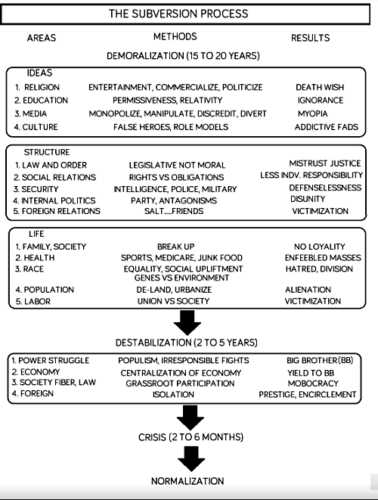
Historical revisionism will be necessary to counter the propaganda and false promise of the last century and a half.
And a restoration of our constitution by clarification of these terms, and their application, and the purpose of their use, such that we are never subject to this conquest again.
Even if that restoration must be achieved by force.
CD
Source date (UTC): 2024-05-07 22:02:34 UTC
Original post: https://x.com/i/articles/1787966278612701185