Theme: Class

  • RT @ernunnos: Everybody knew everybody. Or at least everybody who was anybody. I

    RT @ernunnos: Everybody knew everybody. Or at least everybody who was anybody. In an age of manual labor, the upper class in any area was s…


    Source date (UTC): 2023-12-31 14:37:24 UTC

    Original post: https://twitter.com/i/web/status/1741468600857145652

  • THE NORTH AND SOUTH DIFFERENCES IN INCENTIVES VS “ITS ALL ABOUT SLAVERY” NONSENS

    THE NORTH AND SOUTH DIFFERENCES IN INCENTIVES VS “ITS ALL ABOUT SLAVERY” NONSENSE
    (Part of my ‘it’s not really slavery’ but economics and self determination that caused the war)

    Moralizing an economic issue is always and everywhere a useful political tactic. Propaganda to justify a costly war during and after it’s conduct is always and everywhere also a useful political tactic. Grownups who study history pay little heed to what people argue or justify and simply look at the incentives that they are arguing or justifying.

    The 3 Billion in 1865 dollars in immediate losses to the South that in current equivalent is at least 108 Billion – and on a population of five only million. However, the total losses over the next more-than-century are likely in the trillions in current equivalent.

    Add to this that the South was paying more than half the federal taxes with 1/4 the population of the North – or stated differently the South was paying 4 times the taxes per person as the north.

    So the people lost an absurd amount of money, killed over 600 thousand people, destroyed a civilization, because we wouldn’t borrow the money to buy back the slaves and repatriate them to Africa, so that the South could afford to make the transition, and not be ‘stuck’ with a permanent underclass.

    Instead we spent 5 Billion in 1865 dollars on the war, meaning about 90 Billion today, when we could have incrementally purchased the slaves and incrementally brought the south into an industrialized economy for their industrial scale agriculture serving international markets – especially for cotton and tobacco.

    The price of slaves at the time was about:
    Ordinary (of any age, sex, or condition) in 1860 = $800 ($21,300 in 2009 dollars)
    Prime field hand (18-30 year-old man) in 1850 = $1,200 ($34,000 in 2009 dollars)
    Skilled slave (e.g. a blacksmith) in 1850 = $ 2,000 ($56,700 in 2009 dollars)

    If the average cost of a slave was $800, and we round up to 4M slaves, that’s 3,200,000,000 (3 Billion in 1860) or $122,000,000,000 (122 Billion Today), meaning that a population of 18.5 Northernerss + 5.5 Southerners 24M would bear a cost of $133 per person, with an average income of $300 per year, but only around 40% of people worked for wages, and the rest were subsistence farmers.

    Economic context: In 1865, while the average income in the USA was approximately $300 per year, this number varied depending on factors such as occupation, location, and gender. For example, a skilled laborer might have earned around $500 per year, while a farm laborer might have earned only $200.

    If paid over ten years including the interest necessary at the time, the average person’s cost per year would have been a burden but not an unsustainable one. Though this cost would have been distributed by tax revenue, and the south and north would have each paid half, despite the federal tax rate of the south being 4 times that of the north.

    In other words, the North was trying to impose economic warfare on the south in order to prevent the south from dominating the western expansion, and when the south withdrew from the union to do so, the north began it’s war of aggression to prevent the south’s secession, and the south’s dominance of the western expansion. Even given that most immigrants were moving into northern territories, once in western territories their intersets would have aligned with Atlanta over the North’s NY, Boston, Philadelphia and even Chicago.

    So was slavery the issue? Or was it basic realistic economics and slavery was a solvable problem that the north wouldn’t agree to pay for directly, but instead would pay for the war and the consequences just to prevent the north’s loss of control over the western expansion.

    My interest here is not justifying slavery but illustrating that giving up slavery for the south was an economic impossibility without a gradual medium term plan of costly transition that the north refused to pay for. And that, as good christians, the folly of that age, like the present, consists of casting pragmatism as oppression in order to motivate a democratic (ignorant) polity to prosecute a war and pay its higher costs than the lower costs of simply solving the problem incrementally and financially.

    Cheers

    (Ps: I’ve used very loose numbers here so that I don’t need to take three days to write a twitter post. That said, the purchasing power of money, and the unaccounted for risk of the differences in income between these periods, leaves room for understanding the general principles rather than values more precise than those I”ve used here.)


    Source date (UTC): 2023-12-31 13:26:00 UTC

    Original post: https://twitter.com/i/web/status/1741450635990458368

  • Kate. in multi-(whatever) societies people always vote race, religion, class, an

    Kate.
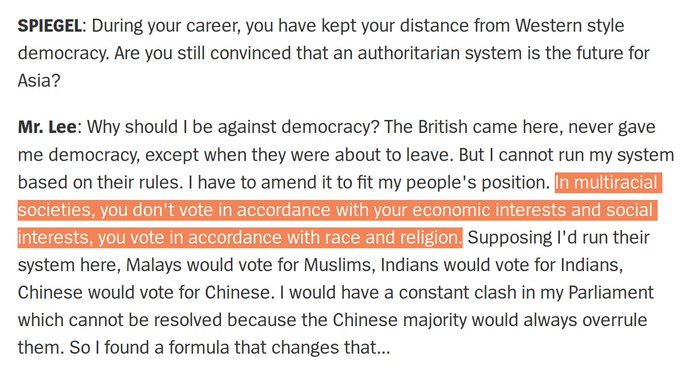
    in multi-(whatever) societies people always vote race, religion, class, and sex in that order, with white women the only in-group defectors – as we say, demographics in everything. So between the non-europeans and white women, in paricular white single and childless women,…


    Source date (UTC): 2023-12-31 12:33:56 UTC

    Original post: https://twitter.com/i/web/status/1741437529709027366

    Replying to: https://twitter.com/i/web/status/1741329940279173198

  • RT @erikbrus25: @sauniere @curtdoolittle Middleclass Morality: Middleclass Gover

    RT @erikbrus25: @sauniere @curtdoolittle Middleclass Morality:

    https://m.youtube.com/watch?v=KjuOSXWglEU

    Middleclass Government:

    https://t.co/gHpp5XGTw…


    Source date (UTC): 2023-12-30 09:14:43 UTC

    Original post: https://twitter.com/i/web/status/1741025007927435287

  • “the tariff thesis for southern secession point to the nullification crisis that

    –“the tariff thesis for southern secession point to the nullification crisis that grew out of a protective tariff of 1828, known by the South as the “Tariff of Abominations.” As I discussed in the podcast, John C. Calhoun secretly wrote the South Carolina Exposition and Protest, which argued that individual states have the right to nullify federal laws that they deemed unconstitutional. In 1832, after a new tariff bill was passed (which actually lowered duties, but was still criticized for being protectionist), South Carolina passed a nullification act and started mobilizing troops to defend against the threatened aggression by the Andrew Jackson administration, which came in the form of a “Force Bill” passed by Congress to empower the president to use the military against the nullifying state.

    The crisis was averted after Henry Clay stepped up with a compromise tariff that offered to lower duties gradually over a period of years (the new bill, interestingly, never addressed the conflict between a “protectionist” and a “revenue” tariff, the latter of which was considered to be constitutional by southerners).

    In the early 1830s, it is fair to say that tariffs were a legitimate cause of controversy between the North and the South (or, at least, South Carolina, which was the only state that took real action in response to the tariff). But even in these years, there is reason to question whether tariffs were the sole reason for the dispute.”— Calton


    Source date (UTC): 2023-12-30 01:27:08 UTC

    Original post: https://twitter.com/i/web/status/1740907337940881408

  • THE CAUSES OF THE PAST PRESENT AND FUTURE CIVIL WARS … No More Lies. The North

    THE CAUSES OF THE PAST PRESENT AND FUTURE CIVIL WARS … No More Lies.
    The Northern opposition to slavery and its expansion was a mixture of economic self-interest, political strategy, and moral principle.

    While it is true that economic and political factors played a substantial role, the moral dimension, particularly the influence of the abolitionist movement, cannot be dismissed as merely a pretense – instead, that political parties use moral arguments to justify practical strategic, political, economic, and cultural advantages. Just as today the ‘woke’ movement uses moral pretense as a means of warfare, during the period leading up to the civil war the north used moral pretence to advance material, economic, political, and strategic interests – over the newly purchsed and conquered territories to the west.

    Slavery was just the excuse used to motivate simple people. Just as the marxist, neomarxist, postmodern, woke sequence has been used to motivate simple people to political ends.

    The Civil War and the events leading up to it were the result of a complex interplay of these various factors, and it’s an oversimplification to attribute the conflict to any single cause.

    SOUTHERN MOTIVATIONS
    Economic Motivations:The Southern economy was heavily reliant on agriculture, particularly on crops like cotton and tobacco, which were labor-intensive. Cotton and tobacco were not open to automation as were wheat and corn.
    These crops and their high returns were not replacable by alternate crops, nor could the same crops grown in the north be grown in the south.
    The dependence on manual labor would not be solved for another century, and hand picking the immature leaves is still done by hand – there is no alternative.
    The harvesting of cotton by automation would not be possible until the 1920s, and not practically until after the second world war – and while it could only pick one row at a time, it replaced about 40 workers. This would have been necessary by 1860 for replacement of slave labor.

    Crops Produced in the South:
    Cotton: The most significant crop in the South, cotton production was heavily reliant on slave labor. The invention of the cotton gin in 1793 had made cotton a highly profitable crop and a key driver of the Southern economy.

    Tobacco: Grown primarily in states like Virginia and North Carolina, tobacco was another major cash crop dependent on slave labor.

    Sugar Cane: Sugar cane was a major crop in states like Louisiana and required a large labor force to cultivate and process.

    Rice: Rice was a significant crop in the coastal regions of states like South Carolina and Georgia.

    Other Crops: Indigo and hemp were also grown, though they were less dominant than the crops mentioned above.

    Large Scale Centralized Production: The Southern agriculture was characterized by large plantations that relied on the labor of slaves. The focus on a few high-value cash crops, especially cotton and tobacco, meant the South was less diversified in its agricultural output compared to the North.

    THEREFORE:
    Agricultural Economy Dependent on Slave Labor: The Northern crops could be harvested by families and locally available labor, and was open to mechanization, plus the northern investment in industry was fifty years ahead of the south’s capacity to catch up. The Southern economy was heavily reliant on agriculture, particularly the production of cash crops like cotton, tobacco, and rice. This system was deeply intertwined with slave labor.

    Economic Viability: The profitability and sustainability of the plantation economy were seen as directly dependent on the continuation of slavery.

    Fear of Economic Catastrophe: There was a significant fear that the abolition of slavery would lead to economic collapse in the South, affecting both the wealthy plantation owners and the wider economy.

    Elite Income Motivations: Slavery was seen as integral to the economic prosperity and social hierarchy of the South. The wealth and lifestyle of many Southern elites were directly tied to slave labor.

    Political Factors: The concept of states’ rights was often invoked in defense of the institution of slavery. Southern states sought to maintain slavery as a state right and viewed attempts to restrict or abolish it as a violation of their sovereignty.

    States Rights: States rights are another way of saying – “You are making a moral argument and we are making a material argument. There is no way for the south’s means of large scale production to transition out of dependence on slave (manual) labor without costs the south cannot afford to pay. Though if paid to change we would do so.”

    Taxation Asymmetry – Especially Per Capita:
    While the South paid the majority of the taxes, this was assymetric in relation to the population. The north’s population…(…)

    THEREFORE
    Social and Cultural Justifications: Many in the South, especially those invested in the system, developed ideological justifications for slavery, including beliefs in racial superiority and paternalistic narratives about the institution.

    NORTHERN MOTIVATIONS

    Economic and Political Factors
    Economic Competition: The North and South had developed distinct economic systems. The industrial and diversified economy of the North competed with the agrarian, slave-based economy of the South.
    Northern industrialists and workers might have seen the expansion of slavery as a threat to their economic interests, particularly in new territories.

    Political Power and Western Expansion: The balance of power between slave and free states in Congress was a crucial issue. The admission of new states as either slave or free had significant implications for this balance.
    The North was concerned that the spread of slavery into new territories would extend the political power of the slave states.

    Control of Western Territories: The debate over whether new territories and states should allow slavery was a contentious issue. The North, particularly those influenced by the Free Soil movement, opposed the expansion of slavery into these territories.

    Moral and Cultural Considerations
    Abolitionist Movement:The abolitionist movement, which was morally and religiously motivated against slavery, had a significant presence in the North.
    Many Northerners were opposed to slavery on moral grounds, seeing it as inhumane and contrary to democratic principles. This was common because the north was closer in culture to cosmopolitan England, and

    Cultural Differences:There were growing cultural and ideological differences between the North and South, influenced by their differing economies and social structures. In effect the north had pursued the middle clas strategy of the english puritains while the south continued the aristocratic tradition and the values of the scotts irish and germans.

    Crops Produced in the North:
    Grains: The North was a major producer of grains, such as wheat, corn (maize), and oats. The grain-producing states in the Midwest, sometimes called the “breadbasket” of America, were particularly important.

    Fruits and Vegetables: The North also had a more diverse production of fruits, vegetables, and other food crops, reflecting its smaller-scale, family-owned farms.

    Dairy and Livestock: Dairy farming and livestock were significant in the North, particularly in states like New York and Pennsylvania.

    Other Crops: Barley, rye, and potatoes were also grown, among other crops.

    Small Scale Distributed Production: The Northern agriculture was characterized by smaller farms, a greater variety of crops, and a labor system primarily consisting of family labor and hired workers. The climate and soil in the North were also more conducive to grain farming than to the cash crops that dominated the South.

    Conclusion
    The Northern opposition to slavery and its expansion was a mixture of economic self-interest, political strategy, and moral principle to justify it.

    THEREFORE
    Therefore the North sought to impose intolerable costs on the south by claiming that their motives were against slavery when their motives were control of the continent. Slavery was the tool for animating the public to conduct a war against the south, as yet another age of religious conviction. But it was in fact a war of opportunity to eliminate a competitor and to conquer the south in order to hold a monopoly over the west.

    The South, even had it been able to be compensated for the abolition of slavery and deporttion of the slaves back to africa, would have still fought with the north over large vs small scale production, asymmetry of import vs domestic taxation, high culture vs bourgeoise culture, the preservation of aristocracy, but most importantly the independence from the north in the ‘race’ to settle and ally with new territories.

    Behind all moral arguments in the political sphere are practical considerations. Whenever someone makes a moral argument look for the lie and crime they seek to obscure with their pretense of virtue.

    The Divisions Across the American Continent Remain
    The war would have happened. The war of 1812 happened. The civil war happend. The near civil war of the 1960s nearly happend. The present near civil war of the 2020s may yet happen.

    The Age of Empires is Over
    Why? The age of empires is over. Empires are necessaryt to suppress local parasitism on neighbors and create standards of behavior and trade. Once that problem is solved economy rather than conflict becomse thr principle means of wealth and prosperity. Once wealth and prosperity are established by the empires, empires become rent seekers on those under it’s rule. Once rent seeking is established nation states (ethnostates) start to seek independence. However independence may limit the scale ofmilitary defense. As such Independence generates demand for federations who share defense. This is the stage of world development.

    The World Wars as the End of Empires
    In this context then, we see the world wars as the end of empires and the conversion to nation states and federations resulting in a conflict of civilizations but not their states.
    Unfortunately, Americans being europeans, and europeans being christians, america did not follow the advice of her generals MacArthur in china and Patton in Russia and end the last two empires – leaving open the need for a third world war (it appeaers) if the USA and the broader civilized world cannot outlast the coming collapse of both demographically and economically.

    But The USA Is A Domestic Empire
    However, the USA is a domestic empire becaues of the civil war. The present american conflict, which is really a conflict brought to us by the race-marxists (neomarxists) in the postwar period. As such the american empire is ending as well as the foreign empires. And we see the near end of the European Project to centralize as did america under the civil war, and both america through devolution and europe through failure of centralization (france being the eternal enemy of europe), are converging on the only viable solution a weak central governmetn for the adjudication of differences, reciprocal insurance against risks and harms, mutual defense, and the advantage of blocks in trade negotiations.

    The only solution is devolution of the power of the central government to its origional intention as defense and insurance and investment in necessary commons, and adjudication of differences between the states , while the US States, likely in very different territorial composition from today, would, as europe is doing today, develop local policies suitable to the demographic, cultura, and economic interests of the states.

    Cheers

    Reply addressees: @chrisdier @WAR_CR0W @Duke_of_angels @NikkiHaley

    Source date (UTC): 2023-12-29 22:40:39 UTC

    Original post: https://twitter.com/i/web/status/1740865441906536448

    Replying to: https://twitter.com/i/web/status/1740780869105910179

  • Respect Teacher’s Opinions or Knowledge? Are you Insane? Teachers are from the b

    Respect Teacher’s Opinions or Knowledge? Are you Insane?

    Teachers are from the bottom 15% of their high school graduating class, and their education “degree”, aside from the fact that it should take no longer than six months of training and one year of apprenticeship, and more, aside from the hilarity that the average teacher’s IQ (109) is below the minimum for college admission (110-115), and that it’s the dumbest college cohort other than social work.

    You don’t have to wonder why our education system is a failure. Instead we wonder why life achievement via demonstrated responsibility in military or industsry isn’t a filter, successful parenting isn’t a filter, why teaching isn’t simple a mass effort by those capable of early retirement. All this is made worse by the fact that the marxist, neomarxist, postmodern, antifamily feminism, and anti-western woke movements are taught in university to this cohort of nitwits who then think they are virtuous rather than an army of low IQ drones manufactured for the sole purpose of undermining our instituteinos of cultural production – especially when those institutions exist for the purpose of instilling resonsibilty for self, private and common more so than all other civilizations combined.

    And when combined with contiuous adversarial competition, and the demand for testimonial truth in all circumstances, we find the secret to the disproportionate success of western civilization: our high trust allows us to discover, innovate, adapt, and evolve faster than all other civlizations combined wheher bronze, iron, steel, or silicon ages. And this undermining by nitwits has almost reversed a +1000 year advantage of our ancestors in cultural production.

    Democracy is a privilege earned by persoinal responsibility for private and common including family formation, military participation, and maintenance of the formal and informal i nstitutions of the commons on which we all depend for our privilege of our quality of life.

    I haven’t interviewed a teacher under eighty that isn’t an idiot.

    Reply addressees: @chrisdier @WAR_CR0W @Duke_of_angels @NikkiHaley


    Source date (UTC): 2023-12-29 22:11:56 UTC

    Original post: https://twitter.com/i/web/status/1740858215355543552

    Replying to: https://twitter.com/i/web/status/1740806185740271820

  • Slavery Wasn’t The Sole Cause It Was The Easy One To Propagandize. Take slavery

    Slavery Wasn’t The Sole Cause It Was The Easy One To Propagandize.
    Take slavery off the table by the north agreeing to borrow the money to buy the slaves and repatriate them to africa. Assuming that the south would tolerate the horrific economic consequences until they forced enough innovation to allow (especially cotton) harvesting with more automation (the north crops didn’t require it), then why would the south still seek alliance with the north instead of continuing their pursuit of western expansion and where western expansion would have been agrarian, and that grarian expansoin allied with the south.

    Only simple people think in single causes. And only very simple (imbeciles really) presume moral arguments hold any relevance in the face of economic argumetns. And worse, that either holds sway against status, culture, and religious arguments.

    I participate in social media for the Institute’s purposes these days, but while we are aware of the vast difference in cognition, and especially between the sexes, we are still stunned, or at least, among the staff I am the most stunned, but the imbecility of young men who have no achievements of any scale or any merit to opine on matters of conventional opinino that were created – nay – manufactured by people much brighter than they for political reasons, behind which were always and everywhere economic, and status reasons.

    Reply addressees: @chrisdier @WAR_CR0W @Duke_of_angels @NikkiHaley


    Source date (UTC): 2023-12-29 22:00:25 UTC

    Original post: https://twitter.com/i/web/status/1740855314881159168

    Replying to: https://twitter.com/i/web/status/1740806420671647816

  • RT @curtdoolittle: @chrisdier @WAR_CR0W @Duke_of_angels @NikkiHaley There are no

    RT @curtdoolittle: @chrisdier @WAR_CR0W @Duke_of_angels @NikkiHaley There are no conditions know to man where humans do not demonstrate rac…


    Source date (UTC): 2023-12-29 21:54:00 UTC

    Original post: https://twitter.com/i/web/status/1740853702972297554

  • There are no conditions know to man where humans do not demonstrate race, civili

    There are no conditions know to man where humans do not demonstrate race, civili

    There are no conditions know to man where humans do not demonstrate race, civilization, culture, class, age, and sex bias. In fact there is evidence without exception that humans organize into groups that grant them the lowest opportunity cost of status and attention necessary to… https://t.co/9iNkqet6IM


    Source date (UTC): 2023-12-29 21:53:53 UTC

    Original post: https://twitter.com/i/web/status/1740853670395179460

    Replying to: https://twitter.com/i/web/status/1740806753959506424