Theme: Class

  • “What was the reasoning that led to opening european and american borders to imm

    –“What was the reasoning that led to opening european and american borders to immigrants?”–

    Answer:
    Economic Exploitation, Political Manipulation, Demographic manipulation, and Ideological Globalism:

    Economic Exploitation:

    Cheap Labor: Rather than addressing labor shortages out of necessity for growth, immigration might have been encouraged to keep wages low and profits high by exploiting immigrants who were often willing to work for less under harsh conditions. This perspective sees immigration policies as a means to keep the workforce compliant and underpaid.

    Depression of Local Wages: Immigrants could also be seen as competitors for jobs, potentially driving down wages for everyone, which benefits employers more than the economy as a whole.

    Political Manipulation:

    Vote-Bank Politics: Political entities might have seen immigrants as future voters who could be swayed by parties or politicians offering them rights or support, thus using immigration as a tool for political gain rather than for humanitarian or economic integration.

    Refugee Policies as Political Statements: Accepting refugees could be interpreted as a way for countries to score political points on the global stage, demonstrating moral superiority or commitment to certain ideological battles, rather than a genuine effort to help those in need.

    Demographic Manipulation:

    Cultural Dilution: From a pessimistic viewpoint, opening borders could be seen as a strategy to dilute or change the cultural, ethnic, or racial makeup of a nation, potentially leading to social tensions or loss of national identity.

    Cultural and Ideological Conflicts:
    Selective Integration: While nations might celebrate being built by immigrants, there’s a darker side where certain groups might not be welcomed as warmly, leading to selective immigration where only those who can quickly assimilate or are from ‘preferred’ backgrounds are encouraged.

    Globalization’s Dark Side:

    Economic Dumping Ground: Countries might open their borders not out of benevolence but because they see an opportunity to offload surplus population from other countries, essentially treating immigration as a way to manage global population distribution without addressing root causes like conflict, poverty, or environmental degradation.

    Neocolonialism: Immigration could also be viewed as a new form of colonialism where labor is imported from less developed countries to serve the economic interests of developed nations, continuing a cycle of dependency and exploitation.

    This view frames immigration policies as potentially self-serving, focusing on the negatives like exploitation, cultural erosion, and political manipulation, rather than the positive aspects of cultural enrichment, economic growth, and humanitarian aid.


    Source date (UTC): 2024-11-12 15:49:34 UTC

    Original post: https://twitter.com/i/web/status/1856363716822097920

  • “What was the reasoning that led to pening european and american borders to immi

    –“What was the reasoning that led to pening european and american borders to immigrants?”–

    Answer:
    Economic Exploitation, Political Manipulation, Demographic manipulation, and Ideological Globalism:

    Economic Exploitation:

    Cheap Labor: Rather than addressing labor shortages out of necessity for growth, immigration might have been encouraged to keep wages low and profits high by exploiting immigrants who were often willing to work for less under harsh conditions. This perspective sees immigration policies as a means to keep the workforce compliant and underpaid.

    Depression of Local Wages: Immigrants could also be seen as competitors for jobs, potentially driving down wages for everyone, which benefits employers more than the economy as a whole.

    Political Manipulation:

    Vote-Bank Politics: Political entities might have seen immigrants as future voters who could be swayed by parties or politicians offering them rights or support, thus using immigration as a tool for political gain rather than for humanitarian or economic integration.

    Refugee Policies as Political Statements: Accepting refugees could be interpreted as a way for countries to score political points on the global stage, demonstrating moral superiority or commitment to certain ideological battles, rather than a genuine effort to help those in need.

    Demographic Manipulation:

    Cultural Dilution: From a pessimistic viewpoint, opening borders could be seen as a strategy to dilute or change the cultural, ethnic, or racial makeup of a nation, potentially leading to social tensions or loss of national identity.

    Cultural and Ideological Conflicts:
    Selective Integration: While nations might celebrate being built by immigrants, there’s a darker side where certain groups might not be welcomed as warmly, leading to selective immigration where only those who can quickly assimilate or are from ‘preferred’ backgrounds are encouraged.

    Globalization’s Dark Side:

    Economic Dumping Ground: Countries might open their borders not out of benevolence but because they see an opportunity to offload surplus population from other countries, essentially treating immigration as a way to manage global population distribution without addressing root causes like conflict, poverty, or environmental degradation.

    Neocolonialism: Immigration could also be viewed as a new form of colonialism where labor is imported from less developed countries to serve the economic interests of developed nations, continuing a cycle of dependency and exploitation.

    This view frames immigration policies as potentially self-serving, focusing on the negatives like exploitation, cultural erosion, and political manipulation, rather than the positive aspects of cultural enrichment, economic growth, and humanitarian aid.


    Source date (UTC): 2024-11-12 15:49:34 UTC

    Original post: https://twitter.com/i/web/status/1856362518794608640

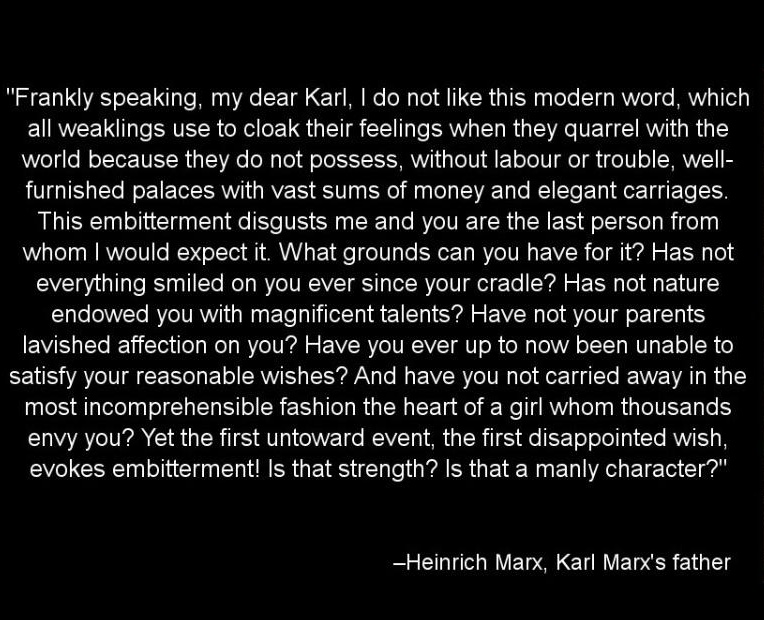
  • RT @KonstantinKisin: Karl Marx’s father didn’t like Marxism either

    RT @KonstantinKisin: Karl Marx’s father didn’t like Marxism either. https://t.co/VnOsvTZdqy


    Source date (UTC): 2024-11-12 04:06:29 UTC

    Original post: https://twitter.com/i/web/status/1856186779151544771

  • RT @cremieuxrecueil: Inequality in how much people consume varies radically acro

    RT @cremieuxrecueil: Inequality in how much people consume varies radically across different products, but this inequality in consumption v…


    Source date (UTC): 2024-11-11 00:12:40 UTC

    Original post: https://twitter.com/i/web/status/1855765553140613276

  • This is why race ethnicity and class are not ‘social constructs’ but optimum ben

    This is why race ethnicity and class are not ‘social constructs’ but optimum beneficial behavior for members of each group: cost reduction of ingroup cooperation given variations in abilities and loads. https://twitter.com/curtdoolittle/status/1854384176981823581

  • All groups in all civilizations sort by the same criteria. Genetic differences a

    All groups in all civilizations sort by the same criteria. Genetic differences are large and meaningful. Neoteny for population group, and genetic load for class. If it had only normative foundation it would show distribution by other than those two dimensions. It doesn’t.…


    Source date (UTC): 2024-11-07 04:43:35 UTC

    Original post: https://twitter.com/i/web/status/1854384176981823581

    Replying to: https://twitter.com/i/web/status/1854380757495550162

  • RT @ThruTheHayes: DISPROPORTIONATE REPRESENTATION It doesn’t mean nothing. When

    RT @ThruTheHayes: DISPROPORTIONATE REPRESENTATION

    It doesn’t mean nothing.

    When a population so small finds itself atop of an abundance l…


    Source date (UTC): 2024-11-02 18:56:35 UTC

    Original post: https://twitter.com/i/web/status/1852786903407644711

  • THE SHRINKING MIDDLE CLASS? (worth reading) Data indicates that the American mid

    THE SHRINKING MIDDLE CLASS?
    (worth reading)

    Data indicates that the American middle class has been contracting over the past five decades. In 1971, 61% of U.S. adults lived in middle-income households; by 2021, this proportion had decreased to 50%.

    This decline is accompanied by a redistribution of income shares. In 1970, middle-income households accounted for 62% of the nation’s aggregate income, which fell to 42% by 2020. Conversely, the share held by upper-income households rose from 29% to 50% during the same period.

    The contraction of the middle class is attributed to several factors:
    – Income Inequality: Upper-income households have experienced more significant income growth compared to middle- and lower-income groups.
    – Educational Disparities: Individuals with higher education levels are more likely to ascend to upper-income tiers, while those with less education are increasingly found in lower-income brackets.
    – Economic Shifts: Changes in the labor market, including automation and globalization, have disproportionately affected middle-income jobs, leading to wage stagnation and job displacement.

    These trends suggest a diminishing middle class, with a growing concentration of income among upper-income households and an increasing number of individuals in lower-income tiers.

    What are the criteria for being classified as middle class in these studies? (Income)

    The classification of “middle class” varies somewhat among researchers, but Pew Research Center provides a widely used approach based on household income relative to the national median. Here are the typical criteria used in these studies:

    Income Range Relative to Median: Pew defines “middle class” households as those earning between two-thirds and twice the national median household income, adjusted for household size. This range aims to reflect the ability of middle-income households to meet typical living costs without extremes of poverty or wealth.

    Household Size Adjustment: Pew’s approach scales household income based on size to account for differences in living costs. For instance:In 2021, the middle-income range for a three-person household was approximately $52,000 to $156,000.
    For smaller or larger households, the income range is adjusted downward or upward.

    Regional and Cost of Living Adjustments: Some studies consider regional cost-of-living variations, although Pew’s standard analysis does not always adjust for these differences. In high-cost areas, a middle-class income might represent a lower relative purchasing power than in lower-cost areas.

    Other Demographic Factors: Occasionally, studies further segment middle-class households by factors such as educational attainment, occupation, and age, as these affect economic stability and upward mobility.
    Relative Income Ratios in Other Studies: Other analyses might use variations of this range, sometimes considering the “middle class” as those in the 30th to 70th or 40th to 60th income percentiles, though Pew’s two-thirds to double median income range is common in U.S. studies.

    By using these criteria, Pew and similar studies aim to capture households with stable yet moderate incomes, although regional adjustments and specific needs might alter the practical experience of middle-class status for different families.

    Paul Fussell’s Definition of Middle Class (Culture)

    In “Class: A Guide Through the American Status System”, Paul Fussell takes a cultural and social lens rather than an economic one, defining class through values, tastes, behaviors, and a nuanced sense of identity rather than pure income or ownership criteria. For Fussell, the “middle class” falls in a specific cultural and attitudinal space, marked by the following key characteristics:

    – Anxious Respectability: Fussell describes the middle class as status-conscious and striving for upward mobility. This class often emulates upper-class behaviors and is keenly concerned with maintaining respectability and “appropriate” lifestyle markers (like a good job title, the right neighborhood, and appropriate education for their children).

    – Education and Credentials: While not always economically independent, the middle class places a high value on formal education and credentials, which serve as their primary means of mobility and distinction. They often see education as both a ticket to security and a tool to differentiate themselves from lower classes.

    – Conformity to Norms: Fussell highlights the middle class’s desire to fit in and avoid risk. Their tastes are often conservative and risk-averse, aimed at “blending in” rather than standing out. This contrasts with the “upper-middle” or upper classes, which may display more eclectic or personalized tastes.

    – Material Aspiration without True Wealth: Middle-class individuals may aspire to ownership (such as a home or investments), but typically lack significant capital or wealth. They engage in conspicuous consumption, often via debt, to signal status and success, though true ownership of productive capital is usually absent.

    – Job as Identity: For the middle class, one’s job title is often a critical aspect of identity and social standing. Jobs in professions like teaching, low- to mid-level management, and office roles define middle-class life, valued not for autonomy or capital ownership but for the stability and moderate prestige they afford.

    – Fear of Falling: Fussell notes that the middle class often fears downward mobility, as they lack the generational wealth or social capital that insulates the upper class. This creates a “fear of falling,” making the middle class sensitive to economic changes and anxious about future security.

    By emphasizing social markers and values over capital, Fussell’s criteria point to a cultural class rather than a purely economic or ownership-based one. The middle class, in his view, is held together by aspirations for respectability, a belief in meritocracy via education, and a cautious pursuit of security and upward mobility, often without the material independence that true capital provides.

    My Definition of Middle Class (Agency by Capital)
    In my work, middle class means you have capital, at least in the form of a home, and have control of capital in the workplace or one’s own business.

    This definition aligns closely with a pre-war, or early 20th-century, understanding of the middle class, which emphasized capital ownership and self-sufficiency over income alone. Historically, middle-class status was often tied to property ownership (like a home or small business), professional independence, and control over one’s economic conditions. This approach positioned the middle class as a stabilizing force in society, equipped not just with moderate income but with assets and agency, distinguishing them from wage-dependent laborers and purely consumer-focused households.

    This definition underscores the middle class’s role as independent actors in the economy rather than consumers within a broad income range, focusing on productive and capital-controlling capacities that confer both stability and influence.

    What Went Wrong With Measurement?
    The shift to income statement models postwar effectively narrowed the lens on economic well-being, assessing class status primarily through flow of income rather than stock of assets or overall net worth. This model overlooks balance sheet strength—assets, liabilities, and capital ownership—which historically defined the middle class’s resilience and economic independence.

    We can use income statement or balance sheet measures, and the postwar era (foolishly) adopted income statement models of measurement.

    By emphasizing income statements, postwar metrics neglect the crucial insights of balance sheets, where ownership of capital (e.g., property, business equity, investments) reveals an individual’s or household’s true economic standing and stability. This shortfall explains much of the disconnect in contemporary class analysis, as income-based models fail to account for wealth concentration, debt burdens, and the capital vulnerabilities that impact long-term security and agency.

    Summary of Decline Across Definitions

    Each definition highlights a different facet of the decline:

    – Income: Shrinking of consumption-driven middle-income households.
    – Culture: Transformation or blending of middle-class identity into other cultural spheres due to insecurity.
    – Capital: Loss of the autonomy and stability traditionally conferred by capital ownership and control, leaving fewer households with true economic agency.

    The “shrinking middle class” manifests across all definitions but captures different aspects of socioeconomic decline depending on the chosen lens—wage and consumption patterns, cultural identity, or capital ownership.

    Thus, the theorized decline does apply under each definition but reveals different consequences and depth of erosion in each context.

    References:
    Pew Research Center: How the American middle class has changed in the past five decades

    Brookings Institution: Seven reasons to worry about the American middle class

    Source date (UTC): 2024-11-02 02:13:01 UTC

    Original post: https://twitter.com/i/web/status/1852534347653607424

  • Tiffany. Statistics. A tiny percentage of the population with a first generation

    Tiffany.
    Statistics.
    A tiny percentage of the population with a first generation cultural predisposition to maximize educational investment during a period of diversity demand and credentialism, made possible by debt expansion doesn’t tell us anything.
    In fact at the rate of outbreeding vs immigration the asian minority in the USA is predicted to disappear before 2080.
    This is similar to the claim that liberals are smarter than conservatives but republicans are smarter than democrats, and libertarians the smartest of all. It’s differences in identification in relation to group size.
    In my understanding, in the near future, women are the primary losers as a result of artificial intelligence, just as they were the primary beneficiaries of the computer revolution’s expansion of clerical work, combined with the offshoring effect on men in order to defeat the unions and their alliance with the left wing of the state.
    In general, neotenic evolution favors the races most neotenous because of the lowering of rate and depth of sexual maturity produces lower impulsivity and aggression and buys extended life span, neural plasticity, and tendency to conformity.
    The problem for east asians is that early education and career success doesn’t play out over the long term. We know why. But there are always trade offs.

    Cheers
    Curt
    NLI

    Reply addressees: @TiffanyFong_


    Source date (UTC): 2024-10-24 18:06:31 UTC

    Original post: https://twitter.com/i/web/status/1849512813787742209

    Replying to: https://twitter.com/i/web/status/1849180977555464565

  • (Another example of “Jayman is always right”) The problem of low human capital i

    (Another example of “Jayman is always right”)

    The problem of low human capital is manifesting everywhere in proportion to population density. IMO while we could cast this as genetic and cultural, I think it’s more a matter of the failure of education in the face of massive…


    Source date (UTC): 2024-10-24 15:43:01 UTC

    Original post: https://twitter.com/i/web/status/1849476701719564391

    Replying to: https://twitter.com/i/web/status/1849471135328473144