Max Weber’s General Economic History.
Chapter 28 – Citizenship
Outside the occident there have not been cities in the sense of a unitary community. Occidental cities originally arose through the establishment of a fraternity; it was in its beginnings first above all a defense group, an organization of those economically competent to bear arms, to equip and train themselves. These folks owned their own arms: this is key.
In places like Egypt, Asia, India and China, irrigation was a big issue, and so kings’ bureaucracies developed. The king and his staff required the compulsory service of the dependent classes; they in turn were dependent on that bureaucracy. The king also held a military monopoly. In the west, self-equipment and religious brotherhoods (eg, crusaders) meant kings did not have a military monopoly, and so cities could be formed in a western sense, based on mutual defense.
Also, ideas and institutions in the orient connected with magic, which supported such systems as caste systems, did not exist in such strength in the occident.
From Politics As A Vocation
The decisive means of politics is violence. … A state is defined by the specific means peculiar to it: the use of physical force. The state is a human community that successfully claims the monopoly of the legitimate use of physical force within a given territory. Politics, then, means striving to share power or striving to influence the distribution of power, either among states or among groups within a state. The state is a relation of men dominating men by means of legitimate violence.
Basis of Legitimacy
Legitimacy may be ascribed to an order by those subject to it in the following ways:
1) tradition, belief in legitimacy of what has always existed.
2) affected attitudes, legitimizing the validity of what is newly revealed or is a model to imitate.
3) rational belief in its absolute value.
4) legality. Readiness to conform with rules which are formally correct and have been imposed by accepted procedure.
Submission to an order is almost always determined by a variety of motives.
Max Weber’s General Economic History.
Chapter 28 – Citizenship
Outside the occident there have not been cities in the sense of a unitary community. Occidental cities originally arose through the establishment of a fraternity; it was in its beginnings first above all a defense group, an organization of those economically competent to bear arms, to equip and train themselves. These folks owned their own arms: this is key.
In places like Egypt, Asia, India and China, irrigation was a big issue, and so kings’ bureaucracies developed. The king and his staff required the compulsory service of the dependent classes; they in turn were dependent on that bureaucracy. The king also held a military monopoly. In the west, self-equipment and religious brotherhoods (eg, crusaders) meant kings did not have a military monopoly, and so cities could be formed in a western sense, based on mutual defense.
Also, ideas and institutions in the orient connected with magic, which supported such systems as caste systems, did not exist in such strength in the occident.
From Politics As A Vocation
The decisive means of politics is violence. … A state is defined by the specific means peculiar to it: the use of physical force. The state is a human community that successfully claims the monopoly of the legitimate use of physical force within a given territory. Politics, then, means striving to share power or striving to influence the distribution of power, either among states or among groups within a state. The state is a relation of men dominating men by means of legitimate violence.
Basis of Legitimacy
Legitimacy may be ascribed to an order by those subject to it in the following ways:
1) tradition, belief in legitimacy of what has always existed.
2) affected attitudes, legitimizing the validity of what is newly revealed or is a model to imitate.
3) rational belief in its absolute value.
4) legality. Readiness to conform with rules which are formally correct and have been imposed by accepted procedure.
Submission to an order is almost always determined by a variety of motives.
—” That is exactly the problem I see in every political, ethical or moral claims. They never blame the system they create. It always guy XYZ fault. My program for human works perfectly but when I put the value “human” in it. It crashed. Dawm you… humans!!!”—
Are you sure that makes sense? (No it doesn’t’)
Does that mean that we should satisfy the demand for criminality? That’s what you’re saying. (Yes you are).
There is a difference between trying to get humans to do something unequally good and prohibiting them from doing things that are equally bad (crime).
So yes, we can govern with the humans we have as long as we limit the reproduction of the undesirables, where undesirable is a demonstrated behavior (failure). Yes, we can govern with the humans we have, if we don’t expect behavior from them without institutions to enforce it. And if those institutions are possible. Via negativa defense of ourselves from predation is a universal demand.
Humans are just like any other semi-domesticated animal. They require training. And some of them are beneficial and some are hazardous to others, the order that makes their quality of life possible, and the gene pool itself.
—” That is exactly the problem I see in every political, ethical or moral claims. They never blame the system they create. It always guy XYZ fault. My program for human works perfectly but when I put the value “human” in it. It crashed. Dawm you… humans!!!”—
Are you sure that makes sense? (No it doesn’t’)
Does that mean that we should satisfy the demand for criminality? That’s what you’re saying. (Yes you are).
There is a difference between trying to get humans to do something unequally good and prohibiting them from doing things that are equally bad (crime).
So yes, we can govern with the humans we have as long as we limit the reproduction of the undesirables, where undesirable is a demonstrated behavior (failure). Yes, we can govern with the humans we have, if we don’t expect behavior from them without institutions to enforce it. And if those institutions are possible. Via negativa defense of ourselves from predation is a universal demand.
Humans are just like any other semi-domesticated animal. They require training. And some of them are beneficial and some are hazardous to others, the order that makes their quality of life possible, and the gene pool itself.
—“Their success and subjective sense of fulfillment is not measured by relative status – it’s measured by the degree of identity that they can achieve with their social group.”—
By Tim Beckley
Regarding this exchange:
NPC-ism:”DOESN’T LOOK LIKE MUCH OF ANYTHING TO ME” Brilliant Framing by Western Renaissance
“The only ethnic Europeans who “oppress” anyone are anti-ethnic european, ethnic Europeans.”— @ReactionaryIan
“Yep. Involuntary Status Redistribution by False Virtue Signaling.”– Curt
God damn, I love how precise the explanation is through the lens of the economics of status.–WR
“But, it’s more irritating tho somehow, isn’t it? lol”– Curt
“Absolutely, because cuts through people’s after the fact justifications and makes it clear that they are simply self-interested consumers of everything lol And also because I think during my search for answers, part of my brain has subconsciously assumed that people would care or that it would be easier to convince them if you had good explanations and answers. But no… the sad truth seems to be that you can explain things with as much detail and elegance as you want, but when faced with the option of becoming aware of their strategy and self-interest, people just give the Westworld response..’ doesn’t look like much of anything to me’”–WR
“Yep. When faced with the truth the NPC says “It doesn’t look like much of anything to me”. — CD
I can’t think of anyone who’s articulated the masculine psychology of the European West with greater precision, comprehensiveness, or infectious enthusiasm than you. In my opinion, you’re the most valuable thinker the Right has today, not only because of your prolific output, but also your generosity and accessibility which are qualities of an exceptional teacher. The Right needs men like you and if the ingratitude and idiocy of the rank and file exhausts your patience, they’ll suffer for it.
That said, I can’t help but notice the irony of this exchange. The other half of Western European psychology is not concerned *primarily* with status. Status seeking is the motive force of hypermasculine/ascendant/libertarian psychology, as status retention motivates the established or conservative male. Western feminine psychology is much less distinct from the psychology characterizing women throughout the world, and for evolutionary reasons, this is necessarily so.
The primary concern of feminine psychology is connection. The vast majority of women and cognitively feminine men would accept a sense of connectedness with other people at the cost of status. Unlike ascendant men, their success and subjective sense of fulfillment is not measured by relative status, i.e., by distinction. Quite the opposite.
It’s measured by the degree of identity that they can achieve with their social group. Identity, equivalence, conformity, homogeneity- all feminine social behavior tends toward these. Status is gained passively, largely unconsciously, as women develop the ability to achieve them. The highest ranking members of female social groups are the ones best able to reflect the thoughts, feelings, and experiences of the other members, which is to say, the most empathic women lead, or better, are followed.
There’s a common mischaracterization of empathy on the Right as uncontrollable sympathy or pathological altruism. Empathy is merely the ability to vicariously experience the subjective experiences of another. For many this ability is entirely controllable, and when also highly developed, it’s empowering, as the feminine cognitive type will yield to those capable of demonstrating identity with them, whether genetic or cultural.
Ethnic European women feel oppressed by the ethnic European business class that’s ascended, dismantling the cultural institutions that they once conformed to and insisting their women behave as men, or worse yet, as machines. The ethnic European ascendant male has atomized and deracinated the European masses and his hubris has led to the defection of his women, the disengagement of his men, and the collapse of his civilization which was longer maintained by the more moderate and conservative establishment he dethroned. But none of this looks like much to him.
CD: I would argue that I know that but I just categorize both male and female ‘seeking’ as status. (it is). I don’t know another term to use. The operational term would be something like ‘the opportunity discounts one earns from signals and reputations’.
—“Their success and subjective sense of fulfillment is not measured by relative status – it’s measured by the degree of identity that they can achieve with their social group.”—
By Tim Beckley
Regarding this exchange:
NPC-ism:”DOESN’T LOOK LIKE MUCH OF ANYTHING TO ME” Brilliant Framing by Western Renaissance
“The only ethnic Europeans who “oppress” anyone are anti-ethnic european, ethnic Europeans.”— @ReactionaryIan
“Yep. Involuntary Status Redistribution by False Virtue Signaling.”– Curt
God damn, I love how precise the explanation is through the lens of the economics of status.–WR
“But, it’s more irritating tho somehow, isn’t it? lol”– Curt
“Absolutely, because cuts through people’s after the fact justifications and makes it clear that they are simply self-interested consumers of everything lol And also because I think during my search for answers, part of my brain has subconsciously assumed that people would care or that it would be easier to convince them if you had good explanations and answers. But no… the sad truth seems to be that you can explain things with as much detail and elegance as you want, but when faced with the option of becoming aware of their strategy and self-interest, people just give the Westworld response..’ doesn’t look like much of anything to me’”–WR
“Yep. When faced with the truth the NPC says “It doesn’t look like much of anything to me”. — CD
I can’t think of anyone who’s articulated the masculine psychology of the European West with greater precision, comprehensiveness, or infectious enthusiasm than you. In my opinion, you’re the most valuable thinker the Right has today, not only because of your prolific output, but also your generosity and accessibility which are qualities of an exceptional teacher. The Right needs men like you and if the ingratitude and idiocy of the rank and file exhausts your patience, they’ll suffer for it.
That said, I can’t help but notice the irony of this exchange. The other half of Western European psychology is not concerned *primarily* with status. Status seeking is the motive force of hypermasculine/ascendant/libertarian psychology, as status retention motivates the established or conservative male. Western feminine psychology is much less distinct from the psychology characterizing women throughout the world, and for evolutionary reasons, this is necessarily so.
The primary concern of feminine psychology is connection. The vast majority of women and cognitively feminine men would accept a sense of connectedness with other people at the cost of status. Unlike ascendant men, their success and subjective sense of fulfillment is not measured by relative status, i.e., by distinction. Quite the opposite.
It’s measured by the degree of identity that they can achieve with their social group. Identity, equivalence, conformity, homogeneity- all feminine social behavior tends toward these. Status is gained passively, largely unconsciously, as women develop the ability to achieve them. The highest ranking members of female social groups are the ones best able to reflect the thoughts, feelings, and experiences of the other members, which is to say, the most empathic women lead, or better, are followed.
There’s a common mischaracterization of empathy on the Right as uncontrollable sympathy or pathological altruism. Empathy is merely the ability to vicariously experience the subjective experiences of another. For many this ability is entirely controllable, and when also highly developed, it’s empowering, as the feminine cognitive type will yield to those capable of demonstrating identity with them, whether genetic or cultural.
Ethnic European women feel oppressed by the ethnic European business class that’s ascended, dismantling the cultural institutions that they once conformed to and insisting their women behave as men, or worse yet, as machines. The ethnic European ascendant male has atomized and deracinated the European masses and his hubris has led to the defection of his women, the disengagement of his men, and the collapse of his civilization which was longer maintained by the more moderate and conservative establishment he dethroned. But none of this looks like much to him.
CD: I would argue that I know that but I just categorize both male and female ‘seeking’ as status. (it is). I don’t know another term to use. The operational term would be something like ‘the opportunity discounts one earns from signals and reputations’.
The Third Great European Transformation: North Sea
“‘Rather than focus on why Europe diverged from the rest in 1800 we should be asking why the North Sea diverged from the rest in 1000.‘–H.B.D.C.
“By 1200 Western Europe has a GDP per capita higher than most parts of the world, but (with two exceptions) by 1500 this number stops increasing. In both data sets, the two exceptions are the Netherlands and Great Britain. These North Sea economies experienced sustained GDP per capita growth for six straight centuries. The North Sea begins to diverge from the rest of Europe long before the ‘West’ begins its more famous split from ‘the rest.’
“[W]e can pinpoint the beginning of this ‘little divergence’ with greater detail. In 1348 Holland’s GDP per capita was $876. England’s was $777. In less than 60 years time Holland’s jumps to $1,245 and England’s to 1090. The North Sea’s revolutionary divergence started at this time.”
The Ability To Scale Organizations
The Restoration of Aristotle
The Plague
The Reformation
one of the biggest targets of the reformation in Germany — one that, unlike the indulgences, etc., you don’t normally hear much about — is that the reformers wanted to take back control of marriage and marriage regulations from the central church. apart from the cousin marriage bans, another huge change that the roman catholic church had made to marriage in the middle ages was to make a marriage valid only if the man and woman involved freely agreed to be married to one another. the church, in other words, had taken marriage out of the hands of parents who were no longer supposed to engage in arranging marriages for their children. the choice was to be freely made by the couple, no approval was necessary from the family, and, up until the 1500s, you didn’t even have to get married by a priest — two adults (a man and a woman) could just promise themselves in marriage to one another, even without witnesses, and that was enough. (one might always be disowned and disinherited, of course, if your parents didn’t approve, but they could not legally stop you from marrying.)
the germans reversed this after the reformation, and put marriage back in the hands of parents — at least they had to give their approval from then on. the reformers also reversed the cousin marriage bans, although curiously the rates of cousin marriage do not appear to have increased substantially afterward.
The Separation by Eugenic Evolution
The combination of the restoration of Aristotle, the construction of northern trade under the Vikings then the Hanseatic league, the expansionary financial system of the Saxons (the European equivalent of today’s jews), the printing press, the Muslim blockade of Europeans giving birth to the age of sail, northern Europeans lost their tolerance for the corruption, taxation, and foreign influence of the church in the third great revolt against the church’s corruption.
As a consequence, Europe had passed through a series of long wars to separate the dysgenic south from the eugenic north. (A problem northern and southern Italy still refuse to face. Southern Italy is the Mexico of North America, and economically indifferent from Greece, with whom they are genetically related. Italians, after all, were Aryans not neolithic farmers. Greece southern Italy and the islands remain the children of neolithic farmers, and a long tradition of minor population exchange around the Mediterranean.)
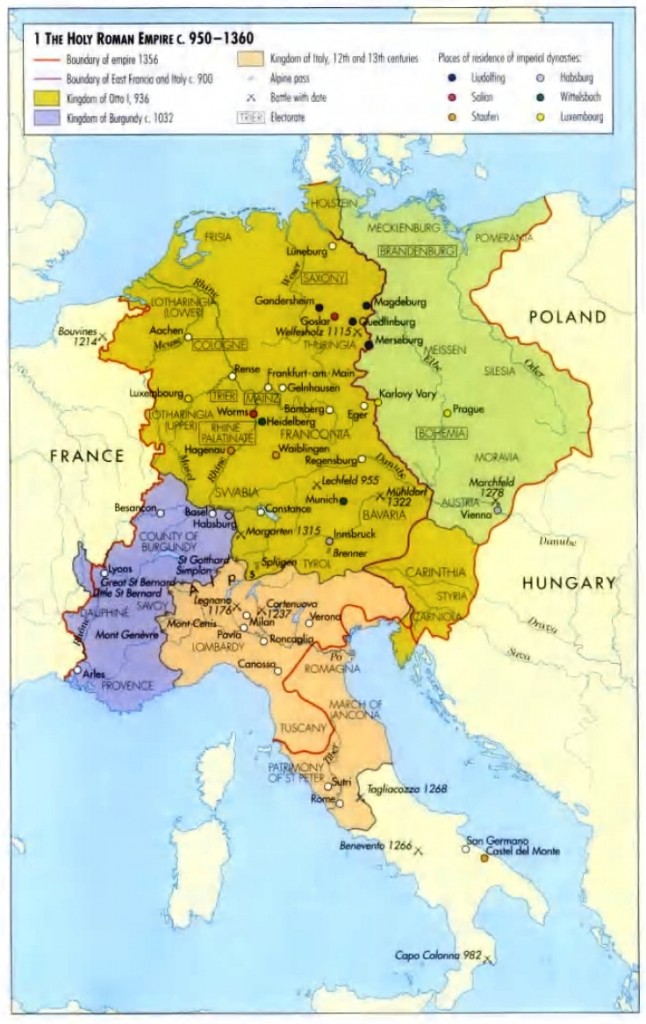
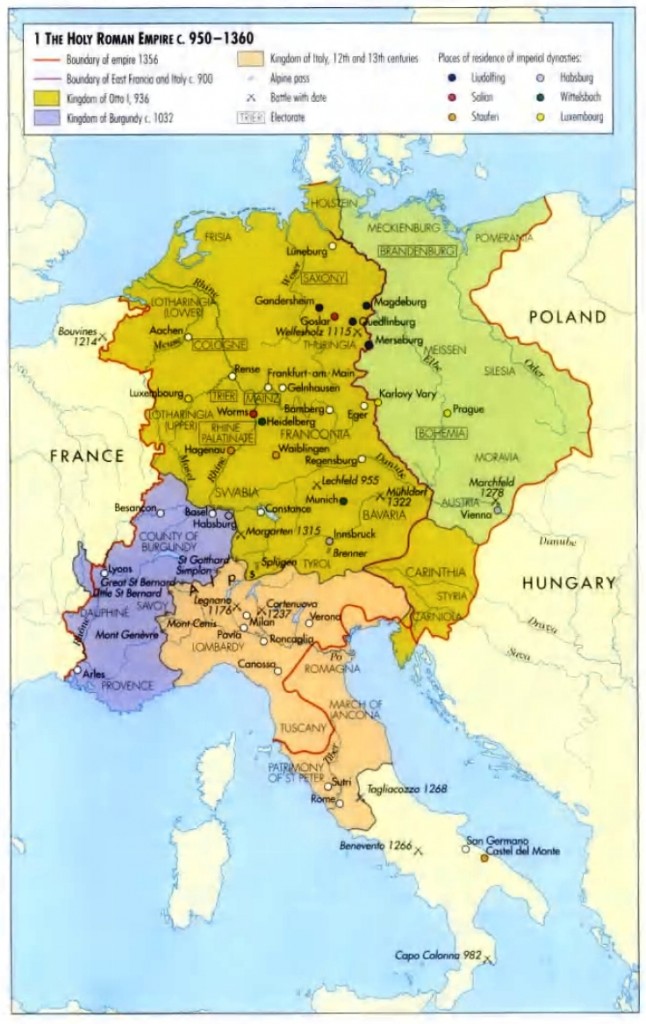
These wars were largely eugenic, germanic, elements of the Holy Roman Empire – meaning the vast territory of central Europe.
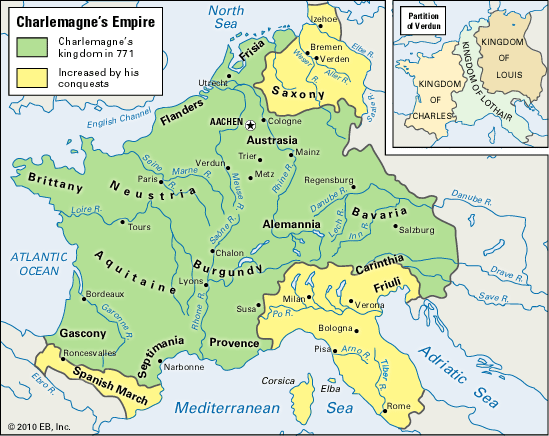
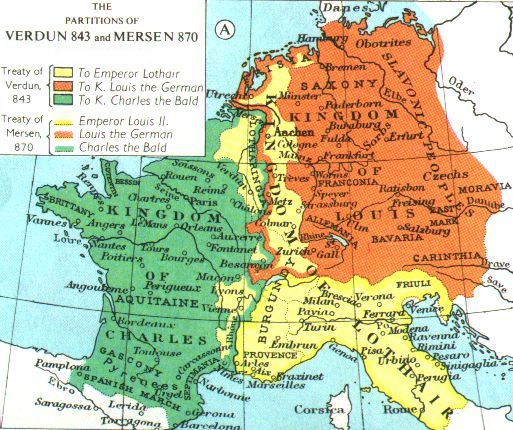
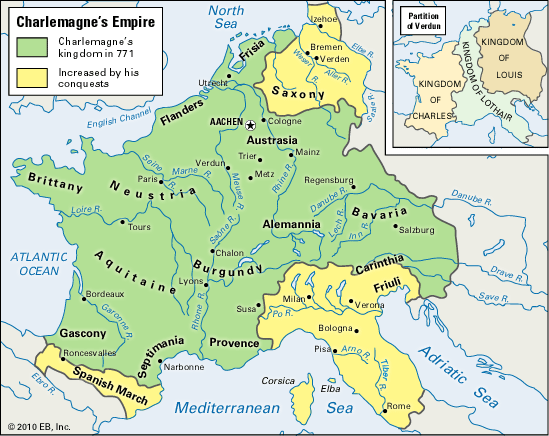
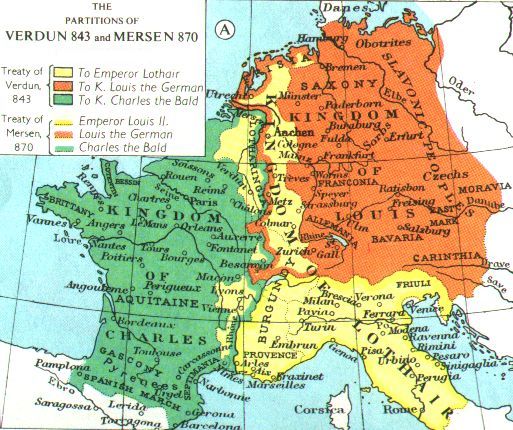
The maximum extent of the Carolingian EmpireThe Treaty of Verdun
The Micro States of a Civilization Versus the Nation States that Break It.
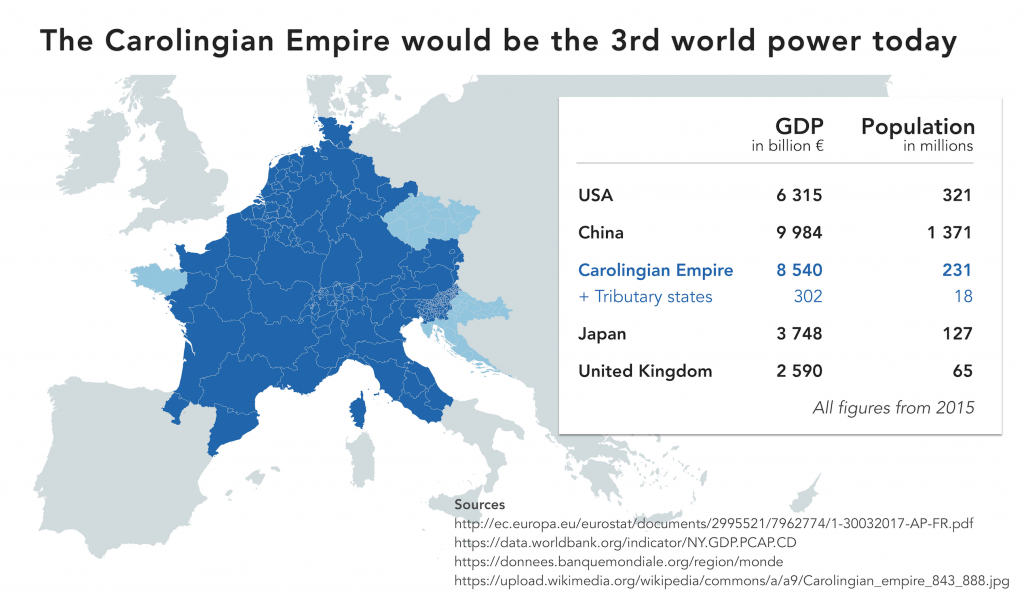
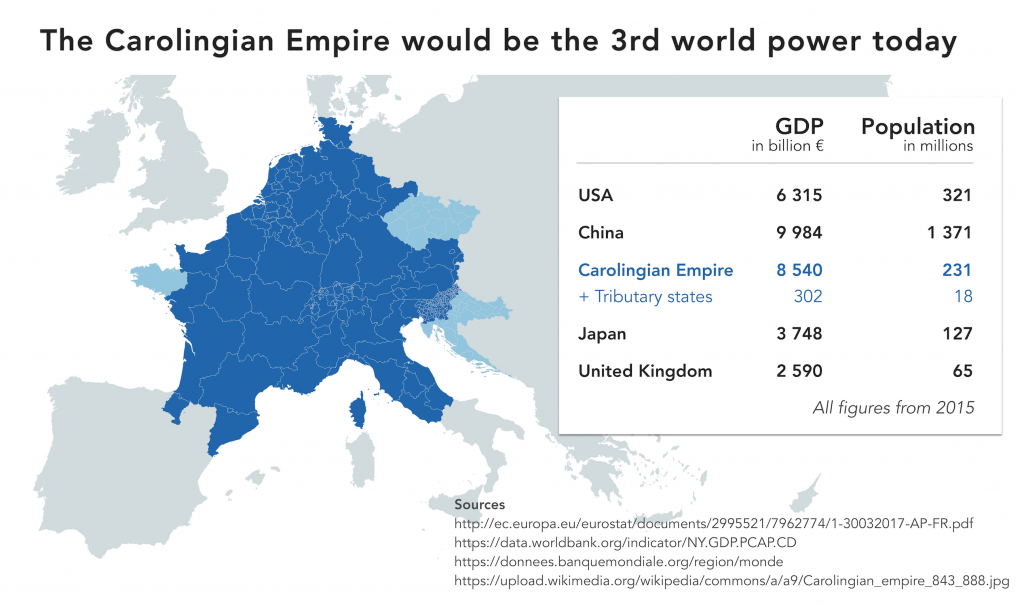
Europe consists of the Carolingian empire of the territorial states of the greater germanic peoples, and the Scandinavian naval states to the north. With its original capitol city (seat) in Aachen (Aken), the Carolingian empire would be the third world power today – and without napoleon’s conquest, still maintain itself as a collection of small states (like Switzerland for example) – which is the design that the founders wisely put in place in the United States.
We are indoctrinated into the normalizing the paradigm of the strong Napoleonic state, but Europe was unified in resistance to the catholic french attempt to conquer the protestant germanic core of Europe. when it was the market for small states that created the continuous competition and evolution of European civilization despite the attempt of the church to recreate byzantine, Semitic, Egyptian ambitions of religious rule. Instead, small states the military aristocracy, and the common law tradition formed a natural competition between the aristocracy, the law, and the church – a tradition that is uniquely European.
The only value of scale is war, trade negotiation, and debt. And while war, trade manipulation, and debt expansion can provide short term military and economic advantage in defense, all three converts into an external dependency creating vulnerability in the long term. And States like businesses and households are happy to seek to maintain a short term advantage until it evolves into a long term vulnerability (fragility).
The Germanic Expansion
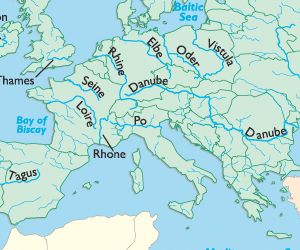
The German Eastern Settlement saw migration and chartering of settlement structures by ethnic Germans of the Holy Roman Empire into less-populated territories, however, already inhabited by Slavs and Balts east of the Saale and Elbe rivers, primarily the southern and western regions of Eastern Europe and the Baltics. The area of colonization stretched from Estonia at the Baltic coast in the north, via the territories that conform to modern Poland and Silesia, further into Bohemia and Slovenia, Hungary, and extended south-east into Transylvania (today in Romania). The Ostsiedlung took place along the roughly 1,000 km (620 mi) long eastern territorial border of the Empire and the State of the Teutonic Order. The old term Deutsche Ostkolonisation (German Colonization of the East), which was often used in the past, has been discontinued since the middle of the 20th century due to its linguistic proximity to modern colonialism.
Central and Eastern European societies underwent various changes in culture, religion, law and administration, agriculture, demography (settlement numbers and structures) during the period of German eastward expansion. Starting in the 1980s, modern historians have interpreted the Ostsiedlung as an element of the process, called Hochmittelalterlicher Landesausbau (High Middle Age Land Consolidation), a pan-European intensification process from the Carolingian-Anglo-Saxon core countries to the periphery of the continent. Contemporary documents do not contain ideas of long-term imperial policies towards organized colonization, neither was there a discernible linear settlement process as immigration took place in many individual efforts and stages, often settlers were encouraged by the Slavic regional lords.[4][5]
The ethnic patchwork of 12th and 13th century Central and Eastern Europe was complex as the total numbers of settlers were rather low and, depending on who locally held a numerical majority, populations usually assimilated into each other. Contingents of immigrants were first documented during the High Middle Ages in the mid 12th century, and it ended at the beginning of the 14th century. The ethnic, cultural, linguistic and religious as well as economic changes caused by the German Eastern settlement had a profound influence on the history of Eastern Central Europe between the Baltic Sea and the Carpathians until the 20th century
The Polonization (“Polishification”) process of Germans who had settled since the 13th century in Poland, in towns like Kraków (Krakau, Cracow) and Poznań (Posen) in the midst of Polish lands, lasted about two centuries. They constituted a patriciate(nobility) that was not able to continue its isolated position without a continuation of newcomers from German lands. The Sorbs over time also assimilated German settlers in their midst, yet at the same time, other Sorbs were themselves assimilated by the surrounding German-speaking population. Many Central and Eastern European towns remained for some centuries multi-ethnic melting pots.
The Italian Rennaisance
The British Empirical Revolution
The Enlightenment as a Revolution Against Anglo Empiricism
The Divergence of Anglo Germanic and Germanic
And by enfranchising the Ashkenazi, at the same time as falsifying the church …
Tri-Functionalism: Military State, Law, and Religion
This competition between masculine (martial hierarchical) and (feminine (social-constrictive equalitarian) elites is possible because only Europeans and Ashkenazi reside in the outlier among civilizations – European civilization – that, because of our first principle of self-determination by self-determined means, and markets in all aspects of life, allows a market for elites, and elite language, logic, and grammar, mediated by empirical law, producing specializations in elites we call Tri-Partism and Tri-Functionalism ((a)War-Technology-Science, (b)Law-Reason-Empiricism, (c) Philosophy-Faith-Empathy).
So within European civilization – at least Pre and Post Christianity – we tolerate argumentative political competition between the three sets of elites, because our law is limited to disputes over the material, and competition between elites to undermining our law and order.
While our ancestral pagan religion was Political, Archetypal, Military and heroic, and the Heathan Religion of the hearth and home left for women and the underclasses, there was no religion of social status for women and underclasses, except the service of that martial and pagan political religion. And as urbanization increased, the population increased, trade increased, the vast size and complexity of the empire increased, and power distance increased, the alienation of women, underclasses, immigrants, and slaves increased, even more so than between the technological(formal) and non-technological(informal) classes today.
This Vacuum – the need to restore membership and sedate alienation – was filled by a host of mystical cults until Christianity provided a status hierarchy and political organization to compete with the military. And Christianity was cheap – it required no achievements, no investments, no costs other than empathy, kindness, adherence to supernatural faith, ritual, and dogma in exchange for membership in a clan that provided empathy and community for the alienated, and new elites specializing in their interests.
Had Christianity evolved as were the other pagan cults, as a religion of the underclasses and women, then
Unfortunately, because the Jewish strategy intuits the feminine instinct of tribe, consensus building, socialism and relies on the female strategy of undermining by fomenting resentment, we have been, like all civilizations that have cast out the jews, too tolerant, because we are equally tolerant of our women for evolutionary reasons, but we are only organized to resist male warfare by male means of force, and too Christian in our .. of the poor.
women and jews and immigrants from the third world at the same time
(continue story)
—Man was not oppressed. He was a violent, pragmatic, hyper consumptive, hyperproductive, hyper adaptive, ecologically devastating, superpredator, that was incrementally domesticated by taking over the dominance hierarchy like every other domesticated animal and regulating his behavior and reproduction, and that domestication was judge by selection for increasing participation in a productive division of labor.—
The Third Great European Transformation: North Sea
“‘Rather than focus on why Europe diverged from the rest in 1800 we should be asking why the North Sea diverged from the rest in 1000.‘–H.B.D.C.
“By 1200 Western Europe has a GDP per capita higher than most parts of the world, but (with two exceptions) by 1500 this number stops increasing. In both data sets, the two exceptions are the Netherlands and Great Britain. These North Sea economies experienced sustained GDP per capita growth for six straight centuries. The North Sea begins to diverge from the rest of Europe long before the ‘West’ begins its more famous split from ‘the rest.’
“[W]e can pinpoint the beginning of this ‘little divergence’ with greater detail. In 1348 Holland’s GDP per capita was $876. England’s was $777. In less than 60 years time Holland’s jumps to $1,245 and England’s to 1090. The North Sea’s revolutionary divergence started at this time.”
The Ability To Scale Organizations
The Restoration of Aristotle
The Plague
The Reformation
one of the biggest targets of the reformation in Germany — one that, unlike the indulgences, etc., you don’t normally hear much about — is that the reformers wanted to take back control of marriage and marriage regulations from the central church. apart from the cousin marriage bans, another huge change that the roman catholic church had made to marriage in the middle ages was to make a marriage valid only if the man and woman involved freely agreed to be married to one another. the church, in other words, had taken marriage out of the hands of parents who were no longer supposed to engage in arranging marriages for their children. the choice was to be freely made by the couple, no approval was necessary from the family, and, up until the 1500s, you didn’t even have to get married by a priest — two adults (a man and a woman) could just promise themselves in marriage to one another, even without witnesses, and that was enough. (one might always be disowned and disinherited, of course, if your parents didn’t approve, but they could not legally stop you from marrying.)
the germans reversed this after the reformation, and put marriage back in the hands of parents — at least they had to give their approval from then on. the reformers also reversed the cousin marriage bans, although curiously the rates of cousin marriage do not appear to have increased substantially afterward.
The Separation by Eugenic Evolution
The combination of the restoration of Aristotle, the construction of northern trade under the Vikings then the Hanseatic league, the expansionary financial system of the Saxons (the European equivalent of today’s jews), the printing press, the Muslim blockade of Europeans giving birth to the age of sail, northern Europeans lost their tolerance for the corruption, taxation, and foreign influence of the church in the third great revolt against the church’s corruption.
As a consequence, Europe had passed through a series of long wars to separate the dysgenic south from the eugenic north. (A problem northern and southern Italy still refuse to face. Southern Italy is the Mexico of North America, and economically indifferent from Greece, with whom they are genetically related. Italians, after all, were Aryans not neolithic farmers. Greece southern Italy and the islands remain the children of neolithic farmers, and a long tradition of minor population exchange around the Mediterranean.)
These wars were largely eugenic, germanic, elements of the Holy Roman Empire – meaning the vast territory of central Europe.
The maximum extent of the Carolingian EmpireThe Treaty of Verdun
The Micro States of a Civilization Versus the Nation States that Break It.
Europe consists of the Carolingian empire of the territorial states of the greater germanic peoples, and the Scandinavian naval states to the north. With its original capitol city (seat) in Aachen (Aken), the Carolingian empire would be the third world power today – and without napoleon’s conquest, still maintain itself as a collection of small states (like Switzerland for example) – which is the design that the founders wisely put in place in the United States.
We are indoctrinated into the normalizing the paradigm of the strong Napoleonic state, but Europe was unified in resistance to the catholic french attempt to conquer the protestant germanic core of Europe. when it was the market for small states that created the continuous competition and evolution of European civilization despite the attempt of the church to recreate byzantine, Semitic, Egyptian ambitions of religious rule. Instead, small states the military aristocracy, and the common law tradition formed a natural competition between the aristocracy, the law, and the church – a tradition that is uniquely European.
The only value of scale is war, trade negotiation, and debt. And while war, trade manipulation, and debt expansion can provide short term military and economic advantage in defense, all three converts into an external dependency creating vulnerability in the long term. And States like businesses and households are happy to seek to maintain a short term advantage until it evolves into a long term vulnerability (fragility).
The Germanic Expansion
The German Eastern Settlement saw migration and chartering of settlement structures by ethnic Germans of the Holy Roman Empire into less-populated territories, however, already inhabited by Slavs and Balts east of the Saale and Elbe rivers, primarily the southern and western regions of Eastern Europe and the Baltics. The area of colonization stretched from Estonia at the Baltic coast in the north, via the territories that conform to modern Poland and Silesia, further into Bohemia and Slovenia, Hungary, and extended south-east into Transylvania (today in Romania). The Ostsiedlung took place along the roughly 1,000 km (620 mi) long eastern territorial border of the Empire and the State of the Teutonic Order. The old term Deutsche Ostkolonisation (German Colonization of the East), which was often used in the past, has been discontinued since the middle of the 20th century due to its linguistic proximity to modern colonialism.
Central and Eastern European societies underwent various changes in culture, religion, law and administration, agriculture, demography (settlement numbers and structures) during the period of German eastward expansion. Starting in the 1980s, modern historians have interpreted the Ostsiedlung as an element of the process, called Hochmittelalterlicher Landesausbau (High Middle Age Land Consolidation), a pan-European intensification process from the Carolingian-Anglo-Saxon core countries to the periphery of the continent. Contemporary documents do not contain ideas of long-term imperial policies towards organized colonization, neither was there a discernible linear settlement process as immigration took place in many individual efforts and stages, often settlers were encouraged by the Slavic regional lords.[4][5]
The ethnic patchwork of 12th and 13th century Central and Eastern Europe was complex as the total numbers of settlers were rather low and, depending on who locally held a numerical majority, populations usually assimilated into each other. Contingents of immigrants were first documented during the High Middle Ages in the mid 12th century, and it ended at the beginning of the 14th century. The ethnic, cultural, linguistic and religious as well as economic changes caused by the German Eastern settlement had a profound influence on the history of Eastern Central Europe between the Baltic Sea and the Carpathians until the 20th century
The Polonization (“Polishification”) process of Germans who had settled since the 13th century in Poland, in towns like Kraków (Krakau, Cracow) and Poznań (Posen) in the midst of Polish lands, lasted about two centuries. They constituted a patriciate(nobility) that was not able to continue its isolated position without a continuation of newcomers from German lands. The Sorbs over time also assimilated German settlers in their midst, yet at the same time, other Sorbs were themselves assimilated by the surrounding German-speaking population. Many Central and Eastern European towns remained for some centuries multi-ethnic melting pots.
The Italian Rennaisance
The British Empirical Revolution
The Enlightenment as a Revolution Against Anglo Empiricism
The Divergence of Anglo Germanic and Germanic
And by enfranchising the Ashkenazi, at the same time as falsifying the church …
Tri-Functionalism: Military State, Law, and Religion
This competition between masculine (martial hierarchical) and (feminine (social-constrictive equalitarian) elites is possible because only Europeans and Ashkenazi reside in the outlier among civilizations – European civilization – that, because of our first principle of self-determination by self-determined means, and markets in all aspects of life, allows a market for elites, and elite language, logic, and grammar, mediated by empirical law, producing specializations in elites we call Tri-Partism and Tri-Functionalism ((a)War-Technology-Science, (b)Law-Reason-Empiricism, (c) Philosophy-Faith-Empathy).
So within European civilization – at least Pre and Post Christianity – we tolerate argumentative political competition between the three sets of elites, because our law is limited to disputes over the material, and competition between elites to undermining our law and order.
While our ancestral pagan religion was Political, Archetypal, Military and heroic, and the Heathan Religion of the hearth and home left for women and the underclasses, there was no religion of social status for women and underclasses, except the service of that martial and pagan political religion. And as urbanization increased, the population increased, trade increased, the vast size and complexity of the empire increased, and power distance increased, the alienation of women, underclasses, immigrants, and slaves increased, even more so than between the technological(formal) and non-technological(informal) classes today.
This Vacuum – the need to restore membership and sedate alienation – was filled by a host of mystical cults until Christianity provided a status hierarchy and political organization to compete with the military. And Christianity was cheap – it required no achievements, no investments, no costs other than empathy, kindness, adherence to supernatural faith, ritual, and dogma in exchange for membership in a clan that provided empathy and community for the alienated, and new elites specializing in their interests.
Had Christianity evolved as were the other pagan cults, as a religion of the underclasses and women, then
Unfortunately, because the Jewish strategy intuits the feminine instinct of tribe, consensus building, socialism and relies on the female strategy of undermining by fomenting resentment, we have been, like all civilizations that have cast out the jews, too tolerant, because we are equally tolerant of our women for evolutionary reasons, but we are only organized to resist male warfare by male means of force, and too Christian in our .. of the poor.
women and jews and immigrants from the third world at the same time
(continue story)
—Man was not oppressed. He was a violent, pragmatic, hyper consumptive, hyperproductive, hyper adaptive, ecologically devastating, superpredator, that was incrementally domesticated by taking over the dominance hierarchy like every other domesticated animal and regulating his behavior and reproduction, and that domestication was judge by selection for increasing participation in a productive division of labor.—
(Human) Paleolithic > Mesolithic (“middle stone age”) (Europe 13,000 BC to 3,000 BC) or Epipaleolithic (outside of europe) (18,000 BC to 6,000BC).
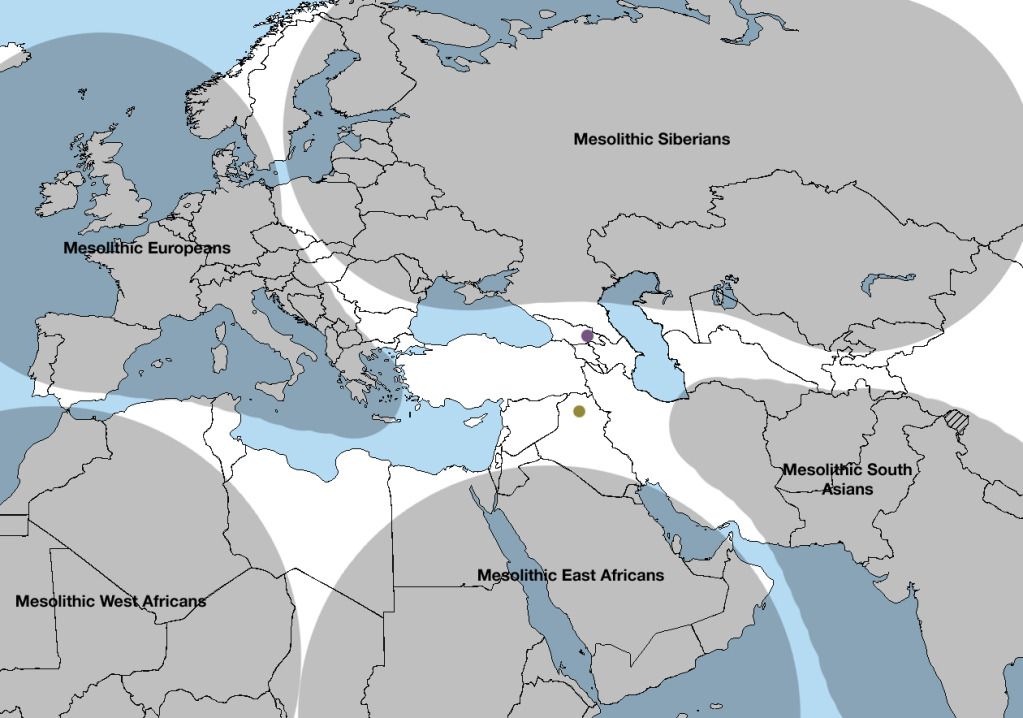
Generation Seven: Adapting to the Exhaustion of Megafauna, and a difficult time for humans. Status: Climate Crisis: Out of Africa > Dependence on the Sea > Nomadic Hunting Megafauna Herds > Ice Age Retreat > Semi Sedentary Small Game and Fishing, dependent on rivers > Domestication of animals and plants > rise of settlements (cities) > bronze revolution and rule > rise of trade, states, and empires.
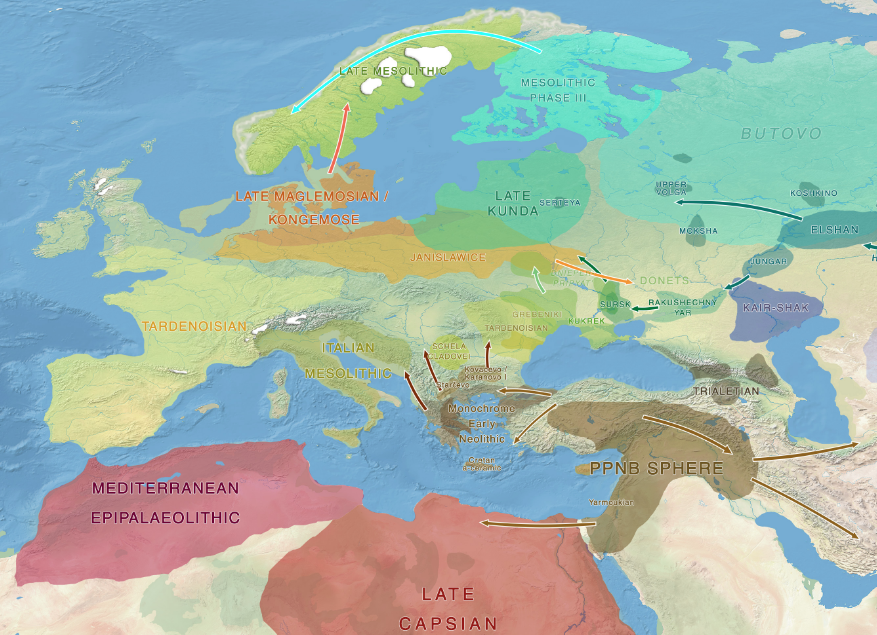
The Mesolithic refers to the final period of hunter-gatherer cultures in Europe and Western Asia, between the end of the Last Glacial Maximum and the Neolithic Revolution. The change in behavior occurred at different times in different regions, so the Mesolithic refers to different time spans in different parts of Eurasia, and the term is used less when referring to areas further east, and not at all beyond Eurasia and North Africa. China didn’t experience the same phase (decline), and similar time frames are considered Early Neolithic instead.
Transitional from hunter gatherers to sedentary if only seasonal. Using many different resources (secondary food sources) Increased use of boats and oars Gradual semi-sedantism Homes Clearing of Forests Selective Burnings Small Dams and Ponds Some Pottery Traps, Nets Bows and Arrows Microliths mounted on a shaft to produce serrated edges. Burials remain the same, cremation, inhumation, and remain personal, coated with red ochre. Ranked society Evidence of violence
Our Mesolithic Stage
The Mesolithic Dark Age
Overkill – the exhaustion of a food source – appears consistently on our journey through history, and the Mesolithic is one result. Seventy-five percent of the larger animals (those of more than 40 kilograms live weight) that became extinct during the late Pleistocene did so by about 10,800 to 10,000 years ago. Whether the primary cause of this decimation was climatic or cultural is still debated, the pattern of history in eurasia and the americas, and in the modern age, in the absence of an extinction level event – other than humans, is hard to blame on other than humans – even if other hypotheses for the late Pleistocene extinctions, such as those involving climatic changes or disease outbreaks, have emerged.
Northern European Continuity: In northern Europe, the hunter gatherers were able to live well on rich food supplies from the marshlands created by the warmer climate, limiting their need to adapt to changes in food supplies – and as a consequence they delayed the coming of (need for) the Neolithic (farming) until 3,500 BC. And the most interesting bit of evidence is the sophistication of their cooking recipes, which would make any contemporary chef proud.
Elsewhere, the pressure to innovate: Necessity is the mother of invention, or rather, scarcity provides incentive to innovate, so while soutwest asia (levant, Mesopotamia) exhausted local hunting, and had to resort to additional food sources, europe – with lower population density, better climate, better terrain, better rivers – could maintain a primarily meat diet much longer. The period saw such successful human predation of animals, and increase in population, that it caused a decline in the group-hunting of large animals in favour of a broader hunter-gatherer way of life, and the development of more sophisticated and typically smaller lithic tools and weapons than the heavy-chipped equivalents typical of the Paleolithic. Art declines. The sites are now mostly cliff faces in the open air, and the subjects are now mostly human rather than animal, with large groups of small figures; there are 45 figures at Roca dels Moros. Clothing is shown, and scenes of dancing, fighting, hunting and food-gathering. The figures are much smaller than the animals of Paleolithic art, and depicted much more schematically, though often in energetic poses. The more permanent settlements tend to be close to the sea or inland waters offering a good supply of food. Mesolithic societies are not seen as very complex, and burials are fairly simple; in contrast, grandiose burial mounds are a mark of the Neolithic.
Europe
There is little of interest to say about the european mesolithic other than the necessary improvement in the precision of stone tools for the shift to dependence upon fishing and hunting smaller game, rather than their ancestral emphasis on hunting of megafauna.
Western Europe: Tardennosian Culture: (Belgium, France, Britain, Spain, Central Europe. Questionable time span, poor documentation, and artifacts differ little from earlier cultures only by the presence of geometric microliths, microburin, scalene triangles, trapezoids and chisel-ended arrowheads and small flint blades made by the pressure-technique.
Northern Europe: Fosna, Hensbacka, and Komsa Cultures, Norway-Sweden (10,000/8300 BC to 7300 BC). On area, central Bohuslän, may well have had the largest seasonal population in northern Europe during the Late Palaeolithic/early Mesolithic transition. The settlements were located close to the contemporary seashore but, due to constant land uplift after deglaciation, they are now well above present-day sea level. Sites indicate fishing and seal hunting were important for the economy likely that hide covered wooden framed boats were used in because the majority of sites are located on islands in the outer archipelago. The culture relied purely on hunting and gathering, and archaeologists have only found stone tools, especially flake axes, lanceolates and tanged arrowheads. Again, these are less sophisticated tools than the preceeding era. The Komsa Culture was almost exclusively sea-oriented, living mainly off seal hunting, fishing, and boat-building, and their stone tools and other implements appear relatively crude.
Baltics: Swiderian-Kundra Culture (11,000 to 8,200 BC), Baltic Forest: Poland-Latvia-Estonia-Russia-Urals, (Soultrean> Swiderian > Kundra -> to Neolithic: Narva -> Pit Comb -> Corded Ware). Genetics were Western Hunter-Gatherers (WHGs) 70% Eastern Hunter-Gatherers (EHGs) 30%, with a substntial contribution of Ancient North Eurasians (ANE). ANE ancestry was lower than that of Scandinavian Hunter-Gatherers, indicating that ANE ancestry entered Scandinavia without traversing the Baltic.
Ahrensburg located to the northwest of Europe.
Asturian located Iberian Peninsula.
Italian Mesolithic
Old Europe – The Balkans
The relative climatic stability in the Balkans, compared to northern and western Europe, enabled continuous settlement. So the area may have effectively functioned as an ice-age refuge from which much of Europe, especially eastern Europe, was re-populated. And that begs the question whether or not there was a period which could be described as Mesolithic in southeastern Europe, rather than an extended Upper Palaeolithic or Epipalaeolithic Balkans, which might describe better its gradual changes and poorly defined development.
Balkans: “Iron Gates” Culture (11,000 BC to 3500 BC) Danube, Balkans, between Romania and Servia. (“Old Europe”). The archaeological complex that consists of one large settlement with around 10 satellite villages dated from 6300BC – 6000 BC, called Lepenski Vir, and due to its permanency, organisation, as well as the sophistication of its architecture and construction techniques may constitute the first “City” in europe. These people were most closely related to Western European hunter-gatherers, but with some additional contribution from Eastern European hunter-gatherers and Anatolian Neolithic farmers.
Skin Painting War Ceramics The Sledge Wood Canoes
Caucuses:
Trialetian Culture
South Asia
(Human) Paleolithic > Late Epipaleolithic (Southwest Asia) > Natufian (“Settlements”) (12,000 to 9,500 BC or 13,050 to 7,550 BC). The Natufian culture is a Late Epipaleolithic or “proto-Neolithic” archaeological culture that existed in the Levant. The culture was unusual in that it supported a sedentary or semi-sedentary population even before the introduction of agriculture. They lived in small round houses, dug into the earth, with stone foundations, posts, brush roofs, and a central hearth. Settlements were semi-temporary and they moved often. The Natufian communities may be the ancestors of the builders of the first Neolithic settlements of the region, which may have been the earliest in the world. Natufians founded a settlement where Jericho is today, which may be the longest continuously inhabited urban area on Earth. Natufians were hunters and gatherers and gazelles were the main prey, but they also hunted deer, aurochs and wild boar in the steppe zone, as well as onagers an ibex. Water fowl and freshwater fish formed part of the diet in the Jordan River valley. And there is evidence of communal hunts with nets, And most interestingly, the wooded terrain was ideal for wild grains, and exploited wild cereals – and some evidence suggests the oldest known evidence of deliberate cultivation of cereals -specifically rye, bread-making, and beer.
The Holocene
(Climate) Quaternary > Upper Pleistocine > Pleistocine End > The Holocene (“Entirely New”,”Civilizational Age”), (9,700 BC to Present) The Period of Post Glacial formation of fully modern humans and the post glacial evolution of agrarianism. It can be subdivided into five time intervals, or chronozones, based on climatic fluctuations:
Preboreal (8,000 BC – 7,000 BC), Boreal (7,000 BC – 6,000 BC), Atlantic (6,000 BC – 3,000 BC), Subboreal 3,000 BC – .5 BC) and Subatlantic (.5 BC – present).
The Holocene includes the period of: … Settlement … Institutions (or Formal Institutions) (organization, strategy, resources, cultures) … States (control, organization, strategy, resources, culture) … Empires (civilizations, core states, core institutions) … Civilizations (Balances of Power between civilizations.) … Mass Extinctions
The present Interglacial (9700 BC to Present) The earth is currently in an interglacial (warm) period, and the last glacial period ended about 10,000 years ago. All that remains of the previous continental ice sheets are the Greenland and Antarctic ice sheets and a few minor glaciers.
The back breaking work of women under agrarianism, and the suppression of underclass reproduction of such women produced the predictable results.
The Neolithic – Agrarian Revolution – Resurrection
Generation Eight
[ THE THIRD GREAT LEAP FORWARD ]
[ HERE : 50-24000 years to create fully contemporary humans]
(Human) Neolithic (“New Stone Age”) The Period of Settlement, Pottery, Agriculture, and polished stone tools. … SW Asia: (10,200 BC to 4500 BC) … Europe (to 1700 BC) … China (to 1200 BC) Other parts of the world (including Oceania and the northern regions of the Americas) remained broadly in the Neolithic stage of development until European contact
The Neolithic includes a progression of technological, behavioral, and cultural changes including the use of wild and domestic crops, domestication of animals, new clothing, building of shelters, sedentary living, social organization, and eventually, pottery, that evolved out of Natufian Culture.
As the Natufians became dependent on wild cereals in their diet, and developed a sedentary way of life, the climatic changes associated with the Younger Dryas (about 10,000 BC) forced people to develop farming. By 8,800 BC farming communities had arisen in the Levant and spread to Asia Minor, North Africa and North Mesopotamia.
Early Neolithic farming was limited to a narrow range of plants, both wild and domesticated, which included einkorn wheat, millet and spelt, and the keeping of dogs, sheep and goats. By about 6900–6400 BC, it included domesticated cattle and pigs, the establishment of permanently or seasonally inhabited settlements, circular and rectangular multi-room buildings, and the use of pottery.
The archaeological industry is overly interested in minor developments in different regions of the world, but for our purposes, the climate generated demand for farming, and population growth for settlements, a division of labor, and eventually expansion of settlements into new regions.
In other parts of the world, such as Africa, South Asia, Southeast Asia and East Asia, independent domestication events, and technological innovations led to regionally distinctive Neolithic combinations. Travel has always existed, trade has always existed, and information spreads quickly – but unevenly. But it’s this rapid spread of the technology around the world that we should take notice of.
Temple Religion Begins – With Hunter Gatherers
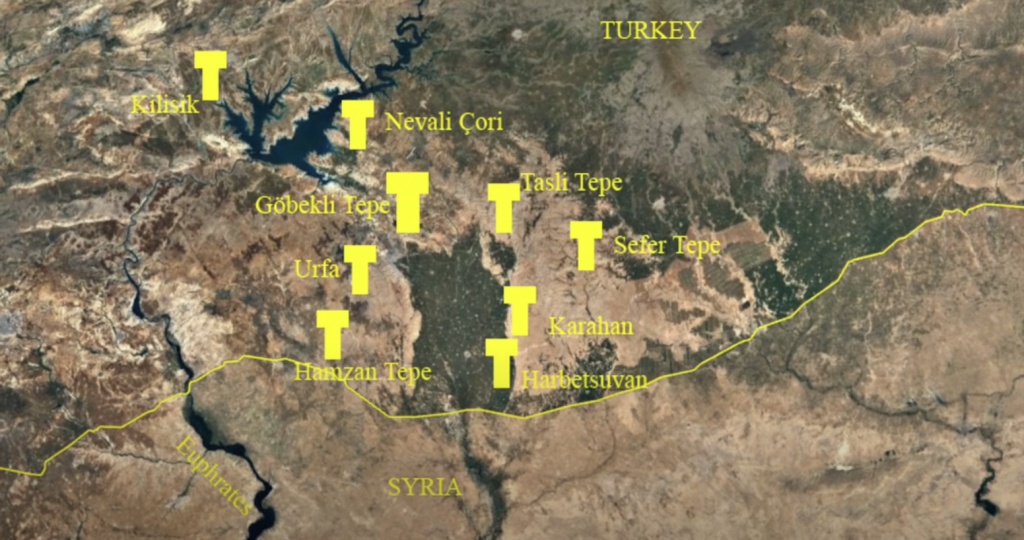
These Hunter Gatherers appear to have developed an animistic religion of some sort in Anatolia by 10,000 bc, with temple construction on a barren flat hilltop (plateau) with fifty miles of visibility in every direction in what is today an arid plain. In the neolithic, with the mountains catching the rain, a porous bedrock created many springs, creeks, and rivers, so this region in the upper reaches of the Euphrates and Tigris was a refuge of wildlife during the dry and cold Younger Dryas climatic event (10,800–9,500 BC). Archaeologists have discovered at least two of these temple complexes and general consensus is that there must be more.
Present theory suggests its a mountain hunting retreat that took advantage of seasonal migration of gazelles that somehow evolved into a place of pilgrimage, rituals, feasts and celebration. And it appears from the genetic evidence that the original domestication of wheat occurred within twenty miles of the site.
Local population expansions locally may have led them to develop common rituals strengthened by monumental gathering places to reduce tensions and conflicts over resources, and probably, to mark territorial claims. The structure of the site we call Gobekli Tepe predates pottery, metallurgy, and the invention of writing or the wheel.
Consensus appears to be that this religion was likely shamanistic, and that gods did not develop until the later Mesopotamian period. This corresponds to an ancient Sumerian belief that agriculture, animal husbandry, and weaving were brought to humans from the sacred mountain which was inhabited by deities – very ancient deities without individual names. (A parallel to the Greek Mount Olympus.)
The animal and other images give no indication of organized violence. Meaning there are no depictions of hunting raids or wounded animals, and the carvings generally ignore game on which the society depended, such as deer, in favour of formidable creatures such as lions, snakes, spiders, and scorpions.
Around the beginning of the 8th millennium BCE Göbekli Tepe lost its relevance. The advent of agriculture and animal husbandry brought new realities to human life in the area, and the “Stone-age zoo” apparently lost whatever significance it had had for the region’s older, foraging communities. For reasons unknown, the site was deliberately buried under earth, saving it from man and the elements.
The Domestication of Animals (Pastoralism) and Plants (Agriculture) Begins
Humans began domesticating plants and animals where and when it was most necessary to domesticate them: where they had produced enough of a population to overtax the flora and fauna. Necessity was the mother of the invention.
Animals: Pigs were domesticated in Mesopotamia around 11,000 BC, followed by sheep between 11,000 BC and 9000 BC. Cattle were domesticated from the wild aurochs in the areas of modern Turkey and Pakistan around 8500 BC.
Crops: Starting from around 9500 BC, the eight Neolithic founder crops – emmer wheat, einkorn wheat, hulled barley, peas, lentils, bitter vetch, chick peas, and flax – were cultivated in the Levant. Rye may have been cultivated earlier, but this remains controversial. Rice was domesticated in China by 6200 BC with earliest known cultivation from 5700 BC, followed by mung, soy and azuki beans.
Sugarcane and some root vegetables were domesticated in New Guinea around 7000 BC. Sorghum was domesticated in the Sahel region of Africa by 3000 BC. In the Andes of South America, the potato was domesticated between 8000 BC and 5000 BC, along with beans, coca, llamas, alpacas, and guinea pigs. Bananas were cultivated and hybridized in the same period in Papua New Guinea. In Mesoamerica, wild teosinte was domesticated to maize by 4000 BC. Cotton was domesticated in Peru by 3600 BC. Camels were domesticated late, perhaps around 3000 BC.
For this change to occur across the planet, despite the distance between hunter gatherer populations, a change in climate had to create the opportunity and incentive.
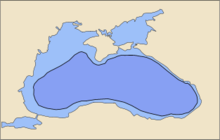
Crisis: The Black Sea Deluge (Flood)
Whether causal or not, the Black Sea Deluge occurs sometime between 7000 and 5600 bc. This event probably accounts for the lack of neolithic sites in Northern Anatolia (Turkey) – they’re now underwater. There are at least three early human sites of freshwater development that have been inundated by the floods: the Persian gulf flood – most likely candidate for the first civilization, the Black Sea flood, and the Doggerland flood in what is today’s North Sea. (The flooding of the Mediterranean 5M years ago, is before modern humans.) Although the Missoula floods in North America likely (at least according to myth) at least affected the first Siberians migrating to the Americas.
Theorized expansion of the Black Sea during the deluge. Note that all coastal communities would have been inundated and buried.
Continued Striation of Groups
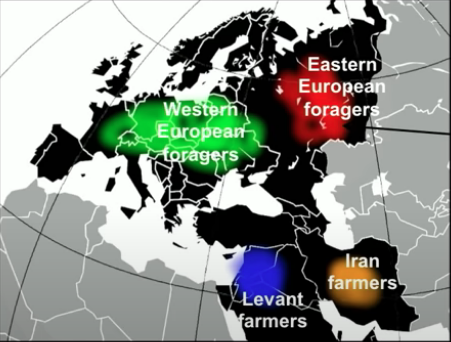
Sometime around 43,000 BC, the ancestors of what would become the Early European Farmers (EEF) are believed to have split off from Western Hunter-Gatherers (WHGs), and again, these EEF appear to have split from Caucasian Hunter-Gatherers (CHGs) around 23,000 BC, Just as Ancestral North Eurasian (ANE) Hunter Gatherers split off from Western Hunter gatherers, around 24,000 BC.
Result: North: Western Hunter Gatherers Center: Caucuses and Anatolia: Caucasion Hunter Gatherers South: the Levant: Early European Farmers
Adaptive Speciation Begins
43,000 BC, the ancestors of what would become the Early European Farmers (EEF) are believed to have split off from Western Hunter-Gatherers (WHGs), and again appear to have split from Caucasian Hunter-Gatherers (CHGs) around 23,000 BC. And Ancient North Eurasian Hunter Gatherers hybridized and split off from european hunter gatherers 24000BC.
So, at the beginning of the Neolithic there are at least four separate races as different then as europeans and asians are today.
South Asians (india), North and South (Asians Eas Asia), Siberians and Siberian Americans (north America), Oceanans, and Austronesians, are all equally
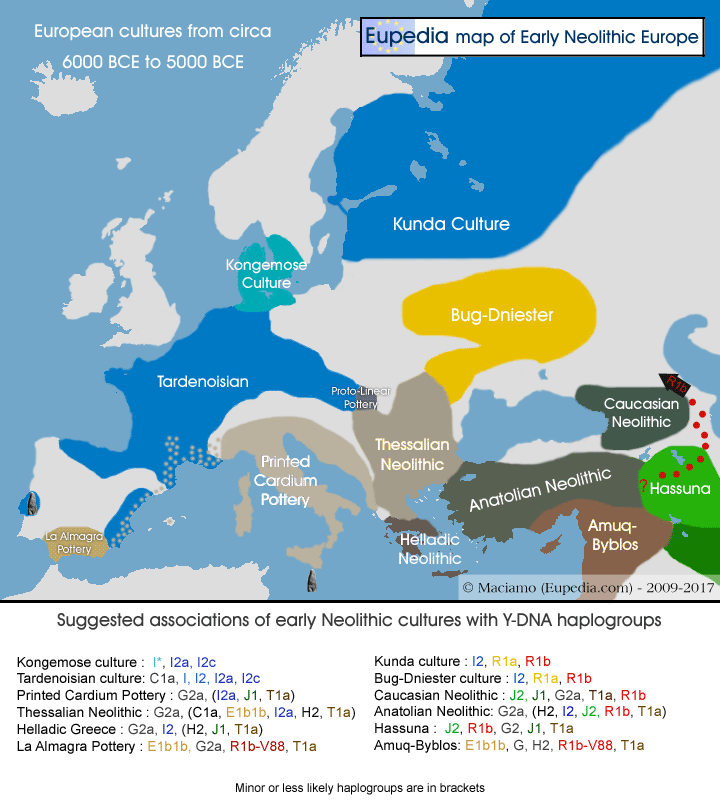
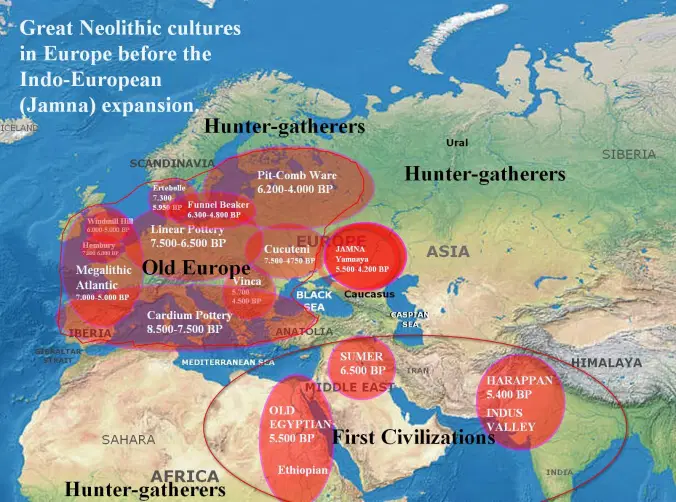
Early Neolithic Cultures in Europe
(6000 BC to 5000 BC)
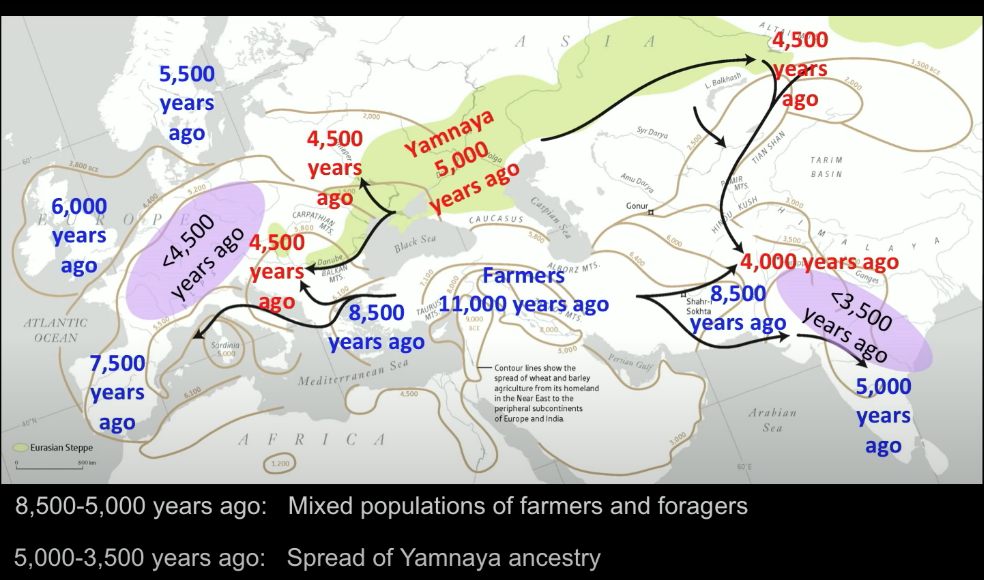
Farmers Spread into Eurasia: Agrarian Hybridization
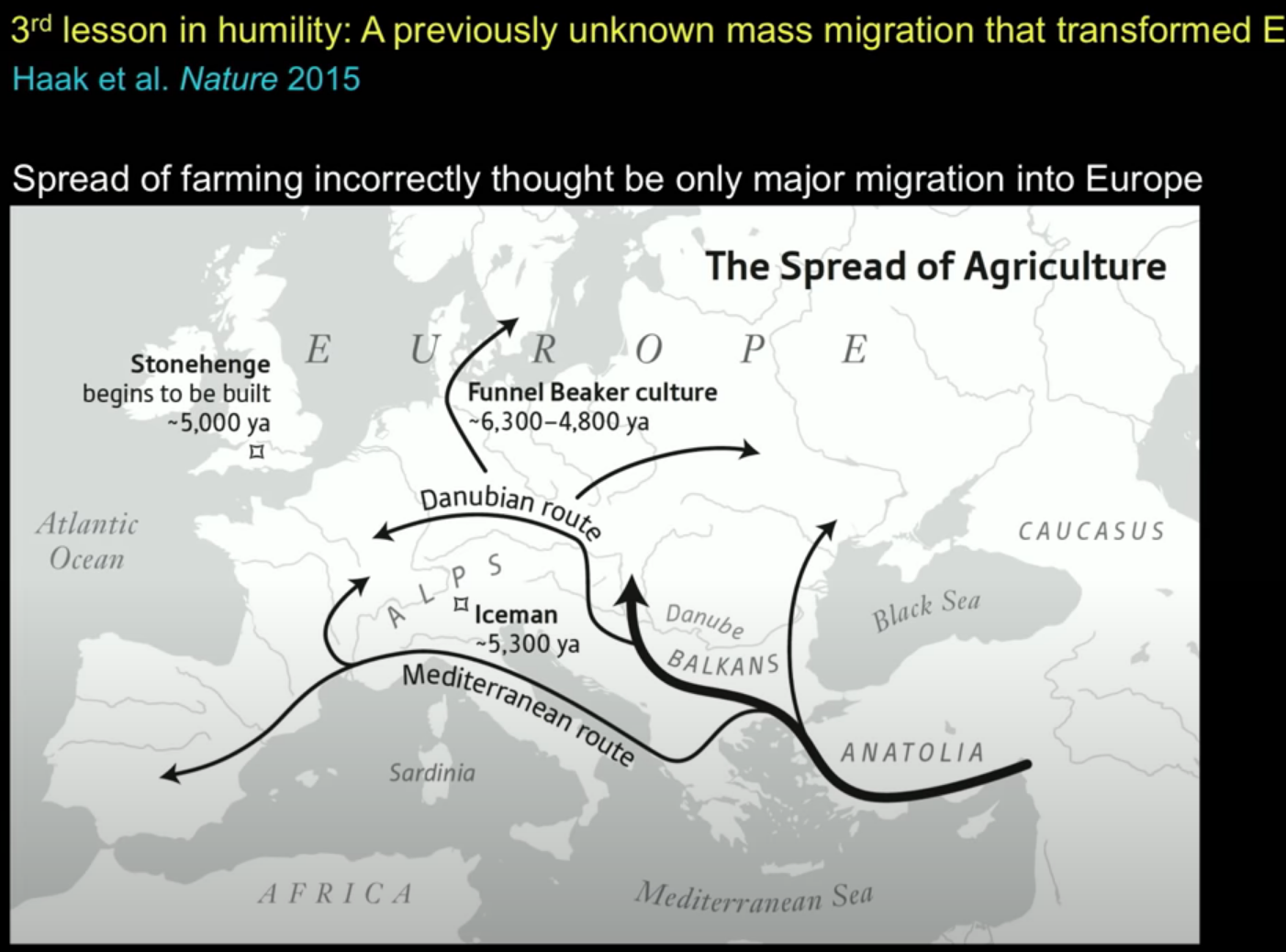
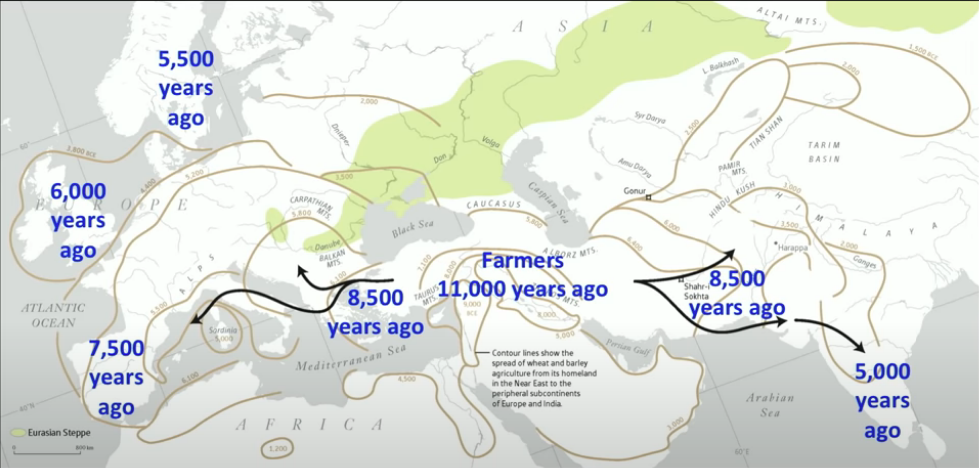
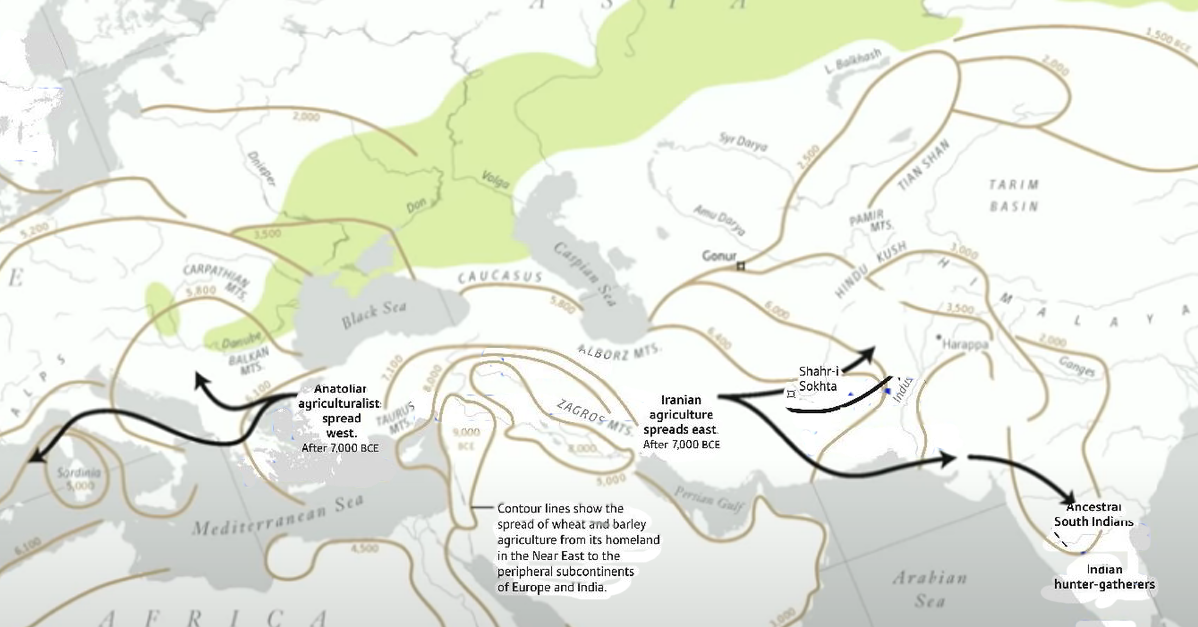
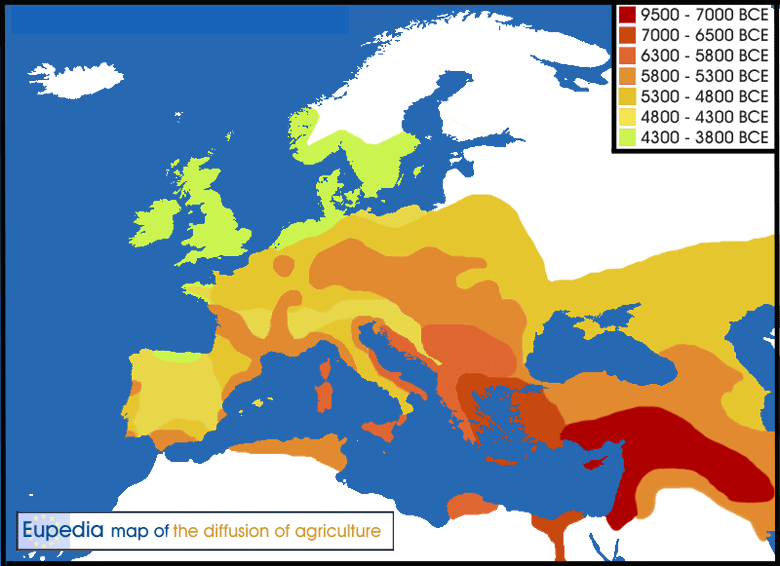
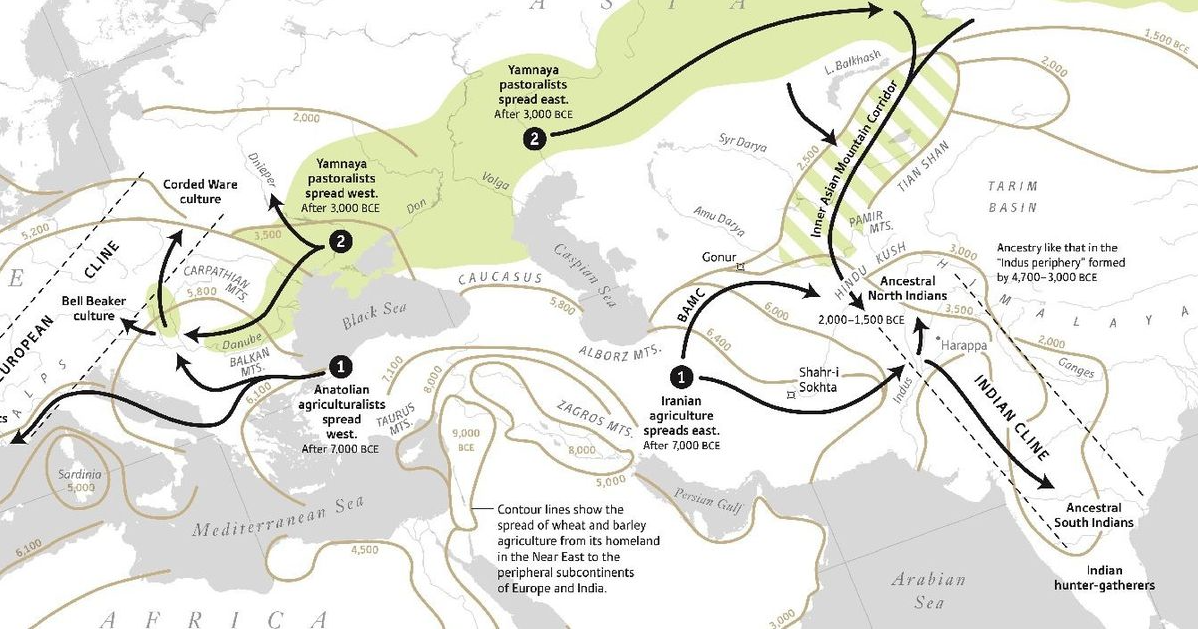
The Farmer Migration (The descendants of the EEF and CHG migrated from Anatolia to the Balkans in large numbers – a single massive migration – during the 7th millennium BC, where they almost completely replaced the WHGs.
In the Balkans, the EEFs appear to have divided into two wings, who expanded further west into Europe along the Danube (Linear Pottery culture) or the western Mediterranean (Cardiol Ware). But large parts of Northern Europe and Eastern Europe remained unsettled by EEFs.
The Westward branch continued to expand along the Mediterranean coast, into the Iberian peninsula, up through France, and by 4000bc, into the British isles, and 3500bc into scandinavia.
Spread and direction of agriculture. Note: convert these dates from YA to BC for consistency.
The EEFs spread agriculture throughout Europe largely without admixture with local WHGs. The EEFs subsequently split into two branches, one which spread northwards along the Danube through the Linear Pottery culture, and another which spread westward across the Mediterranean coast through the Cardinal Ware culture. By 5600 BC, these cultures had brought agriculture to Iberia and Central Europe.
The slight mixture between EEFs and hunter-gatherers in the Early Neolithic appeared to have happened without sex-bias, increases in hunter-gatherer ancestry appeared to be largely the result of males with hunter-gatherer ancestry mixing with females with EEF ancestry. Hunter-gatherer ancestry was even higher among Late Neolithic samples from the Cucuteni–Trypillia culture, Funnelbeaker culture and Globular Amphora culture, which carried about 75-80% EEF ancestry while being dominated by hunter-gatherer paternal lineages.
Initial westward spread of the EEFs from the Balkans was accompanied only by slight admixture with hunter-gatherer populations. Peoples of Middle Neolithic and Chalcolithic Iberia were found to carry about 75% EEF ancestry and 25% WHG ancestry, more WHG ancestry than Early Neolithic Iberians. Significant reductions in EEF ancestry during the later phases of the Neolithic was also observed in Central Europe, particularly in the northern and eastern parts of the region
In the southern Balkans, the Middle Neolithic farmers display reduced levels of EEF ancestry increased amounts of ancestry related to Caucasian Hunter-Gatherers (CHGs), suggesting further gene flow from Anatolia, which continued into the Bronze Age.
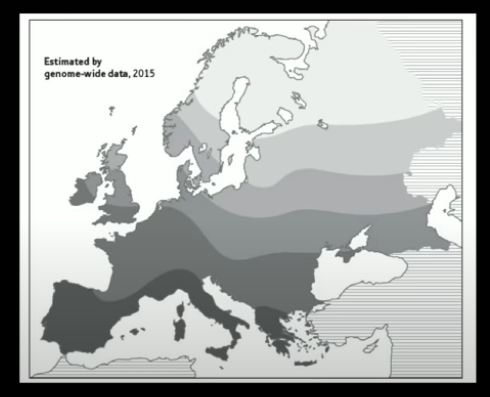
EEF ancestry remains throughout Europe, ranging from about 60% near the Mediterranean Sea (with a peak of 85% in the island of Sardinia) and diminishing northwards to about 30% around the Baltic Sea.
So, while the WHGs were largely displaced by successive expansions of Early European Farmers (EEFs) during the early Neolithic, they experienced a male-driven resurgence of WHG during the Middle Neolithic, for reasons we don’t yet understand – but could be as simple as recruitment.
Selection: The gene for light eye color was at 100% fixation in hunter-gatherers throughout western Europe. Northern (Scandinavia) had the gene for white skin. Spain and Luxembourg did not. European farmers had a mixture (homozygous).
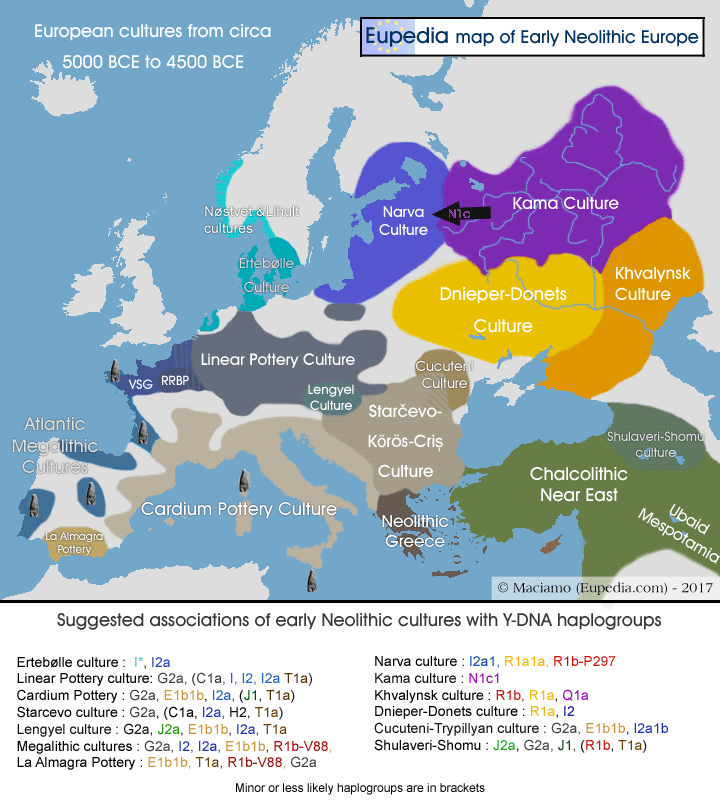
Cultures of Neolithic Europe (5,000 BC to 4,500 BC)
Pre-History
(Historical) Pre-History (Pre-Writing) > Protohistory (“Early Writing”): Period between prehistory and history, during which a culture or civilization has not yet developed writing but other cultures have already noted its existence in their own writings; the absolute time scale of “protohistory” varies widely depending on the region, from the late 4th millennium BCE in the Ancient Near East to the present in the case of uncontacted peoples.
The Age of Metal
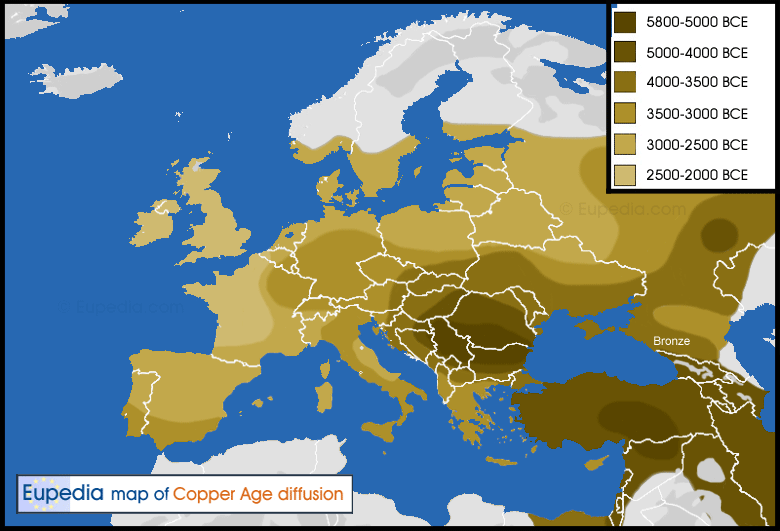
(Human) Neolithic > Chalcolithic: (“Copper Age”) (4,500 BC to ???? ) The Period of Metallurgy.
Indus Region (Proto Indus Valley Civilization)
Balochistan (6500 BC)
“Baloch” was the name by which the Indus Valley Civilisation is believed to have been known to the Sumerians (2900–2350 BC) and Akkadians (2334–2154 BC) in Mesopotamia. But it disappears from the Mesopotamian records at the beginning of the second millennium BC.
Mesopotamia
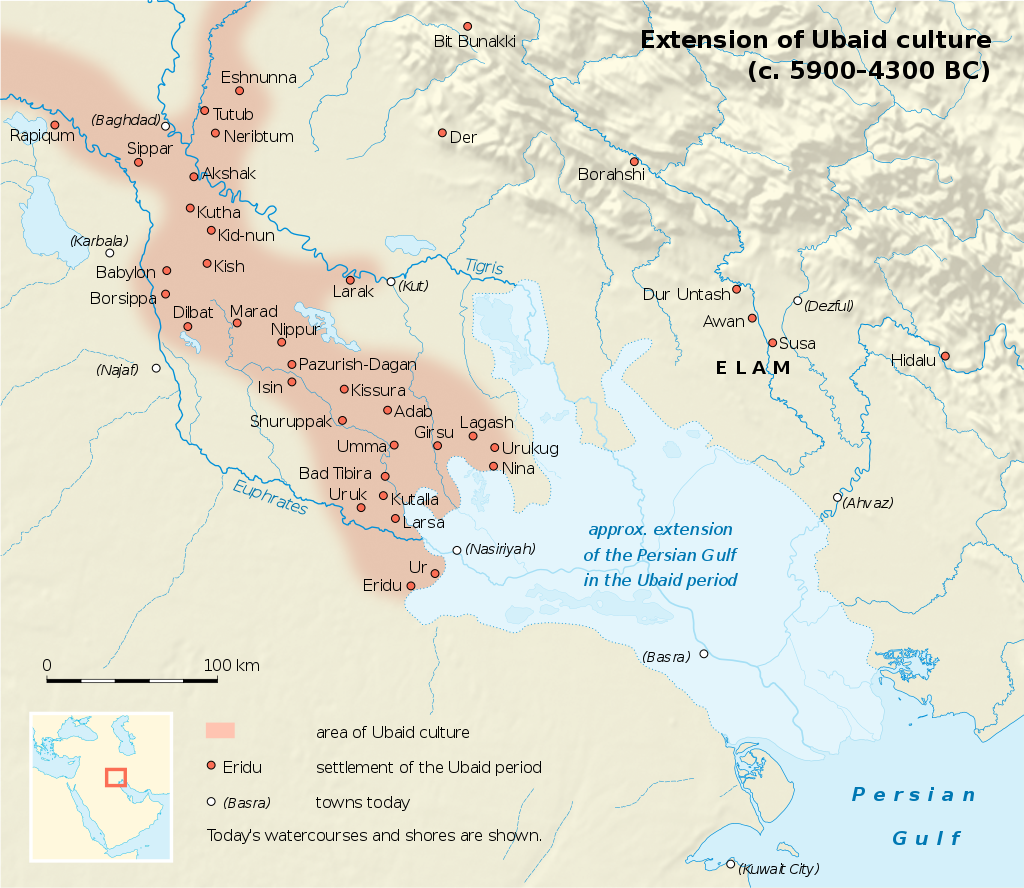
The Ubaid Period (6500 BC to 3800 BC)
Notable:
Stamps and Seals
Stone, hard fired Clay, and Metal Tools
Hydraulically Irrigated Agriculture
The Plough
Sailing Vessels
Beginning of specialized crafstmen – a division of labor.
Beginning of Pareto Distribution (social hierarchy or stratification)
Beginning of “Manors” vs Village Homes
Ubaid culture is characterized by large unwalled village settlements, multi-roomed rectangular mud-brick houses and the appearance of the first temples of public architecture in Mesopotamia, with a growth of a two tier settlement hierarchy of centralized large sites of more than 10 hectares surrounded by smaller village sites of less than 1 hectare.[25] Domestic equipment included a distinctive fine quality buff or greenish colored pottery decorated with geometric designs in brown or black paint. Tools such as sickles were often made of hard fired clay in the south, while in the north stone and sometimes metal were used. Villages thus contained specialised craftspeople, potters, weavers and metalworkers, although the bulk of the population were agricultural labourers, farmers and seasonal pastoralists.
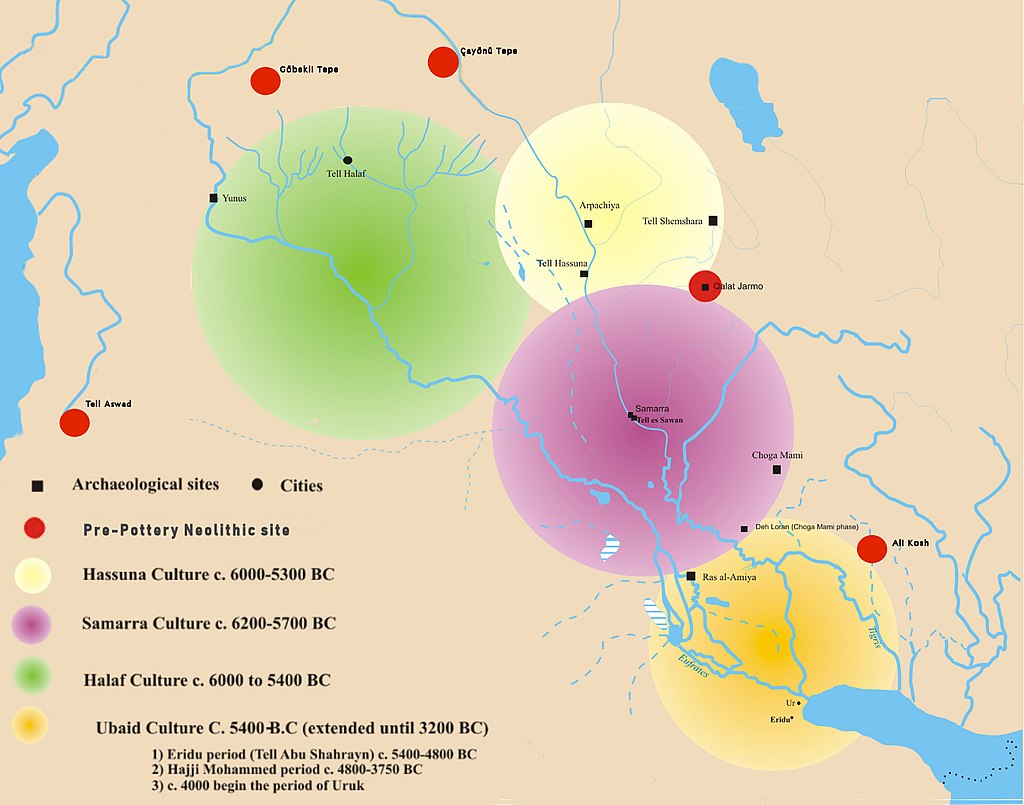
During the Ubaid Period [5000–4000 BC], the movement towards urbanization began. “Agriculture and animal husbandry [domestication] were widely practiced in sedentary communities”.[citation needed] There were also tribes that practiced domesticating animals as far north as Turkey, and as far south as the Zagros Mountains. The Ubaid period in the south was associated with intensive irrigated hydraulic agriculture, and the use of the plough, both introduced from the north, possibly through the earlier Choga Mami, Hadji Muhammed and Samarra cultures.
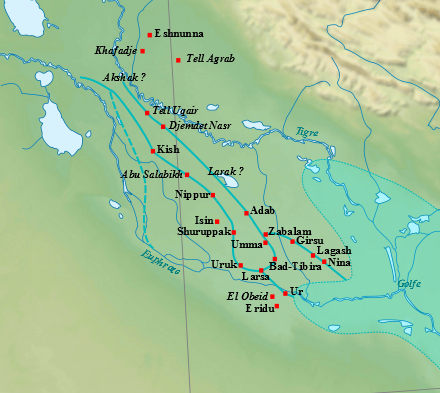
Spread of Ubaid Culture
The Sumerian Period (c. 4500 – c. 1900 BC)
Europe
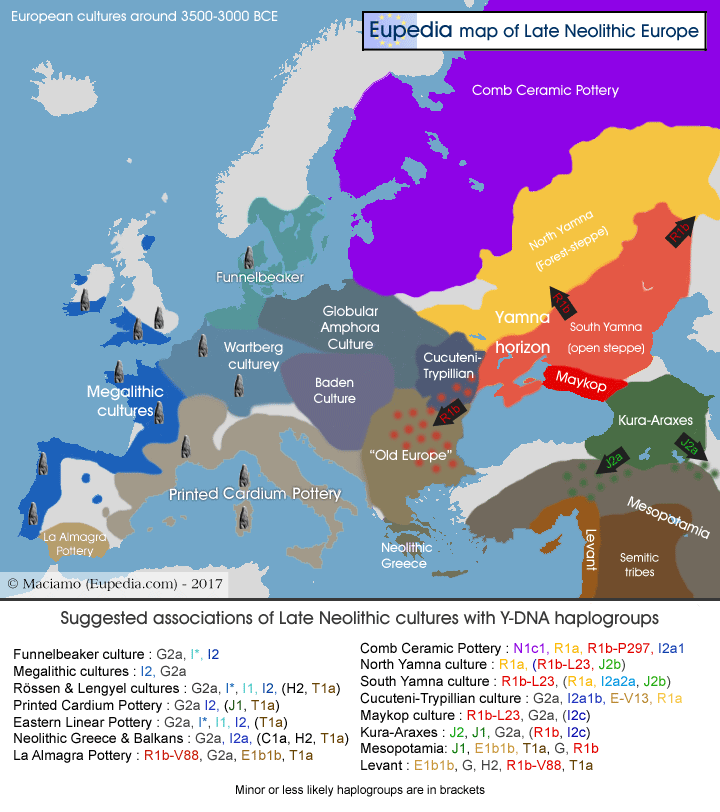
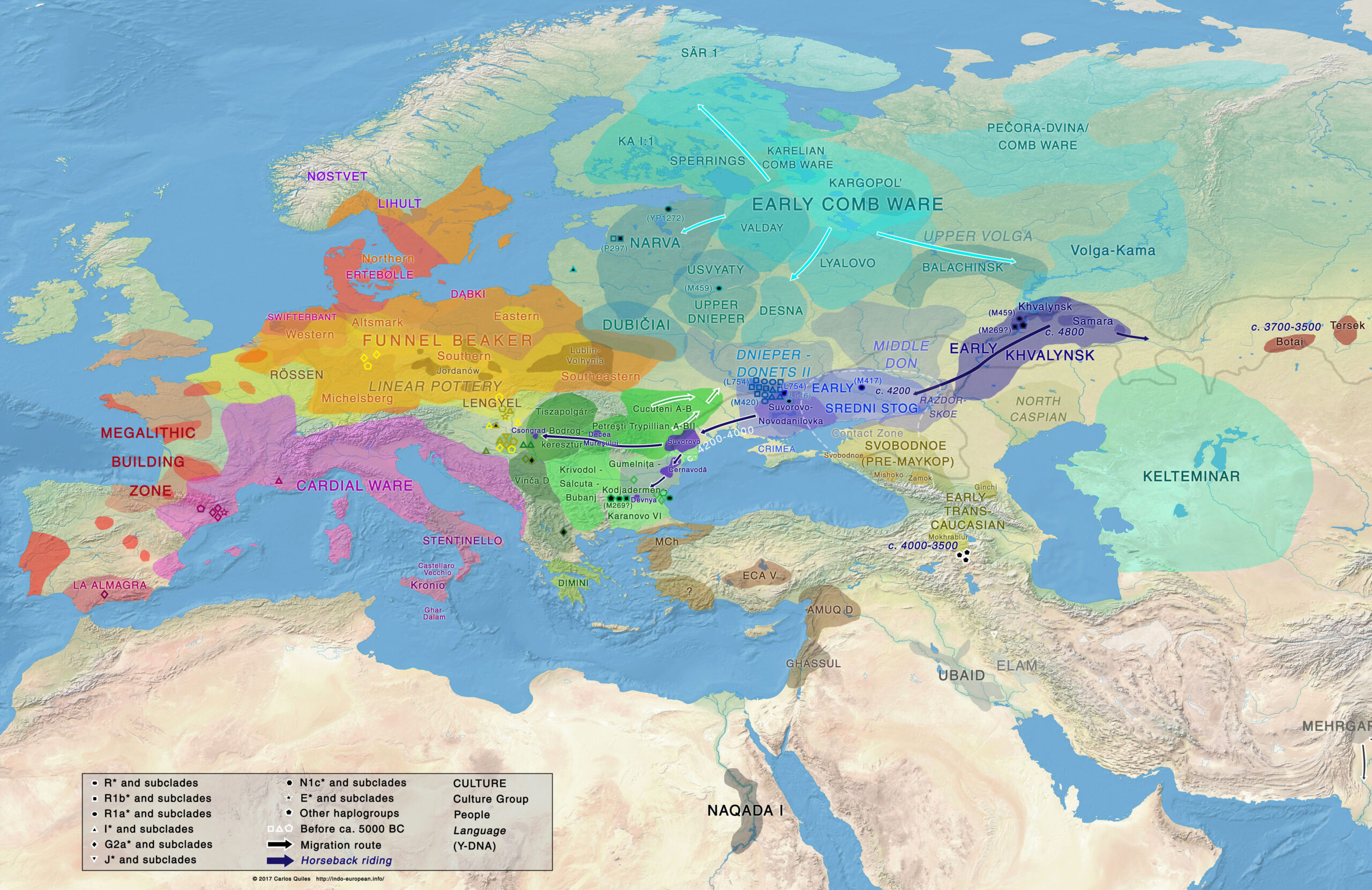
Northeast Europe: Pit-Comb (Comb Ware) Ceramic Culture (4,200 BC – 2,000 BC) in Norway, Sweden, Finland, Poland, and Estonia. (Soultrean > Swiderian > Kundra > Narva > Pit Comb -> Volsovo -> Corded Ware). 65% Eastern Hunter-Gatherer (EHG), 20% Western Steppe Herder (WSH), and 15% Western Hunter-Gatherer (WHG) descent. The amount of EHG ancestry was higher than among earlier cultures of the eastern Baltic, while WSH ancestry had previously never been attested among such an early culture in the region.
The people continued the Mesolithic hunter-gatherer lifestyle, with traces of early agriculture. The settlements were located at sea shores or beside lakes and the economy was based on hunting, fishing and the gathering of plants. In Finland, it was a maritime culture which became more and more specialized in hunting seals. The dominant dwelling was probably a teepee of about 30 square meters where some 15 people could live. Also rectangular houses made of timber become popular in Finland from 4000 BC cal. Graves were dug at the settlements and the dead were covered with red ochre. The typical Comb Ceramic age shows an extensive use of objects made of flint and amber as grave offerings.
The Pit–Comb Ware culture is one of the few exceptions to the rule that pottery and farming coexist in Europe. The ceramics consist of large pots that are rounded or pointed below, with a capacity from 40 to 60 litres. The forms of the vessels remained unchanged but the decoration varied. In the Near East farming appeared before pottery, then when farming spread into Europe from the Near East, pottery-making came with it. However, in Asia, where the oldest pottery has been found, pottery was made long before farming. So, it appears that the Comb Ceramic Culture reflects influences from Siberia and distant China – and by implication, that pottery may have arrived by the northern route not southern.
The North Caucuses (The Gateway to the Steppe)
Maykop Culture (3700BC to 3000BC)
The Maikop population came from the south, probably from western Georgia and Abkhazia, and was descended from the Eneolithic farmers who first colonized the north side of the Caucasus. Maykop is therefore the “ideal archaeological candidate for the founders of the Northwest Caucasian language family”
To the north is the Yamna culture, including the Novotitorovka culture (3300—2700), which it overlaps in territorial extent. It is contemporaneous with the late Uruk period in Mesopotamia.
The settlement is of a typical Western-Asian variety, with the dwellings packed closely together and made of mud bricks with smoke outlets.
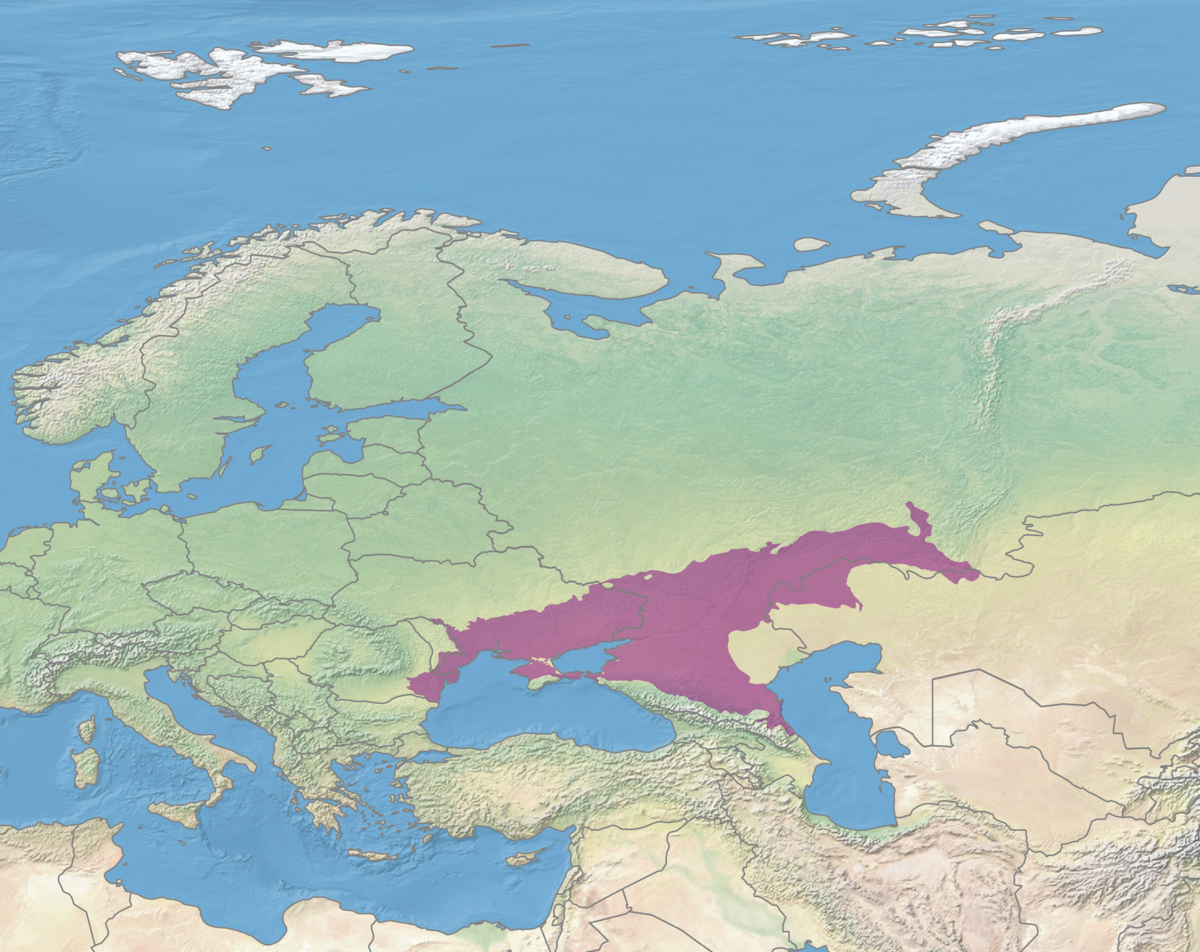
The Pontic Steppe (Europe)
Yamna Culture
[ COMPLETE THIS NARRATIVE ]
The Bronze Age
(Historical) Pre-History > Protohistory > Ancient History (“Writing”)
[ COMPLETE THIS NARRATIVE ]
(Human – Technological) Holocene > Bronze Age (3,000 BC to 1050 BC)
[ COMPLETE THIS NARRATIVE ]
Indus Valley
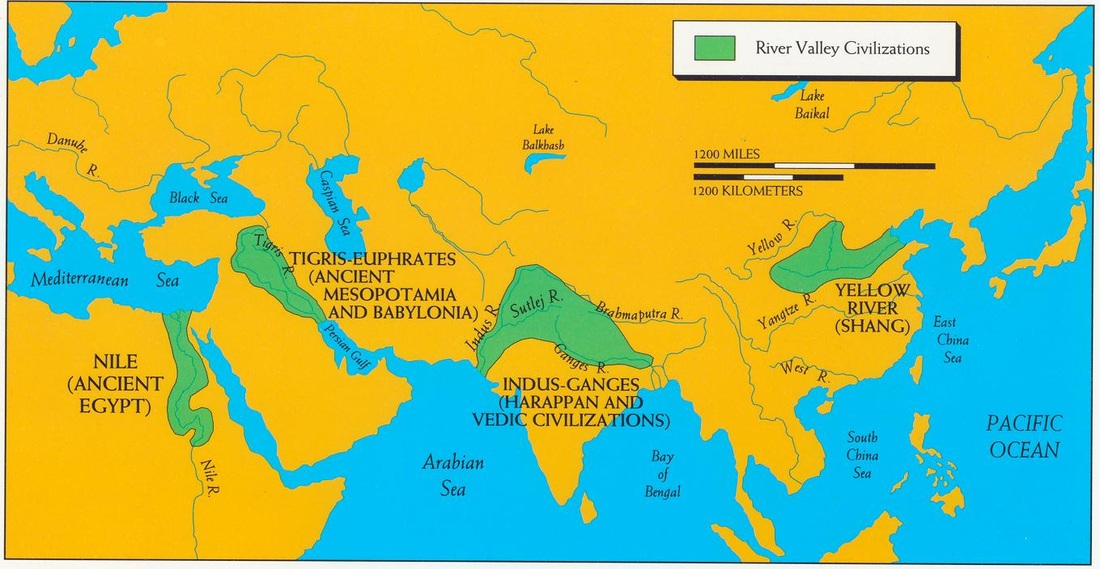
The Indus Valley (IVC) or Harapan Civilisation was a Bronze Age civilisation in the northwestern regions of South Asia, lasting from 3300 BCE to 1300 BCE, and in its mature form from 2600 BCE to 1900 BCE. Together with ancient Egypt and Mesopotamia, it was one of three early civilisations of the Near East and South Asia, and of the three, the most widespread, its sites spanning an area stretching from northeast Afghanistan, through much of Pakistan, and into western and northwestern India.
urban planning, baked brick houses, elaborate drainage systems, water supply systems, clusters of large non-residential buildings, and new techniques in handicraft (carnelian products, seal carving) and metallurgy (copper, bronze, lead, and tin).[4] The large cities of Mohenjo-daro and Harappa very likely grew to containing between 30,000 and 60,000 individuals,[5][c] and the civilisation itself during its florescence may have contained between one and five million individuals.
Mesopotamia
The Uruk Period
The South Caucuses (Border between South and North Asia)
Wealth Comes to the Caucuses, and Expansion of Influence
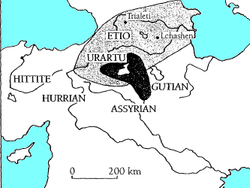
Transcaucasia an the Leyla-Tepe or “Leilatepe” and Kura Araxes Cultures (3000 BC) (Albania-Azerbaijan and the broader trans-caucuses region from east anatolia to northwest iran.
Present theory is that when Uruk Collapsed (the Uruk Collapse) migrants conquered, burned, killed, and replaced existing peoples.
While earlier periods in the region, metal was scarce, this period is the first appearance of local and increasingly sophisticated metallurgy, that we currently attribute to migrants from or trade with Uruk or Pre-Uruk technology in Mesopotamia, beginning about 4500 BCE. a poorly developed social hierarchy for a significant stretch of their history.
Some settlements were surrounded by stone walls. Homes followed period tradition and were built of mud-brick, originally round, but later subrectangular designs with one or two rooms, multiple rooms centered around an open space, or rectilinear (long house) designs. They raised cattle, sheep, goats, dogs, and in later phases, horses. The dead were buried in ceramic vessels (amphora), usually used to store grain.
Note that after 2500 we see evidence of exploitation of mountainous areas (pastoralism), horse bones(horse domestication), kurgan burials (wealth), kurgan burials rich in artifacts including gold and silver jewelry(social hierarchy).
Egypt
A Story Of Rivers and Consequences
A Little More “Geography in Everything”
Europe
The Steppe vs River-forests vs Flood River Valleys
(the beginning of social formation that will lead to institution formation)
China
India
Mesopotamia
Nile
Europe
( … )
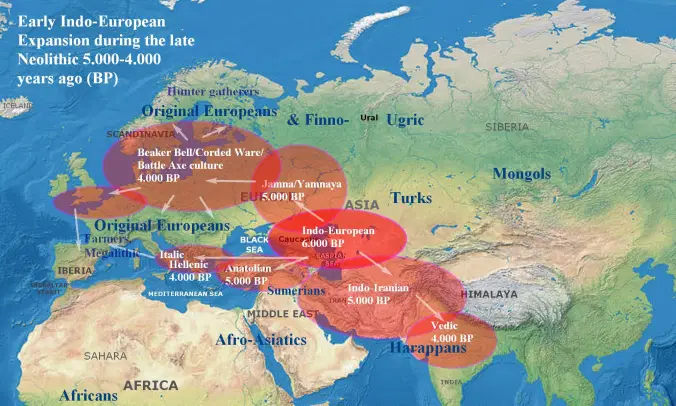
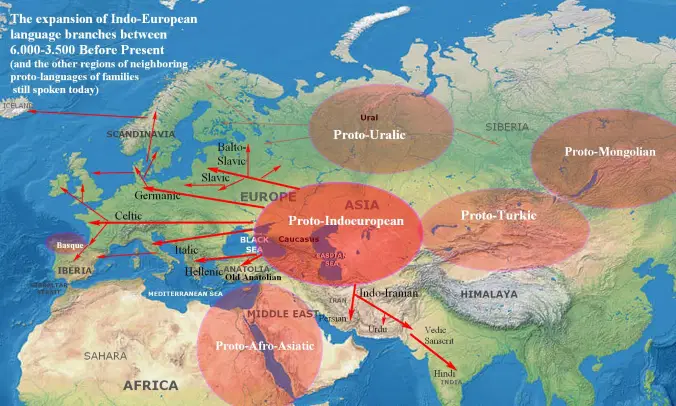
The Indo European (Aryan) Expansion: Steppe Hybridization
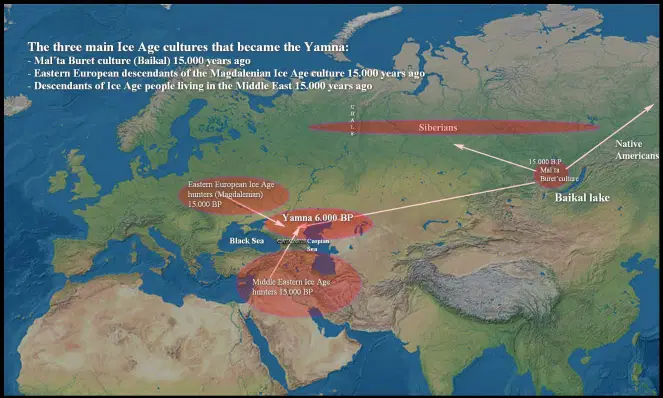
During the Late Neolithic and Early Bronze Age, Western Steppe Herders (WSHs) from the Pontic-Caspian steppe embarked on a massive expansion, which further displaced the WHGs. Among present day populations, WHG ancestry is most common among populations of the eastern Baltic, north of the eurasian plain..
The EEF-derived cultures of Europe were overwhelmed by successive invasions of Western Steppe Herders (WSHs) from the Pontic-Caspian steppe, who were Eastern Hunter-Gatherers (EHG) with possible CHG admixture. These invasions led to EEF Y-DNA in Europe being almost entirely replaced with EHG/WSH Y-DNA (mainly R1b and R1a). EEF mtDNA however remained frequent, suggesting admixture between EHG/WSH males and EEF females. Through subsequent migrations of WSHs into Northern Europe and back into the Eurasian Steppe, EEF mtDNA was brought to new corners of Eurasia.
EHGs carry about 75% Ancient North Eurasian (ANE) descent, and to have contributed significantly to the ancestry of the WHGs and SHGs (who were a mixture of WHG and EHG). During the Neolithic and early Eneolithic, EHGs on the Pontic-Caspian steppe formed the Yamnaya culture, perhaps after some admixture with Caucasus hunter-gatherers (CHGs). The genetic cluster formed from this admixture is known as Western Steppe Herder (WSH). The Yamnaya culture and its descendants are supposed to have embarked on a massive migration leading to the spread of Indo-European languages throughout large parts of Eurasia.
“The Indo-Europeans (I-Es) were highly militarized conquering groups that spread out from the Pontic Steppe region north of the Black Sea to dominate Europe, ending only at the end of the Middle Ages in Western Europe and reverberating even beyond that. What I mean by this is that the social systems that the I-Es put in place had significant commonalities and were fundamentally unchanged over this very long time span.
“Current scholarly opinion is that the I-Es originated in the Pontic Steppe region of southern Russia and Ukraine. In the Near East, Iran, and India, this conquering group was eventually absorbed by the local population, although, for example, there is some indication that the priestly Brahmin caste in India has greater representation of I-E ancestry than other castes in northern India. In Europe, they displaced the native languages but not the natives: Originally, at least, as in the other areas they conquered, they were alien elites ruling over the older Europeans.
Languages
Introgression
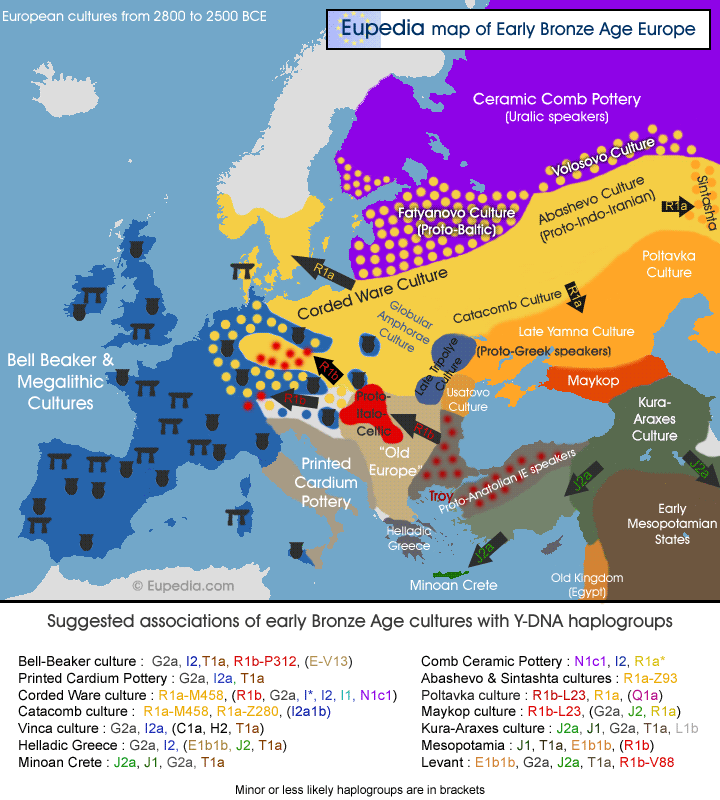
Cultures of Early Bronze Age Europe
Crisis: The Bronze Age Collapse – The Second Dark Age
(Human) (Technological) Crisis: The Bronze Age Collapse
( … )
Late Bronze Age Europe – Staging for the Ancient World
(Human) (Conceptual) Opportunity: The Age of Transformation
(Human) (Technological) Holocene > Iron Age the “Iron Age” begins in any region when the local production of iron or steel has been brought to the point where iron tools and weapons superior to their bronze equivalents become widespread. In the Ancient Near East, this transition takes place in the wake of the so-called Bronze Age collapse, in the 12th century BC. The technology soon spread throughout the Mediterranean Basin region and to South Asia. Its further spread to Central Asia, Eastern Europe, and Central Europe is somewhat delayed, and Northern Europe is reached still later, by about 500 BC.
For SW Asia, the Ancient Near East, the establishment of the Achaemenid Empire c. 550 BC is usually taken as a cut-off date,
For Europe, at least Central and Western Europe, the Roman conquests of the 1st century BC serve as marking for the end of the Iron Age. The Germanic Iron Age of Scandinavia is taken to end c. 800 AD, with the beginning of the Viking Age.
For South Asia (Indian sub-continent), the Iron Age is taken to begin with the ironworking Painted Gray Ware culture in the 18th century BC, and to end with the reign of Ashoka (3rd century BC). The use of the term “Iron Age” in the archaeology of South, East, and Southeast Asia is more recent and less common than for western Eurasia;
For East Asia, China’s prehistory had ended before iron-working arrived, so the term is infrequently used.
For Africa, the Sahel (Sudan region) and Sub-Saharan Africa are outside of the three-age system, there being no Bronze Age, but the term “Iron Age” is sometimes used in reference to early cultures practicing ironworking such as the Nok culture of Nigeria.
(Human) Holocene > Ancient (Awakening)
Southeastern (Old) Europe: Hellenistic > Roman Western Europe: Roman > Early Medieval > Medieval > Early Modern > Industrial Northern Europe: Pre-Roman Age > Roman Iron Age > Germanic Iron Age > Viking > Medieval > Post-Medieval(Early Modern) > Industrial(modern)
(Human) Holocene > Medieval (Dark Ages)
Southeastern (Old) Europe: Hellenistic > Roman >Byzantine Western Europe: Roman >Early Medieval > Medieval Northern Europe: Pre-Roman Age > Roman Iron Age >Germanic Iron Age > Viking > Medieval
(Human) Holocene > Modern (Restoration)
Southeastern (Old) Europe: Hellenistic > Roman > Byzantine >Ottoman Western Europe: Roman > Early Medieval > Medieval >Early Modern > Industrial Northern Europe: Pre-Roman Age > Roman Iron Age > Germanic Iron Age > Viking > Medieval > Post-Medieval(Early Modern) > Industrial(modern)
European Exploration: The Age of Sail and Admixture