Source: Facebook

  • CAN WE ELIMINATE RELIGION? NOT REALLY, BUT THAT REQUIRES WE DEFINE RELIGION AS M

    CAN WE ELIMINATE RELIGION? NOT REALLY, BUT THAT REQUIRES WE DEFINE RELIGION AS MARKET DEMANDS RATHER THAN THE CURRENT MEANS OF PRODUCTION.

    —“However unrealistic of a goal it might be, wouldn’t the ideal situation be a world without organised religion? Or is there some benefit to religion that I’m not seeing?”—Dann Hopkins

    Religion is just education. that’s all. Period. The ‘trick’ of both church and state is to claim church does no education, or that state education is sufficient.

    We need training in physical fitness, mindfulness, manners-ethics-morals-rituals (payments to the commons), the laws, the means of calculating that we think of as the 3R’s, the skills to run a household, and the skills for employment.

    It does not, as it once did, provide for physical fitness.

    It provides mindfulness in the personal, interpersonal, and public spheres of life.

    It provides the some of the manners, ethics, morals rituals that are the positive laws of the social order (not negative laws as is law proper).

    It provides a venue for public contract making (this is my child, this is my promise to the community, this is my mate, this is our property, this person has died and his or her property may be distributed).

    It is, to some degree, a computational necessity – meaning that it is very bad not to have that mindfulness.

    It provides child-level parables and myths which are no less a form of calculation about action in the world than are laws, logic, and mathematics.

    But there is no reason we cannot have lessons, parables and mythos and histories for each class of people at each stage of their lives, all of which contain the same messages.

    There is no reason the church rather than the school, post office, or library is not still the center of civic life, and that government is not relegated to the production and maintenance of material commons, just as we keep commerce out of religion.

    So I think I have most of this figured out – not that I am interested in the content in and of itself, but that I understand how to frame the problem, and restore the incentives, such that the second abrahamic dark age does not capture our people.


    Source date (UTC): 2018-12-08 12:04:00 UTC

  • IT DEPENDS UPON HOW YOU DEFINE CHRISTIANITY —“I’m confused about something. If

    IT DEPENDS UPON HOW YOU DEFINE CHRISTIANITY

    —“I’m confused about something. If you don’t think biblical Christianity is actually true, e.g.you think it is based on elaborate deception, then how is it allowable? How is it beneficial? I believe you’ve made a point of calling out intentional deception as unallowable in society. What reason is there to assume that you can take away non-deceptive parts and dump the rest, and still have a workable system? My impression is that the Jefferson Bible is in no sense Christianity. (my apologies if this is already addressed in the video or elsewhere; I haven’t watched yet)”— Matt Evans

    Well, that depends upon what you call ‘christianity’ and whether you think it’s good.

    Christianity can be the scientific content, and the consequences of that scientific content, which while very limited we can demonstrate are in fact good. Or whether you think Christianity is all the nonsense that is wrapped around it (lies).

    As a scientist I have to acknowledge that the optimum game theory humans can play is the christian command for love of others. I can’t escape that.

    As a scientist I have to acknowledge that everything else about christianity is catastrophically bad, even if not as evil as judaism or islam.

    Now, once we distill christianity down to those few rules (rules of optimum prisoner’s dilemma), the question is whether it is still ‘christianity’ in any meaningful way.

    I would argue that it is still christianity, because religions constitute our means of intuitionistically training members of the polity, nation, and civilization, to pursue the same strategy – hopefully one in their interest – that allows different groups to cooperate at large scale.

    I think (well I’m certain) that the short list of rules in christianity are optimums. But I do not think the jesus story is good. I am certain the god story is bad. And I think as do many that the christian god is a semitic tyrant over the semitic slaves – and completely against the interests of our people – which is why our people have incrementally escaped christianity, turned it to our own, while the jews and muslims have only become more obsessed with theirs.

    So, in attempting to solve the problem of the future, how can we provide the same psychological, social, and political functions as did christianity, and suppress, defeat, or eliminate competitors to those rules – competitors that would return us to the semitic darkness that we have saved ourselves from.

    Now, we have tools of: Naturalism(reality) < Logic and Mathematics (Measurement) < Science(Due DIligence, Naturalism) < Law+Economics(Decidability) < History (Evidence) < Literature (Analogy, Pedagogy, Theorizing), Philosophy (Removing Science), and Theology(Removing Reason) to work with.

    And I can find no reason to gracefully fail across the spectrum of Measurements, Due Diligence, Decidability < Evidence < Pedagogy, if we supply mindfulness (what we consider spirituality) through equally scientific means (training).

    And if we have to teach people SOMETHING, why teach them a falsehood when we can teach the same content truthfully (scientifically)? And the only answer is to preserve the psychological malinvestment of preceding generations at the expense of all past and future generations.

    I think moral education – and a uniform one – is necessary, just as is fitness, daily survival knowledge, calculation ability, and job skills. I think personal, interpersonal, and civic mindfulness is a natural demand of conscious creatures. I think the civic ritual of church: the oath, the historical lessons, and the balance between the heroic tragic warrior and the loving tragic saint (jesus) are important.

    One can look at the great religions and traditions and observe relatively easily how each tries to, and succeeds in, providing those goods in satisfaction of those demands.

    It is very difficult to look at judaism, and islam and say that they are other than a destructive force in the world compared to the other religions and traditions – particularly the hindu, chinese and japanese traditions. When we look at christianity it was designed as and used as a destructive force in the world. And the three abrahamic religions are responsible for more evil than all but the great plagues.

    Our ancestors succeeded in germanizing christianity by keeping it’s good parts and eliminating its bad parts.

    I see my function, and our function as the living generation encountering this remaining problem, as continuing to modernize that “sick, twisted, desert anti-civilizational blood cult’, into an institution like the catholic church once provided as a competitor to the state, and restoring its role in education, but to deprive it of semitic deceits, and use our own far superior history.

    I might fail, but it is my job to remove as much lying from our civilization in order to defend our high-trust people against further decline. And if that means the church must further reform then that’s what it means.

    The alternative is not restoration, but that the church, within a generation or so, will die off.

    Numbers are numbers. The church doesn’t have any.

    IF we are to have a church so to speak, and a civic religion that is more than just legalism, that includes the personal mindfulness, socialization and festival that legalism doesn’t provide – making us all invested in one another – then we need a church that provides future benefits to people not past.

    And while I haven’t discussed much of this in public yet, I think I know at least MOST of the answer.

    We never ceased being polytheistic. Ever. Just as we are poly grammatical (Frames, Paradigms). Many heroes are always better than one, as long as they are compatible. We are too different in our abilities, social roles, occupations and responsibilities. There is a basis upon which the heroic family in all her grammars and stories, rests, and that is Individual Sovereignty, the natural law of reciprocity, truth and duty and, yes, charity. And it is christian charity: exhaustive optimism and investment in others – rather than donations or mental fantasies that forms that basis.


    Source date (UTC): 2018-12-08 11:51:00 UTC

  • THE HOLE IN CHRISTIANITY IS OPENNESS TO NON-KIN – THE SOLUTION, LEGISLATION AGAI

    THE HOLE IN CHRISTIANITY IS OPENNESS TO NON-KIN – THE SOLUTION, LEGISLATION AGAINST INCOMPATIBLE RELIGIONS

    by Jennifer Dean

    The problem with Christianity as I see it is not tolerance – Christians are PLENTY intolerant (in some ways I agree with and others I do not) – the problem is that Christians have an inability to recognize many of the things they are intolerant to, when it comes to outsiders or foreigners, and instead mostly prefer to enforce intolerance on their own kind.

    Look at the Amish to see the most exaggerated example of what I mean, they use shunning and excommunication over the most petty things you could imagine. Rule enforcement for the sake of sheer submission. And while their ability to preserve their way of life is admirable in some ways, obviously it is only possible within a larger context of free riding, and their way of life is all or nothing. T

    hey might seem to be an extreme or unusual example of Christianity, but the same elements of submission and intolerance are present in other denominations, only the others have allowed outsiders to infiltrate and subvert their doctrine.

    I believe legislating Christianity, in this country, would have been a disaster. The fundamental problem is that it is still welcoming of outsiders and converts (civnat at the religious level and indeed, where civnat comes from) for the sake of winning souls to Christ, and THAT is the loophole that outsiders have exploited.

    The better strategy would have been to have legislation AGAINST Judaism, Talmudism, Babylonian mysticism, Satanism, Luciferianism (as we already do have some legislation against Islam, but unfortunately we needed more and what we have has not been enforced) and to educate people on the dangers of these religious ideologies, and their hidden, very real and very very sick practices of human sacrifice (of INNOCENTS – not murderers, criminals, undesirables, but BABIES. CHILDREN.), pedophilia and child marriage. But the problem is due to the convert loophole in Christianity, they simply come in anyway and hide in our midst, and kidnap our children and traffic them.

    (CD: well done)


    Source date (UTC): 2018-12-08 11:20:00 UTC

  • Curt Doolittle shared a post

    Curt Doolittle shared a post.


    Source date (UTC): 2018-12-08 10:57:00 UTC

  • ON GENDER DIFFERENCES IN PERSONALITY Gender Differences in Personality across th

    http://psycnet.apa.org/doiLanding?doi=10.1037%2F0022-3514.93.5.880ABSTRACTS ON GENDER DIFFERENCES IN PERSONALITY

    Gender Differences in Personality across the Ten Aspects of the Big Five https://www.ncbi.nlm.nih.gov/pmc/articles/PMC3149680/

    Age differences in personality traits from 10 to 65: Big Five domains and facets in a large cross-sectional sample.

    —“Hypotheses about mean-level age differences in the Big Five personality domains, as well as 10 more specific facet traits within those domains, were tested in a very large cross-sectional sample (N = 1,267,218) of children, adolescents, and adults (ages 10-65) assessed over the World Wide Web. The results supported several conclusions. First, late childhood and adolescence were key periods. Across these years, age trends for some traits (a) were especially pronounced, (b) were in a direction different from the corresponding adult trends, or (c) first indicated the presence of gender differences. Second, there were some negative trends in psychosocial maturity from late childhood into adolescence, whereas adult trends were overwhelmingly in the direction of greater maturity and adjustment. Third, the related but distinguishable facet traits within each broad Big Five domain often showed distinct age trends, highlighting the importance of facet-level research for understanding life span age differences in personality.”—

    https://www.ncbi.nlm.nih.gov/pubmed/21171787/

    Gender Differences in Personality across the Ten Aspects of the Big Five

    –“This paper investigates gender differences in personality traits, both at the level of the Big Five and at the sublevel of two aspects within each Big Five domain. Replicating previous findings, women reported higher Big Five Extraversion, Agreeableness, and Neuroticism scores than men. However, more extensive gender differences were found at the level of the aspects, with significant gender differences appearing in both aspects of every Big Five trait. For Extraversion, Openness, and Conscientiousness, the gender differences were found to diverge at the aspect level, rendering them either small or undetectable at the Big Five level. These findings clarify the nature of gender differences in personality and highlight the utility of measuring personality at the aspect level.”—

    https://www.ncbi.nlm.nih.gov/pmc/articles/PMC3149680/

    Gender differences in personality traits across cultures: Robust and surprising findings.

    Costa Jr., Paul T.,Terracciano, Antonio,McCrae, Robert R.

    Journal of Personality and Social Psychology, Vol 81(2), Aug 2001, 322-331

    —“Secondary analyses of Revised NEO Personality inventory data from 26 cultures (N =23,031) suggest that gender differences are small relative to individual variation within genders; differences are replicated across cultures for both college-age and adult samples, and differences are broadly consistent with gender stereotypes: Women reported themselves to be higher in Neuroticism, Agreeableness, Warmth, and Openness to Feelings, whereas men were higher in Assertiveness and Openness to Ideas. Contrary to predictions from evolutionary theory, the magnitude of gender differences varied across cultures. Contrary to predictions from the social role model, gender differences were most pronounced in European and American cultures in which traditional sex roles are minimized. Possible explanations for this surprising finding are discussed, including the attribution of masculine and feminine behaviors to roles rather than traits in traditional cultures. (PsycINFO Database Record (c) 2017 APA, all rights reserved)”—

    Between facets and domains: 10 aspects of the Big Five.

    DeYoung, Colin G.,Quilty, Lena C.,Peterson, Jordan B.

    Journal of Personality and Social Psychology, Vol 93(5), Nov 2007, 880-896

    –“Factor analyses of 75 facet scales from 2 major Big Five inventories, in the Eugene-Springfield community sample (N=481), produced a 2-factor solution for the 15 facets in each domain. These findings indicate the existence of 2 distinct (but correlated) aspects within each of the Big Five, representing an intermediate level of personality structure between facets and domains. The authors characterized these factors in detail at the item level by correlating factor scores with the International Personality Item Pool (L. R. Goldberg, 1999). These correlations allowed the construction of a 100-item measure of the 10 factors (the Big Five Aspect Scales [BFAS]), which was validated in a 2nd sample (N=480). Finally, the authors examined the correlations of the 10 factors with scores derived from 10 genetic factors that a previous study identified underlying the shared variance among the Revised NEO Personality Inventory facets (K. L. Jang et al., 2002). The correspondence was strong enough to suggest that the 10 aspects of the Big Five may have distinct biological substrates. (PsycINFO Database Record (c) 2016 APA, all rights reserved)”—

    http://psycnet.apa.org/doiLanding?doi=10.1037%2F0022-3514.93.5.880

    Why can’t a man be more like a woman? Sex differences in Big Five personality traits across 55 cultures.

    —“Previous research suggested that sex differences in personality traits are larger in prosperous, healthy, and egalitarian cultures in which women have more opportunities equal with those of men. In this article, the authors report cross-cultural findings in which this unintuitive result was replicated across samples from 55 nations (N = 17,637). On responses to the Big Five Inventory, women reported higher levels of neuroticism, extraversion, agreeableness, and conscientiousness than did men across most nations. These findings converge with previous studies in which different Big Five measures and more limited samples of nations were used. Overall, higher levels of human development–including long and healthy life, equal access to knowledge and education, and economic wealth–were the main nation-level predictors of larger sex differences in personality. Changes in men’s personality traits appeared to be the primary cause of sex difference variation across cultures. It is proposed that heightened levels of sexual dimorphism result from personality traits of men and women being less constrained and more able to naturally diverge in developed nations. In less fortunate social and economic conditions, innate personality differences between men and women may be attenuated.”—

    PMID: 18179326 DOI: 10.1037/0022-3514.94.1.168

    Higher-order factors of the Big Five in a multi-informant sample.

    DeYoung, Colin G.

    Journal of Personality and Social Psychology, Vol 91(6), Dec 2006, 1138-1151

    —“In a large community sample (N=490), the Big Five were not orthogonal when modeled as latent variables representing the shared variance of reports from 4 different informants. Additionally, the standard higher-order factor structure was present in latent space: Neuroticism (reversed), Agreeableness, and Conscientiousness formed one factor, labeled Stability, and Extraversion and Openness/Intellect formed a second factor, labeled Plasticity. Comparison of two instruments, the Big Five Inventory and the Mini-Markers, supported the hypotheses that single-adjective rating instruments are likely to yield lower interrater agreement than phrase rating instruments and that lower interrater agreement is associated with weaker correlations among the Big Five and a less coherent higher-order factor structure. In conclusion, an interpretation of the higher-order factors is discussed, including possible neurobiological substrates. (PsycINFO Database Record (c) 2016 APA, all rights reserved)”—

    Personality and compatibility: a prospective analysis of marital stability and marital satisfaction.

    Kelly EL, Conley JJ.

    —The antecedents of marital stability (divorce or remaining married) and marital satisfaction (within the group that remains married) were investigated with a panel of 300 couples who were followed from their engagements in the 1930s until 1980. Twenty-two of the couples broke their engagements; of the 278 couples who married, 50 got divorced at some time between 1935 and 1980. Personality characteristics (measured by acquaintance ratings made in the 1930s) were important predictors of both marital stability and marital satisfaction. The three aspects of personality most strongly related to marital outcome were the neuroticism of the husband, the neuroticism of the wife, and the impulse control of the husband. In combination, the 17 major antecedent variables were moderately predictive of a criterion variable composed of both marital stability and marital satisfaction (R = .49). The three major aspects of personality accounted for more than half of the predictable variance. The remaining variance was accounted for by attitudinal, social-environment, and sexual history variables.”—

    Parental investment, sexual selection and sex ratios

    HANNA KOKKO MICHAEL D. JENNIONS

    First published: 06 May 2008 https://doi.org/10.1111/j.1420-9101.2008.01540.x Cited by: 392

    Hanna Kokko, Laboratory of Ecological and Evolutionary Dynamics, Department of Biological and Environmental Science, University of Helsinki, PO Box 65, Viikinkaari 1, FIN–00014, Helsinki, Finland.

    Tel.: +358 9 1915 7702; fax: +358 9 1915 7694; e‐mail: hanna.kokko@helsinki.fi

    —“Conventional sex roles imply caring females and competitive males. The evolution of sex role divergence is widely attributed to anisogamy initiating a self‐reinforcing process. The initial asymmetry in pre‐mating parental investment (eggs vs. sperm) is assumed to promote even greater divergence in post‐mating parental investment (parental care). But do we really understand the process? Trivers [Sexual Selection and the Descent of Man 1871–1971 (1972), Aldine Press, Chicago] introduced two arguments with a female and male perspective on whether to care for offspring that try to link pre‐mating and post‐mating investment. Here we review their merits and subsequent theoretical developments. The first argument is that females are more committed than males to providing care because they stand to lose a greater initial investment. This, however, commits the ‘Concorde Fallacy’ as optimal decisions should depend on future pay‐offs not past costs. Although the argument can be rephrased in terms of residual reproductive value when past investment affects future pay‐offs, it remains weak. The factors likely to change future pay‐offs seem to work against females providing more care than males. The second argument takes the reasonable premise that anisogamy produces a male‐biased operational sex ratio (OSR) leading to males competing for mates. Male care is then predicted to be less likely to evolve as it consumes resources that could otherwise be used to increase competitiveness. However, given each offspring has precisely two genetic parents (the Fisher condition), a biased OSR generates frequency‐dependent selection, analogous to Fisherian sex ratio selection, that favours increased parental investment by whichever sex faces more intense competition. Sex role divergence is therefore still an evolutionary conundrum. Here we review some possible solutions. Factors that promote conventional sex roles are sexual selection on males (but non‐random variance in male mating success must be high to override the Fisher condition), loss of paternity because of female multiple mating or group spawning and patterns of mortality that generate female‐biased adult sex ratios (ASR). We present an integrative model that shows how these factors interact to generate sex roles. We emphasize the need to distinguish between the ASR and the operational sex ratio (OSR). If mortality is higher when caring than competing this diminishes the likelihood of sex role divergence because this strongly limits the mating success of the earlier deserting sex. We illustrate this in a model where a change in relative mortality rates while caring and competing generates a shift from a mammalian type breeding system (female‐only care, male‐biased OSR and female‐biased ASR) to an avian type system (biparental care and a male‐biased OSR and ASR).”—


    Source date (UTC): 2018-12-08 10:56:00 UTC

  • THERE IS NO APOLOGY THAT STANDS SCRUTINY I just don’t use the christian (semitic

    THERE IS NO APOLOGY THAT STANDS SCRUTINY

    I just don’t use the christian (semitic) model of thought at all. zero. I use the western (european) model of thought: Literature, History, War, Economics, Law, Science, Logic, and Mathematics. (LHWELSLM).

    I can’t read apologist literature. It’s all Abrahamism. It’s no different from marxism, postmodernism, and feminism, and was and always will be, something forced upon us, that which we struggled to escape, that which we nearly escaped, and that which we are still trying to escape.

    I do science. I don’t really do philosophy except to undrestand it’s failures. I don’t do theology except to understand its failure.

    There is no apology for sophism and supernaturalism or pseudoscience that stands scrutiny.


    Source date (UTC): 2018-12-08 10:36:00 UTC

  • photos_and_videos/TimelinePhotos_SxeO6JU-xg/47687897_10156832843772264_594516187

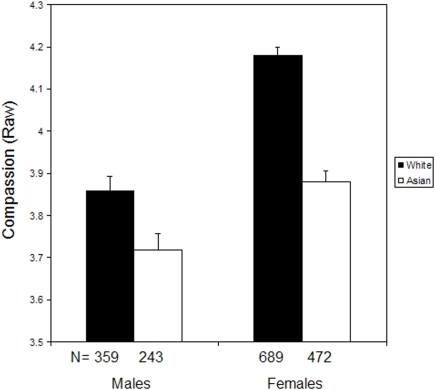
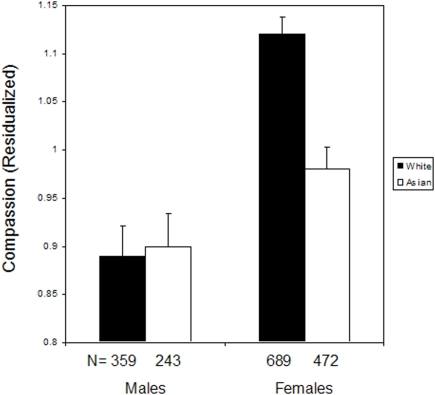
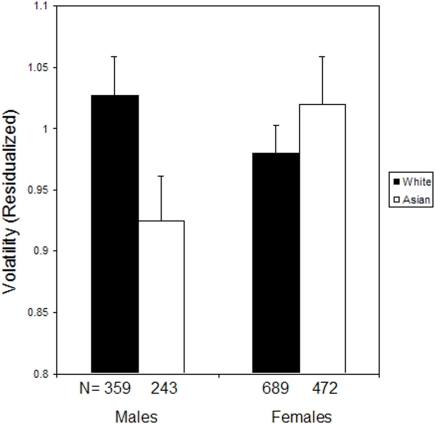
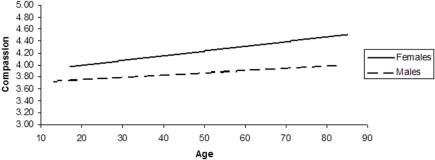
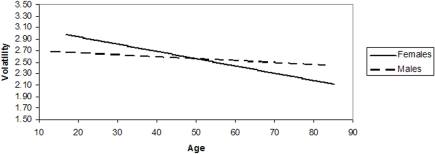
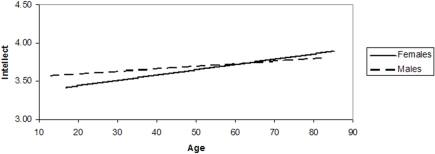
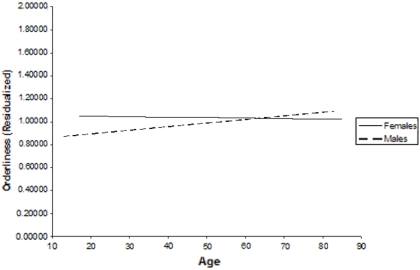
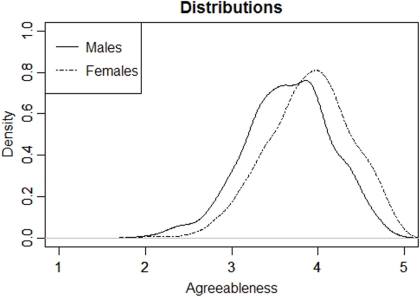
    photos_and_videos/TimelinePhotos_SxeO6JU-xg/47687897_10156832843772264_5945161870779351040_n_10156832843757264.jpg Steven Logan Everett-FainI like how White Male and Asian Female compassion are exactly the same.Dec 8, 2018, 10:36 AMCurt Doolittlein general, white males and asian females are highly compatible.Dec 8, 2018, 10:50 AM photos_and_videos/TimelinePhotos_SxeO6JU-xg/47574295_10156832843777264_5196222919860027392_n_10156832843762264.jpg photos_and_videos/TimelinePhotos_SxeO6JU-xg/48355675_10156832843782264_4162956322196684800_n_10156832843767264.jpg photos_and_videos/TimelinePhotos_SxeO6JU-xg/47579700_10156832843842264_5171875506173247488_n_10156832843837264.jpg Steven Logan Everett-FainAgain… Weird.Dec 8, 2018, 10:37 AMBrendan HegartyWhite males bred for risk takingDec 9, 2018, 10:49 AM photos_and_videos/TimelinePhotos_SxeO6JU-xg/47683065_10156832843862264_6144600794587987968_n_10156832843847264.jpg photos_and_videos/TimelinePhotos_SxeO6JU-xg/48084983_10156832843872264_6894118153048031232_n_10156832843852264.jpg photos_and_videos/TimelinePhotos_SxeO6JU-xg/47688536_10156832843937264_3218216568236277760_n_10156832843932264.jpg photos_and_videos/TimelinePhotos_SxeO6JU-xg/47391741_10156832843992264_9101539547132461056_n_10156832843987264.jpg photos_and_videos/TimelinePhotos_SxeO6JU-xg/47578895_10156832843972264_7907068060752674816_n_10156832843952264.jpg WHITE VS ASIAN, MALE VS FEMALE DIFFERENCES IN PERSONALITY

    Including age differences. (what you would expect)

    https://www.facebook.com/curt.doolittle/posts/10156832897252264


    Source date (UTC): 2018-12-08 10:30:00 UTC

  • SEX DIFFERENCES IN PERSONALITY – REFERENCES 1. Buss DM. Psychological sex differ

    SEX DIFFERENCES IN PERSONALITY – REFERENCES

    1. Buss DM. Psychological sex differences: Origins through sexual selection. Am Psychol. 1995;50:164–168. [PubMed]

    2. Del Giudice M. On the real magnitude of psychological sex differences. Evol Psychol. 2009;7:264–279.

    3. Eagly AH. The science and politics of comparing women and men. Am Psychol. 1995;50:145–158.

    4. Eagly AH, Wood W. The origins of sex differences in human behavior: Evolved dispositions versus social roles. Am Psychol. 1999;54:408–423.

    5. Ellis L, Hershberger S, Field E, Wersinger S, Pellis S, et al. Sex differences: Summarizing more than a century of scientific research. New York: Psychology Press; 2008.

    6. Fausto-Sterling A. Myths of gender: Biological theories about women and men (2nd ed.) New York: Basic Books; 1992.

    7. Geary DC. Male, female: The evolution of human sex differences (2nd ed.) Washington, DC: American Psychological Association; 2010.

    8. Halpern DF, Benbow CP, Geary DC, Gur RC, Hyde JS, et al. The science of sex differences in science and mathematics. Psychol Sci Public Interest. 2007;8:1–51. [PMC free article] [PubMed]

    9. Hyde JS. The gender similarities hypothesis. Am Psychol. 2005;60:581–592. [PubMed]

    10. Lippa RA. The gender reality hypothesis. Am Psychol. 2006;61:639–640. [PubMed]

    11. Lippa RA. Gender differences in personality and interests: When, where, and why? Pers Soc Psychol Compass. 2010;3:1–13.

    12. Maccoby EE, Jacklin CN. The psychology of sex differences. Stanford, CA: Stanford University Press; 1974.

    13. Cohen J. Statistical power analysis for the behavioral sciences. Hillsdale, NJ: Erlbaum; 1988.

    14. Hedges LV. What are effect sizes and why do we need them? Child Dev Perspect. 2008;2:167–171.

    15. Davies APC, Shackelford TK. Two human natures: How men and women evolved different psychologies. In: Crawford C, Krebs D, editors. Foundations of evolutionary psychology. New York: Erlbaum; 2008. pp. 261–280.

    16. Schmitt DP, Realo A, Voracek M, Allik J. Why can’t a man be more like a woman? Sex differences in big five personality traits across 55 cultures. J Pers Soc Psychol. 2008;94:168–182. [PubMed]

    17. Trivers RL. Parental investment and sexual selection. In: Campbell B, editor. Sexual selection and the descent of man 1871–1971. Chicago, IL: Aldine; 1972. pp. 136–179.

    18. Kokko H, Jennions M. Parental investment, sexual selection and sex ratios. J Evol Biol. 2008;21:919–948. [PubMed]

    19. Buss DM, Schmitt DP. Evolutionary psychology and feminism. Sex Roles. 2011 doi: 10.1007/s11199-011-9987-3.

    20. Ashton MC, Lee K, Pozzebon JA, Visser BA, Worth NC. Status-driven risk taking and the major dimensions of personality. J Res Pers. 2010;44:734–737.

    21. Bourdage JS, Lee K, Ashton MC, Perry A. Big Five and HEXACO model personality correlates of sexuality. Pers Indiv Diff. 2007;43:1506–1516.

    22. Del Giudice M, Angeleri R, Brizio A, Elena MR. The evolution of autistic-like and schizotypal traits: A sexual selection hypothesis. Front Psychol. 2010;1:41. [PMC free article] [PubMed]

    23. Haselton MG, Miller GF. Women’s fertility across the cycle increases the short-term attractiveness of creative intelligence. Hum Nat. 2006;17:50–73. [PubMed]

    24. Jonason PK, Li NP, Webster GD, Schmitt DP. The dark triad: Facilitating a short-term mating strategy in men. Eur J Pers. 2009;23:5–18.

    25. Lee K, Ogunfowora B, Ashton MC. Personality traits beyond the Big Five: Are they within the HEXACO space? J Pers. 2005;73:1437–1463. [PubMed]

    26. Markey PM, Markey CN. The interpersonal meaning of sexual promiscuity. J Res Pers. 2007;41:1199–1212.

    27. Miller GF, Tal IR. Schizotypy versus openness and intelligence as predictors of creativity. Schizophr Res. 2007;93:317–324. [PubMed]

    28. Nettle D, Clegg H. Schizotypy, creativity and mating success in humans. Proc R Soc Lond B. 2006;273:611–615. [PMC free article] [PubMed]

    29. Schmitt DP. The big five related to risky sexual behavior across 10 world regions: Differential personality associations of sexual promiscuity and relationship infidelity. Eur J Pers. 2004;18:301–319.

    30. Schmitt DP, Buss DM. Sexual dimensions of person description: Beyond or subsumed by the big five? J Res Pers. 2000;34:141–177.

    31. Schmitt DP, Shackelford TK. Big five traits related to short-term mating: From personality to promiscuity across 46 nations. Evol Psychol. 2008;6:246–282.

    32. Bentler PM, Newcomb MD. Longitudinal study of marital success and failure. J Consult Clin Psych. 1978;46:1053–1070.

    33. Kelly EL, Conley JJ. Personality and compatibility: A prospective analysis of marital stability and marital satisfaction. J Pers Soc Psychol. 1987;52:27–40. [PubMed]

    34. Nettle D. Individual differences. In: Dunbar R, Barrett L, editors. Oxford handbook of evolutionary psychology. New York: Oxford University Press; 2007. pp. 479–490.

    35. Wiebe RP. Delinquent behavior and the five-factor model: Hiding in the adaptive landscape. Indiv Diff Res. 2004;2:38–62.

    36. Hyde JS. Gender similarities still rule. Am Psychol. 2006;61:641–642. [PubMed]

    37. Costa PTJ, McCrae RR. Domains and facets: Hierarchical personality assessment using the Revised NEO Personality Inventory. J Pers Assess. 1995;64:21–50. [PubMed]

    38. Ashton MC, Lee K. Empirical, theoretical, and practical advantages of the HEXACO model of personality structure. Pers Soc Psychol Rev. 2007;11:150–166. [PubMed]

    39. Zuckerman M, Kuhlman DM, Joireman J, Teta P, Kraft M. A comparison of three structural models for personality: The big three, the big five, and the alternative five. J Pers Soc Psychol. 1993;65:757–768.

    40. DeYoung CG. Higher-order factors of the Big Five in a multi-informant sample. J Pers Soc Psychol. 2006;91:1138–1151. [PubMed]

    41. Digman JM. Higher-order factors of the Big Five. J Pers Soc Psychol. 1997;73:1246–1256. [PubMed]

    42. Musek J. A general factor of personality: Evidence for the Big One in the five-factor model. J Res Pers. 2007;41:1213–1235.

    43. Just C. A review of literature on the general factor of personality. Pers Indiv Diff. 2011;50:765–771.

    44. Rushton JP, Irwing P. The general factor of personality: Normal and abnormal. In: Chamorro-Premuzic T, von Stumm S, Furnham A, editors. The Wiley-Blackwell handbook of individual differences. London: Blackwell; 2011.

    45. Saucier G. What are the most important dimensions of personality? Evidence from studies of descriptors in diverse languages. Pers Soc Psychol Compass. 2009;3:620–637.

    46. DeYoung CG, Quilty LC, Peterson JB. Between facets and domains: 10 aspects of the big five. J Pers Soc Psychol. 2007;93:880–896. [PubMed]

    47. Cattell RB, Cattell HEP. Personality Structure and the new Fifth Edition of the 16PF. Educ Psychol Meas. 1995;55:926–937.

    48. Cattell HEP, Mead AD. The Sixteen Personality Factor Questionnaire (16PF). In: Boyle GJ, Matthews G, Saklofske DH, editors. The Sage Handbook of Personality Theory and Assessment: Personality Measurement and Testing. London: Sage; 2008.

    49. Costa PTJ, Terracciano A, McCrae RR. Gender differences in personality traits across cultures: Robust and surprising findings. J Pers Soc Psychol. 2001;81:322–331. [PubMed]

    50. Hough LM, Oswald FL, Ployhart RE. Determinants, detection and amelioration of adverse impact in personnel selection procedures: Issues, evidence and lessons learned. Int J Select Assess. 2001;9:152–194.

    51. Lucas RE, Deiner E, Grob A, Suh EM, Shao L. Cross-cultural evidence for the fundamental features of extraversion. J Pers Soc Psychol. 2000;79:452–468. [PubMed]

    52. Powell DM, Goffin RD, Gellatly IR. Gender differences in personality scores: Implications for differential hiring rates. Pers Indiv Diff. 2011;50:106–110.

    53. Weisberg YJ, DeYoung CG, Hirsh JB. Gender differences in personality across the ten aspects of the Big Five. Front Psychol. 2011;2:178. [PMC free article] [PubMed]

    54. Booth T, Irwing P. Sex differences in the 16PF5, test of measurement invariance and mean differences in the US standardisation sample. Pers Indiv Diff. 2011;50:553–558.

    55. Soto CJ, John OP, Gosling SD, Potter J. Age differences in personality traits from 10 to 65: Big Five domains and facets in a large cross-sectional sample. J Pers Soc Psychol. 2011;100:330–348. [PubMed]

    56. French BF, Finch WH. Confirmatory factor analytic procedures for the determination of measurement invariance. Struct Equ Modeling. 2006;13:378–402.

    57. Meredith W. Measurement invariance, factor analysis and factorial invariance. Psychometrika. 1993;58:525–543.

    58. Widaman KF, Reise KF. Exploring the measurement invariance of psychological instruments: Applications in the substance use domain. In: Bryant KJ, Windle M, editors. The science of prevention: Methodological advances from alcohol and substance abuse research. Washington, DC: American Psychological Association; 1997. pp. 281–324.

    59. Church AT, Burke PJ. Exploratory and confirmatory tests of the Big 5 and Tellegen’s 3-dimensional and 4-dimensional models. J Pers Soc Psychol. 1994;66:93–114. [PubMed]

    60. Harner EJ, Whitmore RC. Multivariate measures of niche overlap using discriminant analysis. Theor Popul Biol. 1977;12:21–36. [PubMed]

    61. Reiser B. Confidence intervals for the Mahalanobis distance. Commun Stat-Simul C. 2001;30:37–45.

    62. Zou GY. Exact confidence interval for Cohen’s effect size is readily available. Stat Med. 2007;26:3054–3056. [PubMed]

    63. Huberty CJ. Mahalanobis distance. In: Everitt BS, Howell DC, editors. Encyclopedia of statistics in behavioral science. Chichester: Wiley; 2005.

    64. De Maesschalck R, Jouan-Rimbaud D, Massart DL. The Mahalanobis distance. Chemometr Intell Lab. 2000;50:1–18.

    65. Noftle EE, Shaver PR. Attachment dimensions and the big five personality traits: associations and comparative ability to predict relationship quality. J Res Pers. 2006;40:179–208.

    66. Merz EL, Roesch SC. A latent profile analysis of the Five Factor Model of personality: modeling trait interactions. Pers Indiv Diff. 2011;51:915–919. [PMC free article] [PubMed]

    67. Conn SR, Rieke ML, editors. The 16PF fifth edition technical manual. Champagne, IL: Institute for Personality and Ability Testing, Inc; 1994.

    68. Rossier J, Meyer de Stadelhofen F, Berthoud S. The hierarchical structures of the NEO PI-R and the 16 PF 5. Eur J Pers Assess. 2004;20:27–38.

    69. R Development Core Team. R: A language and environment for statistical computing. 2010. R Foundation for Statistical Computing, Vienna, Austria. URL http://www.R-project.org/

    70. Archer J. Does sexual selection explain human sex differences in aggression? Behav Brain Sci. 2009;32:249–266. [PubMed]

    71. Biernat M. Toward a broader view of social stereotyping. Am Psychol. 2003;58:1019–1027. [PubMed]


    Source date (UTC): 2018-12-08 10:25:00 UTC
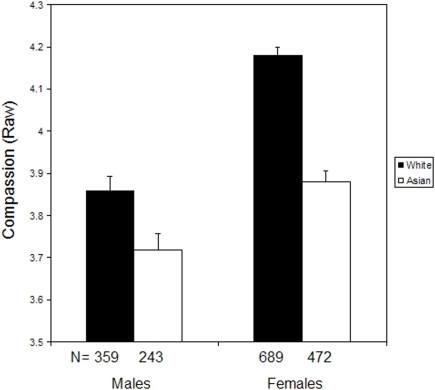
  • RESEARCH – DIFFERENCES IN PERSONALITY BETWEEN GENDERS Summary: “only 10% overlap

    https://www.ncbi.nlm.nih.gov/pmc/articles/PMC3251566/CORE RESEARCH – DIFFERENCES IN PERSONALITY BETWEEN GENDERS

    Summary: “only 10% overlap”

    https://www.ncbi.nlm.nih.gov/pmc/articles/PMC3251566/


    Source date (UTC): 2018-12-08 10:20:00 UTC

  • STYLE GUIDE: ATTRIBUTIONS “by” = Written by “h/t” = Forwarded, Recommended by “v

    STYLE GUIDE: ATTRIBUTIONS

    “by” = Written by

    “h/t” = Forwarded, Recommended by

    “via” = Published on site, page, whatever…

    —“quote”—Author being quoted

    —myquote—Current Author

    So:

    THIS IS THE TITLE

    by John Doe, via His Web Site, h/t Mary Roe

    this_is_a_link


    ( FILE UNDER: FORMATTING OF POSTS )


    Source date (UTC): 2018-12-08 10:06:00 UTC