—“I’ve gotta say Curt, studying and meditating on (usually via dialectic with others for me) Propertarianism has felt like the foggy glasses have been lifted off my eyes.
Seeing the world without the need for a moralistic overlay, since the morality is indelibly in my heart already (and for those who lack it, it can’t be taught), and the truth is enough.
I just feel like with my synthesized application of even a basic understanding of operationalism, I can deal with just about any dilemma calmly and with resolute conviction.
It’s a nice feeling my overdriven brain. It’s quite calming and puts me in a space of joyous hope for the changes ahead!
So thanks for the psychological positive side effects of your movement.”— A Friend via PM
photos_and_videos/TimelinePhotos_SxeO6JU-xg/50472870_10156919448967264_5369230975706333184_o_10156919448952264.jpg RETREADING MONUMENTS – NOT COOLJanderson RexHopefully someday you can have your own Doolittle RaidJan 15, 2019, 7:33 PMCurt Doolittleomg, you know, I never thought of that before… lolzJan 15, 2019, 7:34 PMRETREADING MONUMENTS – NOT COOL
—“The information stream is one of our commons, as is a water source. It should be treated the same. Once you see that, everything falls into place. You don’t dump toxic wastes in it (lies). You don’t dump unknown products in it (speech lacking due diligence). Doesn’t matter if the polluter intended to cause damage, we simply don’t tolerate it.”—Vengefül Bobmoran
Test of Agency does not require intention (i.e. it’s not a synonym for free-will).
Agency, in the context of biological and chemistry does not imply or require intentionality. i.e. “The active agent in soap is lye”
This might clarify why the sociological definition of Agency, that being an actor’s ability to act outside of influences of Structure, is flawed (it presumes intentionality exists as a necessary component of agency i.e. acts of free will unfettered by structure)
My stance regarding agency is simply this:
***…the ability to cause an effect….***
(CurtD: Traditional definition of power, is “the ability to alter the probability of outcomes.”)
In this context, structural influences can be the very means by which agency emerges and increases (rather then being distinguished apart from it)
From here: the issue we are discussing when discussing limitations to agency within a sociology context relates to other actors (individual or institutional) which act in opposition to other agents.
Thus my definition of AUTONOMY as being free from imposition upon one’s agency BY OTHER ACTORS. (Rather then natural or structural limitations to agency).
Intentionality remains a subset of agency in this regards. Not a necessary component.
(CurtD: Via Positiva Agency and Via Negativa Autonomy produce market competition for action. Intention (subjective value) is not relevant to the facts of ones agency and one’s autonomy)
For example: in law intention is not the primary means by which guilt is established. There are circumstances where intention is not relevant i.e. manslaughter, criminal neglect etc.
(CurtD: In law we test for due diligence and liability and intent to commit a crime only tangentially. In other words we separate the TRUTH (due diligence and liability), from what is MORAL (intent).)
So for instance, the impact on society from a low IQ cohort is not a matter of lacking agency, but rather that their aggregate agency constitutes a net negative – their combined effect being a result of their agency, regardless of intentionality or deliberateness of their actions- no agency, no effect – no intentionality yet the effect remains.
(CurtD: people do not need to intend harm to cause harm. When they cause harm by lack of due diligence, or intent, then THEY are to blame. But if they lack the AGENCY then WE are to blame for not constraining the harm that they can do.)
It’s is precisely because of their agency that we seek constraints. Why? Because their agency imposes upon other actors resulting in a net drain on the agency of the group as a whole…. Thus autonomy being the measure of decidability.
Why is this important?
Because for laws, social norms etc, we are constructing structural limitations upon agents, to constrain their effects from being damaging (regardless of whether they intend it or not).
In other words we are addressing their agency, their ability to cause an effect – regardless of their intentional choice.
So how do these structural constraints NOT constitute an imposition upon their agency? 1) via negativa 2) not compelled.
You are free to break the law (act outside the constraint) but not free from the consequences. The potential to act remains un-imposed upon. This is very different than imposing upon agency to prevent the acts from taking place. I.e. compelled behaviour. Compelled behavior being a defining quality of dystopian nightmares.
Now extrapolated this to our current situations of sin taxes, compelled speech laws, deplatforming etc. These are all forms of prescriptive application of structural constraints i.e. impositions upon agency…
(CurtD: this is the difference between moral blame and criminal blame, and humans being what we are, conflate ‘wrongness’ of different sorts, and blame of different persons when we sense ‘wrongness’. Then as we are perpetual victims of our tendency for conflation we use terms with specific meaning (moral, lawful, truthful, logical, reasonable etc to load and frame rather than to deflate and test.)
photos_and_videos/TimelinePhotos_SxeO6JU-xg/49948394_10156916627572264_5888674864629284864_n_10156916627567264.jpg Steve PenderAppeal to truth seekers to empower priests who pose as intermediates for the source of truth.Jan 14, 2019, 12:07 PMCurt DoolittleTruth or utility?Jan 14, 2019, 12:13 PMSteven JacksonReligion offers truth in the same way snake oil salesmen offers a cure.
The customer is still looking for a cure but the snake oil salesman doesn’t deliver the cure but a hope of one.
I stand by thisJan 14, 2019, 12:47 PMCurt DoolittletrueJan 14, 2019, 12:47 PMCurt Doolittleheroin dealer offers heroin.Jan 14, 2019, 12:47 PMLisa OuthwaiteSome pretty broad strokes being applied here. I’m assuming you don’t mean that there are no universal truths embedded within religion?Jan 14, 2019, 1:15 PMLisa OuthwaiteWho doesn’t love a double negative? 🤪Jan 14, 2019, 1:16 PMSteven JacksonCurt Doolittle rat experiments show that drug addiction correlates with social ostracism.
The hormones stimulated by social acceptance can also be stimulated through the use of narcotics.
Marx was literally correct when he described religion as being the opiate of the masses.
The difference between the drug peddler and the priest is that the unifying narrative of religion can be put to use to build trust and social cohesion. The priest builds social capital by writing a common hymn book so everyone sings the same song.
The drug dealer creates a demand for drugs and nothing else. He preys on low trust societies with low social cohesion and makes it worse, he is a parasite because he drains the society of social capital.
Religion falls apart when it’s lies are exposed, but many are willing to overlook the lies because of the benefit provided by living among those singing off the same sheet.Jan 14, 2019, 1:17 PMNick HeywoodNo! It ain’t!
Religion is observed, but un-scientifically explained, framework of behavioral decidability.
And usually reduces to group evolutionary reciprocity strategy.
“If you want to be a member of this group”?… “you’ll behave thus” “and decide crap according to these rules”!
“We know these principles, that govern limits, of behaviour and decisions work”! “We’ve seen ‘them’ work” “and our ancestors were successful because they adhered to them”.
Another question becomes… “what’s the goal, aim, proposed outcome”? That’s a different question, though. 🙂
Nothing at all wrong with religion. It’s natural!
As long as ya don’t wanna colonise the universe or f around with capital development, resource distribution, engineering, biology, chemistry, maths, physics’n’quantum shit etc.😁
Once you’ve developed that capability?
Religion’s no good to ya! You’ll just hurt ya’self and melt shit. 🙂Jan 14, 2019, 1:44 PMNick HeywoodUtility for the hierarchy! 🙂😉😎Jan 14, 2019, 2:00 PMSteven JacksonNick Heywood religion has always been a factor in every advanced society. The industrial revolution occurred under puritanical Protestantism and Presbyterianism. The medieval Christian monks preserved literature and science (albeit after destroying it in the early years of Christianity.) The Greek philosophers flourished under their pagan ancestor worship etc etc.
When we have dispensed with religion (a unifying narrative) we have ended up with relativism and pseudoscience. The USSR is a prime example of this, the communist narrative was destructive and couldn’t capture a second generation. The initial cohesion, gained through genocide, produced the space race and Kalashnikov. A generation later it produced only civil war, Mafia and rusting public utilities.
Similar forces destroyed the narrative in the west and we have trannys and feminism.
Religion as a means of social cohesion seems to be necessary, as knowledge has progressed, religion has evolved. We just need to evolve it to agree with what we now understand to be true. The modernists threw the baby out with the bath water when they misunderstood “God is dead”Jan 14, 2019, 2:27 PMSteven J. WoronLike the new profile pic btw…Jan 14, 2019, 3:02 PMNick HeywoodThe unifying narrative became a tyranny in and of itself. Which really f’d things up.Jan 14, 2019, 6:10 PMDylan KnowlesModern religion is not worshipping a faith, it is the worship of mammon. Reject the modern world, reject degeneracy.Jan 14, 2019, 9:27 PM
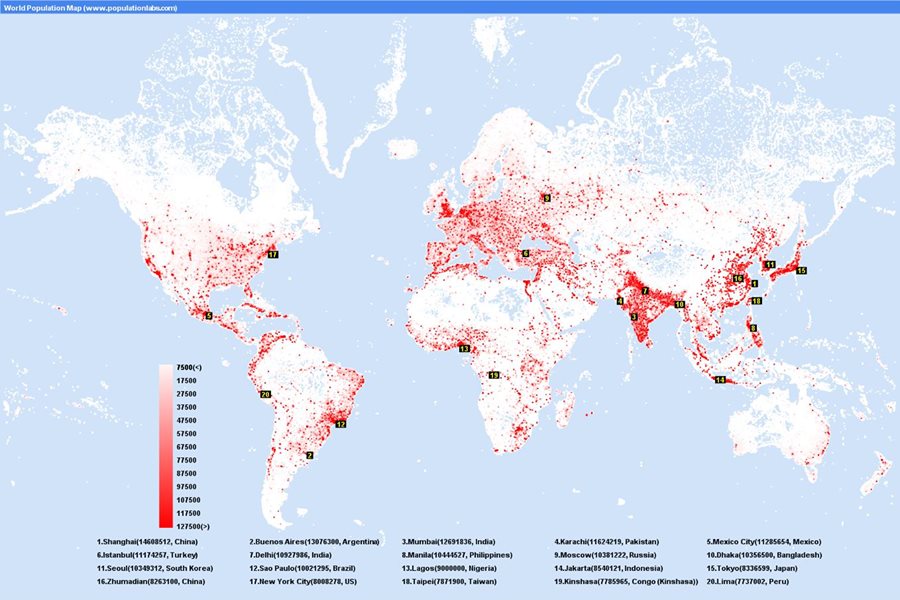
photos_and_videos/TimelinePhotos_SxeO6JU-xg/49811690_10156916370977264_1498804850270404608_o_10156916370972264.jpg THE MOST USEFUL MAP OF THE WORLD.
(Add the rivers and you’re there.)Marcin MoczarnyShit in streets?Jan 14, 2019, 9:42 AMMurphy CellAka: Where the next big war should go down.Jan 14, 2019, 9:50 AMAlex MacleodHell is other people?Jan 14, 2019, 9:56 AMTomás Rodriguez VillegasWhat does it rank?Jan 14, 2019, 10:09 AMGordon E. ComstockAre you seriously asking that or you’re just fishing for witty replies?Jan 14, 2019, 10:16 AMSteve PenderpopulationJan 14, 2019, 10:20 AMNicola PaviaThe top 20 most populated citiesJan 14, 2019, 10:27 AMTomás Rodriguez VillegasThen it’s wrong, Buenos Aires is not even in the top 5.Jan 14, 2019, 10:32 AMTomás Rodriguez VillegasGordon E. Comstock I know about the different population sizes of many different cities around the world, that’s why I can tell this ranking is bullshit. But before calling it bullshit I ask what it ranks because I may be missing something. Apparently not, it’s just a BS ranking.Jan 14, 2019, 10:33 AMGordon E. ComstockIt’s population density, you unintuitive, low IQ dolts! Those cities aren’t supposed to be the top 20 most populous, they are marked as way of clarification (I’m not precisely sure what it’s supposed to be clarifying, but it’s obviously not a top 20 ffs)Jan 14, 2019, 10:36 AMTomás Rodriguez VillegasIt would STILL be wrong, and no, it’s not population density, unless you think numbers like 13 million for Buenos Aires is refering to DENSITY and not overall population.Jan 14, 2019, 10:37 AMGordon E. Comstockoh for f*ck’s sakes! Maybe those are some especially densely packed cities (that’s why there’s no Mexico city highlighted)? I dunno. Otherwise the map could be read as just showing urbanization which more or less equals pop density.
Please tell me, when you see a figure attached to Lichtenstein on a map of Europe, do you automatically jump to the conclusion that it somehow ranks Lichtenstein!?Jan 14, 2019, 10:45 AMTomás Rodriguez VillegasMexico City IS highlighted and is ranked number 5, did you even spent one fucking second paying attention to the map or what? stop wasting my time.Jan 14, 2019, 10:46 AMGordon E. ComstockYou asked the question, you effin moron. The scale is most likely pop densityJan 14, 2019, 10:51 AMVoodoo JonesyLagos on point with the round figureJan 14, 2019, 10:52 AMTomás Rodriguez VillegasRead again. I asked about the ranking, not the fucking scale. And being that I live in the city which is ranked number 2 I think I can tell if its bullshit or not. Fuck off.Jan 14, 2019, 10:59 AMMary RomanoEnergy consumption?Jan 14, 2019, 11:11 AMNicola PaviaTomás Rodriguez Villegas City population is actually quite hard to measure precisely because some people will just count the city proper, others include suburbs, and in some countries an entire region will count as a “city”. So take these numbers with a grain of salt. Maybe these researchers were way too generous with which parts of Argentina they counted as “Buenos Aires”Jan 14, 2019, 11:56 AMTomás Rodriguez VillegasNicola Pavia, the numbers for Buenos Aires are actually accurate but a little bit outdated. 13 million is pretty close but I think it might have hiked to 14-15 million lately. Anyways, let’s say the number is right, in the case of Buenos Aires they are counting suburbs/outskirts, because the city itself is only 3.5 million. In the case of NYC they are probably doing the opposite, not counting the five boroughs completely maybe? NY is way over 8 million people. Sao Paulo and Mexico City are both bigger than Buenos Aires, which comes third in Latin America. And it’s just impossible that Lima makes it to this ranking but LA or Chicago don’t. The most populous cities are by far in Asia, particularly in China, India, Bangladesh and Indonesia, and also Tokyo Japan of course.Jan 14, 2019, 12:01 PMOsman ErdoganA.k.a where the nukes need to be sent.Jan 14, 2019, 1:04 PMCurt Doolittle(a) the site that produced this map is closed. (b) the site that contains the world data does not show the detail this clearly. (c) I chose this map entirely because of the clarity of the population distribution. (d) I do not know the ranking but I”ll find out. I may be urban, metropolitan or regional population or pop density. It might be rate of change. Kinshasa is what’s throwing me. but in general it’s pretty close to largest cities depending on which of the four values above is being measured.Jan 14, 2019, 10:59 PMSamuel CharlickThe Tokyo metropolis, which has consumed many other large cities such as Yokohama and Kawasaki, is the most populous metropolitan area in the world and exceeds 38 million people, and also expands by a further 2.5 million in day times due to commuters.Jan 14, 2019, 11:37 PMTomás Rodriguez Villegas^trueJan 15, 2019, 5:59 AMTHE MOST USEFUL MAP OF THE WORLD.