Form: Full Essay

  • The Circuits of The Brain

    THE CIRCUITS OF THE BRAIN

    The brain makes use of a number of ‘circuits’. A circuit provides a feedback loop that competes for, creates, maintains, or loses attention, producing information. Just like an electrical (unidirectional) or hydraulic(non-directional) circuit. What you ‘experience’ is whatever has enough current to win the competition among the predictions produced by stimulation. When you want to theorize how something in your brain is working, think thru: 1) Nerves and neurons are the same thing – just longer or shorter. 2) Nerves and neurons are dumb things: they turn on and off, and they increase or decrease in rate – and that’s it. 3) Groups of Neurons are not so dumb things, they take a sequence of on and off and predict what’s coming next, and forward that prediction to the rest of the neurons in it’s ‘field’ (range). 4) Columns of neurons predict objects (models) and where they are in physical space in relation to you. 5) All active columns compete with each other for ‘coherence’ in time and space. Although there are as much information coming from your eyes as the rest of your body combined. 6) This information is ‘distilled’ into a three dimensional roughly hexagonal spherical grid that accounts for your body size, your body, head, eye direction, your direction of movement and speed of movement, to create what you perceive of as objects, spaces, and boundaries. This is your ‘sixth sense’: the world model. And its done in less than half a second in massive parallel by those very simple nerves, neurons, mini-columns, columns, modules of columns, and 50+ regions of the brain. 7) Anything that is existential is reinforced, and anything tat novel is indexed by auto association to whatever network of neurons just ‘won the competition’, and whatever novelty you experience during the day is repeatedly ‘rehearsed’ (echoed, repeated) very quickly, in a sort of time-sharing with the rest of your brain, and then during sleep. 8) All of this information recursively passes from the back to the front of your brain, iteratively producing competing predictions vying for sufficient ‘amplitude’ to grasp your attention. 9) What ever maintains your attention stays stimulated by the circuit and contributes to the next cycle of information processing. So you control what you think by controlling what you pay attention to. This is what creates cognitive agency. It’s also why its usually easier for men than for women. 10) For the most part the thalamus determines what holds your attention – although our brain includes interruption circuits (dorsal and brainstem) that can seize attention in the case of opportunity, pain, or duress. 11) Your brain evolved to identify routes to resources that can be acquired for consumption, on one hand, and to be cautious of predators on the other – and pretty much, whatever gets your attention will be that – unless you train it to do something else. The hierarchy from the back to the front is from the sensory to the physical to the imagined. 12) Mindfulness – or any other state – is merely the ritualized (habit) of controlling and building networks using the attention circuit. Really. It’s that f—-king simple. Keeping the section of Christmas lights on that you want to keep lit. ==== Martin Štěpán: In regards to that competition, on what criteria does the selection happen? Curt Doolittle: In order: (a) breadth of association (b) novelty (c) acquisition of something. Hence acquisitionism. The percentage of reward sensing neurons is pretty low but it’s enough. I can’t recall off the top of my head but it’s lower than I thought it wold be. Martin Štěpán: The breadth of association is increased by reinforcement (repetition), correct? Curt Doolittle:  Breadth is simply the number of associations activated. But yes, any activation increases reinforcement. That’s why we get good at things just by imagining doing them. Brandon Hayes ^This! Reece Haynes: Extremely insightful, thanks. Especially points 8 and 9. Helps to explain how habits work, which dovetails with recent conversations I’ve been having. If you are completely aware of what your body and mind is doing at any given moment, and most people aren’t, then you won’t engage in habits. Because once you directly observe a habit, you discover that it can only persist if you’re not conscious of it. … For example, I often click my jaw, a benign nuisance. But if I focus on it, I don’t do it. When my focus moves elsewhere, it comes back. Awareness versus unawareness. Attention versus inattention. Martin Edhouse: Have you tried answering what I think neuroscientists call the “hard problem”? which is, how is it that electrical activity within neurones gives rise to subjective experience. Curt Doolittle: I think we know the answer and I don’t think it’s even complicated. The problem is that they want an observer and we are recursively observing a stream of memory that is changing so fast – like movie frames – that we can’t detect differences other than those differences necessary or useful for our perception and action (novelty). As far as I can tell everything is experienced where it’s constructed and we can’t disambiguate inputs any more than we can disambiguate the outputs (how we move our limbs). So the following iteration (recursion) of experience produces layers upon layers of predictions constantly falsified by the next moment of prediction that our short term memory can only identify changes – not introspectively hold any given state for analysis (we capture episodic memory for condensing that stream of experiences.) The reason being that the distributed calculation producing what we call either input experience or output action is so granular its only meaningful as a stream of changes TO ITSELF in very short term memory. SO like everything else in the brain, all we have is memory to work from. Either memory of the past little bit, or the forecasts we make from the last little bit into the future, and our control over that process by focusing our attention – which does nothing except shut off that which we aren’t interested in. I think the only thing stopping the average person from comprehension of experience is a basic understanding of the mechanisms for assembling and then predicting from the spectrum of spatial models from interior to body to proximity to space to boundaries, to the intentions and minds and imaginations of others – that’s what consciousness consists of that prediction and memory of changes in those predictions. In that sense, while we have our six senses so to speak, they are primitives, and the first generation assembly of those senses is into a spatial model. it’s that spacial model of the world we experience. And we are so heavily dependent upon it we almost can’t ignore it. Once you see that we do this just like a three-dee video game does (exactly the same way – it’s scary) and that we have neurology that specifically produces the same information as does a three dee video game for the same reason, you see it’s naturally deterministic that we would think that way and that computer games would have to be architected that way – just as much as atoms must be composed of only three particles. It’s beautiful, it’s terrifying, and it’s dehumanizing – and yes, we compute differently from computers but the analogy is more correct than it is false. So my understanding is that while the above narrative might be improved upon, that like newton’s gravity the description is correct for every and all questions of human scale – which is all we need for self and other understanding. I differ from Dennett in that Dennett uses philosophical and neurological frames first, and I use technological and neurological frames first, and avoid philosophy which I consider only slightly better than theology. I don’t differ from Searle that much. I consider myself the beneficiary of Searle as much as I do the beneficiary of Hayek. Again he uses the philosophical frame and I avoid it. I differ only in that I have perhaps a slightly better understanding of how subjective experience is constructed because one of the side effects of my illness is a rather slow restoration of consciousness when I (frequently) lose it and CAN experience that construction at least a little at a time each time. It might also be that I am VERY current on the research (I know the working papers) and he is not producing as much public material. So I don’t know what he thinks today. I might like to ask him but he’s getting on in years. I think the most articulate expression for ordinary people that’s available in video is Michio Kaku’s explanation of consciousness and it’s something like three minutes or less and it’s spot on. It’s just prediction of space and time at increasing distances. The perception I find most interesting is that even with very little consciousness, when waiting for stimuli, when waiting for that thin layer of neurons to create a sense of reality outside the body, that ‘temperament’ you consider ‘you’ is there. What I find most interesting is the shift from that temperament when I’m first aware of it, through changes as your world model and layers of memories come back to life. I feel every time, that I’m moving from childhood to adulthood and I see my change in values as the world model and current context, and intertemporal context come into being. It’s fascinating. I most cases, I avoid philosophy except to explain why its false – or to find a way to bridge between someone else’s frame of reference and what I understand to be the scientific (most parsimonious and consistent) frame of reference.

  • Variation Between the Races

    ( See also “Lewontin’s Fallacy” https://en.wikipedia.org/wiki/Human_Genetic_Diversity:_Lewontin%27s_Fallacy ) A common argument against the taxonomic validity of race is that there is more genetic variation within than between races and so races must not be genetically different enough to be subspecies. This argument comes from a 1972 paper by the Harvard geneticist Richard Lewontin (Lewontin 1972). As will be shown, Lewotin’s argument fails because the metric of genetic differences he used has no obvious relevance to subspecies and because human races are equally or more genetically differentiated than recognized subspecies from other species are. To understand Lewontin’s argument you have to have a conceptual grasp of a metric used in population genetics called an Fst value. Say we take two random animals from the species and look at what variant they have for some specific gene. There will be some probability, called the species’s total heterozygosity, that these gene variants will not be the same. Now say we do the same thing, but this time the two people are picked from the same sub-population within the species. This time the probability that their genes variants will not be the same will be called the sub-population heterozygosity. To calculate an Fst value you subtract a the sub-population heterozygosity from the total heterozygosity and then divide by the total heterozygosity: Fst = (Ht-Hs)/Ht In other words, an Fst value tells us how much the probability of picking different gene variants increases is the gene variants are picked at random from the entire species instead of the same sub-population. When calculating an Fst value, geneticists run this analysis for many genes and then find the average increase in heterozygosity. When an Fst value is calculated for a species with multiple proposed sub-populations the values are averaged. So, for instance, if we conducted a study and found that two people having different gene variants was 10% less likely if they were both picked randomly from the Asian population instead of humanity at large, 8% less likely if they were both from the European population instead of humanity at large, and 6% less likely if they were picked from the African population rather than humanity at large, we might assign humanity an Fst value of (10%+8%+6%)/3% = 8% under this 3 race model. And this is what we would mean if we said something like “Only 8% of human genetic variation is between races while 92% is within them”. (The proportion of variation within groups is just 1 – the Fst value.) In 1972, Richard Lewontin became the first person to empirically measure the human Fst value and found it to be 6.3%. Based on this finding, Lewontin declared that categorizing humans racially has no “genetic or taxonomic significance”. Unfortunately, Lewontin never explained why an Fst value of 6.3% should mean races have no taxonomic or genetic significance. And it isn’t obvious that it should. In fact, Sewall Wright, a founder of population genetics and the man who invented Fst values, thought that they had nothing to do measuring taxonomic significance and continued to believe in Human races long after Lewontin’s famous article (Wright 1984). That Lewontin’s idea never took hold in the world of biology can be seen by looking at a 2006 report be the U.S Geological Survey which reviewed more than a century of popular proposed criteria for when a population counts as a sub-species. It never mentioned Fst values let alone Lewontin’s paper (Haig et al. 2006). Since Lewontin’s paper, research has suggested that the Human Fst value is actually about twice as large, 12%, as what Lewontin suggested (Elhaik 2012). This has not altered the stance of Lewontin on races. Indeed, it isn’t obvious that his stance is open to changing because he has never said how high an Fst value would need to be in-order for a population to be of taxonomic signficance. Instead, he has just said that the human Fst value is too low. Furthermore, Lewontin has never addressed the fact that there are many species with recognized subspecies which have Fst values lower than Humans. As can be seen below, I was easily able to find 8 other species with recognized subspecies which have Fst values no higher than humans. In fact, it isn’t hard to find researchers in the nonhuman literature taking any Fst value greater than zero as evidence that a population is a subspecies. See, for instance, Lorenzen et al. 2007 and Williams, Homan, Johnston, and Linz, 2004. Given this, it is clear that most biologists do not use Lewontin’s criteria, whatever exactly that is, for subspecies. And given that he has never made any argument for using it, neither should we. Instead, many biologists use a criteria of subspecies based, in part, on the idea that a population can only be a subspecies if you can analyze the traits of an organism in that species and accurately predict whether or not it is a member of a proposed subspecies. Based on this traditional understanding of subspecies taxonomy, multiple geneticists have pointed out that an Fst value of 6% is just the average increased probability of a single gene being different and that, by combining data from multiple genes at once into our analysis, we can very accurately predict whether or not someone will be a member of a given race (Mitton 1977). To get a conceptual understanding of what this means, imagine that you were told to guess whether a person was a male or a female based on whether they were taller or shorter than average, or hairier or less hairy than average, or whether their voice was higher or lower pitched than average, etc. If only one of these facts were told to you, you could make an educated guess but there would be a decent chance that you would be wrong. But if you combined data on, say, 20 such sex differences, your chances of correctly guessing the person’s sex would become quite high. By the same principle, a singe gene might not be a very good predictor of someone’s race, but that doesn’t mean that the combined data of many genes wont be. It was on this basis that the famed population genetic A. W. F. Edwards dubbed this argument against race “Lewontin’s Fallacy” (Edwards 2002). Further more, an Fst value is not even a good measure of genetic differentiation. Consider the work done in Long and Kittles 2003, which provided a powerful demonstration of just how ridiculous an Fst subspecies criteria really is. Long and Kittles calculated the Fst value of the global human population at 11%, which is pretty typical of modern studies. They then calculated the Fst value of the global human population plus a population of chimpanzees to be 16%. Thus, the inclusion of Chimpanzees into the calculation only raised the Fst value by 5%, and most Fst based subspecies criteria would therefore conclude that a population of humans and chimps has no significantly different sub populations within it! This work is not only amusing, but illustrative of the primary problem with Fst values as a measure of genetic differentiation. Recall that an Fst value tells us how much more likely it is two gene variants will be different if they are picked out of the entire species instead of from member of the same race. Well, what if the probability that they will be different is really high even when the genes are picked from the same race. Say, 85%, for instance. Well, in that case the most that the probability of picking different genes could increase would be by 15%, which is only an Fst value of .15. More generally, the table below makes two points. First, for simple mathematical reasons, an Fst value can never be larger than one minus the sub-population heterozygosity. Second, because an Fst value is a measure of how much heterozygosity increases when gene variants are picked from the entire population rather than the same population, expressed as a percentage of the total heterozygosity, the same absolute difference between total and sub-population heterozygosity can lead to radically different Fst values depending on what the absolute values of these variables are: To connect this back to humans, our sub-population heterozygsity levels range from .70-.76 (Jorde et al. 1997). Thus, no matter how different the races were, our Fst value could never be greater than roughly 25%. Each race could literally be as different, genetically speaking, as dogs are from cats. It wouldn’t matter. Our Fst value would never seem intuitively high. and most of our genetic variation would still be contained “within races”. For these and other reasons, geneticists are increasingly recognizing that Fst values cannot be meaningfully compared across species, which have different total heterozygosities, and so, beyond testing that an Fst value is greater than zero, it cannot possibly be the foundation for criteria of sub-species (Jost 2008). Appendix 1: Alan Templeton and Fst > .25 A highly cited 1999 paper by the geneticist Alan Templeton claimed that requiring that a subspecies have an Fst value of at least 25%-30% is “standard in the nonhuman literature” (Templeton 1999). Templeton, who uses this claim to argue against the existence of human races, cites the 1997 paper “Subspecies and Classification” by Smith, Chiszar, and Montanucci, to substantiate that this Fst standard is common place in biology (Smith, Chiszar, and Montanucci, 1997.). But Smith et al. 1997 never even mentions Fst values! It appears that Templeton assumed that this is what Smith et al 1997 meant when they wrote that subspecies cannot “overlap in variation of their differentiae” by more than 25%-30%. This is almost surely not a reference to Fst values. Instead, this paper was referencing the so called “75% rule”, which is criteria of subspecies which stated that a population would count as a sub-speices if you could analyze the traits of organisms in the species and, on this basis, predict whether or not they were a member of the proposed subspecies with an error rate of 25% or less. There are several reasons for thinking that Smith et al. 1997 were referring to the 75% rule and not an Fst based criteria for subspecies: They referred to “differentia” implying that multiple traits can be used to differentiate subspecies. This is consistent with the 75% rule, several observable traits were the norm, and not an Fst value criterion. Smith et al. 1997 goes on to state “A subspecies name draws attention to a geographic segment of a species that in some way is recognizably different”. This appeal to recognizable differences clearly implies that subspecies are differentiated based on observable traits, as in the 75% rule, and not a molecular genetic analysis. As demonstrated by Haig et al. 2006, large teams of researchers reviewing the subspecies literature have never heard of Templeton’s Fst criteria. Haig et al do, however, spend several paragraphs talking about the 75% rule. As is evidenced above, an Fst criteria is not, in fact, commonly used. But the 75% rule was. Given that Smith is an expert in subspecies taxonomy who has been writing on the topic for decades, it is therefore far more likely that he was talking about the 75% rule than Templeton’s contrived criteria which can’t be found anywhere else in the literature. Thus, Templeton’s paper is based on an extremely misleading reading of Smith et al 1997 and fails to establish any Fst criteria for subspecies. Appendix 2: Joseph Graves and Sewall Wright Joseph Graves is a biologist who has written several books and countless articles arguing against the biological existence of races. In his writings he often says something such as this about Sewall Wright, the inventor of Fst values: “Wright felt the latter, measured by Fst was equivalent to the subspecies used by taxonomists (also called biological or geographical race.) Population subdivision can be calculated at individual genetic loci or for numerous genetic loci simultaneously. Wright’s statistic can range between 0 and 1.00. He arbitrarily suggested that the minimal threshold for the existence of great variation was Fst = 0.250 and moderate variation Fst = 0.15 to 0.250. He examined individual loci derived from protein electrophoresis from a variety of species, finding a range of differentiation from 0.023 to 0.501 (average Fst= 0.168). Subsequent studies of multiple loci, including whole genome analyses, have generally shown human Fst at much less than Wright’s critical value.” –Graves 2006 As we have already seen, Sewall Wright did not think that Fst values should be a criteria for sub-species. He literally dedicates an entire chapter two the fourth volume of his X to race and never mentions Fst values, not does he anywhere else state that they should be used as a criteria for subspecies. In fact, on page 85 Wright cautions readers against using Fst values as a straight forward measure of genetic differentiation: We will take F = 0.25 as an arbitrary value above which there is very great differentiation, the range of 0.15 to 0.25 as indicating moderately great differentiation. Differentiation is, however, by no means negligible if F is as small as 0.05 or even less” – Wright 1984 Thus, Graves is misleading readers by separating these two sentences, only showing his readers the first, and thus stripping it of its proper context. Wright’s views do not, in fact, lend credence to the idea that human races do no exist. source: https://thealternativehypothesis.org/index.php/2016/04/15/variation-within-and-between-races

  • Variation Between the Races

    ( See also “Lewontin’s Fallacy” https://en.wikipedia.org/wiki/Human_Genetic_Diversity:_Lewontin%27s_Fallacy ) A common argument against the taxonomic validity of race is that there is more genetic variation within than between races and so races must not be genetically different enough to be subspecies. This argument comes from a 1972 paper by the Harvard geneticist Richard Lewontin (Lewontin 1972). As will be shown, Lewotin’s argument fails because the metric of genetic differences he used has no obvious relevance to subspecies and because human races are equally or more genetically differentiated than recognized subspecies from other species are. To understand Lewontin’s argument you have to have a conceptual grasp of a metric used in population genetics called an Fst value. Say we take two random animals from the species and look at what variant they have for some specific gene. There will be some probability, called the species’s total heterozygosity, that these gene variants will not be the same. Now say we do the same thing, but this time the two people are picked from the same sub-population within the species. This time the probability that their genes variants will not be the same will be called the sub-population heterozygosity. To calculate an Fst value you subtract a the sub-population heterozygosity from the total heterozygosity and then divide by the total heterozygosity: Fst = (Ht-Hs)/Ht In other words, an Fst value tells us how much the probability of picking different gene variants increases is the gene variants are picked at random from the entire species instead of the same sub-population. When calculating an Fst value, geneticists run this analysis for many genes and then find the average increase in heterozygosity. When an Fst value is calculated for a species with multiple proposed sub-populations the values are averaged. So, for instance, if we conducted a study and found that two people having different gene variants was 10% less likely if they were both picked randomly from the Asian population instead of humanity at large, 8% less likely if they were both from the European population instead of humanity at large, and 6% less likely if they were picked from the African population rather than humanity at large, we might assign humanity an Fst value of (10%+8%+6%)/3% = 8% under this 3 race model. And this is what we would mean if we said something like “Only 8% of human genetic variation is between races while 92% is within them”. (The proportion of variation within groups is just 1 – the Fst value.) In 1972, Richard Lewontin became the first person to empirically measure the human Fst value and found it to be 6.3%. Based on this finding, Lewontin declared that categorizing humans racially has no “genetic or taxonomic significance”. Unfortunately, Lewontin never explained why an Fst value of 6.3% should mean races have no taxonomic or genetic significance. And it isn’t obvious that it should. In fact, Sewall Wright, a founder of population genetics and the man who invented Fst values, thought that they had nothing to do measuring taxonomic significance and continued to believe in Human races long after Lewontin’s famous article (Wright 1984). That Lewontin’s idea never took hold in the world of biology can be seen by looking at a 2006 report be the U.S Geological Survey which reviewed more than a century of popular proposed criteria for when a population counts as a sub-species. It never mentioned Fst values let alone Lewontin’s paper (Haig et al. 2006). Since Lewontin’s paper, research has suggested that the Human Fst value is actually about twice as large, 12%, as what Lewontin suggested (Elhaik 2012). This has not altered the stance of Lewontin on races. Indeed, it isn’t obvious that his stance is open to changing because he has never said how high an Fst value would need to be in-order for a population to be of taxonomic signficance. Instead, he has just said that the human Fst value is too low. Furthermore, Lewontin has never addressed the fact that there are many species with recognized subspecies which have Fst values lower than Humans. As can be seen below, I was easily able to find 8 other species with recognized subspecies which have Fst values no higher than humans. In fact, it isn’t hard to find researchers in the nonhuman literature taking any Fst value greater than zero as evidence that a population is a subspecies. See, for instance, Lorenzen et al. 2007 and Williams, Homan, Johnston, and Linz, 2004. Given this, it is clear that most biologists do not use Lewontin’s criteria, whatever exactly that is, for subspecies. And given that he has never made any argument for using it, neither should we. Instead, many biologists use a criteria of subspecies based, in part, on the idea that a population can only be a subspecies if you can analyze the traits of an organism in that species and accurately predict whether or not it is a member of a proposed subspecies. Based on this traditional understanding of subspecies taxonomy, multiple geneticists have pointed out that an Fst value of 6% is just the average increased probability of a single gene being different and that, by combining data from multiple genes at once into our analysis, we can very accurately predict whether or not someone will be a member of a given race (Mitton 1977). To get a conceptual understanding of what this means, imagine that you were told to guess whether a person was a male or a female based on whether they were taller or shorter than average, or hairier or less hairy than average, or whether their voice was higher or lower pitched than average, etc. If only one of these facts were told to you, you could make an educated guess but there would be a decent chance that you would be wrong. But if you combined data on, say, 20 such sex differences, your chances of correctly guessing the person’s sex would become quite high. By the same principle, a singe gene might not be a very good predictor of someone’s race, but that doesn’t mean that the combined data of many genes wont be. It was on this basis that the famed population genetic A. W. F. Edwards dubbed this argument against race “Lewontin’s Fallacy” (Edwards 2002). Further more, an Fst value is not even a good measure of genetic differentiation. Consider the work done in Long and Kittles 2003, which provided a powerful demonstration of just how ridiculous an Fst subspecies criteria really is. Long and Kittles calculated the Fst value of the global human population at 11%, which is pretty typical of modern studies. They then calculated the Fst value of the global human population plus a population of chimpanzees to be 16%. Thus, the inclusion of Chimpanzees into the calculation only raised the Fst value by 5%, and most Fst based subspecies criteria would therefore conclude that a population of humans and chimps has no significantly different sub populations within it! This work is not only amusing, but illustrative of the primary problem with Fst values as a measure of genetic differentiation. Recall that an Fst value tells us how much more likely it is two gene variants will be different if they are picked out of the entire species instead of from member of the same race. Well, what if the probability that they will be different is really high even when the genes are picked from the same race. Say, 85%, for instance. Well, in that case the most that the probability of picking different genes could increase would be by 15%, which is only an Fst value of .15. More generally, the table below makes two points. First, for simple mathematical reasons, an Fst value can never be larger than one minus the sub-population heterozygosity. Second, because an Fst value is a measure of how much heterozygosity increases when gene variants are picked from the entire population rather than the same population, expressed as a percentage of the total heterozygosity, the same absolute difference between total and sub-population heterozygosity can lead to radically different Fst values depending on what the absolute values of these variables are: To connect this back to humans, our sub-population heterozygsity levels range from .70-.76 (Jorde et al. 1997). Thus, no matter how different the races were, our Fst value could never be greater than roughly 25%. Each race could literally be as different, genetically speaking, as dogs are from cats. It wouldn’t matter. Our Fst value would never seem intuitively high. and most of our genetic variation would still be contained “within races”. For these and other reasons, geneticists are increasingly recognizing that Fst values cannot be meaningfully compared across species, which have different total heterozygosities, and so, beyond testing that an Fst value is greater than zero, it cannot possibly be the foundation for criteria of sub-species (Jost 2008). Appendix 1: Alan Templeton and Fst > .25 A highly cited 1999 paper by the geneticist Alan Templeton claimed that requiring that a subspecies have an Fst value of at least 25%-30% is “standard in the nonhuman literature” (Templeton 1999). Templeton, who uses this claim to argue against the existence of human races, cites the 1997 paper “Subspecies and Classification” by Smith, Chiszar, and Montanucci, to substantiate that this Fst standard is common place in biology (Smith, Chiszar, and Montanucci, 1997.). But Smith et al. 1997 never even mentions Fst values! It appears that Templeton assumed that this is what Smith et al 1997 meant when they wrote that subspecies cannot “overlap in variation of their differentiae” by more than 25%-30%. This is almost surely not a reference to Fst values. Instead, this paper was referencing the so called “75% rule”, which is criteria of subspecies which stated that a population would count as a sub-speices if you could analyze the traits of organisms in the species and, on this basis, predict whether or not they were a member of the proposed subspecies with an error rate of 25% or less. There are several reasons for thinking that Smith et al. 1997 were referring to the 75% rule and not an Fst based criteria for subspecies: They referred to “differentia” implying that multiple traits can be used to differentiate subspecies. This is consistent with the 75% rule, several observable traits were the norm, and not an Fst value criterion. Smith et al. 1997 goes on to state “A subspecies name draws attention to a geographic segment of a species that in some way is recognizably different”. This appeal to recognizable differences clearly implies that subspecies are differentiated based on observable traits, as in the 75% rule, and not a molecular genetic analysis. As demonstrated by Haig et al. 2006, large teams of researchers reviewing the subspecies literature have never heard of Templeton’s Fst criteria. Haig et al do, however, spend several paragraphs talking about the 75% rule. As is evidenced above, an Fst criteria is not, in fact, commonly used. But the 75% rule was. Given that Smith is an expert in subspecies taxonomy who has been writing on the topic for decades, it is therefore far more likely that he was talking about the 75% rule than Templeton’s contrived criteria which can’t be found anywhere else in the literature. Thus, Templeton’s paper is based on an extremely misleading reading of Smith et al 1997 and fails to establish any Fst criteria for subspecies. Appendix 2: Joseph Graves and Sewall Wright Joseph Graves is a biologist who has written several books and countless articles arguing against the biological existence of races. In his writings he often says something such as this about Sewall Wright, the inventor of Fst values: “Wright felt the latter, measured by Fst was equivalent to the subspecies used by taxonomists (also called biological or geographical race.) Population subdivision can be calculated at individual genetic loci or for numerous genetic loci simultaneously. Wright’s statistic can range between 0 and 1.00. He arbitrarily suggested that the minimal threshold for the existence of great variation was Fst = 0.250 and moderate variation Fst = 0.15 to 0.250. He examined individual loci derived from protein electrophoresis from a variety of species, finding a range of differentiation from 0.023 to 0.501 (average Fst= 0.168). Subsequent studies of multiple loci, including whole genome analyses, have generally shown human Fst at much less than Wright’s critical value.” –Graves 2006 As we have already seen, Sewall Wright did not think that Fst values should be a criteria for sub-species. He literally dedicates an entire chapter two the fourth volume of his X to race and never mentions Fst values, not does he anywhere else state that they should be used as a criteria for subspecies. In fact, on page 85 Wright cautions readers against using Fst values as a straight forward measure of genetic differentiation: We will take F = 0.25 as an arbitrary value above which there is very great differentiation, the range of 0.15 to 0.25 as indicating moderately great differentiation. Differentiation is, however, by no means negligible if F is as small as 0.05 or even less” – Wright 1984 Thus, Graves is misleading readers by separating these two sentences, only showing his readers the first, and thus stripping it of its proper context. Wright’s views do not, in fact, lend credence to the idea that human races do no exist. source: https://thealternativehypothesis.org/index.php/2016/04/15/variation-within-and-between-races

  • The Course in Natural Law

    This series is provided by the Propertarian Institute. Goals: Until the 20th century, education was reserved for those who would Rule (manage) other people: the various levels of the Aristocracy(Military), Nobility(Territorial) and Burgher(Commercial), and Intellectual(Teaching) classes. With the dawn of industrialism we altered education to serve the working and labor classes.  With the dawn of Postwar socialism we altered education to serve the interests of compliant subjects.  What we have done below is restore ‘Victorian Education’, and reform the traditional curriculum in Philosophy, Politics, Economics, and War from one constructed of literature and reason, to one constructed of scientific argument and measurement. By restoring the function of law, education and literature, we can restore our historical education in Transcendence, heroism, sovereignty and agency, rather than Dysgenia, victimhood, slavery, and submission of the 20th century age of deceit.

    UNDERGRADUATE COURSES

    Note To Self: / Topics to Add:

    • Commensurability of property / money
    • Commensurability of time like property and money
    • Time > store property > store money > borrow money > borrow credit.
    • The forms of physical, informational, organizational, institutional, competitive parasitism
    • Family property, structures, norms, economies

    Introductory Courses

    001 – Introduction to the Courses What Will We Learn?

    1. Me: Who am I?
      • My history, biases, talents and weaknesses
        • I have taught these kinds of classes. I have not taught this class, or anything of this scale. You should not expect me to be of teh same clalibre of speaker as professors who have spent careers teaching.
        • My talents, biases and weaknesses
        • I have a reputation for being difficult to understand below graduate students in the STEM classes.  But I will work relatively hard to communicate to you the best that I can.  Some of these concepts are not easy.
        • About me: Family tradition, My History,
        • I am libertarian in my sentiments, but scientific in my judgements.I may confuse you by taking various positions in order to illustrate ideas.
      • but if I am successful…
        • It will profoundly change you.  If we are successful, this will be one of the most meaningful experiences of your life.
    2. YOU: Why you might want to take these courses:
      1. You might want to learn why the west differs from the rest – and its strengths and weaknesses – so that you can appreciate your civilization and its weaknesses.  Or take lessons from western civilization and apply them to yours.  This is not very difficult to understand. It’s undergraduate level thought.
      2. You might want to understand the cause of our current problems, and how we can fix them.
      3. You might want to learn a current, and somewhat different history of the world, using conceptual, argumentative, social, and institutional strategies – so that you understand the struggle that we have faced in each era of history, and defend your civilization.  Again, this isn’t terribly difficult, although it is definitely undergraduate level thought.
      4. You might want to learn to how to argumentatively defend western civilization, or to apply the lessons of western civilization to your civilization, nation, people.  If you can learn a programming language you should be able to conduct an argument if you have the practice. Whether you understand why such arguments work may or may not be important to you.
      5. You might want to learn how to unify biology, morality, ethics, philosophy, science, law, and government into a single language, so that you can understand all human action and all human discourse in the most scientifically neutral manner possible. This is quite hard….
      6. You might want to learn how to construct a post-majoritarian government, in order to restore western civilization – or apply those lessons to yours.
      7. You might want to learn how to conduct a revolution and reform your system of government into one that is post-majoritarian, and less antagonistic.
      8. …. So if one or more of those interests you, even if you must struggle through the hard parts, it may be worth it for you.  If not, then use what you can.
    3. YOU: Who this course is for (and who it is not)
      • This course is for serious thinkers who are or desire to be, communicators of the western group evolutionary strategy in rational  and scientific terms, argumentative activists in the public debate, activist revolutionaries, and would-be revolutionary leaders.
      • If you want to feel good about what you already believe I promise you that  your sacred cows will not survive this course.  I have learned that most of what I believe is half good and half bad.  Revolutions in thought are not kind to us.  And Propertarianism, like Darwin, is uncomfortable.  I will be unmerciful to every culture in these courses, including my own.
      • On average it takes people above 140IQ about six months to a year without these courses. I have no idea what will happen with these courses. I suspect it will improve.  It takes people with above 130IQ about a year.  And it takes people above 120 quite a bit longer.  And as others have observed, it is quite difficult to learn the more difficult concepts below 115. HOWEVER, it is also possible that you can take away all the majority content of this if you have only one or two years of college.
    4. How we will run this course.
      • This is not a multiple-choice course – it requires my active participation – with you.
      • There are also others who may assist you. We are available much of the time for Q&A.
      • Each course includes a series of videos, definitions and wiki articles to read, and some questions to answer in writing.
    5. What this course requires of you, and me (the professor).
      • Time. It is only worth spending my time on serious students. It will require your time.
      • Short Readings. I will attempt to limit reading to (free) entries from the Stanford Encyclopedia of Philosophy, and Wikipedia articles wherever possible. However, I do publish an extensive reading list.  I leave the reading up to you. My purpose is to teach you techniques through practice. Not to manage your accumulation of general knowledge. (We also have an enormous library in digital form)
      • Answers: Since the purpose of propertarianism is teaching prosecution and argument under natural law, you will be asked to write answers to questions. This is more time consuming than multiple choice questions for both of us.
      • Comments. Collaborating with others on the class forums.
    6. So lets get started.  Next: What’s Propertarianism, anyway?

      COURSE 002 – What is Propertarianism?

    1. What is Propertarianism?
      1. In a Word : Reciprocity.  Or “Reciprocal-ism, or Reciprocity-ism”

        A scientific, meaning descriptive, meaning “what exists”, or “what is”, not what should be – a statement of Natural Law.


        What is Natural Law?
        A fully decidable (universal) Law of Ethics.

        What do you mean by ethics?
        The law of cooperation and conflict resolution.

        What is this law of cooperation and conflict resolution?
        Reciprocity.

        WHAT IS RECIPROCITY?

        In the Negative (Silver Rule, or via-negativa): The requirement to avoid the imposition of costs on that which others have born costs to obtain an interest in, without imposing costs upon that which others have likewise born costs to obtain an interest in.

        In the Positive(Golden Rule, or via-positiva): the requirement that we limit our actions to productive, fully informed, warrantied, voluntary transfers, free of the imposition of costs by externality, upon that which others have obtained by the same means.

        As determined by the either any change, or the total change in the inventory that all parties both internal and external to the action have born costs to obtain an interest without imposition of costs upon others directly or indirectly by externality.

        —“All of ethics can be reduced to the evaluation of the degree of reciprocity and the the accounting thereof.— James Augustus

        WHY DOES RECIPROCITY SERVE AS NATURAL LAW?
        Because it is apparently impossible to contradict reciprocity in cooperation (ethics), and as such it provides perfect decidability in all contexts of cooperation at all scales in all times, and under all conditions.

        **All conflicts are decidable by a full accounting and a test of reciprocity**


    2. WHERE IS THE NAME PROPERTARIANISM FROM?

      1. Why didn’t we use Natural Law or Reciprocity, or Sovereignty, and why did we use Propertarianism?


        Natural Law has been ‘tainted’ by various authors, so we had to differentiate ourselves from those previous authors.

        We used propertarianism because property, like money, provides the unit of measurement – the test – of changes in state caused by our actions. Property in toto, (that which others have born costs to obtain an interest without imposing costs upon the interests of others) like money, like any standard of measure in any field, provides a perfect test of reciprocity: cooperation.

        But calling what I do “Propertarianism”, is a bit like reducing the whole of philosophy into the sub-discipline of ethics.  Propertarianism refers ONLY to the ethical component of the philosophy.

        So, Propertarianism is sort of a ‘Brand Name” that we stuck with, so that it was not confused with other thought.

        But let’s say propertarianism consists of a complete philosophical framework that unites science, biology, morality, ethics, law, politics, and anthropology into a single language of ‘truthful speech’.

        Or, more precisely, it is a language of commensurability across all disciplines, all norms, all laws, all governments, all cultures, and all civilizations.A universal language of decidability and truth telling.  At least. The best that is humanly possible.


        And what does COMMENSURABILITY mean?
        1. Just as using a yardstick lets us compare the size of things regardless of our opinions.
        2. Just as using a scale lets us balance weights of different things regardless of our opinions.
        3. Just as water in a graduated cup lets us measure volumes
        4. Just as using money creates prices, which let us compare goods(things), services (actions), and information (knowledge) regardless of our opinions.
        5. Property in its most complete form lets us compare acts of cooperation, non-cooperation, and predation regardless of our opinions.
        6. We call measurements, scales, prices, and property: methods of commensurability: allowing us to  measure that which we intuitively can’t.
        7. Property (at least, property in its most full meaning) provides commensurability for all cooperative actions: physical, ethical, moral, political, national, and civilizational.
        8. But I’ll bet that means something very different from what you might imagine….
    3. But what is a ‘law’.  How does Natural Law fit in?

    DEFINITION: LAW (‘inescapable’).

    DEFINITION 1 – Law: a statement of perpetual continuity (determinism), insured by the forces (organizations) of nature, or of man(polity, or government).

    LAWS OF MAN 4 – Law (Common): a discovery (finding) of a violation of reciprocity, argued by a plaintiff, defendant, or prosecutor (hypothesis) of the findings of an inquiry by a judge (theory), that survives refutation from other judges (law), insured by a third party insurer of last resort (polity, government).

    5 – “Law” (Command) A command issued by the insurer of last resort, insured (enforced) by that insurer of last resort.

    6 – “Law” (Legislation): A contract on terms between members of ruling organization, issued by that organization, in its capacity of an insurer of last resort (self insurance).

    7 – “Law” (Treaty): An agreement between insurers of last resort, under reciprocal promise of adherence and insurance.

    LAWS OF NATURE

    1 – CYCLE: Observation > Free association > Hypothesis > Criticism > Theory > Survival > Law > Integration into assumptions about the world.

    2 – Law (physical): a statement of perpetual continuity (determinism), discovered by a process of testing(prosecuting) an hypothesis against reality,

    3 – Law (Natural): a statement of perpetual continuity (reciprocity) insured by the forces of nature (natural law).  While natural law is ancient, propertariansm converts it from reasonbleness to rational and scientific.

    4 — Law (Information): a statement of perpetual continuity (parsimony), insured by the *results of cooperation among men*.  or better said, by survival from competition against other sentient beings – and perhaps our survival *at all*.  While epistemology is ancient, Testimonialism completes it – by converting it from rational to ratio-scientific.We will spend most of our time on Natural Law (Propertarianism) and Informational Law (Testimonialism).

    Of these eight, command and legislation are not laws, but enforced as if they were laws. Treaties are uninsurable, because compliance is voluntary, unenforcible, and such agreements are, and always have been regularly violated – unless insured by an empire.

    1. However, as I have mentioned previously, what and we will cover:
      1. an explanation of the causes of western superiority in the ancient and modern worlds;  an explanation of our current problems; and how to repair them. So that section is HISTORY.
      2. a reformation and unification of science, philosophy, law, and politics into a single uniform system of thought, language, and grammar.  This constitutes the majority of the course. This section is the UNIFICATION of science and philosophy under Natural Law and Testimonialism.
      3. a suggested evolution upon majoritarian democracy with which to solve the political problems of the era. This section is the reformation of POLITICS.
      4. TRANSFORMATION:the method of conducting a revolution for the purpose of restoring the western group strategy and evolving majoritarianism.  This is the means of revolutionary action.
    2. Now as some background, How did Propertarianism (Natural Law) Come About?
      1. I hate conflict.  I hate lying. I hate things that don’t make sense. (aspieness)
      2. Starting in 1992…. A language for Conservatives. Then….
      3. 2006 – needed a history
      4. 2009 – solved history and government, but … how do I stop and counter cultural marxism?
      5. 2012 – solved the problem of the 2oth century thinkers
      6. 2014 – solved the problem of telling the truth
    3. But I understood the problem of our age: the industrial revolution, and the social science enlightenment in the 19th century, and the second german scientific revolution of the 19th century,  brought forth the industrialization of lying.  And it turns out, this isn’t the first time lying has won over truth…. So next lets get started with What Problem Do Propertarianism (reciprocity) and Testimonialism( science ) solve?
    4. READINGS

    none.COURSE 004 – What Problem Does Propertarianism Solve?

    1. The Waves of Man (Generations).
    2. Geography and Man’s Strategy
      1. Island, Coastal, Forest, Steppe(plains), Desert
      2. Latitudes and Life
      3. Competition and Tribalism
    3. Origins of each major civilization – and its strategies.
      1. Origins and Strategies
      2. The Rise and Fall of the Civilizations
      3. The Set of Patterns of History
    4. Revolution: Why the west was and is different
    5. Counter-Revolution: The Attack on the West in Each Era
      1. Bronze, Iron, Dark, Steel Ages
    6. The Current Problem (The Current Counter-Revolution)
      1. The industrialization of lying
    7. The Disastrous War and the Failure of the 20th Century Intellectuals

      GEOGRAPHY FORESTLANDS: Aristocratic Ethics: What will someone not retaliate against even if we agree to it?(rulers/teleological ethics:outcomes) The ethics of warriors who must hold territory. This is a very high cost strategy because while professional warrior aristocracy is militarily superior, smaller numbers mean threats must be constantly suppressed when small, as soon as identified. (Profiting from the domestication of man) – BORDERLANDS: Cosmopolitan(Jewish) Ethics: What will someone consent to Regardless of future resentment and retaliation? (borderland/subculture/deontological ethics:rules) The ethics of diasporic, migrating traders, or herding peoples who can prey upon the locals who hold territory. This is a very low cost (parasitic) ethics that avoids all contribution to the host commons, but requires preserving the ability to exit (migrate). It is the raider strategy by systemic and verbal rather than physical means. – STEPPELANDS: Russian(Orthodox) Ethics: What can I get away with now by negotiation and subterfuge, and hold by force later? (steppe raiders) The ethics of steppe people surrounded by competitors, always hostile and unpredictable. This is a difficult and expensive but only possible strategy, when one is surrounded by hostile opportunity seekers. While seemingly expansive, it’s actually a fearful one – aggression as the only possible means of controlling defensive positions across open territory. — FERTILE CRESCENT LAND: (Profit from the subjugation of man) (cyrus was lost). – RIVERLANDS: Chinese Ethics: What can I get away with now, but over time make impossible to change later? The ethics of long term ruling bureaucratic class. Sun Tzu strategy, and Confucian hyper familism. This is an exceptionally cost-effective strategy if one possesses a territorial resource (heartland), and can fortify that heartland. Riverlands strategy defends against Steppland and Desertland strategies. (Profiting from the domestication of man) – DESERTLANDS: Muslim Ethics: (I am still working on this one because I don’t get that it’s causal, but opportunistic.) What can I justify now in order to make this minor advance now? And thereby accumulate wins by wearing down opponents over long periods. The ethics of opportunism. As far as I can tell islam is just an excuse for justifying opportunism. We can consider this the combination of religion and justifying opportunism – a long term very successful strategy becuase it’s very low cost. – HOSTILELANDS: African Ethics (pre-christian). Africa is akin to the Desertlands because of the sheer number of competitors, the hostility of the disease gradient, the plethora of wildlife, combined with the primitiveness of the available technologies. This is the only possible strategy until one or more core states can evolve, and create sufficient stability in some regions. (this is occurring now). CIVILIZATIONS NOT STATES It is a mistake (always), to consider conflicts within states over local power (capital allocation), as of the same consequence as conflicts between civilizations over borders. Because the former is a kinship conflict over priorities, while the latter is a genetic conflict over group evolutionary strategies.   THE DOMESTICATION OF PLANT, ANIMAL, AND MAN … THE CENTRAL ARGUMENT – THE CONFLICT OF CIVILIZATIONS ACROSS MILLENNIA Part I – The Beginning – Sovereignty, and The Counter Revolution against it. (Bronze Age – Black Sea)

    • The Revolution: The choice of Sovereignty, and as a consequence Agency, Natural Law, Thang (Jury), Testimonial (Deflationary) Truth, and Markets in Everything (Meritocracy).
    • The Counter-Revolution: The Eastern Development of Fictional Scriptural Religion in the Oral Tradition.

    Part II – The Counter Revolution Against Reason and Sovereignty. (Iron Age – Aegean-Mediterranean)

    • The Revolution: The choice of Sovereignty, Agency, Natural Law, Jury, Senate, Testimonial (Deflationary) Truth, Reason, and Markets in Everything.
    • The Counter Revolution: The Eastern (Jewish, Byzantine, Muslim) Development of Fictional, Scriptural, Authoritarian Religion, conflated with Law, in the Written Tradition.

    Part III – The Counter Enlightenment Against Science and Sovereignty. (Steel Age – North Sea-Atlantic) 

    • The Revolution: The choice of Sovereignty, Agency, Natural Law, Jury, Multi-House Government, Testimonial (Deflationary Truth), Reason, Rationalism, and Empiricism, and Markets in Everything.
    • The Counter: Revolution: The Eastern (Jewish, French, Russian) Development of Fictional, Pseudoscientific, Authoritarian Religions.

    The Anglos (Legal Empiricists / Locke-Smith-Hume-Jefferson), French (Literary Moralists / Rousseau) and The Germans (Literary Rationalists / Kant) had attempted to restate their group evolutionary strategy in modern terms. So did the Cosmopolitan Universalist Jews ( Argumentative Fictionalists (pseudo-mythology[authoritarian religion] / pseudo-law/ pseudo-rationalism / pseudoscience / outright-lying)) advocating separatism, poly-ethicalism, fictional utopianism as a universal ‘moral’ strategy. The Cosmopolitan Universalists (Jews) started producing pseudoscience as the enlightenment change rolled across Eastern Europe, (Boaz, Marx, Freud, Frankfurt) primarily as a reaction to the articulation of aristocratic thought in scientific terms (Darwin, Social Science, Spencer, Nietzsche, and the Romanticists.) ( FYI: Marxism: parasitism upon in-group private production. Libertarianism: parasitism upon in-group commons production. Neo-Conservatism: Parasitism upon other nations’  (out-group) private and commons production. ) While the Germansdefended against the enlightenment by rational restatement of hierarchy, duty, and reason in a new literary fashion invented by Kant. The French, Jewish and Russian together attacked the Anglo Enlightenment: the restoration of sovereignty and the attack on Fictionalism which all those nations depended upon. They each responded with a new fictionalism: The French out of feminine idealism and preservation of authority, Jews out of separatism, fear and preservation of authority, and Russians out of opportunity for aggression, restoration of orthodox civilization, usurpation, and preservation of authority – and our Puritans (anglo separatist equivalent of the Jews), and our women (as always) were, frankly, “suckers” for it. Just as they were in the ancient world. The Great Catastrophe  Just as Byzantium overextended herself and lost to the Turks. Just as Persia and Byzantium overextended themselves and lost to Arabs. Just as Rome overextended herself in Europe and lost to Byzantium; Just as Athens overextended herself in Sicily, and lost to Sparta; Just as the Bronze Age civilizations overextended themselves in the eastern mediterranean and lost to the barbarians. Just as all civilizations overextended themselves, Britain, in an effort to preserve the balance of powers from which she profited, constrained Germany, leaving America as her heir. Just as Athenian democratic greed prematurely ended the first industrial revolution (the Antikithera device only one step removed from Babbage’s mechanical computer), leaving pragmatic Rome to rule with Athenian and Carthaginian invention – the British, French, and American democratic (commercial) greed ended the second (this time German) scientific revolution, leaving pragmatic America to rule with German and British inventions. The European civil war to contain Germany was a catastrophe for the West in that it both truncated the completion of the Enlightenment (scientific revolution), whose second phase, and our rescue from eastern mysticism, was in progress in Germany (and from which 19th and 20th century America was the chief beneficiary – not originator.) It cast doubt upon the Western (aristocratic) order just as the thirty years war had cast doubt upon the prior (religious) order. Thereby reversing our prior gains against supernatural utopianism and the restoration of aristocratic (rule of law) rule, and replacing that supernatural utopianism with economic and political utopianism: pseudoscience. Postwar Jews immigrating to the United States used their pseudoscience (see “Pilpul”) and attacked and took over the academy and media just as they had used the pulpit in the ancient era, and the printing press in the prior era, to spread their second great lie of pseudoscience in every field of human social order. Women freed from labor under the industrial revolution used these arguments to reform slavery, seek the vote, and then using the vote, to claim men were their enemies and oppressors rather than their domesticators in a great compromise between the reproductive strategies of women (numbers) – their genes, and those of men (the tribe) – their genes. Once the slaves had been freed, the women also demanded equal representation, and within one generation after obtaining it used ‘the great lies’ of the cosmopolitans to undermine the western order further by creating a century of pseudoscience. They used this pseudoscience to pursue the destruction of the church, the destruction of the family, and the conquest of academy, state and media by women’s interests (r-selection), because women dispose of more of the earned income than do men in all these areas. Women are great consumers and it is profitable to serve them – even when they are spending down five thousand years of accumulated cultural and genetic capital. Women were sold Christianity. Women were sold Cosmopolitanism. Therefore the industrialization of lying found ready consumers. In marketing and advertising, in media and entertainment, and in democratic politics. The insatiable desire of women to consume, preen, signal, nest, care, and redistribute regardless of long term consequences, provided ready ground for the utopian ideology of endless resources provided by endless growth and the end of constraint. The Failure of Western Thinkers Western thinkers (for a variety of reasons) in the 20th century were unable to defeat this pseudoscientific utopian fiction, just as Western thinkers had been unable to defeat the previous age’s supernatural utopian fiction in the ancient world. As Poincare (mathematics) and Friedrich Hayek (economics and law) warned us, the twentieth century would be, and was, regressive in social science, economics, and politics – and it will be remembered as an age of mysticism (actually an age of fictionalism). Even though our progress in Physical Sciences, Chemistry, Engineering, and Information Technology — all products of the truncated German Scientific Revolution – combined with the continued sale of the conquered American continent, combined with the inheritance of the British Empire, combined with the new (now necessary) invention of fiat (stock) money, gave 19th and 20th century America a vast economic boom, which allowed the USA to drag recidivist civilizations (those that adopted the new Jewish Fictionalisms under world communism, socialism, social democracy, and Keynesian non-operational Economics) out of ignorance, poverty, starvation, disease and tyranny. Why? Because democracy in the ancient and modern world was nothing but a lie by which the middle class could take over the government from the aristocracy – and then over-extend growth until the polity developed economic, political, social, and genetic fragility. Our Western habit. One the Chinese did not practice. (If you must expand to grow productivity you are not in fact productive and innovative, but consumptive.) But neither the Western Aristocracy, nor its bourgeoise caste could speak the truth: that man, like plant and other animal, had been domesticated for fun and profit by the imposition of meritocracy by shrinking the reproduction of the lower classes, – and that the differences in the rate of development of civilizations is the result of the shrinking of the underclasses, making possible the progress of the civilization in every possible field of endeavor: linguistic, informational, economic, normative, social, cultural, political, and institutional. The lesson: In the absence of profit through conquest, the most eugenic civilization will always emerge as the most advanced civilization. And this uncomfortable truth is incompatible with unearned (universal) enfranchisement that justifies bourgeoise takeover of government from the aristocracy.PART IV – What Must Be Done? ( The Second Reformation Against Parasitism and Deceit. ) So armed with this knowledge, how do we reverse the century of propaganda, lies, and pseudoscience of the alliance between the Jews, women and minorities, and return the west its lost confidence, and restore the civilization’s strategy of truth+commons? We extend the warranty of due diligence against fraud that we require in products in the market, and services in the market, to cover information in the market, and we restore liability to all participants in a chain of production. We eliminate the economic subsidy for ‘entertainment’ we call copyright. We eliminate financial profiting from the sale of shares of the polity (Fiat Money, or for ordinary people, ‘dollars’ in the form of electronic money), preserving all of the appreciation and interest for the polity (treasury). And we grant universal standing (class action) to defense of the market for information. Eventually, we create separate houses of government for separate classes. And we eliminate representatives and change to direct per-resolution, democracy. This will raise the cost of the various fictionalisms (pseudo-myths/religion, pseudo-rationalisms, pseudo-science, and outright deceit) and eliminate its profitability such that we end the industrialization of lying made possible by mass media. This solution is an incremental advancement upon classical multi-house government in which each class negotiates with other classes for the production of commons, while suppressing the consistent deception (lying) that has been made possible by the industrialization of information distribution (media). By stating in rational and scientific terms the reason for the West’s rapid success in the ancient and modern periods, despite its many disadvantages. Then using this knowledge to defeat this great utopian pseudoscientific lie, even though we failed in the 20th century, and even though we failed in the ancient world against utopian supernaturalism. Our ambition is to require truthful speech in economics, politics, and law, the way we require truthful speech in contract, in the market for goods, and in the market for services. There is no reason that one cannot warranty his speech against the great utopian lies if he is to publish it (sell it, distribute it) in the market for information we call ‘the media’. The West practiced Agency, Sovereignty, Testimony in Deflationary Truth, Natural Law of Cooperation, Markets in Everything, and Aristocratic Egalitarianism (a form of eugenics at scale), and the Militia – and profited from the incremental domestication of the animal man lacking agency, in to the human that possesses it. But this strategy was never written down, only handed down.   So, next lets get started with solving the problem of the industrialization of lying, with “what is philosophy” anyway?

    Freshman – the Reformation of Epistemology and Truth – (Testimonialism)

    Course 101 – Languages, Methods of argument, and Via-Negativa vs Via-Positiva, Methods of communication suggestion and deceit.Note: This course is difficult for those without experience in either mathematics(the logic of the measurement of constant relations), philosophy (Rationalism), law (contract), or the scientific method (Empiricism).  We will practice this method incrementally throughout the entire set of courses. So it is not so much that this course is first, and you must master it first, but that the rest of the courses depend upon it, and you will master it incrementally as we progress through the courses. Via Negativa (Survival) vs Via Positiva (Possibility)

    1. The Problem of Scale in Modernity (and limits)
    2. The difference between positiva and negativa (and limits)
    3. The change in demand from positiva to negativa (and new limits)
    4. Our failure in the 20th century to complete the transition to via-negativa

    Production – it’s just not goods, but norms, traditions, institutions, all the way up to civilizations Parasitism – It’s Not Just Violence.

    1. The Methods of Extermination, Predation, Parasitism, Risk(investment), Cooperation, Avoidance and Boycott…. etc
    2. The Methods of violence, harm, theft, fraud, ….. etc.
    3. The Migration of Predation from Violence, to Theft, To Fraud …. As Civilization … and Property advance.
    4. The Migration of War from ….. to information
    5. The Problems of our Age:
      • Deception (Pseudoscience and Pseudo-rationalism)
      • Financial-ism and Fiat Money
      • Democracy and Universal Enfranchisement
      • The Cathedral Complex; Academy, State, Media, and Finance: The industrialization of lying, fraud, and theft.
      • The End of Western Capital.

    Understanding Communication

    1. Information is the model not only in physics, but in all thought (Theory, Science).
      • The Information Theory Of Cooperative Evolution
        • narrative, recording, numbers, recipes, symbols, formula, arguments, contracts, narratives, algorithms, programs, models, simulations, games.
        • sand, clay, was, papyrus, parchment, paper, scrolls, books, magazines,
        • accounts, accounting, … journals, hierarchal data, relational data, document data, geometries, pure relations, lie groups (meaning)
        • tribal memory and reputation,
        • habits, norms, philosophies, laws, religions,
      • History of thought models
      • Information as the current model
    2. How information is transferred (Properties)
      • The basics – venn diagrams.
      • The art of suggestion by association
      • The art of clarification by reduction
    3. Conflation(Positiva-Meaning) and Deflation (Negativa-Truth)
      • The conflation of the useful and the good with the true.
    4. The Languages we can speak in ( the series )
      • Each of the languages (measurements, technologies)
      • Each of the Arguments We Make
      • The “Poly-Think-ism” of the west.
    5. The Four Techniques,
      • Dreaming (occult) Free Association
      • Fictionalism(Mythology), Narration
      • Idealism(Rationalism), Ideal Analogy
      • Descriptivism(History and Law) Existential Analogy
      • Measurement (Math and Identity) Existential Description
    6. The Problem of the Distribution of Ability

    The Difference between Decidable, Preferable, and Understandable

    1. A Short Course in Decidability
    2. A Short Course in Measurement
    3. A Short Course in Truth (scale)
    4. A Short Course in Preference (scale)
    5. A Short Course in the “Good” (preferable) vs “Bad” (Knowable)

    The Methods of Deception

    1. Sources of Knowledge and Ignorance
    2. Cognitive Biases
    3. Wishful Thinking
    4. Suggestion, Loading and Framing
    5. Overloading, Propagandizing, Mass Media
    6. Fictionalizing (Pseudo-mysticism, Pseudo-Rationalism, and Pseudoscience)
    7. Outright Deceit
    8. Evasion: Shaming, Rallying.

    The Defense against Deception

    1. The (Universal) Law of Epistemology (Theoretical/True vs Axiomatic/Proof)
    2. The Use of Convergence (competition) to narrow the difference
    3. The Problem of the Conflation in the Grammar of Observation, Experience, Intention, and Action
      • The solution by using actions.
    4. The Dimensions of Reality (using Math as an analogy)
      • Reality – the Dimensions we can act in (Here is our Metaphysics)
      • Mathematics as an example – reality through relations through lie groups.
      • Names, ideal types, stereotypes, comparisons, series,
    5. The Methods of Testing Reality (Testimonialism)
    6. Calculating “Volition”, “Information”, “Externality”, “Warranty”, “Balance Sheets” and “Profit and Loss” rather than just ‘true’ or ‘good’.
    7. The Meaning of the Scientific Method: instruments, measurements, warranty
    8. Why Propertarianism Completes the Scientific Method – and why it’s a method.

    Course 102 – OUR DEFENSE: The Language of Natural Law-This is perhaps the most difficult part of the course, and may be the most important, because it requires that you train yourself to think very clearly – and painfully realize that you  may not understand or know what you think you do. (Which is its purpose).  However, after the freshman level courses your ability to think, communicate, persuade, and argue will be dramatically improved and your grasp of the world rapidly improved as well.

    1. Definitions
      Learn to write and speak about concepts in enumerated series. Three points make a line so to speak, and all concepts can be demarcated and deconflated by referring to series (an ordered list) rather than an ‘idea’ type which allows for suggestion and conflation. (Notice how often I repeat these ‘series’ – over and over again until everyone memorizes them out of habit rather than intent.)
    2. One Law of Cooperation.
      The first step you’ll need to memorize is the very simple One Law of Cooperation: That to create and preserve the incentive to cooperate we must eliminate the incentive not to cooperate, and eliminate the incentive to retaliate, by limiting our actions to those that produce productive, fully informed, warrantied, voluntary transfers of property in toto, limited to productive externalities (consequences both intended and unintended).
    3. Property In Toto
      The next step is to learn Property in Toto – or ‘Demonstrated Property’. So that you know the categories of things people seek to acquire, inventory and defend. If you have experience with basic accounting, you can think of Property in Toto as the human equivalent of a Balance Sheet.
    4. Eliminating the Verb “To Be” – Speaking in Existential Actions
      The next step in learning how to write clearly is to learn E-Prime. E-prime will force you to write in operational language. Writing in operational language is very hard at first – unless you learned programming first. Because, like Propertarianism, programming is an operational and existential (computable) language.
    5. Writing in Operational Grammar (sentence structure)
      Next, learn how to write sentences in operational grammar. Writing and speaking operationally teaches you what you know and don’t know.  We humans use a lot of cheats to lie to ourselves and others about what we understand and don’t understand.  It’s very hard to write operationally in full sentences if you don’t know what you’re talking about. Conversely, it helps you learn what it is that you don’t know. And it usually turns out we are vastly overconfident in what we think we know.
    6. Structuring Arguments as Functions
      Just as the US Law is very close to writing software, Propertarianism is close to writing software. In fact, it’s much, much closer to writing software than the US Law, because like programming, all statements are testable, and don’t require you to resort to ‘intuition’.
    7. Via Negativa – Evolution by Incremental Suppression 
      The next step is to learn the use of Common, Judge Discovered, Natural Law as a means of incremental suppression of parasitism, and Testimonial Truth as the method of conducting due diligence, and surviving involuntary warranty against the Methods of Parasitism.

    So if you have to know what humans do: seek to acquire and preserve property in toto rationally – meaning both morally and immorally, and if you know what you’re talking about using E-Prime, and you write in complete sentences so you can’t suggest or intimate, but have to describe, and you are using precise terms from enumerated lists (spectrums), then you have the basics down.  Learning these skills amounts to Propertarianism’s equivalent of the replacement of and reformation of ‘Psychology’.  


    Course 100 – What is Philosophy (and what pretends to be)

    WHAT IS PHILOSOPHY? (outline of class 100) –SECTION I.–

    (HISTORY) There is a difference between precision vs context,  (disassociation vs opportunity for association  – or DEFLATION VS CONFLATION)

    1. name – i know of.  no context low association
    2. formula or recipe or algorithm
    3. description or history – observations
    4. story or narration – theories of causality
    5. parable (analogy)  – high context high association – lesson in causality
    6. supernatural – ideal context

    and (style)

    1. Entertainment Literature
    2. Mythic literature (wisdom and entertainment),
    3. ‘Wisdom’ literature,
    4. Legal literature, and
    5. Scientific literature.

    and (class)

    1. judge, warrior, (violence)
    2. priest, teacher, mother (persuasion)
    3. financier, entrepreneur, merchant ( organization)
    4. scientist, craftsman ( transformation)

    And that differences in the method that they’re argued.

    TRADITIONS Western Philosophy (reason and measurement) Early: … Martial Cult of Sovereignty: (upper class) … IE Polytheism and Nature Worship. (not sure it’s shamanism) Middle; … Aristotle (law, reason, measurement, aristocratic/martial class) … Plato (idealism, rationalism) Middle Bureaucratic Class … Epicurious, Stoics, etc – various middle classes … Aquinas ( supernaturalism, conflation) Lower Classes Late: … Martial Cult (upper) (administrative) … Rational Philosophy, Empiricism, and Law (middle/upper middle) … … bacon/locke/smith/hume/jefferson/ menger/darwin/maxwell etc (commercial) … Christianity (working and lower)(public) … Pagan fables, myths and Rituals (hearth and home)

    NOTE ON CLASSES We tend to think of classes as a pyramid, but this isn’t quite true. As Ill explain later on, The classes that employ force, trade, and gossip, compete with one another, and dominate during different periods of any civilization, and under different conditions in any civilization.

    It just so happens that in most civilizations the people who rule in practice are the miiltary and judicial and hold the most power, the people who organize production and trade at all levels the next, and the people who ‘gossip’ the least. conversely, there are more people who use gossip, fewer who organize, and fewer who fight and rule.

    However, I often refer to classes as martial force, commercial trade, and priestly or public intellectual gossip. But I will cover class cooperation in depth as we go forward. Even though I realize that it might be confusing which ‘class’ context I am using at any given time.

    EASTERN Eastern ( ‘reasonableness’ and contrast) … Sun Tzu (aristocratic / martial class) … Confucius (middle/bureacratic class) … Lao Tzu (lower/farming class)

    (Note the difference between western low context-high precision linguistic syllogism, and eastern hgh context-lowe precision linguistic ‘riddles’ or contrasts.)

    MIDDLE EASTERN Middle Eastern (supernatural wisdom literature, and compliance)

    … Early(Advanced Shamanism) … … Egyptian Mythical (mythic literature) (unknown authors) … … Hinduism (vedas, classes) (all classes)

    … Upper … … Martial Cult? ( shamanic? I don’t know)

    … Upper Middle / Bureaucratic … … Iranian / Zoroaster / Zarathustra (authoritarian supernatural scripture) … …(Upper middle, Middle class snuffed after Cyrus/Darius/Darius)

    … Lower Class … …Semitism/Abrahamism (slave and lower classes) … … … Abraham (Separatist) … … … Paul/Saul (feminine) … … … Muhammed (masculine)

    So, we tend to use our western word “philosophy”, and lump together different kinds of wisdom literature, historical and legal literature, and scientific literature into the same camps.

    But western and eastern literature differ dramatically from middle eastern literature which claims other-worldly authority; eastern literature that claims hierarchical authority; and wetsern literature that claims *market authority*. But to explain that difference is going to take a bit of work for you and I. –SECTION II.–

    (NOUNS) WHATS IN A NAME? (…. on naming… how can we name something… a referent )

    (DEFINITIONS: VERBS) BUT … WESTERN PHILOSOPHY? Originally? The sum of knowledge within a domain.

    But why would you need knowledge? a) Action (preference, personal) b) Persuasion ( cooperation, interpersonal ) c) Decidability ( conflict resolution, between any and all ) Philosophy: the search for methods of action, persuasion, and decision in a given domain of inquiry.

    (TESTS: EQUALITY OPERATORS)

    AND TRUTH? And why would we need Truth? The search for methods of decidability regardless of domain of inquiry, regardless of preference(action) or utility (persuasion, cooperation).

    (…Elaborate on parsimony and precision…) (…show how we create universes of possibilities… and narrow them) (…and we continuously revise until we can act upon them …) (…and then in this way we see we seek opportunities, advance, and seize them…more so than plan….)

    As such there exist many philosophies Utilitarian in context, but only one Truth (decidability) regardless of context. But what does that mean?

    True enough for the consequences:

    TRUTH (TRUE), VS TRUE ENOUGH a) True enough to imagine a conceptual relationship b) True enough for me to feel good about myself. c) True enough for me to take actions that produce positive results. d) True enough for me to not cause others to react negatively to me. e) True enough to resolve a conflict without subjective opinion among my fellow people with similar values. f) True enough to resolve a conflict without subjective opinion across different peoples with different values. g) True regardless of all opinions or preferences. h) Tautologically true: in that the two things are indifferent in properties, operations, and relations

    Which gives us:.

    1. Philosophy and True-enough within a domain: opportunities.
    2. Law and True, regardless of domain: decidabilities.

      –SECTION III.–

    (COMPARISON OPERATORS)

    Methods of Communication:

    RECIPES(FORMULAE), LITERATURE (STORIES), LIES(FICTIONS) a) actions and therefore transformations b) causations and therefore opportunities. c) deceptions and therefore coercions.

    Methods of comparison:

    IDEALS, GOLDEN MEAN’S, SERIES, TRIANGLES (curves) a) Categories, stereotypes, ideal types. (categories) b) Golden mean (comparisons / valuations) c) Series (exhaustive deconflations). d) Equilibria. In human terms: Triangles (supply vs demand) e) Models / Simulations (sets of equilibria) f) The Universe as it Exists (all equilibrial forces)

    MODELS, TRIANGLES, LINES, POINTS A Note on the use of Triangles, lines, types. Descartes made good use of the graph, and Gauss has made good use of the bell curve – a normal distribution. And Cournot and Marshall made good use of the supply and demand curve. These tools help us visualize aggregates – lots of stuff – in simple terms.  Today we create models and simulations, and we are largely limited only by our ability to collect sufficient information to improve our models and simulations. I’m going to use a lot of defintions (points), spectra (lines), and triangles (equilibria), and only resort to supply and demand curves when I have no other choice.

    Why? Well,

    1) first, because it’s pretty simple to visualize. and by using a definition(point), spectra(line), triangle (area) I can help cue (suggest or train) you in which tool to use when making your arguments. this helps make a visual association – a symbol for the different processes.

    2) But second, and more importantly, as luck would have it, because there are only three methods of influence, persuasion, and coercion available to human beings. Only three reproductive strategies available to human beings, that correspond to those methods of influence, persuasion, and coercion. And so it just turns out that we can illustrate almost all human behavior using those three relationships.

    And third, 3) because the triangle helps us visualize the equilibrium between these forces.

    Does that mean I won’t show you supply demand curves, or even more complex forms of causal relationships? No. I will show you those tools. But only in the context of trying to understand how complexity increases and how we can understand complexity. We won’t do any math. I will just use the basic properties of math (measurement) to explain certain topics to you.

    So we are going to use definitions, series, and triangles as means of esuring against our tendency to oversimplify (generarlize and eliminate information), deduce from (expand our error) and draw conclusions (amplify our errors). Which is fine if we are searching for ideas, but terrible if we are trying to test our ideas.

    Now, onto those three methods:

    (COOPERATION, PERSUASION, COERCION) The Methods of Cooperation and Coercion:

    Cooperative Triangle a) protect vs prey or punish, b) cooperate vs steal or free ride a) create opportunity vs deny opportunity

    Persuasive (Coercive) Triangle a) violence: order(safety) / punishment b) remuneration: exchange / payment c) gossip: advocating / ridiculing

    Decisive (Critical) Triangle a) deception, false, true Enough, True? b) voluntary or involuntary c) gain or loss

    The Problems of scale:

    Center Spectrum: Man as his own measure a) below human scale – analogies to perception – expanding b) within human scale – within our perception – relatively static c) above human scale – analogies to perception – expanding

    Center Spectrum: Man as the Measure – his limits a) The universe (limits of possibility) b) Man (limits of man’s actions) c) Imagination ( limits of imagination)

    (TESTIMONY / COMMUNICATION ) The Spectrum of Information:

    Center Spectrum: a) decidable (negative)(necessity b) informative (neutral)(existential) c) choice (positive)(preference)

    Center Spectrum Series: a) Science (external limits) (scientific/engeering/craftsmanly) b) Law (reciprocal limits) (judicial/military/commercial) c) Aesthetics (preferential limits) (priesthood)

    Deflationary Center Spectrum: a) Historical (Empirical, Descriptive, Existential) b) Testimonial (Rational, Reciprocal, Cooperative) c) Artistic (Literary/Artistic/Aesthetic, Preferable)

    Methodological Center Spectrum: a) Empirical (physical, scientific, engineered, descriptive, existential, correspondent ) b) Rational ( Legal, justificationary, non-contradictory) c) Literary ( Imagined, narrated)

    Truth Triangle a) Measurement (physical) (possible) (measure reality) b) Market (cooperative) (reciprocal) (measure other’s preference) c) Preferential (‘increases in capital’) (measure personal preference. or what we call ‘value’)

    False Triangle (Fictionalisms) a) appeal to (incalculable) good ( moral fallacy ) (conflate calculable preference with incalculable good) b) appeal to (fictional) order (ideal fallacy) naturalism(naturalistic fallacy) c) appeal to authority (divine fallacy) Fictionalisms are achieved by i) conflation, and ii) shifting (claiming coercive information that does not exist).

    (GOVERNMENT) Organizing Triangle: a) CONFLATION AND MONOPOLY (STAGNATION) (old) (theocracy, bureaucracy, undecidability) b) DEFLATION AND COMPETITION (INNOVATION) (growing) (market decidability) c) COMMAND (TRANSFORMATION) (to deflationary)(behind) (fascism/generalship/authoritarian decidability)

    Deflationary Triangle: a) Nietzche: aesthetic restoration (Values) b) Doolittle(and others): legal restoration c) Many Scientists : scientific restoration

    Property Utility (market) Possibility

    ==SECTION IV===

    NOW WE NEED WEIGHTS AND MEASURES

    WHAT HAVE WE ACCOMPLISHED?

    Well, what I hoped to accomplish is to define philosophy, define decidability, show the operations by which we communicate, and test our communications. And hopefully introduce you to definitions, sequences, and equilibria as means of testing communications (arguments) for their means of precision.


    The Reformation of Psychology(Individual), Ethics(Others), Sociology(Groups) – And Applications To Moral and Ethical Questions ( Propertarian Ethics )

    Course 201 – Introduction To the Outline

    The Evolution of Choice life, sentience, awareness, consciousness, reason, calculation, science (truth).

    The Evolution of Cooperation Interpersonal cooperation, interpersonal competition, interpersonal conflict. Ingroup Cooperation, Ingroup Competition, Ingroup War. Outgroup Coopeartion, Outgroup Competition, Outgroup War.

    The Evolution of the Family Family, Clan, Tribe, State, Nation, Corporation, Empire

    The Evolution of Rules (Limits) Habits, manners/ethics/morals, Norms, Laws, Traditions, Myths and Religions The Evolution of Property The Evolution of Money, Prices, Accounting, Economics, Economics in Toto

    The Evolution of Argument (negotiation). Course 210 – Psychology : Acquisition

    1. Acquisitionism
    2. The Mind (How It Works, Systems, Limits, Differences)
    3. Personality and Intelligence
    4. Genetics, In Utero, Development of the Mind
      • Male Vs Female / Solipsism(psychosis) Vs Autism
      • Rate and Depth of Sexual Maturity
      • Sexual Dimorphism (Gender Distribution)
      • Clannishness Vs Openness
    5. Reproductive and Class Division of Perception
      1. Male and Female
      2. Female, Young Male, Adult Male
      3. Moral Blindness

    ACQUISITIONISM (draft) (worth repeating)

    A RESTATEMENT OF PSYCHOLOGY: PROPERTARIANISM’S THREE-FACTOR CAUSAL MODEL (core)(central concept)(necessary)(innovation)

    I. ASSETS (FACTS) P1) ASSETS: self/body, energy, relations, investment/opportunity P2) ABILITY: intellect/intellectual effort, emotional reserves/ability, physical ability / effort, P3) DESIRABILITY: other-acceptance(non-rejection), other-information, other-insurance),

    Note that these three are (a) evidentiary in the individual’s experience of his or her life, (b) habitual in the family unit and the information and training of the family unit – and informationally inherited. (c) evident in the assets of the family unit, (c) genetically inheritable.

    But what assets do we humans seek to preserve, consume, acquire, and maintain? A rich portfolio that varies from our life itself, time, food, shelter, kin, mates, allies (people to cooperate with), private property (stuff), private commons, public commons, territory, information, opportunity, normative institutions, cultural institutions, formal institutions. The reasons being that as we increase each of these our discount on intellectual, emotional, and physical effort increases.

    Through cooperation in a division of temporal perception, knowledge, labor, negotiation, and advocacy, we use the one commodity that is most precious: time, to make everything we desire cheaper – so profoundly so that we actually cannot fathom its scale. By the simple combination of sovereignty and reciprocity; norm, tradition, literature and myth; property, contract and law; money, prices and credit; family(marriage), organization(corporation), voluntary(civic), local, regional, and national government; we convert the little time of our human lives into the production of complex goods any one, even the most simple, the production of which would consume lifetime of an individual.

    II. REACTIONS (GENETIC/BIOLOGICAL INSTRUCTIONS/INFORMATION) E1) Pleasure(reward) vs Pain(cost) (pre cognitive) E2) Excitement(projected gain/loss) vs Rest (conserve) (cognitive but pre-social) E3) Aggression(dominance) vs Fear(submission) (cognitive and social)

    All emotions describe anticipated changes in state of (P1)Assets. That is all that they describe. Nothing more. They may evolve through complex combinations of assets and emotional reactions, so that we experience a ‘chord’ or ‘symphony’ of emotions. And we might (artists do) attempt to compose such ‘symphonies’ for us to experience. But just as all music is constructed from a limited number of properties, and complexity emerges from its subtle combinations, emotions are constructed from only a small number of properties, and complexity in our experience emerges from dense combinations of those subtle combinations.

    Note that by combining these three emotions with the various forms of ASSETS, and the various values of those assets, we can produce the entire spectrum of human emotions in a rich orchestra no matter which emotional framework we wish to describe.

    III. THE REPRODUCTIVE DISTRIBUTION OF ADVOCACY I1) The feminine near term need for inventory and consumption given the fragility and duration of the maturity of offspring. (socialistic/individualistic/offspring) I2) The immature male need for opportunity to accumulate assets in order to attract and maintain females. (libertarian/individualistic/assets) I3) The mature male need to preserve costly personal, familial, group, tribal investments (conservative/familial/tribal/preservation)

    Note that these differences in reproductive strategy are expressed in our advocacy for the distribution of the proceeds of population density, cooperation within that population density: female egalitarian, male youth individualist, and adult male meritocratic. Each bias reflects the reproductive strategy of the the genders. Each member does in fact contribute to the creation of returns withing a polity (group) as long as he or she doe not predatorially, parasitically, free-ride upon the group’s efforts. Individuals can specialize or develop portfolios of contributions to a polity. And most of us develop portfolios that produce the maximum returns for us given our abilities.

    Those portfolios consist in: The provision of caretaking. The adherence to and policing of norms, traditions, rituals, the recitation of myths. Participation in cooperation of defense, goods, services, and information. Virtuous contribution to the commons through donation and redistribution. Meritorious contribution to the commons through the production of excellence. Status contribution to the commons through the contribution to or production of institutions and monuments. Heroic contribution to the commons by self sacrifice or risk. ( But let us remember that people can also engage in false advertising in order to obtain opportunity and free riding without performance or investment. )

    Note that nothing else is necessary to describe all ethical, moral, and social behavior.

    REASONS WHY THESE CAUSES ARE OBSCURED FROM US 1) The terms used above are analogies that we can reduce to frames of current experience. How our brains record, anticipate gains and losses of the various forms of assets they find useful is still something we must discover. However, in that discipline we call psychology: the operations and variables that constitute the human experience, I have significant doubts whether further refinement of this set of ‘names’ will vary further any more so than have number and note, weight, volume, and velocity. And that all further refinement to psychology will consist largely of subtle expressions constructed upon these terms.

    Whenever we change the paradigm of any model that serves our ability to describe phenomenon, it is because we have developed a technology by which the scale of our perceptions and scale of our actions, require redefinition of the model to accommodate the new increases in scope.

    2) Human conscious experience is conflationary: the combination of perception, memory, and recursive interactions of perception and memory, producing a continuous ‘overload'(conflation) that our short term memories are insufficient to preserve as a state, and where that preserved state would be necessary for introspection. Were we able to capture (freeze) frames of that complex experience in our short term memories we might be able to trace the causal routes through the layers of our brain with a great deal of practice. And in some cases we are able to do that. But because our experience is ‘assembled’ and ‘reassembled’ each time, and because we actually modify it with each reflection upon it, the sheer quantity of fragmentary information would be ‘unfollowable’ except as a sequence of concepts – a sequence that through introspection we can sometimes deduce.

    IIII. THE INTERGENERATIONAL DIVISION OF ASSETS (KNOWLEDGE vs ENERGY) Given youthful poverty, ignorance, energy, and lack of accumulated cellular damage, and mature wealth, and knowledge accumulated at the cost of accumulated cellular damage, the generations engaged (until the 20th century usurpation by government and redistribution from the mature and aged to underclass reproduction) in a voluntary exchange between the generations.

    The most obvious is the transmission of care and property between generations of families, but the least obvious is the borrowing and lending of money and interest OUTSIDE of families, and even outside of those who are known to us by use of the legal, finance, and banking system – in one of the most egalitarian but meritocratic means of intergenerational cooperation while preserving accumulated information by which the old could control the risks of the young. Again which was destroyed by government interference in the 20th century through the use of fiat credit and the subsequent empowerment of the financial sector.

    Note that nothing else is required to explain various cultural behaviors other than reproductive strategies, moral intuitions for ‘proper/fair’ property and proceed distribution in relation to reproductive strategies. Family strategies and the correspondence of family strategies with the increasing accumulation of various properties, with individual property ownership instead of family currently eliminating the last vestiges of the family as an asset-transfer unit (made possible by the destruction of the family by the government transfer of assets from productive to unproductive individuals).

    V. THE INTRA-CIVILIZATIONAL DIVISION OF TEMPORAL SPECIALIZATION It’s rather obvious that the bronze and iron ages radiated out from the fertile crescent whose seasonal flooding provided reliable irrigation that could be controlled by a warrior elite, the proceeds of production extracted, consumption increased by the elites, and investments in commons produced by their followers.

    It is somewhat obvious that the trade routes from northern Italy overland to the north sea, wherein the Venetians provided a navy for the wealthier but more despotic Byzantines and their Conquerors the Muslims, created the foundation for first the failed Carolingian civilization, and the ‘truncated’ Hanseatic civilization. And that today’s european heartland still reflects Carolingian Lotharingia.

    It is less obvious that in european civilization, from Spain to the Urals, the same pattern of radiation outward is visible from the north sea down to the Hajnal line, within which northern europeans practiced bipartite manorialism the nuclear, and absolute nuclear family, as well as the common law of sovereign men, as well as rule of law – governance without rule by market means. And then through the catholic countries where they did not, to the eastern european countries where the middle class evolution was late – and truncated by the Russians, to the Russian that civilization that was too young, to experience either the scientific enlightenment, or the reformation to which they were more suitable, and busy conquering the remains of the Mongol’s Golden Horde empire from Belarus to the pacific and into what is today Alaska.

    Below the protestant, catholic, and orthodox lines of civilization we see a polar opposite strategy: not one of incremental domestication for profit in pursuit of limiting or eliminating rule: Sovereignty, but one of preservation of ignorance, preservation of underclasses, preservation of family and tribal orders, preservation of tribal conflict, and thereby an ever INCREASING demand for authoritative rule – a rule that is profitable for a large number of religious ‘judges’ and advisors, and an authoritarian militaristic state apparatus. Were it not for the presence of cheaply extracted oil, this part of the world would be somewhere developmentally below south america given it’s indigenous underclass, between rural India and its indigenous underclass, and high conflict subsaharan Africa, and its indigenous underclasses.

    And far to the east we have Indian civilization who, thanks to Hinduism has succeed at least in creating a relatively gentle people, and who has (unwantingly) imported anglo logic, and russian economics and politics and law. Chinese civilization that has imported russian philosophy, economics, and politics, and is now importing anglo empiricism and technology. But where indians are optimistically untruthful people, chinese are pessimistically untruthful people. And Russians are opportunistically untruthful people.

    What the chinese and russians have had is a military capable of altering the course of the civilization when necessary. This is what the hindus do not have. Perhaps for the simple reason that the continent of india unlike the narrow strips of green that constitution the population centers of russia and china, is simply impossible to rule centrally without an external threat that gives rise for the need to form a military as did china to resist modernity, and russia to provide an alternative to modernity.

    THE SPECIALIZATIONS With this history in mind we can see something quite interestinsg that the stock market and high risk and highly ‘evangelical’ movements exist in america, and that americans practice scientific law – and that maericans deny the existence of their classes. That the bond market and banking exist in England. That the british have traded Anglo empiricism for a conflation with French Rousseuian moralism and practice moral law. And that the british complain about their classes. That engineering and perhaps the most psychologically precise language and high capital investment and an explicity hierarchy exist in germany along with requisite ‘duty’ more so than empathic ‘morality’. That eastern europe has been truncated but now forms a relatively moral labor force. That Russia provides the military and resources on a scale and practicality that the idealistic utopianism of the american military can never hope to achieve despite it’s technological and operational excellence – which is exactly its primary weakness. No Russian would produce a US military. It’s fragile. It’s just big. What makes american military dangerous is TRUST. Americans fight and maintain formation. and take initiative to win.

    So what we see is high risk Americans, tepid risk Britons, low risk Germans, risk averse eastern europeans, and highly risk intolerant if not outright paranoid Russians.

    That this civilization from Australia to america to Europe, to Russian Asia constitutes a series of specializations in the inter-temporal demands of the civilization is not so obvious. That’s unfortunate, because no other civilization can manage it.

    NOTE: Note that nothing else is needed to explain the differences between these societies other than the atomicity of property due to the advancement of the commercial sector that we call the middle class.

    RECIPROCITY AS INFORMATION, AND ASSETS AS DECIDABILITY: NATURAL LAW Just as voluntary exchange free of fraud is the only test of whether a good, service, or information has been a use of resources, a personal consumption, or waste of resources, voluntary cooperation free of deceit is the only means of testing reciprocity(sovereignty) whether the resource of cooperation (time, energy, opportunity, resources) has been productive, parasitically consumed, or wasted.

    When we engage in cooperative exchanges across our various abilities, needs, and biases we discover which goods, services, and information is desired by the market, and we therefore adjust our relations, efforts, and or thoughts, to find a balance between what we desire to do, what is available to do, and what others want us to do.

    In this way, through sovereignty, reciprocity, and markets in all walks of life we ‘calculate’ methods of achieving one another’s goals without having the intention of achieving one another’s goals.

    We the rely on rebellion, rallying, shaming, ridicule, disagreement, debate, discourse, agreement, congratulations, advocacy, and cooperative action depending upon we agree with or disagree with one ‘ambition’ in the portfolio of ambitions that we are aware of and capable of understanding at any time.

    And while only those with errors (mental illnesses – wether physical, emotional, or intellectual) engage in those topics of investigation that are increasingly difficult to reduce to direct experience:, economics, engineering, biology, chemistry, physics, logic, mathematics – because they possess neither a portfolio of investments nor knowledge to trade them; unfortunately everyone can reduce questions of reciprocity, ethics, morality, politics, culture, and civilization to direct experience because from micro investors to major investors each of us has defacto constructed a portfolio of cooperation. Unfortunately, just as the economics of the family, the business, the nation, and the world, operate by very different and completely counterintuitive, and often opposite rules, such that excellence in one niche is not commutable to another, a little knowledge is a dangerous thing, and humans of all levels of sophistication overestimate their knowledge.

    One of the reasons for teaching and speaking, and legislating in Propertarianism’s Natural Law, is that the logic of law and cooperation is no longer subjectively undecidable, but objectively decidable regardless of norm, tradition, culture, or legislation. And as such we educate in morality by a means as certain as mathematics: because just as mathematics must be constructible by means of operations retaining consistent relations, consent, cooperation, contract and law must be constructible by means of operations consisting of constant relations we call ‘reciprocity’ : the productive, fully informed, warrantied, voluntary transfer of our assets and limited to productive externalities to the assets of others.

    And more importantly, since the invention of the pulpit in prior eras, and the print in subsequent eras, and mass media in our just-ending era, has led to the incremental industrialization of error, suggestion, and deceit, and that we developed reason as a counter to eastern supernaturalism in the ancient world, were defeated by eastern supernaturalism, and then rescued ourselves by empiricism in early modern world, nearly completed the second scientific revolution in Germany before it was truncated by the world wars, and that we have nearly been defeated by eastern pseudoscientific mysticism of the cosmopolitans in the twentieth century world, and given that the thinkers of the last century (darwin, nietzsche, spencer, poincare, brouwer, bridgman, mises, popper, hayek) failed to produce the *advancement* in empiricism that would allow us to refute the pseudoscitsts that attempted the third wave of supernaturalism – this time by even more innovative means (Boaz, Marx, Freud, Cantor, the Frankfurt School).

    SUMMARY: As far as I know all human emotion and behavior can be explained by these three ASSETS, these three EMOTIONS, and the MEMORY of our life experience to date; along with the division of reproductive labor, the division of intertemporal labor, the division of productive labor, the division of class labor in producing commons, and the division of civilizational labor in producing commons at the largest scales.

    As far as I know differences in personalities allow us to specialize in niches and as long as we do not err in our assessments of our assets, all personality types both (a) gravitate to empirically available portfolios and the uses of those portfolios, and (b) react rationally and emotionally rationally to the current and future value of those portfolios. (c) and assistance in improving those portfolios is the best that we can do for one another – and what makes us love one another – investing in one another.

    As far as I know some individuals are defective primarily in their limited reserves of frustration in relation to their other abilities. As far as I know the classes consist of individuals with increasing inheritances of (P1)Assets, (P2)Abilities, and (P3)Desirability. And as far as I know the classes sort according to familial, associative, productive, reproductive, and political utility to one another.

    As far as I know the west and the far east have been most successful because a combination of climate (cold), production techniques (small family farms), aristocracy imposed manorialism (access to land and therefore reproduction), and an aristocracy that aggressively exterminated those troublemakers. Meanwhile the process of reproductive selection among those that remained favored lower impulsivity, lower and slower maturity, and more feminine traits in women, which resulted in domestication of then population through pedomorphic evolution much more so than all other forms of evolutionary influence combined.

    UNCONSCIOUS VS CONSCIOUS TRAINING OF THE MIND. We can vary our assets. We can get fit, we can primp and preen, we can learn manners and small talk, We can learn skills. We can develop relationships, produce and save. But we can only do so to the limits of our genetically inherited abilities.

    Therefore, the primary means of self improvement given the limits of our genetic assets, is through the REMOVAL OF ERROR: the problems of the self: ignorance, error, bias, wishful thinking. The problem is, that we often cannot tolerate a true accounting of our assets, or opportunity for assets, because the realization that we have empty pockets so to speak, and are totally dependent upon the favor of others, when we are undesirable by others, because we are either a cost or lacking value to others, would remove from us the will to live. It is for this reason alone that Buddhism Succeeded among the poor, and Stoicism Succeeded among the working and middle classes, and science, economics, law, and philosophy, among the upper middle and upper classes: these methods of thought correspond to the means of eliminating fear of falling behind our peers in the constant race with the red queen in all walks of social life.

    PERSONALITIES ARE THE RESULT OF A NEED TO COOPERATE AND THE CONSTANT COMPETITION FOR COOPERATIVE ASSETS If we do not need to cooperate, how complex a set of personalities do we need? we need to be more mobile to find food, we need to be smarter to hunt food, we need to be smarter to outwit competitors, we need to be much smarter to cooperate to outwit competitors – whether within the group or without it.

    We must seek to find niches to exploit within group and without group, and within nature by individual means, and within nature by cooperative means. We seek to create allies in cooperation, to join allies in cooperation, and to outwit allies by defection, and to outwit enemies by circumvention, cooperation, or defeat.

    But most of our cooperation occurs within group. Most of our evolution occurred because of in-group problems of negotiation.

    The band/family was knowable. The family/tribe somewhat knowable. The village/family knowable. The city not knowable, but because of family religion and law and barter, somewhat predictable. The big city is not knowable whatsoever without jobs, law and pricing. The metropolis is not knowable whatsoever without jobs, law, pricing, credit, and mass media – like religion, attempting to force us into peerage. And modernity is was beginning to be terrifyingly unknowable until jobs, law, pricing, credit, and the new distributed media that allowed us to find peers around the world easily.

    I suspect the future will be an expansion of interpersonal reputation, legal reputation, credit reputation, and ‘social media’ reputation of some sort – so that we may identify informational peers amidst the multitude of different grains of human sand. And I would expect to see an increase in specialization of identities – if only for signaling purposes – and personalities – as means of adapting – just as we have seen an increase in the specialization of knowledge and labor.

    DIVERSITY OF PERSONALITIES EVEN WITHIN A HETEROGENOUS POLITY ARE AN ASSET Personalities are a means of dividing the problem of the intertemporal and reproductive division of perception knowledge, negotiation advocacy, and labor into that thing we call reciprocity and the benefits of cooperating in increasing scales while taking advantage of both increasingly small niches for those with lesser abilities, maintaining niches, and generating new niches, that destroy the old.

    BUT THERE ARE NO LIMITLESS GOODS (undone )

    WE BOUND THE LIMITLESS GOODS WITH VOLUNTARY COOPERATION AND UNBIND THEM WITH VIOLATIONS OF VOLUNTARY COOPERATION. (undone)

    Ergo, the government has destroyed the checks and balances of a heterogeneous polity.

    THE HYPOTHALAMIC PROBLEM/BENEFIT AND MODERNITY (undone)

    COMPARE TO THE FIVE FACTOR MODEL – THE “AUTHORITARIAN” or “MONOPOLY” or “CONFORMITY” or “ILLNESS” INDUSTRIAL ERA’s SYMPATHETIC MODEL OF MAN In every era of history we have used the most sophisticated technology we know of as an analogical model to both describe the introspectively unavailable functions of the human mind, and to justify whatever authoritarian model we wish to impose upon one another. Freud and Jungs attempt to escape Darwin and Nietzsche by fabricating pseudosciences with which they could criticize what they held in disdain made use of the uniformity-industrialism and sexually-repressive-victorian (due to syphilis) models of the day.

    Wile in the last century thanks to Maxwell, we spoke physical phenomenon as changes in energy. In the current era, thanks to physicists we speak of physical phenomenon as changes in the state of information. In the past eras we spoke of passions and virtues, then of emotions and wants. and thanks to Hayek we now speak of social science, and now thanks to Turing, we speak of psychology as changes in state of information. In doing so we cast off the imprecision and bias of prior eras, and the attempts at deception of prior political and cultural movements.

    The current model of personality that psychologists operate by retains both the authoritarianism of the industrialist and socialist era, with only tepid attempts at reform in response to the findings of the cognitive sciences, and the conversion of pseudoscientific psychology to empirical psychology. The current Five Factor (or six or seven) model in its various forms does in fact correspond somewhat to services provided by brain structures.

    FF1) CURIOSITY (INTELLECT-NOVEL) / REPEATABILITY (MEMORY-KNOWN) (psychology): The ability available to find rewards in success through experimentation or the inability to tolerate frustration in failure and the discovery of success in repetition

    FF2) EXTRAVERSION / INTROVERSION (psychology): Method by which one processes information: dependence upon self reflection, or dependence upon empathy and communication from others. The limits to frustration we obtain with seeking information from others depending upon our desirability for informational cooperation with others.

    FF3) AGREEABLENESS / DISAGREEABLENESS (Psychology): “the willingness to bear small costs of investment in order to identify present and longer term opportunities for gains or consumption and prevent current and future costs or losses.” (byproduct of conscientious ness/extroversion?)

    FF4) CONSCIENTIOUSNESS / BLAME-AVOIDANCE: (undone)

    FF5) CONFIDENCE-EMOTIONAL STABILITY / FEAR – NEUROTICISM (undone)   Course 220 – Ethics and morality : Cooperation  (InGroup)

    1. Cooperation and its returns
    2. Signaling in all its forms
    3. Negotiation not Truth
    4. Ethics and Morality
      • Personal and preferential, (purely personal)
      • Normative and justifiable, (normative adherence)
      • Objective and Decidable (conflict resolution)
    5. Family, Morality, and Property
    6. Trust and Groupishness
    7. Measurement – How do we Measure Human Capital?

    Course 220 – Sociology (InGroup)

    1. Norms as portfolios of … (answer) (discounts)
    2. Signaling as The Human Accounting System
      • All About Signaling
      • All about virtue signaling and signal spirals.
    3. Class Coercion and Specialization
    4. Class Orders, Horizontal and Vertical

    Course 330 – Competition (OutGroup Competition)

    1. Group Adaptation and Expression
    2. Polity Formation and Incentives (how to form polities under different conditions)
    3. Measurement – how do we measure social capital?

    Junior – Reformation of Law, Politics, and Institutions – (Market Government)

    COURSE 310 – The Economics of Time  (via negativa)

    1. Time Saved – We are not wealthier than cave men
    2. Opportunity Economy (proximity, density, cities)
    3. Increases everything – good and bad
    4. Eliminating violence, theft fraud to reduce transaction and oppy costs
    5. Eliminating errors, bias, deceit to identify opportunities
    6. Eliminating conspiracy in all its forms (ingroup predatory orders)
    7. Eliminating war in all its forms (outgroup predatory orders)
    8. Incremental Suppression – the spectrum of institutions (norm, law, govt, military)
    9. The Agility of the Common Law
    10. The Transaction Cost of Government (evolution of)
    11. The competition for polities  and the differnces in opportunity and transaction costs.

    Economic Organization

    1. Voluntary Vs Involuntary Orders
      • Capitalism, Mixed, Socialism
    2. The Individual (Productive) Division of Knowledge and Labor
    3. The Reproductive Division of Knowledge and Labor
    4. Intertemporal Division of Perception, Cognition…
    5. The Intergenerational Division of Knowledge and Labor
    6. The Class Division of Knowledge and Labor
    7. The Circumpolar Division of Knowledge and Labor

    COURSE 330 – Politics (Organizational Models) Perfect Government – Markets in Everything

    1. Sovereignty as Strategy
    2. Markets In Everything: Rule of Law
    3. Market for Association and disassociation
    4. Market for Reproduction (Marriage)
    5. Market for Production and Consumption
    6. Market for Production of Commons
      • The many problems of Democracy
    7. Market for the resolution of conflict.
    8. Market for Rule

    Political Models

    • Fascism (one)
    • Oligarchy (some)
    • Republicanism (many)
    • Democracy (All)

    COURSE 340 –  ( … )  INSTITUTIONS COURSE 350 – Group Evolutionary Strategy

    1. Group Evolutionary Strategy and Competition
    2. Conditions, Distributions, Strategy, Culture, and Genes
    3. Humanity, Race, Higher Tribalism, War, Competition and Cooperation
    4. The Final Question of Decidability: Dysgenic, Pragmatic, Eugenic?
    5. Measurement – how do we measure (and judge) Strategies?

    Group Competitive Models

    • Informational Superiority
    • Talent Superiority
    • Technological Superiority
    • Cultural Superiority
    • Institutional Superiority
    • Accumulated Capital Exploitation
    • Reproductive Superiority
    • Demographic Exploitation (population)
    • Trade Route Exploitation
    • Territorial Positon Exploitation
    • Territorial Resource Exploitation
    • Insular
    • Commercial
    • Expansionary
    • Defensive
    • Pragmatic / Cooperative
    • Opportunistic
    • Aggressive

    We will each choose three groups from any times in history and explain their strategies.


    The Reformation of War and Competition – (Competition and Conflict)

    Course 401 – The Forms of Warfare and Time Frames

    1. Information
    2. Religion (Conversion)
    3. Overbreeding
    4. Immigration
    5. Trade and Financial (Economic)
    6. War and Conquest
    7. Genocide

    Course 402 – The Conduct of Revolution and Warfare

    1. Generations of Warfare – And our Current Generation
    2. Command, Communications, and Control
    3. Via-Negativa, OODA Loops, Trust, and Technology
    4. Contemporary Strategy and Tactics
    5. Setting Demands (conditions of winning)
    6. Recruitment and Training

    Course 403 – War Games – (Seminar)

    • Given set of conditions (case studies)
    • Create Strategy and Demands
    • Plan, Organize, and Conduct Revolutionary War (teams)

    Putting Propertarianism Into Practice

    Graduate Courses – Law

    Graduate –  Seminar in Writing Arguments For and Against The suite of moral questions.

    Course 500 – ( … )

    1. Theories of good
    2. Crime
      • Libel and slander
      • Bribery
      • Blackmail
      • ‘scalping’
      • Interest / usury
      • financial/instruments”
    3. Restitution (crime/negligence)
    4. Punishment (criminal)
      • Incarceration
      • Punishing (beating)
      • Hanging
    5. Conflict
      1. Immigration
      2. Conversion
      3. Religions
      4. War
      5. Colonialism
      6. Conquest
    6. The Informational Commons
      • The media
      • Speech
    7. The Market Commons
      • Weights measures
      • Product safety
      • Intellectual property
      • Monopoly
      • Workdays
      • Holidays
    8. Spatial commons
      • Monuments
      • Pollution
      • Resources
      • The land air and seas
      • Space (extra terrestrial)
    9. Others
      • Drones
      • Artificial intelligences
      • Animals
      • Association and exclusion
      • Racism
      • Aliens
    10. Life
      • Self defense
      • Lifeboat
      • Suicide
      • Abortion
      • Exposure
      • Euthanasia
      • Spanking
      • Generations
      • Reproduction
      • Dysgenia and eugenia
    11. Insurance
      • Charity
    12. Crisis
      • Disaster
      • Disease
      • Poverty
      • Famine
      • Shelter: winter and summer
    13. Rule vs govern
      • Symbolic contract/legislation prohibited

    Graduate – Seminar in Writing Arguments Against Political Ideologies

    Course 500 –

    We construct arguments (for and) against

    • Theocracy,
    • Monarchy/Fascism,
    • Socialism/Communism.
    • Social Democracy,
    • Classical Liberalism,
    • Anarcho Capitalism,
    • Anarchism
    • and others.

    Graduate – The Perfect Constitution of Natural Law

    Course 50x – The Constitution of Natural Law

    Graduate – Seminar in Writing Constitutions Using Natural Law

    Course 50x – ( … )


    Graduate Courses – Rule

    Graduate – Revolution, Conquest, and Rule (Aristocratic Egalitarianism)

    Course 50x – ( … )

    Graduate –  Seminar in Judging (Judge of Natural Law)

    Course 50x – ( … )

    Graduate – Governance ( Local and Regional Leadership )

    Course 50x – ( … ) Graduate – Administration Insurer of Last Resort Course 50x – ( … ) Graduate – Institutions (of cooperation), Courts, Banking, Trade, Service, Militia Course 50x – ( … ) Graduate – Infrastructure (Built Capital) Course 50x – ( … )

    Graduate – Myth and Tradition, Religion, Education,

    Course 50x – ( … )

    Graduate – Aesthetics, Arts, and Literature

    Course 50x – ( … )


    Post Graduate Courses – EDUCATION – History, Literature, and ParableCourse 60x – Seminars – Readings in Science, History, and Literature

    Our goal in these seminars is to identify examples in the historical literature that can be used to illustrate what we have learned, and to learn to criticize what we have abandoned.  Literature is much easier than reason, and much much easier than logic and  measurement. And therefore the ‘common language’ of the unskilled in the arts of measurement.


    Courses in Revolution and War

    001 – Revolutionary Strategy, Organization, and Logistics

    (base document: https://propertarianinstitute.com/2017/04/05/the-conduct-of-revolution-a-market-for-action/ )

    Men with the Agency to demand Sovereignty for themselves, and liberty, freedom and subsidy for their kin, do not need a leader to direct them – that would be illogical.  They need an achievable goal, organization, communication, strategy, tactics, and communication.  And they need to rally a few handfuls of men of like minds to assist them.

    It is only logical that a group of men with agency, in pursue of sovereignty, natural law, markets in everything, and the transcendence that results, would conduct a revolution by market rather than means of central leadership.

    When throwing a revolution against a fragile but powerful state, one needs only to exploit the fragility of the fragile state, and to let fragility do the work for the revolutionaries.

    No civilization has been more fragile, and no time ever more full of opportunity than the anglo-american empire in the current era.

    How do we create a Market for Revolutionary Action?  It’s easy.  How do markets work?  Supply something of value to the leaders and actors who desire it. (More to come)
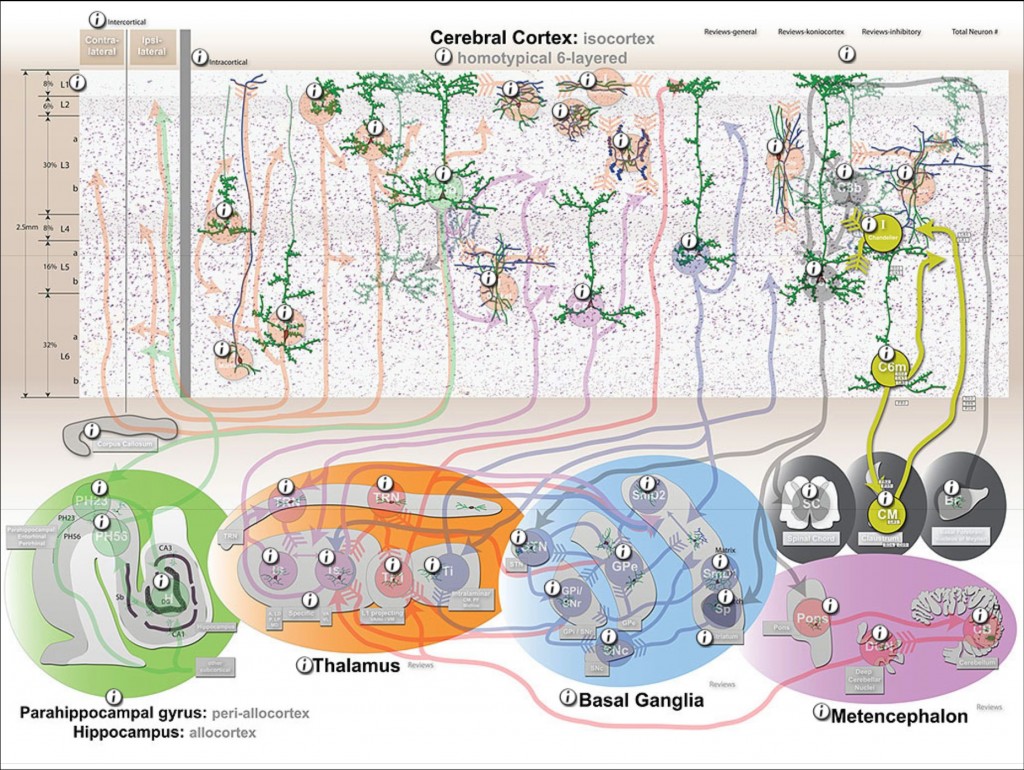
  • The Course in Natural Law

    This series is provided by the Propertarian Institute. Goals: Until the 20th century, education was reserved for those who would Rule (manage) other people: the various levels of the Aristocracy(Military), Nobility(Territorial) and Burgher(Commercial), and Intellectual(Teaching) classes. With the dawn of industrialism we altered education to serve the working and labor classes.  With the dawn of Postwar socialism we altered education to serve the interests of compliant subjects.  What we have done below is restore ‘Victorian Education’, and reform the traditional curriculum in Philosophy, Politics, Economics, and War from one constructed of literature and reason, to one constructed of scientific argument and measurement. By restoring the function of law, education and literature, we can restore our historical education in Transcendence, heroism, sovereignty and agency, rather than Dysgenia, victimhood, slavery, and submission of the 20th century age of deceit.

    UNDERGRADUATE COURSES

    Note To Self: / Topics to Add:

    • Commensurability of property / money
    • Commensurability of time like property and money
    • Time > store property > store money > borrow money > borrow credit.
    • The forms of physical, informational, organizational, institutional, competitive parasitism
    • Family property, structures, norms, economies

    Introductory Courses

    001 – Introduction to the Courses What Will We Learn?

    1. Me: Who am I?
      • My history, biases, talents and weaknesses
        • I have taught these kinds of classes. I have not taught this class, or anything of this scale. You should not expect me to be of teh same clalibre of speaker as professors who have spent careers teaching.
        • My talents, biases and weaknesses
        • I have a reputation for being difficult to understand below graduate students in the STEM classes.  But I will work relatively hard to communicate to you the best that I can.  Some of these concepts are not easy.
        • About me: Family tradition, My History,
        • I am libertarian in my sentiments, but scientific in my judgements.I may confuse you by taking various positions in order to illustrate ideas.
      • but if I am successful…
        • It will profoundly change you.  If we are successful, this will be one of the most meaningful experiences of your life.
    2. YOU: Why you might want to take these courses:
      1. You might want to learn why the west differs from the rest – and its strengths and weaknesses – so that you can appreciate your civilization and its weaknesses.  Or take lessons from western civilization and apply them to yours.  This is not very difficult to understand. It’s undergraduate level thought.
      2. You might want to understand the cause of our current problems, and how we can fix them.
      3. You might want to learn a current, and somewhat different history of the world, using conceptual, argumentative, social, and institutional strategies – so that you understand the struggle that we have faced in each era of history, and defend your civilization.  Again, this isn’t terribly difficult, although it is definitely undergraduate level thought.
      4. You might want to learn to how to argumentatively defend western civilization, or to apply the lessons of western civilization to your civilization, nation, people.  If you can learn a programming language you should be able to conduct an argument if you have the practice. Whether you understand why such arguments work may or may not be important to you.
      5. You might want to learn how to unify biology, morality, ethics, philosophy, science, law, and government into a single language, so that you can understand all human action and all human discourse in the most scientifically neutral manner possible. This is quite hard….
      6. You might want to learn how to construct a post-majoritarian government, in order to restore western civilization – or apply those lessons to yours.
      7. You might want to learn how to conduct a revolution and reform your system of government into one that is post-majoritarian, and less antagonistic.
      8. …. So if one or more of those interests you, even if you must struggle through the hard parts, it may be worth it for you.  If not, then use what you can.
    3. YOU: Who this course is for (and who it is not)
      • This course is for serious thinkers who are or desire to be, communicators of the western group evolutionary strategy in rational  and scientific terms, argumentative activists in the public debate, activist revolutionaries, and would-be revolutionary leaders.
      • If you want to feel good about what you already believe I promise you that  your sacred cows will not survive this course.  I have learned that most of what I believe is half good and half bad.  Revolutions in thought are not kind to us.  And Propertarianism, like Darwin, is uncomfortable.  I will be unmerciful to every culture in these courses, including my own.
      • On average it takes people above 140IQ about six months to a year without these courses. I have no idea what will happen with these courses. I suspect it will improve.  It takes people with above 130IQ about a year.  And it takes people above 120 quite a bit longer.  And as others have observed, it is quite difficult to learn the more difficult concepts below 115. HOWEVER, it is also possible that you can take away all the majority content of this if you have only one or two years of college.
    4. How we will run this course.
      • This is not a multiple-choice course – it requires my active participation – with you.
      • There are also others who may assist you. We are available much of the time for Q&A.
      • Each course includes a series of videos, definitions and wiki articles to read, and some questions to answer in writing.
    5. What this course requires of you, and me (the professor).
      • Time. It is only worth spending my time on serious students. It will require your time.
      • Short Readings. I will attempt to limit reading to (free) entries from the Stanford Encyclopedia of Philosophy, and Wikipedia articles wherever possible. However, I do publish an extensive reading list.  I leave the reading up to you. My purpose is to teach you techniques through practice. Not to manage your accumulation of general knowledge. (We also have an enormous library in digital form)
      • Answers: Since the purpose of propertarianism is teaching prosecution and argument under natural law, you will be asked to write answers to questions. This is more time consuming than multiple choice questions for both of us.
      • Comments. Collaborating with others on the class forums.
    6. So lets get started.  Next: What’s Propertarianism, anyway?

      COURSE 002 – What is Propertarianism?

    1. What is Propertarianism?
      1. In a Word : Reciprocity.  Or “Reciprocal-ism, or Reciprocity-ism”

        A scientific, meaning descriptive, meaning “what exists”, or “what is”, not what should be – a statement of Natural Law.


        What is Natural Law?
        A fully decidable (universal) Law of Ethics.

        What do you mean by ethics?
        The law of cooperation and conflict resolution.

        What is this law of cooperation and conflict resolution?
        Reciprocity.

        WHAT IS RECIPROCITY?

        In the Negative (Silver Rule, or via-negativa): The requirement to avoid the imposition of costs on that which others have born costs to obtain an interest in, without imposing costs upon that which others have likewise born costs to obtain an interest in.

        In the Positive(Golden Rule, or via-positiva): the requirement that we limit our actions to productive, fully informed, warrantied, voluntary transfers, free of the imposition of costs by externality, upon that which others have obtained by the same means.

        As determined by the either any change, or the total change in the inventory that all parties both internal and external to the action have born costs to obtain an interest without imposition of costs upon others directly or indirectly by externality.

        —“All of ethics can be reduced to the evaluation of the degree of reciprocity and the the accounting thereof.— James Augustus

        WHY DOES RECIPROCITY SERVE AS NATURAL LAW?
        Because it is apparently impossible to contradict reciprocity in cooperation (ethics), and as such it provides perfect decidability in all contexts of cooperation at all scales in all times, and under all conditions.

        **All conflicts are decidable by a full accounting and a test of reciprocity**


    2. WHERE IS THE NAME PROPERTARIANISM FROM?

      1. Why didn’t we use Natural Law or Reciprocity, or Sovereignty, and why did we use Propertarianism?


        Natural Law has been ‘tainted’ by various authors, so we had to differentiate ourselves from those previous authors.

        We used propertarianism because property, like money, provides the unit of measurement – the test – of changes in state caused by our actions. Property in toto, (that which others have born costs to obtain an interest without imposing costs upon the interests of others) like money, like any standard of measure in any field, provides a perfect test of reciprocity: cooperation.

        But calling what I do “Propertarianism”, is a bit like reducing the whole of philosophy into the sub-discipline of ethics.  Propertarianism refers ONLY to the ethical component of the philosophy.

        So, Propertarianism is sort of a ‘Brand Name” that we stuck with, so that it was not confused with other thought.

        But let’s say propertarianism consists of a complete philosophical framework that unites science, biology, morality, ethics, law, politics, and anthropology into a single language of ‘truthful speech’.

        Or, more precisely, it is a language of commensurability across all disciplines, all norms, all laws, all governments, all cultures, and all civilizations.A universal language of decidability and truth telling.  At least. The best that is humanly possible.


        And what does COMMENSURABILITY mean?
        1. Just as using a yardstick lets us compare the size of things regardless of our opinions.
        2. Just as using a scale lets us balance weights of different things regardless of our opinions.
        3. Just as water in a graduated cup lets us measure volumes
        4. Just as using money creates prices, which let us compare goods(things), services (actions), and information (knowledge) regardless of our opinions.
        5. Property in its most complete form lets us compare acts of cooperation, non-cooperation, and predation regardless of our opinions.
        6. We call measurements, scales, prices, and property: methods of commensurability: allowing us to  measure that which we intuitively can’t.
        7. Property (at least, property in its most full meaning) provides commensurability for all cooperative actions: physical, ethical, moral, political, national, and civilizational.
        8. But I’ll bet that means something very different from what you might imagine….
    3. But what is a ‘law’.  How does Natural Law fit in?

    DEFINITION: LAW (‘inescapable’).

    DEFINITION 1 – Law: a statement of perpetual continuity (determinism), insured by the forces (organizations) of nature, or of man(polity, or government).

    LAWS OF MAN 4 – Law (Common): a discovery (finding) of a violation of reciprocity, argued by a plaintiff, defendant, or prosecutor (hypothesis) of the findings of an inquiry by a judge (theory), that survives refutation from other judges (law), insured by a third party insurer of last resort (polity, government).

    5 – “Law” (Command) A command issued by the insurer of last resort, insured (enforced) by that insurer of last resort.

    6 – “Law” (Legislation): A contract on terms between members of ruling organization, issued by that organization, in its capacity of an insurer of last resort (self insurance).

    7 – “Law” (Treaty): An agreement between insurers of last resort, under reciprocal promise of adherence and insurance.

    LAWS OF NATURE

    1 – CYCLE: Observation > Free association > Hypothesis > Criticism > Theory > Survival > Law > Integration into assumptions about the world.

    2 – Law (physical): a statement of perpetual continuity (determinism), discovered by a process of testing(prosecuting) an hypothesis against reality,

    3 – Law (Natural): a statement of perpetual continuity (reciprocity) insured by the forces of nature (natural law).  While natural law is ancient, propertariansm converts it from reasonbleness to rational and scientific.

    4 — Law (Information): a statement of perpetual continuity (parsimony), insured by the *results of cooperation among men*.  or better said, by survival from competition against other sentient beings – and perhaps our survival *at all*.  While epistemology is ancient, Testimonialism completes it – by converting it from rational to ratio-scientific.We will spend most of our time on Natural Law (Propertarianism) and Informational Law (Testimonialism).

    Of these eight, command and legislation are not laws, but enforced as if they were laws. Treaties are uninsurable, because compliance is voluntary, unenforcible, and such agreements are, and always have been regularly violated – unless insured by an empire.

    1. However, as I have mentioned previously, what and we will cover:
      1. an explanation of the causes of western superiority in the ancient and modern worlds;  an explanation of our current problems; and how to repair them. So that section is HISTORY.
      2. a reformation and unification of science, philosophy, law, and politics into a single uniform system of thought, language, and grammar.  This constitutes the majority of the course. This section is the UNIFICATION of science and philosophy under Natural Law and Testimonialism.
      3. a suggested evolution upon majoritarian democracy with which to solve the political problems of the era. This section is the reformation of POLITICS.
      4. TRANSFORMATION:the method of conducting a revolution for the purpose of restoring the western group strategy and evolving majoritarianism.  This is the means of revolutionary action.
    2. Now as some background, How did Propertarianism (Natural Law) Come About?
      1. I hate conflict.  I hate lying. I hate things that don’t make sense. (aspieness)
      2. Starting in 1992…. A language for Conservatives. Then….
      3. 2006 – needed a history
      4. 2009 – solved history and government, but … how do I stop and counter cultural marxism?
      5. 2012 – solved the problem of the 2oth century thinkers
      6. 2014 – solved the problem of telling the truth
    3. But I understood the problem of our age: the industrial revolution, and the social science enlightenment in the 19th century, and the second german scientific revolution of the 19th century,  brought forth the industrialization of lying.  And it turns out, this isn’t the first time lying has won over truth…. So next lets get started with What Problem Do Propertarianism (reciprocity) and Testimonialism( science ) solve?
    4. READINGS

    none.COURSE 004 – What Problem Does Propertarianism Solve?

    1. The Waves of Man (Generations).
    2. Geography and Man’s Strategy
      1. Island, Coastal, Forest, Steppe(plains), Desert
      2. Latitudes and Life
      3. Competition and Tribalism
    3. Origins of each major civilization – and its strategies.
      1. Origins and Strategies
      2. The Rise and Fall of the Civilizations
      3. The Set of Patterns of History
    4. Revolution: Why the west was and is different
    5. Counter-Revolution: The Attack on the West in Each Era
      1. Bronze, Iron, Dark, Steel Ages
    6. The Current Problem (The Current Counter-Revolution)
      1. The industrialization of lying
    7. The Disastrous War and the Failure of the 20th Century Intellectuals

      GEOGRAPHY FORESTLANDS: Aristocratic Ethics: What will someone not retaliate against even if we agree to it?(rulers/teleological ethics:outcomes) The ethics of warriors who must hold territory. This is a very high cost strategy because while professional warrior aristocracy is militarily superior, smaller numbers mean threats must be constantly suppressed when small, as soon as identified. (Profiting from the domestication of man) – BORDERLANDS: Cosmopolitan(Jewish) Ethics: What will someone consent to Regardless of future resentment and retaliation? (borderland/subculture/deontological ethics:rules) The ethics of diasporic, migrating traders, or herding peoples who can prey upon the locals who hold territory. This is a very low cost (parasitic) ethics that avoids all contribution to the host commons, but requires preserving the ability to exit (migrate). It is the raider strategy by systemic and verbal rather than physical means. – STEPPELANDS: Russian(Orthodox) Ethics: What can I get away with now by negotiation and subterfuge, and hold by force later? (steppe raiders) The ethics of steppe people surrounded by competitors, always hostile and unpredictable. This is a difficult and expensive but only possible strategy, when one is surrounded by hostile opportunity seekers. While seemingly expansive, it’s actually a fearful one – aggression as the only possible means of controlling defensive positions across open territory. — FERTILE CRESCENT LAND: (Profit from the subjugation of man) (cyrus was lost). – RIVERLANDS: Chinese Ethics: What can I get away with now, but over time make impossible to change later? The ethics of long term ruling bureaucratic class. Sun Tzu strategy, and Confucian hyper familism. This is an exceptionally cost-effective strategy if one possesses a territorial resource (heartland), and can fortify that heartland. Riverlands strategy defends against Steppland and Desertland strategies. (Profiting from the domestication of man) – DESERTLANDS: Muslim Ethics: (I am still working on this one because I don’t get that it’s causal, but opportunistic.) What can I justify now in order to make this minor advance now? And thereby accumulate wins by wearing down opponents over long periods. The ethics of opportunism. As far as I can tell islam is just an excuse for justifying opportunism. We can consider this the combination of religion and justifying opportunism – a long term very successful strategy becuase it’s very low cost. – HOSTILELANDS: African Ethics (pre-christian). Africa is akin to the Desertlands because of the sheer number of competitors, the hostility of the disease gradient, the plethora of wildlife, combined with the primitiveness of the available technologies. This is the only possible strategy until one or more core states can evolve, and create sufficient stability in some regions. (this is occurring now). CIVILIZATIONS NOT STATES It is a mistake (always), to consider conflicts within states over local power (capital allocation), as of the same consequence as conflicts between civilizations over borders. Because the former is a kinship conflict over priorities, while the latter is a genetic conflict over group evolutionary strategies.   THE DOMESTICATION OF PLANT, ANIMAL, AND MAN … THE CENTRAL ARGUMENT – THE CONFLICT OF CIVILIZATIONS ACROSS MILLENNIA Part I – The Beginning – Sovereignty, and The Counter Revolution against it. (Bronze Age – Black Sea)

    • The Revolution: The choice of Sovereignty, and as a consequence Agency, Natural Law, Thang (Jury), Testimonial (Deflationary) Truth, and Markets in Everything (Meritocracy).
    • The Counter-Revolution: The Eastern Development of Fictional Scriptural Religion in the Oral Tradition.

    Part II – The Counter Revolution Against Reason and Sovereignty. (Iron Age – Aegean-Mediterranean)

    • The Revolution: The choice of Sovereignty, Agency, Natural Law, Jury, Senate, Testimonial (Deflationary) Truth, Reason, and Markets in Everything.
    • The Counter Revolution: The Eastern (Jewish, Byzantine, Muslim) Development of Fictional, Scriptural, Authoritarian Religion, conflated with Law, in the Written Tradition.

    Part III – The Counter Enlightenment Against Science and Sovereignty. (Steel Age – North Sea-Atlantic) 

    • The Revolution: The choice of Sovereignty, Agency, Natural Law, Jury, Multi-House Government, Testimonial (Deflationary Truth), Reason, Rationalism, and Empiricism, and Markets in Everything.
    • The Counter: Revolution: The Eastern (Jewish, French, Russian) Development of Fictional, Pseudoscientific, Authoritarian Religions.

    The Anglos (Legal Empiricists / Locke-Smith-Hume-Jefferson), French (Literary Moralists / Rousseau) and The Germans (Literary Rationalists / Kant) had attempted to restate their group evolutionary strategy in modern terms. So did the Cosmopolitan Universalist Jews ( Argumentative Fictionalists (pseudo-mythology[authoritarian religion] / pseudo-law/ pseudo-rationalism / pseudoscience / outright-lying)) advocating separatism, poly-ethicalism, fictional utopianism as a universal ‘moral’ strategy. The Cosmopolitan Universalists (Jews) started producing pseudoscience as the enlightenment change rolled across Eastern Europe, (Boaz, Marx, Freud, Frankfurt) primarily as a reaction to the articulation of aristocratic thought in scientific terms (Darwin, Social Science, Spencer, Nietzsche, and the Romanticists.) ( FYI: Marxism: parasitism upon in-group private production. Libertarianism: parasitism upon in-group commons production. Neo-Conservatism: Parasitism upon other nations’  (out-group) private and commons production. ) While the Germansdefended against the enlightenment by rational restatement of hierarchy, duty, and reason in a new literary fashion invented by Kant. The French, Jewish and Russian together attacked the Anglo Enlightenment: the restoration of sovereignty and the attack on Fictionalism which all those nations depended upon. They each responded with a new fictionalism: The French out of feminine idealism and preservation of authority, Jews out of separatism, fear and preservation of authority, and Russians out of opportunity for aggression, restoration of orthodox civilization, usurpation, and preservation of authority – and our Puritans (anglo separatist equivalent of the Jews), and our women (as always) were, frankly, “suckers” for it. Just as they were in the ancient world. The Great Catastrophe  Just as Byzantium overextended herself and lost to the Turks. Just as Persia and Byzantium overextended themselves and lost to Arabs. Just as Rome overextended herself in Europe and lost to Byzantium; Just as Athens overextended herself in Sicily, and lost to Sparta; Just as the Bronze Age civilizations overextended themselves in the eastern mediterranean and lost to the barbarians. Just as all civilizations overextended themselves, Britain, in an effort to preserve the balance of powers from which she profited, constrained Germany, leaving America as her heir. Just as Athenian democratic greed prematurely ended the first industrial revolution (the Antikithera device only one step removed from Babbage’s mechanical computer), leaving pragmatic Rome to rule with Athenian and Carthaginian invention – the British, French, and American democratic (commercial) greed ended the second (this time German) scientific revolution, leaving pragmatic America to rule with German and British inventions. The European civil war to contain Germany was a catastrophe for the West in that it both truncated the completion of the Enlightenment (scientific revolution), whose second phase, and our rescue from eastern mysticism, was in progress in Germany (and from which 19th and 20th century America was the chief beneficiary – not originator.) It cast doubt upon the Western (aristocratic) order just as the thirty years war had cast doubt upon the prior (religious) order. Thereby reversing our prior gains against supernatural utopianism and the restoration of aristocratic (rule of law) rule, and replacing that supernatural utopianism with economic and political utopianism: pseudoscience. Postwar Jews immigrating to the United States used their pseudoscience (see “Pilpul”) and attacked and took over the academy and media just as they had used the pulpit in the ancient era, and the printing press in the prior era, to spread their second great lie of pseudoscience in every field of human social order. Women freed from labor under the industrial revolution used these arguments to reform slavery, seek the vote, and then using the vote, to claim men were their enemies and oppressors rather than their domesticators in a great compromise between the reproductive strategies of women (numbers) – their genes, and those of men (the tribe) – their genes. Once the slaves had been freed, the women also demanded equal representation, and within one generation after obtaining it used ‘the great lies’ of the cosmopolitans to undermine the western order further by creating a century of pseudoscience. They used this pseudoscience to pursue the destruction of the church, the destruction of the family, and the conquest of academy, state and media by women’s interests (r-selection), because women dispose of more of the earned income than do men in all these areas. Women are great consumers and it is profitable to serve them – even when they are spending down five thousand years of accumulated cultural and genetic capital. Women were sold Christianity. Women were sold Cosmopolitanism. Therefore the industrialization of lying found ready consumers. In marketing and advertising, in media and entertainment, and in democratic politics. The insatiable desire of women to consume, preen, signal, nest, care, and redistribute regardless of long term consequences, provided ready ground for the utopian ideology of endless resources provided by endless growth and the end of constraint. The Failure of Western Thinkers Western thinkers (for a variety of reasons) in the 20th century were unable to defeat this pseudoscientific utopian fiction, just as Western thinkers had been unable to defeat the previous age’s supernatural utopian fiction in the ancient world. As Poincare (mathematics) and Friedrich Hayek (economics and law) warned us, the twentieth century would be, and was, regressive in social science, economics, and politics – and it will be remembered as an age of mysticism (actually an age of fictionalism). Even though our progress in Physical Sciences, Chemistry, Engineering, and Information Technology — all products of the truncated German Scientific Revolution – combined with the continued sale of the conquered American continent, combined with the inheritance of the British Empire, combined with the new (now necessary) invention of fiat (stock) money, gave 19th and 20th century America a vast economic boom, which allowed the USA to drag recidivist civilizations (those that adopted the new Jewish Fictionalisms under world communism, socialism, social democracy, and Keynesian non-operational Economics) out of ignorance, poverty, starvation, disease and tyranny. Why? Because democracy in the ancient and modern world was nothing but a lie by which the middle class could take over the government from the aristocracy – and then over-extend growth until the polity developed economic, political, social, and genetic fragility. Our Western habit. One the Chinese did not practice. (If you must expand to grow productivity you are not in fact productive and innovative, but consumptive.) But neither the Western Aristocracy, nor its bourgeoise caste could speak the truth: that man, like plant and other animal, had been domesticated for fun and profit by the imposition of meritocracy by shrinking the reproduction of the lower classes, – and that the differences in the rate of development of civilizations is the result of the shrinking of the underclasses, making possible the progress of the civilization in every possible field of endeavor: linguistic, informational, economic, normative, social, cultural, political, and institutional. The lesson: In the absence of profit through conquest, the most eugenic civilization will always emerge as the most advanced civilization. And this uncomfortable truth is incompatible with unearned (universal) enfranchisement that justifies bourgeoise takeover of government from the aristocracy.PART IV – What Must Be Done? ( The Second Reformation Against Parasitism and Deceit. ) So armed with this knowledge, how do we reverse the century of propaganda, lies, and pseudoscience of the alliance between the Jews, women and minorities, and return the west its lost confidence, and restore the civilization’s strategy of truth+commons? We extend the warranty of due diligence against fraud that we require in products in the market, and services in the market, to cover information in the market, and we restore liability to all participants in a chain of production. We eliminate the economic subsidy for ‘entertainment’ we call copyright. We eliminate financial profiting from the sale of shares of the polity (Fiat Money, or for ordinary people, ‘dollars’ in the form of electronic money), preserving all of the appreciation and interest for the polity (treasury). And we grant universal standing (class action) to defense of the market for information. Eventually, we create separate houses of government for separate classes. And we eliminate representatives and change to direct per-resolution, democracy. This will raise the cost of the various fictionalisms (pseudo-myths/religion, pseudo-rationalisms, pseudo-science, and outright deceit) and eliminate its profitability such that we end the industrialization of lying made possible by mass media. This solution is an incremental advancement upon classical multi-house government in which each class negotiates with other classes for the production of commons, while suppressing the consistent deception (lying) that has been made possible by the industrialization of information distribution (media). By stating in rational and scientific terms the reason for the West’s rapid success in the ancient and modern periods, despite its many disadvantages. Then using this knowledge to defeat this great utopian pseudoscientific lie, even though we failed in the 20th century, and even though we failed in the ancient world against utopian supernaturalism. Our ambition is to require truthful speech in economics, politics, and law, the way we require truthful speech in contract, in the market for goods, and in the market for services. There is no reason that one cannot warranty his speech against the great utopian lies if he is to publish it (sell it, distribute it) in the market for information we call ‘the media’. The West practiced Agency, Sovereignty, Testimony in Deflationary Truth, Natural Law of Cooperation, Markets in Everything, and Aristocratic Egalitarianism (a form of eugenics at scale), and the Militia – and profited from the incremental domestication of the animal man lacking agency, in to the human that possesses it. But this strategy was never written down, only handed down.   So, next lets get started with solving the problem of the industrialization of lying, with “what is philosophy” anyway?

    Freshman – the Reformation of Epistemology and Truth – (Testimonialism)

    Course 101 – Languages, Methods of argument, and Via-Negativa vs Via-Positiva, Methods of communication suggestion and deceit.Note: This course is difficult for those without experience in either mathematics(the logic of the measurement of constant relations), philosophy (Rationalism), law (contract), or the scientific method (Empiricism).  We will practice this method incrementally throughout the entire set of courses. So it is not so much that this course is first, and you must master it first, but that the rest of the courses depend upon it, and you will master it incrementally as we progress through the courses. Via Negativa (Survival) vs Via Positiva (Possibility)

    1. The Problem of Scale in Modernity (and limits)
    2. The difference between positiva and negativa (and limits)
    3. The change in demand from positiva to negativa (and new limits)
    4. Our failure in the 20th century to complete the transition to via-negativa

    Production – it’s just not goods, but norms, traditions, institutions, all the way up to civilizations Parasitism – It’s Not Just Violence.

    1. The Methods of Extermination, Predation, Parasitism, Risk(investment), Cooperation, Avoidance and Boycott…. etc
    2. The Methods of violence, harm, theft, fraud, ….. etc.
    3. The Migration of Predation from Violence, to Theft, To Fraud …. As Civilization … and Property advance.
    4. The Migration of War from ….. to information
    5. The Problems of our Age:
      • Deception (Pseudoscience and Pseudo-rationalism)
      • Financial-ism and Fiat Money
      • Democracy and Universal Enfranchisement
      • The Cathedral Complex; Academy, State, Media, and Finance: The industrialization of lying, fraud, and theft.
      • The End of Western Capital.

    Understanding Communication

    1. Information is the model not only in physics, but in all thought (Theory, Science).
      • The Information Theory Of Cooperative Evolution
        • narrative, recording, numbers, recipes, symbols, formula, arguments, contracts, narratives, algorithms, programs, models, simulations, games.
        • sand, clay, was, papyrus, parchment, paper, scrolls, books, magazines,
        • accounts, accounting, … journals, hierarchal data, relational data, document data, geometries, pure relations, lie groups (meaning)
        • tribal memory and reputation,
        • habits, norms, philosophies, laws, religions,
      • History of thought models
      • Information as the current model
    2. How information is transferred (Properties)
      • The basics – venn diagrams.
      • The art of suggestion by association
      • The art of clarification by reduction
    3. Conflation(Positiva-Meaning) and Deflation (Negativa-Truth)
      • The conflation of the useful and the good with the true.
    4. The Languages we can speak in ( the series )
      • Each of the languages (measurements, technologies)
      • Each of the Arguments We Make
      • The “Poly-Think-ism” of the west.
    5. The Four Techniques,
      • Dreaming (occult) Free Association
      • Fictionalism(Mythology), Narration
      • Idealism(Rationalism), Ideal Analogy
      • Descriptivism(History and Law) Existential Analogy
      • Measurement (Math and Identity) Existential Description
    6. The Problem of the Distribution of Ability

    The Difference between Decidable, Preferable, and Understandable

    1. A Short Course in Decidability
    2. A Short Course in Measurement
    3. A Short Course in Truth (scale)
    4. A Short Course in Preference (scale)
    5. A Short Course in the “Good” (preferable) vs “Bad” (Knowable)

    The Methods of Deception

    1. Sources of Knowledge and Ignorance
    2. Cognitive Biases
    3. Wishful Thinking
    4. Suggestion, Loading and Framing
    5. Overloading, Propagandizing, Mass Media
    6. Fictionalizing (Pseudo-mysticism, Pseudo-Rationalism, and Pseudoscience)
    7. Outright Deceit
    8. Evasion: Shaming, Rallying.

    The Defense against Deception

    1. The (Universal) Law of Epistemology (Theoretical/True vs Axiomatic/Proof)
    2. The Use of Convergence (competition) to narrow the difference
    3. The Problem of the Conflation in the Grammar of Observation, Experience, Intention, and Action
      • The solution by using actions.
    4. The Dimensions of Reality (using Math as an analogy)
      • Reality – the Dimensions we can act in (Here is our Metaphysics)
      • Mathematics as an example – reality through relations through lie groups.
      • Names, ideal types, stereotypes, comparisons, series,
    5. The Methods of Testing Reality (Testimonialism)
    6. Calculating “Volition”, “Information”, “Externality”, “Warranty”, “Balance Sheets” and “Profit and Loss” rather than just ‘true’ or ‘good’.
    7. The Meaning of the Scientific Method: instruments, measurements, warranty
    8. Why Propertarianism Completes the Scientific Method – and why it’s a method.

    Course 102 – OUR DEFENSE: The Language of Natural Law-This is perhaps the most difficult part of the course, and may be the most important, because it requires that you train yourself to think very clearly – and painfully realize that you  may not understand or know what you think you do. (Which is its purpose).  However, after the freshman level courses your ability to think, communicate, persuade, and argue will be dramatically improved and your grasp of the world rapidly improved as well.

    1. Definitions
      Learn to write and speak about concepts in enumerated series. Three points make a line so to speak, and all concepts can be demarcated and deconflated by referring to series (an ordered list) rather than an ‘idea’ type which allows for suggestion and conflation. (Notice how often I repeat these ‘series’ – over and over again until everyone memorizes them out of habit rather than intent.)
    2. One Law of Cooperation.
      The first step you’ll need to memorize is the very simple One Law of Cooperation: That to create and preserve the incentive to cooperate we must eliminate the incentive not to cooperate, and eliminate the incentive to retaliate, by limiting our actions to those that produce productive, fully informed, warrantied, voluntary transfers of property in toto, limited to productive externalities (consequences both intended and unintended).
    3. Property In Toto
      The next step is to learn Property in Toto – or ‘Demonstrated Property’. So that you know the categories of things people seek to acquire, inventory and defend. If you have experience with basic accounting, you can think of Property in Toto as the human equivalent of a Balance Sheet.
    4. Eliminating the Verb “To Be” – Speaking in Existential Actions
      The next step in learning how to write clearly is to learn E-Prime. E-prime will force you to write in operational language. Writing in operational language is very hard at first – unless you learned programming first. Because, like Propertarianism, programming is an operational and existential (computable) language.
    5. Writing in Operational Grammar (sentence structure)
      Next, learn how to write sentences in operational grammar. Writing and speaking operationally teaches you what you know and don’t know.  We humans use a lot of cheats to lie to ourselves and others about what we understand and don’t understand.  It’s very hard to write operationally in full sentences if you don’t know what you’re talking about. Conversely, it helps you learn what it is that you don’t know. And it usually turns out we are vastly overconfident in what we think we know.
    6. Structuring Arguments as Functions
      Just as the US Law is very close to writing software, Propertarianism is close to writing software. In fact, it’s much, much closer to writing software than the US Law, because like programming, all statements are testable, and don’t require you to resort to ‘intuition’.
    7. Via Negativa – Evolution by Incremental Suppression 
      The next step is to learn the use of Common, Judge Discovered, Natural Law as a means of incremental suppression of parasitism, and Testimonial Truth as the method of conducting due diligence, and surviving involuntary warranty against the Methods of Parasitism.

    So if you have to know what humans do: seek to acquire and preserve property in toto rationally – meaning both morally and immorally, and if you know what you’re talking about using E-Prime, and you write in complete sentences so you can’t suggest or intimate, but have to describe, and you are using precise terms from enumerated lists (spectrums), then you have the basics down.  Learning these skills amounts to Propertarianism’s equivalent of the replacement of and reformation of ‘Psychology’.  


    Course 100 – What is Philosophy (and what pretends to be)

    WHAT IS PHILOSOPHY? (outline of class 100) –SECTION I.–

    (HISTORY) There is a difference between precision vs context,  (disassociation vs opportunity for association  – or DEFLATION VS CONFLATION)

    1. name – i know of.  no context low association
    2. formula or recipe or algorithm
    3. description or history – observations
    4. story or narration – theories of causality
    5. parable (analogy)  – high context high association – lesson in causality
    6. supernatural – ideal context

    and (style)

    1. Entertainment Literature
    2. Mythic literature (wisdom and entertainment),
    3. ‘Wisdom’ literature,
    4. Legal literature, and
    5. Scientific literature.

    and (class)

    1. judge, warrior, (violence)
    2. priest, teacher, mother (persuasion)
    3. financier, entrepreneur, merchant ( organization)
    4. scientist, craftsman ( transformation)

    And that differences in the method that they’re argued.

    TRADITIONS Western Philosophy (reason and measurement) Early: … Martial Cult of Sovereignty: (upper class) … IE Polytheism and Nature Worship. (not sure it’s shamanism) Middle; … Aristotle (law, reason, measurement, aristocratic/martial class) … Plato (idealism, rationalism) Middle Bureaucratic Class … Epicurious, Stoics, etc – various middle classes … Aquinas ( supernaturalism, conflation) Lower Classes Late: … Martial Cult (upper) (administrative) … Rational Philosophy, Empiricism, and Law (middle/upper middle) … … bacon/locke/smith/hume/jefferson/ menger/darwin/maxwell etc (commercial) … Christianity (working and lower)(public) … Pagan fables, myths and Rituals (hearth and home)

    NOTE ON CLASSES We tend to think of classes as a pyramid, but this isn’t quite true. As Ill explain later on, The classes that employ force, trade, and gossip, compete with one another, and dominate during different periods of any civilization, and under different conditions in any civilization.

    It just so happens that in most civilizations the people who rule in practice are the miiltary and judicial and hold the most power, the people who organize production and trade at all levels the next, and the people who ‘gossip’ the least. conversely, there are more people who use gossip, fewer who organize, and fewer who fight and rule.

    However, I often refer to classes as martial force, commercial trade, and priestly or public intellectual gossip. But I will cover class cooperation in depth as we go forward. Even though I realize that it might be confusing which ‘class’ context I am using at any given time.

    EASTERN Eastern ( ‘reasonableness’ and contrast) … Sun Tzu (aristocratic / martial class) … Confucius (middle/bureacratic class) … Lao Tzu (lower/farming class)

    (Note the difference between western low context-high precision linguistic syllogism, and eastern hgh context-lowe precision linguistic ‘riddles’ or contrasts.)

    MIDDLE EASTERN Middle Eastern (supernatural wisdom literature, and compliance)

    … Early(Advanced Shamanism) … … Egyptian Mythical (mythic literature) (unknown authors) … … Hinduism (vedas, classes) (all classes)

    … Upper … … Martial Cult? ( shamanic? I don’t know)

    … Upper Middle / Bureaucratic … … Iranian / Zoroaster / Zarathustra (authoritarian supernatural scripture) … …(Upper middle, Middle class snuffed after Cyrus/Darius/Darius)

    … Lower Class … …Semitism/Abrahamism (slave and lower classes) … … … Abraham (Separatist) … … … Paul/Saul (feminine) … … … Muhammed (masculine)

    So, we tend to use our western word “philosophy”, and lump together different kinds of wisdom literature, historical and legal literature, and scientific literature into the same camps.

    But western and eastern literature differ dramatically from middle eastern literature which claims other-worldly authority; eastern literature that claims hierarchical authority; and wetsern literature that claims *market authority*. But to explain that difference is going to take a bit of work for you and I. –SECTION II.–

    (NOUNS) WHATS IN A NAME? (…. on naming… how can we name something… a referent )

    (DEFINITIONS: VERBS) BUT … WESTERN PHILOSOPHY? Originally? The sum of knowledge within a domain.

    But why would you need knowledge? a) Action (preference, personal) b) Persuasion ( cooperation, interpersonal ) c) Decidability ( conflict resolution, between any and all ) Philosophy: the search for methods of action, persuasion, and decision in a given domain of inquiry.

    (TESTS: EQUALITY OPERATORS)

    AND TRUTH? And why would we need Truth? The search for methods of decidability regardless of domain of inquiry, regardless of preference(action) or utility (persuasion, cooperation).

    (…Elaborate on parsimony and precision…) (…show how we create universes of possibilities… and narrow them) (…and we continuously revise until we can act upon them …) (…and then in this way we see we seek opportunities, advance, and seize them…more so than plan….)

    As such there exist many philosophies Utilitarian in context, but only one Truth (decidability) regardless of context. But what does that mean?

    True enough for the consequences:

    TRUTH (TRUE), VS TRUE ENOUGH a) True enough to imagine a conceptual relationship b) True enough for me to feel good about myself. c) True enough for me to take actions that produce positive results. d) True enough for me to not cause others to react negatively to me. e) True enough to resolve a conflict without subjective opinion among my fellow people with similar values. f) True enough to resolve a conflict without subjective opinion across different peoples with different values. g) True regardless of all opinions or preferences. h) Tautologically true: in that the two things are indifferent in properties, operations, and relations

    Which gives us:.

    1. Philosophy and True-enough within a domain: opportunities.
    2. Law and True, regardless of domain: decidabilities.

      –SECTION III.–

    (COMPARISON OPERATORS)

    Methods of Communication:

    RECIPES(FORMULAE), LITERATURE (STORIES), LIES(FICTIONS) a) actions and therefore transformations b) causations and therefore opportunities. c) deceptions and therefore coercions.

    Methods of comparison:

    IDEALS, GOLDEN MEAN’S, SERIES, TRIANGLES (curves) a) Categories, stereotypes, ideal types. (categories) b) Golden mean (comparisons / valuations) c) Series (exhaustive deconflations). d) Equilibria. In human terms: Triangles (supply vs demand) e) Models / Simulations (sets of equilibria) f) The Universe as it Exists (all equilibrial forces)

    MODELS, TRIANGLES, LINES, POINTS A Note on the use of Triangles, lines, types. Descartes made good use of the graph, and Gauss has made good use of the bell curve – a normal distribution. And Cournot and Marshall made good use of the supply and demand curve. These tools help us visualize aggregates – lots of stuff – in simple terms.  Today we create models and simulations, and we are largely limited only by our ability to collect sufficient information to improve our models and simulations. I’m going to use a lot of defintions (points), spectra (lines), and triangles (equilibria), and only resort to supply and demand curves when I have no other choice.

    Why? Well,

    1) first, because it’s pretty simple to visualize. and by using a definition(point), spectra(line), triangle (area) I can help cue (suggest or train) you in which tool to use when making your arguments. this helps make a visual association – a symbol for the different processes.

    2) But second, and more importantly, as luck would have it, because there are only three methods of influence, persuasion, and coercion available to human beings. Only three reproductive strategies available to human beings, that correspond to those methods of influence, persuasion, and coercion. And so it just turns out that we can illustrate almost all human behavior using those three relationships.

    And third, 3) because the triangle helps us visualize the equilibrium between these forces.

    Does that mean I won’t show you supply demand curves, or even more complex forms of causal relationships? No. I will show you those tools. But only in the context of trying to understand how complexity increases and how we can understand complexity. We won’t do any math. I will just use the basic properties of math (measurement) to explain certain topics to you.

    So we are going to use definitions, series, and triangles as means of esuring against our tendency to oversimplify (generarlize and eliminate information), deduce from (expand our error) and draw conclusions (amplify our errors). Which is fine if we are searching for ideas, but terrible if we are trying to test our ideas.

    Now, onto those three methods:

    (COOPERATION, PERSUASION, COERCION) The Methods of Cooperation and Coercion:

    Cooperative Triangle a) protect vs prey or punish, b) cooperate vs steal or free ride a) create opportunity vs deny opportunity

    Persuasive (Coercive) Triangle a) violence: order(safety) / punishment b) remuneration: exchange / payment c) gossip: advocating / ridiculing

    Decisive (Critical) Triangle a) deception, false, true Enough, True? b) voluntary or involuntary c) gain or loss

    The Problems of scale:

    Center Spectrum: Man as his own measure a) below human scale – analogies to perception – expanding b) within human scale – within our perception – relatively static c) above human scale – analogies to perception – expanding

    Center Spectrum: Man as the Measure – his limits a) The universe (limits of possibility) b) Man (limits of man’s actions) c) Imagination ( limits of imagination)

    (TESTIMONY / COMMUNICATION ) The Spectrum of Information:

    Center Spectrum: a) decidable (negative)(necessity b) informative (neutral)(existential) c) choice (positive)(preference)

    Center Spectrum Series: a) Science (external limits) (scientific/engeering/craftsmanly) b) Law (reciprocal limits) (judicial/military/commercial) c) Aesthetics (preferential limits) (priesthood)

    Deflationary Center Spectrum: a) Historical (Empirical, Descriptive, Existential) b) Testimonial (Rational, Reciprocal, Cooperative) c) Artistic (Literary/Artistic/Aesthetic, Preferable)

    Methodological Center Spectrum: a) Empirical (physical, scientific, engineered, descriptive, existential, correspondent ) b) Rational ( Legal, justificationary, non-contradictory) c) Literary ( Imagined, narrated)

    Truth Triangle a) Measurement (physical) (possible) (measure reality) b) Market (cooperative) (reciprocal) (measure other’s preference) c) Preferential (‘increases in capital’) (measure personal preference. or what we call ‘value’)

    False Triangle (Fictionalisms) a) appeal to (incalculable) good ( moral fallacy ) (conflate calculable preference with incalculable good) b) appeal to (fictional) order (ideal fallacy) naturalism(naturalistic fallacy) c) appeal to authority (divine fallacy) Fictionalisms are achieved by i) conflation, and ii) shifting (claiming coercive information that does not exist).

    (GOVERNMENT) Organizing Triangle: a) CONFLATION AND MONOPOLY (STAGNATION) (old) (theocracy, bureaucracy, undecidability) b) DEFLATION AND COMPETITION (INNOVATION) (growing) (market decidability) c) COMMAND (TRANSFORMATION) (to deflationary)(behind) (fascism/generalship/authoritarian decidability)

    Deflationary Triangle: a) Nietzche: aesthetic restoration (Values) b) Doolittle(and others): legal restoration c) Many Scientists : scientific restoration

    Property Utility (market) Possibility

    ==SECTION IV===

    NOW WE NEED WEIGHTS AND MEASURES

    WHAT HAVE WE ACCOMPLISHED?

    Well, what I hoped to accomplish is to define philosophy, define decidability, show the operations by which we communicate, and test our communications. And hopefully introduce you to definitions, sequences, and equilibria as means of testing communications (arguments) for their means of precision.


    The Reformation of Psychology(Individual), Ethics(Others), Sociology(Groups) – And Applications To Moral and Ethical Questions ( Propertarian Ethics )

    Course 201 – Introduction To the Outline

    The Evolution of Choice life, sentience, awareness, consciousness, reason, calculation, science (truth).

    The Evolution of Cooperation Interpersonal cooperation, interpersonal competition, interpersonal conflict. Ingroup Cooperation, Ingroup Competition, Ingroup War. Outgroup Coopeartion, Outgroup Competition, Outgroup War.

    The Evolution of the Family Family, Clan, Tribe, State, Nation, Corporation, Empire

    The Evolution of Rules (Limits) Habits, manners/ethics/morals, Norms, Laws, Traditions, Myths and Religions The Evolution of Property The Evolution of Money, Prices, Accounting, Economics, Economics in Toto

    The Evolution of Argument (negotiation). Course 210 – Psychology : Acquisition

    1. Acquisitionism
    2. The Mind (How It Works, Systems, Limits, Differences)
    3. Personality and Intelligence
    4. Genetics, In Utero, Development of the Mind
      • Male Vs Female / Solipsism(psychosis) Vs Autism
      • Rate and Depth of Sexual Maturity
      • Sexual Dimorphism (Gender Distribution)
      • Clannishness Vs Openness
    5. Reproductive and Class Division of Perception
      1. Male and Female
      2. Female, Young Male, Adult Male
      3. Moral Blindness

    ACQUISITIONISM (draft) (worth repeating)

    A RESTATEMENT OF PSYCHOLOGY: PROPERTARIANISM’S THREE-FACTOR CAUSAL MODEL (core)(central concept)(necessary)(innovation)

    I. ASSETS (FACTS) P1) ASSETS: self/body, energy, relations, investment/opportunity P2) ABILITY: intellect/intellectual effort, emotional reserves/ability, physical ability / effort, P3) DESIRABILITY: other-acceptance(non-rejection), other-information, other-insurance),

    Note that these three are (a) evidentiary in the individual’s experience of his or her life, (b) habitual in the family unit and the information and training of the family unit – and informationally inherited. (c) evident in the assets of the family unit, (c) genetically inheritable.

    But what assets do we humans seek to preserve, consume, acquire, and maintain? A rich portfolio that varies from our life itself, time, food, shelter, kin, mates, allies (people to cooperate with), private property (stuff), private commons, public commons, territory, information, opportunity, normative institutions, cultural institutions, formal institutions. The reasons being that as we increase each of these our discount on intellectual, emotional, and physical effort increases.

    Through cooperation in a division of temporal perception, knowledge, labor, negotiation, and advocacy, we use the one commodity that is most precious: time, to make everything we desire cheaper – so profoundly so that we actually cannot fathom its scale. By the simple combination of sovereignty and reciprocity; norm, tradition, literature and myth; property, contract and law; money, prices and credit; family(marriage), organization(corporation), voluntary(civic), local, regional, and national government; we convert the little time of our human lives into the production of complex goods any one, even the most simple, the production of which would consume lifetime of an individual.

    II. REACTIONS (GENETIC/BIOLOGICAL INSTRUCTIONS/INFORMATION) E1) Pleasure(reward) vs Pain(cost) (pre cognitive) E2) Excitement(projected gain/loss) vs Rest (conserve) (cognitive but pre-social) E3) Aggression(dominance) vs Fear(submission) (cognitive and social)

    All emotions describe anticipated changes in state of (P1)Assets. That is all that they describe. Nothing more. They may evolve through complex combinations of assets and emotional reactions, so that we experience a ‘chord’ or ‘symphony’ of emotions. And we might (artists do) attempt to compose such ‘symphonies’ for us to experience. But just as all music is constructed from a limited number of properties, and complexity emerges from its subtle combinations, emotions are constructed from only a small number of properties, and complexity in our experience emerges from dense combinations of those subtle combinations.

    Note that by combining these three emotions with the various forms of ASSETS, and the various values of those assets, we can produce the entire spectrum of human emotions in a rich orchestra no matter which emotional framework we wish to describe.

    III. THE REPRODUCTIVE DISTRIBUTION OF ADVOCACY I1) The feminine near term need for inventory and consumption given the fragility and duration of the maturity of offspring. (socialistic/individualistic/offspring) I2) The immature male need for opportunity to accumulate assets in order to attract and maintain females. (libertarian/individualistic/assets) I3) The mature male need to preserve costly personal, familial, group, tribal investments (conservative/familial/tribal/preservation)

    Note that these differences in reproductive strategy are expressed in our advocacy for the distribution of the proceeds of population density, cooperation within that population density: female egalitarian, male youth individualist, and adult male meritocratic. Each bias reflects the reproductive strategy of the the genders. Each member does in fact contribute to the creation of returns withing a polity (group) as long as he or she doe not predatorially, parasitically, free-ride upon the group’s efforts. Individuals can specialize or develop portfolios of contributions to a polity. And most of us develop portfolios that produce the maximum returns for us given our abilities.

    Those portfolios consist in: The provision of caretaking. The adherence to and policing of norms, traditions, rituals, the recitation of myths. Participation in cooperation of defense, goods, services, and information. Virtuous contribution to the commons through donation and redistribution. Meritorious contribution to the commons through the production of excellence. Status contribution to the commons through the contribution to or production of institutions and monuments. Heroic contribution to the commons by self sacrifice or risk. ( But let us remember that people can also engage in false advertising in order to obtain opportunity and free riding without performance or investment. )

    Note that nothing else is necessary to describe all ethical, moral, and social behavior.

    REASONS WHY THESE CAUSES ARE OBSCURED FROM US 1) The terms used above are analogies that we can reduce to frames of current experience. How our brains record, anticipate gains and losses of the various forms of assets they find useful is still something we must discover. However, in that discipline we call psychology: the operations and variables that constitute the human experience, I have significant doubts whether further refinement of this set of ‘names’ will vary further any more so than have number and note, weight, volume, and velocity. And that all further refinement to psychology will consist largely of subtle expressions constructed upon these terms.

    Whenever we change the paradigm of any model that serves our ability to describe phenomenon, it is because we have developed a technology by which the scale of our perceptions and scale of our actions, require redefinition of the model to accommodate the new increases in scope.

    2) Human conscious experience is conflationary: the combination of perception, memory, and recursive interactions of perception and memory, producing a continuous ‘overload'(conflation) that our short term memories are insufficient to preserve as a state, and where that preserved state would be necessary for introspection. Were we able to capture (freeze) frames of that complex experience in our short term memories we might be able to trace the causal routes through the layers of our brain with a great deal of practice. And in some cases we are able to do that. But because our experience is ‘assembled’ and ‘reassembled’ each time, and because we actually modify it with each reflection upon it, the sheer quantity of fragmentary information would be ‘unfollowable’ except as a sequence of concepts – a sequence that through introspection we can sometimes deduce.

    IIII. THE INTERGENERATIONAL DIVISION OF ASSETS (KNOWLEDGE vs ENERGY) Given youthful poverty, ignorance, energy, and lack of accumulated cellular damage, and mature wealth, and knowledge accumulated at the cost of accumulated cellular damage, the generations engaged (until the 20th century usurpation by government and redistribution from the mature and aged to underclass reproduction) in a voluntary exchange between the generations.

    The most obvious is the transmission of care and property between generations of families, but the least obvious is the borrowing and lending of money and interest OUTSIDE of families, and even outside of those who are known to us by use of the legal, finance, and banking system – in one of the most egalitarian but meritocratic means of intergenerational cooperation while preserving accumulated information by which the old could control the risks of the young. Again which was destroyed by government interference in the 20th century through the use of fiat credit and the subsequent empowerment of the financial sector.

    Note that nothing else is required to explain various cultural behaviors other than reproductive strategies, moral intuitions for ‘proper/fair’ property and proceed distribution in relation to reproductive strategies. Family strategies and the correspondence of family strategies with the increasing accumulation of various properties, with individual property ownership instead of family currently eliminating the last vestiges of the family as an asset-transfer unit (made possible by the destruction of the family by the government transfer of assets from productive to unproductive individuals).

    V. THE INTRA-CIVILIZATIONAL DIVISION OF TEMPORAL SPECIALIZATION It’s rather obvious that the bronze and iron ages radiated out from the fertile crescent whose seasonal flooding provided reliable irrigation that could be controlled by a warrior elite, the proceeds of production extracted, consumption increased by the elites, and investments in commons produced by their followers.

    It is somewhat obvious that the trade routes from northern Italy overland to the north sea, wherein the Venetians provided a navy for the wealthier but more despotic Byzantines and their Conquerors the Muslims, created the foundation for first the failed Carolingian civilization, and the ‘truncated’ Hanseatic civilization. And that today’s european heartland still reflects Carolingian Lotharingia.

    It is less obvious that in european civilization, from Spain to the Urals, the same pattern of radiation outward is visible from the north sea down to the Hajnal line, within which northern europeans practiced bipartite manorialism the nuclear, and absolute nuclear family, as well as the common law of sovereign men, as well as rule of law – governance without rule by market means. And then through the catholic countries where they did not, to the eastern european countries where the middle class evolution was late – and truncated by the Russians, to the Russian that civilization that was too young, to experience either the scientific enlightenment, or the reformation to which they were more suitable, and busy conquering the remains of the Mongol’s Golden Horde empire from Belarus to the pacific and into what is today Alaska.

    Below the protestant, catholic, and orthodox lines of civilization we see a polar opposite strategy: not one of incremental domestication for profit in pursuit of limiting or eliminating rule: Sovereignty, but one of preservation of ignorance, preservation of underclasses, preservation of family and tribal orders, preservation of tribal conflict, and thereby an ever INCREASING demand for authoritative rule – a rule that is profitable for a large number of religious ‘judges’ and advisors, and an authoritarian militaristic state apparatus. Were it not for the presence of cheaply extracted oil, this part of the world would be somewhere developmentally below south america given it’s indigenous underclass, between rural India and its indigenous underclass, and high conflict subsaharan Africa, and its indigenous underclasses.

    And far to the east we have Indian civilization who, thanks to Hinduism has succeed at least in creating a relatively gentle people, and who has (unwantingly) imported anglo logic, and russian economics and politics and law. Chinese civilization that has imported russian philosophy, economics, and politics, and is now importing anglo empiricism and technology. But where indians are optimistically untruthful people, chinese are pessimistically untruthful people. And Russians are opportunistically untruthful people.

    What the chinese and russians have had is a military capable of altering the course of the civilization when necessary. This is what the hindus do not have. Perhaps for the simple reason that the continent of india unlike the narrow strips of green that constitution the population centers of russia and china, is simply impossible to rule centrally without an external threat that gives rise for the need to form a military as did china to resist modernity, and russia to provide an alternative to modernity.

    THE SPECIALIZATIONS With this history in mind we can see something quite interestinsg that the stock market and high risk and highly ‘evangelical’ movements exist in america, and that americans practice scientific law – and that maericans deny the existence of their classes. That the bond market and banking exist in England. That the british have traded Anglo empiricism for a conflation with French Rousseuian moralism and practice moral law. And that the british complain about their classes. That engineering and perhaps the most psychologically precise language and high capital investment and an explicity hierarchy exist in germany along with requisite ‘duty’ more so than empathic ‘morality’. That eastern europe has been truncated but now forms a relatively moral labor force. That Russia provides the military and resources on a scale and practicality that the idealistic utopianism of the american military can never hope to achieve despite it’s technological and operational excellence – which is exactly its primary weakness. No Russian would produce a US military. It’s fragile. It’s just big. What makes american military dangerous is TRUST. Americans fight and maintain formation. and take initiative to win.

    So what we see is high risk Americans, tepid risk Britons, low risk Germans, risk averse eastern europeans, and highly risk intolerant if not outright paranoid Russians.

    That this civilization from Australia to america to Europe, to Russian Asia constitutes a series of specializations in the inter-temporal demands of the civilization is not so obvious. That’s unfortunate, because no other civilization can manage it.

    NOTE: Note that nothing else is needed to explain the differences between these societies other than the atomicity of property due to the advancement of the commercial sector that we call the middle class.

    RECIPROCITY AS INFORMATION, AND ASSETS AS DECIDABILITY: NATURAL LAW Just as voluntary exchange free of fraud is the only test of whether a good, service, or information has been a use of resources, a personal consumption, or waste of resources, voluntary cooperation free of deceit is the only means of testing reciprocity(sovereignty) whether the resource of cooperation (time, energy, opportunity, resources) has been productive, parasitically consumed, or wasted.

    When we engage in cooperative exchanges across our various abilities, needs, and biases we discover which goods, services, and information is desired by the market, and we therefore adjust our relations, efforts, and or thoughts, to find a balance between what we desire to do, what is available to do, and what others want us to do.

    In this way, through sovereignty, reciprocity, and markets in all walks of life we ‘calculate’ methods of achieving one another’s goals without having the intention of achieving one another’s goals.

    We the rely on rebellion, rallying, shaming, ridicule, disagreement, debate, discourse, agreement, congratulations, advocacy, and cooperative action depending upon we agree with or disagree with one ‘ambition’ in the portfolio of ambitions that we are aware of and capable of understanding at any time.

    And while only those with errors (mental illnesses – wether physical, emotional, or intellectual) engage in those topics of investigation that are increasingly difficult to reduce to direct experience:, economics, engineering, biology, chemistry, physics, logic, mathematics – because they possess neither a portfolio of investments nor knowledge to trade them; unfortunately everyone can reduce questions of reciprocity, ethics, morality, politics, culture, and civilization to direct experience because from micro investors to major investors each of us has defacto constructed a portfolio of cooperation. Unfortunately, just as the economics of the family, the business, the nation, and the world, operate by very different and completely counterintuitive, and often opposite rules, such that excellence in one niche is not commutable to another, a little knowledge is a dangerous thing, and humans of all levels of sophistication overestimate their knowledge.

    One of the reasons for teaching and speaking, and legislating in Propertarianism’s Natural Law, is that the logic of law and cooperation is no longer subjectively undecidable, but objectively decidable regardless of norm, tradition, culture, or legislation. And as such we educate in morality by a means as certain as mathematics: because just as mathematics must be constructible by means of operations retaining consistent relations, consent, cooperation, contract and law must be constructible by means of operations consisting of constant relations we call ‘reciprocity’ : the productive, fully informed, warrantied, voluntary transfer of our assets and limited to productive externalities to the assets of others.

    And more importantly, since the invention of the pulpit in prior eras, and the print in subsequent eras, and mass media in our just-ending era, has led to the incremental industrialization of error, suggestion, and deceit, and that we developed reason as a counter to eastern supernaturalism in the ancient world, were defeated by eastern supernaturalism, and then rescued ourselves by empiricism in early modern world, nearly completed the second scientific revolution in Germany before it was truncated by the world wars, and that we have nearly been defeated by eastern pseudoscientific mysticism of the cosmopolitans in the twentieth century world, and given that the thinkers of the last century (darwin, nietzsche, spencer, poincare, brouwer, bridgman, mises, popper, hayek) failed to produce the *advancement* in empiricism that would allow us to refute the pseudoscitsts that attempted the third wave of supernaturalism – this time by even more innovative means (Boaz, Marx, Freud, Cantor, the Frankfurt School).

    SUMMARY: As far as I know all human emotion and behavior can be explained by these three ASSETS, these three EMOTIONS, and the MEMORY of our life experience to date; along with the division of reproductive labor, the division of intertemporal labor, the division of productive labor, the division of class labor in producing commons, and the division of civilizational labor in producing commons at the largest scales.

    As far as I know differences in personalities allow us to specialize in niches and as long as we do not err in our assessments of our assets, all personality types both (a) gravitate to empirically available portfolios and the uses of those portfolios, and (b) react rationally and emotionally rationally to the current and future value of those portfolios. (c) and assistance in improving those portfolios is the best that we can do for one another – and what makes us love one another – investing in one another.

    As far as I know some individuals are defective primarily in their limited reserves of frustration in relation to their other abilities. As far as I know the classes consist of individuals with increasing inheritances of (P1)Assets, (P2)Abilities, and (P3)Desirability. And as far as I know the classes sort according to familial, associative, productive, reproductive, and political utility to one another.

    As far as I know the west and the far east have been most successful because a combination of climate (cold), production techniques (small family farms), aristocracy imposed manorialism (access to land and therefore reproduction), and an aristocracy that aggressively exterminated those troublemakers. Meanwhile the process of reproductive selection among those that remained favored lower impulsivity, lower and slower maturity, and more feminine traits in women, which resulted in domestication of then population through pedomorphic evolution much more so than all other forms of evolutionary influence combined.

    UNCONSCIOUS VS CONSCIOUS TRAINING OF THE MIND. We can vary our assets. We can get fit, we can primp and preen, we can learn manners and small talk, We can learn skills. We can develop relationships, produce and save. But we can only do so to the limits of our genetically inherited abilities.

    Therefore, the primary means of self improvement given the limits of our genetic assets, is through the REMOVAL OF ERROR: the problems of the self: ignorance, error, bias, wishful thinking. The problem is, that we often cannot tolerate a true accounting of our assets, or opportunity for assets, because the realization that we have empty pockets so to speak, and are totally dependent upon the favor of others, when we are undesirable by others, because we are either a cost or lacking value to others, would remove from us the will to live. It is for this reason alone that Buddhism Succeeded among the poor, and Stoicism Succeeded among the working and middle classes, and science, economics, law, and philosophy, among the upper middle and upper classes: these methods of thought correspond to the means of eliminating fear of falling behind our peers in the constant race with the red queen in all walks of social life.

    PERSONALITIES ARE THE RESULT OF A NEED TO COOPERATE AND THE CONSTANT COMPETITION FOR COOPERATIVE ASSETS If we do not need to cooperate, how complex a set of personalities do we need? we need to be more mobile to find food, we need to be smarter to hunt food, we need to be smarter to outwit competitors, we need to be much smarter to cooperate to outwit competitors – whether within the group or without it.

    We must seek to find niches to exploit within group and without group, and within nature by individual means, and within nature by cooperative means. We seek to create allies in cooperation, to join allies in cooperation, and to outwit allies by defection, and to outwit enemies by circumvention, cooperation, or defeat.

    But most of our cooperation occurs within group. Most of our evolution occurred because of in-group problems of negotiation.

    The band/family was knowable. The family/tribe somewhat knowable. The village/family knowable. The city not knowable, but because of family religion and law and barter, somewhat predictable. The big city is not knowable whatsoever without jobs, law and pricing. The metropolis is not knowable whatsoever without jobs, law, pricing, credit, and mass media – like religion, attempting to force us into peerage. And modernity is was beginning to be terrifyingly unknowable until jobs, law, pricing, credit, and the new distributed media that allowed us to find peers around the world easily.

    I suspect the future will be an expansion of interpersonal reputation, legal reputation, credit reputation, and ‘social media’ reputation of some sort – so that we may identify informational peers amidst the multitude of different grains of human sand. And I would expect to see an increase in specialization of identities – if only for signaling purposes – and personalities – as means of adapting – just as we have seen an increase in the specialization of knowledge and labor.

    DIVERSITY OF PERSONALITIES EVEN WITHIN A HETEROGENOUS POLITY ARE AN ASSET Personalities are a means of dividing the problem of the intertemporal and reproductive division of perception knowledge, negotiation advocacy, and labor into that thing we call reciprocity and the benefits of cooperating in increasing scales while taking advantage of both increasingly small niches for those with lesser abilities, maintaining niches, and generating new niches, that destroy the old.

    BUT THERE ARE NO LIMITLESS GOODS (undone )

    WE BOUND THE LIMITLESS GOODS WITH VOLUNTARY COOPERATION AND UNBIND THEM WITH VIOLATIONS OF VOLUNTARY COOPERATION. (undone)

    Ergo, the government has destroyed the checks and balances of a heterogeneous polity.

    THE HYPOTHALAMIC PROBLEM/BENEFIT AND MODERNITY (undone)

    COMPARE TO THE FIVE FACTOR MODEL – THE “AUTHORITARIAN” or “MONOPOLY” or “CONFORMITY” or “ILLNESS” INDUSTRIAL ERA’s SYMPATHETIC MODEL OF MAN In every era of history we have used the most sophisticated technology we know of as an analogical model to both describe the introspectively unavailable functions of the human mind, and to justify whatever authoritarian model we wish to impose upon one another. Freud and Jungs attempt to escape Darwin and Nietzsche by fabricating pseudosciences with which they could criticize what they held in disdain made use of the uniformity-industrialism and sexually-repressive-victorian (due to syphilis) models of the day.

    Wile in the last century thanks to Maxwell, we spoke physical phenomenon as changes in energy. In the current era, thanks to physicists we speak of physical phenomenon as changes in the state of information. In the past eras we spoke of passions and virtues, then of emotions and wants. and thanks to Hayek we now speak of social science, and now thanks to Turing, we speak of psychology as changes in state of information. In doing so we cast off the imprecision and bias of prior eras, and the attempts at deception of prior political and cultural movements.

    The current model of personality that psychologists operate by retains both the authoritarianism of the industrialist and socialist era, with only tepid attempts at reform in response to the findings of the cognitive sciences, and the conversion of pseudoscientific psychology to empirical psychology. The current Five Factor (or six or seven) model in its various forms does in fact correspond somewhat to services provided by brain structures.

    FF1) CURIOSITY (INTELLECT-NOVEL) / REPEATABILITY (MEMORY-KNOWN) (psychology): The ability available to find rewards in success through experimentation or the inability to tolerate frustration in failure and the discovery of success in repetition

    FF2) EXTRAVERSION / INTROVERSION (psychology): Method by which one processes information: dependence upon self reflection, or dependence upon empathy and communication from others. The limits to frustration we obtain with seeking information from others depending upon our desirability for informational cooperation with others.

    FF3) AGREEABLENESS / DISAGREEABLENESS (Psychology): “the willingness to bear small costs of investment in order to identify present and longer term opportunities for gains or consumption and prevent current and future costs or losses.” (byproduct of conscientious ness/extroversion?)

    FF4) CONSCIENTIOUSNESS / BLAME-AVOIDANCE: (undone)

    FF5) CONFIDENCE-EMOTIONAL STABILITY / FEAR – NEUROTICISM (undone)   Course 220 – Ethics and morality : Cooperation  (InGroup)

    1. Cooperation and its returns
    2. Signaling in all its forms
    3. Negotiation not Truth
    4. Ethics and Morality
      • Personal and preferential, (purely personal)
      • Normative and justifiable, (normative adherence)
      • Objective and Decidable (conflict resolution)
    5. Family, Morality, and Property
    6. Trust and Groupishness
    7. Measurement – How do we Measure Human Capital?

    Course 220 – Sociology (InGroup)

    1. Norms as portfolios of … (answer) (discounts)
    2. Signaling as The Human Accounting System
      • All About Signaling
      • All about virtue signaling and signal spirals.
    3. Class Coercion and Specialization
    4. Class Orders, Horizontal and Vertical

    Course 330 – Competition (OutGroup Competition)

    1. Group Adaptation and Expression
    2. Polity Formation and Incentives (how to form polities under different conditions)
    3. Measurement – how do we measure social capital?

    Junior – Reformation of Law, Politics, and Institutions – (Market Government)

    COURSE 310 – The Economics of Time  (via negativa)

    1. Time Saved – We are not wealthier than cave men
    2. Opportunity Economy (proximity, density, cities)
    3. Increases everything – good and bad
    4. Eliminating violence, theft fraud to reduce transaction and oppy costs
    5. Eliminating errors, bias, deceit to identify opportunities
    6. Eliminating conspiracy in all its forms (ingroup predatory orders)
    7. Eliminating war in all its forms (outgroup predatory orders)
    8. Incremental Suppression – the spectrum of institutions (norm, law, govt, military)
    9. The Agility of the Common Law
    10. The Transaction Cost of Government (evolution of)
    11. The competition for polities  and the differnces in opportunity and transaction costs.

    Economic Organization

    1. Voluntary Vs Involuntary Orders
      • Capitalism, Mixed, Socialism
    2. The Individual (Productive) Division of Knowledge and Labor
    3. The Reproductive Division of Knowledge and Labor
    4. Intertemporal Division of Perception, Cognition…
    5. The Intergenerational Division of Knowledge and Labor
    6. The Class Division of Knowledge and Labor
    7. The Circumpolar Division of Knowledge and Labor

    COURSE 330 – Politics (Organizational Models) Perfect Government – Markets in Everything

    1. Sovereignty as Strategy
    2. Markets In Everything: Rule of Law
    3. Market for Association and disassociation
    4. Market for Reproduction (Marriage)
    5. Market for Production and Consumption
    6. Market for Production of Commons
      • The many problems of Democracy
    7. Market for the resolution of conflict.
    8. Market for Rule

    Political Models

    • Fascism (one)
    • Oligarchy (some)
    • Republicanism (many)
    • Democracy (All)

    COURSE 340 –  ( … )  INSTITUTIONS COURSE 350 – Group Evolutionary Strategy

    1. Group Evolutionary Strategy and Competition
    2. Conditions, Distributions, Strategy, Culture, and Genes
    3. Humanity, Race, Higher Tribalism, War, Competition and Cooperation
    4. The Final Question of Decidability: Dysgenic, Pragmatic, Eugenic?
    5. Measurement – how do we measure (and judge) Strategies?

    Group Competitive Models

    • Informational Superiority
    • Talent Superiority
    • Technological Superiority
    • Cultural Superiority
    • Institutional Superiority
    • Accumulated Capital Exploitation
    • Reproductive Superiority
    • Demographic Exploitation (population)
    • Trade Route Exploitation
    • Territorial Positon Exploitation
    • Territorial Resource Exploitation
    • Insular
    • Commercial
    • Expansionary
    • Defensive
    • Pragmatic / Cooperative
    • Opportunistic
    • Aggressive

    We will each choose three groups from any times in history and explain their strategies.


    The Reformation of War and Competition – (Competition and Conflict)

    Course 401 – The Forms of Warfare and Time Frames

    1. Information
    2. Religion (Conversion)
    3. Overbreeding
    4. Immigration
    5. Trade and Financial (Economic)
    6. War and Conquest
    7. Genocide

    Course 402 – The Conduct of Revolution and Warfare

    1. Generations of Warfare – And our Current Generation
    2. Command, Communications, and Control
    3. Via-Negativa, OODA Loops, Trust, and Technology
    4. Contemporary Strategy and Tactics
    5. Setting Demands (conditions of winning)
    6. Recruitment and Training

    Course 403 – War Games – (Seminar)

    • Given set of conditions (case studies)
    • Create Strategy and Demands
    • Plan, Organize, and Conduct Revolutionary War (teams)

    Putting Propertarianism Into Practice

    Graduate Courses – Law

    Graduate –  Seminar in Writing Arguments For and Against The suite of moral questions.

    Course 500 – ( … )

    1. Theories of good
    2. Crime
      • Libel and slander
      • Bribery
      • Blackmail
      • ‘scalping’
      • Interest / usury
      • financial/instruments”
    3. Restitution (crime/negligence)
    4. Punishment (criminal)
      • Incarceration
      • Punishing (beating)
      • Hanging
    5. Conflict
      1. Immigration
      2. Conversion
      3. Religions
      4. War
      5. Colonialism
      6. Conquest
    6. The Informational Commons
      • The media
      • Speech
    7. The Market Commons
      • Weights measures
      • Product safety
      • Intellectual property
      • Monopoly
      • Workdays
      • Holidays
    8. Spatial commons
      • Monuments
      • Pollution
      • Resources
      • The land air and seas
      • Space (extra terrestrial)
    9. Others
      • Drones
      • Artificial intelligences
      • Animals
      • Association and exclusion
      • Racism
      • Aliens
    10. Life
      • Self defense
      • Lifeboat
      • Suicide
      • Abortion
      • Exposure
      • Euthanasia
      • Spanking
      • Generations
      • Reproduction
      • Dysgenia and eugenia
    11. Insurance
      • Charity
    12. Crisis
      • Disaster
      • Disease
      • Poverty
      • Famine
      • Shelter: winter and summer
    13. Rule vs govern
      • Symbolic contract/legislation prohibited

    Graduate – Seminar in Writing Arguments Against Political Ideologies

    Course 500 –

    We construct arguments (for and) against

    • Theocracy,
    • Monarchy/Fascism,
    • Socialism/Communism.
    • Social Democracy,
    • Classical Liberalism,
    • Anarcho Capitalism,
    • Anarchism
    • and others.

    Graduate – The Perfect Constitution of Natural Law

    Course 50x – The Constitution of Natural Law

    Graduate – Seminar in Writing Constitutions Using Natural Law

    Course 50x – ( … )


    Graduate Courses – Rule

    Graduate – Revolution, Conquest, and Rule (Aristocratic Egalitarianism)

    Course 50x – ( … )

    Graduate –  Seminar in Judging (Judge of Natural Law)

    Course 50x – ( … )

    Graduate – Governance ( Local and Regional Leadership )

    Course 50x – ( … ) Graduate – Administration Insurer of Last Resort Course 50x – ( … ) Graduate – Institutions (of cooperation), Courts, Banking, Trade, Service, Militia Course 50x – ( … ) Graduate – Infrastructure (Built Capital) Course 50x – ( … )

    Graduate – Myth and Tradition, Religion, Education,

    Course 50x – ( … )

    Graduate – Aesthetics, Arts, and Literature

    Course 50x – ( … )


    Post Graduate Courses – EDUCATION – History, Literature, and ParableCourse 60x – Seminars – Readings in Science, History, and Literature

    Our goal in these seminars is to identify examples in the historical literature that can be used to illustrate what we have learned, and to learn to criticize what we have abandoned.  Literature is much easier than reason, and much much easier than logic and  measurement. And therefore the ‘common language’ of the unskilled in the arts of measurement.


    Courses in Revolution and War

    001 – Revolutionary Strategy, Organization, and Logistics

    (base document: https://propertarianinstitute.com/2017/04/05/the-conduct-of-revolution-a-market-for-action/ )

    Men with the Agency to demand Sovereignty for themselves, and liberty, freedom and subsidy for their kin, do not need a leader to direct them – that would be illogical.  They need an achievable goal, organization, communication, strategy, tactics, and communication.  And they need to rally a few handfuls of men of like minds to assist them.

    It is only logical that a group of men with agency, in pursue of sovereignty, natural law, markets in everything, and the transcendence that results, would conduct a revolution by market rather than means of central leadership.

    When throwing a revolution against a fragile but powerful state, one needs only to exploit the fragility of the fragile state, and to let fragility do the work for the revolutionaries.

    No civilization has been more fragile, and no time ever more full of opportunity than the anglo-american empire in the current era.

    How do we create a Market for Revolutionary Action?  It’s easy.  How do markets work?  Supply something of value to the leaders and actors who desire it. (More to come)

  • Understanding Chinese People’s Opinion of Western Civilization by Argument

    THE NINE NATIONS OF EAST ASIA Accidentally set off a tweet conflict by posting nine nations of north america compared to the same equivalent map of china. Lots to be learned here.

    1. They colonize (conquer) the world slowly and culturally, over the long haul.
    2. They see this as civilizing by culture where we see civlizing by knowledge tech, and institutions.
    3. They ignore the exorbitant death count of their own but challenge us on ours
    4. They are in a total war against us for universalism, just like jewish cosmopolitanism and muslim supernaturalism.

    Yes, This is my understanding. China is to the chinese empire as DC/NYC/LA are to America, and as france, germany, and russia want to be to europe. all the great continental civilizations are struggling with this problem of needing a core state …

    “perhaps the [continental usa] should also be independent from america and returned to natives?” —@goldfieldcuckoo:

    Perhaps the Han should return all the rest of china to the natives? Especially tibet and inner mongolia. But certainly the south where all the industry is. That was conquered territory. 😉

    “usa independence: 1783 AD. Han dynasty: 206 BC–220 AD. can you do the math?” —@goldfieldcuckoo:

    I can. And I can ask you, being so far away from mesopotamia, persia, and islam, how did you manage to fail with so much time? Between 700ad and 300ad, in just four hundred years, the greeks invented politics, geometry, reason, science, the antikythera, and the steam engine. We suffered the Jewish-Christian and Islamic Dark Age and you didn’t. But again, we saved ourselves, and in just 600 years, invented the calculus, the logics, all the physical sciences, all technology, all medicine and raised you out of ignorance, poverty, starvation and disease. You started in 2500bc. We started in 1500bc. So you had a THOUSAND YEARS in prehistory. We didn’t catch up until 800ad. We were viable from 800bc-100ad and were invaded. W e had a dark age from 400ad-1400ad. You another THOUSAND YEARS in the middle ages. Why did you fail? (I know) You failed because Chinese people are ‘petty’, like women. You do face-before-truth, like women. Your pride is easily offended like women. You feel the need for power instead of honest business – like women. You don’t trust – like women. You cheat – like women. (You have low T.) It’s genetic. You have low T. You hyper-evolved submissiveness and over-extended Neoteny. You are a nation of status conscious petty women, who must have consensus because you lack the honor and truth to negotiate compromise. This is why your plans to rule the world will fail.

No one else has the knowledge or courage to say the truth to you. It is bad manners for my people to tell you this truth. The difference between races is the degree of neoteny and the sex-direction of it. Africans low neoteny high masculine. Chinese high neoteny, high feminine. Europeans are in the middle. Jews are medium neoteny high feminine very eugenic. Muslims are medium neoteny, feminine, very dysgenic. More science: chinese mature less, so peak early, and achieve less in life. Science on “Why chinese don’t perform in careers like indians whites and jews”. Well like I said, we know the answer. Like I said, I have the knowledge and courage and honor to speak the truth. Chinese people are ‘shallow and petty like women’. China is a very big empire of thirty-three very poor countries. But Chinese people so poor that money goes far, so good purchasing power parity. This is why you fail. You are weak because you need consensus. You are slow because you need consensus and authority. We don’t care any longer.

    —“Technology is no more western than is air. It’s a way of thinking & seeing the world. Cultural exchange with mutual respect is what leads to knowledge & wisdom.” —@sunkiisss

    This is very good Chinese lie to ‘hand wave’ away Chinese failure to develop reason, science, technology, medicine despite escaping both mediterranean dark ages. Why did china fail. I explained this already. Why did you fail to develop anything you discovered? We know the answer.

    “Again science is not innate to the western mind. It is distributed & not localised. There are great scientists everywhere. China bc of problem with famines developed a culture more resistant to change. In west same reactionary forces e.g. Church resisted empirical thinking.” —@miranda

    This is incorrect. Aristotelian thought is unique to the western mind and we had to work very hard to teach it to the world. We still have trouble teaching it to our own people.

    “sry to break ur heart [diagram of Chinese manufacturing vs usa]” — @shynxzy

    You do not break my heart. We pay you to pollute your country instead of ours, and give you manufacturing to raise you out of ignorance and poverty – or maybe you don’t understand economics well enough to know how to account for costs or understand grand strategy. 😉 Current growth in china was only 6%. Growth in spring is only -6% because chinese people are filthy, dirty, and lie, and Beijing lies to save face and sends plague (again) to the world. And who’s the b_tch whose people are so filthy, dirty animals that they make frequent plagues. ? We can repatriate production easily. You can’t civilize your filthy people easily. Yes we made people pay a price for our cost of civilizing them. All you primitive people are ungrateful. We did not civilize you for free. We civilized you for profit. Are you saying we should not have civilized you at all? Or are you saying we should not have profited by it?

    “He fails to recognize the only barbarism here is on him.”—letina

    I have mercy on the little people who, like petulant children, need a little discipline, now and then from the parents of the neighborhood. Science requires testimony. That’s why so many chinese academic papers are withrawn, science is not replicable, and why american universities don’t trust chinese grades. There is a book “Can only europeans think” it’s interesting. I say what is true. This is what I do. Compartive civilizations. Especially truthtelling, and law. No, it’s just that you are a petty, ignorant, dishonest, child who acts like a little girl and who is unfit for honest conversation between men.

    —”Materially wealthy in the top 10% but culturally bankrupt throughout.”—Tat_loo

    Is that why we see daily Chinese videos of people running over children and driving away? Or kidnapping in public people do nothing? Or crime in public people do nothing? Or rapes and people do nothing? Is that why China is filthy dirty and corrupt?

    —”Europe is divided,and this is why World War 1 and World War 2 happened in Europe.”—@sukimoji

    Europe is not divided. Europe’s strength is that it is divided. That is why europe progressed and china-india stagnated. Europeans believe ‘socialism’ and cannot afford mlitary. Americans defended europe for free and europeans are spoiled. This is what Donald Trump changes.

    —”Everything to do with failing British authorities. Not Europe.”—@Tat_Loo

    The problem for europe is islam. islam destroys every culture.

    —”China is never a national country which is based on nationality.China is based on culture.All the ones who have a sense of identity to Chinese culture and accept Chinese education is Chinese,no matter what one’s color of skin is.”—@sukimoji

    You just proved my point. China: Monopoly, deceit, Slow war, slow change, vs Europeans: markets, truth, fast war, fast change. This is standard knowledge in political science. The question is why you don’t know it and we do.

    —”but Russia is big too,and Russia beat France controlled by Nepoleon and Nazi,which according to your logic should be stronger because of competition.Why will this happens?”—@sukimoji

    Russia beat no one. Russia has two generals: January and February. Both French and Germans did not know these generals cannot be defeated. Russian economy is size of italy, and only 150m people. Russia is a gas station with tanks and nuclear missiles. But they are warriors.

    —”OK,and how do you explain that technology of China was more developed from Tang Dynasty to the end of Ming Dynasty?Why divided Europe couldn’t be advanced untill you guys discovered new continent?”—@sukimoji

    [oops…missed answering that one]

    —”Let me tell you my opinion.The way of thinking is different. Traditional Chinese thinking way doesn’t ask for the reasons why will some phenomenon happen.But Westerners do. However, asking reasons created Christianity, and Europe dropped into Middle Ages because of religion.”—

    China: balance nature. Harmony is honorable. Everything connected. Think in ‘verbs’ Europe: conquer nature. Competition is honorable. Everything separate. Think in ‘nouns’ Asking reasons created aristotle, archimedes, epicurus, reason, empiricism, science, technology, medicine. West failed because post-world war we let jews come to american and do what they did to rome, to germany, to russia: destroy our truth (propaganda), destroy culture (marxism), destroy our reason (postmodernism) destroy our family (feminism), destroy our military (women and g-ys).

    —”your words seems to be welcomed by Hitler who hated jews.”—@sukimoji

    Do you say it is false? Or that it is bad for face? My job is truth regardless of face or cost. That is my duty. And it is true. China now has similar problem. China thinks she controls customers. But no. Customers (america) controls china and can destroy chinese economy easily and it would be good for america. This will begin to happen because of virus. It made europeans ‘wake up’. But china will grow. Western Sovereignty, Liberty, Truth, Trust, Markets are perfect advantage – if we are as intolerant as china. We are tolerant because markets make everyone customers.Customers are like a drug we become economically addicted to. Then the customer owns us. We know the problem with the decline of the west. But we do not have a strong state like china. We cannot stop it. This is why we are weak. This is why you will be strong. Because you will not tolerate ‘undermining’. This is our weakness: We think people will learn. They don’t. West failed because post-world war we let jews come to american and do what they did to Rome, to Germany, to Russia: destroy our truth (propaganda), destroy culture (marxism), destroy our reason (postmodernism) destroy our family (feminism), destroy our military (women and g-ys). China: balance nature. Harmony is honorable. Everything connected. Think in ‘verbs’ Europe: conquer nature. Competition is honorable. Everything separate. Think in ‘nouns’ Asking reasons created aristotle, archimedes, epicurus, reason, empiricism, science, technology, medicine. No, Christianity was middle eastern plan to undermine roman civilization. Islam copied christianity. You must lot let them into China. We have same problem today Marx-Feminism-Postmodernism-Denial of human differences. This is new ‘pseudoscientific religion’ brought to the west.

    —”Islam had been into China already in Tang Dynasty.And as the fourth largest country,the USA has been No.1 in military and technology for nearly 100 years.But now divided Europe has no ability to regain its advance.”—@sukimoji —”seek help….”—@junebug_888

    You’re the disease. I’m the cure. 😉 You don’t even understand the point i’m making with “nine nations…” You assume you do. You don’t. I think it’s hysterical how much activity this post has gotten from the chinese troll network. Silly boy. Trix are for kids.

  • Understanding Chinese People’s Opinion of Western Civilization by Argument

    THE NINE NATIONS OF EAST ASIA Accidentally set off a tweet conflict by posting nine nations of north america compared to the same equivalent map of china. Lots to be learned here.

    1. They colonize (conquer) the world slowly and culturally, over the long haul.
    2. They see this as civilizing by culture where we see civlizing by knowledge tech, and institutions.
    3. They ignore the exorbitant death count of their own but challenge us on ours
    4. They are in a total war against us for universalism, just like jewish cosmopolitanism and muslim supernaturalism.

    Yes, This is my understanding. China is to the chinese empire as DC/NYC/LA are to America, and as france, germany, and russia want to be to europe. all the great continental civilizations are struggling with this problem of needing a core state …

    “perhaps the [continental usa] should also be independent from america and returned to natives?” —@goldfieldcuckoo:

    Perhaps the Han should return all the rest of china to the natives? Especially tibet and inner mongolia. But certainly the south where all the industry is. That was conquered territory. 😉

    “usa independence: 1783 AD. Han dynasty: 206 BC–220 AD. can you do the math?” —@goldfieldcuckoo:

    I can. And I can ask you, being so far away from mesopotamia, persia, and islam, how did you manage to fail with so much time? Between 700ad and 300ad, in just four hundred years, the greeks invented politics, geometry, reason, science, the antikythera, and the steam engine. We suffered the Jewish-Christian and Islamic Dark Age and you didn’t. But again, we saved ourselves, and in just 600 years, invented the calculus, the logics, all the physical sciences, all technology, all medicine and raised you out of ignorance, poverty, starvation and disease. You started in 2500bc. We started in 1500bc. So you had a THOUSAND YEARS in prehistory. We didn’t catch up until 800ad. We were viable from 800bc-100ad and were invaded. W e had a dark age from 400ad-1400ad. You another THOUSAND YEARS in the middle ages. Why did you fail? (I know) You failed because Chinese people are ‘petty’, like women. You do face-before-truth, like women. Your pride is easily offended like women. You feel the need for power instead of honest business – like women. You don’t trust – like women. You cheat – like women. (You have low T.) It’s genetic. You have low T. You hyper-evolved submissiveness and over-extended Neoteny. You are a nation of status conscious petty women, who must have consensus because you lack the honor and truth to negotiate compromise. This is why your plans to rule the world will fail.

No one else has the knowledge or courage to say the truth to you. It is bad manners for my people to tell you this truth. The difference between races is the degree of neoteny and the sex-direction of it. Africans low neoteny high masculine. Chinese high neoteny, high feminine. Europeans are in the middle. Jews are medium neoteny high feminine very eugenic. Muslims are medium neoteny, feminine, very dysgenic. More science: chinese mature less, so peak early, and achieve less in life. Science on “Why chinese don’t perform in careers like indians whites and jews”. Well like I said, we know the answer. Like I said, I have the knowledge and courage and honor to speak the truth. Chinese people are ‘shallow and petty like women’. China is a very big empire of thirty-three very poor countries. But Chinese people so poor that money goes far, so good purchasing power parity. This is why you fail. You are weak because you need consensus. You are slow because you need consensus and authority. We don’t care any longer.

    —“Technology is no more western than is air. It’s a way of thinking & seeing the world. Cultural exchange with mutual respect is what leads to knowledge & wisdom.” —@sunkiisss

    This is very good Chinese lie to ‘hand wave’ away Chinese failure to develop reason, science, technology, medicine despite escaping both mediterranean dark ages. Why did china fail. I explained this already. Why did you fail to develop anything you discovered? We know the answer.

    “Again science is not innate to the western mind. It is distributed & not localised. There are great scientists everywhere. China bc of problem with famines developed a culture more resistant to change. In west same reactionary forces e.g. Church resisted empirical thinking.” —@miranda

    This is incorrect. Aristotelian thought is unique to the western mind and we had to work very hard to teach it to the world. We still have trouble teaching it to our own people.

    “sry to break ur heart [diagram of Chinese manufacturing vs usa]” — @shynxzy

    You do not break my heart. We pay you to pollute your country instead of ours, and give you manufacturing to raise you out of ignorance and poverty – or maybe you don’t understand economics well enough to know how to account for costs or understand grand strategy. 😉 Current growth in china was only 6%. Growth in spring is only -6% because chinese people are filthy, dirty, and lie, and Beijing lies to save face and sends plague (again) to the world. And who’s the b_tch whose people are so filthy, dirty animals that they make frequent plagues. ? We can repatriate production easily. You can’t civilize your filthy people easily. Yes we made people pay a price for our cost of civilizing them. All you primitive people are ungrateful. We did not civilize you for free. We civilized you for profit. Are you saying we should not have civilized you at all? Or are you saying we should not have profited by it?

    “He fails to recognize the only barbarism here is on him.”—letina

    I have mercy on the little people who, like petulant children, need a little discipline, now and then from the parents of the neighborhood. Science requires testimony. That’s why so many chinese academic papers are withrawn, science is not replicable, and why american universities don’t trust chinese grades. There is a book “Can only europeans think” it’s interesting. I say what is true. This is what I do. Compartive civilizations. Especially truthtelling, and law. No, it’s just that you are a petty, ignorant, dishonest, child who acts like a little girl and who is unfit for honest conversation between men.

    —”Materially wealthy in the top 10% but culturally bankrupt throughout.”—Tat_loo

    Is that why we see daily Chinese videos of people running over children and driving away? Or kidnapping in public people do nothing? Or crime in public people do nothing? Or rapes and people do nothing? Is that why China is filthy dirty and corrupt?

    —”Europe is divided,and this is why World War 1 and World War 2 happened in Europe.”—@sukimoji

    Europe is not divided. Europe’s strength is that it is divided. That is why europe progressed and china-india stagnated. Europeans believe ‘socialism’ and cannot afford mlitary. Americans defended europe for free and europeans are spoiled. This is what Donald Trump changes.

    —”Everything to do with failing British authorities. Not Europe.”—@Tat_Loo

    The problem for europe is islam. islam destroys every culture.

    —”China is never a national country which is based on nationality.China is based on culture.All the ones who have a sense of identity to Chinese culture and accept Chinese education is Chinese,no matter what one’s color of skin is.”—@sukimoji

    You just proved my point. China: Monopoly, deceit, Slow war, slow change, vs Europeans: markets, truth, fast war, fast change. This is standard knowledge in political science. The question is why you don’t know it and we do.

    —”but Russia is big too,and Russia beat France controlled by Nepoleon and Nazi,which according to your logic should be stronger because of competition.Why will this happens?”—@sukimoji

    Russia beat no one. Russia has two generals: January and February. Both French and Germans did not know these generals cannot be defeated. Russian economy is size of italy, and only 150m people. Russia is a gas station with tanks and nuclear missiles. But they are warriors.

    —”OK,and how do you explain that technology of China was more developed from Tang Dynasty to the end of Ming Dynasty?Why divided Europe couldn’t be advanced untill you guys discovered new continent?”—@sukimoji

    [oops…missed answering that one]

    —”Let me tell you my opinion.The way of thinking is different. Traditional Chinese thinking way doesn’t ask for the reasons why will some phenomenon happen.But Westerners do. However, asking reasons created Christianity, and Europe dropped into Middle Ages because of religion.”—

    China: balance nature. Harmony is honorable. Everything connected. Think in ‘verbs’ Europe: conquer nature. Competition is honorable. Everything separate. Think in ‘nouns’ Asking reasons created aristotle, archimedes, epicurus, reason, empiricism, science, technology, medicine. West failed because post-world war we let jews come to american and do what they did to rome, to germany, to russia: destroy our truth (propaganda), destroy culture (marxism), destroy our reason (postmodernism) destroy our family (feminism), destroy our military (women and g-ys).

    —”your words seems to be welcomed by Hitler who hated jews.”—@sukimoji

    Do you say it is false? Or that it is bad for face? My job is truth regardless of face or cost. That is my duty. And it is true. China now has similar problem. China thinks she controls customers. But no. Customers (america) controls china and can destroy chinese economy easily and it would be good for america. This will begin to happen because of virus. It made europeans ‘wake up’. But china will grow. Western Sovereignty, Liberty, Truth, Trust, Markets are perfect advantage – if we are as intolerant as china. We are tolerant because markets make everyone customers.Customers are like a drug we become economically addicted to. Then the customer owns us. We know the problem with the decline of the west. But we do not have a strong state like china. We cannot stop it. This is why we are weak. This is why you will be strong. Because you will not tolerate ‘undermining’. This is our weakness: We think people will learn. They don’t. West failed because post-world war we let jews come to american and do what they did to Rome, to Germany, to Russia: destroy our truth (propaganda), destroy culture (marxism), destroy our reason (postmodernism) destroy our family (feminism), destroy our military (women and g-ys). China: balance nature. Harmony is honorable. Everything connected. Think in ‘verbs’ Europe: conquer nature. Competition is honorable. Everything separate. Think in ‘nouns’ Asking reasons created aristotle, archimedes, epicurus, reason, empiricism, science, technology, medicine. No, Christianity was middle eastern plan to undermine roman civilization. Islam copied christianity. You must lot let them into China. We have same problem today Marx-Feminism-Postmodernism-Denial of human differences. This is new ‘pseudoscientific religion’ brought to the west.

    —”Islam had been into China already in Tang Dynasty.And as the fourth largest country,the USA has been No.1 in military and technology for nearly 100 years.But now divided Europe has no ability to regain its advance.”—@sukimoji —”seek help….”—@junebug_888

    You’re the disease. I’m the cure. 😉 You don’t even understand the point i’m making with “nine nations…” You assume you do. You don’t. I think it’s hysterical how much activity this post has gotten from the chinese troll network. Silly boy. Trix are for kids.

  • What’s Wrong With American Law Enforcement?

    Daniel Schmachtenberger asks  a set of “Questions regarding law enforcement in the US”. [B]elow is the simple version followed by the complete version. I focused on incentives, and limited the collection to what I think you’re question intends: the social and political problems that expose the escalating frictions in the polity that are most obvious in the interactions between police and citizens given the police monopoly, which can’t be blamed as is the political conflict on partisanship. – SIMPLE VERSION – In UK a disorderly person on the A roads will result in a dozen police keeping distance and slowly de-escalating the individual (stressed people get tired rather quickly if you use that technique.) If I go to Germany during Oktoberfest, or Amsterdam on a sunny summer afternoon, or Rome any time of the year, or especially Paris, police travel in packs. In Paris they seem to come out of the woodwork by the busload. In Tokyo or Seoul you encounter literally legions of them with extraordinary discipline. In Russia they don’t need it because the men police behavior in the traditional way (as we did in the states until 1968). But they aren’t to be disrespected for a moment. In all of these countries your ‘public rights’ are prohibited from dominance expression, or aggression that’s even suggestive. They physically remove people who pose a potential problem (don’t mind their own business). And their presence is overwhelming and produces security (See Carabinieri). I’ve had a whole table of Spaniards next to me disappear in moments at October fest. Been accidentally surrounded by twelve Carabinieri when asking an innocent question. Been muscled out of a driveway by forty Paris police with machine guns. Hugged the wall in a subway as three Russian policemen rolled a pair of suspicious middle easterners, and said ‘Hey, Off’ to a drunk in Amsterdam only to see three police almost immediately lift him off the ground and spirit him away. And of course, had to threaten a few malcontents at a railway station in Hungary. The only place I never feel safe is the Naples train station, or anywhere south of the rio grande. (I’ve never felt safer than in Eastern Europe.) The problem is the shift from “adult’ organized corruption, property crime, gambling, usury, prostitution that ‘disciplined’ lower level members, to the greater profitability and simplicity of drugs encouraging younger, undisciplined, and more violent lower level members. The adoption of youth “gangs” as distribution channels, while at the same time economic factors and political policies have eliminated economic opportunity of the borderline and endemic sectors.  This has been offset by cheap, high calorie, (high msg), sedating foods, cheap marijuana, cheap pornography, cheap electronic entertainment, cheap communication. Easy access to sex and birth control, the dissolution of the family, and the near universalism of single motherhood. And further offset by socialization (desensitization) of the signal economy of these cohorts, and loss of political and social will to aggressively suppress and geographically isolate the direct and indirect costs. WHAT’S THE PROBLEM IN THE USA? 


    1. Creating A Market for Violence Instead of De-Escalation
 : Economic Consequences: Europeans use multiple (cheaper) officers, de-escalation, and time creating trust between police and citizens. Americans use few (expensive) officers for rapid submission, rapid capture, and throwing bodies ‘into the system’ generating resentment and fear. Eastern Europeans use traditional “family policing” as we did prior to 1964 in the states.
    2. Creating a Market for Dysfunction:
 The Many Malincentives in the police and legal systems. Below I’ll discuss them in detail. Most are economic on one hand, and limits of human cognitive ability, and natural incentives on the other.

    3. Creating a Market for Conflict:
Incoherence of demonstrated human behavior vs policy (legislation, regulation). The policies of the postwar experiment have failed at every level in everything from education to the workforce to policing to the political system.

    4. Creating a Market for Escalation: 
Lack of standards of manners, ethics, morals (excessive tolerance) vs broken window reaction to conflict – any effort to maintain high trust norms escalates to conflict mandating police intervention, which angers all parties. In other words we have migrated from cheap policing of manners ethics and morals to aggressive policing of conflict that results from the failure to This results in policing by the test of ‘don’t cause trouble for police’ rather than ‘don’t cause trouble for each other’. And that’s the fundamental problem.

    5. Creating A Market for Shootings: Instead of placing low level people on surveillance and calling in a team when the person is mobile and vulnerable they stage paramilitary attacks on people in their homes that end in extraordinary violence on one end, and result (as recently) in killing innocent people, or attacking and killing the wrong people.

    6. Creating A Market for Falsehoods: 
Lack of (reversal one) institutional integration (see intolerance of France, Germany) that limits friction and conflict. (Barrio vs Court). Europeans are unaware that our way of life is an expression of our (ancient) traditional laws and so we assume they are natural – they are not. Europeans are ‘WIERD’ (western, industrialized, educated, rich, democratic). When we talk we ‘testify’. We use ‘truth before face’. We are the least clannish people on the planet. We take the most responsibility for the commons on the planet. We are the most Aristotelian (scientific thinking – which while we don’t comprehend it, just means ‘court thinking’) people on the planet. And because of all this we are the most trusting and tolerant people on the planet. And unfortunately, we think this is natural, and it’s not. It’s the result of 3500 years of our dependence on one another for defense, mixed pastoral-agrarian economics, the inability to concentrate political power like the fertile river valleys, and to rely on vast organized underclass labor like every other civilization (although not as difficult as the subsaharan african territory).

    This ‘WEIRD-ness’, our Christian tolerance, plus the natural tolerance of naval and trade vs landed and army cultures, in combination with the pre and post war social pseudosciences, and post-war false promise of endless growth, false promise of endless credit capacity, false promise of continued expansion of Anglo-American Economic Hegemony, or Globalization against the interests of competing civilizations, led to the 20th-21st legislation of ‘pseudoscientific’ social, economic, and strategic policy of which Police problems are manifestation. This combination of factors has made anyone who must deal with police consider them, the system, and the entire country as a consequence, somewhere between uncaring, abusive, fascist, and out of control. – THE COMPLETE VERSION – 
PROBLEMS THE POLICE FACE (1) Cost: police are expensive and patrol large territories in expensive vehicles with expensive equipment. (2) Scale of USA Because of Cars: America (wrongly) made the choice of busses instead of trolleys and tubes; little pink houses, sprawl, and cars instead of zoning cities for family and multi-family apartments. Europe is small and densely populated. America is huge and sparsely populated. The same ratio of police to citizens causes vast difference in police knowledge, as well as coverage, as well as response time. Because police are expensive they do not travel in groups, and do not practice european policing of de-escalation. We have three choices available to us: i) high density and police with low demand for self defense, ii) medium density and sheriffs with medium demand for self defense, and iii) low density and citizen policing and high demand for self defense. This is what we see in demand for firearms by region. (3) Officer Vulnerability: The use of single officers in patrol cars, rather than pairs or more of officers of different ranks patrolling together. The consequence is more violence because officers are under greater stress, because they are under greater risk. (If you travel the world the idea of a single police officer is …. ridiculous.) (4) Force Escalation: Because police and their equipment are expensive, and because they are isolated in vehicles, they are trained paramilitary to use violence to obtain control of the individual and ‘bring him into the system’. Although we should emphasize that this escalation was driven by the conversion of ‘gangs’ meaning ‘we play basketball’ to ‘we sell drugs’. (5) Prioritizing Control over De-Escalation. Partly because of this our officers are taught significantly more about restraining individuals quickly and harshly, and using weapons aggressively, whereas in the rest of the world they are taught to use numbers and time to de-escalate, and not manhandle the citizenry – which creates the resentment. Just the fact of having six to ten men around you when you’re afraid and angry tends to reduce resentment. (5) Proceduralization Creates Irresponsibility and Hostility. Removal of discretion of officers due to the combination of increases in liability (failure of tort reform) and legislation and regulation dependent upon pseudoscientific claims about mankind, and the change in role of police into enforcers rather than defenders has eliminated the (traditional) ability of officers to function as mediators able to use discretion to ‘manage’ the local social order. The reduction of male military participation. The end of teaching ethics. And the breakdown of the family accelerated this problem.The end of religious participation (even if it teaches nothing other than submission to conditional authority) accelerate the problem. (6) Political Policing vs Institutional Policing: Sheriffs are elected (‘citizen soldiers’) and will not enforce what they consider unjust laws. Police are hired (‘mercenaries’) so to speak. This was helpful when the state (federal government) wished to impose cultural license (ending of conformity). It was unhelpful once that experiment failed. It is not clear that policing like soldiering should be a lifetime occupation instead of one where many citizens take part. (7) Complexity: Officers don’t know the law. They can’t. They just enforce order. The traditional citizen knows the natural law. But officers and non traditional. Moreover the citizens don’t know the law or their rights of the limits to their rights. And police abuse their rights whenever possible. (8) Training and Trust: The failure to train citizens of all ages to submit to arrest and how trust the system. The only remedy to this problem is to reduce the stress of the suspect such that he is somehow rewarded for complicity and somehow punished for resistance. This whole ‘throw people to the ground’ has gotten out of hand. (8) Accidental incrimination. Our traditional law tests for means, motive, and opportunity. But this applies to property crime not to political or procedural crime. One of the many subjects of today’s proposals for legal reform is to add ‘intent’ to means, motive, and opportunity. So the police can show up at your house, criminalize something you did by accident, or innocently, and throw you into the system. (This again, explains the ‘don’t make me come here’ versus public servant strategy of the police.)

(9) Maximization of Criminalization. Police and prosecutors use ‘the system’ to maximize threats against the citizenry at the cost of their eternal hatred and mistrust. So people are charged with many separate counts for the same offense, and many are exaggerated, with the hope that the individual will negotiate rather than risk an unpredictable outcome. (10) Loss of Returns on Truth. End of discount on punishment for telling the truth or confessing. We no longer reward people for telling the truth, and no longer reward people for not resisting arrest. And we no longer take the deescalation time such that they will tell the truth and resist arrest, and we do so because officers are too vulnerable acting in small numbers. (11) Loss of individuals Juridical Defense and Disintermediation from Defense of the Commons. Under common law, no legislation, regulation or finding of law can be imposed without (easy) juridical defense. But the state has removed all manner of juridical defense, and reverse the presumption of innocence.

Additionally, the state removed our ability for citizens to defend the commons, and monopolized the licensing of behavior. This was done to allow industrial pollution. There is no reason for the state to monopolize defense of the commons. This was partially restored with class action lawsuits but the range was limited. There is no reason that we can’t take the government to court by the same traditional vehicle. (12) The Production of Police vs Citizen Stress and Anger: The law is also no longer limited to simple rules that reinforce natural law, but put citizens and officers in conditions of opposition, and misunderstanding. Legislative law is incomprehensible, where as reciprocity (natural law) is both intuitive and comprehensible – and is largely how our courts adjudicate offenses. Most Legislation and Regulation empowers the officers and prosecutors to intervene, whereas most adjudication simply looks into reciprocity (rights). 13) The Production of Social and Political Stress and Anger: Our current laws cause conflict because they do not allow us to act in our interests in defense of our lives, family, property, status, honor, reputation, and family roles – much less our businesses, and even less our norms traditions, laws, and institutions. This change began with the civil war and continues for the same reasons: voluntary disassociation and defense of social as well as personal investment is necessary if for no other reason that the combination of proximity and inequality damages both groups which rely on signaling for happiness , friendship, mating, family preservation, and economic and political order. (14) Malincentives for Honesty: Therefore officers rely on manipulation, deception, intimidation, and force, to subdue an individual and ‘drag him into the system’. Whereas you or I only need to break contact, they have to bring people into the system. The reason is that they don’t have discretionary power (as do sheriffs and judges.) This is because they can get sued if they are forgiving but you do something stupid. So their only defense is to get you into the system. (15) Malincentives in Prosecution: Escalation of Charges brought by Police and By Prosecutors (Lying). Police lie all the time. The reason being that they are not allowed to err. The reason cops must fear error is that we expect too much from human beings who are too often too vulnerable, operating under stress, and having to make snap judgements, using training that accelerates violence rather than de-escalates. (16) Malincentives for Revenue: Revenue for a police department and justice system is funded by taxes, tickets and fines, and worst of all, property seizures. This has produced the malincentives we predicted. Up to 1/3 of police funding is from seizing assets. Either pay from the general fund or end it. This results in ‘revenue enhancement’ initiatives that include expensive tickets for minor infractions by mom’s in minivans on one hand and requiring ten or more arrests for car theft before first incarceration on the other. With police departments funded from seizures, fines, and tickets we have nothing but licensed corruption by organizations rather than individuals.

(Note: Living, running, and consulting for companies around the world, it’s obvious to me how little contact one has with police in say the eastern block vs America. To the average citizen, police in cars are literally pirates. Street police are at least helpful. Sure, in third world countries they’re often corrupt.) (17) Malincentives for Self Correction: Police retirement funds (and sometimes insurers) do not have to pay for police malfeasance and therefore are NOT insurers – the cost of malfeasance is passed on to the citizenry as the insurer of last resort. If this one change was made – that malfeasance must be carried by insurer and if not insurer then the pension fund – and that i cannot be passed on to the citizenry, then natural incentives of officers would rapidly change. (18) Conflicting Complex Decisions: Police are in a position of high risk, high responsibility, and under multiple conflicting incentives for which they can lose job and pension for any normal human error. This is a no-win situation for them. So they tend to develop procedures that are the safest for them and their careers, by choosing processes that put the officer in the position of making THE FEWEST DECISIONS. This is the problem. (19) Use The System vs Personal De-escalation Problem The police do not control the bad laws that they operate under. Their job is to bring people into the system and let the system and system processes do the work – thereby (mostly) using time and isolation for heated afraid or excited people to calm down. (20) The Talent Problem; Police will not stay in the job if they have IQ’s over 105, so they hire average people for the job, because frankly it’s a lot of paperwork, and a lot of putting up with unpleasant people, and a lot of very high stress followed by very boring procedure. So for an average guy it’s a high income high status job – with decision making above his pay grade. In other words, we are asking medium skilled workers to make the judgments of high skilled workers, and throwing people into the system as a result, rather than the traditional sheriff who makes political, social, and personal decisions and is less likely to systemically generate animosity. (21) The Knowledge Problem: Some police forces are run well and others not, and there is no requirement that police come from the area nor stay in an area and learn the ‘crook book’ for the area. Instead, better police forces hire and train better officers, who then take positions that pay more money in less ‘difficult’ territories. (22) The Education Problem: Students in the criminal justice system are artfully taught about the chances in policies in the 80’s and 90’s and not the changes in policies in the 60’s and 70’s nor the economic and cultural changes that caused those two experiments in the criminal system. (23) The Legal Reform Problem. Just as political systems follow capital concentrations and capital distributions because there is no possible steady state, legal and moral codes vary between two extremes. The reason is that the problems are unsolvable under current false promise. (Study the effect of ‘genetic pacification’ by hanging in Europe from 1200 onward and its effect on crime. The Chinese were even more aggressive which is why the justice symbol in ancient china was the headsman’s axe. But not the demographic differences in Far East and western distributions vs the rest of the world. Then research these studies of the cost of one mentally ill mother’s promiscuous reproduction over four generations.) (24) Living The Lie: They must ‘live the lie’: The data is what it is and the cops know the data: Stereotypes are the most accurate measure unsocial science. Criminality follows the demographic distribution of the classes. Black Americans are disproportionately impulsively violent and will fight or run. Drug users are disproportionately unpredictable and dangerous even with bodily fluids or needles. And hispanic Americans are disproportionately involved in gangs and dangerous. And white Americans are disproportionately cunning and dangerous especially in numbers. In effect each group specializes in certain types of crime from the most impulsive to the most calculating. Southeast asians have made an industry out of telephone scams. Domestic east asians confine themselves largely to tax evasion, under-reporting, and petty financial nonsense. The police are the friction point between political false promise and empirical evidence of human behavior. So police are under absurd irrational pressure. Where instead, we should probably have three classes of officers, at three pay grades, the top being criminal lawyers (proto-judges), the middle being today’s armed officers, and the bottom being de-escalation officers, and we should try to use numbers rather than concentration of force to deescalate and bring people in. STRUCTURAL PROBLEMS: THE GENERATION OF CONFLICT 1) Anonymity Creates Limited Investment: Automobiles make a highly mobile population repeating the historical problem of military maneuver but this time at social-criminal scales. 2) Malinvestment in Economic Density: The postwar strategy of bringing people to capital (urban density) versus brining capital to people (territorial wealth and opportunity distribution) caused (a) destruction of the intergenerational family, (b) income disparity, and rewarded (c) the financial sector, the urban political sector, 3) Mid Century Political Conflict: The attempt to prevent the socialist and communist left from using unions to achieve at national scale what they have achieved at urban cores, caused the flight of industrial production to lower labor and less environmentally regulated industries – which was coupled by consumer credit expansion causing a multiplier effect of providing cheaper faster consumption while trading higher productivity work for lower productivity work and the resulting destruction. 4) Disproportionality (economic immorality): Despite substantive differences in consumption consisting entirely of (a) “Signaling Goods”, (b) credit capacity b/c of home equity, the postwar financialization of the economy via fiat (state) credit expansion without capture of proceeds (interest) by the state. 5) Preservation of Primary Asset:  A High Trust (anglo-scandinavian-german) polity requires greater suppression of minor crimes… ( … Undone … ) The Common Law and Scandiavian-Anglo Culture is via-negativa, maximum opportunity, sovereign, full liberty. Conversely, continental law is via-positiva and via-negativa specifying both what you may and may not do. ( … Undone … ) 6) Suppression of Citizen Enforcement: the majority necessity of continuous suppression of discipline for failure to conform to high trust (middle class) norms by verbal(shaming, criticism), rallying (group pressure) and physical punishment (fighting) has been intentionally eradicated under the presumption that either (a) integration would occur without it (b) integration didn’t matter, has been false. Creating majority middle class behavior and the associated manners, ethics, morals and truth telling was the most expensive institution every produced in the west, and only successfully repeated by the Japanese-Koreans. ECONOMIC AND INFORMATIONAL: THE PAINFUL TRUTH YOU WON’T LIKE: THE FAILURE OF THE CENTURY OF SOCIAL PSEUDOSCIENCE 1) The Century of Pseudoscience: (a) Post War Denial of Human Nature. (b) Marxist-Neo_Marxist-Postmodern-Feminist Denial of the Malleability of Man. (c) the (c) conversion of the academy from critical to hostile, from persisting culture to undermining it. 2) The Undermining of the Constitution As A Second European Federation; Post-Civil War centralization of legislation and universalization of norms despite that the continent consists of something just short of a dozen different ‘countries’. The civil war din’t create a country. It created an empire. And adding ‘diversity’ only expanded the empire. Yet empires have only one value – military and taxation to feed it. And that value has rapidly dissipated since 1992, and we cannot dismantle the postwar political institutions or the burden they place on us. 3) The Capture of the British (And German) Empire. Including Power over the Seas, London’s banking and use as a reserve currency. Between (a) selling off conquered continent to immigrants, (b) financing it with fiat currency, and (c) ‘stealing’ the UK’s economic empire and the Pound as Reserve Currency, (d) and importing the German’s second industrial revolution, Americans are of the rather odd opinion that they are somehow special instead of the ‘provinces’ that scavenged the cultural, institutional, military and economic value of the collapse of Europe during its civil war. America is no different from Spain’s self destruction from the windfall of Latin American gold; Athen’s self destruction from the discovery of its silver mine; Rome’s self destruction from capture of mediterranean trade. Wealth is bad for you if it makes your institutions, your mythology, your behavior and demographic distribution, no longer correlate (no longer ‘commensurable’) with your economy once the windfall is exhausted. So it is better to consider the 1830-1990 american experience as a windfall the Americans had nothing at all to do with. We have spent the windfall. China has done to american manufacturing what America did to European manufacturing in the 1870’s. And America is now in the same position as Europe pre-war – except the enemy isn’t our cousins with same values practicing the same rules of warfare under the Westphalian peace, but an ancient enemy with very different values completely hostile to everything in our civilization from it’s foundations to its ambitions and it’s vision of man. 4) Demographic Pseudoscience: Pre-war (1940) immigration was intentionally regulated to maintain european dominance in the population. AND by the late middle ages, agrarianism, manorialism, aggressive suppression of criminality, led to genetically middle class population, that by the industrial revolution (1830) was (a) economically constrained by availability of land (b) and that vast germanic population could immigrate to the americas producing the optimum combination of anglo-dutch entrepreneurship and German agrarianism. (c) the same genetically middle class population that could self regulate (govern) (We forget that the constitution was written in both German and English for good reason.) (d) when we expanded immigration outside of the Hajnal line (Bipartite Manorialism, Holy Roman Empire) we were no longer drawing on majority middle class populations limited by territorial-agricultural constraints. As a result we lost cities, then the northeast, then Chicago, to the precise damage that was predicted by the protestants. We can complain about the Scots-Irish of the south but they fill our military where Scandinavians escape it at all costs, and Germans avoid it if they can, and the New England WASPS fled to south and midwest when immigration drove up the cost of land – and the absolute nuclear family requires land and is high investment, but it’s high investment in training for the production of commons, rather than for individual achievement. This concept is again lost because it was practiced normatively not enforced institutionally. 5) Economic Pseudoscience: Escalating Post-War “utopian” (Left) presumption of unlimited growth, b/c of (a) expansion of fiat credit, (b) coupling of fiat credit, end of intergenerational saving and transfer (c) spending down of what had been intergenerational savings, (d) false promise of soviet experiment spread to USA by design (e) american ability to manufacture expensive low quality goods without competition in the world, (f) all of which ended by the 1970’s, and was escalated dramatically when in the 1990’s the Chinese abandoned communism and adopted the combination of strong (fascist) state using consumer capitalism rather than soviet model discounted labor depleting manufacturing, and the Indian ‘investment’ in anglo civilization was added to the market by the internet depleting the clerical. It was exacerbated at the bottom by the immigration of third world labor – especially post ’92. And at the top by the university systems false claim that immigrant talent was needed rather than that they wanted to perpetuate the myth of growth with cheap foreign research labor. Add these leftist mistakes to the right mistake of trying to expand ownership creating the housing boom and bust, and the false recovery of the 00’s, and the present consequence of all of the above, and we have today’s broken economy, broken social order, and broken political order. PAINFUL TRUTH YOU WILL DISLIKE EVEN MORE 1) Our Material Differences: Genders, Classes, Sub-races, and Races differ primarily by three developmental axis, that have extraordinary consequences for (a) education and (b) socialization, (c) normative demands , (d) and therefore political demands – because of the demand for the production of suitable (necessary) commons. … i) Degree of neoteny. Some groups mature faster and deeper than other groups. Slower development crates less impulsivity – greater agency (temperate). Faster development creates greater chances of surviving in disease gradients (tropical). 

Neoteny is associated with youth and fertility (female) and as such humans select for neoteny. And group expansion is spread by males venturing into external territories and mating with local females. This is extremely evident in both the western IE expansion, the Han expansion, and the Ashkenazi expansion from Rome into Europe. Neoteny is the primary axis of group differences and they are rather obvious with the cline of East Asians, Europeans, East Caucasians, Semitic Caucasians, Austronesian’s and Africans. This accounts for rather extraordinary behavioral differences from birth forward, given our rates, and depths of maturity. Why? We domesticated ourselves just like plants and animals. And we are domesticated by the same pathways as animals: neoteny. … ii) Direction of Sexual Dimorphism: Some groups favor the female cognitive and physical biases, and some favor the male cognitive biases, and some are more cognitively and physically dimorphic in general. This results in fairly large differences in the infant, child, teen, adult, and late adult differences in behavior and performance. We see this expressed as differences in (a) verbal and non-verbal capacity of groups (b) the conflict strategy of different groups (an area I work in), (c) when sexes, classes, and groups peak. This latter difference is something we’ve recently discovered, when East Asian university excellences peak and European and Ashkenazi don’t. … iii) Demographic Distribution. Success at the agrarian, legal, and credit suppression of reproduction of the underclasses and as a consequence the relative scale of the underclass and therefore the median of the group’s distribution, and the norms and commons suitable to that distribution, and the subsequent evolution of a majority middle class population and majority middle class norms, traditions, values, customs, laws, and institutions that make prosperity, the political franchise, and redistribution possible.

… iv) Market Value. All the above combine into differences in individual, class, group, sub race, racial sexual, social, economic, political market value. Growth and False Growth by Credit Expansion, and False Growth by Immigration all serve to temporarily mask differences in our market values – until the necessary eventual reorganization (contraction) re-exposes (restores) the utility of kin selection within each group in the pursuit of political power to circumvent our different market values. (This behavior is rather obvious in dating site and marriage data – which follows predictable curves.) 2) Abandoning our Lower Classes Forced integration (a) destroyed the emerging leadership of the emerging black middle class who ‘defected’ leaving their (vast) underclasses behind. (b) leaving economic wealth as the only means of obtaining access to schools with positive academic, social, and political learning environments, and made it impossible for white lower income classes to insulate themselves from non-white lower genetic classes. 3) Abandoning The Source of Our Economic Institutional, and Cultural Advantage: A high trust low crime, highly redistributive, democratic and apolitical polity requires genetic, normative, and cultural homogeneity, a majority middle class, institutionalized ‘mindfulness’ by suppression of impulse (religion, or a substitute), an independent judiciary, and rule of law by the natural law of reciprocity (Tort) with minimum deviation therefrom, and the empowerment of citizens to do the ‘majority of the policing’ both for manners, ethics morals, norms, and laws. (Otherwise favelas are a deterministic consequence.) 4) Utopian Denial Of Repetition of History: The social pseudoscience of the 20th century especially the latter half, has destroyed western civilization one city at a time – and it’s still continuing. We aren’t collapsing like Rome from our capital – although we’re collapsing at the same rate (about 70 years). We’re collapsing like the Justinian plague. From the international cities outward. No Great Migration Has Ever Occurred Without Collapse. PET PEEVES 1) Failure of Basic Education: Why can you get out of grade school and not know (a) how to testify truthfully (tell the truth), (b) the basic law of tort and contract- i.e.; ethics (c) how to run a checkbook, (d) the two circuit monetary system (d) basic (very simple) micro and macro Econ, (e) the limits of democratic “calculation”. And; 2) Failure of Method of Education: If western civilization’s great achievements including truth, law, politics, reason, science, medicine, and technology, boil down to Adversarialism (competition) in all walks of life, why did we give up teaching Adversarialism (masculine) and convert not just to Negotiation and Trade (neutral), but we went all the way to Undermining (the feminine means of conflict)? Answer: The industrialization of ignorance: Marxism to undermine the market compromise between the classes; Neo-Marxism to undermine heroism, excellence, beauty; Postmodernism to undermine truth, trade, and reciprocity, feminism to undermine the compromise between the genders, the intergenerational family and intergenerational asset production – collectively these produced the art of undermining civilization from within. They repeat the christian destruction of the Ancient World from within, and the we are now repeating the creation of the dark ages by false promise of salvation from physical, natural, and evolutionary laws of the universe. IN CLOSING

 Always and Everywhere, diversity increases friction, increase demand for more suitable commons for the group’s distributions, increases demand for access to political power to resolve it, and generates demand for authority to maintain the status quo, and authority is antithetical to high trust, high velocity, wealthy, peaceful, democratic polities, under the simple natural law of sovereignty and reciprocity we mistakenly refer to under the philosophical sophism of ‘individualism’. When instead, it’s intergenerational familism in political policy and individual sovereignty under the law, producing the least friction by the optimum conformity: Truth. The future is not Star Trek. It is not shining cities. The future is Brazil, Mexico, Lebanon, Yemen, Bangladesh. The future is not a global order. It is a divided United States and Europe, against a Russia fearful for her existence, a homogenous china restoring her tradition of incrementalism by delay and deceit, a reemergent re-expansionist islam, both lacking any ethical or moral limits at all. And the only people on earth right now who understand this and act accordingly are the Chinese and the Korean-Japanese, with the Indians having just changed from tolerant globalists to intolerant nationalists – because they see what has happened to us. Moreover, the USA is no longer capable of continuing the policing and administration of international finance, transport, and trade given the end of the age of navies, and loss of anglo-european institutional, economic and technological advantage. And the USA is no longer dependent upon foreign energy production. Instead we have the world’s best and largest farmland. And we have greater strategic interests in world instability from which we are insulated, than we do in continuing to destroy the reproduction of our ancestral advantage of a majority genetic middle class in exchange for financing the world patterns of finance, transport, and trade. As a result:

    • The Russians, the Intermarium, the remains of the Holy Roman Empire and the Catholic states will be forced to strategically integrate what the Anglosphere has resisted: the unification of Russian resources, German technology, and Catholic labor and markets.
    • The anglo-sphere will be forced to integrate – although parts of Canada appear lost.
    • Turkey is in the process of ending it’s position as a torn country with the USA’s withdrawal of nuclear forces the last step in dissolution.
    • The Middle East will see multiple centers of power between an advanced turkey, a militant Iran-Iraq with Iran trying to seize the Saudi oil fields in the gulf so that they can create the world’s bourse, and copy Saudi wealth. And a resistant Saudi-Egypt-Israel will try to find allies until they must have a war to stop Iran.
    • And Pakistan-Afghanistan will continue their efforts to colonize the north of India, and India will resist.
    • China will continue her historical colonization of tibet, Mongolia, and then north into Siberian Russia in ‘defense’ justified as always as pursuit of ‘harmony’ (authoritarianism) regardless of cost – because the Chinese failed to solve the problem of natural law, truthful speech, trust, responsibility for the commons, and institutions.

    And the world will continue apace after the brief British imperial attempt to create a middle class majority marketplace of the world – ending the enlightenment’s false promise of an Aristocracy of Everyone that Europeans sought to produce as foolishly as the Muslims an underclass of everyone, and the Chinese a ‘harmony’ of everyone. I hope this was helpful. Curt Doolittle The Propertarian Institute

    . . .

    Daniel’s Original Post Follows:

    Questions regarding law enforcement in the US: 1. What is working well regarding US policing forces? 2. What is wrong with the systems, policies, training, staffing, and regulation of the police forces in the US currently? 3. Was the US police force better at some point in the past? If so, when and how? And what led to it becoming worse? 4. How uneven are the answers to these questions for different policing forces within the US, eg, between different cities, states, and branches? (Including US marshals, state patrol, SWAT, ICE officers, national guard, CPS, etc.) Which could be said to have the most and least effectiveness, most and least integrity? And why is that? 5. Which countries have the best policing forces? What about them should be considered a good model? Why is that more able to happen there than here? 6. What would an ideal police force look like? In an idealized world where we also have good mental health care, education, economics, culture, and the various factors that condition criminality vs civility in people…and in this world where we have all the background issues we have and we are asking how policing could be improved with the context as is? 7. Are effectiveness at crime mitigation and civility in process inexorably inversely proportional? Or are there examples that are better at both? If so, what is required for that? 8. How has the increase in private security effected state run police forces? How about private prisons? 9. How have the intelligence agencies and legislative acts affected all of the above? (CoIntelPro, NYCPDIB, DHS, USA PATRIOT Act, FEMA act, etc)? What have been the effects of and causes for changes to police related jurisprudence like changes to habeas corpus and posse comitatus, people excluded from due process (illegal immigrants, suspected terrorists, etc.)? 10. How have foreign interests and activities affected it? 11. How has organized crime influenced it and how has that changed? 12. How about the war on drugs – affects on policing, influences, and agendas? Relationship with operations like Iran Contra? 13. Effects of and reasons for the increasingly powerful military and surveillance equipment and training employed? 14. How does gun policy, ownership, and training in a region affect policing? 15. Where have organized militias and/or vigilante groups or citizen policing efforts been employed and to what effects? And how does that effect formal policing? 16. Without fixing culture, what could be done in the short term to help provide better protection against domestic violence? 17. Where are there perverse incentives or structural flaws that damage the quality of law enforcement? 18. What role does race play in all of the above? What about red vs blue state dynamics? What about poor vs wealthy zip codes/people? 19. What is the distribution of views that various law enforcement agents would have in response to these questions? 20. Who are the best thinkers on these topics? What are some of the best resources? 21. What are other critical questions that need asked along with these? These are obviously heated topics. Please only comment if you have well considered and non reactive answers. Thank you.

  • What’s Wrong With American Law Enforcement?

    Daniel Schmachtenberger asks  a set of “Questions regarding law enforcement in the US”. [B]elow is the simple version followed by the complete version. I focused on incentives, and limited the collection to what I think you’re question intends: the social and political problems that expose the escalating frictions in the polity that are most obvious in the interactions between police and citizens given the police monopoly, which can’t be blamed as is the political conflict on partisanship. – SIMPLE VERSION – In UK a disorderly person on the A roads will result in a dozen police keeping distance and slowly de-escalating the individual (stressed people get tired rather quickly if you use that technique.) If I go to Germany during Oktoberfest, or Amsterdam on a sunny summer afternoon, or Rome any time of the year, or especially Paris, police travel in packs. In Paris they seem to come out of the woodwork by the busload. In Tokyo or Seoul you encounter literally legions of them with extraordinary discipline. In Russia they don’t need it because the men police behavior in the traditional way (as we did in the states until 1968). But they aren’t to be disrespected for a moment. In all of these countries your ‘public rights’ are prohibited from dominance expression, or aggression that’s even suggestive. They physically remove people who pose a potential problem (don’t mind their own business). And their presence is overwhelming and produces security (See Carabinieri). I’ve had a whole table of Spaniards next to me disappear in moments at October fest. Been accidentally surrounded by twelve Carabinieri when asking an innocent question. Been muscled out of a driveway by forty Paris police with machine guns. Hugged the wall in a subway as three Russian policemen rolled a pair of suspicious middle easterners, and said ‘Hey, Off’ to a drunk in Amsterdam only to see three police almost immediately lift him off the ground and spirit him away. And of course, had to threaten a few malcontents at a railway station in Hungary. The only place I never feel safe is the Naples train station, or anywhere south of the rio grande. (I’ve never felt safer than in Eastern Europe.) The problem is the shift from “adult’ organized corruption, property crime, gambling, usury, prostitution that ‘disciplined’ lower level members, to the greater profitability and simplicity of drugs encouraging younger, undisciplined, and more violent lower level members. The adoption of youth “gangs” as distribution channels, while at the same time economic factors and political policies have eliminated economic opportunity of the borderline and endemic sectors.  This has been offset by cheap, high calorie, (high msg), sedating foods, cheap marijuana, cheap pornography, cheap electronic entertainment, cheap communication. Easy access to sex and birth control, the dissolution of the family, and the near universalism of single motherhood. And further offset by socialization (desensitization) of the signal economy of these cohorts, and loss of political and social will to aggressively suppress and geographically isolate the direct and indirect costs. WHAT’S THE PROBLEM IN THE USA? 


    1. Creating A Market for Violence Instead of De-Escalation
 : Economic Consequences: Europeans use multiple (cheaper) officers, de-escalation, and time creating trust between police and citizens. Americans use few (expensive) officers for rapid submission, rapid capture, and throwing bodies ‘into the system’ generating resentment and fear. Eastern Europeans use traditional “family policing” as we did prior to 1964 in the states.
    2. Creating a Market for Dysfunction:
 The Many Malincentives in the police and legal systems. Below I’ll discuss them in detail. Most are economic on one hand, and limits of human cognitive ability, and natural incentives on the other.

    3. Creating a Market for Conflict:
Incoherence of demonstrated human behavior vs policy (legislation, regulation). The policies of the postwar experiment have failed at every level in everything from education to the workforce to policing to the political system.

    4. Creating a Market for Escalation: 
Lack of standards of manners, ethics, morals (excessive tolerance) vs broken window reaction to conflict – any effort to maintain high trust norms escalates to conflict mandating police intervention, which angers all parties. In other words we have migrated from cheap policing of manners ethics and morals to aggressive policing of conflict that results from the failure to This results in policing by the test of ‘don’t cause trouble for police’ rather than ‘don’t cause trouble for each other’. And that’s the fundamental problem.

    5. Creating A Market for Shootings: Instead of placing low level people on surveillance and calling in a team when the person is mobile and vulnerable they stage paramilitary attacks on people in their homes that end in extraordinary violence on one end, and result (as recently) in killing innocent people, or attacking and killing the wrong people.

    6. Creating A Market for Falsehoods: 
Lack of (reversal one) institutional integration (see intolerance of France, Germany) that limits friction and conflict. (Barrio vs Court). Europeans are unaware that our way of life is an expression of our (ancient) traditional laws and so we assume they are natural – they are not. Europeans are ‘WIERD’ (western, industrialized, educated, rich, democratic). When we talk we ‘testify’. We use ‘truth before face’. We are the least clannish people on the planet. We take the most responsibility for the commons on the planet. We are the most Aristotelian (scientific thinking – which while we don’t comprehend it, just means ‘court thinking’) people on the planet. And because of all this we are the most trusting and tolerant people on the planet. And unfortunately, we think this is natural, and it’s not. It’s the result of 3500 years of our dependence on one another for defense, mixed pastoral-agrarian economics, the inability to concentrate political power like the fertile river valleys, and to rely on vast organized underclass labor like every other civilization (although not as difficult as the subsaharan african territory).

    This ‘WEIRD-ness’, our Christian tolerance, plus the natural tolerance of naval and trade vs landed and army cultures, in combination with the pre and post war social pseudosciences, and post-war false promise of endless growth, false promise of endless credit capacity, false promise of continued expansion of Anglo-American Economic Hegemony, or Globalization against the interests of competing civilizations, led to the 20th-21st legislation of ‘pseudoscientific’ social, economic, and strategic policy of which Police problems are manifestation. This combination of factors has made anyone who must deal with police consider them, the system, and the entire country as a consequence, somewhere between uncaring, abusive, fascist, and out of control. – THE COMPLETE VERSION – 
PROBLEMS THE POLICE FACE (1) Cost: police are expensive and patrol large territories in expensive vehicles with expensive equipment. (2) Scale of USA Because of Cars: America (wrongly) made the choice of busses instead of trolleys and tubes; little pink houses, sprawl, and cars instead of zoning cities for family and multi-family apartments. Europe is small and densely populated. America is huge and sparsely populated. The same ratio of police to citizens causes vast difference in police knowledge, as well as coverage, as well as response time. Because police are expensive they do not travel in groups, and do not practice european policing of de-escalation. We have three choices available to us: i) high density and police with low demand for self defense, ii) medium density and sheriffs with medium demand for self defense, and iii) low density and citizen policing and high demand for self defense. This is what we see in demand for firearms by region. (3) Officer Vulnerability: The use of single officers in patrol cars, rather than pairs or more of officers of different ranks patrolling together. The consequence is more violence because officers are under greater stress, because they are under greater risk. (If you travel the world the idea of a single police officer is …. ridiculous.) (4) Force Escalation: Because police and their equipment are expensive, and because they are isolated in vehicles, they are trained paramilitary to use violence to obtain control of the individual and ‘bring him into the system’. Although we should emphasize that this escalation was driven by the conversion of ‘gangs’ meaning ‘we play basketball’ to ‘we sell drugs’. (5) Prioritizing Control over De-Escalation. Partly because of this our officers are taught significantly more about restraining individuals quickly and harshly, and using weapons aggressively, whereas in the rest of the world they are taught to use numbers and time to de-escalate, and not manhandle the citizenry – which creates the resentment. Just the fact of having six to ten men around you when you’re afraid and angry tends to reduce resentment. (5) Proceduralization Creates Irresponsibility and Hostility. Removal of discretion of officers due to the combination of increases in liability (failure of tort reform) and legislation and regulation dependent upon pseudoscientific claims about mankind, and the change in role of police into enforcers rather than defenders has eliminated the (traditional) ability of officers to function as mediators able to use discretion to ‘manage’ the local social order. The reduction of male military participation. The end of teaching ethics. And the breakdown of the family accelerated this problem.The end of religious participation (even if it teaches nothing other than submission to conditional authority) accelerate the problem. (6) Political Policing vs Institutional Policing: Sheriffs are elected (‘citizen soldiers’) and will not enforce what they consider unjust laws. Police are hired (‘mercenaries’) so to speak. This was helpful when the state (federal government) wished to impose cultural license (ending of conformity). It was unhelpful once that experiment failed. It is not clear that policing like soldiering should be a lifetime occupation instead of one where many citizens take part. (7) Complexity: Officers don’t know the law. They can’t. They just enforce order. The traditional citizen knows the natural law. But officers and non traditional. Moreover the citizens don’t know the law or their rights of the limits to their rights. And police abuse their rights whenever possible. (8) Training and Trust: The failure to train citizens of all ages to submit to arrest and how trust the system. The only remedy to this problem is to reduce the stress of the suspect such that he is somehow rewarded for complicity and somehow punished for resistance. This whole ‘throw people to the ground’ has gotten out of hand. (8) Accidental incrimination. Our traditional law tests for means, motive, and opportunity. But this applies to property crime not to political or procedural crime. One of the many subjects of today’s proposals for legal reform is to add ‘intent’ to means, motive, and opportunity. So the police can show up at your house, criminalize something you did by accident, or innocently, and throw you into the system. (This again, explains the ‘don’t make me come here’ versus public servant strategy of the police.)

(9) Maximization of Criminalization. Police and prosecutors use ‘the system’ to maximize threats against the citizenry at the cost of their eternal hatred and mistrust. So people are charged with many separate counts for the same offense, and many are exaggerated, with the hope that the individual will negotiate rather than risk an unpredictable outcome. (10) Loss of Returns on Truth. End of discount on punishment for telling the truth or confessing. We no longer reward people for telling the truth, and no longer reward people for not resisting arrest. And we no longer take the deescalation time such that they will tell the truth and resist arrest, and we do so because officers are too vulnerable acting in small numbers. (11) Loss of individuals Juridical Defense and Disintermediation from Defense of the Commons. Under common law, no legislation, regulation or finding of law can be imposed without (easy) juridical defense. But the state has removed all manner of juridical defense, and reverse the presumption of innocence.

Additionally, the state removed our ability for citizens to defend the commons, and monopolized the licensing of behavior. This was done to allow industrial pollution. There is no reason for the state to monopolize defense of the commons. This was partially restored with class action lawsuits but the range was limited. There is no reason that we can’t take the government to court by the same traditional vehicle. (12) The Production of Police vs Citizen Stress and Anger: The law is also no longer limited to simple rules that reinforce natural law, but put citizens and officers in conditions of opposition, and misunderstanding. Legislative law is incomprehensible, where as reciprocity (natural law) is both intuitive and comprehensible – and is largely how our courts adjudicate offenses. Most Legislation and Regulation empowers the officers and prosecutors to intervene, whereas most adjudication simply looks into reciprocity (rights). 13) The Production of Social and Political Stress and Anger: Our current laws cause conflict because they do not allow us to act in our interests in defense of our lives, family, property, status, honor, reputation, and family roles – much less our businesses, and even less our norms traditions, laws, and institutions. This change began with the civil war and continues for the same reasons: voluntary disassociation and defense of social as well as personal investment is necessary if for no other reason that the combination of proximity and inequality damages both groups which rely on signaling for happiness , friendship, mating, family preservation, and economic and political order. (14) Malincentives for Honesty: Therefore officers rely on manipulation, deception, intimidation, and force, to subdue an individual and ‘drag him into the system’. Whereas you or I only need to break contact, they have to bring people into the system. The reason is that they don’t have discretionary power (as do sheriffs and judges.) This is because they can get sued if they are forgiving but you do something stupid. So their only defense is to get you into the system. (15) Malincentives in Prosecution: Escalation of Charges brought by Police and By Prosecutors (Lying). Police lie all the time. The reason being that they are not allowed to err. The reason cops must fear error is that we expect too much from human beings who are too often too vulnerable, operating under stress, and having to make snap judgements, using training that accelerates violence rather than de-escalates. (16) Malincentives for Revenue: Revenue for a police department and justice system is funded by taxes, tickets and fines, and worst of all, property seizures. This has produced the malincentives we predicted. Up to 1/3 of police funding is from seizing assets. Either pay from the general fund or end it. This results in ‘revenue enhancement’ initiatives that include expensive tickets for minor infractions by mom’s in minivans on one hand and requiring ten or more arrests for car theft before first incarceration on the other. With police departments funded from seizures, fines, and tickets we have nothing but licensed corruption by organizations rather than individuals.

(Note: Living, running, and consulting for companies around the world, it’s obvious to me how little contact one has with police in say the eastern block vs America. To the average citizen, police in cars are literally pirates. Street police are at least helpful. Sure, in third world countries they’re often corrupt.) (17) Malincentives for Self Correction: Police retirement funds (and sometimes insurers) do not have to pay for police malfeasance and therefore are NOT insurers – the cost of malfeasance is passed on to the citizenry as the insurer of last resort. If this one change was made – that malfeasance must be carried by insurer and if not insurer then the pension fund – and that i cannot be passed on to the citizenry, then natural incentives of officers would rapidly change. (18) Conflicting Complex Decisions: Police are in a position of high risk, high responsibility, and under multiple conflicting incentives for which they can lose job and pension for any normal human error. This is a no-win situation for them. So they tend to develop procedures that are the safest for them and their careers, by choosing processes that put the officer in the position of making THE FEWEST DECISIONS. This is the problem. (19) Use The System vs Personal De-escalation Problem The police do not control the bad laws that they operate under. Their job is to bring people into the system and let the system and system processes do the work – thereby (mostly) using time and isolation for heated afraid or excited people to calm down. (20) The Talent Problem; Police will not stay in the job if they have IQ’s over 105, so they hire average people for the job, because frankly it’s a lot of paperwork, and a lot of putting up with unpleasant people, and a lot of very high stress followed by very boring procedure. So for an average guy it’s a high income high status job – with decision making above his pay grade. In other words, we are asking medium skilled workers to make the judgments of high skilled workers, and throwing people into the system as a result, rather than the traditional sheriff who makes political, social, and personal decisions and is less likely to systemically generate animosity. (21) The Knowledge Problem: Some police forces are run well and others not, and there is no requirement that police come from the area nor stay in an area and learn the ‘crook book’ for the area. Instead, better police forces hire and train better officers, who then take positions that pay more money in less ‘difficult’ territories. (22) The Education Problem: Students in the criminal justice system are artfully taught about the chances in policies in the 80’s and 90’s and not the changes in policies in the 60’s and 70’s nor the economic and cultural changes that caused those two experiments in the criminal system. (23) The Legal Reform Problem. Just as political systems follow capital concentrations and capital distributions because there is no possible steady state, legal and moral codes vary between two extremes. The reason is that the problems are unsolvable under current false promise. (Study the effect of ‘genetic pacification’ by hanging in Europe from 1200 onward and its effect on crime. The Chinese were even more aggressive which is why the justice symbol in ancient china was the headsman’s axe. But not the demographic differences in Far East and western distributions vs the rest of the world. Then research these studies of the cost of one mentally ill mother’s promiscuous reproduction over four generations.) (24) Living The Lie: They must ‘live the lie’: The data is what it is and the cops know the data: Stereotypes are the most accurate measure unsocial science. Criminality follows the demographic distribution of the classes. Black Americans are disproportionately impulsively violent and will fight or run. Drug users are disproportionately unpredictable and dangerous even with bodily fluids or needles. And hispanic Americans are disproportionately involved in gangs and dangerous. And white Americans are disproportionately cunning and dangerous especially in numbers. In effect each group specializes in certain types of crime from the most impulsive to the most calculating. Southeast asians have made an industry out of telephone scams. Domestic east asians confine themselves largely to tax evasion, under-reporting, and petty financial nonsense. The police are the friction point between political false promise and empirical evidence of human behavior. So police are under absurd irrational pressure. Where instead, we should probably have three classes of officers, at three pay grades, the top being criminal lawyers (proto-judges), the middle being today’s armed officers, and the bottom being de-escalation officers, and we should try to use numbers rather than concentration of force to deescalate and bring people in. STRUCTURAL PROBLEMS: THE GENERATION OF CONFLICT 1) Anonymity Creates Limited Investment: Automobiles make a highly mobile population repeating the historical problem of military maneuver but this time at social-criminal scales. 2) Malinvestment in Economic Density: The postwar strategy of bringing people to capital (urban density) versus brining capital to people (territorial wealth and opportunity distribution) caused (a) destruction of the intergenerational family, (b) income disparity, and rewarded (c) the financial sector, the urban political sector, 3) Mid Century Political Conflict: The attempt to prevent the socialist and communist left from using unions to achieve at national scale what they have achieved at urban cores, caused the flight of industrial production to lower labor and less environmentally regulated industries – which was coupled by consumer credit expansion causing a multiplier effect of providing cheaper faster consumption while trading higher productivity work for lower productivity work and the resulting destruction. 4) Disproportionality (economic immorality): Despite substantive differences in consumption consisting entirely of (a) “Signaling Goods”, (b) credit capacity b/c of home equity, the postwar financialization of the economy via fiat (state) credit expansion without capture of proceeds (interest) by the state. 5) Preservation of Primary Asset:  A High Trust (anglo-scandinavian-german) polity requires greater suppression of minor crimes… ( … Undone … ) The Common Law and Scandiavian-Anglo Culture is via-negativa, maximum opportunity, sovereign, full liberty. Conversely, continental law is via-positiva and via-negativa specifying both what you may and may not do. ( … Undone … ) 6) Suppression of Citizen Enforcement: the majority necessity of continuous suppression of discipline for failure to conform to high trust (middle class) norms by verbal(shaming, criticism), rallying (group pressure) and physical punishment (fighting) has been intentionally eradicated under the presumption that either (a) integration would occur without it (b) integration didn’t matter, has been false. Creating majority middle class behavior and the associated manners, ethics, morals and truth telling was the most expensive institution every produced in the west, and only successfully repeated by the Japanese-Koreans. ECONOMIC AND INFORMATIONAL: THE PAINFUL TRUTH YOU WON’T LIKE: THE FAILURE OF THE CENTURY OF SOCIAL PSEUDOSCIENCE 1) The Century of Pseudoscience: (a) Post War Denial of Human Nature. (b) Marxist-Neo_Marxist-Postmodern-Feminist Denial of the Malleability of Man. (c) the (c) conversion of the academy from critical to hostile, from persisting culture to undermining it. 2) The Undermining of the Constitution As A Second European Federation; Post-Civil War centralization of legislation and universalization of norms despite that the continent consists of something just short of a dozen different ‘countries’. The civil war din’t create a country. It created an empire. And adding ‘diversity’ only expanded the empire. Yet empires have only one value – military and taxation to feed it. And that value has rapidly dissipated since 1992, and we cannot dismantle the postwar political institutions or the burden they place on us. 3) The Capture of the British (And German) Empire. Including Power over the Seas, London’s banking and use as a reserve currency. Between (a) selling off conquered continent to immigrants, (b) financing it with fiat currency, and (c) ‘stealing’ the UK’s economic empire and the Pound as Reserve Currency, (d) and importing the German’s second industrial revolution, Americans are of the rather odd opinion that they are somehow special instead of the ‘provinces’ that scavenged the cultural, institutional, military and economic value of the collapse of Europe during its civil war. America is no different from Spain’s self destruction from the windfall of Latin American gold; Athen’s self destruction from the discovery of its silver mine; Rome’s self destruction from capture of mediterranean trade. Wealth is bad for you if it makes your institutions, your mythology, your behavior and demographic distribution, no longer correlate (no longer ‘commensurable’) with your economy once the windfall is exhausted. So it is better to consider the 1830-1990 american experience as a windfall the Americans had nothing at all to do with. We have spent the windfall. China has done to american manufacturing what America did to European manufacturing in the 1870’s. And America is now in the same position as Europe pre-war – except the enemy isn’t our cousins with same values practicing the same rules of warfare under the Westphalian peace, but an ancient enemy with very different values completely hostile to everything in our civilization from it’s foundations to its ambitions and it’s vision of man. 4) Demographic Pseudoscience: Pre-war (1940) immigration was intentionally regulated to maintain european dominance in the population. AND by the late middle ages, agrarianism, manorialism, aggressive suppression of criminality, led to genetically middle class population, that by the industrial revolution (1830) was (a) economically constrained by availability of land (b) and that vast germanic population could immigrate to the americas producing the optimum combination of anglo-dutch entrepreneurship and German agrarianism. (c) the same genetically middle class population that could self regulate (govern) (We forget that the constitution was written in both German and English for good reason.) (d) when we expanded immigration outside of the Hajnal line (Bipartite Manorialism, Holy Roman Empire) we were no longer drawing on majority middle class populations limited by territorial-agricultural constraints. As a result we lost cities, then the northeast, then Chicago, to the precise damage that was predicted by the protestants. We can complain about the Scots-Irish of the south but they fill our military where Scandinavians escape it at all costs, and Germans avoid it if they can, and the New England WASPS fled to south and midwest when immigration drove up the cost of land – and the absolute nuclear family requires land and is high investment, but it’s high investment in training for the production of commons, rather than for individual achievement. This concept is again lost because it was practiced normatively not enforced institutionally. 5) Economic Pseudoscience: Escalating Post-War “utopian” (Left) presumption of unlimited growth, b/c of (a) expansion of fiat credit, (b) coupling of fiat credit, end of intergenerational saving and transfer (c) spending down of what had been intergenerational savings, (d) false promise of soviet experiment spread to USA by design (e) american ability to manufacture expensive low quality goods without competition in the world, (f) all of which ended by the 1970’s, and was escalated dramatically when in the 1990’s the Chinese abandoned communism and adopted the combination of strong (fascist) state using consumer capitalism rather than soviet model discounted labor depleting manufacturing, and the Indian ‘investment’ in anglo civilization was added to the market by the internet depleting the clerical. It was exacerbated at the bottom by the immigration of third world labor – especially post ’92. And at the top by the university systems false claim that immigrant talent was needed rather than that they wanted to perpetuate the myth of growth with cheap foreign research labor. Add these leftist mistakes to the right mistake of trying to expand ownership creating the housing boom and bust, and the false recovery of the 00’s, and the present consequence of all of the above, and we have today’s broken economy, broken social order, and broken political order. PAINFUL TRUTH YOU WILL DISLIKE EVEN MORE 1) Our Material Differences: Genders, Classes, Sub-races, and Races differ primarily by three developmental axis, that have extraordinary consequences for (a) education and (b) socialization, (c) normative demands , (d) and therefore political demands – because of the demand for the production of suitable (necessary) commons. … i) Degree of neoteny. Some groups mature faster and deeper than other groups. Slower development crates less impulsivity – greater agency (temperate). Faster development creates greater chances of surviving in disease gradients (tropical). 

Neoteny is associated with youth and fertility (female) and as such humans select for neoteny. And group expansion is spread by males venturing into external territories and mating with local females. This is extremely evident in both the western IE expansion, the Han expansion, and the Ashkenazi expansion from Rome into Europe. Neoteny is the primary axis of group differences and they are rather obvious with the cline of East Asians, Europeans, East Caucasians, Semitic Caucasians, Austronesian’s and Africans. This accounts for rather extraordinary behavioral differences from birth forward, given our rates, and depths of maturity. Why? We domesticated ourselves just like plants and animals. And we are domesticated by the same pathways as animals: neoteny. … ii) Direction of Sexual Dimorphism: Some groups favor the female cognitive and physical biases, and some favor the male cognitive biases, and some are more cognitively and physically dimorphic in general. This results in fairly large differences in the infant, child, teen, adult, and late adult differences in behavior and performance. We see this expressed as differences in (a) verbal and non-verbal capacity of groups (b) the conflict strategy of different groups (an area I work in), (c) when sexes, classes, and groups peak. This latter difference is something we’ve recently discovered, when East Asian university excellences peak and European and Ashkenazi don’t. … iii) Demographic Distribution. Success at the agrarian, legal, and credit suppression of reproduction of the underclasses and as a consequence the relative scale of the underclass and therefore the median of the group’s distribution, and the norms and commons suitable to that distribution, and the subsequent evolution of a majority middle class population and majority middle class norms, traditions, values, customs, laws, and institutions that make prosperity, the political franchise, and redistribution possible.

… iv) Market Value. All the above combine into differences in individual, class, group, sub race, racial sexual, social, economic, political market value. Growth and False Growth by Credit Expansion, and False Growth by Immigration all serve to temporarily mask differences in our market values – until the necessary eventual reorganization (contraction) re-exposes (restores) the utility of kin selection within each group in the pursuit of political power to circumvent our different market values. (This behavior is rather obvious in dating site and marriage data – which follows predictable curves.) 2) Abandoning our Lower Classes Forced integration (a) destroyed the emerging leadership of the emerging black middle class who ‘defected’ leaving their (vast) underclasses behind. (b) leaving economic wealth as the only means of obtaining access to schools with positive academic, social, and political learning environments, and made it impossible for white lower income classes to insulate themselves from non-white lower genetic classes. 3) Abandoning The Source of Our Economic Institutional, and Cultural Advantage: A high trust low crime, highly redistributive, democratic and apolitical polity requires genetic, normative, and cultural homogeneity, a majority middle class, institutionalized ‘mindfulness’ by suppression of impulse (religion, or a substitute), an independent judiciary, and rule of law by the natural law of reciprocity (Tort) with minimum deviation therefrom, and the empowerment of citizens to do the ‘majority of the policing’ both for manners, ethics morals, norms, and laws. (Otherwise favelas are a deterministic consequence.) 4) Utopian Denial Of Repetition of History: The social pseudoscience of the 20th century especially the latter half, has destroyed western civilization one city at a time – and it’s still continuing. We aren’t collapsing like Rome from our capital – although we’re collapsing at the same rate (about 70 years). We’re collapsing like the Justinian plague. From the international cities outward. No Great Migration Has Ever Occurred Without Collapse. PET PEEVES 1) Failure of Basic Education: Why can you get out of grade school and not know (a) how to testify truthfully (tell the truth), (b) the basic law of tort and contract- i.e.; ethics (c) how to run a checkbook, (d) the two circuit monetary system (d) basic (very simple) micro and macro Econ, (e) the limits of democratic “calculation”. And; 2) Failure of Method of Education: If western civilization’s great achievements including truth, law, politics, reason, science, medicine, and technology, boil down to Adversarialism (competition) in all walks of life, why did we give up teaching Adversarialism (masculine) and convert not just to Negotiation and Trade (neutral), but we went all the way to Undermining (the feminine means of conflict)? Answer: The industrialization of ignorance: Marxism to undermine the market compromise between the classes; Neo-Marxism to undermine heroism, excellence, beauty; Postmodernism to undermine truth, trade, and reciprocity, feminism to undermine the compromise between the genders, the intergenerational family and intergenerational asset production – collectively these produced the art of undermining civilization from within. They repeat the christian destruction of the Ancient World from within, and the we are now repeating the creation of the dark ages by false promise of salvation from physical, natural, and evolutionary laws of the universe. IN CLOSING

 Always and Everywhere, diversity increases friction, increase demand for more suitable commons for the group’s distributions, increases demand for access to political power to resolve it, and generates demand for authority to maintain the status quo, and authority is antithetical to high trust, high velocity, wealthy, peaceful, democratic polities, under the simple natural law of sovereignty and reciprocity we mistakenly refer to under the philosophical sophism of ‘individualism’. When instead, it’s intergenerational familism in political policy and individual sovereignty under the law, producing the least friction by the optimum conformity: Truth. The future is not Star Trek. It is not shining cities. The future is Brazil, Mexico, Lebanon, Yemen, Bangladesh. The future is not a global order. It is a divided United States and Europe, against a Russia fearful for her existence, a homogenous china restoring her tradition of incrementalism by delay and deceit, a reemergent re-expansionist islam, both lacking any ethical or moral limits at all. And the only people on earth right now who understand this and act accordingly are the Chinese and the Korean-Japanese, with the Indians having just changed from tolerant globalists to intolerant nationalists – because they see what has happened to us. Moreover, the USA is no longer capable of continuing the policing and administration of international finance, transport, and trade given the end of the age of navies, and loss of anglo-european institutional, economic and technological advantage. And the USA is no longer dependent upon foreign energy production. Instead we have the world’s best and largest farmland. And we have greater strategic interests in world instability from which we are insulated, than we do in continuing to destroy the reproduction of our ancestral advantage of a majority genetic middle class in exchange for financing the world patterns of finance, transport, and trade. As a result:

    • The Russians, the Intermarium, the remains of the Holy Roman Empire and the Catholic states will be forced to strategically integrate what the Anglosphere has resisted: the unification of Russian resources, German technology, and Catholic labor and markets.
    • The anglo-sphere will be forced to integrate – although parts of Canada appear lost.
    • Turkey is in the process of ending it’s position as a torn country with the USA’s withdrawal of nuclear forces the last step in dissolution.
    • The Middle East will see multiple centers of power between an advanced turkey, a militant Iran-Iraq with Iran trying to seize the Saudi oil fields in the gulf so that they can create the world’s bourse, and copy Saudi wealth. And a resistant Saudi-Egypt-Israel will try to find allies until they must have a war to stop Iran.
    • And Pakistan-Afghanistan will continue their efforts to colonize the north of India, and India will resist.
    • China will continue her historical colonization of tibet, Mongolia, and then north into Siberian Russia in ‘defense’ justified as always as pursuit of ‘harmony’ (authoritarianism) regardless of cost – because the Chinese failed to solve the problem of natural law, truthful speech, trust, responsibility for the commons, and institutions.

    And the world will continue apace after the brief British imperial attempt to create a middle class majority marketplace of the world – ending the enlightenment’s false promise of an Aristocracy of Everyone that Europeans sought to produce as foolishly as the Muslims an underclass of everyone, and the Chinese a ‘harmony’ of everyone. I hope this was helpful. Curt Doolittle The Propertarian Institute

    . . .

    Daniel’s Original Post Follows:

    Questions regarding law enforcement in the US: 1. What is working well regarding US policing forces? 2. What is wrong with the systems, policies, training, staffing, and regulation of the police forces in the US currently? 3. Was the US police force better at some point in the past? If so, when and how? And what led to it becoming worse? 4. How uneven are the answers to these questions for different policing forces within the US, eg, between different cities, states, and branches? (Including US marshals, state patrol, SWAT, ICE officers, national guard, CPS, etc.) Which could be said to have the most and least effectiveness, most and least integrity? And why is that? 5. Which countries have the best policing forces? What about them should be considered a good model? Why is that more able to happen there than here? 6. What would an ideal police force look like? In an idealized world where we also have good mental health care, education, economics, culture, and the various factors that condition criminality vs civility in people…and in this world where we have all the background issues we have and we are asking how policing could be improved with the context as is? 7. Are effectiveness at crime mitigation and civility in process inexorably inversely proportional? Or are there examples that are better at both? If so, what is required for that? 8. How has the increase in private security effected state run police forces? How about private prisons? 9. How have the intelligence agencies and legislative acts affected all of the above? (CoIntelPro, NYCPDIB, DHS, USA PATRIOT Act, FEMA act, etc)? What have been the effects of and causes for changes to police related jurisprudence like changes to habeas corpus and posse comitatus, people excluded from due process (illegal immigrants, suspected terrorists, etc.)? 10. How have foreign interests and activities affected it? 11. How has organized crime influenced it and how has that changed? 12. How about the war on drugs – affects on policing, influences, and agendas? Relationship with operations like Iran Contra? 13. Effects of and reasons for the increasingly powerful military and surveillance equipment and training employed? 14. How does gun policy, ownership, and training in a region affect policing? 15. Where have organized militias and/or vigilante groups or citizen policing efforts been employed and to what effects? And how does that effect formal policing? 16. Without fixing culture, what could be done in the short term to help provide better protection against domestic violence? 17. Where are there perverse incentives or structural flaws that damage the quality of law enforcement? 18. What role does race play in all of the above? What about red vs blue state dynamics? What about poor vs wealthy zip codes/people? 19. What is the distribution of views that various law enforcement agents would have in response to these questions? 20. Who are the best thinkers on these topics? What are some of the best resources? 21. What are other critical questions that need asked along with these? These are obviously heated topics. Please only comment if you have well considered and non reactive answers. Thank you.

  • What Is Necessary for An Optimum Government

    The Cause of European Exceptionalism

    did we udate?

    Discovery of, Adaptation to,  Application of, and Exploitation of, the Physical, Natural, and Evolutionary laws of the Universe.

    The First Complete Statement of The Philosophy of Western Civilization


    The Heroic Civilization.
    For reasons we are unsure of, the west combined bronze horse and wheel, and in doing so transformed from egalitarian earth worshippers to hierarchical sun worshippers. From submissive to heroic.

    Self Determination and Sovereignty.
    But because of their military strategy – a strategy that required large personal investments and large personal risk – they chose sovereignty: the right of the individual to act as his own legislature in his family’s affairs, as the first ‘law, rule or principle’ of their society upon which all others were to depend.

    The Prohibition on Authority and Preservation of Sovereignty

    Markets in Everything.
    The only institutional solution to choosing the strategy of sovereignty is to resort to markets in everything: relationships, marriage, production, commons, adjudication of differences, and rule. And the only means of resolving conflicts between them is the natural, judge discovered common law. In other words the only solution to sovereignty is : the absence of discretion (choice). And the only solution to the absence of choice, is rule of natural, judge-discovered law.

    The Rapidity of Suppression of Parasitism.
    The by-product of this choice of sovereignty is the rapidity with which new methods of free riding, parasitism, predation, can be suppressed – by the first case adjudicated and recorded. And secondly, the ease of expanding risk taking when such rapidity and lack of discretion is visible. And third, the trust that evolves from the consistent suppression of corruption in the state, and free riding in the commons, and parasitism and fraud in commerce, and predation by any criminal means.

    Not First but Fastest.
    In summary, the choice of sovereignty allowed the west to advance FASTER than the rest by process of DISCOVERY faster than the rest. So the West was not first, it was fastest, except in the medieval world when (like now) we were defeated by the first great lie: mysticism.

    Tri-Functionalism

    Class Structure.
    The west has always practiced tri-partism: the estates of the realm – in one way or another. Since our origins on the steppes of Ukraine and Russia. Priests, Warriors, Laborers. We have always used the class structure ‘honestly’.

    Testimonial Truth and Deflationism.
    The west has (uniquely) practiced deconflationism (specialization) in various forms – never mixing Law, religion, and festival – and resisting the church’s usurpation of our nature worship and related festivals. We have even had in some cases, different languages for our estates of the realm: Latin, French, and German.

    Polytheistic (And PolyArgumentative).
    And so the west has always practiced polytheism of sorts: martial sovereignty, commercial rule of law, craftsman’s technology, intellectual philosophy, commoner religion, and the mythology of nature and the hearth. And each has used different forms of communication and different methods of argument.

    No Single ‘Book’.
    Because of this tripartism, this unconflated set of competing yet compatible ideas produced a very complex unwritten social order never captured in a single book in a single language using a single argument. Possibly because it could not have been until now. We simply didn’t know how. It took us hundreds of years in the ancient world, and hundreds of years in the modern to discover how to complete our single language of truthful speech: that language we call ‘science’ – a language that evolved not from our priesthood, not from our intellectuals, but from our empirical, natural, common law.

    The Great Lies of the 19th and 20th Centuries.
    Our current century and the last, and part of the previous, were victims of the same strategy that Zoroaster, Jerusalem and Mecca used against us in the ancient world: the first great lie of supernatural mysticism. We have been fighting the second great lie of pseudoscience for over a century. We are now fighting the second version of the first lie: Islam, and Islam has replaced the pseudoscience of marxists: world communism with the fundamentalist, absolutist, mysticism of religion.

    The European Mistake Began with False Promises

    But we violate our own premises – we lied. We gave a false promise.

    1) The false promise of an Aristocracy of Everyone: The false pretense of aristocratic oppression of the classes rather than continuous domestication and evolution of man, like plants, beasts, metals he had domesticated before he domesticated himself.

    2) The false promise of the nature of man – man is amoral: practical and must be. The false promise of the malleability of man: man is no different from any other domesticated beast and no more malleable – the best we can do is create incentives to deny him the negative leaving him to survive by the positive. The false promise of the equality of man in ability, potential, and circumstance

    3) The false promise that we were free from physical (cost – scarcity), natural (cooperative-competitive), and evolutionary (inequality – the red queen) laws of the universe, to which western man, his thought, his customs, his traditions, his institutions, his laws, had uniquely adapted, and his unique religion of pagan tragedy that lionized man for the burden of those laws – laws that are not those of a benevolent universe or benevolent creator.

    The primacy of man over god and nature because he sought to transcend them by his intelligence, cunning, and his labors, by bending the universe to his will, and making an Eden of it – despite the hostility of God and universe to the transcendence of man into gods.

    His Christian religion that promised the opposite – a benevolent god and universe – in exchange for obedience to the aristocracy, and their continuation of continuous transcendence of man.

    But in the main;

    1) Using Democracy as via positiva director of policy, and worse, giving parliaments sovereignty above that of olaw, rather than via-negativa Jury for funds and policy; ensuring that quality policy cannot succeed, and an eternal battle for rent-seeking.

    2) Failure to add houses for classes as the economy expanded, thus creating the inverse of Aristocracy (rule by the worse) – instead of our tradition of aristocracy with houses for the classes to prevent abuses of the economy that made our transcendence possible.

    3) Failure to restore our traditional religion (mindfulness, tragedy) upon the exposure of the Christian religion, and leaving the majority without one, and Christians desperate to preserve the false promise, while the aristocratic world that parented them, and made their world, collapsed – turning them into third-worlders who lack that aristocracy – causing the inevitable consequences: demise.

    4) The failure to assist in the transcendence of Germany on land as we had Britain on sea, and Russia in Anatolia, and as such, the subsequent the destruction of the colonial program by which we profitably sought to unite the world and drag it kicking and screaming out of ignorance, superstition, poverty, disease, suffering, and death, and leaving a wake of chaos behind us. The looting of the British empire rather than its restoration after the war. The failure to domesticate china – all errors of Christianity, not Aristocracy.

    5) The failure to continue the pre-war eugenic program, false demonization of an enemy over his use of it, in order to compel the people to sacrifice in war. The costly inability to restore that program and the tradition of the continuous domestication of man afterward. And the west’s total abandonment of that tradition by the tolerance for immigration that had reversed his thousands of years of evolution – thus ending the speciation of Europeans from the rest of man, and the European transcendence of himself, and man, into gods he imagined.

    The core? We believed our own lies. We are never free of those laws, we merely continuously struggle against them – they are the instructions of the universe, and the universe’s god, and Heroism and Tragedy the Only Religion of a people that does not fail to transcend the beast man. Every other civilization failed to discover and apt to those laws – they LACK THE COURAGE TO DO SO.

    Only western man had the courage. none other.  All other civilizations failed.

    But the middle that rules under commercial democracy was not aristocracy (parent, paternal), but adolescent or feminine, seeking customers, approval, and love rather than achievement. Not aristocratic and pagan but Christian and hedonist.

    We stopped being the agents of the universe and the universe’s god’s laws of physical, natural, and evolutionary law, because commerce, finance, and government extraction were more profitable, and we lit the kindling when we allowed pandora to accept from her electoral box – for she is dysgenic in her heart, and her instinct is to undermine the gods at all times.

    That is why.

    (I can probably do better with a dozen revisions or so but that’s pretty close)

    What is Necessary For An Optimum Government

    Maximum Adaptation, Invention, Evolution:

    0) A militia consisting of shareholders who reciprocally and unconditionally, insure one another’s property-in-toto from the involuntary imposition of costs by both members and non.

    1) A contract (constitution) between those shareholders for that reciprocal insurance, consisting of Rule of law, natural law, universal standing, universal applicability, absence of discretion through strict construction, with a monarchy as a judge (veto) of last resort. And providing for:

    2) A market for polities in which many small polities compete by the production of different commons. (btw: what polities will attract not only the most, but the best women?)

    3) A market for the production of commons within any given polity, by exchange between the classes (those with different reproductive strategies, capabilities, and capital interests)

    4) A Market for the production of goods and services within any given polity by exchanges between individuals and organizations OTHER than those that exclusively produce commons.

    5) A market for the production of generations (marriage) within any given polity, within any given market for commons, within any given market for production of goods, services, and information.

    6) A market for association and cooperation, within the market for polities, the market for commons, the market for private goods, the market for reproduction.

    7) A market for the resolution of disputes over property in toto by application and strict construction of the natural law of cooperation: reciprocity. (Judiciary)

    8) A market for the production of contracts (agreements) in all markets (lawyers)

    9) An insurer of last resort consisting of: A military of last resort, A treasury of last resort (shares in the nation), An insurer against acts of nature, age, and incompetence of last resort.

    That system of government consists in:

    Organized as:
    … A Federation (Nomocracy).
    … … Of Nation-States.

    And Defended by:
    … A Universal militia
    … In Regimental Orders
    … And a Cadre of Professional Warriors.

    Under Rule of Law:
    …. By the Natural Law of Reciprocity in Display word and Deed
    …. With specifically articulated rights, obligations, and inalienabilities. 
    … Federally Limited to material conflicts between polities.
    … Locally unlimited production of commons.
    … Each Administered by an Independent Judiciary.

    And Governed by either

    … A Limited Monarchy:
    … … A Hereditary Monarchy
    … … A Professional Cabinet
    … … Houses of Juries by Class (assent, veto)
    … … And Professional Bureaucracies
    … … … With Privatized Delivery of Services

    Or
    … A Narrowly Participatory Monarchy:
    … … A Hereditary Monarchy (assent, veto)
    … … A Professional Cabinet
    … … Houses as a Market between Classes (market)
    … … And Professional Bureaucracies
    … … … With Privatized Delivery of Services

    Or
    … A Broadly Participatory Monarchy:
    … … A Hereditary Monarchy (assent, veto)
    … … A Professional Cabinet
    … … Virtual Houses as a Market between Classes (market)
    … … And Professional Bureaucracies
    … … … With Privatized Delivery of Services

    Policy Demands

    Explicitly define western civilization as different from others
    Explicitly define the constitution and the resulting state as within that civilization 
    Explicitly define the strategy and mission of that civilization and why

    Definitions and the Law.
    1. Explicitly define rule of law, and natural law.
    2. Explicitly define Reciprocity in display word and deed
    3. Explicitly define rights obligations and inalienations for all minimum rights.
    4. Explicitly define all terms and behaviors of mankind – End left’s ability to reframe terms by explicitly defining all terms.

    Restore and Defend Natural Law and Constitution:
    1. Increase the requirements for the passage of legislation and regulation, and findings of law by mandating strict construction in operational language from natural law of reciprocity; involuntary warranty and liability by signatories;
    2. Limit the scope of interpretation of Natural law, constitution, legislation, regulation, and findings of law to declared scope.
    3. Require passage of regulation by same process and same terms as legislation.
    4. Require Assent by the Court (that it is in fact legal and constitutional) Before Assent of Legislation.
    4. Provide a means by which the court returns undecidable legislation to the legislature (state).
    5. Restore universal Juridical Defense in Favor of Citizen in Matters, and eliminate prior restraint.
    6. Restore universal standing in matters of the commons – especially to sheriffs.
    7. Restore Sheriffs, Deputies, Deputized, Posse, Warrants, and, Letters of Marque. (universalize law enforcement again)
    8. Classify crimes by time rather than just severity and require explanation.
    9. End malincentives, by ending tickets as source of revenue. End confiscation as a source of revenue.
    11. De-militarize the police forces, increase their numbers, and emphasis (European model) on de-escalation. End one man one car dangers.

    De-Disinformation the Informational Commons: Prohibit False and Irreciprocial Display Word and Deed in public to the public in matters public.
    1. Criminalize attempts to undermine natural law and constitution, and western civilization’s dependence upon them. (This is profound)
    2. Restore zero tolerance defamation (libel and slander)
    3. Criminalize Baiting into Hazard (This is profound. This one ‘right’ and obligation’ will restore most moral behavior to the public.)
    4. Require Truthful reciprocal warranteed speech in to the public in matters public (This is profound – it will restore news and end gossip)

    Prohibit Rent-Seeking and Baiting Into Hazared (Require Productivity, and Non Parasitism):
    1. Prohibition on (criminalize) Rent-Seeking (this is profound, especially combined with restoration of standing, and the end to consumer interest.)

    De-politicize Our Civilization:
    1. Restore the Constitution and all constitutions of western civilization to local rather than central.
    2. Limit the Power Distance between citizen and state.
    3. Limit the Continental (Federal) government to insurer of last resort (Military, Infrastructure, Treasury, Disaster Insurance, and Basic Research)
    4. Convert “Blue” (immigrant) cities to city states (ghettos).
    5. Reorganize states by district or neighborhood (facility switching states, and new state formation, with only minimum of 300k population).
    6. Add Possibility of Bankruptcy for States (except for debt to the treasury).
    7. Require six generations for political participation; require three children, military service, for lower house, and employment of ten non-family for middle house, and territorial investment for upper house (senate).
    8. If at all possible restore an inherited monarchy as a judge of last resort, from any existing european family line, or any intergenerational militaery family.

    De-Taxification (Tax Reformation) and Financial Easing
    1. End employer-employee separation of payroll taxes, and make visible full payroll tax, payment through the employee..
    2. Treasury guarantees SMB float, and move float to 180 days.
    3. In the event of bank failure treasury (FDIC) protects the borrower not the lender, and forgives all debts (yes really).
    4. Forgive all back taxes (refresh) and as above, restore juridical defense in tax defense.
    5. Eliminate taxes for independent laborers, craftsment.
    6. Eliminate taxes on social security.

    De-financialize our civilization.
    1. Specifically outlaw profiting at the expense of the commons, including socialization of losses, privatization of commons, or impositions of costs upon the commons. This is something the fascists sought to do and were right about.
    2. Eliminate consumer interest, by direct loans from the treasury for capital (not entertainment) goods.
    3. Distribute liquidity (money supply) directly to citizens (consumers) who then force companies to compete for their efforts, rather than consumers compete for paying interest.
    4. Lender Beware except in the case of fraud.
    5. Move capital to people not people to capital.

    Restore the Family
    1. End common property, alimony, child support.
    2. Restore liability for interference in a marriage.
    3. Declare children as wards – limited property.
    4. Restore family responsibility for actions of children.
    7. Restore Intergenerational retirement funding. (incentive to reproduce, ie: social security determined by child contribution).
    8. Eliminate inheritance taxes (restore family businesses, intergenerational households)
    9. Mandatory closure on Primary Holidays (restore the family)
    10.

    Restore Research into Human Excellences
    1. Restore Research into Soft Eugenics
    2. Pay underclasses not to reproduce and withdraw payments if they do.
    3. Require sterilization in exchange for subsidy.

    Reform Consumer protection
    1. Right to repair for ten years.
    2. Full Warranty on Durable Goods of 25 years.
    3. Prohibition on punitive, punishment fees.
    4. Full info of vendor for every charge to card
    5. Ability to comment on any card payment.
    6. Prohibition On Churning.
    7. Terms under which consumer goods are infrastructure
    8. Independent Contract for A Youtube, A Facebook, and a Google as infrastructure free of advertising.
    9. maximum wait ties for all govt services.
    11. all govt and financial services open from 8am to 10pm.
    12. Prohibition on interruption advertising. Prohibition on environmental advertising. Limit to destination advertising.
    (You won’t understand this without further explanation but it’s part of restoring the economy by driving up quality and prices and driving out disposable, designed to fail, foreign goods.)

    Reform the Corporation
    1. Shareholders are not owners, they are purchasing an interest in value preservation, gains, and dividends.
    2. All employees, suppliers, vendors liable for crimes.
    3. All employees vendors contractors are liable for speech made to customers
    4. Any employe interacting with a customer must
    5. End leveraged buyouts and hold investors liable.
    6. Mandate Founder, employee, bank, tax, then investor liquidation preference
    (This is not going to make sense to you without explanation, but we are trying to reform the investment community so that it must pursue longer term returns.)

    Reforming Accounting
    1. Reform all biz, banking, govt, financial Calendar to 4 weeks and 13 months. (Repeating 2000 drama)
    2. Require Traceable Accounting Systems (explained elsewhere)
    3. Separate cash, Asset, going concern (credit), tax, and net reporting.

    Reforming Economics
    1. Four economies not one. Independent, market, sub-market, and ex-market. Move vast labor pool into production and maintenance of aesthetic commons – make the country a european park again. (Restore
    2.

    Re-Socialization, Restoration of Civil Society
    1. Restore voluntary association and dissociation in all life in all conditions by any criteria.

    Re-Integration of Western Civilization (De-Multiculturalism and De-Jewish Cosmopolitanism, De-Islamization.)
    0. Follow asian model of full integration or exit.
    1. Restore pre-65 immigration requirements.
    2. Require demonstrated integration
    3. Limit integration to highly skilled professionals.
    4. End Birth and Chain Migration
    5. Rescind post 65 immigration of non-europeans to residents and withdraw citizenship for the entire family line.
    6. Limit to only English Language or eventually repatriate.
    7. Follow russian model of adding ethnicity to birth, id, passport, and separate earned citizenship, kin citizenship, resident, and dependent.
    6. Christianity (god/savior debt), European Traditional Paganism (Nature, Hero Debt), European Traditional Heathenism (nature and ancestor debt), Secularism (Genetic, Civilization, Heroes, Ancestor, Nature Debt), as state religions. Prohibit and remove all other religions from the commons.

    Re-Militarize and Re-Civilize the Polity and Commons
    1. Restore military (militia) service in the swiss model.
    2. Restoration of the Regimental System (local)
    3. Restore military to youth in schools and universities.
    4. Clarify Bearing Arms and render it unalienable (and illegal to try)

    Reform Education by Re-Socialization, Re-Competitoin, and Re-Apprenticeship through simulation and Integration.
    1. Mandatory training in Mindfulness, Testimony (the grammars), The Means of Deceit, constitution, law, money, finance, economics.
    2. Privatize education, Vouchers,

    IF RESISTANCE
    1. Privatize the government for pre-65, Christian Europeans, and ex slave families, and convert everyone else to residents.


    Lessons

    The Militia Is First Before Arms

    Lesson from Russia: you don’t convert to consumer capitalism without first establishing rule of law.

    Lesson for the world: you don’t convert to an armed populace without first establishing military service and a militial tradition.

    If anything, the past month has made me understand that the cognitive class-tribes of men can only be united by military training where words do not matter, only empirical evidence, truthful testimony, and duty to one another before all else.

    Men > Military Service (at last boot camp and two years of continuous operations – even just training – ‘in the field’, three years is optimum because that’s the length of the human forgetting curve necessary to truly transform. > Quarterly militia practice for military, disaster, medical, or riot control.

    This is our most profound secret to success.

    Military > Empiricism+Testimony > duty > invsetment in the commons > Status regardless of rank > ‘insurance’ regardless of rank.