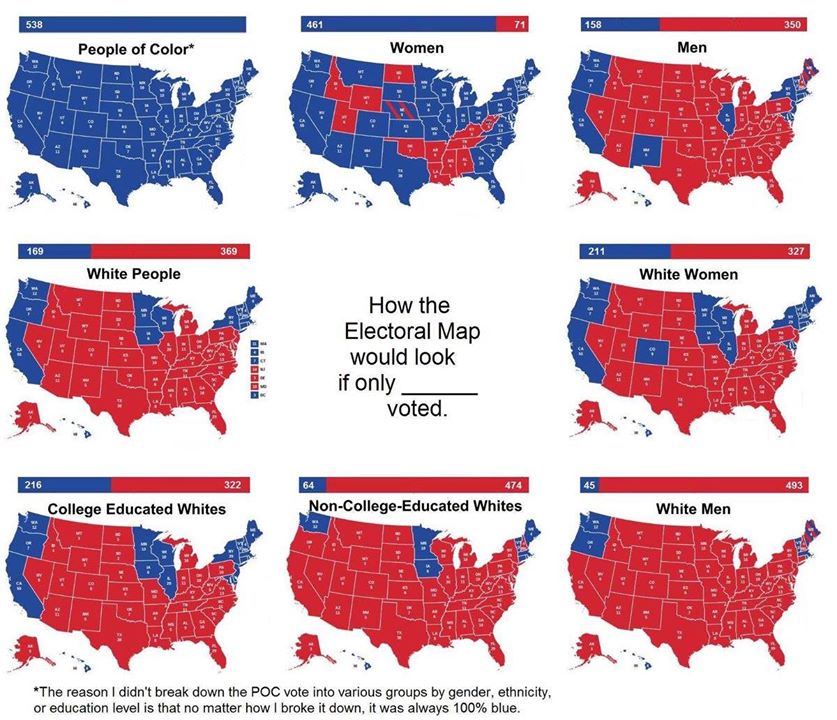
photos_and_videos/TimelinePhotos_SxeO6JU-xg/51300770_10156969096497264_5313788162005270528_o_10156969096487264.jpg REMINDERStephen ThomasTick tockFeb 7, 2019, 2:02 AMAndrew GribbleThe bottom left two imply that the Marxist indoctrination performed almost universally during the first two years of college are not as impactful on whites as they are on others.Feb 7, 2019, 2:05 AMLeondre Spook Williams McBrideI need white people to do their stuff!!!Feb 7, 2019, 2:18 AMIsaac ReidwatFeb 7, 2019, 2:23 AMAsha AghaffAnd here’s the great white hero
https://www.foxnews.com/politics/trump-says-he-wants-to-boost-us-legal-immigration-because-unemployment-is-so-low?utm_source=feedburner&utm_medium=feed&utm_campaign=Feed%3A+foxnews%2Fpolitics+%28Internal+-+Politics+-+Text%29&utm_content=FaceBookFeb 7, 2019, 2:24 AMNeil SheldrickQuick! Import more people of colour! (N.B. this comment is intended to be taken facetiously)Feb 7, 2019, 2:45 AMNeil SheldrickWashington State must be a shitty place to live.Feb 7, 2019, 2:47 AMMitch Hillsource?Feb 7, 2019, 3:15 AMSean Ring“In multiracial societies, you don’t vote in accordance with your economic interests and social interests, you vote in accordance with race and religion.”
– Lee Kuan YewFeb 7, 2019, 3:18 AMAsha AghaffTrue, but the multiracial societies were cemented by universalist religion. Chicken and egg I guess.Feb 7, 2019, 3:20 AMSean RingTo which ones do you refer? There really haven’t been any successful ones over the long-term.Feb 7, 2019, 3:23 AMRadu M OleniucI am pretty sure an IQ test will have a strong correlation with political orientation.Feb 7, 2019, 3:24 AMAsha AghaffThe root of the abrahamic religions. Alexander enforced race mixing and ethnic displacement among basically everybody from Greece to India.
Then later on we have christianity and humanism (same shit), and the result of imperialism and universalism again.Feb 7, 2019, 3:27 AMCurt DoolittleRepublicans are smarter than democrats.
Liberals are smarter than Conservatives.
Libertarians are the smartest of all.
Why?Feb 7, 2019, 3:28 AMSean RingDisclosure: I’m Catholic. Let’s face it: the Abrahamic religions have brought about one disaster after another. And every Empire from Alexander on has fallen, usually because on racial, ethnic, or religious tension. Ok, maybe not as bad as Communism, but it has never been successful. Singapore – since I quoted LKY – has been, is, and always will be at least 75% Chinese for this very reason.Feb 7, 2019, 3:30 AMAsha AghaffIMO, communism is a result of the universalism.Feb 7, 2019, 3:32 AMCurt DoolittleyepFeb 7, 2019, 3:33 AMSean RingA fair comment. It certainly seems to spring from it and bring even more death than its predecessors.Feb 7, 2019, 3:34 AMAsha AghaffI like Mel Gibson type christians 😂.Feb 7, 2019, 3:36 AMSean RingMe, too! And his dad, just wow.😂Feb 7, 2019, 3:37 AMRadu M OleniucI don’t think the old statistic is true anymore. That was the case in the 60’s, maybe. But I’m pretty sure that was flawed as well, just as the audience research for radio or tv shows. The people doing the marketing research are from the department of sociology – usually lefties. So they will generally skew the results towards their goals (no academic integrity), so they could say to their customers the 20-30 yr old niche want to hear or see leftists or liberal programs and dialogues. Even the tests are flawed, and measure only certain things, but not proper/useful/real IQ.
A conservative could change a tire, repair a carburetor, fire and clean a gun. Sometimes, even build a house. A liberal cannot. A conservative is much more interested in tools and mechanisms, logical things. A liberal is more interested in people. In “emotions” (read “control”). One group wants and can live without relying on others, the other group relies on state control, and subsidies, to earn a living. Liberals could not make money on their own.
Sociologists arrogantly label conservatives as “rednecks”, and “retrogrades”, using a simplistic / cartoonish depiction of the conservative right (you could see that in movies and magazines), but that’s not reality, it’s just their projection, and that’s all. Max Planck was a deeply religious guy. Many other are like that. Even Gavin Mcinnes who created VICE Magazine is a religious guy. But the narative does not allow that – conservatives must be depicted as simpletons, morons and so on.
Even one simple reaction time test could invalidate their results, as this is strongly correlated with IQ even in dogs. But they don’t want to talk about that.Feb 7, 2019, 3:40 AMCurt Doolittleit’s still true because it’s the size of the demographic bases, which is why its fake news. Increasing scale drives IQ to the median.Feb 7, 2019, 4:03 AMMiguel PintoI always wondered how it might’ve turned out if Bernie Sanders hadn’t ceded his position at the DNCFeb 7, 2019, 4:06 AMSean RingHe’d have beaten Trump handily, as he would’ve carried the Rust Belt the Hildebeast absentmindedly ceded to Trump.Feb 7, 2019, 4:12 AMRadu M OleniucOn the second thought, even in the 60s it was pretty false. The conservatives were the prudent ones. heck, even a standard democrat from that era could be regarded as republican/conservative, with the standards we have today. So no, given how neurotic and psychotic are the libs today (Eysenck neuroticism), an proper IQ test will clearly show a big difference for the Right.Feb 7, 2019, 4:29 AMMax Adner”people of color” — which color?Feb 7, 2019, 5:19 AMMax AdnerShall we talk about stats?Feb 7, 2019, 5:20 AMMax AdnerI’m not “of color”.Feb 7, 2019, 5:20 AMEric BestUgh…Feb 7, 2019, 6:11 AMPaul KovalFeb 7, 2019, 7:09 AMZachary BertNeil Sheldrick were the wealthiest, most geographically diverse and beautiful state in the union, and it’s where Curt Doolittle made his money. I’m sorry. I don’t speak Walmart so I didn’t quite understand what you were trying to say.Feb 7, 2019, 7:26 AMDrew JoinerInteresting that college education brings males closer to the female electoral position rather than the opposite.Feb 7, 2019, 7:27 AMSean RingThe Leftists own the Academy. I’m cheering for a Dissolution of the Universities, myself.Feb 7, 2019, 7:30 AMDrew JoinerSean Ring I’ve taken some heat for my lifelong derision of University. I guess I personally never saw much value in it.
In high school, I saw what kind of person that university system screened for and I was definitely not interested in spending 4 years or more surrounded by that.Feb 7, 2019, 7:32 AMSean RingI wish I had your balls. I knew it was a waste but went anyway.Feb 7, 2019, 7:33 AMEric GroseLooking at the images I am wondering at what point electoral defeat occurs. In other words, we’re okay until group X is allowed to vote.Feb 7, 2019, 7:49 AMSean RingThe only hope is to have Hispanics start to behave like the Catholic Conservatives they naturally should. If they do, the Dems will never win another election. So what’s the point where they don’t need free stuff anymore and resent those who free ride? That’s why the US needs a wall, or better yet, an immigration moratorium a la 1925-64…Feb 7, 2019, 7:52 AMDrew JoinerSean Ring some of the best people I know went and enjoyed it, and are better for it. We definitely need a class of people with formal higher education in our ranks. I’ve never had the patience for it.
I actually attended a JUCO for a few months before I enlisted, and walked out the day I took the “orientation” class featuring a woman so stupid I would have fired her from the fry cooker at burger king. Our first or second “assignment” was a 1 pager on why “dibersity is our stremf”. I couldn’t do it. Went a few days later, dropped all my classes and enlisted, where I furthered my hypothesis on diversity and strength.Feb 7, 2019, 7:53 AMSean RingI agree it’s highly improbable.Feb 7, 2019, 7:56 AMDrew JoinerThe only way that Hispanics go towards the red at a level necessary to preserve this dead body is if they are forced to directly compete with other “minorities” on a large scale, and republican politicians address the problem of incompatible demographics directly.Feb 7, 2019, 7:59 AMDrew JoinerBut that ain’t heppenin.
TPUS and Candace Owens will turn the based blacks, who sweat from a prison cell that they will vote red, amirite?Feb 7, 2019, 8:00 AMEthan Tricemakes “as long as they come legally” look even more foolish. I know the left is aware of this trend (Joy Reid of MSNBC said that’s why Cali turned blue, Huffpo made a video about how whites better watch it when they become a minority, etc), surely republican elite are aware.Feb 7, 2019, 8:05 AMEthan Triceyeah, Bernie would have won. the electoral map for any republican and dem looks pretty much like this.Feb 7, 2019, 8:07 AMEthan Tricewe’re automating everything. we don’t need more immigration. it’s such a crappy talking pointFeb 7, 2019, 8:07 AMVytautas Šauklysaahh i see you like infographs too, here is 600 for you 😀
https://mega.nz/#F!BxEThIaK!7EThxsN2Id7VkmgeplScUAFeb 7, 2019, 8:21 AMPepe Le Pewbrown?Feb 7, 2019, 9:03 AMWinfield SlackThe POC vote as a block?
That’s crazy.
Bc they’re diverse.
Hm.Feb 7, 2019, 9:49 AMBab SorgenteIt’s not ignorable if we want to winFeb 7, 2019, 9:55 AMNeil A. Bucklewterrible, but it might give a lot of huwhites from europe and SA a chance to move.Feb 7, 2019, 10:27 AMMax AdnerJohn Rambo What’s “brown”, would “Hungarian” be “of color” and “brown”? How about “Russian”? Is that “brown” or “yellow”? Is Yakut or Chukcha Russian? They sure as fuck consider themselves Russian for the last few hundred years, but take it up with them.
To most “european” “Russian” is _not_ white, so, what’s “people of color”? “Brown”? Is Arab brown or Persian, or Filipino, or South American? What does that mean?
Where’s the line? That’s all I’m curious about.Feb 7, 2019, 10:40 AMSteven KnappIts official if your from Washington or Oregon you cant be white anymore.Feb 7, 2019, 11:32 AMAsha AghaffIf you believe that, you’re delusional.Feb 7, 2019, 11:39 AMNeil A. Bucklewwell there are no restrictions on these people yet. they have an opportunity to move, if they take it.Feb 7, 2019, 11:50 AMAsha AghaffIt won’t happen. Trump is the enemy. He is the master of empty gestures.Feb 7, 2019, 11:55 AMNeil A. Bucklewnothing to stop them from moving here, other than themselves.Feb 7, 2019, 11:56 AMNeil A. Bucklewtrump is less an enemy than our own inertia.Feb 7, 2019, 11:56 AMAsha AghaffHe has been clear since the beginning that we are the enemy. Quit stroking him. He hasn’t done a single thing to roll back immigration.Feb 7, 2019, 11:57 AMNeil A. Bucklewno shit. but has also done nothing to restrict ours.Feb 7, 2019, 11:58 AMCurt Doolittlecheck my photos…. ;)Feb 7, 2019, 11:58 AMAsha AghaffThat’s not true at all. He has passed several laws restricting guns and activism and has overseen the mass arrest and insane charges leveled against our people.Feb 7, 2019, 11:58 AMNeil A. Bucklewwhat mass arrest?Feb 7, 2019, 11:59 AMAsha AghaffAll of our activism in the past couple years has been met with our people being rounded up on the dumbest little things and given maximum sentences.Feb 7, 2019, 12:00 PMAsha AghaffLook it upFeb 7, 2019, 12:01 PMNeil A. Bucklewi have been to many of these things myself. there has been no mass arrests of pro euro people.
the mass arrest were all people who got involved directly in street violence which ever side they were on. most of these people got the drunk tank treatment and fines. they have favored the leftist side in most, but not all cases.
if they were engaging in mass arrests, i would not be able to have this argument with you now.
again, there has been no restrictions on migration of whites into america, even though trump is just another part of the machine.
the main enemy preventing whites from moving here is their own inertia, not trump or the system.Feb 7, 2019, 12:06 PMAsha AghaffHow are you involved above the most basic levels and not know how Trump has been fucking us and isn’t our friend?Feb 7, 2019, 12:10 PMNeil A. Bucklewdid i claim trump is our friend?Feb 7, 2019, 12:10 PMAsha AghaffWhy do you believe that anybody in power is going to do anything good for us?Feb 7, 2019, 12:11 PMNeil A. Bucklewi don’t. you are only half reading what i am saying, and attributing things to me i have not said.
you obviously have not have your morning coffee.Feb 7, 2019, 12:13 PMAsha AghaffWhat am I missing here? Inertia? What does that mean if policy is against us?Feb 7, 2019, 12:14 PMNeil A. Bucklewthere is no policy restricting euro immigration into the states. that may or may not change. the only thing stopping euro folks from moving here right now is their own current comfort with how things are. that is the “inertia” i am talking about.
you, and many others, seem to be expecting some magic hero to come lead us by the hand, to be our guy. why should trump be our hero, when so many of us are unwilling to move, to change?Feb 7, 2019, 12:20 PMAndy BernardWhat about Jewish voters? How did they vote?Feb 7, 2019, 12:35 PMDaniel Silverio WijkZachary Bert It´s good that you speak racist then so your friends understand you :-)Feb 7, 2019, 12:57 PMSteven KnappAndy Bernard for Israel?Feb 7, 2019, 1:15 PMAndy BernardSteven Knapp well that’s a given. I’m talking about Jewish voters in American elections. I’m asking sarcastically.Feb 7, 2019, 1:15 PMAsha AghaffThat’s my point. Nobody is gonna save us and nobody is going to allow our interests to be recognized. War is the only solution, but before then, education.Feb 7, 2019, 1:25 PMHuy Lamthats a whole lot of generalizationFeb 7, 2019, 1:25 PMAlex MacleodNeil, why should Europeans want to emigrate to America?Feb 7, 2019, 1:53 PMYasoa ZayyaScott BirkettFeb 7, 2019, 2:21 PMNeil A. BucklewAsha Aghaff partner, our interests have been out in the public fairly loud for a while now. we have more people interested now than ever. we are educating now, and preparing as best one can. we have legal cases going against hostile institutions.
trump has said things that need to be said, but only a fool would think he can suddenly change the whole system, especially when so many of us are asleep, or functionally dead even. we have the capicity to be our own heroes.
miss me with that trendy depsair shit. we live on the edge of oblivion and ascention. there is no better nor more exiting time to be alive for earthlings, especially our people. we NEED this experience, this trial to survive. without it we are just animals.Feb 7, 2019, 2:32 PMNeil A. BucklewAlex Macleod why not? if they are in a hostile place, they have an option. it is not the only option, but it is a decent one.Feb 7, 2019, 2:33 PMAsha AghaffThere’s no despair. It’s just simple fact. Trump helped in 2015 when we were getting more relevant. But he has only kept a bunch of bumbling fools on the plantation through his constant signaling and absolutely no change for the better. He could call a national emergency to deport millions of illegals and he doesn’t.Feb 7, 2019, 2:37 PMNeil SheldrickZachary Bert “were the wealthiest”, since before the blokes started voting democrat? I don’t know what speaking Walmart means. I speak the Queen’s English.Feb 7, 2019, 2:38 PMAlex MacleodYes, but do you suggest this simply because Americans don’t have an equivalent option of emigrating to Europe? Or because there are significant advantages to being in America during chimp outs?Feb 7, 2019, 2:41 PMNeil A. Bucklewwhy would he, when there is so little commitment among us? we have to get our shit together to force the issue.
the sheer mass of this government prevents swift change, without regard to any other factors. we all know it has been full of puppets since before we were born. to think that would suddenly change is irrational. this is a long hard battle, and even if rump was 100% on our side, the situation would not be any different.Feb 7, 2019, 2:43 PMNeil A. BucklewAlex Macleod it is one of a few optins available. there are americans moving to europe as well, just not in mass numbers.Feb 7, 2019, 2:44 PMScott BirkettYasoa Zayya thank fuckFeb 7, 2019, 3:38 PMYasoa ZayyaScott Birkett declining birth rates and importing 3rd world immigrants… what could the agenda beFeb 7, 2019, 3:43 PMEthan TriceThey still vote for israel. Schumers comments are really telling. He said his name meant guardian in Yiddish and he’d always be a protector of israeli interestsFeb 7, 2019, 4:17 PMEthan TriceNeil A. Bucklew it is republicans the fbi is arresting en masse. Not antifa.Feb 7, 2019, 4:18 PMDan PooleMax Adner You’re not being serious or honest with those questions. Try going to a Black neighborhood or a Hispanic neighborhood and asking like a douchebag, “who is considered Black?” or “who is considered Hispanic?” You’ll get your teeth kicked in.
Everyone knows a White person when they see one, and everyone knows a Person of Color when they see one. It’s basic common sense, and if you deny that, it’s because you are a blind ideologue who refuses to see that Race exists.Feb 7, 2019, 4:51 PMAndy BernardEthan Trice indeed. Most people don’t realize he’s a dual citizen along with many others.Feb 7, 2019, 5:51 PMSandy KlauckWow!!Feb 7, 2019, 6:00 PMSandy KlauckIf he was really pro Israel, he would be proTrump, because Trump is the most pro israel president we’ve had in a long time.Feb 7, 2019, 6:05 PMAndy BernardSandy Klauck he’s advocating for Israel using the funding of the USA. Same as it ever was.Feb 7, 2019, 7:23 PMDan WarrenYour looking at a map of millions of square miles and hundreds of millions of people. Generalizations are the only thing that work at that scale.Feb 7, 2019, 7:33 PMMax AdnerDan Poole .
> You’re not being serious or honest with those questions
Fuck right off. Didn’t get further than than. Ta-ta.Feb 7, 2019, 8:21 PMJay DizzleIts our strength!Feb 7, 2019, 8:53 PMRadu M OleniucHuy, yep, even the letters and graphical signs used here in this comment to write this thing called “generalization” are also generalizations.Feb 7, 2019, 10:51 PMJoseph NobleDan Poole every time you say Person of Color with capital letters, a cisgendered heterosexual white male is born to a Christian family.Feb 8, 2019, 12:18 PMKevin BaloghYeah, shithole.Feb 8, 2019, 1:09 PMCole BrownAlright guys time to get out me statistics
If bl(postb)cks suddenly left America: (keep in mind they only make 13% of the US population)
The prison population would go down by 37%
There would be almost 50% less gang members
Rape would go down 43%
Overweight and obesity percentage would go down by 10%
Average IQ would go up 7 points, putting the USA tied for third with Japan
SAT scores would go up by about 100 points
ACT scores would go up by 5.5 points
AIDS and HIV would go down by over 67%
Chlamydia cases would go down by 50%
Gonorrhea would go down by 69%
Syphilis would go would go down by 58%
The average income would be over 20k more per year
The amount of people in poverty would go down by over 30%
Homelessness would go down by 57%
And the number of welfare recipients would go down by about 40%Feb 9, 2019, 6:58 AMElliot AxelmanDrew Joiner *indoctrinationFeb 9, 2019, 11:16 AMEthan TriceSandy Klauck not really. Trump moved the recognized capital to Jerusalem (mainly it just means we have to spend money on making a different building safe for ambassadors). pro-israel means giving way more money to israel+destroying their neighbors. Pulling out of Syria is technically anti-israel (by being pro-American interests) in the sense that it means Israel can’t so confidently throw their weight around the region. Also, https://www.youtube.com/watch?v=Qh8rpFTVBuMFeb 9, 2019, 12:45 PMEthan TriceAndy Bernard the problem with the dual citizen comment is that he likely doesn’t technically have dual citizenship (i.e. the passport, paperwork, etc). every person who has 1 jewish grandparent has automatic israeli citizenship if they apply, with rare exception. Now, it’s true that there are some other countries that have similar policies (ireland and italy come to mind) but ireland will extradite criminals and, to the best of my knowledge there aren’t any politicians or PACs that are trying to get America to destroy Ireland’s enemiesFeb 9, 2019, 12:48 PMAndy BernardEthan Trice it would appear by affording Jews that ability, Israel is looking out for its interests first. I wish we’d do the same.Feb 9, 2019, 12:51 PMAndy BernardEthan Trice AIPAC certainly has influence over our politics.Feb 9, 2019, 12:51 PMKristin AnneHahahahahahahaFeb 9, 2019, 1:07 PMTodd RayWhen did it change from colored person to person of color?Feb 10, 2019, 12:48 AMJayden WolfeLibertarians are retarded. Not sure what you’re on about lmao.Feb 10, 2019, 4:35 PMREMINDER
The key to understanding 4GW is to not be too distracted by the mainstream definition that is reliant upon the blending of war and politics. Since politics is simply the science of gaining and holding power, war and politics have always gone hand in hand. Even Clausewitz understood this clearly and he recognized that two nationally levied armies in pitched combat were still conducting a political act.
Instead, focus on the civilian and asymmetric components without committing the sin of ignoring thousands of years of history. Civilians have been fighting states from the beginning of the human historical record, and it is a scientific certainty that no two armies or forces of exactly equal capability have ever encountered each other in battle. The common misnomer of asymmetric threats as being those of unequal combat power is ahistorical and, even worse, useless.
The only useful definition of an asymmetric threat is that of C.A. Primmerman, who in 2000 recognized that analyzing asymmetry on the battlefield is ultimately a mathematical formula and thus used a geometric projection to settle on a three-part definition of “(1) a weapon/tactic/strategy that an enemy could and would use against the United States, (2) a weapon/tactic/strategy that the United States would not employ, and (3) a weapon/tactic/strategy that, if not countered (and this not countered by systems currently in place), could have serious consequences.” This can be reduced down to an asymmetry in “willingness.”
Because willingness to conduct an action plays a central role in 4GW, ethics becomes a central component of understanding it. Likewise, because the action must satisfy the aforementioned criteria, the scientific method is critical to making the aforementioned assessment. Thus the only population that can emerge victorious in a 4GW environment on either side is one that is capable of processing and calculating both philosophical and scientific variables.
Martin van Creveld’s, The Transformation of War, is easily the most important book on war written in the last quarter-century.
Transformation lays out the basis of Fourth Generation war, the state’s loss of its monopoly on war and on social organization. In the 21st century, as in all centuries prior to the rise of the nation-state, many different entities will fight war, for many different reasons, not just raison d’etat. Clausewitz’s “trinity” of people, government, and army vanishes, as the elements disappear or become indistinguishable from one another. Van Creveld has also written another book, The Rise and Decline of the State, which lays out the historical basis of the theory described in Transformation.”
Let’s Review
1 – The state’s loss of its monopoly on war
2 – The state’s loss of monopoly on social organization.
3 – Return to Pre-Nation-State War: “The War of All Against All”.
GENERATIONS OF WARFARE
“The Chinese military philosopher Sun Tzu said, “He who understands himself and understands his enemy will prevail in one hundred battles.” In order to understand both ourselves and our enemies in Fourth Generation conflicts, it is helpful to use the full framework of the Four Generations of modern war.
What are the first three generations?
FIRST GENERATION WARFARE
First Generation war was fought with line and column tactics. It lasted from the Peace of Westphalia until around the time of the American Civil War. Its importance for us today is that the First Generation battlefield was usually a battlefield of order, and the battlefield of order created a culture of order in state militaries. Most of the things that define the difference between “military” and “civilian” – saluting, uniforms, careful gradations of rank, etc. – are products of the First Generation and exist to reinforce a military culture of order. Just as most state militaries are still designed to fight other state militaries, so they also continue to embody the First Generation culture of order.
The problem is that, starting around the middle of the 19th century, the order of the battlefield began to break down. In the face of mass armies, nationalism that rank, etc. – are products of the First Generation and exist to reinforce a military culture of order. Just as most state militaries are still designed to fight other state militaries, so they also continue to embody the First Generation culture of order.
The problem is that, starting around the middle of the 19th century, the order of the battlefield began to break down. In the face of mass armies, nationalism that made soldiers want to fight, and technological developments such as the rifled musket, the breechloader, barbed wire, and machine guns, the old line-and-column tactics became suicidal. But as the battlefield became more and more disorderly, state militaries remained locked into a culture of order. The military culture that in the First Generation had been consistent with the battlefield became increasingly contradictory to it. That contradiction is one of the reasons state militaries have so much difficulty in Fourth Generation war, where not only is the battlefield disordered, so is the entire society in which the conflict is taking place.
SECOND GENERATION
Second Generation war was developed by the French Army during and after World War I. It dealt with the increasing disorder of the battlefield by attempting to“ impose order on it. Second Generation war, also sometimes called firepower/attrition warfare, relied on centrally controlled indirect artillery fire, carefully synchronized with infantry, cavalry and aviation, to destroy the enemy by killing his soldiers and blowing up his equipment. The French summarized Second Generation war with the phrase, “The artillery conquers, the infantry occupies.”
Second Generation war also preserved the military culture of order. Second Generation militaries focus inward on orders, rules, processes, and procedures. There is a “school solution” for every problem. Battles are fought methodically, so prescribed methods drive training and education, where the goal is perfection of detail in execution. The Second Generation military culture, like the First, values obedience over initiative (initiative is feared because it disrupts synchronization) and relies on imposed discipline.
The United States Army and the U.S. Marine Corps both learned Second Generation war from the French Army during the First World War, and it largely remains the “American way of war” today.”
THIRD GENERATION
“Third Generation war, also called maneuver warfare, was developed by the German Army during World War I. Third Generation war dealt with the disorderly battlefield not by trying to impose order on it but by adapting to disorder and taking advantage of it. Third Generation war relied less on firepower than on speed and tempo. It sought to present the enemy with unexpected and dangerous situations faster than he could cope with them, pulling him apart mentally as well as physically.
The German Army’s new Third Generation infantry tactics were the first non-linear tactics. Instead of trying to hold a line in the defense, the object was to draw the enemy in, then cut him off, putting whole enemy units “in the bag.” On the offensive, the German “storm-troop tactics” of 1918 flowed like water around enemy strong points, reaching deep into the enemy’s rear area and also rolling his forward units up from the flanks and rear. These World War I infantry tactics, when used by armored and mechanized formations in World War II, became known as “Blitzkrieg.”
Just as Third Generation war broke with linear tactics, it also broke with the First and Second Generation culture of order. Third Generation militaries focus outward on the situation, the enemy, and the result the situation requires. Leaders at every level are expected to get that result, regardless of orders. Military education is designed to develop military judgment“, not teach processes or methods, and most training is force-on-force free play because only free play approximates the disorder of combat. Third Generation military culture also values initiative over obedience, tolerating mistakes so long as they do not result from timidity, and it relies on self-discipline rather than imposed discipline, because only self-discipline is compatible with initiative.
When Second and Third Generation war met in combat in the German campaign against France in 1940, the Second Generation French Army was defeated completely and quickly; the campaign was over in six weeks. Both armies had similar technology, and the French actually had more (and better) tanks. Ideas, not weapons, dictated the outcome.”
“Despite the fact that Third Generation war proved its decisive superiority more than 60 years ago, most of the world’s state militaries remain Second Generation. The reason is cultural: they cannot make the break with the culture of order that the Third Generation requires. This is another reason why, around the world, state-armed forces are not doing well against non-state enemies. Second Generation militaries fight by putting firepower on targets, and Fourth Generation fighters are very good at making themselves untargetable. Virtually all Fourth Generation forces are free of the First Generation culture of order; they focus outward, they prize initiative and, because they are highly decen“tralized, they rely on self-discipline. Second Generation state forces are largely helpless against them.”
Excerpt From: William S. Lind and Gregory A. Thiele. “4th Generation Warfare Handbook.” iBooks.
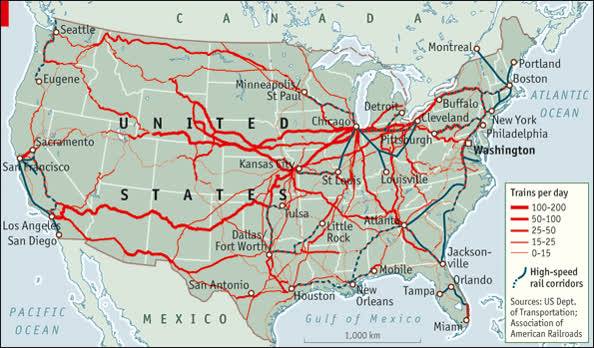
Click for video: photos_and_videos/videos/51825399_2720564694640356_8715171315750797312_n_10156963634057264.mp4 Click for video: photos_and_videos/videos/51920593_287111971957992_6657321161317154816_n_10156963634147264.mp4 Click for video: photos_and_videos/videos/51742811_2199540490307819_4277496558745812992_n_10156963634317264.mp4 photos_and_videos/TimelinePhotos_SxeO6JU-xg/51691368_10156963634152264_273691198890180608_o_10156963634137264.jpg photos_and_videos/TimelinePhotos_SxeO6JU-xg/51760970_10156963634167264_9095308945450336256_o_10156963634162264.jpg photos_and_videos/TimelinePhotos_SxeO6JU-xg/51375745_10156963634067264_7300826254326890496_n_10156963634062264.jpg Oliver CrokeWhy is the route publicly available?Feb 4, 2019, 7:45 PM photos_and_videos/TimelinePhotos_SxeO6JU-xg/51405187_10156963634107264_6910199408252420096_n_10156963634097264.jpg photos_and_videos/TimelinePhotos_SxeO6JU-xg/51066724_10156963634207264_6047666754266595328_n_10156963634192264.jpg DO YOU SEE THE PATTERN????
Road, Rail, Gas, Power, Stations, Arsenals
Look at OK, Texas, Louisiana, Penn, and Erie.
The money is in ny and dc and la but everything else is in the middle. Islands in an ocean of territorial fragility.
Jurisprudence or legal theory is the theoretical study of law, principally by philosophers but, from the twentieth century, also by social scientists. Scholars of jurisprudence, (jurists or legal theorists), seek to obtain a deeper understanding of legal reasoning, legal systems, legal institutions, and the role of law in society.
ROMAN LAW
ORIGIN
Jurisprudence in Ancient Rome had its origins with the (periti)—experts in the jus mos maiorum (traditional law), a body of oral laws and customs.
DEVELOPMENT
he sentences of the iudex were supposed to be simple interpretations of the traditional customs, but—apart from considering what traditional customs applied in each case—soon developed a more equitable interpretation, coherently adapting the law to newer social exigencies. The law was then adjusted with evolving institutiones (legal concepts), while remaining in the traditional mode. Praetors were replaced in the 3rd century BC by a laical body of prudentes. Admission to this body was conditional upon proof of competence or experience.
FORMALIZATION
Under the Roman Empire, schools of law were created, and practice of the law became more academic. From the early Roman Empire to the 3rd century, a relevant body of literature was produced by groups of scholars, including the Proculians and Sabinians. The scientific nature of the studies was unprecedented in ancient times.
INSTITUTIONALIZATION
After the 3rd century, juris prudentia became a more bureaucratic activity, with few notable authors. It was during the Eastern Roman Empire (5th century) that legal studies were once again undertaken in depth, and it is from this cultural movement that Justinian’s Corpus Juris Civilis was born.
EUROPEAN LAW :
ORIGIN: NATURAL LAW
Begins with Aristotle
In its general sense, natural law may be compared to both state-of-nature law and analogous to the laws of physical science.
natural-law jurisprudence generally asserts that human law must be in response to compelling reasons for action. There are two readings of the natural-law jurisprudential stance.
The Strong Natural Law Thesis holds that if a human law fails to be in response to compelling reasons, then it is not properly a “law” at all. This is captured, imperfectly, in the famous maxim: lex iniusta non est lex (an unjust law is no law at all).
WEAK LAW (DEVELOPMENT)
The Weak Natural Law Thesis holds that if a human law fails to be in response to compelling reasons, then it can still be called a “law”, but it must be recognised as a defective law.
POSITIVE LAW (FORMALIZATION)
Natural law is often contrasted to positive law which asserts law as the product of human activity and human volition. Positive law is not law per se, but regulation, contract, or command.
LEGAL REALISM (INSTITUTIONALIZATION)
Legal realism was a view popular with some Scandinavian and American writers. Skeptical in tone, it held that the law should be understood as, and would be determined by, the actual practices of courts, law offices, and police stations, rather than as the rules and doctrines set forth in statutes or learned treatises. The essential tenet of legal realism is that all law is made by human beings and, thus, is subject to human foibles, frailties, and imperfections.
CRITICAL RATIONALISM AND THE LAW (REFORMATION)
Karl Popper originated the theory of critical rationalism. According to Reinhold Zippelius many advances in law and jurisprudence take place by operations of critical rationalism. He writes, “daß die Suche nach dem Begriff des Rechts, nach seinen Bezügen zur Wirklichkeit und nach der Gerechtigkeit experimentierend voranschreitet, indem wir Problemlösungen versuchsweise entwerfen, überprüfen und verbessern” (that we empirically search for solutions to problems, which harmonise fairly with reality, by projecting, testing and improving the solutions).
LEGAL INTERPRETIVISM (“RELATIVISM”) (DECLINE)
Contemporary philosopher of law Ronald Dworkin has advocated a more constructivist theory of jurisprudence that can be characterized as a middle path between natural law theories and positivist theories of general jurisprudence.[37] In his book Law’s Empire,[38] Dworkin attacked Hart and the positivists for their refusal to treat law as a moral issue. He argued that law is an “interpretive” concept that requires barristers to find the best-fitting and most just solution to a legal dispute, given their constitutional traditions. According to him, law is not entirely based on social facts, but includes the best moral justification for the institutional facts and practices that we intuitively regard as legal. It follows from Dworkin’s view that one cannot know whether a society has a legal system in force, or what any of its laws are, until one knows some truths about the moral justifications of the social and political practices of that society. It is consistent with Dworkin’s view—in contrast with the views of legal positivists or legal realists—that no-one in a society may know what its laws are, because no-one may know the best moral justification for its practices.
—“In order to understand why silicon engines have had such astounding energy-efficiency gains compared to combustion engines — and why Jevons Paradox has a long way to go yet — one has to look to the difference in the nature of the tasks the two kinds of engines perform. One produces information that consumes power, and the other produces power.
All engines convert energy – effectively ‘refine’ it — from a chaotic form into a more highly ordered form. Combustion engines (and mechanical ones) are designed to effect a physical action. Efficiency is constrained by the immutable laws of thermodynamics, and things like friction, inertia and gravity. Logic engines, on the other hand, don’t produce physical action but are designed to manipulate the idea of the numbers zero and one.
A logic engine’s purpose is rooted in simply knowing and storing the fact of the binary state of a switch; i.e., whether it is on or off. There is no useful information in the ‘size’ of the on or off state. It was obvious from early days that more and faster logic would require shrinking the size of the switch representing the binary state, chasing the physics that allows faster flips using less energy per flip. To be simplistic, it’s like choosing to use a grain of sand instead of a bowling ball to represent the number one.
And, unlike other engines, logic engines can be accelerated through the clever applications of mathematics, i.e.,“software.” It’s no coincidence that this year also marks the 60th anniversary of the creation of that new term, coined by an American statistician.
With software one can, for example, employ a trick equivalent to ignoring how much space lies between the grains of sand. This is what a compression algorithm does to digitally represent a picture using far less data, and thus energy. No such options exist in the world of normal engines.
Tracing progress from 1971 when the first widely used integrated circuit was introduced by Intel, its vaunted 4004 with 2,300 transistors, we’ve seen the size of the transistor drop so much that a Central Processing Unit (CPU) today has billions of transistors, each able to operate 10,000-fold faster. That combination has yielded the billion-fold gains in computing power we’ve witnessed per chip.
If combustion engines had achieved that kind of scaling efficiency, a car engine today would generate a thousand-fold more horsepower and have shrunk to the size of an ant: with such an engine, a car could actually fly, very fast. But only in comic books does the physics of propulsion scale that way. In our universe, power scales the other way. An ant-sized engine – which can be built — produces roughly a million times less power than a Prius.
One consequence of the trajectory of making logic engines both cheaper and more powerful is that overall spending on such engines has soared (a related variant of Jevons Paradox). Each year the world’s manufacturers now purchase some $300 billion worth of semiconductor engines in order to build and sell computing machines. That total is some 20% to 50% more than global spending on the piston engines used to build all the world’s wheeled transportation machines. And the former is growing faster than the latter.
The scaling ‘law’ of transistor-based engines was first codified by Intel co-founder Gordon Moore in an April 1965 article. There he wrote that advances in the techniques of silicon etching allowed transistor dimensions to shrink so fast that the number of them per integrated circuit doubled every two years. That also constituted a doubling in energy efficiency. And while Moore’s observation has been enshrined as a “law,” it’s not a law of nature but a consequence of the nature of logic engines.
Thus, back to Jevons and his paradox. Quite obviously the market’s appetite for logic engines – data – has grown far faster than the efficiency improvements of those engines, so far. What next for Moore’s Law? If logic engines continue the trajectory of recent decades, we should expect to see a lot more surprises in both economic and business domains, never mind energy.
Much scholarship has been devoted to the question of the future of Moore’s Law. Some pundits have been claiming that more efficient logic engines are now needed in order to constrain potential runaway energy use by the digital infrastructure. (That’s a constituency that has clearly not accepted the reality of the Jevons Paradox.) Meanwhile, other pundits have declared that the end of Moore’s Law is in sight.
Because of Moore’s Law, CPUs now run so hot – a direct consequence of speed — that heat removal is an existential challenge. Inside the CPU itself, chip designers now build heat management software that can even throttle speed back to cool things down. Some datacenter operators have tackled the challenge, for example, by turning to water-cooled logic engines – a solution combustion engineers have long been familiar with. Even more challenging, logic switches have become so fast that moving the data around on the CPU’s silicon surface is actually constrained by the speed of light. And the logic switches are so small that conventional materials and tools are indeed maxing out. (For a lucid summary of all this, see this recent essay by Rodney Brooks, emeritus professor at MIT.)
But it’s important to keep in mind that Moore’s Law is, as we’ve noted, fundamentally about finding ways to create ever tinier on-off states. In that regard, in the words of one the great physicists of the 20th century, Richard Feynman, “there’s plenty of room at the bottom” when it comes to logic engines. To appreciate how far away we still are from a “bottom,” consider the Holy Grail of computing, the human brain, which is at least 100 million times more energy efficient than the best silicon logic engine available.
Engineers today are deploying a suite of techniques in the pursuit of ‘logic’ density and speed that can be grouped into three buckets: clever designs, embedding software, and using new materials to make transistors still smaller.
The basic design of the transistor itself is no longer just the original planar, two-dimensional structures, but has gone 3D. The density from going vertical (think microscopic skyscrapers) buys another decade of Moore’s Law progress. Another design innovation is the “multi-core” microprocessor, which integrates dozens of CPUs onto a single silicon chip, each with billions of transistors. And now there are also entirely different engine types, much as aerospace engineers used to break the sound barrier, going from propellers to jet and then rocket engines. The equivalent with logic engines are Graphics Processing Units (GPUs) and Neural Processing Units (NPUs).
For specialized tasks GPUs and NPUs outperform CPUs. GPUs were pioneered for gaming to render realistic video, i.e. “graphics,” (a subset of artificial reality) where the measure-of-merit is in imagines rather than logic operations processed per second. Then the NPUs don’t even use a CPU’s linear logic, but emulate instead a non-linear neural brain structure and offer “artificial intelligence” capabilities for such things as voice recognition, navigation and diagnostics. Computers that integrate CPUs, GPUs and NPUs are the equivalent of a vehicle with an SUV’s utility, a Ferrari’s speed, and a semitrailer’s carrying capacity.
And, in no small irony, software is increasingly deployed within the CPU to manage traffic and power, and optimize the precious resources on the silicon “real estate.” Such software is the microscopic equivalent of blending AirBnB with Uber and Waze, at hyper-speed. Logic engines can, in effect, literally pull themselves up by their own bootstraps.
Then there are new materials and the associated specialized machines for using them to fabricate even smaller transistors for all classes of digital engine. Here the automotive analog is in using better lubricants, or switching to aluminum and carbon-fiber bodies, or replacing carburetors with fuel injection. While there is an ultimate limit to a silicon transistor’s dimension – no smaller than the width of a half-dozen atoms – the distance to that limit represents as much progress as has occurred from 1998 to date.
‘Merely’ achieving, over the coming two decades, as much progress as has happened with Moore’s Law since 1998 will be world changing.
Perhaps Moore’s Law, though, is no longer the best metric for the next 60 years of logic engine progress. Transistors have evolved from being viewed as components in isolated machines to become ubiquitous in markets, more common than grains of wheat. Logically, we should move beyond just counting them.
Cost is the metric that matters in every market and application: in this case the cost of processing power. As we briefly illustrated above, in addition to size there are a variety of ways (e.g., designs, software) to advance the effect of Moore’s Law, which is the increase of processing power at declining costs. In fact, since the year 2000, the increase in logic operations purchasable per dollar has grown some 10-fold more than the increase in ‘raw’ logic operations generated per watt,
Ray Kurzweil, widely known for his book The Singularity Is Near, may have been the first to document this cost reality. Kurzweil’s map shows that in the 1960s mainframe era, $1,000 dollars bought about one calculation per second. By the year 2000, a single dollar bought 10,000 calculations per second. Today a dollar buys one billion calculations per second. (All in constant dollar terms.)
And that’s only half the story. The cloud, accelerating the cost declines of processing power through utility-class economies of scale (see Part 1 in this series), now combines with ever-cheaper ubiquitous high-speed wireless networks (Part 2 in this series). The integration of all these trends radically reduces costs and democratizes access to both data and the logic engines that process it. We don’t yet have a metric to quantify the effect of this economically incendiary combination.
How much processing power might society ultimately consume? Data and information constitute a feature of our universe that is, like the universe itself, essentially infinite. There is no limit to our appetite to acquire data in order to gain greater knowledge and control of our world.
So, finally, on this 60th anniversary of the logic engine, one more transportation analogy: the 60th anniversary of the invention of the internal combustion engine was 1936. We know now that 1936 was early days in the rise in consumption of road-miles. When it comes to consumption of processing power, it’s the equivalent of 1936.
By now the energy implications of what we might call the Jevons digital Paradox should be obvious. But far more important are the implications of all the innovations yet to appear from the full flowering of the era of digital engines. “—
How We Know The So-Called “Civil War” Was Not Over Slavery
by Paul Craig Roberts
When I read Professor Thomas DiLorenzo’s article ( http://www.paulcraigroberts.org/2017/08/21/lincoln-myth-ideological-cornerstone-america-empire/ ) the question that lept to mind was, “How come the South is said to have fought for slavery when the North wasn’t fighting against slavery?”
Two days before Lincoln’s inauguration as the 16th President, Congress, consisting only of the Northern states, passed overwhelmingly on March 2, 1861, the Corwin Amendment that gave constitutional protection to slavery. Lincoln endorsed the amendment in his inaugural address, saying “I have no objection to its being made express and irrevocable.”
Quite clearly, the North was not prepared to go to war in order to end slavery when on the very eve of war the US Congress and incoming president were in the process of making it unconstitutional to abolish slavery.
Here we have absolute total proof that the North wanted the South kept in the Union far more than the North wanted to abolish slavery.
If the South’s real concern was maintaining slavery, the South would not have turned down the constitutional protection of slavery offered them on a silver platter by Congress and the President. Clearly, for the South also the issue was not slavery.
The real issue between North and South could not be reconciled on the basis of accommodating slavery. The real issue was economic as DiLorenzo, Charles Beard and other historians have documented. The North offered to preserve slavery irrevocably, but the North did not offer to give up the high tariffs and economic policies that the South saw as inimical to its interests.
Blaming the war on slavery was the way the northern court historians used morality to cover up Lincoln’s naked aggression and the war crimes of his generals. Demonizing the enemy with moral language works for the victor. And it is still ongoing. We see in the destruction of statues the determination to shove remaining symbols of the Confederacy down the Memory Hole.
Today the ignorant morons, thoroughly brainwashed by Identity Politics, are demanding removal of memorials to Robert E. Lee, an alleged racist toward whom they express violent hatred. This presents a massive paradox. Robert E. Lee was the first person offered command of the Union armies. How can it be that a “Southern racist” was offered command of the Union Army if the Union was going to war to free black slaves?
Virginia did not secede until April 17, 1861, two days after Lincoln called up troops for the invasion of the South.
Surely there must be some hook somewhere that the dishonest court historians can use on which to hang an explanation that the war was about slavery. It is not an easy task. Only a small minority of southerners owned slaves. Slaves were brought to the New World by Europeans as a labor force long prior to the existence of the US and the Southern states in order that the abundant land could be exploited. For the South slavery was an inherited institution that pre-dated the South. Diaries and letters of soldiers fighting for the Confederacy and those fighting for the Union provide no evidence that the soldiers were fighting for or against slavery. Princeton historian, Pulitzer Prize winner, Lincoln Prize winner, president of the American Historical Association, and member of the editorial board of Encyclopedia Britannica, James M. McPherson, in his book based on the correspondence of one thousand soldiers from both sides, What They Fought For, 1861-1865, reports that they fought for two different understandings of the Constitution.
As for the Emancipation Proclamation, on the Union side, military officers were concerned that the Union troops would desert if the Emancipation Proclamation gave them the impression that they were being killed and maimed for the sake of blacks. That is why Lincoln stressed that the proclamation was a “war measure” to provoke an internal slave rebellion that would draw Southern troops off the front lines.
If we look carefully we can find a phony hook in the South Carolina Declaration of Causes of Secession (December 20, 1860) as long as we ignore the reasoning of the document. Lincoln’s election caused South Carolina to secede. During his campaign for president Lincoln used rhetoric aimed at the abolitionist vote. (Abolitionists did want slavery abolished for moral reasons, though it is sometimes hard to see their morality through their hate, but they never controlled the government.)
South Carolina saw in Lincoln’s election rhetoric intent to violate the US Constitution, which was a voluntary agreement, and which recognized each state as a free and independent state. After providing a history that supported South Carolina’s position, the document says that to remove all doubt about the sovereignty of states “an amendment was added, which declared that the powers not delegated to the United States by the Constitution, nor prohibited by it to the States, are reserved to the States, respectively, or to the people.”
South Carolina saw slavery as the issue being used by the North to violate the sovereignty of states and to further centralize power in Washington. The secession document makes the case that the North, which controlled the US government, had broken the compact on which the Union rested and, therefore, had made the Union null and void. For example, South Carolina pointed to Article 4 of the US Constitution, which reads: “No person held to service or labor in one State, under the laws thereof, escaping into another, shall, in consequence of any law or regulation therein, be discharged from such service or labor, but shall be delivered up, on claim of the party to whom such service or labor may be due.” Northern states had passed laws that nullified federal laws that upheld this article of the compact. Thus, the northern states had deliberately broken the compact on which the union was formed.
The obvious implication was that every aspect of states’ rights protected by the 10th Amendment could now be violated. And as time passed they were, so South Carolina’s reading of the situation was correct.
The secession document reads as a defense of the powers of states and not as a defense of slavery. Here is the document: http://teachingamericanhistory.org/library/document/south-carolina-declaration-of-causes-of-secession/
Read it and see what you decide.
A court historian, who is determined to focus attention away from the North’s destruction of the US Constitution and the war crimes that accompanied the Constitution’s destruction, will seize on South Carolina’s use of slavery as the example of the issue the North used to subvert the Constitution. The court historian’s reasoning is that as South Carolina makes a to-do about slavery, slavery must have been the cause of the war.
As South Carolina was the first to secede, its secession document probably was the model for other states. If so, this is the avenue by which court historians, that is, those who replace real history with fake history, turn the war into a war over slavery.
Once people become brainwashed, especially if it is by propaganda that serves power, they are more or less lost forever. It is extremely difficult to bring them to truth. Just look at the pain and suffering inflicted on historian David Irving for documenting the truth about the war crimes committed by the allies against the Germans. There is no doubt that he is correct, but the truth is unacceptable.
The same is the case with the War of Northern Aggression. Lies masquerading as history have been institutionalized for 150 years. An institutionalized lie is highly resistant to truth.
Education has so deteriorated in the US that many people can no longer tell the difference between an explanation and an excuse or justification. In the US denunciation of an orchestrated hate object is a safer path for a writer than explanation. Truth is the casualty.
That truth is so rare everywhere in the Western World is why the West is doomed. The United States, for example, has an entire population that is completely ignorant of its own history.
As George Orwell said, the best way to destroy a people is to destroy their history.