Form: Definition

  • photos_and_videos/TimelinePhotos_dJ9jhts2Ng/28576053_195300734400158_49901792306

    photos_and_videos/TimelinePhotos_dJ9jhts2Ng/28576053_195300734400158_49901792306

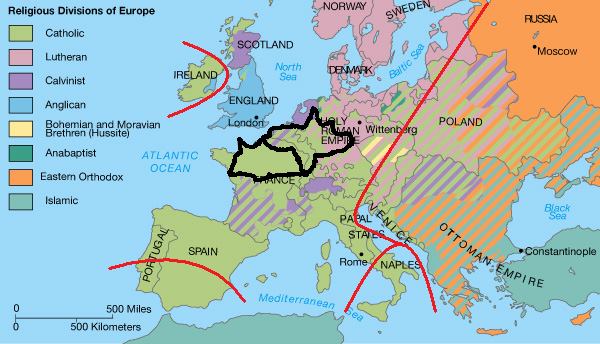
    photos_and_videos/TimelinePhotos_dJ9jhts2Ng/28576053_195300734400158_4990179230667602961_n_195300734400158.jpg THE HAJNAL LINE AND RELIGIONSTHE HAJNAL LINE AND RELIGIONS

    Source date (UTC): 2018-03-03 08:44:00 UTC

  • There one necessary, natural law, of cooperation: Reciprocity. If we lack recipr

    There one necessary, natural law, of cooperation: Reciprocity. If we lack reciprocity then there is no rational reason to cooperate. If we cannot exit a lack of reciprocity, (secede) then the only rational choice is violence. Revolution Comes. #Trump.


    Source date (UTC): 2018-03-02 23:19:25 UTC

    Original post: https://twitter.com/i/web/status/969713817843392513

  • What Is The Difference Between Civil Society And Social Movements?

    CIVIL: ACTIVISTS PAY FOR COMMONS, SOCIAL: ACTIVISTS FORCE OTHERS TO PAY FOR COMMONS.

    Civil: Personal Choice. The Civil Society (meaning voluntary organization of commons) Activists Pay.

    Civil society is the “aggregate of non-governmental organizations and institutions that manifest interests and will of citizens.”

    Social: Political Force. The political society (meaning involuntary organization of commons by political, military means.) Political activism. Activists Make Others Pay.

    https://www.quora.com/What-is-the-difference-between-civil-society-and-social-movements

  • What Is The Difference Between Civil Society And Social Movements?

    CIVIL: ACTIVISTS PAY FOR COMMONS, SOCIAL: ACTIVISTS FORCE OTHERS TO PAY FOR COMMONS.

    Civil: Personal Choice. The Civil Society (meaning voluntary organization of commons) Activists Pay.

    Civil society is the “aggregate of non-governmental organizations and institutions that manifest interests and will of citizens.”

    Social: Political Force. The political society (meaning involuntary organization of commons by political, military means.) Political activism. Activists Make Others Pay.

    https://www.quora.com/What-is-the-difference-between-civil-society-and-social-movements

  • What Is The Past Participle Of The Word “run”?

    It is run. This is one of the few verbs where the infinitive and past participle are the same. The simple past tense is different (ran). Past Participle: run.

    https://www.quora.com/What-is-the-past-participle-of-the-word-run

  • What Is The Past Participle Of The Word “run”?

    It is run. This is one of the few verbs where the infinitive and past participle are the same. The simple past tense is different (ran). Past Participle: run.

    https://www.quora.com/What-is-the-past-participle-of-the-word-run

  • Ethics (direct) and Morality (indirect) consists of nothing more than reciprocit

    Ethics (direct) and Morality (indirect) consists of nothing more than reciprocity. ( Productive, fully informed, warrantied, voluntary transfer independent of imposition of costs upon the investments of others by externality. ie:the continuous incremental expansion of tort). And unethical and immoral action violates reciprocity (the same rule). Or put more traditionally, the Silver Rule correctly defines ethics and morality. However, since the optimum game strategy is exhaustive investment (not boundless, but exhaustive) in opportunity for cooperation (thats the science), then the Golden Rule (which is secondary to the silver rule) increases the overall condition (productivity of cooperation). As we innovate in both moral and immoral actions, we increase the suppression of immoral actions through the empirical discovery of them in conflicts (tort). Unfortunately, law like norms, tends to lag, and lags more the more governments …. interfere…. with tort law (empirical) discovery and suppression of criminal, unethical, and immoral actions. And worse, while norms usually make their way into legislation or command, (not necessarily tort), the effect of norms is increased by homogeneity and decreased by heterogeneity. Moreover, group evolutionary strategy (moral and immoral both) sometimes requires or advances both ethical/moral, and unethical/immoral behavior, which results in norms that institutionalize unethical and immoral behavior. (Gypsies for example). Anyway. Ethics and morality were an empirical not philosophical discovery. FIctionalisms to choose to invest in different strategies by which we create opportunities were the discovery. Or said more simply: the primary challenge has been the christian one: the extensino of kinship love to non-kin (or at least near kin), but by personal rather than political means. The principle issue with ethics and morality is that in the age of fiat currency we have substituted state insurance for interpersonal extensions, and in doing so eliminated the ability to test for exhaustion vs rent seeking. And the consequences are pretty obvious to the student of history.
  • Ethics (direct) and Morality (indirect) consists of nothing more than reciprocit

    Ethics (direct) and Morality (indirect) consists of nothing more than reciprocity. ( Productive, fully informed, warrantied, voluntary transfer independent of imposition of costs upon the investments of others by externality. ie:the continuous incremental expansion of tort).

    And unethical and immoral action violates reciprocity (the same rule).

    Or put more traditionally, the Silver Rule correctly defines ethics and morality. However, since the optimum game strategy is exhaustive investment (not boundless, but exhaustive) in opportunity for cooperation (thats the science), then the Golden Rule (which is secondary to the silver rule) increases the overall condition (productivity of cooperation).

    As we innovate in both moral and immoral actions, we increase the suppression of immoral actions through the empirical discovery of them in conflicts (tort).

    Unfortunately, law like norms, tends to lag, and lags more the more governments …. interfere…. with tort law (empirical) discovery and suppression of criminal, unethical, and immoral actions.

    And worse, while norms usually make their way into legislation or command, (not necessarily tort), the effect of norms is increased by homogeneity and decreased by heterogeneity.

    Moreover, group evolutionary strategy (moral and immoral both) sometimes requires or advances both ethical/moral, and unethical/immoral behavior, which results in norms that institutionalize unethical and immoral behavior. (Gypsies for example).

    Anyway. Ethics and morality were an empirical not philosophical discovery. FIctionalisms to choose to invest in different strategies by which we create opportunities were the discovery.

    Or said more simply: the primary challenge has been the christian one: the extensino of kinship love to non-kin (or at least near kin), but by personal rather than political means.

    The principle issue with ethics and morality is that in the age of fiat currency we have substituted state insurance for interpersonal extensions, and in doing so eliminated the ability to test for exhaustion vs rent seeking. And the consequences are pretty obvious to the student of history.


    Source date (UTC): 2018-02-13 22:47:00 UTC

  • Ethics (direct) and Morality (indirect) consists of nothing more than reciprocit

    Ethics (direct) and Morality (indirect) consists of nothing more than reciprocity. ( Productive, fully informed, warrantied, voluntary transfer independent of imposition of costs upon the investments of others by externality. ie:the continuous incremental expansion of tort). And unethical and immoral action violates reciprocity (the same rule). Or put more traditionally, the Silver Rule correctly defines ethics and morality. However, since the optimum game strategy is exhaustive investment (not boundless, but exhaustive) in opportunity for cooperation (thats the science), then the Golden Rule (which is secondary to the silver rule) increases the overall condition (productivity of cooperation). As we innovate in both moral and immoral actions, we increase the suppression of immoral actions through the empirical discovery of them in conflicts (tort). Unfortunately, law like norms, tends to lag, and lags more the more governments …. interfere…. with tort law (empirical) discovery and suppression of criminal, unethical, and immoral actions. And worse, while norms usually make their way into legislation or command, (not necessarily tort), the effect of norms is increased by homogeneity and decreased by heterogeneity. Moreover, group evolutionary strategy (moral and immoral both) sometimes requires or advances both ethical/moral, and unethical/immoral behavior, which results in norms that institutionalize unethical and immoral behavior. (Gypsies for example). Anyway. Ethics and morality were an empirical not philosophical discovery. FIctionalisms to choose to invest in different strategies by which we create opportunities were the discovery. Or said more simply: the primary challenge has been the christian one: the extensino of kinship love to non-kin (or at least near kin), but by personal rather than political means. The principle issue with ethics and morality is that in the age of fiat currency we have substituted state insurance for interpersonal extensions, and in doing so eliminated the ability to test for exhaustion vs rent seeking. And the consequences are pretty obvious to the student of history.
  • DEFINE “YOU” If I put your ashes in an urn, is that you? If I put your dead body

    DEFINE “YOU” If I put your ashes in an urn, is that you? If I put your dead body in a casket is that you? If I read your written words, isthat you? whenever you use the word ‘is’ you are engaged in a self or other deception, because it means “i don’t know how this exists”. When you use the word ‘you’ as referencing the physical body, or ‘you’ as the potential interaction of mind and body, or ‘you’ as the acting interaction between mind and body…. which are you asking? Because ‘is’ and ‘you’ questions aren’t philosophical questions, their grammatical errors positioned as a pretense of philosophical sophisms. I consist of the consequences of the continuous operation of my body, and in particular my brain. the written word consist only of potential experience until a mind puts it into motion by reading it. the body consists of biomass until a brain causes it to move. A brain consists of reactive nerves, until the that experence we call mind emerges from the continuous persistence of states. Just as we cannot observe the frames of video, we cannot observe the cycles of changes in state of the mind, and so we ‘average them’ through the persistence of stimuli across cycles. We do have a sense of self awareness that functions pre-cognitively, and can best be understood as that moment you awake in the dark and are unaware of your circumstances. It is this awareness of changes in state and like and dislikes that is ‘I’? Well, that is governed by genes. Is that ‘I’? Or am ‘i’ the combination of those genetic biases, that very simple state monitor, or at the other end, am ‘I’ that combination of body and memory in motion that you experience as a set of contsant relations ‘me?’. To the mentally ill person ‘i’ consists of a body in its current state. To the observer ‘i’ consists of a set of patterns of behavior given the experiences. To others (norm, law), ‘i’ consists of the rights and obligations to the host body. etc.