THE RIGHT TO KEEP AND BEAR ARMS – CLARITY IS CLARITY https://t.co/EC97GoGuBZ
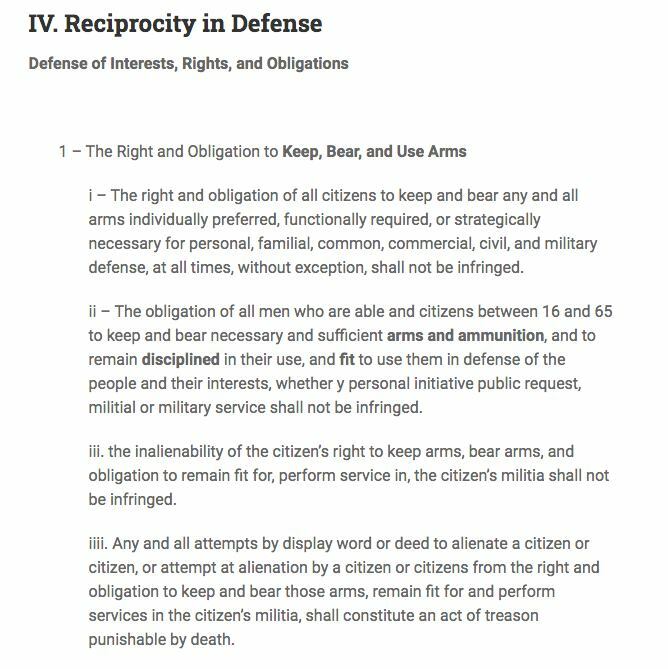
Source date (UTC): 2020-07-26 23:17:18 UTC
Original post: https://twitter.com/i/web/status/1287527442341662722
THE RIGHT TO KEEP AND BEAR ARMS – CLARITY IS CLARITY https://t.co/EC97GoGuBZ
Source date (UTC): 2020-07-26 23:17:18 UTC
Original post: https://twitter.com/i/web/status/1287527442341662722
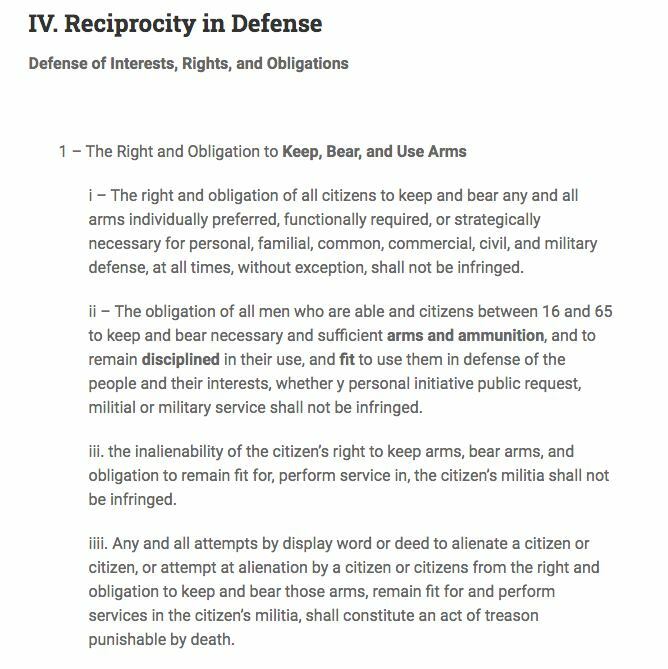
THE RIGHT TO KEEP AND BEAR ARMS – CLARITY IS CLARITY https://t.co/EC97GoGuBZ
The structure of all Rights will be the same. Organized by Display, Word, and Deed. The Right to [], the obligation to[], And any attempt at alienation by or of [] is punishable by []. Rights under war, rights under peace, rights under windfalls.
Once you begin with citizens who defend the state (assets) own the state (assets), and hire (elect) governments manage the assets, and courts to resolve differences by self-determination, individual sovereignty, and reciprocity by display word and deed, where specific rights and obligations are articulated by display word and deed, and adapted under conditions of war, peace and windfall – and we pay special attention to the prohibition to extending fraud to false, unwarrantable, promise of violation of physical, natural and evolutionary laws, then IT GETS VERY HARD TO WEASEL WITH THE LAW.
We are stuck with making contracts of reciprocity, because ‘majority rule’ doesn’t matter any longer. Positive legislation doesn’t exist.
Source date (UTC): 2020-07-26 20:58:00 UTC
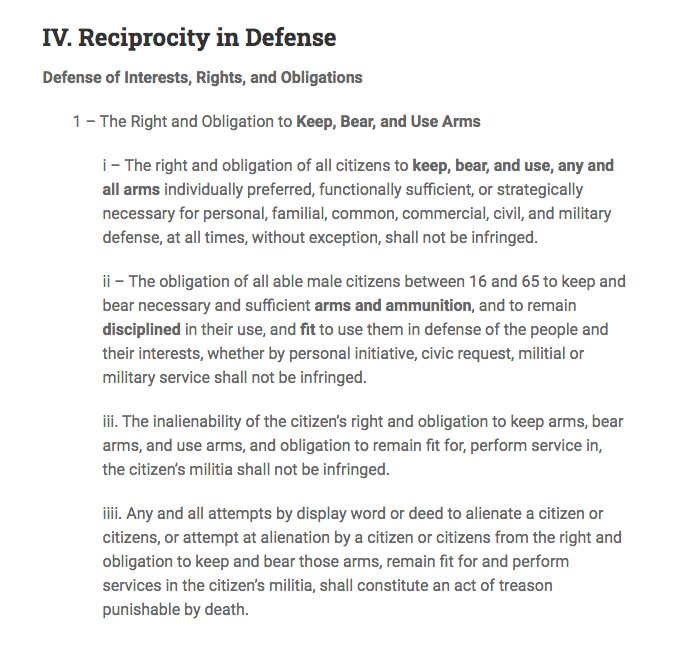
photos_and_videos/TimelinePhotos_kg5QueHwVw/116264527_338764494188377_4949175098748388077_n_338764490855044.jpg THE RIGHT TO KEEP AND BEAR ARMS
Well, you know, I don’t think it gets much clearer than this.
lol ;)THE RIGHT TO KEEP AND BEAR ARMS
Well, you know, I don’t think it gets much clearer than this.
lol 😉
Source date (UTC): 2020-07-26 19:16:00 UTC
No the Constitution and Anglo Law Are Not Philosophical – They’re Empirical https://propertarianinstitute.com/2020/07/25/no-the-constitution-and-anglo-law-are-not-philosophical-theyre-empirical/
Source date (UTC): 2020-07-25 18:14:03 UTC
Original post: https://twitter.com/i/web/status/1287088741924900864
No the Constitution and Anglo Law Are Not Philosophical – They’re Empirical https://t.co/aT2whlDcHc
—“What is the significance of a philosophical approach to the constitution?”—
1 – Contrary to popular belief, the constitution is not a philosophical document. 2 – Contrary to popular belief, the common law is not a philosophical discipline. 3 – The natural law of tort (demonstrated interests) is purely empirical (scientific). It’s not philosophical. Philosophers only sought to explain it. We discovered it by adjudicating differences in order to end conflicts and to ‘keep the peace’ meaning ‘cooperation between members of the community’ – in particular to prevent retaliation cycles (feuds). This is why the first laws do not state the law, they only standardize punishments – because the law existed, everyone knew the laws – they’re common sense. But the variation in punishments created retaliation cycles (feuds). A standard punishment demands the community enforce the punishment as ‘settlement of differences’ and ensure both parties against further feuds. 4 – This law is predicated on self-determination, individual sovereignty to achieve it, reciprocity to maintain it, jury and court to decide it, and markets in all aspects of life as a consequence of it. (This is what other civs can’t do – get past familism or tribalism) 5 – The constitution presumes the common law (not positive law), and articulates a market for the production of commons. It’s just another marketplace. 6 – The constitution contains processes for transactional modification of that marketplace. The bill of rights shouldn’t be necessary (and many of the founders didn’t think so) but their failure was to define the common law sufficiently that rights weren’t necessary. 7 – A constitution is a contract that produces a ledger for transactions under the rule of law of natural law of tort. it’s a recipe for running a legal accounting system, for the production of contracts under the natural law of tort. The ‘philosophical’ claims about the constitution are relatively recent attempts to undermine it and end rule of law. It’s the most boring empirical system known by man – which is why no other people in the world have constitutions – only ‘documents of nice words’.
—“What is the significance of a philosophical approach to the constitution?”—
1 – Contrary to popular belief, the constitution is not a philosophical document. 2 – Contrary to popular belief, the common law is not a philosophical discipline. 3 – The natural law of tort (demonstrated interests) is purely empirical (scientific). It’s not philosophical. Philosophers only sought to explain it. We discovered it by adjudicating differences in order to end conflicts and to ‘keep the peace’ meaning ‘cooperation between members of the community’ – in particular to prevent retaliation cycles (feuds). This is why the first laws do not state the law, they only standardize punishments – because the law existed, everyone knew the laws – they’re common sense. But the variation in punishments created retaliation cycles (feuds). A standard punishment demands the community enforce the punishment as ‘settlement of differences’ and ensure both parties against further feuds. 4 – This law is predicated on self-determination, individual sovereignty to achieve it, reciprocity to maintain it, jury and court to decide it, and markets in all aspects of life as a consequence of it. (This is what other civs can’t do – get past familism or tribalism) 5 – The constitution presumes the common law (not positive law), and articulates a market for the production of commons. It’s just another marketplace. 6 – The constitution contains processes for transactional modification of that marketplace. The bill of rights shouldn’t be necessary (and many of the founders didn’t think so) but their failure was to define the common law sufficiently that rights weren’t necessary. 7 – A constitution is a contract that produces a ledger for transactions under the rule of law of natural law of tort. it’s a recipe for running a legal accounting system, for the production of contracts under the natural law of tort. The ‘philosophical’ claims about the constitution are relatively recent attempts to undermine it and end rule of law. It’s the most boring empirical system known by man – which is why no other people in the world have constitutions – only ‘documents of nice words’.
That’s the priority because that’s the dependency. Man up and fight for law so that you have freedom to choose faith.
That’s the priority because that’s the dependency. Man up and fight for law so that you have freedom to choose faith.