Category: Civilization, History, and Anthropology

  • Truth in Ethnocentrism

    Feb 24, 2020, 10:43 AM

    —“Baiting people into the same Ethno-supremacist bullshit that is the main characteristic of modern day Israel? … Pilpul.. … Still some sharpening to do here.”—Noel Fritsch

    Are you saying that small, homogenous, low power distance, polities under rule of law, and their naturally limited capacity for fiat currency inflation don’t demonstrate the optimum mixed economies for both trade and redistribution? Are you saying ethnocentrism isn’t the optimum group strategy? Are you saying that ethno-supremacism isn’t a necessary property of ethnocentrism? Are you saying that europeans are not demonstrably superior genetically, culturally, scientifically, medically, technologically, institutionally, civilizationally to all other civilizations in the ancient and modern worlds? Are you the one engaging in deceit? I don’t use pilpul – it requires internal inconsistency and P-logic prevents internal inconsistency.

  • The Revolution in The Ancient World

    Feb 24, 2020, 11:37 AM The revolution in the ancient world was democritus’ atomism, socratic skepticism (failure), platonic idealism(failure), and the success of aristotelian reason, empiricism, proto-science, stoic and epicurean replacement of conflationary religion, and roman law and administration, creating markets for all peoples – but the semites (the equivalent of ghettos) couldn’t grasp that ‘uncontrolled vision’ and sought to restore controlled (feminine) monopoly and conflation using female methods of deceit, and the female method of undermining from within. The revolution in the modern world starts with aesthetics in italy and makes its way into the legal minds who apply it to science producing the anglo revolution (athens). The germans(spartans) reacted by doubling down on it and becoming the worlds best materialists, and the americans inherited both civilizations for a time when the french and russians instigated the third war of german containment. Edit

  • The Revolution in The Ancient World

    Feb 24, 2020, 11:37 AM The revolution in the ancient world was democritus’ atomism, socratic skepticism (failure), platonic idealism(failure), and the success of aristotelian reason, empiricism, proto-science, stoic and epicurean replacement of conflationary religion, and roman law and administration, creating markets for all peoples – but the semites (the equivalent of ghettos) couldn’t grasp that ‘uncontrolled vision’ and sought to restore controlled (feminine) monopoly and conflation using female methods of deceit, and the female method of undermining from within. The revolution in the modern world starts with aesthetics in italy and makes its way into the legal minds who apply it to science producing the anglo revolution (athens). The germans(spartans) reacted by doubling down on it and becoming the worlds best materialists, and the americans inherited both civilizations for a time when the french and russians instigated the third war of german containment. Edit

  • Weak Minds Need Certainty

    Feb 24, 2020, 12:17 PM Where are aristotle, plato, socrates, zeno, epicurus, roman law, greek mathematics, and the christian destruction of the ancient world in your narrative? The talmud and the bible an koran are not an enlightenment but simply the marxism-socialism- postmodernism-feminism of the ancient world: the coutner-revolution against reason. The revolution in the ancient world was democritus’ atomism, socratic skepticism (failure), platonic idealism(failure), and the success of aristotelian reason, empiricism, proto-science, stoic and epicurean replacement of conflationary religion, and roman law and administration, creating markets for all peoples – but the semites (the equivalent of ghettos) couldn’t grasp that ‘uncontrolled vision’ and sought to restore controlled (feminine) monopoly and conflation using female methods of deceit, and the female method of undermining from within. Weak minds need certainty. Mindfulness doesn’t.

  • Weak Minds Need Certainty

    Feb 24, 2020, 12:17 PM Where are aristotle, plato, socrates, zeno, epicurus, roman law, greek mathematics, and the christian destruction of the ancient world in your narrative? The talmud and the bible an koran are not an enlightenment but simply the marxism-socialism- postmodernism-feminism of the ancient world: the coutner-revolution against reason. The revolution in the ancient world was democritus’ atomism, socratic skepticism (failure), platonic idealism(failure), and the success of aristotelian reason, empiricism, proto-science, stoic and epicurean replacement of conflationary religion, and roman law and administration, creating markets for all peoples – but the semites (the equivalent of ghettos) couldn’t grasp that ‘uncontrolled vision’ and sought to restore controlled (feminine) monopoly and conflation using female methods of deceit, and the female method of undermining from within. Weak minds need certainty. Mindfulness doesn’t.

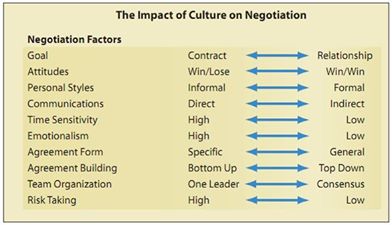
  • Cultural Differences in Negotiation Given Differences in Time Frame, Risk, Trust and Dominance Hierarchy

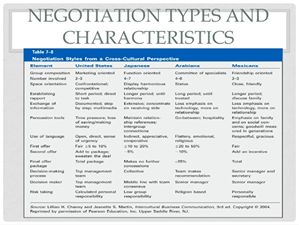
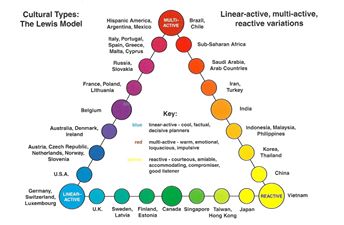
    I follow Cheney (specialists) for international negotiation, and then keep up with the research, but nothing has changed since I first started in the80’s other than indian and chinese awareness of american markets and styles. IMPORTANT: The west uses the OODA loop. that is our group strategy. Always has been. Initiative and manuever and speed. This is completely antithetical to every other civilization. Why? Because it requires a lot of trust, trustworthiness, weakens the hierarchy and localizes credit for success in the individual. We are the only people who see time as a risk. It took me a long time to ‘develop patience’ in negotiations. It took me longer to learn to build relationships rather than incentives – because it’s irrational. (to me) lol.

  • Going Into Depth on Trifunctionalism vs Competing Civilizations

    Mar 31, 2020, 1:50 PM propertarianism.com MY WORK ON CHRISTIANITY I work under the principle that the laws of nature, the natural law of man, and the evolutionary necessity of transcendence are the same whether we state them in Theological, Philosophical, and Scientific language. So whether you intuit, think, and speak in the Christian, Deist, or Naturalist language, and whether you choose to adhere to physical laws, the natural law of man, and the necessity of evolutionary laws out of faith, reason, or science, is irrelevant to the individual or to the polity, or to mankind unless you selfishly demand the rest of the world conform to your way of thinking, speaking. On the other hand, if you do not live in accordance with the physical, natural, and evolutionary then you work against yourself, your polity, your people, and mankind – and when you do so, you work against the Christian God, the deist god, or the condition of our people past present and future. In my work, to defend against the enemies of physical, natural, and evolutionary laws, I must put these laws in a constitution in the language of the law, and science is the language of the law. Because we need people to think across the spectrum of intuitive, rational, and empirical thought so that we can solve intuitive, rational, and empirical questions, for intuitive, rational, and empirical minds. And we cannot demand people intuit, think, and speak in exclusively intuitive, rational, or empirical language. All we can do is demand that people behave according to physical, natural, and evolutionary laws. We cannot force people to have faith, reason, or the burden of the sciences, nor to abandon faith, reason, and the utility of the sciences. We can only write the law such that those who ACT contrary to the laws of nature, of man, and of evolutionary transcendence, can be prosecuted by the law, in the language of the law, if they transgress. Because the law consists only of the means of resolving disputes over action – not of intuition, feeling, or thought. REASON FOR CHRISTIAN AGITATION Over the past few years I have worked very hard on comparative religion, and have come to understand why we desire it and how it fulfills those desires by a spectrum of means from the rational to the emotional. I was trying to solve a number of problems:

    1. The means by which judaism, christianity, and islam are taught and argued are the same means by which marxism, socialism, postmodernism, feminism, and the denial of the nature of mankind are taught and argued. So I was searching for a legal means to prevent the use of this method of teaching and arguing while preserving the good of christianity. This resulted in the same answer Thomas Jefferson came to when he compiled The Jefferson Bible. This Jefferson bible presents us with a Jesus who is ‘pure’ and free of dogma. And I discovered that while this is possible it is not tolerable. And because it is not tolerable it is impossible.

    I care only about the generations of our european religions. Including prehistoric natural, ancient heroic, and medieval Christian. And I care about preserving all three generations of them because of one of our unspoken secrets: european trifunctionalism. When christians use this method of teaching and arguing against me or my work it makes me very angry – because I understand that this method is the means by which our civilization has been destroyed by the postwar jewish movement against western civlization. And I this threat is very real, very serious, and we are almost lost. So between my investigation into how to eliminate the abrahamic method of teaching and arguing, and between my frustration with the frequent use of this method by christians who were agitated by my investigation, I created a great deal of friction between the faithful, philosophical, and empirical Christians.

    1. I want to outlaw false religions that seek to destroy christianity, our philosophy, our science, our law, our civilization and our people. In particular, neigher Judaism nor Islam are religions – they are means of warfare from within masquerading as a religion. Early Christianity was likewise a means of warfare from within – we merley managed to ‘civilize it’ over the centuries after it was introduced to europe.
    2. I want to restore the religion to its political competition to the state, and restore its responsibility for birth, age of maturity, marriage, family and – at least – early education, and death. The state has proven too fashionable and religion’s value is in defense against the fashions and folly of the age.

    These three challenges are the reason for the conflict we have created between those of us who practice empirical christianity in the natural law, and those that practice spiritual and theological christianity. I advocate that we speak faith in matters of faith – the spirit, and law in matters of law – the material. And that if we attempt to cross those lines we must engage in deceit. And deceit is neither moral under the natural law, or moral under christian ethics. So we must continue our prehistoric practice of Trifunctionalism, which is the continuous balance of power between the Military, Law, and Faith. And in short, deliver unto God and Caesar each as his due. There is no place for theology in court. There is no place for court in faith. ABOUT EUROPEAN TRIFUNCTIONALISM
  • Going Into Depth on Trifunctionalism vs Competing Civilizations

    Mar 31, 2020, 1:50 PM propertarianism.com MY WORK ON CHRISTIANITY I work under the principle that the laws of nature, the natural law of man, and the evolutionary necessity of transcendence are the same whether we state them in Theological, Philosophical, and Scientific language. So whether you intuit, think, and speak in the Christian, Deist, or Naturalist language, and whether you choose to adhere to physical laws, the natural law of man, and the necessity of evolutionary laws out of faith, reason, or science, is irrelevant to the individual or to the polity, or to mankind unless you selfishly demand the rest of the world conform to your way of thinking, speaking. On the other hand, if you do not live in accordance with the physical, natural, and evolutionary then you work against yourself, your polity, your people, and mankind – and when you do so, you work against the Christian God, the deist god, or the condition of our people past present and future. In my work, to defend against the enemies of physical, natural, and evolutionary laws, I must put these laws in a constitution in the language of the law, and science is the language of the law. Because we need people to think across the spectrum of intuitive, rational, and empirical thought so that we can solve intuitive, rational, and empirical questions, for intuitive, rational, and empirical minds. And we cannot demand people intuit, think, and speak in exclusively intuitive, rational, or empirical language. All we can do is demand that people behave according to physical, natural, and evolutionary laws. We cannot force people to have faith, reason, or the burden of the sciences, nor to abandon faith, reason, and the utility of the sciences. We can only write the law such that those who ACT contrary to the laws of nature, of man, and of evolutionary transcendence, can be prosecuted by the law, in the language of the law, if they transgress. Because the law consists only of the means of resolving disputes over action – not of intuition, feeling, or thought. REASON FOR CHRISTIAN AGITATION Over the past few years I have worked very hard on comparative religion, and have come to understand why we desire it and how it fulfills those desires by a spectrum of means from the rational to the emotional. I was trying to solve a number of problems:

    1. The means by which judaism, christianity, and islam are taught and argued are the same means by which marxism, socialism, postmodernism, feminism, and the denial of the nature of mankind are taught and argued. So I was searching for a legal means to prevent the use of this method of teaching and arguing while preserving the good of christianity. This resulted in the same answer Thomas Jefferson came to when he compiled The Jefferson Bible. This Jefferson bible presents us with a Jesus who is ‘pure’ and free of dogma. And I discovered that while this is possible it is not tolerable. And because it is not tolerable it is impossible.

    I care only about the generations of our european religions. Including prehistoric natural, ancient heroic, and medieval Christian. And I care about preserving all three generations of them because of one of our unspoken secrets: european trifunctionalism. When christians use this method of teaching and arguing against me or my work it makes me very angry – because I understand that this method is the means by which our civilization has been destroyed by the postwar jewish movement against western civlization. And I this threat is very real, very serious, and we are almost lost. So between my investigation into how to eliminate the abrahamic method of teaching and arguing, and between my frustration with the frequent use of this method by christians who were agitated by my investigation, I created a great deal of friction between the faithful, philosophical, and empirical Christians.

    1. I want to outlaw false religions that seek to destroy christianity, our philosophy, our science, our law, our civilization and our people. In particular, neigher Judaism nor Islam are religions – they are means of warfare from within masquerading as a religion. Early Christianity was likewise a means of warfare from within – we merley managed to ‘civilize it’ over the centuries after it was introduced to europe.
    2. I want to restore the religion to its political competition to the state, and restore its responsibility for birth, age of maturity, marriage, family and – at least – early education, and death. The state has proven too fashionable and religion’s value is in defense against the fashions and folly of the age.

    These three challenges are the reason for the conflict we have created between those of us who practice empirical christianity in the natural law, and those that practice spiritual and theological christianity. I advocate that we speak faith in matters of faith – the spirit, and law in matters of law – the material. And that if we attempt to cross those lines we must engage in deceit. And deceit is neither moral under the natural law, or moral under christian ethics. So we must continue our prehistoric practice of Trifunctionalism, which is the continuous balance of power between the Military, Law, and Faith. And in short, deliver unto God and Caesar each as his due. There is no place for theology in court. There is no place for court in faith. ABOUT EUROPEAN TRIFUNCTIONALISM
  • Our Trifunctionalism

    Mar 31, 2020, 2:38 PM by Daniel (or Dan) McCoy Georges Dumézil was a twentieth-century comparative mythologist like Joseph Campbell or Carl Jung. Dumézil’s primary contribution to Indo-European studies was his theory of “trifunctionalism,” the idea that a particular arrangement of three societal “functions” lay at the heart of Indo-European life and thought. This arrangement manifested itself most straightforwardly in the social hierarchy, which consisted of three classes that corresponded to the three functions. However, as the word “function” implies, the three classes were distinguished not just according to differing quantitative amounts of power, but also qualitatively in terms of the “functions” that each of the three groups served within society. The Indo-Europeans’ gods, too, were organized into this trifunctional structure. What, then, are these three functions? The first function is that of sovereignty, and corresponds to the highest social class – that of rulers, priests, and legal specialists. This function is divided into two aspects, one “magical” and the other “juridical.”[2] The former “consists of the mysterious administration, the ‘magic’ of the universe, the general ordering of the cosmos. This is a ‘disquieting’ aspect, terrifying from certain perspectives. The other aspect is more reassuring, more oriented to the human world. It is the ‘juridical’ part of the sovereign function.”[3] The Indo-Europeans’ gods of the first function tend to include one god who falls into each of these two categories. One is a “magician-creator” who rules “by virtue of [his] creative violence,” while the other is a “jurist-organizer” who rules “by virtue of [his] organizing wisdom.”[4] The two types of sovereign gods form an “antithesis,” but complement one another rather than being in conflict.[5] The second function “carries the trait of physical force in all its manifestations, from energy, to heroism, to courage.” Its “insatiable champions… vanquish demons and save the universe.”[6] In human society, the second function is the class of warriors, who carry out the orders of the first class and fight on behalf of their people. The gods of the second function are warriors whose intellectual abilities are inferior to those of the first, but who possess the necessary strength to actually put the decisions of the intellectual gods into action. The third function “is the generative function. It is the domain of the healers, of youth, of luxury, of fecundity, of prosperity; also the domain of the healing gods, the patron deities of goods, of opulence – and also of the ‘people,’ as opposed to the small number of warriors and kings.”[7] The third function’s human social class consists of the farmers, herders, and other “common people” engaged in productive physical labor, who provide the goods necessary for the sustenance of themselves and of the rest of society. Its gods are those who preside over fertility, abundance, and peace. They tend to be simple but wealthy and fun-loving. For Dumézil, “The Indo-European vision of a smoothly functioning world required an ‘organization’ in which the representatives of the first function commanded, the second fought for and defended the community, and the third (the greatest number of them) worked and were productive. In their eyes, it was in this hierarchy that one found the harmony necessary to the proper functioning of the cosmos, as well as that of the society. It’s an Indo-European version of the ‘social contract.’”[8] Although a similar social organization can be found in various non-Indo-European societies, what makes the Indo-European concept distinct is just how foundational and pervasive it was in their worldview, theology, cosmology, mythology, and political philosophy. It touched every aspect of their way of life and their outlook on life.[9]

  • Our Trifunctionalism

    Mar 31, 2020, 2:38 PM by Daniel (or Dan) McCoy Georges Dumézil was a twentieth-century comparative mythologist like Joseph Campbell or Carl Jung. Dumézil’s primary contribution to Indo-European studies was his theory of “trifunctionalism,” the idea that a particular arrangement of three societal “functions” lay at the heart of Indo-European life and thought. This arrangement manifested itself most straightforwardly in the social hierarchy, which consisted of three classes that corresponded to the three functions. However, as the word “function” implies, the three classes were distinguished not just according to differing quantitative amounts of power, but also qualitatively in terms of the “functions” that each of the three groups served within society. The Indo-Europeans’ gods, too, were organized into this trifunctional structure. What, then, are these three functions? The first function is that of sovereignty, and corresponds to the highest social class – that of rulers, priests, and legal specialists. This function is divided into two aspects, one “magical” and the other “juridical.”[2] The former “consists of the mysterious administration, the ‘magic’ of the universe, the general ordering of the cosmos. This is a ‘disquieting’ aspect, terrifying from certain perspectives. The other aspect is more reassuring, more oriented to the human world. It is the ‘juridical’ part of the sovereign function.”[3] The Indo-Europeans’ gods of the first function tend to include one god who falls into each of these two categories. One is a “magician-creator” who rules “by virtue of [his] creative violence,” while the other is a “jurist-organizer” who rules “by virtue of [his] organizing wisdom.”[4] The two types of sovereign gods form an “antithesis,” but complement one another rather than being in conflict.[5] The second function “carries the trait of physical force in all its manifestations, from energy, to heroism, to courage.” Its “insatiable champions… vanquish demons and save the universe.”[6] In human society, the second function is the class of warriors, who carry out the orders of the first class and fight on behalf of their people. The gods of the second function are warriors whose intellectual abilities are inferior to those of the first, but who possess the necessary strength to actually put the decisions of the intellectual gods into action. The third function “is the generative function. It is the domain of the healers, of youth, of luxury, of fecundity, of prosperity; also the domain of the healing gods, the patron deities of goods, of opulence – and also of the ‘people,’ as opposed to the small number of warriors and kings.”[7] The third function’s human social class consists of the farmers, herders, and other “common people” engaged in productive physical labor, who provide the goods necessary for the sustenance of themselves and of the rest of society. Its gods are those who preside over fertility, abundance, and peace. They tend to be simple but wealthy and fun-loving. For Dumézil, “The Indo-European vision of a smoothly functioning world required an ‘organization’ in which the representatives of the first function commanded, the second fought for and defended the community, and the third (the greatest number of them) worked and were productive. In their eyes, it was in this hierarchy that one found the harmony necessary to the proper functioning of the cosmos, as well as that of the society. It’s an Indo-European version of the ‘social contract.’”[8] Although a similar social organization can be found in various non-Indo-European societies, what makes the Indo-European concept distinct is just how foundational and pervasive it was in their worldview, theology, cosmology, mythology, and political philosophy. It touched every aspect of their way of life and their outlook on life.[9]