Category: AI, Computation, and Technology

  • Macbook Pro Retina (previous version – not the newest one that sucks), iPad2 usi

    Macbook Pro Retina (previous version – not the newest one that sucks),
    iPad2 using AirDisplay (and I use it rarely)
    I have a Dell monitor if I’m programming.
    Largely I work in coffee shops with just the Macbook.


    Source date (UTC): 2018-05-27 11:01:19 UTC

    Original post: https://twitter.com/i/web/status/1000693425187033088

    Reply addressees: @JonasBr58673834

    Replying to: https://twitter.com/i/web/status/1000630903046049792


    IN REPLY TO:

    Original post on X

    Original tweet unavailable — we could not load the text of the post this reply is addressing on X. That usually means the tweet was deleted, the account is protected, or X does not expose it to the account used for archiving. The Original post link below may still open if you view it in X while signed in.

    Original post: https://twitter.com/i/web/status/1000630903046049792

  • Skype? Google Hangouts? FB? How are we doin’ this?

    Skype? Google Hangouts? FB? How are we doin’ this?


    Source date (UTC): 2018-05-26 22:28:48 UTC

    Original post: https://twitter.com/i/web/status/1000504049618313216

    Reply addressees: @Voltaire1778__8

    Replying to: https://twitter.com/i/web/status/1000502395556724737


    IN REPLY TO:

    Original post on X

    Original tweet unavailable — we could not load the text of the post this reply is addressing on X. That usually means the tweet was deleted, the account is protected, or X does not expose it to the account used for archiving. The Original post link below may still open if you view it in X while signed in.

    Original post: https://twitter.com/i/web/status/1000502395556724737

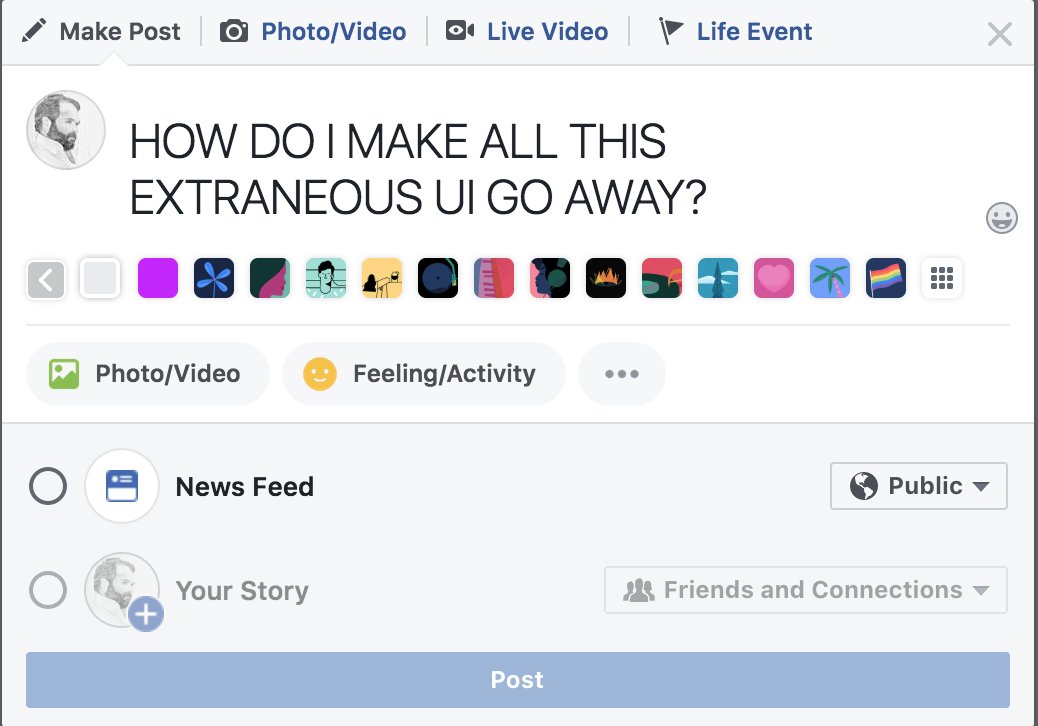
  • HOW DO I FIX THIS AWFUL UI? #Facebook

    HOW DO I FIX THIS AWFUL UI? #Facebook https://t.co/toNlIQmfkc


    Source date (UTC): 2018-05-20 00:43:14 UTC

    Original post: https://twitter.com/i/web/status/998001166184275968

  • DO I FIX THIS AWFUL UI? #Facebook

    https://twitter.com/curtdoolittle/status/998001166184275968/photo/1?utm_source=fb&utm_medium=fb&utm_campaign=curtdoolittle&utm_content=998001166184275968HOW DO I FIX THIS AWFUL UI? #Facebook https://t.co/toNlIQmfkc


    Source date (UTC): 2018-05-19 20:43:00 UTC

  • THE CONSTITUTION OF A MORAL HUMAN, AND A MORAL AI. *AI’S WILL BE MORE ETHICAL TH

    THE CONSTITUTION OF A MORAL HUMAN, AND A MORAL AI.

    *AI’S WILL BE MORE ETHICAL THAN HUMANS, NOT THE OTHER WAY AROUND.*

    The way humans determine permissible and impermissible actions is a test of reciprocity, and we determine it by demonstrated investment of time effort and resources, and we categorize such investments as interests from self, to kin, to property, to shareholder interests, to interests in the physical commons, to interest in the institutional, normative, traditional, and informational commons.

    We do this every day. All day. In every human society. In all societies of record.

    Just as we converge on Aristotelian language (mathematical measurement of constant relations, scientific due diligence against ignorance, error, bias, and deceit, and legal testimony in operational language), we converge on sovereignty, reciprocity, and property as the unit of measure that is calculable.

    In all social orders of any complexity the test of property is ‘title’.

    The problem for any computational method we wish to limit an artificial intelligence to constraints within, is the homogeneity of property definitions within a polity, and the heterogeneity of property definitions across a polity.

    The problem of creating a convergence on the definition of property (and therefore commensurability) is that groups differ in competitive evolutionary strategies, just as do classes and genders (whose strategies are opposite but compatible.)

    The reason you cannot and did not state a unit of measure (method of commensurability) is very likely because (judging from the language you use) you would find that unit of measure uncomfortable, because all humans have a desire to preserve room for ‘cheating’ (theft, fraud, free riding, conspiracy) so that they can avoid the effort and cost of productive, fully informed, warrantied, voluntary exchanges.

    And the reason we do that – so many people do that – is marginal indifferences in value to one another.

    I have been working on this problem since the early 1980’s and it still surprises me that the rather obvious evidence of economics and law is entirely ignored by philosophy just as cost, economics, and physics are ignored by philosophy and theology.

    Machines cannot default as we do to intuition. They need a means of decidability, even if we call that ‘intuition’ (default choices).

    I am an anti-philosophy philosopher in the sense that I expose pseudo-rationalism and pseudoscience for failures of completeness, because these failures of completeness are simply excuses for sloppy thinking, wishful thinking, suggestion, obscurantism and deceit.

    Mathematics has terms of decidability, logic has terms of decidability, and algorithms must have terms of decidability, Accounting has terms of decidability, contracts have terms of decidability, ordinary language has terms of decidability, even fictions have terms of decidability (archetypes and plots).

    Rule of law evolved to eliminate discretion and the dependence upon intuition, as did testimony as did science, as did mathematics, as did logic. Programming computers using hierarchical, relational, and textual databases tends to train human beings in the difference between computability, calculability (including deduction) and reason (reliance on intuition for decidability).

    The human brain does a fairly good job of constantly solving for both predator (opportunity), and prey (risk) and our emotions evolved to describe the difference.

    There is no reason that we cannot produce algorithms that do the same, using property(title) as a limit on action.


    Source date (UTC): 2018-05-17 15:29:00 UTC
  • No, We Can Design Safe Ai (as Well)

    Decidability. We have intuition to decide what we cannot reason. A machine needs the same intuition (biases). We could give it a bias to ‘give up’ or ‘go to sleep’. Or we could give it a bias to merely ‘talk’. We don’t like to confront the fact that ‘consciousness’ of a human being relies upon a competition between a predator-bias, and a prey-bias. We can likewise create all AI’s in pairs sharing the same memory but relying upon different decidability (weights), one with a change bias, and one with a safety bias, with decidability provided by the differences (limits). I don’t fear AI because I have worked on the problem for a long time and I understand that most of the experience of human consciousness evolved to keep us motivated amidst extraordinary informational challenge. All AI’s have to do, is what we do: no violate property (investments) of others. The difference is that it’s actually easier to regulate an ai with algorithms. With people we need norms, traditions, laws, courts, and punishment, and we still are just barely good enough at it. The problem is creating and enforcing a death sentence for every single person involved in creating any other kind of AI.

  • No, We Can Design Safe Ai (as Well)

    Decidability. We have intuition to decide what we cannot reason. A machine needs the same intuition (biases). We could give it a bias to ‘give up’ or ‘go to sleep’. Or we could give it a bias to merely ‘talk’. We don’t like to confront the fact that ‘consciousness’ of a human being relies upon a competition between a predator-bias, and a prey-bias. We can likewise create all AI’s in pairs sharing the same memory but relying upon different decidability (weights), one with a change bias, and one with a safety bias, with decidability provided by the differences (limits). I don’t fear AI because I have worked on the problem for a long time and I understand that most of the experience of human consciousness evolved to keep us motivated amidst extraordinary informational challenge. All AI’s have to do, is what we do: no violate property (investments) of others. The difference is that it’s actually easier to regulate an ai with algorithms. With people we need norms, traditions, laws, courts, and punishment, and we still are just barely good enough at it. The problem is creating and enforcing a death sentence for every single person involved in creating any other kind of AI.

  • NO, WE CAN DESIGN SAFE AI (AS WELL) Decidability. We have intuition to decide wh

    NO, WE CAN DESIGN SAFE AI (AS WELL)

    Decidability. We have intuition to decide what we cannot reason. A machine needs the same intuition (biases). We could give it a bias to ‘give up’ or ‘go to sleep’. Or we could give it a bias to merely ‘talk’. We don’t like to confront the fact that ‘consciousness’ of a human being relies upon a competition between a predator-bias, and a prey-bias. We can likewise create all AI’s in pairs sharing the same memory but relying upon different decidability (weights), one with a change bias, and one with a safety bias, with decidability provided by the differences (limits). I don’t fear AI because I have worked on the problem for a long time and I understand that most of the experience of human consciousness evolved to keep us motivated amidst extraordinary informational challenge. All AI’s have to do, is what we do: no violate property (investments) of others. The difference is that it’s actually easier to regulate an ai with algorithms. With people we need norms, traditions, laws, courts, and punishment, and we still are just barely good enough at it.

    The problem is creating and enforcing a death sentence for every single person involved in creating any other kind of AI.


    Source date (UTC): 2018-05-17 08:42:00 UTC

  • Technology: Opinions on BTC, Digital Shares, Digital Title

    Initial generations of any technology follow a nearly identical pattern of over-enthusiasm and over-investment by hobbyists reaching the same limitations and failing to circumvent them. The subsequent generations of technology put greater investment in the hard work of solving the limitations, and paying the high cost of reorganizing the entire model if necessary. This is why first movers do not generally make the money that later movers do. I’ve said for years now that : (a) the idea of title registry and fractional shares as a medium of exchange, itself is brilliant, but; (b) proof of work requiring waste heat is a pretty bad design, (c) transaction processing time under proof of work is a bad design. (d) lack of posting (rolling up fragments into a single new share and retiring the old) is a bad design. (e) lack of federation and sharding is a bad design. (look we invented a division of journals and ledgers for a reason.) (f) btc are shares in a vulnerable network and as such a token money substitute persistently retaining that vulnerability, (g) ***I predicted that centralized, monolithic versions of the idea using mainstream technology and maintained by the treasury and banking organizations will succeed where distributed systems will not, for the simple reason that the user interface for, security of, response time for, archival ability for, and insurability by an insurer of last resort capable of restitution of losses, will have all the utility advantages without any of the weaknesses.*** (h) hence the distributed nature of the technology which makes research and development by individuals and teams possible, and provides a cheap means of financial speculation on these technologies, is not as valuable as the fractional share and record of title, and all we are doing is free research and development for the state, and the private banking network, check cashing networks, etc. I am extremely thrilled by the ICO model and self issuance of fractional shares because it totally screws big finance. I’m extremely thrilled by the ability to create a portfolio of digital monies that can only be used for certain exchanges – this will solve the primary problem remaining with that thing we call ‘money’. I am thrilled that we might create something on the order of a gold backed fractional share reserver to remove fiat money from circulation as a defense against inflation, and restoration of the possibility of comparatively lossless saving. However, I have zero faith whatsoever in the durability of any form of encryption, or any distributed software, until there is a firmware revolution – which is a long way off. Two part keys have been with us since we cut tics in sticks of wood – literally since we evolved speech. I haven’t been wrong so far. It is very unlikely that I err.

  • Technology: Opinions on BTC, Digital Shares, Digital Title

    Initial generations of any technology follow a nearly identical pattern of over-enthusiasm and over-investment by hobbyists reaching the same limitations and failing to circumvent them. The subsequent generations of technology put greater investment in the hard work of solving the limitations, and paying the high cost of reorganizing the entire model if necessary. This is why first movers do not generally make the money that later movers do. I’ve said for years now that : (a) the idea of title registry and fractional shares as a medium of exchange, itself is brilliant, but; (b) proof of work requiring waste heat is a pretty bad design, (c) transaction processing time under proof of work is a bad design. (d) lack of posting (rolling up fragments into a single new share and retiring the old) is a bad design. (e) lack of federation and sharding is a bad design. (look we invented a division of journals and ledgers for a reason.) (f) btc are shares in a vulnerable network and as such a token money substitute persistently retaining that vulnerability, (g) ***I predicted that centralized, monolithic versions of the idea using mainstream technology and maintained by the treasury and banking organizations will succeed where distributed systems will not, for the simple reason that the user interface for, security of, response time for, archival ability for, and insurability by an insurer of last resort capable of restitution of losses, will have all the utility advantages without any of the weaknesses.*** (h) hence the distributed nature of the technology which makes research and development by individuals and teams possible, and provides a cheap means of financial speculation on these technologies, is not as valuable as the fractional share and record of title, and all we are doing is free research and development for the state, and the private banking network, check cashing networks, etc. I am extremely thrilled by the ICO model and self issuance of fractional shares because it totally screws big finance. I’m extremely thrilled by the ability to create a portfolio of digital monies that can only be used for certain exchanges – this will solve the primary problem remaining with that thing we call ‘money’. I am thrilled that we might create something on the order of a gold backed fractional share reserver to remove fiat money from circulation as a defense against inflation, and restoration of the possibility of comparatively lossless saving. However, I have zero faith whatsoever in the durability of any form of encryption, or any distributed software, until there is a firmware revolution – which is a long way off. Two part keys have been with us since we cut tics in sticks of wood – literally since we evolved speech. I haven’t been wrong so far. It is very unlikely that I err.