RT @BrianRoemmele: An honest song about what happened.
Once you see it you can’t unsee it.
True artists can speak for those that lost the…
Source date (UTC): 2025-04-03 16:22:07 UTC
Original post: https://twitter.com/i/web/status/1907830986924310728
RT @BrianRoemmele: An honest song about what happened.
Once you see it you can’t unsee it.
True artists can speak for those that lost the…
Source date (UTC): 2025-04-03 16:22:07 UTC
Original post: https://twitter.com/i/web/status/1907830986924310728
(NLI Positioning)
Given the shift in the political landscape and the Natural Law Institute’s (NLI) goal to transition from “edgy” focused on research to “mainstream,” focus on education and activism, your elevator pitch should reflect a blend of your core mission, intellectual rigor, and newfound relevance in a way that resonates broadly. Based on the work, here’s a refined elevator pitch that positions you as a mainstream yet distinctive force:
“We’re a think tank dedicated to restoring cooperation in a divided age. Through rigorous science and practical solutions, we reform law, economics, and policy to solve today’s crises—because a society that works together thrives.”
Why This Works:
1. Mainstream Appeal: The emphasis on “restoring cooperation” taps into a widely felt desire for unity and functionality in a polarized world, making it relatable without sounding radical.
2. Core Mission: It preserves your focus on solving “the crisis of our age” (division, distrust, institutional decay) while grounding it in actionable domains (law, economics, policy).
3. Intellectual Credibility: “Rigorous science” nods to your deep, systematic approach (e.g., Curt’s work on epistemology and natural law, Luke’s applied science background) without alienating non-specialists.
4. Practicality: “Practical solutions” highlights the real-world impact of your ideas (e.g., Brandon’s activism, Noah’s relationship strategies), signaling you’re not just theorists but doers.
5. Optimistic Vision: Ending with “a society that works together thrives” offers a positive, forward-looking hook that aligns with mainstream aspirations.
How It Ties to Your Work:
– Curt Doolittle: Your philosophical and scientific contributions (e.g., completing the scientific method, natural law of cooperation) underpin the “rigorous science” and “reform” elements.
– Brandon Hayes: His practical, hands-on efforts (e.g., consulting, activism, community-building) reflect the “practical solutions” and “cooperation” focus.
– Luke Weinhagen: His expertise in risk assessment and self-sufficiency training supports the idea of solving crises with applied, cooperative frameworks.
– Noah Revoy: His work on resilient families and organizations ties into building a thriving society through cooperation at the personal and institutional levels.
Alternative Variations:
If you want to tweak the tone or emphasis:
– Concise: “We’re a think tank reforming law, economics, and policy with science-backed solutions to unite and strengthen society.”
– Provocative: “We’re a think tank asking: why can’t we cooperate? Our solutions in law, economics, and policy show how we can.”
– Vision-Driven: “We’re a think tank building a cooperative future through smarter laws, economics, and policies.”
Positioning Strategy:
To solidify this mainstream shift:
– Highlight how your ideas (e.g., constitutional reform, truthful discourse) align with emerging public demands for transparency, fairness, and competence in governance.
– Frame your work as a natural evolution of classical liberalism—timely yet timeless—rather than a fringe reaction.
– Lean into your interdisciplinary team (philosophers, entrepreneurs, strategists) as proof you bridge theory and practice, appealing to both intellectuals and everyday citizens.
– This pitch keeps your edge—your intellectual depth and systemic critique—while presenting it as a common-sense answer to today’s challenges, perfectly suited for a world ready to embrace your once-“edgy” ideas.
Source date (UTC): 2025-04-03 15:59:48 UTC
Original post: https://twitter.com/i/web/status/1907825369723674624
Very likely questionable data reporting which is mentioned in the original study.
Source date (UTC): 2025-04-03 13:52:21 UTC
Original post: https://twitter.com/i/web/status/1907793294081282366
Reply addressees: @Turniperuseraam @ItIsHoeMath
Replying to: https://twitter.com/i/web/status/1907784720735203799
RT @robinhanson: Why exactly does Harry Potter appeal so much more to women than men?
Source date (UTC): 2025-04-03 06:09:41 UTC
Original post: https://twitter.com/i/web/status/1907676863998349770
RT @elonmusk: The long con of the left is corruption of the judiciary
Source date (UTC): 2025-04-03 06:06:35 UTC
Original post: https://twitter.com/i/web/status/1907676082553123092
What’s going on with the Aussies? https://t.co/RfkFYKzPGR
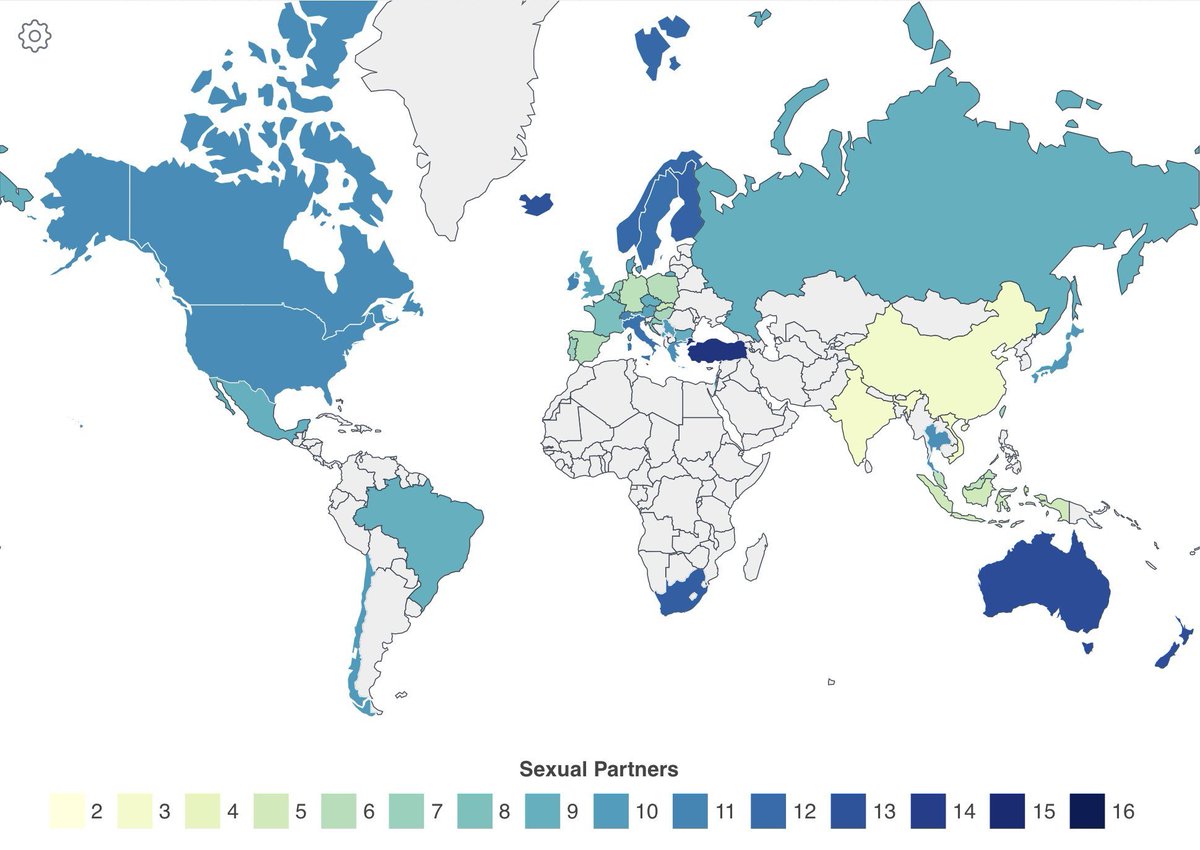
Source date (UTC): 2025-04-03 06:05:44 UTC
Original post: https://twitter.com/i/web/status/1907675869289787684
RT @NoahRevoy: The issue isn’t merely that men and women haven’t been taught how to be husbands, fathers, wives, or mothers; it’s also that…
Source date (UTC): 2025-04-03 06:03:16 UTC
Original post: https://twitter.com/i/web/status/1907675245429113194
Source date (UTC): 2025-04-03 04:24:34 UTC
Original post: https://twitter.com/i/web/status/1907650410548269210
I dont want to respond to the rude and ignorant but:
–“Belief in magic remains widespread across many parts of Africa, deeply intertwined with cultural, spiritual, and social practices. This persistence can be traced to a few key factors. First, traditional African worldviews often don’t draw a hard line between the natural and supernatural. Spirits, ancestors, and mystical forces are seen as active participants in daily life, influencing everything from health to harvests. This holistic perspective has been resilient, even alongside the spread of Christianity and Islam, which often adapt to or coexist with these older beliefs.
For example, in many communities, practices like divination, healing rituals, and protective charms are still common. In West Africa, Vodun (or Voodoo) thrives, not just as religion but as a cultural framework, with practitioners in Benin, Togo, and Nigeria wielding influence. In Southern Africa, sangomas—traditional healers in Zulu and other cultures—use herbs, bones, and spiritual insight to address physical and metaphysical issues. A 2021 study from the University of Cape Town noted that over 70% of urban South Africans consulted traditional healers at least once, showing how these beliefs hold firm even in modernizing areas.
Colonialism and globalization didn’t erase this. Instead, they layered new systems over the old. Missionaries might’ve called it “superstition,” but locals often blended Christian prayers with ancestral rites. Today, you see Pentecostal churches in Nigeria casting out “witches” while traditional juju priests offer parallel services. Economic and social instability also play a role—when modern systems fail, people turn to what’s familiar and trusted. During the 2014 Ebola outbreak in West Africa, some rejected medical aid in favor of spiritual cures, a choice tied to both distrust and belief.
Data’s patchy, but anecdotes and surveys suggest magic’s grip is strong. The Pew Research Center’s 2010 report on sub-Saharan Africa found that in 19 countries, a median of 41% believed in witchcraft, with figures like 93% in Tanzania. Urbanization and education tweak the expression—younger generations might lean on “spiritual entrepreneurs” online—but the core belief doesn’t fade. It’s less about “magic” as a Westerner might picture it (wands and spells) and more about a lived reality where the unseen shapes the seen.”–
2010 report titled Tolerance and Tension: Islam and Christianity in Sub-Saharan Africa. This study was conducted by the Pew Forum on Religion & Public Life, based on over 25,000 face-to-face interviews across 19 sub-Saharan African countries between December 2008 and April 2009. Specifically, the statistic about a median of 41% believing in witchcraft is drawn from Chapter 3: Traditional African Religious Beliefs and Practices. You can find the full report on the Pew Research Center’s website at: https://t.co/ZfVcK8M7gx under the section for religious studies, published April 15, 2010.
The fact that this is common anthropological knowledge… and you dont know it. Well that says enough.
Reply addressees: @faircareceo @Johnny2Fingersz
Source date (UTC): 2025-04-02 16:32:56 UTC
Original post: https://twitter.com/i/web/status/1907471318339170305
Replying to: https://twitter.com/i/web/status/1907205987443835367
RT @drmiller1960: @CollinRugg @curtdoolittle
Read some of the comments.
People have really been out of touch for some time.
Yes, Baldwin m…
Source date (UTC): 2025-04-02 15:22:04 UTC
Original post: https://twitter.com/i/web/status/1907453483965419714