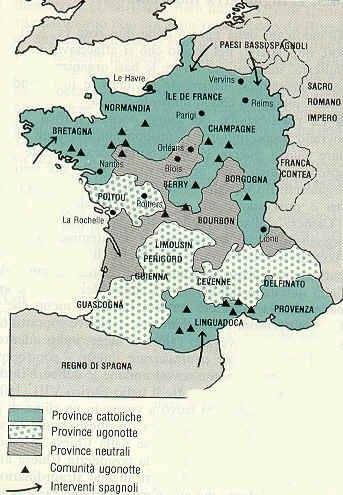
photos_and_videos/TimelinePhotos_SxeO6JU-xg/46201546_10156773963177264_7804203851711512576_n_10156773963172264.jpg photos_and_videos/TimelinePhotos_SxeO6JU-xg/46003571_10156773963232264_278249366077046784_n_10156773963227264.jpg photos_and_videos/TimelinePhotos_SxeO6JU-xg/46147274_10156773963307264_1440236687652290560_n_10156773963302264.jpg photos_and_videos/TimelinePhotos_SxeO6JU-xg/45986512_10156773963402264_187061742889598976_n_10156773963397264.jpg photos_and_videos/TimelinePhotos_SxeO6JU-xg/46059111_10156773963472264_7868449265310236672_n_10156773963467264.jpg photos_and_videos/TimelinePhotos_SxeO6JU-xg/46124379_10156773963647264_187492863116836864_n_10156773963637264.jpg photos_and_videos/TimelinePhotos_SxeO6JU-xg/46093252_10156773971407264_1038939411942735872_o_10156773971402264.jpg photos_and_videos/TimelinePhotos_SxeO6JU-xg/46101417_10156773984882264_1392653294735720448_o_10156773984852264.jpg photos_and_videos/TimelinePhotos_SxeO6JU-xg/46002442_10156774005477264_4966488550875856896_n_10156774005462264.jpg photos_and_videos/TimelinePhotos_SxeO6JU-xg/46174807_10156774005757264_4053197492349566976_n_10156774005752264.jpg photos_and_videos/TimelinePhotos_SxeO6JU-xg/46049040_10156774006387264_1881615019074912256_n_10156774006382264.jpg photos_and_videos/TimelinePhotos_SxeO6JU-xg/46139976_10156774006572264_2252364588999770112_n_10156774006567264.jpg Greg HamiltonInteresting I’ve been doing genealogy and unbeknownst to me most my ancestors end up from Normandy and that upper green part of France
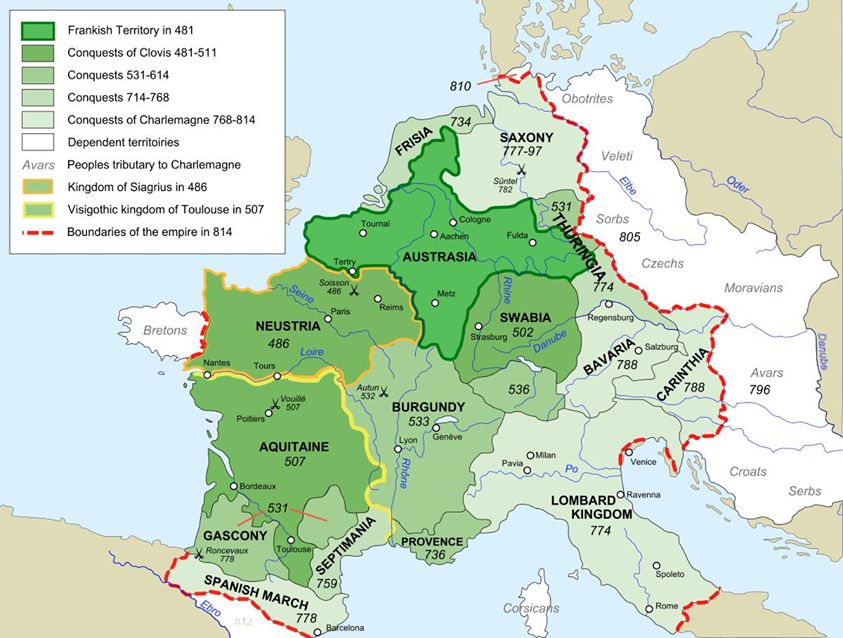
I was brought up thinking I was Irish and Scottish (and I am) I’m just a whole lot of Viking/Norman alsoNov 13, 2018, 2:21 PMCurt Doolittle(Same here)Nov 13, 2018, 3:38 PMGreg HamiltonLike most conquering peoples the Normans married into local ruling families.
You can see marriages across the “border”a decent amount to obviously end hostilities
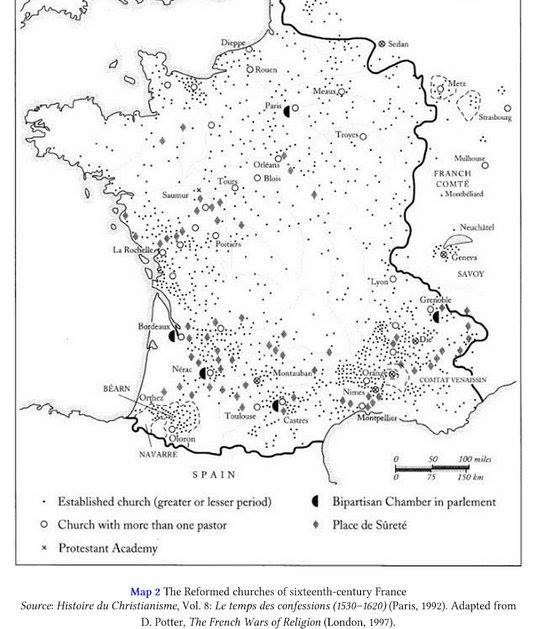
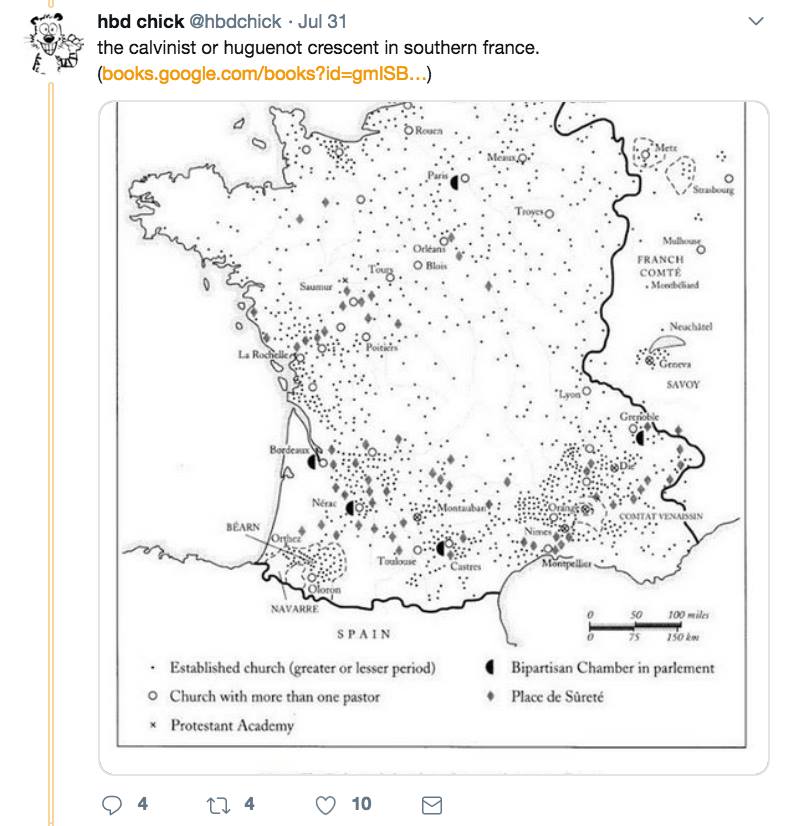
Hence most the Irish, Scottish, and even the little Welsh blood I have.Nov 13, 2018, 3:50 PMKevin WuOnce you go Huguenot
In France you are welcome notNov 13, 2018, 5:29 PM photos_and_videos/TimelinePhotos_SxeO6JU-xg/45981522_10156774006882264_555580631354966016_n_10156774006872264.jpg photos_and_videos/TimelinePhotos_SxeO6JU-xg/46039330_10156774007112264_578697605630918656_n_10156774007092264.jpg photos_and_videos/TimelinePhotos_SxeO6JU-xg/46030537_10156774008097264_1549148936495693824_n_10156774008092264.jpg photos_and_videos/TimelinePhotos_SxeO6JU-xg/46030538_10156774008417264_4321074387852722176_o_10156774008407264.jpg photos_and_videos/TimelinePhotos_SxeO6JU-xg/46253609_10156774008582264_2616270991826878464_n_10156774008577264.jpg photos_and_videos/TimelinePhotos_SxeO6JU-xg/46003568_10156774010212264_6147140267016192000_n_10156774010207264.jpg Dan AltschuldHbdchick is 👍Nov 12, 2018, 8:29 PM photos_and_videos/TimelinePhotos_SxeO6JU-xg/46113180_10156774010252264_5399877263875375104_o_10156774010247264.jpg photos_and_videos/TimelinePhotos_SxeO6JU-xg/46118480_10156774010232264_7779446354547310592_n_10156774010227264.jpg photos_and_videos/TimelinePhotos_SxeO6JU-xg/46043952_10156774010302264_983068145189126144_n_10156774010292264.jpg photos_and_videos/TimelinePhotos_SxeO6JU-xg/46075107_10156774010332264_4012216013922762752_n_10156774010327264.jpg HBDCHICK’S SUMMARY OF BIPARTITE MANORIALISM AND ITS REACH
@hbdchick
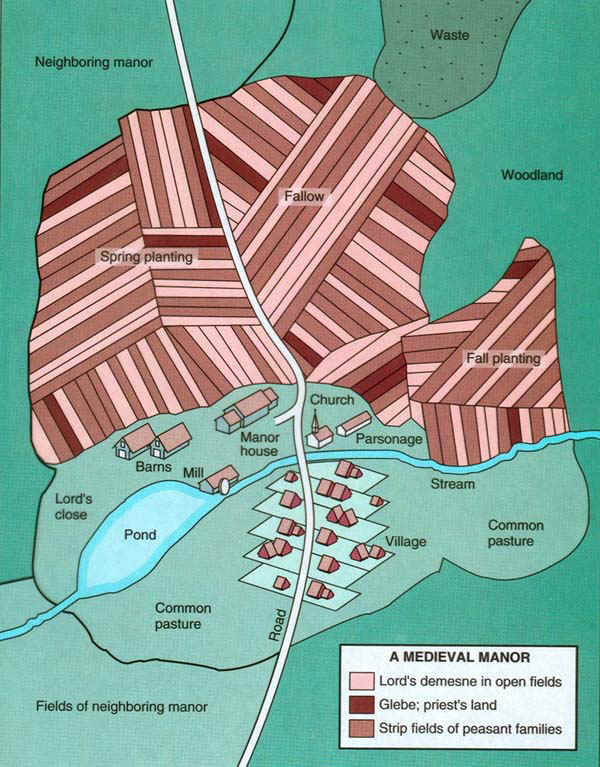
the main feature of bipartite manorialism in medieval europe was the dual, conjoined arrangement of the central manor farm (the demesne) along with the attached individual farms of the tenants, with the tenants owing labor on the demesne (later rent)…
…tenants were independently responsible for the success of their own farms, i.e. w/the production of foodstuffs for themselves (to be self-sufficient iow) as well as for producing a certain amount of foods and products for the manor (agricultural, but also things like cloth)…
…another extremely important aspect of bipartite manorialism, tho, was the curious feature of *common* arable fields in which tenants were allotted certain furrows to farm alongside and inbetween the furrows of the demesne…
…these furrows *were* the tenants’ farms (alongside whatever garden they might have). in the early days of manorialism, the furrows/farms were not passed down within families, but “reassigned” each generation. over time tenancies became inheritable and eventually…
…the common field system disappeared and farms were restructured to be more like free-standing units (although still within the manor system), but for a good 500-1000 years, depending on the region, the common field system was in place…
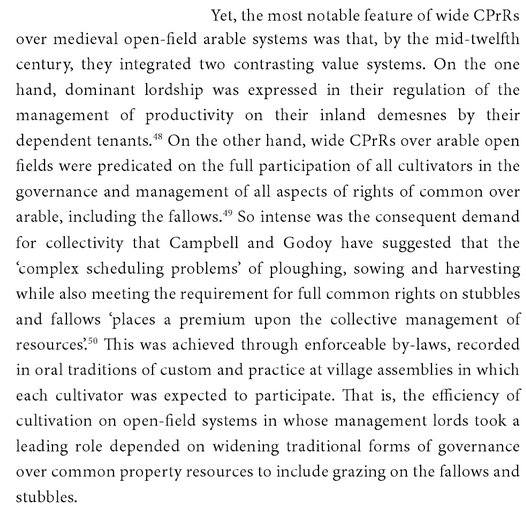
…however, in order to avoid any tragedies of commons, tenants came together on village councils to agree upon plans for planting and the grazing of animals in fallow fields, etc. here from Tradition and Transformation in Anglo-Saxon England (https://books.google.com/books?id=_SlMAQAAQBAJ …):
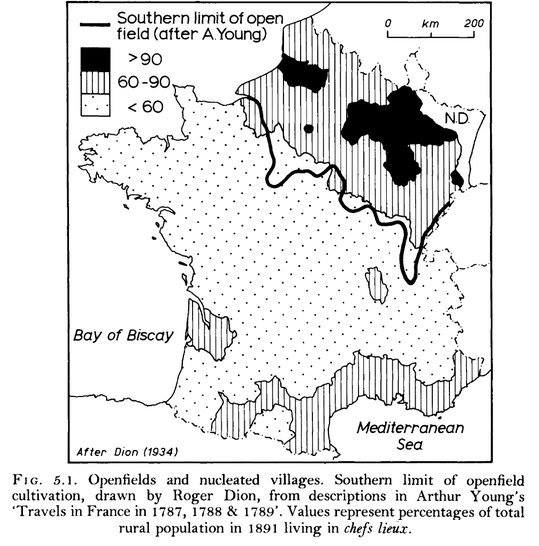
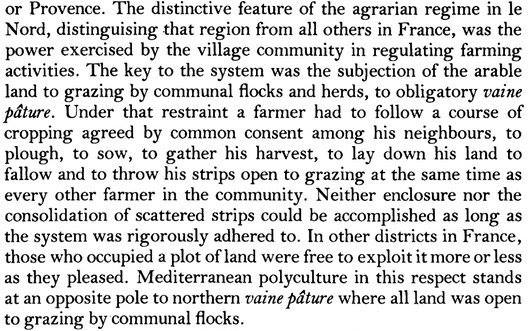
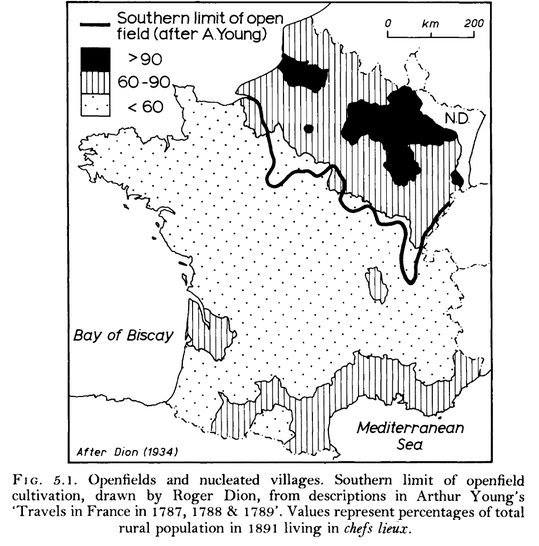
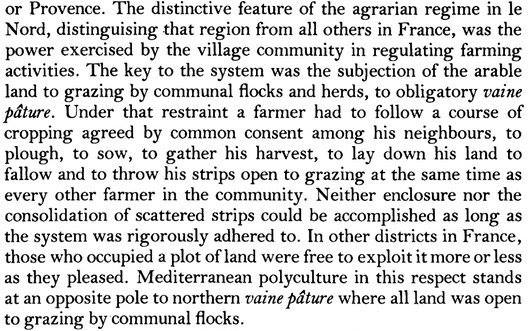
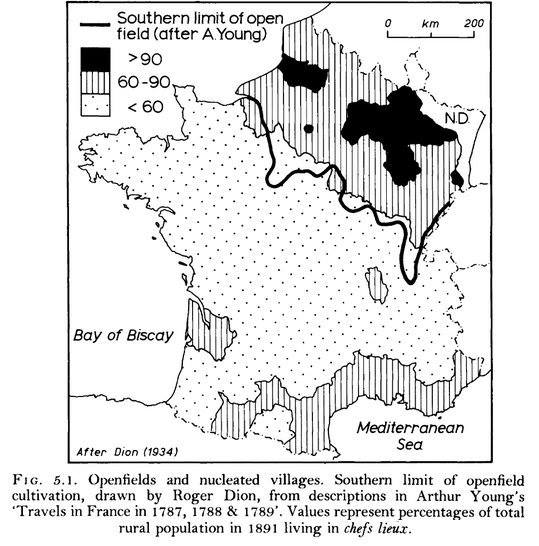
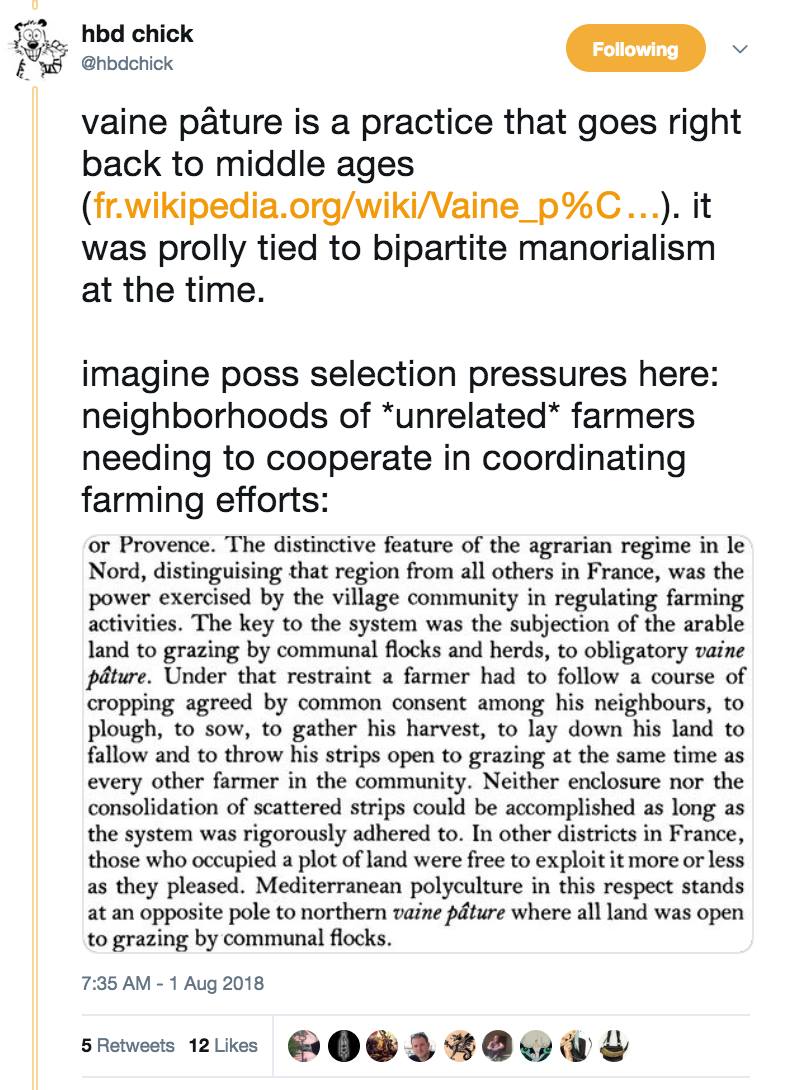
…the same practices were found in other regions of nw europe which saw bipartite manorialism + open field systems. here on vaine pâture in nw france:hbd chick added,
(oh, sorry. forgot. “CPrRs” are “common property regimes.” these collective village institutions that governed open fields and common pastures.)
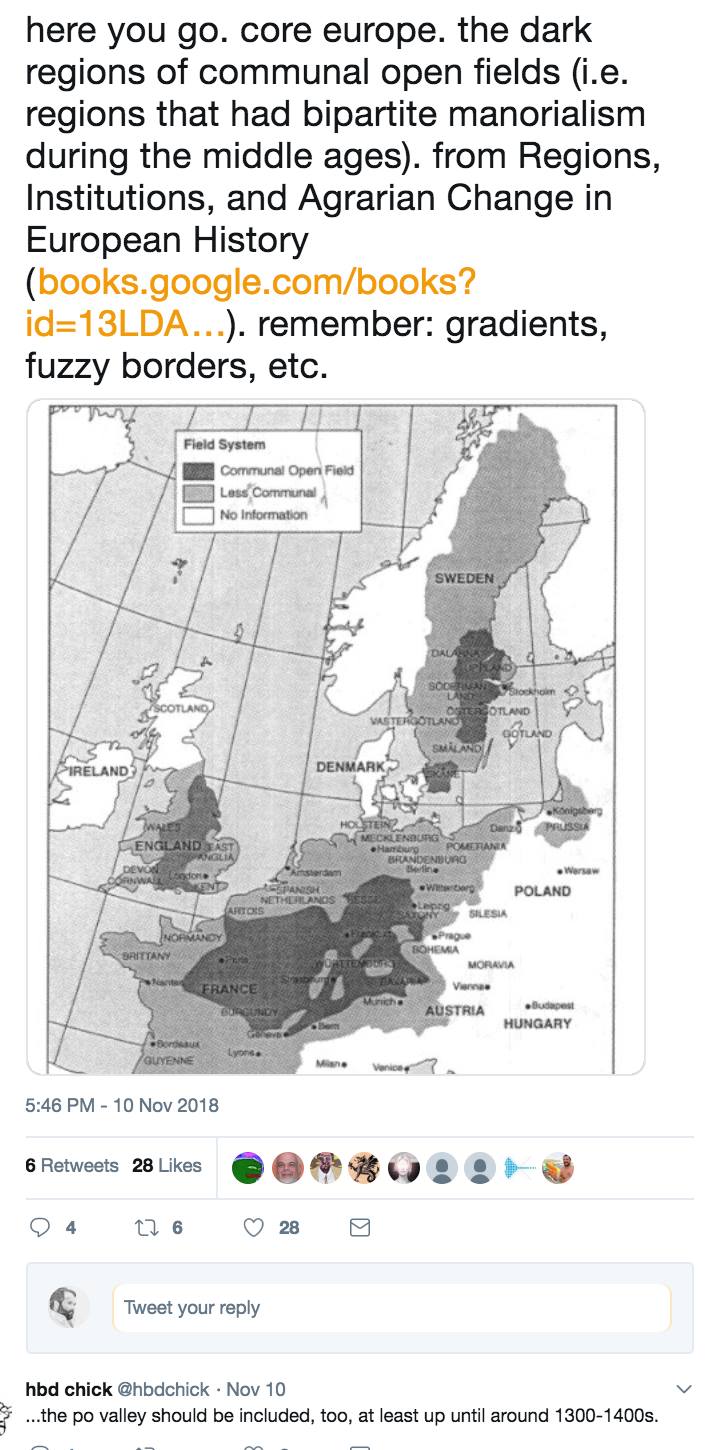
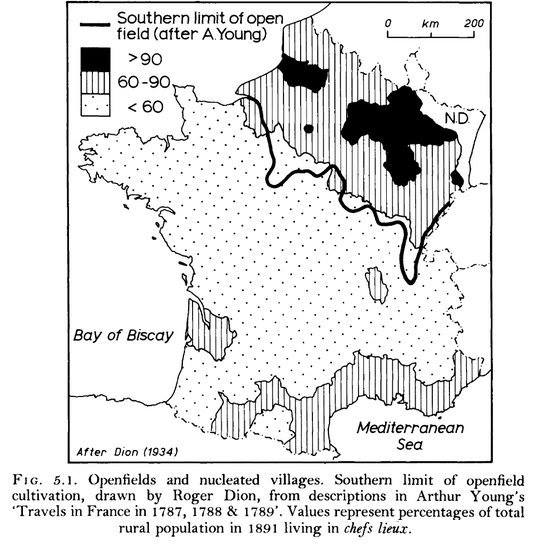
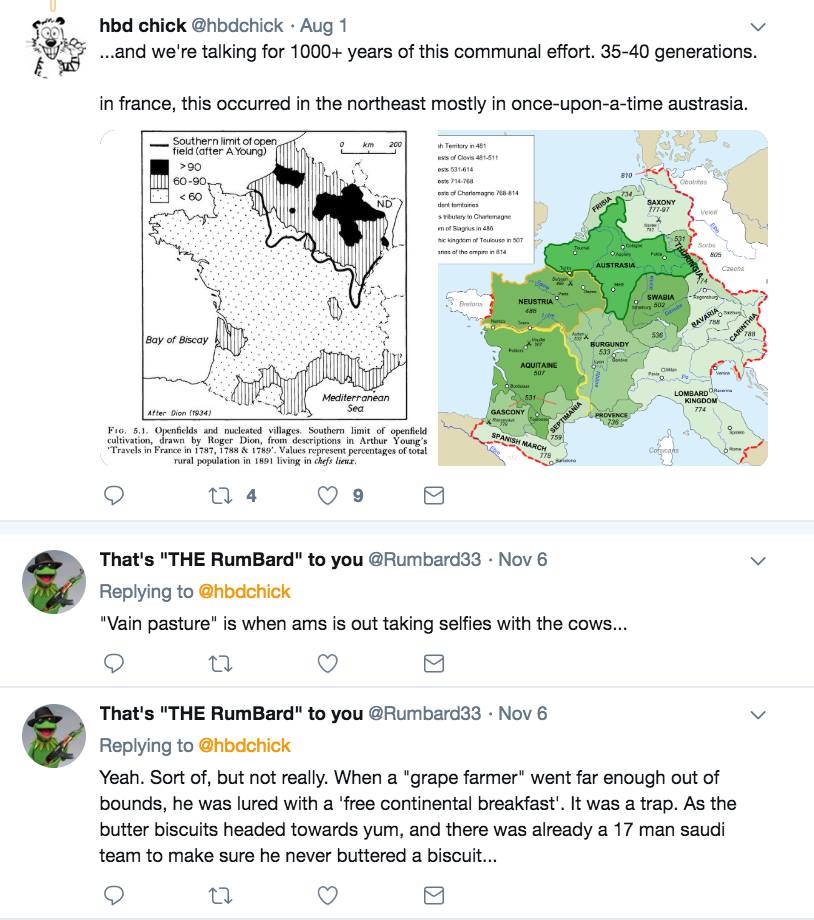
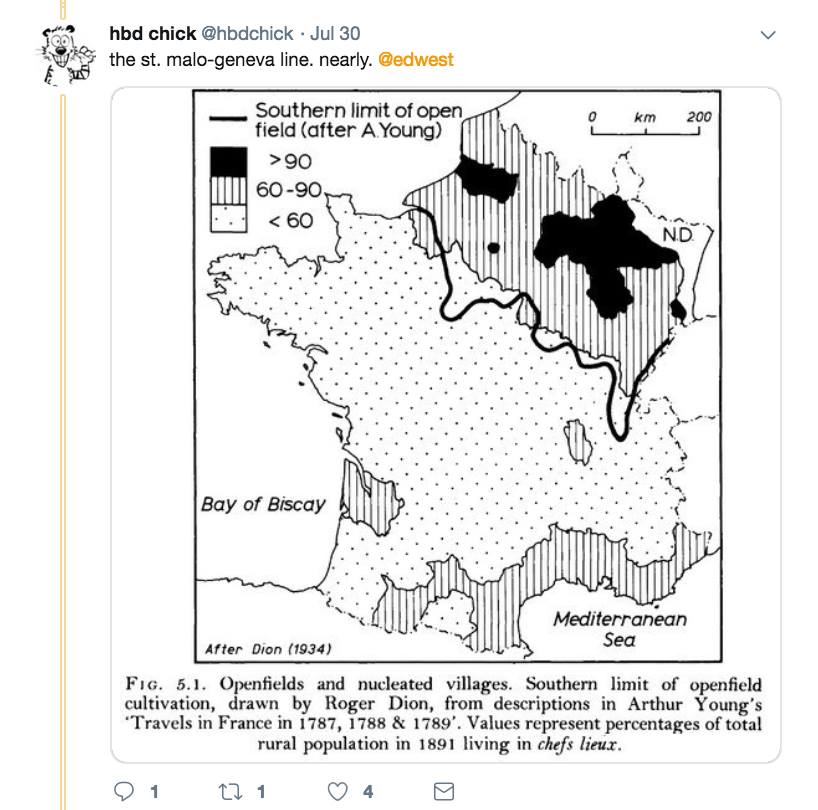
…and, again, here are the regions in nw “core” europe where bipartite manorialism/open field systems were found:hbd chick added,
here you go. core europe. the dark regions of communal open fields (i.e. regions that had bipartite manorialism during the middle ages). from Regions, Institutions, and Agrarian Change in European History…
by the time manorialism got to east germany (east of the elbe) it was a purely rent-based system. individual tenant farmers working their own farms and paying cash rents. (further east in russia it was often extended families.)
…and the outcome of all this, i think (*theorize*)?
and selecting for behavioral traits related to reciprocal altruism while selecting out traits related to parochial altruism, since these folks were neither living/working in extended family groups or marrying close family members, but, instead, cooperating w/unrelated fellows.
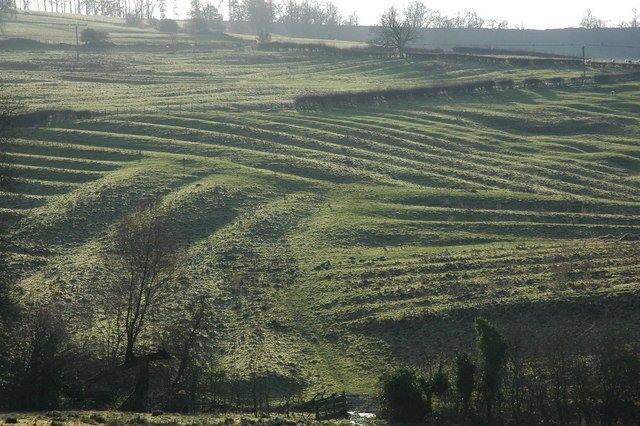
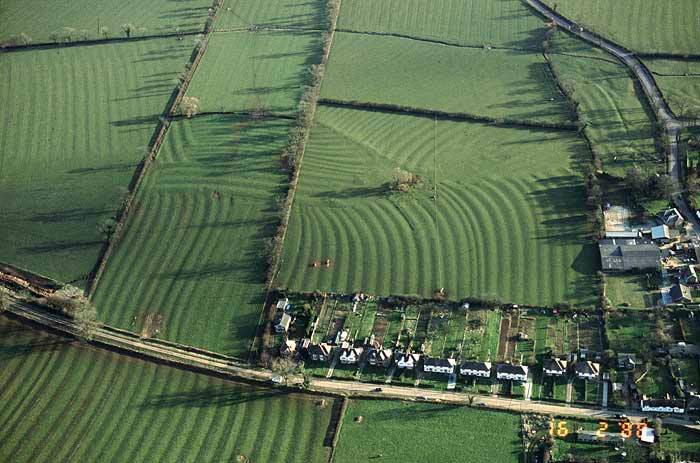
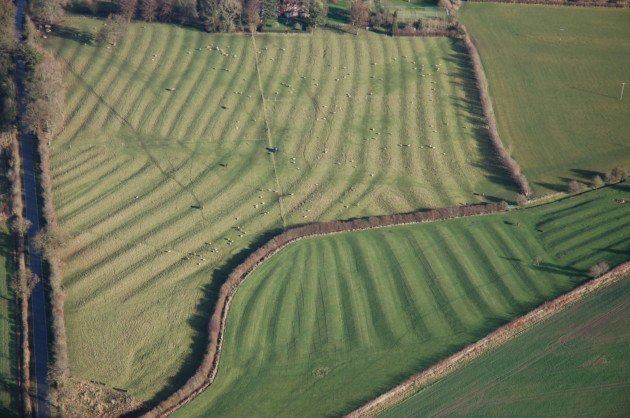
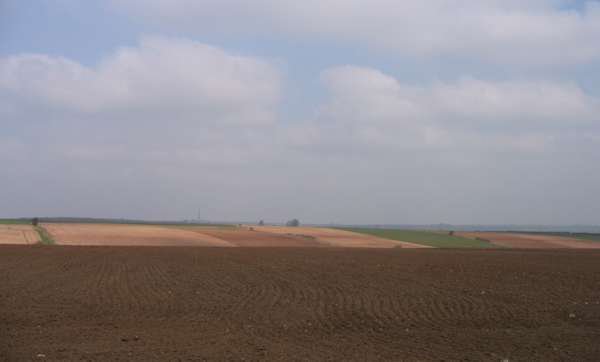
btw, some medieval ridge and furrow field systems are still visible in england. here are three from: gloucestershire
(https://commons.wikimedia.org/wiki/File:Medieval_Ridge_and_Furrow_above_Wood_Stanway_-_geograph.org.uk_-_640050.jpg …); buckinghamshire (http://www.heritage-explorer.co.uk/web/he/searchdetail.aspx?id=1488&large=1 …); and worcestershire (https://www.google.com/search?hl=en&tbm=isch&source=hp&biw=1366&bih=654&ei=lNfoW4ynE6LlkgWSqoCIBA&q=common+fields+furrows&oq=common+fields+furrows&gs_l=img.3…1482.5260.0.5427.21.13.0.8.2.0.156.1397.3j9.12.0….0…1ac.1.64.img..1.13.1330…0j0i8i30k1j0i24k1j0i10i24k1.0.8oaGF6jdXv0#imgdii=KJ7ZkoGp3VKs9M:&imgrc=B81gElEVEKUnbM …):
and there are even a handful of open field systems still in operation in england today. there’s one in laxton, nottinghamshire. you can read about how the farmers all work together on their manor here!: http://www.laxtonnotts.org.uk/Laxton%20manorial_system.htm …
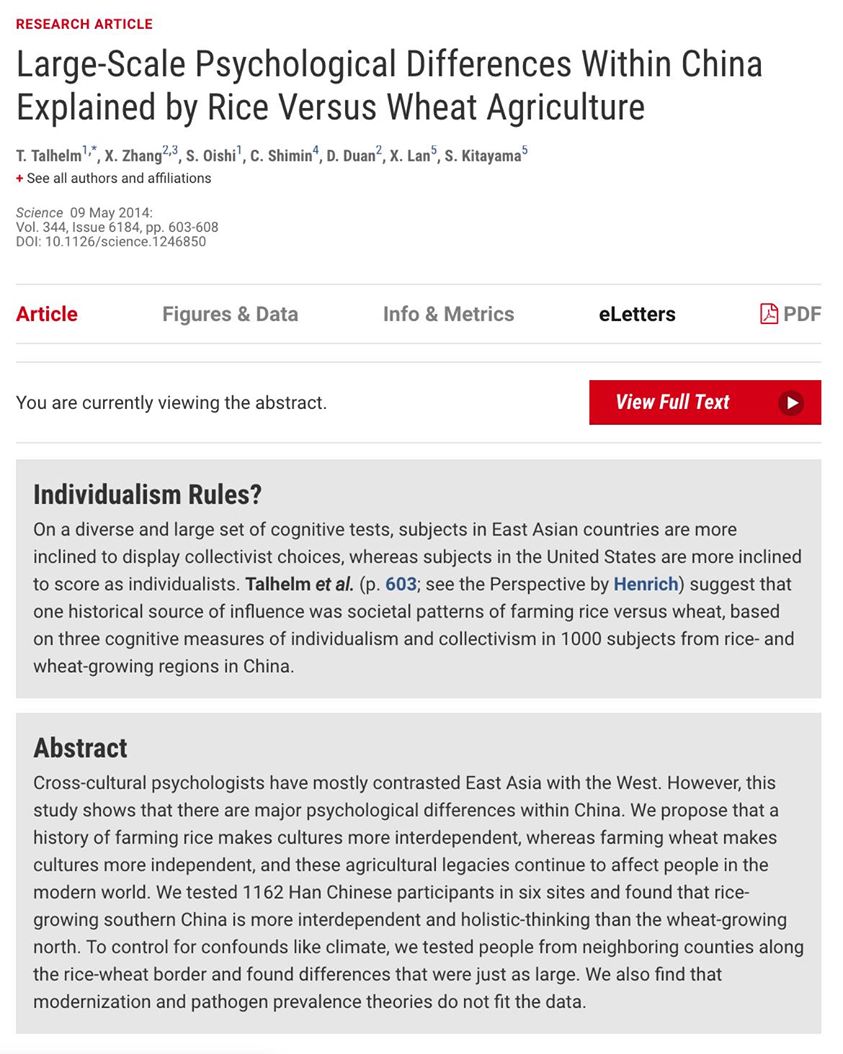
oh, yes. forgot to mention: given that WHEAT was pretty much the main crop of medieval manors w/their *common property regimes* (i.e. *collective* village institutions), i can’t see how @ThomasTalhelm et al. argue that rice farming leads to holistic thinking patterns because…
…of its collective nature
wheat plus oats and rye. (^_^)
SEE:
(http://science.sciencemag.org/content/344/6184/603
…. nw “core” european wheat farming WAS collective for something like 500-1000 years (depending on region).
afaics, the diff ofc is *who* one is collective with: family? or unrelated individuals?
http://science.sciencemag.org/content/344/6184/603
Source date (UTC): 2018-11-12 17:39:00 UTC
Leave a Reply