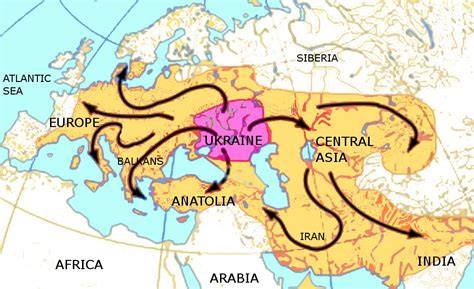
photos_and_videos/TimelinePhotos_SxeO6JU-xg/43557764_10156694925527264_1240374980147937280_n_10156694925522264.jpg photos_and_videos/TimelinePhotos_SxeO6JU-xg/43271795_10156694925987264_3342498061195673600_o_10156694925982264.jpg Trevor WilsonHorses tamed by steppe peoples. First chariots.Oct 9, 2018, 7:31 PMCurt DoolittleSimon Ström isn’t this the most helpful origin of the ‘races’. I mean, this makes far more sense of the data than the three major races.Oct 9, 2018, 7:53 PMCurt DoolittleSemites, turks, IE’s mongols, europeans. I mean, have we not been looking far enough backward to grasp the origin of our races?Oct 9, 2018, 7:54 PMJohn ScholeyThere were no Turks in the ice-age.Oct 10, 2018, 9:01 AMCurt DoolittleDoes it say that?Oct 10, 2018, 9:03 AMJohn ScholeyYesOct 10, 2018, 9:03 AMCurt DoolittleNO. It says PROTO turks.Oct 10, 2018, 9:04 AMSteven JacksonCurt Doolittle which of these are the Semites?Oct 10, 2018, 9:53 AMSimon StrömCurt Doolittle
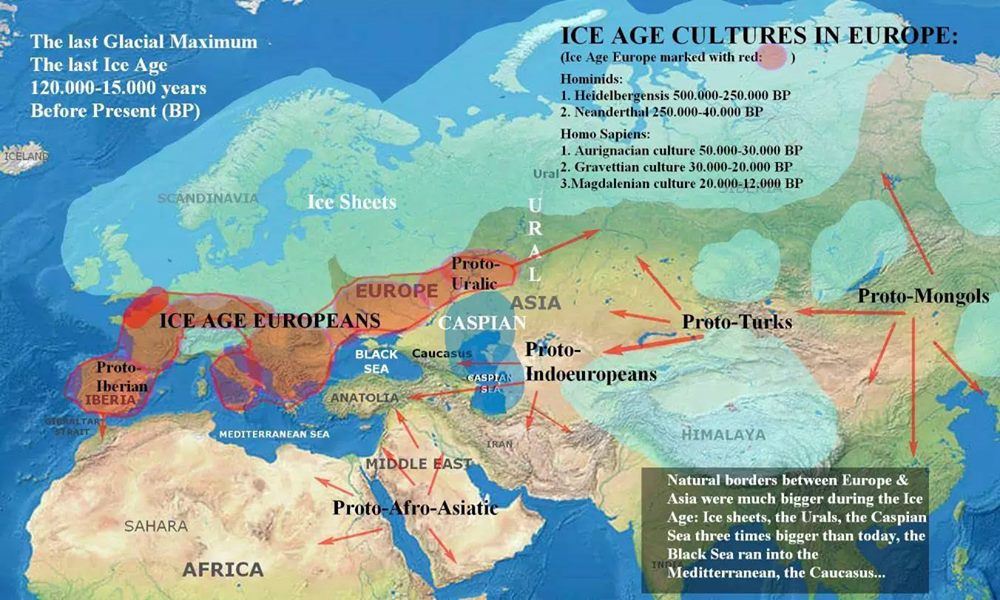
Hypothetical (absolutely off and contrary to archaeological and genetic evidence in the case of PIE) urheimat locations of (vastly differently aged) language families, plotted on top of the extent of glaciers sometime during the Upper Paleolithic, as well as a timeline of extinct hominid species/UP cultures?
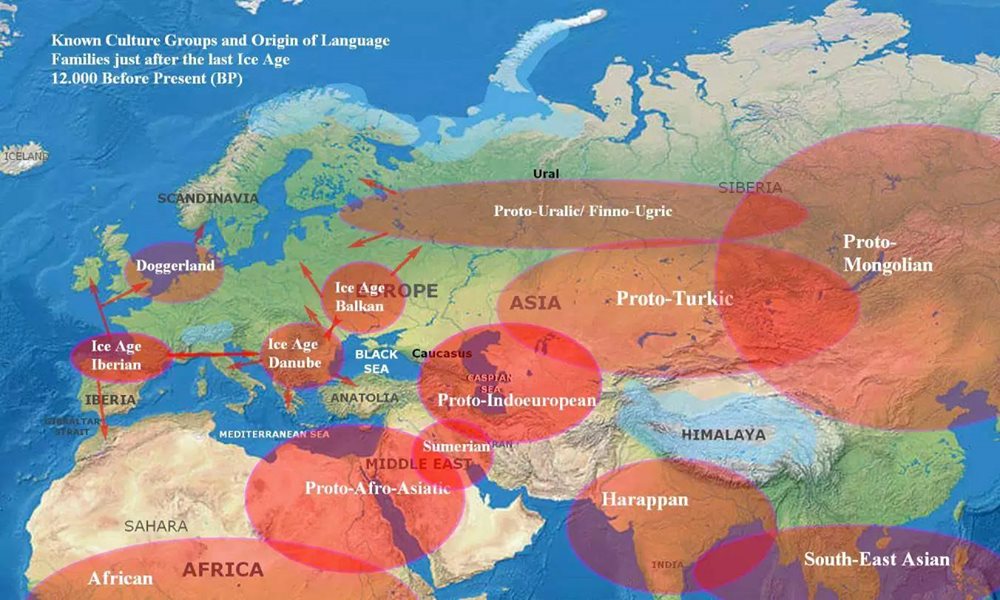
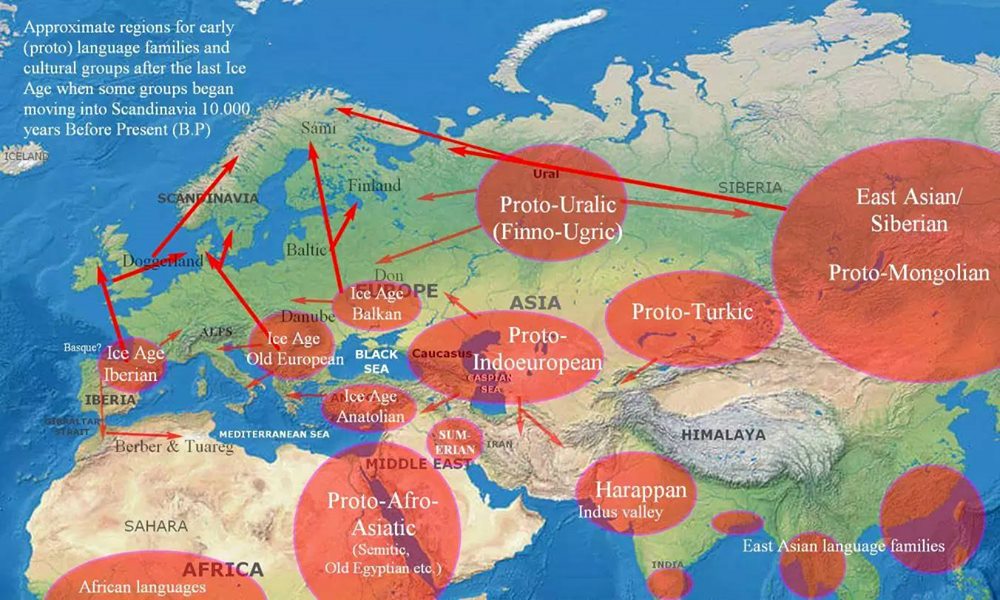
This map is very random, incoherent and amateurish to me, and potentially very wrong since it is not clear at all what it does or does not imply with all those variables in the same image. It’s an F, sorry.Oct 10, 2018, 11:26 AMCurt Doolittlethank you. I’m gonna give the author a break, and assume that he is using PIE rather than west asian, where he should be using west asian.
Were the ehg’s turkics and mongols and west asians in those locations 15k ybp?Oct 10, 2018, 11:34 AMCurt Doolittle(I love that I have access to you.)Oct 10, 2018, 11:34 AMSimon Ström15 kya the world was a very different place compared to what followed, with the Neolithic revolution commencing at ~12 kya. None of the above were “in those places” at 15 kya.
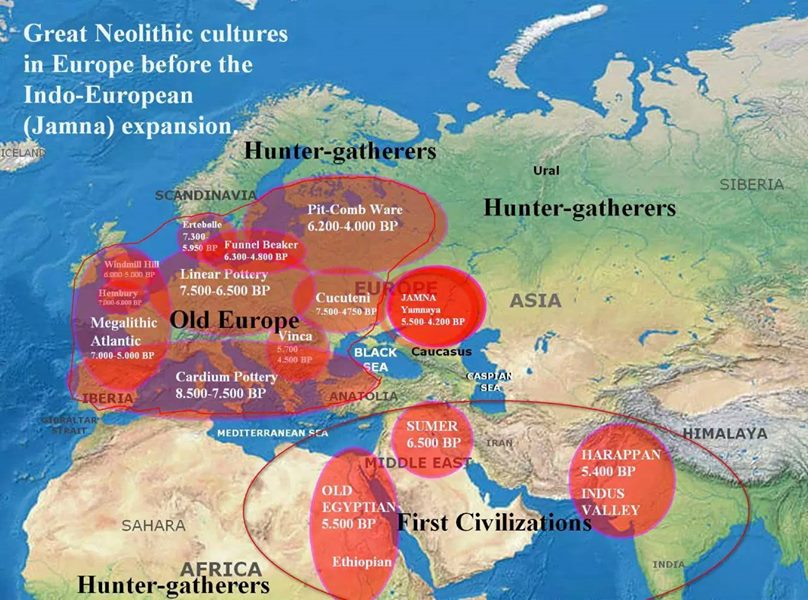
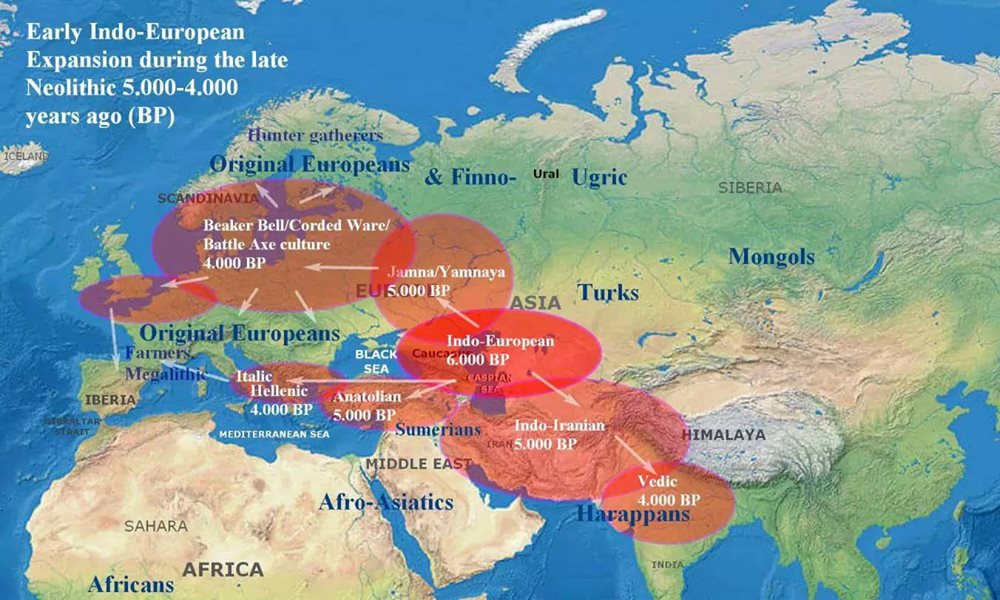
Eastern European h-gs (EHG) is a recently coined term in genetic literature referring to a seemingly discrete Mesolithic population emerging in NE Europe around 6-7000 BC along a cline of Mesolithic/Late Paleolithic Western European h-gs (WHG) and Ancient North Eurasian (ANE) admixture. EHGs almost ubiquitously belonged to, and were the first carriers of, R1a and R1b paternal haplogroups in Europe, a marker inherited from mammoth-chasing ANE males penetrating from Siberia. Representatives of the EHG “macro-ethnicity” almost certainly spoke a primitive form of Proto-Indo-European and mixed with females of sedentary Neolithic farming groups expanding from the south in a potentially violent upheaval of the previously immobile lithic ages, involving horse domestication and invention of wheeled vehicles.
The resultant Yamnaya culture (or an immediately preceding stage thereof) in/around Ukraine was the urheimat of proper Proto-Indo-European.
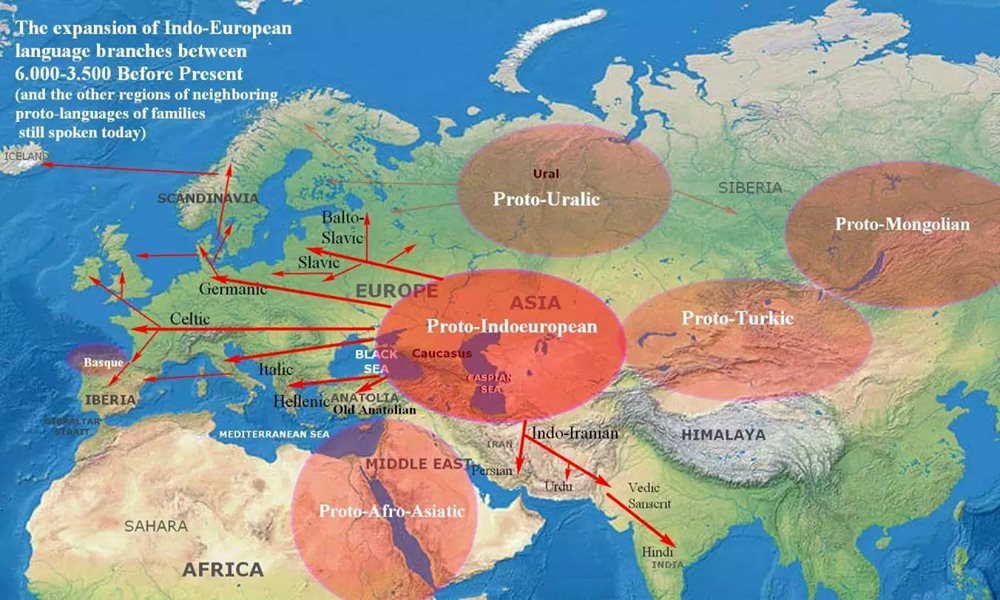
The location of “PIE” in the map above is generally accepted as a reasonably accurate location of the *Proto-Indo-Iranian* urheimat, geographically synonymous to the Sintashta-Andronovo culture, millennia after IE branches had already established themselves across Europe and Siberia.
Linguistic evidence suggest that the Uralic urheimat was contemporary and adjacent to (directly north of) the PII urheimat (Sintashta), so this much is accurate. However, this was during the Bronze Age and not by the last glacial maximum (LGM) as the map seems to suggest.
Modern West Asians, from Turkey to Pakistan, are largely the same as Neolithic West Asians from a genetic standpoint, descending from the originators of river valley civilizations and Abrahamic religions. Compared to pre-neolithic revolution, say 15 kya, the region has become less genetically heterogeneous over the course of millenia of demographic and technological change.
I know less about early Turks and Mongols, but they were from thereabouts, geographically, and they emerged during the bronze or even iron ages. They were certainly not there by 15 kya.Oct 10, 2018, 12:58 PM photos_and_videos/TimelinePhotos_SxeO6JU-xg/43633733_10156694926002264_6105054251849875456_o_10156694925997264.jpg Trevor WilsonReally useful, thanks.Oct 9, 2018, 7:29 PM photos_and_videos/TimelinePhotos_SxeO6JU-xg/43527294_10156694926037264_3710162199629529088_o_10156694926022264.jpg photos_and_videos/TimelinePhotos_SxeO6JU-xg/43552516_10156694926787264_1546373219391373312_o_10156694926777264.jpg photos_and_videos/TimelinePhotos_SxeO6JU-xg/43586900_10156694926632264_9132343636694925312_o_10156694926627264.jpg photos_and_videos/TimelinePhotos_SxeO6JU-xg/43458462_10156694926687264_8515547798542745600_o_10156694926672264.jpg Trevor WilsonMycenaean.Oct 9, 2018, 7:33 PMGOOD MAPS OF EVOLUTION OF EUROPA AND WEST ASIA
Source date (UTC): 2018-10-09 15:27:00 UTC
Leave a Reply