photos_and_videos/your_posts/34600386_10156409002247264_6252213906018664448_o_10156409002237264.jpg Radu M OleniucThere are a lot of discoveries in Romania and in the East in the recent years that were unaccounted for in most of the history books. Pestera cu Oase, for example, a cave in Romania is just being discovered by the scientific community.
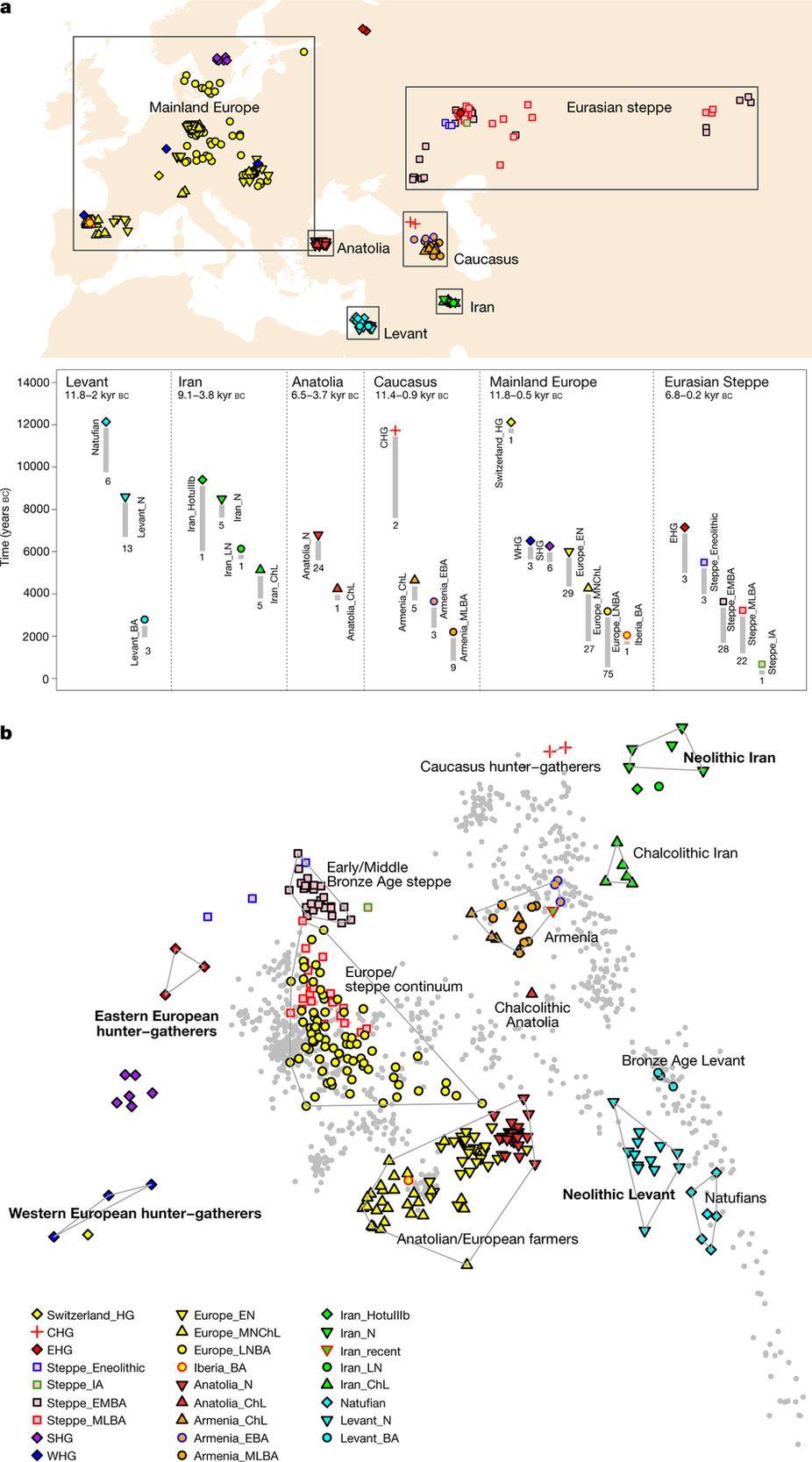
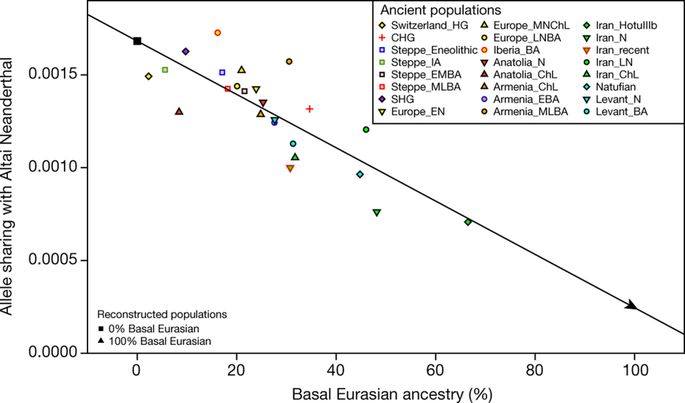
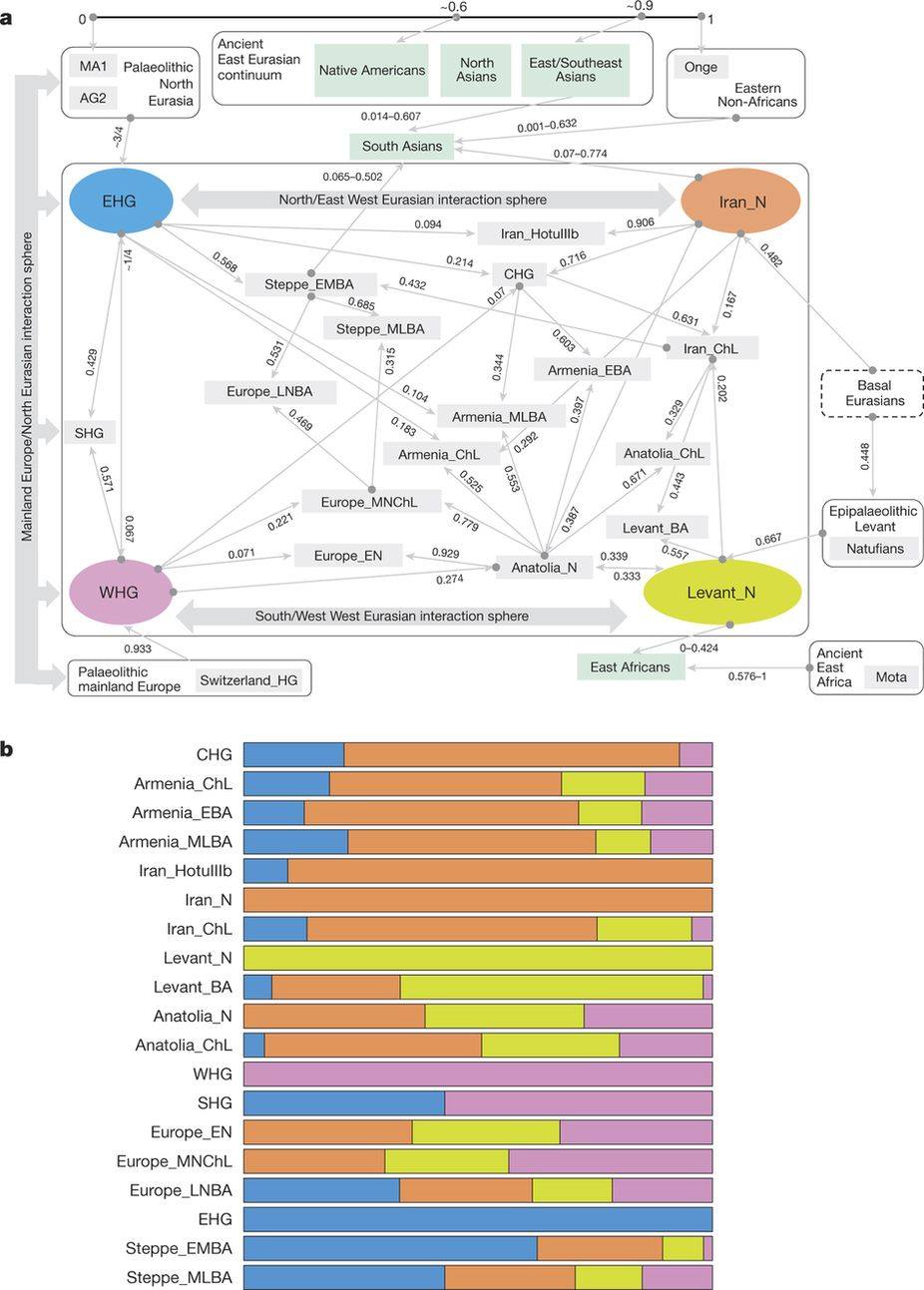
https://www.youtube.com/watch?v=W8ZTp-gs-OkJun 07, 2018 9:06pm photos_and_videos/your_posts/34636649_10156409002317264_5069663200153174016_n_10156409002312264.jpg photos_and_videos/your_posts/34507538_10156409002457264_908564227973709824_o_10156409002447264.jpg —“the earliest populations of the Near East derived around half their ancestry from a ‘Basal Eurasian’ lineage that had little if any Neanderthal admixture and that separated from other non-African lineages before their separation from each other. The first farmers of the southern Levant (Israel and Jordan) and Zagros Mountains (Iran) were strongly genetically differentiated, and each descended from local hunter–gatherers. By the time of the Bronze Age, these two populations and Anatolian-related farmers had mixed with each other and with the hunter–gatherers of Europe to greatly reduce genetic differentiation. The impact of the Near Eastern farmers extended beyond the Near East: farmers related to those of Anatolia spread westward into Europe; farmers related to those of the Levant spread southward into East Africa; farmers related to those of Iran spread northward into the Eurasian steppe; and people related to both the early farmers of Iran and to the pastoralists of the Eurasian steppe spread eastward into South Asia.”—
Source date (UTC): 2018-06-06 23:07:00 UTC
Leave a Reply