Stop saying stupid shit you ignorant f-ck. Coronaviruses are a whole class of related viruses, including the common cold. This disinfectant does not kill this new “Novel” version of the virus.
photos_and_videos/TimelinePhotos_kg5QueHwVw/84618660_206573627407465_547290356631207936_o_206573620740799.jpg PHILOSOPHY BEING MADE….
Luke Weinhagen:
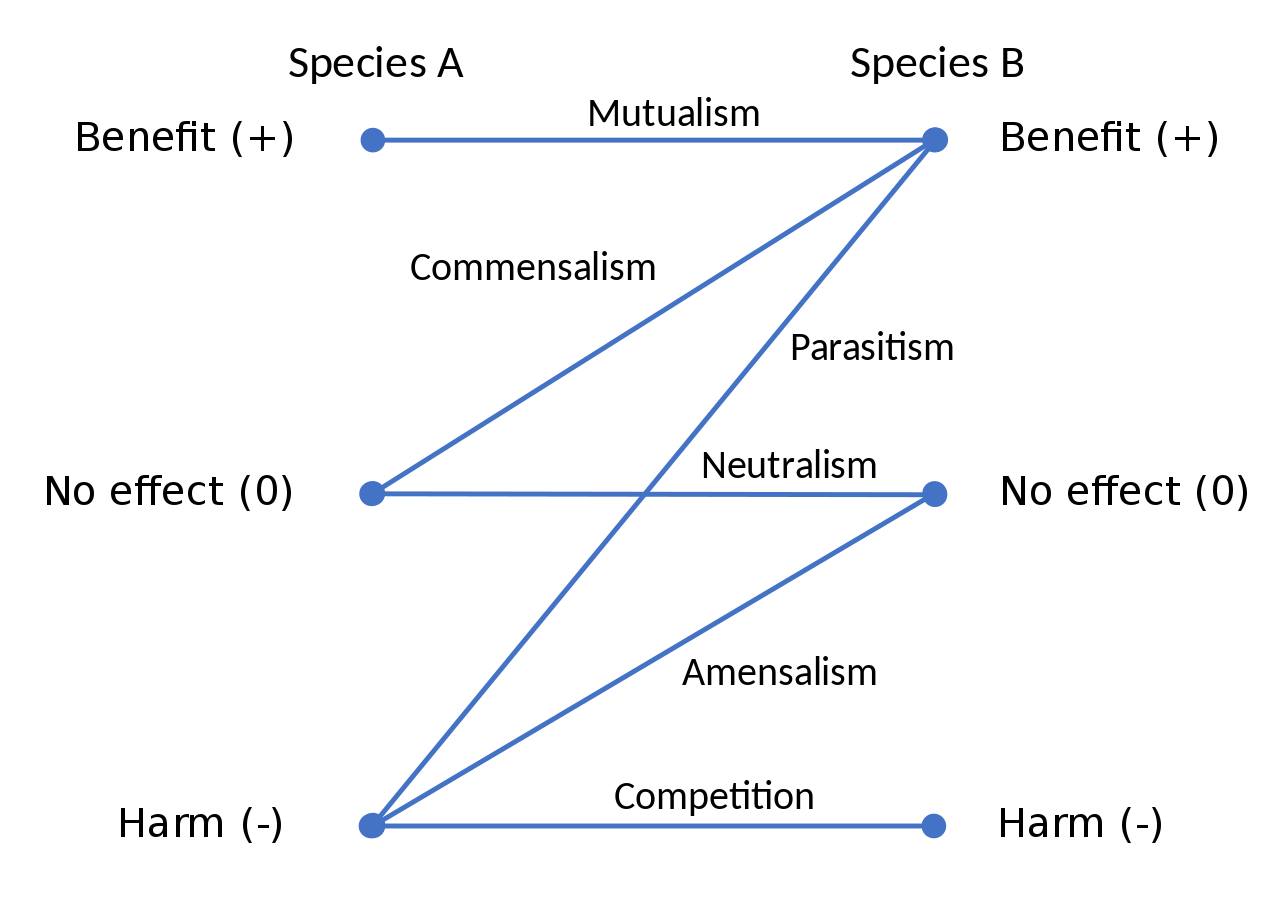
As I understand it, even in a symbiotic arrangement this effect – harm to the practitioner and harm to the non-practitioner, is classified as competition –
We could use “Internecitic Religion” pulling from “internecine: destructive to both sides”. –
Internecitic Religion – harm to the practitioner and harm to the non-practitioner
And for completeness add – Neutralitic Religion – no benefit to the practitioner and no cost to the non-practitioner
Bill Joslin:
To point out the obvious, this isn’t specific to just religion but maps the calculation of reciprocity – its the algorithmic map of natural law.
Luke Weinhagen:
Yeah, it just came up in the conversation about religion so that is what I started with in its application – if it holds up I can see it being useful in many ways.
Check out the link above and read the first comment – I am trying to flesh out a bit of the scope. Help/feedback is appreciated.
Bill Joslin:
The one element that’s missing is porportionality
(man this is fantastic)
Luke Weinhagen:
Missing proportionality is part of why I am suggesting symbiosis may be a superior frame to compatibility.
The ratios/proportions are not static. Each discovery opens up new opportunities for decidability, each decision under decidability opens up new possibilities for interaction that step into what we do not know that we do not know. The interplay is always fluid at the limits.
Bill Joslin:
I was thinking something similar. initially i was gazing at the graphic wondering if disproportionate reciprocity would simply be a means falling back to another category. for example a disproportionate mutualism would be calculated as commensalism. but this doesn’t work, because the calculation would be that of opportunity cost, and we can’t calculate a foregone cost. so now I’m not sure proportionality is required. as long as the option of returning to neutralism is preserved (right of disassociation, preserve the right to defect of boycott) then market forces would naturally approximate proportionality (so there isn’t a need to calculate porportion)
Bill Joslin:
And further to that, the calculation of harm vs benefit, being one of cost benefit (whereby asymmetric benefit being benefit, and asymmetric cost being harm) would fill this calculation gap
Luke Weinhagen:
Exactly – “market forces would naturally approximate proportionality (so there isn’t a need to calculate porportion)” <- this is exactly where I was going.
Bill Joslin:
So afaics this might be a complete graph of natural law
Luke Weinhagen
Introduces graceful failure to resolving market entry and market exit
(also addresses a possible “why” people have such a strong intuition for the necessity of belief systems as it demonstrates that role in this graceful failure into and out of markets)
Bill Joslin:
Religion, from an evolutionary stand point may have been the first means by which we made these calculation – or at least religions that survived did so because it afforded an intuition on calculating reciprocity (but also maybe included ways of compensating for irreciprocity)…
So maybe the argument that humans have evolved religiosity may actually not have anything to do with religion but rather to have a system to calculate these transactions and also for systems of graceful failure, which we view as religiosity.
[image: By Ian Alexander – Own work, CC BY-SA 4.0, https://commons.wikimedia.org/w/index.php?curid=71067142]
https://www.facebook.com/luke.weinhagen/posts/10218928910706454PHILOSOPHY BEING MADE….
Luke Weinhagen:
As I understand it, even in a symbiotic arrangement this effect – harm to the practitioner and harm to the non-practitioner, is classified as competition –
We could use “Internecitic Religion” pulling from “internecine: destructive to both sides”. –
Internecitic Religion – harm to the practitioner and harm to the non-practitioner
And for completeness add – Neutralitic Religion – no benefit to the practitioner and no cost to the non-practitioner
Bill Joslin:
To point out the obvious, this isn’t specific to just religion but maps the calculation of reciprocity – its the algorithmic map of natural law.
Luke Weinhagen:
Yeah, it just came up in the conversation about religion so that is what I started with in its application – if it holds up I can see it being useful in many ways.
Check out the link above and read the first comment – I am trying to flesh out a bit of the scope. Help/feedback is appreciated.
Bill Joslin:
The one element that’s missing is porportionality
(man this is fantastic)
Luke Weinhagen:
Missing proportionality is part of why I am suggesting symbiosis may be a superior frame to compatibility.
The ratios/proportions are not static. Each discovery opens up new opportunities for decidability, each decision under decidability opens up new possibilities for interaction that step into what we do not know that we do not know. The interplay is always fluid at the limits.
Bill Joslin:
I was thinking something similar. initially i was gazing at the graphic wondering if disproportionate reciprocity would simply be a means falling back to another category. for example a disproportionate mutualism would be calculated as commensalism. but this doesn’t work, because the calculation would be that of opportunity cost, and we can’t calculate a foregone cost. so now I’m not sure proportionality is required. as long as the option of returning to neutralism is preserved (right of disassociation, preserve the right to defect of boycott) then market forces would naturally approximate proportionality (so there isn’t a need to calculate porportion)
Bill Joslin:
And further to that, the calculation of harm vs benefit, being one of cost benefit (whereby asymmetric benefit being benefit, and asymmetric cost being harm) would fill this calculation gap
Luke Weinhagen:
Exactly – “market forces would naturally approximate proportionality (so there isn’t a need to calculate porportion)” <- this is exactly where I was going.
Bill Joslin:
So afaics this might be a complete graph of natural law
Luke Weinhagen
Introduces graceful failure to resolving market entry and market exit
(also addresses a possible “why” people have such a strong intuition for the necessity of belief systems as it demonstrates that role in this graceful failure into and out of markets)
Bill Joslin:
Religion, from an evolutionary stand point may have been the first means by which we made these calculation – or at least religions that survived did so because it afforded an intuition on calculating reciprocity (but also maybe included ways of compensating for irreciprocity)…
So maybe the argument that humans have evolved religiosity may actually not have anything to do with religion but rather to have a system to calculate these transactions and also for systems of graceful failure, which we view as religiosity.
[image: By Ian Alexander – Own work, CC BY-SA 4.0, https://commons.wikimedia.org/w/index.php?curid=71067142]
THE THREE AXIS OF DEMAND FOR THE THREE FICTIONALISMS
The Three Fictionalisms: Physical: Magic->Pseudoscience, Verbal: Idealism->Sophistry, Imaginary: Occult->Theology
SUPERNATURAL SUBMISSION
1) If you need supernatural mental sedation in order to have confidence in your thoughts, words, and deeds, then I understand that uncertainty is burdensome for those with higher neuroticism (worry).
I understand that in economic terms you are seeking to acquire mindfulness, and have little or no control over this psychological demand. Likewise I understand that some of us do not.
The fact that fulfilling that demand can ALSO be the demand for means of dominance expression despite one’s lack of agency, is the more accusatory theory. The difference is only whether you’re insecure in the self, or insecure in dominating others. But these are the two motivations for fictionalisms.
SUPERNATURAL DOMINANCE
It is very hard for females to find mindfulness without sedation of social insecurity and it’s hard for males to find mindfulness without sedation of dominance insecurity.
There are males with female cognitive bias, and females with male cognitive bias, but we can fairly readily (as in this case) determine which defense people are resorting to theology to sedate.
PRACTICAL EXPERIENCE
3) There is also however, a universal truth that all of us merely find comfort in the social and private rituals. For me, and for the greeks, the host of temples, the play, the jury, the senate, sport, war, and festival (markets) functioned as church (monopoly). But these people do not argue security(defense), dominance (offense), they just say the truth “it’s probably nonsense it makes me happy”.
( And it should be obvious that I satisfy my dominance expression in knowledge, business (wealth), and natural law – all of which are true – I don’t resort to fictionalisms. )
—“Curt was trying to defend his statement that “Entropy is the prime mover” to refute the theistic claim that God is the prime mover. In the analysis of entropy, he reduced all phenomena to a “fundamental” component, namely “Differences in charge”.
There are plenty of other obtuse statements that Curt ought to defend in order to protect his reputation, such as his declaration that “philosophy is a pseudoscience.” That is a wildly hilarious and blatant domain error, that it ought to have disqualified anything Curt has to say on metaphysics or reason.”—- Josef Kalinin Prem Prayojan
1) Entropy/Charge: Any of the terms: entropy( order to disorder), equilibration (equalization of differences), energy(frequency), charge (energy in difference in states), pressure(effect of different states on one another), and difference satisfy the demand for truthful operational speech. The fact that we are as yet uncertain of the classical (geometric) structure of the universe that we describe with quantum mechanics, is a problem of our present technical inability to measure (observe) it. However, there is no evidence it is other than expressible in the same terms of differences in energy, organization, state, and available transformations (operations). No physicist of note will disagree with this statement.
2) Philosophy is a pseudoscience: Yes, as far as I know, the demarcation between philosophy and science is complete with philosophy limited to choice of preference, and science to decidability independent of preference. I can find no evidence that what remains of philosophy consists of other than the history of the evolution of science from philosophy. And I can find no evidence of those practicing philosophy for advocacy of truth claims instead of advocacy for preference claims engaging in other than deception. Part of the reason for this is that we have accumulated evidence of human behavior in large groups across mankind on one hand, and we have discovered the tediously simple method by which brain, mind, and experience are constructed on the other – although I do recognize I’m very current or ahead of the curve in that knowledge.
3) Domain error. There are no domain errors any longer. There is one most parsimonious operational paradigm across all grammars (paradigms) from the deflaitonary to the descriptive to the inflationary to the deceptive. That paradigm is language, because language is the system of measurement we use for thinking and speaking about the world.
It will be very difficult to falsify those arguments.
—-“A widespread misconception in much of psychology holds that as vertebrate animals evolved, ‘newer’ brain structures were added over existing ‘older’ brain structures”
Your Brain Is Not an Onion with a Tiny Reptile Inside
A widespread misconception in much of psychology holds that (1) as vertebrate animals evolved, “newer” brain structures were added over existing “older” brain structures and (2) these newer,….. “All vertebrates possess the same basic brain—and forebrain—regions. … [None] are evolutionarily newer in some mammals than others. … even the prefrontal cortex, a region associated with reason and action planning, is not a uniquely human structure.”— Robin Hanson @robinhanson
A statement without meaning – there’s only one cell type in the nervous system, three subtypes, but almost countless variation that all functional regions in the brain evolved from. So what? Does that mean we can’t demarcate dramatic evolutionary leaps in function by organism?
To say that a fish is sentient and aware is true. To say it is conscious is to demand we define the spectrum of predictive models capable for the organism, and its ability to react vs choose vs reason vs calculate vs calculate transformations of state vs calculate cooperation.
So if the point is to clarify that the brain is just a collection of similar cells in various forms of organization, and that for all intents and purposes our brain is an outgrowth of our consciousness (modeling of our body and movement in space) yes.
To equate sentience (feeling of changes in state), and awareness (of change instate of environment) and semi-consciousness (prediction of future states and possible reactions), consciousness (prediction of future permutations of state), to transformations of state is a leap.
If the question is ‘who is the observer’ (which I suspect is the origin of most problems in philosophy and cognitive science) it’s memory of the last few memories recursively processed as a stream of changes in model in the hippocampal region.
Consciousness is a verb not a noun.
Why do I care? No more woo woo in cognitive science please. If you can’t pass the mirror test, the gesture test, sympathy test (cooperation), demonstrate natural operational grammar (language), and create multi-part tools, or enter into agreement (consent) then you’re far behind.
The difference between the engine of a 3d video game and the human brain turns out to be terrifyingly small. We just do everything in massive parallel and at a much lower voltage and current because of it, and we do the prediction as well as the construction.
DO PARADIGMS REALLY FALSIFY? WHAT DOES ORDER MEAN? OPERATIONALISM IN ACTION
Better way of saying it: There is one most parsimonous paradigm (We call it science. Now I call it ‘P-grammar’). There is no value in false paradigms. There is only value in different attempts to solve a problem within the most parsimonious paradigm.
(Note: my position is that language is a system of measurement, and the p-grammars identify the paradigm, and that operationalism constitutions the universal grammar. That would mean the universe is always reducible to classical description.)
—“All paradigms are eventually false. :)”—Rick Paris
That’s demonstrably false. Instead, we increasingly identify limits that cause us to increase the parsimony of our theories.
All scientific paradigms appear increase in parsimony. Aristotle, Newton, and Einstein all evolve to greater precision. Take Humors (disease) and Phlogiston theory (chemistry), Einstein’s static universe(cosmology), or the expanding earth (plate tectonics). They were false but they were progress in the right direction.
Conversely there are three categories that always fail to increase in parsimony:
1) Magic -> Pseudoscience (action-physical)
2) Idealism -> Philosophy (verbal-rational)
3) Occult -> Theology (emotional-intuitionistic)
So we have deflationary grammars of Law, Science, Logic, and Mathematics that all increase in parsimony.
And we have inflationary grammars of magic(physical), idealism(verbal), and the occult(emotional) that fail all tests of parsimony.
Of course we also have the outright deceits too.
—“It is not false. The Universe is expanding, in that what is outside the current momentary paradigm is defined as the Unknown. There is always greater amounts of the Unknown shifting our perceived facts of what is known, as the Unknown is always greater < than the known. So,”No man steps into the same river twice.” is a metaphor for all physical experience. Paradigms are currently, and simply limited and only limited by belief. All paradigms are fictitious mental constructs. Attempting to measure the illogical, is useless and limited the human potential. Logic is very tedious and limits the strongest aspects of the human mind. Only the imagination (what is common sense) is the part of us that can penetrate the very fabric of the Unknown. The greatest of all human gifts is the imagination. It is the function behind all, and cannot be interpreted by logic alone .This is not based in an opinion, it is based in my own experience.”—Rick Paris
—“Curt I think I can see/agree a little with Rick. By the very nature of biology, you will always have a body of diversity, not just in capacity, but also concerns. The big fallacy is mistaking diversity for equality and/or dismissability. There will always be a need for more peasants than kings… This doesn’t mean that worker bees should rule the give (all you get is drones if such happens)… At the same time, if the king doesn’t address with reciprocity the needs of the peasants, you leave a tinder wound and a jealous rage ready to eat the rich and a cultural cancer that no longer gives a shit. Homogeny is the cultural cream that will come to the surface given time and peace (consistent enforced reciprocity).”—Anne Summers
This is a long standing debate, and it’s a matter of grammatical deficiency in our language, so we must state our meaning operationally to avoid sophistry.
ONE
Does existence persist independent of our perception? Yes.
Does the universe demonstrate regularities independent of our perception? Yes.
Do we define order as I did above as the intersection of periodicity and scale of resolution?
Or do we define order as the regularities what we might potentially identify at various periodicities and scales?
Or do we define order as dependent upon those periodicities and scales we can measure and reduce to analogy to experience?
Or do we define order as dependent upon the periodicity and scale open to our perception at human scale?
Or do we define order as those permutations of paradigms – networks of relations – that vary between humans despite relative invariance of human perception at human scale – such as the asian perception of the world as continuous motion(coherent world) or the european perception of the world as discreet objects (mechanistic world).
TWO
As for paradigms, this depends upon whether it is possible, when specifying both theory(search criteria), operations (measurement criteria) and limits (full accounting) whether we maintain progress toward the most parsimonious description or not. So, given human perception, human system of measurements, and human chosen time scale, when stating a theory, measurement, and limit, we appear to have successfully – at least in the ancient and modern worlds – slowly evolved greater precision and parsimony – in math, logic, and the sciences at least. And this is why it’s not clear than any of Aristotle, Newton, or Einstein are false at their levels of resolution. Instead it’s fairly obvious that we have just been increasing the precision of the general theory we call description of the regularities observable directly or instrumental in the universe. So if one’s definition is IDEAL then yes, theories are frequently falsified. But if one’s definition is testimonial then it certainly appears that we are continuously increasing precision and that the number of false theories is rapidly decreasing.
So, when you attempt to refute my definition, description, and proposition which definition of order are you using?
—-“Oh I totally get the plan. It’s particularly well presented here, put up next to the parallel issues in mathematics and science. I’m mostly agreeing with you. I’m just saying the ENTIRE current paradigm is based on the necessity of occluding changes in the cultural balance sheet. … That also brings us back to this notion that “capital is a monster.” It is voracious. It doesn’t care about your culture, your people … it doesn’t care about anything but profit. So the process by which one goes to war with the monster that is capital is almost sure to be very very ugly. That’s why I said capital would not like what you propose.”—-
—-“Just because something is defined as chaotic does not mean that it is any less causal as anything that is non-chaotic. There is no such thing as chaos objectively in the material world. There just is a state of matter in the state it is. Order is an expression of value that does not exist in matter. Certainly, we would, if all atoms were clustered by their kind, conventionally define this as order. But any other configuration of matter could just as validly be defined as order if given any other subjective idea of order. That is without any objective validity at all. You cannot assign objective value to the material world inside the material. That is logically baseless.
Grammar is nothing but subjective, objectively invalid expression if it does not have basis in the immaterial.”—Tobias Grill
I think you think you made sense there.
It requires memory to determine whether changes in state are preserved over time (including no change in state) by whatever interval of time we arbitrarily choose.
order is the name we give to a successful test of preservation of changes in state over time, and determinism to the repeatability of a change in state over time.
chaos is the name we give to the impossibility of successfully testing a preservation of change in state over some period of time at some degree of resolution.
At the particle level the world is only deterministic within the scope of the wave function.
Below the particle level it may only be causal density is such that a test of constant relations over time will always fail at any level below the particle level (i suspect we will discover it shortly).
So far we decrease the level of resolution until we identify a pattern, and we increase the level of resolution until we identify the next pattern. Likewise we increase the periodicity or decrease the periodicity of the sample to identify patterns. Using those two techniques we are able to identify patterns at every scale.
Scale is determined by the availability of steady states. So waves, particles, atoms, molecules etc constitute steady states that we can describe with vocabulary and operations (grammars).
So while we may vary either the time or resolution of our inquiry we will discover different scales at which we discover commensurable steady states that limit the scope of further steady states.
So to say order doesn’t exist is false because the universe is definitely deterministic, definitely produces a hierarchy of steady states, and a subsequent set of permutations that limit or enable a subsequent set of steady states.
If you wish to say instead that the universe is just matter (or energy density) in motion and that order is the name for our discovery of constant relations in time at constant relations of scale, then you are describing the same thing from firsts, second, or third person. Nothing more.
GRAMMAR
Grammar in P refers to a paradigm of constant relations, a vocabulary (name (state, proptery), action(operation, property)) and the grammar (rules of continuous recursive disambiguation) necessary to construct a contract for agreement on meaning.