ARISTOCRATIC EGALITARIAN LIBERTARIANISM A kinship of property rights. The initiatic brotherhood of warriors. The cult of egalitarian sovereignty The origins of western exceptionalism. The only possible means of possessing liberty. The solution to the problem of creating extra-familial trust, is achieved by the extension of property rights, in exchange for the reciprocal guarantee of defending each other’s property. I didn’t invent it. I just wrote it down. For the first time in 4000 years. (And it wasn’t easy either.)
Theme: Property
-
Click for video: videos/10539961_10152564978272264_1472034547_n_1015256496236226
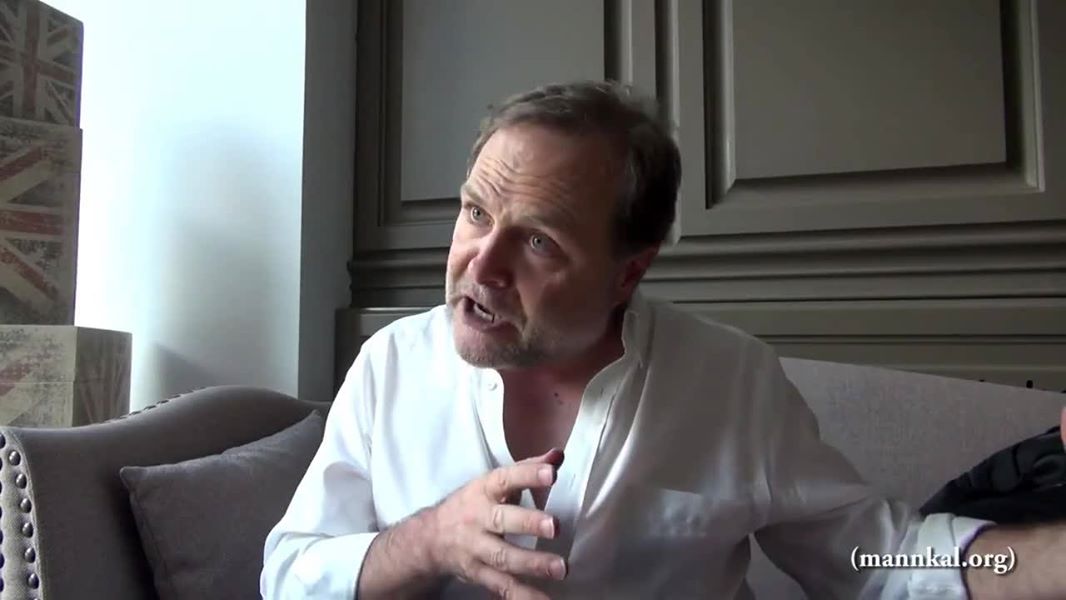
Click for video: videos/10539961_10152564978272264_1472034547_n_10152564962362264.mp4 Short video on my work on Propertarianism.
Source date (UTC): 2014-07-07 03:52:00 UTC
-
Propertarianism is not a Philosophical Preference – It's The Logic Of Cooperation : Praxeology
[P]ropertarianism can be used to describe, compare, and advocate any political system in rigidly logical, universally commensurable form. While one can surely advocate liberty with it, its primary purpose is to suppress error, fallacy and deception. Its the logic of cooperation. The logic of ethics and politics. Aristocratic Egalitarianism can be argued with it. Which I do every day. And AE is the most ethical political model yet developed. But propertarianism only allows me to argue in favor of it logically and truthfully – to construct proofs. But preference for any given political order is still one if choice.
-
Propertarianism is not a Philosophical Preference – It’s The Logic Of Cooperation : Praxeology
[P]ropertarianism can be used to describe, compare, and advocate any political system in rigidly logical, universally commensurable form. While one can surely advocate liberty with it, its primary purpose is to suppress error, fallacy and deception. Its the logic of cooperation. The logic of ethics and politics. Aristocratic Egalitarianism can be argued with it. Which I do every day. And AE is the most ethical political model yet developed. But propertarianism only allows me to argue in favor of it logically and truthfully – to construct proofs. But preference for any given political order is still one if choice.
-
Propertarianism is not a Philosophical Preference – It's The Logic Of Cooperation : Praxeology
[P]ropertarianism can be used to describe, compare, and advocate any political system in rigidly logical, universally commensurable form. While one can surely advocate liberty with it, its primary purpose is to suppress error, fallacy and deception. Its the logic of cooperation. The logic of ethics and politics. Aristocratic Egalitarianism can be argued with it. Which I do every day. And AE is the most ethical political model yet developed. But propertarianism only allows me to argue in favor of it logically and truthfully – to construct proofs. But preference for any given political order is still one if choice.
-
Propertarianism is not a Philosophical Preference – It’s The Logic Of Cooperation : Praxeology
[P]ropertarianism can be used to describe, compare, and advocate any political system in rigidly logical, universally commensurable form. While one can surely advocate liberty with it, its primary purpose is to suppress error, fallacy and deception. Its the logic of cooperation. The logic of ethics and politics. Aristocratic Egalitarianism can be argued with it. Which I do every day. And AE is the most ethical political model yet developed. But propertarianism only allows me to argue in favor of it logically and truthfully – to construct proofs. But preference for any given political order is still one if choice.
-
"Curt, What Is Your Stance On IP?"
QUESTION: “Hello Curt. What’s your stance on IP especially taking Kinsella’s arguments into account?” (Derogatory reference to Kinsella’s personality edited out. – Ed.) ANSWER: [I]n the abstract I agree with the principle that easily accessible licenses for limited monopolies are not beneficial for consumers. However, that rational argument may or may not mean much in practice. 1) IP does appear to rapidly affect business willingness to invest. So, just like property rights exclude people from commons to facilitate the willingness to take risks, IP excludes people from opportunities in order to facilitate the willingness of individuals to take risks. So empirically speaking and rationally speaking, these are trade-off questions not matters of truth and falsehood. 2) Humans don’t like free riding and we intuitively dislike direct copying – seeing it as a case of free riding. I think the question is limited to whether you’re fooling someone or not (trademarking). So as long as you’re not violating a trademark, which is a question of ‘weights and measures’, (fraud), then I think it’s hard to argue against copying anything at all. The test is pretty empirically simple – if you can glance at something for two seconds and tell the original from the copy, then it’s not a trademark violation. If you can then it is. It’s a pretty simple test. We have proven it over and over again. 3) For licensed monopolies, I think it is entirely moral to appeal to the ‘people’ asking for a limited monopoly to produce a good that the market cannot reliably produce. This tends kind of thing tends to be limited to very specific goods (health and medicine) or expensive original research in physical sciences, or high risk investments with high benefit to the commons (transportation and infrastructure). All that occurs is that private investment takes risk and reward, with some lottery bonus from the commons, that if they succeed they will recover their costs free of predation from others. Again, this is a purely pragmatic thing. And as long as such things are put out to ‘bid’, so that whomever wins gets the benefit, then I think it’s just a rational choice to get individuals do off book research and development on behalf of the commons in exchange for winning a lottery if they succeed. However I see these licenses as exceptions on the same level as laws, not grants to be easily obtained without serious discretion. 4) My problem with the rothbardian (ghetto) ethic is that it’s advocating free riding on the work of others, and NOT a matter of competition if you did not conduct the research yourself. Competition is not free riding, since you are doing a better job of voluntarily organizing production and satisfying customers. However, benefitting from someone else’s research and development and capturing the rewards for it is simply free riding. Again, I see the Rothbardian ethic as simply an obscurantist set of arguments meant to justify parasitism rather than enforcing the fundamental requirement for rational cooperation: that we all contribute to production without parasitism upon others. Humans punish cheaters. The only way to increase the velocity of production and trade is to increase trust, and the way to increase trust is to suppress all free riding so that every individual is forced to participate in production, rather than engage in parasitism. Rothbardianism is simply a complex, overloaded, obscurant argument meant to justify ghetto parasitism. It is irrational to choose a stateless polity with low trust and persistent retribution over a stateful polity with low trust and high suppression of retribution. This is why people demand the state: to suppress immoral and unethical people such as rothbardians, so that a high trust society can develop. An anarchic or private polity will only be possible to form under a high trust society that prohibits all free riding with the exception of kin. Curt Doolittle PS: I’m sure this will generate nonsense but I’m pretty sure my argument is rock solid. Just how it is. Rothbardians need to get over it.
-
“Curt, What Is Your Stance On IP?”
QUESTION: “Hello Curt. What’s your stance on IP especially taking Kinsella’s arguments into account?” (Derogatory reference to Kinsella’s personality edited out. – Ed.) ANSWER: [I]n the abstract I agree with the principle that easily accessible licenses for limited monopolies are not beneficial for consumers. However, that rational argument may or may not mean much in practice. 1) IP does appear to rapidly affect business willingness to invest. So, just like property rights exclude people from commons to facilitate the willingness to take risks, IP excludes people from opportunities in order to facilitate the willingness of individuals to take risks. So empirically speaking and rationally speaking, these are trade-off questions not matters of truth and falsehood. 2) Humans don’t like free riding and we intuitively dislike direct copying – seeing it as a case of free riding. I think the question is limited to whether you’re fooling someone or not (trademarking). So as long as you’re not violating a trademark, which is a question of ‘weights and measures’, (fraud), then I think it’s hard to argue against copying anything at all. The test is pretty empirically simple – if you can glance at something for two seconds and tell the original from the copy, then it’s not a trademark violation. If you can then it is. It’s a pretty simple test. We have proven it over and over again. 3) For licensed monopolies, I think it is entirely moral to appeal to the ‘people’ asking for a limited monopoly to produce a good that the market cannot reliably produce. This tends kind of thing tends to be limited to very specific goods (health and medicine) or expensive original research in physical sciences, or high risk investments with high benefit to the commons (transportation and infrastructure). All that occurs is that private investment takes risk and reward, with some lottery bonus from the commons, that if they succeed they will recover their costs free of predation from others. Again, this is a purely pragmatic thing. And as long as such things are put out to ‘bid’, so that whomever wins gets the benefit, then I think it’s just a rational choice to get individuals do off book research and development on behalf of the commons in exchange for winning a lottery if they succeed. However I see these licenses as exceptions on the same level as laws, not grants to be easily obtained without serious discretion. 4) My problem with the rothbardian (ghetto) ethic is that it’s advocating free riding on the work of others, and NOT a matter of competition if you did not conduct the research yourself. Competition is not free riding, since you are doing a better job of voluntarily organizing production and satisfying customers. However, benefitting from someone else’s research and development and capturing the rewards for it is simply free riding. Again, I see the Rothbardian ethic as simply an obscurantist set of arguments meant to justify parasitism rather than enforcing the fundamental requirement for rational cooperation: that we all contribute to production without parasitism upon others. Humans punish cheaters. The only way to increase the velocity of production and trade is to increase trust, and the way to increase trust is to suppress all free riding so that every individual is forced to participate in production, rather than engage in parasitism. Rothbardianism is simply a complex, overloaded, obscurant argument meant to justify ghetto parasitism. It is irrational to choose a stateless polity with low trust and persistent retribution over a stateful polity with low trust and high suppression of retribution. This is why people demand the state: to suppress immoral and unethical people such as rothbardians, so that a high trust society can develop. An anarchic or private polity will only be possible to form under a high trust society that prohibits all free riding with the exception of kin. Curt Doolittle PS: I’m sure this will generate nonsense but I’m pretty sure my argument is rock solid. Just how it is. Rothbardians need to get over it.
-
"Curt, What Is Your Stance On IP?"
QUESTION: “Hello Curt. What’s your stance on IP especially taking Kinsella’s arguments into account?” (Derogatory reference to Kinsella’s personality edited out. – Ed.) ANSWER: [I]n the abstract I agree with the principle that easily accessible licenses for limited monopolies are not beneficial for consumers. However, that rational argument may or may not mean much in practice. 1) IP does appear to rapidly affect business willingness to invest. So, just like property rights exclude people from commons to facilitate the willingness to take risks, IP excludes people from opportunities in order to facilitate the willingness of individuals to take risks. So empirically speaking and rationally speaking, these are trade-off questions not matters of truth and falsehood. 2) Humans don’t like free riding and we intuitively dislike direct copying – seeing it as a case of free riding. I think the question is limited to whether you’re fooling someone or not (trademarking). So as long as you’re not violating a trademark, which is a question of ‘weights and measures’, (fraud), then I think it’s hard to argue against copying anything at all. The test is pretty empirically simple – if you can glance at something for two seconds and tell the original from the copy, then it’s not a trademark violation. If you can then it is. It’s a pretty simple test. We have proven it over and over again. 3) For licensed monopolies, I think it is entirely moral to appeal to the ‘people’ asking for a limited monopoly to produce a good that the market cannot reliably produce. This tends kind of thing tends to be limited to very specific goods (health and medicine) or expensive original research in physical sciences, or high risk investments with high benefit to the commons (transportation and infrastructure). All that occurs is that private investment takes risk and reward, with some lottery bonus from the commons, that if they succeed they will recover their costs free of predation from others. Again, this is a purely pragmatic thing. And as long as such things are put out to ‘bid’, so that whomever wins gets the benefit, then I think it’s just a rational choice to get individuals do off book research and development on behalf of the commons in exchange for winning a lottery if they succeed. However I see these licenses as exceptions on the same level as laws, not grants to be easily obtained without serious discretion. 4) My problem with the rothbardian (ghetto) ethic is that it’s advocating free riding on the work of others, and NOT a matter of competition if you did not conduct the research yourself. Competition is not free riding, since you are doing a better job of voluntarily organizing production and satisfying customers. However, benefitting from someone else’s research and development and capturing the rewards for it is simply free riding. Again, I see the Rothbardian ethic as simply an obscurantist set of arguments meant to justify parasitism rather than enforcing the fundamental requirement for rational cooperation: that we all contribute to production without parasitism upon others. Humans punish cheaters. The only way to increase the velocity of production and trade is to increase trust, and the way to increase trust is to suppress all free riding so that every individual is forced to participate in production, rather than engage in parasitism. Rothbardianism is simply a complex, overloaded, obscurant argument meant to justify ghetto parasitism. It is irrational to choose a stateless polity with low trust and persistent retribution over a stateful polity with low trust and high suppression of retribution. This is why people demand the state: to suppress immoral and unethical people such as rothbardians, so that a high trust society can develop. An anarchic or private polity will only be possible to form under a high trust society that prohibits all free riding with the exception of kin. Curt Doolittle PS: I’m sure this will generate nonsense but I’m pretty sure my argument is rock solid. Just how it is. Rothbardians need to get over it.
-
“Curt, What Is Your Stance On IP?”
QUESTION: “Hello Curt. What’s your stance on IP especially taking Kinsella’s arguments into account?” (Derogatory reference to Kinsella’s personality edited out. – Ed.) ANSWER: [I]n the abstract I agree with the principle that easily accessible licenses for limited monopolies are not beneficial for consumers. However, that rational argument may or may not mean much in practice. 1) IP does appear to rapidly affect business willingness to invest. So, just like property rights exclude people from commons to facilitate the willingness to take risks, IP excludes people from opportunities in order to facilitate the willingness of individuals to take risks. So empirically speaking and rationally speaking, these are trade-off questions not matters of truth and falsehood. 2) Humans don’t like free riding and we intuitively dislike direct copying – seeing it as a case of free riding. I think the question is limited to whether you’re fooling someone or not (trademarking). So as long as you’re not violating a trademark, which is a question of ‘weights and measures’, (fraud), then I think it’s hard to argue against copying anything at all. The test is pretty empirically simple – if you can glance at something for two seconds and tell the original from the copy, then it’s not a trademark violation. If you can then it is. It’s a pretty simple test. We have proven it over and over again. 3) For licensed monopolies, I think it is entirely moral to appeal to the ‘people’ asking for a limited monopoly to produce a good that the market cannot reliably produce. This tends kind of thing tends to be limited to very specific goods (health and medicine) or expensive original research in physical sciences, or high risk investments with high benefit to the commons (transportation and infrastructure). All that occurs is that private investment takes risk and reward, with some lottery bonus from the commons, that if they succeed they will recover their costs free of predation from others. Again, this is a purely pragmatic thing. And as long as such things are put out to ‘bid’, so that whomever wins gets the benefit, then I think it’s just a rational choice to get individuals do off book research and development on behalf of the commons in exchange for winning a lottery if they succeed. However I see these licenses as exceptions on the same level as laws, not grants to be easily obtained without serious discretion. 4) My problem with the rothbardian (ghetto) ethic is that it’s advocating free riding on the work of others, and NOT a matter of competition if you did not conduct the research yourself. Competition is not free riding, since you are doing a better job of voluntarily organizing production and satisfying customers. However, benefitting from someone else’s research and development and capturing the rewards for it is simply free riding. Again, I see the Rothbardian ethic as simply an obscurantist set of arguments meant to justify parasitism rather than enforcing the fundamental requirement for rational cooperation: that we all contribute to production without parasitism upon others. Humans punish cheaters. The only way to increase the velocity of production and trade is to increase trust, and the way to increase trust is to suppress all free riding so that every individual is forced to participate in production, rather than engage in parasitism. Rothbardianism is simply a complex, overloaded, obscurant argument meant to justify ghetto parasitism. It is irrational to choose a stateless polity with low trust and persistent retribution over a stateful polity with low trust and high suppression of retribution. This is why people demand the state: to suppress immoral and unethical people such as rothbardians, so that a high trust society can develop. An anarchic or private polity will only be possible to form under a high trust society that prohibits all free riding with the exception of kin. Curt Doolittle PS: I’m sure this will generate nonsense but I’m pretty sure my argument is rock solid. Just how it is. Rothbardians need to get over it.
