Theme: Productivity

  • DECREASES HAPPINESS But people willingly trade happiness for consumption. Does t

    http://blogs.marketwatch.com/capitolreport/2014/07/18/new-york-city-is-the-most-unhappy-city-in-america/DENSITY DECREASES HAPPINESS

    But people willingly trade happiness for consumption. Does this sound like a drug addiction to you? πŸ™‚ Stimulation over happiness?

    —“That’s according to data coming from a working paper by Harvard professor Edward Glaeser, Vancouver School of Economics professor Joshua Gottlieb and Harvard doctoral student Oren Ziv. They used data collected in a Centers for Disease Control and Prevention survey called the Behavioral Risk Factor Surveillance System, and then adjusted it for age, sex, race, income and other factors. (Such adjustments are important β€” women, for instance, are happier than men; the married are happier than single or divorced respondents; and so on.)”—


    Source date (UTC): 2014-07-24 01:18:00 UTC

  • The less people compete for status as consumers, the more they compete for statu

    The less people compete for status as consumers, the more they compete for status by other means. While competing for status increases consumption which decreases prices and increases employment, the only reason we need increase employment and decrease prices is because we are engaging in increases in consumer production but not increases in innovation. In other words, there are two kinds of productivity increases: the kind that comes from consumption (population increases) and the kind that comes from innovation (regardless of population increases). So what this means is that we are working very hard to get dumber and more numerous?


    Source date (UTC): 2014-07-23 08:45:00 UTC

  • ARTICLE ON THE CURRENT ECONOMICS OF GAME DEVELOPMENT The world is a lot differen

    http://iveybusinessreview.ca/blogs/lbolukhba2010/2014/07/15/1ups-video-game-studios-keep-dying/GREAT ARTICLE ON THE CURRENT ECONOMICS OF GAME DEVELOPMENT

    The world is a lot different from when I wrote adventure games after work in the 80’s by myself. πŸ™‚


    Source date (UTC): 2014-07-18 05:02:00 UTC

  • USUALLY I AGREE WITH TALEB (But his suggestion that extreme wealth is analogous

    USUALLY I AGREE WITH TALEB

    (But his suggestion that extreme wealth is analogous to overdoes, well, doesn’t sit well with me.)

    Small problem of measurement on the one hand and acting upon it on the other. Wealth sufficient to circumvent the market or to seek rents, then yes, but otherwise I see no measurement that has meaning. If an individual possessed 80% of the wealth of an economy, if it is employed in the market, not used as credit sufficient to create monopolies, and politically free of rents then it is for all intents and purposes in circulation, and his behavior manageable under the common law. I am pretty sure I can answer all objections. But not in a comment. Wealth is inly a problem if the government lags or impedes the evolution of tactics in an economy. The common law, unlike a government, is not impeded from evolution at the rate of the market.

    As far as I know, representational, majority rule government is the problem blocking evolution under common law. I cant see much evidence of durable families in the economy that are not the product of economic rents on the distribution if liquidity through the financial markets instead of through consumers.

    Government is and remains the problem, not wealth. That is the best answer I can manage, and as far as I know thats the state of knowledge if our art if political economy.


    Source date (UTC): 2014-07-14 16:25:00 UTC

  • CULTURAL OBSERVATIONS: UKRAINIAN ENTREPRENEURS. I crashed a Ukrainian entreprene

    CULTURAL OBSERVATIONS: UKRAINIAN ENTREPRENEURS.

    I crashed a Ukrainian entrepreneurs meeting tonight. I like to visit these whenever I can, wherever on earth I am at the time. And see if I can help anyone at all, or meet some interesting people. Tonight was fun – really.

    Talked about how much I love Ukraine and didn’t realize myself how passionate I am.

    Many had the same feeling. But the reason why is interesting: because we all felt we could make a difference here, and in the west we can be consumers, sure, but have no meaningful impact.

    That realization and the feeling was moving. In Ukraine, every entrepreneur matters.

    Every single one.

    And that is a spiritual reward that is hard to obtain elsewhere.

    I need to propagate that message. Ukraine is awesome for biz.

    Met a young lawyer in IT law educated in the UK. Gonna switch. Hate my UA lawyer. ( american).

    Had to stay in message that you find customers with problems and create companies to solve them. You do not build a business you know about and sell it. I want to kill the “idea” meme and push the customer meme because that is the primary reason young people fail. No matter what you think, you’re just ignorant by your customers standards. You must find problems customers cant solve and know more about that than they do. Otherwise you are wasting your time and theirs with your ignorance.

    Talked a little about why Ukraine can only export labor: because there is no accumulated capital whether cultural, institutional, organizational, not patterns of trade, no trusted networks. No accumulated advantage at all. They need to get local capital investment to build Ukrainian companies that accumulate capital locally rather than exporting all the capital produced by their cheap labor.we think in terms of companies in the west but it is the network of companies in any sector that produces goods and services – including the most important companies: the courts/lawyers and banks/accountants. Ukraine doesn’t have them.

    You cannot really fathom how important Austrian economics is to business people ( sans Misesian pseudoscience) in this part of the world. Macro is for politicians. Austrian is for entrepreneurs. ( i hope i live ling enough to repair Austrian economics and rescue it from misesian pseudoscience). I kinda think its gonna take beyond my lifetime to get across how important my ideas are)

    Pissed off one guy by saying that it was cheaper to pay unnecessary government employees to stay home than to have them impede the economy.

    Same guy who thought it was good that the government tried to force money to stay in the country rather than give people reasons to keep it here. He said something else economically destructive. But I forgot it. I should have given him more attention because i didn’t explain his (common) errors. And now he will just hate me. But I cant be on my game all the time..,

    I fucking love ukrainians: all the goodness of americans without the bad.


    Source date (UTC): 2014-07-08 14:48:00 UTC

  • How To Rapidly Become A Billionaire

    (seriously) (worth reading) [I]t’s been done. Secret? Threaten a big company’s revenue stream or customer base, by providing a service better than they do. Why is that possible? Internal incompetence of bureaucracies. Why? Because brands always seek to facilitate the brand with tangential value rather than deliver a product or service in the most excellent way possible for consumers regardless of brand. Almost all companies make this mistake, Apple and Microsoft included. Dropbox should never have had a chance. But every other large organization failed by trying to “leverage”. That is a fallacy. Beats threatened Apple. Multiple companies threatened Facebook. Unfortunately management falsely understands the leverage as risk mitigation rather than risk amplification. Make it excellent. Threaten them over their mistakes. That is how you become a billionaire in short fashion. Thankfully I don’t care to be more than a millionaire. I do my threatening of paradigmatic fallacies with political philosophy and for me that is a greater reward.

  • How To Rapidly Become A Billionaire

    (seriously) (worth reading) [I]t’s been done. Secret? Threaten a big company’s revenue stream or customer base, by providing a service better than they do. Why is that possible? Internal incompetence of bureaucracies. Why? Because brands always seek to facilitate the brand with tangential value rather than deliver a product or service in the most excellent way possible for consumers regardless of brand. Almost all companies make this mistake, Apple and Microsoft included. Dropbox should never have had a chance. But every other large organization failed by trying to “leverage”. That is a fallacy. Beats threatened Apple. Multiple companies threatened Facebook. Unfortunately management falsely understands the leverage as risk mitigation rather than risk amplification. Make it excellent. Threaten them over their mistakes. That is how you become a billionaire in short fashion. Thankfully I don’t care to be more than a millionaire. I do my threatening of paradigmatic fallacies with political philosophy and for me that is a greater reward.

  • Click for video: videos/10536312_10152565041752264_655761083_n_10152565024892264

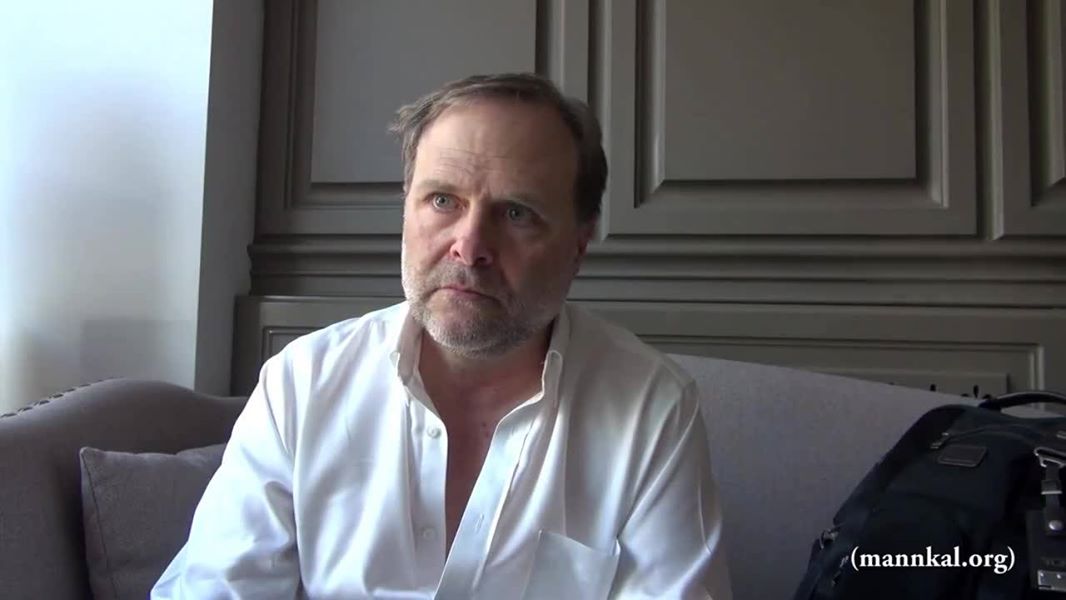
    Click for video: videos/10536312_10152565041752264_655761083_n_10152565024892264.mp4 Curt Doolittle on the entrepreneurial opportunity in Ukraine.


    Source date (UTC): 2014-07-07 04:49:00 UTC

  • guy is 21, and the perfect entrepreneur. The reason I think his story is valuabl

    http://digg.com/video/meet-new-yorks-youngest-truffle-dealerThis guy is 21, and the perfect entrepreneur. The reason I think his story is valuable to share, is that, he’s a master of his niche. And largely, entrepreneurship requires mastery of something that few other people master.


    Source date (UTC): 2014-07-05 21:09:00 UTC

  • A Propertarian Solution To Getting Consumers Money To Spend

    A PROPERTARIAN SOLUTION TO THE COMING MOBS OF PITCHFORKS – A BETTER WAY OF GETTING PEOPLE MINIMUM INCOME (READ THIS) (IMPORTANT PIECE) See http://topinfopost.com/2014/06/30/ultra-rich-mans-letter-to-my-fellow-filthy-rich-americans-the-pitchforks-are-coming (regardless of your political persuasion, you should read this. because it’s the best existing answer to the social problem of post-agrarian capitalism). [T]his might sound like a criticism, but it’s not: he “gets it” sentimentally, he doesn’t get it economically, or institutionally, because he’s not knowledgeable enough to ‘get it’ economically or institutionally. But the fact that he expresses his ideas sentimentally, is more USEFUL than expressing them economically or institutionally. Because people will not understand the importance of the economic and institutional arguments. The institutional problem we face with engaging in systematic dependency-creating redistribution is giving everyone the right incentives, rather than those that encourage the expansion of the government, which is a parasite on consumers and producers alike. The economic problem we face with creating institutionalized redistribution is doing it without doing more damage to the complex system of information provided by prices and wages. We forget too easily that capitalism refers to the *voluntary organization of production* in contrast to the various involuntary means of organizing production. The reason why capitalism produces prosperity and socialism doesn’t is because under the voluntary organization of production people have both the incentive to work and producers the ability to make rational plans under ever-changing conditions. Under socialism, people have the incentive not to work, or to work as little as possible, and it is impossible to rationally organize production to serve the desires of other producers and consumers. So capitalism isn’t a matter of preference, it’s a matter of necessity. But here is the rub – and the solution. [W]hen our governments were invented, people worked in an agrarian society where our productivity was marginally indifferent, and determined not so much by our abilities, but whether we controlled our breeding, and whether we had the discipline to work hard. Today, disconnected from the productivity of the land, no longer farmers, no longer farm workers, even if we want to work, many of us cannot, because we can do nothing productive enough to participate in production under the voluntary organization of production. But this is logical a mistake we’ve inherited from our agrarian past. The most important part of making the voluntarily organization of production possible, is respecting other people’s property rights, and respecting the commons, and not increasing the expenses that others must bear for your existence in the world. That is why the west is wealthier than the rest – the high trust society. But respecting property – forgoing pleasures, and policing other so that they also forgo pleasures that would make the voluntary organization of production difficult and expensive if not impossible – is a form of work. If you respect property, the commons, and do not increase the costs that others must bear to support you, and police the behavior of others so that they respect property rights too, then you are in fact, working in production. You are working to produce the law, order and property rights that make the voluntary organization of production possible. The high trust society is just as important to the voluntary organization of society as are the resources that go into that production. As such, we must pay people for that work that they do, or we are failing to pay them for their participation in the production of the necessary conditions under which we can voluntarily organize production using the information provided by the pricing system, and our individual incentives to work in order to increase our consumption. [T]his is the “missing” moral argument for redistribution that is economically sound, and institutionally sound, that we have been searching for since the beginning of the industrial revolution in the late 1700’s in England (and which Marx got terribly wrong at the cost of 100M lives, and which Keynes also got terribly wrong, which has cost us again, possibly, the economic health of western civilization.) The economically sound, and institutionally safe method of accomplishing this wage payment for constructing the social order that is necessary for the voluntary organization of production under the pricing system is to (a) redistribute money directly from the treasury to consumers via debit cards (b) base the amount of the distribution on monthly sales taxes collected, and eliminate as much of the income tax structure as possible, if not all of it, and (c) construct that payment as a non-guaranteed commission such that the more people in the work force, the less there is to go around (d) give it to everyone. (e) remove all employment laws, discrimination laws, minimum wage laws and the like (f) make it as much as we can economically tolerate (f) eliminate all other redistributive and controlling government programs and organizations and add that to the payment. (g) and lastly, and perhaps equally as importantly, use direct-from-treasury lending on all single-home single-owner mortgages, and single owner business properties at zero interest rate over 15 years. (g) As Galbraith and I both argued before his death, refinance and write down all mortgages against the treasury and pay them off over 30 years. There is no reason that an investor has the long term right to the interest on a mortgage at public expense. (And yes I have worked through the consequences to institutional investors. This bypasses institutional investors by eliminating the need for them.) Why this set of solutions? Because this (1) makes employment a preference not a necessity, and therefore not subject to regulation, (2) encourages everyone to limit the scope of government and maximize personal take home giving producers and consumers the same interest in keep ing the parasitic state as small as possible (3) doesn’t interfere with the pricing structure by artificially pricing labor and distorting the international price of american products and services. The macro economic importance of this point is greater than the importance of the first two. (4) also this solution would force the population to resist all immigration other than that which increases productivity, and depress the current fictionalization. (5) eliminates the class warfare in government by giving us exactly the same interest. (6) most importantly, it eliminates the majority of the financial sector, by pushing money directly to consumers and causing the banks to compete for consumer savings, rather than construct predatory consumer credit schemes, as we distribute money from the treasury down through the banking system. The impact of this on dismantling the influence of the financial sector on political and world affairs is something that if understood is more profound than the evolution of fiat currency in the first place. I wish I had time to give this the treatment it’s worthy of, but it will have to do for now. Curt Doolittle The Propertarian Institute Kiev Ukraine