Theme: Governance

  • MARITIME VS CONTINENTAL CIVILIZATIONS A Post-Western Global Order? Sarah Paine (

    MARITIME VS CONTINENTAL CIVILIZATIONS
    A Post-Western Global Order?
    Sarah Paine (Naval War College) https://t.co/fpF127mfVK
    Clarity on why the postwar order evolved.


    Source date (UTC): 2024-06-13 02:28:54 UTC

    Original post: https://twitter.com/i/web/status/1801079265837920256

  • RT @dr_duchesne: This has been going on for years; I wrote about it some three y

    RT @dr_duchesne: This has been going on for years; I wrote about it some three years ago; nobody cares, Canada is finished, all the politic…


    Source date (UTC): 2024-06-12 18:53:45 UTC

    Original post: https://twitter.com/i/web/status/1800964723476668797

  • RT @BradWilcoxIFS: New @pewresearch: Staggering 40 percentage point gap between

    RT @BradWilcoxIFS: New @pewresearch: Staggering 40 percentage point gap between Biden & Trump backers in… % who say society should priori…


    Source date (UTC): 2024-06-12 15:08:02 UTC

    Original post: https://twitter.com/i/web/status/1800907921787912522

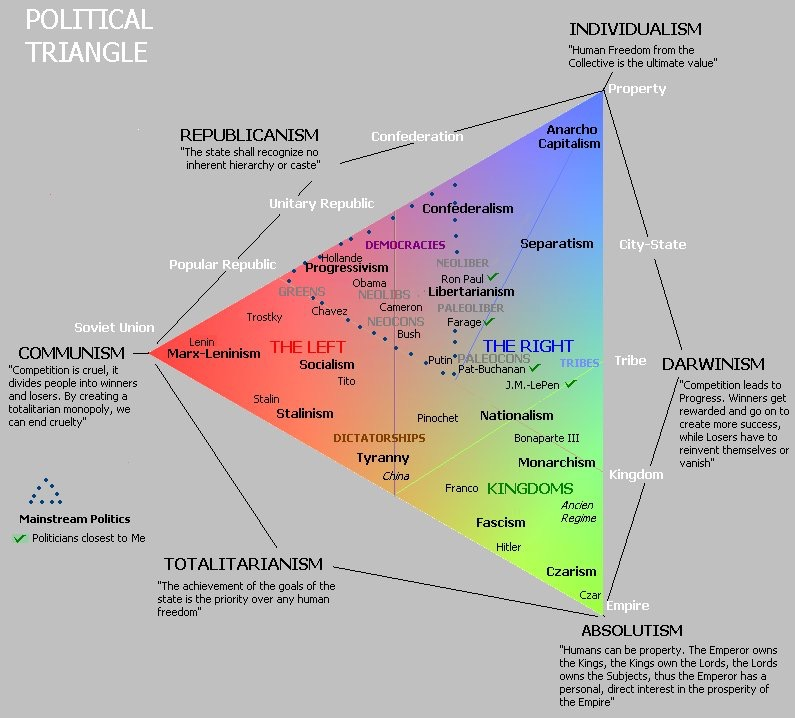
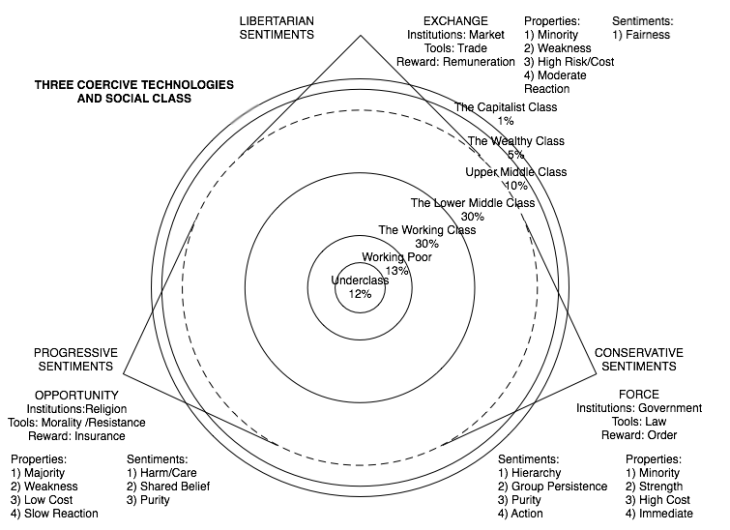
  • There is a reason the Nolan chart has a vacant quadrant. z See Attached: 1) (whi

    There is a reason the Nolan chart has a vacant quadrant. z
    See Attached:
    1) (white, circles) is the structural detail
    2) (grey, one triangle is the political distribution)
    3) (lots of triangles) is the spectrum of the ternary (three) logic from the charge difference of the… https://t.co/gsZkKYnAnH


    Source date (UTC): 2024-06-11 04:07:40 UTC

    Original post: https://twitter.com/i/web/status/1800379345665392910

    Replying to: https://twitter.com/i/web/status/1800337458057416839

  • RT @TexasNatMov: More Texans than ever are seeing the truth that we’ve seen for

    RT @TexasNatMov: More Texans than ever are seeing the truth that we’ve seen for years:

    The feds are unfixable.


    Source date (UTC): 2024-06-10 21:01:08 UTC

    Original post: https://twitter.com/i/web/status/1800272005134225685

  • WHAT DOES NEOLIBERAL MEAN? (“Think Regan Era”) (cc: @whatifalthist) ORIGIN: It r

    WHAT DOES NEOLIBERAL MEAN?
    (“Think Regan Era”) (cc: @whatifalthist)

    ORIGIN:
    It represents a revival and adaptation of classical liberal economic principles, emphasizing free markets, deregulation, and a reduced role for the state in economic affairs.

    At about the same time, both Communist-socialist Revolutions had failed globally, and the Keynesian Revolution failed in the anglosphere (domestically).

    Neoliberalism is a return to classical liberalism while retaining the inescapable traps of the experiments with marxism, socialism, communism and keynesianism.

    LIST OF -ISMS:
    Conservative: Traditional values, free markets with some protectionism, limited economic regulation but strong state in law and order.
    Classical Liberal: Individual liberty, free markets, limited government, protection of individual rights.
    Neoliberalism: Market-driven, minimal government intervention, deregulation, and privatization.
    Libertarian: Personal freedom, minimal government, extreme free-market capitalism.
    Liberal (in americas): Social equality, mixed economy, government intervention for welfare and rights protection.
    Progressive: Social reform, economic equality, strong government intervention, and regulatory measures.
    Left: Collective rights, extensive government intervention, social and economic equity, ranging from social democracy to socialism.

    HISTORY

    Classical Liberalism (19th Century):
    Foundations: Classical liberalism, championed by thinkers like Adam Smith, David Ricardo, and John Stuart Mill, emphasized free markets, limited government intervention, individual liberty, and private property rights.
    Economic Policies: Advocated for laissez-faire economic policies, believing that free markets would lead to efficient allocation of resources and economic prosperity.

    Rise of Keynesian Economics (Early to Mid-20th Century):
    Great Depression and World War II: The economic hardships of the Great Depression and the subsequent global conflicts led to a questioning of classical liberalism’s ability to manage economic crises.
    John Maynard Keynes: Keynesian economics emerged, advocating for active government intervention to manage economic cycles, stimulate demand, and ensure full employment. This led to the adoption of welfare state policies and regulatory frameworks in many Western countries.

    Critique and Response (Mid-20th Century):
    Post-War Consensus: By the mid-20th century, Keynesian economics and welfare state policies had become the norm in many Western democracies. However, there were growing concerns about the limitations of these policies, including high inflation, stagnation, and inefficiencies in state-run enterprises.
    Chicago School and Austrian School: Economists like Friedrich Hayek, Milton Friedman, and others associated with the Chicago School and Austrian School began to critique Keynesian economics. They argued that excessive government intervention distorted markets, led to inefficiencies, and undermined individual freedoms.
    Emergence of Neoliberalism (1970s-1980s):
    Stagflation: The economic crises of the 1970s, characterized by high inflation and stagnant growth (stagflation), further discredited Keynesian policies and created an opening for neoliberal ideas.
    Adoption by Policymakers: Neoliberalism gained prominence as a policy response to these economic challenges. Leaders like Margaret Thatcher in the UK and Ronald Reagan in the US embraced neoliberal policies, advocating for tax cuts, deregulation, privatization, and reduced government spending.

    KEY FEATURES OF NEOLIBERALISM

    Economic Liberalization:
    Free Markets: Emphasis on free markets as the most efficient way to allocate resources.
    Deregulation: Reducing government regulations on businesses and industries to promote competition and innovation.

    Privatization:
    Public to Private: Transferring ownership of state-owned enterprises and services to the private sector to increase efficiency and reduce public expenditure.

    Fiscal Austerity:
    Government Spending: Reducing government spending, particularly on welfare programs, to reduce budget deficits and national debt.
    Tax Cuts: Implementing tax cuts, particularly for businesses and high-income earners, to stimulate investment and economic growth.

    Globalization:
    Trade and Investment: Promoting open international trade and investment, removing barriers to the flow of goods, services, and capital.

    CONTEXTS AND IMPACT

    Global Spread:
    International Institutions: Neoliberal policies were promoted by international institutions like the International Monetary Fund (IMF) and the World Bank, especially in developing countries through structural adjustment programs.
    Policy Influence: Neoliberalism influenced economic policies worldwide, leading to widespread deregulation, privatization, and market-oriented reforms.

    Criticism and Backlash:
    Inequality and Social Impact: Critics argue that neoliberal policies have contributed to increasing economic inequality, social dislocation, and the erosion of public services.
    Financial Crises: The deregulation of financial markets has been linked to financial crises, such as the 2008 global financial crisis, leading to renewed calls for regulatory oversight and reform.

    Conclusion
    Neoliberalism evolved as a response to the perceived failures of Keynesian economic policies and the economic challenges of the mid-20th century. It sought to revive and adapt classical liberal principles to promote free markets, deregulation, privatization, and reduced government intervention.

    While it has significantly influenced global economic policies, neoliberalism has also faced substantial criticism for its social and economic impacts, leading to ongoing debates about the role of the state and markets in modern economies

    Source date (UTC): 2024-06-07 17:48:59 UTC

    Original post: https://twitter.com/i/web/status/1799136485741907968

  • WHAT DOES NEOLIBERAL MEAN? (“Think Regan”) LIST OF -ISMS: Conservative: Traditio

    WHAT DOES NEOLIBERAL MEAN?
    (“Think Regan”)

    LIST OF -ISMS:
    Conservative: Traditional values, free markets with some protectionism, limited economic regulation but strong state in law and order.
    Classical Liberal: Individual liberty, free markets, limited government, protection of individual rights.
    Neoliberalism: Market-driven, minimal government intervention, deregulation, and privatization.
    Libertarian: Personal freedom, minimal government, extreme free-market capitalism.
    Liberal (in americas): Social equality, mixed economy, government intervention for welfare and rights protection.
    Progressive: Social reform, economic equality, strong government intervention, and regulatory measures.
    Left: Collective rights, extensive government intervention, social and economic equity, ranging from social democracy to socialism.

    CAUSALITY: THE FAILURES OF THE EXPERIMENTS
    At about the same time, both Communist-socialist Revolutions had failed globally, and the Keynesian Revolution failed in the anglosphere (domestically).

    Neoliberalism is a return to classical liberalism while retaining the inescapable traps of the experiments with marxism, socialism, communism and keynesianism.

    HISTORY
    The term “neoliberalism” evolved as a response to shifts in economic thought and policy during the 20th century. It represents a revival and adaptation of classical liberal economic principles, emphasizing free markets, deregulation, and a reduced role for the state in economic affairs.

    Classical Liberalism (19th Century):
    Foundations: Classical liberalism, championed by thinkers like Adam Smith, David Ricardo, and John Stuart Mill, emphasized free markets, limited government intervention, individual liberty, and private property rights.
    Economic Policies: Advocated for laissez-faire economic policies, believing that free markets would lead to efficient allocation of resources and economic prosperity.

    Rise of Keynesian Economics (Early to Mid-20th Century):
    Great Depression and World War II: The economic hardships of the Great Depression and the subsequent global conflicts led to a questioning of classical liberalism’s ability to manage economic crises.
    John Maynard Keynes: Keynesian economics emerged, advocating for active government intervention to manage economic cycles, stimulate demand, and ensure full employment. This led to the adoption of welfare state policies and regulatory frameworks in many Western countries.

    Critique and Response (Mid-20th Century):
    Post-War Consensus: By the mid-20th century, Keynesian economics and welfare state policies had become the norm in many Western democracies. However, there were growing concerns about the limitations of these policies, including high inflation, stagnation, and inefficiencies in state-run enterprises.
    Chicago School and Austrian School: Economists like Friedrich Hayek, Milton Friedman, and others associated with the Chicago School and Austrian School began to critique Keynesian economics. They argued that excessive government intervention distorted markets, led to inefficiencies, and undermined individual freedoms.
    Emergence of Neoliberalism (1970s-1980s):
    Stagflation: The economic crises of the 1970s, characterized by high inflation and stagnant growth (stagflation), further discredited Keynesian policies and created an opening for neoliberal ideas.
    Adoption by Policymakers: Neoliberalism gained prominence as a policy response to these economic challenges. Leaders like Margaret Thatcher in the UK and Ronald Reagan in the US embraced neoliberal policies, advocating for tax cuts, deregulation, privatization, and reduced government spending.

    KEY FEATURES OF NEOLIBERALISM

    Economic Liberalization:
    Free Markets: Emphasis on free markets as the most efficient way to allocate resources.
    Deregulation: Reducing government regulations on businesses and industries to promote competition and innovation.

    Privatization:
    Public to Private: Transferring ownership of state-owned enterprises and services to the private sector to increase efficiency and reduce public expenditure.

    Fiscal Austerity:
    Government Spending: Reducing government spending, particularly on welfare programs, to reduce budget deficits and national debt.
    Tax Cuts: Implementing tax cuts, particularly for businesses and high-income earners, to stimulate investment and economic growth.

    Globalization:
    Trade and Investment: Promoting open international trade and investment, removing barriers to the flow of goods, services, and capital.

    CONTEXTS AND IMPACT

    Global Spread:
    International Institutions: Neoliberal policies were promoted by international institutions like the International Monetary Fund (IMF) and the World Bank, especially in developing countries through structural adjustment programs.
    Policy Influence: Neoliberalism influenced economic policies worldwide, leading to widespread deregulation, privatization, and market-oriented reforms.

    Criticism and Backlash:
    Inequality and Social Impact: Critics argue that neoliberal policies have contributed to increasing economic inequality, social dislocation, and the erosion of public services.
    Financial Crises: The deregulation of financial markets has been linked to financial crises, such as the 2008 global financial crisis, leading to renewed calls for regulatory oversight and reform.

    Conclusion
    Neoliberalism evolved as a response to the perceived failures of Keynesian economic policies and the economic challenges of the mid-20th century. It sought to revive and adapt classical liberal principles to promote free markets, deregulation, privatization, and reduced government intervention.

    While it has significantly influenced global economic policies, neoliberalism has also faced substantial criticism for its social and economic impacts, leading to ongoing debates about the role of the state and markets in modern economies


    Source date (UTC): 2024-06-07 17:48:59 UTC

    Original post: https://twitter.com/i/web/status/1799135824929271808

  • China. The perfect empire. Aggressive assimilation

    China. The perfect empire. Aggressive assimilation


    Source date (UTC): 2024-06-07 17:08:54 UTC

    Original post: https://twitter.com/i/web/status/1799126399162392808

    Reply addressees: @whatifalthist

    Replying to: https://twitter.com/i/web/status/1799115080845660247

  • The CIA doesn’t listen. The FBI Does. And they know nonsense chatter from the po

    The CIA doesn’t listen. The FBI Does. And they know nonsense chatter from the powerless when they see it. 😉


    Source date (UTC): 2024-06-07 05:03:30 UTC

    Original post: https://twitter.com/i/web/status/1798943846308663343

    Reply addressees: @lerpclide40920

    Replying to: https://twitter.com/i/web/status/1798943592804975036

  • INCENTIVES: THE FIRST WORLD WAR’S PROPONENTS Strategic Intersets The proponents

    INCENTIVES: THE FIRST WORLD WAR’S PROPONENTS

    Strategic Intersets
    The proponents feared that if the Allies were defeated, the balance of power in Europe would shift in favor of the Central Powers (Germany, Austria-Hungary, and the Ottoman Empire). This shift could threaten U.S. interests and influence globally. By supporting the Allies, the U.S. could help shape the post-war world order in a way that favored democratic values and American strategic interests​​.

    Economic Interests
    Financial Stakes: American businesses and banks had significant financial investments in the success of the Allied powers. The U.S. had extended large loans to Britain and France, and the victory of these countries was crucial for ensuring the repayment of these loans. A defeat of the Allies would likely result in financial losses for American investors and could have severe economic repercussions domestically​ (History Hit)​.
    Trade and Commerce: The war had already disrupted international trade routes, and American businesses were concerned about the long-term impacts on global trade. By entering the war, the U.S. could protect its commercial interests and ensure that it remained a dominant player in international trade after the war


    Source date (UTC): 2024-06-06 23:53:54 UTC

    Original post: https://twitter.com/i/web/status/1798865935153119234