Theme: Ethnoculture

  • Click for video: photos_and_videos/videos/30661913_435550606935110_3330923084122

    Click for video: photos_and_videos/videos/30661913_435550606935110_3330923084122895673_n_10156157336557264.mp4 THE HISTORY OF OUR PEOPLE

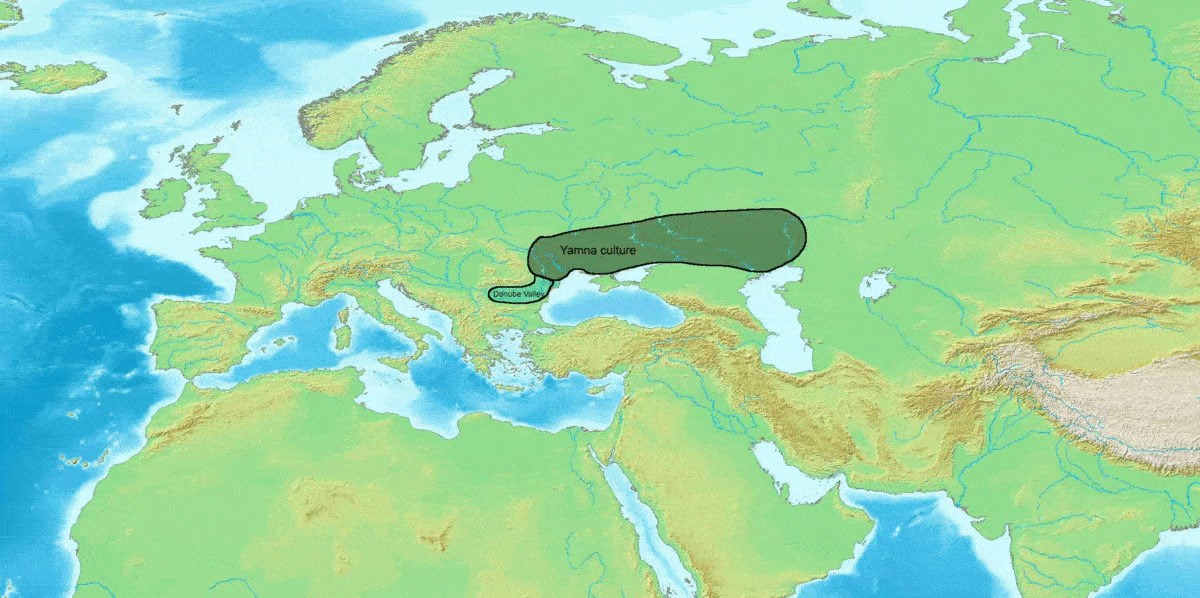
    Indo-European migrations were the migrations of pastoral peoples speaking the Proto-Indo-European language, who departed from the Yamnaya and related cultures in the Pontic–Caspian steppe, starting at c. 4000 BCE. They spread throughout Europe and Asia, forming new cultures with the people they met on their way, including the Corded Ware culture in Northern Europe and the Vedic culture in India.

    Modern knowledge of these migrations is based on data from (a) linguistics, (b)archaeology, (c) anthropology and (d) genetics.

    a) Linguistics describes the similarities between various languages, and the linguistic laws at play in the changes in those languages.

    b/c) Archaeological data, describes the spread of the Proto-Indo-European language and culture in several stages from the Proto-Indo-European Eurasian homeland in the Pontic–Caspian steppe, into Western Europe and Central and South Asia, by migrations, and by language shift through elite-recruitment as described by anthropological research.

    d) Recent genetic research has a growing contribution to the understanding of the historical relations between various historical cultures.

    The Indo-European languages and cultures spread in various stages.

    Early migrations from c. 4200–3000 BCE brought archaic proto-Indo-European into:

    1) the lower Danube valley,

    2) Anatolia, and the

    3) Altai region

    4) Pre-Celtic and pre-Italic probably spread into Europe after new migrations into the Danube Valley,

    5) While pre-Germanic and pre-Balto-Slavic developed east of the Carpathian mountains, at present-day Ukraine, moving north and spreading with the Corded Ware culture in Middle Europe (third millennium BCE).

    6) The Indo-Iranian language and culture emerged at the Sintashta culture (c. 2100–1800 BCE), at the eastern border of the Yamna horizon and the Corded ware culture,growing into the Andronovo culture (c. 1800–800 BCE).

    7) Indo-Aryans moved into the Bactria–Margiana Archaeological Complex (c. 2300–1700 BCE) and spread to the Levant (Mitanni), northern India (Vedic people, c. 1500 BCE), and China (Wusun).

    8) The Iranian languages spread throughout the steppes with the Scyths and into Iran with the Medes, Parthians and Persians from ca. 800 BCE.

    (Straight from Wikipedia. This isn’t controversial. It’s just how it is.)Kimberly Ashberry-MoxleyINTERESTING….however, thats all about to change…Mar 28, 2018 2:32amTHE HISTORY OF OUR PEOPLE

    Indo-European migrations were the migrations of pastoral peoples speaking the Proto-Indo-European language, who departed from the Yamnaya and related cultures in the Pontic–Caspian steppe, starting at c. 4000 BCE. They spread throughout Europe and Asia, forming new cultures with the people they met on their way, including the Corded Ware culture in Northern Europe and the Vedic culture in India.

    Modern knowledge of these migrations is based on data from (a) linguistics, (b)archaeology, (c) anthropology and (d) genetics.

    a) Linguistics describes the similarities between various languages, and the linguistic laws at play in the changes in those languages.

    b/c) Archaeological data, describes the spread of the Proto-Indo-European language and culture in several stages from the Proto-Indo-European Eurasian homeland in the Pontic–Caspian steppe, into Western Europe and Central and South Asia, by migrations, and by language shift through elite-recruitment as described by anthropological research.

    d) Recent genetic research has a growing contribution to the understanding of the historical relations between various historical cultures.

    The Indo-European languages and cultures spread in various stages.

    Early migrations from c. 4200–3000 BCE brought archaic proto-Indo-European into:

    1) the lower Danube valley,

    2) Anatolia, and the

    3) Altai region

    4) Pre-Celtic and pre-Italic probably spread into Europe after new migrations into the Danube Valley,

    5) While pre-Germanic and pre-Balto-Slavic developed east of the Carpathian mountains, at present-day Ukraine, moving north and spreading with the Corded Ware culture in Middle Europe (third millennium BCE).

    6) The Indo-Iranian language and culture emerged at the Sintashta culture (c. 2100–1800 BCE), at the eastern border of the Yamna horizon and the Corded ware culture,growing into the Andronovo culture (c. 1800–800 BCE).

    7) Indo-Aryans moved into the Bactria–Margiana Archaeological Complex (c. 2300–1700 BCE) and spread to the Levant (Mitanni), northern India (Vedic people, c. 1500 BCE), and China (Wusun).

    8) The Iranian languages spread throughout the steppes with the Scyths and into Iran with the Medes, Parthians and Persians from ca. 800 BCE.

    (Straight from Wikipedia. This isn’t controversial. It’s just how it is.)


    Source date (UTC): 2018-02-25 12:20:00 UTC

  • Click for video: videos/33585335_971200939713942_809718436866767527_n_1015615733

    Click for video: videos/33585335_971200939713942_809718436866767527_n_10156157336557264.mp4 THE HISTORY OF OUR PEOPLE

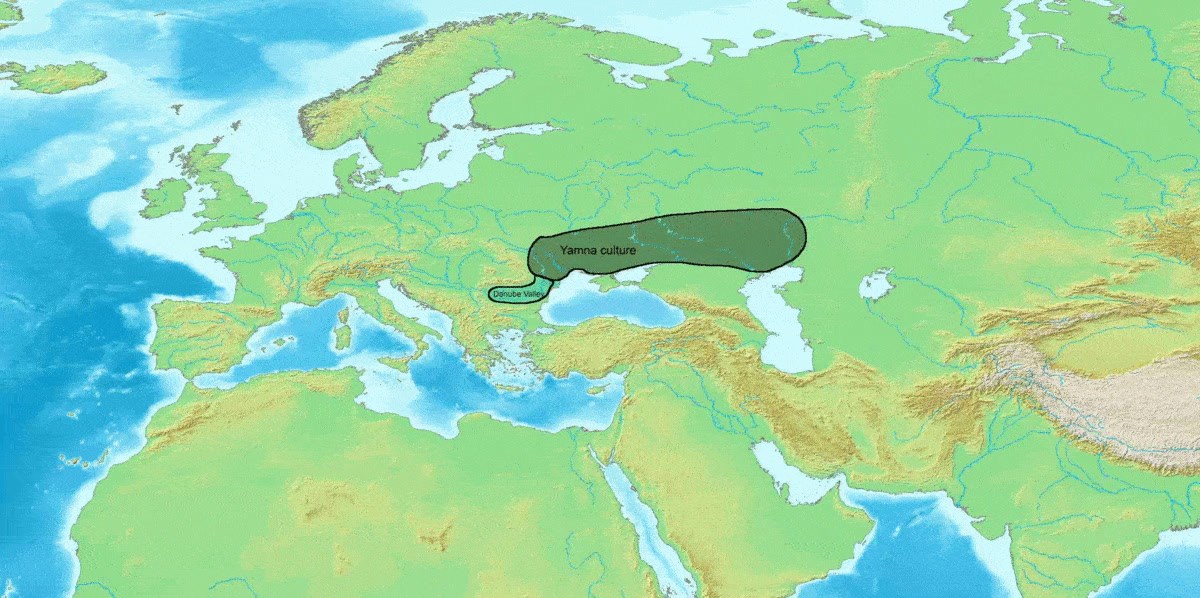
    Indo-European migrations were the migrations of pastoral peoples speaking the Proto-Indo-European language, who departed from the Yamnaya and related cultures in the Pontic–Caspian steppe, starting at c. 4000 BCE. They spread throughout Europe and Asia, forming new cultures with the people they met on their way, including the Corded Ware culture in Northern Europe and the Vedic culture in India.

    Modern knowledge of these migrations is based on data from (a) linguistics, (b)archaeology, (c) anthropology and (d) genetics.

    a) Linguistics describes the similarities between various languages, and the linguistic laws at play in the changes in those languages.

    b/c) Archaeological data, describes the spread of the Proto-Indo-European language and culture in several stages from the Proto-Indo-European Eurasian homeland in the Pontic–Caspian steppe, into Western Europe and Central and South Asia, by migrations, and by language shift through elite-recruitment as described by anthropological research.

    d) Recent genetic research has a growing contribution to the understanding of the historical relations between various historical cultures.

    The Indo-European languages and cultures spread in various stages.

    Early migrations from c. 4200–3000 BCE brought archaic proto-Indo-European into:

    1) the lower Danube valley,

    2) Anatolia, and the

    3) Altai region

    4) Pre-Celtic and pre-Italic probably spread into Europe after new migrations into the Danube Valley,

    5) While pre-Germanic and pre-Balto-Slavic developed east of the Carpathian mountains, at present-day Ukraine, moving north and spreading with the Corded Ware culture in Middle Europe (third millennium BCE).

    6) The Indo-Iranian language and culture emerged at the Sintashta culture (c. 2100–1800 BCE), at the eastern border of the Yamna horizon and the Corded ware culture,growing into the Andronovo culture (c. 1800–800 BCE).

    7) Indo-Aryans moved into the Bactria–Margiana Archaeological Complex (c. 2300–1700 BCE) and spread to the Levant (Mitanni), northern India (Vedic people, c. 1500 BCE), and China (Wusun).

    8) The Iranian languages spread throughout the steppes with the Scyths and into Iran with the Medes, Parthians and Persians from ca. 800 BCE.

    (Straight from Wikipedia. This isn’t controversial. It’s just how it is.)

    Source date (UTC): 2018-02-25 12:20:00 UTC

  • The History Of Our People

    Indo-European migrations were the migrations of pastoral peoples speaking the Proto-Indo-European language, who departed from the Yamnaya and related cultures in the Pontic–Caspian steppe, starting at c. 4000 BCE. They spread throughout Europe and Asia, forming new cultures with the people they met on their way, including the Corded Ware culture in Northern Europe and the Vedic culture in India. Modern knowledge of these migrations is based on data from (a) linguistics, (b)archaeology, (c) anthropology and (d) genetics. a) Linguistics describes the similarities between various languages, and the linguistic laws at play in the changes in those languages. b/c) Archaeological data, describes the spread of the Proto-Indo-European language and culture in several stages from the Proto-Indo-European Eurasian homeland in the Pontic–Caspian steppe, into Western Europe and Central and South Asia, by migrations, and by language shift through elite-recruitment as described by anthropological research. d) Recent genetic research has a growing contribution to the understanding of the historical relations between various historical cultures. The Indo-European languages and cultures spread in various stages. Early migrations from c. 4200–3000 BCE brought archaic proto-Indo-European into: 1) the lower Danube valley, 2) Anatolia, and the 3) Altai region 4) Pre-Celtic and pre-Italic probably spread into Europe after new migrations into the Danube Valley, 5) While pre-Germanic and pre-Balto-Slavic developed east of the Carpathian mountains, at present-day Ukraine, moving north and spreading with the Corded Ware culture in Middle Europe (third millennium BCE). 6) The Indo-Iranian language and culture emerged at the Sintashta culture (c. 2100–1800 BCE), at the eastern border of the Yamna horizon and the Corded ware culture,growing into the Andronovo culture (c. 1800–800 BCE). 7) Indo-Aryans moved into the Bactria–Margiana Archaeological Complex (c. 2300–1700 BCE) and spread to the Levant (Mitanni), northern India (Vedic people, c. 1500 BCE), and China (Wusun). 8) The Iranian languages spread throughout the steppes with the Scyths and into Iran with the Medes, Parthians and Persians from ca. 800 BCE. (Straight from Wikipedia. This isn’t controversial. It’s just how it is.)
  • (Not really sure what there is to disagree with or, what this would have to do w

    (Not really sure what there is to disagree with or, what this would have to do with race realism. ….)


    Source date (UTC): 2018-02-24 19:00:41 UTC

    Original post: https://twitter.com/i/web/status/967474378047983618

    Reply addressees: @libertypaleo @Race__Realist

    Replying to: https://twitter.com/i/web/status/967461596325924864


    IN REPLY TO:

    Original post on X

    Original tweet unavailable — we could not load the text of the post this reply is addressing on X. That usually means the tweet was deleted, the account is protected, or X does not expose it to the account used for archiving. The Original post link below may still open if you view it in X while signed in.

    Original post: https://twitter.com/i/web/status/967461596325924864

  • “Sloterdijk replied impatiently. “The Americans gave us this idea of multicultur

    —“Sloterdijk replied impatiently. “The Americans gave us this idea of multiculturalism that suited their society fine, but which, as software, is not compatible with our German hardware of the welfare state,” he said. “There’s this family metaphor spreading everywhere: the idea that all of humanity is our family. That idea helped destroy the Roman Empire. Now we’re in danger of letting that metaphor get out of control all over again. People are not ready to feel the full pressure of coexistence with billions of their contemporaries.” He went on, “In the past, geography created discretionary boundaries between nations and cultures. Distances that were difficult to overcome allowed for mental and political space.” Space and distance, he argued, had allowed for a kind of liberality and generosity that was now under siege—by refugees, by social media, by everything.”—


    Source date (UTC): 2018-02-24 04:02:00 UTC

  • Do White People Feel Superior, Inferior, Or Equal To East Asians?

    Hmm.

    I would have to look at the literature in depth, but as a general survey, we would probably say that we feel morally superior (which is demonstrably true vs the Chinese), but that we feel equal to the Japanese and South Koreans. And in many ways we see Japanese and Koreans as socially superior. I think conservatives at least would say that they would prefer to create a culture similar to the Japanese, but with our natural ‘open confrontational honesty’. I think our ‘less desirable classes’ would disagree.

    https://www.quora.com/Do-white-people-feel-superior-inferior-or-equal-to-East-Asians

  • Do White People Feel Superior, Inferior, Or Equal To East Asians?

    Hmm.

    I would have to look at the literature in depth, but as a general survey, we would probably say that we feel morally superior (which is demonstrably true vs the Chinese), but that we feel equal to the Japanese and South Koreans. And in many ways we see Japanese and Koreans as socially superior. I think conservatives at least would say that they would prefer to create a culture similar to the Japanese, but with our natural ‘open confrontational honesty’. I think our ‘less desirable classes’ would disagree.

    https://www.quora.com/Do-white-people-feel-superior-inferior-or-equal-to-East-Asians

  • Read. Understand. Evolve.

    —“You base your premise on assuming the adversarial entities whom seek to destroy our culture, history, race and the foundational histories of mankind possess a consciousness.”— A Friend No. I make the assertion that all groups pursue their group evolutionary strategy, and that they do so within the spectrum of strategies available, largely (although not entirely) unconsciously. 0. All humans seek to acquire opportunities, experiences, invetory 1. There exist only three strategies: established male, ascendent male, and female. 2. There exist only three means of coercion: force, trade, gossip. 3. There exist only three categories of grammar: testimonial, narrative, and fictional methods of speech. All human experience can be described on these axes. Once you understand that, the incentives of all speech are blatantly transparent. Curt Doolittle The Propertarian Institute Kiev, Ukraine
  • READ. UNDERSTAND. EVOLVE. —“You base your premise on assuming the adversarial

    READ. UNDERSTAND. EVOLVE.

    —“You base your premise on assuming the adversarial entities whom seek to destroy our culture, history, race and the foundational histories of mankind possess a consciousness.”— A Friend

    No. I make the assertion that all groups pursue their group evolutionary strategy, and that they do so within the spectrum of strategies available, largely (although not entirely) unconsciously.

    0. All humans seek to acquire opportunities, experiences, invetory

    1. There exist only three strategies: established male, ascendent male, and female.

    2. There exist only three means of coercion: force, trade, gossip.

    3. There exist only three categories of grammar: testimonial, narrative, and fictional methods of speech.

    All human experience can be described on these axes.

    Once you understand that, the incentives of all speech are blatantly transparent.

    Curt Doolittle

    The Propertarian Institute

    Kiev, Ukraine


    Source date (UTC): 2018-02-23 10:50:00 UTC

  • Read. Understand. Evolve.

    —“You base your premise on assuming the adversarial entities whom seek to destroy our culture, history, race and the foundational histories of mankind possess a consciousness.”— A Friend No. I make the assertion that all groups pursue their group evolutionary strategy, and that they do so within the spectrum of strategies available, largely (although not entirely) unconsciously. 0. All humans seek to acquire opportunities, experiences, invetory 1. There exist only three strategies: established male, ascendent male, and female. 2. There exist only three means of coercion: force, trade, gossip. 3. There exist only three categories of grammar: testimonial, narrative, and fictional methods of speech. All human experience can be described on these axes. Once you understand that, the incentives of all speech are blatantly transparent. Curt Doolittle The Propertarian Institute Kiev, Ukraine