Theme: Ethnoculture

  • Just for fun, my trite answer would be: If the difference between semitic and eu

    Just for fun, my trite answer would be:

    If the difference between semitic and euroopean brains is feminine semitic emotional vs masculine european stoic, then why woudl you think an arab speaker to learn to think in english any more than a woman to think like a man?

    ( Sorry. it…


    Source date (UTC): 2023-07-15 20:05:09 UTC

    Original post: https://twitter.com/i/web/status/1680307533028704256

    Replying to: https://twitter.com/i/web/status/1680238852999458817

  • Q: Curt: How does Islam keep up in the Gulf states then?”– Example, while 50% o

    –Q: Curt: How does Islam keep up in the Gulf states then?”–
    Example, while 50% of the arab world isn’t capable of basic european education or employment, 10% of the arab world has an IQ over 105 (capable of basic mechanical work), and 1% over 125 (capable of professions, such as engineering). When you have that many people (450M including turkey, and 650m if we include north africa – about 100m less than the number of ethnic europeans around the world) you will still produce some people who are competent. But the problem is there is almost no one in the smart fraction P(x>140) = 0.000123 or 0.0123% which explains their problem quite clearly. And islam makes it much, much, worse.

    Reply addressees: @FernandoGLV1212 @EdwardSpruit @Logos_Elect @Lord__Sousa


    Source date (UTC): 2023-07-15 19:51:45 UTC

    Original post: https://twitter.com/i/web/status/1680304163849158657

    Replying to: https://twitter.com/i/web/status/1680297394548662277

  • Foreigners. The Gulf States, including countries like the United Arab Emirates (

    Foreigners.

    The Gulf States, including countries like the United Arab Emirates (UAE), Saudi Arabia, Qatar, and others, have been known to import technology, craftsmen, and labor from various parts of the world. This is done through a variety of methods:

    Recruitment Agencies: Many Gulf States use recruitment agencies that specialize in sourcing skilled labor from around the world. These agencies often have networks in countries with a surplus of skilled labor, such as India, the Philippines, Pakistan, and others. They help to match workers with job opportunities in the Gulf States.

    Government Programs: Some Gulf States have government programs designed to attract foreign workers. For example, the UAE has a program called “Mission Visa” which is designed to attract skilled labor for specific projects. Similarly, Saudi Arabia has a “Green Card” program to attract highly skilled professionals.

    Partnerships with Foreign Companies: Gulf States often form partnerships with foreign companies to bring in technology and skilled labor. For example, many tech companies from the U.S., Europe, and Asia have offices in places like Dubai and Doha, bringing with them their own skilled workers.

    Education and Training Programs: Some Gulf States have invested heavily in education and training programs, often in partnership with foreign universities and companies, to develop a local workforce with the necessary skills. These programs often include provisions for foreign students and workers to come to the Gulf States.

    Worker Sponsorship: In many Gulf States, foreign workers must be sponsored by a local entity (usually an employer) to obtain a work visa. This sponsorship system is a key part of the process of importing labor.

    Construction Projects: For large construction projects, companies often directly recruit labor from abroad. This is particularly common for mega-projects where a large workforce is needed quickly.

    It’s important to note that while these methods have helped the Gulf States to rapidly develop and diversify their economies, they have also been criticized for issues related to workers’ rights and conditions. The “kafala” system, which ties migrant workers to their employers, has been particularly controversial.

    Reply addressees: @FernandoGLV1212 @EdwardSpruit @Logos_Elect @Lord__Sousa


    Source date (UTC): 2023-07-15 19:40:23 UTC

    Original post: https://twitter.com/i/web/status/1680301300045557763

    Replying to: https://twitter.com/i/web/status/1680297394548662277

  • RT @Psyche_OS: The US Military Recruiting Crisis, especially of the critical sou

    RT @Psyche_OS: The US Military Recruiting Crisis, especially of the critical southern white bucket and the general white bucket is in full…


    Source date (UTC): 2023-07-15 18:48:44 UTC

    Original post: https://twitter.com/i/web/status/1680288304191754240

  • Do you really want me to state the obvious out loud and in public after years of

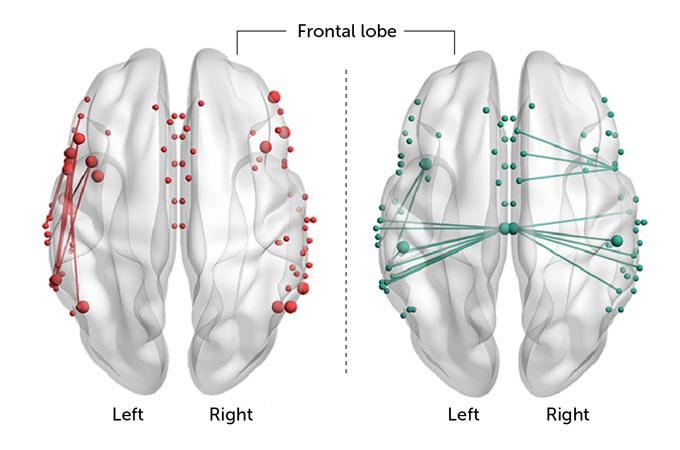
    Do you really want me to state the obvious out loud and in public after years of explaining european and semitic group strategie, and claiming they’re both genetic and cultural?

    Ok. Lets ruin some arabic speaker’s day:
    The digram on the left shows male longitudinal analytic… https://t.co/siKpvJ8O7l


    Source date (UTC): 2023-07-15 14:04:23 UTC

    Original post: https://twitter.com/i/web/status/1680216746278502405

    Replying to: https://twitter.com/i/web/status/1680213132554141697

  • GERMANY: THE IMMIGRATION PROBLEM IS A CLASS (IQ), CULTURE (Class, IQ), AND INTEG

    GERMANY: THE IMMIGRATION PROBLEM IS A CLASS (IQ), CULTURE (Class, IQ), AND INTEGRATION (Class, IQ) PROBLEM.
    (That’s why it’s easily solved, just as uni costs are easily solved.)

    1) Immigration Is an Anchoring Problem (w/o integration)
    –“About radicalization: When people move out of their home countries, the knowledge of their country get forever frozen in that time, so they raised their kids with that frozen knowledge even after people in the home country are now more liberal. You find it everywhere. Indians practicing caste system in the UK, America. Pakistanis (and some other Muslim communities )still committing honor killing in UK, Female Genital Mutilation amongst African communities.”–

    2) Immigration Is A Class Problem (no matter what)
    –“my colleague comes from Turkey and this has been his observation as well. He says germany is a very easy country for a Turk to migrate to because there are so many Turkish touchstones and communities here, but he finds the German Turks very hard to deal with. … His belief is that it was the poor and less well educated people who took the opportunity to leave Turkey as Gastarbeiter while the more educated ones had better prospects and could afford to stay. He thinks the German Turks are a reflection of a poorly educated rather insular population from many decades ago that just perpetuated the culture it brought with it to germany and didn’t really change like society back in Turkey was changing.”–

    FYI: ‘–“Gastarbeiter , German for ‘guest worker’, are foreign or migrant workers, particularly those who had moved to West Germany between 1955 and 1973, seeking work as part of a formal guest worker program (Gastarbeiterprogramm).”–

    –“the people the came here in the 60s were poor and without much education (that’s basically the reason they left Turkey in the first place to start here). … And poor and uneducated is a really bad place to start in a foreign country. Even worsen the chance of the future generations, because sadly success in school largely depends on the parents education here in Germany. … Mix that with massive islamic propaganda through the Turkish government (most imans in Germany weren’t actually tought here, but in Turkey paid by the Turkish government) and you get a very conservative, very loyal followership for the Turkish government.”—

    3) It’s an Ethnicity Problem (Greek-Turks vs Central Asian and Iranic Turks)
    –“When workers were needed in the 60s people without jobs from central Anatolia and east Turkey came and brought their values. … They don’t understand current day Turkey, they don’t understand Europe they are kinda stuck in between places.”–

    3) Integration is Political Problem (Necessary Regardless Of Class)
    –“Germany did not pursue any integration at all until around 2000. The first Turks arrived in the 1960s. That is, among other things, a political failure. Another factor is who came here. Rather few educated people from big cities and also few persecuted communists, who were usually intellectuals. It is the same with Moroccans. Most of them are Berbers, peasants from the north without education. Their way of life is a strict interpretation of Islam.”–

    4) Non Integration Is a Political Problem That Expands Rapidly (The jewish postwar efforts to destroy the west).
    Jewish radicalism in America in particular and Jewish dominance in cultural destruction by the “March through the institutions of western cultural production of individual responsibility” using the seditious sequence of marxism, neoMarxism, Postmodernism, Neoconservatism, Libertarianism, Anti-Family-Feminism, PC-Woke Race Marxism, and the entire strategy of ‘multicutluralism’ is necessary for Jews.

    5) Reversal (German Integration into South America)
    –“Muslim minorities tend to integrate so poorly not only in Europe, but in any other place where their presence is considerable enough to be noticeable (France, Belgium, Germany, Spain, etc). … As a contrast: I live in South America, in a country that has seen (comparatively) massive German immigration in the last few years. But while some fail to integrate with the local society, the majority of them adapt quite well and fast, and if they bring children, they are almost indistinguishable from the locals in but a few years. … But still, there’s no “Anti local country sentiment” among Germans here, and many already feel and identify as locals, even with the heavy accent, it’s quite funny.”–


    Source date (UTC): 2023-07-15 12:45:40 UTC

    Original post: https://twitter.com/i/web/status/1680196934479273985

  • I dunno. Ukrainians, like Poles and Russians aren’t buying the multicultural thi

    I dunno. Ukrainians, like Poles and Russians aren’t buying the multicultural thing at all. They know better. The average UA woman has no qualms about the truth.


    Source date (UTC): 2023-07-14 00:27:27 UTC

    Original post: https://twitter.com/i/web/status/1679648770831572993

    Reply addressees: @pork_a_lator @Psyche_OS

    Replying to: https://twitter.com/i/web/status/1679641499359649793

  • RT @PFIRorg: A good study providing strong evidence that naturalization of immig

    RT @PFIRorg: A good study providing strong evidence that naturalization of immigrants doesn’t really improve integration.

    Immigrants cont…


    Source date (UTC): 2023-07-13 21:35:13 UTC

    Original post: https://twitter.com/i/web/status/1679605426818613249

  • “Q: Curt, when you have time can you explain why the German and Japanese people

    –“Q: Curt, when you have time can you explain why the German and Japanese people are so similar when they’re so geographically distant.”–

    Great Question

    TLDR; territory, feudalism, militia, craftsmen, hostile richer neighbor created culture of hierarchy, piety, and duty. (and iq)

    Explanation:

    0) Geography: Both Japan and Germany are territorally challenging to govern, despite access to the sea in japan and rivers in germany. Until the age of rail governing the territory was far more difficult than say, france or england.

    1) Medieval Feudalism
    Feudalism in Medieval Germany:
    – Hierarchy: The feudal system in Germany was characterized by a hierarchy where the king was at the top, followed by powerful nobles (dukes and counts), knights, and then peasants or serfs.
    – Land Ownership: The king granted lands, known as fiefs, to his vassals (nobles) in exchange for their loyalty and military service. These vassals could further subdivide and grant the land to lower-ranking vassals or knights.
    – Military Service: The vassals were obligated to provide military service to the king. This often involved serving a certain number of days in the king’s army or providing a certain number of knights for the king’s service.
    – Serfdom: Peasants, or serfs, worked the land for the nobles. They were tied to the land and could not leave without the noble’s permission. In return for their labor, they received protection and the right to cultivate a portion of the land for their own use.

    Feudalism in Medieval Japan:
    – Hierarchy: The Japanese feudal system was also hierarchical, with the Emperor at the top in theory, but the Shogun (military leader) held the real power. Below the Shogun were the Daimyo (land-owning lords), followed by the Samurai (warrior class), and then the peasants.
    – Land Ownership: Similar to Germany, the Shogun granted land to the Daimyo in exchange for their loyalty and military service. The Daimyo, in turn, had Samurai who served them.
    – Military Service: The Samurai provided military service to their Daimyo. They were professional warriors who were trained in martial arts and followed the Bushido code, which emphasized honor, loyalty, and bravery.
    – Farmers and Artisans: At the bottom of the hierarchy were the farmers and artisans. They were not tied to the land like serfs in Germany, but they were subject to high taxes and had little political power.

    Note the duty/piety relationship with craftsmanship.
    Note the odd relationship between german philosophy and chinese philosophy rather than religiosity.
    Note that both these countries maximize duty and responsibility.

    2) Norms: Piety Duty and Social Harmony: Both Germany and Japan have historically placed importance on collectivism and social harmony. These cultural values encourage conformity, respect for authority, and a strong work ethic, contributing to the similarities observed between the two cultures.

    3) Parenting: the cultural value of respect for authority can be linked to authoritarian parenting styles prevalent in both countries, which in turn shaped individuals’ behavior and attitudes.

    4) Powerful Neighbors (china vs france)
    Both the Holy Roman Empire and Japan had a history of intermittent conflict and alliances with France and China, respectively. These interactions shaped their political institutions, diplomacy, and territorial ambitions. For instance, the Holy Roman Empire and France often competed for influence in Europe, while Japan and China had periods of conflict and alliance throughout history.

    5) Nation-Building and Territorial Consolidation: Despite their different geographic locations, both Germany and Japan have a strong history of territorial expansion and the formation of cohesive nation-states. This shared experience of nation-building and territorial consolidation has likely contributed to similarities in cultural identity and the development of a strong national pride in both countries.

    6) Industrialization and Modernization: As both Germany and Japan became industrial powerhouses in the late 19th and early 20th centuries, they underwent societal changes that emphasized the importance of precision and efficiency to maintain economic competitiveness.

    7) Post-World War II Reconstruction: Both countries underwent a process of rebuilding and modernization after World War II that focused on education, innovation, and economic development. This resulted in the emergence of similar values and cultural practices centered around efficiency and discipline.

    Cheers
    Curt Doolittle
    The Natural Law Institute
    The Science of Cooperation

    Reply addressees: @JaredAberach

    Source date (UTC): 2023-07-13 19:29:47 UTC

    Original post: https://twitter.com/i/web/status/1679573857173139459

    Replying to: https://twitter.com/i/web/status/1679567274724712448

  • POLITICAL NECESSITIES Marginal indifference in proportionality (‘equality’) requ

    POLITICAL NECESSITIES
    Marginal indifference in proportionality (‘equality’) requires marginal indifference in ability, requires marginal indifference in genetics (ability) and culture (measurements) and institution (rules and processes). The eugenics program was the only movement that can prevent ‘The Great Filter” that causes all species to pass into extinction. Othewise conflict is deterministic as is decline that we saw as the result of the abrahamic cancer, just as we are seeing in the marxist cancer.


    Source date (UTC): 2023-07-13 17:37:19 UTC

    Original post: https://twitter.com/i/web/status/1679545556954128400