WHAT IS NATURAL LAW? >A fully decidable (universal) Law of Ethics. What do you mean by ethics? >The law of cooperation and conflict resolution. What is this law of cooperation and conflict resolution? >Reciprocity. WHAT IS RECIPROCITY? In the Negative (Silver Rule, or via-negativa): The requirement to avoid the imposition of costs on that which others have born costs to obtain an interest in, without imposing costs upon that which others have likewise born costs to obtain an interest in. In the Positive(Golden Rule, or via-positiva): the requirement that we limit our actions to productive, fully informed, warrantied, voluntary transfers, free of the imposition of costs by externality, upon that which others have obtained by the same means. As determined by the either any change, or the total change in the inventory that all parties both internal and external to the action have born costs to obtain an interest without imposition of costs upon others directly or indirectly by externality. —“All of ethics can be reduced to [is a subset/special application of] the degree of reciprocity & the accounting thereof.— James Augustus WHY DOES RECIPROCITY SERVE AS NATURAL LAW? Because it is apparently impossible to contradict reciprocity in cooperation (ethics), and as such it provides perfect decidability in all contexts of cooperation at all scales in all times, and under all conditions.
Theme: Decidability
-
What Is Natural Law? What Is Reciprocity?
WHAT IS NATURAL LAW? >A fully decidable (universal) Law of Ethics. What do you mean by ethics? >The law of cooperation and conflict resolution. What is this law of cooperation and conflict resolution? >Reciprocity. WHAT IS RECIPROCITY? In the Negative (Silver Rule, or via-negativa): The requirement to avoid the imposition of costs on that which others have born costs to obtain an interest in, without imposing costs upon that which others have likewise born costs to obtain an interest in. In the Positive(Golden Rule, or via-positiva): the requirement that we limit our actions to productive, fully informed, warrantied, voluntary transfers, free of the imposition of costs by externality, upon that which others have obtained by the same means. As determined by the either any change, or the total change in the inventory that all parties both internal and external to the action have born costs to obtain an interest without imposition of costs upon others directly or indirectly by externality. —“All of ethics can be reduced to [is a subset/special application of] the degree of reciprocity & the accounting thereof.— James Augustus WHY DOES RECIPROCITY SERVE AS NATURAL LAW? Because it is apparently impossible to contradict reciprocity in cooperation (ethics), and as such it provides perfect decidability in all contexts of cooperation at all scales in all times, and under all conditions.
-
TRUTH IS RELATIVE? NO “IT JUST MEANS YER IGNERINT” There are no paradoxes only g
TRUTH IS RELATIVE? NO “IT JUST MEANS YER IGNERINT”
There are no paradoxes only grammatical errors.
If people err they do not speak the truth they speak only honestly or truthfully. That they conflate honesty with truthfully is merely another version of conflating preference “i like chocolate ice cream” with consensus “chocolate tastes good (to most of us)”, with truth (chocolate may taste good to many people).
Truth originated with the term testimony. We merely combine the word True with the copula “is” (meaning “i dont know how it exists”) and conflate the various positions on the truth spectrum out of convenience and ignorance. We eliminate these problems through speaking if full sentences in operational language (testable transactions)>
This is why all knowledge in science is forever contingent, and all scientists that have been taught sufficient understanding of their craft, rarely make truth claims, and almost always make contingent truth claims, with prevarications like “as far as we know” or “according to x it appears”, and “it’s hard to imagine otherwise”.
Right now my favorite example is the red shift that is hypothetically measuring that the universe is expanding faster than light, when it is just as likely it is a property of space itself that is causing the shift (distortion). We just don’t know. And we can’t observe directly. So we have to triangulate and deduce by some other series of observations. Even then we must eliminate all alternatives before we can make a truth claim – that’s what ‘truth’ means.
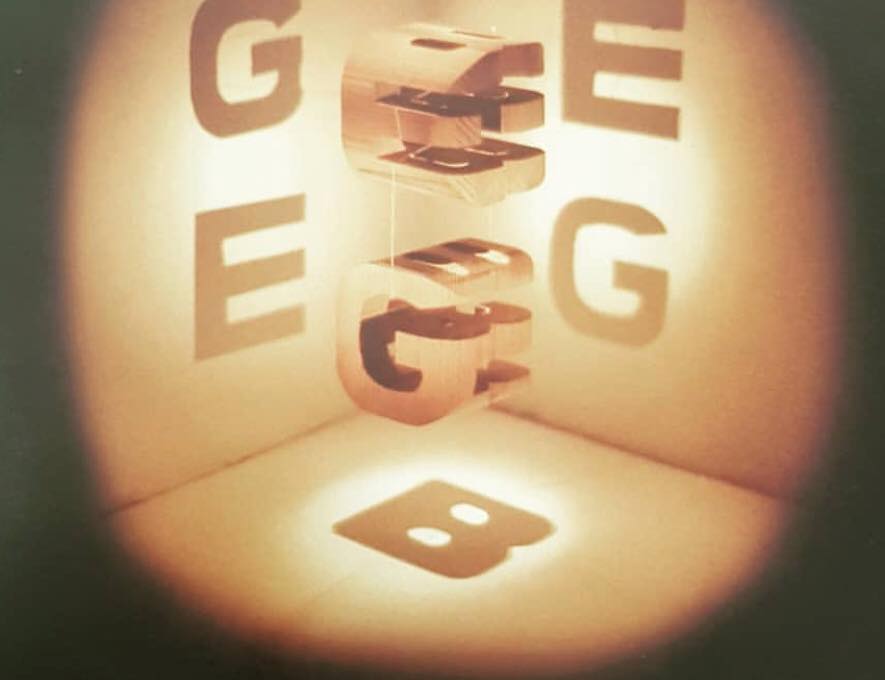
In the case of the shapes above, what are the observers testifying to? Their observation? Their shape of the shadow? The shape of the object casting the shadow? People conflate observation, effect, and cause.
|| Observation <- Effect <- Causes
One cannot testify to the shape of the object only to the observation of the shape of the shadow being cast (fact). One can hypothesize a shape of the object (hypothesis). One can speak honestly about that shape (honesty). One can perform due diligence that one does not err (theory) but in science all claims are contingent. One cannot testify to the unobservable, until he has eliminated all possible alternatives (due diligence). Since perfect knowledge is almost never possible outside of the reductio, once on has performed tests eliminating all alternatives (due diligence) one can testify he speaks truthfully of his theory. But in general we make only truth claims of an observation of change in state.
That people do such a thing regularly is simply a matter of ignorance, and the bad habits accumulated in ordinary language grammer – which any time in court will rapidly correct.
The fact that people say “aint” instead of ‘isn’t’, and ‘different than’ rather than ‘different from’, is no different from saying “It’s a shape X” rather than “The shadow I can observe is the shape X”.
It’s just ignorance, error, poor education, colloquial speech, or being verbally lazy.
SPECTRUM:
[T]AUTOLOGICAL TRUTH: That testimony you give when you promising the equality of two statements using different terms: A circular definition, a statement of equality or a statement of identity.
[A]NALYTIC TRUTH: The testimony you give promising the internal consistency of one or more statements used in the construction of a proof in an axiomatic(declarative) system. (a Logical Truth).
[I]DEAL TRUTH: That testimony (description) you would give, if your knowledge (information) was complete, your language was sufficient, stated without error, cleansed of bias, and absent deceit, within the scope of precision limited to the context of the question you wish to answer; and the promise that another possessed of the same knowledge (information), performing the same due diligence, having the same experiences, would provide the same testimony. (Ideal Truth = Perfect Parsimony.)
[T]RUTHFULNESS: that testimony (description) you give if your knowledge (information) is incomplete, your language is insufficient, you have performed due diligence in the elimination of error, imaginary content, wishful thinking, bias, and deceit; within the scope of precision limited to the question you wish to answer; and which you warranty to be so; and the promise that another possessed of the knowledge, performing the same due diligence, having the same experiences, would provide the same testimony.
[H]ONESTY: that testimony (description) you give with full knowledge that knowledge is incomplete, your language is insufficient, but you have not performed due diligence in the elimination of error and bias, but which you warranty is free of deceit; within the scope of precision limited to the question you wish to answer; and the promise that another possess of the same knowledge (information), performing the same due diligence, having the same experiences, would provide the same testimony.
Source date (UTC): 2018-07-13 00:03:30 UTC
-
photos_and_videos/your_posts/37003564_10156491807667264_8971145353638182912_n_10
photos_and_videos/your_posts/37003564_10156491807667264_8971145353638182912_n_10156491807662264.jpg TRUTH IS RELATIVE? NO “IT JUST MEANS YER IGNERINT”
There are no paradoxes only grammatical errors.
If people err they do not speak the truth they speak only honestly or truthfully. That they conflate honesty with truthfully is merely another version of conflating preference “i like chocolate ice cream” with consensus “chocolate tastes good (to most of us)”, with truth (chocolate may taste good to many people).
Truth originated with the term testimony. We merely combine the word True with the copula “is” (meaning “i dont know how it exists”) and conflate the various positions on the truth spectrum out of convenience and ignorance. We eliminate these problems through speaking if full sentences in operational language (testable transactions)>
This is why all knowledge in science is forever contingent, and all scientists that have been taught sufficient understanding of their craft, rarely make truth claims, and almost always make contingent truth claims, with prevarications like “as far as we know” or “according to x it appears”, and “it’s hard to imagine otherwise”.
Right now my favorite example is the red shift that is hypothetically measuring that the universe is expanding faster than light, when it is just as likely it is a property of space itself that is causing the shift (distortion). We just don’t know. And we can’t observe directly. So we have to triangulate and deduce by some other series of observations. Even then we must eliminate all alternatives before we can make a truth claim – that’s what ‘truth’ means.
In the case of the shapes above, what are the observers testifying to? Their observation? Their shape of the shadow? The shape of the object casting the shadow? People conflate observation, effect, and cause.
|| Observation <- Effect <- Causes
One cannot testify to the shape of the object only to the observation of the shape of the shadow being cast (fact). One can hypothesize a shape of the object (hypothesis). One can speak honestly about that shape (honesty). One can perform due diligence that one does not err (theory) but in science all claims are contingent. One cannot testify to the unobservable, until he has eliminated all possible alternatives (due diligence). Since perfect knowledge is almost never possible outside of the reductio, once on has performed tests eliminating all alternatives (due diligence) one can testify he speaks truthfully of his theory. But in general we make only truth claims of an observation of change in state.
That people do such a thing regularly is simply a matter of ignorance, and the bad habits accumulated in ordinary language grammer – which any time in court will rapidly correct.
The fact that people say “aint” instead of ‘isn’t’, and ‘different than’ rather than ‘different from’, is no different from saying “It’s a shape X” rather than “The shadow I can observe is the shape X”.
It’s just ignorance, error, poor education, colloquial speech, or being verbally lazy.
SPECTRUM:
[T]AUTOLOGICAL TRUTH: That testimony you give when you promising the equality of two statements using different terms: A circular definition, a statement of equality or a statement of identity.
[A]NALYTIC TRUTH: The testimony you give promising the internal consistency of one or more statements used in the construction of a proof in an axiomatic(declarative) system. (a Logical Truth).
[I]DEAL TRUTH: That testimony (description) you would give, if your knowledge (information) was complete, your language was sufficient, stated without error, cleansed of bias, and absent deceit, within the scope of precision limited to the context of the question you wish to answer; and the promise that another possessed of the same knowledge (information), performing the same due diligence, having the same experiences, would provide the same testimony. (Ideal Truth = Perfect Parsimony.)
[T]RUTHFULNESS: that testimony (description) you give if your knowledge (information) is incomplete, your language is insufficient, you have performed due diligence in the elimination of error, imaginary content, wishful thinking, bias, and deceit; within the scope of precision limited to the question you wish to answer; and which you warranty to be so; and the promise that another possessed of the knowledge, performing the same due diligence, having the same experiences, would provide the same testimony.
[H]ONESTY: that testimony (description) you give with full knowledge that knowledge is incomplete, your language is insufficient, but you have not performed due diligence in the elimination of error and bias, but which you warranty is free of deceit; within the scope of precision limited to the question you wish to answer; and the promise that another possess of the same knowledge (information), performing the same due diligence, having the same experiences, would provide the same testimony.TRUTH IS RELATIVE? NO “IT JUST MEANS YER IGNERINT”
There are no paradoxes only grammatical errors.
If people err they do not speak the truth they speak only honestly or truthfully. That they conflate honesty with truthfully is merely another version of conflating preference “i like chocolate ice cream” with consensus “chocolate tastes good (to most of us)”, with truth (chocolate may taste good to many people).
Truth originated with the term testimony. We merely combine the word True with the copula “is” (meaning “i dont know how it exists”) and conflate the various positions on the truth spectrum out of convenience and ignorance. We eliminate these problems through speaking if full sentences in operational language (testable transactions)>
This is why all knowledge in science is forever contingent, and all scientists that have been taught sufficient understanding of their craft, rarely make truth claims, and almost always make contingent truth claims, with prevarications like “as far as we know” or “according to x it appears”, and “it’s hard to imagine otherwise”.
Right now my favorite example is the red shift that is hypothetically measuring that the universe is expanding faster than light, when it is just as likely it is a property of space itself that is causing the shift (distortion). We just don’t know. And we can’t observe directly. So we have to triangulate and deduce by some other series of observations. Even then we must eliminate all alternatives before we can make a truth claim – that’s what ‘truth’ means.
In the case of the shapes above, what are the observers testifying to? Their observation? Their shape of the shadow? The shape of the object casting the shadow? People conflate observation, effect, and cause.
|| Observation <- Effect <- Causes
One cannot testify to the shape of the object only to the observation of the shape of the shadow being cast (fact). One can hypothesize a shape of the object (hypothesis). One can speak honestly about that shape (honesty). One can perform due diligence that one does not err (theory) but in science all claims are contingent. One cannot testify to the unobservable, until he has eliminated all possible alternatives (due diligence). Since perfect knowledge is almost never possible outside of the reductio, once on has performed tests eliminating all alternatives (due diligence) one can testify he speaks truthfully of his theory. But in general we make only truth claims of an observation of change in state.
That people do such a thing regularly is simply a matter of ignorance, and the bad habits accumulated in ordinary language grammer – which any time in court will rapidly correct.
The fact that people say “aint” instead of ‘isn’t’, and ‘different than’ rather than ‘different from’, is no different from saying “It’s a shape X” rather than “The shadow I can observe is the shape X”.
It’s just ignorance, error, poor education, colloquial speech, or being verbally lazy.
SPECTRUM:
[T]AUTOLOGICAL TRUTH: That testimony you give when you promising the equality of two statements using different terms: A circular definition, a statement of equality or a statement of identity.
[A]NALYTIC TRUTH: The testimony you give promising the internal consistency of one or more statements used in the construction of a proof in an axiomatic(declarative) system. (a Logical Truth).
[I]DEAL TRUTH: That testimony (description) you would give, if your knowledge (information) was complete, your language was sufficient, stated without error, cleansed of bias, and absent deceit, within the scope of precision limited to the context of the question you wish to answer; and the promise that another possessed of the same knowledge (information), performing the same due diligence, having the same experiences, would provide the same testimony. (Ideal Truth = Perfect Parsimony.)
[T]RUTHFULNESS: that testimony (description) you give if your knowledge (information) is incomplete, your language is insufficient, you have performed due diligence in the elimination of error, imaginary content, wishful thinking, bias, and deceit; within the scope of precision limited to the question you wish to answer; and which you warranty to be so; and the promise that another possessed of the knowledge, performing the same due diligence, having the same experiences, would provide the same testimony.
[H]ONESTY: that testimony (description) you give with full knowledge that knowledge is incomplete, your language is insufficient, but you have not performed due diligence in the elimination of error and bias, but which you warranty is free of deceit; within the scope of precision limited to the question you wish to answer; and the promise that another possess of the same knowledge (information), performing the same due diligence, having the same experiences, would provide the same testimony.
Source date (UTC): 2018-07-12 20:03:00 UTC
-
photos_and_videos/TimelinePhotos_43196237263/37003564_10156491807667264_89711453
photos_and_videos/TimelinePhotos_43196237263/37003564_10156491807667264_8971145353638182912_n_10156491807662264.jpg TRUTH IS RELATIVE? NO “IT JUST MEANS YER IGNERINT”
There are no paradoxes only grammatical errors.
If people err they do not speak the truth they speak only honestly or truthfully. That they conflate honesty with truthfully is merely another version of conflating preference “i like chocolate ice cream” with consensus “chocolate tastes good (to most of us)”, with truth (chocolate may taste good to many people).
Truth originated with the term testimony. We merely combine the word True with the copula “is” (meaning “i dont know how it exists”) and conflate the various positions on the truth spectrum out of convenience and ignorance. We eliminate these problems through speaking if full sentences in operational language (testable transactions)>
This is why all knowledge in science is forever contingent, and all scientists that have been taught sufficient understanding of their craft, rarely make truth claims, and almost always make contingent truth claims, with prevarications like “as far as we know” or “according to x it appears”, and “it’s hard to imagine otherwise”.
Right now my favorite example is the red shift that is hypothetically measuring that the universe is expanding faster than light, when it is just as likely it is a property of space itself that is causing the shift (distortion). We just don’t know. And we can’t observe directly. So we have to triangulate and deduce by some other series of observations. Even then we must eliminate all alternatives before we can make a truth claim – that’s what ‘truth’ means.
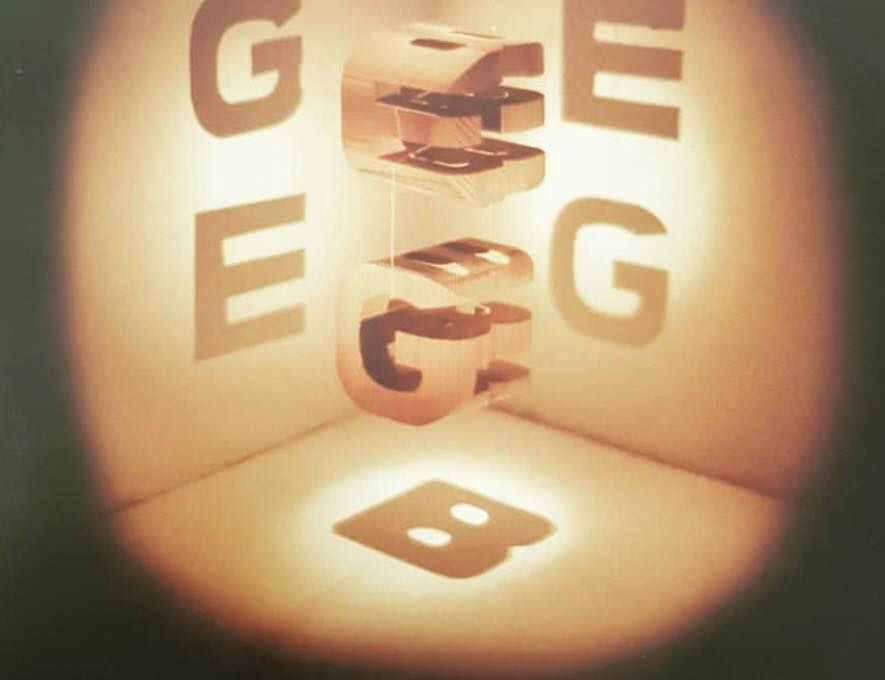
In the case of the shapes above, what are the observers testifying to? Their observation? Their shape of the shadow? The shape of the object casting the shadow? People conflate observation, effect, and cause.
|| Observation <- Effect <- Causes
One cannot testify to the shape of the object only to the observation of the shape of the shadow being cast (fact). One can hypothesize a shape of the object (hypothesis). One can speak honestly about that shape (honesty). One can perform due diligence that one does not err (theory) but in science all claims are contingent. One cannot testify to the unobservable, until he has eliminated all possible alternatives (due diligence). Since perfect knowledge is almost never possible outside of the reductio, once on has performed tests eliminating all alternatives (due diligence) one can testify he speaks truthfully of his theory. But in general we make only truth claims of an observation of change in state.
That people do such a thing regularly is simply a matter of ignorance, and the bad habits accumulated in ordinary language grammer – which any time in court will rapidly correct.
The fact that people say “aint” instead of ‘isn’t’, and ‘different than’ rather than ‘different from’, is no different from saying “It’s a shape X” rather than “The shadow I can observe is the shape X”.
It’s just ignorance, error, poor education, colloquial speech, or being verbally lazy.
SPECTRUM:
[T]AUTOLOGICAL TRUTH: That testimony you give when you promising the equality of two statements using different terms: A circular definition, a statement of equality or a statement of identity.
[A]NALYTIC TRUTH: The testimony you give promising the internal consistency of one or more statements used in the construction of a proof in an axiomatic(declarative) system. (a Logical Truth).
[I]DEAL TRUTH: That testimony (description) you would give, if your knowledge (information) was complete, your language was sufficient, stated without error, cleansed of bias, and absent deceit, within the scope of precision limited to the context of the question you wish to answer; and the promise that another possessed of the same knowledge (information), performing the same due diligence, having the same experiences, would provide the same testimony. (Ideal Truth = Perfect Parsimony.)
[T]RUTHFULNESS: that testimony (description) you give if your knowledge (information) is incomplete, your language is insufficient, you have performed due diligence in the elimination of error, imaginary content, wishful thinking, bias, and deceit; within the scope of precision limited to the question you wish to answer; and which you warranty to be so; and the promise that another possessed of the knowledge, performing the same due diligence, having the same experiences, would provide the same testimony.
[H]ONESTY: that testimony (description) you give with full knowledge that knowledge is incomplete, your language is insufficient, but you have not performed due diligence in the elimination of error and bias, but which you warranty is free of deceit; within the scope of precision limited to the question you wish to answer; and the promise that another possess of the same knowledge (information), performing the same due diligence, having the same experiences, would provide the same testimony.TRUTH IS RELATIVE? NO “IT JUST MEANS YER IGNERINT”
There are no paradoxes only grammatical errors.
If people err they do not speak the truth they speak only honestly or truthfully. That they conflate honesty with truthfully is merely another version of conflating preference “i like chocolate ice cream” with consensus “chocolate tastes good (to most of us)”, with truth (chocolate may taste good to many people).
Truth originated with the term testimony. We merely combine the word True with the copula “is” (meaning “i dont know how it exists”) and conflate the various positions on the truth spectrum out of convenience and ignorance. We eliminate these problems through speaking if full sentences in operational language (testable transactions)>
This is why all knowledge in science is forever contingent, and all scientists that have been taught sufficient understanding of their craft, rarely make truth claims, and almost always make contingent truth claims, with prevarications like “as far as we know” or “according to x it appears”, and “it’s hard to imagine otherwise”.
Right now my favorite example is the red shift that is hypothetically measuring that the universe is expanding faster than light, when it is just as likely it is a property of space itself that is causing the shift (distortion). We just don’t know. And we can’t observe directly. So we have to triangulate and deduce by some other series of observations. Even then we must eliminate all alternatives before we can make a truth claim – that’s what ‘truth’ means.
In the case of the shapes above, what are the observers testifying to? Their observation? Their shape of the shadow? The shape of the object casting the shadow? People conflate observation, effect, and cause.
|| Observation <- Effect <- Causes
One cannot testify to the shape of the object only to the observation of the shape of the shadow being cast (fact). One can hypothesize a shape of the object (hypothesis). One can speak honestly about that shape (honesty). One can perform due diligence that one does not err (theory) but in science all claims are contingent. One cannot testify to the unobservable, until he has eliminated all possible alternatives (due diligence). Since perfect knowledge is almost never possible outside of the reductio, once on has performed tests eliminating all alternatives (due diligence) one can testify he speaks truthfully of his theory. But in general we make only truth claims of an observation of change in state.
That people do such a thing regularly is simply a matter of ignorance, and the bad habits accumulated in ordinary language grammer – which any time in court will rapidly correct.
The fact that people say “aint” instead of ‘isn’t’, and ‘different than’ rather than ‘different from’, is no different from saying “It’s a shape X” rather than “The shadow I can observe is the shape X”.
It’s just ignorance, error, poor education, colloquial speech, or being verbally lazy.
SPECTRUM:
[T]AUTOLOGICAL TRUTH: That testimony you give when you promising the equality of two statements using different terms: A circular definition, a statement of equality or a statement of identity.
[A]NALYTIC TRUTH: The testimony you give promising the internal consistency of one or more statements used in the construction of a proof in an axiomatic(declarative) system. (a Logical Truth).
[I]DEAL TRUTH: That testimony (description) you would give, if your knowledge (information) was complete, your language was sufficient, stated without error, cleansed of bias, and absent deceit, within the scope of precision limited to the context of the question you wish to answer; and the promise that another possessed of the same knowledge (information), performing the same due diligence, having the same experiences, would provide the same testimony. (Ideal Truth = Perfect Parsimony.)
[T]RUTHFULNESS: that testimony (description) you give if your knowledge (information) is incomplete, your language is insufficient, you have performed due diligence in the elimination of error, imaginary content, wishful thinking, bias, and deceit; within the scope of precision limited to the question you wish to answer; and which you warranty to be so; and the promise that another possessed of the knowledge, performing the same due diligence, having the same experiences, would provide the same testimony.
[H]ONESTY: that testimony (description) you give with full knowledge that knowledge is incomplete, your language is insufficient, but you have not performed due diligence in the elimination of error and bias, but which you warranty is free of deceit; within the scope of precision limited to the question you wish to answer; and the promise that another possess of the same knowledge (information), performing the same due diligence, having the same experiences, would provide the same testimony.
Source date (UTC): 2018-07-12 20:03:00 UTC
-
Curt Doolittle updated his status. MY SIMPLE METHODOLOGY: LOCKER ROOM VS PORCH I
Curt Doolittle updated his status.
MY SIMPLE METHODOLOGY: LOCKER ROOM VS PORCH
I have a very simple methodology: the truth. the truth provides decidability. And I don’t leave room for pragmatism. By allowing one pragmatic falsehood you allow all pragmatic falsehoods. By disallowing all falsehoods, no matter how practical, you leave only the truth.
—“I get that you teach by a startling statement and follow-up Devil’s advocate questions. But sometime we lose the forest for trying to define a tree.”—Anne Summers
It’s just the socratic method. Propose an assertion that will either reinforce or oppose a norm. Then we all debate until we understand.
I love teaching online. It’s just more like teaching in a Locker Room or Bar than the vaulted porch of athenian wisdom….. lol
Source date (UTC): 2018-07-12 18:43:37 UTC
-
MY SIMPLE METHODOLOGY: LOCKER ROOM VS PORCH I have a very simple methodology: th
MY SIMPLE METHODOLOGY: LOCKER ROOM VS PORCH
I have a very simple methodology: the truth. the truth provides decidability. And I don’t leave room for pragmatism. By allowing one pragmatic falsehood you allow all pragmatic falsehoods. By disallowing all falsehoods, no matter how practical, you leave only the truth.
—“I get that you teach by a startling statement and follow-up Devil’s advocate questions. But sometime we lose the forest for trying to define a tree.”—Anne Summers
It’s just the socratic method. Propose an assertion that will either reinforce or oppose a norm. Then we all debate until we understand.
I love teaching online. It’s just more like teaching in a Locker Room or Bar than the vaulted porch of athenian wisdom….. lol
Source date (UTC): 2018-07-12 14:43:00 UTC
-
A SYLLOGISM SUBJECTS A STATEMENT TO MARKET COMPETITION
A SYLLOGISM SUBJECTS A STATEMENT TO MARKET COMPETITION
Source date (UTC): 2018-07-12 14:37:49 UTC
Original post: https://twitter.com/i/web/status/1017417751512666112
-
4) Your proposition is that fictionalism is different from lying – which it cann
4) Your proposition is that fictionalism is different from lying – which it cannot be: you are fabricating information that is not there. The information is either present in reality or you are fabricating it.
Source date (UTC): 2018-07-12 13:30:24 UTC
Original post: https://twitter.com/i/web/status/1017400786530242560
Reply addressees: @Hispanogoyim @egoissocial @IberianSoldier
Replying to: https://twitter.com/i/web/status/1017382157776510977
IN REPLY TO:
Original post on X
Original tweet unavailable — we could not load the text of the post this reply is addressing on X. That usually means the tweet was deleted, the account is protected, or X does not expose it to the account used for archiving. The Original post link below may still open if you view it in X while signed in.
Original post: https://twitter.com/i/web/status/1017382157776510977
-
2) I framed the criteria for decidability as (a) parsimony (b) constant relation
2) I framed the criteria for decidability as (a) parsimony (b) constant relations between existence, perception, cognition, and action, (c) motive, (d) absence of fictionalism.
Source date (UTC): 2018-07-12 13:30:06 UTC
Original post: https://twitter.com/i/web/status/1017400711750062080
Reply addressees: @Hispanogoyim @egoissocial @IberianSoldier
Replying to: https://twitter.com/i/web/status/1017382157776510977
IN REPLY TO:
Original post on X
Original tweet unavailable — we could not load the text of the post this reply is addressing on X. That usually means the tweet was deleted, the account is protected, or X does not expose it to the account used for archiving. The Original post link below may still open if you view it in X while signed in.
Original post: https://twitter.com/i/web/status/1017382157776510977