Theme: Crisis

  • photos_and_videos/TimelinePhotos_SxeO6JU-xg/51626467_10156975412092264_548784230

    photos_and_videos/TimelinePhotos_SxeO6JU-xg/51626467_10156975412092264_548784230

    photos_and_videos/TimelinePhotos_SxeO6JU-xg/51626467_10156975412092264_5487842308676124672_o_10156975412087264.jpg THE REAL CRIME OF THE BOOMERS

    —“The real crime they committed was both parents working so hard to give their kids everything they didn’t have. Only to rob them of the only thing they needed. A parent at home to teach them how to provide for themselves.”— Jack Sandusky

    (perfect)Ethan TriceI think the issue could largely be the hierarchy of what we value. Rather than seeing capitalism as the best way to improve the material well-being of people, it became the goal itself. So, whereas before, the focus of life was family, faith, and folk (and the method by which you took care of your family was economic system), capitalism became the goal (“greed is good” rather than the more neutral “everyone operates in their self-interest” of Locke and Smith), and family, faith, and folk became secondary, tertiary, or a non factor. Communism is an evil, possibly the greatest evil to ever gain traction, but it’s not an evil because of the market conditions.Feb 9, 2019, 4:00 PMCurt DoolittleYeah. well who invented the term ‘capitalism’ and who advances it rather than rule of law?Feb 9, 2019, 4:08 PMNeil A. Bucklewexcellent description.Feb 9, 2019, 4:16 PMJack SanduskyMy brain has arrived😁Feb 9, 2019, 4:19 PMEthan TriceI thought the term had been invented by smith, but looks like I was mistaken. regardless of the inventor of the term, it being the centerpiece of all debate by the GOP and other “conservative” parties is definitely troubling.Feb 9, 2019, 4:19 PMErik LukovskyIn my view, capitalism isn’t a “ real “ term

    It’s obfuscated language for free trade and barter, which existed on normal levels in the times of kings and queens all throughout Europe, especially England and Germanic statesFeb 9, 2019, 4:25 PMBenjamin IrelandAnd now you have a generation of adult children who whine that it isn’t fair that the comfortable middle class lifestyle they grew up isn’t just a given.

    Good times created weak men.

    Weak men are creating hard times.Feb 9, 2019, 5:33 PMGeorge CarvlinThe term is laissez-faireFeb 9, 2019, 6:18 PMArnold BrunsonGuilty as charged.Feb 10, 2019, 1:23 AMAnthony MigchelsNot arguing with this obviously correct point, but one of the things that people overlook in the long term war against Family, is that it was first Dad that was wrested from the home: in earlier times, working hours were MUCH shorter, and only with the horrors of Capitalism and the large scale impoverishment of the masses that that brought, including the extremely long working hours, this is what destroyed male standing in the house hold, AND the relationship between the father and his children, AND his wife.

    A man cannot lead his family, when he’s out of the house 60 hours per week.Feb 10, 2019, 5:13 AMWayne WaltonAgreed. Usury wage slavery is a war on the family.Feb 10, 2019, 6:57 AMTHE REAL CRIME OF THE BOOMERS

    —“The real crime they committed was both parents working so hard to give their kids everything they didn’t have. Only to rob them of the only thing they needed. A parent at home to teach them how to provide for themselves.”— Jack Sandusky

    (perfect)


    Source date (UTC): 2019-02-09 15:24:00 UTC

  • THE CRIME HAS BEEN DONE. THE BOOMER PUNISHMENT AWAITS —“Sorry boomer prophets,

    THE CRIME HAS BEEN DONE. THE BOOMER PUNISHMENT AWAITS

    —“Sorry boomer prophets, in order to fix our society after you wrecked it we had to use all your retirement money and take all your second homes and 3rd cars and boats to afford it. The rest will still have retirement though.”—James Knowles

    😉 relish the opportunity.


    Source date (UTC): 2019-02-09 13:09:00 UTC

  • WHY CALLS FOR REVOLUTION AND CIVIL WAR —“Can you explain this call to violence

    WHY CALLS FOR REVOLUTION AND CIVIL WAR

    —“Can you explain this call to violence, revolution, or civil war?”—Justin Ptak

    If enough people talk about it the general discourse changes sufficiently to discuss alternatives to the status quo.)

    Same as ‘the best way to prevent a war is to be ready to crush any opponent easily at all times”.

    The best way to bring an opponent to the negotiating table is the certainty (lower risk) that it is better than the alternative.


    Source date (UTC): 2019-02-09 13:07:00 UTC

  • Boomers are, and forever shall be, the cursed generation. We must never have ano

    —Boomers are, and forever shall be, the cursed generation. We must never have another boomer generation, nor the millennials that result from their evils.—


    Source date (UTC): 2019-02-09 11:51:00 UTC

  • photos_and_videos/TimelinePhotos_SxeO6JU-xg/51429109_10156971432247264_793111349

    photos_and_videos/TimelinePhotos_SxeO6JU-xg/51429109_10156971432247264_793111349

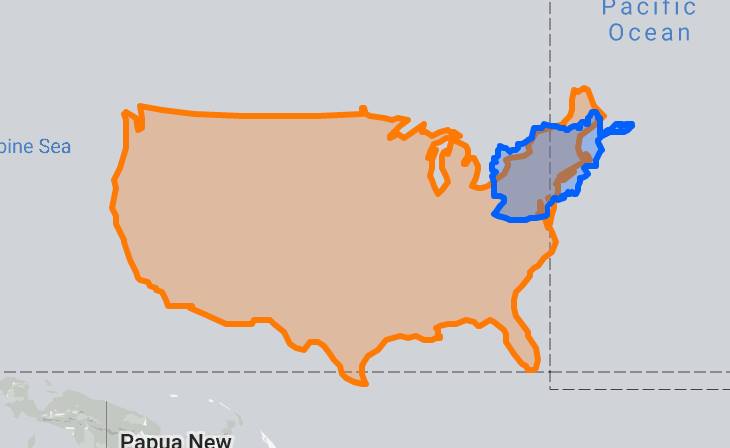
    photos_and_videos/TimelinePhotos_SxeO6JU-xg/51429109_10156971432247264_793111349528887296_n_10156971432232264.jpg USA VS AFGHANISTANByron PrinceFred NezamiFeb 7, 2019, 11:49 PMFred NezamiAfghanistan is only the size of Texas lmaoFeb 8, 2019, 12:47 AMJarrod MarmaIt would be better compared to landlocked Arizona/California/TexasFeb 8, 2019, 1:38 AMShawn Iceberg MobergPapua New guinea is getting a little to close for comfort.Feb 8, 2019, 6:11 AMAustin HubbardGood point… if the us military couldn’t control that small of a country… what chance do they have here.Feb 8, 2019, 7:13 AMJames KnowlesWe dont need the whole country, just a chunk. We can expand from there.Feb 8, 2019, 11:55 AMCurt Doolittletake them middle. starve the coasts.Feb 8, 2019, 11:55 AMNathan GoldsteinWhat we have in land we lack in will and determinationFeb 8, 2019, 11:57 AMRandall PostblockDon’t we need costal land for trade though?Feb 8, 2019, 3:10 PMJames KnowlesCoastal property would prevent an embargo situation and allow military trade with a potential allie.Feb 8, 2019, 5:27 PMGary KnightYou still need access to the water ways and you’ll need trade at the global scale.

    Starve the coast but plan to take and hold at least one major port.Feb 9, 2019, 4:35 AMNeil A. BucklewNicholas Palmer Castle what is the coast gonna trade without the center?Feb 9, 2019, 5:40 PMJames KnowlesIt’s about the center having access to the coast for world tradeFeb 9, 2019, 5:45 PMCurt DoolittleUm. if you look at the PORTS ,and in particular, the ENERGY PORTS, where are all of them?Feb 9, 2019, 5:47 PMCurt Doolittle^Tip. I posted the map already.Feb 9, 2019, 5:47 PMChris SchiazzaWill we EVER leave there?Feb 9, 2019, 8:47 PMUSA VS AFGHANISTAN


    Source date (UTC): 2019-02-07 22:07:00 UTC

  • “Let’s face it: the Abrahamic religions have brought about one disaster after an

    —“Let’s face it: the Abrahamic religions have brought about one disaster after another. And every Empire from Alexander on has fallen, usually because on racial, ethnic, or religious tension. Ok, maybe not as bad as Communism, but it has never been successful. Singapore – since I quoted LKY – has been, is, and always will be at least 75% Chinese for this very reason.”— Sean Ring Disclosure: I’m Catholic.


    Source date (UTC): 2019-02-07 03:34:00 UTC

  • “The liberal islands are three meals from anarchy”—James Knowles

    —“The liberal islands are three meals from anarchy”—James Knowles


    Source date (UTC): 2019-02-06 03:48:41 UTC

    Original post: https://twitter.com/i/web/status/1092993456283226112

  • “The liberal islands are three meals from anarchy”—James Knowles

    —“The liberal islands are three meals from anarchy”—James Knowles


    Source date (UTC): 2019-02-05 22:48:00 UTC

  • UNDERSTANDING 4GW – REALLY by Trey Lindsey The key to understanding 4GW is to no

    UNDERSTANDING 4GW – REALLY

    by Trey Lindsey

    The key to understanding 4GW is to not be too distracted by the mainstream definition that is reliant upon the blending of war and politics. Since politics is simply the science of gaining and holding power, war and politics have always gone hand in hand. Even Clausewitz understood this clearly and he recognized that two nationally levied armies in pitched combat were still conducting a political act.

    Instead, focus on the civilian and asymmetric components without committing the sin of ignoring thousands of years of history. Civilians have been fighting states from the beginning of the human historical record, and it is a scientific certainty that no two armies or forces of exactly equal capability have ever encountered each other in battle. The common misnomer of asymmetric threats as being those of unequal combat power is ahistorical and, even worse, useless.

    The only useful definition of an asymmetric threat is that of C.A. Primmerman, who in 2000 recognized that analyzing asymmetry on the battlefield is ultimately a mathematical formula and thus used a geometric projection to settle on a three-part definition of “(1) a weapon/tactic/strategy that an enemy could and would use against the United States, (2) a weapon/tactic/strategy that the United States would not employ, and (3) a weapon/tactic/strategy that, if not countered (and this not countered by systems currently in place), could have serious consequences.” This can be reduced down to an asymmetry in “willingness.”

    Because willingness to conduct an action plays a central role in 4GW, ethics becomes a central component of understanding it. Likewise, because the action must satisfy the aforementioned criteria, the scientific method is critical to making the aforementioned assessment. Thus the only population that can emerge victorious in a 4GW environment on either side is one that is capable of processing and calculating both philosophical and scientific variables.


    Source date (UTC): 2019-02-05 20:31:00 UTC

  • FOURTH GENERATION WARFARE Martin van Creveld’s, The Transformation of War, is ea

    FOURTH GENERATION WARFARE

    Martin van Creveld’s, The Transformation of War, is easily the most important book on war written in the last quarter-century.

    Transformation lays out the basis of Fourth Generation war, the state’s loss of its monopoly on war and on social organization. In the 21st century, as in all centuries prior to the rise of the nation-state, many different entities will fight war, for many different reasons, not just raison d’etat. Clausewitz’s “trinity” of people, government, and army vanishes, as the elements disappear or become indistinguishable from one another. Van Creveld has also written another book, The Rise and Decline of the State, which lays out the historical basis of the theory described in Transformation.”

    Let’s Review

    1 – The state’s loss of its monopoly on war

    2 – The state’s loss of monopoly on social organization.

    3 – Return to Pre-Nation-State War: “The War of All Against All”.

    GENERATIONS OF WARFARE

    “The Chinese military philosopher Sun Tzu said, “He who understands himself and understands his enemy will prevail in one hundred battles.” In order to understand both ourselves and our enemies in Fourth Generation conflicts, it is helpful to use the full framework of the Four Generations of modern war.

    What are the first three generations?

    FIRST GENERATION WARFARE

    First Generation war was fought with line and column tactics. It lasted from the Peace of Westphalia until around the time of the American Civil War. Its importance for us today is that the First Generation battlefield was usually a battlefield of order, and the battlefield of order created a culture of order in state militaries. Most of the things that define the difference between “military” and “civilian” – saluting, uniforms, careful gradations of rank, etc. – are products of the First Generation and exist to reinforce a military culture of order. Just as most state militaries are still designed to fight other state militaries, so they also continue to embody the First Generation culture of order.

    The problem is that, starting around the middle of the 19th century, the order of the battlefield began to break down. In the face of mass armies, nationalism that rank, etc. – are products of the First Generation and exist to reinforce a military culture of order. Just as most state militaries are still designed to fight other state militaries, so they also continue to embody the First Generation culture of order.

    The problem is that, starting around the middle of the 19th century, the order of the battlefield began to break down. In the face of mass armies, nationalism that made soldiers want to fight, and technological developments such as the rifled musket, the breechloader, barbed wire, and machine guns, the old line-and-column tactics became suicidal. But as the battlefield became more and more disorderly, state militaries remained locked into a culture of order. The military culture that in the First Generation had been consistent with the battlefield became increasingly contradictory to it. That contradiction is one of the reasons state militaries have so much difficulty in Fourth Generation war, where not only is the battlefield disordered, so is the entire society in which the conflict is taking place.

    SECOND GENERATION

    Second Generation war was developed by the French Army during and after World War I. It dealt with the increasing disorder of the battlefield by attempting to“ impose order on it. Second Generation war, also sometimes called firepower/attrition warfare, relied on centrally controlled indirect artillery fire, carefully synchronized with infantry, cavalry and aviation, to destroy the enemy by killing his soldiers and blowing up his equipment. The French summarized Second Generation war with the phrase, “The artillery conquers, the infantry occupies.”

    Second Generation war also preserved the military culture of order. Second Generation militaries focus inward on orders, rules, processes, and procedures. There is a “school solution” for every problem. Battles are fought methodically, so prescribed methods drive training and education, where the goal is perfection of detail in execution. The Second Generation military culture, like the First, values obedience over initiative (initiative is feared because it disrupts synchronization) and relies on imposed discipline.

    The United States Army and the U.S. Marine Corps both learned Second Generation war from the French Army during the First World War, and it largely remains the “American way of war” today.”

    THIRD GENERATION

    “Third Generation war, also called maneuver warfare, was developed by the German Army during World War I. Third Generation war dealt with the disorderly battlefield not by trying to impose order on it but by adapting to disorder and taking advantage of it. Third Generation war relied less on firepower than on speed and tempo. It sought to present the enemy with unexpected and dangerous situations faster than he could cope with them, pulling him apart mentally as well as physically.

    The German Army’s new Third Generation infantry tactics were the first non-linear tactics. Instead of trying to hold a line in the defense, the object was to draw the enemy in, then cut him off, putting whole enemy units “in the bag.” On the offensive, the German “storm-troop tactics” of 1918 flowed like water around enemy strong points, reaching deep into the enemy’s rear area and also rolling his forward units up from the flanks and rear. These World War I infantry tactics, when used by armored and mechanized formations in World War II, became known as “Blitzkrieg.”

    Just as Third Generation war broke with linear tactics, it also broke with the First and Second Generation culture of order. Third Generation militaries focus outward on the situation, the enemy, and the result the situation requires. Leaders at every level are expected to get that result, regardless of orders. Military education is designed to develop military judgment“, not teach processes or methods, and most training is force-on-force free play because only free play approximates the disorder of combat. Third Generation military culture also values initiative over obedience, tolerating mistakes so long as they do not result from timidity, and it relies on self-discipline rather than imposed discipline, because only self-discipline is compatible with initiative.

    When Second and Third Generation war met in combat in the German campaign against France in 1940, the Second Generation French Army was defeated completely and quickly; the campaign was over in six weeks. Both armies had similar technology, and the French actually had more (and better) tanks. Ideas, not weapons, dictated the outcome.”

    “Despite the fact that Third Generation war proved its decisive superiority more than 60 years ago, most of the world’s state militaries remain Second Generation. The reason is cultural: they cannot make the break with the culture of order that the Third Generation requires. This is another reason why, around the world, state-armed forces are not doing well against non-state enemies. Second Generation militaries fight by putting firepower on targets, and Fourth Generation fighters are very good at making themselves untargetable. Virtually all Fourth Generation forces are free of the First Generation culture of order; they focus outward, they prize initiative and, because they are highly decen“tralized, they rely on self-discipline. Second Generation state forces are largely helpless against them.”

    Excerpt From: William S. Lind and Gregory A. Thiele. “4th Generation Warfare Handbook.” iBooks.


    Source date (UTC): 2019-02-05 20:22:00 UTC