Theme: Civilization

  • THE CASE AGAINST GENETIC ADMIXTURE (Don’t shoot the messenger) The importance of

    THE CASE AGAINST GENETIC ADMIXTURE
    (Don’t shoot the messenger)
    The importance of racial homogeneity increases with evolutionary neoteny and it’s advantages. In other words it benefits less neotenic peoples but harms more neotenic peoples.
    Races are not equal in genetic expression. Lower neoteny expresses more so than higher neoteny. IQ mirrors racial admixture for the same reason. As such it’s much harder to express ‘white’ than it is south eurasian, southeast asian, african or the various hybrids. So the one-drop rule might be excessive, but not very.
    There are four primary races from four speciation events. In neotenic order from least to most they are: african(East Africa), south eurasian (Dry Persian Gulf), european (European Ice Age), and east asian (probably tibetan stepp combined with old north coastal migration). Everyone else is a hybridization of those four. And prior to the agrarian revolution each was as different as africans europeans and east asians. Additionally, the first ‘out of africa’ generation along the coastal route from yemen to india to se asia, to pacifica to australia was more akin to old africans (San) than to new africans (Bantu), but there are no surviving isolates that I know of remaining. Even aboriginal australians are an admixture.
    If you don’t care about phenotypic expression you should care a LOT about IQ distributions. Because average IQ decline in a population is the absolute worst long term consequence a people can experience, and decline in intelligence is non linear.
    Europeans are the product of three groups: Native Europeans (European Hunter Gatherers), Anatolian Farmers, and European-Caucasian Steppe Herders.
    This distribution is still evident in the IQs of populations in the cline from south to north of europe: Anatolian Farmers: Turkey (86), Greece (92), Sicily (90) Sardina (92); Atlantics: france(94-96), Spain(98); and Germanics (100-101), then the north slavic and poland (96). Then the finnics in Estonia and Finland (100-101).
    At present (a) the Flynn effect is reversing (dysgenic reproduction) (b) the best people have the fewest if any children (asymmetric reproduction), (c) immigration is lowering average IQ, (d) the quality of education due to ‘equality in the classroom’ combined with women teachers is declining accordingly – the result a less capable poplation offset by import of high performing university students, technologists, researchers, and even businesspeople – effecting the economy but not the social and political order.
    So the outcome is rather obvious in the data: you cannot have a high trust western european country, with participatory democracy, technological innovation and the wealth that results from a population with an IQ much under 100. The lower the IQ the greater the demand for authoritarianism.
    And in fact, a population needs, as England did before the industrial revolution, and ashkenazi did until they outbred, an IQ over 105 and preferably over 110 to maintain intellectual, political, and economic competitive advantage and the resulting quality of life of the population.
    Because your quality of life is more dependent upon the country’s average IQ than it is your own.

    Cheers

    Reply addressees: @IsseKwok


    Source date (UTC): 2024-03-29 13:37:17 UTC

    Original post: https://twitter.com/i/web/status/1773705993756545024

    Replying to: https://twitter.com/i/web/status/1773676508243988747
  • HOW LONG HAS FRANCE BEEN THE ENEMY OF EUROPE? (Forever basically) –“CURT: You’v

    HOW LONG HAS FRANCE BEEN THE ENEMY OF EUROPE? (Forever basically)

    –“CURT: You’ve mentioned that France is the enemy of Europe. When did that start?”–

    Great Question
    0 – Paleolithic agrarian age Atlantics (monolith builders) vs the steppe herder expansion that conquered them.
    1 – Ancestral Venus cults of the Gaulish territory vs the masculine Germanic pagan cults.
    2 – Successful Roman conquest of Gaul but not Germania.
    3 – Latinization of Gaul during the roman administration
    4 – The division of the Carolingian Empire (843) – largely laid the groundwork for future French-German divisions, including the emergence of the Holy Roman Empire of the Germanic Peoples.
    5 – The investiture Conflict (11th-12th Centuries). A conflict between popes and Holy Roman Emperors over the right to appoint church officials and invest them with spiritual authority. Although not a direct France vs. Germania conflict, it involved significant players from both territories and highlighted the growing ideological and political divisions within Christendom, often aligning German emperors and French kings on opposing sides.
    6 – The french slaughter of the Templars (1307) by King Philip IV of France, so that the monarchy could escape his debt – as a result, handing over European banking to the Jews.
    7 – The 14th century French attempt to move the papacy, papal court, and the seat of the church to Avignon in France – including succeeding with seven successive popes. Followed by the return to italy and the Western Schism (1378-1417), a period of division within the Catholic Church where rival claimants to the Papacy in Rome and Avignon (and later Pisa) led to a split among Europe’s Christian states.
    8 – The French attack on the Rise of the Habsburgs (15th Century Onwards) that united the HRE with Spain and her territories, out of envy and little else. (After the conflicts between France and the HRE during the franco english 100 years war).
    9. The french-catholic vs germanic-protestant divide and the wars of religion.
    10. Rousseau’s ‘catholic’ rebellion against the english empirical revolution and the ango invention of tht modern rule of law state setting the chain of evnts in progress that would lead to communism.
    11. The napoleonic destruction of the holy roman empire and the monarchies of europe setting the stage for the necessity of the formation of the german state, th german attempt to recover losses to france, and the first world war.
    12: The french abuse of the WW1 treaty punishing germany despite germania being in the right throughout history – especially in it’s domestication and integration of eastern and baltic europe into the european economy and political order.
    13. The french support for jewish postmodernism as a central objective of the french academy.
    14. The french postwar undermining of the american project to prevent another world war through global trade at every opportunity.
    15. The French attempt to ‘rule europe’ especially Germany by the European union.
    16. The French attempt to unify with russia postwar only ending as putin betrayed france in 2022.
    17. The french sponsorship for multiculturalism not only in france but a demand for it across europe.

    By the late Middle Ages and into the early modern period, these factors had firmly established a complex and often antagonistic relationship between French and German territories, even if the notion of “national enemies” in a modern sense was still taking shape.

    France has a chip on its shoulder, like a spoiled child who keeps losing the game.

    Anyway, I could make this list five times as long with little effort. This is just off the top of my head.

    Reply addressees: @DwightExMachina @radiofreenw


    Source date (UTC): 2024-03-29 03:30:22 UTC

    Original post: https://twitter.com/i/web/status/1773553257865994240

    Replying to: https://twitter.com/i/web/status/1773542969901015488

  • Axis of four continents and two races with at least seven subraces, surounded by

    Axis of four continents and two races with at least seven subraces, surounded by ‘raiders’ who would take advantage of the settlement, conquest, assimilation, domestication, decadence, re-conquest cycle.
    Only tribalism possible.


    Source date (UTC): 2024-03-29 02:23:20 UTC

    Original post: https://twitter.com/i/web/status/1773536388153053305

    Reply addressees: @sebsklo

    Replying to: https://twitter.com/i/web/status/1773535344878629120

  • RT @curtdoolittle: MUSLIM AND JEWISH COLONIZATION Lebanon is just the most visib

    RT @curtdoolittle: MUSLIM AND JEWISH COLONIZATION
    Lebanon is just the most visible and most modern example of Islamic Colonization by Sedit…


    Source date (UTC): 2024-03-28 18:35:21 UTC

    Original post: https://twitter.com/i/web/status/1773418616014160135

  • Upstate suffered from the brain drain in the late 60’s escalating rapidly with t

    Upstate suffered from the brain drain in the late 60’s escalating rapidly with the oil crisis in the 70s. There was a real ‘get outta dodge’ feeling. I think by the 80’s resignation had set in. And Xerox and Kodak were vaporized. So between the urban problems of rochester (blacks) the dissipation of the skilled tech labor, and the movement of technology from boston to san francisco, there is nothing left but agriculture.

    Reply addressees: @Tysenberg @whatifalthist


    Source date (UTC): 2024-03-28 18:28:12 UTC

    Original post: https://twitter.com/i/web/status/1773416817379115008

    Replying to: https://twitter.com/i/web/status/1773414512814624860

  • Correct. It was that NY should never have expanded but the Erie canal fed expans

    Correct. It was that NY should never have expanded but the Erie canal fed expansion and the war ended it freezing it in time. PA should have been fine if not for the problem of coal in the east and steel in the west. In the 80s Pittsburg was a good place to move. (Other than…


    Source date (UTC): 2024-03-28 18:18:54 UTC

    Original post: https://twitter.com/i/web/status/1773414476357771516

    Reply addressees: @whatifalthist @Tysenberg

    Replying to: https://twitter.com/i/web/status/1773413069521027077

  • Pennsylvania German < --- > Anglo New England territorial distribution. However,

    Pennsylvania German < — > Anglo New England territorial distribution.
    However, anglo civ was germanic until about 1830, when the british and then the americans adopted jewish financialism instead of german production. So for quite a while we had the optimum distribution of…


    Source date (UTC): 2024-03-28 18:11:48 UTC

    Original post: https://twitter.com/i/web/status/1773412690699931806

    Replying to: https://twitter.com/i/web/status/1773411381196288038

  • What region is ‘unremarkable’? I’m not sure there are any in the USA other than

    What region is ‘unremarkable’? I’m not sure there are any in the USA other than some not-yet-vacated rust belt cities.


    Source date (UTC): 2024-03-28 17:58:53 UTC

    Original post: https://twitter.com/i/web/status/1773409438059085852

    Reply addressees: @Tysenberg @whatifalthist

    Replying to: https://twitter.com/i/web/status/1773409021640269887

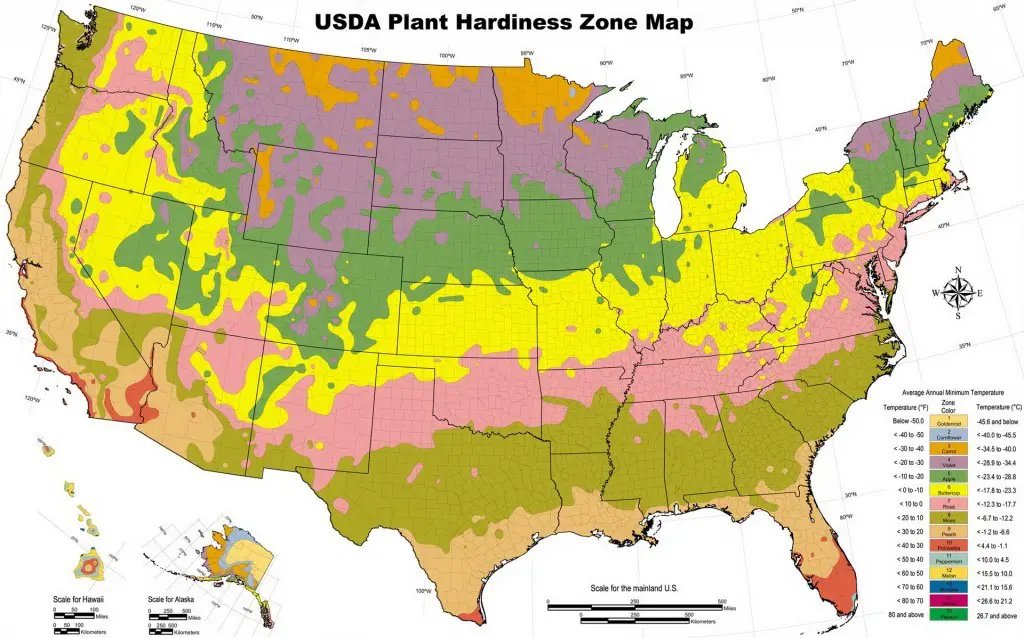
  • US AGRARIAN CAPACITY MAP Why were there small farms in the north and large plant

    US AGRARIAN CAPACITY MAP Why were there small farms in the north and large plant

    US AGRARIAN CAPACITY MAP
    Why were there small farms in the north and large plantations in the south? Climate: North for Subsistence crops vs South for Cash Crops.

    Geographical and Climatic Conditions
    North: The Northern states have a temperate climate with shorter growing… https://t.co/K2oPrvwcCd


    Source date (UTC): 2024-03-28 17:44:45 UTC

    Original post: https://twitter.com/i/web/status/1773405881142509866

  • US AGRARIAN CAPACITY MAP Why were there small farms in the north and large plant

    US AGRARIAN CAPACITY MAP
    Why were there small farms in the north and large plantations in the south? Climate: North for Subsistence crops vs South for Cash Crops.

    Geographical and Climatic Conditions
    North: The Northern states have a temperate climate with shorter growing seasons and less fertile soil compared to the South. These conditions were less conducive to the cultivation of labor-intensive cash crops on a large scale. Instead, the land was more suitable for diverse, small-scale farming that produced a variety of crops and livestock, which could sustain a family and possibly generate a modest surplus for sale.

    South: The Southern states benefit from a warmer climate and longer growing seasons, along with fertile soil that is ideal for the cultivation of cash crops such as tobacco, cotton, and rice. These crops were highly labor-intensive and profitable, particularly when grown on a large scale, leading to the development of extensive plantations.

    Economic Factors
    Cash Crops vs. Subsistence Farming: The Southern economy became heavily dependent on cash crops that were in high demand in both domestic and international markets, making large-scale agricultural operations more economically viable. In contrast, the Northern economy was more diversified, including industry and small-scale agriculture that focused on subsistence and local markets.

    Labor Systems: The profitability of large plantations in the South was closely tied to the use of enslaved labor, which provided a cost-effective workforce for the labor-intensive cultivation and harvesting of cash crops. The North, with its smaller farms and diverse economy, relied more on family labor and paid workers, making large-scale plantation agriculture less common.

    Social and Political Factors
    Land Ownership Patterns: In the South, land was more readily available and often sold in large parcels, which favored the establishment of large plantations. The social and economic prestige in the South was associated with the ownership of extensive lands and the use of slave labor. In the North, land ownership patterns, inheritance laws, and a more industrialized economy encouraged smaller, family-run farms.

    Slavery: The institution of slavery was foundational to the Southern plantation system, enabling the large-scale production of cash crops. The moral, economic, and political opposition to slavery in the North led to a very different labor system and, consequently, a different agricultural model.

    These factors combined to create distinct agricultural systems in the North and South. The large plantations of the South were economically oriented towards producing a few cash crops for both domestic consumption and export, relying on a labor system based on slavery. In contrast, the North’s smaller farms were more diversified, producing a range of crops and livestock for local consumption and markets, with a labor system that increasingly moved away from slavery and towards free labor as the industrial economy grew.


    Source date (UTC): 2024-03-28 17:44:44 UTC

    Original post: https://twitter.com/i/web/status/1773405880853180416