YES, METAPHYSICS HAS BEEN OVERVALUED FOR 2500 YEARS
(very ,very, important concept)
—“The athenian tradition did not account for costs.
(1) the peerage was small and wealthy with common interests – and costs were as rude then as today”
(2) discussion of costs immediately changes from ideals to reals thereby self selecting into class interests.” — CD
Adam Voight asks a profound question:
—“Does this mean that doing metaphysics has been overvalued for 2500 years?”— Adam Voight
Yes, (which is why I piss on the subject all the time) it’s just a means of trying to find a reason not to account for costs.
Which I think i’ve tried to state repeatedly, is that the universe operates on least cost principles because it has no choice.
Humans do also because they have no choice. We are more complicated than the universe because we have memory, can use that memory to predict, and therefore select delayed actions or early actions an capture that difference in calories as reward.
Measurement(math), Science (measurement), engineering (measurement), accounting/finance (measurement), economics(measurement), and Law (measurement) all account for costs.
Philosophy and theology and the Occult do not account for costs. IMO Popper and Kuhn did not account for costs. Hayek half-succeeded and half failed, in that law is the only ‘science’ and that all else is merely some fewer number of dimensions we consider under the law. Science and philosophy and religion evolved out of law, with economics and physics the only two to account for costs, and keynesian economics an attempt like philosophy and religion to NOT account for costs.
So here is the simple psychology of it:
Those of us and our disciplines who account for costs.
Those of us and our disciplines who avoid accounting for costs.
The issue: you can rally people politically very easily by not accounting for costs.
That is the secret to religion and philosophy versus science and law.
Hence my work at ‘fixing’ the law such that it is a cult in and of itself, that is extremely intolerant of not accounting for costs.
—“Western society is dominant through the propagation of western currency, which has taking the place of western warfare, in order to maintain western dominance do you think the value of economic currency needs to be maintained or the value of western warfare needs to become the currency?”— A Friend
Smart Question.
I think the short answer is that western currency, and in particular, the american takeover of the british empire at bretton woods, which was dependent upon providing open access to the american market, and american guarantee of policing of world trade.
1. Western dominance is not ‘needed’.
2. Conflict of civilizations will emerge.
3. Power evolved by increasingly subtle incentives: Violence > Religion > Administration > Economics > with next state being information (which scares me).
4. The west competed successfully by a combination of technologies. The competitive advantage in other than trust (culture) has mostly been eliminated. the competitive advantage of demographic distribution is in the process of being eliminated.
5. I do not see how the west can maintain military superiority. Military superiority requires technology. Technology requires wealth. Wealth requires population, trade routes, and all the rest…
6. At present, Trump is attempting to force europeans to remilitarize by withdrawing military force from the region, and then the rest of the world, more slowly, because america no longer has the relative economic and technological advantage. Worse, chinese organization, government, and culture is superior for the conduct of military, economic, and political expansion.
https://www.wsj.com/articles/gun-use-surges-in-europe-where-firearms-are-rare-11546857000EUROPE BEGINS TO UNDERSTAND: DIVERSITY IS THE REASON FOR AMERICAN VIOLENCE AND MIDDLE EASTERN VIOLENCE – AND ALL VIOLENCE
Um. You are silly. It’s built on the common law, accounting, the corporation, banking, sail, cannon and steel. Belief systems are just storytelling. Men act in the real world.
Original tweet unavailable — we could not load the text of the post this reply is addressing on X. That usually means the tweet was deleted, the account is protected, or X does not expose it to the account used for archiving. The Original post link below may still open if you view it in X while signed in.
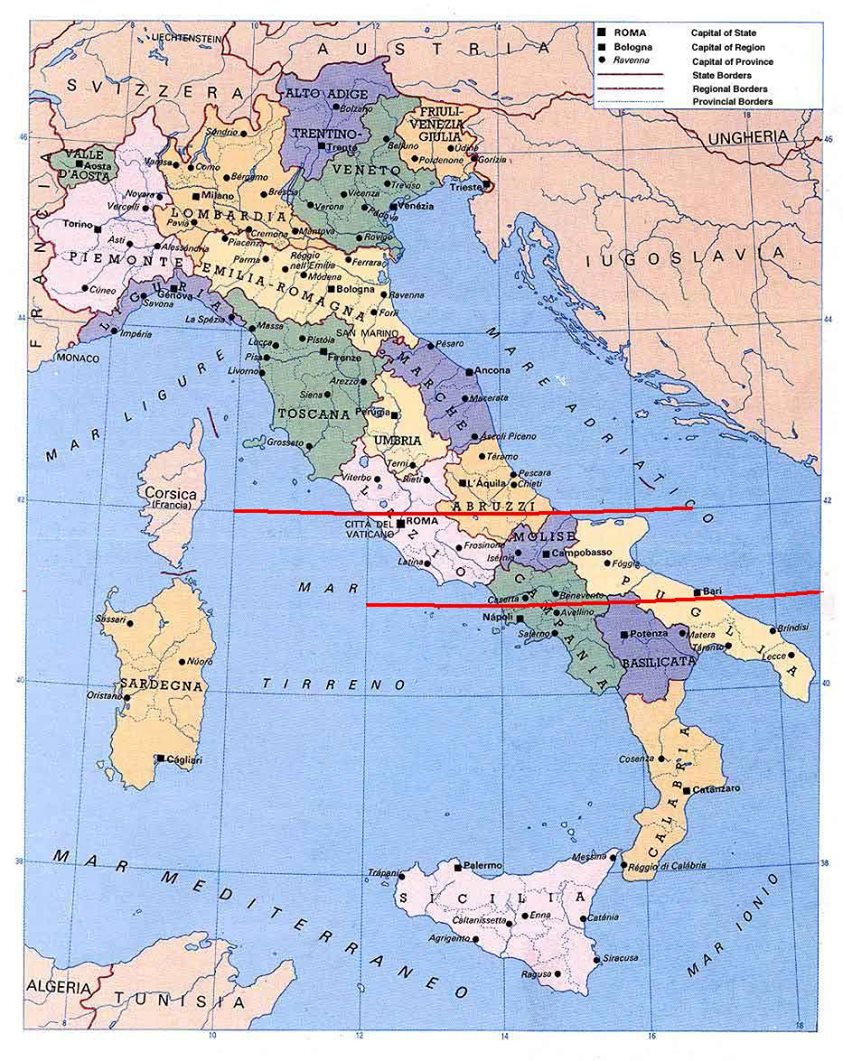
photos_and_videos/TimelinePhotos_SxeO6JU-xg/49398148_10156899123602264_3828070867359760384_o_10156899123597264.jpg DIFFERENCE BETWEEN NORTHERN AND SOUTHERN ITALIAN IQ
—“30% southern admixture in Piemonte lowered the IQ by 2.2 points. Thus the genotypic difference between Northern and Southern Italy is 2.2/0.3= 7.33 IQ points.”—
A lot of this was literacy. This is the reason for china vs india.
Literacy = programming.
ITALY VS INDIA (SIMILAR STORIES)
Truthful testimony, literacy, hard science, and hard social science (tort law) eliminate error.Göran DahlMore genetic diversity in Italy than in all other European countries combined – save for Finland.Jan 6, 2019, 10:55 AMZach MattoWhat’s often missed is that a huge portion of southern Italy’s economy is underground (it’s always been this way), thus economic and employment figures do not match on-the-ground reality.Jan 6, 2019, 11:04 AMFrancesco PrincipiWhat italian peninsula should be (politically).Jan 6, 2019, 11:54 AMCurt Doolittleyes.Jan 6, 2019, 11:55 AMMike HessGöran Dahl How is Italy more diverse than Greece . They are middle eastern and European mixed .Jan 6, 2019, 11:59 AMCurt DoolittleI FOUND HEAVEN FOR ROADSTERS AND IT IS HERE:
And you stay here when in heaven:
The Hotel Bellevue Syrene, Sorrento.Jan 6, 2019, 12:01 PMFrancesco PrincipiNo doubtJan 6, 2019, 12:02 PMFrancesco PrincipiThis part is not negletted like the rest of the region (Campania) only beause the Anglo tourism.Jan 6, 2019, 12:05 PMGöran DahlIt’s the other way around; Italy has that mixture while Greece doesn’t; and on top of that, Northern Italy has a lot of Germanic admixture (around 40%). This creates a long genetic line between Sicilians/Southern Italians and Venetians, where the middle (Tuscany et al) probably resembles Iron Age Romans the most, though we need a good amount of ancient samples to determine that question.Jan 6, 2019, 12:18 PMCurt Doolittleagreed. ANd I had to have a Bodyguard in Naples.Jan 6, 2019, 12:24 PMFrancesco PrincipiVesuvio has many fans in the rest of ItalyJan 6, 2019, 12:27 PMJayant BhandariIndia vs China… China’s iq is 105. India’s is 82. India can get to 91 with literacy and nutrition. So the huge gap that will stay cannot be solved with education.Jan 6, 2019, 12:34 PMArthur Spidoneeds a few generations, thoJan 6, 2019, 12:35 PMNicholas ManousosInteresting case. They didn’t even speak the same language until they unified in the 1860s. Naturally they chose the Firenze dialect to become the national language; Dante was from Firenze. People from Firenze had a headstart because it was their native language.Jan 6, 2019, 12:43 PMCurt DoolittleJayant, there is a wonderful book, the Arthashastra by Rangarajan. I don’t remember who recommended it to me but it was the most helpful book I’ve ever read on indian history. This is political science at its best.
If I wanted to trace western thought in political (and military) science it would be a very limited set of authors and a very small number of books. Aristotle, Caesar, machiavelli, Hobbes, Locke, Smith, Hume, Darwin and Milsom’s Law with Jefferson/Adam’s constitution.
I can do a fair job with Chinese political thought since I studied it in college.
I can’t do the same for indian. Is there a ‘small’ selection of books that are as painfully secular (scientific and practical) as Rangarajan’s? And I assume they would be available in english?Jan 6, 2019, 2:39 PMJayant BhandariMy friend Madhusudan Raj is an expert on this. He is also one of those extremely open minded people you want to be friends with. Madhusudan… Can you give some names to Curt please?Jan 6, 2019, 3:12 PMCurt DoolittleJayant Bhandari (thank you)Jan 6, 2019, 4:03 PMNicholas ManousosContinued…
Greece, after its independence from the Ottoman Empire, chose the Peloponese dialect as its national language. Lucky, that’s where I’m from.
In England it probably happened earlier, around the Elizabethan/King James Era when printing force them to standardize the language. But I don’t know which dialect they chose in England.Jan 6, 2019, 4:40 PMMadhusudan RajCurt Doolittle Arthashastra is a book by an ancient teacher of 4th century BC, who used to head Takshshila learning center and his name was Vishnugupta also popularly known as Chanakya or Kautilya. I will make the list of some books and post here later in the day.Jan 6, 2019, 10:11 PMScott ClaremontCurt if every nation had the same access to education, would all nations have similar iq averages? Asking for a friendJan 7, 2019, 4:17 AMMadhusudan RajCurt Doolittle This book of Himanshu Roy briefly covers major Indian thinkers and distills their political thoughts: https://www.amazon.in/Indian-Political-Thought-Himanshu-Roy/dp/9332587337/ref=dp_ob_image_bk. After reading Chanakya, another book that you can read is Manu’s laws (caste is systematized by him), which is another formative book which defines India even today: https://www.amazon.in/dp/0140445404/?coliid=I1I5S53BDJR69K&colid=24Q4Q9SAUWT15&psc=0&ref_=lv_ov_lig_dp_it#reader_0140445404.Jan 7, 2019, 7:01 AMMadhusudan RajCurt Doolittle Also, A L Basham’s, a well known Indologist, book “The Wonder that Was India” also has a chapter on politics that will be helpful: https://archive.org/details/TheWonderThatWasIndiaByALBasham/page/n15.Jan 7, 2019, 7:09 AMԴավիդ ՎելլաThey still almost don’t. Unification was also imposed from the Piedmont in the north and southern Italy was plundered.Jan 7, 2019, 7:16 AMNicholas ManousosDawid Wella Most multi generational Italians in the diaspora, especially from Calabria and Sicily, still don’t speak proper Italian.Jan 7, 2019, 7:25 AMԴավիդ ՎելլաI’m aware, I have family in Sicily. I heard that at one point southern Italians used to come to my country, Malta, to learn Italian because of the level of Italian that was spoken by the educated class.Jan 7, 2019, 7:42 AMԴավիդ ՎելլաSicilian and Neapolitan almost sound like entirely different languages from standard Italian.Jan 7, 2019, 7:45 AMԴավիդ ՎելլաA lot of the wealth in Italy is hidden or stored as assets even in regions like Tuscany.Jan 7, 2019, 7:49 AMBrendan HegartyNo. Unless a meat grinder is used for those who cant survive the universalized education standard you suggest.Jan 7, 2019, 10:02 AMBrendan HegartyReminds me of this
“I love black people I hate terroni (Southerners(“Jan 7, 2019, 10:05 AMErik LukovskyThere’s that many migrants in Italy?Jan 7, 2019, 9:12 PMDIFFERENCE BETWEEN NORTHERN AND SOUTHERN ITALIAN IQ
—“30% southern admixture in Piemonte lowered the IQ by 2.2 points. Thus the genotypic difference between Northern and Southern Italy is 2.2/0.3= 7.33 IQ points.”—
A lot of this was literacy. This is the reason for china vs india.
Literacy = programming.
ITALY VS INDIA (SIMILAR STORIES)
Truthful testimony, literacy, hard science, and hard social science (tort law) eliminate error.
IQ is ultra meaningful – we have illustrated time and again that a society’s (country’s) average IQ is seven times more important than your own IQ in determining your standard of living. Individual IQ isn’t that important (at least within an sd of the mean) yet average IQs are critically important. In other words, better off a fool in Luxembourg than a genius in Lebanon.
(CD: Trust is a byproduct of the decrease in frictions (via-negativa) of truthful discourse and better calculation of options.)
I recommend reading “The Accidental Superpower” by Peter Zeihan on this topic. It explains the following:
As you can see above, the United States has 15,000 miles of interconnected waterways, more than the rest of the planet put together. That’s important because moving “stuff” from point A to point B is expensive, but less expensive if you float it. That means the United States is destined to be capital rich because it’s citizenry has direct access to a lot of “stuff” at low cost.
And you see that long blue line in the picture above? That’s called the Greater Mississippi basin. It sits on the largest arable land in the entire world. Thats called the “American bread basket” and is home to a LOT of farmers. All this food is transported at low cost to Minneapolis-St. Paul or Chicago, and then transported very cheaply throughout the United States, and via Houston, the world.
Ever wonder why Americans have a tendency to be isolationist? It’s because Midwesterners don’t NEED the rest of the world. The rest of the world NEEDS us, in order to keep their food cost low so they can invest in other “stuff.” But because American food is so cheap and easily accessible, our coastal elitists can invest in other extravagant things such as industrial, technological and philosophical inventions.
This helps explain America’s leading role in the industrial and technological revolutions. America can build great universities, great cities and great militaries because the most important commodity, food and water, is heavily prevalent to Americans.
2. Natural resources
Now, I will stop harping on about food. But not only does the United States have lots of water and food, but it has four large mountain ranges with tons of raw minerals to choose from.
The Appalachian, Rockies, Nevadas, and Alaskan Ranges are home to hundreds of billions of pounds worth of bauxite, iron, gold, silver, copper, and pretty much everything you can think of. Not only that, but America also has this….
You see all that dark brown? That’s more oil and natural gas reserves than any other country on planet earth. And this doesn’t have Alaska’s ANWAR field, which may have more natural gas and oil than all of continental US put together.
This means that continental America has its own food, water, oil, natural gas, and raw minerals. In theory, we could cut ourselves off from the rest of the world, and we’d be fine (I’m not suggesting this). The rest of the world does not have that luxury.
And to top it all off, America is one of the most naturally defendable pieces of geography in the world…
3. Essentially an island (protected)
America is effectively an island. It has the Atlantic to the east, the Pacific to the west, deserts protecting us from the south and forests and lakes protecting us from the north.
When America builds a military, it’s not to defend our borders, but instead to project outward our influence. Our armies and navies can go wherever and whenever it wants, and no one can do the same to us. It’s why America tends to be reckless in some of its foreign policy decisions, whereas other powers don’t have that luxury. This simple reality is why many powers become frustrated with American hegemony, because when we make a foreign policy blunder, we barely suffer any consequences. But it has an overwhelming impact on the rest of the world.
4. Culture (people)
Americans are a pure settler culture. When the Industrial Revolution hit Europe, millions of poor Europeans lost their livelihoods due to a decrease in need for agricultural labor. As a consequence, millions of these Europeans flooded into America. How did America handle this?
Well, the American Anglo-Saxon elite allowed populations to come into America with the expectation that they wouldn’t be a burden on the state. These new Americans were handed a rifle, sent out West, and told to fight themselves a plot of land, cultivate it, defend it on their own, and trade it into the east coast. The only time when the US Government would get involved was if a Native Tribe was successfully repelling the process of European settlement. In that event, the US sent an overwhelming force to “neutralize” the threat. That would be the polite way to say that.
This helps explain the American culture of extreme individualism and the “leave our community alone” culture. When the Germans, Irish, or Scots settled in America, they did so as a community specific to their own. This community built their own church in their image and created a system of governance appropriate to them.
These communities were essentially Socialist networks in their make-up. These populations donated generously to the local church, at which the church used those funds to build schools and hospitals intended to be used solely by the community members. All interactions with “that town down the river” were to be strictly on the basis of trade and common defense against Natives. The most able men of these communities learned English so they had a common language to discuss trade and defense with the surrounding communities.
Understanding this process is essential to understanding how all American universities have their origins as theological institutions, intended to educate the local German or Scottish community on their historic, religious, and economic practices. Harvard, for example, was founded on behalf of Anglo-Saxon Puritan Minister John Harvard “to advance learning and perpetuate it to posterity, dreading to leave an illiterate ministry to the churches when our present ministers shall lie in the dust.” Harvard was originally intended to train Puritan ministers to preach the Gospel throughout the Anglo-Saxon colonies in 1643.
Similarly, this is why American hospitals are called by their original religious affiliation. The “Methodist Hospital,” “Lutheran Hospital” or “Presbyterian Hospital” are examples of European settlement institutions that have their origin in the “take care of your own community and your own people” mentality. This also explains America’s hesitancy to adopt more European or Canadian style healthcare, welfare, or gun policy. Each individual settlement believed in taking care of their own community, and gets frustrated when the state attempts to supersede settlement law.
While this does have its own problems, this has helped create the American entrepreneurial culture. America is home to some of the the world’s most advanced technological and industrial companies. It started as a way for the German settlement to figure out a better way to trade into the Scottish settlement down the river. It has now become “what communication method using technological software is most desirable to the consumer.”
5. Adherence to English Common Law
The Angles, Saxons, Normans, Danes, Welsh, and Scots put together an impressive political structure in Greater Britain from the fall of Rome through the Magna Carta and the Glorious Revolution. An adherence to the common belief in the divinity of the individual and the respect of individual liberties, has kept the government of the United States from interfering with the development of American enterprise.
English Common Law is a byproduct of Anglo-Saxon judicial practices, Jewish theological practices via Christianity, Greek Legislative practices, and Roman organization/infrastructure. It’s combined many of the greatest political philosophies into one brilliant simple idea, espoused from the English Glorious Revolution, John Locke to Thomas Jefferson.
What makes America exceptional is a byproduct of its geography, culture, and history. It’s also what makes us despised in many parts of the world. Americans are a byproduct of Western European pioneering and conquest, with some 72–80% of our population being a descendant from Western Europe. 15% Anglo-Saxon, 15% German, 15% Hispanic (Spanish), 15% Irish, 5% Scottish, 5% Italian, 5% Scandinavian and a 5% Slavic/Balkan/Jewish admixture. It is also home to 13% African American, 4% East Asian and 2% Asian Indian/Middle Eastern. And sadly, only about 1% is Native American, once a people who solely populated this land alone.
*** Interesting facts – There are 28 million descendants of Ireland in America, almost 6 times that of the island of Ireland. There are more ethnic Greater Britons (England, Scotland and Wales) in America than in Great Britain (70–84 million vs. 66 million). More than one third of the global ethnic German population (German, Dane, Swedish, Norwegian, Austrian) lives in America. There are more ethnic Poles living in Chicago than in any other Polish city with the only exception its Capitol, Warsaw.
But in the end, it’s a land of many different cultures that settled within this divinely gifted land, and a people who learned a common language, share a common history and share a common destiny. While our history is regretful in some regards of cultural and ethnic infighting, it is an unfortunate process of forming many different cultures into one. And while our assimilation process is viewed as ugly to outsiders, it’s much more effective than any other nation to date.
It’s the individualist American ethic, founded on Judaeo-Christian Protestant Individualism, that will continue to propel our institutions to the highest competitive advantage. And for us Americans, although foreigners despise our patriotism, this is something we are very thankful for.
I recommend reading “The Accidental Superpower” by Peter Zeihan on this topic. It explains the following:
As you can see above, the United States has 15,000 miles of interconnected waterways, more than the rest of the planet put together. That’s important because moving “stuff” from point A to point B is expensive, but less expensive if you float it. That means the United States is destined to be capital rich because it’s citizenry has direct access to a lot of “stuff” at low cost.
And you see that long blue line in the picture above? That’s called the Greater Mississippi basin. It sits on the largest arable land in the entire world. Thats called the “American bread basket” and is home to a LOT of farmers. All this food is transported at low cost to Minneapolis-St. Paul or Chicago, and then transported very cheaply throughout the United States, and via Houston, the world.
Ever wonder why Americans have a tendency to be isolationist? It’s because Midwesterners don’t NEED the rest of the world. The rest of the world NEEDS us, in order to keep their food cost low so they can invest in other “stuff.” But because American food is so cheap and easily accessible, our coastal elitists can invest in other extravagant things such as industrial, technological and philosophical inventions.
This helps explain America’s leading role in the industrial and technological revolutions. America can build great universities, great cities and great militaries because the most important commodity, food and water, is heavily prevalent to Americans.
2. Natural resources
Now, I will stop harping on about food. But not only does the United States have lots of water and food, but it has four large mountain ranges with tons of raw minerals to choose from.
The Appalachian, Rockies, Nevadas, and Alaskan Ranges are home to hundreds of billions of pounds worth of bauxite, iron, gold, silver, copper, and pretty much everything you can think of. Not only that, but America also has this….
You see all that dark brown? That’s more oil and natural gas reserves than any other country on planet earth. And this doesn’t have Alaska’s ANWAR field, which may have more natural gas and oil than all of continental US put together.
This means that continental America has its own food, water, oil, natural gas, and raw minerals. In theory, we could cut ourselves off from the rest of the world, and we’d be fine (I’m not suggesting this). The rest of the world does not have that luxury.
And to top it all off, America is one of the most naturally defendable pieces of geography in the world…
3. Essentially an island (protected)
America is effectively an island. It has the Atlantic to the east, the Pacific to the west, deserts protecting us from the south and forests and lakes protecting us from the north.
When America builds a military, it’s not to defend our borders, but instead to project outward our influence. Our armies and navies can go wherever and whenever it wants, and no one can do the same to us. It’s why America tends to be reckless in some of its foreign policy decisions, whereas other powers don’t have that luxury. This simple reality is why many powers become frustrated with American hegemony, because when we make a foreign policy blunder, we barely suffer any consequences. But it has an overwhelming impact on the rest of the world.
4. Culture (people)
Americans are a pure settler culture. When the Industrial Revolution hit Europe, millions of poor Europeans lost their livelihoods due to a decrease in need for agricultural labor. As a consequence, millions of these Europeans flooded into America. How did America handle this?
Well, the American Anglo-Saxon elite allowed populations to come into America with the expectation that they wouldn’t be a burden on the state. These new Americans were handed a rifle, sent out West, and told to fight themselves a plot of land, cultivate it, defend it on their own, and trade it into the east coast. The only time when the US Government would get involved was if a Native Tribe was successfully repelling the process of European settlement. In that event, the US sent an overwhelming force to “neutralize” the threat. That would be the polite way to say that.
This helps explain the American culture of extreme individualism and the “leave our community alone” culture. When the Germans, Irish, or Scots settled in America, they did so as a community specific to their own. This community built their own church in their image and created a system of governance appropriate to them.
These communities were essentially Socialist networks in their make-up. These populations donated generously to the local church, at which the church used those funds to build schools and hospitals intended to be used solely by the community members. All interactions with “that town down the river” were to be strictly on the basis of trade and common defense against Natives. The most able men of these communities learned English so they had a common language to discuss trade and defense with the surrounding communities.
Understanding this process is essential to understanding how all American universities have their origins as theological institutions, intended to educate the local German or Scottish community on their historic, religious, and economic practices. Harvard, for example, was founded on behalf of Anglo-Saxon Puritan Minister John Harvard “to advance learning and perpetuate it to posterity, dreading to leave an illiterate ministry to the churches when our present ministers shall lie in the dust.” Harvard was originally intended to train Puritan ministers to preach the Gospel throughout the Anglo-Saxon colonies in 1643.
Similarly, this is why American hospitals are called by their original religious affiliation. The “Methodist Hospital,” “Lutheran Hospital” or “Presbyterian Hospital” are examples of European settlement institutions that have their origin in the “take care of your own community and your own people” mentality. This also explains America’s hesitancy to adopt more European or Canadian style healthcare, welfare, or gun policy. Each individual settlement believed in taking care of their own community, and gets frustrated when the state attempts to supersede settlement law.
While this does have its own problems, this has helped create the American entrepreneurial culture. America is home to some of the the world’s most advanced technological and industrial companies. It started as a way for the German settlement to figure out a better way to trade into the Scottish settlement down the river. It has now become “what communication method using technological software is most desirable to the consumer.”
5. Adherence to English Common Law
The Angles, Saxons, Normans, Danes, Welsh, and Scots put together an impressive political structure in Greater Britain from the fall of Rome through the Magna Carta and the Glorious Revolution. An adherence to the common belief in the divinity of the individual and the respect of individual liberties, has kept the government of the United States from interfering with the development of American enterprise.
English Common Law is a byproduct of Anglo-Saxon judicial practices, Jewish theological practices via Christianity, Greek Legislative practices, and Roman organization/infrastructure. It’s combined many of the greatest political philosophies into one brilliant simple idea, espoused from the English Glorious Revolution, John Locke to Thomas Jefferson.
What makes America exceptional is a byproduct of its geography, culture, and history. It’s also what makes us despised in many parts of the world. Americans are a byproduct of Western European pioneering and conquest, with some 72–80% of our population being a descendant from Western Europe. 15% Anglo-Saxon, 15% German, 15% Hispanic (Spanish), 15% Irish, 5% Scottish, 5% Italian, 5% Scandinavian and a 5% Slavic/Balkan/Jewish admixture. It is also home to 13% African American, 4% East Asian and 2% Asian Indian/Middle Eastern. And sadly, only about 1% is Native American, once a people who solely populated this land alone.
*** Interesting facts – There are 28 million descendants of Ireland in America, almost 6 times that of the island of Ireland. There are more ethnic Greater Britons (England, Scotland and Wales) in America than in Great Britain (70–84 million vs. 66 million). More than one third of the global ethnic German population (German, Dane, Swedish, Norwegian, Austrian) lives in America. There are more ethnic Poles living in Chicago than in any other Polish city with the only exception its Capitol, Warsaw.
But in the end, it’s a land of many different cultures that settled within this divinely gifted land, and a people who learned a common language, share a common history and share a common destiny. While our history is regretful in some regards of cultural and ethnic infighting, it is an unfortunate process of forming many different cultures into one. And while our assimilation process is viewed as ugly to outsiders, it’s much more effective than any other nation to date.
It’s the individualist American ethic, founded on Judaeo-Christian Protestant Individualism, that will continue to propel our institutions to the highest competitive advantage. And for us Americans, although foreigners despise our patriotism, this is something we are very thankful for.
Christianity worked against aristocracy using the Israel/Christ myth, and supernatural promise after death, and they think they can repeat the last victory with the colonialism/holocaust myth, pseudoscience (marx) and sophism(postmodernism and feminism). We can’t let them win.