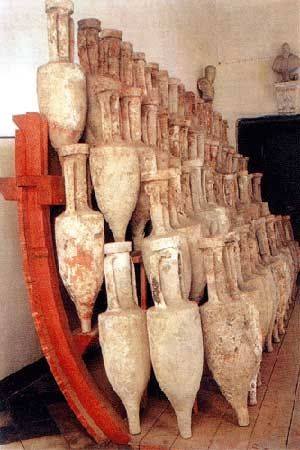
photos_and_videos/TimelinePhotos_SxeO6JU-xg/53637743_10157038758312264_6682052592324837376_n_10157038758307264.jpg BUT WHY ARE THEY SHAPED THAT WAY?
This is why….Dawid WellaMare NostrvmMar 9, 2019, 3:47 PMDanny JayDo you know how long ive been wondering this.Mar 9, 2019, 3:58 PMChristian KalafutThe second great age of commerce.Mar 9, 2019, 4:08 PMCurt DoolittleMar 9, 2019, 4:29 PMChristian KalafutCurt Doolittle the fourth great age of commerceMar 9, 2019, 5:02 PMDaniel Roland AndersonOur ancestors were pretty slick.Mar 9, 2019, 5:23 PMZack SundayWhat are they?Mar 9, 2019, 5:45 PMChip SillsAmphoraeMar 9, 2019, 5:59 PMChip SillsThe shape shipped well in bored carriers (see to left)–good for transporting wine, oil, etc.Mar 9, 2019, 6:00 PMChip SillsThe long thin shape meant that one person could carry a heavy load close to the backbone, “hugging” it.Mar 9, 2019, 6:01 PMJames Louis LaSalleMar 9, 2019, 8:02 PMMark Di RussoAmphorae, they stack! 👌Mar 9, 2019, 9:34 PMMark Di RussoCurt, the basic design has a dual function though, it also makes them easier to pour. Either for banquets or indeed between large and small amphorae in warehoused storage and such.Mar 9, 2019, 9:36 PMMark Di RussoMar 9, 2019, 9:37 PMMark Di RussoMar 9, 2019, 9:39 PMMark Di RussoMar 9, 2019, 9:40 PMMark Di RussoMar 9, 2019, 9:42 PMMark Di RussoMar 9, 2019, 9:43 PMMark Di RussoMar 9, 2019, 9:44 PMAmanda ConnersMar 10, 2019, 8:54 AMBUT WHY ARE THEY SHAPED THAT WAY?
VS The four great (Successful) river civilizations.
VS The (Difficult) Land Empires.
VS The (Failed) Horse Empires
Germany would have completed our evolution as europeans if not for the discovery of the new world.
France died with her revolution and England divorced from europe with her empire, and germany was restoring its historical trajectory as the heart of european civilization and culture.
We must do everything possible to (a) reunite the anglo empire, (b) restore the continental alliance, (c) build out the intermarium alliance, and (d) rebuild the russian empire so she is economically defensible from south and east.
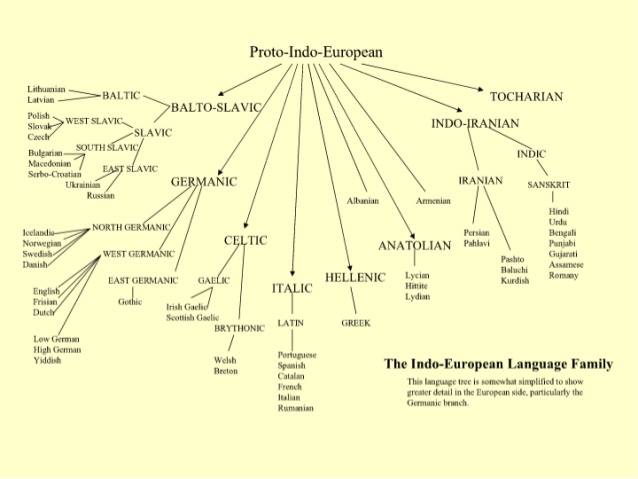
photos_and_videos/TimelinePhotos_SxeO6JU-xg/53537484_10157038645572264_7609140696418615296_n_10157038645567264.jpg THE IE GROUPS
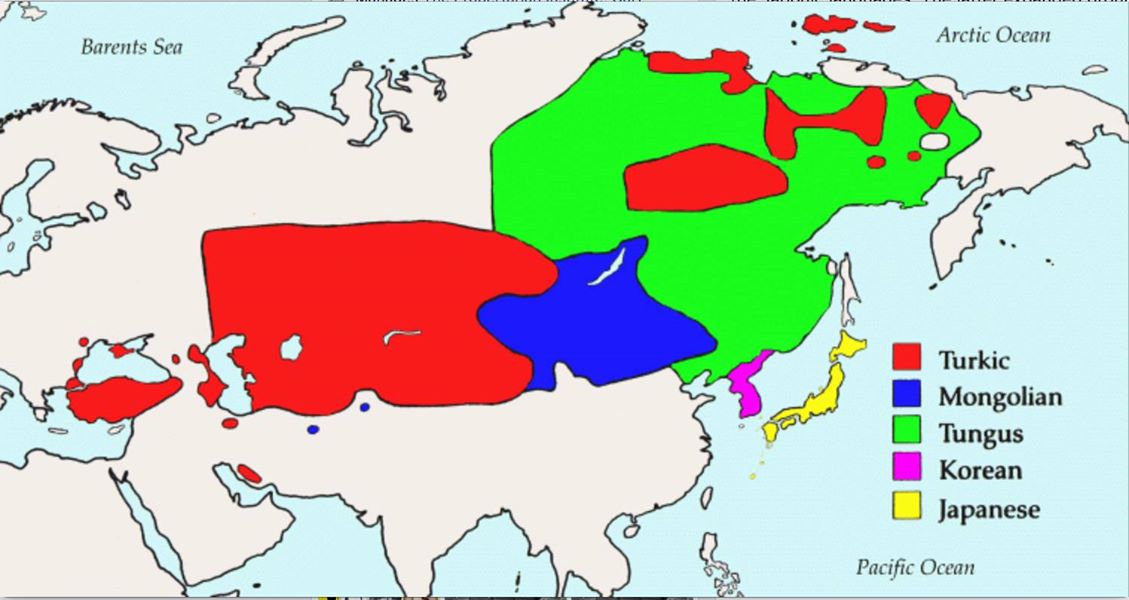
Altaic – ~Extinct in the east, outbred in Anatolia.
Tocharian (Extinct) – By the Chinese
Anatolian (Extinct) – By the Semitic Peoples
Indo Aryan ~Extinct Through Outbreeding.
Iranic – Converted to Islam by the Muslim Invasion.
European – We will see if we survive or if we will do as the east asians and build a wall.Jarrod MarmaI have some guesses that hellenic and Baltic have a more similar origin than is regularly assumedMar 9, 2019, 2:55 PMGünther Shroomacherreferences?Mar 9, 2019, 3:05 PMJarrod MarmaNot enough lol. I’ve looked into things suggesting they were remnant indo-europeans after the European migration came south with Neanderthal DNA. Just a minor hunch so farMar 9, 2019, 3:15 PMGreg HamiltonI feel for the Persians. They could be pretty awesome if they weren’t Muslim.Mar 9, 2019, 3:19 PMStephen ThomasThey were pretty awesome really. Without the damn desert religions. There is no telling what they could’ve been.
Ancient Persia was a marvel… Then the scourge came.Mar 9, 2019, 3:41 PMGreg Hamiltonand islam claims a lot of their marvels because they came after the conquest, yet IMO it was just momentum from before they arrived. It didn’t lastMar 9, 2019, 3:43 PMStephen ThomasCorrect the Pre-Islam Persia took centuries to totally destroy.Mar 9, 2019, 3:46 PMMark Di RussoSassanid Persia shows what the Achaemenid dynasty might’ve accomplished in time (though it’s also hard to imagine that Hellenic / Bactrian influence didn’t have a role in the further refinement of Persian culture). The Sassanid military was itself a marvel, and they gave the Romans many hard lessons in the importance of heavily armoured cavalry and desert logistics.Mar 9, 2019, 10:31 PMAaron BradleyGreg Hamilton ever wondered why the usual suspects keep trying to put us on a warpath with them…Mar 10, 2019, 7:41 AMTHE IE GROUPS
Altaic – ~Extinct in the east, outbred in Anatolia.
Tocharian (Extinct) – By the Chinese
Anatolian (Extinct) – By the Semitic Peoples
Indo Aryan ~Extinct Through Outbreeding.
Iranic – Converted to Islam by the Muslim Invasion.
European – We will see if we survive or if we will do as the east asians and build a wall.
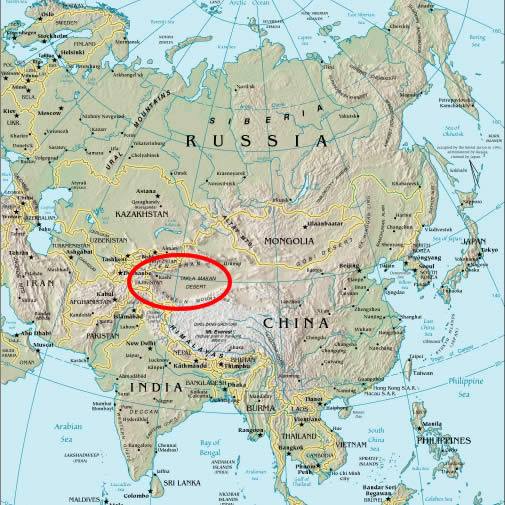
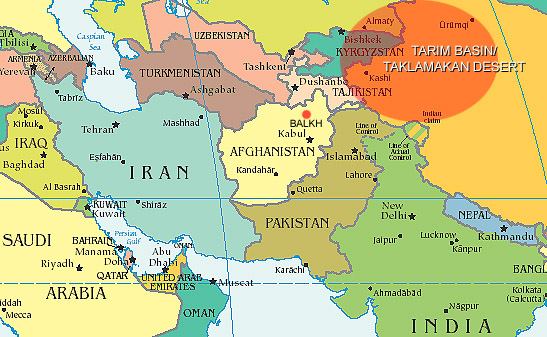
photos_and_videos/TimelinePhotos_SxeO6JU-xg/53483042_10157038638497264_4931140347259518976_n_10157038638487264.jpg photos_and_videos/TimelinePhotos_SxeO6JU-xg/53211725_10157038638612264_764398870384869376_n_10157038638597264.jpg Tocharian (Exterminated by Chinese Expansion)
The Tocharians or Tokharians (/təˈkɛəriənz/ or /təˈkɑːriənz/) were Indo-European peoples who inhabited the medieval oasis city-states on the northern edge of the Tarim Basin (modern Xinjiang, China) in ancient times.
The Tocharian languages, a branch of the Indo-European family, are known from manuscripts from the 6th to 8th centuries AD. The name “Tocharian” was given to them by modern scholars, who identified their speakers with a people who inhabited Bactria from the 2nd century BC, and were known in ancient Greek sources as the Tókharoi (Latin Tochari). This identification is generally considered erroneous, but the name “Tocharian” remains the most common term for the languages and their speakers.
Agricultural communities first appeared in the oases of the northern Tarim circa 2000 BC. (The earliest Tarim mummies, which may not be connected to the Tocharians, date from c. 1800 BC.) Some scholars have linked these communities to the Afanasievo culture found earlier (c. 3500–2500 BC) in Siberia, north of the Tarim or Central Asian BMAC culture.
By the 2nd century BC, these settlements had developed into city states, overshadowed by nomadic peoples to the north and Chinese empires to the east. These cities, the largest of which was Kucha, also served as way stations on the branch of the Silk Road that ran along the northern edge of the Taklamakan desert.
From the 8th century AD, the Uyghurs – speakers of a Turkic language from the Kingdom of Qocho – settled in the region. The peoples of the Tarim city states intermixed with the Uyghurs, whose Old Uyghur language spread through the region. The Tocharian languages are believed to have become extinct during the 9th century.
Tocharian also spelled Tokharian (/təˈkɛəriən/ or /təˈkɑːriən/), is an extinct branch of the Indo-European language family. It is known from manuscripts dating from the 6th to the 8th century AD, which were found in oasis cities on the northern edge of the Tarim Basin (now part of Xinjiang in northwest China). The discovery of these languages in the early 20th century contradicted the formerly prevalent idea of an east–west division of the Indo-European language family on the centum–satem isogloss, and prompted reinvigorated study of the family. Identifying the authors with the Tokharoi people of ancient Bactria (Tokharistan), early authors called these languages “Tocharian”. Although this identification is now generally considered mistaken, the name has remained.
The documents record two closely related languages, called Tocharian A (“East Tocharian”, Agnean or Turfanian) and Tocharian B (“West Tocharian” or Kuchean). The subject matter of the texts suggests that Tocharian A was more archaic and used as a Buddhist liturgical language, while Tocharian B was more actively spoken in the entire area from Turfan in the east to Tumshuq in the west. A body of loanwords and names found in Prakrit documents have been dubbed Tocharian C (Kroränian).
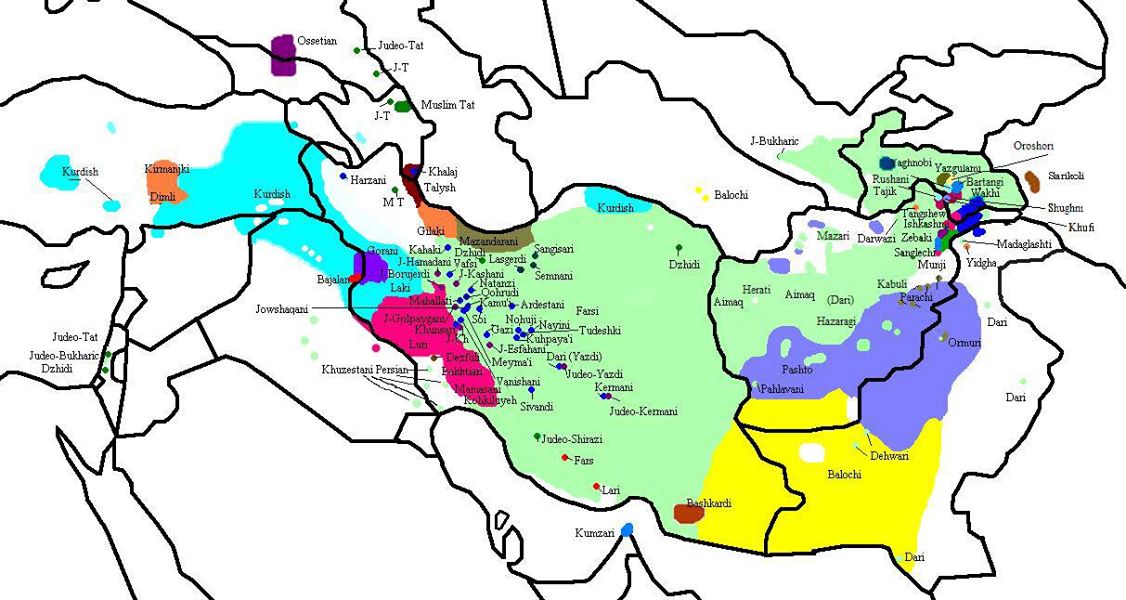
The Iranian or Iranic languages[2][3] are a branch of the Indo-Iranian languages in the Indo-European language family that are spoken natively by the Iranian peoples.
The Iranian languages are grouped in three stages: Old Iranian (until 400 BC), Middle Iranian (400 BC – 900 AD), and New Iranian (since 900 AD). The two directly attested Old Iranian languages are Old Persian (from the Achaemenid Empire) and Old Avestan (the language of the Avesta). Of the Middle Iranian languages, the better understood and recorded ones are Middle Persian (from the Sasanian Empire), Parthian (from the Parthian Empire), and Bactrian (from the Kushan and Hephthalite empires).
As of 2008, there were an estimated 150–200 million native speakers of the Iranian languages.[4] Ethnologue estimates that there are 86 Iranian languages,[5][6] the largest among them being Persian, Pashto, and the Kurdish dialect continuum.[7]
The term Iranian is applied to any language which descends from the ancestral Proto-Iranian language.[8]
This use of the term for the Iranian language family was introduced in 1836 by Christian Lassen.[9] Robert Needham Cust used the term Irano-Aryan in 1878,[10] and Orientalists such as George Abraham Grierson and Max Müller contrasted Irano-Aryan (Iranian) and Indo-Aryan (Indic). Some recent scholarship, primarily in German, has revived this convention.[11][12][13][14]
The Iranian languages are divided into the following branches:
The Western Iranian languages subdivided into:
Southwestern, of which Persian is the dominant member;
Northwestern, of which the Kurdish languages are the dominant members.
The Eastern Iranian languages subdivided into:
Southeastern, of which Pashto is the dominant member;
Northeastern, by far the smallest branch, of which Ossetian is the dominant member.
Proto-Iranian
Historical distribution in 100 BC: shown are Sarmatia, Scythia, Bactria (Eastern Iranian, in orange); and the Parthian Empire (Western Iranian, in red)
The Iranian languages all descend from a common ancestor: the so-called Proto-Iranian which itself evolved from Proto-Indo-Iranian. This ancestor language is speculated to have origins in Central Asia, and the Andronovo Culture is suggested as a candidate for the common Indo-Iranian culture around 2000 BC.
It was situated precisely in the western part of Central Asia that borders present-day Russia (and present-day Kazakhstan). It was in relative proximity to the other satem ethno-linguistic groups of the Indo-European family, like Thracian, Balto-Slavic and others, and to common Indo-European’s original homeland (more precisely, the steppes of southern Russia to the north of the Caucasus), according to the reconstructed linguistic relationships of common Indo-European.
Proto-Iranian thus dates to some time after Proto-Indo-Iranian break-up, or the early second millennium BCE, as the Old Iranian languages began to break off and evolve separately as the various Iranian tribes migrated and settled in vast areas of southeastern Europe, the Iranian plateau, and Central Asia.
Proto-Iranian innovations compared to Proto-Indo-Iranian include:[15] the turning of sibilant fricative *s into non-sibilant fricative glottal *h; the voiced aspirated plosives *bʰ, *dʰ, *gʰ yielding to the voiced unaspirated plosives *b, *d, *g resp.; the voiceless unaspirated stops *p, *t, *k before another consonant changing into fricatives *f, *θ, *x resp.; voiceless aspirated stops *pʰ, *tʰ, *kʰ turning into fricatives *f, *θ, *x, resp.Iranic
The Iranian or Iranic languages[2][3] are a branch of the Indo-Iranian languages in the Indo-European language family that are spoken natively by the Iranian peoples.
The Iranian languages are grouped in three stages: Old Iranian (until 400 BC), Middle Iranian (400 BC – 900 AD), and New Iranian (since 900 AD). The two directly attested Old Iranian languages are Old Persian (from the Achaemenid Empire) and Old Avestan (the language of the Avesta). Of the Middle Iranian languages, the better understood and recorded ones are Middle Persian (from the Sasanian Empire), Parthian (from the Parthian Empire), and Bactrian (from the Kushan and Hephthalite empires).
As of 2008, there were an estimated 150–200 million native speakers of the Iranian languages.[4] Ethnologue estimates that there are 86 Iranian languages,[5][6] the largest among them being Persian, Pashto, and the Kurdish dialect continuum.[7]
The term Iranian is applied to any language which descends from the ancestral Proto-Iranian language.[8]
This use of the term for the Iranian language family was introduced in 1836 by Christian Lassen.[9] Robert Needham Cust used the term Irano-Aryan in 1878,[10] and Orientalists such as George Abraham Grierson and Max Müller contrasted Irano-Aryan (Iranian) and Indo-Aryan (Indic). Some recent scholarship, primarily in German, has revived this convention.[11][12][13][14]
The Iranian languages are divided into the following branches:
The Western Iranian languages subdivided into:
Southwestern, of which Persian is the dominant member;
Northwestern, of which the Kurdish languages are the dominant members.
The Eastern Iranian languages subdivided into:
Southeastern, of which Pashto is the dominant member;
Northeastern, by far the smallest branch, of which Ossetian is the dominant member.
Proto-Iranian
Historical distribution in 100 BC: shown are Sarmatia, Scythia, Bactria (Eastern Iranian, in orange); and the Parthian Empire (Western Iranian, in red)
The Iranian languages all descend from a common ancestor: the so-called Proto-Iranian which itself evolved from Proto-Indo-Iranian. This ancestor language is speculated to have origins in Central Asia, and the Andronovo Culture is suggested as a candidate for the common Indo-Iranian culture around 2000 BC.
It was situated precisely in the western part of Central Asia that borders present-day Russia (and present-day Kazakhstan). It was in relative proximity to the other satem ethno-linguistic groups of the Indo-European family, like Thracian, Balto-Slavic and others, and to common Indo-European’s original homeland (more precisely, the steppes of southern Russia to the north of the Caucasus), according to the reconstructed linguistic relationships of common Indo-European.
Proto-Iranian thus dates to some time after Proto-Indo-Iranian break-up, or the early second millennium BCE, as the Old Iranian languages began to break off and evolve separately as the various Iranian tribes migrated and settled in vast areas of southeastern Europe, the Iranian plateau, and Central Asia.
Proto-Iranian innovations compared to Proto-Indo-Iranian include:[15] the turning of sibilant fricative *s into non-sibilant fricative glottal *h; the voiced aspirated plosives *bʰ, *dʰ, *gʰ yielding to the voiced unaspirated plosives *b, *d, *g resp.; the voiceless unaspirated stops *p, *t, *k before another consonant changing into fricatives *f, *θ, *x resp.; voiceless aspirated stops *pʰ, *tʰ, *kʰ turning into fricatives *f, *θ, *x, resp.
photos_and_videos/TimelinePhotos_SxeO6JU-xg/53902797_10157038587157264_1951851843332079616_n_10157038587147264.jpg Indic languages
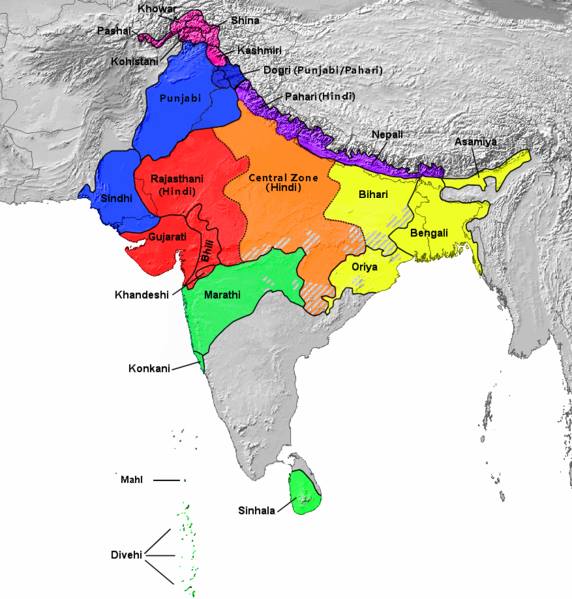
Indic languages are a major language family of the Indian subcontinent. They constitute a branch of the Indo-Iranian languages, itself a branch of the Indo-European language family. In the early 21st century, Indo-Aryan languages were spoken by more than 800 million people, primarily in India, Bangladesh, Nepal, Pakistan, and Sri Lanka.[2] Moreover, there are large immigrant and/or expatriate Indo-Aryan speaking communities in northwestern Europe, Western Asia, North America and Australia. There are about 219 known Indo-Aryan languages. [3]
The largest in terms of speakers are Hindustani (Hindi-Urdu, about 329 million),[4] Bengali (242 million),[5] Punjabi (about 100 million),[6] and other languages, with a 2005 estimate placing the total number of native speakers at nearly 900 million.[7]Waqas AhmadOur iranic branch is smaller as compared to Germanic and Indic [Indo-Aryan] Langs.Mar 9, 2019, 2:26 PMMarcus IngwazI’m curious what your position is on the Aryan invasion “theory”.
It’s somewhat described in the rig veda, it’s a logical conclusion.
I mean whites have made a history of conquering other people. Seems out of place to do any different.
I speak with Hindus all the time who go against the rig veda, favoring some “new science” which disputes the invasion, stating it was peaceful.Mar 9, 2019, 3:01 PMCurt Doolittledata is data is data. 70% -> 30% genetic cline from NW to SE india. Religion and language. Hard to know if Hrappans had already fallen or were felled, but the result is the invasion happened, and this angers the hell out of some indians for some reason.
I mean. my people were atlantics and the IE”s invaded my people too….Mar 9, 2019, 3:43 PMDouglas Scott LawsCurt Doolittle IE had a racial caste system through Zoroastrianism. The caste systems original racial meaning was lost and the people bred out.Mar 9, 2019, 5:18 PMIndic languages
Indic languages are a major language family of the Indian subcontinent. They constitute a branch of the Indo-Iranian languages, itself a branch of the Indo-European language family. In the early 21st century, Indo-Aryan languages were spoken by more than 800 million people, primarily in India, Bangladesh, Nepal, Pakistan, and Sri Lanka.[2] Moreover, there are large immigrant and/or expatriate Indo-Aryan speaking communities in northwestern Europe, Western Asia, North America and Australia. There are about 219 known Indo-Aryan languages. [3]
The largest in terms of speakers are Hindustani (Hindi-Urdu, about 329 million),[4] Bengali (242 million),[5] Punjabi (about 100 million),[6] and other languages, with a 2005 estimate placing the total number of native speakers at nearly 900 million.[7]
photos_and_videos/TimelinePhotos_SxeO6JU-xg/54114900_10157038583577264_5113486675619610624_n_10157038583572264.jpg photos_and_videos/TimelinePhotos_SxeO6JU-xg/54435725_10157038583617264_6883440151385604096_o_10157038583607264.jpg Uralic languages
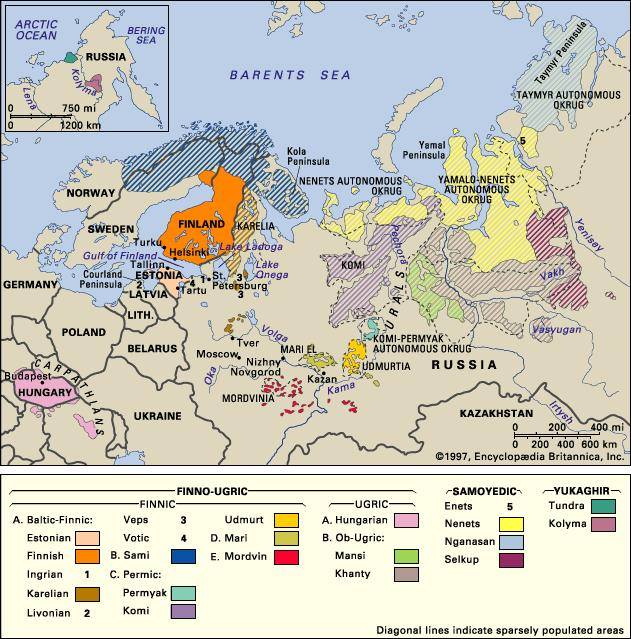
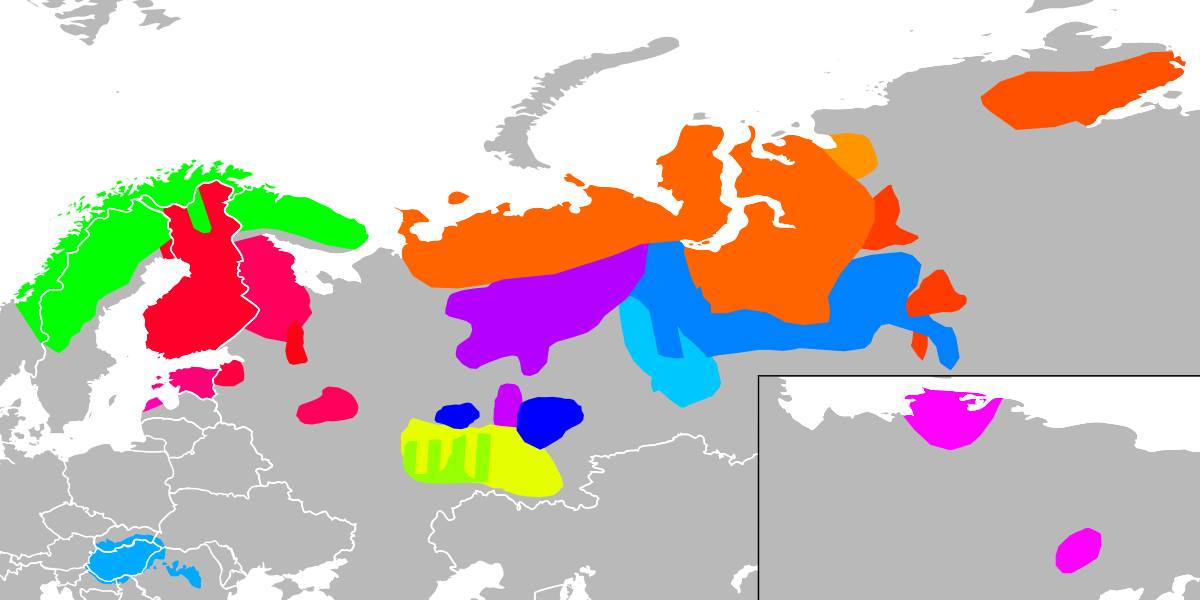
Uralic languages, family of more than 20 related languages, all descended from a Proto-Uralic language that existed 7,000 to 10,000 years ago. At its earliest stages, Uralic most probably included the ancestors of the Yukaghir language. The Uralic languages are spoken by more than 25 million people scattered throughout northeastern Europe, northern Asia, and (through immigration) North America. The most demographically important Uralic language is Hungarian, the official language of Hungary. Two other Uralic languages, Estonian (the official language of Estonia) and Finnish (one of two national languages of Finland—the other is Swedish, a Germanic language), are also spoken by millions.
Attempts to trace the genealogy of the Uralic languages to periods earlier than Proto-Uralic have been hampered by the great changes in the attested languages, which preserve relatively few features and therefore provide little evidence upon which scholars may base meaningful claims for a more distant relationship. Most commonly mentioned in this respect is a putative connection with the Altaic language family (including Turkic and Mongolian). This hypothetical language group, called Ural-Altaic, is not considered by most scholars to be soundly based. Although the Uralic and Indo-European languages are not generally thought to be related, more speculative studies have suggested a connection between them. Relationship with the Eskimo languages, Dravidian (e.g., Telugu), Japanese, Korean, and various American Indian groups has also been proposed. The most radical of these claims is the massive Dené-Finnish grouping of Morris Swadesh, which encompasses, among others, Sino-Tibetan (e.g., Chinese) and Athabaskan (e.g., Navajo).
The Uralic language family in its current status consists of two related groups of languages, the Finno-Ugric and the Samoyedic, both of which developed from a common ancestor, called Proto-Uralic, that was spoken 7,000 to 10,000 years ago in the general area of the north-central Ural Mountains. At its very earliest stages Uralic most probably included the ancestors of the Yukaghir languages (formerly listed as a Paleo-Siberian stock with no known relatives).
Over the millennia, both Finno-Ugric and Samoyedic branches of Uralic have given rise to more or less divergent subgroups of languages, which nonetheless have retained certain traits from their common source. For example, the degree of similarity between two of the least closely related members of the Finno-Ugric group, Hungarian and Finnish, is comparable to that between English and Russian (which belong to the Indo-European family of languages). The difference between any Finno-Ugric language and any Samoyedic tongue would be even greater. On the other hand, more closely related members of Finno-Ugric, such as Finnish and Estonian, differ in much the same manner as greatly diverse dialects of the same language.
photos_and_videos/TimelinePhotos_SxeO6JU-xg/53343638_10157038577322264_1482964147594330112_o_10157038577277264.jpg Altaic languages
Altaic is a hypothetical language family of central Eurasia and Siberia first proposed in the 18th century, but whose existence is widely discredited among comparative linguists. The Turkic, Mongolic and Tungusic groups are invariably included in the family; some authors added Koreanic and the Japonic languages. The latter expanded grouping came to be known as “Macro-Altaic”, leading to the designation of the smaller former grouping as “Micro-Altaic” by retronymy. Most proponents of Altaic continue to support the inclusion of Korean. These languages are spoken in a wide arc stretching from Eastern Europe through Anatolia and eastern Caucasus through North Asia and Central Asia to the Korean Peninsula and Japanese archipelago in East Asia. The group is named after the Altai mountain range in the center of Asia.Altaic languages
Altaic is a hypothetical language family of central Eurasia and Siberia first proposed in the 18th century, but whose existence is widely discredited among comparative linguists. The Turkic, Mongolic and Tungusic groups are invariably included in the family; some authors added Koreanic and the Japonic languages. The latter expanded grouping came to be known as “Macro-Altaic”, leading to the designation of the smaller former grouping as “Micro-Altaic” by retronymy. Most proponents of Altaic continue to support the inclusion of Korean. These languages are spoken in a wide arc stretching from Eastern Europe through Anatolia and eastern Caucasus through North Asia and Central Asia to the Korean Peninsula and Japanese archipelago in East Asia. The group is named after the Altai mountain range in the center of Asia.
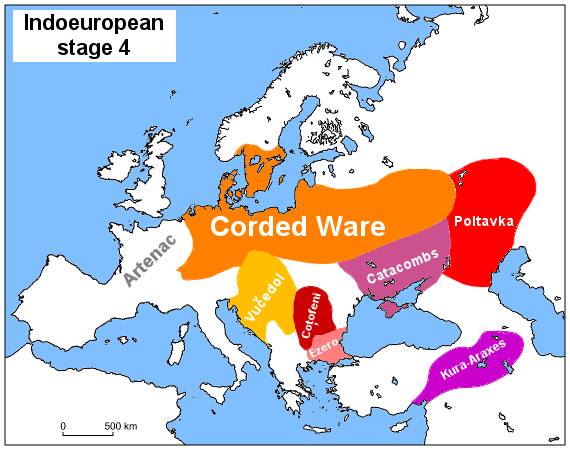
photos_and_videos/TimelinePhotos_SxeO6JU-xg/53727159_10157038540127264_7221819738211483648_n_10157038540117264.jpg photos_and_videos/TimelinePhotos_SxeO6JU-xg/53354627_10157038540322264_6270393355826364416_n_10157038540317264.jpg photos_and_videos/TimelinePhotos_SxeO6JU-xg/53315474_10157038540452264_3086211229430054912_n_10157038540437264.jpg photos_and_videos/TimelinePhotos_SxeO6JU-xg/53668415_10157038540522264_2092567831081123840_n_10157038540517264.jpg ANOTHER TAKE ON THE IE EXPANSION
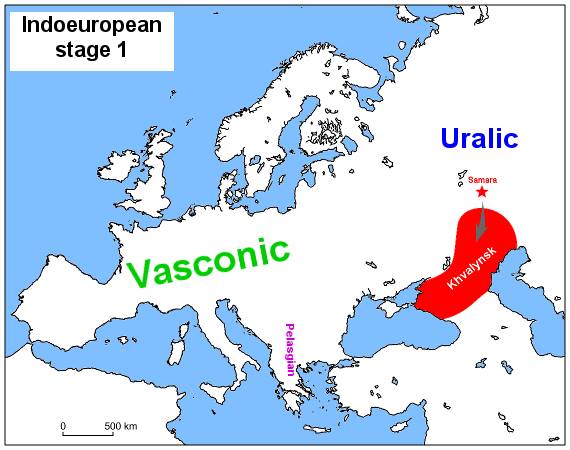
Stage 1: “ORIGINATION”
Some pre-IE languages are also indicated:
– Vasconic is tentatively associated here with Neolithic languages of Thessalian origin (my main working hypothesis). It would at the time be the largest European language family therefore.
– Uralic should be right north of the early Indoeuropeans, what explains their ancestral Sprachbund.
– Pelasgian indicates the language of Vinca-Dimini (Grey Ware), which was a limited intrusion c. 5000 BCE with origins related to Tell Halaf most likely.
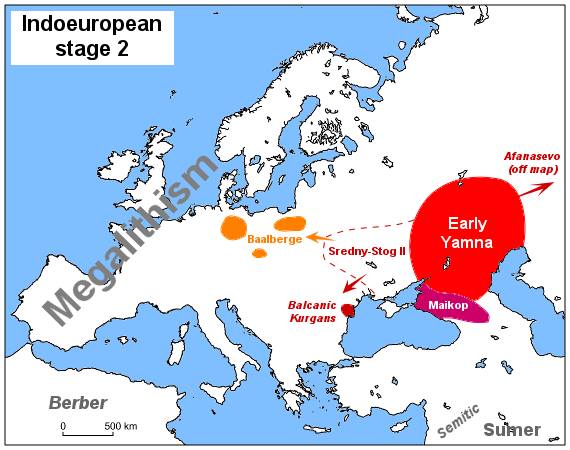
Stage 2: “EXPANSION”
The main outline of the Indo-european expansion. Some other cultures and languages are indicated in gray colors for context. At this point we should have the seeds of:
– Anatolian (Maykop)
– Tocharian (Afanasevo, in Altai)
– Indo-Iranian (Yamna)
– Western Indo-european (Baalberge): a large subfamily that would give birth to Balto-Slavic, Germanic, Celtic and Italic.
– Possible seeds of Tracian, Greek, etc. in the Balcanic Kurgans, an ill-defined group that would nevertheless plunder and radically alter the ethnic geography of the Eastern Balcans (see next map).
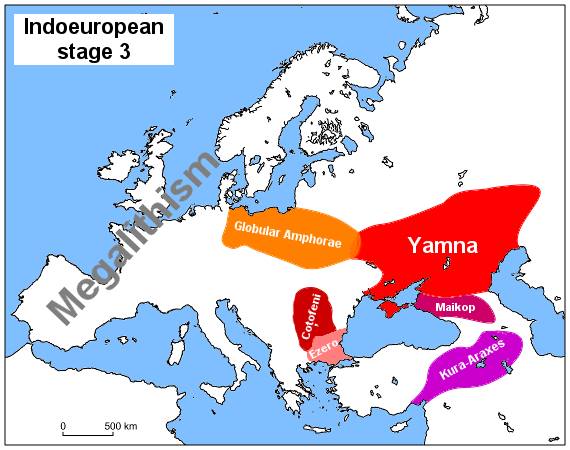
Stage 3: “CONSOLIDATION”
Some notes:
– The Anatolian branch goes into Asia with the Kura-Araxes culture.
– The Eastern Balcans are divided between two cultures:
– – – Cotofeni, more purely Kurgan and a candidate for Greek origins
– – – Ezero, rather Dniepr-Don (→ Sredny-Stog II) cultural inheritance. Surely proto-Thracians and hence a candidate for the origin of Armenian (via Phrygians).
– Expansion of Yamna (proto-Indo-Iranians) and therefore liquidation of Dniepr-Don Neolithic
– Consolidation and first expansion of the Western IE branch (Globular Amphorae). It may be important to note that in the Baalberge→→→Globular Amphorae period, this Kurgan culture experimented various influences that may be considered Vasconic: the Danubian substrate, the powerful southern Danubian culture of Baden and the Northernly Funnelbeaker influence, associated to Atlantic Megalithism.
Stage 4: “COMPLETION”
Setting the proto-historical scenario with some further expansions.
Most notably:
– Corded Ware: a major expansion of the Western IE group to the West, East and North.
– Vucedol: probably associated with the previous, eradicates the Danubian culture in their homeland (only Foltesti in Moldavia would survive for some more time within this important Neolithic macro-culture). Vucedol would be another candidate for Greek origins for their use of the architectural concept of megaron.
– Catacombs culture’s origins are debated but it’s clearly Kurgan in any case.
– Poltavka represents continuity with the seed of the Kurgan/Indoeuropean phenomenon and its later evolution leads directly to Indo-Iranians.
It should be noted that, synchronously with the Corded Ware expansion, the Megalithic bowmen of Artenac culture expanded from Dordogne, subsuming the last Western Danubian groups all the way to Belgium. This culture was probably proto-Aquitanian.
A whole millennium of stability followed at the new Rhine border, crossed only by the likely traders of the Bell Beaker phenomenon.
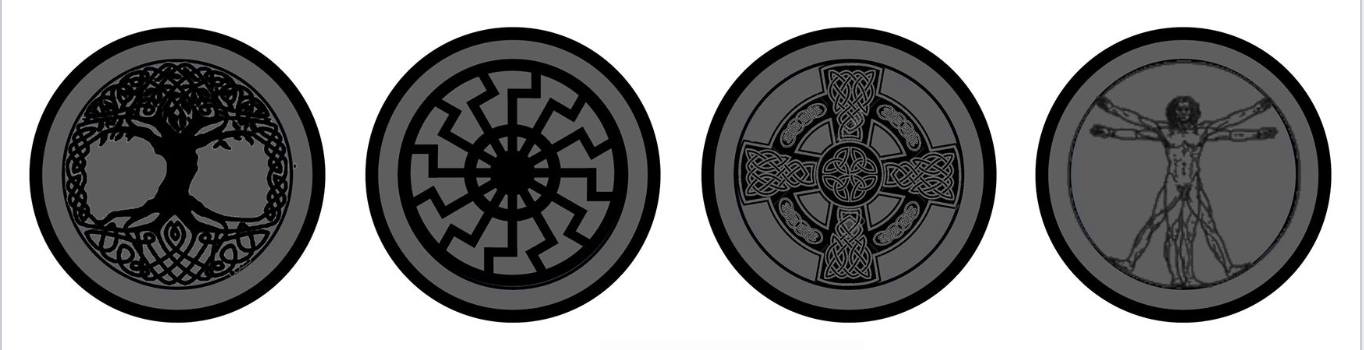
4. …. …. …. Scientific PeriodJack SanduskyKurt, do you consider Zoroastrianism to be the root of Christianity?Mar 9, 2019, 1:17 PMCurt Doolittleof courseMar 9, 2019, 1:20 PMJack SanduskyCurt Doolittle root of all, got it.Mar 9, 2019, 1:21 PMCurt DoolittleSCIENCEMar 9, 2019, 1:27 PMCurt DoolittleCHRISTIAN – POLITICS
I am a Christian if I have adopted the teaching of christianity: 1) the eradication of hatred from the human heart. 2) the extension of kinship love to non-kin. 3) the demand for personal acts of charity and personal cost, 4) the extension of exhaustive forgiveness before punishment, enserfment, enslavement, death, or war.
As far as I know, this is all that is required of me to be a Christian.Mar 9, 2019, 1:27 PMCurt DoolittleARYAN (PAGAN) – PEOPLE
I am an Aryan if 1) I proudly display my excellences so that others seek to achieve or exceed them; 2) I seek competition to constantly test and improve myself so I do not weaken; 3) I swear to speak no insult and demand it; 4) I speak the truth and demand it; 5) I take nothing not paid for and demand it; 6) I grant sovereignty to my kin and demand it; 7) I insure my people regardless of condition, and demand it; and in doing so leave nothing but voluntary markets of cooperation between sovereign men; and to discipline, enserf, enslave, ostracize or kill those who do otherwise; 8) to not show fear or cowardice, abandon my brothers, or retreat, and 9) to die a good death in the service of my kin, my clan, my tribe and my people.
As far as I know, this is all that is required of me to be an Aryan.Mar 9, 2019, 1:27 PMCurt DoolittleHEATHEN: NATURE
I am a Heathen if 1) I accept the laws of nature as binding on all of existence; and 2) if I treat nature as sacred and to be contemplated, protected and improved; and 3) I treat the world as something to transform closer to an Eden in whatever ways I can before I die; and 4) if I deny the existence of a supreme being with dominion over the physical laws, and treat all gods, demigods, heroes, saints, figures of history, and ancestors as characters with whom I may speak to in private contemplation in the hope of gaining wisdom and synchronicity from having done so. And 5) if I participate with others of my society in repetition of oaths, repetition of myths, repetition of festivals, repetition of holidays, and the perpetuation of all of the above to my offspring. And 6) if I leave open that synchronicity appears to exist now and then, and that it may be possible that there is a scientific explanation for it, other than just humans subject to similar stimuli producing similar intuitions and therefore similar ends.
As far as I know this is all that is required of me to be a Heathen.Mar 9, 2019, 1:27 PMAurick FaustAKA shitMar 9, 2019, 1:39 PMBill Joslin1 and 4 are the same (only at different scales 😉 )Mar 9, 2019, 4:11 PMSeth Barcello5 The belief that Jesus is the son of godMar 9, 2019, 4:50 PMCurt DoolittleThere is no god. There can be no son of god. All we can say is that the end result of germanicizing christianity is the principles I’ve mentioned.Mar 9, 2019, 4:52 PMBill Joslin(four courses – for accolades? Right to wear the patch after learning to argue for it?)Mar 9, 2019, 6:14 PMKeslan TroyPlot twist on your deathbed, pompous boomerMar 10, 2019, 6:30 AMThomas NorgateBlack sun is amazingMar 11, 2019, 10:20 AMJames StillwellCurt Doolittle Certainly no biblical Christian would accept your definition of what a Christian is. It seems quite shallow. To be a Christian according to the New Testament is to be granted saving faith, to feel the weight of your “sin”, to repent and believe the gospel. To be regenerated by the Holy Spirit, to be one of Gawds “electos”, to go therefore and make disciples of all men. To die daily and take up one’s electric chair. To suffer from bad conscience. And actually the Bible doesn’t teach to eradicate hate. It says that “god hates the wicked everyday” and “Jacob I loved, Esau I hated”.
At any rate, if you don’t hate, you cannot love.
(((Christianity))) is pure toxic waste! I know, I used to be an evangelist and theologian, and apologist.
1John 5:1, John 6:44, 65. John ch 3. Rom ch 9. Ephesians 2:8 Acts 13:48 etc.Mar 11, 2019, 2:43 PMCurt DoolittleOne does not ask a lunatic for reason, nor weight his claims as reason.Mar 11, 2019, 3:28 PMJames StillwellCurt Doolittle who are you calling a lunatic?Mar 11, 2019, 3:32 PMCurt DoolittleOne does not ask the faithful for reason, nor weight his claims as reason.Mar 11, 2019, 3:34 PMJames StillwellCurt Doolittle then why in a million yrs would you don the label of a faithful (Christian)? Personally, I distance myself from such non sense as far as possible.Mar 11, 2019, 3:36 PMCurt Doolittlea thing is determined by what it is not. not what it is claimed to be.Mar 11, 2019, 3:42 PMJames StillwellCurt Doolittle Doolittle I see so many people on the right who pander to Christers. Like Richard Spencer who calls himself a “culture Christian” or so many in the alt right who call themselves Christians, who claim that Christianity is “the glue of western civilization” and yet whose Christianity is merely a shallow facade. Basically, they are secretly tragic atheists who larp as cHristians, not realizing how toxic their slave religion, their slave morality is, and how it created the mess we now inhabit.Mar 11, 2019, 3:57 PMAaron LongCurt Doolittle your quite wrong on this one.Mar 11, 2019, 6:58 PMSascha Alexander GünterThis aint a christian symbol tho.Mar 14, 2019, 4:55 PMCurt DoolittleI separate the catholic church as a political organization, from belief in the supernatural and occult, from christianity as a system of alien myths and dogmas, from imitating person jesus regardless of the primitivism of words attributed to him, from the general need for simple people to escape the continuous judgement of self and others in a world where doing so by some standard other than selfishness is non rational.
What we call ‘christian’ is a semitic political religious dogma taught by a greek bureaucracy over an aryan social religious relationship between peoples and the world.
One is a member of the christian system of behaviors because he behaves more like other christians than he does members of every other rious order – not because what he thinks or believes. Otherwise all of christianity is false.
These are empirical statements – not justificationary statements.
Either you act in practice under the accumulated behaviors of our aryan, roman, greek, and semitic systems of thought, or you don’t. The degree with which you fantasize about it is merely a statement of your demand to insulate yourself from counter signaling by others.
Which is the reason for religion: counter-signaling our alienation with some form of mindfulness as our relative value to the polity decreases with political scale.Mar 14, 2019, 5:16 PMJames StillwellCurt Doolittle I don’t think the character of Jesus as articulated in the NT is something that should be imitated by us white folk. Again Jesus was a toxic slave moralist. As to the Catholic Church as an organization, it props up parasites that nature would weed out. It is dysgenic. It spreads bad conscience and universalist thinking. The Christ pox must be eliminated.
“O, Christ! O, Christ! Thou artful fiend! Thou Great Subverter! – What an amazing Eblis glamour thou has cast over the world? Thou mean, insignificant-minded Jew!
Why is it that our modern philosophers are so mortally afraid to boldly challenge the ‘inspired’ utopianism of this poor, self-deluded, Gallilean mountaineer – this preacher of all eunuch-virtues – of self-abasement, of passive suffering?
The sickly humanitarian ethics, so eloquently rayed forth by Jesus Christ and his superstitious successors in ancient Judea and throughout the moribund Roman empire, are generally accepted in Anglo-Saxondom as the very elixir of immortal wisdom, the purest, wisest, grandest, most incontrovertible of all ‘divine revelations’, or occult thaumauturgies. And yet when closely examined, they are found to be neither divine, occult, reasonable, nor even honest; but composed, almost exclusively of the stuff that nightmares are made of, together with a strong dash of oriental legerdemain.
Through a thousand different channels current politico-economic belief is dominated by the base communistic caballa of the ‘man of many sorrows’; yet as a practical theorem, it is hardly ever critically examined. Why is it that the suggested social solutions promulgated by Jesus, Peter, Paul, James and other Asiatic “cataleptics are accepted so meekly by us, upon trust? If these men were anything, they were crude socialist reformers with mis-shapen souls, preachers of ‘a new heaven and a new earth’, that is to say, demagogues – politician-of-the-slums; and out of the slums, nothing that is noble can ever be born.”
– Might is Right – Ragnar RedbeardMar 14, 2019, 5:29 PMAaron BradleyI’m stealing this 🤓😄Mar 14, 2019, 5:33 PMJosé Francisco MayoraCurt Doolittle Then is Leonardo one of the prophets… Maybe the first of the New Testament (Reinassance)Mar 15, 2019, 5:51 AMOUR ANCESTRAL RELIGIONS