Theme: Causality

  • Yes. Although I can’t really provide much other than the correlation between (fu

    Yes. Although I can’t really provide much other than the correlation between (full) autistics and frontal lobe injury appears legit.


    Source date (UTC): 2021-06-05 20:18:36 UTC

    Original post: https://twitter.com/i/web/status/1401272262850977792

    Reply addressees: @JarvisWitts @WorMartiN

    Replying to: https://twitter.com/i/web/status/1401269362808430596

  • False. IQ is an indirect measure of neurological adaptive response time. The bio

    False. IQ is an indirect measure of neurological adaptive response time. The biological potential of the genes remains constant even if unexercised. Genetics are the only cause of intelligence. What you mean is that accumulated knowledge and experience increase its evidence.


    Source date (UTC): 2021-05-30 21:23:49 UTC

    Original post: https://twitter.com/i/web/status/1399114349357289473

    Reply addressees: @UnluckyWanderer @TeaGeeGeePea @RCownie @gcochran99 @ArchieN1966 @RhiannonDauster @EPoe187

    Replying to: https://twitter.com/i/web/status/1395594804629700614

  • Neither. There is no actor. There are just the laws of the universe. They favor

    Neither. There is no actor. There are just the laws of the universe. They favor adaptation that seizes more energy from its entropic process. Our evolution consists of increasing energy capture and transformation. It’s an accident. It’s a glorious accident. Nothing else.


    Source date (UTC): 2021-05-29 21:24:47 UTC

    Original post: https://twitter.com/i/web/status/1398752204375396356

    Reply addressees: @_Akhaten @WorMartiN

    Replying to: https://twitter.com/i/web/status/1398750846083547138

  • They are both supernatural questions. 1. Free will to do what? 2. Are there dete

    They are both supernatural questions.
    1. Free will to do what?
    2. Are there deterministic forces that limit our choices?
    3. Are there deterministic forces that limit our potentials?


    Source date (UTC): 2021-05-29 20:08:15 UTC

    Original post: https://twitter.com/i/web/status/1398732943728775174

    Reply addressees: @_Akhaten

    Replying to: https://twitter.com/i/web/status/1398714286567010310

  • That’s not technically true. Everything is made of matter. Chemistry consists of

    That’s not technically true. Everything is made of matter. Chemistry consists of the combination of force,temperature, and combinations to create or break bonds – doing work. The ‘interesting’ things happen with complex molecules that can do work without such manual intervention.


    Source date (UTC): 2021-05-28 18:55:50 UTC

    Original post: https://twitter.com/i/web/status/1398352331566092288

    Reply addressees: @WorMartiN @lawrence1978_

    Replying to: https://twitter.com/i/web/status/1398351482139906048

  • I’m also bad at anything that requires a great deal of working memory, which max

    I’m also bad at anything that requires a great deal of working memory, which maximizes state management, vs a great deal of predictive memory which maximizes causally dense prediction. I wish I’d understood that when I was younger …


    Source date (UTC): 2021-05-28 18:52:44 UTC

    Original post: https://twitter.com/i/web/status/1398351549844410370

    Reply addressees: @WorMartiN @lawrence1978_

    Replying to: https://twitter.com/i/web/status/1398351041486372870


    IN REPLY TO:

    Unknown author

    @WorMartiN @lawrence1978_ Obviously – I’m pretty bad at estimating the competence of normies, and I find anything to do with chemistry somehow disgusting. lol. The scope of dimensions of error and deceit are universal across disciplines. If none are present then we have a Truth candidate.

    Original post: https://x.com/i/web/status/1398351041486372870

  • To say that there is one set of laws of the universe is simply obvious. To say t

    To say that there is one set of laws of the universe is simply obvious. To say that gods are emergent is simply obvious. To say that they are emergent from the minds of any conscious social hierarchical creatures is obvious. To say that they must converge over time is uncertain.

    There is no battle between good and evil, but between great men and nature – a nature constructed of god’s laws – where the only reward is our transcendence into godhood by their mastery, domestication, and transformation for our use.

    The religions of the middle east – all religions of the south eurasians – appear to be submissive counter-revolutions against the indo-europeans that had conquered the old world. They took largely from egypt – the only substantive surviving pre-collapse civilization.

    Begging their gods to save them from the indo-europeans.

    Note that this does not occur in east asia where the ie expansion did not reach.

    Egyptian > [Collapse] > Judaism > Christianity > Islam > ?
    … … … … … Aryanism > Hinduism > Buddhism > ?
    … … … … … Aryanism > Germanic > Mediterranean > Stoicism > Fail.
    … … … … … … … … … … Synthesis: Augustine > Acquinas > Scholastics > Fail.
    … … … … … … … … … … … … … … … Restoration: Renaissance > ..to.. > Romanticism > Fail
    … … … … … … … … … … … … … … … … … … … … Next???

    The majoritarian religions teach signaling non-aggression since this is the principle method by which we increase trust – especially among low trust peoples. It’s also the principle direction of human self-domestication.

    Signaling non aggression is the first state of the female method of seduction. But we haven’t constrained female aggression by undermining.

    In this sense the woke priestesses inverted non-aggression into aggression just as islam inverted christian non aggression into aggression…. by undermining

    It’s clear Christianity became dominant the same way wokeness does. Demand tolerance for your belief system until you gain sufficient numbers at which point you become intolerant of the other belief systems. -(Martin Štěpán)

    True. And it seems Communism, Fascism, and of course other religions are using the same system.-(Eric Liford)

    Worse, Islam is not a religion like Stoicism, Christianity, Buddhism, Hinduism. Islam is an ideology, like Judaism, Communism, and Fascism

    I find amusing the irony that even national socialists were abrahamists. But it fits.-(Martin Stepan)


    Source date (UTC): 2021-05-28 13:58:31 UTC

    Original post: https://gab.com/curtd/posts/106313174947685793

  • INCREASE IN COST: Religion -> Intuition Philosophy -> Reason Testimony -> Eviden

    INCREASE IN COST:
    Religion -> Intuition
    Philosophy -> Reason
    Testimony -> Evidence
    Science and Law -> Decidability
    First Principles -> Causality


    Source date (UTC): 2021-05-25 18:42:36 UTC

    Original post: https://twitter.com/i/web/status/1397261837327024128

    Reply addressees: @blamblamtheman @Ozpin_88

    Replying to: https://twitter.com/i/web/status/1397260766772858883

  • Conflict 2: The Evolutionary Stage


    Our World

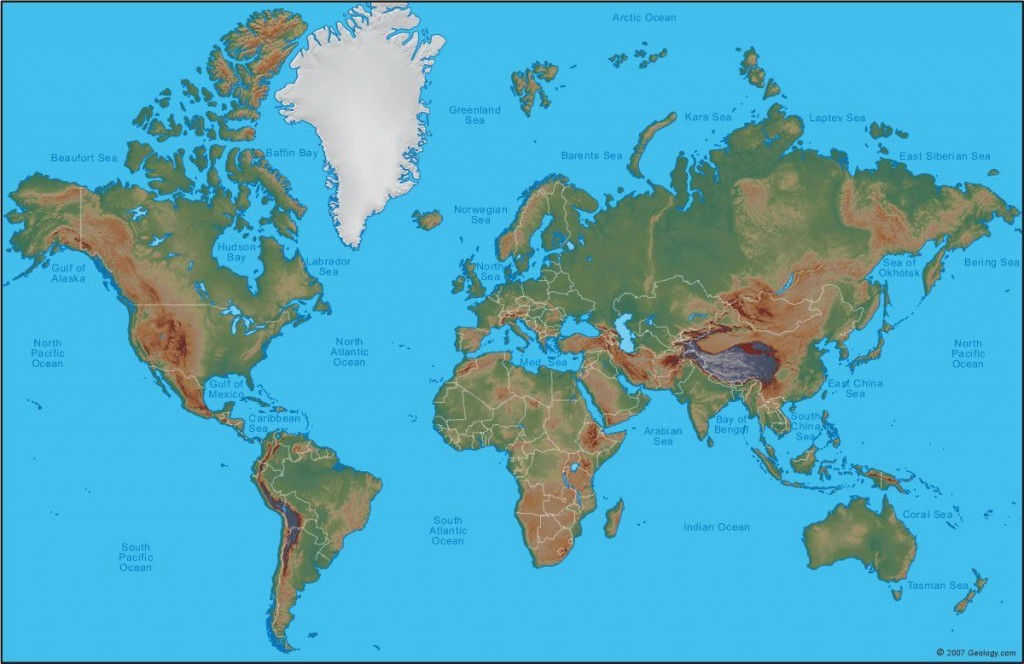
    Terrain of the World
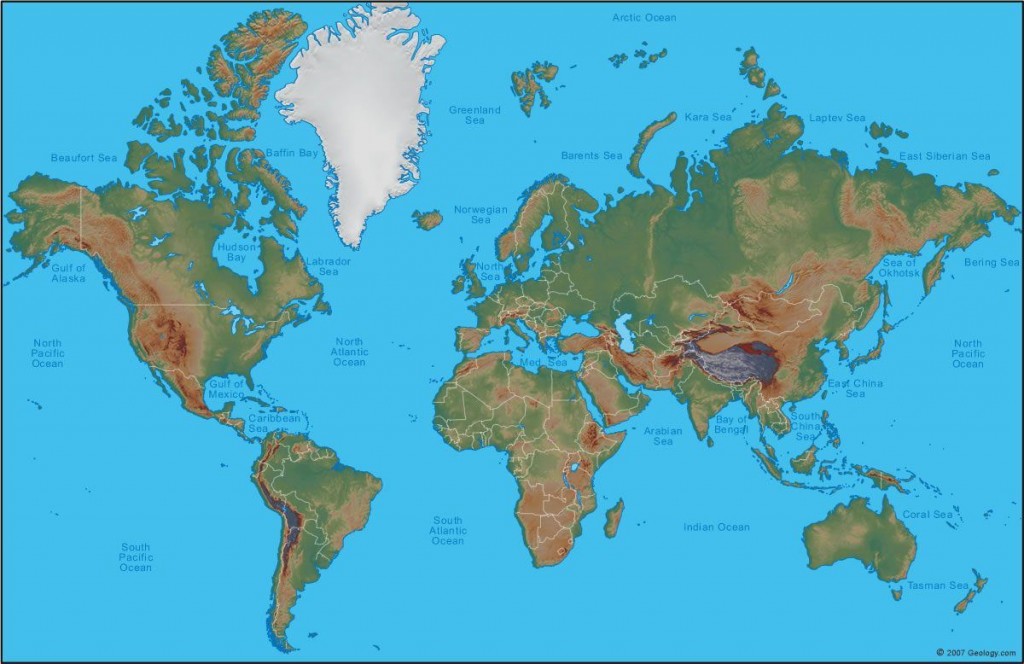
    The World During the Ice Age

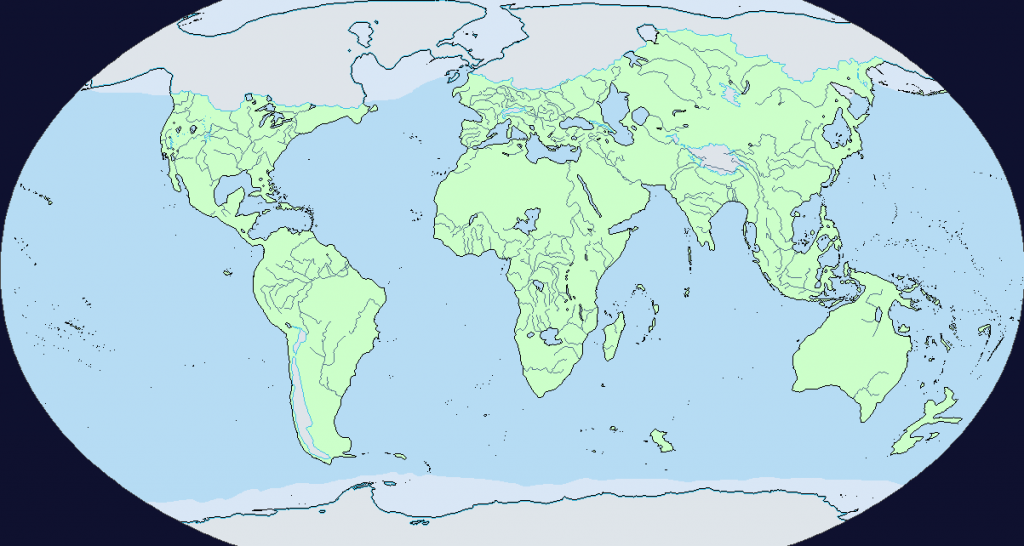
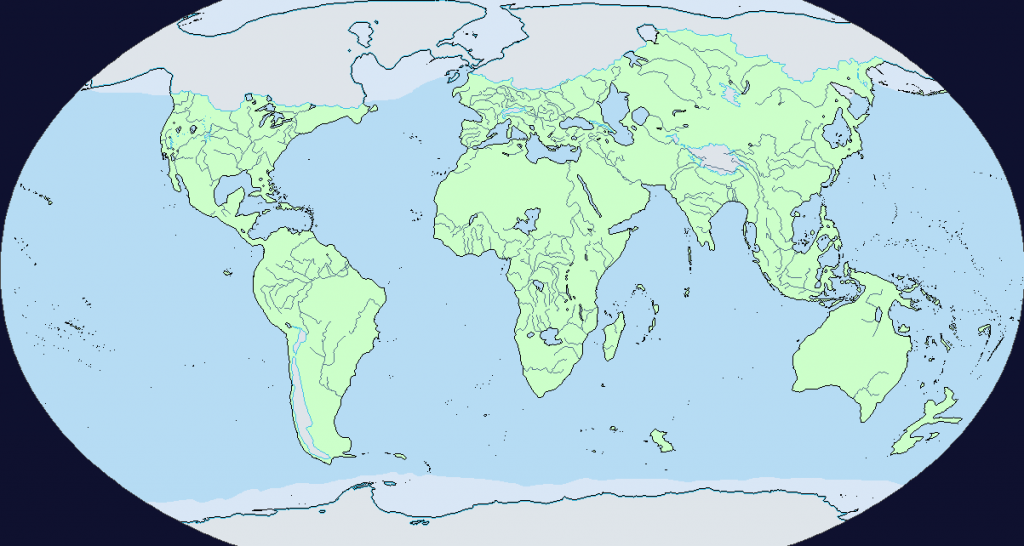
    For our purposes note (a) the absence of the north sea, (b) the closure of the red sea, (c) the absence of the persian gulf, (d) the ability to reach australia, (e) the ability to reach the americas and (f) the size of the caspian sea, and (g) the size and number of large lakes in Africa. In other words, walking across the planet is possible.
    The Next Ice Age

    According to Milankovitch theory, the advent of the ice age depends on the coincidence of the following three conditions:

    Elongation or eccentricity: Eccentricity is the shape of the Earth’s orbit around the Sun. It is constantly fluctuating with the orbital shape ranging between more and less elliptical, every 100,000 years. This alters the distance from the Earth to the Sun which in turn reduces or increases the amount of radiation received at the Earth’s surface in different seasons. The northern hemisphere experiences winter while the southern hemisphere experiences summer at perihelion position, which is the position where the distance between the earth and the sun is the least. The opposite happens at the aphelion position which is the position where the distance between the earth and the sun is the most. The solar energy received at the perihelion is 20-30% more than the energy received at the aphelion position. These fluctuations around the globe result in prominent changes in the Earth’s climate and glacial regimes. This means that the winter experienced at the aphelion would be bitter and due to the slow rotation of the earth at the aphelion (as per calculations based on Kepler’s second law), the winter would get more time to strengthen itself. For example, the glaciers from the north may start to extend southwards.

    Rotation of Precession: While the bottom part of a top is spinning, the top part also sort of revolves. The earth spins like a spinning top on its axis, while its axis also sort of revolves. It takes 26,000 years to complete one such revolution. Because of this movement, we notice the change in the night sky during different seasons. If you compare the night sky of summer in the northern hemisphere today to the night sky of summer in the northern hemisphere 5,000 years ago, it will be very different. When the precession of equinoxes sends the glaciations-prone northern hemisphere to the aphelion position, the winter becomes fierce, freezing the arctic and most of the northern hemisphere.

    Tilt or Obliquity: Currently, the tilt of the earth’s axis or its obliquity is at 23.5 degrees. But every 41,000 years, the obliquity shifts between low (22.1 degrees) to high (24.5 degrees). When the obliquity is at its lowest, the higher latitudes don’t receive much sunlight, leading to increase in ice cover over these latitudes.
    According to the Milankovitch criteria, to predict the next ice age, we can use the above information and find out when the next ice age is due. The earth’s orbit is almost circular today and 10,000 years from now, the orbit will be an ellipse. Obliquity will be at its lowest in 12,000 years from today while the precession would have reversed in almost10,000 years. So, we can predict that almost 10 to 12 thousand years from now, a new ice age may begin.

    The Problem of Prediction: Only 11,000 years have passed since the last Ice Age, so scientists cannot be certain that humans are indeed living in a post-glacial epoch instead of an interglacial period of the Pleistocene and thus due for another ice age in the near geologic future. It’s possible that an increase in global temperature, as we’re experiencing now, could be a sign of an impending ice age and could actually increase the amount of ice on the earth’s surface. Why?  Because the cold, dry air above the Arctic and Antarctica carries little moisture and drops little snow on the regions. An increase in global temperature could increase the amount of moisture in the air and increase the amount of snowfall. After years of more snowfall than melting, the polar regions could accumulate more ice. An accumulation of ice would lead to a lowering of the level of the oceans and there would be further, unanticipated changes in the global climate system as well.

    Conclusion:  The next ice age will occurr anytime between immediately and ten thousand years from now.  


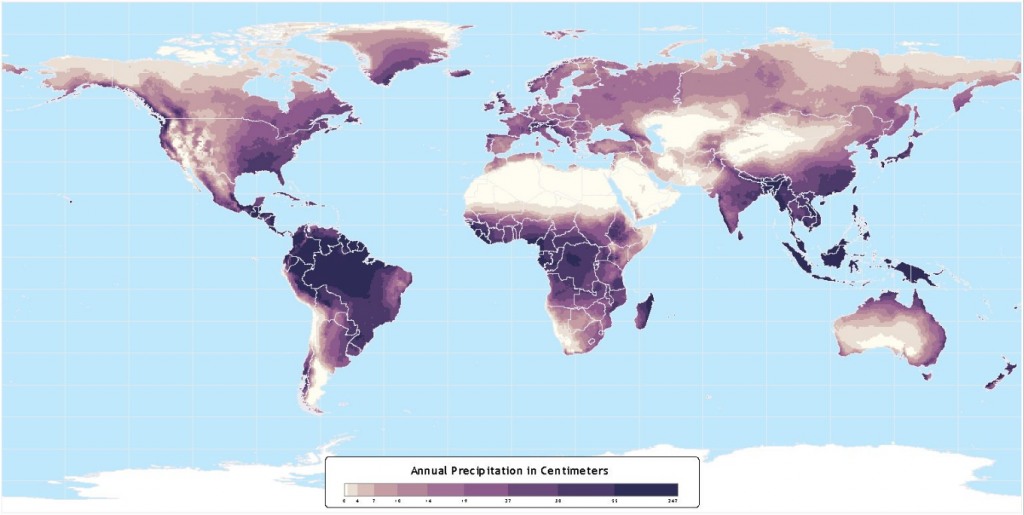
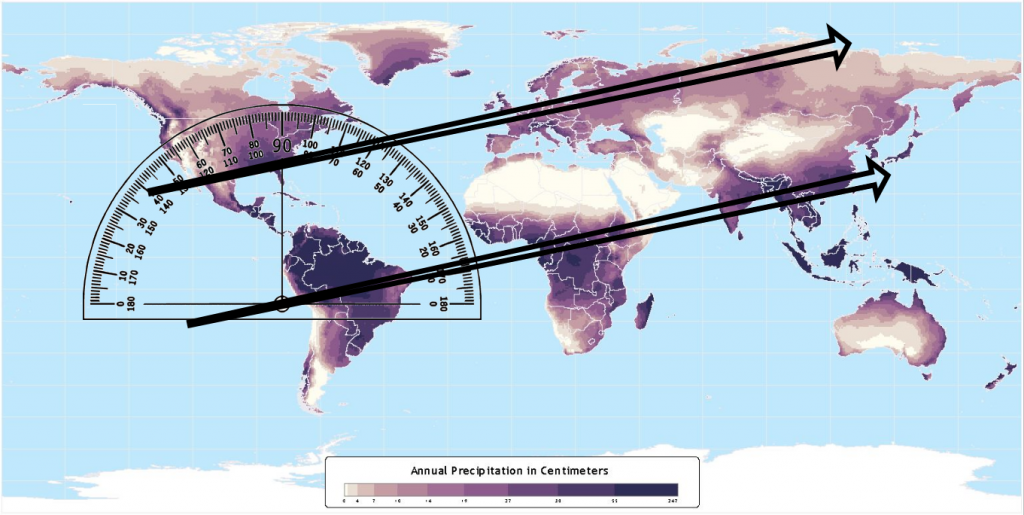
    Precipitation Around The World

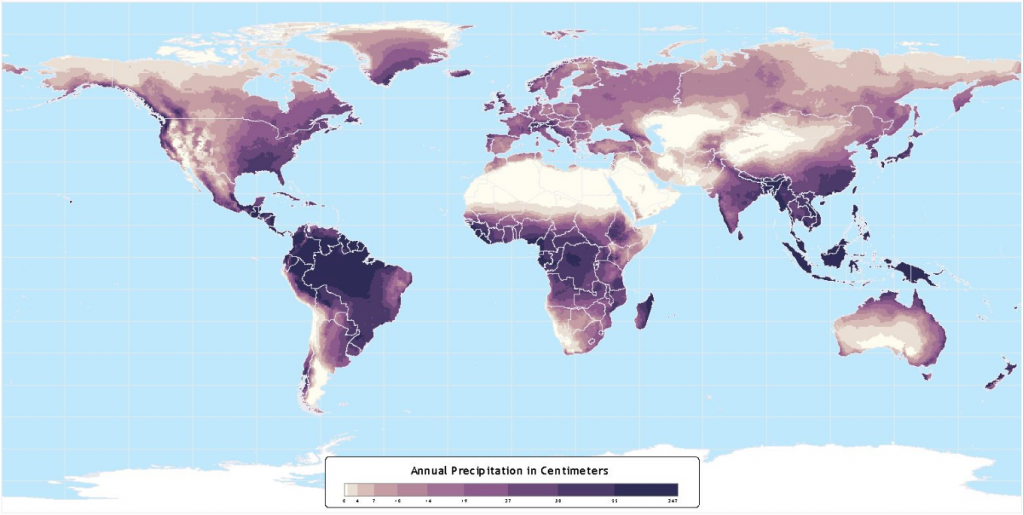
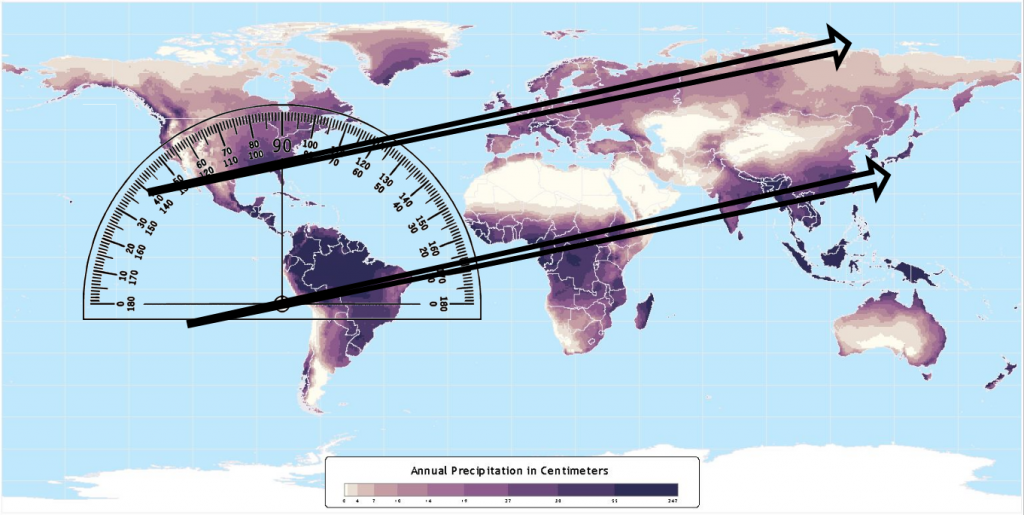
    To serve our purposes this map could be a little clearer, but notice that the earth’s wobbles but it’s tilt is 23 degrees at present, and the pattern of precipitation is 12 degrees.  This means that with normal ocean rotation, western europe is warmer and wetter, and east asia is colder and drier. Meanwhile, between the solar radiation across Saharan africa the arabian peninsula, central asia, and the himalayas, the rotation of the earth, the pitch of the earth, and the circulatory patterns of the oceans, that glaciation, cold, temperate and hot climates are distributed unevenly.
    Fresh Water – Rivers of the World

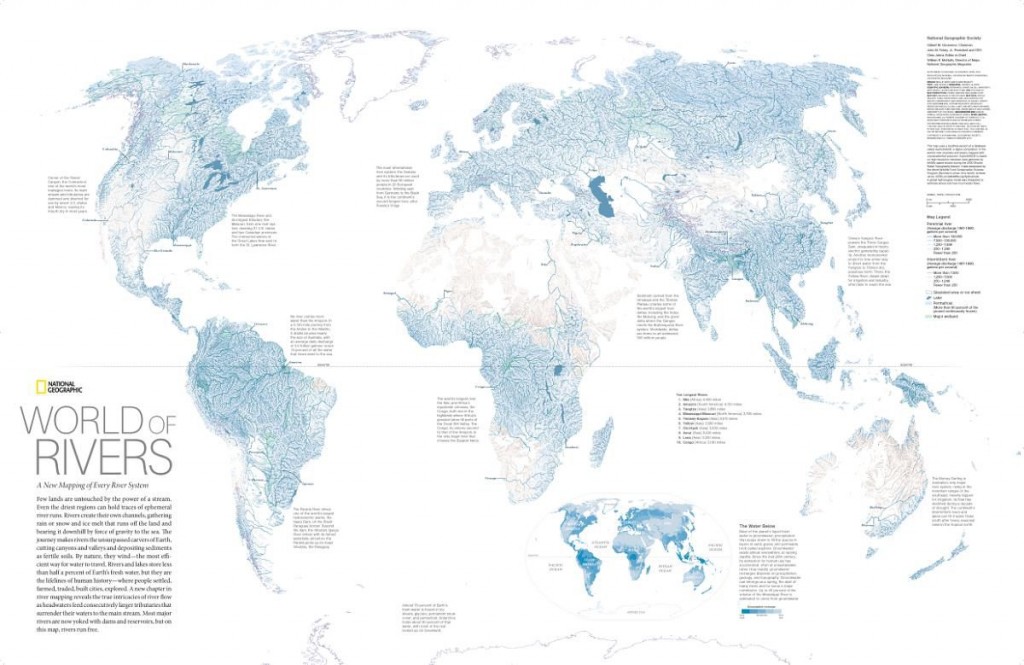
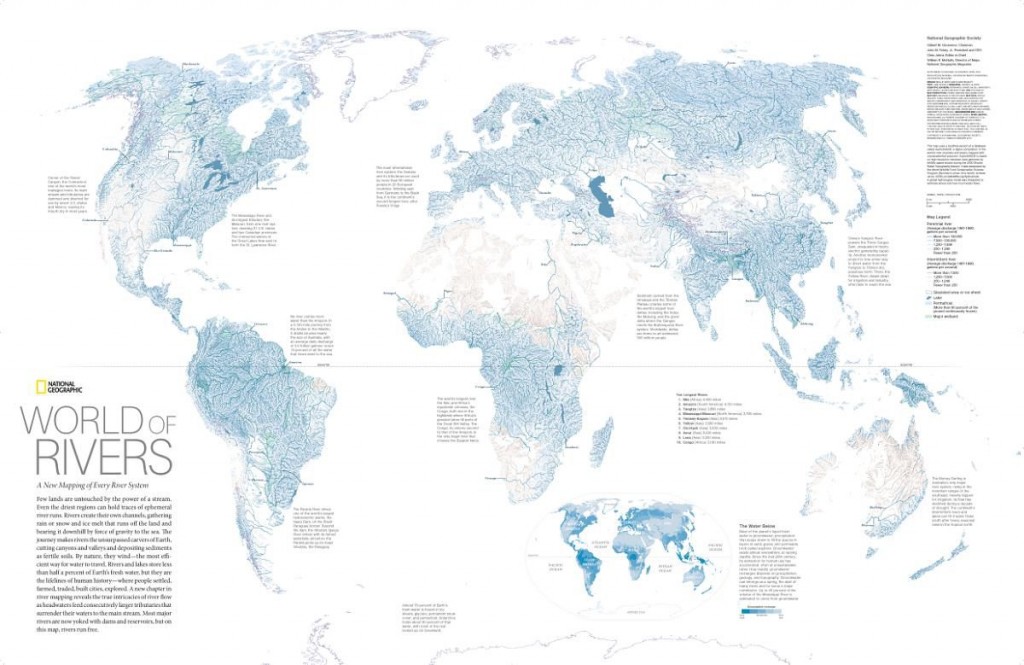
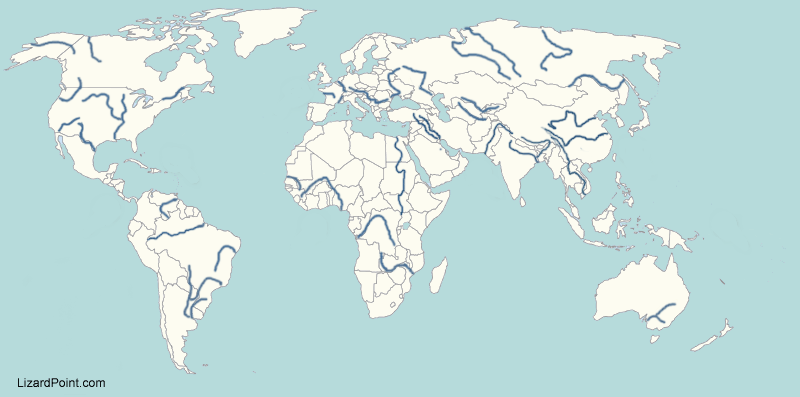
    In an effort to illustrate the many rivers and streams of the fertile world, in contrast with the drier regions, this map crosses over into overrepresentation of smaller rivers and undrerepresentation of the major rivers. That said, the point we want to make is that while we live in an agrarian age, and we live in a land of territorial states, that mankind evolved near, and populated the world, by following waterways. Not just because mankind requires fresh water, but because the animals we fed on from the fish in the waters, to those that came to drink from it did also.
    Transportation – Navigable Rivers of the World

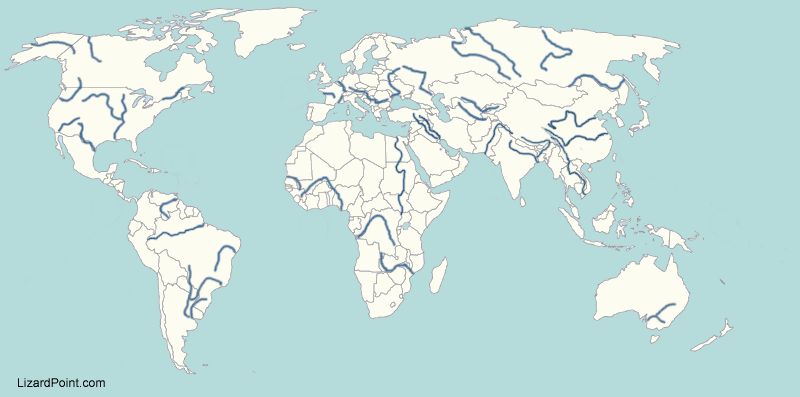
    Illustrating those many waterways obscures the difference between rivers that provide fresh water, rivers that are navigable (provide transport), and rivers that provide sufficient water for widespread seasonal irrigation, and those that supply sufficient irrigation that they can sustain civilizations dependent upon widespread river-irrigation. This better illustrates the main waterways that make civilization possible.
    Arable Land of the World

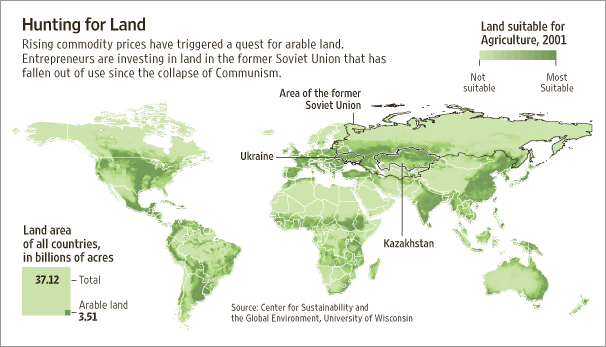
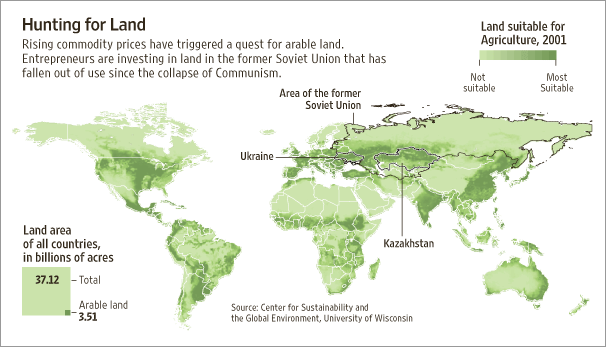
    Less than five percent of the planet consists of arable land. The rest is artic, tundra, desert, or mountainous, or otherwise difficult to farm. Note the concentrations in china, india, europe, and north america versus south america, africa, australia and east central asia.
    Soil Quality Around The World

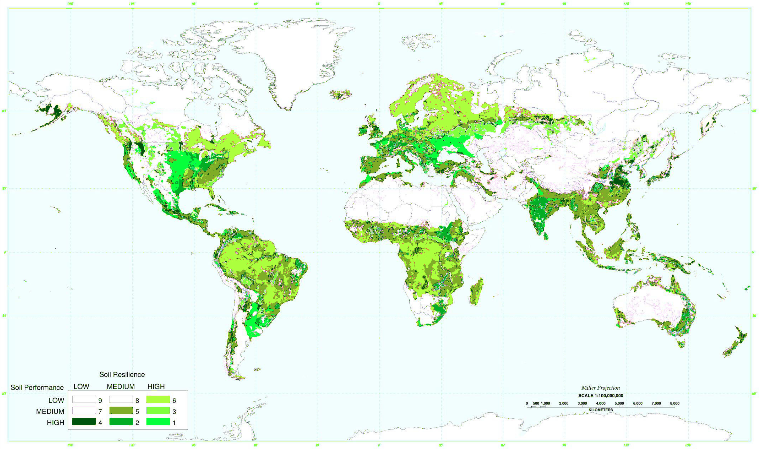
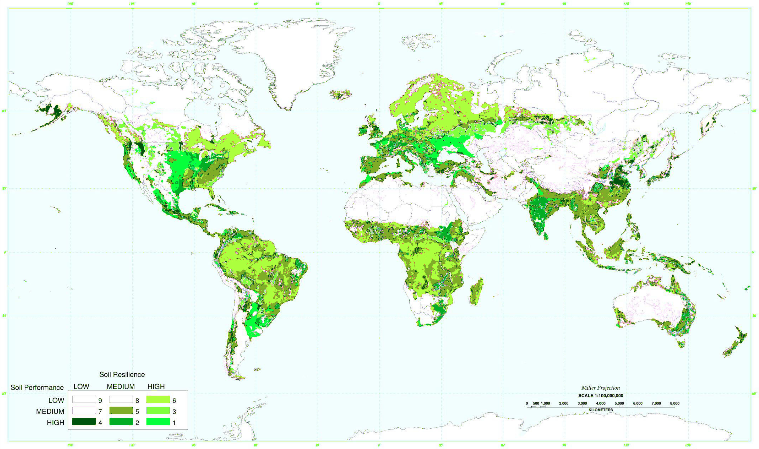
    This map of soil quality provides a bit more precision than the one above for those areas that are arable, but gives the wrong impression otherwise. I’ve added it here to show the difference between sout asia (india), se asia, and particularly northeast china to call attention to the fact that the high population of these regions isn’t cultural it’s geographic.
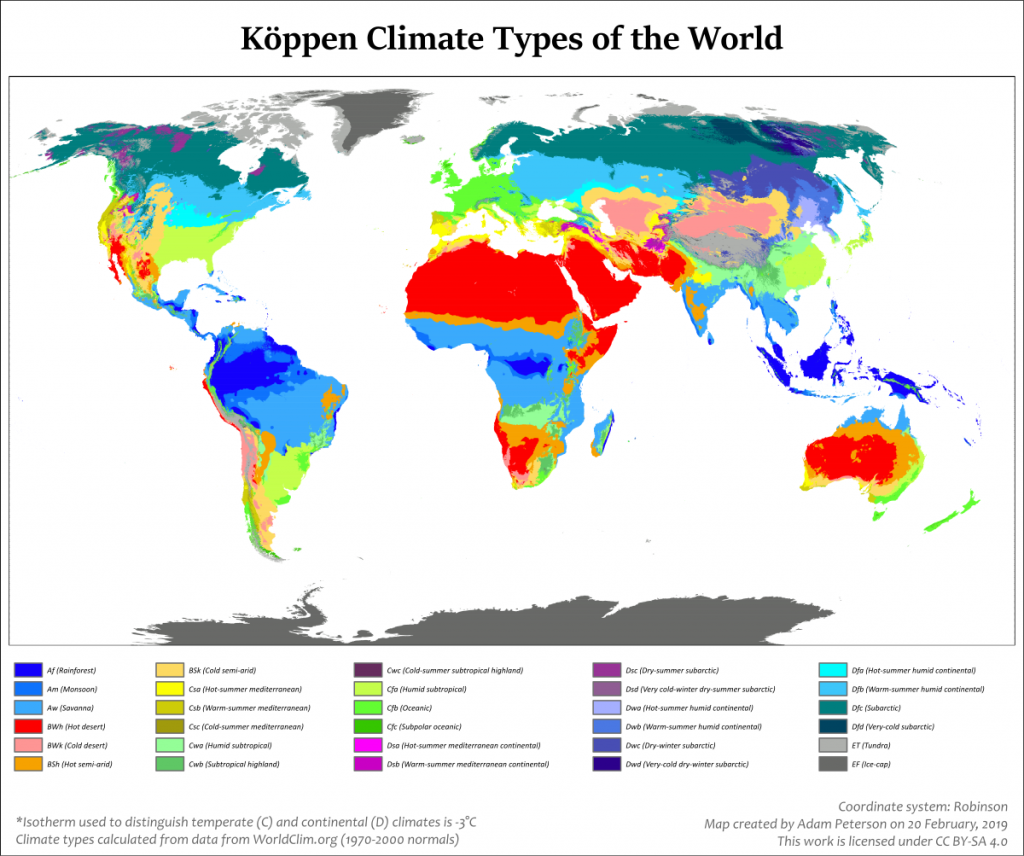
    Climate Around The World
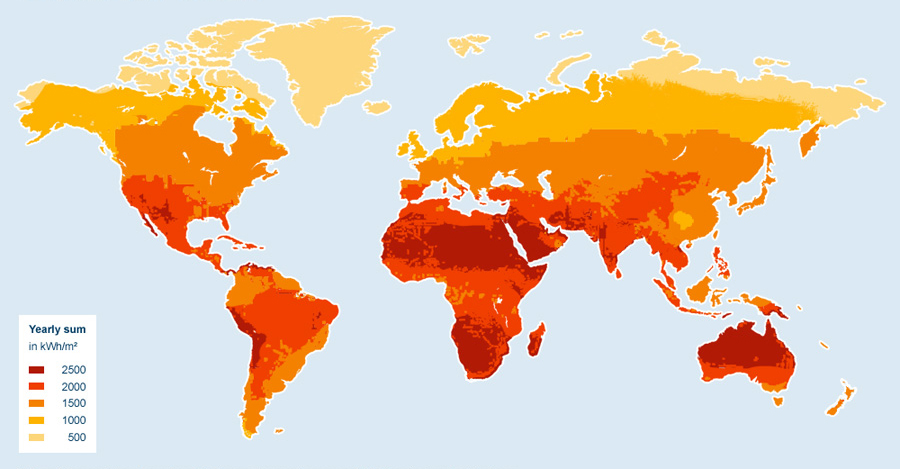
    Solar Radiation Around The World

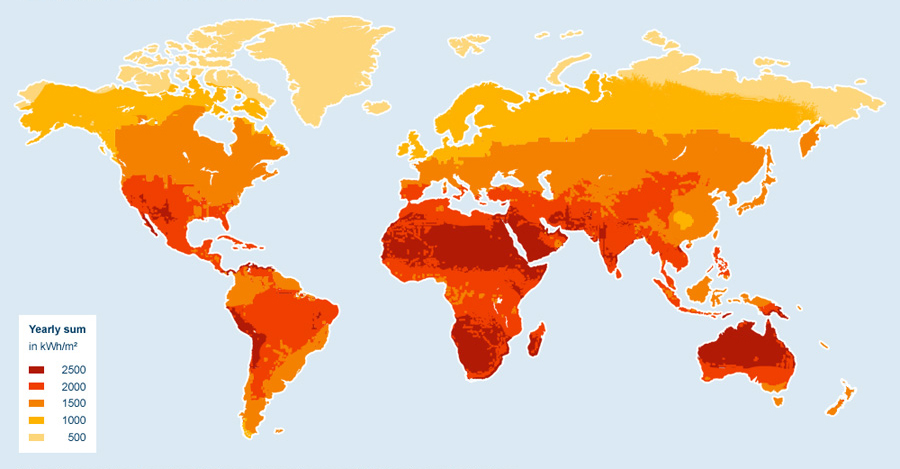
    The Continents: The dark orange area at 1500 kWh/m^2, is largely between 35 degrees and 60 degrees latitude, with southern china extending south to 20 degrees.
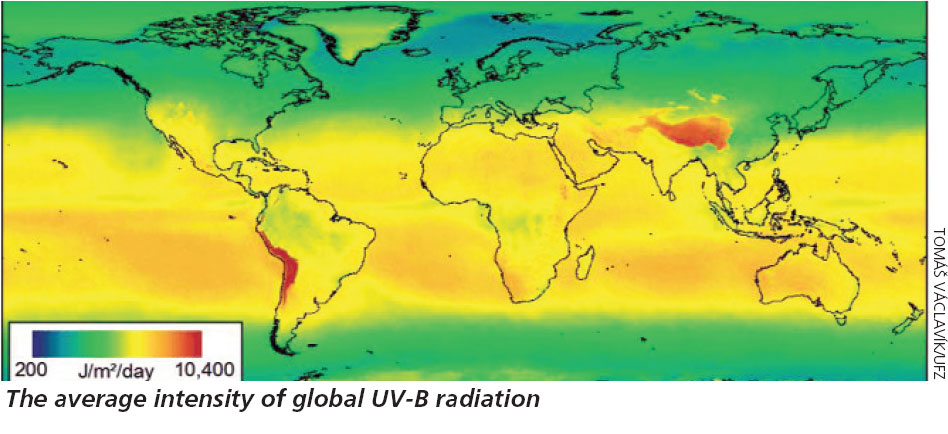
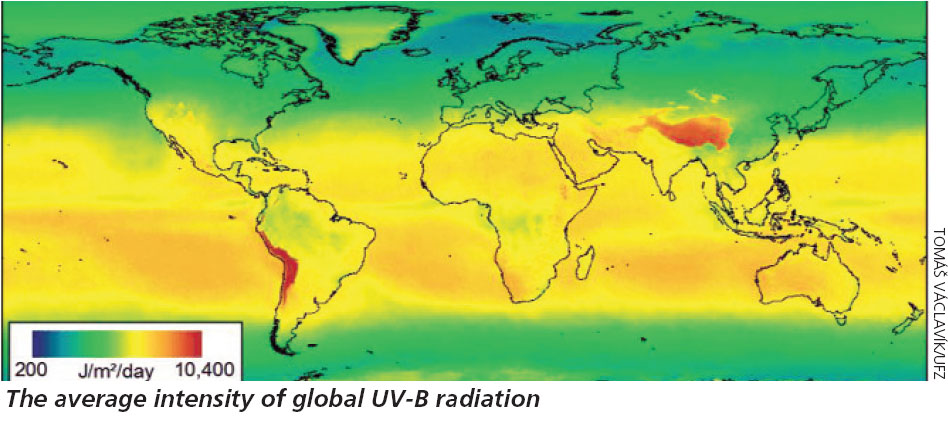
    The Planet:  The map of the full planet shows us the oceans as well. The red hot-spots are the Andes mountans in south america and the Himalayan mountains in South Asia from Pakistan (old India), to India, Nepal, and Bangladesh in the south, and Tibet in the north.
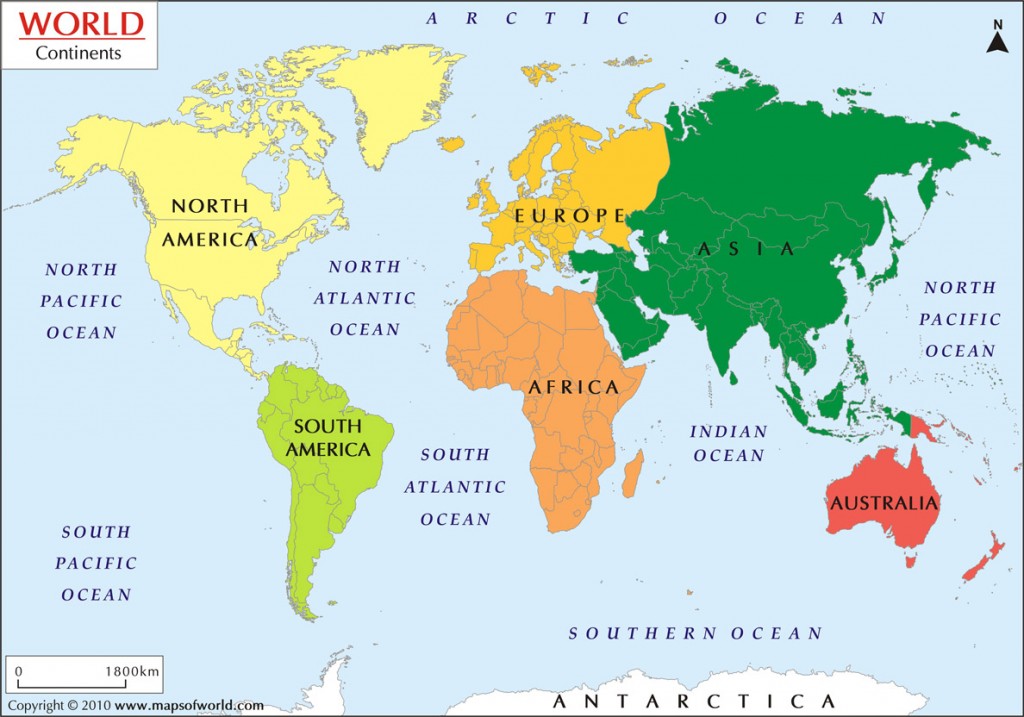
    Continents of the World
     

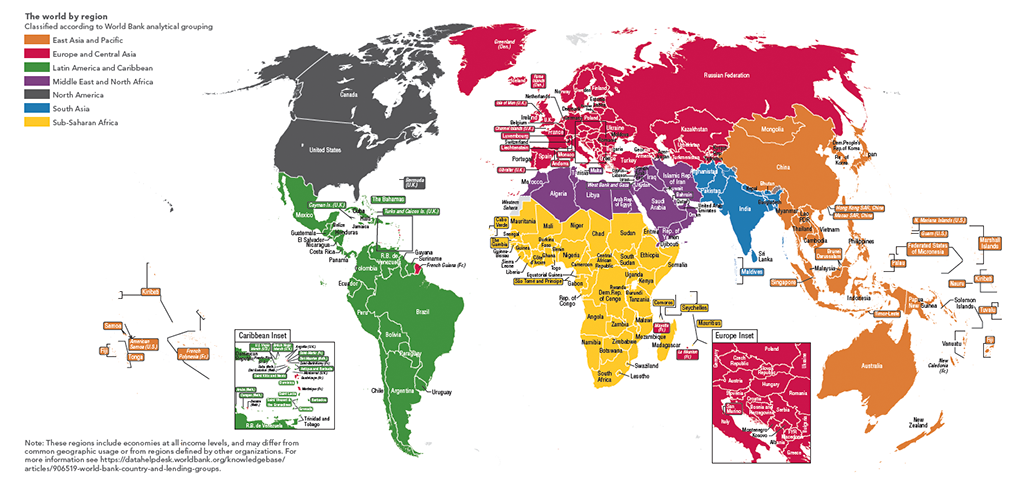
    Regions of the World


    Subregions of the World


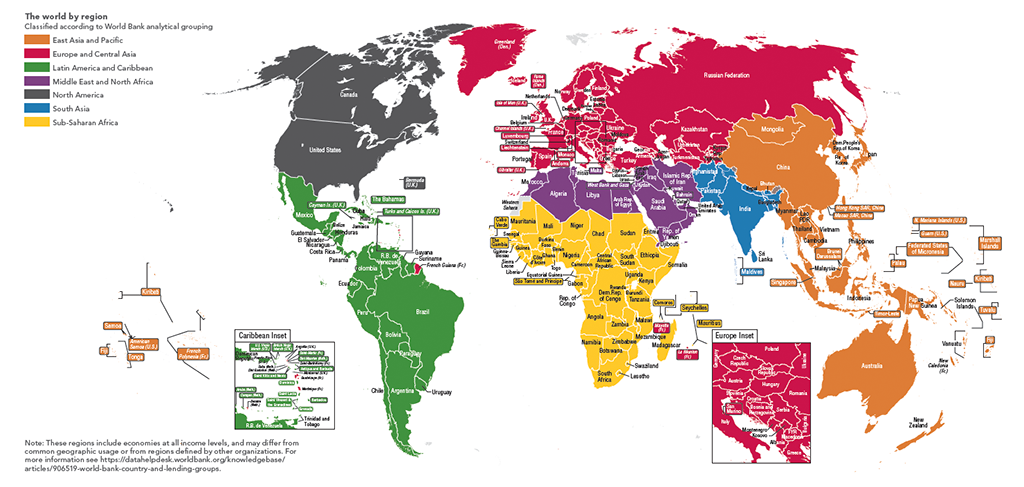
    Southwest Asia, subregion of Asia, bounded on the west by the Mediterranean Sea, the Sinai Peninsula, and the Red Sea and on the south and southeast by the Indian Ocean and the Persian Gulf. The region reaches the Caspian Sea and the Black Sea to the north.

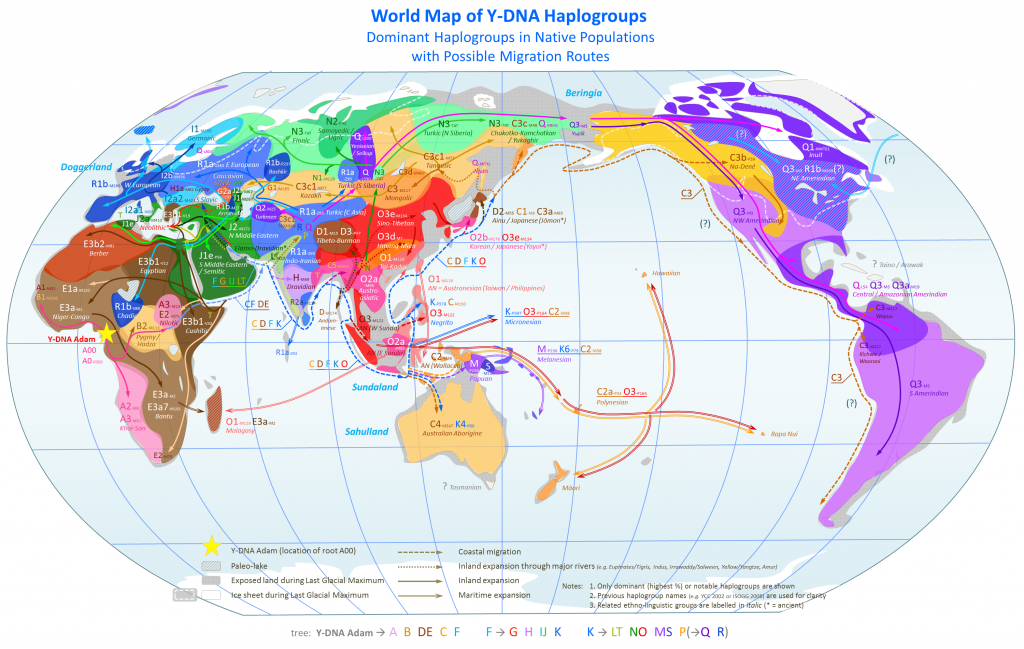
    Genetics of the World
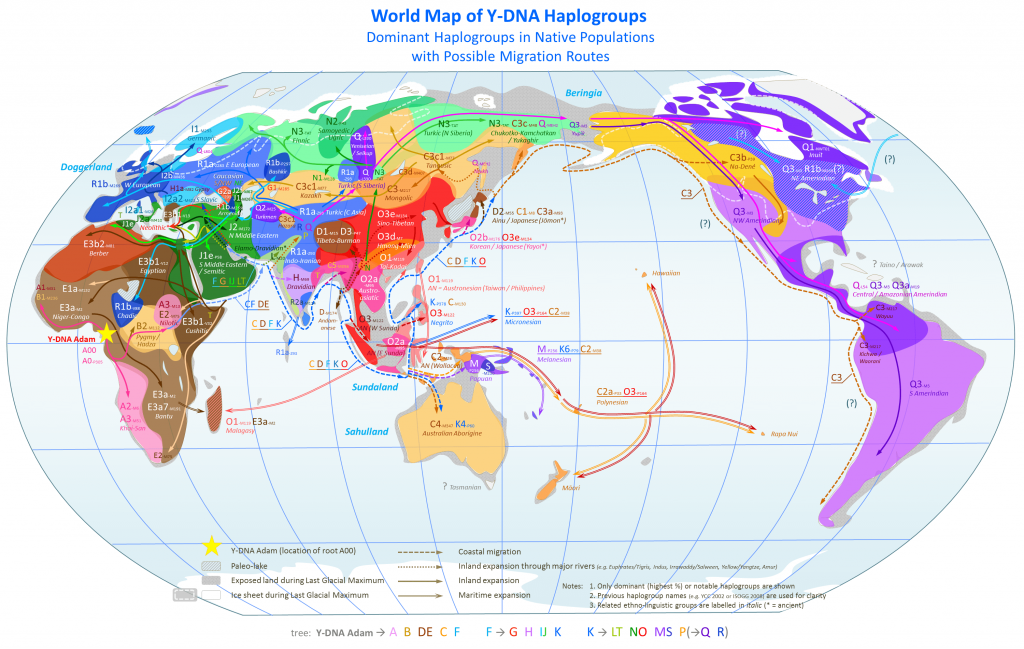
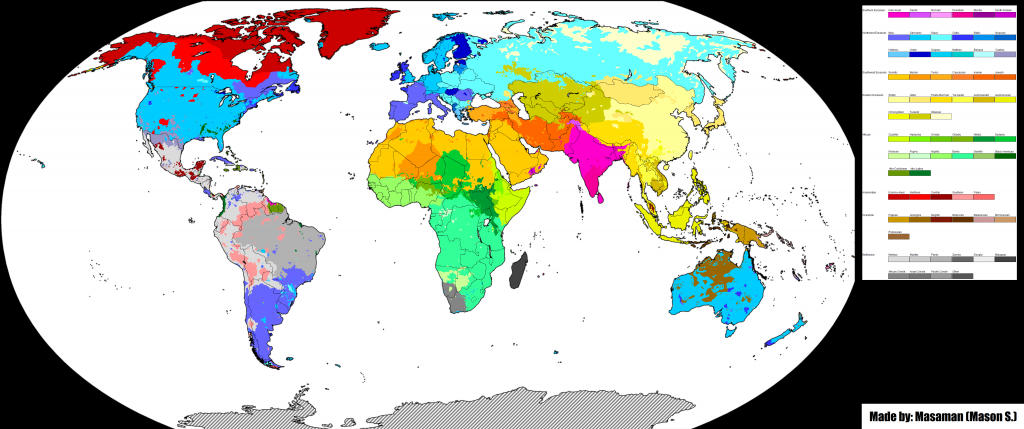
    Races of the World
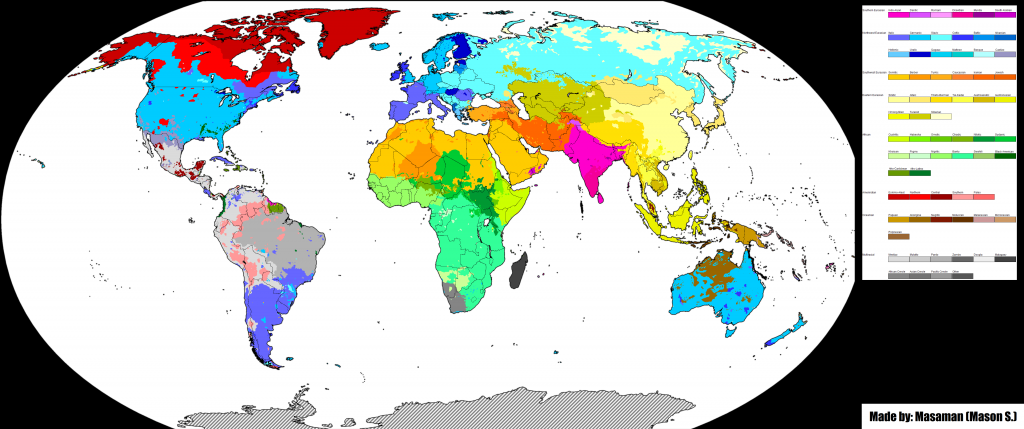
    –Southern Eurasian

    • -Indo-Aryan: The majority of peoples of Northern India, Eastern Pakistan, Southern Nepal and Bangladesh. Ex. Marathi, Bengali, Punjabi
    • -Dardic: Peoples of the Kashmir and Nuristan region, technically belonging to the Indo-Aryan family, yet contain admixture from a pre-Iranian, most likely Scythian source, giving them an appearance in stark contrast to their neighbors. Ex. Kashmiri, Pashayi, Nuristani
    • -Romani: Nomadic peoples residing primarily in Southeastern Europe, also known as Roma, Gypsies, Romany or Domari1 in the Middle East.
    • -Dravidian: The majority of peoples of Southern India and Northern Sri Lanka, predating the Indo-Aryans of Northern India. Ex. Tamil, Telugu, Malayali
    • -Munda: Austro-Asiatic speakers of India with partial Southeast Asian ancestry.
    • -South Arabian: Not actually a South Asian group, but believed by many to have a pre-Semitic Veddoid or Australoid origin. Ex. Mehri, Shehri, Soqotri

    –Northwest Eurasian

    • -Italic: Also known as speakers of the Romance family, originating in the Italian peninsula and spreading across Europe during the Roman era. Ex. Italian, Spanish, French
    • -Germanic: People originating in Southern Scandinavia and spreading to Germany, England and other areas of Europe. Ex. German, Dutch, English
    • -Slavic: Peoples originating in Eastern Europe, greatly expanding to dominate much of the Balkans and Northern Asia. Ex. Russian, Polish, Serb
    • -Celtic: Peoples pre-dating the Latinization and Germanicization of much of Western Europe, mostly lying on the fringes of the British Isles2 today. Ex. Scottish, Irish, Breton
    • -Baltic: Peoples lying in the Baltic region, related to, but separate from Slavs. Ex. Latvian, Lithuanian
    • -Albanian: People group lying in the Balkan peninsula, believed to be the last surviving group of it’s branch.
    • -Hellenic: One of the more ancient groups, lying on the fringes of the European continent in both Greece and Cyprus.
    • -Uralic: Descendants (at least partially) of peoples from the Ural mountain region in modern Russia, now located in Europe. Ex. Hungarian, Finnish, Estonian
    • -Gagauz: The only Christianized Turkic peoples of the Balkans lying mostly in Moldova and Ukraine.
    • -Maltese: The only Christianized Semitic peoples, located on an island off the coast of Sicily.
    • -Basque: People group lying in the Iberian peninsula, believed to be the last surviving group of it’s branch.
    • -Castizo: Description used in Mexico and other areas of Latin America to describe those of predominately European (mostly Spanish) ancestry, with some Amerindian admixture.

    –Southwest Eurasian

    • -Semitic: Largest sub-section of the Afro-Asiatic family, originating in the Arabian peninsula and spreading throughout much of the Middle East and North Africa3. Ex. Arab, Assyrian
    • -Berber: Pre-Semitic peoples of the Maghreb, many of whom have begrudgingly accepted the Arabic language. Ex. Kabyle, Taureg, Riffian
    • -Turkic: Descendants of the Turkic invasions of the Middle East, although the Northern Eurasian admixture is fairly limited today. Ex. Turk, Azeri, Kabardian
    • -Caucasian: Peoples lying within the Caucasus4 mountain region who pre-date any foreign invasions. Ex. Armenian, Georgian, Chechen
    • -Iranian: Peoples of the Iranian plateau stretching from Southeast Anatolia to the Pamiri mountain range in China. Ex. Persian, Kurd, Pashtun
    • -Jewish: Semitic peoples originating in Judea, forced to scatter around the Mediterranean during the Roman era.

    –Eastern Eurasian

    • -Sinitic: Largest group in the Far East, better known as Han Chinese.
    • -Altaic: Only part of a controversial grouping of peoples in East Asia. Ex. Japanese, Korean, Mongol
    • -Tibeto-Burman: People groups related to the Chinese lying on the Tibetan plateau, much of Northeast India and the country of Myanmar. Ex. Tibetan, Bamar, Balti
    • -Tai-Kadai: Peoples spread throughout Southeast Asia and Southern China. Ex. Thai, Lao, Shan
    • -Austro-Asiatic: Peoples lying mostly in the former French Indochina. Ex. Vietnamese, Khmer, Mon
    • -Austronesian: Peoples originating in a migration from the island of Taiwan into maritime Southeast Asia. Ex. Malay, Tagalog, Javanese
    • -Hmong-Mien: Peoples sporadically scattered throughout Northern Southeast Asia and Southern China.
    • -Turanid: Archaic term for those of Turkic Central Asian decent, of mixed European, Middle Eastern and East Asian decent. Ex. Kazakh, Uzbek, Turkmen
    • -Siberian: Peoples of North Asia not linguistically related, but retain many of the same haplogroups, suggesting a common origin. Ex. Yakut, Chukchi, Evenk

    –African

    • -Cushitic: Afro-Asiatic peoples dominant in Ethiopia in terms of numbers. Ex. Oromo, Afar, Somali
    • -Habesha: Semitic peoples historically dominant in Ethiopia and Eritrea. Ex. Tigrinya, Tigre, Amhara
    • -Omotic: Afro-Asiatic peoples lying in Southwest Ethiopia. Ex. Wolaytta, Bench, Oyda
    • -Chadic: Afro-Asiatic peoples ironically lying mostly to the West of Chad.
    • -Nilotic: Dark-skinned, lanky peoples of the Southern Nile in Sudan and East Africa. Nuer, Acholi, Dinka
    • -Sudanic: Other members of the Nilo-Saharan family lying mostly in Chad (ironically). Ex. Fur, Kanuri, Songai
    • -Khoisan: Dubious grouping of pre-Bantoid peoples lying mostly in the countries of Namibia, Botswana and South Africa.
    • -Pygmy: Pre-Bantoid short-statured peoples lying in Central Africa nearing extinction.
    • -Nigritic: Controversial grouping of Niger-Congo speaking peoples in West Africa. Ex. Yoruba, Igbo, Akan
    • -Bantu: Descendants of migrants from Cameroon who spread out across Africa South of the equator. Ex. Xhosa, Zulu, Shona
    • -Swahili: Speakers of the Bantoid Swahili language, but with significant Cushitic, Arabic and Persian influence over the last few centuries.
    • -Black American: Descendants of former slaves brought to Northern America from 1500-1700.
    • -Afro-Caribbean: Descendants of former slaves brought to the Caribbean during the same time period, with groups on the mainland of the Americas as well. Ex. Jamaican, Barbadian, Trinidadian
    • -Afro-Latino: Descendants of former slaves brought to Latin America, with significant Amerindian and European admixture because of the nature of early colonial Latino societies.

    –Amerindian

    • -Eskimo-Aleut: Peoples of the far North of Canada and Alaska, descended from a later group of migrants from Siberia. Ex. Inuit, Aleut
    • -Northern: Indigenous peoples of the United States and Canada other than Inuits. Ex. Apache, Comanche, Creek
    • -Central: Indigenous peoples of Mexico and Central America, who still exist in large numbers in the interior. Ex. Mayan, Nahuatl (Aztec)
    • -Southern: Indigenous peoples of most of the South American continent. Ex. Quechua. Aymara, Mapuche
    • -Paleo: Oldest surviving Amerindian peoples5, located in the far south of Patagonia and Tierra del Fuego, postulated to have possible minor Melanesian admixture. Ex. Yaghan

    –Oceanian

    • Papuan: Indigenous peoples of the island of New Guinea, believed to be among the first group of humans to venture outside of Africa.
    • -Aborigine: Indigenous peoples of Australia and Tasmania6, pushed into the interior, or outback of Australia.
    • -Negrito: Loosely related Melanesian-like peoples of Southeast Asia who pre-date the Austronesians and others by thousands of years.
    • -Moluccan: Austronesian-speaking peoples of the Maluku and Timorese islands of Indonesia, of mixed Austronesian and Papuan origin.
    • -Melanesian: Austronesian-speaking peoples of the region of Melanesia in the Pacific.
    • -Micronesian: Austronesian-speaking peoples of the region of Micronesia in the Pacific, believed to have more Austronesian admixture than Melanesians.
    • -Polynesian: Austronesian-speaking peoples of the region of Polynesia in the Pacific, with the most Austronesian admixture of all Pacific islanders.

    –Multiracial

    • -Mestizo: Descendants of colonial-era relations between Spaniards and the indigenous peoples of the Americas.
    • -Mulatto: Descendants of colonial-era relations between Spaniards and Africans7.
    • -Pardo: Descendants of colonial-era relations between the Portuguese, African and indigenous peoples of the America in Brazil.
    • -Zambo: Descendants of relations between escaped African slaves and the indigenous peoples of the Americas.
    • -Dougla: Descendants of relations between Afro-Caribbean and South Asian migrant workers8 mostly in Trinidad and Guyana.
    • -Malagasy: Descendants of ancient Austronesian sailors and Southeast Bantu peoples from modern-day Mozambique.
    • -African Creole: Creole Peoples of predominately European and African ancestry. Ex. Cape Coloured, Louisiana Creole, Cape Verdean
    • -Asian Creole: Creole Peoples of European and Asian ancestry. Ex. Anglo-Indian, Filipino Mestizo, Burgher
    • -Pacific Creole: Creole Peoples of European and Pacific Islander ancestry.


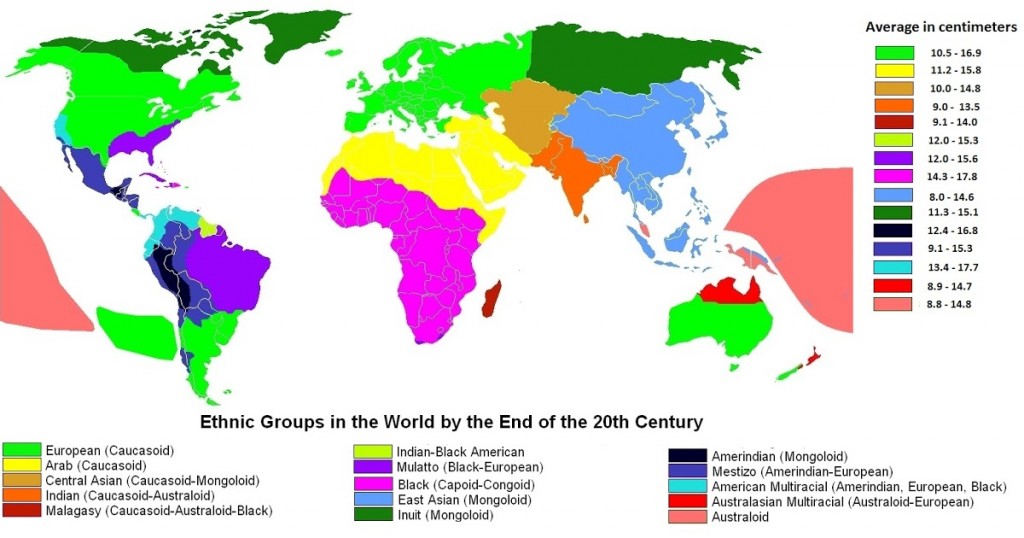
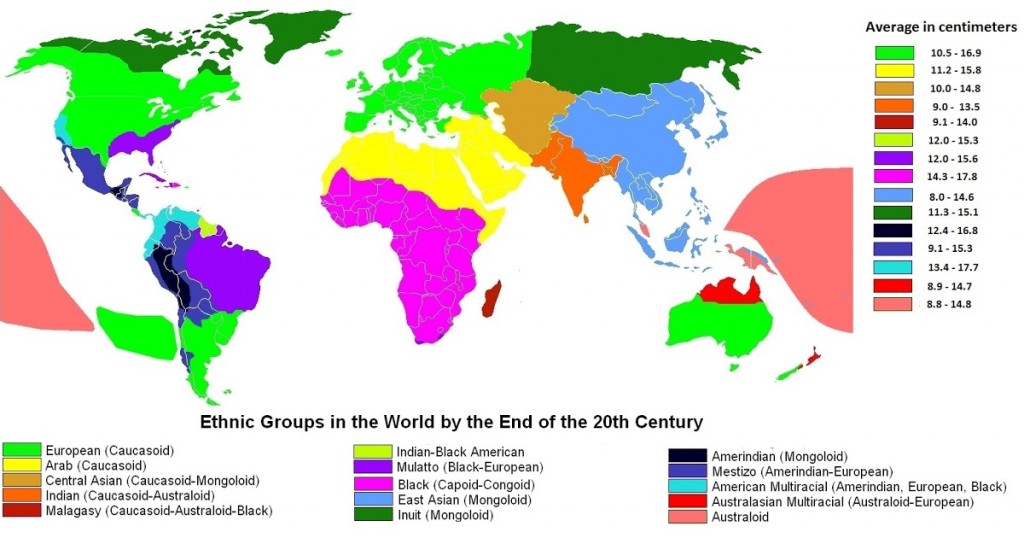
    Ethnic Groups of the World
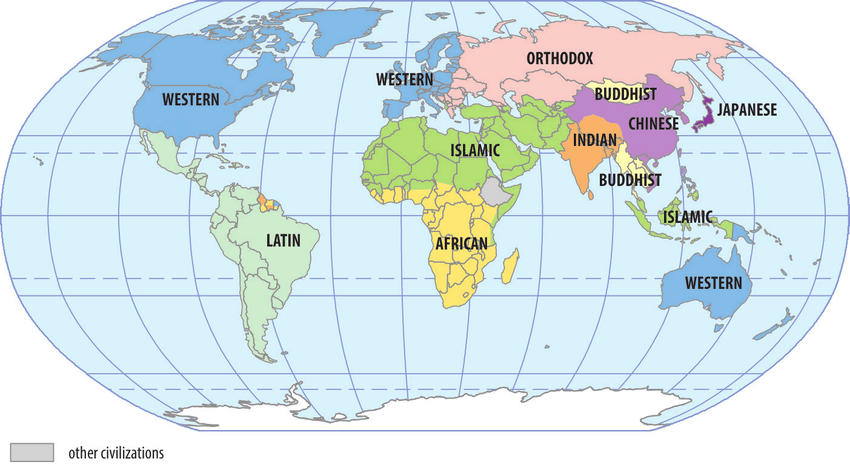
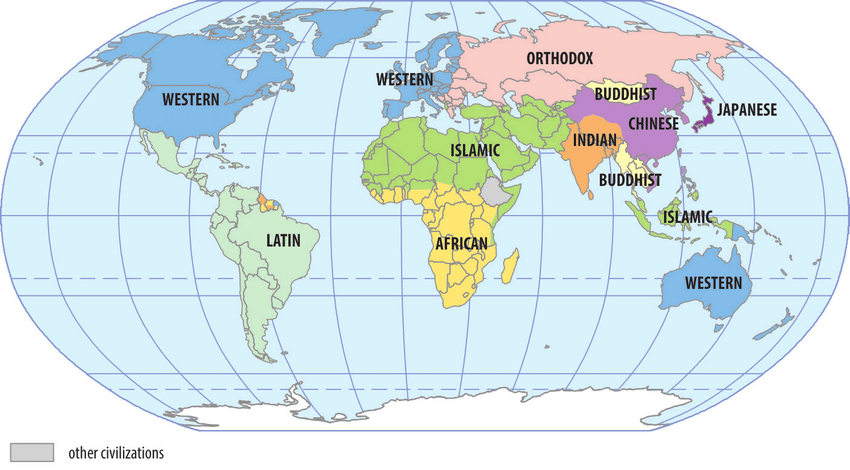
    Civilizations of the World
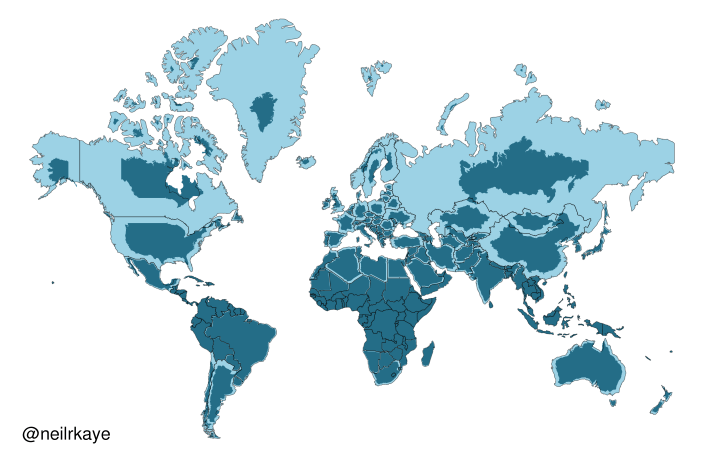
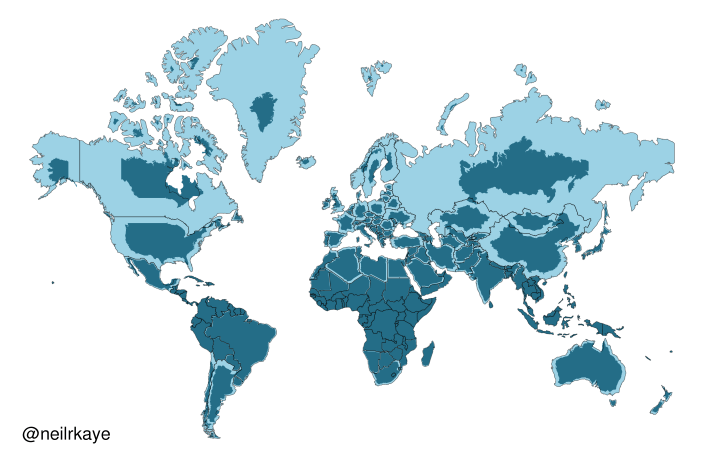
    Relative Sizes of the Countries of the World

    This is the most intuitive map of the world for the purposes of country comparisons.
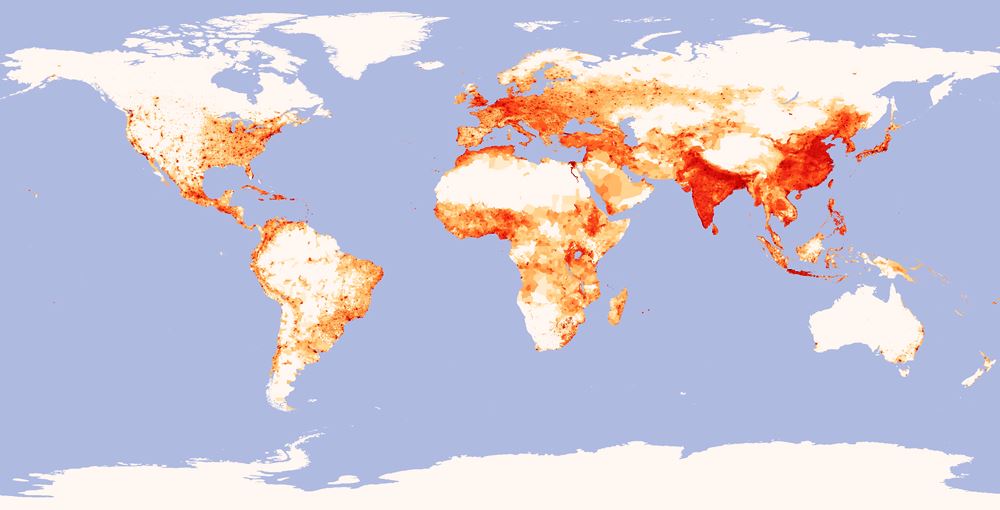
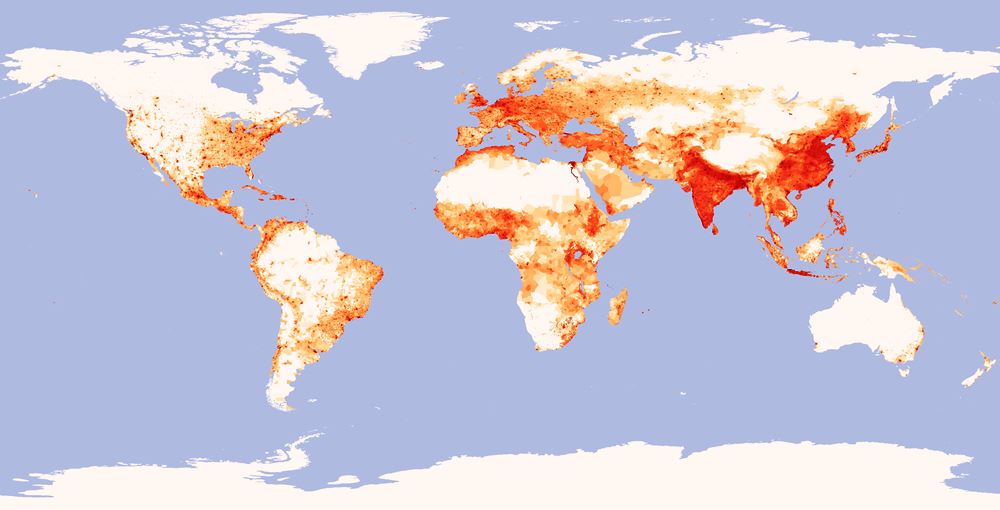
    World Population Density
     

    Estimated Human Population Worldwide Year
    200,000 c. 130,000 BCE
    3 Million c. 10,000 BCE
    10 Million c. 6,500 BCE
    50 Million c. 2,000 BCE
    200 Million c. 0 CE/BCE
    1 Billion – Carrying Capacity 1804
    2 Billion – Limit of Carrying Capacity 1927
    3 Billion 1959
    4 Billion 1974
    5 Billion 1987
    6 Billion 1999
    7 Billion 2012
      2023
      2037
      2057


  • Conflict 2: The Evolutionary Stage


    Our World

    Terrain of the World

    The World During the Ice Age

    For our purposes note (a) the absence of the north sea, (b) the closure of the red sea, (c) the absence of the persian gulf, (d) the ability to reach australia, (e) the ability to reach the americas and (f) the size of the caspian sea, and (g) the size and number of large lakes in Africa. In other words, walking across the planet is possible.

    The Next Ice Age

    According to Milankovitch theory, the advent of the ice age depends on the coincidence of the following three conditions:

    Elongation or eccentricity: Eccentricity is the shape of the Earth’s orbit around the Sun. It is constantly fluctuating with the orbital shape ranging between more and less elliptical, every 100,000 years. This alters the distance from the Earth to the Sun which in turn reduces or increases the amount of radiation received at the Earth’s surface in different seasons. The northern hemisphere experiences winter while the southern hemisphere experiences summer at perihelion position, which is the position where the distance between the earth and the sun is the least. The opposite happens at the aphelion position which is the position where the distance between the earth and the sun is the most. The solar energy received at the perihelion is 20-30% more than the energy received at the aphelion position. These fluctuations around the globe result in prominent changes in the Earth’s climate and glacial regimes. This means that the winter experienced at the aphelion would be bitter and due to the slow rotation of the earth at the aphelion (as per calculations based on Kepler’s second law), the winter would get more time to strengthen itself. For example, the glaciers from the north may start to extend southwards.

    Rotation of Precession: While the bottom part of a top is spinning, the top part also sort of revolves. The earth spins like a spinning top on its axis, while its axis also sort of revolves. It takes 26,000 years to complete one such revolution. Because of this movement, we notice the change in the night sky during different seasons. If you compare the night sky of summer in the northern hemisphere today to the night sky of summer in the northern hemisphere 5,000 years ago, it will be very different. When the precession of equinoxes sends the glaciations-prone northern hemisphere to the aphelion position, the winter becomes fierce, freezing the arctic and most of the northern hemisphere.

    Tilt or Obliquity: Currently, the tilt of the earth’s axis or its obliquity is at 23.5 degrees. But every 41,000 years, the obliquity shifts between low (22.1 degrees) to high (24.5 degrees). When the obliquity is at its lowest, the higher latitudes don’t receive much sunlight, leading to increase in ice cover over these latitudes.
    According to the Milankovitch criteria, to predict the next ice age, we can use the above information and find out when the next ice age is due. The earth’s orbit is almost circular today and 10,000 years from now, the orbit will be an ellipse. Obliquity will be at its lowest in 12,000 years from today while the precession would have reversed in almost10,000 years. So, we can predict that almost 10 to 12 thousand years from now, a new ice age may begin.

    The Problem of Prediction: Only 11,000 years have passed since the last Ice Age, so scientists cannot be certain that humans are indeed living in a post-glacial epoch instead of an interglacial period of the Pleistocene and thus due for another ice age in the near geologic future. It’s possible that an increase in global temperature, as we’re experiencing now, could be a sign of an impending ice age and could actually increase the amount of ice on the earth’s surface. Why?  Because the cold, dry air above the Arctic and Antarctica carries little moisture and drops little snow on the regions. An increase in global temperature could increase the amount of moisture in the air and increase the amount of snowfall. After years of more snowfall than melting, the polar regions could accumulate more ice. An accumulation of ice would lead to a lowering of the level of the oceans and there would be further, unanticipated changes in the global climate system as well.

    Conclusion:  The next ice age will occurr anytime between immediately and ten thousand years from now.  


    Precipitation Around The World

    To serve our purposes this map could be a little clearer, but notice that the earth’s wobbles but it’s tilt is 23 degrees at present, and the pattern of precipitation is 12 degrees.  This means that with normal ocean rotation, western europe is warmer and wetter, and east asia is colder and drier. Meanwhile, between the solar radiation across Saharan africa the arabian peninsula, central asia, and the himalayas, the rotation of the earth, the pitch of the earth, and the circulatory patterns of the oceans, that glaciation, cold, temperate and hot climates are distributed unevenly.

    Fresh Water – Rivers of the World

    In an effort to illustrate the many rivers and streams of the fertile world, in contrast with the drier regions, this map crosses over into overrepresentation of smaller rivers and undrerepresentation of the major rivers. That said, the point we want to make is that while we live in an agrarian age, and we live in a land of territorial states, that mankind evolved near, and populated the world, by following waterways. Not just because mankind requires fresh water, but because the animals we fed on from the fish in the waters, to those that came to drink from it did also.

    Transportation – Navigable Rivers of the World

    Illustrating those many waterways obscures the difference between rivers that provide fresh water, rivers that are navigable (provide transport), and rivers that provide sufficient water for widespread seasonal irrigation, and those that supply sufficient irrigation that they can sustain civilizations dependent upon widespread river-irrigation. This better illustrates the main waterways that make civilization possible.

    Arable Land of the World

    Less than five percent of the planet consists of arable land. The rest is artic, tundra, desert, or mountainous, or otherwise difficult to farm. Note the concentrations in china, india, europe, and north america versus south america, africa, australia and east central asia.

    Soil Quality Around The World

    This map of soil quality provides a bit more precision than the one above for those areas that are arable, but gives the wrong impression otherwise. I’ve added it here to show the difference between sout asia (india), se asia, and particularly northeast china to call attention to the fact that the high population of these regions isn’t cultural it’s geographic.

    Climate Around The World

    Solar Radiation Around The World

    The Continents: The dark orange area at 1500 kWh/m^2, is largely between 35 degrees and 60 degrees latitude, with southern china extending south to 20 degrees.

    The Planet:  The map of the full planet shows us the oceans as well. The red hot-spots are the Andes mountans in south america and the Himalayan mountains in South Asia from Pakistan (old India), to India, Nepal, and Bangladesh in the south, and Tibet in the north.

    Continents of the World


    Regions of the World


    Subregions of the World


    Southwest Asia, subregion of Asia, bounded on the west by the Mediterranean Sea, the Sinai Peninsula, and the Red Sea and on the south and southeast by the Indian Ocean and the Persian Gulf. The region reaches the Caspian Sea and the Black Sea to the north.

    Genetics of the World

    Races of the World

    –Southern Eurasian

    • -Indo-Aryan: The majority of peoples of Northern India, Eastern Pakistan, Southern Nepal and Bangladesh. Ex. Marathi, Bengali, Punjabi
    • -Dardic: Peoples of the Kashmir and Nuristan region, technically belonging to the Indo-Aryan family, yet contain admixture from a pre-Iranian, most likely Scythian source, giving them an appearance in stark contrast to their neighbors. Ex. Kashmiri, Pashayi, Nuristani
    • -Romani: Nomadic peoples residing primarily in Southeastern Europe, also known as Roma, Gypsies, Romany or Domari1 in the Middle East.
    • -Dravidian: The majority of peoples of Southern India and Northern Sri Lanka, predating the Indo-Aryans of Northern India. Ex. Tamil, Telugu, Malayali
    • -Munda: Austro-Asiatic speakers of India with partial Southeast Asian ancestry.
    • -South Arabian: Not actually a South Asian group, but believed by many to have a pre-Semitic Veddoid or Australoid origin. Ex. Mehri, Shehri, Soqotri

    –Northwest Eurasian

    • -Italic: Also known as speakers of the Romance family, originating in the Italian peninsula and spreading across Europe during the Roman era. Ex. Italian, Spanish, French
    • -Germanic: People originating in Southern Scandinavia and spreading to Germany, England and other areas of Europe. Ex. German, Dutch, English
    • -Slavic: Peoples originating in Eastern Europe, greatly expanding to dominate much of the Balkans and Northern Asia. Ex. Russian, Polish, Serb
    • -Celtic: Peoples pre-dating the Latinization and Germanicization of much of Western Europe, mostly lying on the fringes of the British Isles2 today. Ex. Scottish, Irish, Breton
    • -Baltic: Peoples lying in the Baltic region, related to, but separate from Slavs. Ex. Latvian, Lithuanian
    • -Albanian: People group lying in the Balkan peninsula, believed to be the last surviving group of it’s branch.
    • -Hellenic: One of the more ancient groups, lying on the fringes of the European continent in both Greece and Cyprus.
    • -Uralic: Descendants (at least partially) of peoples from the Ural mountain region in modern Russia, now located in Europe. Ex. Hungarian, Finnish, Estonian
    • -Gagauz: The only Christianized Turkic peoples of the Balkans lying mostly in Moldova and Ukraine.
    • -Maltese: The only Christianized Semitic peoples, located on an island off the coast of Sicily.
    • -Basque: People group lying in the Iberian peninsula, believed to be the last surviving group of it’s branch.
    • -Castizo: Description used in Mexico and other areas of Latin America to describe those of predominately European (mostly Spanish) ancestry, with some Amerindian admixture.

    –Southwest Eurasian

    • -Semitic: Largest sub-section of the Afro-Asiatic family, originating in the Arabian peninsula and spreading throughout much of the Middle East and North Africa3. Ex. Arab, Assyrian
    • -Berber: Pre-Semitic peoples of the Maghreb, many of whom have begrudgingly accepted the Arabic language. Ex. Kabyle, Taureg, Riffian
    • -Turkic: Descendants of the Turkic invasions of the Middle East, although the Northern Eurasian admixture is fairly limited today. Ex. Turk, Azeri, Kabardian
    • -Caucasian: Peoples lying within the Caucasus4 mountain region who pre-date any foreign invasions. Ex. Armenian, Georgian, Chechen
    • -Iranian: Peoples of the Iranian plateau stretching from Southeast Anatolia to the Pamiri mountain range in China. Ex. Persian, Kurd, Pashtun
    • -Jewish: Semitic peoples originating in Judea, forced to scatter around the Mediterranean during the Roman era.

    –Eastern Eurasian

    • -Sinitic: Largest group in the Far East, better known as Han Chinese.
    • -Altaic: Only part of a controversial grouping of peoples in East Asia. Ex. Japanese, Korean, Mongol
    • -Tibeto-Burman: People groups related to the Chinese lying on the Tibetan plateau, much of Northeast India and the country of Myanmar. Ex. Tibetan, Bamar, Balti
    • -Tai-Kadai: Peoples spread throughout Southeast Asia and Southern China. Ex. Thai, Lao, Shan
    • -Austro-Asiatic: Peoples lying mostly in the former French Indochina. Ex. Vietnamese, Khmer, Mon
    • -Austronesian: Peoples originating in a migration from the island of Taiwan into maritime Southeast Asia. Ex. Malay, Tagalog, Javanese
    • -Hmong-Mien: Peoples sporadically scattered throughout Northern Southeast Asia and Southern China.
    • -Turanid: Archaic term for those of Turkic Central Asian decent, of mixed European, Middle Eastern and East Asian decent. Ex. Kazakh, Uzbek, Turkmen
    • -Siberian: Peoples of North Asia not linguistically related, but retain many of the same haplogroups, suggesting a common origin. Ex. Yakut, Chukchi, Evenk

    –African

    • -Cushitic: Afro-Asiatic peoples dominant in Ethiopia in terms of numbers. Ex. Oromo, Afar, Somali
    • -Habesha: Semitic peoples historically dominant in Ethiopia and Eritrea. Ex. Tigrinya, Tigre, Amhara
    • -Omotic: Afro-Asiatic peoples lying in Southwest Ethiopia. Ex. Wolaytta, Bench, Oyda
    • -Chadic: Afro-Asiatic peoples ironically lying mostly to the West of Chad.
    • -Nilotic: Dark-skinned, lanky peoples of the Southern Nile in Sudan and East Africa. Nuer, Acholi, Dinka
    • -Sudanic: Other members of the Nilo-Saharan family lying mostly in Chad (ironically). Ex. Fur, Kanuri, Songai
    • -Khoisan: Dubious grouping of pre-Bantoid peoples lying mostly in the countries of Namibia, Botswana and South Africa.
    • -Pygmy: Pre-Bantoid short-statured peoples lying in Central Africa nearing extinction.
    • -Nigritic: Controversial grouping of Niger-Congo speaking peoples in West Africa. Ex. Yoruba, Igbo, Akan
    • -Bantu: Descendants of migrants from Cameroon who spread out across Africa South of the equator. Ex. Xhosa, Zulu, Shona
    • -Swahili: Speakers of the Bantoid Swahili language, but with significant Cushitic, Arabic and Persian influence over the last few centuries.
    • -Black American: Descendants of former slaves brought to Northern America from 1500-1700.
    • -Afro-Caribbean: Descendants of former slaves brought to the Caribbean during the same time period, with groups on the mainland of the Americas as well. Ex. Jamaican, Barbadian, Trinidadian
    • -Afro-Latino: Descendants of former slaves brought to Latin America, with significant Amerindian and European admixture because of the nature of early colonial Latino societies.

    –Amerindian

    • -Eskimo-Aleut: Peoples of the far North of Canada and Alaska, descended from a later group of migrants from Siberia. Ex. Inuit, Aleut
    • -Northern: Indigenous peoples of the United States and Canada other than Inuits. Ex. Apache, Comanche, Creek
    • -Central: Indigenous peoples of Mexico and Central America, who still exist in large numbers in the interior. Ex. Mayan, Nahuatl (Aztec)
    • -Southern: Indigenous peoples of most of the South American continent. Ex. Quechua. Aymara, Mapuche
    • -Paleo: Oldest surviving Amerindian peoples5, located in the far south of Patagonia and Tierra del Fuego, postulated to have possible minor Melanesian admixture. Ex. Yaghan

    –Oceanian

    • Papuan: Indigenous peoples of the island of New Guinea, believed to be among the first group of humans to venture outside of Africa.
    • -Aborigine: Indigenous peoples of Australia and Tasmania6, pushed into the interior, or outback of Australia.
    • -Negrito: Loosely related Melanesian-like peoples of Southeast Asia who pre-date the Austronesians and others by thousands of years.
    • -Moluccan: Austronesian-speaking peoples of the Maluku and Timorese islands of Indonesia, of mixed Austronesian and Papuan origin.
    • -Melanesian: Austronesian-speaking peoples of the region of Melanesia in the Pacific.
    • -Micronesian: Austronesian-speaking peoples of the region of Micronesia in the Pacific, believed to have more Austronesian admixture than Melanesians.
    • -Polynesian: Austronesian-speaking peoples of the region of Polynesia in the Pacific, with the most Austronesian admixture of all Pacific islanders.

    –Multiracial

    • -Mestizo: Descendants of colonial-era relations between Spaniards and the indigenous peoples of the Americas.
    • -Mulatto: Descendants of colonial-era relations between Spaniards and Africans7.
    • -Pardo: Descendants of colonial-era relations between the Portuguese, African and indigenous peoples of the America in Brazil.
    • -Zambo: Descendants of relations between escaped African slaves and the indigenous peoples of the Americas.
    • -Dougla: Descendants of relations between Afro-Caribbean and South Asian migrant workers8 mostly in Trinidad and Guyana.
    • -Malagasy: Descendants of ancient Austronesian sailors and Southeast Bantu peoples from modern-day Mozambique.
    • -African Creole: Creole Peoples of predominately European and African ancestry. Ex. Cape Coloured, Louisiana Creole, Cape Verdean
    • -Asian Creole: Creole Peoples of European and Asian ancestry. Ex. Anglo-Indian, Filipino Mestizo, Burgher
    • -Pacific Creole: Creole Peoples of European and Pacific Islander ancestry.


    Ethnic Groups of the World

    Civilizations of the World

    Relative Sizes of the Countries of the World

    This is the most intuitive map of the world for the purposes of country comparisons.

    World Population Density


    Estimated Human Population Worldwide Year
    200,000 c. 130,000 BCE
    3 Million c. 10,000 BCE
    10 Million c. 6,500 BCE
    50 Million c. 2,000 BCE
    200 Million c. 0 CE/BCE
    1 Billion – Carrying Capacity 1804
    2 Billion – Limit of Carrying Capacity 1927
    3 Billion 1959
    4 Billion 1974
    5 Billion 1987
    6 Billion 1999
    7 Billion 2012
      2023
      2037
      2057