Time = rate of change in state. As we age we more slowly change state. Not only because there is less low hanging fruit to learn, but that the cost of reorganization of our accumulated patterns and consequent thinking increases, and at the same time our physical ability to learn decreases.
Time = rate of change in state. As we age we more slowly change state. Not only because there is less low hanging fruit to learn, but that the cost of reorganization of our accumulated patterns and consequent thinking increases, and at the same time our physical ability to learn decreases.
Time = rate of change in state. As we age we more slowly change state. Not only because there is less low hanging fruit to learn, but that the cost of reorganization of our accumulated patterns and consequent thinking increases, and at the same time our physical ability to learn decreases.
[M]ake women feel safe, and as the eastern europeans say ‘able to be weak’. Which they mean, able to love and feel and free of worry, and they will be their best. “Men work, women love, and this way we serve one another.”
The problem is women’s competitive virtue signaling under consumer hyperconsumption is the equivalent of men who are addicted to watching sports but not doing them.
[M]ake women feel safe, and as the eastern europeans say ‘able to be weak’. Which they mean, able to love and feel and free of worry, and they will be their best. “Men work, women love, and this way we serve one another.”
The problem is women’s competitive virtue signaling under consumer hyperconsumption is the equivalent of men who are addicted to watching sports but not doing them.
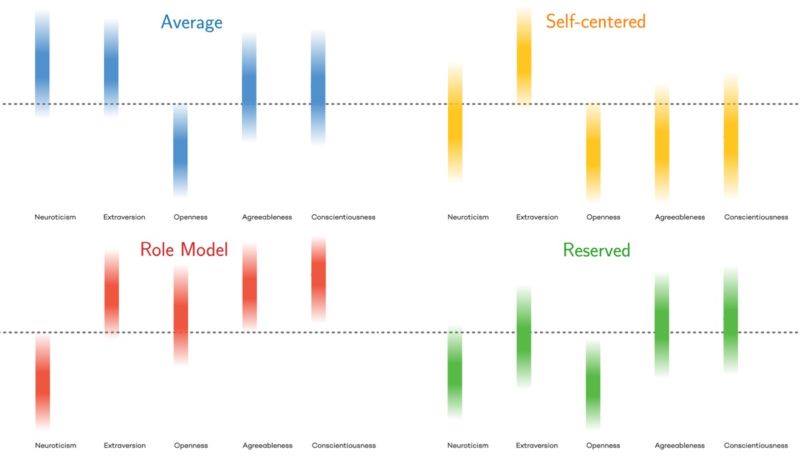
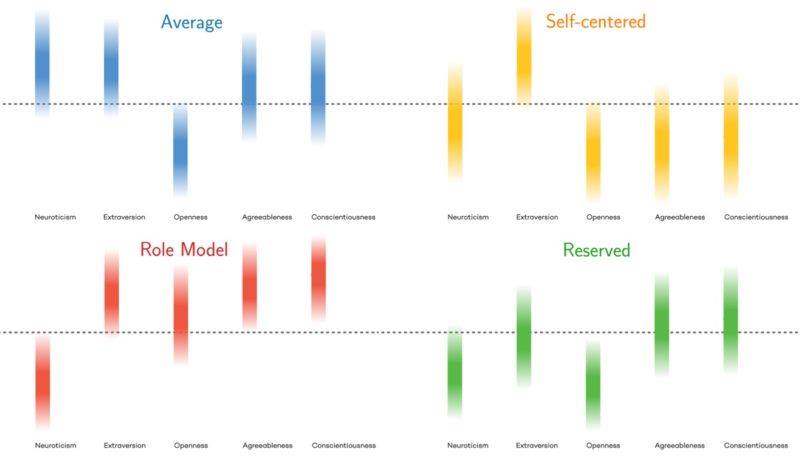
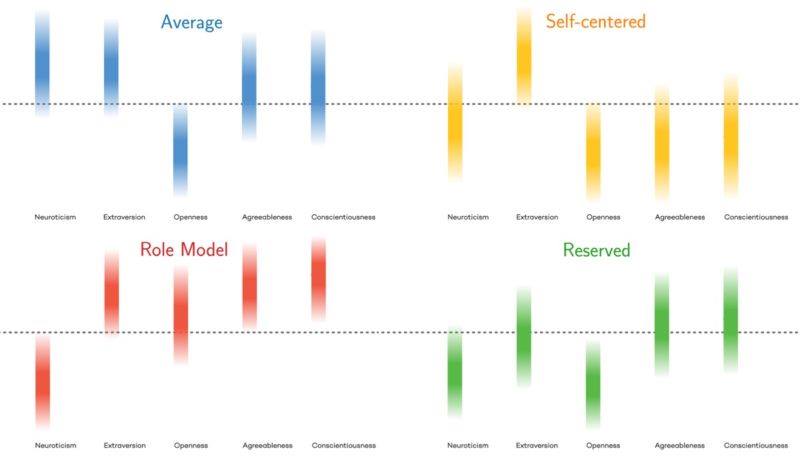
photos_and_videos/TimelinePhotos_SxeO6JU-xg/42158427_10156647277197264_1595885877257568256_n_10156647277192264.jpg CLUSTERS OF SIMILAR PERSONALITY TRAITS PRODUCE FOUR OBVIOUS TYPES:
ASCENDENT FEMALE BIAS
Average: These people score high in neuroticism and extraversion, but score low in openness. It is the most typical category, with women being more likely than men to fit into it.
ASCENDENT MALE BIAS
Self-Centered: These people score very high in extraversion, but score low in openness, agreeableness, and conscientiousness. Most teenage boys would fall into this category, according to Revelle, before (hopefully) maturing out of it. The number of people who fall into this category decreases dramatically with age.
ESTABLISHED FEMALE BIAS
Role Models: These people score high in every trait except neuroticism, and the likelihood that someone fits into this category increases dramatically as they age. “These are people who are dependable and open to new ideas,” says Amaral. “These are good people to be in charge of things.” Women are more likely than men to be role models.
ESTABLISHED MALE BIAS
Reserved: This type of person is stable emotionally without being especially open or neurotic. They tend to score lower on extraversion but tend to be somewhat agreeable and conscientious.
ABSTRACT
—“Understanding human personality has been a focus for philosophers and scientists for millennia1. It is now widely accepted that there are about five major personality domains that describe the personality profile of an individual2,3. In contrast to personality traits, the existence of personality types remains extremely controversial4. Despite the various purported personality types described in the literature, small sample sizes and the lack of reproducibility across data sets and methods have led to inconclusive results about personality types5,6. Here we develop an alternative approach to the identification of personality types, which we apply to four large data sets comprising more than 1.5 million participants. We find robust evidence for at least four distinct personality types, extending and refining previously suggested typologies. We show that these types appear as a small subset of a much more numerous set of spurious solutions in typical clustering approaches, highlighting principal limitations in the blind application of unsupervised machine learning methods to the analysis of big data.”—
https://www.nature.com/articles/s41562-018-0419-zCLUSTERS OF SIMILAR PERSONALITY TRAITS PRODUCE FOUR OBVIOUS TYPES:
ASCENDENT FEMALE BIAS
Average: These people score high in neuroticism and extraversion, but score low in openness. It is the most typical category, with women being more likely than men to fit into it.
ASCENDENT MALE BIAS
Self-Centered: These people score very high in extraversion, but score low in openness, agreeableness, and conscientiousness. Most teenage boys would fall into this category, according to Revelle, before (hopefully) maturing out of it. The number of people who fall into this category decreases dramatically with age.
ESTABLISHED FEMALE BIAS
Role Models: These people score high in every trait except neuroticism, and the likelihood that someone fits into this category increases dramatically as they age. “These are people who are dependable and open to new ideas,” says Amaral. “These are good people to be in charge of things.” Women are more likely than men to be role models.
ESTABLISHED MALE BIAS
Reserved: This type of person is stable emotionally without being especially open or neurotic. They tend to score lower on extraversion but tend to be somewhat agreeable and conscientious.
ABSTRACT
—“Understanding human personality has been a focus for philosophers and scientists for millennia1. It is now widely accepted that there are about five major personality domains that describe the personality profile of an individual2,3. In contrast to personality traits, the existence of personality types remains extremely controversial4. Despite the various purported personality types described in the literature, small sample sizes and the lack of reproducibility across data sets and methods have led to inconclusive results about personality types5,6. Here we develop an alternative approach to the identification of personality types, which we apply to four large data sets comprising more than 1.5 million participants. We find robust evidence for at least four distinct personality types, extending and refining previously suggested typologies. We show that these types appear as a small subset of a much more numerous set of spurious solutions in typical clustering approaches, highlighting principal limitations in the blind application of unsupervised machine learning methods to the analysis of big data.”—
photos_and_videos/TimelinePhotos_SxeO6JU-xg/42158427_10156647277197264_1595885877257568256_n_10156647277192264.jpg CLUSTERS OF SIMILAR PERSONALITY TRAITS PRODUCE FOUR OBVIOUS TYPES:
ASCENDENT FEMALE BIAS
Average: These people score high in neuroticism and extraversion, but score low in openness. It is the most typical category, with women being more likely than men to fit into it.
ASCENDENT MALE BIAS
Self-Centered: These people score very high in extraversion, but score low in openness, agreeableness, and conscientiousness. Most teenage boys would fall into this category, according to Revelle, before (hopefully) maturing out of it. The number of people who fall into this category decreases dramatically with age.
ESTABLISHED FEMALE BIAS
Role Models: These people score high in every trait except neuroticism, and the likelihood that someone fits into this category increases dramatically as they age. “These are people who are dependable and open to new ideas,” says Amaral. “These are good people to be in charge of things.” Women are more likely than men to be role models.
ESTABLISHED MALE BIAS
Reserved: This type of person is stable emotionally without being especially open or neurotic. They tend to score lower on extraversion but tend to be somewhat agreeable and conscientious.
ABSTRACT
—“Understanding human personality has been a focus for philosophers and scientists for millennia1. It is now widely accepted that there are about five major personality domains that describe the personality profile of an individual2,3. In contrast to personality traits, the existence of personality types remains extremely controversial4. Despite the various purported personality types described in the literature, small sample sizes and the lack of reproducibility across data sets and methods have led to inconclusive results about personality types5,6. Here we develop an alternative approach to the identification of personality types, which we apply to four large data sets comprising more than 1.5 million participants. We find robust evidence for at least four distinct personality types, extending and refining previously suggested typologies. We show that these types appear as a small subset of a much more numerous set of spurious solutions in typical clustering approaches, highlighting principal limitations in the blind application of unsupervised machine learning methods to the analysis of big data.”—
https://www.nature.com/articles/s41562-018-0419-zJoel HarveyI don’t fall into any of these.
I have 0 neuroticism, 0 conscientiousness and 0 agreeableness, but I’m in the 98th percentile for openness and extroversion.Sep 18, 2018, 9:51 PMCurt Doolittleit’s a description of four clusters of traits.
I was pointing out that those clusters are just male and female stages of life.
So that such clusters are rather obvious.Sep 19, 2018, 9:11 AMJoel HarveyYes I understood that, I was just making conversation.Sep 19, 2018, 9:22 AMCorbus AureliusUr like a baby?Sep 19, 2018, 1:16 PMJoel Harveyhow many babies do you know with 0 neuroticism?Sep 19, 2018, 1:32 PMCorbus AureliusJoel Harvey neuroticism can probably only be evidenced in individuals who have attained some concrete operations. But I’m just making convo😉Sep 19, 2018, 1:39 PMCLUSTERS OF SIMILAR PERSONALITY TRAITS PRODUCE FOUR OBVIOUS TYPES:
ASCENDENT FEMALE BIAS
Average: These people score high in neuroticism and extraversion, but score low in openness. It is the most typical category, with women being more likely than men to fit into it.
ASCENDENT MALE BIAS
Self-Centered: These people score very high in extraversion, but score low in openness, agreeableness, and conscientiousness. Most teenage boys would fall into this category, according to Revelle, before (hopefully) maturing out of it. The number of people who fall into this category decreases dramatically with age.
ESTABLISHED FEMALE BIAS
Role Models: These people score high in every trait except neuroticism, and the likelihood that someone fits into this category increases dramatically as they age. “These are people who are dependable and open to new ideas,” says Amaral. “These are good people to be in charge of things.” Women are more likely than men to be role models.
ESTABLISHED MALE BIAS
Reserved: This type of person is stable emotionally without being especially open or neurotic. They tend to score lower on extraversion but tend to be somewhat agreeable and conscientious.
ABSTRACT
—“Understanding human personality has been a focus for philosophers and scientists for millennia1. It is now widely accepted that there are about five major personality domains that describe the personality profile of an individual2,3. In contrast to personality traits, the existence of personality types remains extremely controversial4. Despite the various purported personality types described in the literature, small sample sizes and the lack of reproducibility across data sets and methods have led to inconclusive results about personality types5,6. Here we develop an alternative approach to the identification of personality types, which we apply to four large data sets comprising more than 1.5 million participants. We find robust evidence for at least four distinct personality types, extending and refining previously suggested typologies. We show that these types appear as a small subset of a much more numerous set of spurious solutions in typical clustering approaches, highlighting principal limitations in the blind application of unsupervised machine learning methods to the analysis of big data.”—
photos_and_videos/TimelinePhotos_43196237263/42158427_10156647277197264_1595885877257568256_n_10156647277192264.jpg CLUSTERS OF SIMILAR PERSONALITY TRAITS PRODUCE FOUR OBVIOUS TYPES:
ASCENDENT FEMALE BIAS
Average: These people score high in neuroticism and extraversion, but score low in openness. It is the most typical category, with women being more likely than men to fit into it.
ASCENDENT MALE BIAS
Self-Centered: These people score very high in extraversion, but score low in openness, agreeableness, and conscientiousness. Most teenage boys would fall into this category, according to Revelle, before (hopefully) maturing out of it. The number of people who fall into this category decreases dramatically with age.
ESTABLISHED FEMALE BIAS
Role Models: These people score high in every trait except neuroticism, and the likelihood that someone fits into this category increases dramatically as they age. “These are people who are dependable and open to new ideas,” says Amaral. “These are good people to be in charge of things.” Women are more likely than men to be role models.
ESTABLISHED MALE BIAS
Reserved: This type of person is stable emotionally without being especially open or neurotic. They tend to score lower on extraversion but tend to be somewhat agreeable and conscientious.
ABSTRACT
—“Understanding human personality has been a focus for philosophers and scientists for millennia1. It is now widely accepted that there are about five major personality domains that describe the personality profile of an individual2,3. In contrast to personality traits, the existence of personality types remains extremely controversial4. Despite the various purported personality types described in the literature, small sample sizes and the lack of reproducibility across data sets and methods have led to inconclusive results about personality types5,6. Here we develop an alternative approach to the identification of personality types, which we apply to four large data sets comprising more than 1.5 million participants. We find robust evidence for at least four distinct personality types, extending and refining previously suggested typologies. We show that these types appear as a small subset of a much more numerous set of spurious solutions in typical clustering approaches, highlighting principal limitations in the blind application of unsupervised machine learning methods to the analysis of big data.”—
https://www.nature.com/articles/s41562-018-0419-zJoel HarveyI don’t fall into any of these.
I have 0 neuroticism, 0 conscientiousness and 0 agreeableness, but I’m in the 98th percentile for openness and extroversion.Sep 18, 2018 9:51pmCurt Doolittleit’s a description of four clusters of traits.
I was pointing out that those clusters are just male and female stages of life.
So that such clusters are rather obvious.Sep 19, 2018 9:11amJoel HarveyYes I understood that, I was just making conversation.Sep 19, 2018 9:22amCorbus AureliusUr like a baby?Sep 19, 2018 1:16pmJoel Harveyhow many babies do you know with 0 neuroticism?Sep 19, 2018 1:32pmCorbus Aurelius@[100023721587717:2048:Joel Harvey] neuroticism can probably only be evidenced in individuals who have attained some concrete operations. But I’m just making convo😉Sep 19, 2018 1:39pmCLUSTERS OF SIMILAR PERSONALITY TRAITS PRODUCE FOUR OBVIOUS TYPES:
ASCENDENT FEMALE BIAS
Average: These people score high in neuroticism and extraversion, but score low in openness. It is the most typical category, with women being more likely than men to fit into it.
ASCENDENT MALE BIAS
Self-Centered: These people score very high in extraversion, but score low in openness, agreeableness, and conscientiousness. Most teenage boys would fall into this category, according to Revelle, before (hopefully) maturing out of it. The number of people who fall into this category decreases dramatically with age.
ESTABLISHED FEMALE BIAS
Role Models: These people score high in every trait except neuroticism, and the likelihood that someone fits into this category increases dramatically as they age. “These are people who are dependable and open to new ideas,” says Amaral. “These are good people to be in charge of things.” Women are more likely than men to be role models.
ESTABLISHED MALE BIAS
Reserved: This type of person is stable emotionally without being especially open or neurotic. They tend to score lower on extraversion but tend to be somewhat agreeable and conscientious.
ABSTRACT
—“Understanding human personality has been a focus for philosophers and scientists for millennia1. It is now widely accepted that there are about five major personality domains that describe the personality profile of an individual2,3. In contrast to personality traits, the existence of personality types remains extremely controversial4. Despite the various purported personality types described in the literature, small sample sizes and the lack of reproducibility across data sets and methods have led to inconclusive results about personality types5,6. Here we develop an alternative approach to the identification of personality types, which we apply to four large data sets comprising more than 1.5 million participants. We find robust evidence for at least four distinct personality types, extending and refining previously suggested typologies. We show that these types appear as a small subset of a much more numerous set of spurious solutions in typical clustering approaches, highlighting principal limitations in the blind application of unsupervised machine learning methods to the analysis of big data.”—
??? I have always been attractive to women. I’m charismatic, cultured, interesting, competitive, hard working, generous and seek to help them reach their full potential. It’s a good thing because I’m also an aspie nerd, arrogant, relatively intolerant, and prone to offend the bunnies whose idiocy never ceases to confound me. Don’t know where anyone would get the idea that women aren’t interested in me, or that I have some difficulty obtaining their affections. And in case anyone is asking i have existing relationships that I don’t expose to the world for their safety and happiness.
88% OF PRIME AGE MEN THAT ARE OUT OF THE WORK FORCE, ARE SO BECAUSE OF HEALTH OR CHOICE.
—“Some new research on our of the labor force prime age men: Inactive, Disconnected, and Ailing: A Portrait of Prime-Age Men Out of the Labor Force (ht Noah Smith)
This report is intended to enrich our understanding of who these prime-age “inactive” men are. It summarizes evidence from past research and fills out our picture of these men, providing some details about their past and present social and emotional lives. We introduce an under-utilized dataset little-known to economists and sociologists, the “National Epidemiological Survey on Alcohol and Related Conditions-III,” or NESARC-III.
Consistent with other survey data, the NESARC-III indicates that in 2013, 11 percent of prime-age men were outside the labor force. Roughly 45 percent of them indicate that their current situation involves illness or disability. Roughly 15 percent of inactive men are in school, 5 to 10 percent are retired, and another 5 to 10 percent are homemakers or caregivers. About a quarter of prime-age inactive men do not fit any of these categories. Contrary to the common view that most of these men have “dropped out” of the labor force after becoming discouraged by the job market, few prime-age inactive men indicate this to be true, and only 12 percent of able-bodied prime-age inactive men indicate in household surveys that they want a job or are open to taking one.
We confirm research by other scholars that a large number of inactive men are unambiguously and seriously sick or disabled. We provide new information, showing that many inactive men have poor physical health, poor mental health, or both. Over one-third of them (and nearly three in five disabled inactive men) are in the bottom quarter, nationally, of both physical and mental health.
Inactive men have fewer skills than employed men and live in poorer homes, often relying on public safety nets to get by. Two-thirds of inactive men personally received government assistance in the preceding year. One-third of inactive men have been incarcerated (including nearly half of disabled inactive men). Along with other evidence presented here on mobility-impeding behavior, such high incarceration rates suggest employment challenges.”—
Read more at https://www.calculatedriskblog.com/2018/09/inactive-disconnected-and-ailing.html#vGZ3m1Ip2sUtCWot.99