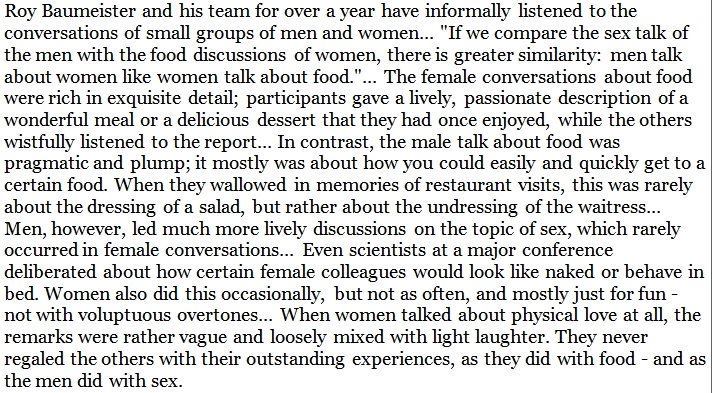
Siblings are less alike in cognitive ability in highly educated families https://t.co/Dbj75cCUc3
Source: Original Site Post
-
Siblings are less alike in cognitive ability in highly educated families
Young adult siblings and twins are less alike in cognitive ability in highly educated families than in less-educated families. (interesting)
-
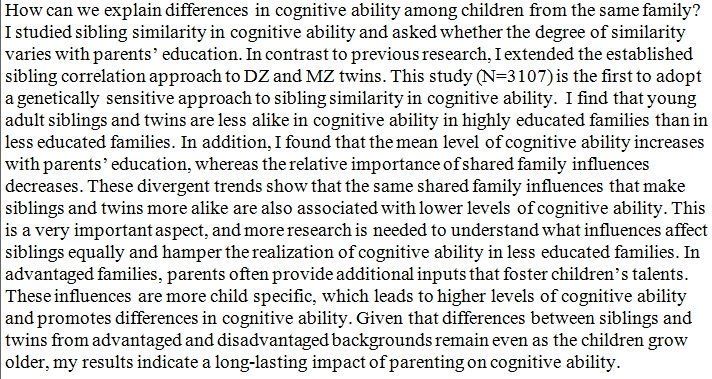
Shared Environmental Influences on Education Matter only In Disadvantaged Familie
Shared Environmental Influences on Education Matter only In Disadvantaged Families, https://t.co/zQNng8sOa1
-
Shared Environmental Influences on Education Matter only In Disadvantaged Families,
Shared environmental influences on education matter only in disadvantaged families, whereas genetic influences are more important in advantaged families. (important)
-
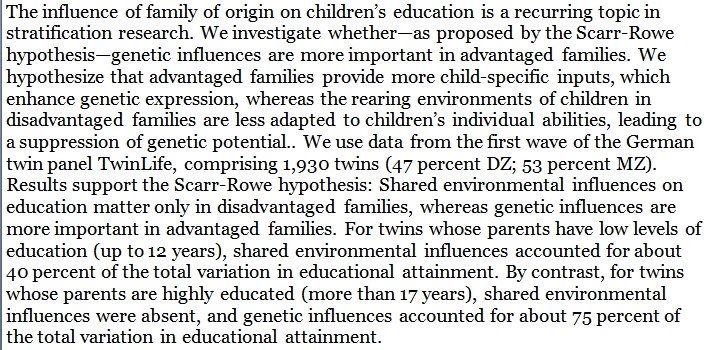
Men are business problems for women. Women are sustenance problems for men. 😉
Men are business problems for women. Women are sustenance problems for men. 😉 https://t.co/fPQ3e90GV3
-
The Argument Is that Women Don’t Love Their Men
The Argument Is that Women Don’t Love Their Men https://t.co/cn089EL5G2
-
The Argument Is that Women Don’t Love Their Men
Hey so, you know, the argument is that women don’t love their men. That men are disposable. Men are promiscuous by nature out of reproductive necessity but women are not disposable except at the margin (sports, rock stars, etc) where the supply is infinite. The reality is that we love each other within the limits of reciprocity and proportionality, and we stay together even with only habituation within our marketability. So you know, we don’t have enough value to one another in the current order which is showing up in birth rates. And that order is only possible because of a rapidly declining asymmetry of ecnomic possibility.
-
The Argument Is that Women Don’t Love Their Men
Hey so, you know, the argument is that women don’t love their men. That men are disposable. Men are promiscuous by nature out of reproductive necessity but women are not disposable except at the margin (sports, rock stars, etc) where the supply is infinite. The reality is that we love each other within the limits of reciprocity and proportionality, and we stay together even with only habituation within our marketability. So you know, we don’t have enough value to one another in the current order which is showing up in birth rates. And that order is only possible because of a rapidly declining asymmetry of ecnomic possibility.