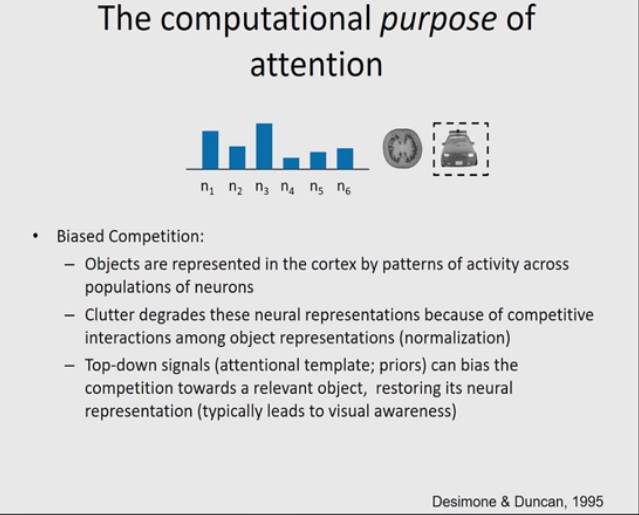
Source: Facebook

  • **A DECIDEDLY CHRISTIAN SET OF LAWS IN 1603 **December 9th, 2010 I hadn’t read H

    **A DECIDEDLY CHRISTIAN SET OF LAWS IN 1603

    **December 9th, 2010

    I hadn’t read Hugo Grotius’ Commentary before today. It is an interesting attempt to provide a coherent set of legal principles. Even if it is just very simply a recitation of Biblical principles with european legal conventions.

    I would never agree to place such faith in Magistrates, or any other officer of the state. They are only human beings, and not exceptional human beings at that.

    I give my violence to the state to use justly on my behalf, so that I may spend my time in other activities, in our division of knowledge and labor. That does not mean that it has the ability to act justly on my behalf, or the will to act justly on my behalf, nor has it demonstrated that it has the tendency to act justly on my behalf. I do not believe that any officer of the state is better equipped to make judgements over property than I am. And those are the only judgements a man need know. If he must do other than that, he submits to servitude.

    Now, once we possess a significant market, we must have administrators, and regulators of that market, and citizens who adhere to the manners, morals, ethics, taxes and regulations that prevent fraud, theft, and violence within that market, are it’s shareholders. Those shareholders will often seek to escape payment, or to transfer liability and risk onto others, or to draw more than their earnings from the corporation of the market that we call the state. I recognize that such thefts are invisible to men without the adminstration of the state to monitor them. As such, I agree that we must have courts and jurors.

    However, should these men, in the observance of their duties, abridge the laws of property, of theft, of violence, or fraud and deception in the course of their duties — even if it is to pursue just ends, or if such men, in the name of ease, or efficiency, or laziness or stupidity, or most importantly, the fallacy of just democratic law making, then I do not allow them to use my violence on my behalf, to seek reparation from my fellow men. And instead, I must withdraw my violence from the account of the state, and use it at my own discretion.

    Commentary on the Law of Prize and Booty [1603]

    by Hugo Grotius

    Table Of Rules And Laws Compiled From Chapter II Of The Commentary

    **Rules**

    rule i. What God has shown to be His Will, that is law.

    rule ii. What the common consent of mankind has shown to be the will of all, that is law.

    rule iii. What each individual has indicated to be his will, that is law with respect to him.

    rule iv. What the commonwealth has indicated to be its will, that is law for the whole body of citizens.

    rule v. What the commonwealth has indicated to be its will, that is law for the individual citizens in their mutual relations.

    rule vi. What the magistrate has indicated to be his will, that is law in regard to the whole body of citizens.

    rule vii. What the magistrate has indicated to be his will, that is law in regard to the citizens as individuals.

    rule viii. Whatever all states have indicated to be their will, that is law in regard to all of them.

    rule ix. In regard to judicial procedure, precedence shall be given to the state which is the defendant, or whose citizen is the defendant; but if the said state proves remiss in the discharge of its judicial duty, then that state shall be the judge, which is itself the plaintiff, or whose citizen is the plaintiff.

    **Laws**

    law i. It shall be permissible to defend [one’s own] life and to shun that which threatens to prove injurious.

    law ii. It shall be permissible to acquire for oneself, and to retain, those things which are useful for life.

    law iii. Let no one inflict injury upon his fellow.

    law iv. Let no one seize possession of that which has been taken into the possession of another.

    law v. Evil deeds must be corrected.

    law vi. Good deeds must be recompensed.

    law vii. Individual citizens should not only refrain from injuring other citizens, but should furthermore protect them, both as a whole and as individuals.

    law viii. Citizens should not only refrain from seizing one another’s possessions, whether these be held privately or in common, but should furthermore contribute individually both that which is necessary to [other] individuals and that which is necessary to the whole.

    law ix. No citizen shall seek to enforce his own right against a fellow citizen, save by judicial procedure.

    law x. The magistrate shall act in all matters for the good of the state.

    law xi. The state shall uphold as valid every act of the magistrate.

    law xii. Neither the state nor any citizen thereof shall seek to enforce his own right against another state or its citizens, save by judicial procedure.

    law xiii. In cases where [the laws] can be observed simultaneously, let them [all] be observed; when this is impossible, the law of superior rank shall prevail.


    Source date (UTC): 2019-08-16 08:45:00 UTC
  • **CONSERVATIVES CANNOT ARTICULATE THEIR PROMISE, AND A WARNING IS NOT ENOUGH** A

    **CONSERVATIVES CANNOT ARTICULATE THEIR PROMISE, AND A WARNING IS NOT ENOUGH**

    April 14th, 2010

    The conservative movement lacks skill in articulating it’s position. It does so because it has shifted from the intellectual debate of the 50’s and 60’s to the emotional debate of the post 60’s era. It has, unlike the libertarian movement, failed to provide a vehicle for educating conservatives with POSITIVE statements rather than negative castigations. Conservatives have largely failed to develop a language and ’scripture’ because they do not have a solution other than to return to the nineteenth century classical liberal model.

    That model will never rise again. It only occurred because government was very weak, and the individual entrepreneurial need to expand and populate the continent required both private ambition and private capital. It required the conversion of resources into taxable resources, which would empower the government. Conversion requires business people the way conquest requires soldiers. And therefore commercial society was in control during that period.

    Our current problem is not to convert land into taxable assets. It’s to maintain the international system, and our ability to financially manage the international system. We have been paying for it by trade advantage for some period of time, and then selling dollars for the past forty years. Liberals do not want us to maintain that system but they want the rewards that come from it to be redistributed. Conservatives object to this position. Neither really understands that there is no american exceptionalism except american military exceptionalism.

    Our future problem is that in redistributing the wealth of that military network of trade and banking we have directed too much of the profit to bankers and not enough to the citizenry. Conservatives do not like this privatization of wealth any more than liberals do. But most importantly conservatives do not like being castigated and treated as

    Being conservative simply means taking a gradual approach to social change and particularly with respect to the financial, family and military traditions. It means being skeptical that our visions of the future will come true, and looking at the world as what people ACTUALLY DO not what we WISH they would do.

    We as a nation are notorious for predicting an optimistic future that cannot or has not occurred. The dialog around our prosperity is often inaccurate and self-congratualtory rather than factual. We have transformed our culture of evangelical christianity into one of evangelical democratic secular humanism.

    Conservatives are skeptics. They may speak in antiquated language, because that is their language. They may fail to articulate their position effectively because of that language, but they ACT conservatively, think conservatively, and treat the world conservatively.

    This is why conservatives are, in general, more prosperous – and frankly, happy. And the sacrifices that they make in order to be prosperous are material to them. They remember them. And therefore they resent those sacrifices being ’spent’ by others who do not make the same sacrifices.

    Monetarists and capitalists are not conservatives. They may hide under conservatism. But they are not conservatives. The conservative class is a military, middle and craftsman class and it always has been and always will be. It is the ‘residue’ of the european fraternal order of soldiers at the bottom, and at the top, it’s a ‘residue’ of the middle class movement that revised and adopted civic republicanism during the enlightenment as a way of transferring power from the kings and church to the middle class. it is an alliance of the military and middle class.

    Liberalism (socialism, communism) is a ‘residue’ of a union of the priestly cast and the peasantry. Academia is simply an outgrowth of the church. The peasantry has always allied with the church, and the church has always had power because of it’s support by the peasantry.

    And that said, we do not have a separation of church and state. Our state religion is now democratic secular humanism. We are now a state-run-religion using the myth of division of church and state to oppress (or reform) religions so that we can have a state sponsored church.

    That’s it. That’s the articulated conservative position.

    The republican party collects conservative coalitions. The republican party is not a conservative party. conservatives join the republicans because they have no choice. They see the party as corrupt.

    People are complex and only join parties because of limited choice mandated by our ‘winner takes all’ form of government, which fosters class warfare.

    In fact, all political decisions exist on a spectrum or bell curve. There are a myriad of political decisions to be made. There are a myriad of people with different abilities to understand each political opinion. Each person is interested in a myriad of decisions. Parties are collections of people with opinions. Very skilled people tend to be highly unsatisfied with party choices. Very unskilled people tend to simply support their party of nearest interest. Parties therefore pick platforms that make enough people happy that they can get into power.

    arguing that conservatives want to keep things asa they are, is a silly argument. The objection is simply illogical. The question instead, is whether liberals propose a solution that conservatives can live with, and wether conservatives can propose a solution that liberals can live with.

    If we had listened to the liberals in the last century we would have ended up like either Russia or China. If we had listened to conservatives we would not have had our progressive social changes. It’s the competition of ideas that gives us the choice as a body politic.


    Source date (UTC): 2019-08-16 08:43:00 UTC

  • **YES WE COULD HAVE PREVENTED THE SUFFERING OF CITIZENS** April 14th, 2010 Rebek

    **YES WE COULD HAVE PREVENTED THE SUFFERING OF CITIZENS**

    April 14th, 2010

    Rebekka Grun, on The Growth And Crisis Blog writes that we could have protected the consumers rather than the banks, in her posting

    Conditional Individual Bailouts – a Potential Anti-crisis Instrument

    Why not save the individuals that went bust rather than their banks? Unconditional bailouts, of course, would generate the wrong incentives (for the banks as well, by the way). It is therefore important to attach smart conditions to discourage free riding. For example a course in financial literacy and commitment to a program of (maybe painful) debt restructuring, and possibly further measures to improve the education or health of the affected individual or family.

    Your sentiment is correct even if you haven’t done the math on it.

    In general terms, there is a simply technique for doing exactly what you’ve suggested, but we lack the infrastructure for it.

    The arguments against the solution at the time were that we didn’t know how far prices would fall (I’m not sure, I think we were about right), and that it would make very visible that the government was the source of the problem (true), that it would have geopolitical impact on the value of the dollar (of course, but so would the alternative), and that it could be unfair to people who had behaved well (that would be fixable), and that it would encourage a bubble (this is false).

    The primary problem with distortions is that the distortions are in PRICING. Libertarians would call corrections ‘repricing’. The problem is that human beings must suffer a great deal and absorb a lot of stress to conduct that ‘repricing’. When the state, as the creator of the distortion by the manufacture of cheap credit, could easily reprice major (home) assets by repricing the DEBT of those assets.

    In other words, we could have easily corrected the economy by bypassing the banking system, and giving money directly to the citizenry as buy-downs on their mortgages, which would have provided them with cash to spend or to put into banks. Doing this is fine if you do it FAST.

    In other words, the state created both the BOOM problem and the CRASH problem because it relies on the irresponsible tool of providing general liquidity – easy money.

    In hindsight this is more obvious than it was at the time. Those of us who made this recommendation were the smaller voices, because the banks and the financial industry were so terrified and the impact on the economy if they failed, so severe.

    The problem for our country is to put this system in place, so that we are insuring citizens AGAINST their bankers, so that we can use the market to PUNISH bad bankers and their investors, rather than the citizenry.

    I’ve worked the mechanics of this process out in some detail, and it’s quite simple. It’s just novel. And it’s anti-bank. And that makes it dangerous to a lot of people in one of our biggest industries: finance.


    Source date (UTC): 2019-08-16 08:42:00 UTC

  • **Notes On “Adam’s Fallacy: A Guide To Economic Theology”** April 13th, 2010 I’v

    **Notes On “Adam’s Fallacy: A Guide To Economic Theology”**

    April 13th, 2010

    I’ve purchased two books, this one “Adam’s Fallacy: A Guide To Economic Theology”, as well as “Economics As Religion: From Samuelson to Chicago and Beyond”. There are any number of books on this theme.

    Note: This book was a waste of time and money. It is a silly marxist pamphlet. I can summarize it as “poor people breed too much and capitalism doesn’t care” when in fact, capitalism simply makes it very expensive to have children and those who breed irresponsibly are punished abstractly by enduring poverty rather than forced by village and tribal elders to leave their child exposed and dead. The vast silliness of the logic in this book is unworthy of further commentary.

    I’m surprised that this notion of economic religion is not more commonly discussed in the venal press. But it is too valuable a tool of those who wish to empower a democratic state and it’s politicians who are, quite frankly, at a loss to apply something other than the practicalities of getting elected, or the mysticisms of our founding documents, christian religion, or marxian fantasy.

    I start with Adam’s Fallacy.

    Using the KIndle edition on a mac, and therefore cannot annotate in place, and am not sure of page numbers. (This is a problem we need to fix, because we’re going to increasingly use dynamic text, which requires paragraph numbering not page numbering. Anyone remember wordperfect versus word?)

    PREFACE

    I am not sure I buy the argument that smith created a fallacy by separating market life from personal life. The Wealth Of Nations (TWON) is only the second half of his philosophy. the first is The Theory Of Moral Sentiments. (TOMS) They together represent his insight that the division of labor increases production and that human sentiments to cooperation at both the intimate, interpersonal, local, social and global level. While we are only in the preface, I’m not sure I buy the assumption because it’s too loose an assertion. Instead, I blame Knight and Keynes. Smith is nothing but a moral philosopher.

    “Contemporary economics has grown into a major intellectual industry” I hope this is elaborated further because it’s the the same problem presented by the clergy. People depend on perpetuating the faith.

    “Teaching economics reinforces the world view I call Adam’s Fallacy”. I don’t think so. I think that’s the crowd post 1900.

    “Teaching students to think like economists .. is hard.. and thinking like an economist … is just as value laden as any other way of thinking about society”. The idea in economic reasoning is the broken window problem: the need for all humans to think in terms of secondary causes and to follow the chain of secondary causes. This teaches people to think more deeply about the trade offs of both personal and political decisions. Yes it’s hard for people. Otherwise we wouldn’t need a market.

    CHAPTER 1

    “The moral fallacy of smith’s positin is that it urges us to accept direct and concrete evil in order that indirect and abstract good may come of it.”

    Well, now, we need a definition of evil, don’t we?

    “neither smith nor … his successors have been able to demonstrate rigorously ad robustly how private selfishness turns into public altruism”.

    I don’t think he says that. I think he says that by participating in the market europeans will have fewer wars.

    CH1 – The Division Of Labor

    “Smith leaves unanswered the chicken and egg question of whether it is ultimately the human propensity to truck and barter that lads to the division of labor, or the division of labor that compels people to exchange.”

    Isn’t this a false dichotomy? People have always bartered and exchanged. the division of labor is simply more profitable for the individual. Ask any art-jeweler or craftsperson, who starts out producing one offs, but determines that quality of life depends upon his or her development of a product line that can reliably produce revenue, so that she is free to create those individually interesting pieces.

    The VIrtuous spiral of economic development.

    “Smith puts his faith in the ultimate benefits to be gained from the virtuous spiral to in crease standards of living and enhance the wealth of …. the sovereign.”

    “Smith

    SAYS LAW

    “… rise in labor productivity has at least one immediate and negative effect: a reduction in the demand for labor in the industries undergoing raid rises in productivity. …. unemployment can result.”

    “thus say’s law is based on a belief in the efficiency of the financial institutions of a capitalist economy”

    I don’t think so. I think it’s based on the belief that no other alternative is available while retaining the productivity RELATIVE to other nations, so that wars can be averted, and we can overcome the myth of the fixed-pie.

    “some of these displaced workers will eventually find alternative jobs”

    Yes, they will. They just might not like them. The alternative is that people should subsidize workers to produce goods at increased cost of goods to themselves and/or that the entire enterprise of production that employs ALL workers will fail to compete for market share against people from OTHER nations. In other words, it’s the smallest of three evils.

    “It appears that over long periods of time, says law does operate”

    Well, of course it does. At this point I’m frustrated because I don’t understand the problem. I know marxian fantasy must be in here somewhere by now.

    THEORIES OF VALUE

    I cannot for the life of me discern what point he is trying to make here.

    MARKET PRICE AND NATURAL PRICE

    Well, since the time of smith we understand that the labor theory of value is flawed and we have dismissed this part of smith as an error. So I don’t see this as material.

    he states in many more words ,that natural prices and market prices are in disequilibrium at all times. This makes no sense because a natural price is a tool for us to use to conceptualize movement, and a market price is a thing that comes into existence. So far either he is trying to accumulate a later argument or he’s simply confused.

    “contemporary economics on the the hand, focuses more theoretical attention on the the ideal imaginary state of equilibrium where market price and natural price coincide.”

    At this point he is trying to build an argument upon a falsehood – the labor theory of value and natural price. I hope that this is going somewhere. Either that or he is trying to state that the DSEM construct is a myth, and we all understand that it’s a myth. There is no bell curve. There is no equilibrium. It’s just a construct we use so that we can apply math because without that construct we CANNOT apply math.

    WAGES

    “… wages have the social function of allowing workers to reproduce themselves” (he means have children). “In order for wages to perform this function, they have to be high enough to allow workers to buy a subsistence standard of living”

    Ok, so this is supposed to be that the poor have the right to breed? So when did this become a social good? the problem for mankind since industrialization is that people simply don’t die, and they’re expensive. Our problem is overpopulation not supporting the unproductive people’s fantasy of unrestrained child birth.

    “Smith associates high wages and a high workers standard of living with a growing capital stock”

    Yes, I agree.

    at this point I understand that he is providing contemporary context. I read the rest of chapter1 and move to chapter 2 in the hopes that he is going to provide some insight here. Note to authors. Make your premise first then prove it so we don’t have to guess our way through your fantasy.

    FAR AHEAD

    “Behind this…. lies the unpleasant truth about capitalist social relations. The organization of the social division of labor through commodity exchange and wage labor systematically inverts the ordinary logic of human relationships.”

    What logic is that? That people have not exposed children for years, or even outright murdered them or sold them into slavery if they could not support them? In fact, breeding differences account for large differences in the prosperity of difficult cultures. So is this the author’s point? That he has some fallacious concept of the ‘right to breed’, instead of the ‘responsibility to only breed a child you can afford to feed?”

    Then he goes on to say that marx systematically breaks down and…. helps us understand. What he does instead is create a system of justifying primitivism.

    Look. We converted from hunter gatherers to farmers. We figured out how to control our breeding by creating the ‘family’ and monogamy. This made families economic units that could manage resources.

    We invented the market, and the tools of quantitative cooperation we call money, accounting, numbers, interest and credit. We increased our ability to breed further, but penalized those who have less foresight.

    Capitalism creates temporary extraordinary wealth then forces people to control their breeding in order to participate in the wealth. Those who don’t, suffer because of their choices.

    We just have a more abstract way of controlling population.

    ( INSERT A VAST AMOUNT OF JUSFICATIONISM OF MARX HERE. )

    ESCAPING ADAM’S FALLACY

    “thus we cannot look to capitalism to solve inequality and poverty”

    That is correct. WE can only look to capitalism to provide the incentives for controlling reproduction so that the poor do not doom themselves to perpetual poverty in a world where children do not provide security or comfort but are a drain on resources.

    In other words. This is a silly marxist book, and I wasted two hours reading it. The chinese solved it with the one child policy, and it was a good policy and successful. Rather than redistribute ourselves into mutual poverty and regale the thought leaders of the past, you could simply write a book on the value of the one child policy, or at least, pay men and women to sterilize themselves. Capitalism makes poverty a choice of reproduction.

    Add to Buzz Add to Del.icio.us Add to digg Add to Facebook Add to Google Bookmarks Add to reddit Add to Stumble Upon Add to Twitter

    Add a Comment Trackback

    2 Comments

    CurtD

    April 14th, 2010 at 1:27 pm

    From a comment on KVAMS blog. [http://kvams.wordpress.com/…/adams-fallacy-by-duncan-foley/…](https://l.facebook.com/l.php?u=http%3A%2F%2Fkvams.wordpress.com%2F2010%2F04%2F08%2Fadams-fallacy-by-duncan-foley%2F%3Ffbclid%3DIwAR2JIAIzxFveUkqUiYKeiTXLXbaLTX6NRJW3Gu5dGWYZNkjzLpjptZEP-XM%23comment-175&h=AT0cL7Q2FG02b8LFg3RbWwsIGmEluDNuns7-dp4ah37K-OSJ1HaEmwC3MPjnfoP24oREXbOQCsVz8P0-FjyFSDjnQ9qObSqGRscqFwH-wEKqL9eAiu2CS179X8FQsPRoK-sTa26txBs1rE4VnwFT1E9DXXkg2wMROqaKhrZojYrIkOfFchcgoEResqkl3Wj3kX2sNC2-Xl3fA6zJkxyPq32Ow0I_6lIdeADuOgttq4wkCzYmLbSfEEh4jquZP5vW8yH7_TkY599HMytmUQbWalSUjwdNNPmLp9V9iBbmXAChS8MI6MMOlUSTBPF6_ih5PnHzucpXllhiGHavTpKkTc8EvPXUgsPpIxG4I53yu_oc9ktUbZ5NVSYrBt9IHnaHOfSOlohFMnxJ0Mx3bgydJgqdZo4CRyQrM5PYfM0aNsCliXpTk6ch-TIdK8-B0gDt-GL7fK0_f2sfosC-luq43UBUDVxaNNv5zVS2vgUDv8uTTZAa-fckdtJ9hRP03IWq8nhnh8rJ4q7bm8fAmmciJjtuUGnBHpX9Xle6C_fDzGXLFa0paNZyvsrOH9WIMhdLAoaIIXg1bbyZMsugQOuJ-3ZcdN3gEziTdvW5hS_4bXq65-5An32STctoRK_65VEjjIU9REv9Yr8ukLXMtXon)

    I’m sorry but I read this book in detail, took copious notes, and it became painfully obvious early on that the authors only criticism is that the division of knowledge and labor that creates the virtual cycle of prosperity does not account for taking care of people who cannot control their breeding and doom themselves to perpetual poverty because of their inability to control their reproduction.

    The author fails to state his own fallacy, that societies no matter how primitive control their populations and punish breeders one way or another. This is his assumption, that primitive societies take care of their young rather than expose them, or outright kill them or control their breeding. And he fails to state that the only reason these people can LIVE today, even if in poverty, is because of the productive virtuous cycle of those people who DO control their breeding.

    The problem for every civilization is creating prosperity (increased production) FASTER than people breed. From that context, the irresponsible breeders are using the virtuous cycle to create steal from and undermine the creators of the virtuous cycle.

    The whole point of capitalism is that it increases quality of life but increases the COST of each human life, and therefore controls population by CHOICE OF PARTICIPANTS rather than by murder and starvation.

    Basically this book is another silly marxist bit of apologist drivel that does nothing to advance anything in society and I’m sorry I wasted two hours working on it.

    CurtD

    April 14th, 2010 at 1:34 pm

    Of course I see this as a ’sex and fertility residue’ which is that women have the silly belief that they have the ‘right’ to have children, and others have the ‘duty’ to pay for their ‘right’. And that children are a ‘good’ rather than a cost. Rather than the obvious reality that children are a good only if you can afford to raise them and not create a burden on society for having done so. And women have that luxury only because increased production has made it possible for women to have their children without having them starve to death, and daeling with the suffering of watching. in other words, they are offloading the responsibility to control their breeding onto someone else. In other words, the market makes it possible for women to irresponsibly bear children without bearing the consequences of providing for or dealing with the emotional pain of the child’s starvation and death.

    (Of course, this is intentionally inflammatory.)

    Now in reality, the point is that we have to and always have had to, control our breeding, and that the path to prosperity is increasing production while decreasing our rate of reproduction.


    Source date (UTC): 2019-08-16 08:41:00 UTC

  • **POSITIONING POLITICAL PHILOSOPHIES** From September 24, 2009 POLITICAL PHILOSO

    **POSITIONING POLITICAL PHILOSOPHIES**

    From September 24, 2009

    POLITICAL PHILOSOPHY

    Whether you call us Aristotelians, Machiavellians, Nietzscheians, or some other label, is immaterial – save to say that in doing so you attempt to make equal a difference between approaches to politics and economics that is anything but equal.

    Those of us in this school of thought, study what men do and why, what they have done, and why, in it’s entirety, across civilizations and across time, and from that study propose incremental solutions based on that analysis, rather than postulate a utopian model that assumes how men should or could act, if they were something other than human beings with the record of doing what they have done.

    And if you wish to say we have class philosophy I would agree at least to one meaning of that statement. Classes are part of the division of knowledge and labor. And like religion they are very difficult to cross philosophically – even if we can cross them economically. And all philosophies are class philosophies. They must be. Universal philosophies that prescribe solutions for multiple classes, or that attempt to ally a set of classes, ask by doing so, that we allow one class to prosper – and to do so at the expense of another.

    So yes, to use this method of study is Aristotelian, Machiavellian, and Nietzcheian. And yes it is the philosophy of antiquarian nobility, in the sense that it’s authors hail from the Aristotelian tradition, and that as a work of men from Nobility, and a managerial philosophy, and even perhaps a paternal one, it is a Noble class’ philosophy. But it is not a philosophy of the Noble class in the sense that it attempts to favor a noble class at the expense of others. It simply states that there will always be a governing class, or at least a conflict between different classes who are in political control of a society at one time or another, and that regardless of who is in control, the betterment of most is it’s goal – over time, even if that timeliness is a resistance to perceptible material change to some segment of society, and it is for the betterment and perpetuation of the existing social order. And this difference in preference for outcomes is the difference in class philosophies. The reason being that these people see the fragility of political systems, and with knowledge of the impact of non-gradual change, as detrimental to all.

    That being said, this is also the only method of reasoning that can be construed as political science – the rest of the methods are philosophies or religions by analysis of their methods. And any other comparison is a comparison between religion, philosophy and science. Just as any comparison between Aristotelian, Confucian, and Zoroastrian traditions are differences between scientific, philosophical, and religious traditions. These differences are more than tastes. They are materially different approaches to the problem of organizing large numbers of people that arose in the transition to urban life under the technology and economy of farming, and the necessary inequality that resulted from the division of labor, increased production, and specialization that occurred because of that transition.

    And if our method is not a science, at least it is the most scientific of methods we have yet found, without first solving the problem of the social sciences – the problem of induction: which is the process of invention of the unknown. Whereas science, as we mean and use the term, is the name we give to the process and method of DISCOVERY, instead of the process of INVENTION. When what we should strive to do, is use the term science to apply to a process where we examine what is, and how it works, rather than how we, in our ignorance, propose that it should be.

    And we should abandon and refute simplistic utopian strategies knowing what they are: simplistic and utopian. Developing solutions that propose incremental evolution from the analysis of the record of human activity is much more complicated than proposing utopian models – a minor improvement over the spirit worlds or religious myths of our past. And such incremental methods do not promise quick or easy results. However, it is the most scientific, as well as the most likely to succeed, at the lowest possible damage to the set of alliances and habits we use to work together to produce the standard of living that we do possess, rather than the one we might possess if men were not men and did not act as they have, and could by some mystery or magic, adhere to some utopian concept, whose author proposed as a static universe, instead of one where each person in each class, struggled to increase his happiness and status and material well being for himself and his alliances, friends, and family on a daily basis. And where classes and the people in them, rotate and shift, albeit slowly.

    CURRENT TRENDS

    Men will not cease using credit to manage society. It is the only tool that is sufficient to manage a group of people in a complex division of labor. Religion is for slaves and peasants. Violence is for slaves and peasants. Law is for farmers, slaves and peasants and urbanites. But laws, religion and violence require comparatively simple epistemologies: everyone must share them and know them for them to function as socially cohesive strategies. Furthermore, citizens, or group members, can opt out of adherence to them and must be ‘caught’ in doing so, and punished for doing so. Credit performs this function because it is a superior enticement in a complex society, rather than a threat, and it’s also much more granular: effectively making laws on an individual by individual basis and creating a social order out of economic participation without prescribing a static set of behaviors. In other words, credit is the most evolutionary of political systems because it can apply to each individual differently, while providing socially conforming pressures.

    Men will not cease using monetary policy – fiat money. Because monetary policy performs redistribution, as well as mutual insurance for members of the group, or state. We can argue about different economic and political nuances, but if we see these tools as technologies they are needed technologies whose function and methods need constant improvement.

    Therefore, while I am a member of that group of people who study what men have done in the Aristotelian and Machiavellian tradition, and in particular, I am an Austrian (a user of narrative who studies history and behavior), and a libertarian (a person who understands that prosperity comes from freedom, property and trade) and an Anarchist (a person who studies how men act, so that government can be optimized) I am also a Keynesian in the sense that I believe that credit money, like the technologies of real money, accounting, numbers, and writing – and like laws and science and religion and philosophy – is a necessary – not preferential but necessary – part of human existence if we are to live in large numbers and continue our transition from farming society to urban society,

    And I expressly am not a libertarian if that means that I am promoting the development of a banking class that profiteers from privatizing wins and socializing losses. That is no different from a priestly or bureaucratic class, or a thieving peasant class that takes from one group for it’s own use. I am a libertarian in that I do not believe a person in government can be wiser than I am. I do not disavow some form of redistribution either. I simply claim that the way we conduct it today is damaging to society, and empowers a degenerate and devolutionary government, and that a better solution to this problem is achievable, and that I know what that solution is.

    And we are very close to it now. The solution is incremental. It can be implemented. It may not even be that complicated in concept or in implementation. But understanding why such things will work, and abandoning our little class philosophies, each of which seeks to bend government for our class’ benefit at the expense of others, or those that seek to make something from nothing, or those that seek security from the illusion of the state, so that they can live at the expense of others, is no small undertaking. Because we have created a nice little set of cherished myths, the primary purpose of which was to wrest control from land holders, churches and kings, and transfer it to bankers and politicians. And we will need to abandon some of those cherished myths.


    Source date (UTC): 2019-08-16 08:39:00 UTC

  • photos_and_videos/your_posts/68957121_449498888980340_6123498714024640512_o_4494

    photos_and_videos/your_posts/68957121_449498888980340_6123498714024640512_o_4494

    photos_and_videos/your_posts/68957121_449498888980340_6123498714024640512_o_449498882313674.jpg


    Source date (UTC): 2019-08-16 08:36:00 UTC

  • think of this as an opportunity to move everyone to the institute page. The only

    think of this as an opportunity to move everyone to the institute page.

    The only real work is reloading the historical data.


    Source date (UTC): 2019-08-15 16:57:00 UTC

  • The crazy cycle. People who have issues. They find a public figure that will eng

    The crazy cycle.

    People who have issues.

    They find a public figure that will engage them.

    Not only engage but support them.

    They mistake kindness for friendship.

    They find community and validation.

    They over invest in heroism or pedestaling

    Eventually some fantasy is invalidated.

    They react as if it’s a personal disloyalty.

    They show themselves to be psychos

    And drive public figures away from the good they do those who aren’t crazy.

    If you are rejected by society no one can validate you.

    Change.


    Source date (UTC): 2019-08-15 16:41:00 UTC

  • LEGIT AD HOM’S AGAINST DOOLITTLE (via CD) Eric, Just ’cause it’s come up again.

    LEGIT AD HOM’S AGAINST DOOLITTLE

    (via CD)

    Eric,

    Just ’cause it’s come up again. Pls Post. I prefer to stand out in front of criticism rather than let people presume I’m making a moral claim about myself. I’m not.

    List of legitimate Ad Hom’s.

    – Multiple marriages. Put business before family.

    – Multiple relationships. Put business and philosophy before relationship.

    – High risk biz ventures most of which succeeded – not all – producing expected downsides when not.

    – Ruthless biz practices, some of which made others rich, that resulted in various suits, as well as various tremendous windfalls.

    – Continuous civil warfare during and after divorce that will continue for the next four to six years easily.

    – Mid life crisis after near death experiences resulted in a bit of a wild ride for a bit.

    – Obsessively – zero tolerance for ‘slights’.

    – Will fight to the end on ‘principle’ – even if it makes no material sense to do so.

    – More than slightly clueless about normie life and experience, and insensitivity to normie world views.

    – Considers other people subjects in social science experiments.

    – Considers each business an experiment in social science.

    – Wealth is merely a means of financing experiments in social science.

    – Considers people vehicles for achieving success in business or social science.

    – “One cares for domesticated animals and pets, one cannot engage in reciprocity with them.” or more fashionably: “A lion doesn’t concern himself with the opinion of sheep. “

    – Definitely part of the Yuppie-Wall Street Generation.

    These are legit ad homs. They are true. Everyone knows them.

    They also have nothing to do with the work on Natural Law and the Logic and Science of the Social Sciences.

    I am not a good person. I succeed because I am an infovore, competitive, with ruthless, predatory, and driven. That is all. I am however, somewhere between a good and great philosopher of jurisprudence, testimony, and the natural law of cooperation.

    I am also not a normie living a working class lifestyle with little exposure to the power structures and systems of cooperation and conflict in civilizations across the world and across time.

    I am not a good person, and don’t claim to be.

    Truth doesn’t require I be a good person.

    It requires only that my work is not false.

    -CD


    Source date (UTC): 2019-08-15 14:56:00 UTC

  • photos_and_videos/TimelinePhotos_dJ9jhts2Ng/68698944_449025379027691_38691307203

    photos_and_videos/TimelinePhotos_dJ9jhts2Ng/68698944_449025379027691_38691307203

    photos_and_videos/TimelinePhotos_dJ9jhts2Ng/68698944_449025379027691_3869130720349782016_n_449025375694358.jpg GETTING CLOSE ON FOUNDATIONS – THE NERVOUS SYSTEM

    No more woo woo about the brain or consciousness.

    Background (noise) >

    Disambiguation from Background >

    Object (Space) vs Background (wall, limit) >

    Awareness (accessibility to attention) >

    Attention >

    Disambiguation of object >

    Prediction of object >

    Imaginary possibilities of object >

    Possibility selection >

    Release of Action

    We know which parts (organs) of the brain are doing each of these tasks, in a rather elegant orchestra,

    My reading and research has resulted in a very granular understanding of the operational processes that create experience.GETTING CLOSE ON FOUNDATIONS – THE NERVOUS SYSTEM

    No more woo woo about the brain or consciousness.

    Background (noise) >

    Disambiguation from Background >

    Object (Space) vs Background (wall, limit) >

    Awareness (accessibility to attention) >

    Attention >

    Disambiguation of object >

    Prediction of object >

    Imaginary possibilities of object >

    Possibility selection >

    Release of Action

    We know which parts (organs) of the brain are doing each of these tasks, in a rather elegant orchestra,

    My reading and research has resulted in a very granular understanding of the operational processes that create experience.


    Source date (UTC): 2019-08-15 11:03:00 UTC