photos_and_videos/PropertarianQuotes_7nHR3JAXZw/70943069_116835073047988_8890292181974122496_o_116835066381322.jpg
Source date (UTC): 2019-09-25 06:56:00 UTC
photos_and_videos/PropertarianQuotes_7nHR3JAXZw/70943069_116835073047988_8890292181974122496_o_116835066381322.jpg
Source date (UTC): 2019-09-25 06:56:00 UTC
photos_and_videos/PropertarianQuotes_7nHR3JAXZw/70712219_116830083048487_5630495769057296384_o_116830073048488.jpg
Source date (UTC): 2019-09-25 06:56:00 UTC
photos_and_videos/PropertarianQuotes_7nHR3JAXZw/70885911_116834463048049_8394527362582052864_o_116834449714717.jpg
Source date (UTC): 2019-09-25 06:56:00 UTC
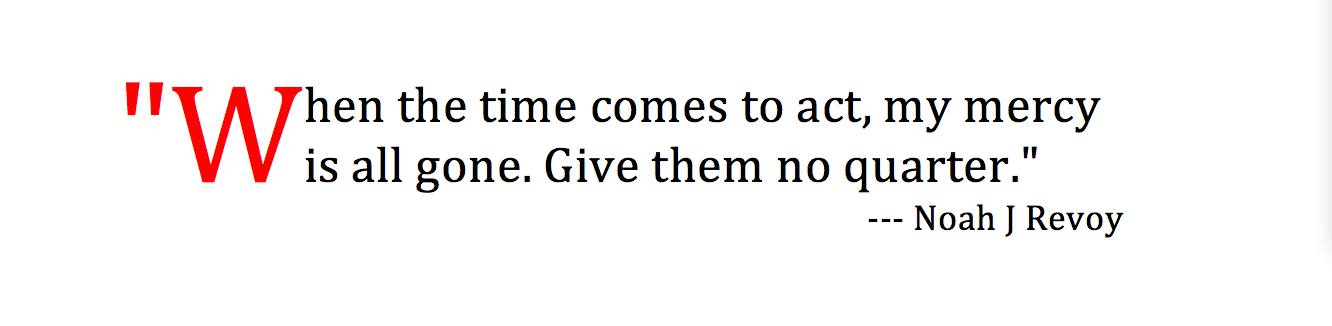
The Overton Window Moves like Clockwork. We will get our impeachment attempt, and our civil war. 😉
Source date (UTC): 2019-09-24 17:06:00 UTC
Supernaturalism
A category of animism, under which phenomena are attributed to utility(disutility), benefit(harm), or intent(will), rather than natural (equilibrating) necessity by that which is not subject to the constraints of realism (physical existence) and naturalism (deterministic processes), and empiricism (observation and measurement), and therefore testimony (truthful speech).
I could work on it a bit but I think that’s both sides of it.
Source date (UTC): 2019-09-24 16:35:00 UTC
Tsar (/zɑːr, sɑːr/ or /tsɑːr/; Old Church Slavonic: ц︢рь [usually written thus with a title] or цар, царь), also spelled csar, or tzar or czar, is a title used to designate East and South Slavic monarchs or supreme rulers of Eastern Europe, originally Bulgarian monarchs from 10th century onwards.
As a system of government in the Tsardom of Russia and the Russian Empire, it is known as Tsarist autocracy, or Tsarism.
The term is derived from the Latin word Caesar, which was intended to mean “Emperor” in the European medieval sense of the term—a ruler with the same rank as a Roman emperor, holding it by the approval of another emperor or a supreme ecclesiastical official (the Pope or the Ecumenical Patriarch)—but was usually considered by western Europeans to be equivalent to king, or to be somewhat in between a royal and imperial rank.
Tsarist autocracy[a] (Russian: царское самодержавие, transcr. tsarskoye samoderzhaviye) is a form of autocracy (later absolute monarchy) specific to the Grand Duchy of Moscow, which later became Tsardom of Russia and the Russian Empire.[b] In it, all power and wealth is controlled (and distributed) by the Tsar. They had more power than constitutional monarchs, who are usually vested by law and counterbalanced by a legislative authority; they even had more authority on religious issues compared to Western monarchs. In Russia, it originated during the time of Ivan III (1440−1505), and was abolished after the Russian Revolution of 1917.
West Europeans have had Kings, and Constitutional Monarchies but they were limited by traditional (customary) law.
Source date (UTC): 2019-09-24 16:21:00 UTC
–“It is common for people to confuse the good (productive) with the moral (reciprocal).”– Curt Doolittle
Source date (UTC): 2019-09-24 15:38:00 UTC
( Curt Doolittle Personal Profile Link )
Source date (UTC): 2019-09-24 15:32:00 UTC
(some ‘cuck’ counter signaling curt with something like ‘you promise a win if we just show up’, on a post yesterday and I didn’t save a link to it and can’t find it. if you do pls link me. person needs a verbal thrashing. thanks)
Source date (UTC): 2019-09-24 09:29:00 UTC
MORALITY = RECIPROCITY
You don’t understand. it’s empirical. scientific. It doesn’t matter what you i or anyone else opines.
You are welcome to falsify (a) goods and bads refer to caloric income or loss, existential or projected (b) morality refers to reciprocity. (c) it’s a necessity of the physical universe. (d) the human biological reward system reacts like all others to gains(reduction of costs) and losses (costs). (e) Complete Reciprocity requires: productive, fully informed, warrantied, voluntary transfer, free of imposition of costs upon the demonstrated interests of others by externality. However we maintain fairly accurate assessments of one another’s cost benefit to us. (f) philosophical sophistry leads to undecidability on this subject is due largely to attempts to produce a via-positiva definition of morality – which is only possible for norms – instead of a via negativa definition: we can only know what is universally immoral (negative), what is moral(positive) is whatever is not immoral (negative). This is true for all knowledge, and why science defeated philosophy even in ethics and morality: because we can only know what is false, and trivially true, but anything that is not false and substantive is open to continuous revision. (g) given the cost of calculation (reason), and given the cost of collecting information (evidence), the human mind wants to reduce costs by reliance on imitation and intuition (repetition of imitation). And therefore we want via-positiva means of determining good choices. So the market demand for via positiva morality exists, but the supply of imitative moral rules is produced by via negativa: what is not immoral. (h) it is common for people to confuse the good (productive) with the moral(reciprocal). We conflate. It’s natural. But a question is only moral if it relates to others. It is only preferential if you prefer it, it is only good if others prefer it. For a moral condition to exist requires influence upon others by externality.
All those statements are falsifiable, You will not be able to falsify them.
FWIW I’m probably the best person working today on this subject so you might want to try to learn something by questioning your premises.;)
Source date (UTC): 2019-09-24 08:36:00 UTC