Source: Facebook

  • THE PROBLEM WITH THE CATEGORY ‘PSYCHOLOGY’. I distinguish between freudianism, p

    THE PROBLEM WITH THE CATEGORY ‘PSYCHOLOGY’.

    I distinguish between freudianism, psychologism, therapy, incentives/biases/limits/logic, neurochemistry, and cognitive science.

    When a person says “psychology” I usually have to deduce which of those they’re referring to.

    In my understanding psychology is used to refer to each of those. However, the first two are pseudosciences, therapy/self/help is something else, and the rest are sciences.

    Usually I am criticizing the use of the first two or the conflation of the first two with others.


    Source date (UTC): 2018-05-25 17:03:00 UTC

  • Yessir. Happy to be there. I have these interviews back to back all day today fo

    Yessir. Happy to be there. I have these interviews back to back all day today for some reason… lol. See you tonight. -cheers


    Source date (UTC): 2018-05-25 10:20:00 UTC

  • NO, AD HOM IN PROSECUTION IS NOT A DOUBLE STANDARD. —“How can [we] complain ab

    NO, AD HOM IN PROSECUTION IS NOT A DOUBLE STANDARD.

    —“How can [we] complain about ridicule, but then habitually use terms like “white knight” and “shieldmaiden””—

    1 – Reciprocity. Always (a) return the insult, (b) return to the central argument, (c) stay with the argument until the opponent is defeated or retreats.

    2 – Prosecution vs Coercion: Ad hom used in prosecuting attempted theft by coercion – the moral, vs ad hom as means of coercion in perpetuation of a theft – the immoral.

    3 – Usually (I run into this a lot) accusations of contradiction are only attempted frauds of false equality. Either one is trying to commit a theft or not. Ad hom for theft is simply true. Ad claiming equality when one is a prosecutor of attempted theft and another is an attempted thief, is just another attempted theft by fraud.


    Source date (UTC): 2018-05-25 10:18:00 UTC

  • “How are society, culture and politics interrelated with each other?”— SOCIETY

    —“How are society, culture and politics interrelated with each other?”—

    SOCIETY: People in a geography with shared interests because of shared dependence upon language, manners, norms, laws, and institutions.

    POLITICS: The institutional means by which we jockey for, negotiate upon, decide upon which commons are produced with the scarce resources of the polity (population) – usually in the form of taxes, but also trade, behavior, and legislation.

    CULTURE: Myths, Traditions, Rituals, Holidays, Foods, Arts. Technically: the group’s evolutionary strategy, and the costs we pay to demonstrate reciprocal fitness (agreeableness) for that strategy.


    Source date (UTC): 2018-05-25 10:07:00 UTC

  • Untitled

    https://www.quora.com/How-are-society-culture-and-politics-interrelated-with-each-other/answer/Curt-Doolittle?share=8ef31fdc&srid=u4Qv

    Source date (UTC): 2018-05-25 10:05:00 UTC

  • ELI ON FEMALE COERCION —“This is what women do. They mostly can’t think. And t

    ELI ON FEMALE COERCION

    —“This is what women do. They mostly can’t think. And they mostly can’t argue. So to get their way, and to get what they want, they deploy “the feminine means of coercion” (shaming, ridicule, mockery, rallying, scolding, nagging, gossip, psychoanalysis) to try and raise the social and emotional costs of disagreement WITHOUT addressing legitimate points of controversy or noncomplience with their demands WITHOUT offering anything of value in return.

    These means are dishonest, because they can be deployed to attack any point of view to advance or defend any other. They have no necessary connection to the truth. They are parasitic, because they are means of attempting to secure the *benefits* of cooperation, for the practitioner, at a discount – without paying all of the necessary costs. And they poison the dialog and lead to a general breakdown in cooperation and good order, and to hostility, acrimony, and bile instead, often boiling over into violence and other, more costly forms of conflict (e.g. “fighting words.”)

    That’s why our ancestors punished and suppressed such behavior by a variety of means.But as restrictions on the use of violence and masculine coercion have proliferated and intensified, restrictions on rhetorical violence and feminine coercion have been lifted and abolished, feminizing and emasculating our society and placing it under the harping, nagging, screeching, demanding, devouring, parasitic, stifling, control of bitchy, entitled, overbearing, unplesent and mentally and emotionally fragile women.

    At a time like this, over a medium like this, physical retaliation or other means of imposing costs to discourage such behavior are not realistic. But I’m damn sure not going to back down in the face of such c-ntery. I’m only going to escalate and double down to deprive its practitioners of satisfaction and let them know that we are not cooperating, that I do not need or desire their cooperation, and if they are going to deploy dishonest and parasitic methods I am going to consider us to be in conflict and seek to escalate that conflict by any and all means at my disposal, principally (here) by retaliation in kind (insults.)”— Eli Harman


    Source date (UTC): 2018-05-25 08:09:00 UTC

  • “Science is no longer a methodology, it’s a criteria which many different method

    —“Science is no longer a methodology, it’s a criteria which many different methodologies can meet. The criterion unites the sciences.”—Bill Joslin


    Source date (UTC): 2018-05-24 20:41:00 UTC

  • photos_and_videos/TimelinePhotos_43196237263/33489296_10156377793937264_36071029

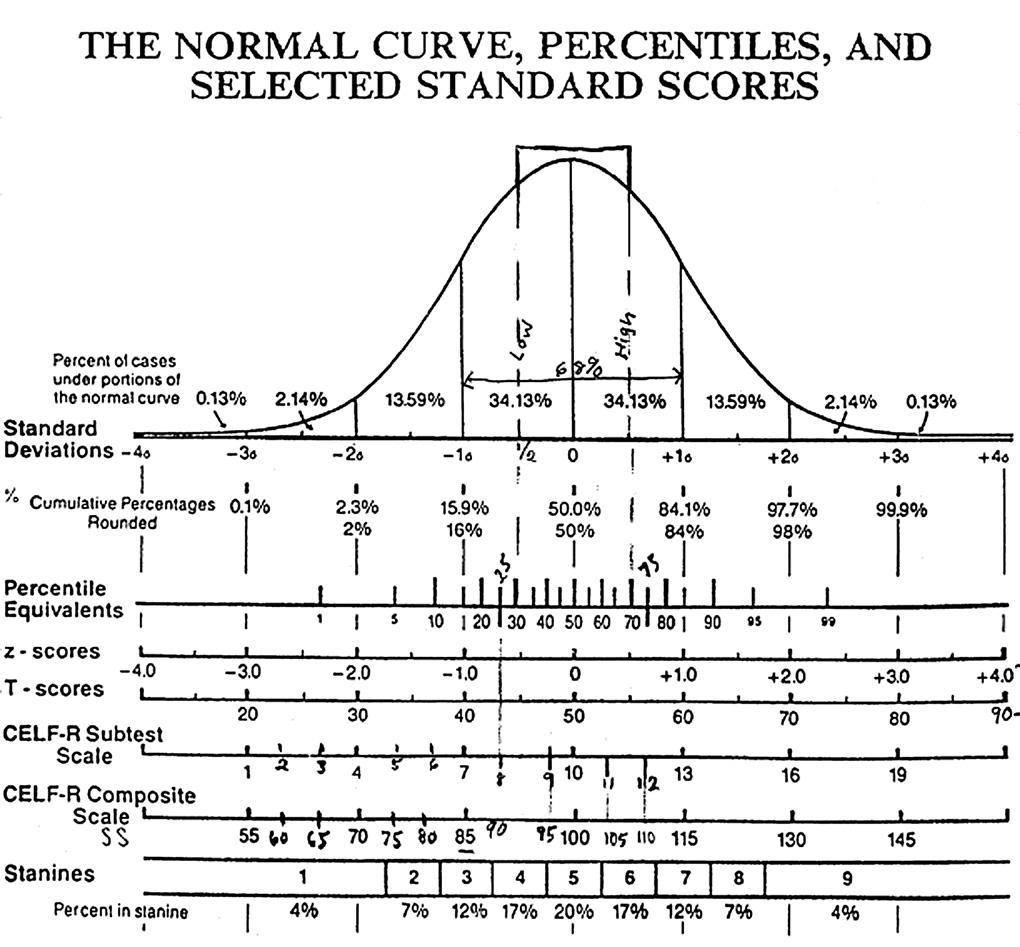
    photos_and_videos/TimelinePhotos_43196237263/33489296_10156377793937264_3607102990483193856_o_10156377793932264.jpg Nick HeywoodThanks for that.

    Having left school at 14?

    I miss a lot of the technical explanations & applicationsMay 24, 2018 10:39pmDavin EastleyI don’t know any of the stuff below T-scores. Any idea on that?May 25, 2018 12:37am


    Source date (UTC): 2018-05-24 19:58:00 UTC

  • (stupid limit for the day reached. ppl just need to ask not assert. fk. sigh )

    (stupid limit for the day reached. ppl just need to ask not assert. fk. sigh )


    Source date (UTC): 2018-05-24 19:54:00 UTC

  • AN INFORMATIONAL APPROACH TO STOICISM. by Moritz Bierling from December 2, 2016

    AN INFORMATIONAL APPROACH TO STOICISM.

    by Moritz Bierling from December 2, 2016

    (repost)

    An Informational Approach to Stoicism

    Stoicism is essentially a software fix to a hardware fact: humans tend to emphasize or experience negative thoughts more strongly by roughly a factor of 2. Daniel Kahneman’s research into what is now codified under the term “behavioral economics” has shown this to be the case. When confronted with loss, whether potential or actual, we react much more strongly than when faced with a gain of equal size.

    Of course this makes perfect sense from an evolutionary, game-theoretical perspective. In order to be able to lose something, an organism must first have gained it through expenditure of a non-trivial amount of energy. If it were to give up easily on its “property”, conveniently defined here as “that which an organism defends”, it may very well not get another chance to acquire new food or mating partners, and consequently exit the gene pool and thus “the game” entirely. And since we humans are still here, and since we exist as biological creatures the ancestors of which have lived through extremely adverse environmental conditions, we too defend that which we have an interest in maintaining.

    Stoicism then, properly understood as the practice of mental discipline in the face of adversity, asks one to front-load the negative experiences that will inevitably intrude upon our day, and consequently allows one to prime one’s mental machinery such that tones down its reaction to actual adversity by taking advantage of the involuntary mechanism of comparing present experience to recent memory of similar nature. This practice, if coupled with training automatic responses to imagined adversity, allows one to benefit from the compressed version of a considered response, which tends to incorporate greater amounts of information about consequences and causal relations, and even superior processing of these factors into the outcome it generates.

    In a very real sense the Stoics were the first scientists. They systematically used greater amounts of information that they “updated” and refactored constantly through daily practice of mental discipline, and applied it to the problems they faced. They committed themselves and their fortune to the empirical study of human nature through constant self examination and continuous experimentation. They were the original “Agile developers” of their own internal software.

    Of course they didn’t do all of this “just for the fun of it”. Students of the discipline, and especially professors of philosophy – or so-called “intellectual-yet-idiots” – often forget that the whole point of this practice is to actually gain the upside. What use is all of this discipline if the reward is zero? As Taleb points out, Seneca, at the time the wealthiest man in the world, “wanted to keep the upside and not be hurt by the downside.” By choosing to experience extreme loss on a daily basis like the good Stoic he was, he avoided more often than not the actual losses heaped on him by fate. And when he did experience a loss he got right back to work to “transform fear into prudence, pain into transformation, mistakes into initiation, and desire into undertaking.”

    Because what else is there to do?

    Notice here that the practicing Stoic, unlike the idle student of Stoicism, assimilates information from the environment in order to use it. He recognizes the nascent value in adopting this way of life and intends, nay! decides to capture it. In effect he, or rather the series of men he will become by constantly killing off a series of lesser versions of himself that attempt to protect unproductive attachments, evolves on the psycho-spiritual rather than genetic level. He uses a never-ending series of ever greater attachments to motivate his psychological and neuromuscular machinery into action that will yield superior strength and optionality, which in turn generates greater vision and broader fields of possible and profitable paths of action.

    He self-creates.

    Through the acquisition of greater amounts of information and their integration into his operational machinery (quasi permanent structures on the habitual, neuronal, neuromuscular, physical levels) he gains the ability to put greater amounts of resources (stored in various forms of capital: informational, relationships, tools, etc) to the extant (or “greatest-utility-yielding”) path of action, thereby strengthening his dominion over more parts of nature, including himself.

    One may even be tempted to say that the most informationally complete or integrated structure, on whatever level, will tend to influence everything around it in outward circles on all levels: sub- and superstrata.


    Source date (UTC): 2018-05-24 16:48:00 UTC